Month: June 2014

  • MAHABALESHWAR

    MAHABALESHWAR

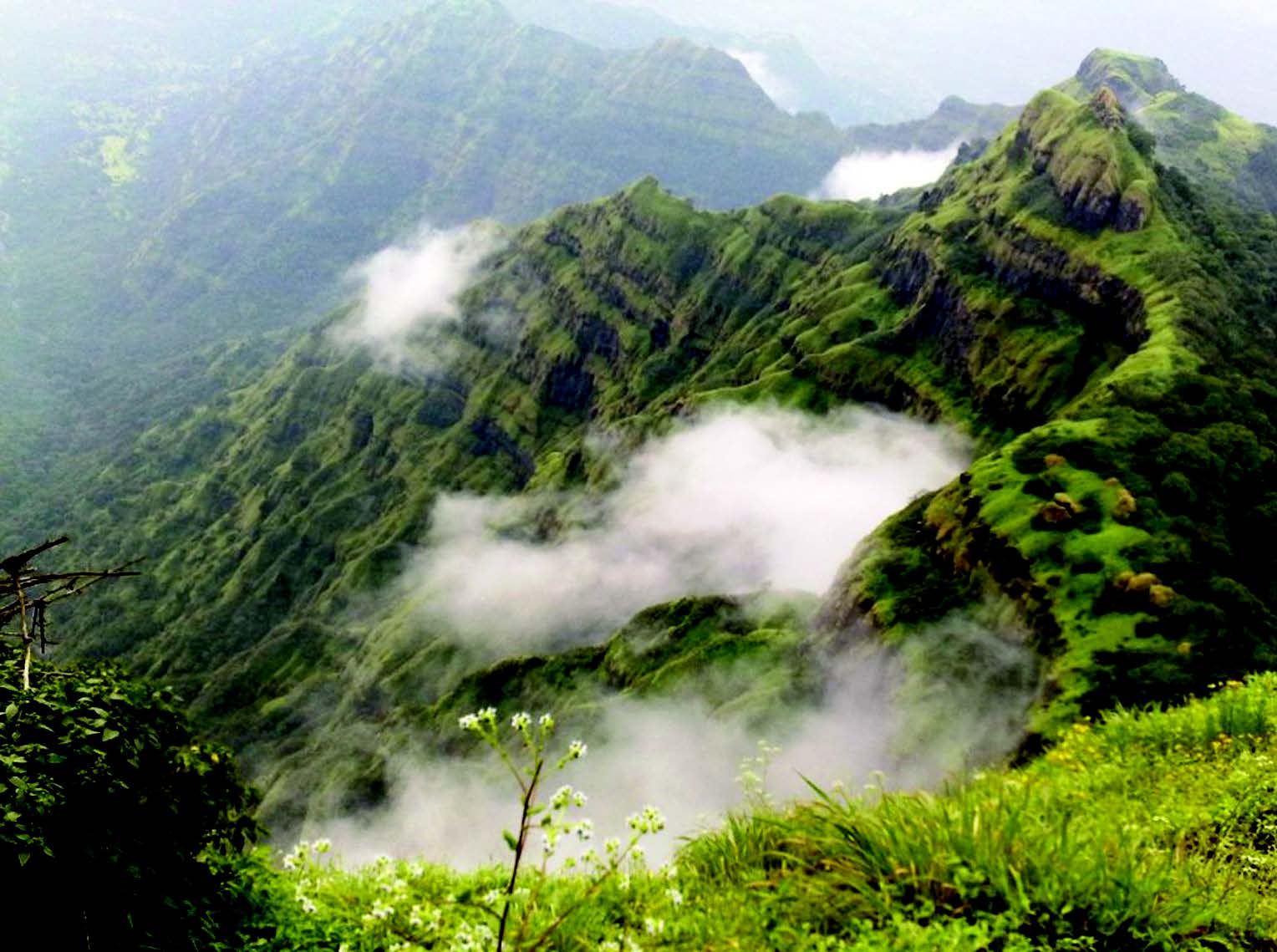
    The sweating Mumbaikar has a choice of hill stations, but Mahabaleshwar, eight hours away, tops the list for its cheap lodging, bustling marketplace and strawberry fields. Yet, not many know that this evergreen ‘honeymoon’ spot (what with its secluded points and the enduring thrall of pedal boats) is also home to the discerning shopper. Mahabaleshwar is home to a thriving market for forest honey, turmeric and trousseau saris. Read on to also find out why the residents of that hill station routinely have a great big laugh at us Mumbaikars.

    TROUSSEAU IT UP

    Mahabaleshwar has been a secret trousseau shopping destination for a few years. Enterprising boutique owners in Vile Parle and other suburbs, buy saris from here, embellish and sell them at inflated rates.

    The hill station’s 90-year-old shop Pallod, set up by the Pallod family from Rajasthan, is at the centre of this industry. It started off as cloth store, and 20-25 years ago, the second generation of the family started commissioning work (mostly saris) from weavers in Ramnagar (near Benaras), Coimbatore, Arni, Lucknow and Uppada. With no Octroi and low rent, these saris cost a fraction of what they would in a dazzling store on Juhu-Tara road.

    Darshan Laddha, a young member of the family, travels 10 days each month to visit the weavers, asking for experimentation like tanchoi weave with Kanjeevaram silk, and returns in time to greet the hordes of customers. Then there is that lone Rajasthani shop without a signboard that sells chiffon Leheriya saris for Rs 300! You heard right.

    COMB FOR HONEY

    Villagers and tribals of the forests of the Sahyadri gather honey by smoking the bees out of a hive and squeezing the honey out of the comb. The result is a few dead bees, terminated eggs and a homeless swarm.

    Enterprises such as Sanjeevan Honey practise a more ethical form of extraction. They promote building the hive in a wooden box, with a sly opening for the bees. The combs are built on trays that slide out. These trays are fitted to an extraction machine (see below) which is hand churned and uses centrifugal force to extract the honey without destroying the combs.

    The trays go back into the box, and the bees repair cells that may have broken to resume the honeymaking process. V R Agarkar, who left Dapoli for the hills of Mahabaleshwar 50 years ago, is happy to give you a tour and explain the honey-making process. The 72- year-old loves explaining how bees like to keep their comb clean. “If I drop a piece of paper, they’ll shred it and I’ll find it outside the box the next day,” he adds. You’ll usually find him at the stall adjoining Kedar Residency.

    WAI TURMERIC? BECAUSE IT’S GOOD

    Wai is to the south of Mahabaleshwar. It’s the place to buy unadulterated turmeric. In drought-prone Maharashtra, turmeric is a highmaintenance crop. With the Krishna river flowing nearby, about 2,000 to 2,500 hectares of farmland grow the antiseptic root.


    7

    It is harvested in December, laid out to dry, then polished and ground. By next week, the farmers will start sowing the crop, again. Two to four kilos of wet root yield a kilo of turmeric powder. Most of the crop would be sold to merchants, who would then supply it to the market places of Satara. “In the past few years, the price offered for our crop has fallen, so we have been grinding the turmeric on our own and selling it on the highway,” says Mangal Zamdale, a farmer.

    Tables set up under flowering Gulmohars that line the Satara highway sell fresh turmeric powder, pickles, and papads. A spicy way to offset the sweetness of the strawberries you’ve eaten, perhaps?

    GOTCHA, MUMBAIKAR

    It is a truth universally accepted that Mahabaleshwar makes leather chappals that populate the shelves of large shoe store chains in Mumbai. However, that is also an assumption that Mahabaleshwar is in no hurry to correct.

    The fact is that very few workshops in the hill station still produce chappals the Mahabaleshwar way (not to be confused with a Kolhapuri), which is to soak the leather in sea salt to bleach and dehydrate it. The theory is that the leather then absorbs our sweat easily. However, most of what we take back as souvenirs is actually brought in from Dharavi and smallscale industries of Tilak Nagar, Bandra and Santacruz. Yes, Mahabaleshwar is laughing at us.

    AS Karande of New India Boothouse in Mahabaleshwar, however, still makes the chappals. You can see him at work in his shop. Hemant, Prabhat and Hind shoe marts have workshops, too. To Hemant’s workshop come experienced craftsmen like Nana Kadam, who travels over 35 kilometres one way, every day. He is one of the old hands who knows how to punch in the design that makes a tadgola chappal.

    GETTING THERE

    Mahabaleshwar is 247 km from Mumbai. You can drive down the Satara highway, and hit Wai and Panchgani en route. Buses, private and state-owned also ply regularly. There is a train to Satara, an hour from Mahabaleshwar.

  • Indian Health minister to meet US counterpart on first tour abroad

    Indian Health minister to meet US counterpart on first tour abroad

    His visit aims to evaluate the progress of the US-India Health Initiative which was launched in 2010

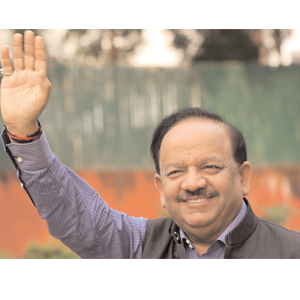
    DALLAS (TIP): India’s Health Minister, Dr. Harsh Vardhan began a five-day US visit on Tuesday, June 24. He will meet his counterpart and explore scope for cooperation and collaboration. Vardhan, on his first official tour abroad since he assumed office, will meet the new US Secretary of Health and Human Services, Sylvia Mathews Burwell, to evaluate the progress of the US-India Health Initiative, launched in 2010. He will attend meetings to discuss steps to consolidate the collaboration between the Indian government, United States Agency for International Development, United Nations Children’s Fund and others in ensuring an Acquired Immune Deficiency Syndrome (AIDS)-free generation.

    Vardhan said, “We are on the cusp of exciting possibilities. I am looking to talks seeking collaboration on global health security, telehealth and preventive health care.” Vardhan had on Monday called on Prime Minister Narendra Modi to tell him on the agenda of his meetings. He will also attend the annual India-USEthiopia initiative against child mortality, Call to action: A promise renewed. Health ministers from 25 countries are set to attend the meeting. Vardhan will deliver the keynote address.

    He will deliver a keynote address at the 32nd annual convention of the American Association of Physicians of Indian Origin (AAPI) in San Antonio, Texas, on Saturday. AAPI is the largest forum of ethnic medical professionals in the US with 138 local chapters. Website Swastha India, a joint initiative of AAPI and the Indian government, will also be launched. Vardhan said, “We are exploring more avenues for engaging AAPI in research, skill development and strengthening health care.” “The prime minister is engaged with AAPI and this association will be pursued to achieve health outcomes on the ground.”

  • US ECONOMY SHRINKS AT ANNUAL RATE OF 2.9%, MOST IN FIVE YEARS

    US ECONOMY SHRINKS AT ANNUAL RATE OF 2.9%, MOST IN FIVE YEARS

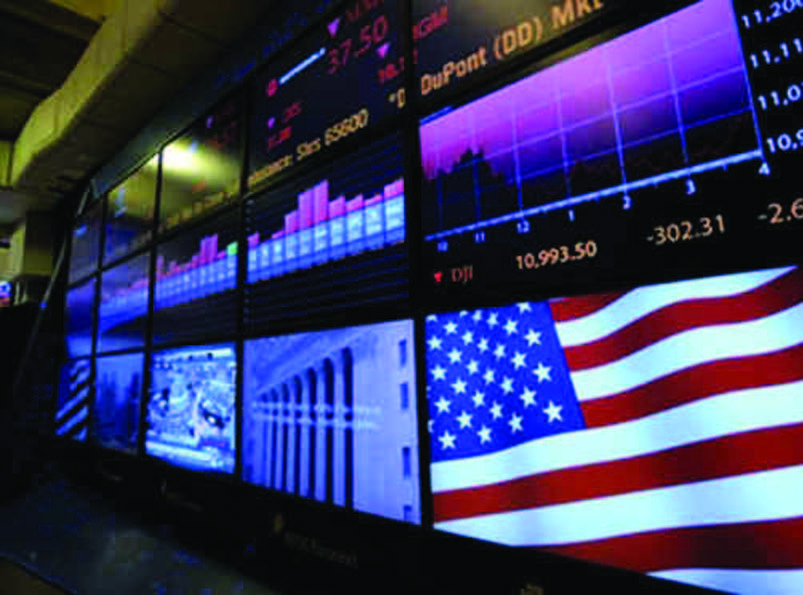
    WASHINGTON (TIP): The American economy contracted at an annual rate of 2.9 per cent in the first quarter of this year, the sharpest drop experienced by the US in the last five years.

    This drop follows an increase of 3.4 per cent at an annual rate in the second half of 2013. The entire decline in overall GDP in the first quarter can be accounted for by a decline in exports and a slowdown in inventory investment, two particularly volatile components of GDP. Jason Furman, chairman of the Council of Economic Advisers, said the first-quarter GDP was revised down, largely reflecting a re-estimation of consumer spending on health care, which was substantially lower than originally reported, as well as exports, which were below the initial estimates.

    “The GDP data can be volatile from quarter to quarter; a range of other data show a more positive picture for the first quarter, and more up-to-date indicators from April and May suggest that the economy is on track for a rebound in the second quarter,” he said.

    “The recovery from the Great Recession, however, remains incomplete, and the president will continue to do everything he can to support the recovery, either by acting through executive action or by working with Congress on steps that would boost growth and speed job creation,” Furman said. According to the report released by Bureau of Economic Analysis, the downward revision to first-quarter GDP growth was concentrated in two areas: consumer spending on health care services and net exports.

    The performance of the economy in the first quarter as measured by GDP was significantly below other independently calculated measures. For instance, aggregate hours worked by private-sector production and non-supervisory workers as measured by the Bureau of Labor Statistics grew 1.4 per cent at an annual rate in the first quarter, while industrial output in the manufacturing sector as measured by the Federal Reserve increased 2.1 per cent at an annual rate, Furman said. ‘The Wall Street Journal’ said in the US economy contracted at a worse pace than previously estimated in the first quarter, marking its sharpest pullback since the recession ended five years ago.

  • GOVT DEFERS GAS PRICE HIKE, MAY JUNK UPA FORMULA

    GOVT DEFERS GAS PRICE HIKE, MAY JUNK UPA FORMULA

    NEW DELHI (TIP): The Narendra Modi government on June 25 indicated that it would not be guided by the UPA’s formula by deferring for three months a decision on revising price of gas produced from domestic fields. “The Cabinet Committee on Economic Affairs has decided that comprehensive discussions were necessary on the issue.

    It was decided that consultations would be held with all stakeholders and it was important to keep public interest in mind,” oil minister Dharmendra Pradhan said on Wednesday. The decision allows a temporary reprieve to consumers from an increase in CNG and PNG prices.

    But it would disappoint gas producers such as state-run ONGC and private sector Reliance Industries and its partner BP plc, which has served an arbitration notice on the government. The UPA’s formula was suggested by C Rangarajan, then head of PM’s Economic Advisory Council. Based on the complex formula, the price of gas from all domestic fields would have more than doubled to $9.3 per unit from $4.2 at present from April.

    The formula became contentious as it would have resulted in a hefty increase in CNG, PNG and power costs as well as the government’s fertiliser subsidy. The implementation of the formula hit the Election Commission barrier, leaving it to the new government.

    Sources said a concern surfaced during extended discussions Pradhan had with the Prime Minister’s Office and finance minister Arun Jaitley that announcing the revision would signal the Modi government toeing the UPA’s formula, even when a lower price was worked out by tweaking Rangarajan’s pricing parameters. “Rangarajan formula is not sacrosanct for the Modi government. It can modify or reject it,” one source said.

    ToI had on June 13 reported that the government may opt for a relook at the formula and appoint a fresh panel. But neither Pradhan nor law minister Ravi Shankar Prasad, who briefed reporters, would not not say whether a new formula was being considered or the Rangarajan formula will be amended to bring down the rates to acceptable levels.

    “The matter needs extensive consultations keeping the public good in mind with all the stakeholders… the new government must be given time to take a call on what should be the mechanism (of review),” Prasad said. Finance minister Arun Jaitley said the review mechanism would be decided by the Prime Minister’s Office and the oil ministry. “There have been one or two meetings. The mechanism in the government which will review the whole thing and come to an opinion, I think now needs to be finalised,” agency reports quoted the FM as saying.

  • OIL PRICE RISKS PUT INFLATION BACK IN FOCUS

    OIL PRICE RISKS PUT INFLATION BACK IN FOCUS

    BRUSSELS (TIP): Iraq will be foremost in investors’ minds in the coming week as oil price risk has returned to markets, complicating the task for central banks whose policies are beginning to diverge for the first time since the global financial crisis.

    Oil prices neared nine-month highs late last week, touching $115 a barrel, and the rapid advance of militants in Iraq, the second-largest OPEC producer, is destabilizing oil markets. That has implications for inflation in the United States and Europe, as well as Asia’s export-oriented economies that are large net importers of oil.

    Investors will be watching a range of data, from German and Japanese consumer prices to first-quarter US GDP, to see how the Federal Reserve, the European Central Bank (ECB), the Bank of England and the Bank of Japan respond. Investors will be watching a range of data, from German and Japanese consumer prices to first-quarter US GDP, to see how the Federal Reserve, the European Central Bank (ECB), the Bank of England and the Bank of Japan respond.

  • The 2014 MetLife South Asian Spelling Bee reaches Texas

    The 2014 MetLife South Asian Spelling Bee reaches Texas

    Dallas & Houston winners announced

    DALLAS (TIP): The 2014 MetLife South Asian Spelling Bee (www.SouthAsianSpellingBee.com) continued its 12-city tour past weekend with events in Dallas and Houston. MetLife, a leading global provider of insurance, annuities and employee benefit programs, is serving as the event’s title sponsor for the sixth consecutive year. With a huge turnout this year as well, the Bee attracted some top talent as well as young and new spellers that competed for the coveted prizes and titles.

    “It is very heartening to see that each year we get fresh faces and new talent which is a continuing testimony to our community’s strength in this craft,” said Rahul Walia, Founder – South Asian Spelling Bee. In Dallas, Vanya Shivashankar from Olathe, KS was the regional champ and Ananya Kodali from Highland Village, TX was the first runner up while Ansun Sujoe from Forth Worth, TX was second runner up. In Houston, Shourav Dasari from Spring, TX was the regional champ and Shobha Dasari from Spring, TX was first runner up while Tanya Roysam from Friendswood, TX was second runner up.

    “MetLife congratulates all the spellers who participated in this year’s events,” said Laurel Daring, assistant vice president, Diverse Markets, MetLife. “We’re proud to serve as the Bee’s title sponsor as part of our commitment to the South Asian communities we serve across the country and as a fun, educational contest for the hundreds of students that compete each year.”


    7
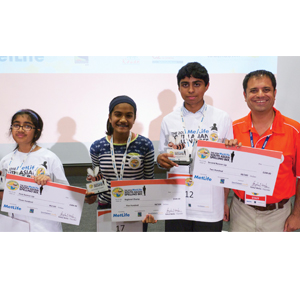
    Houston Winners: (From L to R) Rahul Walia, Founder of the South Asian Spelling Bee with Second Runner Up Tanya Roysam from Friendswood, TX; Regional Champ Shourav Dasari from Spring, TX and First Runner Up Shobha Dasari from Spring, TX.

    Along with MetLife, food brand Kawan and education company C2Education have also come on board as sponsors for this event. As always, SONY Entertainment Television Asia is the exclusive broadcast partner for the MetLife South Asian Spelling Bee and will be airing the series across 120 countries. “Kawan is proud to support this platform that helps in the overall growth of the child.We look forward to seeing this year’s talent and are happy to be part of the process to find the best speller from the South Asian community,” said Tim Tan, Director – International Business, Kawan Food, makers of the world’s most popular Roti Paratha Brand in the world – Kawan Paratha.

    “C2 Education is very honored to be associated with the MetLife South Asian Spelling Bee for the third consecutive year. Seeing the children’s enthusiasm and dedication to succeed is truly inspiring”, said Steve Helgeson, Director of School and Community Partnerships, C2Education. “Once again, we are proud to be associated with the Bee and are looking forward to showcasing the journey in the quest for the best speller.

    We look forward to yet another successful year,” said Jaideep Janakiram, Head of North America, Sony Entertainment Television-Asia. The winners received cash prizes of $500, $300 and $200 respectively. Children up to 14 years of age are eligible to participate and the contest saw spellers of even 6 years of age compete and make it past a few rounds. There are 10 more cities on the anvil and for more information and to register your child,
    please visitwww.SouthAsianSpellingBee.com.

    The top two winners plus one parent each from every city will be given an all expenses paid trip to NJ on August 15 for the FINALS. SONY Entertainment Television Asia is the exclusive broadcast partner for the MetLife South Asian Spelling Bee and will be airing the series across 120 countries. Find us on Facebook at South Asian Spelling Bee and you can follow us on our Twitter handle at Spell South Asian. To reserve your FREE passes to the Finals, please log on towww.SouthAsianSpellingBee.com and fill in your details

    About Touchdown Media Inc.:
    Touchdown Media Inc. is a specialized South Asian advertising and promotions firm based in New Jersey. Now in its 11th successful year, Touchdown has helped clients- both mainstream and otherwise, reach out to the lucrative South Asian market, Touchdown Media represents more than 35 years of collective experience in this niche market. As a full service ad firm, Touchdown has helped many clients achieve their media and marketing goals within the South Asian Diaspora in the US.

    About MetLife:
    MetLife, Inc. (NYSE: MET), through its subsidiaries and affiliates (“MetLife”), is a leading global provider of insurance, annuities and employee benefit programs. MetLife holds leading market positions in the United States, Japan, Latin America, Asia, Europe and the Middle East. For more information, visit www.metlife.com.

  • Indian American Monica Gill Crowned Miss India Worldwide 2014

    Indian American Monica Gill Crowned Miss India Worldwide 2014

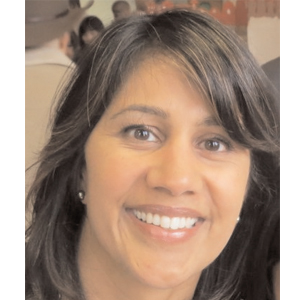
    NEW YORK (TIP): Miss India -U.S. Monica Gill was crowned Miss India Worldwide 2014 in Abu Dhabi, June 20, with the second place going to Miss India Switzerland and third to Miss India Bahrain. More than 40 contestants of Indian origin settled in various countries across the globe between the ages of 17 and 27 years, unmarried and citizens, residents, or born in the country they represent, participated in the Miss India Worldwide pageant.

    The finale took place at the Al Raha Beach Resort, Abu Dhabi in UAE, where Gill was announced as the winner. She was crowned by Miss India Worldwide 2013 Nehal Bhogaita. The pageant included rounds like evening gown, Indian dress, a talent contest and question-and-answer sections. Surat contestant Anugya Sharma represented India at Miss India Worldwide.

    The winner took home a cash prize of $8000 and various sponsored gifts, including photo sessions and modeling assignments apart from the crown. Gill is a graduate of Boston University, where she studied biology, psychology and women’s studies.

  • Rupal Shah-Palanki becomes the first Indian American judge to be confirmed in Connecticut

    Rupal Shah-Palanki becomes the first Indian American judge to be confirmed in Connecticut

    NEW YORK: Connecticut Judge Rupal Shah-Palanki was confirmed to the Tolland District Superior Court recently, making her the first-ever Indian-origin Judge in the state of Connecticut to hold a Superior Court seat. Shah-Palanki was initially appointed by Governor Daniel Malloy on March 14, alongside 15 other Superior Court nominees, and her confirmation came just about a month and a half later.

    In a statement released at the time of her appointment, Shah-Palanki expressed her gratitude to Governor Malloy for selecting her for such a prestigious position. “I am deeply honored and humbled that Governor Malloy has nominated me to serve as a Superior Court Judge,” Shah-Palanki said. “I want to thank Governor Malloy for his belief in my abilities and character and his commitment to diversity in the judiciary.” “I also thank my family and friends for their constant support and the numerous mentors and colleagues I have been privileged to learn from and work with throughout my career.”

    she also said. “If I am confirmed, I promise to carry out this great responsibility with compassion, diligence, respect and fairness.” Shah-Palanki attended Massachusetts College of the Holy Cross for her undergraduate studies, graduating in 1995 with a B.A. in Political Science. She then attended the Georgetown University Law Center from 1996-1999 for her J.D., and was also involved with two prestigious organizations: the Policy International Law Society and the Georgetown Journal on Poverty Law.

    In taking up her new job, Shah-Palanki will be leaving her most recent position as an Assistant Attorney General with the Connecticut Attorney General’s Office, where she had been employed since 2003. Before that, she was an associate with two law firms: Bingham McCutcheon, located in Washington, DC; and Cohn, Birnbaum and Shea, in Hartford, Connecticut. Additionally, Shah-Palanki is an official with the Connecticut Asian Pacific American Affairs Commission.

  • ISIS Executes Saddam Hussein Trial Judge Raouf Abdul Rahman

    ISIS Executes Saddam Hussein Trial Judge Raouf Abdul Rahman

    NEW YORK (TIP): Raouf Abdul Rahman, the Kurdish judge who sentenced former Iraqi tyrant Saddam Hussein to death has himself been captured and executed by ISIS. Rahman was killed by militants in retaliation for the killing of the former Iraqi dictator, according to local media reports and comments on social media. Ibrahim al-Douri, an aid to the ex-Iraqi president and a key figure among Sunni militants, posted on his Facebook page that ISIS had captured and killed Judge Raouf Abdul Rahman.

    A Jordanian MP, Khalil Attieh wrote on his Facebook page that: “Iraqi revolutionaries arrested him and sentenced him to death in retaliation for the death of the martyr Saddam Hussein.” So far the Iraqi government has not confirmed the death of Judge Rahman, but they have refused to deny the kidnapping. Attieh also claimed that Rahman was only captured when he attempted to flee Baghdad dressed as a dancer. He is believed to have been captured on June 16th and executed around two days later.

    His attempted escape came after widespread rumors that he had sought asylum in Britain, fearing he was in danger.Judge Rahman was a highly respected figure in the Iraqi legal profession. He took over the trial of Saddam Hussein part way through as the previous judge had resigned over “foreign interference” in the process. At the time the role was a vital one, as many Iraqis were still afraid to stand up to Saddam and feared that he may return to power one day.The judge was not always supportive of the activities of the new regime that replaced Hussein.

    He was fiercely critical of the execution of the former dictator, which took place in public. The video was initially released as a silent film but eventually the full version emerged in which Shi’ites could be heard taunting Saddam.He branded the execution ‘uncivilized and backward’, not least because it also took place as Muslims were celebrating the religious festival Eid al- Adha. The killing of Rahman is further evidence that Iraq has now descended into an ethnic civil war.

    Saddam Hussein’s regime had been almost exclusively Sunni, whereas the current government in Baghdad is Shi’ite. The Prime Minister Nouri al- Maliki has been accused of discriminating against Sunnis, and causing the surge in support for ISIS. Since the insurgency began his government has lost Iraq’s second city of Mosul and has even had to draft in the Iranian Revolutionary Guard to sure up Iraqi forces.

  • Companies can provide power 24X7 without tariff hike: Piyush Goyal

    Companies can provide power 24X7 without tariff hike: Piyush Goyal

    NEW DELHI (TIP): There is enough scope for utilities to ensure uninterrupted power supply without tariff shocks but consumers too need to do their bit by willing to pay for getting 24X7 service and actively help stop electricity theft, minister for power and coal Piyush Goyal said on June 25.

    Goyal, a chartered accountant and former investment banker, said every entity involved in the electricity chain — generators, transmission and distribution utilities as well as coal companies — have to improve their operations instead of covering inefficiencies by raising a debate over inadequate tariffs or absence of tariff revisions. “I don’t think it’s only about tariff.

    I must tell you Gujarat, which has turned from a Rs 2,500 crore loss-making utility into a Rs 500 crore profit-making entity under Mr (Narendra) Modi over the last 10-12 years and giving 24X7 power to everybody, has had the lowest increase in tariffs compared to any other state in the country,” the minister said.

    “We cannot have a system that everything can be passed on to the final consumer in the garb of cost being recovered without being sensitive to their own problems and affordability.” Goyal’s statement comes in the backdrop of the power ministry recently telling the Prime Minister’s Office that the country loses 27 units in transit out of every 100 units being generated due to inefficiency and theft, euphemistically described by the industry as ‘aggregate technical and commercial losses’.

    Also, the minister’s strong views are likely to force regulators to look more closely at arguments and numbers being forwarded by utilities in several states, including Delhi, for revising tariffs. According to Goyal, small and simple steps can go a long way in solving the power problem. “Ramifications of small decisions can be pretty large,” he said. For example, rejigging the coal supply chain can result in a savings of about Rs 400-500 crore that can be passed on to consumers. The minister, however, said the problems cannot be solved by the Centre alone.

    The state governments must also do their bit by keeping a grip on expenditure and revenue, metering every consumer and involve people in curbing power theft. “Centrally, I cannot interfere in states. It’s (power) is a concurrent subject and in the federal polity, states are very sensitive to any ‘diktats’. It’s not about politics … I will reach out to all states uniformly… I can assure you I will take two steps for every step they extend,” Goyal said.

  • Ansari in China to commemorate the 60th anniversary of Panchsheel

    Ansari in China to commemorate the 60th anniversary of Panchsheel

    BEIJING (TIP): Vice-President Hamid Ansari arrived in Xian, June 26, on his maiden visit to China. He said he would discuss all matters of “bilateral agenda” with his Chinese counterpart while simultaneously emphasizing on the continued relevance and applicability of the Panchsheel. His statement came in response to a question on whether he intended to discuss the continuing incidents of intrusion and aggression by China’s People’s Liberation Army along the Line of Actual Control (LAC).

    “All matters of bilateral agenda will be taken up,” he said while avoiding giving a direct answer to a supplementary question on whether Chinese military intrusions would specifically get discussed. “Bilateral agenda means bilateral agenda; that is the totality of substance between the two countries discussed from time to time. We will discuss but I cannot anticipate the talks”, he said. The two countries are scheduled to sign several bilateral agreements, most likely pertaining to trade and commerce.

    One issue on which Vice President Ansari was more forthcoming was the balance of trade. In reply to a question he said the two governments were working on this. “It is a matter of concern to us that while trade is increasing, the balance of trade is not coming down. The two governments are seized of the matter and will address them in time”, he said adding that Union Minister of Commerce Nirmala Sitaraman, who is accompanying him on the official visit, is expected to discuss this with her Chinese counterparts.

    That India attaches high importance to its relations with China was evident from Ansari’s opening statement at a brief interaction he held with the media on board the special Air India flight soon after take off from New Delhi. “China is a very important country. It is our most important neighbor. It is a country with which our bilateral trade is almost at the top with only one or two countries recording higher bilateral trade”, he said adding, “Both governments are committed to furthering our relations”.

    Ansari’s visit is the first by a high ranking Indian this year which incidentally has been designated as the ‘Year of Friendly Exchanges’. His visit is preceded by Premier Li Keqiang’s congratulatory phone call to newly elected Prime Minster Narendra Modi which was followed by a visit of a special Chinese envoy to New Delhi. He is scheduled to meet the Communist Party of China’s secretary for Shaanxi province before arriving in Beijing tomorrow night. Incidentally, Shaanxi province is the birth place of Chinese President Xi Jinping. He was received by the Vice Governor of Shaanxi province Wang Lixia.

    In Beijing, the Vice President is scheduled to hold a set of both bilateral and trilateral meetings. His bilateral meetings with the Chinese leadership will include holding discussions with his counterpart Vice President Li Yuanchao, a meeting with Premier Li Keqiang and a call on President Xi Jinping. He will also hold a bilateral meeting with Myanmar President Thein Sein. But the significant occasion for which he is here is the India-China-Myanmar trilateral summit meeting to commemorate the 60th anniversary of the historic Panchsheel, a joint statement on which was issued by the then Indian Prime Minister Jawaharlal Nehru and Chinese Premier Zhou Enlai in New Delhi on June 28, 1954.

    Asked about the relevance of the Panchsheel, Ansari, who is a former IFS officer, replied “Panchsheel are of universal value. So much so that not only China, India and Myanmar, but the entire non alignment movement and a majority of the nations subscribe to it. Inter-state relations can only be on these principles”, he added pointing out that the “principles (of Panchsheel) are impeccable and there is no dispute about it.” The Panchsheel or the five principles of peaceful co-existence comprises mutual respect for each other’s territorial integrity and sovereignty, mutual non aggression, mutual non-interference, equality and mutual benefit and peaceful co-existence.

  • AAI readies plan for low-cost airports

    AAI readies plan for low-cost airports

    NEW DELHI (TIP): There’s good news for all flyers fed up with paying prohibitively steep airport charges for using terminals at places like Delhi and Mumbai. State-run Airports Authority of India (AAI) has prepared a blueprint of low-cost or no-frills terminals that will allow airports to come up across India and improve connectivity. Aviation secretary Ashok Lavasa disclosed this at an industry-government interface organized by Economic Times along with the American Chamber of Commerce here on Wednesday. “The design of airports built in past few years have been rather ambitious.

  • AN EARTH-SIZED ‘DIAMOND’ DISCOVERED IN SPACE

    AN EARTH-SIZED ‘DIAMOND’ DISCOVERED IN SPACE

    WASHINGTON (TIP): Astronomers have discovered an Earth-sized ‘diamond’ about 900 light-years away in space, which is possibly the coldest, faintest white dwarf star ever detected. This ancient stellar remnant is so cool that its carbon has crystallised, forming — in effect — an Earth-size diamond in space.

    The object is likely the same age as the Milky Way, approximately 11 billion years old. “It’s a really remarkable object. These things should be out there, but because they are so dim they are very hard to find,” said David Kaplan, a professor at the University of Wisconsin-Milwaukee.

    Kaplan and his colleagues found this stellar gem using the National Radio Astronomy Observatory’s Green Bank Telescope and Very Long Baseline Array, as well as other observatories. White dwarfs are very dense end-states of stars like our Sun that have collapsed to form an object approximately the size of Earth. Composed mostly of carbon and oxygen, white dwarfs cool and fade over billions of years.

    Pulsars are rapidly spinning neutron stars, the superdense remains of massive stars that have exploded as supernovas. As neutron stars spin, lighthouse-like beams of radio waves, streaming from the poles of its powerful magnetic field, sweep through space. When one of these beams sweeps across Earth, radio telescopes can capture the pulse of radio waves. The pulsar companion to this white dwarf, dubbed PSR J2222- 0137, was the first object in this system to be detected. It was found using the GBT by Jason Boyles, then a graduate student at West Virginia University in Morgantown

  • President Obama asks Congress for $500 million to train rebels in Syria

    President Obama asks Congress for $500 million to train rebels in Syria

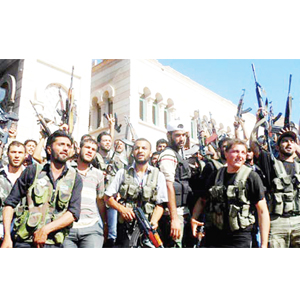
    WASHINGTON (TIP): Even as he has refused to intervene militarily in Iraq where the future of the US installed and supported Maliki government faces a big question mark, President Obama asked Congress, Thursday, June 26, to approve direct U.S. military training for Syrian rebels, according to US officials. Obama asked for $500 million to “train and equip” opposition fighters in Syria who will be vetted by the U.S. to ensure they have no ties to militant Islamists who now control vast territory in Syria and Iraq.

    However, U.S. officials said that the program will not begin until basic questions are resolved, such as whether the Pentagon has legal authority to train Syrian rebels, what types of weapons and other assistance they would receive and who would get the training. Those decisions could take months, the officials said. “All that is yet to be worked out, assuming Congress passes it,” said an official, who asked for anonymity. The request for funds was a “place holder,” meant to signal to lawmakers that the administration is considering stepped-up involvement at a time of growing concern in the region and in Congress that the U.S. is staying on the sidelines while instability is spreading, the official said.

    If approved, the expenditure would be part of a regional stabilization initiative for which the administration is seeking $1.5 billion, and which would involve collaboration with Jordan, Lebanon, Turkey and Iraq. The CIA has already been providing smallscale training to small numbers of Syrian rebels, but even if the training goes ahead, the Pentagon plan does not envision converting moderate rebel groups into a fighting force that is capable of winning back territory lost to the government of President Bashar Assad and to militant groups such as the Islamic State of Iraq and Syria, or ISIS. Rather, the training would be aimed at improving the U.S.-backed rebels’ ability to hang on to the territory they now hold, in hopes of eventually producing a negotiated settlement to the conflict, official said.

  • DRUG FROM INDIAN SPICES TO FIGHT HYPERTENSION

    DRUG FROM INDIAN SPICES TO FIGHT HYPERTENSION

    The search for an affordable drug to treat hypertension without side effects has led scientists to the Indian kitchen. Some spices and condiments commonly used in Indian soups, curries and rasam, when taken in a specific proportion with white lotus petals, can bring down blood pressure, say scientists after an animal study done in Chennai.

    Researchers found that Siddha drug ‘venthamarai chooranam,’ a mixture of cardamom, ginger, cumin seeds, long pepper (thippili), dill (sada kuppi), licorice (adimadhuram) and white lotus petal could bring down blood pressure in rats during laboratory experiments.

    Excited by the finding published recently in science journal Experimental Biology and Medicine, doctors at the Sri Ramachandra University are now gearing up for a larger animal study and clinical trials of the Siddha drug. Genetically predisposed to hypertension, one in four Indians in cities suffer from the disorder. The incidence is about 15% in rural population.

    Cardiologist Dr S Thanikachalam, who led the research, said: “Every time I see a patient’s case sheet, I underline four causes – smoking, diabetes, hypertension and obesity.” People with hypertension are mostly treated with allopathic drugs, but dropouts are high because many find the drugs expensive and some suffer from side effects. “So, we decided to look at the ancient Indian medical literature for answers,” he said.

    Scientists first tried the Siddha powder on rats and found it effective. “When we gave this chooranam for 63 days and the blood pressure dropped,” said C Saravana Babu, a toxicologist who was a part of the research. Pathological reports showed the drug had made healthy changes in the genes, tissues and blood vessels, he said. The herbal medicine will be put to further animal and human test, before it can be given to humans, Dr Thanikachalam said.

    During the study the doctors divided the rats into three groups – for the first the abdomen was cut and closed, for the second and third the scientists partially blocked blood supply to one of the kidneys. Two months after the surgery, most rats became hypertensive and they developed problems in the blood vessels, kidneys and heart. Scientists used special equipment that could measure blood pressure in rats’ tails.

    While the second group was fed with a placebo, the third was orally fed venthamarai chooranam at a dosage of 400g per kilogram bodyweight for 63 days. “We started noticing changes from the third day. At the end of two months, the blood pressure was almost normal,” said Saravana Babu. But what surprised scientists was not just the change in blood pressure, but other actions as normalization of the carotid arteries and kidney. Scientists feel that the presence of an enzyme called eNOS enhanced nitric oxide level and helped carotid arteries.

    “The inflammation in kidney was reversed in almost all animals. Pathological reports showed the drug make healthy changes in the genes, tissues and blood vessels,” he said. The drug has exhibited its anti-hypertensive properties, but doctors want to expand the animal study to see if this works in chronic conditions. “In these animals, hypertension was acute, as it developed after a surgery. We will have to test them on animals with chronic conditions,” said Dr Thanikachalam. “If that succeeds, we will begin our clinical trials. We hope it would offer cure to millions of people with hypertension,” he said.

  • No honeymoon period for my government, says Modi

    No honeymoon period for my government, says Modi

    NEW DELHI (TIP):
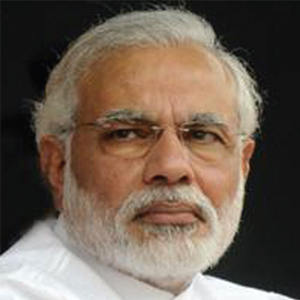
    Every decision that his government took has been “guided solely by national interest,” Prime Minister Narendra Modi said on Thursday, June 26, as he completed one month in office, but rued that a “series of allegations began” immediately after he took that friends in the media like to call a ‘honeymoon period.’ …. Not unexpectedly I don’t have any such luxury,” he wrote.In a post titled “a few thoughts as we complete a month in office” on his website, Mr. Modi expressed satisfaction at the functioning of the government.

    “A big challenge I am facing in Delhi is to convey to a select group of people about our intentions and sincerity …. These are people who are both within and outside the government system,” Prime Minister Narendra Modi said on Thursday, adding “we need to strengthen systems whereby the right things are communicated to the right people at the right time.” In a post titled “a few thoughts as we complete a month in office” on his website, Mr. Modi said he was no longer gripped by the thought that he was new to Delhi.

    “Fortunately, a month later that thought does not exist any longer in my mind. My confidence and determination has increased tremendously,” he said recalling that many people thought it would be a while before he learnt the intricacies of the Central government. He credited his success to the “wisdom of ministerial colleagues” and his own experiences as a four-time Chief Minister.

    Mr. Modi said his meetings with ministers and officials enabled exchange of thoughts and ideas and the government has “come up with excellent road maps for the various ministries.” He hoped to work closely with Chief Ministers of States, and allegations do not matter when “one is working with the sole aim of serving the nation determinately.” Noting that it was on June 26, 1975 that the Emergency was imposed in the country, the Prime Minister said it was a “grim reminder of the dangers associated with subverting freedom of speech, press, expression and silencing opposition.” Mr. Modi said he was committed to creating strong institutions through good governance so that “we never ever see those dark days again.”

  • SAY GOODBYE TO SELFIE, ‘DRONIE’ IS THE NEW RAGE

    SAY GOODBYE TO SELFIE, ‘DRONIE’ IS THE NEW RAGE

    Over the last few years, drones have been finding jobs in industry. They are used for gathering news, checking crops on farms, as well as photographing houses for real estate agents, and — at least in the imaginations of Amazon executives — drones will one day deliver packages to consumers.

    Now, among the first mainstream uses for drones will be airborne selfies. Recently, a number of new products and social media services have popped up, in an effort to help people take better pictures and videos of themselves with the aid of a drone. Last week, two drones made their debuts on the crowdfunding site Kickstarter , both designed to allow people to shoot drone selfies, or dronies.

    The Hexo Plus is compatible with a GoPro high definition camera and is billed as an “intelligent drone that follows and films you autonomously”. A competitor, called the AirDog, treats a drone like a dog on a leash, tracking and following you wherever you go and snapping video and pictures of you as you do action sports. Based on sales, consumers seem eager to buy these kinds of products.

    Hexo Plus had hoped to raise $50,000 on Kickstarter. In three days, it passed $700,000. Air-Dog quickly flew past its $200,000 target, too. The drone selfie movement even had its modern Gilded Age moment when the Marquee Dayclub , at the Cosmopolitan hotel in Las Vegas, announced a new type of bottle service where patrons in bikinis at an outdoor pool can have their drinks delivered via a drone.

    Then it’s time to smile for the camera as your drink delivery vehicle snaps a picture. The price is a cool $20,000. But take it from me, the drone craze is not all $20,000 bottle service . When I tried to fly a drone recently , it was as difficult as the first time I drove a car. I have crashed drones into the San Francisco Bay, concrete sidewalks, trees and walls. Drones sometimes crash into other people, too. In April, a runner at the West Australian triathlon was hit on the head by a drone that was being used to photograph the event.

  • TIME TRAVEL SIMULATED USING LIGHT PARTICLE

    TIME TRAVEL SIMULATED USING LIGHT PARTICLE

    MELBOURNE (TIP): Australian researchers have used photons — single particles of light — to simulate quantum particles travelling through time. University of Queensland researchers used photons to simulate quantum particles travelling through time and study their behaviour, possibly revealing bizarre aspects of modern physics.

    “The question of time travel features at the interface between two of our most successful yet incompatible physical theories — Einstein’s general relativity and quantum mechanics,” said lead author and PhD student Martin Ringbauer, from UQ’s School of Mathematics and Physics.

    “Einstein’s theory describes the world at the very large scale of stars and galaxies, while quantum mechanics is an excellent description of the world at the very small scale of atoms and molecules,” he said. Einstein’s theory suggests the possibility of travelling backwards in time by following a space-time path that returns to the starting point in space, but at an earlier time — a closed timelike curve.

    This possibility has puzzled physicists and philosophers alike since it was discovered by Kurt Godel in 1949, as it seems to cause paradoxes in the classical world, such as the grandparents paradox, where a time traveller could prevent their grandparents from meeting, thus preventing the time traveller’s birth. This would make it impossible for the time traveller to have set out in the first place.

    UQ physics professor Tim Ralph said it was predicted in 1991 that time travel in the quantum world could avoid such paradoxes. “The properties of quantum particles are ‘fuzzy’ or uncertain to start with, so this gives them enough wiggle room to avoid inconsistent time travel situations,” he said.

  • WORLD CUP FIRST ROUND LEAVES EUROPE ALL AT SEA

    WORLD CUP FIRST ROUND LEAVES EUROPE ALL AT SEA

    RIO DE JANEIRO (TIP): Cristiano Ronaldo, Wayne Rooney, Andrea Pirlo and Xavi have left Brazil with their tails between their legs highlighting the hard times for Europe at the World Cup. Having provided seven of the last eight World Cup semifinalists, Europe’s dominance appears to be on the wane after a brutal group phase for the continent’s teams.

    Where Latin American sides such as Chile and Costa Rica created sensations, Europe’s powerhouses flopped, with Italy, England, Portugal and defending champions Spain among seven teams from the UEFA zone eliminated in the first round. European superstars disappointed. In sharp contrast, World Cup crowds have thrilled to the virtuoso performances of Neymar and Lionel Messi, the swashbuckling football of Chile and Colombia, and the daring displays of giant-killing Costa Rica.

    While France, Netherlands, Germany, Belgium, Switzerland and Greece remain in contention for glory, the tournament has done little to encourage hope of a first European World Cup success in the Americas. “It cannot be a coincidence that a European team couldn’t win a World Cup held in South America,” declared Switzerland’s decorated German coach Ottmar Hitzfeld before the tournament. “Not in Uruguay, not in Mexico, not in Argentina, and for sure not in Brazil.”

    Europe’s World Cup difficulties may be part of an emerging trend. Whereas European teams filled 10 of the last-16 places in five of the first six tournaments after the round was introduced in 1986 (with nine getting there in 2002), only six made it in 2010 and this year. With tens of thousands of fans from neighbouring countries flooding into Brazil, the South American teams have clearly benefited from home advantage.

    Supporters from Argentina and Chile took over Rio de Janeiro’s Maracana when their sides played there in the group phase and France coach Didier Deschamps believes such mass support can make a difference. “We are in Brazil, so the South American teams certainly acclimatise better, and maybe the fact that they are playing so close to home and have so many supporters with them gives them added strength and energy,” he said on June 14. Developing Deschamps’s theme, Brazil striker Fred said: “I think the climate can make a bit of a difference, because we are better adapted to it.

    “The tactical aspect makes a difference, too. We see Colombia, Ecuador, Uruguay, Chile all playing technically good football. And as they are used to the very hot climate, it can end up helping a bit.” England manager Roy Hodgson feels that European sides are hindered by the strengths of their respective domestic championships. Citing the examples of Costa Rica and Iran, who almost held Argentina to a goalless draw in Group F, he said that it is easier for the tournament’s supposed weaker sides to gather together for pre-competition training camps, making them more well-drilled and tactically flexible. “Iran and Costa Rica have been together for months, so they’ve really had a chance to do the type of work that we’ve been happy to do for three or four weeks with our players,” he said after his side’s groupphase exit.

    “We’ll never get the access to our players that an Iran or a Costa Rica get.” One consolation for the Europeans is that only one of Brazil, Chile, Colombia and Uruguay can reach the semi-finals due to the configuration of the draw.

    And although only six teams from Europe reached the last 16 in 2010, three of those went on to reach the semi-finals, while the final between Spain and Holland was the second all-European affair in a row after France and Italy in 2006. France, Germany and the Dutch are again looking strong and confident. While it has been a chastening first fortnight for the old continent, the cream of European football can still rise to the top.

  • Fifa bites back: Suarez gets nine-match ban

    Fifa bites back: Suarez gets nine-match ban

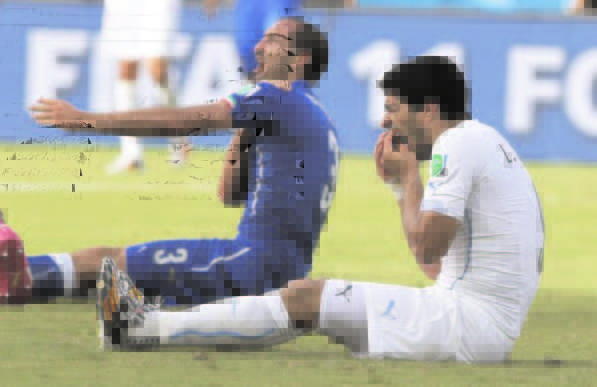
    BRASILIA (TIP): Even before the knockout rounds have kicked off, a key South American figure is out of the World Cup. Uruguay striker Luiz Suarez was handed a nine-game ban by FIFA’s Disciplinary Committee following his bite on Italian defender Giorgio Chiellini’s shoulder during the final Group D match in Natal on Tuesday.

    He has also been debarred from taking part in any football-related activity for a period of four months, a sentence which includes a stadium ban whenever Uruguay is playing. He was also ordered to pay a fine of 100,000 Swiss francs ($111,000). Already there is talk of how much this latest ‘bite’ will cost Suarez. Experts reckon a hit of £1 million with Adidas and 888poker both reviewing their relationship with the star.

    This is the heaviest sanction against a player in the tournament’s history. It surpasses the eight-match ban against Italy’s Mauro Tassotti in 1994 for an elbowing which broke the nose of Luis Enrique. This is the third time Suarez has been banned for biting a player during a match. “Such behaviour cannot be tolerated on any football pitch, and in particular not at a FIFA World Cup when the eyes of millions of people are on the stars on the field.

    The Disciplinary Committee took into account all the factors of the case and the degree of Mr Suarez’s guilt in accordance with the relevant provisions of the code. The decision comes into force as soon as it is communicated,” said Claudio Sulser, chairman of the committee. Uruguay will appeal against this decision, the media in Montevideo reported. “The punishment is too strong for the foul,” the country’s football federation’s president Wilmer Valdez told local TV, which reported that the appeal would be filed later on Thursday. The ban prevents Suarez from even entering the stadium for Uruguay’s Saturday’s game against Colombia.

    It will also hit his club career with Liverpool as he cannot play until the end of October. In Natal on Tuesday, Suarez rushed into the rival penalty area looking for a pass and appeared to have collided with Chiellini in the process. As they two men clashed, the Uruguayan was seen sinking his teeth into the Italian’s shoulder. Immediately both fell to the ground and while Suarez was seen holding his teeth, Chiellini kept calling for the attention of the referee, Mexican Marco Rodriguez. Rodriguez saw nothing in the plea and waved on play.

    Uruguay took the lead through a Diego Godin header a minute later to qualify for the Round of 16. Italy were knocked out. This is the second censure for Suarez at the World Cup. In the 2010 quarterfinal match against Ghana, he stopped Asamoah Gyan’s goal-bound attempt with his hand. He was shown a red card and later defended the act by calling it ‘the real Hand of God’. “Stopping a goal with my hand, I believe I did nothing evil to anyone – it was just stopping a goal,” he said later.

    Ghana failed to score off the resulting penalty and Uruguay eventually advanced to the semifinals after winning the penalty shootout. In Brazil here, however, in addition to his brilliant goal-scoring ability and form for Liverpool, Suarez had also arrived on the back of a reputation that bordered on the unpredictable and at times, violent. A favourite of the Kop – the Liverpool faithful – Suarez enjoyed an ambivalent relationship with rest of the Premiership fans who slowly warmed to his goal-scoring abilities but never forgot his other escapades.

    In April last year, he appeared to bite Branislav Ivanovic, Chelsea’s Serbian defender, during a similar goalmouth melee. He was handed a 10-match band and many said it was nothing new, since he arrived in England after having bitten PSV Eindhoven’s Otman Bakkal during his Ajax days in the Netherlands. He was also involved in a racial slur controversy with Manchester United’s French defender Patrice Evra.

  • NAMO VICTORY CELEBRATIONS GALORE IN NEW YORK

    NAMO VICTORY CELEBRATIONS GALORE IN NEW YORK

    NEW YORK (TIP): Namo victory virus seems to have gripped a large number of Indian Americans in New York. Various groups claiming political affinity with BJP or a personal relationship with Narendra Modi , as also those who have had no truck with either BJP or Narendra Modi are found to be celebrating Modi’s victory.

    There is a widespread feeling bordering belief that India will get a facelift under Modi. Having said that, let us see how Namo’s victory has been celebrated in New York. Of the many celebrations, one is particularly noteworthy.

    It was held by the community at Hindu Temple in Flushing where a large number of people, around 1000 by liberal estimates, gathered on invitation from the Gujarat Foundation, India First Alliance, Friends of Namo New York, Gujarat Samaj of New York and the Jackson Heights Merchants’ Association.

    Purshottam Rupala, BJP National Vice President and Member of Rajya Sabha, and Rameshwar Prasad Chaurasia, one of the national secretaries of the BJP, were the star speakers In their address, both Rupala and Chaurasia lauded Modi for his abilities and noted that India is moving forward in a positive direction under his leadership.

    Organizers recognized prominent members of the community. Many community speakers were also invited to address the audience briefly. Chaurasia said Modi showed how a strong leader projects strength of a nation when he invited all SAARC heads to his swearing in and they fell over each other to attend. Other highlights included dance performances by Prashant Shah and a dinner.

    Guests were also given a packet of Modi Magic, a special snack prepared by Rajbhog Sweets to celebrate Modi’s epic win, an organizer said.

  • CHINA-PAK NUCLEAR PROLIFERATION

    CHINA-PAK NUCLEAR PROLIFERATION

    India should counter the challenge diplomatically

    “India has passively not taken up its concerns about the China- Pakistan missile and nuclear collaboration strongly with Beijing. This challenge surely needs to be more seriously addressed and countered, both diplomatically and strategically”, says the author.

    While explaining the rationale for Pakistan’s nuclear weapon program, its then Prime Minister Z.A. Bhutto noted that while the Christian, Jewish and Hindu civilizations had nuclear weapons capability, it was the Islamic civilization alone that did not possess nuclear weapons.

    He asserted that he would be remembered as the man who had provided the Islamic civilization with full nuclear capability. Bhutto’s views on Pakistan’s nuclear weapons contributing to the capabilities of the Islamic civilization were shared by Pakistan’s senior nuclear scientist Sultan Bashiruddin Mehmood who, along with his colleague Chaudhri Abdul Majeed, was detained shortly after the terrorist strikes of 9/11.

    They were both charged with helping Al Qaida acquire nuclear and biological weapon capabilities. Two other Pakistan scientists, Suleiman Asad and Al Mukhtar, wanted for questioning about their links with Osama bin Laden, disappeared after it was claimed that they had gone to Myanmar.

    The original sinner in nuclear proliferation, however, is not Pakistan, but China. Director of the Wisconsin Project of Arms Control Gary Milhollin has commented: “If you subtract China’s help from the Pakistani nuclear program, there is no Pakistani nuclear program”.

    There is evidence, including hints from Bhutto’s prison memoirs, that suggest that China initially agreed to help Pakistan develop nuclear weapons when Bhutto visited Beijing in 1976. It is now acknowledged that by 1983 China had supplied Pakistan with enough enriched uranium for around two weapons and the designs for a 25- Kiloton bomb. Chinese support for the Pakistan program is believed to have included a quid pro quo in the form of Pakistan providing China the designs of centrifuge enrichment plants.

    Interestingly, thanks to China, Pakistan acquired nuclear arsenal at least five years before India decided to cross the nuclear threshold. China’s assistance to Pakistan continued even after Beijing acceded to the NPT. When Pakistan’s enrichment program faced problems in 1995, China supplied Pakistan 5,000 ring magnets.

    China has subsequently supplied Pakistan with unsafeguarded plutonium processing facilities at Khushab. There is also evidence that China has supplied Pakistan with a range of nuclear weapons designs with the passage of time. While the nuclear weapons designs supplied by Dr A.Q. Khan to Libya were of a Chinese warhead tested in the 1960s, the nuclear warheads tested by Pakistan in 1998 were of a different design According to Thomas Reed, a former Secretary of the US Air Force, who was closely associated with the US nuclear weapons establishment and Dan Stillman, a US nuclear expert who had extensive interactions with his Chinese counterparts a Pakistani derivative of the Chinese CHIV-4 nuclear bomb was tested by Pakistan in China on May 26, 1990.

    This was eight years before India’s 1998 tests that validated its nuclear weapons. Reed stated that while in China, Stillman had noted that his stay at the Shanghai Institute of Nuclear Research “also produced a first insight into the extensive hospitality extended to Pakistani nuclear scientists during the late 1980s time period”.

    Reed has disclosed that “in 1982, China’s Premier Deng Xiao Ping began the transfer of nuclear technology to Pakistan”. Moreover, after warmly welcoming Prime Minister Rajiv Gandhi in Beijing in 1988, Deng commenced missile collaboration with Pakistan, with the supply of short range Hatf 2 missiles. This was followed up by assistance to manufacture Shaheen 1 (750 km range) and Shaheen 2 (range 1500-2000 km), at Fatehjang.

    China has thus not only provided Pakistan assistance for manufacturing nuclear weapons, but also for missiles which can target population centres across India. Not satisfied with providing nuclear weapons designs, knowhow and modern uranium enrichment centrifuges, China soon found that Pakistan’s arsenal would become more potent if it included lighter plutonium warheads, both for easier mating with the Chinese designed ballistic missile and for development of tactical nuclear weapons.

    Pakistan and China adopt a parallel approach on nuclear and missile proliferation in the Islamic world. Saudi Arabia’s Defence Minister, Prince Sultan, was given unprecedented access to Pakistan’s nuclear weapons facilities in Kahuta in March 1999. Shortly thereafter Dr. A.Q. Khan paid a visit to Saudi Arabia at the invitation of Prince Sultan in November 1999.

    Khan’s visit was followed by a visit to Pakistan’s nuclear facilities by Saudi scientists who had been invited by him to visit Pakistan. Given these developments and the fact that China had supplied long-range CSS 2 Saudi missiles to Saudi Arabia in the past, there is interest about the precise directions that nuclear and missile collaboration of Pakistan, China and Saudi Arabia could take. Pakistan could, for example, justify the deployment of nuclear weapons and missiles on Saudi soil.

    It is not without significance that the Chairman of Pakistan’s Joint Chiefs of Staff Committee, Gen Khalid Shamim Wynne, who handles its nuclear arsenal, was received at a high level in Saudi Arabia. Similarly, while Pakistan provided the designs of nuclear centrifuges to Iran over two decades ago, China is known to have been on the forefront of transfer of ballistic missile knowhow and technology to Tehran.

    The issue of Beijing issuing stapled visas for Indian nationals from Arunachal Pradesh visiting China was raised by External Affairs Minister Sushma Swaraj during the recent visit of Chinese Foreign Minister Wang Yi by pointedly calling on China to adopt a “One India” policy.

    While the Chinese provide stapled visas for Indian nationals from Arunachal Pradesh and oppose international funding for projects in Arunachal Pradesh and J&K, they warmly and officially welcome high functionaries from PoK, Gilgit and Baltistan. Members of China’s Peoples’ Liberation Army (PLA) have in recent years been involved in large numbers in building roads and tunnels in Gilgit/Baltistan. The construction work is said to be for a transportation corridor linking China to Arabian Sea at the Port of Gwadar.

    But tunnels across high mountains slopes are also ideal locations for nuclear weapon silos. India has passively not taken up its concerns about the China-Pakistan missile and nuclear collaboration strongly with Beijing. This challenge surely needs to be more seriously addressed and countered, both diplomatically and strategically.

  • An intractable problem

    An intractable problem

    The unexpected spike in wholesale inflation to a five-month high of 6.01 per cent in May from 5.2 per cent in April, largely underpinned by high food prices, has forced an already concerned government to unleash a package of measures to curb food prices.

    It has slapped high minimum export prices on two important staples, onions and potatoes, to discourage their exports. It has advised State governments to exempt perishables such as fruits and vegetables from the purview of the state-administered APMC Act. This legislation gives near-monopoly status to traders and middlemen to procure, stock and trade food produce.

    The Food Corporation of India has been asked to offload 5 million tonnes of rice from its overflowing godowns. The Centre cannot probably go much further than these minimal steps as agriculture is largely in the domain of the States. Yet, given the persistent nature of the problem, a holistic approach involving the States is called for. Food inflation has averaged 11 per cent over the last seven years.

    Though cooling slightly in April, it rose to 9.5 per cent in May and might go up further if the South West monsoon turns out to be below par. Consumers base their expectations of future prices on the present levels of retail inflation, which again is largely determined by food prices.

    Curbing skyrocketing food prices is imperative, not just because it means sound economics but also as a political necessity. Recent elections both at the level of the States and the Centre were fought primarily over an economic agenda in which inflation topped the list. The NDA government has to meet the very high expectations of people who have been ravaged by high food prices.

    High inflation has directly translated into reduced purchasing power, especially for the poor. This partly explains why despite a bumper harvest last year rural consumption remained weak. Going beyond the shortterm steps announced, the time has come to devise a long-term strategy to tackle food prices. The urgent need is to reduce the numerous intermediaries between farmers and consumers.

    It should be possible for farmers to fetch a higher price without pushing up the price paid by consumers. Though talked about for a long time, this has been difficult to implement because of political opposition from lobbies representing middlemen and traders.

    To minimise wastage of farm produce, especially of perishables such as vegetables and milk, it is necessary to put in place a robust system of logistics including cold chain facilities. Reforming the outmoded food management system is a subject that has gained traction recently. The phenomenon of overflowing granaries co-existing with high cereal inflation is totally unacceptable, but continues for want of the political will to reform the system.

  • Pitfalls on growth path

    Pitfalls on growth path

    India losing out to China in competitiveness

    Mr. Modi is dealing now with a hugely diverse country in which too much centralisation of power may not work. To achieve higher growth and employment, the entire nation has to cooperate so that the most important problems of slippage on the human development and infrastructural fronts are addressed first. The Prime Minister will, however, have to show leadership within the given parameters”, says the author.

    The World Bank has revised its forecast about India’s GDP growth rate for 2014-15 and pegged it at a realistic level of 5.5 per cent. Recently there has been some good news that may go to indicate that 5.5 per cent is indeed achievable.

    Industrial revival is on the cards because after declining for two consecutive months, industrial growth was at 3.4 per cent in May. Whether it is a real reversal of the sluggish trend of 2013-14 (IIP grew at 0.4 per) or just a temporary blip is hard to say. Maybe industrial growth has risen due to the huge amount of election expenditure in April, 2014. Some of it went towards buying electricity generation equipment used in electioneering. Manufacturing growth is important for job creation.

    The young job-seekers (around 10 million a year) expect jobs from the Modi government. Mr. Modi has already promised that there will be labour-intensive manufacturing growth. But we have to wait and see what policy changes are introduced to promote it and how much impetus is given to the SME sector.

    The capital goods sector shrank by 14 per cent in 2013-14 which means that increasing domestic investment will be imperative for raising manufacturing growth. For rapid industrial growth, the productivity growth (total factor productivity) of industries has to rise. Unfortunately, the productivity growth has been declining in the last few years (since 2007) and that is why India is losing out to China in competitiveness.

    It is measured by the incremental capital output ratio which shows the amount of extra capital that is needed to produce one extra unit of output. Productivity growth depends on many things and if any of these is missing, it declines. Productivity growth depends not only on capital but also on human capital like the level of education/ skills and health of the labour force, work culture, technology, infrastructure, specially transportation, property rights and legal framework.

    If any of these is not growing in a steady manner, productivity growth can reach its limit and start to decline. Thus while factor inputs like labour, land and capital are important for productivity growth, it also depends on management and good governance. Productivity increases at the firm level reflect better management and organisation of people.

    Thus for higher GDP growth, not only is it important to spur domestic and foreign investment but also promote health, education and skills of the labour force and have efficient infrastructure. Less administrative hassles, quick policy decision-making and corruption-free governance are also equally important. Thus when the government makes big promises, it has to keep in mind what it has to do to increase productivity growth. To be able to achieve it in a short time is a formidable task for the Prime Minister.

    Another good sign for better GDP prospects is that export growth increased to double digits (12 per cent) in May 2014. It indicates better prospects for industrial revival through export growth. For export growth, a rise in demand coming from the Western countries is important, though India has now diversified its exports widely and the number one destination of India’s exports is the Middle East.

    Greater trade among SAARC countries will also open up new vistas for our export growth. Even with high export growth, trade deficit is likely to widen in the near future because of the uncertainty in the political scene in Iraq and the possible adverse impact on oil prices. If there is a spurt in oil prices, then the import bill would be much higher for India than before. There may be a widening of the current account deficit on account of problems in Iraq and there is already a visible weakening of the rupee.

    The biggest dampener of GDP growth will be the possibility of a weak monsoon and the drought effect of El Nino on agricultural production. Agricultural growth though it contributes only 17 per cent of the GDP will be the affected and deficient monsoons may result in higher rate of unemployment in the countryside because 52 per cent of the population is dependent on agriculture.

    An increase in non-farm jobs will be most important. The rise in the price of food grains may be cushioned by the enormous stocks held by the government’s FCI godowns. But higher vegetable, fruits, eggs, fish and meat prices will contribute to food inflation as they have done in the past. It may not be easy to control inflation (CPI) which has already shown resilience and has refused to climb down steeply.

    In May the WPI rose to 6.01 per cent and the CPI, though it has come down a bit, is still at 8.3 per cent. Inflation control has been the aim of the Reserve Bank of India for a long time now, yet it has not been able to tame it completely. To garner money for funding the budget deficit, which is bound to increase with the various big-ticket expenditures planned, some subsidies will no doubt be reduced.

    The Modi government may turn out to be more ruthless in cutting subsidies than the UPA government because it will be armed with the excuse that these did not reach the real poor in the past. Unless all states are taken on board and each state collaborates in the effort of increasing growth, slow progress may be expected. Even for cleaning up the Ganga, the various states through which the Ganga flows will have to join the effort. Similarly, in controlling crimes against women, the states will have to cooperate in punishing severely the guilty.

    Mr. Modi is dealing now with a hugely diverse country in which too much centralisation of power may not work. To achieve higher growth and employment, the entire nation has to cooperate so that the most important problems of slippage on the human development and infrastructural fronts are addressed first. The Prime Minister will, however, have to show leadership within the given parameters.

  • An unnoticed fact: the RSS, India’s biggest NGO, too, gets foreign funding

    An unnoticed fact: the RSS, India’s biggest NGO, too, gets foreign funding

    In 2002, a citizens’ report documented how a US-based charity was funneling funds to Sangh entities in India.

    By Naresh Fernandes : Amidst the debate about non-profits, one fact seems to have gone largely unremarked upon: India’s biggest NGO, one that played a crucial role in installing Modi as prime minister, also receives foreign funds. The Rashtriya Swayamsevak Sangh, which has an estimated 2.5 million members, created an army of panna prabharis to help Modi during the election campaign.

    Each prabhari was entrusted with contacting voters on a single page of the electoral rolls and getting them to the polling booth. As Scroll.in has reported, this strategy paid rich dividends. Modi’s wariness of foreign-funded NGOs evidently does not extend to the RSS, of which he has been a member since 1971.

    In 2002, a report titled The Foreign Exchange of Hate: IDRF and the American Funding of Hindutva, put together by a group called The Campaign To Stop Funding Hate, documented how the India Development and Relief Fund, a charity based in the US state of Maryland, was funneling funds to Sangh institutions in India.

    It claimed that the IDRF had sent more than $3 million to Sangh institutions in the seven years before the report was published. With NGOs being put under the scanner, this may be a good time to officially scrutinize the funding of the Brotherhood in Saffron.