Month: July 2014

  • Foreign funding and the Maharajas among NGOs

    Foreign funding and the Maharajas among NGOs

    “At the heart of the dilemmas presented by the evolving situation is the kind of Middle East major regional and world powers want to see. More importantly, where will the present series of conflicts take the region, with the escalating Shia-Sunni conflict and the dislocation of millions, either internally displaced or living as refugees in neighboring countries?” the author wonders

    Behind the frenzied diplomacy over the future of Iraq are new assumptions taking shape. First, is the division of the country among its Shia, Sunni and Kurdish areas a matter of time? Second, how far will the Islamic State of Iraq and Syria (and its variant the Levant), collectively known as the ISIS, spread from its present swathe in Syria and Iraq? What is being debated is the future shape of the Middle East some hundred years after the French-British division of the spoils of the disintegrating Ottoman Empire.

    There are no clear answers because of the variety of regional and world powers pursuing differing policies. Of the regional actors, the most important are Saudi Arabia, Iran and Turkey. Here is a conflict not only between Sunni and Shia countries but the very different inflections of the two Sunni powers and Shia Iran’s interest in seeking the destruction of the ISIS as it protects its influence in Iraq, now being governed by the majority Shias.

    The United States has an obvious interest in seeking to check the onslaught of the ISIS and to save a scrap of investment in all that it put into Iraq starting with its invasion in 2003.

    But the ISIS represents a danger also to its vital interest in Israel’s security, with the present ruling dispensation there bent on colonizing the land of Palestine in perpetuity.

    The dilemma for President Barack Obama is that having won his election and reelection on the strength of ending America’s wars in Iraq and Afghanistan, he has been forced to re-introduce American military power in the shape of 300 military advisers and the threat of air strikes. Washington cannot allow a terrorist outfit of the shape of the ISIS to hold sway over Iraq.

    Here Iranian and U.S. interests coincide, despite their backing of opposite sides in neighbouring Syria. At the heart of the dilemmas presented by the evolving situation is the kind of Middle East major regional and world powers want to see.

    More importantly, where will the present series of conflicts take the region, with the escalating Shia-Sunni conflict and the dislocation of millions, either internally displaced or living as refugees in neighbouring countries? A few pointers can be tabulated. If the present crisis in Iraq continues to take its toll, what is being described as the soft partition of its three main regions is inevitable.

    Second, the Gulf monarchies led by Saudi Arabia will draw closer even as they have been disheartened by the hesitation shown by President Obama over effectively dealing with the Syrian crisis. It remains to be seen whether the vast differences that separate Iran and the US over resolving the Iranian nuclear portfolio can be bridged in the near future.

    But Tehran has been signaling for some time under the Presidency of Mr. Hassan Rouhani that it wants to play a constructive role in the region and beyond it. Future steps taken by President Obama and Iran, among others, will decide the shape of the region. Egypt, the traditional regional heavyweight, is too involved in its domestic transition and economic woes to be of much assistance in the immediate crisis facing the region.

    Indeed, we are entering a new phase in the affairs of the region and the Arab world. The days of the Arab Spring are but a distinct memory although the hopes of a better world will not die down for ever.

    The problem for the liberals and secular reformers is that they are in a minority and religion-based politics and the destructive uses of religion in its distorted forms have taken their toll. Basically, the peoples of much of the region are conservative and God-fearing in their outlook even as the younger generation, vast sections of whom are unemployed, are looking for work and the goodies promised in a television – and internet-generated age.

    Besides, it would be imprudent to forget after the Arab romanticism introduced by Gamal Abdel Nasser in Egypt, the dream was snuffed out and disillusionment set in, accentuated by the Arabs’ humiliating defeat in the 1967 war with Israel.

    Even as the Palestinians are seeking to recover some of their land and dignity, Israel shows no sign of obliging, enjoying as it does uncritical American support, thanks to the powerful American Jewish lobby. For the most part, the Arab world has been ruled by absolute monarchies or, as in Egypt’s case, by armed forces officers donning the lounge suit, as in the case of three decades of Hosni Mubarak rule, until his overthrow.

    Tunisia, the originator of the Arab Spring, is the only country that is trying to make a success of the spirit of the original revolution. Indeed, the prospects for the Arab world look gloomy but, as the old adage has it, time does not wait for people and countries and the question before the world is where the currents of history are taking the region. In installing another armed forces man in the shape of ex-Field Marshal Abdel el-Sisi as the new President, Egypt offers no solution.

    Nor can President Bashar al-Assad of Syria fighting a vicious civil war to safeguard his office and the rule of his minority Alawite rule offer a solution. In Algeria, an incapacitated President Abdelaziz Bouteflika has won yet another show election. If the region’s leadership does not provide the answer, where will the peoples and the world look for answers?

    For one thing, the ISIS has helped concentrate minds because this is one thing neither the majority in the region nor outside powers want. The threeyear savagery of the Syrian civil war first gave rise to it even as President Assad interested outside powers to help the fight for, or against, him. In Iraq, the rapidity of the ISIS’s advance was determined in part by Prime Minister Nouri al-Maliki’s marginalization of Sunnis and the disaffection of Kurds. But the question remains: Where does the Middle East go from here? (Courtesy The Tribune)

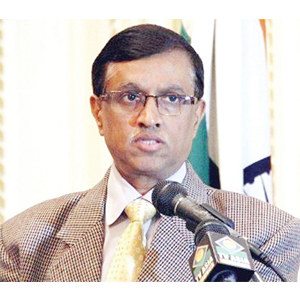
  • Dnyaneshwar M. Mulay CONSUL GENERAL OF INDIA NEW YORK

    Dnyaneshwar M. Mulay CONSUL GENERAL OF INDIA NEW YORK

    I am delighted to learn that The Indian Panorama is bringing out a special issue to mark America’s Independence Day on 4th July 2014. On this happy occasion, I would like to extend my warm greetings to all US Citizens. India-U.S. bilateral relations have developed into a global strategic partnership, based on increasing convergence of interests on bilateral, regional and global issues. Regular exchange of high level political visits coupled with wide ranging dialogue architecture has enabled sustained momentum to bilateral cooperation and helped establish a long-term framework for India-U.S. strategic partnership.

    The bilateral cooperation is now broad-based and multi-sectoral, covering trade and investment, defence and security, education, science and technology, cyber security, high-technology, civil nuclear energy, space technology and applications, clean energy, environment, agriculture and health. People to people interaction provide further vitality and strength to bilateral relationship. Bilateral partnership enjoys bipartisan support in both our countries.

    I want to congratulate the Indian American community for the role that they are playing in advancing and strengthening the USA as also for their contribution in developing and promoting the India-US relationship. The Indian American community epitomize strong family values, educational excellence, creativity, innovation, high standards of professionalism, and dedication to the core democratic principles and traditions. I hope that the Indian American community will continue to play its vital role in making India and USA relationship stronger for mutual benefits of both the countries. I once again convey my greetings and best wishes to the readers of The Indian Panorama on this auspicious and happy occasion.

  • Saleem Iqbal  President & CEO HAB BANK, New York

    Saleem Iqbal President & CEO HAB BANK, New York

    On behalf of HAB BANK, I would like to extend Independence Day greetings to our community in the tri-state area. As we celebrate Independence Day this year, we can take pride in our achievements as a community despite the challenges that lie ahead. We have, in a short span of time, been able to establish ourselves as a community engaged at so many levels, culturally and economically, and determined to pursue our American dream of achieving success in our adopted homeland. Our South Asian community has become part and parcel of our great country and collectively, we will continue to uphold and preserve American values and tradition of democracy in the years to come.

    HAB BANK, since is inception in 1983 as a New York State chartered bank, has played a vital role in nurturing communities through its network of branches in New York, New Jersey, and California. We are proud to be first bank in the U.S. solely focused on meeting and serving the banking needs of South Asian community working and living in the Tri-State and greater Los Angeles areas. We are honored to join in celebrating our Nation’s birthday. May we come together in the enduring spirit of America to achieve our dreams and aspirations.! I wish you all the best for a happy Fourth of July. May God Bless all those who serve, and may God Bless the United States of America!

  • This Independence day, resolve to change the course of history

    This Independence day, resolve to change the course of history

    As the nation prepares to celebrate 4th of July I am reminded of the long and grim struggle that American people had to wage to secure their independence.

    The indomitable spirit of those who led the struggle fills every generation with awe and admiration for their spectacular achievement. 1776 to 2011 has been a long period. America has moved on from strength to strength.

    From a bipolar world a couple of years ago the world seems to have become unipolar, with America dictating the rest of the world. The world has witnessed time and again the heroism of American people. Drawn into conflicts, and there have been many, America has always given enough evidence of its resolve to win and stay on top, minor debacles notwithstanding.

    A proud nation, America has taken adversities in its stride. However, it is not that America does not make mistakes. But there have always been amends post mistakes too. But the last couple of years found America piling up these mistakes and inviting trouble.

    It is necessary that American leadership makes amends for the terrible chain of mistakes having been made during the last few years. One, America has realized the futility of engaging in avoidable conflicts abroad. Barack Obama deserves all appreciation for the gradual disengagement in these conflicts which has caused loss of valuable American lives and drained the resources of the country.

    These conflicts have been a serious drain on the shrunk resources of a nation that has huge debt burden. These conflicts have taken a heavy toll of lives of sons and daughters of America. These conflicts have created enemies of America. America must say no to fighting wars of and for others. The economic scenario as of today offers no satisfaction.

    The unemployment rate, though steadily improving in the last couple of months, is quite disturbing. The real estate is in a shambles, with foreclosures mounting and families losing their homes which they had made with such great love. Businesses are closing and jobs are vanishing. Then there are social welfare aspects. Education and healthcare.

    If America cannot come up with better educational facilities for its children and healthcare for all its citizenry, all claims of America being number one nation of the world amount to empty bragging. American lawmakers on both sides of the aisle, instead of dying to push their ideological agenda, need to introspect and look only at what America and Americans need.

    If they cannot do enough for America when it is passing through hard times they are doing a great disservice to our forefathers who dreamed of an America where each could realize his dream. On this 4th of July, let each American pledge to emulate the spirit of our founding forefathers, resolving to overcome all obstacles to the happiness of the common American man, woman and child. Let each American realize that it is in him to change the course of history and that he will change it. Yes, he can. Happy Independence Day!

  • Melinda Katz President Borough of Queens

    Melinda Katz President Borough of Queens

    Dear Friends: On behalf of the 2.3 million residents of the Borough of Queens, I would like to extend greetings to all the readers of The Indian Panorama and wish you all a very Happy American Independence Day! I am also very pleased that the editors of The Indian Panorama have chosen to publish this special issue in recognition of the 238th anniversary of the independence of the United States of America. When the founders of our country issued the Declaration of Independence, they did more than just establish a single new nation. They actually expressed universal principles about the equality of all people and about how all of us throughout the world have the right to life, liberty and the pursuit of happiness.

    Thanks to the wisdom and foresight of those founders, members of our multicultural American society enjoy equality under the law and the freedom to pursue their dreams and aspirations without fear of persecution. The millions of Americans who have connections to South Asia are among those who experience this equality and freedom. I therefore hope the members of our country’s South Asian community fully enjoy the wonderful celebrations that will mark Independence Day across our great country. I congratulate the editors of The Indian Panorama for producing this special issue and I thank them for allowing me to contribute this letter to their publication.

    I would also like to invite all the readers of this fine newspaper to visit Queens, the most diverse county in the United States and the home of a thriving South Asian community. We call Queens “The World’s Borough” because our residents include immigrants from more than 100 countries and speakers of more than 160 languages.

    But despite our cultural and linguistic differences, we all share in that desire for equality and liberty that our nation’s founders knew was universal. That’s what makes Queens uniquely American. Thanks again to the editors of The Indian Panorama for allowing me to contribute this letter. Happy Independence Day to you all!

  • Fraud dispute rages ahead of Afghan election result

    Fraud dispute rages ahead of Afghan election result

    KABUL (TIP): Afghan authorities faced growing pressure on July 3 to open a full anti-fraud probe into the presidential election as EU observers described polling data as “very worrying” and one candidate confirmed he would reject the result.

    Abdullah Abdullah, who is reported to be losing the vote count, dismissed plans for a partial audit of the ballots and said he would not accept the outcome due for release Monday — pitching the election into further turmoil. The June 14 election run-off has been mired in allegations of cheating, with Abdullah and his poll rival Ashraf Ghani at loggerheads in a dispute that threatens Afghanistan’s first democratic transfer of power.

    US-led allies who have fought a 13-year war against Taliban militants and spent billions of dollars in aid are eager to avoid a prolonged power struggle in Kabul. But a risky political stalemate looms at a time when Afghan security forces are taking on the battle against the resilient Taliban insurgency as NATO military forces depart.

    The Taliban fired rockets into Kabul international airport on Thursday, destroying President Hamid Karzai’s helicopter and damaging three other choppers in an attack that underlined the insurgent threat. “We will not accept the preliminary results that are to be announced Monday because the fake and clean votes have not been separated,” Abdullah’s spokesman Baryalai Arsalayee told reporters.

    “The process is still not transparent, and massive fraud has not been addressed.” – Fraud sparks international concern – Once a front-runner in the race, alleges he was the victim of “industrial-scale” ballot-box stuffing, with many more votes than voters registered in some areas. Ghani claims to have won fairly by more than one million votes and accuses Abdullah of refusing to accept defeat — raising the prospect of a messy election aftermath.

    European Union observers on Thursday voiced growing international concern over fraud and called for an audit of suspicious votes to be expanded from 2,000 to 6,000 polling stations — about a quarter of all ballot boxes. “I have serious concerns about a significant number of polling stations,” EU chief election observer Thijs Berman said.

    “I have no conclusions on possible fraud because this you can only do when you have done an in-depth audit, but the indications are very worrying. “I insist on the necessity to enlarge the audit.” Ghani has complained that the delayed result breaks promises to stick to the election timetable, and has demanded that the preliminary result is revealed on Monday. Ethnic tensions are rising over the deadlock, according to the UN mission, which pointed to fears of instability as rhetoric between rival supporters sharpens.

    “We hope Dr. Abdullah comes back (from his boycott) and establishes relations with the commission again,” Ahmad Yousuf Nuristani, the Independent Election Commission chief, said on July 2

  • Gale A. Brewer

    Gale A. Brewer

    Manhattan Borough President

    Dear Friends: It is my great pleasure to celebrate The Indian Panorama’s special issue that will honor America’s Independence Day. This incredible publication is an indispensable source of news that is both pertinent to America’s South Asian community and the nation as whole asdemonstrated by the paper’s communication ofSouth Asia’s crucial current events to the United States.

    The Indian Panorama is a weekly newspaper that has served the tri-state area of New York, New Jersey, and Connecticut since its founding in 2006, but has extended its distribution to many cities across the country as well. What is truly impressive about The Indian Panorama is its ability to unifyworldwide news with the close-knit quality that so deeply characterizes South Asian culture.

    Its devotion to the South Asian community truly epitomizes the unique multicultural identity of this nation. Thus, I join you in honoring the publication of The Indian Panorama’s special Fourth of July issue, which will further demonstrate this newspaper’s dedication to the growth of America and its multicultural character. On this very special occasion, please extend my best wishes to the readers and everyone at The Indian Panorama

  • UN decries reports Australia handing back Sri Lanka Tamil asylum seekers

    UN decries reports Australia handing back Sri Lanka Tamil asylum seekers

    SYDNEY/COLOMBO: The United Nations has expressed “profound concern” about Australia’s handling of asylum seekers amid reports that scores of Sri Lankans will be handed over to their country’s navy after only a brief assessment by Australian authorities.

    Two boats carrying more than 200 Tamil asylum seekers from Sri Lanka were intercepted by Australian border security forces in the Indian Ocean in recent days and either have been or will be transferred to the Sri Lankan navy, Australian media said. An Australian source with knowledge of the operation said the intention was to carry out the transfer on Friday, but the situation was fluid.

    The prospect of a risky mid-ocean transfer of Tamil asylum seekers and their return to Sri Lanka has sparked criticism of Australia’s tough immigration policy. Sri Lanka is facing heavy pressure from rights groups and the West for alleged human rights violations during the final phase of the war against Tamil separatists which ended in 2009.

    It says many asylum seekers are economic migrants, but rights groups say Tamils seek asylum to prevent torture, rape, and other violence at the hands of the military. Australia’s government has not confirmed any details of the incident and refuses to comment on what it calls operational matters regarding its “Operation Sovereign Borders” programme.

    The UNHCR said it did not have official confirmation of the incidents but said it had followed “with profound concern recent reports in the media and from the community” about interceptions and assessment of claims for asylum. “International law prescribes that no individual can be returned involuntarily to a country in which he or she has a well-founded fear of persecution,” UNHCR said in a statement late on Thursday.

    Sri Lankan officials have given conflicting accounts about whether their navy has been involved. Government spokesman Keheliya Rambukwella said on Thursday that the navy had agreed to accept the asylum seekers but changed his response after questioning from reporters. “I really don’t know where we stand,” he said.

    Two other government officials said the navy would receive the boat people from its Australian counterpart. Forcing people seeking refugee protection back to their country of origin without properly investigating their claims is a flagrant breach of the Refugee Convention and international law, the Refugee Council of Australia said.

    “For asylum seekers, this is a matter of life and death, particularly in Sri Lanka which has a long history of political violence on a scale unimaginable to Australians,” Refugee Council of Australia chief executive officer Paul Power said. Australian Prime Minister Tony Abbott, who came to power last September partly because of his tough stance on asylum seekers, declined to comment, saying only that it was no secret that boats had been turned back under the policy.

    “I want to make this observation,” he said. “Sri Lanka is not everyone’s idea of an ideal society, but it is at peace.” Australia has offshore detention centres in the impoverished South Pacific nations of Papua New Guinea and Nauru capable of holding thousands. About 16,000 asylum seekers came on 220 boats to Australia in the first seven months of last year but the government says there have been no illegal boat arrivals since December 2013.

  • Ashok Kumar Garg

    Ashok Kumar Garg

    Chief Executive (US Operations) Bank Of Baroda

    34

  • Taliban rocket destroys Afghan president’s helicopter

    Taliban rocket destroys Afghan president’s helicopter

    KABUL (TIP): Taliban insurgents fired rockets into Kabul airport on Thursday, destroying the Afghan president’s parked helicopter and damaging three other choppers, officials said, in an attack that underlined security fears in the capital.

    The two rockets caused no casualties at the airport, which includes a large NATO base as well as a terminal for civilian flights to cities such as Dubai, New Delhi and Istanbul. “Three helicopters were damaged and can be repaired, while President Hamid Karzai’s helicopter was destroyed,” Major General Afzal Aman, director general of military operations, told AFP.

    Mohammad Yaqub Rassouli, head of the airport, said that firefighters rushed to put out a blaze in a hangar as some flights were halted. Taliban spokesman Zabihullah Mujahid claimed responsibility for the attack on the heavily-guarded site, which has been targeted several times in recent years, in an email sent to AFP. “There is loss of life and financial losses, and several planes were torched,” the Taliban said.

    The insurgents often exaggerate the impact of their attacks. The strike came a day after a Taliban suicide bomber in Kabul killed eight military officers travelling on a military bus.The Afghan capital has been relatively peaceful since the presidential election on June 14, though there have been street demonstrations as politicians are locked in a dispute over vote fraud.All NATO combat troops will leave Afghanistan by December, with about 10,000 US troops staying into next year if the new president signs a security deal with Washington.

  • BIKANER: EXPLORE THE REALTY OF RAJASTHAN

    BIKANER: EXPLORE THE REALTY OF RAJASTHAN

    BIKANER- If ever beauty has bloomed in a desert, it has been at Bikaner. Founded in 1488 AD by Rao Bika Ji, it’s located in north west part of Rajasthan state in INDIA.The imposing palaces, beautiful and richly sculptured temples of red and yellow sand stones display some of the finest creations of Rajput civilization. It’s lust for “dessert”or affection for “desert” that tickles every heart to visit Bikaner.

    TOURIST ATTRACTIONS

    7

    Junagarh Fort

    This fort was built by Raja Rai Singhji, the sixth ruler of Bikaner, who ruled form 1571 to 1612 AD. Raja Rai Singhji could Marshal the revenues of a Kingdom increased by the conquest of half Marwar and grant of half Gujrat and made use of ample funds from Jodhpur and Western Deccan for the construction of this fort.

    A contemporary of Mughal Emperor Akbar and Emperor Jehangir, he held a very high rank in Junagarh Fort, Bikaner the Imperial court. As a reward for this services as military commander, he was granted fields of Gujrat and Burhanpur by the Emperor. During his tenure in imperial service he traveled far and wide which gave him vision and great ideas about art and architecture and we can see how meticulously these ideas were incorporated in the architectural styles of his building in Junagarh fort.

    Lallgarh Palace

    The architectural masterpiece in red sandstone was built by Maharaja Ganga Sing (1881 AD-1942 AD) in memory of his father Maharaja Lall Singh between 1902 – 1926.This magnificent palace is an example of pure Rajput martial architecture. Designed by Sir Swinton Jacob, this palace has several grand halls, lounges, cupolas and pavilions.

    The exotic palace has magnificent pillars, richly carved fire mantles , Italian colonnades and motif of lotus in full bloom, adding to the magic of this jewel of the desert. Walls of palaces are reminiscent of the past vintage etchings, hunting trophies and old portraits. The treasure trove where the guests can spend hours ‘walking in the past’.

    The palace has it’s own museum and library (the fourth largest in the world), clay pigeon trap and skeet shooting traps facilities at adjoining ranges. Palace has wild peacocks spreading their feathers at almost every step flowering rows of bougainvillea. Bikaner royal family still lives in part of the palace. A portion of palace is now a hotel.

    Gajner Palace

    Gajner Palace -a summer resort of Bikaner Maharajas -has often been described as ‘an incomparable jewel in the Thar desert’. Built by Maharaja Ganga Singh ji of Bikaner, palace stands on the embankment of a lake .The palace was used by Maharaja for grand shoots and lavish entertainment.

    Royalty, both Indian as well as international, Viceroys and other dignitaries have been entertained at this grand palace. The architecture of Gajner palace is truly outstanding. Built in red sandstone with intricately carved pillars, jharokhas and screens , the craftsmanship here is amazing.

    Palace is surrounded by beautiful wooded area, now a preserved sanctuary which provides shelter to chinkaras , blackbucks, blue bull (neel gai) and flocks of imperial sand grouse. A part of palace has been transformed into hotel.

    Prachina Museum

    Keeping with the rich and glorious past of Bikaner, daughter of present Maharaja Narendra Singh Ji recently (Oct, 2000) opened a museum “PRACHINA”. It is an endeavor to recreate the past and highlight the pace of modernization activated with times and a representation of regional museum as there was a lacuna of courtly tradition and craft Museum in Bikaner.

    “PRACHINA” is an effort to highlight the aristocratic patronage which thrived and survived in Bikaner. This museum hopes to build and develop a cultural center to revive the dying craft of Bikaner and amalgamate it to present life.

    Royal Cenotaphs

    Devi Kund sagar is situated 8 km in the east of city. The members of ruling family of Bikaner subsequent to Jet Singh, the great grandson of Rao Bikaji, have been cremated here.On the sides of reservoir of water lie the Royal cenotaphs of rulers of Bikaner dynasty from Rao Kalyan Singhji to last Maharaji Karni Singhji as well as those of their wives and other important members of families.

    There are cenotaphs (Chhatries) of 22 SATIES of royal family prior to Maharaja Gaj Sigh Ji (1745-1787). There is also one cenotaph of a SATA (male sati) of a ruler.The architecture of the cenotaphs is the prime attraction of this place. Maharaja Surat Singh’s Chhatri is built entirely in white marble with spectacular Rajput paintings on its ceiling. Close by is a Dargah of Rustal Ali Shah Peer which is held in high esteem by muslim community and other people.

  • India ready to extradite Nur Hossain

    India ready to extradite Nur Hossain

    DHAKA (TIP): India has agreed to send back Nur Hossain, the prime suspect in a multiple-murder case in Bangladesh, foreign minister AH Mahmood Ali told parliament on July 2. Replying to a query from Jatiya Party member Pir Fazlur Rahman, the minister said: “The matter was discussed during the recent visit of Indian foreign minister Sushma Swaraj. The Indian government has agreed to extradite him.”

    Hossain and his two accomplices were arrested June 15 from an apartment at Baguiati, close to Kolkata’s Netaji Subhas Chandra Bose International Airport, bdnews24.com reported. A councillor in Bangladesh’s Narayanganj and prime accused in the murder of seven people, Hosain has been booked under the Arms Act and Foreigners Registration Act for illegal trespass into Indian territory without valid travel documents and for illegal possession of a weapon.

    All three are currently in police custody. Hossain’s arrest was made nearly one and a half months in India after the seven murders in Narayanganj that shook the country. Nazrul Islam, a city councillor, senior lawyer Chandan Kumar Sarkar and five others were abducted April 27.

    Their decomposed bodies were recovered from the Shitalakhyya river several days later. Hossain went off the radar after the families of the victims alleged he orchestrated the abductions and murders. Bangladesh sought the help of the Interpol May 22 to nab him, but it had also informed India to check out reports that Hossain had slipped into Kolkata. After his arrest, the Bangladesh government began the process to bring him back from Kolkata under the extradition treaty.

  • Pakistan parliament passes tough anti-terror law amid military offensive

    Pakistan parliament passes tough anti-terror law amid military offensive

    ISLAMABAD (TIP): Amid an allout military operation against the Taliban in North Waziristan, Pakistan’s parliament passed a controversial anti-terror law on July 2, giving security forces unbridled powers, including shoot-at-sight suspects involved in terrorism, arson and murder.

    The “Protection of Pakistan Bill 2014” empowers an official of grade 15 (non gazetted officers/junior officers/ JCOs) and above to issue such orders. It also allows a suspect to be kept under detention for a period of 60 days after getting judicial remand. Under the act, security forces can conduct search operations without securing warrant from a judicial officer.

    To allay apprehensions of rights groups, it envisages detention centre under the supervision of courts and provisions for judicial inquiry, if anyone was killed by security agencies under its ambit. Another important feature is imprisonment for at least 20 years for those convicted of militancy. Cybercrimes and offences related to information technology, as well as the crossing of national boundaries illegally have been included in the list of scheduled offences. Punishments under these offences can be extended to 20 years.

    The bill was adopted with the Pakistan Peoples Party (PPP) voting in favour of the resolution. It will remain in force for two years. The draft bill was introduced in the National Assembly or lower house, by minister of science and technology Zahid Hamid on behalf of interior minister Chaudhry Nisar Ali Khan. Earlier on July 1, the senate or upper house had unanimously approved the bill.

    Hamid said the bill was of “utmost importance” due to the military operation in North Waziristan, to enable security forces to take prompt action against the rebels. Pakistan government had tried to negotiate a peace deal with the banned militant group to find a solution to the decade-long insurgency that has claimed over 40,000 lives. But peace talks failed and after a series of terror attacks, including one on Karachi international airport, the government on June 15 launched an all-out offensive against foreign and local militants.

    So far a total of 386 militants and 19 soldiers have been killed in the offensive. Meanwhile, Pakistan’s human rights bodies and opposition criticized the bill saying it gives unbridled powers to security agencies. Rightwing Jamaat-i-Islami opposed the bill saying it violated certain human rights provisions of the Constitution. Cricketer-turned-politician Imran Khan’s Pakistan Tehreek-e-Insaf did not participate in the voting.

  • Ukraine’s president shakes up military leadership

    Ukraine’s president shakes up military leadership

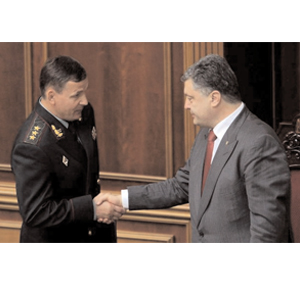
    KIEV, UKRAINE (TIP): Ukrainian President Petro Poroshenko shook up his faltering military on July 3, appointing a new defense minister and top general while speaking angrily about the years of decay and corruption that left the forces unable to deal effectively with the well-armed eastern insurgency. His tougher tone, analysts say, reflects public pressure to continue the fight against the insurgents in the regions bordering Russia — even with a rickety military that’s had little success. Poroshenko denounced the “complete collapse” of the government’s ability to supply the armed forces in a sometimes angry, finger-wagging speech in parliament.

    He won quick approval for his choice of former top police official Valery Heletey as defense minister, replacing Mikhailo Koval. He also tapped Lt. Gen. Viktor Muzhenko as chief of the military’s general staff and Yury Kosyuk, an agriculture magnate and one of Ukraine’s richest men, to oversee defense issues in the presidential administration and to help “purge the army of thieves and grafters.” Accusations of corruption have been rife as Kiev’s operation against the rebels continues.

    “Today the revival of the army is starting from scratch, an army which is capable of fighting and winning,” Poroshenko said in parliament. Poroshenko’s shakeup underscores the complex job he faces of making peace overtures and at the same time suppressing the insurgency that threatens to tear his country apart or create a permanent twilight zone beyond government control. Other pressures come from outside: Ukraine and the West say Russia is helping arm the rebels and letting its citizens cross the border to fight, while key allies France and Germany are pushing Poroshenko to pursue talks over attacks. President Barack Obama consulted with German Chancellor Angela Merkel by phone Thursday about how to get peace talks back on track. The White House said they discussed diplomatic efforts to bring about a lasting ceasefire and agreed that the US and Europe should levy further costs on Russia if it doesn’t de-escalate the situation quickly.

    Poroshenko’s forceful words and demeanor Thursday contrasted with his emphasis on starting a peace process voiced in his inaugural address June 7. He declared a unilateral cease-fire for 10 days in hopes rebels would lay down their arms and join talks. But the ceasefire was repeatedly violated and ultimately expired. Foreign ministers from Ukraine, Russia, Germany and France are pushing to get talks going again by Saturday, with the aim of achieving a cease-fire honored by both sides. Rebels in the eastern regions of Donetsk and Luhansk, where more Russian speakers live, have declared independence and occupied government buildings.

    The insurrection, in which more than 400 people have died, started after pro-Russian President Viktor Yanukovych was driven from office by a protest movement among people wanting closer ties with the European Union instead of Russia. Russia called Yanukovych’s ouster a coup by radical nationalists and seized Ukraine’s Russian-speaking Crimea region. Poroshenko was elected in a special election May 25 to replace Yanukovych and faces high expectations. “The level of impatience in society is very high,” said Alyona Getmanchuk, director of the Institute of World Policy research institute in Kiev.

    “They want to see results.” Getmanchuk said Poroshenko is careful to meet with a wide range of people, a habit he cultivated when serving as foreign minister in an earlier government, and knows what people are thinking. News media and traffic on social media urge action. The mood was underscored when members of volunteer battalions demonstrated in front of his office, demanding an end to the cease-fire. Getmanchuk cautioned that much of the desire for action is based on fear of Russia and anger at the loss of life suffered already, and “doesn’t consist of serious analysis of possible consequences.

    ” In Donetsk many people just want the fighting to be over. The city center was the scene of a gunfight in broad daylight Tuesday when separatists from the selfdescribed Donetsk People’s Republic attacked a police building, “We are tired of war. Our only wish is for all of this to be over so we can work in peace,” said Anton Orlets, a 58-yearold businessman. He expressed “hope that the new appointments will help the Ukrainian army achieve success, which so far has not been terribly noticeable in Donbass.”

  • PAKISTAN LAUNCHES GROUND ATTACK ON JIHADIS IN NORTH WAZIRISTAN

    PAKISTAN LAUNCHES GROUND ATTACK ON JIHADIS IN NORTH WAZIRISTAN

    ISLAMABAD (TIP): Pakistan launched a ground offensive against militant strongholds near the Afghan border on July 1 after evacuating nearly half a million people from the tribal region, the army said.

    The ground offensive is the second phase of a long awaited operation against militants in the North Waziristan tribal area, a lawless, mountainous stretch of land in northwest Pakistan. The military announced the operation on June 15 but has mostly limited its tactics to airstrikes while giving time to hundreds of thousands of people to pack up their belongings and leave to safer areas.

    The army began a houseto-house search in Miran Shah, the main town in North Waziristan, the army said. It said 15 militants were killed in the initial ground advance. The town is also the headquarters for a number of different militant groups such as the Pakistani Taliban.

  • Jinnah sister sent water bill 47 years after death

    Jinnah sister sent water bill 47 years after death

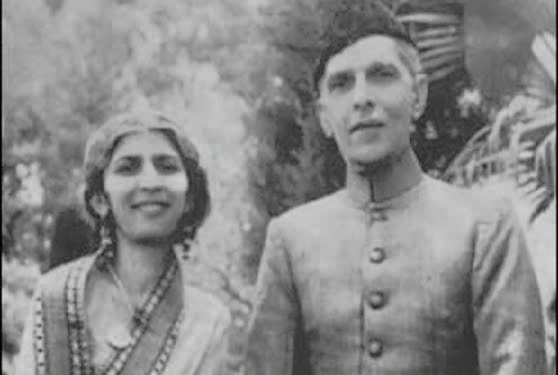
    KARACHI: Pakistani authorities here have sent a water bill amounting to Pakistani Rs 263,774 to Fatima Jinnah, the sister of the country’s founder Muhammad Ali Jinnah, 47 years after her death.

    The Karachi Water and Sewerage Board has sent the bill to Fatima Jinnah and she has been directed to pay the amount within 10 days or the connection of water and sewerage could be disconnected, the News reported. It said that according to the Land Revenue Act, the property could be confiscated, auctioned and a fine can be imposed.

  • Overpass collapse kills two in Brazil World Cup city

    Overpass collapse kills two in Brazil World Cup city

    BELO HORIZONTE, BRAZIL (TIP): An unfinished overpass being built for the World Cup crashed down on several vehicles in Brazil’s southeastern city of Belo Horizonte on July 3, killing at least two people and injuring 19. Globo television images showed the front of a yellow bus crushed under a large stretch of the fallen highway, which is about five kilometers (three miles) from the city’s World Cup stadium and was being built as part of delayed infrastructure improvements for the tournament.

    “The overpass was in the final stages of construction and they were taking down the scaffolding when the accident happened,” a fire brigade spokesman told AFP. Two people were killed and 19 injured, the health agency of the state of Minas Gerais said, up from an earlier toll of one dead and 10 hurt. A firefighters’ spokesman said 13 people were rescued from the bus unscathed but the woman driver was killed. car was also crushed but it was not immediately known how many people were inside and what their condition was, firefighter spokesman Edgard Estevo da Silva told reporters. “The vehicle is completely under the overpass,” he said. Two trucks belonging to the construction company were also hit but the firm said nobody was inside them at the time, Silva said. A total of 14 firefighting teams were at the scene.

    The structure, which was begun last year, is in the Sao Joao Batista district of the city. A public works spokesman for the city hall told AFP that the overpass had been due to carry an express bus service through the city. “All mayoralty staff have been mobilized — the priority is to attend to the victims,” said the spokesman. Belo Horizonte’s Mineirao Stadium has hosted five World Cup matches and is due to stage a semi-final next Tuesday. The Brazil World Cup has been dogged by delays to stadiums and infrastructure, and there were several accidents during construction of the stadiums. Just three days before the World Cup began on June 12, another accident in Brazil’s business hub Sao Paulo killed one worker and injured two when an unfinished monorail collapsed.

  • UK had plan to train and equip 100,000 Syrian rebels: BBC

    UK had plan to train and equip 100,000 Syrian rebels: BBC

    LONDON (TIP): Britain had planned to train and equip a 100,000-strong rebel army to defeat Syrian President Bashar al-Assad before it was deemed to be too risky, BBC Newsnight reported on July 3. The BBC said the secret “extract, equip, train” proposal, put forward two years ago, was the idea of General David Richards, then chief of Britain’s defence. A spokesman for the UK Ministry of Defence declined to comment on the article.

    The secret initiative was considered by Prime Minister David Cameron and the National Security Council, as well as US officials, the news agency said, citing Whitehall sources.The BBC said Richards’s initiative proposed vetting and training “a substantial army” of moderate Syrian rebels at bases in Turkey and Jordan.The United Nations says some 10.8 million people in Syria need assistance, of which 4.7 million are in hard-to-reach areas, while another three million have fled during the three-year uprising against al-Assad.

  • An Enchanting Shaam-e-Ghazal with Dr. Radhika Chopra

    An Enchanting Shaam-e-Ghazal with Dr. Radhika Chopra

    Zafar Iqbal ROCKVILLE, MD (TIP):

    Hamri attariya pe aao sanvariya, dekha dekhi balam hoee jaae, Dr. Radhika Chopra started the program by singing the famous Dadra in Bhairvi style paying tribute to ghazal and thumri queen, Beguma Akhtar on her 100th birth anniversary.

    Music lovers from Metropolitan Washington came in large numbers to listen to mesmerizing performance by famous Indianghazal singer Dr. Radhika Chopra at a Shaam-e-Ghazal program organized by the Aligarh Alumni Association (AAA), Washington DC on May 30, 2014 in Rockville, MD.


    8
    Haroon Alam, Dr. Radhika Chopra, and Humayum Khan giving a memorable performance

    A large number of dignitaries and officials representing various Pakistani and Indian American Community organizations in Metropolitan Washington area such as the University of Karachi Alumni Association (UKAA), Hyderabad Association of Greater Washington Area, the Global Organization of People of Indian Origin (GOPIO), and the Smithsonian Institutions were in attendance in addition to the AAA members.

    Welcoming the artists and guests, the AAA president Dr. Fazlur Rahman Khan said that the Association’s mission has been to bring people of South Asia together and develop a sense of community by organizing quality educational, cultural and literary programs.

    “This program is a series of events planned to celebrate the 40th anniversary of the Association,” he added. He also apprised the audience about the hallmark scholarship program of the Association that provides financial support to deserving students. He thanked all volunteers, especially Samina Ahmad for their effort to make this program a success.

    Dr. Chopra and accompanying artists Humayun Khan on Harmonium, Haroon Alam Khan on Tabla were introduced by Ms. Manjula Kumar of the Office of the Education and Public Service, Smithsonian Institution, Washington. In her remarks, Kumar traced artistic lineage of Radhika to legendary ghazal queen, Padma Bhushan Beguma Akhtar. Radhika learned the art ofghazal singing in classical style from Shanti Hiranand, the chief disciple of Begum Akhtar. Manjula also paid tribute to the Association for its contribution in enriching the literary and cultural life of this city.

    Radhika Chopra, with a golden voice, showed surprising level of stamina and endurance during her three-hour long performance and she showed no signs of fatigue or exhaustion or even slowing down. She had specially chosen some new compositions for this performance. The ones that stand out were composition by Ameer Khusrau, two ghazals of Faiz, and a classicalghazal of Qadeer Lackhnawi, originally sung by Begum Akhtar.

    Radhika took the audience through memory of yesteryears by singing Thumri, Dadra, or songs sung by the golden voices of past including Surraiya, Geeta Dutt, Noor Jahan, Jagjit Kaur, Mubarak Begum, Kundanlal Sehgal, Master Madan, and of course Begum Akhtar. She displayed mastery over the audience, keeping them engaged and involved not only by the magic of her singing, but also by her witty remarks and funny comments, displaying an unpretentious sense of humor.

    She described how much admiration she had for Noor Jahan while growing up in Jammu. In a very chaste Urdu, she traced transformation of Akhtari Bai Faizabadi to Begum Akhtar–her real idol in classical style of ghazal singing. It is not very often that one comes across a voice with soul and emotion with meticulous selection and flawless rendition of the poetic words. She was at ease, whether singing classical poetry of Ghalib, Seemab, and Momin, or of modern poets– Faiz Ahmad Faiz and Sahir Ludhiianvi.

    The program ended with concluding remarks by Dr. Moazzam Siddiqui, who also thanked Dr. Chopra and accompanying artists and the audience for their continued support. Masood Farshori, Secretary of the Association was the Master of Ceremony; he skillfully managed the time.

  • BOLIVIA CONGRESS ALLOWS CHILD LABOUR FROM AGE 10

    BOLIVIA CONGRESS ALLOWS CHILD LABOUR FROM AGE 10

    LA PAZ (TIP): Bolivian lawmakers have approved child workers as young as 10 years old, under a new law that lays out specific conditions for employing children. Congress passed the measure by consensus on July 2, requiring employers to follow certain criteria to ensure the physical and mental health of employed children, and to prevent child exploitation.

    “The age limit, as defined formally by the Code for Children and Adolescents, is 14 years old,” Senator Adolfo Mendoza said after the enactment of the bill, which he co-sponsored. But the new code allows exceptions, when specific legal criteria have been met, so that children may begin “working for others from age 12, which is allowed by international conventions, and self-employment from age 10.”

    The senator stressed that required factors include a voluntary decision from the child to work, consent from the parent or guardian and permission from the public ombudsman. “The request is then filed with the Labor Ministry,” Mendoza said. The previous code, which allowed no exceptions to the 14-year-old minimum, had prompted protests from critics who stressed that, in Bolivia, children must work from an early age out of necessity.

  • New Zealand MP says Rolf Harris groped her

    New Zealand MP says Rolf Harris groped her

    WELLINGTON (TIP): A New Zealand politician on July 4 recalled how Rolf Harris groped her when she was a radio reporter preparing to interview the now disgraced children’s entertainer in the mid-1980s. Maggie Barry, a sitting MP, said the incident gave her a chilling insight into the dark side of the Australian-born entertainer, who was convicted in a London court on Monday of a string of sex assaults against girls between 1968 and 1986. Barry said she was in her mid-20s and working at a regional radio station when she lined up an interview with Harris, who was touring the country, expecting a light-hearted encounter in keeping with his affable public persona.

    “(But) in the pre-record situation, when you’re testing the microphones and all the rest of it, he suddenly started with the wandering hands and groping,” she told Radio New Zealand. “When he put his hand on my leg I said ‘you can stop that right now’ and I stood up and said ‘you’re a sleazy creep’”. “At that point he got a bit nasty and the publicist came in and smoothed things over.”

    She said that after she called out Harris over his behaviour he “began to cut up rough (became angry) and protest and called me a couple of names” before the publicist intervened and he apologised. Barry said she never reported the incident because it was “on the absolute minor end of the scale” of the abuses committed by Harris and she had largely forgotten about it until his trial began. But she said it showed Harris thought he could act with impunity because of his fame and the situation could have been far more serious if he had molested someone who was younger or more vulnerable and not willing to stand up to him.

    “It seemed that he was pretty confident and arrogant if he thought he could try it on with someone like me,” she said. “When you look back with hindsight, seems that even 30 years ago he had been getting away with a lot.” Harris, 84, is due to be sentenced in Britain later Friday and faces the possibility of spending the rest of his life in jail. Since his conviction, a dozen more women have come forward to make fresh allegations against him.

  • Aspirin, smoking affect cancer

    Aspirin, smoking affect cancer

    New study shows that while regular use of aspirin reduces ageing of cancer genes, smoking can accelerate them. Scientists had discovered in the 1990s that regular use of aspirin over long periods of time decreases the risk of developing colorectal cancer by an average of 40 percent, but it is unknown how exactly the drug influences the cancer risk.

    According to a research led by Prof. Primo Schar, from the University of Basel and PD Dr. Kaspar Truninger, aspirin decreased the risk of cancer by slowing down certain aging processes of the genome, namely modifications that also play an important role in the development of tumors. In order to analyze the relationships between lifestyle and genome aging, the researchers examined intestinal tissue samples of 546 healthy women over 50 years of age.

    They compared agespecific changes of gene markers, so-called DNA methylations, with their lifestyle factors regarding aspirin use, smoking, body mass index and hormonal replacement therapy. The most significant effects were measured for aspirin use and smoking.

    Schar said that each cell’s genome was like a library full of bookmarks, and the cells know which genes to read with help of these bookmarks, so that they can fulfill their specialized tasks as skin, muscle or intestinal cells. First author of the study Dr. Faiza Noreen, added

  • US discloses secret Somalia military presence, up to 120 troops

    US discloses secret Somalia military presence, up to 120 troops

    WASHINGTON (TIP): US military advisors have secretly operated in Somalia since around 2007 and Washington plans to deepen its security assistance to help the country fend off threats by Islamist militant group al Shabaab, US officials said.

    The comments are the first detailed public acknowledgement of a US military presence in Somalia dating back since the US administration of George W. Bush and add to other signs of a deepening US commitment to Somalia’s government, which the Obama administration recognized last year.

    The deployments, consisting of up to 120 troops on the ground, go beyond the Pentagon’s January announcement that it had sent a handful of advisors in October. That was seen at the time as the first assignment of US troops to Somalia since 1993 when two US helicopters were shot down and 18 American troops killed in the “Black Hawk Down” disaster.

    The plans to further expand US military assistance coincide with increasing efforts by the Somali government and African Union peacekeepers to counter a bloody seven-year insurgent campaign by the al Qaeda-linked al Shabaab to impose strict Islamic law inside Somalia.

    Those US plans include greater military engagement and new funds for training and assistance for the Somali National Army (SNA), after years of working with the African Union Mission in Somalia, or AMISOM, which has about 22,000 troops in the country from Uganda, Kenya, Sierra Leone, Burundi, Djibouti and Ethiopia.

    “What you’ll see with this upcoming fiscal year is the beginning of engagement with the SNA proper,” said a US defense official, who declined to be identified. The next fiscal year starts in October. An Obama administration official told Reuters there were currently up to 120 US military personnel on the ground throughout Somalia and described them as trainers and advisors.

    “They’re not involved in combat,” the official told Reuters, speaking on condition of anonymity, adding that until last year, US military advisors had been working with AMISOM troop contributors, as opposed to Somali forces. President Barack Obama last year determined that Somalia could receive US military assistance.

    Another official said American forces over the years had provided advice and assistance in areas related to mission planning, small unit tactics, medical care, human rights and communications. The official said US forces in Somalia have also facilitated coordination, planning and communication between AMISOM troop contributors and Somali security forces

    Special operations

    The comments expand upon a little noticed section of a speech given early in June by Wendy Sherman, under secretary of state for political affairs. She publicly acknowledged that a “small contingent of US military personnel” including special operations forces had been present in parts of Somalia for several years.

    Still, it was not immediately clear from her remarks the extent to which US personnel had been operating. US special operations forces have staged high-profile raids in the past in Somalia, including an aborted attempt in October to capture an al Shabaab operative in the militant group’s stronghold of Barawe. US officials have acknowledged Washington’s support for AMISOM and Somalia’s struggle against al Shabaab.

    US Central Intelligence Agency officials have been known to operate in the country. US troop numbers on the ground in Somalia vary over time, the officials told Reuters. Deployments are “staggered” and “short-term,” one official said. But the Obama administration official added that there was overlap in the deployments to allow for a persistent presence on the ground.

  • China bans Ramzan fasting in Xinjiang

    China bans Ramzan fasting in Xinjiang

    BEIJING (TIP): China has ordered schools and government offices in the northwest Xinjiang region to ban fasting during the ongoing holy month of Ramzan. The ban orders are being issued through websites of schools and government agencies in the region as well. “Civil servants and students cannot take part in fasting and other religious activities,” said Turfan city’s commercial affairs bureau on its website.The local government in Xinjiang had earlier asked its employees to refrain from observing Ramzan saying fasting can hurt their health.”We remind everyone that they are not permitted to observe Ramadan fast,” the state-run Bozhou Radio and TV University said on its website. “We would enforce the ban on party members, teachers, and young people from taking part in Ramzan activities.

    ” The Chinese Communist Party and the local government in Xinjiang discourage large prayer meetings and gatherings due to fears of separatism. The fasting ban orders are believed to have come from Beijing’s Public Security Bureau. A weather bureau in Qaraqash County in western Xinjiang cited “instructions from higher authorities” while asking “all current and retired staff not to fast during Ramzan”.

    “China taking these kinds of coercive measures, restricting the faith of Uighurs, will create more conflict,” exiled World Uyghur Congress spokesman Dilxat Raxit said in a statement. “We call on China to ensure religious freedom for Uighurs and stop political repression of Ramzan.

  • POPPING DIETARY PILLS CAN HARM THE LIVER

    POPPING DIETARY PILLS CAN HARM THE LIVER

    Next time you gulp down your favourite dietary supplement, or even take that concentrated green tea pill to burn fat, think twice. New data suggests that the unregulated dietary supplements industry accounts for nearly 20 per cent of drug-related liver injuries, up from 7 per cent a decade ago.

    According to a new study, reported by New York Times, teenagers are not the only consumers at risk, many are middle-aged women who turn to dietary supplements that promise to burn fat or speed up weight loss. “When people buy these dietary supplements, it’s anybody’s guess as to what they’re getting,” Herbert L. Bonkovsky, director of the liver, digestive and metabolic disorders laboratory at Carolinas HealthCare System in Charlotte, NC, was quoted as saying. The supplement business is largely unregulated.

    In recent years, said NYT, critics of the industry have called for measures that would force companies to prove that their products are safe and made in accordance with strict manufacturing standards before they reach the market.

    The study found that many of the products implicated in liver injuries were bodybuilding supplements carrying unlisted steroids, and herbal pills and powders promising to increase energy and help consumers lose weight. The investigators looked at 845 patients with severe, drug-induced liver damage who were treated at hospitals from 2004 to 2012.

    It focused only on cases where the investigators ruled out other causes and blamed a drug or a supplement with a high degree of certainty. One product that patients used frequently was green tea extract, which contains catechins, a group of potent antioxidants that reputedly increase metabolism. “Most green tea pills are highly concentrated, containing many times the amount of catechins found in a single cup of green tea, which can be toxic to the liver,” said Bonkovsky.

    But liver injuries attributed to herbal supplements are more likely to be severe and result in liver transplants as these typically carry no information about side effects, said the report, quoting Victor Navarro, chairman of the Hepatology Division at Einstein Healthcare Network in Philadelphia. However, supplements like vitamins, minerals, probiotics and fish oil had not been linked to any adverse effect, the report added.