Month: July 2014

  • Egypt police crush pro-Morsi protests on anniversary

    Egypt police crush pro-Morsi protests on anniversary

    AIRO (TIP): Egyptian police swiftly quashed Islamist protests marking the first anniversary of the military ouster of president Mohamed Morsi on July 3, firing tear gas and arresting dozens of demonstrators. The protests are seen as a test of the Islamists’ strength, with the Muslim Brotherhood-led Anti Coup Alliance having issued an aggressive rallying cry demanding a “day of anger” to mark Morsi’s overthrow. Police closed off several main squares in Cairo and scoured neighbourhoods to prevent protests. In Cairo’s Ain Shams district, black-clad riot policemen fired tear gas and shotguns to disperse a few dozen protesters who burned tyres on a road. Police also dispersed other protesters elsewhere in the capital, security officials said.

    Thirty-nine wanted activists were arrested ahead of Thursday’s protests, and 157 suspected demonstrators were detained during the day, the interior ministry said. Morsi’s Muslim Brotherhood movement was listed as a terrorist group after his overthrow last July 3 and many of its leaders, including Morsi himself, have been jailed. The ex-army chief who toppled him, Abdel Fattah al- Sisi, has since replaced him as president. Security forces were also on high alert for further bombings, days after two senior policemen were killed when devices they were defusing outside the presidential palace exploded. Since Morsi’s ouster after a turbulent year in power, at least 1,400 people have been killed in street clashes and more than 15,000 have been imprisoned.

    Despite the crackdown, the Islamists have insisted on continuing their protests in the hope, they say, of making the country ungovernable for Sisi. Militants have launched scores of attacks that killed several hundred policemen and soldiers, mostly in the restive Sinai Peninsula. Rights groups say the crackdown has been the bloodiest seen in Egypt in decades. Among the Brotherhood leaders arrested was its supreme guide Mohamed Badie, who was sentenced to death in a speedy mass trial.

    “A surge in arbitrary arrests, detentions and harrowing incidents of torture and deaths in police custody recorded by Amnesty International provide strong evidence of the sharp deterioration in human rights in Egypt in the year since President Mohamed Morsi was ousted,” the Londonbased rights group said in a statement. The repression has further divided Egypt, a regional powerhouse and the Arab world’s most populous country, with a fast-growing population of 86 million stretching its dilapidated infrastructure. The military removed Morsi after days of huge protests demanding the resignation of the polarising Islamist.

    Almost 23 million voters went on to endorse Sisi in a May presidential election against a weak leftist candidate who garnered only several hundred thousand votes. Sisi’s supporters view him as a strong leader who can restore stability in the often tumultuous country. Yet the Brotherhood, which had won every vote since an uprising toppled veteran strongman Hosni Mubarak in 2011, still commands a loyal following. “Let us turn our wealth of revolutionary defiance into an overwhelming power,” the Anti Coup Alliance said in its statement on Wednesday. In violence, one man was killed overnight while apparently preparing an explosive device in an apartment south of Cairo, security officials said.

    In the capital itself, a small bomb went off inside a car near a military installation late Wednesday. Police arrested a man who was in the car, but another escaped. The government says the Brotherhood has been behind militant attacks, a charge the Islamist group denies.

  • OBAMA WORST US PRESIDENT SINCE WORLD WAR II: POLL

    OBAMA WORST US PRESIDENT SINCE WORLD WAR II: POLL

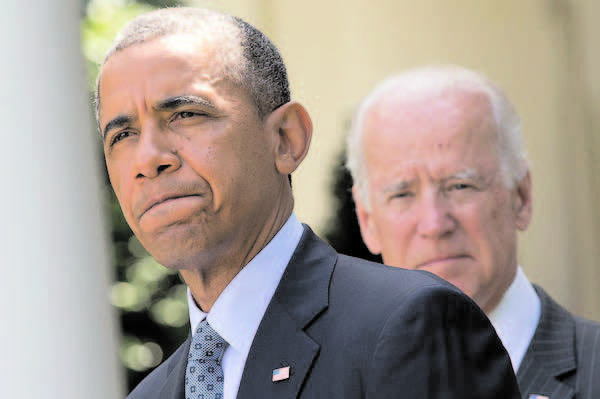
    WASHINGTON (TIP): Barack Obama is the worst US President since World War II, 33 per cent of Americans have said in a new poll released on July 2 which gave negative grades for him for his handling of key issues like the economy, foreign policy, terrorism, heatlhcare and environment.

    America would be better off if Republican Mitt Romney had won the 2012 presidential election, 45 per cent of voters say, while 38 per cent say the country would be worse off, according to the Quinnipiac University National Poll. American voters say 54 – 44 per cent that the Obama Administration is not competent running the government.


    6

    The president is paying attention to what his administration is doing, 47 per cent say, while 48 per cent say he does not pay enough attention, according to the poll. 52-year-old Obama, now in his second term, is the worst president since World War II, 33 per cent of American voters say while another 28 per cent pick his predecessor in the White House, President George W Bush.

    Ronald Reagan is the best president since WW II, 35 per cent of voters say, with 18 per cent for Bill Clinton, 15 per cent for John F Kennedy and 8 per cent for Obama, the independent Quinnipiac University poll finds.Among Democrats, 34 per cent say Clinton is the best president, with 18 per cent each for Obama and Kennedy. Obama has been a better president than George W Bush, 39 per cent of voters say, while 40 per cent say he is worse. Men say 43 – 36 per cent that Obama is worse than Bush while women say 42 – 38 per cent he is better.

    Obama is worse, Republicans say 79 – 7 per cent and independent voters say 41 – 31 per cent. Democrats say 78 – 4 per cent that he is better. Voters say by a narrow 37 – 34 per cent that Obama is better for the economy than Bush. Missing Mitt are Republicans 84 – 5 per cent and independent voters 47 – 33 per cent, while Democrats say 74 – 10 per cent that the US would be worse off with Romney.

    “Over the span of 69 years of American history and 12 presidencies, President Barack Obama finds himself with President George W Bush at the bottom of the popularity barrel,” said Tim Malloy, assistant director of the Quinnipiac University Poll. “Would Mitt have been a better fit? More voters in hindsight say yes,” the Quinnipiac press release says. A series of political controversies, economic woes and foreign policy crises have hit Obama’s reputation.

  • GO FROM FAT TO FIT WITH UNDERWATER WORKOUTS

    GO FROM FAT TO FIT WITH UNDERWATER WORKOUTS

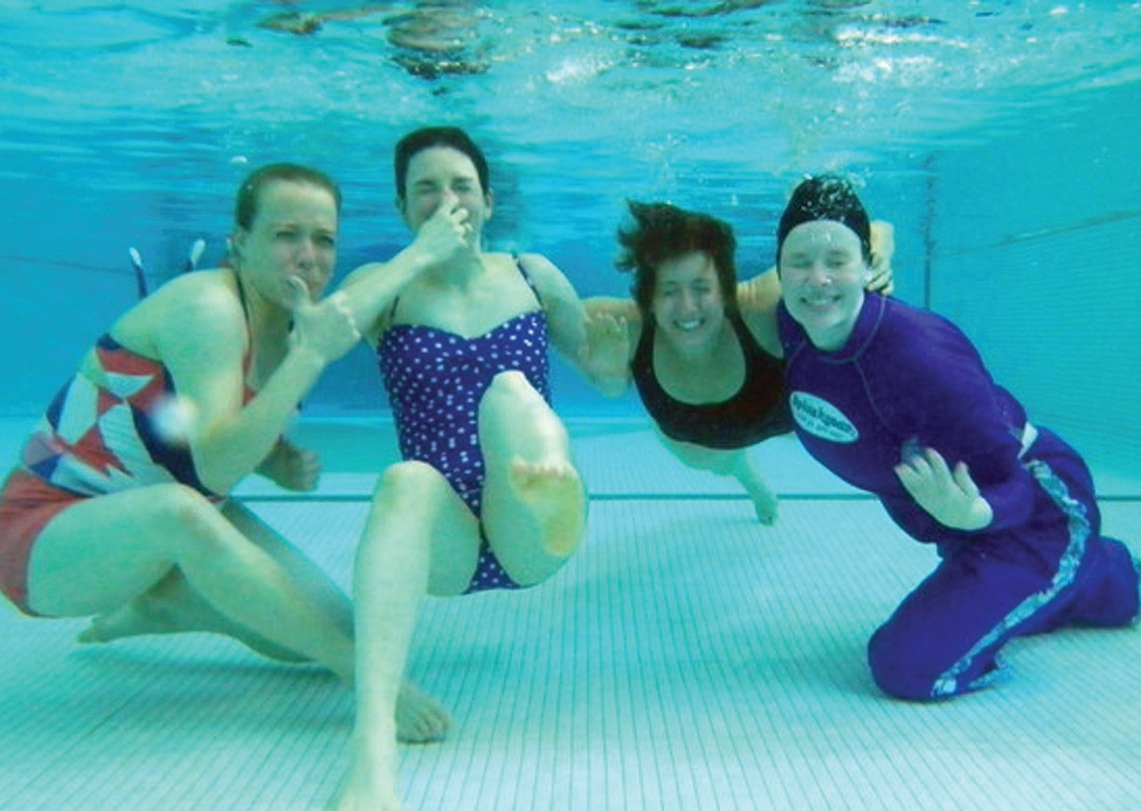
    Fitness enthusiasts are always on the lookout for innovative and simple workout techniques and are open to trying out new workouts. An underwater workout is one of the simplest and fastest ways to sculpt your body.

    This emerging trend has let pools and gyms offer an increasing number of classes such as Water Boxing, Aqua Step, using specialised equipment to extend the normal range of exercises.

    As a result, it has appealed to a wider range of people. It is a popular workout, because one can exercise underwater even while recovering from an injury or even if one suffers from health problems. It allows you to continue exercising without putting any stress on your injury, It’s the buoyancy of the water that reduces your weight, therefore putting significantly less stress on your joints, bones and muscles.

    Also, because your body is supported by water your heart rate is slightly lower, meaning aquatic therapy is relatively safe for obese individuals, pregnant women and those suffering from hypertension and heart disease.

    When under water, you can perform basically any type of exercises that you normally perform outside the water. Listed below are some easy underwater exercises that can be performed at the pool’s shallow end:

    Tread water

    Start your workout with treading water. This may seem like a simple workout, but it will actually involve all your muscle groups, as you try to float. Try floating for at least 3 minutes, if you are a beginner and move your way up to 5 or 10 minutes as you get more advanced. While performing this exercise, try to keep your back straight, as this will make sure that you work your abs as well.

    Knee-to-chest exercise

    This movement is performed while standing on one leg, which is slightly bent, and one leg outstretched in front while one hand holds onto the side of the pool. It strengthens and stretches the muscles in the leg, hip and lower back.

    Arm exercises

    Start with simple arm lifts (with or without weights). Being under water, your arms may feel lighter, but you will still work on your muscles. After lifting, you can rotate them clockwise and then in an anticlockwise direction.

    Lower body exercises

    This movement is performed with one leg outstretched and the supporting leg slightly bent while one hand holds onto the side of the pool. It strengthens and stretches the muscles in the leg, hip and lower back.

    Abs exercises

    The abdominal muscles can be included in the water workout. Walking under water, maintaining your abs tight can be a starting point to work on your abs. Then lift one of your legs as high as you can. Find a wall grip and with your back to the wall, grab on to it, keeping your arms straight. Tighten your abs and try to lift both your legs as high as you can. Lift the legs to one side to work on your oblique muscles as well.You can even perform crunches in the water, but you can perform these only if you feel comfortable with floating on the water while you do these exercises.

    Stretching exercises

    After a session of aqua aerobics or water workouts, you will have to stretch. Position yourself in front of one side of the pool, facing the wall. Hold on to the edge of the pool (or a wall grip if there is one). Try to place your feet on the side of the pool while grabbing on to the wall grip as well. Inhale and exhale, trying to move your hips back. You can perform the stretches even before you start the workout, so that you won’t get any injuries. Exercising in water is much safer than working out at the gym and there are lower chances of strains or pulled muscles.

  • From Slavery to Freedom The Journey of American Nation

    From Slavery to Freedom The Journey of American Nation

    Story of American Journey from British Occupation to slaving and racially discriminating its own citizens to vibrant Democracy to Crony Capitalism

    The journey of America from a little known land mass inhabited by primitives to what it is today is an interesting piece of history of man and evolution of a nation. Today, America is known to the world as a country built by immigrants and governed by immigrants. Whether some one’s ancestors arrived last year or last century, every American with the exception of Native Americans the Red Indians; has a family tree with roots somewhere else. People have come in to America from all continents- Europe, Africa, Latin America, Asia, and Australia. What a wonderful mosaic of nationalities here! America is currently the most religiously diverse nation in the world. It is the quintessential melting pot for world’s major religions, Americans honor the divine in mosques, churches, synagogues, temples, Monasteries, Gurudwaras and they are a multi-cultural, multi-religious nation. At the same time America belongs to the nonbelievers, too.

    The many nationalities and religions brought with them their culture, their value systems which we find have beautified and enriched the composite culture, yes, the composite culture, of America. But the making of America of today is a long story of a protracted and grim struggle, trials and travails. The Story of American Journey from British Occupation to slaving and racially discriminating its own citizens to evolving in to a vibrant and functional Democracy is worth studying. It is a long history, from the initial battles in the Revolutionary War which broke out in April 1775 for complete independence from Great Britain to the first commemoration by Philadelphia of independence on July 4, 1777.

    I will not go in to details of the history of the freedom struggle. I believe most of us have read about it either at school or at some other point. Nor will I dwell on the Flag of America, the national song of America, the manner of celebration of July 4th. These are commonplace knowledge. But I will certainly touch upon the human aspect of America’s evolution in to a great functional democracy. 1777 brought freedom from colonial rule. But it did not bring freedom to all human beings in America. Unfortunately some Americans especially the African Americans were excluded from the Independence and freedom.

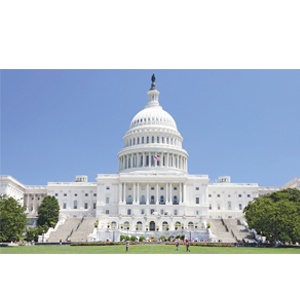
    Enslaved men women and children labored to make millions for their masters. The seeds of this slavery were planted with the birth of a nation built upon the labor derived from slave-wages and the contradiction-in-terms produced by claiming freedom and democracy while owning and profiting from slavery at the same time. Millions of enslaved people were bought and sold; practically one third of all Southerners lived in bondage. Even in Washington D C, slave auctions were a daily occurrence with chained human beings marched routinely in front of the Capital of the nation dedicated to the proposition of human freedom.

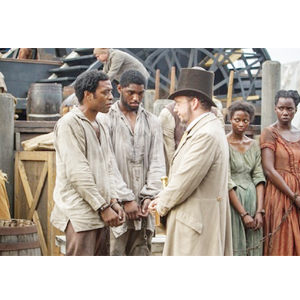
    The de-humanization of black-people being treated as animals, traded as commodity, tortured beyond human tolerance, murdered and lynched in cold blood and their separation from the common run of humanity gave birth to confrontation between North and South on the issue of slavery that tormented the nation for almost a century. I hope, you have seen the wonderful movie “12 Years a Slave” which deals precisely with this subject It took America more than a century to end discrimination. We remember that on August 28, 1963, 186 years after independence, a March to Washington was held with the active support of President Kennedy, in a collaborative effort of all of the major civil rights organizations.

    The march had six official goals:
    (1) meaningful civil rights laws
    (2) a massive federal works program
    (3) full and fair employment
    (4) decent housing
    (5) the right to vote
    (6) adequate integrated education. The major focus was on passage of the civil rights law that the Kennedy administration had proposed after the upheavals in 100 cities including Birmingham earlier in the summer. The march was a success, an estimated 200,000 to 300,000 demonstrators gathered in front of the Lincoln Memorial, where Dr King delivered his famous “I Have a Dream” speech. Dr King said even after one hundred years after signing of Emancipation Proclamation, (which Lincoln had signed on January 1, 1863) the Negro is still not free, the life of the Negro is still sadly crippled by the manacles of segregation and the chains of discrimination.

    One hundred years later, the Negro lives on a lonely island of poverty in the midst of a vast ocean of material prosperity and is still languished in the corners of American society and finds himself an exile in his own land. And so we’ve come here today to dramatize a shameful condition. He said, “And so let freedom ring from the prodigious hilltops of New Hampshire. Let freedom ring from the mighty mountains of New York. Let freedom ring from the heightening Alleghenies of Pennsylvania. Let freedom ring from the snow-capped Rockies of Colorado. Let freedom ring from the curvaceous slopes of California.

    But not only that: Let freedom ring from Stone Mountain of Georgia. Let freedom ring from Lookout Mountain of Tennessee. Let freedom ring from every hill and molehill of Mississippi. From every mountainside, let freedom ring. And when this happens, when we allow freedom ring, when we let it ring from every village and every hamlet, from every state and every city, we will be able to speed up that day when all of God’s children, black men and white me, Jews and Gentiles, Protestants and Catholics, will be able to join hands and sing in the words of the old Negro spiritual: Free at last! Free at last! Thank God Almighty, we are free at last!” July 2, 1964, Johnson signed the Civil Rights Act of 1964, that banned discrimination based on “race, color, religion, sex or national origin” in employment practices and public accommodations.

    The bill authorized the Attorney General to file lawsuits to enforce the new law. The law also nullified state and local laws that required such discrimination. President Lyndon Johnson’s call for “Great Society” further expanded and guaranteed access to opportunity by minorities in America while Congress helped support new federal spending in the form of programs such as Medicare and Food Stamps. A year later, on August 6, 1965 Johnson signed the Voting Rights Act suspending poll taxes, literacy tests, and other subjective voter registration tests. It authorized Federal.

  • Southern US evacuations as Hurricane Arthur strengthens

    Southern US evacuations as Hurricane Arthur strengthens

    MIAMI (TIP): Residents of the US East Coast battened down ahead of the arrival of Hurricane Arthur, which forecasters said is on track to become a potentially destructive category-two storm. Forecasters from the National Hurricane Centre warned of “large and damaging waves” from the storm, which is expected to make landfall in coastal North Carolina’s popular Outer Banks area by yesterday afternoon.

    At 1500 GMT, Arthur was 110 miles (175 kilometres) southwest of Cape Fear, North Carolina, moving toward the northeast at 14 miles (22 kilometres) per hour. Governor Pat McCrory said emergency preparation efforts have been made more complicated by the arrival of thousands of tourists, who have flocked to North Carolina’s beaches for the annual summer holiday pilgrimage.

    “Our main issue is the health and safety of our citizens and those people who are visiting North Carolina,” McCrory said at a news conference. Emergency declarations were issued by several counties in the southern state, which opened emergency shelters and ordered evacuations in low-lying areas.

    “As the hurricane moves north, more counties are likely to declare a state of emergency,” McCrory said. The Miami-based NHC said Arthur could cause ocean surges of more than five feet (1.5 metres) in some areas of North Carolina. McCrory urged residents and tourists to use common sense, to stay out of the water and out of harm’s way.

    “Don’t put your ‘stupid hat’ on,” McCrory said. “Let’s hope for the best, pray for the best, that Arthur clears out quickly so we can all get back to celebrating our country’s independence, with our families and friends on North Carolina’s beautiful beaches.” Through today, rainfall of up to six inches (15 centimetres) is expected in coastal areas of North Carolina. News reports said that as many as half a million visitors had been expected in the coastal Carolinas for the national holiday, the region’s biggest tourist weekend.

  • US urges China to let Hong Kong’s voices be heard

    US urges China to let Hong Kong’s voices be heard

    WASHINGTON (TIP): China must give Hong Kong the space to debate its political future and allow the “vigorous” voices of the city’s residents to be heard, a top US diplomat said on July 2.

    Discontent in Hong Kong, which reverted back to Chinese rule in 1997, is at its highest level in years over Beijing’s insistence that it vet candidates before a 2017 vote for the city’s next leader. Under the terms of its handover by Britain, the vibrant city enjoys a special status for 50 years according it greater liberties than other parts of China.

    But there are fears that some of these freedoms are being eroded. “We want to see continued evidence that the rights of the people of Hong Kong are being respected and that the principles that China embraced in connection with reversion are honored,” America’s top diplomat for East Asia, Assistant Secretary of State Daniel Russel, told AFP. “Key among those principles… is universal suffrage.”

    Organizers say that half a million people protested on Tuesday in Hong Kong demanding democratic reforms including the right to have a say in the nominees to be the city’s next leader. Russel, who visited Hong Kong earlier this year, said there were “a lot of ideas” about how to ensure universal suffrage in the run-up to 2017 and a “lot of back and forth” with Beijing.

    “We believe it’s very much in China’s interests to demonstrate that it is living up to its commitments and honoring the principles in the Basic Law” which governs the territory. “We hope that China will show restraint and create the space for the people of Hong Kong to peacefully express their views,” he added. He praised Tuesday’s protests for being “vigorous and peaceful.” More than 500 protesters were arrested at a sit-in early Wednesday after the march, but Russel said he had heard no reports of violence.

  • NSA internet spying legal, says Obama-appointed privacy board

    NSA internet spying legal, says Obama-appointed privacy board

    WASHINGTON (TIP)The National Security Agency programmes that collect huge volumes of Internet data within the United States pass are constitutional and employ “reasonable” safeguards designed to protect the rights of Americans, an independent privacy and civil liberties board has found.

    In a report released on Tuesday night, the bipartisan, five-member Privacy and Civil Liberties Oversight Board, appointed by President Barack Obama, largely endorsed a set of NSA surveillance programmes that have provoked worldwide controversy since they were disclosed last year by former NSA systems administrator Edward Snowden.

    Under a provision known as Section 702, added in 2008 to the Foreign Intelligence Surveillance Act of 1978, the NSA uses court orders and taps on fibre optic lines to target the data of foreigners living abroad when their emails, web chats, text messages and other communications traverse the US.

    Section 702 includes the so-called PRISM programme, under which the NSA collects foreign intelligence from Google, Facebook, Microsoft, Apple and nearly every other major US technology firm. Because worldwide Internet communications are intermingled on fibre optic lines and in the cloud, the collection inevitably sweeps in the communications of Americans with no connection to terrorism or foreign intelligence.

    Since the Snowden disclosures, activists have expressed concern that a secret intelligence agency is obtaining private American communications without individual warrants. Some have questioned how such a programme could be legal under the Constitution.

    The board, including a Democratic federal judge, two privacy experts and two former Republican justice department officials, found that the NSA monitoring was legal and reasonable and that the NSA and other agencies take steps to prevent misuse of Americans’ data.

  • Modi and McCain talk of desire to ‘revitalise’ India-US ties

    Modi and McCain talk of desire to ‘revitalise’ India-US ties

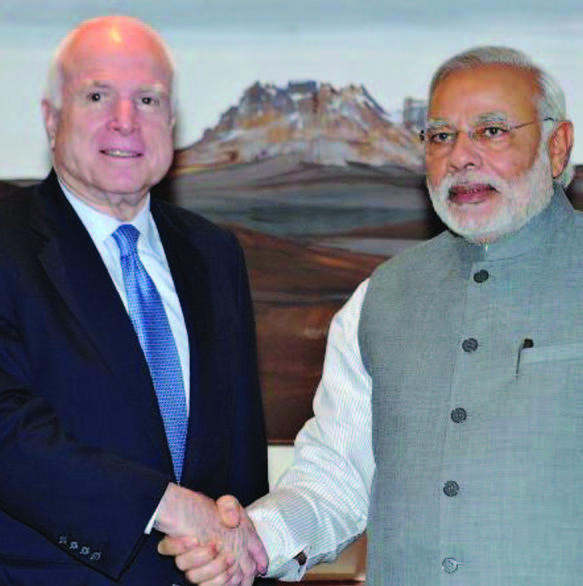
    NEW DELHI (TIP): Prime Minister Narendra Modi pushed for improving U.S. ties during a meeting with Senator John McCain in New Delhi on Thursday, as the two countries seek to patch up their differences and boost their economic relationship.

    The treatment of an Indian diplomat arrested in New York in December triggered a serious spat between the two countries and was widely blamed for the resignation of the U.S. ambassador to India. The Obama administration has been seeking to revive ties since Modi’s election in May, seeing India as a key strategic counter-balance in Asia to an increasingly assertive China.

    Modi “conveyed his desire to further deepen and expand the strategic partnership,” a statement from the Indian government said. It said that he hoped for a “forward looking, result-oriented visit” to the United States in September when he is due to attend the United Nations General Assembly in New York. McCain, who told the Senate last week that Washington should seek to help India’s economic and military development, spoke of high expectations about a new momentum in India’s economic growth under the new government. There was no mention in the statement of defence deals.

    Both governments have signalled they are keen to ramp up bilateral trade, which stands at about $100 billion annually and is considered to be below potential due to disputes over protectionism and intellectual property rights. McCain’s visit comes at an awkward time – just days after reports that the U.S. National Security Agency was authorised to spy on Modi’s Bharatiya Janata Party in 2010, when the party was in the opposition.

    On July 2, foreign ministry summoned a senior U.S. envoy in Delhi and said it had sought an assurance that the surveillance would not happen in the future. The government statement of their remarks released after the McCain-Modi meeting did not mention the snooping row. Modi was denied a visa in 2005 for travel to the United States following religious riots in 2002 while he was a state chief minister. Even so, he has responded positively to the U.S. advances and shown no resentment publicly.

    In addition to discussing the situation in Iraq and Afghanistan, Modi emphasised that the fight against terror should be a global priority, the statement said.

  • Sunanda Pushkar death case

    Sunanda Pushkar death case

    AIIMS FORENSIC HEAD STICKS TO STAND

    NEW DELHI (TIP): The head of the AIIMS’ forensic department on Thursday stuck to his controversial claim that pressure was brought on him to manipulate the post mortem report on Shashi Tharoor’s wife Sunanda Pushkar A day after the premier health institute denied his claim, Dr Sudhir Gupta said, “I stand by what I said”.

    “How do they know there is no pressure on me? Who were they to clarify that there is no pressure on me? What was the hurry to call a press conference?,” he said. He was asked about AIIMS rejecting allegations levelled by him. “Not only the post mortem of Sunanda Pushkar but in a number of cases, post mortem reports were finalised by me as per the principle and practise of medicine and as per its ethical and legal norm.

    I have never succumbed to any pressure in my life,” Gupta said. He said all his reports are bonafide. Rejecting the charge of Gupta, who headed a three- member team that did the post morten on the body of Pushkar, who died in mysterious circumstances in a hotel in January this year, AIIMS had said there was no evidence that any pressure from outside was put on him (Sudhir Gupta) to alter the autopsy report.

    Sunanda (52) was found dead in a 5- star hotel in South Delhi on the night of January 17, a day after her twitter spat with Pakistani journalist Mehr Tarar over an alleged affair with Tharoor. The autopsy report had mentioned more than a dozen injury marks on Sunanda’s both hands and an abrasion on her cheek which suggests a “use of blunt force”, besides a “deep teeth bite” on the edge of her left palm.

    Viscera samples were preserved after the autopsy at AIIMS and were sent to CFSL for further tests. The CFSL report hinted at drug poisoning but its findings were not conclusive enough to file an FIR in the case, according to police.

  • A scene from the movie 12 Years

    A scene from the movie 12 Years

    supervision of voter registration in states and individual voting districts where such tests were being used. The act had an immediate and positive effect for African Americans. In 1965, Mississippi had the highest black voter turnout at 74% and led the nation in the number of black public officials elected. Atlanta elected its First black mayor, Andrew Young, as did Jackson, Mississippi, with Harvey Johnson, Jr., and New Orleans, with Ernest Morial. Black politicians on the state level included first Southern woman Barbara Jordan, elected to the Texas house of as Representatives.

    Julian Bond was elected to the Georgia State Legislature in 1965. On April 4, 1968 Dr King was assassinated in Memphis, Tennessee, and Riots broke out in black neighborhoods in more than 110 cities across the United States in the days that followed, notably in Chicago, Baltimore, and in Washington, D.C. The damage done in many cities destroyed black businesses and homes, and slowed economic development for a generation. But Americans were not deterred. America ushered into an era of real vibrant Democracy with participation of all. But it took America nearly two hundred years to let all enjoy the fruit of freedom and liberty, with real equality still eluding the nation. Economic inequality was destroying the American Dream. The deindustrialization of the late 1960s and early 1970s manipulated by American Bankers and Multinational companies to enhance their own fortunes, forced income inequality to increase dramatically to levels never seen before.


    25
    On August 28, 1963, Martin Luther King Jr., prominent figure of the Civil Rights Movement, stood before the Lincoln Memorial in Washington, DC and delivered his iconic “I Have A Dream” speech. Here was a turning point in the history of America.

    Supporters of this illconceived deindustrialization wrote death warrants for American Dream, domestic Industry and the Middle Class; the economists and most policy makers across the isles pointed to the fact that consumers could buy so many goods, even with the inflation of the 1970s, as evidence that the general shift away from manufacturing and into services was creating widespread prosperity. In 2008 economic disasters hit the country and indeed the entire world. 8.8 million jobs were lost and many for forever by July 2010, according to the Bureau of Labor Statistics. The worst recession since the great depression began with the collapse of housing prices and the construction industries all around USA.


    24
    Wall Street in New York: Symbol of America’s economic power

    Millions of mortgages mostly averaging about $200,000 each had been bundled into exotic financial instruments/securities called collateralized debt obligations that were resold worldwide. Many banks and hedge funds had borrowed hundreds of billions of dollars to buy these securities, which were now “toxic” because their value was unknown and no one wanted to buy them. Number of largest US and European banks collapsed; some went bankrupt, such as Lehman Brothers with $690 billion in assets; others such as the leading insurance company AIG, the leading bank Citigroup, and the two largest mortgage companies were bailed out by the government.

    Congress voted $700 billion in bailout money ($418 billion actual disbursement) under the program, and the Treasury and Federal Reserve committed trillions of dollars to shoring up the financial system, but the measures did not reverse the declines. Banks drastically tightened their lending policies, despite infusions of federal money. The government for the first time took major ownership positions in the largest banks. The stock market plunged 40%, wiping out tens of trillions of dollars in wealth; housing prices fell 20% -30% nationwide wiping out trillions more. By late 2008 distress was spreading beyond the financial and housing sectors, especially as the “Big Three” of the automobile industry; General Motors, Ford and Chrysler were on the verge of bankruptcy, and the retail sector showed major weaknesses.

    The Critics of the $700 billion Troubled Assets Relief Program (TARP) expressed anger that much of the TARP money that has been distributed to the rich at Wall Street rather then saving the common people who lost their jobs, houses and life savings. In an international study, Americans ranked 11th in happiness and a discouraging 24th in economy. Another study of 8th graders found only 7 percent of American students rated advanced in mathematics compared to 47 and 48 percent in Singapore and South Korea. Our President, according to a Forbes power rating, comes in second behind Vladimir Putin. Yet, the United States is the world leader and likely to remain there for decades. It has the greatest soft power in the world by far.

    The United States still receives far more immigrants each year (1 million) than any other country in the world. The United States leads the world in high technology (Silicon Valley), finance and business (Wall Street), the movies (Hollywood) and higher education (17 of the top 20 universities in the world in Shanghai’s Jaotong University survey). The United States has a First World trade profile (massive exports of consumer and technology goods and imports of natural resources).

    It is still the world’s leader for FDI at 180 billion dollars, almost twice its nearest competitor. The United States, spending 560 billion dollars a year, has the most powerful military in the world. Its GDP (16 trillion dollars) is more than twice the size of China’s GDP. As the first new nation, it has the world’s longest functioning democracy in a world filled with semidemocratic or non-democratic countries. Its stock market, at an all time high, still reflects American leadership of the global economy.

    For the past 80 years, the United States is the leader in fundamental advances in telecommunications and technology. AT&T’s Bell Laboratories spearheaded the American technological revolution with a series of inventions including the light emitted diode (LED), the transistor, the C programming language, and the UNIX computer operating system. SRI International and Xerox PARC in Silicon Valley helped give birth to the personal computer industry, while ARPA and NASA funded the development of the ARPANET and the Internet. In Physics and Chemistry, Americans have dominated the Nobel Prize for physiology or medicine since World War II. US biomedical research has played a key role in the advancement of diagnosis, medicines, cure and patient care in the world. America’s Walmart is the world’s largest public corporation.

    According to the Fortune Global 500 list in 2014, Walmart is the biggest private employer in the world with over two million employees with 11,000 stores in 27 countries, and the largest retailer in the world with a revenue of US $ 476.294 billion. US Entertainment Industry is world leader and generated $522 billion dollars in revenue in 2013. The United States with over $ 48 Billion Dollars; is the world’s leading donor of government aid to other countries, distributing twice as much as any other nation. Besides, another $30 Billion was given by US foundations, Corporations, religious organizations, Universities, Private and voluntary organization.

    As the old political saying goes, you can’t beat someone with no one. And, right now, there is no one on the horizon that will overtake or even seriously challenge the United States, however ailing, for at least the next decade or two. I salute the great nation, its vibrant democracy and its people, as we celebrate Independence of America.

  • AHEAD OF MODI’S VISIT TO J&K, PAK CALLS KASHMIR ‘DISPUTED TERRITORY’

    AHEAD OF MODI’S VISIT TO J&K, PAK CALLS KASHMIR ‘DISPUTED TERRITORY’

    NEW DELHI/ISLAMABAD (TIP): Needling India ahead of Narendra Modi’s first visit to Jammu & Kashmir as Prime Minister, Pakistan on Thursday harped on Kashmir being a “disputed territory”. “We do not accept the so-called accession of the State of Jammu & Kashmir to India. Kashmir is not an integral part of India.

    Our position is that Jammu & Kashmir is a disputed territory,” foreign office spokesperson Tasnim Aslam said during a briefing. Her remarks came on the eve of Modi’s one-day visit to Jammu and Srinagar. “People of the State of Jammu & Kashmir have yet to exercise their right to self determination which has been assured to them by almost 20 resolutions of the United Nations Security Council,” Aslam said in response to a question on Modi’s visit to the state. Pakistan’s contention has been outrightly rejected by India which has asserted that J&K is its integral part.

  • Modi flags off Katra-Delhi train for Pilgrims

    Modi flags off Katra-Delhi train for Pilgrims

    NEW DELHI (TIP): Prime Minister Narendra Modi launched a train that will give easier access to one of India’s most popular pilgrimages. Modi landed in Jammu and flew by chopper to Katra, where he flagged off a new train from Katra to Delhi via Udhampur, providing a direct link to the base town for the Mata Vaishno Devi pilgrimage.

    Chief Minister Omar Abdullah was also with him. An estimated 50 lakh people visit the shrine every year and a Railways official said they expected “good demand” on the new line. The train connectivity to Katra is part of the ambitious Rs. 1,150-crore Kashmir rail link project which links the region with the rest of the country.

  • DECLUTTER YOUR REFRIGERATOR

    DECLUTTER YOUR REFRIGERATOR

    Organise your refrigerator to ensure that you know what’s in your fridge, what’s in date and what you need to get rid of.

    Keep the items you use most at the front of the fridge

    Having a streamlined fridge can make a positive difference to someone on a busy day, given the number of times we go in there – for that morning cup of tea, when making breakfast, lunch and dinner and everything in between. Having the items you use most to hand as soon as you open the fridge door can make a lot of difference.

    Make the food items more visible

    With such busy lives how could we be expected to remember every single item we own or have bought. The easier the contents of your fridge are to see, the less likely you are to be saddled with out-of-date products.

    Keep what you want to eat most in front

    If you’re trying to eat more healthily, then make sure your fresh fruit and vegetables are the first thing you see when you open the fridge and hide the chocolate as much as possible.

    Store childrens’ items at the lowest possible height

    It might involve creating their own area so that items they are allowed to help themselves to are within easy reach and then placing the ‘treats’ higher up or hidden away so they can’t just help themselves.

    Make the most of flexible storage

    You can often move your refrigerator shelves up and down. So, adjust to suit what you are storing to ensure you don’t have any dead space

  • 31 ACs, 25 heaters, 15 coolers at Sheila Dikshit’s Chief Ministerial home

    31 ACs, 25 heaters, 15 coolers at Sheila Dikshit’s Chief Ministerial home

    NEW DELHI (TIP): As Chief Minister of Delhi, Sheila Dikshit had 31 air-conditioners and 25 heaters in her fourbedroom official bungalow in the heart of the capital. The government’s response to an RTI or Right to Information query has also revealed that Dikshit’s home on 3 Motilal Nehru Marg had 15 coolers, 12 geysers and 16 air purifiers.

    Dikshit, who was Delhi’s Chief Minister for 15 years, vacated the bungalow after being voted out of power in the December state polls. Former Prime Minister Manmohan Singh has now shifted into it. (Manmohan Singh Checks in at New Residence) The Central Public Works Department, the civic body in charge of government residences, has said nearly Rs. 17 lakh was spent on the “electrical renovation” of the bungalow according to Dikshit’s requirements.

    The 76-year-old former Chief Minister was appointed the Governor of Kerala by the Congress-led government days before the national election, in which the party was routed. (Sheila Dikshit appointed Governor of Kerala) The array of appliances and fixtures removed from the bungalow after Dikshit shifted to a private 2,000-sq ft, three-bedroom flat on Ferozeshah Road in central Delhi, are now being used in various government departments.

    “The remaining air conditioners and fixtures shall be utilised as and when the requirement arises,” the civic body said in its reply to RTI activist Subhash Agrawal. The four-bedroom bungalow, constructed in 1920 as part of the shaded and well-guarded Lutyen’s zone in the heart of Delhi, is spread over 3.5 acres. Before Manmohan Singh moved in, the bungalow was renovated and all the floor, roof and plaster damages were repaired at the cost of Rs. 35 lakh.

  • Uplift Humanity’s Revolutionary Summer Programs to help

    Uplift Humanity’s Revolutionary Summer Programs to help

    Students encouraged to document their journey by creating a 2-3 minute I-pad or cell phone video about their experience in Indian juvenile detention centers and orphanages

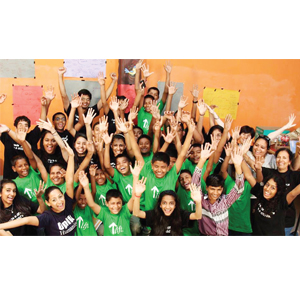
    NEW YORK (TIP): Starting July, almost 100 American high school and college students from all over the U.S. will travel 8500 miles to the Indian cities of Hyderabad, Vadodara and Indore to provide their at-risk peers, mostly juvenile delinquents and orphans, basic life skills – in the hope that a focus on values such as honesty, kindness and self-esteem will help incarcerated youth assimilate back into their societies.

    Following the One Step Forward curriculum, a handbook developed by the non-profit organization Uplift Humanity India, the American millennials embarking on this lifealtering journey will teach their Indian counterparts the importance of proper communication and leadership. Now in its fourth year of operations, Uplift Humanity’s summer programs are starting to create the impact they were designed to make. ” “Uplift Humanity is the first U.S. nonprofit to send American teenagers directly to India to work in orphanages and juvenile detention centers,” said founder Anish Patel, a business student at New York University.

    “I created the organization, while a student myself, to give orphans and juveniles in India a second chance.” Students who have attended the program in the past say the results have been transformational, both for them and their Indian peers. ” “At Uplift Humanity India, I learned that the people who seem to be the most insignificant are, in fact, the ones with the most potential and desire to grow as individuals.

    Through our program, I hope the juveniles and orphans learned that they DO have the power to change the course of their lives and achieve bigger and better things.” – Krishna Dosapati, Vadodara Alumnus – 2013. However, after three successful cycles of executing the summer program, educators realized that there was too much of a gap between the instruction periods, given that students only travel to India once a year. Therefore, to increase its impact, Uplift Humanity launched The Continuation Program, an initiative that uses local Indian students and teachers, whom Uplift hires, to provide instruction throughout the entire year in India.


    22
    An American student mentoring an Indian youth through Uplift Humanity’s program

    ” “The Continuation Program not only stresses the previously learned life-skills, but also educates juveniles and orphans in skills like English and Computer Literacy, in order to better equip and prepare them once they are released from the facility,” said Neil Shah, the organization’s Director of Public Relations. “The technology curriculum is especially important in India, given that the country has been undergoing a tech revolution since the introduction of outsourcing in huge American back-offices and call centers.

    ” To highlight that tech revolution, students attending one of Uplift’s summer sessions in 2014 have been challenged to capture their experience within the juvenile detention centers and orphanages by creating an original 2-3 minute I-pad or cell phone video, which will be judged by a celebrity and shared through social media. “The reason we are hosting this contest is to illustrate to America what life inside juvenile detention centers and orphanages in India is really like; we want to leverage the technology that privileged Americans own and use every day to spread Uplift Humanity’s mission,” said Patel. The director of the winning video will receive a $2000 scholarship for further education from the organization.


    21
    Uplift Humanity students with India’s recently-elected Prime Minister, Mr. Narendra Modi

    ” Indian-American actor Sunkrish Bala, the brand ambassador for the organization, noted: “I love the direct, tangible, observable improvements Uplift has been able to make on the lives of these children. Uplift isn’t simply throwing money at a problem. Rather, it’s affecting change on a personal, human level.” Uplift Humanity India is a non-profit organization dedicated to the rehabilitation of juvenile inmates in South Asia. Its motto, “Bring the World Forward,” epitomizes the method by which it seeks to empower youth through hands-on education, mentoring, and technology training. Uplift Humanity’s goal is to spread its specialized curriculum throughout the continent to give youth opportunities to flourish once they reenter society. For more information, visit www.uplifthumanityindia.org.

    Facebook:https://www.facebook.com/uplifthumanity

    Videos: http://www.youtube.com/watch?v=AM-RJkgJP0

    Media Contact :
    JINGO Media
    317 W 74th St., Ste. 1B,New York, NY 10023O: 917.261.7284 M: 512.773.6679 India: +91 91677 46516
    Jitin@Jingomedia.com www.jingomedia.com

  • PASSPORT DELIVERY TO BECOME HASSLE-FREE

    PASSPORT DELIVERY TO BECOME HASSLE-FREE

    No police verification in case of renewal

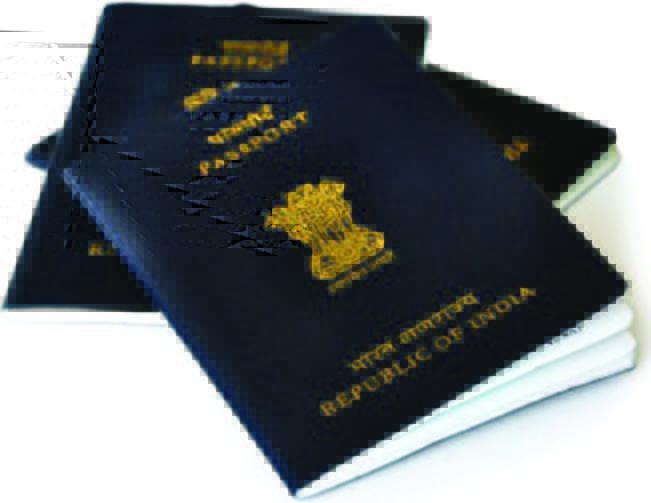
    MUMBAI/NEW DELHI: The passport delivery system could soon become hassle-free and quick. On the directions of the chief passport officer in the ministry of external affairs, Mumbai may lead the way to do away with cumbersome processes that currently delay the issuance of a passport.

    The ministry is set to waive a second police verification in case of passport renewal provided the previous police verification was clear. Fresh guidelines have been issued so that a renewed passport is delivered at the quickest possible time by no longer treating the application for renewal as a fresh one, as is the case till now. Mumbai police commissioner Rakesh Maria and regional passport officer T D Sharma have put into action a plan that seeks to do away with police verification for other categories of applicants. “Minors, government servants and senior citizens can now go without verification,” Muktesh Pardeshi, chief passport officer in MEA, said. “I had a long meeting with passport officials on time-bound delivery of passport.

    We found that on occasions, the police department was blamed for delay in submitting verification certificate. I have drafted a comprehensive action plan. The entire exercise of police verification will be completed within seven working days,” Maria said.

    Maria said specific bottlenecks in the police verification process have been identified and stringent measures taken to ensure that the entire exercise is completed in a timebound period. “It was bringing a bad name to Mumbai Police. In addition, there were charges of corruption too.

    I am sure, once the new system comes into force, passport delivery will be hassle-free,” Maria said. Pardeshi said: “We have directed that there should be three categories for police verification in the passport issuance process. First, there is a prepolice verification, which is mandatory for first-time passports. Second, the post-police verification, where the verification can be done after the passport is issued.”

    According to a senior official there was delay at several levels — from the newly set up passport seva kendra to the police station. “The delay was not deliberate, but there was lack of proper guidelines, as a result of which there was delay in submitting the police verification documents to the passport office. In the entire process, the special branch of the police station was blamed. We have worked out a comprehensive action plan, there will be no more delays and passport will be delivered within the stipulated period,” he said.

    Secondly, on the renewal of passports too, the ministry of external affairs has issued fresh guidelines to ensure that the passport is delivered in the shortest period. So far the convention was that if an application for renewal of passport is submitted, it was treated as a fresh application and there was police verification of residential address and all the documents.

    Now, it has been made clear that if the earlier police report is clear and the photograph of the applicant is attached in the original police report, there would be no need for fresh police verification. “The revised guidelines will help us in the expeditious delivery of passports, particularly those submitted for renewal,” he said. However, Pardeshi said the passport issuing officer had some discretionary powers. “If he/she feels police verification is necessary, it will be done.”

  • AROMATHERAPY AT HOME CAN BE EASY

    AROMATHERAPY AT HOME CAN BE EASY

    A diffuser is great, but there are other ways in which you can use your essential oils at home

    For linens

    Add a few drops of eucalyptus or lavender oil to your laundry detergent for a fresh fragrance. You can also use an aromatherapy fragrance spray for a lingering scent on your clean linens or even while ironing clothes. Essential oils also assist in killing bacteria, so if you have a pet at home it is the best way to rid the linen of bacteria.

    While cleaning

    Using harsh chemicals to clean the refrigerator or tables can have it’s drawbacks. Instead put a few drops of orange essential oil on your cleaning cloth to wipe surfaces. You can also mix essential oil with water in a spray bottle and use it as a cleanser. Just spray it on the table and wipe off with a cloth, you will have a scent of orange left behind. Essential oils also retain the cleansing properties of their botanical origin.

    For relaxation

    For those who have trouble sleeping at night, essential oils can do wonders. A few drops of lavender oil or sandalwood oil on your pillow or your bedsheet will relax you. You can also add the oil to your bath or rub a few drops on to your temples. It helps in relaxation and gives an instant relief.

  • India’s Fastest Train Rolls Into Taj City

    India’s Fastest Train Rolls Into Taj City

    AGRA (TIP): Touching a speed of 160 km an hour, a high-speed train from New Delhi to Agra completed its trial run on July 3. Railway officials said this was the highest speed recorded by a train in the country. The train reached Agra in 90 minutes, covering a distance of 200 km, Divisional Railway Manager Vijay Sehgal said.

    Sehgal said, “With 10 coaches and two generators, the train touched a speed of 160 kmph. From New Delhi to Agra Cantonment, it took 100 minutes and from Nizammuddin (also in Delhi) 90 minutes. “The trial was successful and now we feel fully confident of running the train soon.” The train met all parameters of safety, another official said. Officials, however, indicated that the new train would start operations only in the new tourist season that begins in October. High-speed trains are planned between New Delhi and Chandigarh and New Delhi and Kanpur.

  • RANA International Convention to focus on healthy and literate Rajasthan- Hadpawat

    RANA International Convention to focus on healthy and literate Rajasthan- Hadpawat

    The entire Indian American community is talking about the Rajasthan Association of North America (RANA) International Convention being held from July 3rd to 6th at the upscale Hotel Islandia Marriott on Long Island, New York. There is a lot of excitement about the event, particularly among the Rajasthani community. The Indian Panorama spoke with Rajasthan Association of North America (RANA) President Narendra Hadpawat to know details about the organization and the convention. Speaking with The Indian Panorama, RANA President Mr. Narendra Hadpawat , disclosed that the convention, being held at Islandia Marirott from July 3rd to 6th was likely to be attended by about 800 to 1000 delegates .

    Asked about the prominent persons attending, Mr. Hadpawat said that the Chief Minister of Rajasthan, Mrs. Vasundhara Raje has been invited to inaugurate the convention as Chief Guest. Other prominent people include Padma Shri D. R. Mehta, Chairman of Jaipur Foot. Mr. Hadpawat said RANA has always had the best among the Rajasthanis from across the world attending the convention. In the past, the Steel King of the world, Mr. Lakshami Mittal amd Mr. Anil Aggarwal, Chairman of Vedanta group attended the RANA convention. Mr. Hadpawat was at pains to emphasize that Rajasthan government has always been supportive and has participated in each of the RANA Conventions.

    Speaking about the theme of the Convention, Mr. Hadpawat said it was to make a “healthy and literate Rajasthan”. About the purpose of the convention as such, Mr. Hadpawat said it was to raise funds for charitable activities in Rajasthan. He said, normally 10 to per cent of the money collected is donated for charitable purposes in Rajasthan. RANA, in fact, is a conduit to funding charitable projects in the state of Rajasthan. He said, in 2006, an amount of 2 crore was collected for Akshay Patra. Mr. Hadpawat said honoring excellence and recognizing service to community was one of the regular activities of RANA.

    He said RANA will be honoring four eminent persons for excellence in their respective fields. They are Prof. Arvind Panagariya for excellence in the field of global economics; Mr. Prem Jain for entrepreneurial excellence in the field of information technology; Dr. Radhesham Agrawal for excellence in the field of Medicine; and Mr. Sampat Poddar for excellence in the field of gems, stones and jewelry. It will be interesting to know about the genesis of Rajasthan Association of North America.

    Rajasthan Association of North America (RANA) came into existence in 1999. A group of six Rajasthanis living in New York decided to form an association with a view to promote Rajastani language and culture. They were Mr. Arvind Bhandari, Mr. Kamlesh Mehta, Mr. K. K. Mehta, Mr. Naveen C. Shah, Mr. Rajesh Shah and Mr. Sunil Shah. RANA which started with six, to begin with, in 1999, today has Chief Minister of Rajasthan along with many Maharaja’s and honorable businessmen as patron members .

    Asked as to what was the objective behind the formation of the association, RANA President Mr. Narendra Hadpawat, in his interview with The Indian Panorama said, “The association twas formed for the purpose of bringing all Rajasthanis on a single platform, to preserve the Rajasthani Culture and Heritage and instilling Rajasthani values amongst the younger generation. Giving details of the objectives, Mr. Hadpawat said, “RANA’s objectives include performing charitable activities in the areas of education, healthcare and social welfare; contributing to the home state by promoting economic and industrial development; creating a bond between Rajasthan and Rajasthanis living in North America. In a short span, RANA membership has increased multifold.

    Today, around 1000 families are a part of the bigger RANA family. The association has been greatly instrumental in uniting the community in North America. Every year RANA organizes many cultural and social events like Holi, Deepawali and Summer Picnic. These functions are attended by hundreds of Rajasthanis. Apart from organizing the above events, RANA is greatly dedicated toward the various philanthropic causes. It has donated generously toward earthquake relief in India and also in the wake of the recent drought in Rajasthan.

    It has set up an education fund that gives out scholarships to the deserving students. It has set up free health clinics where people can consult the physicians free of cost throughout the New York metropolitan area. It has also set up free consultations in areas of tax, accounting, immigration and other legal matters. RANA’s future goals include making it a nationwide organization with Chapters or Regional offices in every state where Rajasthanis reside. RANA also wants to build a Rajasthani Community Center – a place which the Rajasthanis can call it their own and together celebrate the various festival and cultural activities.

    Asked about his association with RANA, Mr. Hadpawat said he has been a member since its inception in 1999. Over the years, he has held responsible position in the organization, having been its Vice President in 2011-12. He has been on the Board of Directors . In 2010 he was Chairman of Convention Committee. Asked about what he thought should be the major agenda for RANA, he said RANA needs to focus on various facets of Rajasthan, including Healthcare and education. Mr. Hadpawat has been associated with quite a few organizations.

    He has been President of India Association of Long Island from 1993 to 1994. He is the founder President of AAPI-Q-LI and remained its president from 1995 to 1997. He was President of American Heart Association of Long Island in 1998 and 1999. A man of charitable disposition, Mr. Hadpawat made initial contribution for a hospital building in his native village of Pratapgarh in Rajasthan. He support a number of healthcare and educational projects in Rajastthan. Organizing free healthcare camps on a regular basis is one of them .

    He says his vision is to work for development of Rajasthan, particularly in the field of healthcare and education. For his noble work and tremendous contribution to community, he has ben profusely awarded and honored. He was honored for excellence healthcare in 2000. In 2006, he was honored by RANA for community service. Mr. Narendra Hadpawat has been practicing Medicine and Cardiology in New York for the past 40 years. He is married to Hansa and the couple have three children,, a daughter, Anita who is a doctor, and two sons- Neil who is a doctor and Deepak who is in to Real Estate business. They live on Long Island.

  • Akal Takht-appointed committee meets Haryana Sikh leaders

    Akal Takht-appointed committee meets Haryana Sikh leaders

    CHANDIGARH (TIP): A 10-member committee formed by Akal Takht today met Sikh leaders of Haryana who have been demanding a separate body to manage the affairs of gurudwaras in the state, and offered them greater autonomy in handling the shrines.

    The Haryana leaders have sought time till June 4 to think on the “proposals”. The votaries of the separate SGPC for Haryana were invited for deliberations by the Sikh clergy in Amritsar yesterday, but they had stayed away giving various reasons.

    Following this, Giani Gurbachan Singh, the ‘Jathedar’ of the Akal Takht, had yesterday constituted the committee to visit Gurudwara Cheevin Patshahi, Kurukshetra, in a bid to convince the leaders spearheading the campaign for a separate body to withdraw their demand. Akal Takht is the supreme temporal seat of the Sikhs.

    “We had detailed discussion with them (the Akal Takht committee) on a range of issues. “The crux of our meeting is that they (SGPC) have offered greater autonomy to us (in running the affairs of gurudwaras in Haryana) while overall control will remain with the (Amritsar-based) SGPC,” said Didar Singh Nalwi, one of the prominent leaders who is at the forefront of the campaign for a separate SGPC for Haryana.

  • GOVT TO EASE NORMS FOR SPEEDY ADOPTION

    GOVT TO EASE NORMS FOR SPEEDY ADOPTION

    NEW DELHI (TIP): Foreigners and NRIs wanting to adopt Indian children are in for good days with the government set to ease adoption norms and scrapping processes that were delaying adoptions to the detriment of children in waiting.

    The Ministry of Women and Child Development has mooted a new adoption law which will treat NRI parents as Indians, making them eligible for in-country adoptions. The government has evidence of several NRIs opting for Chinese, even Latin American children because they felt handicapped by India’s adoption laws. The law is also being eased for prospective foreigner adoptive parents with the government deciding to scrap the existing rule under which against four domestic adoptions, there can be one inter-country adoption.

    Women and Child Development Minister Maneka Gandhi said, “We had this strange 80:20 ratio for in country and inter-country adoption. This meant that a child cannot be given away in adoption to foreigners until the 80 pc domestic adoptions were accomplished. That hardly ever happened and a child kept waiting to get a home. We have decided to scrap this ratio.

    Now foreigners, NRIs and Indians can all equally go for adoption for the same poll of children.” The proposed changes are part of the new Juvenile Justice Act the Government has drafted and is in the process of fine tuning before consulting the Law Ministry. Hallmark of the proposed law is that adoptions must end in four months against years they take today. The proposal is to allow principal magistrates of the Juvenile Justice Boards (instead of just district judges) to adjudicate adoption cases.

    “A judge must decide in one hearing. Delay would entail a long explanation,” said Maneka who has written letters to all judges seeking priority hearing for adoption cases. At present, 10,000 Indian couples and 600 foreign, NRI parents are waiting for adoption whereas children available are just about 2,500.

    “We are now also linking up around 4,000 children’s homes to our Specialised Adoption Agencies in states so that children keep coming,” said Maneka. Crucially, the proposed new law mandates declaration of a child legally free for adoption within a month as against two months today for surrendered children and two to four months for abandoned children depending on their age. “Legally free status must come in a month and home checks on prospective parents must happen soon as people register for adoption.

    At present, a home check happens when the child becomes legally free for adoption which is taking years,” said Maneka. She has already got the website of Central Adoption Resource Agency (CARA), apex adoption related body in India, updated with photos and profiles of all available children uploaded for public knowledge. “The website has been updated after 10 years,” the minister said.

  • GERMANY FACE ACID TEST AGAINST OLD RIVALS FRANCE

    GERMANY FACE ACID TEST AGAINST OLD RIVALS FRANCE

    RIO DE JANEIRO (TIP): Under-fire Germany face rejuvenated France in July 4 World Cup quarterfinal at Rio de Janeiro’s iconic Maracana stadium in a mouthwatering clash of two European powerhouses. This represents an acid test for Germany coach Joachim Loew with his side heavily criticised for below-par performances at Brazil 2014. A place in Tuesday’s semifinal against either Brazil or Colombia in Belo Horizonte is at stake.

    “Didier Deschamps has turned France around since 2010 and we’re looking forward to another classic,” said Loew who took charge after the 2006 World Cup. Their 4-0 hammering of Portugal in their opening group match confirmed their status amongst the world’s elite, but a series of unimpressive performances have seen Loew’s Germans receive heavy criticism. Having been held to a 2-2 draw by Ghana, then grinding out a 1-0 win over the USA in their final group match, poor finishing saw Germany labour to a 2-1 extra-time win over Algeria in Monday’s last 16 clash.

    Former captains Michael Ballack, Oliver Kahn and Lothar Matthaeus have all questioned Loew’s selections with playmaker Mesut Ozil struggling and centre-backs Jerome Boateng and Benedikt Hoewedes being played out of position as wing-backs. “That was the worst performance for years,” Ballack reflected after the Algeria match, while Kahn was equally unimpressed: “This line-up isn’t working any more”.

    Loew has a contract with the German FA (DFB) until June 2016, but a quarterfinal exit will put him under pressure to resign despite steering his side to the semifinals of the last three major tournaments. In contrast, France have risen steadily under their coach Deschamps and are unrecognisable from their chaotic 2010 campaign in South Africa. With Karim Benzema in top form, France are dreaming of their first World Cup title since their 1998 triumph on home soil, but their focus is solely on Germany.

    “Everyone can dream, including me, but I’m a pragmatist and a realist, Friday is the only thing that counts,” said Deschamps. While the Germans are struggling to find the right combinations for their fast-paced attacking game, Deschamps says his harmonious squad is a “pleasure” to work with and the French will “give it everything we’ve got”. Honours are even in terms of recent meetings with France claiming a 2-1 win in Bremen in February 2012, while Germany claimed revenge by the exact same scoreline in Paris 12 months later.

    The French lead the series with 11 wins to Germany’s eight in 25 previous meetings. Both sides played down the relevance of their legendary 1982 World Cup semifinal, which Germany won 5-4 on penalties after a dramatic 3-3 extra-time draw. The Seville game attained notoriety when Germany keeper Harald Schumacher shoulder-charged Patrick Battiston, leaving the Frenchman unconscious on the ground. With the media quick to ask whether France can claim some World Cup revenge, both Loew and Deschamps pointed to the fact most of their respective players were not born at the time. Germany will have centre-back Mats Hummels back after missing the Algeria win with flu, while Lukas Podolski is fit again after a thigh strain.

    There is a question mark over midfielder Bastian Schweinsteiger who came off with cramp, but gave the thumbs down when pointing at his knee, which blighted him with tendinitis before the World Cup. There is a question mark over France defender Raphael Varane, who spent the night in hospital with dehydration after Monday’s 2-0 win over Nigeria in the last 16. Liverpool defender Mamadou Sakho is fit again after knee problems, while it remains to be seen who Deschamps names as striker between Olivier Giroud or Antoine Griezmann.

    FORM FRANCE: France, who have 10 goals in four matches, are already some way towards restoring their pride after a hapless firstround exit in 2010. But the flair they displayed in the first two group games has waned a bit. They were made to work hard for the 2-0 win over Nigeria in the round-of- 16 clash. Coach Didier Deschamps may start once again with Paul Pogba, who had a good game against Nigeria. Karim Benzema will be the man the team will rely upon. France’s defence has not been tested to the hilt and Germany pose a big threat.

    GERMANY: They began in whirlwind fashion against Portugal but their performances have been a bit tempered since then. They failed to break the Algerian shackles in regulation time in the round of 16. In fact, Algeria caught the German defence napping at least on a couple of occasions and goalkeeper Manuel Neuer did well to see off the danger. There is also a debate over Philipp Lahm -should he play in the midfield or in the backline? A major concern for Germany is that seven players from the squad have reportedly fallen ill. Although coach Joachim Loew did not want to go into the details, it is being speculated that Thomas Mueller is one of those affected.

    FRANCE: France seem on a mission to restore the nation’s World Cup eminence and their solid teamwork and unity has come in for high praise.

    GERMANY: It has been 24 years since Germany’s third and most recent World Cup crown, and the team is banking on its ability to step up a gear in crunch situations to thwart France.

  • We bring to the readers of The Indian Panorama brief profiles of the distinguished honorees.

    We bring to the readers of The Indian Panorama brief profiles of the distinguished honorees.

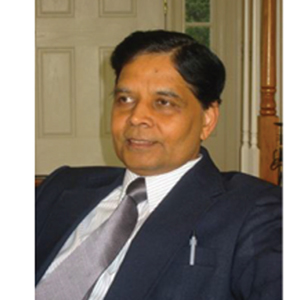
    Prof. Arvind Panagariya, Padma Bhushan Excellence in the field of Global Economics.

    Arvind Panagariya is the Jagdish Bhagwati Professor of Indian Political Economy in the Department of International and Public Affairs and of Economics at Columbia University, NY. He was formerly a professor of economics and co-director of the Center for International and Public Affairs at the University of Maryland and the Chief Economist of the Asian Development Bank. He has been an advisor the World Bank, IMF, WTO, and UNCTAD in various capacities and is the front runner to be appointed as the Economic Advisor to the Prime Minister of India Mr. Narendra Modi. Prof. Panagariya has written or edited more than a halfdozen books, including The Economics of Preferential Trade Agreements with Jagdish Bhagwati (1996).

    In addition, Prof Panagariya writes a monthly column in the Economic Times, India’s top financial daily. He has also written guest columns in the Financial Times, Wall Street Journal, India Today, and Outlook. Prof. Panagariya holds a BA from Rajasthan University (1971) and a PhD in Economics from Princeton University (1978). He was awarded India’s third highest civilian honor, the Padma Bhushan by the President of India in 2012.

  • Supreme Court rules out automatic arrests in dowry cases

    Supreme Court rules out automatic arrests in dowry cases

    NEW DELHI (TIP): The Supreme Court on Thursday ruled that police cannot automatically arrest an accused in a dowry case before judicially examining it. A bench headed by Justice CK Prasad directed all the state governments to instruct its police officers not to automatically arrest an accused in such cases. The apex court expressed concerns over misuse of the anti dowry law. Section 498-A of the IPC was introduced with object to combat the menace of harassment to a woman at the hands of her husband and his relatives.

  • Mr. Prem Jain

    Mr. Prem Jain

    Entrepreneurial excellence in the field of Information Technology

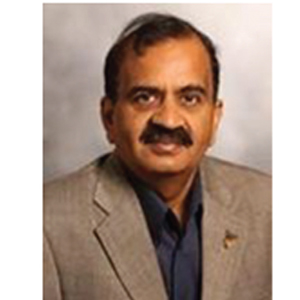
    Mr. Prem Jain is currently the Senior Vice President of the Server Access Virtualization Business Unit for Cisco Systems, Inc. In 2005, Mr. Jain co-founded Nuova Systems, which was acquired by Cisco Systems, Inc. in 2008. He served as one of the Chief Development Officers for Nuova as well as Chief Financial Officer. Prior to co-founding Nuova Systems, Inc., Mr. Jain was the Senior Vice President and General Manager of the Router Technology Group at Cisco Systems and Vice President of New Business Ventures responsible for exploring new technologies. Mr. Jain joined Cisco in 1993 as Director of Engineering when Cisco acquired Crescendo Communications.

    At Crescendo, Mr. Jain was Vice President of Systems Architecture, and was responsible for the design and development of Crescendo’s FDDI products as well as the first LAN switch, now known at the Cisco Catalyst 1200. Mr. Jain is the recipient of two patents and is a member of the IEEE organization. He holds a B.E. degree with honors from BITS Pilani, India and a Master’s degree in EECS from U.C. Davis.

    In his spare time, Mr. Jain enjoys snow skiing, hiking and playing bridge. He is actively involved in volunteer work for non-profit organizations, fundraising for the homeless and helping San Francisco Bay Area schools. He is currently the President of JAINA, one of the largest Jain organizations in North America with thousands of Jains as members and takes special interest in educating the Jain youth in traditional Jain values, beliefs and culture.