Month: July 2014

  • BIKANER A VIBRANT DESERT TOWN

    BIKANER A VIBRANT DESERT TOWN

    With oriental forts, graceful havelis and acres of white sand, travel attractions in Bikaner, the museum city are numerous. There are a number of Bikaner travel attractions and the most popular ones include: The tourist attractions in Bikaner are the 16 the century Junagarh Fort which has never been conquered.


    7

    Successive rulers later added thirty-seven palaces, pavilions and temples to the original structure and each has been skillfully built to connect with the previous buildings. The museum in the fort houses valuable collection of miniature paintings dating back to several centuries. Lalgarh Palace, a major part of which is now a luxury hotel, was designed by Sir Swinton Jacob for Maharaja Ganga Singh almost 90 years ago and has interesting combination of European luxury and oriental fantasy.

    Ganga Golden Jubilee Museum houses brilliant specimens of Harappan civilization, the Gupta and Kushan era.

    Junagarh Fort

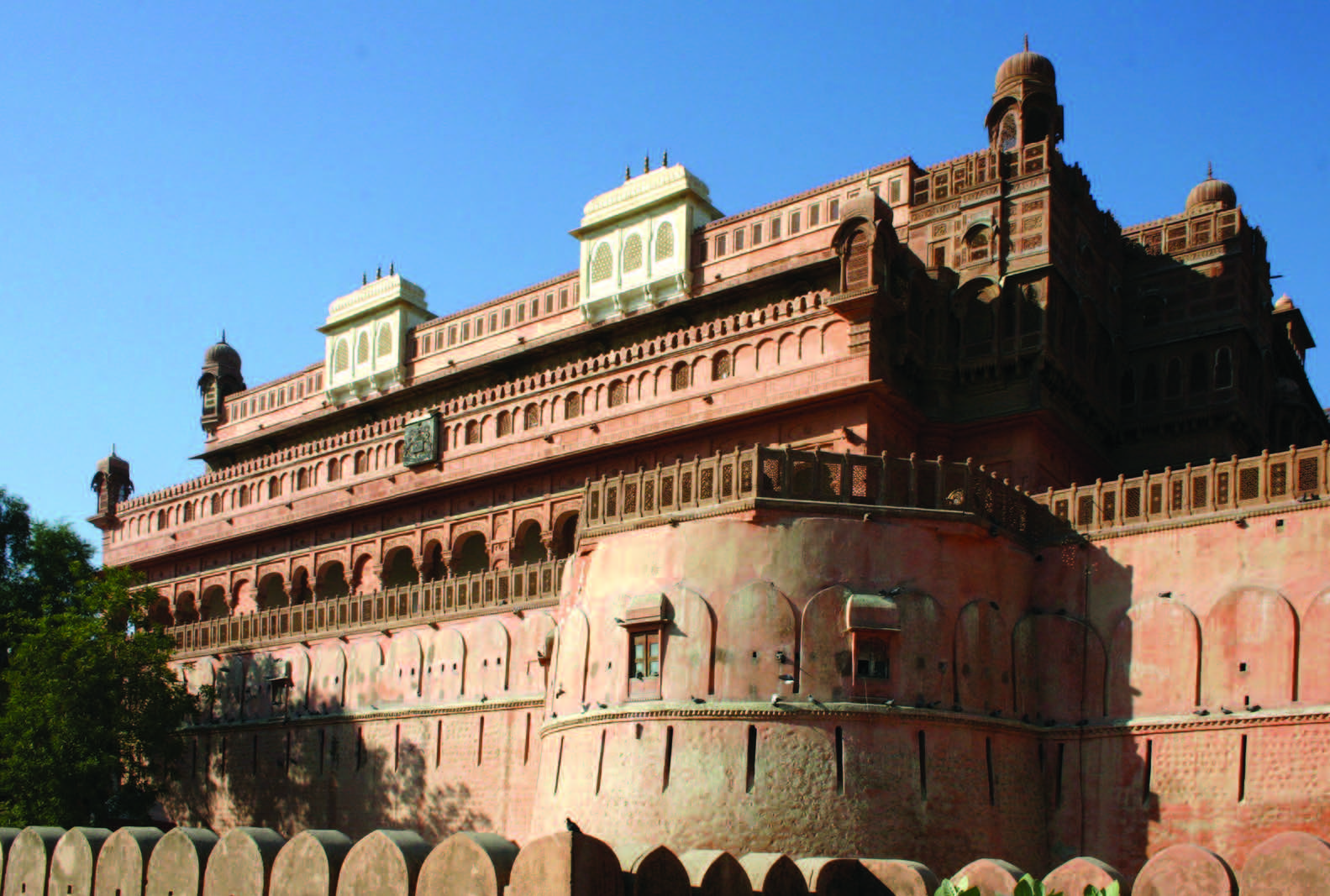
    Believed to be one of the most prominent forts of Northern India, the Junagarh Fort, grace the pages of history for remaining unconquered for ever. Built in the 15th Century, the Junagarh Fort was constructed under the supervision and instruction of Raja Rai Singh, the trusted general of Akbar. The security of the Junagarh Fort is the biggest asset of this structure.

    Beside the high walls and the moat, there are a total of 37 bastions that guard the entire fort. There are two gates that open into the Junagarh Fort, the Sun gate or the Suraj Pol is the main entrance. The Junagarh fort in Bikaner encloses a number of temples, pavilions and 37 palaces. Each of the palaces are a work of art with carved windows, kiosk, hanging balconies and towers. The Moon palace, the Flower palace, the Karan Mahal, and the Anup Mahal are all unique in their own rights.

    Each of the rooms of the Junagarh fort including the Rang Mahal, Ganga Niwas, Vijai Mahal, and Dungar Niwas are now living museums of the glorious past and grandeur. The fort museum displays a range of antique manuscripts, treaties, decorations, jewelery, jars and carpets, arms and weapons. A visit to the Junagarh fort and specially the museum of the fort is like taking a walk down the lanes of history. The mirror works, architectural intricacies and marble panels all add an extra bit of glamor to the Junagarh fort.

    Fort Museum

    This museum is within the Junagarh fort which itself is a major tourist attraction in Bikaner – Rajasthan. This museum is the store house of some of the most rare antique pieces of weapons, jewels, paintings, first World War biplane etc.

    Lalgarh palace

    Lalgarh palace is amongst the famous attractions in Bikaner, Rajasthan. It was built by the Maharaja of Bikaner in 1902. The architectural style is Mughal, Rajput and European which attracts the attention of many tourists. Currently, the palace comprises of a museum, a heritage hotel and a luxury hotel.

    It is a three storeyed building which is coated completely with red sandstone and this makes the palace look more appealing. The magnificent pillars and the wonderful fireplace in the building make it further magnificent and attractive. This is something that should not be missed when one is in Bikaner.

    Shiv Bari

    Temple Shiv Bari is another famous attraction in Bikaner. This is a temple dedicated to Lord Shiva and is built with high walls. The temple was constructed by Maharaja Doongar Singh in the 9th century. There are various religious traditions and customs that are followed in this temple by the local people. The temple also gives an idea of the unique features found in the architecture of Rajasthan.

    In fact, the architecture of this temple is splendid, and is built completely of red sandstone. You can also find a wonderful collection of miniature paintings, which is one of the finest representations of the culture of the place. Make sure that when you are in Bikaner, you definitely visit this beautiful and magnificent temple.

    Prachina Museum

    The Prachina Museum was set up by the Maharaja’s daughter. It was established in the year 2000.The Prachina Museum of Bikaner is of special importance to all the people who take special interest in the field of art and crafts. This place provides a good opportunity for the different kinds of artists to showcase their expertise.

    Ganga Golden

    Jubilee Museum The Ganga Golden Jubilee Museum was established in the year 1937 by Maharaja Ganga Singh. It is a wonderful storehouse for some of the famous collections of history, artwork and even sculptures. It is placed within the Lalgarh Palace. There are numerous sections within the museum and these divisions are made on the basis of historical importance and hierarchies. You can also expect to find sculptures from the Harappan age, Litho prints of the British Empire and many more. The museum attracts large numbers of tourists from different corners of the world. It is open from 10 am to 5 pm daily except for Fridays and the public holidays.

    Sadal Museum

    Sadul museum is housed in the upper storey of Lalgarh Palace in Bikaner. This museum was received as a donation from His Highness Dr Karnil Singh. The chairperson of the museum is Princess Rajyashree Kumari. If you happen to visit this museum, you can expect to find large numbers of Georgian paintings, rare artifacts and hunting trophies.

    There are also life-size paintings and photographs that are kept in more than 20 rooms. In fact, the royal family of Bikaner still resides in one part of the palace. This is one of the main reasons why millions of people are attracted to visit this destination. The usual charge of the museum is Rs. 10 per person. The museum is also dedicated to the lives of three successive kings of Bikaner and their passion for many artifacts.

  • Businessman buys Rajesh Khanna’s bungalow ‘Aashirwad’ for Rs 90 crore

    Businessman buys Rajesh Khanna’s bungalow ‘Aashirwad’ for Rs 90 crore

    MUMBAI (TIP): Bollywood superstar Rajesh Khanna’s Carter Road bungalow, popularly known as ‘Aashirwad’, is being sold to a city industrialist. The landmark sea-facing property, a major tourist attraction for legions of his fans, is believed to have been purchased by Shashi Kiran Shetty, executive chairman of Allcargo Logistics.

    Market sources said the 603sq m property could fetch the late superstar’s family around Rs 90 crore. The sole beneficiaries are his two daughters, Twinkle and Rinke. Shetty refused comment when TOI contacted him. His solicitor firm, Maneksha & Sethna, too, declined to name the buyer. According to sources, the deal is expected to be concluded once the mandatory 14-day notice about any ownership claim by a third party is over, said sources. Mediapersons has learned that Shetty has been scouting for a bungalow in the city with a budget of around Rs 100 crore for the past couple of years.

    He had booked a sprawling apartment in the under-construction Palais Royale skyscraper at Worli for about Rs 40 crore. But the highrise, touted as the tallest residential tower in India, has been embroiled in a legal battle since 2012 and the BMC has halted work. “When Palais Royale got into legal trouble, Shetty started hunting for a bungalow,” the sources said. Khanna’s bungalow falls under the stringent coastal regulation zone and, hence, the property is entitled to a limited floor space index in case it is redeveloped. But the sources said Shetty plans to live in it.

    The tinsel town heartthrob, whose real name was Jatin Chunnilal Khanna, died of cancer in July 2012. Some years before his death, the actor, adulated as ‘Kaka’, wanted his house to be converted into a museum. In an interview to Bombay Times in 2009, Khanna had talked about plans to open India’s first star museum here. “By the grace of the Almighty, my daughters Twinkle and Rinke are married, settled and have huge houses themselves. They don’t need my property… Aashirwad is the home of the first superstar of Bollywood, and I would like it to remain that way. Of course, my daughters will take the final decision because it will be their inheritance in the future,” he had said.

    The actor bought the bungalow from another Bollywood legend, Rajendra Kumar, sometime in the late 1960s and had it rebuilt in the 80s. It was once attached by the income tax authorities after Khanna defaulted on payments, but he managed to clear his dues and reclaim it. After his death, it was bequeathed to his daughters. It is now named Vardaan Aashirwad. Anita Advani, who claimed to have been the actor’s live-in partner, had staked a claim on his legacy and moved court against his family soon after his death.

    “I am not interested in Aashirwad. I just want it to be converted into a museum. I want to ask them (his family) where were they when he needed them. I looked after him all these years. I lived in that house, took care of him and all his needs

  • Blackstone-Embassy JV plans to buy 3 IT parks for Rs 3,000 crore

    Blackstone-Embassy JV plans to buy 3 IT parks for Rs 3,000 crore

    MUMBAI/BANGALORE (TIP): Embassy Office Parks, a joint venture between private equity firm Blackstone Group and office space developer Embassy Group, is in advanced talks to acquire three large IT parks spread over two million sq ft each in Bangalore, Pune and the National Capital Region (NCR) for Rs 3,000 crore.

    “The deal will be closed in less than a year,” Michael Holland, CEO of Embassy Office Parks told ET in an exclusive interaction. Michael Holland added that the talks were initiated in the second half of last year, the period that he described as “the low point in Indian real estate”.

    The company , which earns about Rs 700 crore per year through rentals of office properties, is looking to finance the proposed acquisitions through its rental income, shareholders’ equity and internal accruals. The total office space developed by the company will increase from 16 million sq ft at present to 28 million sq ft in the next five years, Holland said, adding, “With acquisitions, we will be at 40 million sq ft in the next five years.” The company recently acquired Vrindavan Tech Village for about Rs 1,951 crore in one of the largest commercial real estate transactions in India. Holland clarified that the company was not involved in talks to acquire Four Seasons hotel project in Bangalore.

    CityView, the mixed-use development property in the city has a 230-key Four Seasons hotel and 110 serviced residences. Blackstone Group has been acquiring income-earning office properties in India for the past two years through its various joint ventures with developers like Embassy Group and Panchshil Realty.

    While Embassy Office Parks is building its portfolio, it is also working on capitalisation plans, including a Real Estate Investment Trust (REIT). “In less than two years, there will be a capital event (for Embassy Office Parks),” Holland said. “We have potential for $2 billion REIT….REIT is one of the options, but not the only option. We can even consider other options like a REIT in Singapore, traditional IPO or private equity induction.” Income generated by REITs will be taxed at the hands of investors, finance minister Arun Jaitley had announced last week in his budget speech.

    However, Holland said, more clarity was required on certain issues including treatment of capital gains tax, dividend distribution tax and different treatment of loans raised by domestic and foreign investors. “We hope to get more clarity on REITs here following budget for 2015-16. We will review the possibility of listing a REIT here in the spring of next year,” he said.

  • EGYPT SIDES WITH ISRAEL IN CONFLICT WITH HAMAS

    EGYPT SIDES WITH ISRAEL IN CONFLICT WITH HAMAS

    CAIRO (TIP): An echo of the anti-Hamas rhetoric coming from Israel during its conflict with Gaza is resonating from what many would consider a surprising corner since fighting erupted July 8: Egypt. A country whose leader just over a year ago had been a close Hamas ally is now one of its principal antagonists. It is stirring up public opinion against the militant group because Hamas is the Palestinian branch of the Muslim Brotherhood, which Egypt has outlawed. Normally, Egyptians would be decrying Israel for the Palestinian death toll in Gaza, which is at more than 750 and rising. But Abou Ahmed Shehab, 60, who sells scarves at a sidewalk stand in central Cairo, was quick to attack Hamas.

    “The reason for what’s happening to our Palestinian brothers is because of Hamas,” he says. “Hamas is an extremist group.” Last summer, the Egyptian military ousted Muslim Brotherhood leader Mohammed Morsi as president and jailed him. It branded the Islamist group a terrorist organization and threw thousands of its leaders and members in jail. Hundreds were killed as the Islamic movement became the focus of a security crackdown. Since then, a military-backed government that is now led by Abdel Fattah al-Sisi, who went from military strongman to elected president this past spring, has succeeded in stoking anti-Islamist sentiment among a large swathe of Egypt’s public. Both state-run and privately owned media have helped fuel the anti-Hamas attitudes.

    Hamas has “terrible policies and the outcomes of those policies are being felt by women and children,” said taxi driver Medhat Kamel, 40, about civilian deaths in Gaza. “They rely on violence and don’t use dialogue.” From a political standpoint, Hamas is criticized in Egypt for its “unwise ways” of managing the crisis with Israel, said Mustapha Al Sayyid, a political science professor at both Cairo University and the American University in Cairo. Last week, Hamas rejected an Egyptian cease-fire initiative, saying it wasn’t consulted and the proposal wouldn’t end an Israeli and Egyptian blockade of Hamas-ruled Gaza, which is suffering economically as a result.

    Egypt’s hostility toward Gaza may be one reason Hamas lamented last week that it feels “alone” in battling Israel without support from the Arab region. Today’s situation is different from 2012, the last conflict between Israel and Hamas. At the time, Morsi brokered a cease-fire that Hamas accepted. Two years later, the Egyptian government, which has accused Hamas of helping militants attack soldiers and police in Egypt, is doing little to help the Palestinians. It’s keeping its Rafah border crossing with Gaza closed, even preventing a humanitarian aid convoy from crossing.

    Khaled Fahmy, chair of the history department at the American University in Cairo, has observed a sea change in public discussion about Hamas recently. “There has been an alarming outpouring in the past two weeks, not only dumbing down and toning down criticism of Israel, but also – in fact – a very, very sharp increase in vitriolic, racist discourse against Palestinians and Hamas in particular,” Fahmy said. Last week, an Egyptian writer accused Hamas of militant violence in Egypt, and called on people in Gaza to rebel against the group. “We are not going to support you going forward or have sympathy for you unless you get rid of the Hamas gang, which puts you in conflict with the world, Israel and the Egyptians,” Adel Nouman wrote in an opinion piece for daily newspaper El Watan.

    “This is the stance of the Egyptian people.” Some went further, praising Israel’s assault on Gaza. “I’m telling the Israeli army, the Israeli people and the Israeli leaders: You are men,” media personality and staunch adversary of political Islam, Tawfiq Okasha, declared in a TV broadcast. Despite the Hamas bashing, support for Palestinians and hostility toward Israel have not disappeared from Cairo’s streets. Umm Youssef, 33, who was visiting from southern Egypt, said, “Egyptians and Palestinians are one people, one nation.

  • Exports continue to grow at double-digit rate in June

    Exports continue to grow at double-digit rate in June

    NEW DELHI (TIP): Merchandise exports grew 10.22 per cent to $26.4 billion in June from $24.02 billion in the same month last year, driven by strong demand for engineering goods, ready-made garments and petroleum products. This was even as the export number for June 2013 was revised upwards from $23.78 billion, thereby increasing the base. This was a second straight month of double-digit growth in exports, with the rate in May higher at 12.40 per cent, official data released on Wednesday showed.

    After contracting for almost 13 months, imports grew 8.33 per cent to $38.24 billion in June from $35.3 billion in the same month last year. The figure for imports in June 2013 was revised from $36.03 billion. The June trade deficit widened to a 13-month high of $11.76 billion from $11.24 billion in May 2014.

    Exports during the April-June quarter stood at $80.11 billion, up 9.31 per cent from $73.28 billion in the corresponding period last year. However, imports during April-June 2014 contracted 6.92 per cent to $113.19 billion from $121.61 billion during the same period last year. In June, oil imports soared by 10.90 per cent to $13.34 billion, compared with $12.03 billion in the same month a year ago. Oil imports during April-June also grew by four per cent to $40.78 billion from $39.20 billion.

    Non-oil imports during the month were up seven per cent to $24.9 billion. Non-oil imports during April-June reached $72.41 billion, down 12.1 per cent from $82.40 billion in the same period last year. Gold imports were up 65.13 per cent to $3.12 billion in June from $1.88 billion in the same month last year, due to a partial easing of import restrictions and a lower base.

    According to credit rating agency CRISIL, since large private gold importers were allowed to resume purchases and nominated banks were permitted to offer gold loans to jewellery manufacturers from May, gold imports doubled in June from $1.7 billion in April 2014. Non-oil, non-gold imports, an indicator for domestic demand and industrial growth, rose 1.42 per cent to $21.78 billion in June. In May, these imports were up for the first time in 10 months, at a lower rate of 0.5 per cent. This shows industrial production is on its way to a slow recovery.

    According to experts, outbound shipments are slowly seeing a turnaround on account of an improved global economy, coupled with a low base effect. Exports in June 2013 contracted 4.5 per cent. Exports were driven by a 21.57 per cent rise in engineering goods, 38.37 per cent in petroleum products and 14.39 per cent in ready-made garments. “We are getting a good number of orders from the US.

    Our domestic manufacturing infrastructure is not able to support these,” said Anupam Shah, chairman of the Engineering Export Promotion Council. Aditi Nayar, an economist with rating agency Icra, said the double-digit growth of exports was not expected to continue as the base effect waned and also because of the relative stability in the exchange rate.

    She added an unfavourable monsoon would also impact farm exports. Improving global economies had kept export growth buoyant, the only silver lining as the trade deficit widened, said a note by Anand Rathi Research. The trade deficit rose just 6.66 per cent in April-June 2014 to $70.3 billion from $65.87 billion in the corresponding period of the previous year.

  • ECGC signs pact with BRICS countries’ export credit insurance agencies‘

    ECGC signs pact with BRICS countries’ export credit insurance agencies‘

    MUMBAI (TIP): Export Credit Guarantee Corporation of India Ltd (ECGC) has signed a Memorandum of Understanding (MoU) on Co-operation with the Export Credit Insurance Agencies (ECA) of BRICS countries in Fortaleza, Brazil.

    The MoU, which was signed in the presence of Heads of Governments from BRICS countries, will strengthen collaboration among BRICS countries ECAs by establishing a framework of co-operation among them to support and encourage international trade between the BRICS countries, and wherever appropriate, to facilitate the supply of goods and services from their respective countries as part of a project in any of the BRICS countries.

    “The cooperation will also help foster trade support networks and business linkages between India and other BRICS countries, and improve the business environment.

    “It also provides for seeking assistance from each other in recovering the amounts for which claims could have been paid for projects undertaken in any of the BRICS countries,” said a ECGC statement. ECGC Chairman-cum-Managing Director, N. Shankar, who signed the agreement on behalf of ECGC, said that there is tremendous value in engaging exporters and supporting Indian trade and investments in BRICS countries.

    “There is a good scope for leveraging the linkage among ECAs to enhance exports,” said Shankar. “There are already Indian firms with large presence in BRICS countries and ECGC is ready to support export trade development through BRICS ECAs co-operation,” he said.

  • Sun Pharma buys US injectables company

    Sun Pharma buys US injectables company

    MUMBAI (TIP): Drugmaker Sun Pharmaceutical Industries has acquired Boston-based Pharmalucence Inc for an undisclosed sum. The latter has a sterile injectables facility and research capabilities in the US. Sun Pharma’s latest acquisition comes within months of its $4 billion proposal (in April) to acquire troubled drug company Ranbaxy.

    That transaction is awaiting regulatory and other approvals. Sun’s acquisition of Pharmalucence will help strengthen its presence in the sterile injectables segment, since the manufacturing unit is close to the market, said Ranjit Kapadia, Senior Vice-President of Centrum Broking. Pharmalucence has around 100 professionals, he said, and regulatory approvals for its new facility are expected to come through this year. On Wednesday, Sun Pharma shares closed marginally higher, at Rs. 743, on the BSE.

  • Siemens launches tech & application centre in Bangalore

    Siemens launches tech & application centre in Bangalore

    KOLKATA (TIP): Siemens on Wednesday announced the launch of operations at the Technology & Application Center (TAC) at Peenya, the industrial area of Bangalore. This facility, the first in India by Siemens, will enable machine tool manufacturers and end users to improve productivity through testing machining techniques in realworld conditions.
    Spread across 6,500 square feet, TAC will allow Indian machine tool manufacturers and users to get a hands-on exposure to the latest CNC technologies and solutions including a simulation tool from Siemens and its partners through training. According to the Indian Machine Tool Manufacturers’ Association (IMTMA), the current market size of the machine tool industry stands at $2,050 million (around Rs 12,300 crore) of which the domestic production makes for only around 33 per cent of the total consumption.

  • NEW SMART GOGGLES TO LET PILOTS SEE THROUGH FOG

    NEW SMART GOGGLES TO LET PILOTS SEE THROUGH FOG

    LONDON (TIP): In some good news for pilots who often face adverse weather conditions such as fog, torrential rain and dust storms, new smart goggles have been developed that can help them in smooth landing and take off.

    The goggles known as Skylens have been created by an Israeli company and can provide pilots of small business jets or helicopters with a better view of their surroundings. The goggles are fed video by multispectral cameras embedded in the plane’s nose, providing clear, wraparound images of the terrain, ‘New Scientist’ reported.

    Skylens also displays information such as altitude, speed and an artificial horizon to help the pilot keep the aircraft level. A depth-sensing camera on the instrument panel tracks head motion. The headset works with an aircraft’s other on-board systems to monitor the positions of nearby aircraft from their radar signals. “We have had 150 pilots try it out in rain, snow, haze and dust on five types of aircraft.

    They really like it,” said Dror Yahav of Elbit Systems, the makers of Skylens. The goggles are expected to hit the market in 2016, the report said.

  • SCIENTISTS DISCOVER NEW CLUES TO BRAIN’S WIRING

    SCIENTISTS DISCOVER NEW CLUES TO BRAIN’S WIRING

    WASHINGTON (TIP): In a step forward in learning how a developing brain is built, researchers have identified a group of proteins that programme a common type of brain nerve cell to connect with another type of nerve cell in the brain.

    The study provides an intriguing glimpse into the processes that establish connections between the nerve cells in the brain. “We are now looking at how loss of this wiring affects brain functions in mice,” said Azad Bonni, head of department of anatomy and neurobiology at Washington University’s school of medicine in St. Louis. Bonni is studying synapses in the cerebellum – a region of the brain that sits in the back of the head.

    The cerebellum plays a central role in controlling the coordination of movement. New results show that a complex of proteins known as NuRD (nucleosome remodelling and deacetylase) plays a fairly high supervisory role in some aspects of the cerebellum’s construction. When the researchers blocked the NuRD complex, cells in the cerebellum called granule cells failed to form connections with other nerve cells.

    These circuits are important for the cerebellum’s control of movement coordination and learning. “The NuRD complex not only affects the activity of genes directly, it also controls other regulators of multiple genes,” Bonni informed. The findings may help understand the causes of intellectual disability and autism, said the study appeared in the journal Neuron.

  • ‘SMART’ CAR SEATS ALERT SLEEPY DRIVERS

    ‘SMART’ CAR SEATS ALERT SLEEPY DRIVERS

    LONDON (TIP): The dangers of falling asleep while driving may soon become a thing of the past, thanks to new smart car seats which can detect when a driver is beginning to nod off and alert them. The car seats which warn drivers if they start to fall asleep at the wheel are being developed by researchers at the Nottingham Trent University, UK.

    Professor Tilak Dias and William Hurley of the university’s Advanced Textile Research Group will be working with company Plessey on a feasibility study to investigate how to integrate an Electrocardiogram (ECG) sensor system directly into the fabric of car seats in an effort to save lives. Researchers aim to embed a fabric based sensor system within the seat which can detect the heart signals that indicate a driver is losing alertness. The data would be used to send a warning to the driver to pull over.

    Should the warning be ignored, the vehicle could engage systems such as active cruise control or lane departure technology to prevent accidents. The information could also be sent over a wireless network to a control centre to take further action. “Plessey has already demonstrated that cardiac signals can be measured unobtrusively using capacitive sensors mounted within the driver’s seat; the requirement now is to improve the consistency and reliability of the data so that it can be used for the intended purpose,” Dias said.

    “This requires a novel approach to the design of the electrodes, and the University’s knitted conductive textile technology offers the potential to produce robust electrodes that can be easily incorporated into automotive seats,” said Dias.

  • KERALITE DISCOVERS NEW ‘OIL EATING’ BACTERIA

    KERALITE DISCOVERS NEW ‘OIL EATING’ BACTERIA

    THIRUVANANTHAPURAM (TIP): A scientist from Kerala has discovered three new species of oil-degrading bacteria from industrial waste. Dr R B Smitha of the Malabar Botanical Garden (MBG) in Kozhikode discovered one new species of Pseudomonas and two new species of Burkholderia, widely known as good bio-degraders of toxic and tough compounds.

    The discovery was made as part of her Young Scientist Project – ‘Isolation and purification of Catecol 2,3 dioxygenase, a key hydrocarbon degrading enzyme present in industrial waste’ with MBG Director Dr R Prakash Kumar as the mentor. The project is funded by the Union Department of Science and Technology. The findings have been submitted to GenBank, a nucleotide sequence database.

    Dr Smitha, a native of Thiruvananthapuram, was awarded PhD in Biotechnology in 2010 by the Enzyme Technology Laboratory, University of Calicut. She already has patents pending from her previous work on the extraction of alpha amylase enzyme and insecticidal toxins from the bacterium Bacillus thuringiensis kurstaki and tests for their efficacy in controlling the Eriophyid mite parasite, which causes the destructive ‘mandari’ (root wilt disease) in coconut palms. Her current study has resulted in the discovery of two new members in the genus Burkholderia which consists of a number of versatile bacteria that occupy a wide range of ecological niches.

    Some of them are capable of breaking down toxic compounds found in pesticides and herbicides and others found to repress pathogens present in soil and help promote crop growth. Burkholderia strains have exceptional metabolic versatility and can also be used for bioremediation, a process for removing waste and pollutants from contaminated sites using microbes or other organisms. More than 190 known species belonging to the genus Pseudomonas are already targets of considerable research for their ability to thrive in diverse and often harsh environments, and their ability to metabolise a variety of nutrients.

    Like Burkhoderia, Pseudomonas bacteria have also been found to be effective agents for bioremediation. Since the mid-1980s, certain members of the Pseudomonas genus have been applied to cereal seeds or applied directly to soils as a way of preventing the growth or establishment of crop pathogens, practice referred to as bio control.

  • CANCER DRUG CAN DETECT HIV VIRUS

    CANCER DRUG CAN DETECT HIV VIRUS

    MELBOURNE (TIP): In a key discovery against HIV, researchers have shown that an anti-cancer drug can activate hidden HIV to levels readably detectable in the blood by standard methods. The anti-cancer drug romidepsin increased the virus production in HIV-infected cells between 2.1 and 3.9 times above normal.

    “The viral load in the blood increased to measurable levels in five out of six patients with HIV infection,” informed the team from Aarhus University and Aarhus University Hospital in Denmark. Presenting the results at the ongoing international AIDS conference (AIDS 2014) in Melbourne, Australia, researchers said the findings open possibilities of a vaccine to strengthen the ability of the immune system to fight HIV. HIV can hide in a “state of hibernation” in the CD4 cells.

    These cells are a part of the body’s immune system, but the CD4 cells cannot fight the virus themselves; killer T-cells can. However, killer T-cells cannot tell if a CD4 cell contains “hibernating” HIV virus. In the new findings, when the virus is activated and moves towards the bloodstream, it leaves a trace on the outside of the infected CD4 cells. “In principle, this means that the killer T-cells can now trace and destroy the HIV-infected CD4 cells,” said senior researcher Ole Schmeltz Sogaard. In addition to measuring the increased viral load in six HIV-infected patients, researchers tested the side effects of the medicine.

  • CWG 2014: Lifters Sanjita, Sukhen bag gold medals for India on Day 1

    CWG 2014: Lifters Sanjita, Sukhen bag gold medals for India on Day 1

    GLASGOW (TIP): India ran away with opening day honours in the weightlifting competition of the 20th Commonwealth Games with Sukhen Dey and K Sanjita Chanu winning the gold medal in their respective events. The Indian team bagged four out of six medals on offer on Day one of the competition on Thursday.

    Sanjita and Saikhom Mirabai Chanu opened India’s campaign on a flying note by winning a gold and silver respectively in women’s 48kg before Dey and Ganesh Mali bagged with first and third position in men’s 56kg to cap a remarkable day for the Indians at the Clyde Auditorium.

    The 25-year-old Dey lifted a total of 248kg (109+139) after trailing at the halfway snatch stage, but came back strongly in clean and jerk to win the gold. He had also won a silver in the 2010 Delhi CWG besides bagging a gold in the 2013 Commonwealth Championships in November last year. 21-year-old Mali was leading after snatch but slipped behind in clean and jerk to settle for bronze with a total lift of 244kg (111+133).

    Malaysia’s Mohd Pisol Zulheimi was at fourth after snatch but recovered in fine fashion to bag the silver with a total lift of 245kg (108+137). Zulheimi and another Malaysian, Mohd Faizal Baharom, gave a tough competition to Dey and Mali from the beginning but the Indians had the support in their side with a seizable crowd rooting for them with the tricolour in their hands. Baharom set the ball rolling with a lift of 110kg in snatch and Dey failed to clear 111kg after lifting 109kg in his earlier attempt.

    Mali, however, did better than his compatriot to lift 111kg and occupy the top slot with Baharom on second with 110kg and Dey on 109kg at third after snatch event. Mali’s effort of 133kg in his second attempt in clean and jerk was adjudged no-lift by the jury, but he cleared the weight in his next attempt. Dey jumped to the top spot with a lift of 136kg but Zulmeihi came into the mix with a clean and jerk of 136kg to jump to joint second.

    He then lifted 137kg to equal Dey at the top, leaving Mali at third. Dey then went ahead by lifting 138kg and pumped in the air with delight after totalling 248kg. He tried 146kg in an attempt to break the Commonwealth Games record in clean and jerk but failed. Nonetheless, he ran away with the title. Dey said his gold medal win was the best achievement of his career. “I have won a bronze in junior World Championships, then a silver in 2010 CWG before today’s gold. I lost out on a gold in Delhi because of a technical mistake. I would say today’s gold is the best of my career.

    Now my target is to do well in the Asian Games,” Dey said. “I would like to dedicate my win to the nation, the federation officials and my coaches. The exposure we got before the Games has been of immense help.We have had a training camp in Birmingham since June and that has helped a lot,” he said. He conceded that he was “worried after missing two snatch attempts”. Dey, who is now a subedar naik at the Indian Air Force in Chandigarh, hoped that he would get promotion after this feat.

    “I hope to get promoted after my gold medal,” he said. Mali, on the other hand, said that the no-lift decision during his clean and jerk had led to a bit of distraction. “I cannot do anything about that decision but the no-lift had distracted a bit. Had it not been that way I would have won the silver,” he rued. Mali, with the Indian Air Force in Chandigarh, also hoped that his performance would get him a promotion. “I am in the Indian Air Force and winning the medal means I will be getting a promotion. The medal has really lifted my heart,” he said.

    On the crowd at the Clyde Auditorium, he said, “I have been really impressed with the crowd, but when they are cheering while we are lifting it can be off-putting.” On training in a small village with his brother Chandrakant Mali, who will take part in the 94kg category, he said, “My brother and I have had only one barbell between us for six years. It’ll be a big deal taking home the bronze medal.

  • England hit their worst Test cricket run in 21 years with 14 mad minutes against India

    England hit their worst Test cricket run in 21 years with 14 mad minutes against India

    Hooking madness at Lord’s helped gift India victory by 95 run

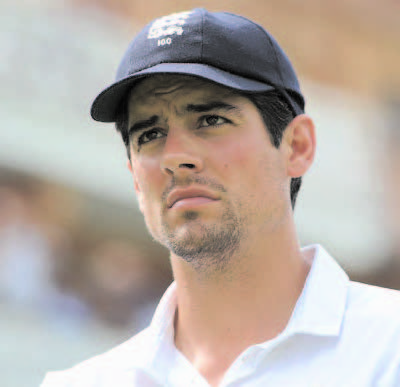
    LORD (TIP): Moeen Ali and Joe Root looked to have eased the pressure on beleaguered skipper Alastair Cook by chalking up a 101-run partnership before lunch. But Moeen Ali fell to the last ball of the morning session and Ishant Sharma then took full advantage by luring Matt Prior, Ben Stokes and Root into all pushing the selfdestruct button in quick succession.

    To add insult to injury, England’s defeat was confirmed when James Anderson was run out by Ravindra Jadeja – the player he stands accused of pushing and verbally abusing during the first Test at Trent Bridge. The humiliating collapse means England have lost seven of their last 10 Tests under Cook’s leadership. And if Cook was hoping his batsmen would leap to his defence as his own dire form at the crease continued he was sadly mistaken as hopes of a dramatic fifth day win here quickly evaporated in the muggy conditions.

    The manner of England’s latest collapse was all the more infuriating after Ali and Root had taken England to 173-4, just 146 away from the winning target. After a slow start Root was soon into his stride, bringing up his 50 with three fours in an over off Sharma. But after roughing up Root with the first three balls of the final over before lunch, the paceman turned his attention to Ali who finally succumbed as he took his eye off the ball and looped a catch to Cheteshwar Pujara at short leg.

    At that stage there was still plenty of room for optimism for England. That was until Prior’s plan to meet fire with fire were spectacularly scuppered as he hooked yet another Sharma bouncer to Vijay Murali at deep midwicket. With Stokes’ form with the bat mirroring that of his skipper it was perhaps unsurprising that thoughts of an unlikely victory soon turned to England being resigned to yet another defeat.

    They did the damage once again, as Stokes too hooked the Indian paceman into the deep for his third duck in succession for his country. A superb batting performance had taken Root to 66. But the Yorkshireman became the next Sharma victim. Attempting to attack another short ball, Root could only hook it straight to Stuart Binny at long leg.

    Stuart Broad had no answer to a rampant Sharma, gloving to MS Dhoni down the leg side before the misery was completed as Jadeja scored a direct hit on Anderson’s stumps after an ambitious attempt at a single. Just 67 minutes after the lunch break – where an unlikely victory was well within their grasp – England had thrown it away once again. Sharma’s final figures of seven wickets for 74 runs are the best by an India bowler in England. And unless Cook and company can come up with a plan to deal with his short balls by the time they head to the Ageas Bowl in Southampton on July 24 then Cook’s problems will continue to mount.

  • GOVT PUTS BORDER ROADS ON FAST TRACK

    GOVT PUTS BORDER ROADS ON FAST TRACK

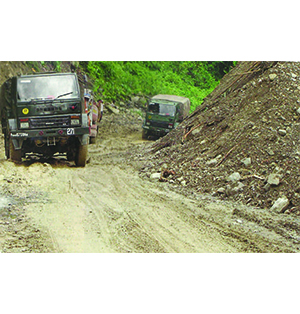
    NEW DELHI (tip): In a move that will push construction of linear highway projects in all border states, the environment ministry has agreed to drop the provision of “public hearing” before considering green clearances to such works. The process of public hearing delays both environment and forest clearances. About 81 highway and road projects by NHAI, road ministry, Border Roads Organization and state agencies like PWDs are stalled for want of forest and wild life clearances.


    Sources said both environment and road ministry officials agreed to the proposal at a review meeting chaired by Nripendra Misra, Prime Minister Narendra Modi’s principal secretary, on Saturday with regard to environment, forest and wild life clearances. Officials said it was noted in the meeting that in linear projects like constructing new roads, widening of existing highways, power transmission lines, water supply lines and optic fibre cabling, the environmental impact or forest diversion required is much less. Highlighting that such projects in strategic border states should not be delayed or withheld because of cumbersome processes it was decided that there is a need to streamline clearances to avoid derailment of such works.


    A government official said that for new linear projects the environment ministry may take up environmental appraisal “without insisting” on public hearing subject to suitable conditions to be prescribed by the green ministry. It was also agreed that for new highway projects in these states a standardized terms of reference (ToR) would be developed by roads and environment ministries by this weekend. This may be considered and approved by the environment appraisal committee (EAC) concerned in the next meeting.


    The environment secretary reportedly clarified that for widening of national highways environment clearance is not required if the proposed length is less than 100 km and additional land acquisition involved is less than 40 meters. Moreover, the bigger relief is that environment clearance will be required only if both these conditions are exceeded simultaneously. This means NHAI or other highways owning agencies can take up construction without green clearance for over 100 km if the additional land acquisition involved does not cross 40 meter mark.


    Similarly, for facilitating forest clearance for linear projects the environment ministry may delegate the power to regional empowered committees and regional offices irrespective of the proposed area. It was also agreed that considering the difficulties in locating non-forest or degraded forest areas in states where forest cover is over 50%, environment ministry would work out an alternative solution. The ministry would look into the concept of green credit and land bank to deal with such problems.

  • 6-year-old’s alleged rape in school sparks massive protests in Bangalore

    6-year-old’s alleged rape in school sparks massive protests in Bangalore

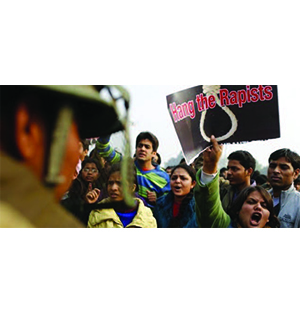
    BANGALORE (TIP): The alleged rape of a six-year-old at a prominent school in Bangalore has enraged the city and triggered massive protests by parents. The union education ministry has said it will examine the incident. A large group of parents protested outside Vibgyor High School on Thursday demanding that its management take responsibility for their children’s safety. Protesters broke down locked school gates and entered the building as the police tried to restrain them. A window was broken. (Watch: Protests at Bangalore School) “My child studies in Class 1 here.

    I don’t even know whether I can send her to school anymore,” a parent shouted. The school’s chairman, Rustam Kerawalla came out and promised safety. “We will install CCTVs and ensure background checks of staff,” he told agitated parents, many of whom have full-time jobs in the bustling IT city and had never before worried about their children during school hours. On July 2, a Class 1 student was allegedly raped by two gym instructors during school hours. The child had reportedly left the classroom to use the washroom when she was attacked.

    The incident was reported a week later. A police officer has said three people have been detained and the role of the school is also being examined. Anger has snowballed with many schools in the city declaring that they can’t be held responsible for the safety of students. They have asked parents to sign a form that the school’s staff or teachers can’t be held responsible for “damage to loss of property, sickness or injury from ‘whatever source’ legal entanglements, loss of life or money…”

  • PM MODI RETURNS FROM BRAZIL AFTER ATTENDING BRICS SUMMIT

    PM MODI RETURNS FROM BRAZIL AFTER ATTENDING BRICS SUMMIT

    NEW DELHI (TIP): Prime Minister Narendra Modi returned to New Delhi last night after attending theVIth BRICS Summit in Fortaleza in Brazil. On his way back, Modi made a transit halt at Frankfurt and had a telephonic conversation with German Chancellor Angela Merkel. The Prime Minister complimented the German Chancellor on the splendid victory of the German football team and also conveyed his good wishes to Chancellor Merkel on her 60th birthday which was yesterday.

    The Prime Minister conveyed that India regards Germany as a very important partner and that his Government will work closely with the German side to strengthen and deepen the bilateral strategic partnership. He invited the German Chancellor to visit India in 2015 for the third meeting of the India Germany Consultations. She accepted his invitation. The two leaders also briefly discussed areas of bilateral cooperation including through skill development. During his visit, Modi had bilateral meetings with leaders from Russia, China, Brazil, and South Africa.

    Prime Minister also had an opportunity to interact with eleven South American leaders at the meeting between BRICS and South America hosted by Brazilian President Rousseff. This was the first occasion when an Indian Prime Minister had an opportunity to meet so many South American leaders at one place. The visit of Prime Minister Modi is being termed as a very important and fruitful one as far as the diplomatic gain to India is concerned.

  • PM Modi’s Flight Among Planes Rerouted After Malaysian Airlines Crash

    PM Modi’s Flight Among Planes Rerouted After Malaysian Airlines Crash

    New Delhi (TIP): Prime Minister Narendra Modi’s flight was among the many planes that were re-routed after the Malaysian Airlines flight MH-17 was shot down in Ukraine on July 17. Modi, who returned last night after his trip to Brazil for a BRICS summit, tweeted today, “Our thoughts & prayers are with the families of those who lost their lives on board Flight MH17. We stand with them in this hour of grief.

    ” Reports say the PM’s Air India-One could have been in the same corridor as MH-17 perhaps an hour later. After the crash, it would have been rerouted over Black Sea. Sources say there is a notice to airmen barring planes from flying below 30,000 feet in Ukraine, which has seen fighting between its troops and pro-Russian rebels for the past few months. The route is regularly used by Indian aircraft.

    There are other routes but the choice of Ukraine depends on weather conditions. Most planes avoid the other flight path, which is over the Simferopol FIR, because both Russia and Ukraine lay claim over the area and more than one air traffic control in the same airspace could have serious safety implications. Contradictory directions were recently issued by Russia and Ukraine.

    The UN aviation agency announced that the right to provide air navigation services in the region belonged exclusively to Ukraine, something Russia has contested since it now controls the Crimean region of Ukraine. The Indian aviation regulator has now directed Air India and Jet Airways – the only two airlines to fly to Europe and America – to avoid eastern Ukraine.

  • Haryana Guv okays HSGPC Bill

    Haryana Guv okays HSGPC Bill

    Chandigarh (TIP): On a day when a delegation of the Shiromani Gurdwara Prabandhak Committee (SGPC) met Haryana Governor Jagannath Pahadia against the passage of the Haryana Sikh Gurdwara Management Bill, 2014, by the Haryana Assembly, the Governor on July 14 gave his assent to the Bill, paving the way for the creation of a separate body for the management of the Sikh shrines in Haryana. The assent by the Governor came as a relief to the Hooda Government eyeing Sikh votes ahead of the Assembly elections later this year even as the SGPC described the Bill as “a blatant constitutional transgression” and “a brazen interference in Sikh religious affairs”.


    Urging Pahadia to decline assent to the Bill and “seek clarification regarding reserving the Bill for Presidential assent,” a delegation threemember delegation led by SGPC president Avtar Singh Makkar today submitted a memorandum to the him alleging that the Bill been passed in an “unconstitutional manner”. Chief Minister Bhupinder Singh Hooda, however, reiterated his stand claiming that the Vidhan Sabha was competent to pass Bill and “there is no need to forward it to the President” after Governor’s assent.


    “It was part of party’s manifesto for the 2005 and 2009 Assembly elections. It was party’s agenda and was based on demand of the Sikh brothers,” Hooda added. Meanwhile, the SGPC memorandum maintained that a state Vidhan Sabha had “no legislative competence “to pass a bill on a subject, which was governed by an Act of the Parliament. “Even after Partition, the gurdwaras which fell in the undivided state of Punjab and PEPSU have continuously been under the jurisdiction of the SGPC by virtue of the Sikh Gurdwara Act, 1925.This scope of jurisdiction has been preserved even after the territorial bifurcation of the state in November,1966,by according SGPC the status of an inter-state body corporate,” the memorandum asserted.


    Akal Takht excommunicates HSGPC Chattha, Nalvi, Jhinda
    Akal Takht on July 16 excommunicated Haryana Finance Minister Harmohinder Singh Chattha and state Sikh leaders Jagdish Singh Jhinda and Didar Singh Nalvi for “challenging the supremacy of Akal Takht by conspiring to divide the SGPC despite being repeatedly warned against it”. Akal Takht Jathedar Giani Gurbachan Singh, while reading out his edict from the rostrum of the Takht this afternoon, said: “The Sikh Sangat is directed to socially, religiously and politically boycott these individuals until they appear before Akal Takht and undergo ‘tankhah’ (religious punishment).” The decision came after the Sikh clergy and the SGPC executive committee held separate meetings. The meeting of Sikh high priests was preceded by a meeting of the SGPC executive, which passed a resolution terming the Haryana Sikh Gurdwara (Management) Bill 2014 to form a separate gurdwara panel for Haryana as “unconstitutional” and seeking action against Haryana Sikh leaders involved in it.


    Punjab Assembly passes anti-HSGPC resolution
    In the backdrop of controversy over the formation of a separate gurdwara panel by Haryana, the Punjab Legislative Assembly on July 17 passed by voice vote a resolution seeking the Centre’s intervention in prohibiting any state to interfere in religious matter of other states. The Congress opposed the resolution saying the Akalis were to blame for the formation of the Haryana Gurdwara Parbandhak Committee (HSGPC) as they had politicised the Shiromani Gurdwara Parbandhak Committee (SGPC) for their own vested interests. The Congress MLAs said they were for all for the unity of the Sikhs when it came to making of the All-India Gurdwara Act, but the Akalis had no right to oppose the HSGPC.

  • AFTER BJP, AAP INDICATES IT WANTS TO FORM GOVERNMENT IN DELHI

    AFTER BJP, AAP INDICATES IT WANTS TO FORM GOVERNMENT IN DELHI

    NEW DELHI (TIP): The race to form the government in Delhi heated up after both the BJP and the AAP indicated that they were ready to stake claim. A day after the BJP suggested that it could form a government in Delhi, AAP leader Arvind Kejriwal sought an appointment with Delhi Lt. Governor Najeeb Jung. Kejriwal tweeted: “I have sought an appointment from LG for all AAP MLAs to meet him today. Waiting for his response.” Satish Upadhyay, the new president of the BJP in Delhi, told the media Wednesday that his party could consider government formation if Najeeb Jung gave an invitation.


    “We might consider it,” he said in brief remarks as speculation mounted that the political logjam in the capital might soon end. “We will decide when the time comes,” added Jagdish Mukhi, a senior BJP leader after a meeting of party legislators. Kejriwal, who quit as chief minister of Delhi Feb 14 after 49 days in power, tweeted: “Can LG invite a party to form government without prima facie satisfying himself whether the party has numbers?” Kejriwal had led the AAP to a stunning victory in last year’s Delhi assembly election and had formed the government with Congress backing.


    In another tweet, Kejriwal said: “Would LG encourage horse trading if he invites a party to form government despite knowing that they don’t have number?” Kejriwal also questioned whether Jung can invite the BJP, which has earlier declined to form the government. “If a party (BJP) has once already declined the offer to form government – can the LG invite the same party in the existing Vidhan Sabha again?” he said. The BJP won 31 of the 70 seats in the December 2013 assembly election in Delhi and the Aam Aadmi Party 28, ousting the Congress, which got only eight seats after being in power for 15 long years. Three of the 31 BJP legislators in Delhi were elected in May to the Lok Sabha, bringing down its tally in the assembly to 28. The AAP’s strength is 27 after one of its legislators broke away months ago.


    It is not clear how the BJP hopes to form a government. It enjoys the support of an Akali Dal member. It will still need the backing of at least five legislators for a simple majority in the assembly whose effective strength now is 67. BJP sources seem confident that they will get the numbers, primarily from a demoralized Congress. “There is nothing we can do if people want to leave the party,” a senior Congress leader said. However, Arvinder Singh Lovely, who heads the Congress in Delhi, insisted that no Congress legislator would go with the BJP or AAP. Another Congress legislator, however, admitted on the condition of anonymity that some in his party were in touch with the AAP which they see as a better bet vis-avis the BJP.


    A senior AAP leader admitted that there had been talks of government formation between the AAP and Congress legislators. The AAP, which has petitioned the Supreme Court seeking fresh elections, feels that it will make a move towards government formation only if it is sure that the Congress will back it once again. Kejriwal has admitted that he made a mistake in resigning, and some AAP legislators have pleaded with him to explore the chances of again forming a government.

  • UPROAR IN LS OVER VAIDIK-SAEED MEET

    UPROAR IN LS OVER VAIDIK-SAEED MEET

    Govt has nothing to do with it: Jaitley Leader of the upper House and finance minister Arun Jaitley said for India, Saeed was a terrorist and indeed involved in terrorism against India. Government had nothing to do with “directly, indirectly or even remotely” with any journalist meeting Saeed.


    NEW DELHI (TIP): The Congress and other Opposition parties kept up the pressure in the Lok Sabha on July 17 over RSS leader Indresh Kumar’s defence of journalist Ved Pratap Vaidik’s meeting with Jamaat-ud-Dawa (JuD) chief Hafiz Saeed, compelling External Affairs Minister Sushma Swaraj to make a second statement on the subject in one week. Swaraj told the Lok Sabha that the Indian High Commission in Pakistan was unaware of Vaidik’s meeting with Hafiz Saeed. “The Indian High Commission has categorically stated that it did not know about this meeting.


    Therefore, the question about the High Commission facilitating it does not arise,” Swaraj said. Her Ministry, she said, made enquires after Vaidik, “told some news channels that the High Commission knew about the meeting.We had then sought a report from the High Commission.” Her clarification came after Congress and other Opposition MPs almost brought the House to a halt on the issue. Vedprakash Vedic, a senior aide of Baba Ramdev, who is also a journalist, recently met the alleged 26/11 mastermind in Lahore recently.


    However, Vaidik said he had consented to meet the Jamaat-ud-Dawa boss purely at the behest of a journalist friend from Pakistan. “When I was in Pakistan, the media criticism of Hafiz Saeed in India came up for discussion. It was then that a Pakistani journalist asked me if I would like to meet Saeed in person. I agreed and a call was immediately made to fix the meeting,” he said, denying any other motive to his appointment with the mostwanted terrorist. Refuting allegations that he had met Saeed as an envoy of the Narendra Modi government, Vaidik said his interface with the Jamaat-ud-Dawa boss was driven only by journalistic considerations.


    “I would like to tell Congress, which is alleging that I met him on behalf of the government, to attack the Modi regime directly rather than train its guns from my shoulders”. “I am a known name in Pakistan. My writings and articles are translated and reproduced in Pakistani media. In my 55 years of journalistic career, I have not declined to meet anyone. I have met Maoist leaders and LTTE leaders including Prabhakaran,” said Vaidik. “I wanted to analyse Saeed’s mind and know why he committed heinous crimes against India,” he added.


    He denied being part of the Vivekananda International Foundation, with which IB chief Ajit Kumar Doval was earlier associated. This has been alleged as the reason why he was chosen to play the government’s ‘envoy’ to reach Saeed. “I have never been associated with the government and do not look at such association in the future. I am an independent journalist who is free to meet anyone,” he said.

  • Elaine Stritch, brash stage legend, dies at the age of 89

    Elaine Stritch, brash stage legend, dies at the age of 89

    NEW YORK: Elaine Stritch, the brash theatre performer, whose gravely, gin-laced voice and impeccable comic timing made her a Broadway legend, has died. She was 89. Joseph Rosenthal, Stritch’s longtime attorney, said the actress died on Thursday of natural causes at her home in Birmingham, Michigan. Although Stritch appeared in movies and on television, garnering three Emmys and finding new fans as Alec Baldwin’s unforgiving mother on “30 Rock”, she was best known for her stage work, particularly in her candid one-woman memoir, “Elaine Stritch: At Liberty,” and in the Stephen Sondheim musical “Company”.

    A tart-tongued monument to New York show business endurance, Stritch worked well into her late 80s, most recently as Madame Armfeldt in a revival of Sondheim’s musical “A Little Night Music”. She replaced Angela Lansbury in 2010 to critical acclaim. In 2013, Stritch — whose signature “no pants” style was wearing a loose-fitting white shirt over sheer black tights — retired to Michigan after 71 years in New York City and made a series of farewell performances at the Carlyle Hotel: “Elaine Stritch at the Carlyle: Movin’ Over and Out”. She said she suffered from diabetes, a broken hip and memory loss — all of which she nakedly and unapologetically documented in the film “Elaine Stritch: Shoot Me”, a documentary released in February.

    “I like the courage of age,” Stritch said in the film, one she participated in grudgingly. One scene captured her in a hospital bed, reflecting: “It’s time for me, and I can feel it everywhere.” Stritch’s death immediately sent shockwaves through Broadway and entertainment. Lena Dunham said on Twitter, “Here’s to the lady who lunched: Elaine Stritch, we love you. May your heaven be a booze-soaked, no-pants solo show at the Carlyle.” Stritch was a striking woman, with a quick wit, a shock of blond hair and great legs. She showed them off most elegantly in “At Liberty”, wearing a loose fitting white shirt, high heels and black tights.

    In the show, the actress told the story of her life — with all its ups, downs and in-betweens. She frankly discussed her stage fright, missed showbiz opportunities, alcoholism, battle with diabetes and love life, all interspersed with songs she often sang onstage. “What’s this all been about then — this existential problem in tights,” Stritch said of herself at the end of the solo show, which opened off-Broadway in November 2001, transferred to Broadway the following February and later toured. It earned her a Tony Award in 2002 and an Emmy when it was later televised on HBO. “I think I know what I have been doing up here tonight. I’ve been reclaiming a lot of my life that I wasn’t honestly and truly there for,” she said.

    “It almost all happened without me but I caught up.” In “Company” (1970), Stritch played the acerbic Joanne, delivering a lacerating version of “The Ladies Who Lunch” a classic Sondheim song dissecting the modern Manhattan matron. Stritch originated the role in New York and then appeared in the London production. Among her other notable Broadway appearances were as Grace, the owner of a small-town Kansas restaurant in William Inge’s “Bus Stop” (1955), and as a harried cruise-ship social director in the Noel Coward musical “Sail Away” (1961). She also appeared in revivals of “Show Boat” (1994), in which she played the cantankerous Parthy Ann Hawks, and Edward Albee’s “A Delicate Balance” (1996), portraying a tart-tongued, upper-crust alcoholic.

    Each generation found her relevant and hip. She was parodied in 2010 on an episode of “The Simpsons” in which Lisa Simpson attends a fancy performing arts camp. One class was on making wallets with Elaine Stritch and Andrew Lloyd Webber. Stritch got a kick out of it. “That’s worth being in the business for 150 years,” she said with a laugh. Stritch’s films include “A Farewell to Arms” (1957), “Who Killed Teddy Bear?” (1965), Alain Resnais’ “Providence” (1977), “Out to Sea” (1997), and Woody Allen’s “September” (1987) and “Small Time Crooks” (2000). She also appeared in many American TV series, most notably a guest spot on “Law & Order” in 1990, which won Stritch her first Emmy. Back in 1950, she played Trixie, Ed Norton’s wife, in an early segment of “The Honeymooners,” then a recurring sketch on Jackie Gleason’s variety show “Cavalcade of Stars.” But she was replaced by Joyce Randolph after one appearance.

    More than a half-century later, Stritch was back at the top of the sitcom pyramid with a recurring role in “30 Rock,” winning her another Emmy in 2007 as best guest actress in a comedy. She was also well known to TV audiences in England, where she starred with Donald Sinden in the sitcom “Two’s Company” (1975-79), playing an American mystery writer to Sinden’s unflappable British butler. Stritch also starred in “Nobody’s Perfect” (1980-1982), appearing with Richard Griffiths in this British version of the American hit “Maude.”

  • Actress jailed for 18 years after mailing ricin-spiked letters to US president, NY mayor

    Actress jailed for 18 years after mailing ricin-spiked letters to US president, NY mayor

    WASHINGTON (TIP) : An actress and former beauty queen who sent ricin-laced letters to US President Barack Obama and the New York City mayor has been sentenced to 18 years in prison. Shannon Guess Richardson was arrested in June 2013 after she posted letters to the president, the then-mayor Michael Bloomberg as well as a gun control advocate – a bizarre act she blamed on her husband. The 36-year-old Texan, who had bit parts in ‘The Vampire Diaries’ and movie ‘The Blind Side’, pleaded guilty to possessing and producing a biological toxin and received the maximum sentence yesterday. She was also ordered to pay a fee of $367,000 (£214,000). “I never intended for anybody to be hurt,” she told the court. “I’m not a bad person. I don’t have it in me to hurt anyone.

    ” Richardson, who gave birth while in custody, had attempted to frame her estranged husband in the crime after obtaining a PayPal account and post office box in his name. A signed plea document details how she had ordered castor beans from the internet, learnt how to turn them into ricin and then waited patiently for her husband, Nathan Richardson, to go to work on 20 May 2013 being escorted out of the courthouse yesterday Richardson being escorted out of the courthouse yesterday She printed address labels for each of the recipients – the third of which was Mark Glaze, Director of Mayors Against Illegal Guns.

    The letter to Obama read: “What’s in this letter is nothing compared to what I’ve got in store for you Mr President. “You will have to kill me and my family before you get my guns. Anyone wants to come to my house will get shot in the face.” Before sentencing, Richardson appealed to the judge for “mercy and compassion” saying that she had already been “punished dearly” by being separated from her six children. “The sentiments expressed in those letters were not mine,” Richardson added. She reportedly thought that security measures at each of the victim’s addresses would have prevented them from opening the letters. Her husband has since filed for divorce

  • US man charged with hugging child to death

    US man charged with hugging child to death

    COLUMBIA, SOUTH CAROLINA (TIP): A US man has been charged with involuntary manslaughter for hugging a 14-month-old child so tightly that the boy stopped breathing and died, authorities said July 14. Robert Kemp, 27, was taken into custody Tuesday and released on $10,000 bond the next day. Kemp is described as a family friend in a news release from Orangeburg County Sheriff Leroy Ravenell. An arrest warrant said Kemp killed the child “by giving him a bear hug, squeezing the victim so tight that the victim stopped breathing as a result.”

    Jaylen Harris died from asphyxiation on June 27, 2013, Orangeburg County Chief Deputy Coroner Sean Fogle said. Kemp told deputies he was playing with the child when he started to rub his eyes like he was tired, so he put the toddler in his crib on his back with his bottle, according to an incident report. Kemp said he went to the kitchen to do some chores and realized he hadn’t heard the boy in a while. He went back into the bedroom and noticed the toddler on his stomach, unconscious with his hands balled into fists, according to the report.Another person in the home, whose name was blacked out on the report, started CPR, but the boy could not be resuscitated, according to the report.

    If convicted, Kemp faces up to five years in prison. The sheriff’s release didn’t say why it took a year to bring charges, and a spokeswoman for the sheriff said in an email no more information would be released. A woman who identified herself as Kemp’s mother when she answered the phone offered to give her son a message that was not returned. A message left at a phone number listed for the baby’s mother was not returned.