Month: July 2014

  • Japan to participate in Malabar exercise with India and US

    Japan to participate in Malabar exercise with India and US

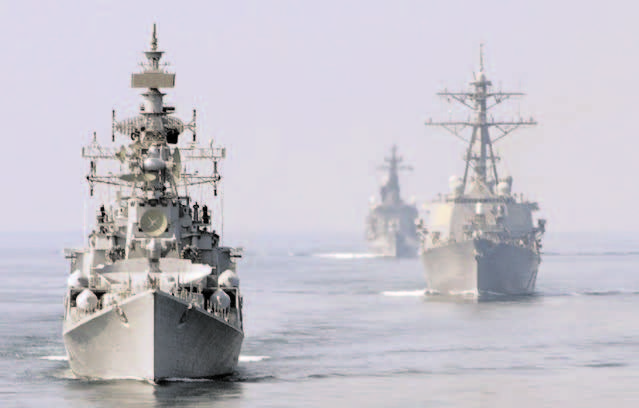
    WASHINGTON (TIP): In an effort to strengthen the tri-lateral cooperation, Japan will participate in this year’s Malabar naval exercise to be held at the end of this month, with India and the US.”Japan will participate in MALABAR this year which is our largest bilateral naval exercise with India and it’s scheduled to take place at the end of this month,” Deputy assistant secretary of defense for South and Southeast Asia Amy Searight told lawmakers during a Congressional hearing on yesterday. The assistant secretary of state for South and Central Asia Nisha Desai Biswal said there is strong trilateral partnership between the three countries.

    “We were about to hold the fifth iteration of the US-India-Japan trilat earlier this summer. We have had to reschedule that but we have seen a tremendous growth in the amount of collaboration that we’re able to have, not only in terms of sharing of intelligence and analysis but also looking at active areas of cooperation,” she said. The Malabar series has historically been an India-US affair, but its scope has widened with Japan being invited for the annual naval engagement. “We will be doing joint exercises with Japan and India in the MALABAR exercises later this fall.

    And we see opportunities for increasing the collaboration across Southeast Asia. We are engaging more frequently in consultations and dialogue with the Indians on Asean and look forward to increased and frequent consultations across the East Asia sphere,” Biswal said while replying to a question from Senator John McCain. Lisa Curtis of The Heritage Foundation said there’s a realm opportunity to build the US-India-Japan trilateral cooperation. In the past few years India has focused increasingly on buttressing security ties with Japan, South Korea, and Vietnam to meet the challenges of a rapidly rising China, she said.

    “Indo-Japanese ties, in particular, are expected to get a major boost under Modi’s administration since Modi and Japanese Prime Minister Shinzo Abe are both increasingly concerned about China and appear prepared to take new policy directions to deal with the challenges posed by Beijing’s rapid military and economic ascendance,” Curtis said. Both the heads of state, Shinzo Abe and Narendra Modi have developed a close personal rapport, she said. “As chief minister, Modi traveled to Japan in 2007, marking the first time an Indian chief minister had travelled to the country. Modi was one of the first foreign dignitaries to congratulate Abe when he was reelected in 2012. The recent postponement of Modi’s visit to Japan is all the more perplexing, given the history of the personal relationship between Abe and Modi,” she added.

  • Only 22% Americans know a Hindu

    Only 22% Americans know a Hindu

    NEVADA (TIP): Only 22 percent Americans know someone who is Hindu, according to a Pew Research Center survey published on July 17. This number is lowest than any other religion/denomination surveyed. Catholics rank highest with 87 percent, followed by evangelical Christians, Jews, Atheists, Mormons, Muslims, Buddhists and Hindus. Americans express warmest and more positive feelings towards Jews (average rating 63); followed by Catholics, evangelical Christians, Buddhists, Hindus, etc., the survey adds.

    Reacting to this survey findings, Hindu statesman Rajan Zed, in a statement in Nevada (USA) , July 18, , urged American Hindus to make outreach efforts towards non- Hindu communities, do charity, invite others to visit Hindu temples/ashrams, offer help to neighbors, be good role models, act for the benefit of all, volunteer, try to stay pure and exhibit warmth and love towards fellow Americans. Zed, who is President of Universal Society of Hinduism, pointed out that ancient Hindu scripture Bhagavad-Gita (Song of the Lord) urged us to act selflessly without any thought of personal profit.

    Rajan Zed suggested to each American Hindu to take a vow of undertaking at least one charitable project during this year for less fortunate members of the community. Quoting scriptures, Zed stressed that charity was a duty, which should be undertaken with sympathy and modesty. Headquartered in Washington DC, “Pew Research Center is a nonpartisan fact tank that informs the public about the issues, attitudes and trends shaping America and the world”. Alan Murray is President. Hinduism, oldest and third largest religion of the world, has about one billion adherents and moksha (liberation) is its ultimate goal. There are about three million Hindus in USA.

  • The Falcon is the new Captain America

    The Falcon is the new Captain America

    He will be a character thats hard to root for, accorting to Axel Alonso, Marvel’s editor-in-chief. Marvel is set to introduce a black Captain America by replacing Steve Rogers with Sam Wilson, better known as the Falcon. The special announcement, made on Comedy Central’s ‘The Colbert Report’ on Wednesday, comes shortly after the US publisher’s plans to make Thor a woman were revealed. Marvel is aiming for greater diversity in its big titles, hence these important changes to major characters. Comic book fans had long-rumoured the shift from Rogers to his old ally Wilson, with the latter set to take up the founding Avenger’s patriotic shield this October.

    Wilson is set to star in Rick Remender’s Captain America #25 with art by Carlos Pacheco. Concept art taken from the cover to All-New Captain American #1 tells fans that his costume will blend elements from his Falcon outfit with Captain America’s classic style. His upgrading will follow Rogers’ devastating fight against the Iron Nail, in which the villain drains him of the super serum keeping him physically perfect and depowers him into an old man. “While Sam shares many of Steve’s beliefs in a general sense, he’s also a very different person with a very different background,” series editor Tom Brevoort told Marvel.

    “He didn’t grow up in the 1930s, he’s a modern day man in touch with the problems of the 21st century.” Created by Stan Lee and Gene Colan, Wilson first featured in 1969’s Captain America #117 as the first African-American superhero in mainstream comics. In 1971, Wilson was promoted to join Captain America in the title, Captain America and the Falcon, but Steve Rogers went solo again from 1978. Before him came “The Black Panther”, who was African and debuted in “Fantastic Four” years earlier. The first black “Captain America” was Isaiah Bradley who appeared in 2003’s limited series “Truth: Red, White and Black.”

  • American who hijacked jet to Cuba in the 1980s gets 20 years in prison

    American who hijacked jet to Cuba in the 1980s gets 20 years in prison

    MIAMI(TIP): An American who returned from Cuba decades after hijacking a jetliner to the communist island was sentenced on Thursday to 20 years in US prison but will be eligible for early release on parole, an acknowledgement by prosecutors of the years he spent behind bars in Cuba. US district judge K Michael Moore imposed the sentence on Thursday on William Potts Jr, 57, for the 1984 hijacking of the Piedmont Airlines flight en route from New York to Miami. Potts pleaded guilty to a kidnapping charge, which was substituted by prosecutors for a previous air piracy charge that would have required Potts to serve a minimum of 20 years.

    This way, Potts should get out on parole after serving almost seven years, or one-third of the overall sentence. Assistant US attorney Maria Medetis said that was the government’s way of giving Potts credit for 13 years he served in Cuba — the Combinado del Este Prison near Havana that Potts’ lawyer, Robert Berube, described as a “hellhole”. “He did an unbelievable amount of time in a very bad place,” Berube said. Potts apologized in court and said he is no longer the self-described angry black militant, calling himself “Lt Spartacus,” who claimed in a note to a flight attendant that he planned to blow up the flight unless it was diverted to Cuba.

    Potts returned to the US last year hoping to resolve the case so he could spend time with his two children, who moved from Cuba to this country earlier. “I changed a long time ago, not just because I’m here before you,” Potts told the judge. “I promise you’ll never regret this if you give me a chance.” Moore, who could have put Potts behind bars for life, said prosecutors made a major concession by filing the reduced charge to give Potts a relatively light sentence. “This is a changed defendant and a remorseful defendant,” Moore said.

    Parole has been abolished in the federal system, but it still applies for Potts because his crime was committed so long ago. Potts was arrested by Cuban authorities as soon as the Piedmont Airlines jetliner landed in Cuba in March 1984. He was sentenced to 15 years behind bars, ultimately serving 13 years before his release. In previous interviews, Potts said he thought he’d be welcomed as a hero and given training as a guerrilla. After his release, he lived quietly east of Havana until last year when he decided to return to the US to resolve the charges here.”I hoped that we could work this out. That’s why I came back of my own accord,” Potts said in court. “Your honor, I didn’t get away with anything.”

  • Militants kill eight Pakistani paramilitary members

    Militants kill eight Pakistani paramilitary members

    PESHAWAR, PAKISTAN (TIP): Militants killed eight members of a government paramilitary force in a midnight attack on a security checkpoint in Pakistan’s restive northwest, security officials said Friday. The militants bombarded the checkpoint with rocket-propelled grenades, two senior military officials said, before overrunning and ransacking it. Local residents said the gunfire began around midnight and continued for at least two hours.

    The attack, for which no militant group has so far claimed responsibility, comes amid a military offensive to push the Taliban out of North Waziristan, a remote northwestern region near the border with Afghanistan. Nato has long urged the military to take action against Taliban safe havens in North Waziristan, where many groups had bases they used to launch attacks in Afghanistan. North Waziristan was considered the key stronghold of the Taliban after other areas in Pakistan had been mostly cleared of militants.

    But residents say most militants moved out before the Pakistani army announced its offensive last month, raising fears that they may now be beefing up their presence in other areas. “The militants displaced from North Waziristan have returned to the Khyber agency and started attacks on security forces,” said one security official. The Khyber Agency is part of the semiautonomous areas where tribal law holds sway instead of Pakistan’s judicial system, and the government is represented by a political agent. Eight members of the state-run Frontier Corps men were killed and three others injured in the attack in the region’s Jamrud subdivision. Khyber is about 48 km (30 miles) north of North Waziristan, and also borders Afghanistan.

  • Pakistani police lay siege to ‘militant hideout’ near PM’s house

    Pakistani police lay siege to ‘militant hideout’ near PM’s house

    LAHORE (TIP): Pakistani security forces laid siege on Thursday to a suspected militant hideout just a few kilometres from the family home of Prime Minister Nawaz Sharif in the eastern city of Lahore, officials said. One policeman was killed and three others wounded in the assault in the Raiwind area of Lahore, which came as a military operation against Taliban militants in the country’s restive northwest enters its second month amid rising fears of reprisal attacks. “A police team raided a house… around 2:00 am (2100 GMT Wednesday) on a tip off about presence of suspected militants, but they retaliated,” senior police official Malik Owais told AFP.

    “One terrorist has been killed and another injured in this operation has been arrested. Police have now occupied the compound,” he added. Waqas Nazir, another police official confirmed the incident, adding that the raid took several hours because civilians had to be evacuated from the area first. Television footage showed a bullet-ridden compound with a large hole blown into one its walls being swarmed by police. Police could not immediately confirm the group to which they belonged. The Raiwind area is home to the famous ‘Raiwind Palace’ — the residence of the powerful Sharif political family which also includes the chief minister of the Punjab province of which Lahore is the capital.

    It is also the base of the Tablighi Jamaat, a Sunni Muslim evangelical movement known for its ultra-conservative views. Pakistan launched a long-awaited operation in the North Waziristan tribal district last month aimed at eliminating Taliban and other militant bases after a dramatic attack on Karachi airport which marked the end of a faltering peace process with the Pakistani Taliban.

    More than 800,000 people have been forced to flee from North Waziristan by the offensive. Analysts have warned that the operation would likely lead to reprisal attacks in Pakistan’s major cities at the hands of sleeper cells of militant outfits linked to the Taliban. Thousands of civilians have died since Islamist militants rose up against the Pakistani state more than a decade ago.

  • US DRONE STRIKE KILLS AT LEAST 13 PEOPLE IN NORTHWEST PAKISTAN

    US DRONE STRIKE KILLS AT LEAST 13 PEOPLE IN NORTHWEST PAKISTAN

    BANNU: A US drone strike hit a suspected militant compound in Pakistan’s northwestern tribal belt on Wednesday, killing at least 13 people, officials said. The attack came in North Waziristan, where the Pakistani military is mounting a major offensive aimed at wiping out insurgent bases. “A US drone fired two missiles targeting a militant compound in Zoi Saidgai area, killing at least 13 insurgents,” a senior security official in Miranshah, the main town of North Waziristan, told AFP.

    The official said there had been reports of militants moving to Zoi Saidgai from Miranshah and Mir Ali, the other main town in the area, after the start of the army operation. Another security official said as many as 20 people may have been killed in the strike, 12 of them Uzbeks. He said the attack took place around 2:00am (2100 GMT) while an important meeting was going on in the compound.

  • MILITANTS KILLED AFTER AUDACIOUS ATTACK ON KABUL AIRPORT

    MILITANTS KILLED AFTER AUDACIOUS ATTACK ON KABUL AIRPORT

    KABUL (TIP): Militants armed with rocket-propelled grenades attacked Kabul International Airport in the Afghan capital on July 17 in one of the most audacious assaults on the facility, used by both civilians and the military, in a year. The attack on the airport comes at a time of great uncertainty for Afghanistan as votes from the second round of a disputed presidential election are to be recounted.


    The poll is meant to mark Afghanistan’s first democratic transfer of power. The attack lasted about four hours after four unidentified militants armed with automatic rifles and rocketpropelled grenades opened fire on the airport from the roof of a building just to its north. “Four terrorists were killed by police special forces. The area is being cleared now, there are no casualties to our forces,” said Interior Ministry spokesman Sediq Sediqqi. The airport is home to a major operational base for NATO-led forces that have been fighting Taliban and other insurgents for 12 years and is bristling with soldiers and police, guard towers and several lines of security checkpoints. Militants fire rockets into the airport almost every week, causing little damage, but frontal attacks on the heavily guarded facility are rare and represent an ambitious target for insurgents.


    The attack was similar in tactics to last year’s assault on the airport, when seven Taliban insurgents including suicide bombers attacked after taking up positions inside a partially constructed building nearby. There was no immediate claim of responsibility for the latest attack. A Kabul airport official told Reuters all flights had been diverted to other cities. In such circumstances, passenger planes are immediately diverted to other Afghan cities such as Mazar-i- Sharif in the north or Herat in the west.


    “Due to the closeness of the attack to the runway, Kabul airport is now closed to all flights,” the official said. Planes could be heard circling above Kabul as the attack unfolded. A Reuters witness near the scene earlier saw black smoke billowing above the airport and heard several explosions. A car had been set on fire not far from the scene. On July 14, a car bomb detonated in a crowded market killed 43 people and wounded at least 74 in the eastern province of Paktika, close to Afghanistan’s porous border with Pakistan.

  • Nepal ex-prince arrested for drugs in Thailand

    Nepal ex-prince arrested for drugs in Thailand

    BANGKOK (TIP): Former Nepalese crown prince Paras Shah has been arrested on drugs charges in Thailand for a second time and could face up to five years in prison, police said on July 16. Shah was detained with about 13 grams (0.5 ounces) of marijuana at a hotel in Bangkok, according to an officer at Thonglor police station who did not want to be named. “He borrowed a flash drive from hotel security and when the security guard entered his room to get his flash drive back he saw marijuana on the counter so he told police,” the officer told AFP.

    He said Shah, who is visiting Thailand on a tourist visa, had admitted illegal drug possession and was remanded in custody. It is not the first time the former royal has been in trouble with the law in Thailand. Shah, who as crown prince was unpopular for his playboy lifestyle, was arrested for possession of about three grams of marijuana on the island of Phuket in October 2012. He was detained again later the same year for smashing property at a luxury apartment in Bangkok.

    In February 2013 Shah was admitted to intensive care in Thailand after suffering a heart attack. Shah became heir to the throne in 2001 after his cousin Crown Prince Dipendra killed nine members of his family including the king and queen in a drink-and-drugs-fuelled rampage, before apparently turning his gun on himself.

  • Myanmar Buddhists threaten death to Muslims in Mandalay unrest

    Myanmar Buddhists threaten death to Muslims in Mandalay unrest

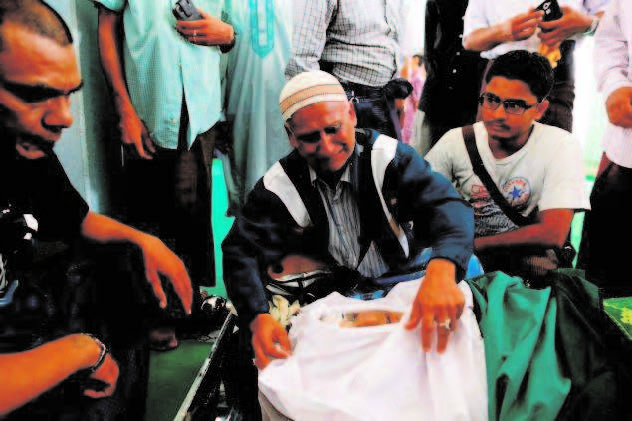
    MANDALAY (MYANMAR) (TIP): Hundreds of Buddhists threatened to kill Muslims as they rode on motorcycles through Myanmar’s second-largest city of Mandalay on July 18, raising the prospect of further communal violence after two people died in unrest earlier in the week. Inter-religious violence has flared throughout the country over the past two years, threatening to undermine political reforms initiated by the quasi-civilian government of President Thein Sein, which took office in 2011 following 49 years of repressive military rule. At least 240 people have been killed and more than 140,000 displaced since June 2012. Most of the victims have been members of Myanmar’s Muslim minority, estimated to be about 5 per cent of the population.

    Around 300 Buddhists were riding around Mandalay on Friday, many of them wielding knives, clubs and bamboo poles. “We’re going to kill all the Muslims,” some shouted as they rode through the streets after attending the funeral of a Buddhist man stabbed to death on July 16 night. A Muslim man was also killed, beaten to death early on Thursday on his way to morning prayers. Police said 19 people were hurt in the riots in the central Myanmar city of about a million people on Tuesday and Wednesday nights.

    A 9pm to 5am curfew backed up by a heavy police presence prevented further trouble on Thursday night and the same curfew will be in force on Friday. The violence began late on Tuesday when a group of about 300 Buddhists converged on a tea shop owned by a Muslim man accused of raping a Buddhist woman. A police officer in the capital, Naypyitaw, told Reuters on Thursday that charges of rape had been filed against the tea shop owner and his brother. An imam at Mandalay’s largest mosque told Reuters that five Muslims had been arrested on Friday after police searched homes nearby and found ceremonial knives.

    “Police definitely know these are used for ceremonial purposes,” said Ossaman, the imam. “They were not breaking any law.” A police officer confirmed the arrests but refused to provide further details and asked that his name be withheld as he was not authorised to speak to the media. Anti-Muslim violence is not new in Myanmar. The former junta imposed a curfew in Mandalay after riots in the city in 1997 following reports that a Muslim man had raped a Buddhist girl. But outbreaks of violence have become more common under the reformist government, which lifted restrictions on freedom of speech, including access to the internet, which had previously been tightly controlled by the military.

  • BRICS SUMMIT: WHAT NARENDRA MODI SAID

    BRICS SUMMIT: WHAT NARENDRA MODI SAID

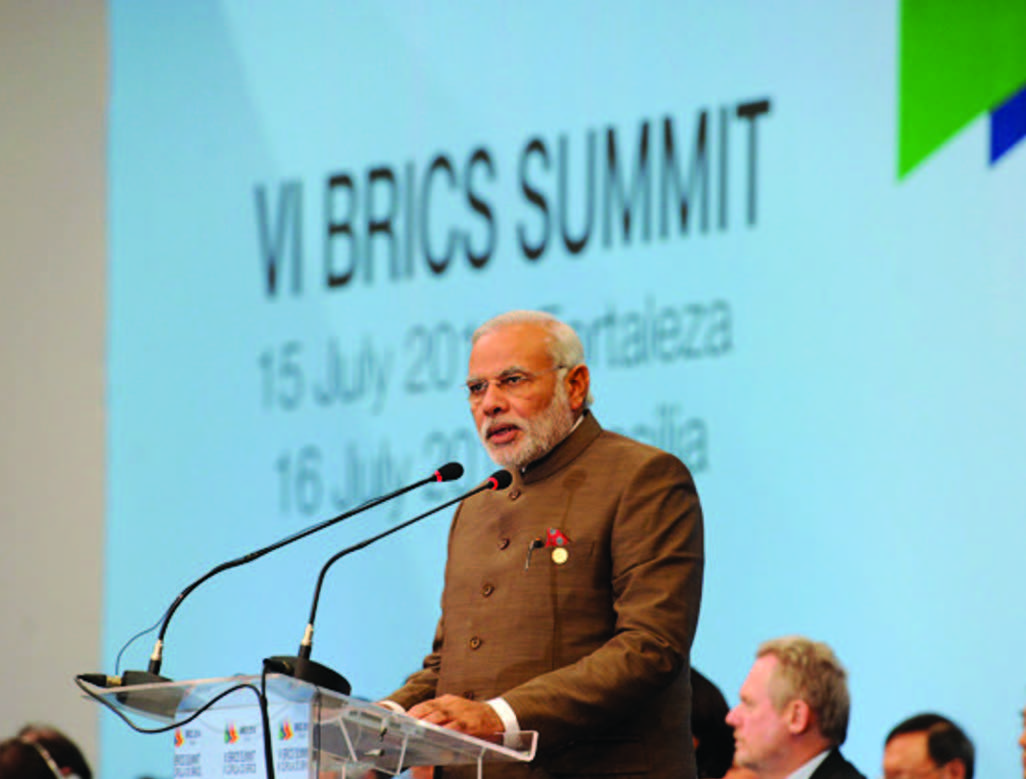
    FORTALEZA, BRAZIL (TIP): BRICS should be driven by people-to-people contact led by the youth of the five nations, India’s Prime Minister Narendra Modi has told leaders of China, Russia, Brazil and South Africa at the summit in Brazil. “Our own greater good, however, lies more in deepening our bonds vertically.

    This is why I have spoken on decentralizing this powerful forum in our earlier deliberations. We must proactively move beyond being Summit-centric. We must champion Sub-national Level exchanges. Champion engagement between our States, Cities and other local bodies. BRICS should in fact, be driven by ‘People to People’ contact. Our Youth in particular must take a lead in this,” Modi said in a statement at the Plenary Session of the 6th BRICS Summit in Fortaleza on July 15.

    For this people-to-people contact, he sought a BRICS Young Scientists’ Forum, BRICS language schools, Massive Open Online Courses and a BRICS University. Modi also said that “BRICS must provide a united and clear voice in shaping a peaceful, balanced and stable world”. “We should intensify our cooperation in confronting global challenges; like Terrorism, Cyber Security and Climate Change. BRICS must also play a proactive role in shaping the global discourse on Growth and Development. This includes shaping the post-2015 Development Agenda to keep the central focus on tackling poverty,” he said.

    He also sought reforms in UN Security Council and shape the World Trade Organisation. “We must seek urgent reforms of global institutions of governance like the UN Security Council and international financial institutions. We must help shape the WTO regime. An open trading regime is critical for strong, balanced and sustainable global economic growth. This must address the development aspirations of the developing world. It must also accommodate the special needs of the weak especially in areas such as Food Security,” he said.

    ABOUT BRICS

    BRICS is the acronym for an association of five major emerging national economies: Brazil, Russia, India, China, and South Africa. The grouping was originally known as “BRIC” before the inclusion of South Africa in 2010. The BRICS members are all developing or newly industrialised countries, but they are distinguished by their large, fast-growing economies and significant influence on regional and global affairs; all five are G-20 members.

    As of 2013, the five BRICS countries represent almost 3 billion people with a combined nominal GDP of US$16.039 trillion and an estimated US$4 trillion in combined foreign reserves. As of 2014, the BRICS nations represented 18 percent of the world economy. South Africa held the chair of the BRICS group in 2013, having hosted the group’s fifth summit in 2013.

    The BRICS have received both praise and criticism from numerous quarters. Argentina participated in the Fortaleza Summit held in July 2014 in response to an invitation by Russia. In that meeting, the BRICS countries will discuss the possible admission of Argentina as the sixth member country. The term, “BRICS”, was coined by economist Jim O’Neill in his publication, Building Better Global Economic BRICs.

    History

    The foreign ministers of the initial four BRIC states (Brazil, Russia, India, and China) met in New York City in September 2006, beginning a series of high-level meetings. A full-scale diplomatic meeting was held in Yekaterinburg, Russia, on 16 May 2008.

    First summit

    The BRIC grouping’s first formal summit, also held in Yekaterinburg, commenced on 16 June 2009,[13] with Luiz Inácio Lula da Silva, Dmitry Medvedev, Manmohan Singh, and Hu Jintao, the respective leaders of Brazil, Russia, India and China, all attending. The summit’s focus was on means of improving the global economic situation and reforming financial institutions, and discussed how the four countries could better co-operate in the future. There was further discussion of ways that developing countries, such as the BRIC members, could become more involved in global affairs.

    In the aftermath of the Yekaterinburg summit, the BRIC nations announced the need for a new global reserve currency, which would have to be “diversified, stable and predictable”.[15] Although the statement that was released did not directly criticise the perceived “dominance” of the US dollar – something that Russia had criticised in the past – it did spark a fall in the value of the dollar against other major currencies.

  • Of Bullet Trains and Boundary Disputes

    Of Bullet Trains and Boundary Disputes

    “While economic cooperation with China is mutually beneficial, India must review its approach to border issues with the Asian giant. It should insist that the dispute be resolved in accordance with 2005 Guiding Principles”, says the author.

    Addressing an election rally in Arunachal Pradesh on February 22, Mr Narendra Modi called on China to shed its “mindset of expansionism”. Mr Modi averred: “Arunachal Pradesh is an integral part of India and will remain so. No power can snatch it from us. I swear in the name of this soil that I would never allow this State to disappear, breakdown, or bow down. China should shed its expansionist mindset and forge bilateral ties with India for peace, progress and prosperity of both nations”. This message was reinforced with the appointment of Mr Kiren Rijiju from Arunachal Pradesh as Minister of State for Home Affairs.

    China made the predictable noises, with Prime Minister Li Keqiang congratulating Mr Modi on his appointment and President Xi Jinping sending his Foreign Minister Wang Yi to meet Mr Modi, with a personal message of greetings. Did these gestures signal any substantive change in China’s policies, either on its outrageous territorial claims on Arunachal Pradesh, or the continuing intrusion of its troops across the Line of Actual Control? The answer is clearly in the negative. Just on the eve of Vice President Hamid Ansari’s visit to the Middle Kingdom, China published yet another official map depicting the entire State of Arunachal Pradesh as its territory.

    While the UPA Government had claimed that new “mechanisms” had been agreed upon to curb cross border intrusions, the intrusions continued. Given these developments the NDA Government should carefully consider reviewing and reorienting existing policies on China. Any talk of more robust military responses to Chinese adventurism is illadvised. The NDA Government has unfortunately inherited a situation where India’s armed forces are inadequately equipped and lacking in numbers. It would take a minimum of five years before the armed forces are adequately equipped and manned, to be able to present a more selfconfident response to Chinese adventurism.

    New Delhi should, however, now reorient its diplomacy, by taking note of the fact that Chinese assertiveness and aggression is directed not only against India, but towards all its maritime neighbors, with unilateral declarations on delineation of its maritime boundaries. Just as China’s claims on Arunachal Pradesh have no legal or historical basis, its claims on its boundaries with all its maritime neighbors, are in violation of the UN Convention on the Laws of the Seas. China has used force to seize disputed Islands claimed by the Philippines and Vietnam and to explore for offshore oil and gas.

    Tensions with Japan are escalating, because of China’s claims to the Senkaku Islands, controlled by Japan since 1894. China’s unilateral declaration of an Air Defence Identification Zone beyond its borders has been rejected by South Korea and Japan. Its territorial claims on its maritime borders face challenges from South Korea, Taiwan, Japan, Vietnam, Philippines, Brunei, Malaysia and Indonesia. Yet another major source of concern has been the Chinese policy of strategic containment of India, primarily based on enhancing Pakistan’s nuclear weapons, missile, maritime, air power and army capabilities.

    This is an issue which India inexplicably and rarely, if ever, highlights either bilaterally, or internationally. This policy of strategic containment through Pakistan has been reinforced by China’s readiness to provide weapons and liberal economic assistance to all of India’s neighbors in South Asia. Worse still, bending to Chinese pressures, India has periodically avoided proposed joint military exercises with Japan and the US. A measured response to Chinese containment would be for India to step up military cooperation with Vietnam, including supply of Brahmos cruise missiles which can enable Vietnam to counter Chinese maritime bullying.

    This would be an appropriate answer to China’s unrestrained military relationship with Pakistan. Given the fact that Russia is a major arms supplier to Vietnam, President Vladimir Putin’s concurrence can surely be obtained for such missile supplies to Vietnam. Russia has, after all, given its concurrence to China’s supply of Russian designed advanced RD 93 fighter aircraft engines to Pakistan. Will growing trade relations with China soften its approach to border claims, or its strategic containment of India, as some in India appear to believe? Bilateral trade with China today amounts to around $66 billion, with India facing a growing trade deficit, currently of around $29 billion.

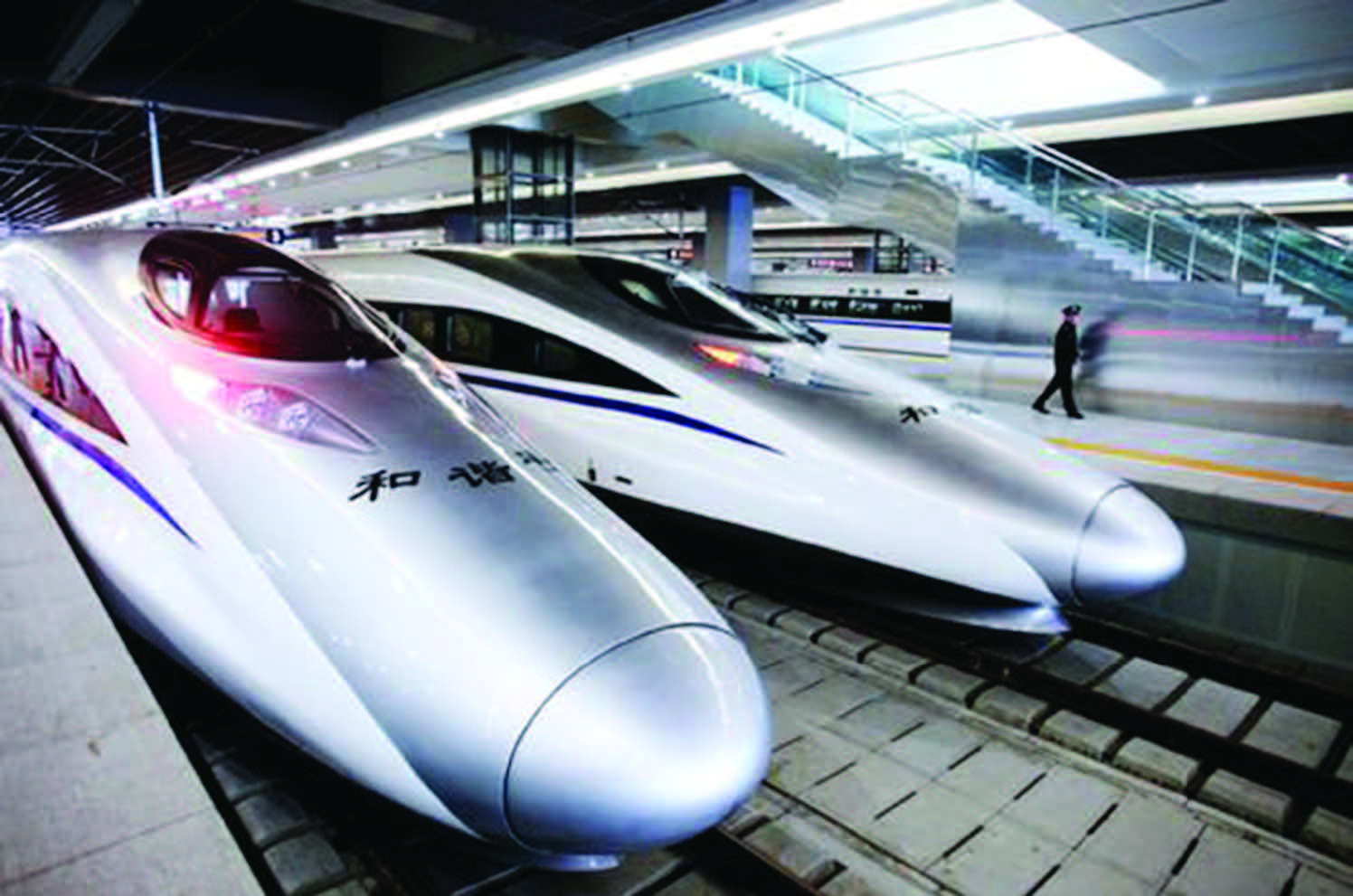
    China’s annual bilateral trade with Japan amounts to $314 billion and that with South Korea $235 billion. China is also the largest trade and investment partner of Vietnam. Both Japan and South Korea also have substantial investment ties with China. Despite this, China has remained unyielding on its territorial claims on these countries, not hesitated to use force and threatened to cut its investment ties with Vietnam, after recent tensions. To believe that China will embark on a path of reason on border issues, because it sells us a few bullet trains and invests in infrastructure in India would be, to put it mildly, naïve.

    On the contrary, India needs to ensure that unrestricted, duty-free access of Chinese products, in areas like energy and electronics, does not adversely affect indigenous development and production, or undermine energy, communications and cyber security. While dialogue, economic cooperation and interaction with China in forums like the BRICS and the G20 are mutually beneficial, there is need to review our approach to border issues with China. It is evident that China has no intention of exchanging maps specifying its definition of the Line of Actual Control, either in Ladakh, or Arunachal Pradesh. India should now insist that the border issue has to be resolved in accordance with the Guiding Principles agreed to in 2005.

    The boundary has to be along “well defined and easily identifiable natural geographic features”. Secondly, any border settlement should “safeguard due interests of their settled populations in the border areas”. Proceeding according to these Guiding Principles enables India to reinforce its claims that the border lies along the Karakoram Range in Ladakh and the McMahon Line in Arunachal Pradesh. Given China’s agreement to safeguard the “interests of settled populations,” its claims to Arunachal Pradesh are untenable.

    Moreover, with the Dalai Lama now clarifying he no longer seeks an independent Tibet, India should not hesitate to state that it hopes the Tibet issue is settled in accordance with the 17 point 1951 agreement between the Chinese authorities and the Dalai Lama. This agreement acknowledges Chinese “sovereignty” in Tibet, while respecting the freedom of religion and the “established status, functions and powers of the Dalai Lama”.

  • PM MODI DEPLOYS DEFT DIPLOMACY

    PM MODI DEPLOYS DEFT DIPLOMACY

    NEW DELHI (TIP): “Had a telephonic conversation with Chancellor Merkel. Wished her on her birthday and congratulated her on Germany’s win at the FIFA World Cup,” tweeted prime minister Narendra Modi. For a prime minister who people said was more interested in the economy and domestic politics, Modi appears to be enjoying himself hugely on the international stage, and judging by reports, quite good at it.

    If there was any awkwardness over the fact that Merkel had stood him up at dinner last Sunday, Modi did not let it ruffle him or tie up his diplomacy. In fact, in Fortaleza and Brasilia this week, Modi played the bigger game with two important counterparts, Xi Jinping and Vladimir Putin. (He’s no slouch in the sartorial department either, whether in a pink kurta in Berlin or a casually draped scarf in Brazil).

    Xi Jinping set a cat among the pigeons by inviting Modi over to Beijing for the APEC summit. The US and other western countries will find it extraordinarily hard to resist bringing India into the APEC tent after this. For India, an entry into APEC will allow Modi to integrate India more closely into the global system, make the changes in India’s tariff structures and other systems of economic governance he needs to bring India’s rates to Asean levels.

    At some point, India might even make the grade to the transpacific partnership (TPP). But APEC is the gateway to TPP. Notwithstanding the critics, the BRICS Bank is the biggest challenge to the Fund/Bank sisterhood. India didnt really stand a chance about hosting the headquarters, so Modi didn’t waste precious capital on it. It was always going to be headquartered in Shanghai. This was also agreed to by the UPA government.

    In any case, China as the largest BRICS economy and the deepest pockets is naturally going to dominate the Bank despite the fact that everybody has an equal share. But an Indian will head the Bank for the first six years. In all these decades, no Indian has ever headed the IMF or World Bank. And the chairmanship will be a rotational thing. That’s a big deal for India and will overshadow critics who wonder whether the new bank will fund projects in Arunachal Pradesh.

    India doesn’t even go to the ADB for that. The Modi-Xi tango would not be unnoticed in Washington and important as the US Congress takes a call on increasing India’s voting power in the IMF. On a more political front, Modi has agreed to visit China and Xi will be in India in September — before Modi flies off the Washington DC to meet Barack Obama and after he makes his first trip to see Shinzo Abe. India needs all three — China, Japan and US to fulfil its developmental goals.

    Modi is playing a deep political game as he opens India for business with all three. His effusiveness with Vladimir Putin incorporated more layers. Russia is indeed India’s oldest partner, as Modi informed Putin. But beyond the nuclear energy, Kudankulam and defence supplies, India signaled solidarity with Russia at a time when Putin is a bad name in the west for his Ukrainian misadventure. After Russia signed a $400 billion gas deal with China and help out the promise of weapons sales to Pakistan, India has worried that its old friend might end up in the Chinese basket.

    That would have adverse implications for India in the long run. Putin can expect a fulsome welcome when he visits in December. Modi has ordered a reset of relations with the US, necessary after the last few bad years. How Washington responds to Modi will determine the strategic matrix India’s new PM is working on.

  • BRICS for a New Bank

    BRICS for a New Bank

    What might have been dismissed as an impossibility just five years ago is now a reality. Defying skeptics and critics, five countries that between them account for 40 per cent of the world’s population and 20 per cent of its GDP have signed an agreement to create a development bank to provide financial assistance to developing countries and emerging market economies, mainly for infrastructure projects. As its name implies, the agreement for the New Development Bank, signed by Brazil, Russia, India, China and South Africa at their sixth BRICS summit in Brazil, signals the start of a new global financial order that aims to be more inclusive than the Western-focused International Monetary Fund and the World Bank.

    The $100 billion bank will have an initial subscribed capital of $50 billion. The five members managed to iron out their differences to agree on an equal share for each in the bank, so no one member dominates the institution. India and South Africa both wanted to host the headquarters. The eventual decision to locate it in Shanghai was an acknowledgement that China’s is the biggest economy in the grouping. The Bank will also have an African Regional Centre in South Africa and India will assume the first presidency of the bank.

    First mooted at the fourth BRICS summit in New Delhi in 2012, the Bank will certainly have an impact on the existing arrangements put in place by the Bretton Woods institutions, and will give more say to smaller countries. But BRICS also appears to recognize that the NDB cannot replace the IMF, the World Bank or the regional development banks. Thus, the Fortaleza Declaration describes the NDB as a “supplement to the efforts of multilateral and regional financial institutions for global development.”

    A second financial instrument, the Contingency Reserve Arrangement of $100 billion, has been set up to help developing economies tide over “short-term liquidity pressures, promote further BRICS cooperation, strengthen the global financial safety net and complement existing international arrangements.” In its sixth year, BRICS has a new confidence, and it was more than apparent at the summit. The only world grouping that is not region, security or trade-based, its members have come together with the determination to create a more multilateral global order.

    China and Russia have backed the other three BRICS members on the issue of UN reform and Security Council expansion. But the grouping needs to find a stronger political voice. The Declaration came in the midst of the bombardment, even if under grave provocation, of Gaza by Israel, but it is silent on this while calling for Israel and Palestine to resume negotiations towards a two-state solution.

  • THE TRUTH ABOUT PARTITION

    THE TRUTH ABOUT PARTITION

    In 1857 the Mutiny broke out, in which Hindus and Muslims jointly fought against the British. After crushing it the British decided that the only way to control India was through the policy of divide and rule. So directives were sent from London to the British Government in India that all efforts should be made to make Hindus and Muslims fight with each other. You can see details of these directives in B.N.Pandey’s speech ‘History in the Service of Imperialism’ online”, says the author.

    Ihave today (July 7, 2014) read Ayesha Jalal’s book ‘The Sole Spokesman’. In my opinion it is superficial and has made no difference to my view that it was the British who were responsible for the Partition of India, with Jinnah as their main agent ( though ultimately the Congress Party also acquiesced). The same Jinnah who was secular and the ‘ Ambassador of Hindu-Muslim Unity’ in the 1920s later became the main protagonist of the fraudulent two nation theory in the 1930s. Obviously he did this to satisfy his ambition to become the ‘Quaid-e-Azam’, regardless of the suffering his actions caused to both Hindus and Muslims.

    His call for Direct Action Day resulted in the terrible Calcutta killings in 1946. And, of course, the Partition resulted in the deaths of 500,000 people, Hindu and Muslim, and the uprooting of millions from their native places. Did this cause any grief to Jinnah ? Not at all. As long his ambition was satisfied he was not bothered about the horrible miseries he had caused. If you read Jinnah’s speeches and his letters ( they have all been published) you will see that from the 1930s onwards he relentlessly preached the 2 nation theory, that Hindus and Muslims are two separate nations, and therefore cannot co-exist together.

    This was of coarse humbug. If you wish to really understand the causes of Partition you must go further back in history. Upto 1857 there was no communal problem. Hindus and Muslims lived in harmony, and with great regard for one another. Hindus used to join in Eid celebrations, and Muslims in Holi and Diwali. The Muslim rulers like the Mughals (though there is a controversy about Aurangzeb), the Nawabs of Avadh and Murshidabad, Tipu Sultan, etc were thoroughly secular. If you read Ghalib’s letters to his Hindu friends like Hargopal Tofta, Munshi Shivnarain Aram, etc you will find how much affection there was between Hindus and Muslims upto 1857. I may give some examples. Once Holi and Muharram fell coincidentally on the same day. The Nawab of Avadh, Wajid Ali Shah was a Shia.

    After taking out the tazia and burying it in the karbala in Lucknow, he enquired why Holi was not being celebrated. He was told that since Holi was a festival of joy, while Muharram was an occasion of sorrow, Hindus had decided not to celebrate Holi that year out of respect for the sentiments of their Muslim brethren. On hearing this the Nawab declared that since Hindus had respected the sentiments of their Muslim brethren, it was the duty of Muslims also to respect the sentiments of their Hindu brethren. He then announced that Holi would be celebrated the same day throughout Avadh, and he himself was the first to play Holi, although it was also Muharram day. I may give another example.

    I had once gone to Shringeri in the state of Karnataka. That is the peeth or centre of the southern Shankaracharya ( the adi, or original, Shankaracharya had established 4 peeths for Hindus in the north, west, south, and east). The present Shankaracharya, Bharati Teerth, showed me 30 letters sent by Tipu Sultan with monetary grants to the then Shankaracharya. In one of these letters Tipu Sultan says that it is because of the blessings of the great saint Shankaracharya that his kingdom has prospered, there are good rains, people are happy, etc. Just next to the palace of Tipu Sultan still exists a huge, old Shiva temple. I can give dozens more of such examples to show that there was no communal problem till 1857. There were no communal riots before that year. In 1857 the Mutiny broke out, in which Hindus and Muslims jointly fought against the British.

    After crushing it the British decided that the only way to control India was through the policy of divide and rule. So directives were sent from London to the British Government in India that all efforts should be made to make Hindus and Muslims fight with each other. You can see details of these directives in B.N.Pandey’s speech ‘History in the Service of Imperialism’ online. The speech was delivered by Prof. Pandey in the Indian Rajya Sabha ( Upper House of Parliament). All communal riots, artificially engineered by the British authorities began after 1857. The British Collector would secretly call the Hindu Pandit, give him some money, and tell him to start speaking against Muslims, and similarly he would call the Muslim Maulana, give him money, and tell him to start speaking against Hindus. Music was deliberately played by agent provocateurs before mosques at prayer times to provoke Muslims. Cows were killed and thrown in front of Hindu temples by such people to provoke Hindus.

    This poison was systematically injected into our society year after year and decade after decade after 1857. The Minto Morley ‘Reforms’ of 1909 introduced separate electorates for Hindus and Muslims to divide the communities. Every devilish step was taken by the scheming Britishers to sow the seeds of discord between us. Obviously for this the British had to have local agents, and they chose Jinnah as their main one as he was the most efficient ( though there were others too, including some in the Congress Party).

    The purpose of the British for dividing was to keep us weak and disunited by making Hindus and Muslims keep fighting each other, and thus be exploited. Partition in 1947 was also for the same purpose, so that we could continue to be exploited even after the British left, and may not become a highly industrialized state and thus rival for western industry. I am afraid Ayesha Jalal knows nothing of all this, and hence her book is totally superficial. (Source: http://justicekatju.blogspot.com/2014/07/the -truth-about-partition.html)

  • INDIA TO HOST IBSA SUMMIT NEXT YEAR

    INDIA TO HOST IBSA SUMMIT NEXT YEAR

    BRASILIA (TIP): India will host the next summit of IBSA (India, Brazil, South Africa) in New Delhi next year, giving importance to the grouping notwithstanding the BRICS forum of which these countries are also members. This was agreed to when Prime Minister Narendra Modi with South African President Jacob Zuma here last night on the sidelines of the summit BRICS leaders held with South American leaders.

    Both leaders recognised the importance of IBSA as a forum of members who have long established democracies and similarities of views on various matters of international agenda of political and economic consequences.The dates will be decided in consultation with each other, Dinkar Khullar, Secretary West in the External Affairs ministry told reporters travelling with the Prime Minister on the way back to India.

    It was also decided that the meeting of India Africa Forum (IAF) will be held in December in Delhi this year. During the meeting, Zuma spoke of the long-standing relationship between South Africa and India and the respect Mahatma Gandhi has in his country. Modi also spoke of the regard people of India have for the late anti-apartheid icon Nelson Mandela.

    Zuma said that the two countries have a strong engagement in view of the fact that the Indian diaspora is 1.5 million strong in South Africa with the Indian population in Durban being the single largest Indian community outside India.

  • Society of Indian American Engineers and Architects Hudson River Cruise is a big draw

    Society of Indian American Engineers and Architects Hudson River Cruise is a big draw

    I.S. Saluja:

    NEW YORK CITY (TIP): Society of Indian American Engineers and Architects (SIAEA) organized their annual Hudson River Cruise July 12. The cruise is a much waited for event for the SIAEA members and their guests and is always packed. India’s Consul General Dnyaneshwar Mulay, who was one of the guests, told me he never misses the cruise which he described as “the only pleasurable outdoor event” he knows of.


    20
    Fun all the way. Mihir Patel and wife; Nayan Parikh and wife with others make the most of the evening on the yacht.

    SIAEA President Mihir Patel and his wife ensured everyone was comfortable and enjoying. So did the past President Nayan Parikh and his wife who were going round to people and exhorting them to enjoy themselves. Of course, there was a brief formal program that included remarks by the Consul General, Mr. Mulay and President Mihir Patel, and recognition of a few persons amid all music, dancing and merry making. It is one event which, like Mr. Mulay, I would not like to miss. And I believe most that came to the cruise harbor the same feeling.

  • Modi divides Indian Americans

    Modi divides Indian Americans

    I.S. Saluja;

    EDISON, NJ (TIP): Modi is coming to USA. He is coming to the United Nations. He is coming to New York and New Jersey. He is coming to the Gujaratis. That’s what it appears to be. Our Gujarati brethren, at least some leaders in the Gujarati community, appear to be giving this impression. They all claim Modi. They all want to grab Modi. That’s why there was a big fight at TV Asia Studios in Edison, New Jersey on July 12 where a meeting was convened to decide on giving a civic reception to the Prime Minister of India, Narendra Modi. A meeting was organized by OFBJP to discuss the civic reception to be accorded to Modi who will be visiting US in September 2014. More then 100 people belonging to different Indo-American groups, showed up. Hospitality first.

    So, it was only after lunch was served that the meeting started. It started with the keynote speech by Bharat Barai, a man known to be close to Narendra Modi. The moment Barai introduced himself and was about to speak further, Ankur Vaidya, President of Federation of Indian Associations (FIA) started finger pointing him. He accused Barai of grabbing the event. He even asked for an authority letter from PMO to coordinate the event. There was utter chaos in the auditorium and people were heard asking for Ankur Vaidya to be thrown out of the meeting. Barai had come prepared; it appeared because he showed a letter from Prime Minister’s office that said Bharat Barai was authorized to organize a meeting to discuss a civic reception for the Prime Minister when he visited the USA in September, 2014.

    In fact, the letter said Bharat Barai was appointed a coordinator for Modi’s USA trip. Ankur Vaidya and others from FIA continued to shout and did not allow Bharat Barai to speak. Shalabh Kumar (Shelly) from Chicago and FIA Chairman Ramesh Patel were among the people who created a scene. They called upon the Consul General Dyaneshwar Mulay to cancel the meeting until further notice. Raju Patel, President of Jersey City Traders Association said whoever will donate a million dollar can run the show. Shelly Kumar promptly offered to pay a million dollar if the event was handed over to him. He was shouted down and, it is reported that TV Asia Chairman H.R. Shah bluntly told him to get lost.

    The OFBJP leaders, however, requested attendees to donate small amounts so that everyone could feel to be a part of the grand event. After all kinds of arguments, accusations and counter accusations, pandemonium and a warlike situation for 2 hours, FIA squad left just a little before the Consul General arrived at 4 P.M. The Consul General spoke to the gathering and clarified that the Prime Minister’s office had authorized Bharat Barai to coordinate the visit of the Prime Minister to the US and that Barai should be given all co-operation.

    The dust may have settled down for a while then. But there are people who are not happy to have Bharat Barai pocket all credit for the grand reception being contemplated for Modi. Divisions and jealousies are likely to vitiate the atmosphere and be a damper on the reception. People have also complained that leaders of the Gujarati community have lowered the scale and importance of the reception to a regional level whereas Modi is now the Prime Minister of India and people from all regions should be involved in the exercise. Only time will tell who wins and who loses, in the ultimate analysis.

  • EDISON VISIONARY LIONS CLUB ORGANIZES FUNDRAISING FOR VISUALLY IMPAIRED GIRLS FROM INDIA

    EDISON VISIONARY LIONS CLUB ORGANIZES FUNDRAISING FOR VISUALLY IMPAIRED GIRLS FROM INDIA

    Kajol Bishnoi:


    EDISON, NJ (TIP): Edison Visionary Lions Club organized a cultural event at TV Asia auditorium on July 16th to raise funds to support Deepa Academy; a voluntary organization helping visually impaired children in India. Vision is something that is taken for granted because we can see the beautiful world around us. It is not the same for those who are deprived of it. Do they deserve pity? No. They deserve our understanding, encouragement and support in achieving the heights that normal people are capable of achieving.


    The dance performance by Deepa Academy amply demonstrated this. The amazing Indian classical and non-classical dance performance led by dance coordinator Shweta and group of 4 visually impaired girls was a testimony that they just need the right empowerment, guidance, training and support to touch the pinnacle of success. It was an hour-long performance of precision and focus that captivated the viewers.


    16
    The Team

    Deepa Academy has initiated an empowerment center in Bangalore for the differently abled and has been operational since June 2006. The academy is a registered voluntary organization working for the education and rehabilitation of the blind and the differently abled, with an aim to empower and make them independent. Their motto is Empowerment of the Girl Child, which is proven by the Academy’s determination to provide free education till B.S along with free accommodation and food. EVLC feels it is our duty to the community and we need to support the good Samaritans in every endeavor and challenge they take up.

  • DEEPIKA PLAYS DIFFERENT CHARACTERS WITH EASE

    DEEPIKA PLAYS DIFFERENT CHARACTERS WITH EASE

    If we thought that Deepika Padukone’s versatility was limited to the varied roles that we saw her playing in her back to back hits last year in Race 2, Yeh Jawaani Hai Deewaani, Ram Leela & Chennai Express, there is a lot more to come from the actress which will surprise the audiences.

    The actress will be seen in completely diverse looks in her releases to come. Knowing Deepika, we have seen her choose roles that are very different from her previous roles. Starting from her look in Finding Fanny which shows her as a Goan for the first time to a Maharashtrian look in Happy New Year it is a wide range that Deepika will be seen covering in terms of her characters and looks.

    Post Finding Fanny and Happy New Year, we will also see Deepika in different looks and characters in Tamasha, Piku and Bajirao Mastani. Imtiaz who usually does not prefer to repeat his female cast has however made an exception with Deepika.

  • Humpty Sharma Ki Dulhania

    Humpty Sharma Ki Dulhania

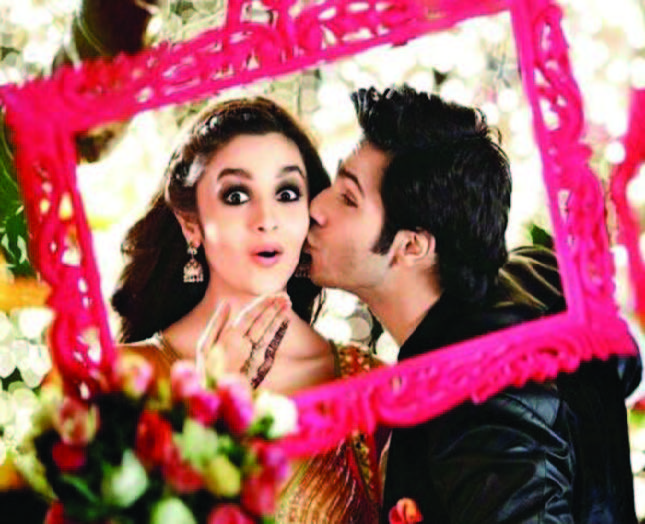
    Cast: Varun Dhawan, Alia Bhatt, Sidharth Shukla,
    Ashutosh Rana
    Direction: Shashank Khaitan
    Genre: Romantic Comedy
    Duration: 2 hours 13 minutes

    Story: A bride-to-be on a wedding shopping trip finds just what she was not looking for. Love! Will she untie all ‘knots’ for her newfound pyaar?

    Review: He’s Sir Hump-a-lot (or at least make out-alot). Maybe that’s why his nick is ‘Humpty’.

    Typical Delhi ka munda, part-dilwala, part-gunda. So we have a classic ‘Dilwale Dulhania Le Jaayenge’ in the mix. Fastforwarded to today (18 years later).

    Where love is a ‘Facebook’ post and the generational shift allows you to ‘makeout’ with your gal and smoke-up with your papajiin- law-to-be. All is cool! Yet, at its core, the story retains its roots in the chhotta-chhotta shehers its set in.

    The ‘surround sound’ coming from a big-fat-Punjabi -wedding with the usual paajis, vijis, bijis, maajis … Oh-ji! The dulhania here is an Ambala girl, with oodles of attitude – Kavya Singh (Alia) – who agrees to marry NRI boy Angad (Sidharth) of her bullying bauji’s (Ashutosh) choice.

    Her demand is a Kareena Kapoor style designer lehenga (even the couture has caught up with time). Kavya takes off to Delhi to buy her shaadi-ka-joda, where she meets Humpty (Varun); their love blossoms over party-sharty (she slips out of *patialas* and downs the ‘pegs’), coffee, cuddles and conversations.

    But Humpty has to win over the stubborn Singh sir – and break this ‘tailor-made’ wedding with a ‘designer dulha’ – to take home his dulhania.

    And he will go as far as pickling desi achaar for the girl – only to please papa. The strength of Shashank’s debut film (tribute to ‘DDLJ’) is the performances and characters, whether it is Humpty-Kavya’s cutesy, charming chemistry or the unbeatable boy-gang bonding with Shonty and Poplu (Saahil Vaid – howlarious act!).

    Unlike the characters, the story doesn’t enthuse or grow beyond the original plot, but it’s pinned with warm, delightful moments and laughable dialogues. The music is average.

    Alia is spunky, spontaneous and simply superb. Varun has put all heart into this role; he doesn’t let Humpty fall even for a moment. Sidharth looks smashing, but doesn’t get much scope (disappearing without a warning), while Ashutosh shines through. HSKD has plenty of feel-good moments, but nothing that will leave you punch-drunk. For romantics who believe in their dils and their dulhanias.

  • Gurudev blesses and inspires 3,000 seekers at NJ event

    Gurudev blesses and inspires 3,000 seekers at NJ event

    NEWARK, NJ (TIP): Over 3,000 people from all walks of life from the US and 14 other countries including India availed the opportunity to get personally blessed by Brahmrishi Sri Guruvanand Swami at the International Guru Poornima 2014 celebration on July 12 at the New Jersey Performing Arts Center (NJPAC) here, according to a press release issued by the organizers. It was a magical night of bhakti, anand, spirituality and celebration, marked by memorable devotional dance sequences, and climaxing in a powerful, inspirational discourse by Sri Guruvanand Swami, lovingly addressed as ‘Gurudev’ by his hundreds of thousands of devotees around the world.


    In his moving discourse which appealed to the heart and met with a hearty applause, Gurudev promised to help pull his devotees out of adversity and to cut their bonds of karma with his spiritual powers and siddhis gained over decades of sadhna. “I have come to awaken you into spirituality lest your life goes waste,” he thundered. He asked of people not big sacrifices but starting with small vows like not losing one’s temper for 24 hours. He also said that he wants to focus on ensuring that Indian tradition and sanskars are kept alive in the second generation NRIs. Gurudev also enjoyed and applauded – as did the audience in the packed hallthe superb dance items. Guru Rachna Sarang, who has her own Academy of Performing Arts, mesmerized the audience with a Ganesh Vandana. Her students’ enactment of Hanuman Chalisa in Kathak style stole everybody’s heart.


    14
    Artists enact Hanuman Chalisa in dance form Photo courtesy Diana De Rosa Photography

    The grand finale was a Guru Stuti especially composed and dedicated to Gurudev. On July 11 a Bhakti Sandhya with Gurudev was attended by over 1,000 people. Some came from as far as India, Hong Kong, Dubai and Europe. Several people who have contributed to the spread of Gurudev’s programs were recognized at the event. A disciple of revered Yogiraj Devraha Baba, Sri Guruvanand Swami is a perfected master (Satguru) who is also a renowned scholar of Hinduism and Jainism with a deep understanding of other religions. He teaches people to lead morally uplifting and spiritually fulfilling life, which leads to overcoming karmic debts while fulfilling worldly duties.

  • PRIYANKA TO PROMOTE INDIAN HANDLOOMS, BANARASI SARIS

    PRIYANKA TO PROMOTE INDIAN HANDLOOMS, BANARASI SARIS

    Actress Priyanka Chopra will soon be promoting the Indian sari on international platforms, officials said Thursday. A proposal to this effect was being given final touches and the National Film Award winner has given her consent, union Textile Secretary Zohra Chatterjee said during her visit to Varanasi, the parliamentary constituency of Prime Minister Narendra Modi.

    While the Bararasi silk saris would be at the forefront of this branding, the larger branding by the actress would be for the Indian handloom industry, officials said. The union government wants to promote the ‘desi’ handloom and textile industry in a big way the world over and a “detailed publicity campaign is being planned for the same,” a senior bureaucrat said.

    The union government, it is learnt, is also toying with the idea of opening a National Institute of Fashion Technology (NIFT) in the temple town after which the products of the weavers in the city would be “integrated and upgraded” with the help of the institute, officials said.

  • GISELE BUNDCHEN MAKES 74K POUNDS A DAY

    GISELE BUNDCHEN MAKES 74K POUNDS A DAY

    Mother of two, Gisele Bundchen has bagged the whopping amount of 27 million pounds last year, earning approximately 74,000 pounds a day. Brazilian fashion model, who will turn 30 this month, has held this position for seven years continuously and has left behind Australian model Miranda Kerr by 20 million pounds, Metro.co.uk reported. The model is the face of Pantene hair products and Oral-B toothpaste in Brazil.

  • KATE MOSS CROWNED BRITAIN’S NEW FASHION ICON

    KATE MOSS CROWNED BRITAIN’S NEW FASHION ICON

    Kate Moss has been voted as Britain’s new ‘Fashion Icon,’ which is equivalent to 1960’s fashion face, Twiggy. In the poll conducted on 2,000 people to celebrate Ascot’s King George Weekend, the 40-year-old supermodel beat the likes of Cara Delevingne and Naomi Campbell to claim the top spot by gaining 41 percent of votes, the Daily Express reported. In the swinging sixties, English model Twiggy’s popularity had not only influenced people copy her style, but had hugely helped to increase the power of models in the fashion industry. Moss was seen very similar to the blonde beauty, now 64, who was wellknown for her pixie look as both the Moss and Twiggy are 5ft6in, and posses the slender frame and elfin looks.