Month: July 2014

  • Planes: Fire & Rescue

    Planes: Fire & Rescue

    Story: When Dusty the racing plane can no longer race due to a gearbox that’s out of whack, he gets a second chance with a new job as a forest fire-fighting plane along with The Smokejumpers. Review: If there ever was a film with a more literal title that tells you exactly what you’re going to expect over the next hour and a half or so, it is this one.

    With the movie seemingly set in a retro-looking America, Dusty Crophopper (Cook) is an over-zealous but underpowered single-engine plane who lives and loves to race. But he fries his gearbox during a warm-up for the Corn Fest race one day. Back in the hangar, Dusty is told by a mechanic plane that he can only hope to fly high without crashing to the ground if he keeps his ground speed below the red line limit as shown on his speedometer. And the glory of racing is now completely out of the question.

    That’s as good as owning a Ferrari but driving below 25 km/h. Dejected Dusty is understandably frustrated at having his wings clipped, but gets a new lease of life (and a definite change of gear) with the aforementioned firefighters.

    In the heavily wooded countryside, he meets the fire chief, a rescue helicopter named Blade Ranger (Harris), along with his jaunty and experienced team comprising Lil’ Dipper (Bowen), a heavy-lift helicopter Windlifter (Studi), cargo plane Cabbie (Dye) and a motley bunch of highly excitable ground maintenance crew. While racing was risky, Dusty’s new job has its own hazards and involves a whole new set of skills that he picks up along the way while learning to adapt.

    While the film is pretty to look at (the rendering of forest fires are pretty realistic), it’s not in the same league as a *Frozen*, *Shrek* or *Toy Story.* While the script is full of obvious and easy aircraft metaphors which are funny, it lacks the kind of witticisms and wisecracks that elevate other contemporary animated films so that they can be enjoyed by a much wider audience.

  • SRI GURU GRANTH SAHIB

    SRI GURU GRANTH SAHIB

    CONTD FROM Vol 8 ISSUE 27

    This friendship is broken in an instant; this friendship leads to corruption. They do not fear the True Lord within their hearts, and they do not love the Naam. O Nanak, why become friends with those whom the Creator Lord Himself has misled?

    || 1 || THIRD MEHL: Some remain constantly imbued with the Love of the One Lord; I am forever a sacrifice to them. I dedicate my body, mind and wealth to them; bowing low, I fall at their feet. Meeting them, the mind is satisfied, and one’s hunger and thirst all depart. O Nanak, those who are attuned to the Naam are happy forever; they lovingly focus their awareness on the True Lord.

    || 2 || PAUREE: I am a sacrifice to the Guru, who recites the sermon of the Lord’s Teachings. I am forever a sacrifice to that Guru, who has led me to serve the Lord. That Beloved True Guru is always with me; wherever I may be, He will save me. Most blessed is that Guru, who imparts understanding of the Lord. O Nanak, I am a sacrifice to the Guru, who has given me the Lord’s Name, and fulfilled the desires of my mind.

    || 5 || SHALOK, THIRD MEHL: Consumed by desire, the world is burning and dying; burning and burning, it screams. But if it meets with the cooling and soothing True Guru, it does not burn any longer. O Nanak, without the Name, and without contemplating the Word of the Shabad, no one becomes fearless.

    || 1 || THIRD MEHL: Wearing ceremonial robes, the fire is not quenched, and the mind is filled with anxiety. Destroying the snake’s hole, the snake is not killed; it is just like doing deeds without a Guru. Serving the Giver, the True Guru, the Word of the Shabad comes to abide in the mind. The mind and body are cooled and soothed; peace ensues, and the fire of desire is quenched. The greatest comforts and lasting peace are obtained, when one eradicates selfishness from within. He alone becomes a detached Gurmukh, who lovingly focuses his awareness on the True Lord. Anxiety does not affect him at all; he is satisfied and satiated with the Name of the Lord. O Nanak, without the Naam, no one is saved; they are utterly ruined by egotism.

    || 2 || PAUREE: Those who meditate on the Name of the Lord, Har, Har, obtain all peace and comforts. Fruitful is the entire life of those, who feel hunger for the Name of the Lord in their minds. Those who worship and adore the Lord through the Guru’s Word, forget all their pain and suffering. Those Gursikhs are good Saints, who care for nothing other than the Lord. Blessed, blessed is their Guru, whose mouth tastes the Ambrosial Fruit of the Lord.

    || 6 || SHALOK, THIRD MEHL: In the Dark Age of Kali Yuga, the Messenger of Death is the enemy of life, but he acts according to the Lord’s Command. Those who are protected by the Guru are saved, while the self-willed manmukhs receive their punishment. The world is in bondage, under the control of the Messenger of Death; no one can hold him back. So serve the One who created Death; become Gurmukh, and no pain will touch you. O Nanak, Death serves the Gurmukhs; the True Lord abides in their minds.

    || 1 || THIRD MEHL: This body is filled with disease; without the Word of the Shabad, the painful disease of egotism does not depart. Meeting the True Guru, one becomes immaculately pure, and the Lord’s Name comes to dwell within the mind. O Nanak, meditating on the Naam, the Name of the Peace-Giving Lord, one’s pains are automatically forgotten.

    || 2 || PAUREE: I am forever a sacrifice to the Guru, who has taught me about God, the Life of the World. I am every bit a sacrifice to the Guru, who has spoken the Name of the Lord. I am a sacrifice to the Guru, who has totally cured me of the fatal disease of egotism. Glorious and great are the virtues of the Guru, who has eradicated evil, and instructed me in virtue. The True Guru meets with those upon whose foreheads such blessed destiny is recorded.

    || 7 || SHALOK, THIRD MEHL: They alone worship the Lord, who remain dead while yet alive; the Gurmukhs always worship God. God blesses them with the treasure of devotional worship, which no one can take away. They obtain the treasure of virtue, the One True Lord, within their minds. O Nanak, the Gurmukhs remain united with God; they shall never be separated again.

    || 1 || THIRD MEHL: They do not serve the True Guru; how can they contemplate? They do not appreciate the value of the Shabad; the fools wander in corruption and poison. The blind and the ignorant perform all sorts of ritualistic actions; they are in love with duality. Those who take unjustified pride in themselves, are punished and humiliated by the Messenger of Death. O Nanak, who else is there to ask? God Himself is the Forgiver.

    || 2 || PAUREE: You, O Creator, know all things; all beings belong to You. Those who are pleasing to You, You unite with Yourself; what can the poor creatures do? You are the all-powerful Cause of causes, the True Creator Lord. Those whom You unite, O Beloved, are united with You; the Gurmukhs contemplate You. I am a sacrifice to my True Guru, who has led me to see my unseen Lord.

    || 8 || SHALOK, THIRD MEHL: He is the Assayer of jewels; He contemplates the jewel. The ignorant person is totally blind – he does not appreciate the value of the jewel. The Jewel is the Word of the Guru’s Shabad; the Knower alone knows it. The fools take pride in themselves, and are ruined in birth and death. O Nanak, he alone obtains the jewel, who, as Gurmukh, enshrines love for it. Chant the Naam, the Name of the Lord, forever and ever – make the Name of the Lord your daily occupation. If God grants His Grace, then He is enshrined within my heart.

    || 1 || THIRD MEHL: They do not serve the True Guru, and they do not embrace love for the Lord’s Name. Do not even think that they are alive – the Creator Lord Himself has killed them. Egotism is such a terrible disease; in the love of duality, they do their deeds. O Nanak, the self-willed manmukhs are in a living death; forgetting the Lord, they suffer in pain.

    || 2 || PAUREE: Let all bow in reverence, to that humble being whose heart is pure within. I am a sacrifice to that humble being whose mind is filled with the treasure of the Naam. He has a discriminating intellect; he meditates on the Name of the Lord. That True Guru is a friend to all; everyone is dear to Him. The Lord, the Supreme Soul, is pervading everywhere; reflect upon the wisdom of the Guru’s Teachings.

    || 9 || SHALOK, THIRD MEHL: Without serving the True Guru, the soul is in the bondage of deeds done in ego. Without serving the True Guru, one finds no place of rest; he dies, and is reincarnated, and continues coming and going. Without serving the True Guru, one’s speech is vapid and insipid; the Naam, the Name of the Lord, does not abide in his mind. O Nanak, without serving the True Guru, they are bound and beaten in the City of Death; they arise and depart with blackened faces.

    || 1 || FIRST MEHL: Burn away those rituals which lead you to forget the Beloved Lord. O Nanak, sublime is that love, which preserves my honor with my Lord Master.

    || 2 || PAUREE: Serve the One Lord, the Great Giver; meditate on the One Lord. Beg from the One Lord, the Great Giver, and you shall obtain your heart’s desires. But if you beg from another, then you shall be shamed and destroyed. One who serves the Lord obtains the fruits of his rewards; all of his hunger is satisfied. Nanak is a sacrifice to those, who night and day, meditate within their hearts on the Name of the Lord.

    || 10 || SHALOK, THIRD MEHL: He Himself is pleased with His humble devotees; my Beloved Lord attaches them to Himself. The Lord blesses His humble devotees with royalty; He fashions the true crown upon their heads. They are always at peace, and immaculately pure; they perform service for the True Guru. They are not said to be kings, who die in conflict, and then enter again the cycle of reincarnation. O Nanak, without the Name of the Lord, they wander about with their noses cut off in disgrace; they get no respect at all.

    || 1 || THIRD MEHL: Hearing the teachings, he does not appreciate them, as long as he is not Gurmukh, attached to the Word of the Shabad. Serving the True Guru, the Naam comes to abide in the mind, and doubts and fears run away. As he knows the True Guru, so he is transformed, and then, he lovingly focuses his consciousness on the Naam. O Nanak, through the Naam, the Name of the Lord, greatness is obtained; he shall be resplendent in the Court of the Lord hereafter.

    || 2 || PAUREE: The minds of the Gursikhs are filled with the love of the Lord; they come and worship the Guru. They trade lovingly in the Lord’s Name, and depart after earning the profit of the Lord’s Name. The faces of the Gursikhs are radiant; in the Court of the Lord, they are approved. The Guru, the True Guru, is the treasure of the Lord’s Name; how very fortunate are the Sikhs who share in this treasure of virtue. I am a sacrifice to those Gursikhs who, sitting and standing, meditate on the Lord’s Name.

    || 11 || SHALOK, THIRD MEHL: O Nanak, the Naam, the Name of the Lord, is the treasure, which the Gurmukhs obtain. The self-willed manmukhs are blind; they do not realize that it is within their own home. They die barking and crying.

    || 1 || THIRD MEHL: That body is golden and immaculate, which is attached to the True Name of the True Lord. The Gurmukh obtains the Pure Light of the Luminous Lord, and his doubts and fears run away. O Nanak, the Gurmukhs find lasting peace; night and day, they remain detached, while in the Love of the Lord.

    || 2 || PAUREE: Blessed, blessed are those Gursikhs, who, with their ears, listen to the Guru’s Teachings about the Lord. The Guru, the True Guru, implants the Naam within them, and their egotism and duality are silenced. There is no friend, other than the Name of the Lord; the Lord’s humble servants reflect upon this and see. Those Gursikhs, with whom the Lord is pleased, accept the Word of the True Guru. Those Gurmukhs who meditate on the Naam are imbued with the four-fold color of the Lord’s Love.

    || 12 || SHALOK, THIRD MEHL: The self-willed manmukh is cowardly and ugly; lacking the Name of the Lord, his nose is cut off in disgrace. Night and day, he is engrossed in worldly affairs, and even in his dreams, he finds no peace. O Nanak, if he becomes Gurmukh, then he shall be saved; otherwise, he is held in bondage, and suffers in pain.

    || 1 || THIRD MEHL: The Gurmukhs always look beautiful in the Court of the Lord; they practice the Word of the Guru’s Shabad. There is a lasting peace and happiness deep within them; at the Court of the True Lord, they receive honor. O Nanak, the Gurmukhs are blessed with the Name of the Lord; they merge imperceptibly into the True Lord.

    || 2 || PAUREE: As Gurmukh, Prahlaad meditated on the Lord, and was saved. As Gurmukh, Janak lovingly centered his consciousness on the Lord’s Name. As Gurmukh, Vashisht taught the Teachings of the Lord.Without the Guru, no one has found the Lord’s Name, O my Siblings of Destiny.

  • IACC organizes Roundtable on Corporate governance development in India

    IACC organizes Roundtable on Corporate governance development in India

    NEW YORK CITY (TIP): “The Chamber of Commerce tries to make the right things happen. What needs to happen in India is the growth of corporations that take their corporate governance seriously, so that the shareholder value is unlocked. It’s our duty to push for better corporate governance in India,” said Rajiv Khanna, President of the Chamber and Equity Partner of Seyfarth Shaw, in his opening remarks to the members of the Chamber.

    “The Indian government has introduced several measures to improve the corporate governance environment in India, including a completely revamped Companies Act and revised corporate governance guidelines. Several other bills are under various stages of consideration which would bring corporate governance norms in India at par with any developed economy. The government of Prime Minister Modi has clearly emphasized its resolve towards improving the corporate governance practices in India,” said Rajiv Khanna, as he welcomed the guest speaker. Sandeep Baldava, partner at Ernst & Young, India, started by thanking the Chamber for hosting a very important discussion, and spelled out the latest changes in corporate governance standards in India.


    11
    India-America Chamber of Commerce hosted a roundtable on corporate governance development in India. President of the Chamber and Equity Partner of Seyfarth Shaw, Rajiv Khanna made the opening remarks . “The Chamber of Commerce tries to make the right things happen. What needs to happen in India is the growth of corporations that take their corporate governance seriously, so that the shareholder value is unlocked. It’s our duty to push for better corporate governance in India”. Seen in the picture, from L to R: Sherry Wang who moderated, Rajiv Khanna who presided and Sandeep Baldava, the guest speaker

    Sandeep addressed, among others, the following issues during the Q&A:

    1. What will the Indian government do to change the problem of concentrated ownership and family rule in India?
    In the new Act, if a single promoter, including the government, has more than 75% of the shares, it needs to offload such access. It helps bring transparency and promote public participation. It also specifies more responsibility for independent directors, which needs to beat least 50% of the board.

    2. What are the major changes of the new Act?
    On the governance side, more responsibilities and clearer management; on the auditor side, monitoring of auditor rotation, more detailed fraud reports, more standardized procedures and budget. In all, 262 sections have been modified.


    13
    A view of the participants

    3. What will the government do to improve the implementation of the reform?
    The reform on paper is the first step in the right direction. For implementation, the new government wants to improve the legal system. It needs further steps, but the first step hasbeen taken.

    4. What does law say about insider trading in India?
    There is no adequate process to deal with it effectively.

    5. What are the differences between India and other major economies? What are the gaps and can they lead to future problems?
    On paper, India is on par with developed economies. Problems may come from implementation. The new government needs to strengthen the enforcement.

    6. What are the new government’s resolves to strengthen implementation?
    Different departments of India have made it clear that they are going to improve the transparency in India. The public has more access to the regulation system. The process has already started in India.

    7. India does not have forensic audits?
    We do not have a system to find out what goes wrong, only the balance sheets and signoffs.

    8. What has been implemented to let the stakeholders know what goes wrong beyond the balance sheets?
    We just launched a security center to welcome investigations from global organizations. Most of the Indian enforcement agencies are trained by the FBI and are equivalent to the FBI. The government has made an effort to introduce skill sets from their resources to detect fraud of the new age. Auditors’ responsibility has been enhanced: they are required to report all fraud.

    9. Between the Second World War and 1991, the U.S. was doing well without India. Why did you make the bold statement that no company could ignore India? Could you give five names of U.S. companies making profit after 1991?
    Microsoft, HP, IBM, Apple, Dell. To this response, Rajiv commented by saying – “It is very sad when a partner of Ernst & Young struggles to give five names of U.S. companies making money in India after 1991. You could easily name five U.S. companies that lost money in the Indian market. My point is that there are problems; the policy has gone way wrong. India overrates itself. It is all about profit.

    You cannot assume companies will come because India makes up 20% of the world population; losses from 20% of the world population can be huge losses. I hope the Modi government will change this.” Sandeep responded by saying, “we often see the negatives. There are positives, like the pharma sector and tech sector I mentioned earlier.What is happening in 10 years in India would take 30 years for markets like the U.S. . You cannot ignore India for its skill sets and man power.”

    10. The auditing process is very costly, and it may hurt the growth of small or medium size companies. Does India have a new approach in the Act to deal with this problem?
    There are mid-sized audit companies that do not cost that much. It is a question of whether the additional cost is worthwhile for a safer and more transparent business environment.

    11. What are the roles and responsibilities of the board and the independent directors?
    The new Act requires 50% of the board to be independent directors on the board. It defines who are the independent directors and the process to fulfill their responsibilities. On paper, the process is clear and at par with other major economies. Today, the challenge is how to find independent directors who are willing to come on board and serve.

    12. How does social media help the prosecution process?
    If people are coming together on social media, they can force the government to take actions.

    13. There are reports that many independent directors are ex-bureaucrats who mainly function as facilitators between government and companies, instead of monitors. So are the independent directors now really acting independently?
    The new government has made an announcement that there should be a coolingoff period between being a bureaucrat and working in a private sector. It has not been formally announced, but it would be 3 to 5 years. Today, there is no cooling-off period.

    14. The independent directors are only getting sitting fees and transportation fees. There is mismatch between the best brains and people willing to spend the time to be independent directors. Is anything being done to remove this problem?
    The Act requires significant improvement of the sitting fee. Now it is 10-15 times the fee that was paid earlier. In terms of involvement, the process is different. There are pre-board meetings and pre-audit committee meetings. They need to go through training to understand the business. They now have rights to appoint consultants and independent agencies, and the payment is supposed to be made by the company. So the power, the payment, and also the expectation from independent directors are significantly enhanced.

    15. If you had the power, what is the first thing you would do to help corporate governance?
    Align the multiple acts that companies need to comply with and implement them in spirit.

    16. Are there any indications that the new Act will be faithfully implemented or will it be just another paper tiger?
    The desire to implement is very strong in the new government. The bureaucrats are more empowered.We strongly believe it will be implemented in a very different manner, on different levels, as it goes forward. The India- America Chamber of Commerce has recorded this discussion and will be sharing it with members of the Chamber and press. The Chamber is now open for new members. For additional details on the membership applications, please contact Rajiv Khanna – rkhanna@seyfarth.com or 212.801.9268 Poonam Jain – nypoonam@gmail.com or 917 453 0953 17598419v.

    About India-America Chamber of Commerce
    The India-America Chamber of Commerce works to promotes business-to-business dialog between the business and policy leaders of India and the U.S. – the two largest democracies in the free world. The Chamber serves as a platform for open and spirited interaction among U.S. and Indian business leaders from the private and public sectors. The Chambers’ monthly meetings include keynote presentations by visiting cabinet ministers, ambassadors and other prominent business leaders from the U.S. as well as India. For additional information check www.indiaamericachamber.com

  • THE RAMAYANA

    THE RAMAYANA

    contined from vol 8 issue 27

    “Be it shewn to royal Rama, Dasa-ratha’s righteous son,”

    “This the bow,” then spake the monarch to the risha famed of old,

    To the true and righteous Rama and to Lakshman young and bold,

    “This the weapon of my fathers prized by kings from age to age,

    Mighty chiefs and sturdy warriors could not bend it,

    noble sage Gods before the bow of RUDRA have in righteous terror quailed,

    Rakshas fierce and stout Asuras have in futile effort failed,

    Mortal man will struggle vainly RUDRA’S wondrous bow to bend,

    Vainly strive to string the weapon and the shining dart to send,

    Holy saint and royal rishi, here is Janak’s ancient bow,

    Shew it to Ayodhya’s princes, speak to them my kingly vow! Viswa-mitra humbly listened to the words the monarch said, To the brave and righteous Rama,

    Janak’s mighty bow displayed,

    Rama lifted high the cover of the pond’rous iron car,

    Gazed with conscious pride and prowess on the mighty bow of war.

    “Let me,” humbly spake the hero,

    “on this bow my fingers place,

    Let me lift and bend the weapon,

    help me with your loving grace.”

    “Be it so,” the rishi answered,

    “be it so,” the monarch said,

    Rama lifted high the weapon on his stalwart arms displayed,

    Wond’ring gazed the kings assembled as the son of Raghu’s race Proudly raised the bow of RUDRA with a warrior’s stately grace,

    Proudly strung the bow Of RUDRA which the kings had tried in vain Drew the cord with force resistless till the weapon snapped in twain! Like the thunder’s pealing accent rose the loud terrific clang,

    And the firm earth shook and trembled and the hills in echoes rang,

    And the chiefs and gathered monarchs fell and fainted in their fear,

    And the men of many nations shook the dreadful sound to hear! Pale and white the startled monarchs slowly from their terror woke,

    And with royal grace and greetings Janak to the rishi spoke: Now my ancient eyes have witnessed wond’rous deed by Rama done,

    Deed surpassing thought or fancy wrought by Dasa-ratha’s son,

    And the proud and peerless princess,

    Sita glory of my house, Sheds on me an added lustre as she weds a godlike spouse,

    True shall be my plighted promise, Sita dearer than my life, Won by worth and wond’rous valour shall be Rama’s faithful wife Grant us leave, O royal rishi,

    grant us blessings kind and fair,

    Envoys mounted on my chariot to Ayodhya shall repair,

    They shall speak to Rama’s father glorious feat by Rama done,

    They shall speak to Dasa-ratha,

    Sita is by valour won,

    They shall say the noble princes safely live within our walls,

    They shall ask him by his presence to adorn our palace balls Pleased at heart the sage assented,

    envoys by the monarch sent,

    To Ayodhya’s distant city with the royal message went.

    THE EMBASSY TO AYODHYA

    Three nights halting in their journey with their steeds fatigued and spent,

    Envoys from Mithila’s monarch to Ayodhya’s city went, And by royal mandate bidden stepped within the palace hall.

    Where the ancient Dasa-ratha sat with peers and courtiers all,

    And with greetings and obeisance spake their message calm and bold,

    Softly fell their gentle accents as their happy tale they told. Greetings to thee, mighty monarch,

    greetings to each priest and peer,

    Wishes for thy health and safety from Videha’s king we bear,

    Janak monarch of Videha for thy happy life hath prayed,

    And by Viswa-mitra’s bidding words of gladsome message said: ‘Known on earth my plighted promise,

    spoke by heralds near and far,

    He shall win my peerless Sita who shall bend my bow of war,

    — Monarchs came and princely suitors,

    chiefs and warriors known to fame, Baffled in their fruitless effort left Mithila in their shame,

    Rama came with gallant Lakshman by their proud preceptor led,

    Bent and broke the mighty weapon,

    he the beauteous bride shall wed! Rama strained the weapon stoutly till it snapped and broke in twain,

    In the concourse of the monarchs,

    in the throng of arméd men, Rama wins the peerless princess by the righteous will of Heaven,

    I redeem my plighted promise-be thy kind permission given! Monarch of Kosala’s country! with each lord and peer and priest,

    Welcome to Mithila’s city,

    welcome to Videha’s feast,

    Joy thee in thy Rama’s triumph,

    joy thee with a father’s pride,

    Let each prince of proud Kosala win a fair Videha-bride!’ These by Viswa-mitra’s bidding are the words our monarch said This by Sata-nanda’s counsel is the quest that he hath made.” Joyful was Kosala’s monarch,

    spake to chieftains in the hall,

    Vama-deva and Vasishtha and to priests and Brahmans all: “Priests and peers! in far Mithila,

    so these friendly envoys tell,

    Righteous Rama, gallant Lakshman,

    in the royal palace dwell,

    And our brother of Videha prizes Rama’s warlike pride,

    To each prince of proud Kosala yields a fair Videha-bride,

    If it please ye, priests and chieftains,

    speed we to Mithila fair,

    World-renowned is Janak’s virtue,

    Heaveninspired his learning rare!” Spake each peer and holy Brahman: “Dasaratha’s will be done!” Spake the king unto the envoys: “Part we with the rising sun!” Honoured with a regal honour,

    welcomed to a rich repast, Gifted envoys from Mithila day and night in gladness passed!

    MEETING OF JANAK AND DASA-RATHA

    On Ayodhya’s tower and turret now the golden morning woke,

    Dasa-ratha girt by courtiers thus to wise Sumantra spoke: Bid the keepers of my treasure with their waggons lead the way,

    Ride in front with royal riches, gold and gems in bright array, Bid my warriors skilled in duty lead the four-fold ranks of war,

    Elephants and noble chargers, serried foot and battle-car, Bid my faithful chariot-driver harness quick each car of state, With the fleetest of my coursers, and upon my orders wait.

    Vama-deva and Vasishtha versed in Veda’s ancient lore,

    TO BE CONTINUED

  • FIND LOVE, ONCE MORE

    FIND LOVE, ONCE MORE

    Its difficult to trust someone after a heartbreak, learn how deal with trust issues. Breakups are hard and anyone who’s ever been through heartbreak will vouch for it. However, when one door closes, another really does open. You just need to take a few steps and walk through it. It is difficult to trust someone after your feelings have been played with, but its not the end of the world. So hold your head high and walk through.


    Identify the right place

    To find someone new, first you need to identify a place of your own interest where you will meet like minded people. If you like theater, sign up for a theater group membership or if you like to cook, go for a cookery workshop and you’re bound to make a few friends who think like you and have the same interests.


    Find the right fit

    Once you have established a connection with someone or some people at your hobby place, be sure to think things over. Go out with them one after the other and don’t rush into anything. Make sure they know that you’re the boss of it all and take the reins in your hand. Until and unless you find the person who you are most compatible with, don’t take the plunge, This is important because if you end up with the wrong guy/girl again, that too when you are so vulnerable, it might put you off dating for good.


    Listen to your gut

    This may confuse you, after reading the point above, but it is true. Just because something fits right doesn’t mean it has to feel right. If you have great tuning but the chemistry isn’t right, step out right away before you lead the other person on. When you are feeling down the dumps your gut can somehow make a correct decision.


    Do away with the past

    So he/she is great, you have excellent chemistry and this looks like it can lead somewhere too. Don’t let your past ruin this for you. Just because something ugly happened previously does not mean it is going to happen to you again. You are not cursed, even if you feel so. Let destiny take its course.


    Accept things

    Just by chance, if it does happen again, you are still not cursed and it is not your fault. Sometimes it takes many wrong choices to make the right one. If the bad things didn’t happen, you’d never appreciate the good ones.

  • UN decries reports Australia handing back Sri Lanka Tamil asylum seekers

    UN decries reports Australia handing back Sri Lanka Tamil asylum seekers

    SYDNEY/COLOMBO (TIP): The United Nations has expressed “profound concern” about Australia’s handling of asylum seekers amid reports that scores of Sri Lankans will be handed over to their country’s navy after only a brief assessment by Australian authorities. Two boats carrying more than 200 Tamil asylum seekers from Sri Lanka were intercepted by Australian border security forces in the Indian Ocean in recent days and either have been or will be transferred to the Sri Lankan navy, Australian media said. An Australian source with knowledge of the operation said the intention was to carry out the transfer on Friday, but the situation was fluid.

    The prospect of a risky mid-ocean transfer of Tamil asylum seekers and their return to Sri Lanka has sparked criticism of Australia’s tough immigration policy. Sri Lanka is facing heavy pressure from rights groups and the West for alleged human rights violations during the final phase of the war against Tamil separatists which ended in 2009. It says many asylum seekers are economic migrants, but rights groups say Tamils seek asylum to prevent torture, rape, and other violence at the hands of the military.

    Australia’s government has not confirmed any details of the incident and refuses to comment on what it calls operational matters regarding its “Operation Sovereign Borders” programme. The UNHCR said it did not have official confirmation of the incidents but said it had followed “with profound concern recent reports in the media and from the community” about interceptions and assessment of claims for asylum. “International law prescribes that no individual can be returned involuntarily to a country in which he or she has a wellfounded fear of persecution,” UNHCR said in a statement late on Thursday.

    Sri Lankan officials have given conflicting accounts about whether their navy has been involved. Government spokesman Keheliya Rambukwella said on Thursday that the navy had agreed to accept the asylum seekers but changed his response after questioning from reporters. “I really don’t know where we stand,” he said.Two other government officials said the navy would receive the boat people from its Australian counterpart. Forcing people seeking refugee protection back to their country of origin without properly investigating their claims is a flagrant breach of the Refugee Convention and international law, the Refugee Council of Australia said.

  • AROMATHERAPY QUICK FIX TO MANY PROBLEMS

    AROMATHERAPY QUICK FIX TO MANY PROBLEMS

    Aromatherapy based spray which you can prepare all by yourself and use regularly. In the stressful and hectic schedules, it is very essential to take good care of skin and hair. It is essential to incorporate a healthy diet to take care but that apart, aromatherapy based treatments can be beneficial to your skin and hair as well. Here’s a quick DIY spray which comprises aroma oils which you can use regularly to fix many skin and hair problems:


    Ingredients Tea tree oil 2 drops – Patchouli oil 2 drops – Dead sea salt half teaspoon – Boiled and cooled water 1 glass


    Procedure Mix all the above mentioned ingredients and store them in either an aluminum spray bottle or a dark colored spray bottle. It is essential to use a spray bottle through which sunlight doesn’t pass. Also, make sure to store it away from direct sunlight and in a cold place.


    Benefits

  • US SENTENCES BRITISH MEN OVER TALIBAN SUPPORT

    US SENTENCES BRITISH MEN OVER TALIBAN SUPPORT

    NEW YORK (TIP): A US judge sentenced two British men to a combined total of 20.5 years in prison on Wednesday for conspiring to provide and for providing equipment and personnel to the Taliban.Computer engineer Babar Ahmad was sentenced to 12.5 years and Syed Talha Ahsan, who was diagnosed with Asperger’s syndrome in custody, to time served at eight years.They were arrested by British police in 2004 and 2006 respectively and extradited to the United States in 2012 as part of a batch of Britons wanted on terror charges.

    British campaigners bitterly opposed their extradition on the grounds that they were held so long without charge and arguing they should be tried at home. Both sentences were lighter than demanded by prosecutors. Ahmad, 40, and Ahsan, 34, were indicted in Connecticut on charges of conspiring to support and supporting the Taliban regime in Afghanistan while they sheltered Al-Qaida, Chechens fighting the Russians and related terror groups.For years, they pleaded not guilty but in December changed their plea on two counts of the indictment — conspiring to provide and providing support to the former Taliban regime.

    US district judge Janet Hall sentenced Ahmad to 150 months’ imprisonment and Ahsan to 96 months, or time already served. The case was heard in US federal court in New Haven, Connecticut because websites they ran in London relied for a time on a Connecticut hosting company. Ahsan is now expected to be released and deported. Ahmad has already served a decade in custody and reports suggest he too could be freed in months. Their cases attracted the support of thousands in Britain and campaigners say Ahmad was the Briton held the longest without charge as part of the global “war on terror.” The son of a retired civil servant and a retired science teacher, Ahmad worked in the IT department of London’s prestigious Imperial College at the time of his arrest.

  • BRICS Summit Clears Setting Up of $100 Billion New Development Bank

    BRICS Summit Clears Setting Up of $100 Billion New Development Bank

    India to be first President of the bank

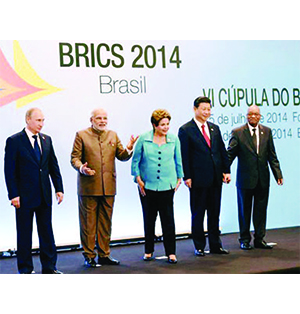
    FORTALEZA, BRAZIL (TIP): The new development bank of the group of BRICS countries will be headquartered in Shanghai, China, with the presidency initially held by India. The deal was reached after intense lastminute negotiations to settle a dispute between India and China over the headquarters of the new bank, which will have initial capital of $100 billion to invest in infrastructure projects.

    “The agreement towards setting up the BRICS New Development Bank is a significant step. I am happy the initiative announced in 2012 in Delhi has become a reality,” PM Modi said. BRICS is a group of emerging economies and draws its name from the five member countries – Brazil, Russia, India, China and South Africa. To create the bank dragged on for more than two years as Brazil and India fought China’s attempts to get a bigger share in the lender than the others. Negotiations had also been stalled over who would host the bank – China, India or South Africa.

    There were also tough negotiations over shareholding. China argued that the economic strength of a member nation should be the criteria for contribution to the bank – a higher contribution will automatically mean greater control. But India demanded that each member have an equal share. The BRICS summit is Modi’s first multilateral engagement since he took over as Prime Minister in May this year.

    Modi met Chinese president Xi Jinping on Tuesday, July 15 mornings. Modi pressed for a solution to the boundary question, saying if the two sides could amicably resolve the vexed issue, it would set an example for the world on peaceful conflict resolution. Later at night, he met with Russian President Vladimir Putin. Speaking in Hindi, the PM said India was excited to host the Russian leader in December. On microblogging website Twitter, the PM said he talked about strengthening Russia- India ties.

    Talked about strengthening Russia-India ties in my meeting with President Putin.We value our friendship with Russia. – Narendra Modi (@narendramodi) July 16, 2014 Modi conveyed his sincere appreciation and admiration for Putin’s decisive leadership in deepening and expanding the India-Russia special and privileged strategic partnership. The Prime Minister further expressed deep appreciation for Russia’s friendship and unstinting bilateral and international support for India’s economic development and security since the early days of India’s independence. Modi also reaffirmed that relations with Russia will continue to enjoy the priority that they always had in India’s foreign policy.

    Modi, who had also met Putin in 2001 in Moscow, remarked, “Even a child in India, if asked to say who is India’s best friend, will reply it is Russia because Russia has been with India in times of crisis.” The PM added that he looked forward to working with the Russian President to further deepen and broad-base the strategic partnership including in the areas of defense, nuclear energy, space, energy, trade and investment, people-to-people contacts and addressing regional and global challenges.


    9
    Narendra Modi met Chinese President Xi Jinping and pressed for a solution to the boundary question

    The two leaders looked forward to their Annual Summit in Delhi in December 2014 as an opportunity to outline a bold vision and roadmap for their relationship in the years ahead. During his 40-minute meet, the Prime Minister invited President Vladimir Putin to visit Kudankulam atomic power project during his trip. Putin responded saying “it is a good idea”. Putin congratulated Modi on his great victory in the recent elections. The Prime Minister said there was a need to look at a liberal visa regime, especially students going for studies.


    10
    Prime Minister Narendra Modi on Tuesday, July 15 night held talks with Russian President Vladimir Putin and talked about strengthening India- Russia ties

    Putin also acknowledged that the case needed to be looked into, MEA spokesman Syed Akbaruddin said. Modi fondly recalled his visit to Russia’s Astrakan region in his early days as Chief Minister of Gujarat which has ties with that region. Talking about that visit, he said he felt as if he was in India. Putin said Russia places its relations with India high enough in the strategic framework. Nuclear power project has been a symbol of India-Russia relations. Modi appreciated Putin’s speech at the BRICS summit, saying it was clear on issues like reforms of the UN Security Council and international financial organizations.

  • SECRET TO LOOKING AND FEELING YOUNG

    SECRET TO LOOKING AND FEELING YOUNG

    Do you want to defy age? Here’s what you can do to keep looking fresh and young. They say age is only a number. And it is true to quite an extent. But still there are few things you can do too defy age and look fresh and young.


    Think positive Your mental state reflects in your overall appearance. So keep positive thoughts rolling. Negativity can make you feel dull and can make you age faster.


    Meditate Even if you manage to sit with your mind open to meditation for a 5 minutes it can help you immensely. Meditation not only clears your mind, but also helps in stabilizing and streamlining your thoughts.


    Eye cream Don’t squint your eyes, it is an effective trick to keep looking fresh. If you think such cosmetics are only made for girls, you need to read some new age magazines.


    Stop smoking Smoking is one of the main reasons behind fast aging. It not only causes major illness, but also irritates your skin and deprives it of oxygen and water which bring more wrinkles.


    Reduce sugar intake Sugar control can not only help you reduce extra pounds piling on, but also help you reduce wrinkles. High level of sugar activates a process called glycation which results in wrinkles.

  • Why you feel sleepy at work

    Why you feel sleepy at work

    Do you find yourself dozing off in office? You are not alone, says a new study. Here’s how to tackle sleep deprivation Lack of sleep is so common in the white-collar world today that it is visibly affecting their performance at work. If you often find yourself nodding off in meetings, you have the company of lakhs of corporate employees whose sleep deprivation is upsetting their productive waking hours.

    An employee-based health institute in the US recently conducted a study of 1,139 employees from three companies. Lead researcher, Jennifer Turgiss, found that 15% of them doze off on the job at least once a week! Four key factors were preventing them from getting restful sleep — worry or stress, mental activity, physical discomfort, and environmental disruptors.

    Another report by the National Sleep Foundation (NSF) declared in the past that 29% of respondents fell asleep or became very sleepy at work, while 36% had fallen asleep or nodded off while driving. There are several dangers of sleep deprivation. After a restless night of twisting and turning in bed, you will turn up groggy-eyed. You won’t be as sharp or productive as usual. Even five days of insufficient sleep can reduce energy metabolism and dietary restraint, particularly in women.

    A weak immune system, more risk of cardiovascular disease, diabetes and obesity are the other adverse effects of not getting enough quality sleep. Turgiss found that the resultant tiredness reduced one’s ability to manage stressful situations. This leads to various workplace problems: decreased decision-making abilities, lack of concentration, a decrease in cognitive function, irritability and less patience with colleagues, to name a few.

    What to do

    What to do

  • Short men have more sex

    Short men have more sex

    If you are moderately short or even short, do not worry as you will be a champion when it comes to performing the real act. According to an interesting finding, those who are about 5 feet 9 inches and under enjoy sex better and in plenty.

    “When comparing men’s sexual activity levels based on characteristics such as age, height, weight and health, the younger, fitter men tended to get more play,” researchers said. However, we were surprised to see that “coital frequency was higher among men with a height of less than 5 ft 9 in”, they noted. For the study, researchers looked at 531 men between ages 20 and 54.

    Among men who reported a coital frequency of more than 3.5 times a week, waist circumference showed borderline association with lower sexual activity, while lesser height was associated with higher sexual activity. “Obesity and metabolic diseases can cause all types of sexual function to deteriorate in older age, whereas their effects may not yet be prominent at younger ages (below 45 years),” the study observed.

  • Smokers at higher suicide risk

    Smokers at higher suicide risk

    Irrespective of whether they are suffering from psychiatric disorders or not, cigarette smokers are more likely to commit suicide than people who do not smoke, a study shows. Researchers at Washington University’s school of medicine in St Louis found that smoking itself may increase suicide risk and that policies to limit smoking reduce suicide rates.

    “Suicide rates declined up to 15 percent in US states that implemented higher taxes on cigarettes and stricter policies to limit smoking in public places,” said lead researcher Richard A Grucza, an associate professor of psychiatry from Washington University. The results showed that each dollar increase in cigarette taxes was associated with a 10 percent decrease in suicide risk.

    “Indoor smoking bans also were associated with risk reductions,” Grucza added. Using statistical methods, researchers compared rates of suicide in states with stricter tobacco policies to rates in states with more lenient laws and lower taxes. They also determined whether people who had committed suicide were likely to have smoked. They learned that suicide risk among people most likely to smoke was associated with policies related to tobacco taxes and smoking restrictions.

    Grucza now wants e-cigarettes to come under scanner which deliver nicotine but release vapour rather than smoke. Nicotine is a plausible candidate for explaining the link between smoking and suicide risk, Grucza said. Like any other addictive drug, people start using nicotine to feel good, but eventually they need it to feel normal.

  • WHEN IT RAINS, IT POURS IN SOUTH INDIA

    WHEN IT RAINS, IT POURS IN SOUTH INDIA

    The long hot summer comes to an end as the month of June elapses, and the parched Earth cools down with the incessant downpour which rides in on the Monsoon winds. If you are one of those who don’t mind getting a wee bit wet, then there’s really no place like South India to truly enjoy the Monsoon. From sipping a cup of hot tea and enjoying hot pakoras at a roadside stall to taking a walk under the umbrella in cool breezy weather, these destinations in the southern part of the country will mesmerise you during the rainy season.

    Goa

    Swaying palms, white sands and swirling waters coupled with torrential rains make Goa a must-visit during the rainy months. While swimming is not advisable as the waves can be dangerously big, and the water can get murky, there’s no reason not to take a walk along the beach with wet sand between your toes and a gaze at the cloudy horizon over the ocean.

    Sip on a hot cup of tea, sample delectable Goan cuisine in a roadside cafe, or go biking in the meandering pathways of the state while the rain pours down. Even better, head into the forested hinterland of Goa where the jungle comes alive during the monsoon. Since it’s the lean season, don’t be surprised if you get some great deals and offers too.


    9

    Coorg

    Nestled amidst verdant landscapes, acres of coffee plantations, and rugged mountain terrain interspersed with cardamom-growing fields, Coorg is one of the wettest places in southern India during the monsoons. A sixhour- drive from the Bangalore airport, Coorg is often praised as ‘Scotland of India’ on account of its unending green slopes.

    While a thin layer of mist that haunts over the lush valleys of Coorg, the hill town transforms into a palette comprising many shades of green when the rain comes down. The majestic beauty of this hill town with its cascading waterfalls and cool ambience make Coorg a perfect destination to visit provided you’ve got your rain gear and are prepared to step out in a downpour.

    Pondicherry

    Mustard-yellow tinted villas, old colonial houses, cobble-stoned streets and a surfeit of seafront restaurants, cafes and bars-the postcard-perfect city of Pondicherry lures you in with its old-world beauty and quaint charm. The wet months of August to December add a dash of romance and create a cool ambience in the city, with its scenic wet trails, cloudy skyline, and water dripping down the sloping roofs.

    Take a walk under your umbrella, hire a bicycle to explore this picturesque town or hop on a ferry to get to the beaches nearby-Pondicherry is anything but dull and grey during the monsoon season.


    8

    Munnar

    Carpeted with emerald-green tea plantations, the valleys of Munnar get even more mesmerising when dark clouds come rolling in and engulf the hilltops in the months of June to November. Those who want to witness nature at its best can go hiking in the Periyar National Park where a rich variety of flora comes alive during the monsoon.

    So does the fauna, and it’s best to be protected against insects and other creepy crawlies which abound in the forest. The rain-drenched greenery is especially captivating around the many waterfalls around Munnar which become deluged during the monsoon.

  • Gov. Cuomo Brokers Deal to Avert LIRR Strike

    Gov. Cuomo Brokers Deal to Avert LIRR Strike

    Commuters heave a Sigh of Relief

    I.S. Saluja:

    NEW YORK (TIP): The MTA and LIRR unions signed a sixand-a-half year agreement with 17 percent wage hikes on Thursday, July 17, after Gov. Andrew Cuomo brokered a deal in his Midtown offices, averting a devastating strike that would have stranded hundreds of thousands of people, officials said. Gov. Andrew Cuomo announced there is a tentative deal between the MTA and the Long Island Rail Road unions, averting a strike that could have come this weekend. With MTA Chairman Thomas Prendergast and the unions’ chief negotiator Anthony Simon seated by his side, Cuomo said Thursday, July 17, that a “compromise by both parties” had been reached.

    “It is my pleasure to announce today that we have settled a four-year dispute dealing with the Long Island Rail Road labor unions,” Cuomo said. The LIRR’s unions representing 5,400 workers were threatening to strike starting at 12:01 a.m. Sunday, July 20, if a deal wasn’t reached and a strike seemed likely earlier this week when negotiations broke down. The two sides returned to the table Thursday at Cuomo’s Manhattan office, who said he began participating in talks directly after the two sides met Wednesday but failed to come to an agreement.


    6
    New York State Comptroller Thomas P. DiNapoli said in a statement: “The New Yorkers who ride the LIRR are vital to our regional economy, and have been another economic setback for the region if the LIRR had come to a grinding halt. I commend the MTA, the LIRR unions and Governor Cuomo for steering negotiations to an agreement.”

    The governor had previously said he wouldn’t intervene in the contract dispute. The unions have been working without a contract since 2010. Throughout negotiations, the main sticking point had been whether LIRR employees would have to contribute to pensions and health insurance. Under the terms of the deal reached Thursday, LIRR employees will receive 17 percent raises over six and a half years and contribute to their health insurance costs. New employees will also have different wage progressions and pension plan contributions. The contract will have no impact on MTA fares and will be accommodated within revisions to the MTA financial plan, Cuomo said.


    7
    Nassau County Executive Edward P. Mangano said: “I commend Governor Cuomo for averting a Long Island Rail Road strike, protecting our commuters and safeguarding our economy. The MTA’s longterm financial stability is critical and so is the vital transportation route they provide to Long Island commuters.”

    “The agreement reached today provides a fair and reasonable contract,” Prendergast said Thursday. “In a way that protects the commuter as well as the long-term fiscal stability of the MTA.” “We cared about the financial stability of the railroad as well as the members and their financial stability,” Simon said. President Barack Obama had appointed two emergency boards to help resolve the dispute, but the MTA rejected both non-binding recommendations and the unions voted to authorize a strike set to begin on July 20.


    8
    NY State Senate candidate and a former New York City Comptroller and former City Council Transportation Committee Chair John Liu said: “The tentative agreement between the MTA and the LIRR unions is welcome news for commuters, workers and the economy of the metropolitan region. Over 10,000 commuters in our district and hundreds of thousands of other riders rely on the LIRR service every day and we are all grateful that this crisis has been averted. Governor Cuomo deserves a great deal of credit for bringing both sides together and helping to reach a fair agreement.”

    If a deal wasn’t reached by the strike deadline, the MTA had a contingency plan in place for the LIRR’s 300,000 daily commuters. Options for commuters included shuttle buses, ferries and car pools, but officials were also urging people to telecommute if possible. State comptroller Thomas DiNapoli had estimated that a strike would cause economic losses of $50 million a day. Cuomo said the tentative agreement is still subject to approval by the eight LIRR unions’ executive boards, ratification by their membership and approval by the MTA Board.

    Commuters heaved a sigh of relief to hear the news that the MTA and the Unions had reached an agreement and that the threatened strike would not happen. Had the strike taken place it would have upset daily commute of 300, 000 and resulted in a loss of $50M a day for the region. Meanwhile, a number of officials and politicians have applauded the Governor for his effort to bring about the agreement.

  • GOVT PLANS SELLOFF IN OVER 12 PSUs

    GOVT PLANS SELLOFF IN OVER 12 PSUs

    NEW DELHI (TIP): The government has identified over a dozen blue-chip public sector companies for disinvestment during the current financial year and plans a second exchange-traded fund (ETF) as it tries to scale the stiff target set by finance minister Arun Jaitley.

    Sources said the idea of a second ETF was proposed by ratings agencies to the department of economic affairs recently and it is being “considered seriously”, although unlike the first such fund, the new one will be ?energy light’. An ETF is a basket of stocks that is traded on stock exchanges and the first one launched during the last fiscal was seen to have a heavy presence of energy PSUs.

    The government hopes to garner Rs 43,325 crore through disinvestment in PSUs, while another Rs 15,000 crore is expected to come from stake sale in Axis Bank, whose shares are held by Specified Undertaking of UTI (SUUTI), the entity that took over the assets and liabilities of the erstwhile UTI. An additional Rs 5,000 crore is budgeted to come from sale of residual shares in Balco and Hindustan Zinc, where the Centre is about to kick off the valuation exercise and hopes to complete the transactions by the end of October.

    Apart from SAIL, Coal India and ONGC, there are several mid-rung PSUs, including five from the power sector where the government is eying a possible stake sale. ONGC and Coal India alone are expected to mop up Rs 35,000 crore based on current market price. While National Hydel Power Corporation, Power Finance Corporation and Rural Electrification are comparatively easier ones where the Centre is expected to divest through an auction of shares on the stock exchanges, the government will seek permission from states for joint ventures Tehri Hydro Development Corporation and SJVN, said sources familiar with the development.

    In addition, some of the companies where the government holds over 75% stake, will also see a stake dilution to comply with the recent Sebi move that public shareholding in all listed entities should be at least 25%, as against the earlier floor of 10%.

    There are 19 such PSUs where the government has to dilute its holdings but is opting to begin with companies where the stake is closer to 80%. As a result, companies such as MOIL and NMDC (where the government holds 80% each) and NBCC and Neyveli Lignite (90% each) are on the radar, although officials said that some of them may be deferred to next year. The government wants to ensure that there is no bunching of share sales so that there is investor appetite and private sector is not starved for funding.

  • EXPORTS CONTINUE TO GROW AT DOUBLE-DIGIT RATE IN JUNE

    EXPORTS CONTINUE TO GROW AT DOUBLE-DIGIT RATE IN JUNE

    NEW DELHI (TIP): Merchandise exports grew 10.22 per cent to $26.4 billion in June from $24.02 billion in the same month last year, driven by strong demand for engineering goods, ready-made garments and petroleum products. This was even as the export number for June 2013 was revised upwards from $23.78 billion, thereby increasing the base.

    This was a second straight month of double-digit growth in exports, with the rate in May higher at 12.40 per cent, official data released on Wednesday showed. After contracting for almost 13 months, imports grew 8.33 per cent to $38.24 billion in June from $35.3 billion in the same month last year. The figure for imports in June 2013 was revised from $36.03 billion.

    The June trade deficit widened to a 13-month high of $11.76 billion from $11.24 billion in May 2014. Exports during the April-June quarter stood at $80.11 billion, up 9.31 per cent from $73.28 billion in the corresponding period last year. However, imports during April-June 2014 contracted 6.92 per cent to $113.19 billion from $121.61 billion during the same period last year.

    In June, oil imports soared by 10.90 per cent to $13.34 billion, compared with $12.03 billion in the same month a year ago. Oil imports during April-June also grew by four per cent to $40.78 billion from $39.20 billion. Non-oil imports during the month were up seven per cent to $24.9 billion. Non-oil imports during April-June reached $72.41 billion, down 12.1 per cent from $82.40 billion in the same period last year.

    Gold imports were up 65.13 per cent to $3.12 billion in June from $1.88 billion in the same month last year, due to a partial easing of import restrictions and a lower base. According to credit rating agency CRISIL, since large private gold importers were allowed to resume purchases and nominated banks were permitted to offer gold loans to jewellery manufacturers from May, gold imports doubled in June from $1.7 billion in April 2014.

    Non-oil, non-gold imports, an indicator for domestic demand and industrial growth, rose 1.42 per cent to $21.78 billion in June. In May, these imports were up for the first time in 10 months, at a lower rate of 0.5 per cent. This shows industrial production is on its way to a slow recovery. According to experts, outbound shipments are slowly seeing a turnaround on account of an improved global economy, coupled with a low base effect. Exports in June 2013 contracted 4.5 per cent.

    Exports were driven by a 21.57 per cent rise in engineering goods, 38.37 per cent in petroleum products and 14.39 per cent in ready-made garments. “We are getting a good number of orders from the US. Our domestic manufacturing infrastructure is not able to support these,” said Anupam Shah, chairman of the Engineering Export Promotion Council.Aditi Nayar, an economist with rating agency Icra, said the double-digit growth of exports was not expected to continue as the base effect waned and also because of the relative stability in the exchange rate.

    She added an unfavourable monsoon would also impact farm exports. Improving global economies had kept export growth buoyant, the only silver lining as the trade deficit widened, said a note by Anand Rathi Research. The trade deficit rose just 6.66 per cent in April-June 2014 to $70.3 billion from $65.87 billion in the corresponding period of the previous year.

  • RBI issues draft norms for small banks, payment banks

    RBI issues draft norms for small banks, payment banks

    MUMBAI: A week after Budget announcement, the Reserve Bank today issued draft guidelines for setting up of ‘local feel’ small banks, which will disburse small-ticket loans to farmers and businesses. The central bank also issued draft guidelines for setting up of payment banks, which will cater to marginalized sections of society, including migrant labourers, for collecting deposits and remitting funds.

    Such banks can be set up with a minimum capital of Rs 100 crore as against Rs 500 crore required for normal commercial banks, according to the guidelines. “Both payments banks and small banks are ‘niche’ or ‘differentiated’ banks, with the common objective of furthering financial inclusion,” the RBI said while issuing draft guidelines for licensing of payments banks and small banks.

    The proposed small banks will provide a whole suite of basic banking products such as deposits and supply of credit, but in a limited area of operation, it said. On the other hand, payments banks will offer a limited range of products such as acceptance of demand deposits and remittances of funds. They will have a widespread network of access points particularly in remote areas, either through their own branch network or through Business Correspondents (BCs) or through networks provided by others.

    Foreign investments in these new category banks would be as per the FDI policy. The existing non-bank prepayment instrument issuers, nonbanking finance companies (NBFCs), corporate BCs, mobile telephone companies, super-market chains, companies, real sector cooperatives and public sector entities may apply to set up a payments bank.

    In case of small banks, resident individuals with 10 years of experience in banking and finance, companies and Societies will be eligible as promoters to set up small banks. NBFCs, micro finance institutions (MFIs), and Local Area Banks (LABs) can also opt for conversion into small banks. “Preference will be given to professionals from banking or financial sector, NBFCs and MFIs to set up small banks, if they meet the ‘fit and proper’ criteria,” the draft said.

    Local focus and the ability to serve smaller customers will be a key criterion in licensing such banks, it said. “The area of operations of the small bank will normally be restricted to contiguous districts in a homogeneous cluster of States/Union Territories so that the bank has the ‘local feel’ and culture,” it said, adding, the bank may be allowed to expand in one or more states with geographical proximity.

  • Blackstone-Embassy JV plans to buy 3 IT parks for Rs 3,000 cr

    Blackstone-Embassy JV plans to buy 3 IT parks for Rs 3,000 cr

    MUMBAI/BANGALORE (TIP): Embassy Office Parks, a joint venture between private equity firm Blackstone Group and office space developer Embassy Group, is in advanced talks to acquire three large IT parks spread over two million sq ft each in Bangalore, Pune and the National Capital Region (NCR) for Rs 3,000 crore. “The deal will be closed in less than a year,” Michael Holland, CEO of Embassy Office Parks said. . Michael Holland added that the talks were initiated in the second half of last year, the period that he described as “the low point in Indian real estate”.

  • ASTEROIDS KEY TO FUTURE MARS MISSIONS: NASA

    ASTEROIDS KEY TO FUTURE MARS MISSIONS: NASA

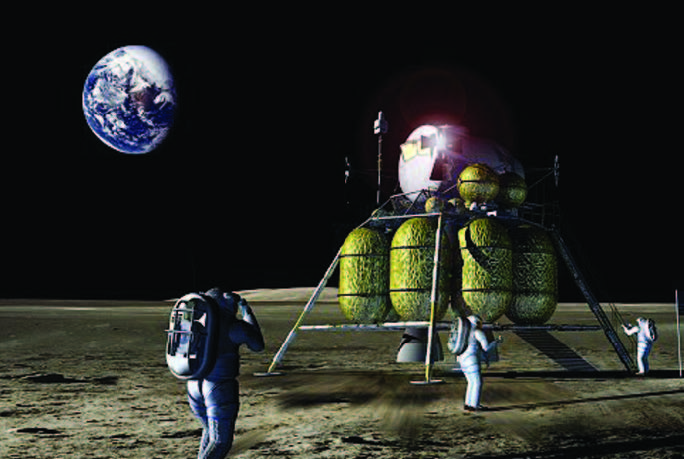
    WASHINGTON (TIP): Near-earth asteroids provide a unique opportunity to test the new technologies and capabilities we need for future human missions to Mars, Nasa has said. Nasa will mark 45 years of the first human landing on the moon July 20. It will launch a robotic mission to rendezvous with a near-earth asteroid around 2019, Nasa said in a statement.

    “The spacecraft will either capture an asteroid in its entirety or retrieve a boulder off a much larger asteroid, then redirect the asteroid mass to a stable orbit around the moon,” Nasa said. “The new technologies we test through the Asteroid Redirect Mission, and the new human space flight capabilities we prove by sending astronauts to study the asteroid, will make important advances to safely send humans to Mars,” the statement added.

    This includes tools like Solar Electric Propulsion, a highly efficient way to help transport large objects and heavy cargo to support future Mars missions. Outlining future projects, Nasa said it would continue to make significant investments in new technologies vital to achieving exploration goals.

    This includes advancements in entry, descent and landing technologies such as Low Density Supersonic Decelerators. July 20, 2014 will mark the 45th anniversary of the first “Moonwalk”. It was 45 years ago that Neil Armstrong took the small step onto the surface of the moon that changed the course of history, Nasa said in a statement. “The years that followed saw a ‘space age’ of scientific, technological and human research, on which we have built the modern era.

    We stand on a new horizon, poised to take the next giant leap – deeper into the solar system,” Nasa said. The Apollo missions blazed a path for human exploration to the moon and today we are extending that path to near-earth asteroids, Mars and beyond, the statement added.

  • Google contact lens to detect diabetes

    Google contact lens to detect diabetes

    WASHINGTON (TIP): Beauty might lie in the eye of the beholder, but if Google has its way, so will medical diagnostics.

    In the first step towards designing miniature technology products that can monitor body functions Google has joined forces with pharmaceutical giant Novartis to advance the Silicon Valley giant’s work on “smart” contact lenses that can measure the wearers’ blood sugar levels, a basic for people with diabetes. The move comes just a day after one of the principals behind the technology, Babak Parviz, an Iranian-American who also pioneered the Google Glass, left the company to join Amazon.

    But Google pressed ahead with the tie-up with Swiss multinational, which is at the center of a drug spat with India. The two companies said Novartis’s Alcon eyecare division would license and commercialize ”smart lens” technology designed by Google[x], a development team at the search engine giant. The announcement is the latest in a trend of tech companies getting into the health and fitness domain.

    Google already has a platform called Google Fit to measure heath metrics such as sleep and exercise on devices running on its android platform headed by the Indian-American Sundar Pichai. Apple has a similar platform called HealthKit. But Google Smart Lens is, literally, visionary technology to address diabetes.

    It is particularly relevant to India, which already has 65 million diabetics (dismissively called ”sugar disease”), a figure that is expected to top a staggering 100 million by 2030. In a note they published earlier this year, Babak Parviz and Brian Otis, the project co-founders, explained the reasoning and technology behind the smart lens, pointing to the difficulties in measuring blood sugar through traditional methods such as wearing glucose monitors, which involves disruptive and painful process of pricking the figure and drawing blood.

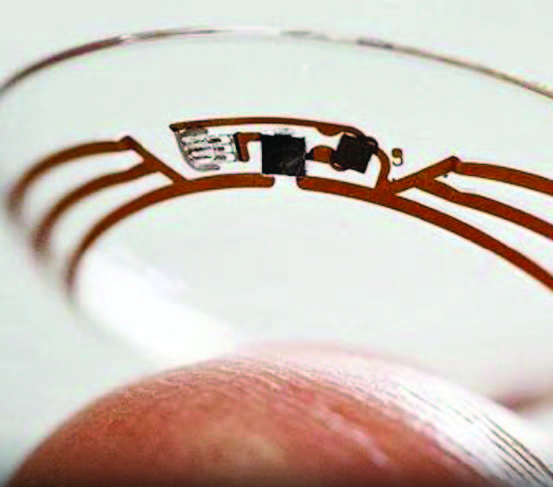
    Since scientists had developed ways to measure glucose through body fluids such as tears, they figured that miniature electronics — including chips and sensors so small they look like bits of glitter, and an antenna thinner than a human hair — might be a way to crack the mystery of tear glucose and measure it with greater accuracy. The result: ”smart lens” that contains a miniaturized glucose sensor and a tiny wireless chip (to transmit information) that are embedded between two layers of soft contact lens material.

    Early prototypes they tested could generate a reading once per second. They said they were also investigating the potential for this to serve as an early warning for the wearer, including exploring integrating tiny LED lights that could light up to indicate that glucose levels have crossed above or below certain thresholds. Evidently, Google has made sufficient progress to draw Novartis/Alcon into a tie-up. Novartis CEO Joe Jiminez has indicated that the technology could be commercialized within five years.

  • Sunflowers track sun due to internal clock, not sunlight, says new research

    Sunflowers track sun due to internal clock, not sunlight, says new research

    NEW DELHI (TIP): Everybody knows that sunflowers track the sun as it rises in the east every morning and sets in the West every evening. It has been assumed that light rays from the sun must be triggering off some mechanism in the sunflower plant causing this fascinating movement.

    But scientists Hagop Atamian and Stacey Harmer of the University of California in Davis have upended this theory. They discovered that the flowers are not just responding to light but also to an internal biological clock, according to a report published in the scientific journal Nature. To reach this stunning conclusion, Atamian and Harmer carried out experiments in which sunflower plants grown in fields were shifted into specially made chambers with a fixed overhead light that was always on.

    To their surprise, the sunflower carried on as if the sun was rising in the east and setting in the west. The flowers’ faces were moving as if nothing had changed. This continued for several days, according to the Nature report, suggesting that they were not responding only to the direction of the light, but their own timekeeper.

    Another discovery presented by Atamian at the annual meeting of the American Society of Plant Biologists in Portland, Oregon, was that the sunflowers bend when one side of the stem grows faster than the other. Faster growth on the west side of the stem, for example, causes the plant to bend towards the east.

    The scientists are now studying gene expression on each side of the plant to learn more about how a sunflower’s internal clock can alter growth on one side of the stem but not the other. “Somehow the same clock in the same organ is having opposite effects on opposite sides of the stem,” he was quoted by Nature as saying. “It’s a big open question.”

    There are other plants that align themselves to the sun on a daily basis. These include agriculturally important crops such as soybeans, cotton and alfalfa. Scientists have shown that this tracking boosts plant yield. It is also known that mature sunflowers stop tracking the sun and stand straight but facing east, ready to soak up each new sunrise.

  • Nasa closer to finding life beyond earth

    Nasa closer to finding life beyond earth

    WASHINGTON (TIP): Do you often dream about extraterrestrial life beyond earth? Nasa scientists are engaged in proving your dreams to be true. In a panel discussion held at Nasa headquarters in Washington, DC, experts outlined Nasa’s road map to the search for life in the universe, an ongoing journey that involves a number of current and future telescopes. “Sometime in the near future, people will be able to point to a star and say: That star has a planet like earth,” said Sara Seager, a professor of planetary science and physics at the Massachusetts Institute of Technology in Cambridge, Massachusetts.

    The Nasa road map will continue with the launch of the Transiting Exoplanet Surveying Satellite (TESS) in 2017, the James Webb Space Telescope (Webb Telescope) in 2018, and perhaps the proposed Wide Field Infrared Survey Telescope — Astrophysics Focused Telescope Assets (WFIRST-AFTA) early in the next decade.

    These upcoming telescopes will find and characterise a host of new exoplanets – those planets that orbit other stars — expanding our knowledge of their atmospheres and diversity. “This technology we are using to explore exoplanets is real. The James Webb Space Telescope and the next advances are happening now.

    These are not dreams — this is what we do at Nasa,” explained John Grunsfeld, an astronaut and associate administrator for Nasa’s science mission directorate in Washington.

  • Malaysian passenger plane ‘shot down’ over Ukraine

    Malaysian passenger plane ‘shot down’ over Ukraine

    All 298 aboard killed, including 5 Indians

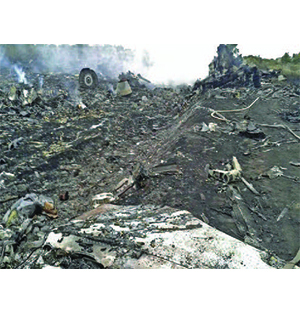
    KIEV/KUALA LUMPUR (TIP): Tragedy struck Malaysia Airlines once again, nearly four months after the mysterious disappearance of MH370 in the Indian Ocean. A Malaysia Airlines passenger plane with 298 aboard was shot down by a surface-to-air missile in Ukraine near the Russian border on July 17. All 298 people on board were killed, which included 5 Indians. The Malaysia Airlines Boeing 777 was flying from Amsterdam to Kuala Lumpur.

    “Nearly 300 persons died when a Malaysia Airlines Boeing-777 crashed in eastern Ukraine,” an advisor to the Ukrainian Interior Minister, Anton Herashchenko, said. “It was flying at an altitude of 10,000 meters. 280 passengers and 15 crew members died,” he said in a Facebook post. Witnesses from the town of Torez in the rebellion-wracked Donetsk region of Ukraine told RIA Novosti news agency that the plane wreckage and dead bodies have been found in the area.

    The plane disappeared from the radar and teams from the emergency services were trying to reach the scene, Russian media quoted an unnamed security source as saying. Malaysia Airlines said it lost contact with Flight MH17 at 14.15 GMT. Burning aircraft wreckage and bodies strewn on the ground were seen at the village of Grabovo, some 40 kms from the Russian border in an area where pro- Russian rebels are reportedly active. Malaysia Airlines confirmed on Twitter, “Malaysian Airlines has lost contact of MH17 from Amsterdam.

    The last known position of the plane was over Ukrainian airspace”. Malaysia’s Star newspaper quoting sources said the plane was “shot down” while cruising at an altitude of 30,000 feet. The plane could have been brought down by a ground-to-air missile, sources said. Ukrainian President Petro Poroshenko said: “It is not an incident, not a catastrophe, but a terrorist act… the Ukraine armed forces did not fire at any targets in the sky.”

  • Saina Nehwal pulls out of Glasgow CWG

    Saina Nehwal pulls out of Glasgow CWG

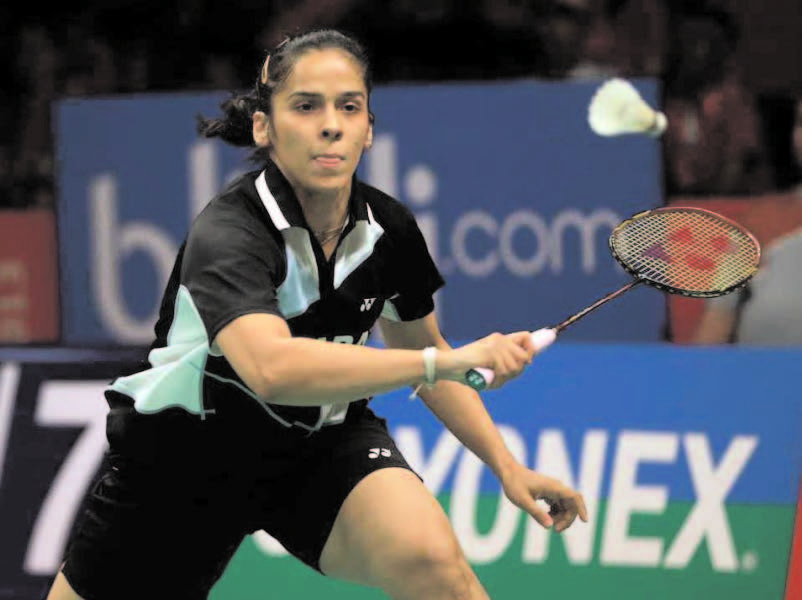
    HYDERABAD (TIP): In a major setback to Indian badminton hopes at the Glasgow Commonwealth Games, ace shuttler Saina Nehwal is learnt to have pulled out of the event. Saina, who shot to fame by winning the gold medal for India at the Delhi Games in 2010, has reportedly expressed her inability to join the team set to leave for Glasgow on Friday.

    Though Saina’s ticket has reached the city, it is reliably learnt that the shuttler will not fly to Europe. After her unexpected triumph at the Australian Open Super Series last month, Saina was a favourite to win gold in Glasgow. But the shuttler, who sustained blister injuries on both her feet, took some time to recover and was not able to practise properly.

    In fact, she did not hit the court for about a week after her return from Australia. It is also learnt that she is suffering from a knee problem. Neither Saina nor her coach Pullela Gopichand were available for comment. A source in the Badminton Association of India (BAI) told TOI that president Akhilesh Das Gupta and some members of the coaching staff are persuading her to go to Glasgow.

    However, till Thursday, their efforts had not borne fruit. “For the last three days we have been trying to convince her. If she goes even with 50% of fitness she can win a gold for us. Apart from Saina there are no big players among the Commonwealth countries. So far she has not agreed to be part of the squad.

    I don’t think she will change her mind,” the BAI official said. In 2010, Saina defeated Malaysia’s Wong Mew Choo in a nailbiting final to win the women’s singles gold. India won four medals then. Jwala Gutta and Ashwini Ponnappa clinched gold in the women’s doubles while Kashyap secured bronze in men’s singles. India had also won silver in the team event. With Saina’s likely to stay home, Indian hopes will hinge of PV Sindu and the pair of Jwala and Ashwini in the women’s section.