NEW YORK (TIP): LeBron James has overtaken Michael Jordan as the United States’ most popular athlete, according to a Harris poll. Almost from the moment James exploded onto the NBA scene as the number one overall pick in the 2003 draft a debate has raged over who was the better of the two basketball superstars.
Jordan had held the top honor from 1993-2005 and again in 2013 before being supplanted this year by James, who was ranked number two in 2013. It is likely that James is even more popular after the four-time NBA most valuable player decided last week to return to the Cleveland Cavaliers following a successful four year run with the Miami Heat that brought the team two NBA titles.
The poll was conducted between June 11 and 16 before James, a 10-time All-Star, made his decision. New York Yankee Derek Jeter, who is retiring at the end of the Major League Baseball season, moves up three spots to third. Rounding out the top five are Denver Broncos quarterback Peyton Manning at four with the Los Angeles Lakers Kobe Bryant and NASCAR driver Dale Earnhardt Jr. tied for fifth.
Tiger Woods, who had been number one for five straight years from 2006, dropped from third last year to eighth. There was no change at the top among America’s most favorite female athletes with tennis player Serena Williams for a fifth straight year while NASCAR driver Danica Patrick remained number two. The players dominated the top with Venus Williams remaining third followed by Maria Sharapova and soccer player Mia Hamm at five.
Month: July 2014
-

Indian-American Neel Sethi to play Mowgli in Disney’s ‘Jungle Book’
NEW YORK (TIP): A ten year old New York Indian American boy, Neel Sethi, has been picked from among thousands of auditions to play Mowgli in what will be his first foray into acting, Disney announced on Tuesday, July 15. “Casting is the most important element of any film and finding the right kid to play Mowgli was imperative,” said director Jon Favreau (Iron Man, Cowboys&Aliens, and central character in the now showing movie Chef).
“Neel has tremendous talent and charisma. There is a lot riding on his little shoulders and I’m confident he can handle it.” A combination of live-action and animation, The Jungle Book will be released in 3D on October 9, 2015, nearly 120 years after the Bombay-born Kipling first published the collection of stories. According to the Disney blog, Neel’s character Mowgli will be the only actor onscreen in the film; the rest will be animated characters.
Ben Kingsley is expected to voice for Bagheera, the black panther, Idris Elba is set to play the maneating tiger Sher Khan, and Scarlett Johansson is said to be in talks to voice-over for Kaa, the python. But the focus of attention currently is on young Sethi, the only human actor in the movie. “Neel embodies the heart, humor, and daring of the character,” casting director Sarah Finn told the Disney blog, describing him as “warm and accessible, yet also having an intelligence well beyond his years and impressing us all with his ability to hold his own in any situation.” “Even though he has no professional acting experience, his natural charisma and instincts jumped out at us,” Finn added.
-

Our economy keeps growing stronger by the day: South Carolina Governor Nikki Haley
I.S. Saluja COLUMBIA, SC (TIP):
Nkiki Haley, Indian origin Governor of South Carolina , in a letter to The Indian Panorama editor, July 17, said, “Anyone searching ourSouth Carolina Governor Nikki Haley country to see where jobs are being created doesn’t need to look any further than South Carolina. “Just this week KI Logistics in Greenville opened a new facility that will employ more than 150 people, and Ruiz Foods broke ground on a new plant in Florence that is expected to bring more than 500 jobs to the area. Our economy keeps growing stronger by the day, and we’re fighting hard to make sure that it stays that way.”
-

The Nartanrang Dance Academy’s Nritya Ranjani captivates
NEW YORK (TIP): The Nartanrang Dance Academy of Bharatiya Vidya Bhavan held its annual dance production, Nritya Ranjani, at the Hindu Temple Auditorium in Queens, New York, on Sunday, June 22nd, 2014. Choreographer and director Swati Vaishnav incorporated a unanimously loved theme into the show: the music of maestro AR Rahman.
The students of Nartanrang performed to popular and classic AR Rahman numbers such as “Taal Se Taal Mila,” “Jai Ho,” & “Ruth Aa Gayee Re,” while also adding a few unconventional songs into the mix such as “O Saya” from Slumdog Millionaire, “Innisai” from Tamil blockbuster Varalaru, & “Keep The Hustle” from Million Dollar Arm.

Consul General Dyaneshwar M. Mulay presents a certificate to a participant. Also seen is Dr. Navin Mehta, chairman of Bharatiya Vidya Bhavan, New York
Dances were choreographed by Swati and Siddhi Vaishnav. The students were visibly excited in having the opportunity to dance to such chart-toppers, but what was more notable was the energy and passion for the art of dance that was palpable to the audience all throughout the evening. From the first-time stage performers in the minor group to the stalwarts of the adult group, all of Nartanrang’s disciples proved that the stage is where they were meant to be.
The vivid & colorful costume design and the exuberance and interactive stylings of emcee Monty Kataria only added to the overall grandeur of the show. The most spectacular surprise of the evening was a personal video message recorded by musical genius Mr. AR Rahman himself, specifically for Nartanrang Dance Academy, that was played at the halfway point of the event.
Mr. Rahman apologized for not being able to be present at the show due to numerous prior commitments, and generously wished the students the best of luck and imparted the knowledge that all you need to succeed is perseverance and hard work.

Choreographer and director of Nritya Ranjani Swati Vaishnav, with a group of performers
“Nartanrang Dance Academy is the only school of its kind to offer a graduation certificate for students who attend the school for five consecutive years and then go on to complete a small apprenticeship during their last year.

Nritya Ranjani Performers
Graduates then perform solo pieces as well as a group graduate piece at the recital and receive trophies and graduate certificates”, said Swati. This year’s graduates, Pooja Pandya, Chandni Patel, Ami Zala, and Anuja Desai, showcased their achievement in beautiful and touching performances.
Consul General of India in New York, Dnyaneshwar Mulay who was the chief guest gave away trophies to the winners. Nartanrang Dance Academy of Bharatiya Vidya Bhavan is a school dedicated to preserving our Indian heritage and providing newer generations with a keener insight into our rich & ancient culture. Students range from ages 5-55 and all levels are welcome. Nritya Ranjani 2015 is tentatively scheduled to take place on June 28th. For more information, please e-mail Swati at vaishnavswati55@gmail.com. -

SOUTH ASIAN AMERICAN WOMEN’S ALLIANCE RECOGNIZES TALENT
LONG ISLAND, NY (TIP): South Asian American Women’s Alliance (www.SAAWA.org) celebrated its third gala, Colors of Life, on Saturday June 28th in Bethpage. Speaking on the occasion, President and Founder of SAAWA, Dr. Anila Midha said that the mission of the organization is to encourage education among South Asian American girl students, because when you educate girls, you transform the society, community and the world.
Eleven awards were given to seven high school girls who excelled in Stem subjects, Science, Technology, Engineering and Math and one community Service Award. The awardees included Bhavani Ananthabhotla, Intel Science Talent Search Semifinalist Award and Simon Fellow, SAAWA Math Award ; Varsha Venkatesh, INTEL International Science and Engineering Fair (ISEF) Finalist, SAAWA Science Award; Deepika Dhawan, SAAWA Stem Award; Priya Alagesan , Intel Science Talent Search Semifinalist 2014 Award, SAAWA Science Award; Priyanka Kumar, Intel Science Talent Search Semifinalist 2014 Award ,SAAWA Stem award; Priyanka Wadgaonkar, Team Winner of 2013 National Siemens competition; Shobha Tewani,SAAWA Community Service Award.

South Asian American Women’s Alliance President and Founder Dr. Anila Midha speaks about the organization
Judi Bosworth was awarded SAAWA Woman of the Year award, Serena McCalla was awarded SAAWA Teacher of the Year award. Dr. Anila Midha acknowledged SAAWA Executive Board, Dr. Bhavani Srinivasan, Aruna Saxena, Sabina Ali and Bharathi Nelanuthala .

The entertainer of the evening: Juana Cala who regaled the gathering with electrifying Flaminco
Five distinguished women of the Community, who have excelled in their fields of expertise and profession were honored. The honorees included Arti Datta, who is a clinical scientist by profession and the Artistic Director of Mudra Dance Studio; Renu Jain, who is an IIT Graduate , financial consultant and a classical vocalist; Dr. Subhadra Nori, who is a regional Director, Department of Rehabilitation medicine, Elmhurst Hospital, Queens General Hospital and The Queens Health Network.

Musicians who brought the East and the West in to a superb musical fusion: Samir Chatterjee on tabla, Elijah Shiffer on saxophone, Matt Osburn on guitar, Emiliano Andres Valerio and Tripp Dudley on percussions
She has established a cancer hospital in Hyderabad, India, and two Sai Temples in Long Island and New Jersey along with her husband ; Dr. Sunita Kanumury, who has a private practice in Allergy and Immunology in New Jersey and has been the President, National APPI( American Association of Physicians of Indian Origin); Jaya Bahadkar, a registered nurse practitioner, who has been an active community worker for 25 years.
The entertainment of the evening was a scintillating performance “Indo Flame” a fusion of Kathak and Flamenco dance styles to live music: Samir Chatterjee on tabla, Elijah Shiffer on saxophone, Matt Osburn on guitar, Emiliano Andres Valerio and Tripp Dudley on percussions. Kathak was performed by Anu Sahasrabudhe and Flaminco was performed by Juana Cala. The audience was awed by the enchanting ensemble and the jugalbandi under the direction of Tabla maestro Samir Chatterjee. -

Mayor Bill de Blasio signs legislation to create MUNICIPAL ID CARD
ID card to provide thousands of New Yorkers access to core City service
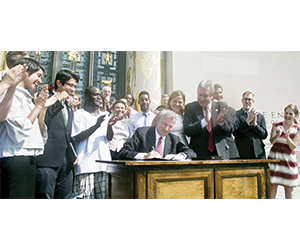
City to waive application fee for first-year applicantsNEW YORK CITY (TIP): Mayor Bill de Blasio signed , Thursday, July 10, legislation to create a municipal ID card for all New York City residents. The legislation paves the way for the creation of a municipal ID for all residents of the five boroughs who meet the program’s proof of identity and city residency requirements. The City will immediately initiate implementation of the program, with the goal of launching the new identification card in January 2015. The Mayor also announced today that the card will be issued at no cost for applicants during the program’s first year.
“We cannot accept a city where some of our residents are forced to live fearfully in the shadows, unable to visit their child’s school or sign a lease. Today, this legislation will begin to provide New Yorkers with the dignity and peace of mind they deserve,” said Mayor Bill de Blasio. “This bill has become reality because community activists and organizers worked tirelessly to make this day happen. I want to thank the City Council, including Speaker Melissa Mark-Viverito, and City Council Members Danny Dromm and Carlos Menchaca for their incredible leadership in helping all our city’s residents attain the identification they deserve.”
“From our earliest days, New York City has been a beacon of hope and optimism, and today we are continuing to build that legacy,” said City Council Speaker Melissa Mark-Viverito. “This new ID card is more than a means of identification-it is upholding the promise of acceptance and opportunity we make to one another as New Yorkers. I thank Council Member Dromm, Council Member Menchaca, my Council colleagues, and Mayor de Blasio for their strong support, and I am proud to be here today as we sign this landmark legislation to create a more fair and just city that is inclusive of all New Yorkers.”
“Today’s bill signing is a transformative moment in the history of this city.With this law, New Yorkers will have access to the largest municipal identification program in the country, and will have increased access to the rights and privileges afforded to them as members of our city. This identification program is real celebration of the diversity of this city, and a commitment to the protectionand inclusion-of all. I am proud today to be a member of this Council, and a resident of this great city,” said Council Member Carlos Menchaca, Chair of the Committee on Immigration.
“Today is a historic day,” said Council Member Daniel Dromm. “I thank Mayor de Blasio, Speaker Mark-Viverito, Council Member Menchaca, my fellow Council colleagues, and the many advocates and supporters who helped make the municipal ID a reality. This new form of identification will make our city even more inclusive. It is certain to become the must-have accessory for all New Yorkers.” “Today is a great day for all New Yorkers,” said Council Member Julissa Ferreras, Chair of the Committee on Finance.
“Our great city has long celebrated its heritage as a gateway to the American dream for so many people who leave their homeland in search of a better way of life. Mayor de Blasio’s signing of the municipal ID bill marks a great stride toward helping all undocumented residents achieve this dream. As the daughter of immigrants, I am proud to see a day where thousands of our undocumented residents will no longer have to live in the shadows, fearing to come forward to receive the many public benefits our great City has to offer.
I applaud Mayor de Blasio and my colleagues in the City Council for championing this piece of legislation. Our collective efforts have, at long last, paved the way to equal access of safe and secure identification amongst all New Yorkers, regardless of their immigration status.” Municipal ID will be an accessible and safe document that will ensure access to City services and grant admission to all municipal buildings. The City is also working toward having the ID be recognized by banks, as well as connecting the ID with stores, restaurants, cultural institutions, discounts and other incentive programs.
The City will continue to expand and improve upon the municipal ID card program and benefits after the launch date. To ensure broad and easy accessibility, the City will establish walk-in enrollment centers in trusted community institutions around the boroughs, and will post the application online for applicants to complete it prior to visiting a walk-in center. In addition, the City will create mobile enrollment units that can travel to neighborhoods that do not have walk-in centers.
The City will also ensure that the outreach and application processes are accessible to people with limited English proficiency and people with disabilities. The City will protect the confidentiality of all municipal ID card applications, and will not ask applicants about their immigration status. -

Paramjit Singh Ajrawat, Sukhveen Kaur Ajrawat of Potomac indicted on alleged health care fraud charges
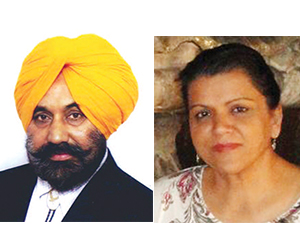
GREENBELT, MD (TIP): One of the three prominent Khalistani leaders of USA, Dr. Paramjit Singh Ajrawat has been indicted on charges of health care fraud. A federal grand jury has indicted two doctors, Paramjit Singh Ajrawat, age 60, and his wife, Sukhveen Kaur Ajrawat, age 56, both of Potomac, Maryland, on charges of health care fraud in connection with the pain clinic they owned and operated. The indictment was returned on June 24, 2014.
The indictment was announced by United States Attorney for the District of Maryland Rod J. Rosenstein; Special Agent in Charge Robert Craig of the Defense Criminal Investigative Service – Mid-Atlantic Field Office; Special Agent in Charge Nicholas DiGiulio, Office of Investigations, Office of Inspector General of the Department of Health and Human Services; Special Agent in Charge Drew Grimm, Office of Personnel Management, Office of Inspector General; Special Agent in Charge Stephen E. Vogt of the Federal Bureau of Investigation; Special Agent in Charge Bill Jones, of the Washington Regional Office, U.S. Department of Labor – Office of Inspector General, Office of Labor Racketeering and Fraud Investigations; and Special Agent in Charge Paul Bowman of the U.S. Postal Service, Office of Inspector General.
According to the indictment, P. Ajrawat was a licensed physician in Maryland who specialized in interventional pain management. S. Ajrawat was a licensed psychiatrist in Maryland. The Ajrawats owned and operated Washington Pain Management Center (WPMC) located in Greenbelt. The 16-count indictment alleges that from at least August 2008 through May 2014, the Ajrawats engaged in a scheme to defraud federal health benefit programs including: Medicare, Medicaid, TRICARE, Federal Employees Health Benefits Program and the Office of Workers’ Compensation Programs.
Specifically, the indictment alleges that the Ajrawats filed claims for procedures that were not performed (rather, less expensive procedures were performed and then the Ajrawats falsely billed for procedures that provided higher reimbursements), or were not performed in compliance with the requirements for reimbursement. For example the indictment alleges that the Ajrawats submitted claims that P. Ajrawat had performed an epidural, when instead P. Ajrawat had performed less invasive injections using lidocaine, which was not indicated for epidural use.
The Ajrawats allegedly falsely documented the use of an ultrasound machine to direct needle placement in certain patient files and caused the alteration or destruction of patient files to conceal the scheme. The indictment also seeks the forfeiture of $2,329,109, believed to be the proceeds of the scheme. The defendants face a maximum sentence of 10 years in prison for each count of health care fraud. An initial appearance has not yet been scheduled. An indictment is not a finding of guilt.
An individual charged by indictment is presumed innocent unless and until proven guilty at some later criminal proceedings. United States Attorney Rod J. Rosenstein praised DCIS, HHS-Office of Inspector General, OPM-Office of Inspector General, FBI, U.S. Department of Labor-Office of Inspector General, and the U.S. Postal Service-Office of Inspector General for their work in the investigation. Mr. Rosenstein thanked Assistant United States Attorney Kelly O. Hayes, who is prosecuting the case. -

Modi man Amit Shah is the new BJP chief
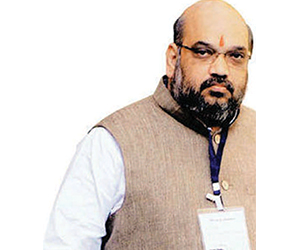
NEW DELHI (TIP): Amit Shah, who delivered crucial Uttar Pradesh to BJP in the Lok Sabha elections, was on July 9 appointed party president, marking Gujarat’s firm grip over the ruling dispensation after Narendra Modi’s elevation as Prime Minister. Shah, a close and controversial aide of Modi, was appointed to the top post in BJP at a meeting of Parliamentary Board where incumbent Rajnath Singh resigned after a tenure of one-and-a-half year. The former Minister of State for Home in Gujarat, who faces charges in the Sohrabuddin fake encounter case, is largely credited for BJP’s stunning performance in UP where it got 71 of the 80 Lok Sabha seats.
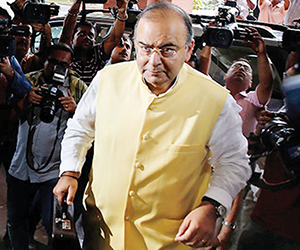
The meeting was attended among others by Modi, senior leaders L K Advani, Murli Manohar Joshi, M Venkaiah Naidu, Nitin Gadkari and Sushma Swaraj. Finance Minister Arun Jaitley, who had to table the pre-Budget Economic Survey in Lok Sabha, joined the press conference where the announcement was made by Singh. “From now and now on, Amit Shah will be the president of the BJP and lead the party. His appointment was approved unanimously,” he said flanked by Modi and other leaders. Shortly after the announcement, Modi and Singh offered sweets to Shah while other leaders including Advani, Joshi, Swaraj and Jaitley presented him bouquets.
As reporters started plying him questions, Shah replied “I will speak later” bringing the brief ceremony to a close. 50-year-old Shah takes over from Singh who was appointed party president after the exit of Nitin Gadkari in controversial circumstances. “I took over as the BJP President with a heavy heart. I felt helpless because of baseless allegations levelled against Nitin Gadkari. Since the Prime Minister has given me the responsibility of the Home Ministry, I convened the meeting of the Central Parliamentary Board and tendered resignation as party chief.
The Parliamentary Board unanimously decided to appoint Amit Shah as the President of BJP,” Singh said. Singh had recently announced that he will relinquish his BJP role in keeping with the party’s “one-man, one-post” principle. “Shah is full of imaginative ideas and is good at organisational skills. As in charge of UP during Lok Sabha polls, he got a roaring success. BJP had never been so successful in its history in UP,” Singh said. He also credited former Prime Minister Atal Behari Vajpayee and Advani for making the Indian polity from unipolar to bipolar. Singh said under Modi’s leadership, the party got thumping majority in the Lok Sabha elections, thus becoming the single largest party to get majority on its own after nearly 30 years. BJP is set for major organisational changes following its victory in the 2014 Lok Sabha polls as many of its senior leaders have become part of the Modi government.
The party’s reorganisation will come ahead of Assembly elections in states like Maharashtra, Haryana, Jammu and Kashmir and Jharkhand later this year and early next year. The RSS, BJP’s ideological fountainhead, is also keen that the party should not be weakened after government formation. It had already deputed two of its key leaders — Ram Madhav and Shiv Prakash — to work for BJP and new roles for both of them will be assigned by the new party chief. The two are likely to get key roles in the revamped party set-up with Madhav likely to be the new party general secretary.
The announcement of Shah’s name as BJP President came after RSS’ nod for the same. Singh later told reporters that Shah will be more successful than him as the party president. “I have full confidence that Amit Shah through his organisational and managerial skills, will be successful in making BJP, which has emerged as the largest political party in the country, reach bigger heights. I believe that Shah will be more successful than me,” he said. Senior BJP leader Meenakshi Lekhi said the party has taken a correct decision by appointing Shah as its president. “Since Rajnath Singh became the Home Minister, BJP had been looking for a president. I want to congratulate Amit Shah on behalf of all the party workers. -

UNITED STATES HAS A STAKE IN INDIA’S SUCCESS
It is my hope that Prime Minister Modi and his government will recognize how a deeper strategic partnership with the US serves India’s national interests, especially in light of current economic and geopolitical challenges”, says the author.
Iwant Prime Minister Modi to succeed because I want India to succeed. It is no secret that the past few years have been challenging ones for India – political gridlock, a flagging economy, financial difficulties, and more. It is not my place or that of any other American to tell India how to realize its full potential.That is for the Indians to decide. Our concern is simply that India does realize its full potential, for the United States has a stake in India’s success. It is also no secret that India and the US have not been reaching our full potential as strategic partners over the past few years, and there is plenty of blame to be shared on both sides. Too often recently we have slipped back into a transactional relationship.
We need to lift our sights again. The real reason India and the US have resolved to develop the strategic partnership is because each country has determined independently that doing so is in its national interests. It is because we have been guided by our national interests that the progress of our partnership has consistently enjoyed bipartisan support in the US and in India.
When it comes to the national interests of the US, the logic of a strategic partnership with India is powerful. India will soon become the world’s most populous nation. It has a young, increasingly skilled workforce that can lead India to become one of the world’s largest economies.
It is a nuclear power and possesses the world’s second largest military. It shares strategic interests with us on issues as diverse and vital as defeating terrorism and extremism, strengthening a rules-based international order in Asia, securing global energy supplies, and sustaining global economic growth. We also share common values. It is because of these shared values we are confident that India’s continued rise as a democratic great power will be peaceful and thus can advance critical US national interests.
That is why, contrary to the old dictates of realpolitik, we seek not to limit India’s rise but to bolster and catalyze it – economically, geopolitically, and, yes, militarily. It is my hope that Prime Minister Modi and his government will recognize how a deeper strategic partnership with the US serves India’s national interests, especially in light of current economic and geopolitical challenges.
For example, a top priority for India is the modernization of its armed forces. This is an area where US defense capabilities, technologies, and cooperation can benefit India enormously. Similarly, greater bilateral trade and investment can be a key driver of economic growth in India. Put simply, I see three strategic interests that India and the US clearly share, and these should be the priorities of a reinvigorated partnership. First, to shape the development of South Asia as a region of sovereign democratic states that contribute to one another’s security and prosperity; second, to create a preponderance of power in the Asia-Pacific region that favors free societies, free markets, free trade, and free comments; and, finally, to strengthen a liberal international order and an open global economy.
It is important for US leaders to reach out personally to Prime Minister Modi, especially in light of recent history. That is largely why I am traveling to India, and that is why I am pleased President Obama invited the prime minister to visit Washington. When the prime minister comes to Washington, I urge our congressional leaders to invite him to address a joint session of Congress.
Yet we must be clear-eyed about those issues that could weaken our strategic partnership. One is Afghanistan. Before it was a safe haven for the terrorists who attacked America on September 11, 2001, Afghanistan was a base of terrorists that targeted India. Our Indian friends remember this well, even if we do not. For this reason I am deeply concerned about the consequences of the president’s plan to pull all of our troops out of Afghanistan by 2016.
If Afghanistan goes the way of Iraq in the absence of US forces, it would leave India with a clear and present danger on its periphery. It would constrain India’s rise and its ability to devote resources and attention to shared foreign policy challenges elsewhere. It would erode India’s perception of the credibility and capability of US power and America’s reliability as a strategic partner.
The bottom line here is clear: India and the US have a shared interest in working together to end the scourge of extremism and terrorism that threatens stability, freedom, and prosperity across South Asia and beyond.
I hope the president will be open to reevaluating and revising his withdrawal plan in light of conditions on the ground. Another hurdle on which our partnership could stumble is our resolve to see it through amid domestic political concerns and shortterm priorities.
If India and the US are to build a truly strategic partnership, we must each commit to it and defend it in equal measure. We must each build the public support needed to sustain our strategic priorities, and we must resist the domestic forces in each of our countries that would turn our strategic relationship into a transactional one.
If the 21st century is defined more by peace than war, more by prosperity than misery, and more by freedom than tyranny, I believe future historians will look back and point to the fact that a strategic partnership was consummated between the world’s two preeminent democratic powers: India and the United States. If we keep this vision of our relationship always uppermost in our minds, there is no dispute we cannot resolve, no investment in each other’s success we cannot make, and nothing we cannot accomplish together. -

Modi government’s maiden budget sets tone for higher growth trajectory, job creation
NEW DELHI (TIP): The Narendra Modi government on July 10 unveiled its intent to revive growth by shoring up infrastructure and manufacturing, besides increasing investments by boosting savings through Income Tax sops and raising tax breaks on housing loans in its first Union Budget. Finance Minister Arun Jaitley, presenting his maiden Budget for 2014-15, said the Budget followed the theme of “Sabka Saath, Sabka Vikas”. Jaitley balanced the fiscal deficit by accepting the target of 4.1 per cent this year set by the previous UPA government. The fiscal deficit target will go down to 3.6 per cent and 3 per cent in the next two years, although, Jaitley added, it would be a challenge.
Laying the groundwork of the direction of the Budget proposals, Jaitley said these steps were only the beginning of a journey towards a sustained growth of 7-8 per cent or above within the next 3-4 years along with macroeconomic stabilization. “Therefore, it would not be wise to expect everything that can be done or must be done to be in the first Budget presented within 45 days of the formation of this government,” he added, probably to tone down the burden of expectations from the new government. Bearing Modi’s stamp, the Budget proposals are geared more towards investment and asset creation as opposed to the entitlement driven social sector focus of the UPA regime. Following a strategy of boosting savings and putting more money into the hands of the people, Jaitley has raised the threshold Income Tax exemption limit from Rs 2 lakh to Rs 2.5 lakh and investments under 80C by Rs 50,000 to Rs 1.5 lakh.
In addition, the deduction limit on interest on housing loan for self-occupied property has been increased from Rs 1.5 lakh to Rs 2 lakh. Balwant Jain, CFO, Apnapaisa said the Finance Minister has given the benefit of Rs 1.5 lakh in aggregate spread over three components of Rs 50,000 each. Jain said savings would range from a minimum of Rs 5,150 for a person who is in the 10 per cent slab and does not avail 80 C benefit and does not have home loan, to a maximum of Rs 46,350 for a person who is in the 30 per cent tax slab, avails 80 C benefits and pays minimum of Rs 2 lakh as interest on home loan during the year. For senior citizens, the IT exemption limit is higher at Rs 3 lakh and the pension scheme has been re-introduced for a limited period.
Free baggage allowance for inbound passengers has been increased from Rs 35,000 to Rs 45,000. For consumers, the Budget makes cigarettes and colas costlier, while cathode ray tube TVs, LCD panels of less than 19 inch, computers, soaps and footwear are cheaper. The direct tax proposals involve a net outgo of Rs 22,200 crore mainly because of income tax exemptions, while indirect tax proposal will yield a revenue of Rs 7,725 crore. Non-plan expenditure for the current year has been estimated at Rs 12.19 lakh crore, while the total expenditure estimates stand at Rs 17.94 lakh crore.
The Plan Expenditure will grow by 20 per cent year on year. The Budget makes a big statement on attracting foreign investment. The Foreign Direct Investment cap on insurance and defense has been raised from 26 to 49 per cent. Further, FDI in e-commerce has been allowed, while rules for FDI in real estate have been relaxed. The controversial retrospective taxation clause and all transfer pricing cases arising out of it have been referred to a high-level committee to assure foreign investors. Jaitley, who took an unusual five-minute break during the speech following backache, said the Budget followed the theme of “Sabka Saath, Sabka Vikas”. The big push in the Budget is around housing, smart cities, warehousing capacity, urban areas rejuvenation, highways and agriculture. -

Obama invites Modi to the US
NEW DELHI (TIP): Prime Minister Narendra Modi was on July 10 invited by US President Barack Obama to visit Washington in September, saying he wants to “work closely with Prime Minister to makeIndia-US relations a defining partnership for the 21st century”. This should be music to the ears of a man who was told, after the Gujarat riots of 2002, that he would be unwelcome in the US, if he were to visit to address Gujaratis in that country on a tourist visa. Subsequently the US cancelled his tourist visa.But things have changed.
US Deputy Secretary of StateWilliam Burns called on Modi and delivered Obama’s invite. “The prime minister thanked President Obama for the invitation and looked forward to a result-oriented visit with concrete outcomes that imparts new momentum and energy to the India-US strategic partnership,” stated the Press Information Bureau. “The relationship between the world’s oldest and largest democracies should not only be for the benefit of the two countries but should emerge as a powerful force of good for peace, stability and prosperity in the world,” Modi was quoted as saying, in the press release.
Modi is to go to the US to attend the UN General Assembly, sometime in September. Soon after the Lok Sabha election results, chatter had started in the Bharatiya Janata Party (BJP) that Modi should not go to the US unless that country apologised for denying him a visa. However, that was put down firmly by the party’s senior leadership. The bilateral aspect of Modi’s visit will be an important milestone for Indo-US relations. It was quite clear from the statement by the government that this would be a focussed results-oriented visit, not just a networking exercise or a pleasure trip.
The is whether Modi will meet Pakistan Prime Minister Nawaz Sharif in the US. In 2013, a meeting between the two PMs turned into a media disaster with Nawaz Sharif supposedly likening the Indian PM to a “dehaati aurat” (village woman) who would bring in third parties to settle disputes with her husband.With hardly any formal forward movement in relations with Pakistan after Sharif’s visit to attend Modi’s oath-taking ceremony, exactly what if anything such a meeting will achieve will have to be assessed. The Sangh family will also give its inputs on such a meeting. -

Team Germany vs Lionel Messi
Whatever happens at the Maracana in Rio de Janeiro on Sunday (early Monday morning for the bleary-eyed in India), history will have been made. Either the World Cup will have its first European champion on South American soil, or world football will have a new king to place beside Pele, Diego Maradona and Zinedine Zidane. Team Germany versus Lionel Messi: the narrative writes itself, a rematch 24 years in the making. While it isn’t without truth, it suffers from a reduction in nuance.
German football has evolved since 1990, when an Andreas Brehme penalty won the Cup. Efficiency and collective play remain the substance, but there has been a refinement of style. Under Jurgen Klinsmann and then Joachim Low, a new German generation has showcased skilful, tactically fluid football while continuing the tradition of going deep in tournaments. But without a trophy, patience has begun to wear thin in Germany. Argentina, on the other hand, appears not to have escaped the personality cult.
It was Maradona in 1990 when he nearly managed a repeat of 1986; it’s Messi now. Much as with Maradona, the opposition’s extra-defensive attention limits Messi, but it extracts a cost: the other team can’t commit to attack without risking a match-turning moment of Messi magic. It can only work, however, if the rest of Argentina privileges an individual for its greater good.
The finalists could not have taken more contrasting routes. Argentina has managed eight goals in six matches, often leaving it very late; Germany nearly scored that number against Brazil, and has 17 in total. Argentina and the Netherlands set out not to lose their semifinal, two cautious, disciplined sides cancelling each other out.
Neither could seize the initiative over 120 minutes. Germany and Brazil, in the other semifinal, went out to win, even if the host did it with absurd recklessness, “running into an open knife” as a German writer described it. In a sense it was surprising to see Brazil play thus.
It had led the tournament in fouls, yellow cards, and tackles per game: this was a pragmatic unit, which despite the gaps at the back was capable of churning out results. But without Neymar, its creative force, and Thiago Silva, its leader and defensive organiser, the five-time champion crumbled.
Despite inflicting such a heavy defeat, Low’s men can count on Brazil’s support in the final; not only has Germany’s football captivated the spiritual home of the game, Brazilians will rather see anyone win it but Argentina. Alejandro Sabella has sought to lessen the pressure on his side by portraying Argentina as the underdog. But big finals know no favourites. All one can hope for is a contest that a thoroughly enjoyable World Cup can be remembered by. -

Kerala is the model for inclusive development and governance – K.C. JOSEPH
NEW YORK (TIP): ‘Kerala is the real model for inclusive development and governance that has applied the philosophy of Congress party of uplifting the poor and aiding the minorities and the backward sections of the society thereby achieving the highest rank as the most developed state in India based on the United Nations Human Development Index’ said K.C. Joseph, Minister for Non- Resident Keralites Affairs and Rural development. Joseph was addressing a meeting organized by the Kerala Chapter of Indian National Overseas Congress (I), at Charis Center, in Floral Park, New York. ‘For those who are asking what Congress has done in the last 60years ought to go back and revisit the pre-independent India’ he challenged.
‘Congress party had not only led the country to its independence, but also led the green revolution and the IT revolution that catapulted the nation to become the 5th largest economy in the world. People tend to have short memories and the debacle in the last election might have been due to a critical ‘message gap’ across the voting population, primarily the young ones, that was clearly exploited by the opposition’ he added. He also assured the gathering of giving prompt attention to the Pravasee issues and promised full cooperation from the Kerala Government in that regard.
George Abraham, the Chairman of INOC (I), presiding over the meeting lauded the minister for his 4 decades of selfless service to the people of Kerala and the non-resident Keralites in particular. ‘Mr. Joseph is truly a man of integrity and honor and someone who has an unblemished record in public life and someone we could all be truly proud of” Abraham added. President Juned Qazi thanked Kerala for being a stronghold for the Congress Party and thanked the minister for his efforts on behalf of the non-Keralites across the globe. He also congratulated the new team of leadership for the Kerala Chapter consisting of Thomas T. Oommen as the Chairman and R. Jayachandran as the President. Mr. Harbachan Singh, the General Secretary spoke of the activities of INOC (I), in US over the years and urged the Minister to strengthen the ties with the organization at the state level. He emphasized the formidable strength of the NRIs and how it could fuel the mutual benefit of the Indians in India and USA. Jaychandran in his address urged the Congress loyalists to stay focused in these difficult times for the party and promised to work hard to promote a truly democratic and pluralistic India while strengthening the bond between our two countries.
A number of guest speakers also spoke on the occasion that included Swami Guru Ratnam Thapasi of Santhigiri, Kottayam DCC President Tomy Kallani, K.A. Francis of Manorama, P.T. Chacko, the press secretary of the Chief Minister of Kerala and Advocate Bino George. INOC (I) National and State leaders also spoke passionately at the session that included Zach Thomas, Jose Charummood, U.A. Naseer, Jose Thekkedom, Leela Maret, Balachandra Panickar, Varghese Thekkekara, Jaison Alex and Guru Dilip ji, Jose Kanatt and many others. They thanked the Minister for the assurance that he would attempt to strengthen the bond of cooperation and understanding between Indians in India and USA. Thomas T. Oommen, the Chairman of Kerala chapter was the Emcee and Jose Charummood expressed the vote of thanks. -

AICC Franchise Expo to be held on Sunday, September 21st 2014
Financial incentives announced for small businesses
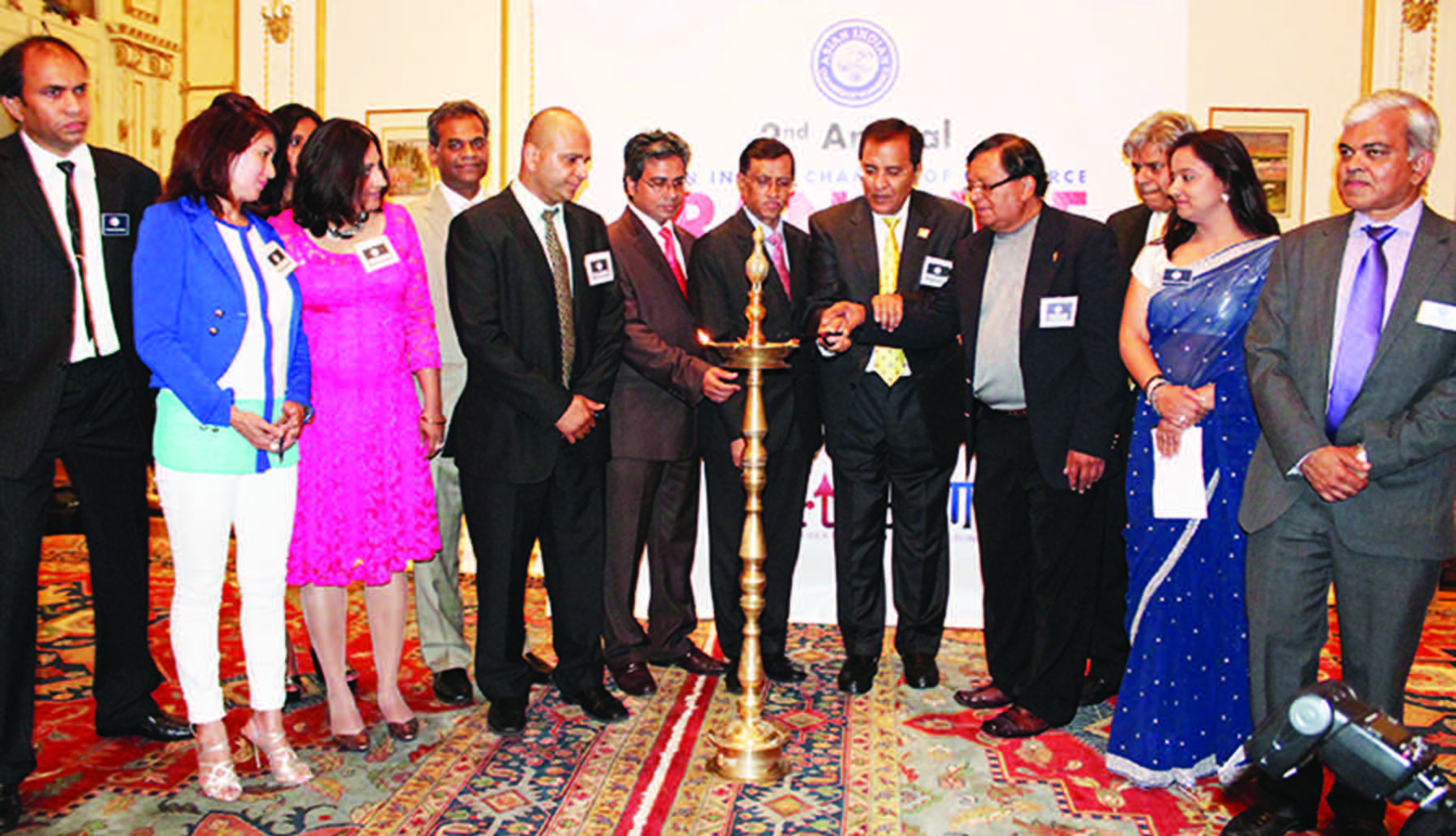
NEW YORK CITY (TIP): Asian Indian Chamber of Commerce (AICC) , a New Jersey based representative body of Indian owned businesses, will offer interest free loans to winners of best business plans at its forthcoming ‘Franchise Expo’, scheduled to be held on 21st September at New Jersey Convention & Expo Center at Raritan Center in Edison, NJ. “We are offering a total of $30,000 as interest free loans to top three business plans which will be selected from submitted plans at the ‘Start up Hub’, a competitive project of the show”, announced Anil Bansal, AICC president, who is also the chairman of Indus American Bank.
“The objective of ‘Start up Hub’ is to encourage fresh talent come forward with their plan for a business”, he said adding that he wants them to succeed by giving them an opportunity to win interest free loans of $15, 000, $10,000 and $5,000.” AICC launched its first Franchise Seminar & Show in 2013 when several franchise companies specializing in food, child-care centers, tutoring centers, computer IT services, senior care, financial planning and staffing and employment services participated in the event. “We decided to hold this show because we wished to understand franchising from a franchisee’s point of view”, said Anil Bansal.

“It proved to be a perfect opportunity for franchisees and franchisors to network and share their experiences among themselves.” AICC held a kick off meeting for this year’s Franchise Seminar & Show at the Consulate General of India in New York City where Ambassador Dnyaneshwar Mulay, Consul- General, appealed to entrepreneurs to share innovative ideas with their Indian counterparts. Emphasizing the importance of investing in commerce and business for development of India, Mr. Mulay said, “The need for transferring ideas and business concepts from USA to India has never been so important as it is today because of the prevailing environment in India which is ideal for strengthening bilateral partnership between the two countries.”
Pointing out to opportunities for investing in new projects in India, he said, “Delegations of officials and business owners from various states of US should visit India to explore new investment opportunities.” Explaining the goal of the expo, Rajeev Krishna, event chair, said that the expo will provide a platform for entrepreneurs to meet and build relationships with small business owners. “They will benefit from each other’s experience of owning and operating a small business and a long lasting relationship will develop.” He said that the expo offered varieties of opportunities for business owners, professionals and sponsors of the event.
“The expo serves as a platform to showcase brand excellence and promotional opportunities for business owners. A number of workshops and marketing sessions have been organized during the show”, he announced. According to Nandini Menon, co-chair of the event, prospective franchisees can look forward to financing and marketing resources for their businesses while current franchisors can explore alternative financing and marketing resources.
AICC board members Priti Pandya Patel and Ilayas Quraishi also made presentations at the event. Elayne McClaine, Regional Director, NJ Small Business Development Center at Rutgers-New Brunswick, offered a variety of services including training and online technical assistance for entrepreneurs interested in start-ups and expansion programs. Franchise owners and entrepreneurs may contact Rajeev Krishna by email at Rajeev@signsbytomorrow.com or by phone at 732-599-5726. They can also contact Divya Chadha at webmaster@aicc.net or 732-777-4666 -

Liu and others call on MTA to avert transit Shutdown
“The time for excuses and blame games is over. Commuters deserve a resolution now.”
QUEENS, NY (TIP): At a press conference, July 10, at the Bayside LIRR station, Democratic State Senate candidate and former City Council Transportation Chairman John Liu called on the Metropolitan Transportation Authority to reach a labor agreement to avert a shutdown in the coming days. Highlighting the fact that thousands of residents in the 11th Senate District would be adversely affected by a possible shutdown, Liu urged the MTA to find a resolution before the looming deadline.
“For neighborhoods that already have limited access to mass transit, a wholesale service shutdown will turn a difficult situation into a disaster for our communities. The MTA’s failure to act in good faith is jeopardizing the safety and livelihood of hundreds of thousands of New Yorkers,” said Democrat John Liu. “Moreover, the MTA’s suggestions to the public to explore travel alternatives like ‘telecommuting’ is just simply appalling and out-of-touch. The MTA has twice ignored the rulings of an independent panel, hoping that if they ignore the problem someone else will clean up the mess they created. The time for excuses and blame games is over, commuters demand and deserve a resolution now.”
In a letter sent to MTA Chairman and CEO Thomas Prendergast, Liu blasted the agency for refusing to continue negotiations before the National Mediation Board. “Instead, MTA negotiators inexplicably announced that a settlement could not be reached and they would be seeking Congressional intervention, which then failed.” Full text of the letter can be found below. The MTA has not reached a resolution with the LIRR unions to avert a shutdown on July 20. A potential shutdown would affect approximately 300,000 daily riders. “For the thousands of Queens commuters, it is critical that the MTA reach an agreement and avoid stranding our working families, businesses and LIRR employees,” said Assemblywoman Nily Rozic whose district does not have subway access and relies heavily on the nearby LIRR.
“Expecting local residents to depend on overcrowded, inconsistent local and express bus service is not a viable option.” “A transit strike would be a great disservice to the people of this City,” said Assemblymember David Weprin. “Thousands of commuters in my Assembly District rely on our public transportation system daily. I urge the MTA and union leaders to agree on fair terms as quickly as possible, as this transit strike must be avoided.” “It’s our hope this issue is resolved as soon as possible without a strike,” said Councilmember Paul Vallone. “Our district relies heavily on the Long Island Railroad for transportation within New York, and this would be a severe setback to our community.”
“Residents of Bay Terrace and Bayside rely heavily on the LIRR to get to work, shop and as a means of transportation to get to New York City’s entertainment opportunities,” said Phil Konigsberg of the Bay Terrace Community Alliance. “Their passage to and from the Bayside train station, as well as others along the corridor also stimulate the economy of the businesses that provide goods and services to the daily and weekend commuters. We need someone who represents this district to utilize their negotiating skills while having a precise financial background and understanding that can stop the looming strike before the deadline is reached.”
“For many residents of Northeast Queens who travel to and from Manhattan, the LIRR is their only mass transit option,” said Warren Schreiber, Co- President of the Presidents Co-op & Condo Council. “In Northeast Queens the LIRR is our subway. A LIRR shutdown would impose a heavy financial burden on commuters and merchants who depend on the railroad for their livelihood. All sides must bargain in good faith to reach an agreement that is fair to both LIRR employees and customers.” -

Kerry arrives in Afghanistan to meet candidates
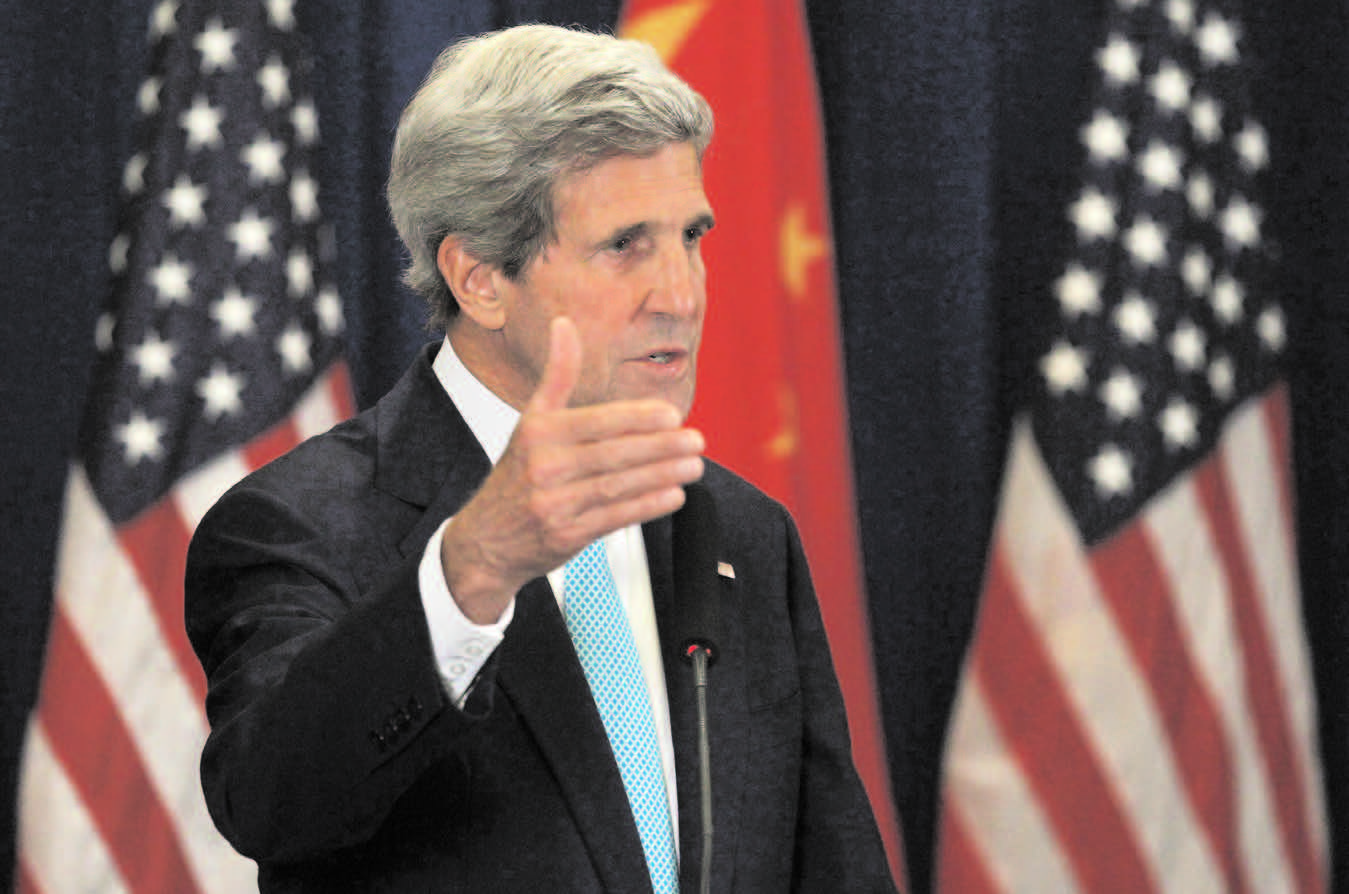
KABUL, AFGHANISTAN (TIP): The US and its allies are growing increasingly concerned as Afghanistan shows signs of unraveling in its first democratic transfer of power from President Hamid Karzai. With Iraq wracked by insurgency, Afghanistan’s dispute over election results poses a new challenge to President Barack Obama’s effort to leave behind two secure states while ending America’s long wars. US Secretary of State John Kerry made a hastily arranged visit to Afghanistan on Friday to help resolve the election crisis, which is sowing chaos in a country that the US has spent hundreds of billions of dollars and lost more than 2,000 lives trying to stabilize. He was to meet with the two candidates claiming victory in last month’s presidential election runoff. “I’ve been in touch with both candidates several times as well as President (Hamid) Karzai,” Kerry said before leaving Beijing, where he attended a US-China economic meeting.
He called on them to “show critical statesmanship and leadership at a time when Afghanistan obviously needs it.” “This is a critical moment for the transition, which is essential to future governance of the country and the capacity of the (US and its allies) to be able to continue to be supportive and be able to carry out the mission which so many have sacrificed so much to achieve.” With Iraq wracked by insurgency, Afghanistan’s power dispute over the election results is posing a new challenge to President Barack Obama’s 5 1/2-year effort to leave behind two secure nations while ending America’s long wars in the Muslim world. Obama wants to pull out all but about 10,000 US troops from Afghanistan by the end of the year, and the election of a new Afghan president was supposed to enshrine the progress the nation has made since the US-led invasion after the 9/11 terrorist attacks.
The preliminary results of the presidential election runoff suggested a massive turnaround in favor of former Finance Minister Ashraf Ghani Ahmadzai, a onetime World Bank economist who lagged significantly behind former Foreign Minister Abdullah Abdullah in first-round voting. Abdullah, a top leader of the Northern Alliance that battled the Taliban before the American-led invasion, claims the runoff was a fraud, and his supporters have spoken of establishing a “parallel government,” raising the specter of the Afghan state collapsing. Abdullah was runner-up to Karzai in a fraud-riddled 2009 presidential vote before he pulled out of that runoff.
Chief electoral officer Zia ul-Haq Amarkhail has resigned, denying any involvement in fraud but saying he would step down for the national interest. Kerry will seek to persuade both candidates to hold off from rash action while the ballots are examined and political leaders are consulted across Afghanistan’s ethnic spectrum. The US wants to ensure that whoever wins will create a government that welcomes all ethnic factions. If neither candidate gains credibility as the rightful leader, the winner could be the Taliban.
Many Afghans fear the insurgent forces will only gain strength as the US military presence recedes. Internal instability could aid the insurgency. Abdullah and Ghani each have said that as president they’d sign a bilateral security agreement with the United States, granting American forces immunity from local prosecution. Without such an agreement, the Obama administration has said it would have to pull all US troops out of Afghanistan, a scenario that played out in Iraq three years ago. Karzai has refused to finalize the deal, leaving it to his successor. James Dobbins, the State Department’s special representative for Afghanistan and Pakistan, said this week some degree of fraud was expected, but it’s believed the fraud was “quite extensive.
” Speaking in Washington, Dobbins said the Abdullah campaign particularly mistrusts the impartiality of the Afghan electoral institutions. Both campaigns and Karzai have asked the Un for help, he noted, and the Un has been designing a plan for deciding how ballots can be reviewed and which ones would be reviewed for possible fraud. A Un audit, however rudimentary, probably could be done within two weeks, US officials believe. The focus would be on clear fraud indicators, including districts with high turnout or more women going to the ballots than men. -

Afghan suicide attack kills 16, including 4 Nato soldiers
KABUL (TIP): A Taliban suicide bomber killed 16 people, including 10 civilians and four Nato soldiers, in an attack in eastern Afghanistan on July 10, officials said, as foreign troops wind down their war against the insurgents. The Taliban claimed responsibility for the attack, saying one of its suicide bombers had blown himself up near a Nato patrol in the province of Parwan, north of the capital Kabul.
The attack comes as Afghanistan is mired in political crisis, with a bitter row raging over allegations of fraud in the presidential runoff election. “Four International Security Assistance Force service members died as a result of an enemy forces attack,” a statement from the Nato mission said. In line with coalition policy, it did not name the nationalities of the victims. Parwan governor spokesman Waheed Sediqqi told AFP that ten civilians and two policemen were killed in the attack.
The insurgents said 15 US special forces soldiers were killed. They routinely make exaggerated claims after such attacks. About 50,000 Nato troops are still deployed in Afghanistan, down from a peak of 150,000 in 2011. Nato’s combat mission will wrap up at the end of this year, with 10,000 US troops staying into next year if the new president signs a security deal with Washington. About 3,450 coalition troops have been killed in Afghanistan since operations began in 2001 when the Taliban regime was ousted from power.
US Secretary of State John Kerry warned Tuesday that any attempt to seize power in the election crisis would cost the country its international aid. Initial results released on Monday showed former World Bank economist Ashraf Ghani had won the election, but a spokesman for his poll rival Abdullah Abdullah rejected the outcome as “a coup against the will of the people”. Fraud allegations immediately stoked concerns of instability after the figures showed Ghani collected 56.4 per cent of the run-off vote against ex-foreign minister Abdullah’s 43.5 per cent. -

Hardline Buddhists want Pope Francis to apologize
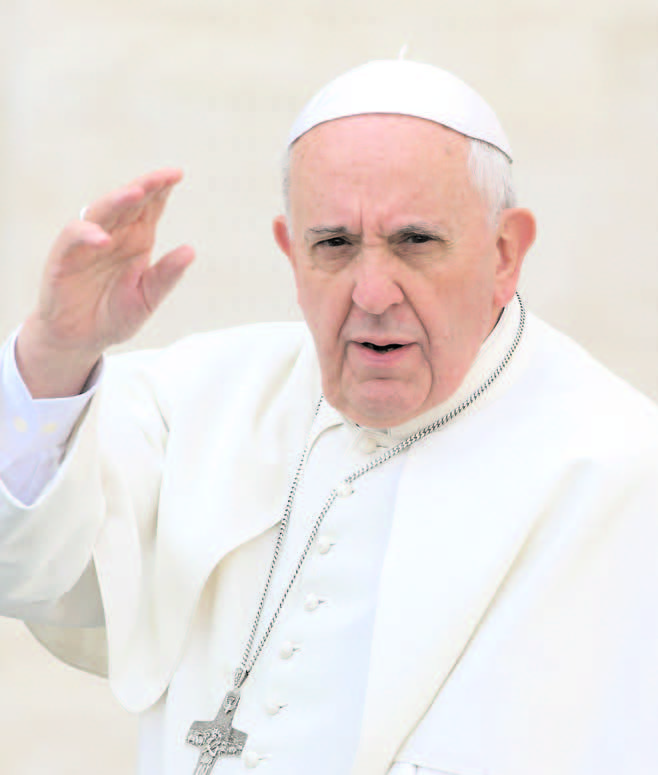
COLOMBO (TIP): A Buddhist group accused of instigating recent attacks on Muslims in Sri Lanka says Pope Francis must apologize to Buddhists for atrocities allegedly committed by Christian colonial rulers of the South Asian island nation when he visits next year. “We are waiting till the Pope comes to see what he is going to say about the crimes here,” Rev. Galagoda Atte Gnanasara, a leader of Bodu Bala Sena, or Buddhist Power Force group, told a meeting with foreign correspondents.
“The Portuguese, Dutch and the British are all the same to us,” he said referring to the countries that had established colonies in Sri Lanka one after another from 1505 to 1948. Roman Catholicism was established in Sri Lanka by the Portuguese, while the Dutch and the British established their own Christian denominations. “Previous Popes had made public apologies to certain countries because they destroyed, they killed.We had a similar situation, most of the Buddhist temples were destroyed by them (they) killed Buddhist monks.We would like to see that public apology from him,” said Gnanasara, whose comments were made June 8 but embargoed until July 9. -

LeT founder Hafiz Saeed addresses seminar in Lahore high court
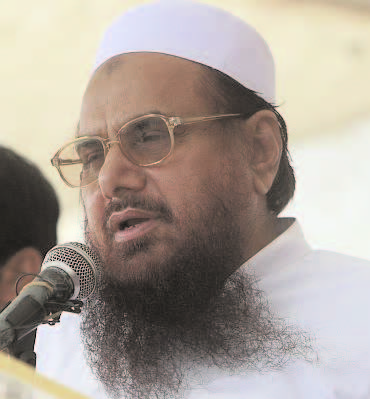
LAHORE (TIP): Just days after his organisation was declared a terror outfit by the US, Jamaat-ud-Dawah chief Hafiz Saeed, who orchestrated the 2008 Mumbai terror attacks, addressed a seminar at the Lahore high court spewing venom on India and America. This is the second time that Saeed, who is the founder of banned terror organisation Laskar-e-Taiba, has addressed lawyers and others within the court premises this year.
In May, Saeed, who roams around freely in Pakistan despite being a designated terrorist, was invited as chief guest at the Lahore High Court Bar Association, one of the premier bar associations in Pakistan. At that time, the decision was opposed by a section of the lawyers. Saeed addressed the seminar at the Lahore high court building organised by the Pakistan Justice Party.
Tightening its noose around the Lashkar-e-Taiba (LeT), the US had last month added its affiliates, including the JuD to its list of designated terror organisations and slapped sanctions against two Pakistan-based LeT leaders. The US state department has amended Lashkar-e-Taiba’s designations to add its aliases: Jamaat-ud-Dawa, Al-Anfal Trust, Tehrik-e-Hurmat-e-Rasool and Tehrik-e-Tahafuz Qibla Awwal, an official statement had said. -

Displaced by army operation, 9 lakh Pakistanis fight misery
BANNU (TIP): The number of displaced people from North Waziristan, where the Pakistan army has launched a major anti-terror operation, has almost doubled to over 900,000 in the last few days. Most of them complain of official apathy and are living in terrible conditions without basics facilities in tents and slums in Bannu, 371km southwest of Islamabad. The misery of Arshad Daur (38) mirrors that of other displaced people. He left his village along with his ailing mother, three sisters-in-law and their five kids in haste when it was targeted in aerial strikes few days ahead of the mass exodus. They left everything behind.
Like many tribesmen, Daur’s three brothers work in the Middle East while he looks after their wives and kids. It took over 25 hours for them to cover their journey from Dande Darpakhel to Bannu. “For miles I carried my old mother on my back. After covering two-three miles distance, we took rest for few minutes and then embarked again on our journey for unknown destination. In the middle, I also had to carry my four-year-old nephew and niece on my back as they could not walk for long,” Daur said. When they finally reached Bannu, they did not know what to do next. “We stayed there for three days and then decided to leave for Taxila where some of our relatives are settled,” Daur said. A Punjab police team stopped the family when they finally reached Taxilla and asked them to prove their identity. “I have come from Waziristan.
I have neither identity card nor cell phone. I have relatives living on Khanpur road and want to go there,” Daur pleaded with a police officer. His pleas fell on deaf ears and after being slapped several times, the desperate family was taken to a police station. For several hours, they remained there before they were allowed to leave on the condition they would not enter Punjab. “We came back to Tarnol and were lucky to get seats late evening in a van for Kohat. They spent the night in the open in Kohat and next day went to Bannu. Daur’s wife and kids have been missing and are feared to have been killed in aerial bombardment which led to Taliban chief Hakimullah Mehsud’s death in November 2013. -

8 HuJI militants sentenced to death in Bangladesh for 2001 attack
DHAKA (TIP): Eight HuJI militants, including its chief, were on Monday sentenced to death by a Bangladeshi court for a 2001 bomb attack targeting Bengali new year celebrations that claimed 10 lives. “They shall be hanged by the neck till they are dead,” additional metropolitan judge Ruhul Amin pronounced in a crowded courtroom as detained Harkat-ul-Jihad al- Islami (HuJI) chief Mufty Abdul Hannan and seven others appeared in the dock under heavy security vigil. “The attack was carried out to destabilise the country and create panic,” Amin said.
The court also handed down life imprisonment to six others, three of them still on the run. Hannan along with seven others faced the trial in person after arrest. A prison van escorted by several police cars brought the detained militants to the court complex here. Armed police contingents and security officials in plain clothes kept a sharp vigil, allowing people inside the court only after thorough security checks. The HuJI operatives carried out the bomb attack in 2001 in Ramna Batmul here as people were celebrating the Bengali New Year ‘Pahela Baishakh’ which the militants claimed was “anti-Islamic”.