TOKYO (TIP): A magnitude 6.8 earthquake hit off eastern Japan on Saturday morning, the Japan Meteorological Agency said, with minor tsunami of up to 20 cm but no reports of damage along the northeast coast that was ravaged by the catastrophic March 2011 tsunami.
No irregularities were reported at the Fukushima Daiichi nuclear plant, which was damaged in the 2011 disaster in the worst nuclear accident since Ukraine’s Chernobyl in 1986.The quake registered a moderate 4 on the Japanese seismic scale of 1-7, meaning that major damage was unlikely.
Month: July 2014
-

Magnitude 6.8 earthquake, small tsunami hit east Japan, no damage
-

POOR MONSOON THREATENS FIRST DROUGHT IN FIVE YEARS
New Delhi (TIP): Weak rainfall in India since the start last month of the monsoon season, crucial to the country’s agricultural earnings, has raised concerns of a first drought in five years, although weather experts are hopeful rains will revive in the next week. A poor monsoon cuts exports, stokes food inflation and leads to lower demand for products ranging from cars to consumer goods, while a slow start could delay exports of some crops and increase the need for imports.
Rains last week spread to soybean areas in central parts of India and cane areas in the north, but overall rains stood at 43 percent below the seasonal average, a weather office update showed. In 2009 the worst drought in nearly four decades forced India, the world’s top sugar consumer, to buy large quantities of the sweetener from top producer Brazil, driving benchmark New York futures to a 30-year high. The farm sector accounts for around 14 percent of India’s nearly $2 trillion economy, and two-thirds of its 1.2 billion population live in rural areas.
“The monsoon appears to be more unpredictable,” Finance Minster Arun Jaitley said, presenting his maiden budget on July 10. India, one of the world’s top producers and consumers of rice, corn, cooking oil, sugar and cotton, relies heavily on the summer rains as nearly half its farmland lacks irrigation. The lacklustre monsoon could push up edible oil imports by the world’s top palm oil buyer. That in turn could underpin benchmark Malaysian prices of the tropical oil that have plunged more than a tenth this year.
The monsoon this year arrived five days late on the southern Kerala coast, and then covered half of India four days later than the usual date of June 15. Usually, the monsoon covers the entire country around mid-July. “The water-stressed western region is expected to receive good rainfall next week as conditions have become favourable for a revival,” said M. Rajeevan, a senior meteorological scientist with the ministry of earth sciences.DROUGHT CONCERNS
Delayed progress of monsoon rains towards the grain belt of northwest India and oilseed-growing regions of central and western India has prompted concerns about a shortfall in grains output, causing prices of some food items to rise. Jaitley said last week there was no cause to panic about the possibility of higher inflation, after a private forecasting agency said there was a 60 percent chance India would face a drought this year.
“Even if due to inadequate rainfall there is a marginal decline in agricultural production, stocks in the central pool are adequate to meet any exigency (emergency),” Jaitley said. India’s government under new Prime Minister Narendra Modi has moved to ease market concerns over supply shortages and price speculation with a number of steps, including raids against hoarders.
Policy makers in New Delhi fear a failure of this year’s monsoon could push up retail food inflation by at least one percentage point. Soaring prices of basic goods such as milk and potatoes lifted retail food inflation in May to 9.4 percent and the poor monsoon has fanned fears of worse to come. -

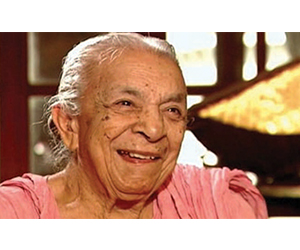
‘Grand Old Lady of Bollywood’ Zohra Sehgal dies aged 102
NEW DELHI (TIP): Indian actress Zohra Sehgal – described by many as the ‘Grand Old Lady of Bollywood’ – has died today (10 June ) aged 102. She died of a cardiac arrest on July 10 She was cremated on July 11 at the Lodhi Road crematorium, Delhi. Born on 27 April 1912, Sehgal started her career as a dancer in choreographer Uday Shankar’s troupe, performing in the USA and Japan. She went onto appear in numerous Bollywood films as a character actress, as well as English-speaking films such as Bend It Like Beckham.
Indian Prime Minister Narendra Modi has already paid tribute to the actress on Twitter. Her most famous credits include Neecha Nagar, Afsar (1946), Bhaji on the Beach (1992) and The Mystic Masseur (2001). She also acted in television series Doctor Who from 1964-1965, making her the longest-living actress to have appeared on the show and its only centenarian. She last featured in 2007 romance film Saawariya. Sehgal received some of India’s highest awards, including the Padma Shri in 1998, the Kalidas Samman in 2001, the Sangeet Natak Akademi in 2004, in addition to the Padma Vibhushan in 2010. -

I-T Act changes may herald fresh trouble for Sonia Gandhi and Rahul
NEW DELHI (TIP): Young Indian, a company in which Congress president Sonia Gandhi and her son Rahul hold majority stake, could be in fresh trouble over its takeover of the National Herald publication. The Budget has proposed an amendment in the Income Tax Act empowering officials to cancel registration of charitable trusts is the department is convinced that any income or property of the trust is applied for personal benefit of specified persons like author of trust, trustees etc. The amendment proposed is in the Section 12AA of the I-T Act and will take effect from 1st October, 2014.
The existing provisions of section 12AA had limited jurisdiction where the registration could only be cancelled if the activities of a trust or institution are found not to be genuine, or the activities are not in accordance with the objects of the trust or institution. The I-T department has already served notice on the Young Indian and the Associate Journals which earlier owned the National Herald and other publications of the trusts.
The Associate Journals was taken over by another company called the Young Indian which was incorporated in 2010 and in which Sonia Gandhi and Rahul held majority stake. BJP leader Subramanian Swamy had filed a case against the Congress president and some others, alleging that they had used party funds to acquire the properties of National Herald. -

FIGHTING EXODUS OF DOCTORS FROM ARMED FORCES, GOVT HIKES BOND MONEY
NEW DELHI (TIP): With 85 doctors pre-maturely leaving military service for the much greener pastures in the civilian world since 2011, the government has hiked the bond money to Rs 25-30 lakh in a bid to stem the exodus from the Armed Forces Medical Services (AFMS). Defence minister Arun Jaitley told Lok Sabha on Friday that the amount of the “bond” — which candidates taking admission in the Armed Forces Medical College for MBBS have to execute and pay if they leave service before 20 years — has been raised from the current academic year.
While the pre-revised bond money was Rs 15 lakh for the MMBS course in AFMS colleges, it is now pegged at Rs 25 lakh. Similarly, it has been hiked from Rs 5 lakh for civilian candidates and Rs 15 lakh for AFMS doctors to Rs 25 lakh for those undertaking post-graduate MD/MS courses. The bond for post-doctoral super-speciality courses is now Rs 30 lakh from the earlier Rs 5 lakh. “It has also been decided that the above bond money will be enhanced by Rs 1 lakh per year for the next five years,” said Jaitley.
The number of doctors who opted out of military service by paying the bond money stood at 26 in 2011, 19 each in 2012 and 2013, and 21 till now this year. The AFMS, which looks after the health services in the 13 lakh strong armed forces, has around 5,800 doctors and 620 dentists at present. There were 205 new doctors commissioned in the AFMS in 2011, 234 in 2012, 307 in 2013 and 93 till now this year. -

After Retaining Congress’ Trust, Prithviraj Chavan Eyes Maharashtra Poll Win
Mumbai (TIP): A day after Congress leadership reposed faith in him to lead the party in upcoming Assembly polls, Maharashtra Chief Minister Prithviraj Chavan on July 11 said his endeavour would be to win maximum seats in the state. “I met the party leadership in the last two days and requested them to put to rest uncertainty over the leadership issue in the interest of the party’s (poll) prospects. We also discussed poll preparedness and strategy,” he told reporters here. Yesterday, the party high command declared that Chavan will continue in his post and lead Congress in the elections, ending the suspense over the issue of change of leadership in the state since the party’s debacle in the Lok Sabha polls.
Asked about alliance partner Nationalist Congress Party’s (NCP) demand of equal seat- sharing in the 288-member Assembly, Chavan said such issues are not discussed in front of the media.”We will talk about it in the co-ordination committee meeting. This will be our sixth election together (both Assembly and Lok Sabha). My efforts would be to ensure win in maximum seats,” the Congress leader said. On whether Sharad Pawar has been asked by Congress to lead the alliance’s poll campaign, Chavan said, “I have no idea. My leaders have not told me so. I can’t elaborate further.” -

HARYANA ASSEMBLY PASSES BILL FOR SEPARATE SGPC
CHANDIGARH (TIP): Haryana Assembly on July 11 passed a bill paving the way for the formation of a separate body to manage affairs of Gurdwaras in the state even as the main opposition parties INLD and the BJP staged a walkout over the issue. The bill moved by Parliamentary Affairs Minister Randeep Surjewala was passed with a voice vote in the absence of the Indian National Lok Dal and BJP members, who had earlier staged a walkout opposing the legislation, claiming that the move was Congress’ “conspiracy” to “divide” the community.
Bhupinder Singh Hooda-led Congress government in Haryana passed the bill ignoring the stiff opposition of the Amritsarbased Shiromani Gurdwara Parbandhak Committee, the Shiromani Akali Dal and other groups. Congress had promised the formation of separate SGPC in its poll manifesto in 2005, but the issue remained unsettled in its first term and got carried over to Hooda’s second term. But with assembly elections due in Haryana in October this year, the issue was speeded up. Hooda, Surjewala and other treasury benches members described the bill as “historic” one which was long overdue as the Sikhs of Haryana had been “fighting” to have right over management of their Gurudwaras.
Heated arguments erupted between the ruling and opposition benches during the discussion on the Bill with the latter dubbing it as a “ploy” to garner votes ahead of the polls. “Dont divide the Sikhs on religious lines. They have a long history of sacrifice and the Sikhs of Haryana have not favoured this. This Bill should be taken back,” INLD’s State unit President Ashok Arora said, finding full support from his party MLAs including senior leaders Abhay Singh Chautala and Ramphal Majra. BJP’s senior leader Anil Vij said that the ruling party was “rushing through” and in a “hurry” to pass the 46-page Bill and had not given enough time to the Opposition to study and go through the contents of the important legislation, which was connected to the future of the Sikh community in the State. Vij said that the move was a “Congress conspiracy” to divide the community.
However, Hooda and Finance Minister Harmohinder Singh Chattha, who prepared the report which favoured the separate body, told the House that there was no politics being behind the move as the decision regarding it was taken considering sentiments and aspirations of the Sikhs of Haryana. Earlier in the day, Surjewala introduced the Haryana Sikh Gurdwaras (Management) Bill, 2014 “to provide for the better autonomous management and effective supervision of Sikh Gurdwaras and Gurdwara properties in Haryana and matters related thereto.” Haryana Sikh leaders including Jagdish Singh Jhinda, Didar Singh Nalwi, who spearheaded the campaign for separate SGPC in Haryana, besides Congress leaders from Punjab including state unit chief Pratap Singh Bajwa and some party MLAs watched the proceedings of the House from the visitors gallery.
SGPC wants Centre to intervene, stall move
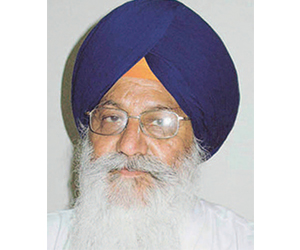
Chandigarh (TIP): Dubbing the Haryana Government’s initiative to carve out a separate Sikh gurdwara panel for the state as ‘unconstitutional and illegal’, an anguished Shiromani Gurdwara Parbandhak Committee (SGPC) has urged the Central Government and the President to intervene and stall the move. The Amritsar-based apex religious body of the Sikhs on July 11 said it might take a legal route to block the creation of the Haryana Sikh Gurdwara Parbandhak Committee (HSGPC). “The party will decide the next course of action and do the needful. We will see…we might take legal action if necessary,” said SGPC chief Avtar Singh Makkar. The SGPC chief, who presided over a meeting at Nada Sahib, said: “It’s the prerogative of SAD patron Parkash Singh Badal and party chief Sukhbir Singh Badal to take up the matter with the Central Government and the President. We have also requested the Haryana Governor to not give his nod to the Bill for creation of the HSGPC.”
It is learnt that Badal during his recent meetings with top BJP leaders sought the Union Government’s support to stall the ongoing process for creation of a separate HSGPC. On being asked about the Modi government’s response, Makkar said: “It (response) was good.” The sources, however, said SAD leadership was given a ‘cold shoulder’ by central BJP leaders over the issue. Consequently, the SGPC has ‘toned down’ its stand on the HSGPC issue. The panel on Friday renewed its ‘truce’ offer to Haryana Sikh leaders. “We are all for the ‘panthic ekta’. To achieve it, we again offer our Haryana elected members two posts — that of Vice- President and Additional Secretary. We are also okay with Haryana gurdwaras spending the income being generated by them,” said Makkar. -

COLLEGIUM CLEARS UDAY UMESH LALIT AS SC JUDGE
NEW DELHI (TIP): The collegium headed by the Chief Justice of India has recommended to the Centre to appoint senior advocate Uday Umesh Lalit, a sought after criminal law practitioner, as a judge of the Supreme Court. Along with Lalit, the collegium also recommended the names of three chief justices of high courts – Justices Prafull Chandra Pant, Abhay Manohar Sapre and R Banumathi – to the Union government for appointment as judges of the apex court, official sources said. CJI R M Lodha, who has been advocating appointment of competent senior advocates directly to the Supreme Court, had last month recommended appointment of senior advocates R F Nariman and Gopal Subramanium as judges of the SC. But the government returned Subramanium’s name to the collegium for reconsideration citing adverse IB and CBI reports. The clearance for the appointment of Nariman and Justices Arun Kumar Mishra and Adarsh Goel while segregating Subramanium’s name did not go down well with both the CJI and Subramanium.
In fact, both Nariman and Subramanium were designated as senior advocates by the Supreme Court on the same day nearly 21 years ago on December 15, 1993. A miffed Subramanium severely criticized the government and the judiciary before withdrawing his consent for judgeship and declared that he would not practice in Supreme Court till Justice Lodha’s retirement. The lawyer said he had been discriminated against because he, as amicus curiae, sought the prosecution of Amit Shah, now the BJP president, in the Sohrabuddin Sheikh ‘encounter’ case.
Significantly, AAP leader Arvind Kejriwal sought to link the collegium’s choice of Lalit to Shah, saying he was the counsel of the ruling party chief in two cases. Justice Lodha had criticized the Centre’s unilateral decision to segregate Subramanium’s name while expressing shock over the way the lawyer went public with his unpleasant nine-page letter. The Supreme Court presently has 27 judges, four less than the sanctioned strength. If the government expeditiously clears the appointment of Lalit and Justices Pant, Sapre and Bhanumati, the apex court will have full working strength. But a vacancy will arise when Justice C K Prasad retires on July 14. Lalit was designated as senior advocate by the Supreme Court on April 29, 2004. -

Lok Sabha site names Advani a journalist, Rahul a strategy consultant
BHOPAL (TIP): Former deputy prime minister and BJP patriarch LK Advani is a journalist by profession and Congress vice-president Rahul Gandhi is a strategy consultant, according to the Lok Sabha website. Strangely, the nation’s top two politicians and members of the 16th Lok Sabha do not have politics as their profession in their profile on the portal. A Madhya Pradesh-based activist has written to Lok Sabha Speaker Sumitra Mahajan to check this crucial information and rectify it if found wrong.
“When they contested elections, Advani stated in his affidavit he was a social worker by profession and Rahul said he was a member of Parliament,” activist Chandra Shekar Gaur said. “I have also requested the Speaker to ensure that contact details like email id and official phone number of Prime Minister Narendra Modi should also be provided on the website as he’s also an MP. If complete details of other MPs are provided, then why should Modi be an exception? It will help people to connect with the prime minister whom they have elected,” Gaur, a resident of Neemuch, said. -

SC orders govt to pay new NREGA wages
NEW DELHI (TIP): The paltry Rs 353 crore increase on last year’s 33,000 crore budget allocation for implementation of Mahatma Gandhi National Rural Employment Guarantee Act (MGNREGA) may not fit the bill as the Supreme Court on Friday ordered implementation of new wages effective since April 1. The UPA government had on February 13 notified new wages for states. For Bihar, wages increased by 16.6% to Rs 153 a day while in Jharkhand it went up by 14.9% to Rs 158. Wages in Andhra Pradesh, Mizoram, Nagaland, Sikkim and Tripura were increased by 14.8%. Despite the annual increase in wages under MGNREGA since 2011, minimum wages in more than a dozen states are still higher.
This was the reason why the Karnataka High Court had directed the Centre to pay MGNREGA wages in accordance with the Karnataka State Minimum Wages Act. The Centre had appealed against the HC order in the SC, but in January, the apex court refused to stay the HC order saying payment of minimum wages was mandatory under law. This forced the UPA government to revise the wages under MGNREGA. But the revised wages, as specified in the February 13 notification and effective from April 1, is estimated to cost the exchequer an additional Rs 1,000 crore.
However, the increase of Rs 353 crore might not be enough to implement the rural employment guarantee schemes. A bench of Justices S J Mukhopadhaya and S A Bobde disposed of the Centre’s appeal saying implementation of the new wage structure as per the February 13 notification had rendered the petition infructuous. However, it kept open the question — should states pay minimum wages as provided under the law while implementing MGNREGA — open for future and said if any challenge was made to the notification, then the court concerned would decide it on its own merit uninfluenced by the Karnataka HC judgment.
When the national job scheme was started in 2006, the minimum wage for agricultural labourers in each state was taken as the standard wage for MGNREGA workers. However, in 2008, the Centre decided to revise the MGNREGA wage rate by indexing it to consumer price index for agricultural labourers.