Month: August 2014

  • Control of gurdwaras in Haryana: SC orders for status quo

    Control of gurdwaras in Haryana: SC orders for status quo

    NEW DELHI (TIP):
    The Supreme Court has directed the SGPC and newly formed Haryana Sikh Gurdwara Management Committee (HSGMC) to maintain status quo on the management control of gurdwaras prevailing at 2:30pm on August 7 in Haryana till further orders. During the hearing, the Haryana government informed the SC that the new state committee has forcibly taken control of Sikh gurdwaras in the state.

    The SC asked Haryana DGP and district administration to maintain status quo with regard to gurdwaras and not permit any violence. The next hearing in the case would take place on August 25. The SC order came on a petition filed by Harbhajan Singh, a resident of Haryana and member of SGPC. Petitioner Harbhajan Singh – an SGPC member from Kurukshetra – contended that the Haryana Sikh Gurdwara (Management) Act, 2014 was not only a hasty enactment but also against the constitutional provisions and the Punjab Reorganisation Act, 1966.

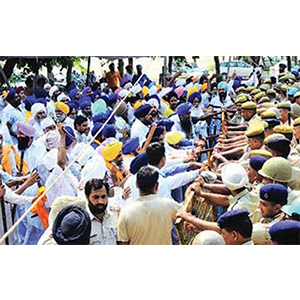
    The petition said a wilful attempt was being made by Sikhs of Haryana, prompted by the state government, to wrest control of gurdwaras from the rightful members of SGPC by use of force. The on-going tussle between Amritsar-based SGPC and HSGMC in Haryana turned violent on August 6 when members of HSGMC “forcibly” tried to take control of a gurdwara in Kurukshetra and clashed with police leaving several people injured. Clashes erupted outside ‘Chhevin Patshahi’, one of the biggest gurdwaras in Haryana, when members of HSGMC “forcibly” tried to enter the Sikh shrine and were stopped by police, Kurukshetra superintendent of police (SP) Ashwin Shenvi said.

    Police used water canons, lobbed tear gas shells and resorted to cane charge to disperse the agitated members. The members owing allegiance to HSGMC brandishing naked swords and lathis threw stones towards the shrine where the Amritsar-based Shiromani Gurdwara Parbhandhak Committee (SGPC) members were keeping watch. Some of the stones hit the policemen who acted as a buffer between the two rival groups.

    Police fired water canons to stop the marching HSGMC members to avoid a direct contact between the two rival groups. Policemen deployed at the barricades used force to check the movement of the marchers towards the shrine. Shenvi said five police personnel were injured in the violence while the HSGMC claimed 65 of its members received injuries, five of them serious. HSGMC president Jagdish Singh Jhinda said police used force in which 65 people owing allegiance to the newly constituted body were injured.

  • Cong hoarding wants Priyanka to lead party

    Cong hoarding wants Priyanka to lead party

    BHOPAL (TIP): A day after Union finance minister Arun Jaitley alleged that the Congress was facing a “palace coup”, the party in Madhya Pradesh added fuel to the fire by putting-up a hoarding of Priyanka Gandhi in a busy thoroughfare. Congress workers appealed in the poster that Priyanka Gandhi should join the party to strengthen the hands of AICC president Sonia Gandhi and party vice-president Rahul Gandhi.


    Congress workers Rahul Singh Rathore, Prashant Gurudev and Udayveer Singh (all of who are office-bearers of the Bhopal district Congress) put-up the hoarding at the Board Office square in the city appealing that it is the demand of lakhs of the party workers that Priyanka Gandhi should actively lead the party. At the PCC office, state Congress vice-president Manak Agarwal agreed with the demand displayed in the banner. He said, “The Congress party is headed by Sonia Gandhi and Rahul Gandhi. But Priyanka Gandhi should also become part of this leadership. It will only benefit the Congress party if she too leads from the front. And if she joins, the Congress will gain immensely in the upcoming assembly elections in five states.”

  • Haryana may go to polls in mid-October

    Haryana may go to polls in mid-October

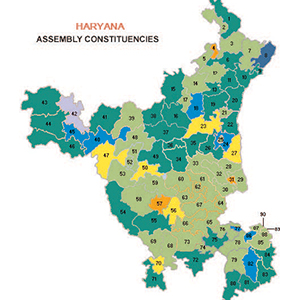
    NEW DELHI (TIP): The Election Commission is set to announce assembly polls in Haryana within the next fortnight, with polling likely to be held in mid-October in a single phase. Sources indicated that the schedule for the state poll, the first after NDA’s emphatic win in Lok Sabha elections,may be out around August 21. A separate announcement for the other three poll-bound states of Maharashtra, Jharkhand and Jammu and Kashmir will follow later, possibly in late September or early October. This round of state polls will stretch over multiple phases from November to December.

    According to sources, polling for the three states may begin in mid- November and conclude in the second half of December. J&K, in particular,may witness polling over seven to eight phases. The EC’s move to delink Haryana polls from the other state elections due between December 7 and January 19 was necessary as the term of the state assembly expires on October 27. Maharashtra, Jharkhand and J&K assemblies have time until December 7, January 3 and January 19 respectively.

    Advancing the three state polls to match the Haryana schedule was not seen as feasible as Maharashtra, in particular, is witnessing an erratic monsoon and its impact, including flooding, may continue until October. The EC is likely to schedule the Haryana polling after October 10, and have the election process completed latest by October 20, leaving a week for government formation.

    The upcoming state polls are significant as they will be the Modi government’s first test after assuming power at the Centre. For the Congress too, the polls hold special significance as the party faces a tough test in Maharashtra and Haryana due to strong antiincumbency.

    The results, which are not quite expected to redeem the Congress after its drubbing in the Lok Sabha polls, are likely to pave the way for Priyanka Vadra’s political plunge after years of reluctance. Indications are that she may join the organization under her brother and party vice-president Rahul Gandhi.

  • Proof against Beniwal enough: Prez

    Proof against Beniwal enough: Prez

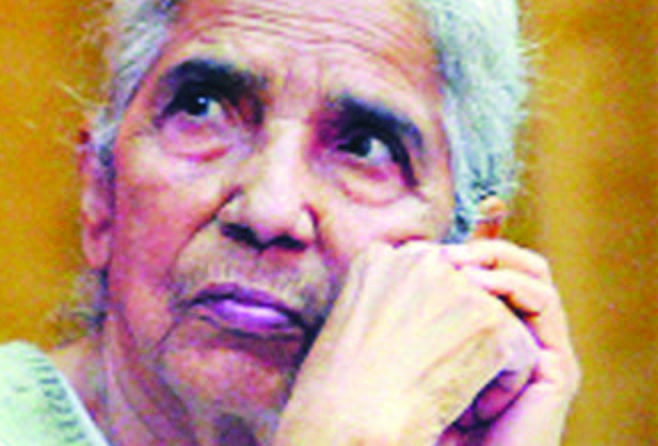
    NEW DELHI (TIP): President Pranab Mukherjee was satisfied with the “evidence” provided by the Narendra Modiled Centre against Mizoram Governor Kamla Beniwal to sack her. The President has jotted down in his own hand that he was satisfied with the evidence provided by the government.


    He got a legal opinion and had also asked his aide to speak to the 87-year-old Beniwal to consider her response before he signed the sacking order, sources said. Mukherjee was first informed by Prime Minister Narendra Modi about the Centre’s advice. He was later briefed by Law Minister Ravi Shankar Prasad as well as Attorney General Mukul Rohatgi, who explained to him about the legal issues involved in the case, official sources said. Mukherjee, a stickler for following rules, then asked Omita Pal, Secretary to the President, to speak to Beniwal on Wednesday. The President’s aide, who spoke to Beniwal, recorded that she confirmed the land transaction, the sources said.


    After getting her response to the charges made by the government, he signed the order of “withdrawing the President’s pleasure” on her continuation as the governor. His jotting on the file is in line with the stipulations of the Supreme Court judgment of 2010 on the dismissal of governors, which forbade en masse removal of governors for political reasons. The apex court order had said that in individual cases, the President can withdraw his pleasure if he is “satisfied” with the grounds for a governor’s removal. The government, too, insisted that the apex court’s verdict must be followed in Beniwal’s case, a senior Cabinet minister said.


    The main legal issue put before Mukherjee was Beniwal’s alleged involvement in a land scam in Rajasthan. Beniwal is accused of claiming land meant for farmers after “falsely” stating in affidavits that she had tilled the land for 50 years, though she was a minister in the state’s Congress government. A strategy worked out by Finance and Defence Minister Arun Jaitley saw the Attorney General conveying in detail to the President about the “material based on facts” which showed Beniwal’s acts were unbecoming of a governor and “gross impropriety” on her part. Other allegations against Beniwal are that she spent just one day in Mizoram, where she was posted a month ago, and mostly stayed in Rajasthan and she made “frequent air travels” at the taxpayer’s expense.

  • Jaswant Singh suffers head injury, admitted to hospital

    Jaswant Singh suffers head injury, admitted to hospital

    NEW DELHI: Former BJP leader Jaswant Singh has been admitted to the ICU of Army Research and Referral Hospital here after he slipped at his residence and sustained head injury. The 76-year-old former defence minister fell down at his residence around 11pm on August 7 following which he was rushed to the hospital, sources said.

  • INDIA-AUSTRALIA NUCLEAR DEAL LIKELY NEXT MONTH

    INDIA-AUSTRALIA NUCLEAR DEAL LIKELY NEXT MONTH

    NEW DELHI (TIP): India and Australia have completed negotiations for the much awaited civil nuclear agreement, which is likely to be signed during the visit of Australian Prime Minister Tony Abbott early next month. It will pave the way for uranium imports from Australia, making it one of India’s top strategic partners. Abbott is scheduled to visit India a day after Prime Minister Narendra Modi returns from his first visit to Japan on September 3.

    Modi is scheduled to visit Australia for the G-20 summit in November. It will the first time in the history of the bilateral relationship that there would be two visits within a calendar year, said sources. Australia is heading to becoming one of India’s top energy sources. India is among Australia’s largest coal export partners. India and Australia are currently in the process of working out the administrative arrangements that will govern the actual implementation of the deal.India has been negotiating a civil nuclear agreement with Japan for the past four years.

    Japan is yet to step off the bench with Japanese diplomats calling it a “difficult” decision. Indian officials say they would wait for the Japanese to make up their mind, but if the negotiations go on for much longer, India is likely to look for alternative sources of nuclear supplies. France’s Areva, GE-Hitachi and Toshiba-Westinghouse need an India-Japan nuclear deal for progress on their plans to set up nuclear power plants in India. With the Australian agreement done, Japan is certain to come under pressure to assure this deliverable when Modi visits Tokyo on August 31.

    Last week, Australia cleared Gautam Adani’s Carmichael coal project in the Galilee basin in Queensland, which holds some of the largest untapped coal reserves. Indian company, Petronet, in August 2009 signed a 20-year deal to buy 1.44 million tonnes per annum of liquefied natural gas (LNG) from Australia’s Gorgon terminal. India has signed nuclear supply agreements with countries like Canada, Kazakhstan and Argentina, but Australia is a much sought after source because of the quality of uranium there.

    The negotiations started when Australian PM Julia Gillard visited India in October 2012 and has been one of the shortest on record, comparing favourably with the India’s negotiations with Canada.

  • Army man takes Pakistan spy bait, arrested for espionage

    Army man takes Pakistan spy bait, arrested for espionage

    HYDERABAD (TIP): Indian Army Naib Subedar Patan Kumar Poddar became the victim of his carnal desires and greed for money. The 40-year-old Poddar,who was posted at 151 MC/MF detachment at the Secunderabad railway station, was on Wednesday arrested by the Hyderabad police for espionage. Poddar,who is from Malda district in West Bengal, passed on vital information to a female Pakistani spy since last July.

    In return for his bits of information, the spy deposited money at regular intervals in his account, entertained him with her nude videos and even promised an all-expenses paid trip to London. During interrogation, Poddar told the central crime station (CCS) and Army officers that he came in contact with ‘Anushka Agarwal’,who claimed to be from Jhansi town in Uttar Pradesh, via Facebook last year and she introduced herself as an MSc student. The woman told Poddar her father, reportedly a retired IAF commander, ran an NGO for the UN in Jhansi.

    Dropping hints that she was attracted to Poddar, Anushka gave him an offer to work for their NGO by doing online surveys about the Indian Army for a monthly payment of Rs 10,000. Last July, Anushka deposited Rs 9,000 in Poddar’s SBI account at Mangalbari branch in Malda. As instructed by her, he filled an online form mentioning his professional, personal details and emailed it to her along with a photograph. After that Anushka started calling Poddar on his cellphone and collected the telephone numbers of 50 movement control offices (MCOs) across the country. In August 2013, the Pakistan spy deposited Rs 20,000 in Poddar’s account.

    She also trained Poddar in accessing emails through a proxy to avoid detection. As per Anushka’s request, the naib subedar provided her details of the movement of Indian Army units in the Western sector. He also gave her details about the movement of the 96 Field Regiment and 10 Medium Regiment from Secunderabad to Jodhpur and about their exercises. “I also provided her details about the army’s train demand whenever any unit was about to move from Secunderabad,” Poddar said in his confession. On the instructions of the spy, Poddar installed a Trojan (virus software) on his official computer, enabling Anushka to remotely access the system.

    Anushka asked Poddar to click photographs of the missile unit and storage unit, and provide ‘formation sign’ in Secunderabad, but the latter could not do it due to lack of access. With the money provided by Anushka, he purchased a secondhand laptop and started using it for communicating with her. Poddar subsequently received Rs 15,000 in November 2013 and provided Anushka with details of 12 army units, their brigade names and deployment locations. Anushka then gave a list of army units deployed on the western border to Poddar to corroborate, and the latter confirmed the same to her over the phone.

    This year, Poddar received Rs 30,000 in two installments for providing details about the location of artillery regiments, commands, army bases, corps, division headquarters and brigades through a common email account. Anushka also promised to send Poddar on a London trip, but he was caught before it could materialise. According to police sources, Anushka lured Poddar initially by sending him her naked photographs. Later, she got him completely under her spell by sending him nude videos and nude video chats. Central intelligence sleuths had gathered information that ‘Anushka Agarwal’ was a fake identity on Facebook. The spy had managed to get in touch with several military personnel.

    The sources revealed the woman in the videos was not the actual spy and her handler was untraceable due to the proxies used in communicating with Poddar. “Anushka used to communicate with Poddar over the phone through Voice-over-internet protocol (VoIP) applications,” a police official said. “We have seized three cellphones, 10 SIM cards, three data cards, a pen drive, a card reader and two computers from the possession of the erring subedar. He will be taken into custody for further probe.” Before he was posted in Secunderbad, Poddar had worked with artillery units in Jammu & Kashmir and Jodhpur.

    He also worked for the Military Intelligence Unit. However, his cross-border communication and practice of accessing military information attracted the attention of the intelligence agencies. So, he was under the surveillance of the Intelligence Bureau, Counter Intelligence Cell, Military Intelligence and the Multi Agency Centre (MAC) for the past seven months. The sources revealed Poddar used to spend long hours alone during the night at the military booking counter at the Secunderabad railway station to chat with Anushka using his personal laptop and data card since social networking sites are blocked on the Army network.

  • PENTAGON CONFIRMS US GENERAL KILLED IN KABUL ATTACK

    PENTAGON CONFIRMS US GENERAL KILLED IN KABUL ATTACK

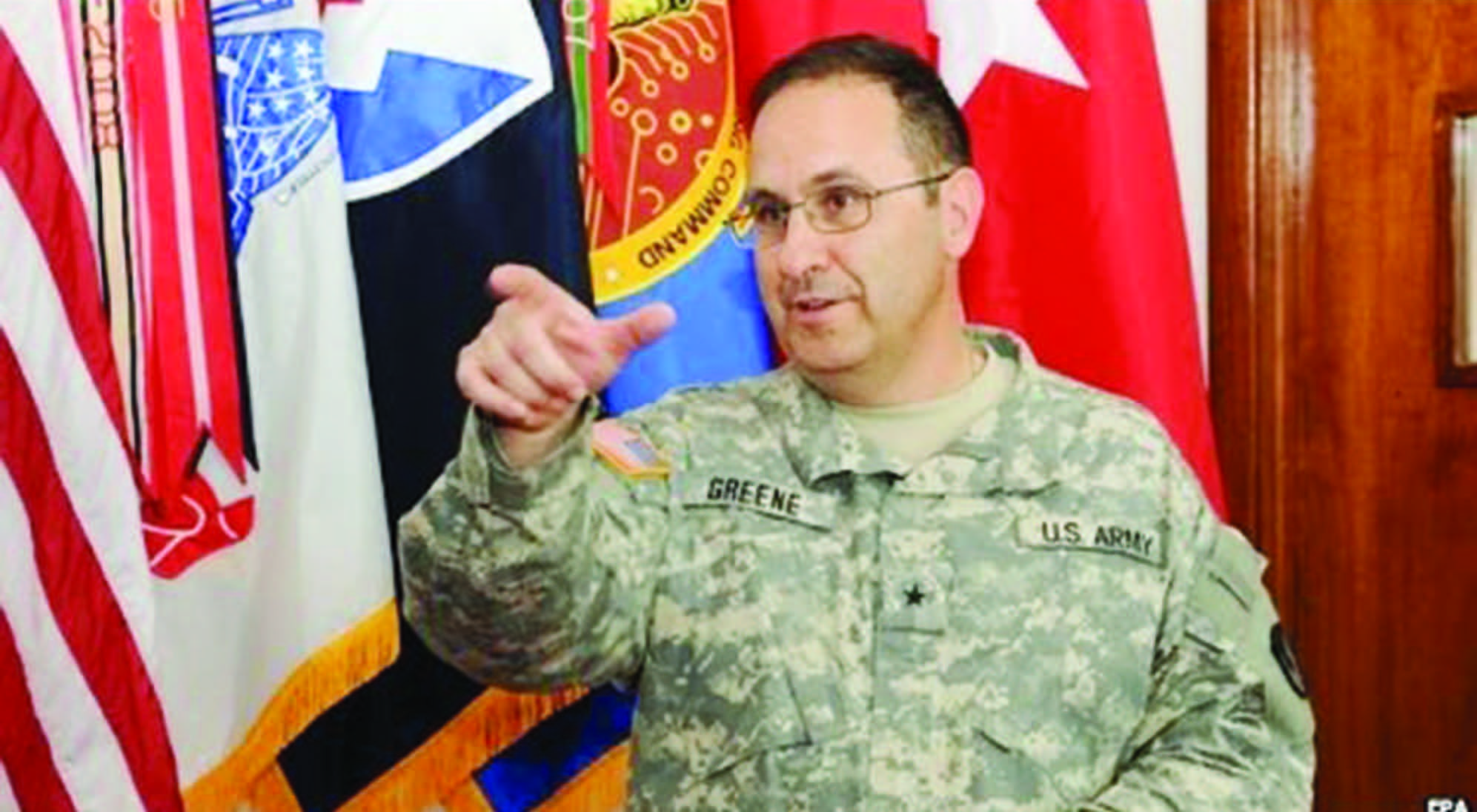
    WASHINGTON: The Pentagon on Tuesday confirmed that a US general was killed in an attack in Afghanistan — the highest-ranking American fatality since the 9/11 attacks. The US defence department also identified the assailant, who was wearing a uniform, as an Afghan soldier and said that he was killed after he opened fire on coalition forces, his supposed allies.

    “I can … confirm among the casualties was an American general officer who was killed,” Pentagon spokesman, Rear Admiral John Kirby, told reporters. Kirby said that he would not give the general’s name pending notification of next of kin. The Washington Post identified the deceased as Major General Harold J Greene, who served as the deputy for systems acquisitions at the US army headquarters. Greene’s official biography said that the New York State native held a doctorate in materials science from the University of Southern California as well as three master’s degrees.

    The general was the highest-ranking US officer killed since the September 11, 2001 attacks when Lieutenant General Timothy Joseph Maude was killed by a hijacked airliner that crashed into the Pentagon. No US general has been killed in combat since the Vietnam War, with topranking service members spared during the Iraq war and, until now, the Afghanistan conflict. President Barack Obama plans to withdraw most troops from Afghanistan later this year.

    A US official, speaking to AFP on condition of anonymity, said that around 15 people were injured including eight Americans. The nationalities of the other victims were unclear, but the German army said that one of its generals was wounded and the US official said that the injured included Afghans. The Pentagon spokesman said that the assailant was killed, although he did not have more detail on how the incident unfolded. “We believe that the assailant was an Afghan soldier,” Kirby said.

    Kirby said it was too early to assess whether US forces needed to improve vetting of Afghan troops. But he described the attack as an isolated incident and credited Afghan troops for their work in securing national elections. “I’ve seen no indication there’s a degradation of trust between coalition members and their Afghan counterparts,” Kirby said.

    “It’s impossible to eliminate, — completely eliminate — that threat, I think, particularly in a place like Afghanistan, but you can work hard to mitigate it,” Kirby said of insider attacks. “As terrible as today is — and it is a terrible day, a terrible tragedy — we haven’t seen in the course of the last year or so… a ‘spate’ of these insider threat attacks. I think that’s testament to the good work authorities have done,” he said in response to a question.

  • ISIS capture Iraq’s largest dam

    ISIS capture Iraq’s largest dam

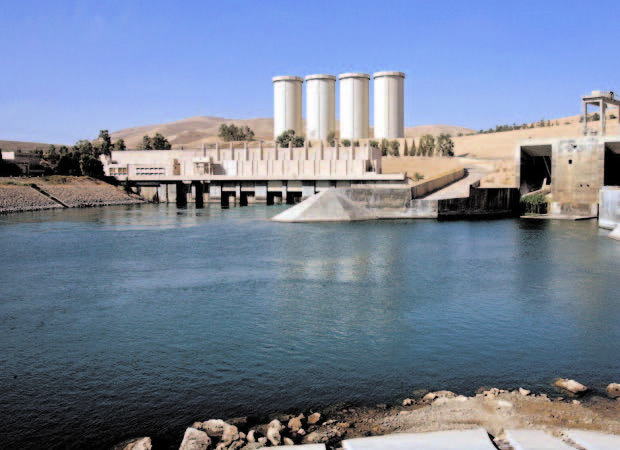
    ERBIL (TIP): Sunni militants captured the Mosul dam, the largest in Iraq, on Thursday, August 7, as their advances in the country’s north created an onslaught of refugees and set off fearful rumors in Erbil, the Kurdish regional capital. Residents near the dam and officials in the region confirmed that the Islamic State in Iraq and Syria, or ISIS, held the dam, a potentially catastrophic development for Iraq’s civilian population.


    The dam, which sits on the Tigris River and is about 30 miles northwest of the city of Mosul, provides electricity to Mosul and controls the water supply for a large amount of territory. A report published in 2007 by the United States government, which had been involved with work on the dam, warned that should it fail, a 65-foot wave of water could be unleashed across areas of northern Iraq. Atheel al-Nujaifi, the governor of Nineveh Province, whose capital is Mosul, said in a telephone interview from northern Iraq, where he has fled, that ISIS had secured the dam after what he called an “organized retreat” of Kurdish security forces, known as pesh merga.


    ISIS seized Mosul, Iraq’s secondlargest city, on June 10, and began its latest offensive this week. In a statement issued on a social media account believed to belong to the group, it claimed that it had captured the dam and vowed to continue its offensive northward as it consolidates control and continues to realize its goal of establishing an Islamic caliphate that bridges the borders of Syria and Iraq.


    “Our Islamic State forces are still fighting in all directions and we will not step down until the project of the caliphate is established, with the will of God,” the statement said. ISIS continued on Thursday to battle pesh merga forces for control of towns east of Mosul, in the direction of Erbil, and civilians hoping to flee the fighting flooded the Erbil airport and swamped the Iraqi Airways office in a futile attempt to get tickets to Baghdad. In the early hours of Thursday, forces from the Kurdish pesh merga left checkpoints guarding several largely Christian settlements east of Mosul because they had been called to defend Kurdish towns closer to Erbil, according to a colonel in the Kurdish Defense Ministry.


    Civilians fleeing the fighting in northern Iraq on Wednesday arrived at a Kurdish pesh merga checkpoint between Erbil and Mosul. Credit Adam Ferguson for The New York Times By late Wednesday, Kurdish television was reporting that Mahmour and Gwar, two Kurdish settlements less than 20 miles west of Erbil, had fallen to ISIS. By Thursday morning, a colonel in the pesh merga said that Mahmour had been retaken, while militants remained in control of Gwar. The latest ISIS push followed its pattern of exploratory attacks on the outskirts of an area it wants to take.


    On Wednesday, it repelled Kurdish efforts east of Mosul and shelled Qaraqosh, which is one of several largely Christian settlements in the area between Mosul and Erbil, 60 miles to the east. As plumes of smoke drifted across the plains of Nineveh between Mosul and Erbil, panicked residents fled from the settlements there in cars and pickup trucks piled with belongings, creating lines more than half a mile long at checkpoints guarded by the pesh merga. (Agency news)

  • Couple married for 62 years die on same day

    Couple married for 62 years die on same day

    CALIFORNIA: A couple married for almost 62 years have died on the same day in Bakersfield, California. Don and Maxine Simpson passed away within four hours of each other last month at their granddaughter’s home, where they spent their last days together.

    Simpson, 90, and his 87-year-old wife suffered from illness in recent years but had travelled the world in the early years of their marriage. “They did a lot of amazing things” together, their granddaughter Melissa Sloan told the Bakersfield Californian.

  • Gaza militants resume rocket fire at Israel after truce expires

    Gaza militants resume rocket fire at Israel after truce expires

    GAZA/JERUSALEM (TIP): Palestinian militants in the Gaza Strip resumed rocket fire into Israel on Friday after Egyptian-mediated talks in Cairo failed to extend a 72-hour truce in a nearly month-long war. As police said rocket-warning sirens were sounding in southern Israel, the military’s “Iron Dome” interceptor system brought down a missile over the southern city of Ashkelon.


    A military spokesman said on Twitter: “After the 72- hour ceasefire, Hamas resumes indiscriminate rocket fire at Israel. At least 5 rockets launched – one intercepted over Ashkelon.” Israel had earlier said it was ready to agree to an extension as Egyptian go-betweens pursued talks with Israeli and Palestinian delegates in Cairo on ending the war that has devastated the Hamas-controlled enclave. A Hamas spokesman said Palestinian factions had not agreed to extend the truce, but would continue negotiations in Cairo. The Palestinians had wanted Israel to agree in principle to demands which include a lifting of a blockade on the Gaza Strip, the release of prisoners and the opening of a sea port.


    The armed wing of Hamas released a statement late on Thursday warning Palestinians negotiators not to agree to an extension unless Israelis offered concessions. There was no sign that Israel had made any such moves. Israel also made it clear that it would respond forcefully if attacked and a minister raised the prospect of re-taking control of the Gaza Strip to overthrow its Hamas rulers.


    “Israel will act with force if Hamas resumes its fire and to my mind we will have, this time, to seriously consider, although not with enthusiasm, the option of taking control of the Gaza Strip in order to topple the Hamas regime,” strategic affairs minister Yuval Steinitz said on Army Radio. Gaza officials say the war has killed 1,875 Palestinians, most of them civilians. Hamas said on Thursday it had executed an unspecified number of Palestinians as Israeli spies.


    Israel says 64 of its soldiers and three civilians have died in the fighting that began on July 8, after a surge in Palestinian rocket salvoes into Israel. Hamas refusal to extend the ceasefire could further alienate Egypt, whose government has been hostile to the group and which ultimately controls Gaza’s main gateway to the world, the Rafah border crossing. The Israelis described the ceasefire as a tradeoff of “calm for calm”. They have shown little interest in easing their naval blockade of Gaza and controls on overland traffic and airspace, worrying Hamas could restock on weapons from abroad. Israel withdrew its ground forces from Gaza on Tuesday, shortly before the truce began.

  • Swiss House worker tweets nude selfies

    Swiss House worker tweets nude selfies

    ZURICH (TIP): A secretary who posted nude pictures of herself in the Swiss parliament to more than 11,000 followers on Twitter told a newspaper on Wednesday that she did not believe she had broken any rules. Many of the “selfies” were taken in her office in the Federal Palace, a 162-year-old domed building in Berne where Switzerland’s government and parliament meet, according to Swiss daily Neue Zuercher Zeitung (NZZ). The unidentified woman, a secretary at the parliament, told the paper that the pictures did not violate guidelines for federal employees because they were part of her private life. The report did not say why she had posted the pictures. A spokesman for the government’s human resources department said he had only learned of the case from Wednesday’s news report.

  • US intelligence officials looking into suspected new spy leak

    US intelligence officials looking into suspected new spy leak

    WASHINGTON:
    US intelligence officials were considering on Tuesday whether to ask the department of justice to open a criminal investigation into the suspected leak of a classified counter-terrorism document to a website, a US official familiar with the matter said. The intelligence officials were preparing a criminal referral over the publication on “The Intercept” website of a document that provides a statistical breakdown of the types of people whose names and personal information appear on two government data networks listing people with supposed connections to militants, the official said.

    The document was published by The Intercept on Tuesday, but because it was dated August 2013, some US media reports speculate that a second leaker besides former US spy agency contractor Edward Snowden had begun to send classified documents from inside the US intelligence community to the media. An official familiar with the matter said, however, that the government does not know for sure that a second leaker exists. The apparent leak involves information on the Terrorist Identities Datamart Environment database (TIDE) and the Terrorist Screening Database, according to the document.

    The document posted by The Intercept, a multi-coloured graphic classified “secret,” says 680,000 names are “watchlisted” in the Terrorist Screening Database, an unclassified data network which is used to draw up more selective government watchlists. It says 280,000 of the 680,000 people are described by the government as having “no recognized terrorist group affiliation.” Around the same number of people on the list have suspected connections to several specific militant groups, including al-Qaida, Hamas and Hezbollah, it says.

    The graphic says the more selective lists include a “no fly” list totalling 47,000 people who are supposed to be banned from air travel and a further “selectee list” of 16,000 people who are supposed to get extra screening by security personnel before being allowed to board aircraft. The graphic says the screening database is in turn extracted from TIDE, a larger, ultra-classified database which contains 320,000 more names than the unclassified one, as well as raw intelligence information excluded from the screening system.

    Because the graphic carries a “secret” classification, an official said, the agency which generated it, The National Counterterrorism Center, is obliged to consider submitting a referral to the department of justice, which then can decide if a criminal investigation should be opened into the leak. Snowden, who has worked closely with two founders of The Intercept, writer Glenn Greenwald and filmmaker Laura Poitras, left his post as a National Security Agency contractor in Hawaii in May of last year.

    He is not known to have had access to any secret materials since then. Last month, The Intercept, which is financed by eBay founder Pierre Omidyar, also published a lengthy document setting out the criteria and procedures by which names are placed into terrorist watchlist databases. That document was labeled “Unclassified/for official use only/sensitive security information.”

  • Pope to fly over China, rare chance for greetings

    Pope to fly over China, rare chance for greetings

    VATICAN CITY (TIP): Pope Francis’ upcoming trip to South Korea will provide him with an unusual opportunity to speak directly to the Chinese leadership: His plane is due to fly through Chinese airspace, and Vatican protocol calls for the pope to send greetings to leaders of all the countries he flies over.When St. John Paul II last visited South Korea in 1989, China refused to let his plane fly overhead. Instead, the Alitalia charter flew via Russian airspace, providing John Paul with a first-ever opportunity to send radio greetings to Soviet President Mikhail Gorbachev. He said he hoped to soon visit Moscow.


    The Vatican spokesman, the Rev Federico Lombardi, said on Thursday he didn’t know what Francis’ Chinese greetings might entail. But he confirmed the Aug. 13-14 flight plan to Seoul involved flying through Chinese airspace. Relations between Beijing and Rome have been tense since 1951, when China severed ties with the Holy See after the officially atheistic Communist Party took power and set up its own church outside the pope’s authority. China persecuted the church for years until restoring a degree of religious freedom and freeing imprisoned priests in the late 1970s.


    Emeritus Pope Benedict XVI sought to improve relations with China and encourage the estimated 8 million to 12 million Catholics who live there, around half of whom worship in underground congregations. Francis has continued the initiative, revealing in a recent newspaper interview that he had written a letter to Chinese President Xi Jinping after his election, which occurred within hours of his own, and that Xi had replied.

  • 5 years after death, Michael Jackson sued for abuse

    5 years after death, Michael Jackson sued for abuse

    LOS ANGELES: A Los Angeles man is seeking damages from the estate of Michael Jackson, alleging that the late `King of Pop’ sexually abused him as a child during the late 1980s. James Safechuck, 36, said Jackson abused him on about 100 occasions over a fouryear period after the two appeared in a Pepsi commercial when he was 10-years-old.

    Filings by Safechuck’s attorneys said he regularly shared Jackson’s bed during the singer’s “Bad” tour in 1988. Safechuck said the abuse continued until he reached puberty . A hearing has been scheduled in Los Angeles for September 4 before judge Mitchell Beckloff.

    Howard Weitzman, a lawyer for the Jackson estate, said, ” Safechuck’s request to file a late claim against the Jackson Estate so he can recover money from Michael’s beneficiary will hopefully be rejected.”

  • Weight loss may make you healthier but not happier

    Weight loss may make you healthier but not happier

    LONDON: Losing weight can make you healthier but it may also increase your risk of depression, a new study has found. Weight loss significantly improves physical health but effects on mental health are less straightforward, researchers said. In a study of 1,979 overweight and obese adults in the UK, people who lost 5 per cent or more of their initial body weight over four years showed significant changes in markers of physical health, but were more likely to report depressed mood than those who stayed within 5 per cent of their original weight.


    The research by University College London highlights the need to consider mental health alongside physical health when losing weight. Clinical trials of weight loss have been shown to improve participants’ mood, but this could be a result of the supportive environment rather than the weight loss itself, as the effects are seen very early on in treatment and are not related to the extent of weight loss.


    The data came from the English Longitudinal Study of Ageing, a UK study of adults aged 50 or older, and excluded participants with a diagnosis of clinical depression or a debilitating illness. Of the 1,979 overweight and obese participants, 278 (14%) lost at least 5 per cent of their initial body weight with a mean weight loss of 6.8kg per person. Before adjusting for serious health issues and major life events such as bereavement, which can cause both weight loss and depressed mood, the people who lost weight were 78% more likely to report depressed mood.

  • Killing of American general stirs new fears

    Killing of American general stirs new fears

    WASHINGTON (TIP): The brazen killing of an American two-star general in an Afghan “insider attack” is raising new concerns in Washington that U.S. forces, when the combat mission ends in December, could leave behind a country vulnerable to extremists waiting in the wings.

    Leading Republican lawmakers, who have long accused the administration of following a political timetable in Afghanistan and worry the country could follow in the path of unstable Iraq, pointed to the attack as another sign that militants are sending a message to the Afghan population. “The Taliban’s recent campaign of high-profile attacks is calculated to accompany a global PR strategy highlighting the fact that U.S. and coalition forces will soon be leaving Afghanistan and abandoning its weak and ineffective government.

    The Taliban wants everyone to know it will soon dominate all aspects of life in Afghanistan once again,” House Speaker John Boehner said in a statement. “I have told the president privately and publicly that my biggest concern is that America will end its mission in Afghanistan just short of the goal line. … So let me reiterate: if the president decides to re-think his strategy, including withdrawals, deadlines, and policy restraints, particularly on certain associated terrorist networks, he will have my support.”

    According to the administration’s latest timetable, announced in May, the U.S. combat mission will end in December of this year. Under the tentative plan, 9,800 U.S. troops will remain at the start of 2015, but that number will be cut in half by the end of next year. By the end of 2016, the U.S. is expected to maintain a “normal embassy presence” like it does in Iraq. The plan is subject to change, particularly if Afghanistan’s next president does not sign a vital security pact.

    Hamid Karzai would not sign the agreement — while the next president is expected to, that election remains contested as candidates Abdullah Abdullah and Ashraf Ghani battle over allegations of fraud and await a vote audit. House Armed Services Committee Chairman Buck McKeon, R-Calif., after the shooting on Tuesday, said “the event only underscores the importance of leaving Afghanistan when the job is finished — rather than stubbornly adhering to arbitrary political deadlines.” Sen. Jim Inhofe, R-Okla., top Republican on the Senate Armed Services Committee, said the incident is a reminder that “force protection” remains a critical mission.

    “As the president withdraws our forces, it is critically important that we listen to our commanders on the ground to determine what is necessary to safely and effectively accomplish our mission in Afghanistan,” he said in a statement. The investigation into the killing of Maj. Gen. Harold J. Greene, the highestranked U.S. officer to be slain in combat since 1970 in the Vietnam War, continued Wednesday , August 6 without any clear answers into why a man dressed in an Afghan army uniform opened fire.

    The shooting wounded about 15 people, including a German general and two Afghan generals. Greene, a 34-year U.S. Army veteran, was the highest-ranked American officer killed in combat in the wars in both Afghanistan and Iraq. About half of the wounded in Tuesday’s attack at Marshal Fahim National Defense University were Americans, several of them reported to be in serious condition.

    At the White House on Tuesday, August 5 Press Secretary Josh Earnest called the shooting a “painful reminder of the service and sacrifice that our men and women in uniform make every day for this country.” But he maintained that coalition forces have “made tremendous progress in disrupting, dismantling and defeating Al Qaida operations and leadership in Afghanistan.” He also cited “progress in winding down U.S. involvement in that conflict.”

  • US Army starts questioning Bergdahl about capture

    US Army starts questioning Bergdahl about capture

    HOUSTON:
    The US Army and a defense attorney say military investigators have begun questioning Bowe Bergdahl about his disappearance in Afghanistan that led to five years in captivity by the Taliban. Eugene R. Fidell says his client is cooperating with the investigation in Texas on Wednesday. Fidell declined to comment on what Bergdahl is being asked. An Army spokeswoman says Bergdahl was advised of his rights.

    The investigation’s findings will help determine whether the 28-year-old is prosecuted for desertion or faces any other disciplinary action. Bergdahl had been receiving care since returning to the United States on June 13 after his release by the Taliban on May 31. Earlier this month, the Army announced Bergdahl was given a desk job.

  • Indian American physician in Atlanta treating patients with Ebola virus

    Indian American physician in Atlanta treating patients with Ebola virus

    ATLANTA (TIP): An Indian American infectious diseases specialist, Dr. Jay Varkey, a physician at Emory University Hospital in Atlanta, Georgia, is the one in charge of treating the Ebola virus-infected aid worker Dr. Ken Brantly and missionary Nancy Writebol. Brantly is already admitted to Emory – he walked into the hospital wearing an insulated suit, while Writebol will be brought to the US from West Africa later this week in all probability. Brantly works for the North Carolinabased Christian organization Samaritan’s Purse, and was brought to the US this past Saturday.

    There is no known cure for Ebola, and standard procedures are to provide hydration with solutions containing electrolytes or intravenous fluids, according to the World Health Organization. The virus has infected 1,440 people so far, killing 826 of those victims, according to world health statistics. According to NBC, a team of doctors and nurses under Varkey will work around the clock in a special isolation room to treat Brantly of the side-effects of the Ebola Virus.

    The room where he’s been kept is one of only four in the country. The room was created 12 years ago. It’s essentially a minihospital, complete with a lab and anything else the medical team will need. “I can’t think of a better place in the world, other than Emory University Hospital to care for this patient,” said Varkey, was quoted as saying by the NBC.

    According to Varkey, the team has been training for years for this opportunity, though they have used the isolation room before to treat patients infected with SARS, in 2005. “We are ready.We are looking to trying to help this patient and assist his family in anyway possible,” Varkey said. “The good news is the preparation goes beyond 48 hours. This is something we’ve been practicing for, for the 12 years our unit has been involved.”

    According to a report in Today, Varkey said he was “thrilled” to see the patient walk into Emory, which he assured, is built to contain communicable diseases “far more infectious than Ebola.” Varkey said though the isolated patients cannot have direct contact with anybody else, relatives can see him and communicate with him. According to Emory’s website, Varkey attended the Medical College of Wisconsin, Milwaukee, and then did his residency at the Duke University Medical Center, Durham, North Carolina, from where he got a fellowship too. (Source: NBC and agencies)

  • BILLIONS SPENT, BUT VISION FOR FAST TRAINS IN US IS UNREALIZED

    BILLIONS SPENT, BUT VISION FOR FAST TRAINS IN US IS UNREALIZED

    WASHINGTON (TIP) :
    High-speed rail was supposed to be President Obama’s signature transportation project, but despite the administration spending nearly $11 billion since 2009 to develop faster passenger trains, the projects have gone mostly nowhere and the United States still lags far behind Europe and China. While Republican opposition and community protests have slowed the projects here, transportation policy experts and members of both parties also place blame for the failures on missteps by the Obama administration – which in July asked Congress for nearly $10 billion more for highspeed initiatives.

    Instead of putting the $11 billion directly into those projects, critics say, the administration made the mistake of parceling out the money to upgrade existing Amtrak service, which will allow trains to go no faster than 110 miles per hour. None of the money originally went to service in the Northeast Corridor, the most likely place for high-speed rail. On a 30-mile stretch of railroad between Westerly and Cranston, RI, Amtrak’s 150mph.

    Acela hits its top speed — for five or 10 minutes. On the crowded New York to Washington corridor, the Acela averages only 80mph, and a plan to bring it up to the speed of Japanese bullet-trains, which can top 220mph, will take $150 billion and 26 years, if it ever happens. Florida, Ohio and Wisconsin, all led by Republican governors, canceled high-speed rail projects and returned federal funds after deeming the projects too expensive and unnecessary.

    “The Obama administration’s management of previously appropriated high-speed rail funding has been as clumsy as its superintending of the Affordable Care Act’s rollout,” said Frank N Wilner, a former chief of staff at the Surface Transportation Board, a bipartisan body with oversight of the nation’s railroads. When Obama first presented his vision for high-speed rail nearly four years ago, he described a future of sleek bullet trains hurtling passengers between far-flung American cities at more than 200mph.

    “Within 25 years, our goal is to give 80 per cent of Americans access to high-speed rail,” Obama said in his 2011 State of the Union address. “This could allow you to go places in half the time it takes to travel by car. For some trips, it will be faster than flying — without the pat-down.” But as Obama’s second term nears an end, some experts say the president’s words were a fantasy.

    “The idea that we would have a high-speed system that 80 per cent of Americans could access in that short period of time was unadulterated hype, and it didn’t take an expert to see through it,” said Kenneth Orski, the editor and publisher of an influential transportation newsletter who served in the Nixon and Ford administrations. “And scattering money all around the country rather than focusing it on areas ripe for highspeed rail didn’t help.” The Acela, introduced by Amtrak in 2000, was America’s first successful high-speed train, and most days its cars are full.

    The train has reduced the time it takes to travel between Washington, New York and Boston, but aging tracks and bridges – including Baltimore’s 100-year-old tunnel where trains come to a crawl – have slowed it down. It takes two hours and 45 minutes to travel from New York to Washington on the Acela. If the Acela were a bullet train traveling on new tracks, it would take 90 minutes. Another problem is that Amtrak’s funding is tied to annual appropriations from Congress, leaving it without a long-term source of money. “I do what I can do,” said Joseph Boardman, Amtrak’s president. “But I don’t sit back and wait for $15 billion to rebuild the Northeast Corridor.” For now, Amtrak is rebuilding a stretch of track in central New Jersey that will permit travel at 160mph for 23 miles.

    But advocates say they are hopeful. “Once something gets built, then we’re going to see more projects get going,” said Ray LaHood, Obama’s first transportation secretary. LaHood said it took the Interstate System of highways decades to be completed, and he predicts that high-speed rail will be the same. LaHood said California seemed the most likely candidate for success with high-speed rail, even though plans for a 520-mile train route between Los Angeles and San Francisco have been mired in controversy.

    Despite strong backing from Gov. Jerry Brown, a court ruling had tied up state bond funding for the $68 billion project. An appeals court on July 31 threw out that ruling, which had been based on a lawsuit. But opponents are still increasing calls to kill the project, and polls show waning public support for it. Still, California has begun construction of the tracks and put out bids for a vendor to build the trains. And the new rail project will get an infusion of funds from the state’s cap-and-trade program, which requires business to pay for excess pollution.

  • Many U.S. families feel economic stress with no sign of wage increase: Federal Reserve Report

    Many U.S. families feel economic stress with no sign of wage increase: Federal Reserve Report

    WASHINGTON (TIP): A quarter of U.S. families feel they are under economic stress due to the aftershock of the Great Recession and most do not expect their wages to increase in the next year, according to a new Federal Reserve study released on Thursday, August 7.

    A Reuters report says that in its first largescale study of household finances, the U.S. central bank uncovered lingering effects of the sharpest economic downturn since the Great Depression, with 42 percent of respondents saying they had delayed major purchases and 18 percent saying they put off a major life decision, including buying a home or getting married, due to the crisis.

    Thirty-six percent said they now planned to retire later, according to the online survey. In a finding that could figure into the Fed’s monetary policy debate, three-fourths of households said they expected their incomes to be the same or lower over the next year. If true, it could mean the economy is far from generating the sort of strong wage growth that Fed Chair Janet Yellen and other policymakers say they hope to see before raising interest rates.

    The Fed commissioned the survey, which was conducted last fall and weighted to be nationally representative, to try to better understand the forces shaping consumer behavior – the risks families feel they face and their perceptions of how they are doing economically. It found more than 60 percent of the 4,100 respondents said they were either “doing okay” or “living comfortably,” while a third said they were “somewhat worse off or much worse off financially than they had been five years ago.” The findings may help explain the choppy pace of recovery in areas like consumer spending, as well as the slow rebound in the housing market since the 2007-2009 financial crisis.

    More than half of those surveyed said they had dipped into their savings as a result of the recession, and more than a third reported “going without some form of medical care” for financial reasons. The Fed monitors less tangible indicators like consumer confidence to inform its policy debates.

    The Fed’s Survey of Household Economics and Decision Making was meant to deepen the central bank’s understanding of how households perceived their financial situation.”Large-scale financial strain at the household level ultimately fed into broader economic challenges for the country, and the completion of the national recovery will ultimately be, in part, a reflection of the wellbeing of households and consumers,” the Fed wrote in an executive summary of the findings.

    “Economic challenges remain for a significant portion of the population,” according to the survey, which was designed by Fed staff and conducted by online research firm GfK. A follow-up survey is planned for this year. (Source: Reuters)

  • FDA lifts hold on experimental Ebola drug

    FDA lifts hold on experimental Ebola drug

    WASHINGTON (TIP) :
    US health authorities have eased safety restrictions on an experimental drug to treat Ebola, a move that could clear the way for its use in patients infected with the deadly virus. Canadian drugmaker Tekmira Pharmaceuticals Corp. said the US Food and Drug Administration modified a hold recently placed on the company’s drug after safety issues emerged in human testing.

    The company has a $140 million contract with the US government to develop its drug, TKM-Ebola, which targets the genetic material of Ebola. But last month the FDA halted a small study of the injection in adults to request additional safety information. Tekmira said Thursday the agency “verbally confirmed” changes to the hold that may allow the company to make the drug available, although it has yet to be proven as safe and effective. Two Americans diagnosed with Ebola recently received a different experimental drug called ZMapp, made by Mapp Biopharmaceutical Inc. of San Diego.

    It is aimed at boosting the immune system’s efforts to fight off Ebola and is made from antibodies produced by lab animals exposed to parts of the virus. The US aid workers were first treated in Liberia. And while the FDA must grant permission to use experimental treatments in the United States, it does not have authority over the use of such a drugs in other countries. The FDA’s move Thursday comes amid an Ebola outbreak in West Africa that health officials warn could sicken more people than all previous outbreaks of the disease combined.

    More than 1,700 people have been sickened in the current outbreak, which began in March. Nearly 1,000 have died, according to the World Health Organization. Currently, there are no licensed drugs or vaccines for the deadly disease. Several are in various stages of development, but none have been rigorously tested in humans. The FDA in March granted Tekmira “fast track” status for its Ebola drug, a designation designed to speed up approval of high-priority drugs by granting companies extra meetings with FDA scientists. Early studies of TKM-Ebola in monkeys suggested it could block high doses of the Ebola virus.

    But on July 21, the company based in Vancouver, British Columbia, announced the FDA had halted a small dosing study of the drug in 28 healthy adults. The company said regulators had questions about a type of drug reaction that can cause nausea, chills, low blood pressure and shortness of breath. Tekmira’s CEO Mark Murray praised the FDA for modifying the restriction on Thursday. “We have been closely watching the Ebola virus outbreak and its consequences, and we are willing to assist with any responsible use of TKM-Ebola,” Murray said.

    “The foresight shown by the FDA removes one potential roadblock to doing so.” FDA spokeswoman Stephanie Yao said she could not confirm the company’s announcement since FDA regulations bar the agency from disclosing information about experimental drugs. She did note that the agency places clinical holds on studies based on the risks and benefits to patients. Patients in the Tekmira study were healthy volunteers.

  • ALIA BHATT KEEPS BOX OFFICE COLLECTION TRACK

    ALIA BHATT KEEPS BOX OFFICE COLLECTION TRACK

    Alia Bhatt keeps track of box office collection of her films. Not that the actress wants to keep a tab but it is father Mahesh Bhatt’s religious Monday calls asking her about the collections of her films that make her keep an eye on them. “I keep a track but by default. My father calls and asks me, “What is the collection now and thus I automatically keep a track and know about the box collection of my films,” she says.

  • After production, direction on Dia Mirza’s mind

    After production, direction on Dia Mirza’s mind

    After acting and producing films, Dia Mirza wants to move towards directing a movie. However, she wants to wait till a story appeals to her enough. “I love storytelling, which is why we make movies and I have chosen production. Direction is one of the more meaningful aspects of storytelling and I will admit that it is an area I would actually gravitate to,” the 32-yearold said at the launch of a magazine edition featuring her on the cover. She doesn’t know “how soon” it would be before she makes her directorial debut. But she said: “A story needs to call out to me strongly enough for me to want to make it or tell it myself. Also, it takes a lot of confidence and I need to make a few more films before that.” Dia has produced two films Love Breakups Zindagi and Bobby Jasoos. She is currently getting ready to marry fiance Sahil Sangha in October.

  • Genetic sexual attraction: Husband and wife discover they are brother and sister

    Genetic sexual attraction: Husband and wife discover they are brother and sister

    ABrazilian married couple, who have both searched for their mothers who abandoned them as children, have discovered the two women they were looking for was infact the same person while live on air, making them brother and sister. Adriana, 39, and her husband Leandro, 37, who did not want to share their surnames, have known each other for 10 years and now have a six year old daughter together.

    Both Adriana and Leandro, who live in Sao Paulo, had been searching for their mother for a number of years. Leandro knew his mother was called Maria, and that she had abandoned him at the age of eight. He was brought up by his stepmother. Adriana knew her mother was also called Maria, and that she had been abandoned at the age of one. She was brought up by her father. The couple thought that their mothers, who they believed to be two different women, should the same name was a “coincidence,” as Maria is a common name in Brazil.

    But Adriana’s refusal to give up the search for her mother led her to calling into to Brazilian radio station Globo Radio, and eventually managing to speak to her mother on The Time is Now programme, which specialises in finding lost relatives, the Mirror reports. At the end of Adriana’s conversation with Maria, her mother revealed she also had a son called Leandro, who did not know her. Adriana, shocked at the realisation that her husband was also her brother, said: “I don’t believe that you’re telling me this. Leandro is my husband.”

    The phenomenon that Leandro and Adriana have experienced is called Genetic Sexual Attraction, and it occurs between “two adults who have been separated during the critical years of development and bonding and are reunited alter as adults,” according to a GSA website, which has now been turned into a GSA support-based forum.