Month: August 2014

  • Greater New York seniors celebrate American Independence

    Greater New York seniors celebrate American Independence

    Organized by Shashikant Patel and Gopi Udeshi, Seniors in Greater New York enthusiastically celebrated 4th of July at Sunnyside community Hall. The celebration program included Flag Hosting and National Anthem. Patriotic songs were sung by Parth Merai, Reema Shah, Kirti Sukla, Champak Parikh and Virendra Banker.

    Speaking on the occasion Gopi Udeshi traced the history of making of America. She admired America’s rich multicultural heritage, tradition, determination and dream. She thanked the valiant soldiers of America for their patriotism and dedication for peace in the world and for the freedom of American men, women and children.

    Dimple Shah and Manjari Parikh performed dances to patriotic songs.


    8
    Greater New York Seniors gathered to celebrate America’s Independence

  • AVOID THESE FACE WASHING MISTAKES

    AVOID THESE FACE WASHING MISTAKES

    Look after sensitive facial skin with these easy methods. Sometimes we could get something as simple as face washing, wrong. Read on how.

    1. Facial wipes – They are good and useful too, but too much facial wiping can ruin the delicate layer of the skin leaving your raw skin exposed to harsh pollution and sun. Experts suggest you don’t use facial wipes more than twice a day and if need be, wash your face with water and a good face wash.

    2. Get the right temperature – Extremely hot water can damage the facial skin while extremely cold water isn’t good either. Lukewarm water is the best to get the grub off your face without any skin damage.

    3. Don’t overdo – Some people feel that excessive rubbing and cleansing helps get the dirt off – but they are wrong. It in facts does more harm than good and works at disintegrating the delicate skin layer leaving you with dry rough skin. Cleanse well, just not too much.

    4. Exfoliation – Here’s another thing most people don’t pay attention to. Either they exfoliate too much and irritate the facial skin or do not exfoliate at all which gives rise to blackheads and acne.

    5. Makeup removal is a must – This has been said time and again and its one thing people pay no heed to, removal of makeup is not a choice – it’s a necessity. Think of it this way – you have to let your skin breathe and it simply can’t under that clump of makeup. You’re suffocating your skin! So use this easy techniques to ensure dewy fresh, smooth and clear skin.

  • WAYS TO BUILD MUSCLE

    WAYS TO BUILD MUSCLE

    Muscle building and ways to gain muscle mass are crucial for bodybuilding. Here are 15 ways to gain muscle mass, which is a combination of diet and workouts.

    Calorie intake

    For muscle building it is important to increase calorie intake as energy is needed for intense weight training. But there are chances that you may pile on excess body fat with a high calorie diet. Consult a reputed fitness consultant to avoid eating excess fats.

    Compound exercise

    Exercises that utilises more than one muscle group and more than one joint, are known as compound exercises. Compound exercises are perfect for muscle building. These exercises use weights and cables to increase muscle mass.

    Train in the morning

    Training in the morning is a great muscle building tip. When you workout in the morning on an empty stomach, it increases muscle mass by stimulating the muscles.

    Digestive enzymes

    When you’re goal is to build muscle, your intake of food increases to supply energy for training and for muscle growth. Hence, your body needs additional help to digest the food, especially to absorb the nutrients.

    Stay hydrated

    Fluids and drinking plenty of water through the day is important for bodybuilding and muscle building. Drink plenty of water throughout the day as you build up to the workout to keep you satiated. Drink water every 10-20 minutes during your workout too, as dehydration affects your body.

    Squats

    Squats are essential for muscle building, but doing half squats or doing it incorrectly can cause knee problems.

    Deadlifts

    Deadlifts are another way to gain muscle mass. Include lifting weights in your bodybuilding routine.Weight training is important for muscle building.

    Protein

    When you are exercising, especially weight training, and putting your body under a lot of pressure your body requires a set amount of protein for it to develop and maintain muscle and cope with wear and tear. Once consumed, protein is broken down into amino acids in the body, which can easily get burned by the body during an exercise routine. This helps in repairing our body faster and much more efficiently.

    Proper form

    For muscle building, weight training is important, but more importantly practice the exercise using the right form and method.

    Eat after training

    A combination of carbs and protein is a good way to build muscle mass after a workout. Carbs increase insulin, due to amino acids, which enhances muscle growth.

    Sleep

    Get sufficient amounts of sleep for your body to rejuvenate and build mass. Your body needs to rest for at least eight hours.

    Foods for muscle building

    Red meat is a rich source of iron, which is important for muscle building. Eggs are also important for bodybuilding. Have different protein sources to supply you with different nutrients.

    Do not avoid healthy fats

    Include healthy fats such as nuts and fish, to supply you with energy. Fats are needed by your body to function properly.

    Cardio is needed

    Also, include cardio in your workout routine as it doesn’t prevent you from gaining muscle mass.

    Bodybuilding takes time

    Bodybuilding cannot be rushed; training tips for a beginner are different compared to seasoned bodybuilder. If you’re a beginner learn the basics thoroughly to be a successful bodybuilder.

  • MELINDA KATZ GOES MUSICAL

    MELINDA KATZ GOES MUSICAL

    Queens Borough President Melinda Katz is seen singing “Summertime” from Porgy and Bess during the 16th Annual Great Lawn Summer Concert held Wednesday night, July 30, on the Queens campus of St. John’s University.

    The concert featured Willie Martinez and the La Familia Sextet with members of the Queens Symphony Orchestra (QSO) conducted by Constantine Kitsopolous, the QSO’s music director.

    In addition to singing “Summertime,” the Borough President was the guest conductor for “Stars and Stripes Forever.” More than 1,000 people attended the free concert.

  • US Bonhomie for India: US Secretaries Storm New Delhi

    US Bonhomie for India: US Secretaries Storm New Delhi

    The recent visits of Secretary of Commerce Penny Pritzker, Secretary of State John Kerry, and Secretary of Defense Chuck Hagel are being seen as demonstrative of the resurgence of U.S. interest in India as both countries try to strengthen ties.

    NEW DELHI (TIP): It may be a coincidence that the Union cabinet announced August 6, a day before US Secretary of Defense arrived in New Delhi, the decision to allow 49% FDI in Defense. Also announced were the cabinet decisions to allow 100% FDI in Close on the heels of the visits to India by U.S. Secretary of Commerce Penny Pritzker and U.S. Secretary of State John Kerry, U.S. Secretary of Defense Chuck Hagel arrived in India Thursday, August 7, for a three-day visit.

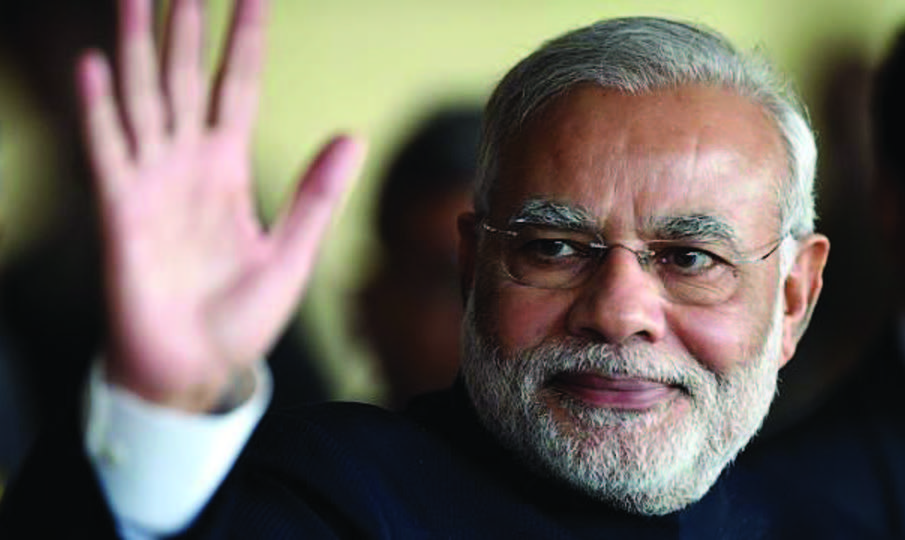
    The fact that these high-profile trips by American officials have occurred so close to one another indicates the resurgence of American interest in India. Furthermore, the emergence of a strong, decisive, and reformist government under the Bharatiya Janata Party (BJP) in India has suddenly put India back on the U.S. agenda. India’s Prime Minister Narendra Modi is keen on reminding the world that India is a large country that cannot be ignored and whose interests must be taken seriously.

    Secretary Hagel is scheduled to meet Prime Minister Narendra Modi and India’s Defense and Finance Minister Arun Jaitley on Friday, August 8 as well as U.S. and Indian defense company executives. Talks are expected to be fruitful for both countries. Hagel is in India to strengthen defense ties between the two nations. Although the two nations have been moving closer over the past decade, they have not become as close as some U.S. policymakers would have liked.

    In fact, events of the past year, including India’s support for Russia in Crimea and the Devyani Khobragade case, show the limitations of a U.S.-India relationship. Nonetheless, both countries are interested in strengthening defense ties when possible, as they still share many common interests, including stability in Afghanistan, as well as concerns over China. It is unlikely that India and the U.S. will remain on anything but cordial terms, despite some occasional bumps. Secretary Hagel himself recognized this, stating that U.S. relationships with new partners in Asia represented both opportunities and challenges.

    The Wall Street Journal quotes Rear Admiral John Kirby, the Pentagon press secretary, as saying that “Secretary Hagel’s meetings will focus on the United States’ and India’s converging interests in the Asia Pacific, our common interests in Afghanistan and initiatives to strengthen our defense cooperation, including military exercises, defense, trade, co-production and co-development and research.” One of Secretary Hagel’s goals is to seek more defense projects between the two countries.

    There is much scope for this. India is the largest importer of U.S. arms, although it still imports up to 75 percent of its arms from Russia. The two countries are close to finalizing a $1.4 billion deal in which India will buy at least 22 U.S. Apache and 15 Chinook helicopters made by Boeing, as well as other aircraft. Discussion of this deal will be at the top of Hagel’s agenda during his visit. India is also keen on bringing in more foreign investment in its defense sector, so it can meet more of its defense needs indigenously.

    India is becoming increasingly ambitious on this front, building, for example, ever-larger warships in India. U.S. investment in India’s defense sector could bolster India’s ability to meet its security needs and be another way in which both the U.S. and India cooperate and profit together. Hagel may also discuss a U.S. offer to jointly develop and produce the next generation of the Javelin missile in India for the Indian market as well for export.

    Analysts are optimistic on the outcome of Hagel’s visit to India. According to Vivek Lall, a former Boeing executive and current chairman of the aerospace and defense committee of the Indo-American Chamber of Commerce, “this visit could be the inflection point of deeper defense ties between both countries, specifically to help boost defense production and state-of-the-art technology absorption.”

  • MIDLIFE HYPERTENSION LINKED TO DEMENTIA

    MIDLIFE HYPERTENSION LINKED TO DEMENTIA

    Anew study has revealed that hypertension during the age of 48 to 67 years may pose as a greater threat of cognitive decline and dementia as compared with individuals who had normal blood pressure. The decline in global cognitive scores for participants with hypertension was 6.5 percent greater than for individuals with normal blood pressure.

    An average ARIC participant with normal blood pressure at baseline had a decline of 0.840 global cognitive z score points during the 20- year period compared with 0.880 points for participants with prehypertension and 0.896 points for patients with hypertension.

    Individuals with high blood pressure who used medication had less cognitive decline during the 20 period than participants with high blood pressure who were untreated. A greater decline in global cognition scores also was associated with higher midlife blood pressure in white participants than in African Americans. Although it was noted that a relatively modest additional (cognitive) decline associated with hypertension, lower cognitive performance increases the risk for future dementia, and a shift in the distribution of cognitive scores, even to this degree, was enough to increase the public health burden of hypertension and prehypertension significantly.

    Initiating treatment in late life might be too late to prevent this important shift. Epidemiological data, including their own study, supported midlife BP as a more important predictor of and possibly target for prevention of late-life cognitive function than was later-life BP.

  • GET MOVING IN THE MORNING

    GET MOVING IN THE MORNING

    Exercising in the morning has lots of health benefits. Starting the day on an active note: Doing physical activities like walking, jogging, running or playing a game in the morning will result in enhancing your productivity as this will make you more energized, focused and organized. Exercise is one of the biggest contributors to effective personal productivity. It gives a sense of clarity and well-being.

    By working out in the morning, you will have more energy throughout the day and you won’t be as affected by stressful events at work. By exercising in the morning you will have more energy throughout the day. It is very difficult to motivate yourself to exercise in the evening, especially if you have had a busy, stressful day at work and you manage to reach home wading through heavy traffic. Enhanced creativity: An added bonus of reduced stress, increased energy and focus is creativity.

    Many studies have shown that people are more creative when they are in a relaxed frame of mind. Regular exercises also make one’s mind more alert. Happy moods: Exercise puts us in a better mood; the increase in happy hormones in the brain improves the mood and well being. When you are happier, you will tend to be a far better person and as a result you will be enjoying happy, stress-free relationships. Sleep tight: When you rise early to exercise you will find yourself going to bed earlier, but the great part about that is that one tends to go to sleep more easily than before. A good night’s sleep automatically leads to overall physical and emotional well-being.

  • WEEKEND BREAKS FROM KOLKATA

    WEEKEND BREAKS FROM KOLKATA

    From misty mornings in Darjeeling to rewarding nature walks in the Sundarbans National Park, there are a range of places to visit near Kolkata during those long weekends. These rejuvenating weekend getaways provide the perfect escape from the hustle and bustle of the city. For some, it could be never getting off the hammock, and for others it maybe long drives and stunning landscapes. So pick a place, fill up the tank and hit the road to these must-do weekend breaks around Kolkata.

    SILIGURI

    Famous for its tea, transport, tourism and timber, Siliguri is located about 80 kilometers from Darjeeling. This picturesque plains town lies on the banks of Mahananda River and the foothills of Himalayas. The hill station’s markets- Sevoke and Bidhan Road-are buzzing with travelers throughout the year.

    If you are planning a day trip around Darjeeling, you must include Siliguri in your itinerary for its Salugara Monastery, Surya Sen Park, and time your trip to catch one of the town’s famous fairs- Boishakhi Mela, Hosto Shilpo Mela, Book Fair and Lexpo Fair. Perched at an elevation of 2,113 feet, Siliguri is the major transit point for air, road and rail traffic to the neighboring countries of Nepal, Bhutan and Bangladesh.

    KALIMPONG

    Sprawling along a ridge overlooking the Teesta River, Kalimpong is a hill station 50 kilometers from Darjeeling. Located in a major ginger-producing region Kalimpong is also home to a few Buddhist monasteries, multiple nurseries and a buzzing central market popular equally among visitors and locals. Filled with an array of orchids, gladiollis, Himalayan grown flower bulbs, tubers and rhizomes, the flower markets here are a must-see.

    The hill town is also famous for exporting a wide range of traditional handicrafts, wood-carvings, embroidered items, bags and purses with tapestry work and copper ware. Located atop Durpin hill (one of the two hills of the town), the Zang Dhok Palri Phodang (a Buddhist monastery) houses a number of rare Tibetan Buddhist scriptures and artefacts. Perched at an altitude of 4101 feet, overlooking the beautiful Himalayan ranges, Kalimpong makes for a perfect day trip from Darjeeling.

    SUNDERBANS

    A UNESCO World Heritage Site, the Sundarbans National Park is a sprawling tangle of mangrove swamp and is the only one of its kind in the world. Spread over 54 islands, extending into the neighbouring country of Bangladesh, a large part of the area is home to a 2,585 square kilometre Tiger Reserve, which includes a 1,330 square kilometre national park.

    Encompassing three wildlife sanctuaries, one within the national park at Sajnekhali, as well as south of the park at Lothian Island and Haliday Island, the mangroves are riddled with a large variety of birds, mammals and reptiles including the Royal Bengal Tiger, wild boar, spotted deer, jungle fowl, giant lizard, crocodile, Siberian ducks during migration and even some endangered species like the Batagur baska, king crab and Olive Ridley turtle. The people here depend primarily on agriculture and live in adjoining villages. The Sundarbans National Park was declared a UNESCO World Heritage in 1987 and the Sundarbans region as a whole was declared a Biosphere Reserve in 1989.

    DARJEELING

    This dazzling, white hillside pagoda is one of many built by the Japanese Buddhist organization Nipponzan Myohoji as a symbol of peace and tranquility. Showcasing the four avatars of Lord Buddha, the site offers stunning views of Darjeeling and the Himalayan ranges encompassing it. A short half-hour-long walk, the

    Japanese Peace Pagoda

    lies perched on the hillside at the end of AJC Bose road. Pay a visit during the daily prayers when drums resonate through the forested grounds. JAPANESE PEACE PAGODA This dazzling, white hillside pagoda is one of many built by the Japanese Buddhist organization Nipponzan Myohoji as a symbol of peace and tranquility. Showcasing the four avatars of Lord Buddha, the site offers stunning views of Darjeeling and the Himalayan ranges encompassing it.

    A short half-hour-long walk, the Japanese Peace Pagoda lies perched on the hillside at the end of AJC Bose road. Pay a visit during the daily prayers when drums resonate through the forested grounds.

    HAPPY VALLEY TEA ESTATE

    Located just below Hill Cart road, the Happy Valley Tea Estate is worth a visit, especially during March through May, when the plucking and processing are in progress. Usually, an employee of the tea estate will guide you through the aromatic factory and its various processes, which makes for a very interesting tour, especially if you’re a big tea-drinker. Walking through the tea garden on the gentle hill slopes is a great experience.

    A short three kilometres outside of the busy Chowk Bazaar area, the approach to the estate goes through a narrow winding downhill path, which can be slightly cumbersome on the steep climb back up, so be prepared with a good pair of walking shoes, because it’s absolutely worth the walk. a, the approach to the estate goes through a narrow winding downhill path, which can be slightly cumbersome on the steep climb back up, so be prepared with a good pair of walking shoes, because it’s absolutely worth the walk.

    YIGA CHOLING GOMPA

    Built in 1850, the Yiga Choling Gompa is located a little to the west of the town of Ghum, and is the region’s most famous monastery, patronised by monks of the yellow-hat sect. Apart from the five-metrehigh statue of the Maitreya Buddha, it also houses splendid antique murals and more than 300 Tibetan texts with highly artistic bindings. A quick 10-minute-long walk off Hill Cart road, it’s definitely worth a visit.

    BATASIA LOOP

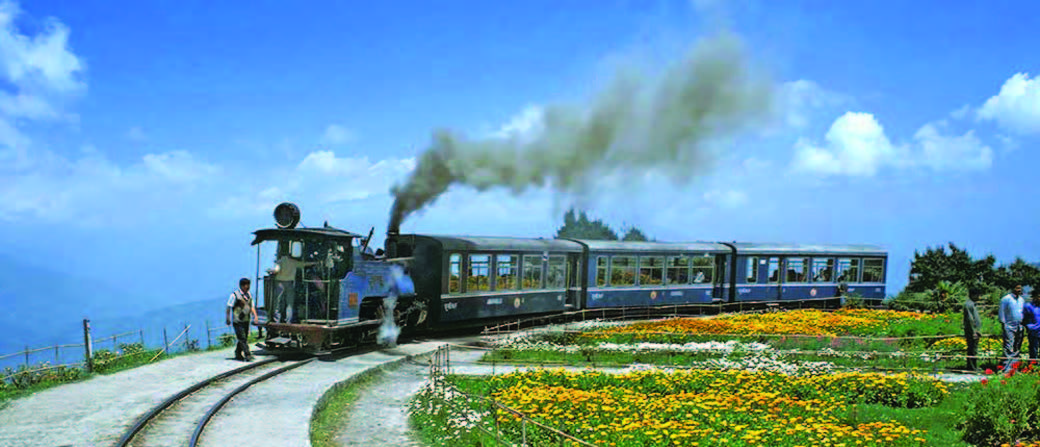
    Another attraction which is a definitely worth taking time out for, is the Joy Train Ride on the Darjeeling Himalayan Railway. Popularly referred to as the Toy Train, this is Darjeeling’s pride and joy. Declared a World Heritage Site in 1999, the steam engine at the helm and the leisurely pace at which the train chugs along give ample opportunity to observe and admire the surrounding nature.


    9


    Besides its regular route to and from New Jalpaiguri and Kurseong, peak season accommodates for rides that move between Darjeeling and Ghum on a twohour return trip. During the journey, the Batasia Loop is a five-kilometer-long loop around which the train completes a steep full circle and offers beautiful views of the mountains as well as the War Memorial which was built in honor of the Gorkha Soldiers who lost their lives during the fight for Indian Independence.

    MIRIK

    This quaint hill station-located about 49 kilometers southwest of Darjeeling townescapes most visitors’ radars. The drive to Mirik takes approximately an hour and a half. Surrounded by coverlets of tea estates, orange orchards, cedar forests and cardamom plantations, Mirik is watered by Sumendu Lake. With a lush garden on one side and soaring pine trees on the other, the lake side makes for a perfect picnic spot.

    Perched at an elevation of 4905 feet, Mirik has multiple hilltop points that offer wonderful views of the snow-clad Kangchenjunga peak. The highest point of the hill town is the Boker Monastery, situated at a height of 5801 feet.

  • Europe down after Russia sanctions

    Europe down after Russia sanctions

    ECB, Wall Street decline

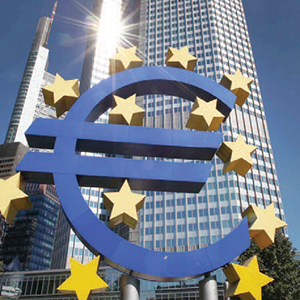
    NEW TORK (TIP): European shares and the euro lost ground on Thursday, August 7 and investors moved to safehaven government debt after a stronger-thanexpected move by Russia to ban certain imports from Europe and the United States, according to a Reuters report.

    Early gains on Wall Street faded, with the S&P 500 just below its 100-day moving average, a significant technical support level. More broadly, MSCI’s world equity index .MIWD00000PUS lost 0.4 percent. German government debt yields fell to alltime lows, on increased concern over the effect Ukraine’s crisis will have on euro zone growth. The European Central Bank said following its monthly policy-setting meeting that a sanctions war could worsen the growth outlook on the continent, where demand is already weak.

    The ECB elected to hold borrowing rates at record low levels on Thursday. Europe’s main bourses closed lower, with London’s .FTSE down 0.6 percent, Germany’s DAX .GDAXI off 1 percent and France’s CAC 40 .FCHI down 1.4 percent. The move for the DAX put the index down 10 percent from its record closing high in early July. [.EU] “Geopolitical risks are heightened, are higher than they were a few months ago. And some of them, like the situation in Ukraine and Russia will have a greater impact on the euro area than they … have on other parts of the world,” said ECB head Mario Draghi, in post-meeting comments.

    Russia said on Wednesday, August 6, it would ban all food imports from the United States and all fruit and vegetables from Europe in a stronger-than-expected answer to Western sanctions for Moscow’s support for separatists in Ukraine. German Bunds slid to a record low of 1.069 percent DE10YT=RR while the 10-year UK gilts yield touched a one-year low of 2.476 percent GB10YT=RR. [GVD/EUR] Gold climbed back above $1,300 an ounce to hit a high of $1,313.60, breaking through technical resistance that could spur further gains, and 10-year U.S. bond yields touched near a two-month low at 2.43 percent US10YT=RR.

    [US/] The tensions have, however, aided the ECB’s efforts to push down the euro. The shared currency was hovering just above a nine-month low against the dollar EUR= at $1.3363. Portuguese stocks .PSI20, slumped 2.3 percent, and bonds PT10YT=TWEB were again showing significant weakness amid worries the country and its banks will have to pay dearly for the rescue of Banco Espirito Santo. U.S. stocks succumbed to concerns over Russia after a higher opening as initial enthusiasm from an unexpected drop in jobless claims dissipated. The Dow Jones industrial average .DJI fell 82.55 points or 0.5 percent, to 16,360.79, the S&P 500 .SPX lost 11.5 points or 0.6 percent, to 1,908.74 and the Nasdaq Composite .

    IXIC dropped 20.26 points or 0.47 percent, to 4,334.79. “Europe traded sharply lower after the ECB press conference. U.S. equities again provided a counterbalance to that risk-off trade by largely maintaining a fairly tight trading range and stability,” said Peter Kenny, chief market strategist at Clearpool Group in New York. “I look at this as the glass half-full, for sure, if you stop to consider the DAX closed in correction territory and we are off incrementally.”

    As fighting has intensified on the ground in eastern Ukraine, NATO said Moscow had massed around 20,000 combat-ready troops on the Ukrainian border and warned of a possible advance. Russia’s dollar-denominated RTS index .IRTS, which is down nearly 9.3 percent over the past three weeks, lost 0.3 percent while its rouble-based MICEX shed 0.1 percent, giving it a 6.3 percent decline over the same period. U.S. crude CLc1 settled up 42 cents to $97.34 while Brent LCOc1 broke through the $105 mark to settle up 85 cents at $105.44 per barrel. [O/R]

  • Sikh Youth from Queens becomes victim of a hate crime

    Sikh Youth from Queens becomes victim of a hate crime

    NEW YORK (TIP): Just when the nation was remembering the martyrs of the tragic shooting two years ago, on August 5, 2012, in the Sikh temple at Oak Creek in Milwaukee, there came painful news of a young Sikh being made a target of hate crime in Queens , New York. The incident has sent shock waves among the Sikh community, here and everywhere.

    It is reported that a young Sikh, Sandeep Singh, 29 was called a terrorist by a truck driver. When Sandeep protested, the truck drive ran the truck over him. Sandeep was dragged for about 30 feet before getting disengaged from the truck. The truck driver escaped.

    Sandeep who was seriously injured, was taken to a hospital where his condition is stated to be stable. Meanwhile, Sikh community in Queens organized a protest and demanded immediate arrest of the culprit and adequate security for the peaceful Sikh community.


    6
    Queens Sikh Community held a protest on August 5 to demand justice for the victim Sandeep Singh

  • Russia gives three-year residence permit to Snowden

    Russia gives three-year residence permit to Snowden

    MOSCOW (TIP): Former US intelligence contractor Edward Snowden, wanted by the United States for leaking extensive secrets of its electronic surveillance programs, has been given a three-year residence permit by Russia, his Russian lawyer told reporters on Thursday, August 7. The announcement comes at a time when Russia’s relations with the West are at Cold Warera lows over Russia’s actions in Ukraine.

    Russia responded to Western sanctions by banning certain food imports from the United States, the European Union, Australia, Canada and Norway on Thursday. The ban has adversely impacted markets in the west. “The decision on the application has been taken and therefore, with effect from August 1, 2014, Edward Snowden has received a three-year residential permit,” Anatoly Kucherena said. “In the future, Edward himself will take a decision on whether to stay on (in Russia) on and get Russian citizenship or leave for the United States.”

    He said Snowden could apply for citizenship after living in Russia for five years, in 2018, but that he had not decided whether he wanted to stay or leave. Kucherena said Snowden was studying Russian and had an IT-related job, but did not provide details. “He is a high-class IT specialist”, he said. He said Snowden’s security was being taken seriously and that he was using private security guards.

    “He leads a rather modest lifestyle, but nevertheless we proceed from the tone of statements that come from the US State Department and other political figures,” he said. “The security issue should not be treated as a secondary one.” Snowden’s place of residence has not been disclosed and few pictures of him have appeared in the media. His lawyer has in the past expressed concerns that he could be at risk, given taken his intelligence background and the outrage over the leaks expressed by US authorities.

    Snowden fled to Hong Kong and then Moscow last year after leaking details of secret state surveillance programs. He spent almost six weeks at Moscow’s Sheremetyevo airport before Russia granted him asylum for a year on Aug. 1, 2013, upsetting Washington, which wants to try him on charges including espionage. Snowden is believed to have taken 1.7 million digital documents with him.

    His leaks revealed massive programs run by the US National Security Agency (NSA) that gathered information on hundreds of millions of Americans’ emails, phone calls and Internet use. He was charged last year in the United States with theft of government property, unauthorized communication of national defense information and willful communication of classified intelligence to an unauthorized person.

  • Indian Union cabinet approves increased FDI in defense, railways

    Indian Union cabinet approves increased FDI in defense, railways

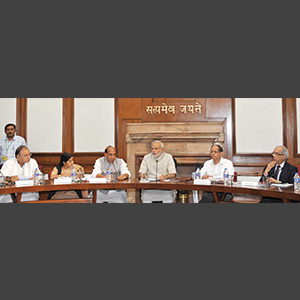
    NEW DELHI (TIP): The Indian Union Cabinet on Wednesday, August 6 approved a proposal to raise the cap on Foreign Direct Investment (FDI) in the defense sector from 26% to 49%, a move aimed at accelerating indigenization and bringing in modern technologies to meet the requirements of the armed forces. Finance minister Arun Jaitley had announced in his budget speech that the FDI cap in defense manufacturing would be increased to 49%, with full Indian management and control through the Foreign Investment Promotion Board (FIPB) route.

    Foreign firms haven’t made significant investments or set up defense manufacturing facilities, with the 26% cap on FDI dampening their enthusiasm to pump money into the country. Barely $5 million of FDI has flowed into India since the defense sector was thrown open to private companies in 2001 by the then NDA government. However, it remains to be seen if lifting the FDI cap to 49% would lead to a significant inflow of foreign investment into the country and lead to greater indigenization as there are some who have been advocating raising the limit to 74%. Former defense minister AK Antony had opposed lifting the 26% cap on FDI.

    He had attacked the NDA government last month for increasing the FDI cap to 49% in the Budget, saying that it would hurt national security. He had said, “I know a very strong lobby is working. Their demand is 100% FDI in defense. Successive governments since 1991 have overcome such pressure tactics. Their decision not to grant FDI beyond 26% was well thought out.” However, the commerce ministry under the UPA regime had batted for raising the FDI cap to 74% to encourage foreign firms to invest in India.

    The government also approved a proposal to allow 100% foreign direct investment (FDI) for building railways infrastructure. Foreign capital in railways was not allowed till now. However, the new government led by Prime Minister Narendra Modi has been pushing for it to build infrastructure projects such as high-speed railways and railway lines to and from coal mines and ports. Currently, the cash-strapped railways cannot fund these projects without private participation. Foreign players from Japan and China are said to be keen to participate in building up of the railway infrastructure.

  • INDIA INC LAUDS MODI GOVT’S PUSH FOR ECONOMIC REFORMS

    INDIA INC LAUDS MODI GOVT’S PUSH FOR ECONOMIC REFORMS

    NEW DELHI (TIP): Welcoming the nod to higher FDI in defence and opening up the railways infrastructure sector, India Inc today said the move reflects the Narendra Modi-led government’s resolve to usher in economic reforms. Industry bodies said the decisions will help attract much-needed capital, create jobs, encourage collaboration and benefit cash-starved small and medium enterprises (SMEs). “Decision on FDI in railways and defence will send signal of the Modi government’s commitment to economic reforms.

    Speed and consensus on Insurance Bill will be a big differentiator though,” Assocham Secretary General D S Rawat said. Pushing ahead with the reforms agenda, the Narendra Modi-led government yesterday approved raising FDI limit in the defence sector to 49 per cent and opened up the railway infrastructure segment for foreign direct investment. Commenting on FDI in Defense, CII Director General Chandrajit Banerjee said: “This would definitely encourage MNCs to get into co-development and co-production arrangements with Indian companies.

    With this move, the Government has made its intentions clear to the world that we mean business and job creations in India”. “We expect that SMEs who are struggling to sustain their businesses due to the lack of capital and cash flows, would benefit in particular,” he added. PHD Chamber President Sharad Jaipuria said higher FDI in defence is encouraging and will go a long way to infuse innovation and to generate employment opportunities in the defense products manufacturing processes.

    The FDI ceiling in the sensitive defence sector has been hiked to 49 per cent from current 26 per cent, with the condition that control in joint ventures for manufacturing of defence equipment will remain in Indian hands. The move is aimed at boosting the domestic industry, which imports up to 70 per cent of its military hardware. Welcoming the move to allow 100 per cent FDI in railway infrastructure, Ficci President Sidharth Birla said: “This overdue measure has happened at a time when the existing rail network and Indian Railways need funds to modernize and expand capacity to serve fast-growing needs of the economy”.

    Echoing similar sentiments, Banerjee said the decision “would help railways to mop up much-needed resources to modernize and upgrade its carrying capacity. It would attract newer technology, upgrade the facilities, improve throughput and help with the Ministry’s vision of achieving a freight share of over 50 per cent by the Indian Railways”.

    The Cabinet approved allowing 100 per cent FDI in areas such as highspeed train systems, suburban corridors and dedicated freight line projects implemented in PPP mode. Finance Minister Arun Jaitley in his Budget speech for 2014-15 had announced plans to increase FDI in the defence sector and open up the cash-starved government-owned railways. The Cabinet gave approval to the announcements made in the Budget.

  • AIR FRANCE-KLM ANNOUNCES INDEPENDENCE DAY SPECIAL OFFER

    AIR FRANCE-KLM ANNOUNCES INDEPENDENCE DAY SPECIAL OFFER

    MUMBAI (TIP): European carrier Air France-KLM today joined the bandwagon of international airlines offering discounted tickets to the outbound Indian passengers with the launch of a limited period 20 per cent discount scheme on Air France, KLM and Delta flights.

    The ‘Independence Day special’ offer is valid for bookings made in India between August 11 and August 15 for travel between October 1 and December 15, the airline said in a release. As India celebrates its 67th Independence Day this year, Air France-KLM will give customers a special reason to enjoy the celebrations and book discounted travel to mesmerizing Europe combining with upcoming long weekend breaks and Dussehra holidays, it said. Air France-KLM group, with a global network of 231 destinations across 103 countries, operates from its hubs at Paris-Charles de Gaulle and Amsterdam-Schiphol airports, respectively.

    In India, Air France currently operates daily flights from Delhi and Mumbai and 6 times a week services from Bengaluru to Paris. The KLM too, offers 14 weekly flights from India, including a daily flight each from New Delhi and Mumbai to Amsterdam. The Mumbai flights, however, are codeshared with Delta Airlines. In additional to discounted fares, Air France KLM will exude an air of patriotism through decorated check-in counters to as part of the celebrations.

    Emirates, British Airways and Etihad with its Indian partner Jet Airways, have already announced similar offers recently. While Jet and Etihad Airways were the first one to woo the Indian travelers with low ticket prices, with a 20-50 per cent discount on the two carriers’ combined network of 135 overseas destinations, Emirates was prompt to announce fares starting at Rs 21,858 for economy class and Rs 52,312 for business class fliers to the Middle East, Europe, Americas as well as Africa early this week. Similarly, UK’s national carrier British Airways yesterday offered an all-inclusive fares starting at Rs 65,880 for select destinations in North America and Canada for a limited period

  • TATA GROUP IS INDIA’S MOST VALUABLE BRAND: STUDY

    TATA GROUP IS INDIA’S MOST VALUABLE BRAND: STUDY

    NEW DELHI (TIP): The Tata group has retained its place as the country’s most valuable brand at $21 billion, while the total worth of top-100 Indian brands now stands at $92.6 billion, says a new study. State-run insurance behemoth LIC is ranked second with a brand value of$4.1 billion, followed by public sector bank SBI ($4 billion), Bharti Airtel ($3.8 billion) and Reliance ($3.5 billion).

    The brand value of Tata group has risen by $3 billion in the past one year, primarily led by its international diversification strategy and the flagship firm TCS, as per consulting firm Brand Finance India’s annual study. “Despite the fact that some divisions within the group have been underperforming, the brand should benefit from the recently outlined plans to invest$35 billion over the next three years and should go some way towards meeting the goal of the Tata chairman, Cyrus Mistry to be amongst the 25 most admired brands globally,” it said.

    Brand value has increased among the top 50 by 10 per cent compared to 2013 with brands such as Tata, Godrej, HCL, and L&T leading the way, said the Brand Finance India 100 list that was released on August 7. Banking firms fared the worst collectively with majority of brands losing value or remaining stagnant due to generally poor governance and weak credit controls especially at the government-owned institutions, Brand Finance said.

    State Bank of India has seen its value drop by ($1.9 billion) as poorer revenue forecasts and bad-loans dampened earnings, it said. HCL Technologies has seen an increase in brand value of 51 per cent by$649 million as its successful strategy has seen the brand win 50 transformational engagements with contract values of$5 billion in the past year distributed across all service lines and geographies.

    “Indian brands have benefited from the rapid economic growth seen over the past ten years,” said Brand Finance’s Savio D’Souza. “Indian brands must take advantage of the improving business sentiment and invest in brand related activities like customer engagement, sponsorships, employee satisfaction and brand tracking to drive the next phase of growth in order for more Indian companies to join the global club of internationally recognised brands,” he added. The average brand value to enterprise value (BV/EV) for India’s top 100 brands is 12 per cent. However, some of the largest PSUs have an average ratio of 3 per cent. The BV/EV ratio shows the proportion of a company’s value accounted for by the brand.

  • Rupert Murdoch withdraws offer for Time Warner

    Rupert Murdoch withdraws offer for Time Warner

    NEW YORK (TIP): Media tycoon Rupert Murdoch said on Tuesday his 21st Century Fox group had withdrawn its offer for Time Warner which could have shaken up the media-entertainment world. Murdoch said in a statement the decision was made because “Time Warner management and its board refused to engage with us” and that “the reaction in our share price since our proposal was made undervalues our stock and makes the transaction unattractive to Fox shareholders.”

  • ROSETTA MAKES A HISTORICAL FIRST BY ARRIVING AT A COMET AFTER A 10-YR CHASE

    ROSETTA MAKES A HISTORICAL FIRST BY ARRIVING AT A COMET AFTER A 10-YR CHASE

    LONDON (TIP): In what is a historical first for space history, Europe’s Rosetta probe arrived at a comet after a 10-year chase becoming the first ever spacecraft to begin mapping its surface in detail. The spacecraft fired its thrusters for six and a half minutes to finally catch up with comet 67P/Churyumov- Gerasimenko.

    “We’re at the comet” said Sylvain Lodiot of the European Space Agency operations centre. “After 10 years, five months and four days travelling towards our destination, looping around the Sun five times and clocking up 6.4 billion km, we are delighted to announce finally ‘we are here’,” said Jean-Jacques Dordain, director general of Esa. Comet 67P/Churyumov- Gerasimenko and Rosetta now lie 405 million kilometres from Earth, about half way between the orbits of Jupiter and Mars, rushing towards the inner Solar System at nearly 55,000 kilometres per hour.

    The comet is in an elliptical 6.5-year orbit that takes it from beyond Jupiter at its furthest point, to between the orbits of Mars and Earth at its closest to the Sun. Rosetta will accompany it for over a year as they swing around the Sun and back out towards Jupiter again. Comets are considered to be primitive building blocks of the Solar System and may have helped to ‘seed’ Earth with water, perhaps even the ingredients for life. But many fundamental questions about these enigmatic objects remain, and through a comprehensive, in situ study of the comet, Rosetta aims to unlock the secrets within.

    The comet began to reveal its personality while Rosetta was on its approach. Images taken by the OSIRIS camera between late April and early June showed that its activity was variable. The comet’s ‘coma’ – an extended envelope of gas and dust – became rapidly brighter and then died down again over the course of those six weeks.

    In the same period, first measurements from the Microwave Instrument for the Rosetta Orbiter, MIRO, suggested that the comet was emitting water vapour into space at about 300 millilitres per second. Meanwhile, the Visible and Infrared Thermal Imaging Spectrometer, VIRTIS, measured the comet’s average temperature to be about -70oC, indicating that the surface is predominantly dark and dusty rather than clean and icy.

    Then, stunning images taken from a distance of about 12,000 km began to reveal that the nucleus comprises two distinct segments joined by a ‘neck’, giving it a duck-like appearance. Subsequent images showed more and more detail – the most recent, highestresolution image was downloaded from the spacecraft earlier today and will be available this afternoon. ESA’s comet-chasing space probe woke up from a 31 month long hibernation on January 20, 2014, nine million kilometres from the comet.

    Following wake-up, the orbiter’s 11 science instruments and 10 lander instruments were reactivated and readied for science observations. Rosetta was to become the first space mission to rendezvous with a comet, the first to attempt a landing on a comet’s surface and the first to follow a comet as it swings around the Sun. This milestone is a big win for the UK space industry which has significant involvement in the mission. Minister of State for Science Greg Clark said “Rosetta is a big mission for the UK, with much of the spacecraft built and designed here and our scientists involved in 10 of the mission’s instruments”.

    “Our first clear views of the comet have given us plenty to think about,” says Matt Taylor, ESA’s Rosetta project scientist. Today, Rosetta is just 100 km from the comet’s surface, but it will edge closer still. Over the next six weeks, it will describe two triangular-shaped trajectories in front of the comet, first at a distance of 100 km and then at 50 km. At the same time, more of the suite of instruments will provide a detailed scientific study of the comet, scrutinising the surface for a target site for the Philae lander.

    As many as five possible landing sites will be identified by late August, before the primary site is identified in mid-September. The final timeline for the sequence of events for deploying Philae – currently expected for Novermber 11 – will be confirmed by the middle of October. Among its wide range of scientific measurements, Philae will send back a panorama of its surroundings, as well as very high-resolution pictures of the surface.

    It will also perform an on-thespot analysis of the composition of the ices and organic material, including drilling down to 23 cm below the surface and feeding samples to Philae’s on-board laboratory for analysis. UK said “Once the Philae lander touches down on the comet, we will be looking for evidence recorded in remnants of debris that survived the processes of planet formation. This is not merely a period of pre-history, but one that pre-dates the origin of life itself. Our quest is to gain insights into this transitional era, which took place more than 4.5 billion years ago.”

  • GOOGLE ACQUIRES DIRECTR, EMU APPS

    GOOGLE ACQUIRES DIRECTR, EMU APPS

    NEW DELHI (TIP): Google has acquired movie making app Directr and intelligent messaging app Emu. The Directr app targets businesses and enables to them to conceptualise, create, edit and publish short, marketing or promotional videos. The financial details of the transaction was not disclosed.

    According to Google, Directr employees will join YouTube’s video-ads team. The iOS-only app was previously priced between $25 and $400 per month, differing with features and usage, across five plans. Google has said it will now offer the app for free. The move was also confirmed by Directr via a blog post. “For now, everything you love about Directr is staying the same and we’ll continue to focus on helping businesses create great video quickly and easily.

    One immediate bonus: Directr will soon be all free, all the time. Thanks, YouTube,” the post said. Google has also acquired Emu, a mobile messaging app that also integrates a Siri or Google Now-like virtual assistant. The app’s artificial intelligence engine looks for keywords in messages and returns contextual information.

    It lets users perform tasks like fixing appointments or reserve restaurant tables, among others from within the app. The app’s co-founder Gummi Hafsteinsson was part of teams responsible for Google Maps and even Siri. The free app started out on Android but the company discontinued it and switched completely to iOS. Announcing the news on its home page, Emu also clarified that the app will be shut down on August 25 and won’t be available for download on the App Store.

    Existing users won’t be able to send, receive, or download messages. It’s likely that Google will integrate Emu’s features into its Hangouts app to make it more intelligent.

  • Used-cigarette butts are all set to become the world’s next generation energy storage device

    Used-cigarette butts are all set to become the world’s next generation energy storage device

    LONDON (TIP): A group of scientists from South Korea have converted used-cigarette butts into a high-performing material that could be integrated into computers, handheld devices, electrical vehicles and wind turbines to store energy. The researchers have demonstrated the material’s superior performance compared to commercially available carbon, graphene and carbon nanotubes.

    It is hoped the material can be used to coat the electrodes of super capacitors – electrochemical components that can store extremely large amounts of electrical energy – whilst also offering a solution to the growing environmental problem caused by used-cigarette filters. It is estimated that as many as 5.6 trillion used-cigarettes or 766,571 metric tons are deposited into the environment worldwide every year.

    In their study, the researchers demonstrated that the cellulose acetate fibres that cigarette filters are mostly composed of could be transformed into a carbon-based material using a simple, one-step burning technique called pyrolysis.

    As a result of this burning process, the resulting carbonbased material contained a number of tiny pores, increasing its performance as a super capacitive material. “A high-performing super capacitor material should have a large surface area, which can be achieved by incorporating a large number of small pores into the material,” said Professor Jongheop Yi from Seoul National University.

    “Our study has shown that used-cigarette filters can be transformed into a high-performing carbon-based material using a simple one step process, which simultaneously offers a green solution to meeting the energy demands of society. Numerous countries are developing strict regulations to avoid the trillions of toxic and non-biodegradable used-cigarette filters that are disposed of into the environment each year – our method is just one way of achieving this.”

  • Horses ‘talk’ with their eyes, ears

    Horses ‘talk’ with their eyes, ears

    LONDON (TIP): Horses are sensitive to the facial expressions and attention of other horses, including the direction of the eyes and ears. British researchers have observed that horses rely on the head orientation of their peers to locate food.

    However, that ability to read each other’s interest level is disrupted when parts of the face – the eyes and ears – are covered up with masks. The ability to correctly judge attention also varied depending on the identity of the horse pictured, suggesting that individual facial features may be important. “Our study is the first to examine a potential cue to attention that humans do not have: the ears,” says Jennifer Wathan of the University of Sussex.

    “Previous work investigating communication of attention in animals has focused on cues that humans use: body orientation, head orientation and eye gaze; no one else had gone beyond that. However, we found that in horses their ear position was also a crucial visual signal that other horses respond to.

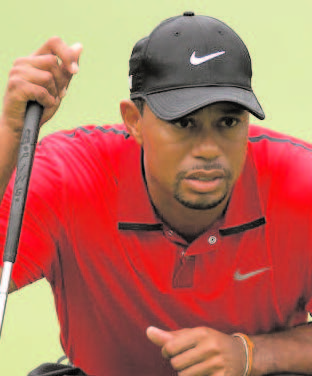
  • INJURED TIGER WOODS WITHDRAWS FROM WGC EVENT AS MAJOR LOOMS

    INJURED TIGER WOODS WITHDRAWS FROM WGC EVENT AS MAJOR LOOMS

    AKRON (United States): Former world number one Tiger Woods withdrew from Sunday’s final round of the World Golf Championships Bridgestone Invitational with back spasms, casting serious doubt on his status for the upcoming PGA Championship.

    The final major tournament of the year tees off in four days at Valhalla Golf Club in Louisville, Kentucky, and Woods was hopeful it might signal a return to form as the 14-time major champion chases the career record of 18 majors won by Jack Nicklaus. Woods, 38, underwent back surgery March 31 to relieve pressure on a pinched nerve and this was only this third event since the operation.

    He apparently injured his back again when he hit his second shot at the second hole from an awkward stance and fell backward into a bunker. “I just jarred it and it has been spasming ever since,” Woods said. “It’s just the whole lower back.” Woods missed the cut at the PGA event he hosts in Washington in late June and finished level 69th at the British Open last month, his worst 72- hole showing in a major as a professional but his only four-round effort without pain since February.

    Woods struggled to finish the round even after his injury but was 65 yards short on a par-3 hole and found a concession stand with an approach shot. As he departed, Woods said his pain became progressively worse in the last round of his final PGA Championship warm-up event at Firestone Country Club — a course where he has won eight times. At the time he withdrew, he was three-over par for the final round and stood four-over for the tournament.

    “After grimacing in pain after his tee shot on No. 9, Tiger Woods has withdrawn from the @WGC_Bridgestone,” tweeted the PGA Tour. Woods was seen holding his back as he departed, being driven off the course in a golf buggy, forced to sit ramrod straight to help alleviate the pain. In talking about the pinched nerve, Woods has called it the most debilitating injury he has faced, one that kept him bed ridden for days and unable to do even the most basic of tasks.

    Woods spoke at Washington about how he felt he was ahead of schedule and at the very early edge for what doctors had said might be his timetable for healing, although the latest flare of back pain indicates he might have pushed himself too far too far to return in time for the British Open and PGA. The back pain likely dooms his slim chance at qualifying for the US Ryder Cup team on points and probably means US Ryder Cup captain Tom Watson would not risk a captain’s pick on him given the potential health risk as he assembles a squad to try and win back the trophy in September at Gleneagles in Scotland.

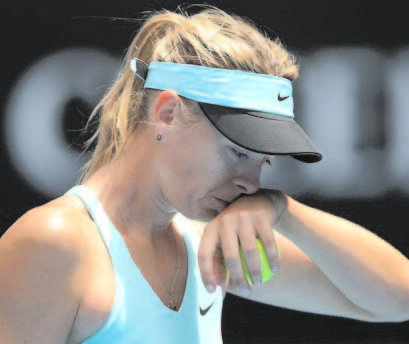
  • Petra Kvitova and Maria Sharapova ousted in Montreal

    Petra Kvitova and Maria Sharapova ousted in Montreal

    MONTREAL: Wimbledon champion Petra Kvitova and French Open winner Maria Sharapova suffered third round shock exits while top seed Serena Williams avoided the upset bug Thursday at the WTA Montreal hard court tournament. Russian Ekaterina Makarova upended second-seeded left-hander Kvitova 6-4, 1-6, 6-2, while diminutive Spaniard Carla Suarez Navarro stunned fourth-seeded Sharapova 6-2, 4-6, 6-2, following a third-set rain delay, at Uniprix Stadium. Williams advanced by defeating Lucie Safarova 7-5, 6-4 to reach the quarterfinals.

    Suarez Navarro, who is seeded 14th in Montreal and ranked 16th in the world, shrugged off two rain delays at the $2.4 million event and emerged with the victory over Sharapova who saw her preparations for the upcoming US Open suffer a huge setback. “I couldn’t find my rhythm from the beginning. Always had my back against the wall throughout the whole match,” Sharapova said. The former world No. 1 Sharapova, who’d won 11 of her previous 12 matches on tour, has now lost her last two three-set matches after winning 11 straight.

    Suarez Navarro put on a crisp shot-making display as she cruised through the first set. Sharapova, who had also started slowly but managed to rally against second-round opponent Garbine Muguruza, battled back from a 4-2 deficit in the second to force the decisive third set, but she had no answer for Suarez Navarro in the third. “It was a tough match,” Sharapova said. “I thought my opponent played a really good match. “Even though I felt like I started feeling a little bit better, it wasn’t enough in the end.” Sharapova’s wayward backhand on match point was her 49th unforced error of the contest.

    She converted just six of her 19 break point opportunities. Sharapova said her inability to reliably put her first serve in play was a factor in the defeat, but not her only problem. “Obviously you think a lot more about the second serve, which is a lot more difficult,” she said. “I was struggling with not just that today, but a lot of unforced errors from the baseline as well. Couldn’t commit on the return. So I think it was a little bit of everything.” Sharapova said she wouldn’t blame two rain delays for her inability to find her rhythm. “I think I’ve been on the tour for way too long,” she said.

    “I know what to expect and to know that anything can be thrown at you, whether it’s another delay, weather, or something else. That’s part of the game. That’s never bothered me.” Now Sharapova has just over two weeks to hone her hard court game before the start of the year’s last Grand Slam, the US Open at Flushing Meadows on August 25. “There’s quite a bit of time until then,” Sharapova said, stressing that it’s just a matter of fine-tuning a few things.”

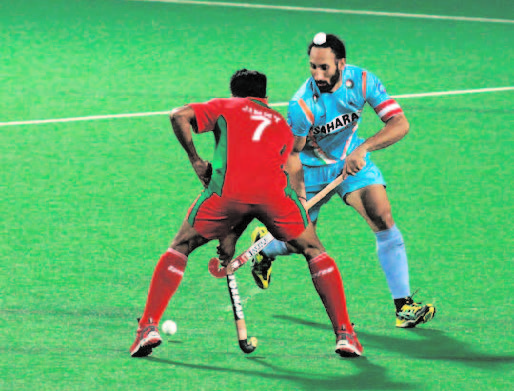
  • India edge out Bangladesh 2-1 in hockey series opener

    India edge out Bangladesh 2-1 in hockey series opener

    NEW DELHI: Riding its fine form after bagging a silver in the recently concluded Commonwealth Games in Glasgow, the Indian men’s hockey team edged out Bangladesh 2-1 in the opening Test of the three-match series that started today in Dhaka as part of the Asian Games tune-up.

    Bangladesh drew first blood with a Farhad Ahmed Fhitul strike in the 30th minute, but India, who have picked a young squad for the series including some Asian Games probables, soon bounced back in the game and stole the thunder from the home team within a matter of five minutes. Trailing 0-1, Indian defender Gurjinder Singh replied through a field goal in the 32nd minute of the match and helped the visitors draw level.Mid-fielder Harjeet Singh quickly took the visitors ahead before half time when he made no mistake in converting a penalty corner in the 34th minute.

    India then held on the 2-1 advantage till time as Gurjinder received the Man of the Match award. Speaking on the win, coach Tushar Khandker said, “Many players in the team are playing their first international match. This series will prepare them for the upcoming Asian Games. The players are getting exposed to various techniques and training on tackling the ball in different situations during the game. The team has much more potential than what they have shown today and we expect even better results in the remaining matches.” India will now play their second Test match against Bangladesh on Friday.

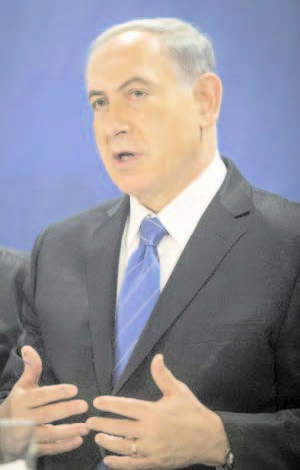
  • Israel vows to destroy Hamas tunnels, deaths spike

    Israel vows to destroy Hamas tunnels, deaths spike

    JERUSALEM (TIP): Israeli Prime Minister Benjamin Netanyahu vowed on Thursday to destroy Hamas’ tunnel network designed for deadly attacks inside Israel “with or without a ceasefire,” as the Palestinian death toll soared past 1,400 — surpassing the number killed in Israel’s last major invasion of Gaza five years ago. Netanyahu’s warning came as international efforts to end the 24-dayold war seemed to sputter despite concern over the mounting deaths.

    The Israeli military said it was calling up an additional 16,000 reserve soldiers to pursue its campaign against the Islamic militants. At least 1,441 Palestinians have been killed, three-quarters of them civilians, since hostilities began on July 8, according to Gaza health officials — surpassing the at least 1,410 Palestinians killed in 2009, according to Palestinian rights groups. Israel says 56 soldiers, two Israeli civilians and a Thai agricultural worker have died — also far more than the 13 Israeli deaths in the previous campaign. As the toll grew, UN high commissioner for human rights Navi Pillay accused both Israel and Hamas militants of violating the rules of war.

    She said Hamas is violating international humanitarian law by “locating rockets within schools and hospitals, or even launching these rockets from densely populated areas.” But she added that this did not absolve Israel from disregarding the same law. The Israeli government, she said, has defied international law by attacking civilian areas of Gaza such as schools, hospitals, homes and UN facilities. “None of this appears to me to be accidental,” Pillay said. “They appear to be defying — deliberate defiance of — obligations that international law imposes on Israel.”

    Pillay also took aim at the US, Israel’s main ally, for providing financial support for Israel’s “Iron Dome” antirocket defense system. “No such protection has been provided to Gazans against the shelling,” she said. At the United Nations, Israel’s Ambassador Ron Prosor responded to criticism of his country, saying: “I think the international community should be very vocal in standing with Israel fighting terrorism today because if not, you will see it on your doorstep tomorrow.”

    Israel expanded what started as an aerial campaign against Hamas and widened it into a ground offensive on July 17. Since then, Israel says the campaign has concentrated on destroying cross-border tunnels militants constructed to carry out attacks inside Israeli territory and ending rocket attacks on its cities. Israel says most of the 32 tunnels it uncovered have now been demolished and that getting rid of the remainder will take no more than a few days. “We have neutralized dozens of terror tunnels and we are committed to complete this mission, with or without a cease-fire,” Netanyahu said Thursday in televised remarks. “Therefore, I will not agree to any offer that does not allow the military to complete this important mission for the security of the people of Israel.”

    For Israel, the tunnel network is a strategic threat. It says the tunnels are meant to facilitate mass attacks on civilians and soldiers inside Israel, as well as kidnappings, a tactic that Hamas has used in the past. Palestinian militants trying to sneak into Israel through the tunnels have been found with sedatives and handcuffs, an indication they were planning abductions, the military says. Several soldiers have been killed in the current round of fighting by Palestinian gunmen who popped out of underground tunnels near Israeli communities along the Gaza border.

    Israeli defense officials said the purpose of the latest call-up of 16,000 reserves was to provide relief for troops currently on the Gaza firing line, and amounted to a rotation that left the overall number of mobilized reservists at around 70,000. They spoke on condition of anonymity in line with regulations. However, Israeli officials have also said they do not rule out broadening operations in the coming days. Palestinians have fired more than 2,850 rockets at Israel — some reaching major cities but most intercepted by the Iron Dome defense system. On Thursday alone, more than 100 rockets were fired toward Israeli cities, the army said.

  • Gas explosions kill 20, injure 270 in Taiwan

    Gas explosions kill 20, injure 270 in Taiwan

    TAIPEI, TAIWAN (TIP): A series of underground gas explosions killed 20 people and injured 270 others late Thursday in Taiwan’s second-largest city, authorities said. The National Fire Agency said five firefighters were among the dead. Taiwan’s Central News Agency reported that firefighters had been at the scene investigating reports of a gas leak when the explosions occurred. Taiwan’s premier Jiang Yi-huah said at least five blasts shook the streets of Kaohsiung, a southwestern port city of 2.8 million.

    Video from Taiwanese broadcaster ETTV showed a row of large fires burning in the middle of a street in the southwestern city, with smoke rising into the night sky. Power was cut off in the area, making it difficult for firefighters to search for others who might be buried in rubble. The source of the leak had not yet been located. But Kaohsiung Mayor Chen Chu said several petrochemical companies have pipelines built along the sewage system in Chian-Chen district, which has both factories and residential buildings. “Our priority is to save people now. We ask citizens living along the pipelines to evacuate,” Chen told TVBS television.

    CNA said the local fire department received reports from residents of gas leakage at around 8.46pm and that explosions started around midnight. Closed-circuit television showed the explosion rippling through the floor of a motorcycle parking area, hurling concrete and other debris through the air. Mobile phone video captured the sound of an explosion as flames leapt at least 30 feet (9 meters) into the air. Video from TVBS showed locals searching for victims in shattered shop fronts.

    Rescue workers pulled several injured people from the rubble in the center of the road, placing them on stretchers as passers-by helped other victims on the sidewalk. The explosion left a large trench running down the center of one road, edged with piles of concrete slabs torn apart by the force of the blast. A damaged motorcycle lay in the crater, and TVBS showed cars flipped over. The force of the initial blast also felled trees lining the street.