Month: August 2014

  • MAHABALESHWAR

    MAHABALESHWAR

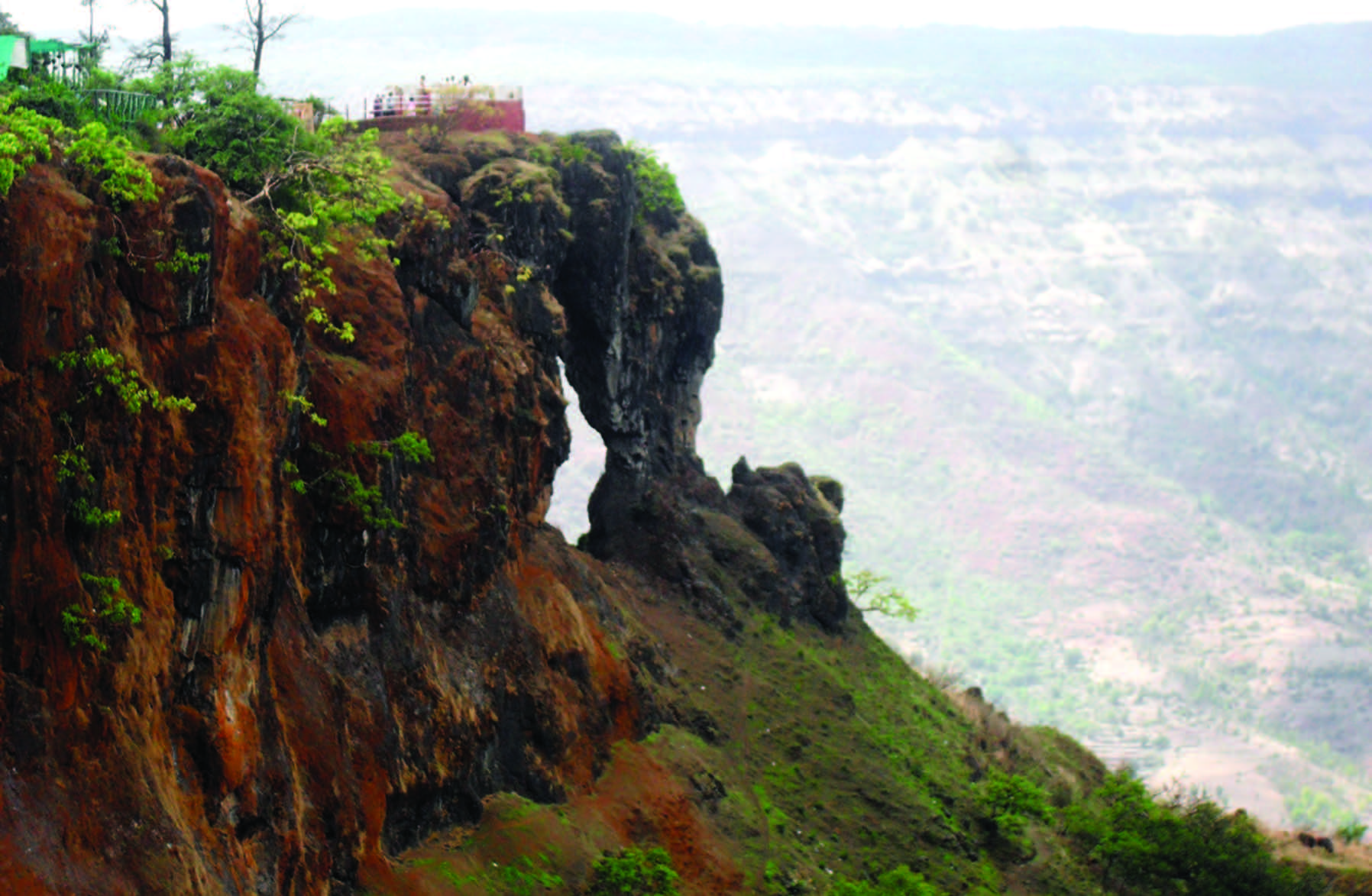
    Soaring peaks, breathtaking valleys. Lush flora. Cool, crisp mountain air. This is Mahabaleshwar, Maharashtra’s most popular hill station, and once the summer capital of the Bombay Presidency during the British Raj. Mahabaleshwar means ‘God of Great Power’ in Sanskrit.

    Indeed, the place is great and bountiful, rewarding the visitor with a mix of old-world charm, natural beauty and modernity. A tour of Mahabaleshwar town and the surrounding countryside would take at least a couple of days as there is much to see and experience. The town bazaar is called Malcolm Peth after the then British Governor of Bombay, Sir John Malcolm.

    It lies at the heart of Mahableshwar with its hotels, shops, restaurants, outlying bungalows, government offices, and jostling crowds. Mahabaleshwar has proper, motorable roads to every point worth visiting. So one could tour the place by car, jeep, or even horseback.

    There are many buildings and sites that take one back to the days of the Raj. There’s Mount Malcolm, the one-time residence of Governor Malcolm; Moraji Castle, where Mahatma Gandhi lived during 1945; and the Mahabaleshwar Club.

    As short drive from town is the beautiful Venna Lake, where one can go boating, fishing, and pony riding. Or indulge oneself at the entertainment center with its numerous food and game stalls. Near the lake, further down the road on the way to neighbouring Panchgani, are the great strawberry fields. Mahabaleshwar is known for its numerous sightseeing points, each providing a unique perspective of the majestic hill range.

    En route to Babington Point is Dhom dam, which is a good place to take a break. Or one could visit Old Mahabaleshwar and the famous Panchganga Mandir, which is said to contain the springs of five rivers: Koyna, Venna, Savitri, Gayatri and the sacred Krishna River. There’s also the Mahabaleshwar Mandir, revered for its Swayambhu Lingam Mahableshwar is a great holiday destination throughout the year, except for the monsoon months. During the late-June to mid-September period, torrential rains virtually shutdown this hill station, so travel is not advised at this time.

    Sights

    Mount Malcolm

    Built in 1829, this was one of the famous buildings of its time.

    Holy Cross Church

    The stained glass windows of this old Roman Catholic Church still retain their beauty.

    Mahabaleshwar Club

    Built in 1881, the Mahabaleshwar Club offers a peaceful retreat for those wanting to get away from it all. The Club offers many recreational facilities, including a badminton court and a mini golf course. Facilities are available to everyone at a very low fee. For those who prefer the quiet outdoors, there is a jogging track encircling the premises, edged with beautiful rose bushes. The Club also offers a clear view of Venna Lake below. Every year, Christmas is celebrated here with much fervour and pomp by the club members.


    8

    Pratapgad Fort

    About 24 km. away from Mahabaleshwar lies Pratapgad, the pride of the Maratha Empire. Built in 1656, it is a maze of ponds, chambers and long dark walkways, some of which lead to trap doors that open to a 100 meter fall! It was here that Afzal Khan, the mighty general of Bijapur, met his untimely death at the hands of Shivaji.

    Since Pratapgad lies slightly off the road to Mahabaleshwar, a visit to this historic monument is recommended in all travel itineraries Mahabaleshwar has many points offering great views of flat-topped ghats, dense forests and lush green valleys. Lodwick Point, towering almost 1,240 meters above sea level, is one of the most visited Points and holds a monument in memory of General Lodwick Arthur’s Seat is well liked too for its great view of the Jor Valley.

    About a kilometer away lies Tiger’s Spring, and if you venture further down you’ll come to a ledge named The window – a point that’s famous for its mesmerizing view. There are many locations offering pleasant views of the plains below: Wilson Point, Carnac Point, Helen’s Point, Elphinstone Point, Babington Point, Bombay Point, Falkland Point, and Kate Point are all well known There are pleasant waterfalls also worth visiting, such as Chinaman’s Falls, Dhobi Falls and Lingmala Falls, the latter being the most impressive, cascading amost 600 ft from a cliff ! Another tourist attraction is the Sangam, or the confluence of the five rivers that flow over the Deccan Plateau. There are many old temples too, which become the focus of attention during the festive season,

    Location

    Mahabaleshwar is situated 1,372 meters above sea level in the Western Ghats, in Satara District of Maharashtra State, in India.

    Also Visit …

    Panchgani

    About 19 km, from Mahableshwar lies the hill station of Panchgani. It is surrounded on all sides by hills (“Panch” = 5, “Gani” = hills) and is very popular with tourist owing to its close proximity to Mahabaleshwar. Panchgani is known for its resident boarding schools and its strawberry and raspberry farms. Visitors to Mahabaleshwar almost always come to Panchgani to make the most of their holiday in the hills..

    Getting There Air The nearest airport is Pune, 120 km. Nearest railhead is Wathar, but Pune is considered to be more convenient. Mumbai-Mahabaleshwar via Mahad, 247 km. State Transport buses ply regularly between Pune-Mahabaleshwar and Mumbai-Mahabaleshwar

  • US snooping on BJP unacceptable, SUSHMA TELLS KERRY

    US snooping on BJP unacceptable, SUSHMA TELLS KERRY

    NEW DELHI (TIP):
    Alarmed by the disclosure last month that US authorities spied on BJP when it was not in power, foreign minister Sushma Swaraj raised the issue with visiting secretary of state John Kerry on July 31 saying this was totally unacceptable to India. India had registered a protest with senior US diplomats after the disclosure which was based on documents provided by whistleblower Edward Snowden but officials said Swaraj took up the issue with Kerry to drive home the point that there was anger in the country over alleged snooping by the National Security Agency (NSA). “I told Secretary Kerry that this was completely unacceptable to us as India and US are friendly countries.

    Friends don’t snoop on each other,” Swaraj told reporters after the 5th India-US strategic dialogue and what was also the first high-level engagement between the two countries after the Narendra Modi government took over. In his response, Kerry sought to assuage India’s concerns as he said President Barack Obama had undertaken a unique and unprecedented exercise to review all intelligence activities carried out by US agencies. He also said the US valued its relations with India and also the partnership between the two countries in counter-terror operations. “We don’t discuss intelligence matter publicly.

    But we value sharing of information regularly on counter-terrorism with India. US President Barack Obama clearly articulated that we fully respect and understand feelings expressed by Indian nationals,” Kerry said. The two leaders discussed all issues cutting across trade, energy, climate change, security and counter-terror operations. On the controversy over India’s stand at WTO over trade facilitation, Kerry expressed hope that a compromise deal would be worked out.

    According to documents leaked by Snowden, BJP figured in the list of non-US political parties — along with Lebanon’s Amal which has links with Hezbollah, Egypt’s Muslim Brotherhood and the Pakistan Peoples Party — which were spied on by the NSA after an official authorization by the US government. In fact, Swaraj’s predecessor Salman Khurshid too had mentioned the issue of snooping on the Indian embassy in the US to Kerry last year but later seemed to defend it saying it was actually not snooping and that such information was used by the US to prevent serious terror strikes.

    It was also discovered last year that India was the fifthmost- tracked country by US agencies which used a clandestine “data-mining programe” to monitor worldwide internet data. A joint statement issued later said that faced with a common threat from terrorism, including in South Asia, the two leaders committed to intensify efforts to “combat terrorism, proliferation of WMDs, nuclear terrorism, cross-border crime and address the misuse of the internet for terrorist purposes, in compliance with respective laws.”

    On terrorism, the two leaders reiterated their condemnation of terrorism in all its forms and reaffirmed their commitment to eliminating terrorist safe havens and infrastructure, and disrupting terrorist networks including al-Qaida and the Lashkar-e-Taiba. “The leaders called for Pakistan to work toward bringing the perpetrators of the November 2008 Mumbai attacks to justice,” said the statement. The two leaders welcomed the continuation of the Counter-Terrorism Joint Working Group process, sustained exchanges of senior experts, and the upcoming meeting of the Working Group in 2014.

  • Stocks plunge, Market Jittery

    Stocks plunge, Market Jittery

    NEW YORK (TIP) July 31 was a day of plunging stocks. The Dow Jones industrial average had its worst daily drop since February. At one point it was down more than 300 points. The slide interrupted a prolonged advance in the market. The Standard & Poor’s 500 index closed at its latest record high just one week ago. It’s currently 2.7 percent below that level.

    Investors responded to several weak earnings reports, escalating geopolitical instability and widespread views that stocks had become too expensive. They are also contemplating the likely end of the Federal Reserve’s stimulus program this year. The Dow was down 273 points, or 1.6 percent, to 16,607 in late trading Thursday, July 31. The S&P 500 was down 34, or 1.7 percent, at 1,935.

  • India holds its ground, WTO fails to reach $1 trillion deal on customs rules

    India holds its ground, WTO fails to reach $1 trillion deal on customs rules

    GENEVA (TIP): The World Trade Organization failed on July 31 to reach a deal to standardise customs rules, which would have been the first failed global trade reform in two decades but was blocked by India’s demands for concessions on agricultural stockpiling. “We have not been able to find a solution that would allow us to bridge that gap,” WTO director-general Roberto Azevedo told trade diplomats in Geneva just two hours before the final deadline for a deal. “Of course it is true that everything remains in play until midnight, but at present there is no workable solution on the table, and I have no indication that one will be forthcoming.”

    The deadline passed without a breakthrough. WTO ministers had already agreed the global reform of customs procedures known as “trade facilitation” last December, but it needed to be put into the WTO rule book by July 31. Most diplomats saw that as rubberstamping a unique success in the WTO’s 19 year history, which according to some estimates would add $1 trillion and 21 million jobs to the world economy, so they were shocked when India unveiled its veto.

    Trade experts say on Thursday’s failure is likely to end the era of trying to cobble together global trade agreements and to accelerate efforts by smaller groups of likeminded nations to liberalise trade among themselves. India has been vocal in opposing such moves, making its veto even more surprising. “Today’s developments suggest that there is little hope for truly global trade talks to take place,” said Jake Colvin at the National Foreign Trade Council, a leading US business group.

    “The vast majority of countries who understand the importance of modernizing trade rules and keeping their promises will have to pick up the pieces and figure out how to move forward.” Some nations have already discussed a plan to exclude India from the agreement and push ahead regardless, and the International Chamber of Commerce urged officials to “make it happen.” “Our message is clear. Get back to the table, save this deal and get the multilateral trade agenda back on the road to completion sooner rather than later,” ICC secretary general John Danilovich said.

    US secretary of state John Kerry, on a visit to New Delhi, had earlier said he was hopeful that differences between India and much of the rest of the world could be resolved. But after Azevedo’s speech, US ambassador to the WTO Michael Punke was downbeat. “We’re obviously sad and disappointed that a very small handful of countries were unwilling to keep their commitments from the December conference in Bali, and we agree with the Director- General that that action has put this institution on very uncertain new ground,” Punke told reporters.

    India had insisted that, in exchange for signing the trade facilitation agreement, it must see more progress on a parallel pact giving it more freedom to subsidise and stockpile food grains than is allowed by WTO rules. It got support from Cuba, Venezuela and Bolivia. India’s new nationalist government has insisted that a permanent agreement on its subsidised food stockpiling must be in place at the same time as the trade facilitation deal, well ahead of a 2017 target set last December in Bali. Kerry, whose visit to India was aimed at revitalising bilateral ties but was overshadowed by the standoff, said the United States understood India’s position that it needs to provide food security for its poor but India would lose out if it refused to maintained its veto.

    Deal without India?
    Diplomats say India could technically attract a trade dispute if it caused the deal to collapse, although nobody wanted to threaten legal action at this stage. The summer break will give diplomats time to mull options, including moving ahead without India. Technical details would still have to be ironed out, but there was a “credible core group” that would be ready to start talking about a such a deal in September, a source involved in the discussions said.

    “What began as a murmur has become a much more active discussion in Geneva and I think that there are a lot of members in town right now that have reached the reluctant conclusion that that may be the only way to go,” he said. An Australian trade official with knowledge of the talks said a group of countries including the United States, European Union, Australia, Japan, Canada and Norway began discussing the possibility in Geneva on Wednesday afternoon. New Delhi cannot be deliberately excluded, since that would mean other countries slowing down containers destined for India, but if it becomes a “free-rider” it will add another nail in the coffin of attempts to hammer out global trade reform.

    Trade diplomats had previously said they were reluctant to consider the idea of the allbut- India option, but momentum behind the trade facilitation pace means it may be hard to stop. Many countries, including China and Brazil, have already notified the WTO of steps they plan to take to implement the customs accord immediately. Other nations have begun bringing the rules into domestic law, and the WTO has set up a funding mechanism to assist.

    But WTO head Azevedo said he feared that while major economies had options open to them, the poorest would be left behind. “If the system fails to function properly then the smallest nations will be the biggest losers,” he said. “It would be a tragic outcome for those economies — and therefore a tragic outcome for us all.”

  • Modi will launch financial inclusion campaign: Jaitley

    Modi will launch financial inclusion campaign: Jaitley

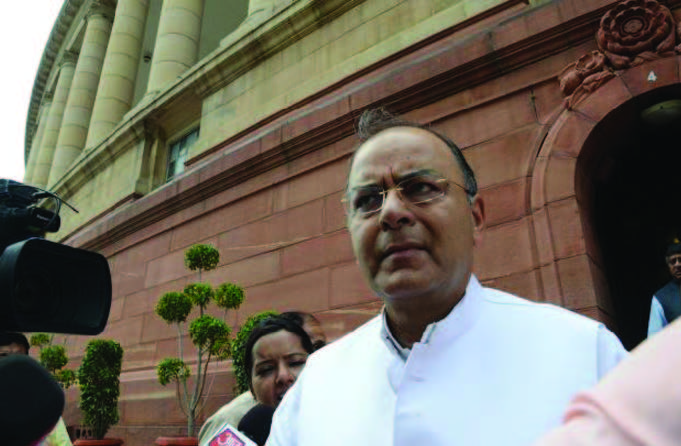
    NEW DELHI (TIP): Prime Minister Narendra Modi will launch the government’s campaign for financial inclusion to ensure that 7.5 crore households that do not have access to banking have at least two accounts. The efforts will also be made to introduce mobile banking on all kinds of phones, Finance Minister Arun Jaitley told reporters after meeting the heads of PSU banks in New Delhi on July 31 .

    “The intention is, in a mission mode, to have a formal campaign which will be announced by the Prime Minister and then throughout the country to have a campaign for inclusion. This campaign for inclusion will be at various layers,” he said. Elaborating on the concept, Jaitley said that in some areas where branches are possible, the regular brick and mortar branches will be created. “Where it is not possible, there smaller branches manned by one or two people would be created”.

    The layer below that will be kiosks, he said, adding that yet another layer below, will be ATMs and then the human contact through Business Correspondents. “The objective is to reach every household possible and have at least two account holders in every house. Currently, financial inclusion and the reach of the banking systems extends to about 58-59 per cent and therefore the dark areas which are not covered these include about 7.5 crore households,” he said.

    Jaitley, during the meeting, also discussed the possibility of exploring and expanding mobile telephony banking. Currently, it can be made available on smartphones, and effort is to extend it to all phones. “In the course of next two years, we hope to make a considerable headway. The unit for contact is not a village, it is a person and therefore it is a higher level of ambition which we are trying to reach,” the Minister said.

  • MARUTI PROFIT SURGES 21%

    MARUTI PROFIT SURGES 21%

    NEW DELHI (TIP): Higher sales and cost reduction measures boosted the first quarter earnings of the country’s top carmaker Maruti Suzuki in a day when Osamu Suzuki, chairman of the company’s parent Suzuki, called on Prime Minister Narendra Modi. Maruti’s profit, also aided by forex gains, rose 21% in the April-June’ 14-15 quarter at Rs 762 crore against Rs 632 crore in the same period of the last fiscal.

    Net sales during the quarter stood at Rs 11,074 crore, up 11% against Rs 9,995 crore in the April-June quarter of the last fiscal. “We started the quarter with low consumer sentiments, high inflation and other economic factors that affected the economy last year. But consumer sentiment has changed after the elections and has turned positive,” chief financial officer Ajay Seth said in a conference call with analysts.

    Maruti sold a total of 2.99 lakh vehicles in the first quarter, at a growth of 13%. Sales in the domestic market stood at 2.7 lakh units (up 10%) while exports grew by 39% at 29,251 units. The company said that cost reduction and localization initiatives, growth in volumes and favourable foreign exchange helped improve the bottomline during the quarter. There was “an impact of Rs 150 crore” in the first quarter due to forex gains, Seth said.

  • Mundra takes charge as RBI deputy governor

    Mundra takes charge as RBI deputy governor

    MUMBAI (TIP): Reserve Bank of India’s new deputy governor S S Mundra has been given charge of banking supervision, currency management, financial stability and July 30 notified his appointment for a period of three years. Prior to taking charge Mundra was chairman of Bank of Baroda, the country’s second large bank. He had begun his career as a probationary officer in Bank of Baroda in March 1977.

    During a banking career he held various positions including heading the bank’s European operations (UK) before being elevated as Executive Director of Union Bank of India in September 2010 and further as Chairman of Bank of Baroda in January 2013. The position of deputy governor had fallen vacant in March after former deputy governor KC Chakrabarty put in his papers three months before his term ended. He played a key role in financial inclusion as head of the committee on financial inclusion set up by the Indian Banks’ Association (IBA) and also served as a member of several other important committees relating to the banking and financial sector constituted by the IBA and RBI, including the Nachiket Mor Committee on Comprehensive Financial Services (CCFS) for small businesses and lowincome households.

  • Govt raises subsidy burden for explorers

    Govt raises subsidy burden for explorers

    NEW DELHI (TIP): Oil minister Dharmendra Pradhan on Thursday defended public sector fuel retailers against the federal auditor’s criticism over allegedly making windfall gains due to faulty pricing method, even as the government raised the fuel subsidy burden on explorers. Pradhan said the three oil refining and fuel retailing companies had absorbed Rs 28,680 crore in losses on fuel sales between 2007-08 and 2011-12 audited by the Comptroller and Auditor General.

    The auditor’s report had said the companies had overcharged customers Rs 26,626 crore in the five-year by way of notional levies in the pricing formula. Inaugurating a workshop on margin management, Pradhan said the oil firms follow a pricing methodology for calculating retail price on the basis of virtual imports by adding customs duty, freight, insurance, ocean loss and wharfage charges to prevailing international price of petrol, diesel, cooking gas or kerosene. ONGC’s subsidy outgo would rise by 4.5% in the April-June quarter to Rs 13,200 crore. OIL has been asked to provide Rs 1,846.6 crore, gas utility GAIL’s share has been fixed at Rs 500 crore.

  • US KEEN TO INVEST IN 3 KEY AREAS

    US KEEN TO INVEST IN 3 KEY AREAS

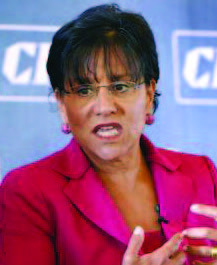
    MUMBAI (TIP): Going by the priorities of the new government, the United States has decided to focus on three areas in India which include infrastructure, manufacturing and sectors that are more open for global investment, said Penny Pritzker, Secretary of Commerce, U.S.

    Department of Commerce, at an interactive session organised by Confederation of Indian Industry (CII). “We know that India’s new government is committed to an agenda of accelerating growth, attracting investment, generating good-paying jobs, and ushering in a new era of global co-operation and economic dynamism. The United States has a vested interest in seeing India succeed, in seeing this nation reach its full economic potential and we want to be an essential partner in meeting your goals,” Pritzker told Indian industrialists.

    With India likely to spend $1.7 trillion by 2020 to develop infrastructure, the U.S. is seeing greater opportunity to participate. As far as manufacturing is concerned, Pritzker said the U.S. Department of Commerce could offer a model for progress in this field. “We are ready to share our best practices with all of you,” she said. She said U.S. would like to create a business climate in India that was more open for global investment. Bilateral trade between the two countries now stands at more than $96 billion.

  • US economy bounces back strongly in second quarter

    US economy bounces back strongly in second quarter

    WASHINGTON (TIP): US economic growth accelerated more than expected in the second quarter and the decline in output in the prior period was less steep than previously reported, bolstering views for a stronger performance in the last six months of the year. Gross domestic product expanded at a 4.0 per cent annual rate as activity picked up broadly after shrinking at a revised 2.1 per cent pace in the first quarter, the commerce department said.

    That pushed GDP above the economy’s potential growth trend, which analysts put somewhere between a 2 per cent and 2.5 per cent pace. Economists had forecast the economy growing at a 3.0 per cent rate in the second quarter after a previously reported 2.9 per cent contraction. A separate report showing private employers added 218,000 jobs to their payrolls last month, a decline from June’s hefty gain of 281,000, did little to change perceptions the economy was strengthening.

    US stock futures added to gains and yields on US Treasuries rose after the data. The US dollar hit a seven-week high against the yen and an eight-month high against the euro. The economy grew 0.9 per cent in the first half of this year and growth for 2014 as a whole could average above 2 per cent. The first quarter contraction, which was mostly weatherrelated, was the largest in five years.

    Employment growth, which has exceeded 200,000 jobs in each of the last five months, and strong readings on the factory and services sectors from the Institute for Supply Management underpin the bullish expectations for the rest of the year. The government also published revisions to prior GDP data going back to 1999, which showed the economy performing much stronger in the second half of 2013 and for that year as a whole than previously reported.

  • NASA’S CASSINI SPACECRAFT FINDS 101 GEYSERS ON ICY SATURN MOON

    NASA’S CASSINI SPACECRAFT FINDS 101 GEYSERS ON ICY SATURN MOON

    WASHINGTON (TIP): Scientists using mission data from Nasa’s Cassini spacecraft have identified 101 distinct geysers erupting on Saturn’s icy moon Enceladus. Their analysis suggests it is possible for liquid water to reach from the moon’s underground sea all the way to its surface.

    Over a period of almost seven years, Cassini’s cameras surveyed the south polar terrain of the small moon, a unique geological basin renowned for its four prominent “tiger stripe” fractures and the geysers of tiny icy particles and water vapour first sighted there nearly 10 years ago.

    The result of the survey is a map of 101 geysers, each erupting from one of the tiger stripe fractures, and the discovery that individual geysers are coincident with small hot spots. To determine the surface locations of the geysers researchers employed the same process of triangulation used historically to survey geological features on Earth, such as mountains.

    When the researchers compared the geysers’ locations with low-resolution maps of thermal emission, it became apparent the greatest geyser activity coincided with the greatest thermal radiation. Comparisons between the geysers and tidal stresses revealed similar connections. The researchers then compared the survey results with high-resolution data collected in 2010 by Cassini’s heatsensing instruments.

    Individual geysers were found to coincide with small-scale hot spots, only a few dozen feet (or tens of metres) across, which were too small to be produced by frictional heating, but the right size to be the result of condensation of vapour on the nearsurface walls of the fractures.

    This immediately implicated the hot spots as the signature of the geysering process. “Once we had these results in hand, we knew right away heat was not causing the geysers, but vice versa,” said Carolyn Porco, leader of the Cassini imaging team from the Space Science Institute in Boulder, Colorado, and lead author of the first paper. “It also told us the geysers are not a near-surface phenomenon, but have much deeper roots,” Porco said.

    The researchers concluded that the only plausible source of the material forming the geysers is the sea now known to exist beneath the ice shell. They also found that narrow pathways through the ice shell can remain open from the sea all the way to the surface, if filled with liquid water.

  • ANTIBIOTICS AND CHICKEN: ALL YOU NEED TO KNOW

    ANTIBIOTICS AND CHICKEN: ALL YOU NEED TO KNOW

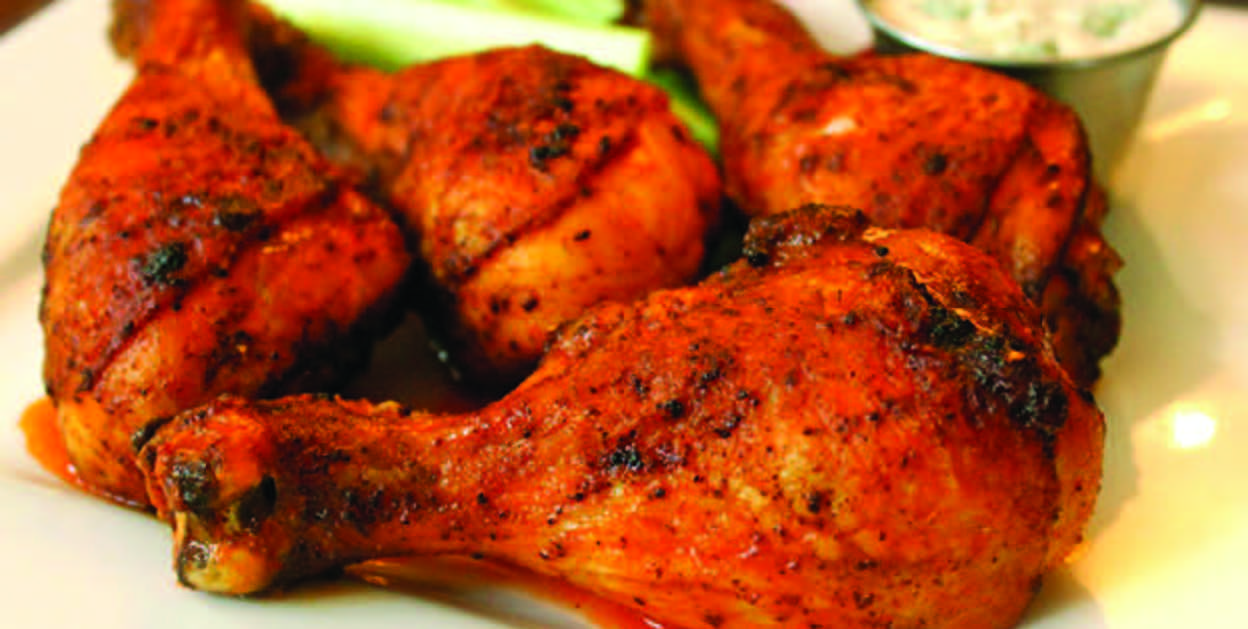
    Each time you eat chicken, you could also be consuming a cocktail of antibiotics. A lab study released by Centre for Science and Environment (CSE) found antibiotic residues in 40% of chicken samples bought from outlets in Delhi and NCR. Antibiotics are substances that can destroy or inhibit the growth of micro-organisms. They are widely used in prevention and treatment of infectious diseases.

    1: Six antibiotics tested from there antibiotic classes – tetracyclines, fluoroquinolones and aminoglycosides.

    2: Each chicken sample analyzed thrice.

    3: Antibiotics found in all tissues tested- muscles, liver and kidney.

    4: No significant difference in residues in different parts of chicken. 5: More than on antibiotic found in 17% chickens.

    Why this could be dangerous?

    1: Banned in certain countries for use in animals due to concerns about antibiotic resistance (Enrofl oxacin and Ciprofl oxacin).

    2: Considered critical (ciprofl oxacin) and highly important (tetracyclines) for humans. 3: Among the highest prescribed in India (ciprofl oxacin).

    Why antibiotics are given to chicken?

    1: Because this cheap input has a growth promoting effect, making the chicken look fatter.

    2: Due to unsanitary conditions in poultry, chickens contract bacterial infections that require treatment antibiotics.

    3: Antibiotic for feed is freely available at a low cost in Delhi and outside.

    4: Raw chicken has more antibiotic residue than cooked chicken.

    5: Regularly exposing yourself to antibiotics through chicken will lead to resistance to some of the important and common antibiotics.

    Prevalence of antibiotic resistance? In US:

    2 million illnesses and 23,000 deaths annually; estimated $ 20 billion as direct annual healthcare cost. In EU: 25,000 deaths and about Euro 1.5 billion of healthcare cost & productivity losses.

    In India (no national level estimate): About one-third of two lakh children that die in the fi rst four weeks are victims of antibiotic resistance; about 15% of those re-treated for TB are resistant to multiple drugs.

    What about regulations

    India has no regulations or standards for antibiotics given to farm animals.

    Some European countries banned use of penicillin, streptomycin and tetracyclines as growth promoters in 1970s. In 1986, Sweden banned antibiotic growth promoters and Denmark followed it.

    EU prohibited antibiotic growth promoters in 2006. Between 1995 and 2008, Denmark’s strong policies led to reduction in antibiotic usage by 90% in poultry and 51% in pigs. USA’s voluntary approach a failure. About 80% of antibiotics used in food-producing animals. In 2009-11, use of lincosamides, penicillins and tetracyclines grew by 64%, 44% and 22%, respectively.

  • Indian scientists clone male calf from dead bull’s semen

    Indian scientists clone male calf from dead bull’s semen

    CHANDIGARH (TIP): Scientists in Karnal have successfully cloned a male calf from the frozen semen of a Murrah bull which died 10 years ago. “We have for the first time produced a male cloned calf from the somatic cell of progeny-tested bull which died 10 years ago,” director of National Dairy Research Institute (NDRI) Dr AK Srivastava said.

    The calf, who has been given name of Rajat, was born on July 23 by using “hand-guided cloning” technique and its weight at the time of the birth was 32 kg, a release from NDRI said. The Murrah bull, whose frozen semen was used to produce male calf, had been ranked first in the 5th set of all-India progeny-testing programme.

    A progeny test is performed by mating the male with a number of females to produce many progenies and the average performance of the offspring is then found, giving a measure of the male’s respective value, and it takes years to evaluate its superiority, an NDRI release said. The NDRI Director said there was an acute shortage of good-quality bulls and the technology of “hand-guided cloning” could decrease this gap and supply elite bulls in the shortest possible time.

    “We do not have progeny-tested bulls and moreover, there is a shortage of 80-90 million doses of semen in the country.We have frozen semen of progeny-tested bulls and we can produce good quality of bulls by this cloning technique,” Srivastava said. Cloning, which helps in faster multiplication of superior germplasm, can be done through males by producing clones of progeny-tested bulls and through females by producing clone of high-yielding lactating females.

    A team of seven scientists — SK Singla, MS Chauhan, RS Manik, P Palta, Shiv Parsad, Anuj Raja and Amol Sahare — was involved in the production of cloned calf. S Ayyappan, secretary, department of agricultural research and education (DARE) and director general, Indian Council of Agricultural Research (ICAR), congratulated the team and said this achievement of producing cloned calf from progeny-tested bull by hand-guided cloning technique will facilitate faster multiplication of elite germplasm and help face the challenges of increasing demands of milk, said the release.

  • Scientists warn of Earth’s sixth mass extinction event

    Scientists warn of Earth’s sixth mass extinction event

    WASHINGTON (TIP): The loss and decline of animals is contributing to what appears to be the early days of the planet’s sixth mass biological extinction event, scientists warn. Since 1500, more than 320 terrestrial vertebrates have become extinct. Populations of the remaining species show a 25 per cent average decline in abundance.

    The situation is similarly dire for invertebrate animal life, researchers said. While previous extinctions have been driven by natural planetary transformations or catastrophic asteroid strikes, the current die-off can be associated to human activity, a situation that the lead author Rodolfo Dirzo, a professor of biology at Stanford University, designates an era of “Anthropocene defaunation.”

    Across vertebrates, 16 to 33 per cent of all species are estimated to be globally threatened or endangered. Large animals – described as megafauna and including elephants, rhinoceroses, polar bears and countless other species worldwide – face the highest rate of decline, a trend that matches previous extinction events. Larger animals tend to have lower population growth rates and produce fewer offspring.

    They need larger habitat areas to maintain viable populations. Although these species represent a relatively low percentage of the animals at risk, their loss would have trickle-down effects that could shake the stability of other species and, in some cases, even human health.

  • 3RD TEST: INDIA SURRENDERS AT SOUTHAMPTON

    3RD TEST: INDIA SURRENDERS AT SOUTHAMPTON

    Dhoni says India allowed Moeen to dominate

    SOUTHAMPTON (TIP): India crashed to a humiliating 266-run defeat against England in the third Test after an abject batting surrender on Day 5 allowed the hosts level the five-match series 1-1, at the Ageas Bowl in Southampton, on July 30 . Needing to bat out the day, with six wickets in hand, to save the match, the Indians crumbled in the first session itself and were bundled out for a meagre 178 in 66.4 overs.

    It was one of India’s biggest Test defeats in terms of runs on English soil, but not their worst, having lost by a mammoth 319 runs in Nottingham on the last tour, in 2011. The victory ended England’s winless streak of 10 Tests, since the last Ashes series Down Under. To add insult to the injury, it was parttime off-spinner Moeen Ali who bamboozled the lower-order batsmen and ended up with a career-best haul of 6 for 67 from 20.4 overs.


    2

    MS Dhoni has said that India allowed Moeen Ali to dominate proceedings and that the team should not be overly worried after the 266-run loss at Southampton “It was not like we were expecting them to win.We knew they would come back strongly. For us the challenge was to keep the momentum going after winning at Lord’s,” said Dhoni in his post-match analysis, failing to mention that his team had fallen well short of expectations at the Ageas Bowl.

    The following was his candid confession: “This Test showed some areas where we need to improve.We need to take 20 wickets to win but in this game we were not able to take even 10! That was a setback to a certain extent. Our batsmen played fast bowlers better, but we allowed Moeen to bowl his line and length on a pitch that underwent lots of wear and tear.

  • Babita, Yogeshwar bring smiles back to Indian camp

    Babita, Yogeshwar bring smiles back to Indian camp

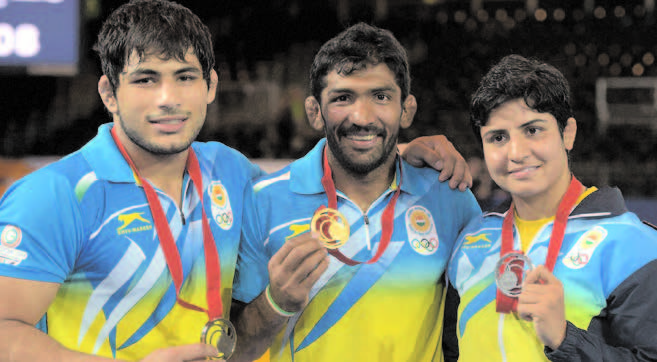
    GLASGOW (TIP): Like Sushil Kumar the other day, Yogeshwar Dutt wasted no time. Cheered on by the double Olympic medallist, Yogeshwar – an Olympic medallist himself – raced to gold against Canada’s Jevon Balfour in his new weight category, 65kg. The bout lasted less than two minutes and it reaffirmed India’s domination in the wrestling arena at the CWG where two gold medals, one silver and a bronze came its way on Thurs day .

    As Yogeshwar leapt over the audience barriers and rushed up the aisle to hug his long-time training partner Sushil, he remarked on the controversy over the selection of some wrestlers picked by the Wrestling Federation of India (WFI) without a selection trial. “The controversy (over our selection) was uncalled for,” said Yogeshwar, “We showed that we are a good team.

    We could have won two gold medals yesterday.” Thursday’s performance followed a disappointing day in office when four Indian wrestlers lost all the four finals on Wednesday. India finished the wrestling event with 13 medals including five gold medals, six silvers and two bronzes, second to Canada’s haul of 6 golds. Though India bettered the Delhi Games haul of 12 medals, lost all the four finals on Wednesday. India finished the wrestling event with 13 medals including five gold medals, six silver sand two bronze, second to Canada’s haul of 6 gold. Though India bettered the Delhi Games haul of 12 medals, Indian wrestlers had won a gold more in 2010.

    Earlier, continuing in the now impressive Phogat Family Girls tradition, Babita Rani won the first gold of the day in the women’s 55kg category. Babita, who had won a silver in Delhi 2010 in 51kg, was contesting in her sister Geeta’s event. Last edition’s winner Geeta could not make it to the Games due to injury. Babita did not disappoint anyone by coming up with a clinical performance to win her final against Brittanee Laverduire of Canada. Showing her experience, Babita was in no hurry to finish things off quickly as she grappled patiently to accumulate points.

    The 24-year-old was placed comfortably throughout her bout and successfully warded off a late challenge from her 32-year-old rival. Vinesh, a cousin of Geeta and Babita, had also won a gold medal for India on the first day of competition in wrestling. “I am happy that we will be taking back home two gold medals. I was a little apprehensive since we lost all the finals yesterday. I am happy that my gold can offer some consolation,” continued Babita. Geetika Jakhar was the lone Indian to lose her final on Thursday as she was beaten by the faster and slippery Canadian Danielle Lappage 7-0 in the 63kg. Later, Pawan Kumar won a bronze medal beating Muhammad Inam in the 86kg. The scores were tied at 6-6 but as the Indian managed to take the last two points.