Jennifer Aniston is reportedly planning to shed some extra weight before her wedding to fiance Justin Theroux. Aniston, 45, had earlier confessed that like any bride-tobe she would lose some weight before her marriage. reported Ok! magazine. “She doesn’t think she’s overweight by any means. But she’s always said that she feels most confident when she looks a certain way.
And there’s no doubt she’ll want to have that same feeling on her wedding day,” a source said. After meeting Theroux, the ‘Friends’ star has allegedly put on some weight as the couple are often involved in dinning. “His idea of fun is going out to great restaurants and trying out amazing food with her. And if that leads to her gaining a little weight, he’s not going to complain.. Justin thinks Jen looks absolutely perfect the way she is. He likes her curvier, with a little meat on her,” the source added. The longtime couple are planning to tie the knot in the end of the year.
Month: August 2014
-

JENNIFER ANISTON DROPPING WEIGHT BEFORE HER WEDDING
-

MILA KUNIS OBSESSED WITH PRENATAL YOGA
Heavily pregnant actress Mila Kunis is obsessed with prenatal yoga to stay fit throughout her pregnancy. The 31-year-old actress and fiance Ashton Kutcher have been busy gearing up for the arrival of their first child together, reported E!Online. Kunis’ face was glowing as she strolled across a car park to the studio in Los Angeles wearing stretchy yoga pants, a black top and white flip-flops.
She carried a refreshing drink and wore aviator sunglasses. Actress Mila Kunis’s pregnancy wear is so stylish that she is tagged as the most stylish pregnant woman. The yummy mummy-to-be put her stylish foot forward when she stepped out here Saturday in a white blouse and shorts showing off her growing baby bump, reports mirror.co.uk -

Fraudulent Swami convicted for defrauding followers and filing false tax returns
SENTENCING ON NOVEMBER 13
ATLANTA (TIP) : A self-styled multi-millionaire guru of the largest Hindu Temple of Georgia, Annamalai Annamalai, also known as Dr. Commander Selvam and Swamiji Sri Selvam Siddhar, is going to find peace in prison. The bogus swami was convicted by a jury of defrauding his followers to sustain a lavish lifestyle for his family and himself.
Federal authorities on Monday, August 25 announced the conviction of Annamalai, reported the Atlanta Journal- Constitution. He charged his followers fees in exchange for spiritual and related services, but then would run-up unapproved charges, using their credit card numbers, authorities said. “This defendant traded on his perceived religious authority and spiritual powers to cheat the faithful who believed in him,” said United States Attorney Sally Quillian Yates.
“The jury saw through his deception.” Annamalai, 49, would then submit bogus documentation to the credit card companies to support any charges that were disputed, prosecutors said. The money he made through those fraudulent charges was used to finance his and his family’s lifestyle, which prosecutors said included luxury vehicles, control of multiple homes and foreign bank accounts in India. Annamalai’s other convictions include ones for wilfully filing a false tax return for the 2007 year for failing to disclose his financial interest in foreign bank accounts held in India, reported the Journal Constitution.
Annamalai was also convicted of bankruptcy fraud offenses in connection with the Hindu Temple’s petition for bankruptcy protection in August 2009, authorities said. Annamalai diverted credit card receipts and donations intended for the Gwinnett County Hindu Temple to a bank account in the name of a different entity, authorities said.
Annamalai, who once owned a milliondollar home in Sugarloaf Country Club in Duluth, was also convicted of money laundering for using proceeds from the bankruptcy fraud to pay mortgages on properties that he owned, and payments to himself, authorities said, the report said. The self-proclaimed guru opened the Norcross temple – with a purple exterior adorned in green neon – in 2005 and by the following year he was under investigation by Gwinnett County police, who, in 2008, charged him with theft and practicing medicine without a license.
Those charges were later dismissed. He took that fight to civil courts, where he filed several lawsuits alleging breach of contract against individuals he claimed had procured his religious services then failed to pay. Those lawsuits slowed down the bankruptcy trustee’s attempt at recovering funds owned by Annamalai, said the trustee’s lawyer, Hayden Kepner, according to the Journal-Constitution.
His wife, Parvathi Sivanadiyan, is still awaiting trial. His former chief financial officer, Kumar Chinnathambi, has pleaded guilty to conspiracy to commit bankruptcy fraud and is scheduled to be sentenced October 24 in federal court. Annamalai is scheduled to be sentenced on November 13. -

Interpol choses Shah Rukh Khan as 1st Indian ambassador for anticrime campaign
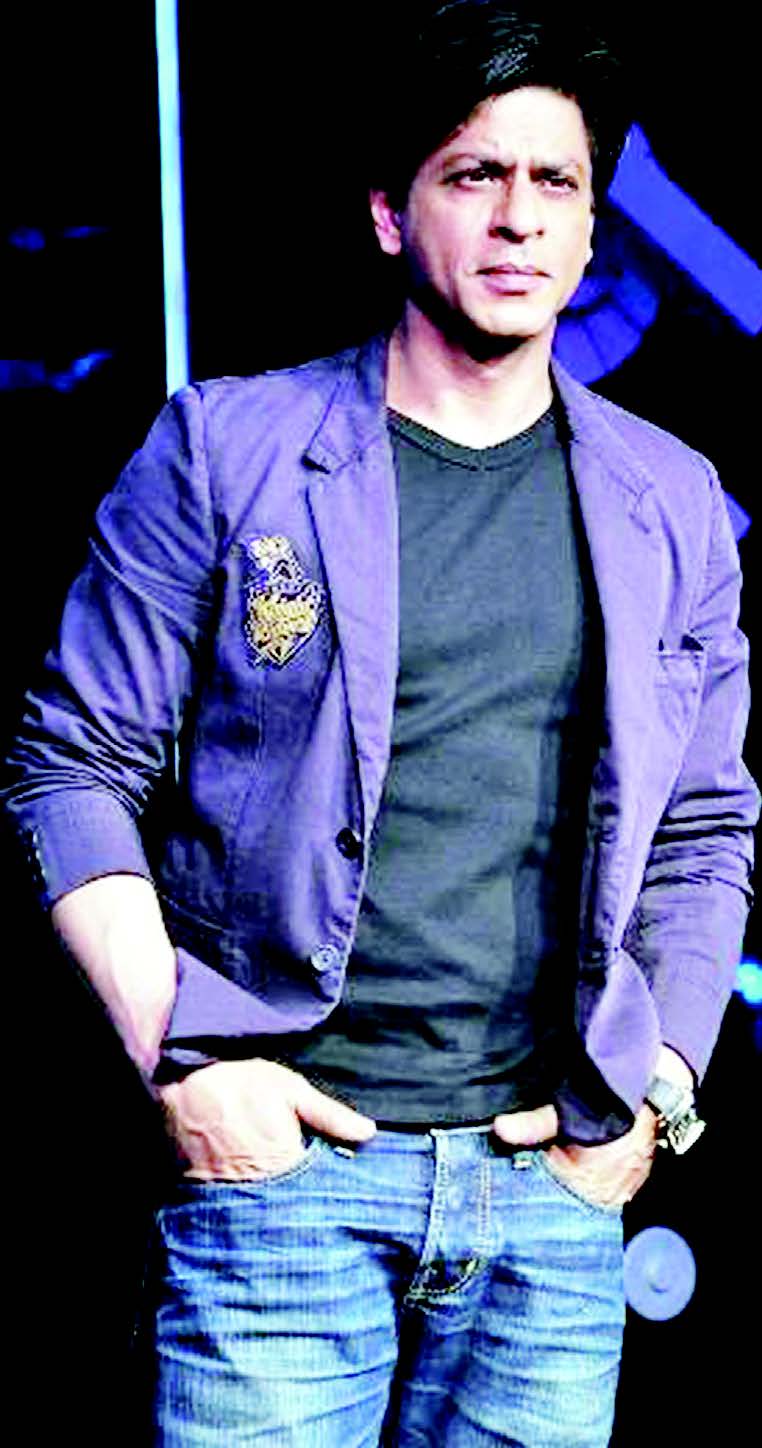
LYON, FRANCE (TIP): Internationally-renowned Bollywood superstar Shah Rukh Khan has been roped in as an ambassador for Interpol’s “Turn Back Crime” campaign to promote awareness on how everyone can play a role in preventing crime.
Shah Rukh, said to be the first Indian to be made an ambassador for the global campaign, is lending his voice to help spread the message that all of society benefits when citizens respect law and fight crime. “It’s a very special honor to be a part of Interpol’s ‘Turn Back Crime’ campaign as an ambassador,” said Shah Rukh. “As Mahatma Gandhi once said, ‘I shall not fear anyone on Earth. I shall fear only god. I shall not bear ill will toward anyone.
I shall not submit to injustice from anyone. I shall conquer untruth by truth. And in resisting untruth, I shall put up with all suffering, if I have to. “We all should believe in this maxim and in whatever way possible resolve not to let unjust people who might threaten us with criminal activity make us fear them. “Because I believe we can, we should, and we must stand together against the few who commit crimes against any human being, in whatever form or guise these crimes might take,” Shah Rukh said in a statement.
Shah Rukh joins actor Jackie Chan as an ambassador for the campaign, which has already garnered support from public figures including footballer Lionel Messi, Formula 1 racing drivers Fernando Alonso and Kimi Raikkonen in addition to law enforcement agencies around the world. Interpol’s campaign is aimed at raising public awareness that organized crime is often involved in seemingly unrelated crimes.
Drug trafficking, human trafficking, counterfeiting, cyber crime, kidnapping, crimes against children and corruption in sport are in fact often interconnected, with profits from one crime area used to fund another. The campaign is aimed at helping the public better understand these issues and empowering them not to be duped by criminals when buying products or using the internet.
“Shah Rukh Khan has dedicated his life to making films which reflect the highest level of professionalism and commitment to bringing joy into the lives of hundreds of millions of filmgoers in India and around the world,” said Interpol secretary general Ronald K. Noble. “We are honored to have him as an ambassador for Interpol’s global Turn Back Crime campaign and we look forward to seeing how he puts his artistic talents behind this campaign,” the Interpol chief said. -

PM Modi Eyes Breakthrough Nuclear Pact on Japan Trip
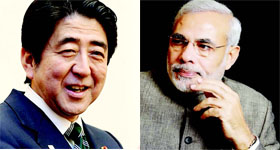
NEW DELHI (TIP): India is hoping to win Japanese backing for a nuclear energy pact during a visit by Prime Minister Narendra Modi, and lure investment into its $85 billion market while addressing Japan’s concern about doing business with a nuclear-armed country, says the Economic Times. India has been pushing for an agreement with Japan on the lines of a 2008 deal with the United States under which India was allowed to import US nuclear fuel and technology without giving up its military nuclear program.
But Japan wants explicit Indian guarantees not to conduct nuclear tests and more intrusive inspections of its nuclear facilities to ensure that spent fuel is not diverted to make bombs. India, which sees its weapons as a deterrent against nuclear-armed neighbors China and Pakistan, has sought to meet Japan’s concerns and over the past month the two sides have speeded up negotiations ahead of PM Modi’s visit. “Serious efforts are being made to resolve any special concerns that Japan has.
Whether it will be fully resolved and ready for signing before the end of the PM’s trip is unclear,” said a former member of India’s top atomic energy commission who has been consulted in the drafting of the energy pact. “I would give it a little better-than-even chance at this point,” he said, asking not to be identified because of the sensitivity of the negotiations. PM Modi travels to Japan on Saturday, August 30, for a five-day visit, his first major bilateral trip since taking over in May. The visit is being billed as an attempt by the two democracies to balance the rising weight of China across Asia.
Narendra Modi and host Prime Minister Shinzo Abe are also expected to boost defense ties, speeding up talks on the sale of an amphibious aircraft to the Indian navy. Another focus is infrastructure, with the Indian leader seeking Japanese backing for the high-speed ‘bullet’ trains he promised to voters in his election campaign. But it is the nuclear pact that can transform ties in a way the deal with the United States did by establishing India as a strategic partner, although nuclear commerce with the United States has since foundered because of concern over India’s liability laws.
Officials in Japan were tight-lipped about prospects for a nuclear deal. ‘FOUNDATIONS’ A civil nuclear energy pact with India would give Japanese nuclear technology firms such as Toshiba Corp and Hitachi Ltd access to India’s fast-growing market as they seek opportunities overseas to offset an antinuclear backlash at home in response to the 2011 Fukushima nuclear accident. India operates 20 mostly small reactors at six sites with a capacity of 4,780 MW, or 2 percent of its total power capacity, according to the Nuclear Power Corporation of India Limited. The government hopes to increase its nuclear capacity to 63,000 MW by 2032 by adding nearly 30 reactors.
India is considering a Japanese proposal for a separate commitment not to test nuclear weapons over and above a selfimposed moratorium it declared after testing in 1998. Another possibility is that PM Modi gives a personal assurance to Shinzo Abe on India’s nuclear weapons program to help allay concern in Japan, the only country to have suffered a nuclear attack and which has since been a champion of non-proliferation and disarmament.
“India and Japan are laying the foundations of a bigger deal,” said former vice chief of Indian army Lieutenant General AS Lamba, an expert on ties with Japan. “It’s no use rushing into something that fails to get off the ground, which is what happened to the India-US agreement. This is being constructed slowly, this is a defining moment.” -

Pak protests: Imran Khan’s party holds talks with government negotiators
ISLAMABAD (TIP):
Pakistani ministers and opposition politicians met antigovernment protesters on August 20 but talks ended for the day with the sides appearing no closer to resolving a weeklong political crisis that has rattled the restive, nuclear-armed nation. Thousands of followers of cricketerturned- politician Imran Khan and populist cleric Tahir-ul-Qadri have been demonstrating outside the parliament building in Islamabad, trying to force Prime Minister Nawaz Sharif to resign from office. Khan and Qadri say last year’s general election that swept Sharif to power by a landslide was rigged and are demanding his resignation.
Late on Wednesday Imran Khan’s team met with government negotiators in Islamabad to discuss his Pakistan Tehreeke- Insaf (PTI) party’s demands. “We put our demands before the government team and they promised to get back to us on Thursday after examining them,” PTI vice-chairman Shah Mehmood Qureshi told reporters after talks. Imran Khan had earlier struck a defiant note, insisting Sharif must resign before he would participate in negotiations.
Chaudhry Muhammad Sarwar, a member of the government team and governor of Punjab province said the talks were cordial. “Whatever decision the two committees take will be in the best interest of Pakistan,” he said. Earlier on Wednesday evening, a crossparty delegation met members of Qadri’s team to try to resolve the standoff, but the session finished with no concrete result.
Talks were dominated by the issue of the alleged murder by police of at least 10 of Qadri’s Pakistan Awami Tehreek (PAT) movement’s workers in Lahore in June, Rahiq Abbasi, a member of the cleric’s committee, told reporters afterwards. called for the immediate registration of a case and the arrest of all accused,” Abbasi said, reiterating his call for Prime Minister Sharif’s government to stand down. The government’s response was not immediately known.
The showdown has added to instability in a country that has had three military coups since its creation in 1947 and which is struggling with a homegrown Taliban insurgency, a crippling power crisis and a sluggish economy. The two protest movements are not formally allied and have different goals, beyond toppling the government. But their combined pressure — and numbers — have given extra heft to the rallies.
If PAT were to reach a settlement with the government and withdraw, PTI’s position would be significantly weakened, despite Imran Khan’s tough stance. Neither movement has mobilized mass support beyond their core followers and opposition parties have shunned Imran Khan’s call to unseat the government and begin a campaign of civil disobedience.
The Supreme Court, which has played an influential role in Pakistani politics in recent years, has ordered Imran Khan and Qadri to appear on Thursday to explain their protests. The ruling came after petitions urging the court to restrain Khan and Qadri from “making illegal and unconstitutional demands”, Kamran Murtaza, a senior lawyer, told AFP. The protests have so far been peaceful but the crisis has raised fears that Pakistan’s fragile democracy could be under threat of another military intervention.
Rumours have abounded that elements within the influential military have been behind Imran Khan and Qadri’s moves, though the cleric and the interior minister have adamantly denied this. The army’s chief spokesman General Asim Bajwa said via Twitter the situation required “patience, wisdom and sagacity” from all sides and could only be resolved through “meaningful dialogue”.
Sharif has a history of testy relations with the military — his second term as prime minister ended abruptly in 1999 when then-army chief Pervez Musharraf seized power in a coup. His government is thought to have angered the military further by pursuing criminal cases against Musharraf dating back to his 1999-2008 rule, including treason charges. Military analyst Ayesha Siddiqui warned that the situation was precarious. “From the military perspective, they have tried and tested Nawaz Sharif a third time and they feel disappointed. Why would they let him be?” she told AFP. -

UN chief condemns American journalist’s killing
UNITED NATIONS (TIP):
UN secretary general Ban Ki- moon on August 20 strongly condemned the killing of American journalist James Foley by extremist Islamist militants, calling it “an abominable crime”. “The secretary-general condemns in the strongest terms the horrific murder of journalist James Foley, an abominable crime that underscores the campaign of terror the Islamic State of Iraq and the Levant (ISIL) (now called Islamic State) continues to wage against the people of Iraq and Syria,” Xiinhua quoted a statement issued here by Ban’s spokesperson as saying.
“The perpetrators of this and other such horrific crimes must be brought to justice,” Ban stressed. The UN chief also extended his deepest condolences to the family, friends and colleagues of Foley. A video released by the IS militants Tuesday purported to show the beheading of Foley and contained threats to kill the other in retaliation against the recent US intervention in Iraq.
A masked fighter was shown beheading a man kneeling in an orange jumpsuit said to be Foley, a 40-year-old freelance journalist who disappeared in northwest Syria in 2012. Earlier on August 20, the White House said that the video showing the beheading of Foley had been authenticated by the US intelligence community. -

Congress CMs wary of sharing dais with PM Modi
NEW DELHI (TIP):
Shaken by the booing of their Haryana counterpart Bhupinder Singh Hooda on August 19, Congress chief ministers are wary of sharing the dais with Prime Minister Narendra Modi in election-bound states, fearing that BJP would use these events to embarrass them by orchestrating protests. Maharashtra CM Prithviraj Chavan has decided to skip a function in Nagpur where he was to lay the foundation of Metro with Modi on Thursday. At the same time, Jharkhand chief minister Hemant Soren has asked the PMO to ensure that he is not put in an embarrassing position when he joins Modi at a function in Ranchi on Thursday.
Chavan announced his decision to skip the foundation-laying ceremony of Nagpur Metro, pointing to a pattern in the booing of Hooda and his own experience at an earlier event with the PM in Solapur where Modi chose to attack the now-dislodged UPA government. “In my opinion, the recent incidents in Solapur and Haryana in the presence of Modi had adverse impact on our federal structure. Under such circumstances, I decided not to attend the Nagpur event,” Chavan told reporters.
The concern of CMs coincide with Congress’s resentment over the Kaithal incident where Hoodda was heckled with Modi by his side. Congress circles feel the protest was organized by the BJP to paint rival CMs as unpopular, and could be part of a saffron strategy in poll-bound states where BJP is on a strong wicket electorally. In fact, much before Chavan announced his decision, Congress managers started mounting pressure on the party leadership to direct its CMs to keep an arm’s length from Modi till the elections.
A party leader said Sonia Gandhi was apprised of the concern in writing. Maharashtra, Jammu and Kashmir, Jharkhand and Haryana are set for assembly polls later this year and most of the PM’s visits are focused on these states. BJP, however, dismissed Congress’s decision as a political antic meant to cover up the discontent facing them. “Our government respects all CMs — be it ours or of other parties.
When the PM goes somewhere, the CM sits next to him and he (PM) accords all due respect to him. But if the people are angry with the CMs, what can the government do about it,” BJP spokesperson Shahnawaz Hussain said. “The situation in Maharashtra and Haryana is such that the CMs are not ready to face the public. When public asks questions from them, they demand answers.
People in Haryana seem to be angry with Hooda and that is not our fault. Hooda should introspect,” Hussain added. His colleague Sudhanshu Trivedi further said, “BJP workers are, of course, expected to exercise restraint but Congress is fooling itself by passing off the protest against Haryana CM as something which was staged by his political opponent. What happened at Kaithal was a spontaneous eruption of public grievance against 10 years of the worst kind of corruption and usurpation of farmers’ land by Hooda government for its masters and favourite businessmen.”
He added, “Congress would have done itself a service by engaging in selfintrospection rather than decide to skip PM’s function and play victim to garner sympathy which is not there.. Those who are in public life should be take adulation and protest in the same stride.” Trivedi also said BJP never displayed such synthetic outrage during the years Congress was in power.
AICC general secretary Shakeel Ahmed justified the concern expressed by the Jharkhand CM. “There is a political design behind the incidents. PM is visiting Jharkhand on Thursday and CM Soren should be cautious. It’s not only about Congress CMs. All selfrespecting CMs of the Opposition should avoid political functions of Modi, which are being held in the name of public functions,” he said. -

Dallas Indian Americans Celebrate India’s Independence Day with gusto
Report & photos by Zia Khan
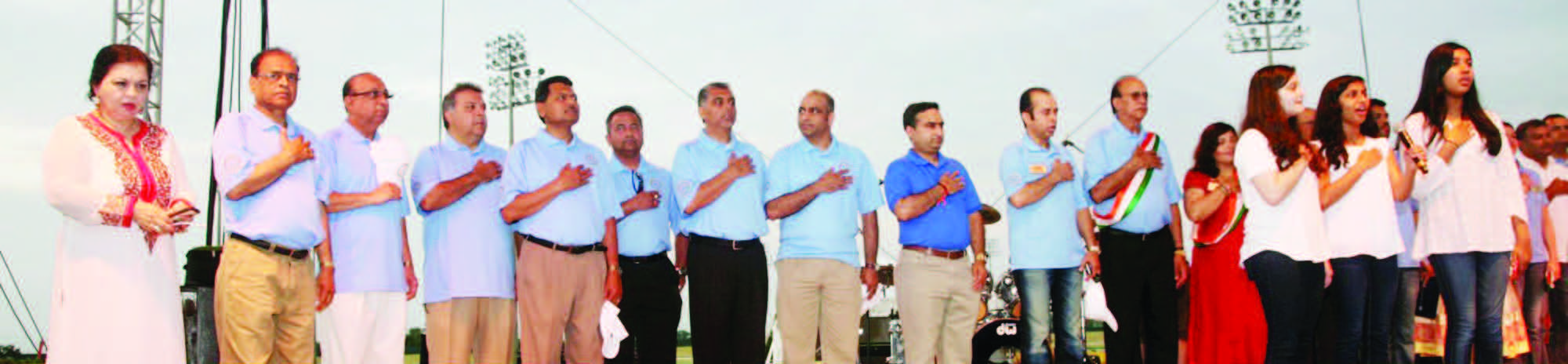
DALLAS (TX): The rain and the muddy ground failed to dampen the spirit of Indian Americans in Dallas to celebrate the 68th Independence Day of India on Saturday, August 16. A record number of over 15,000 persons of Indian origin gathered to celebrate the Independence Day of the country of their origin at Lone Star Park in Grand Prairie, Texas.
In evidence was the deep enthusiasm of the community to showcase their rich culture and heritage. The visitors took full advantage of the opportunity to enjoy the delectable Indian cuisine of a large variety. They shopped around at various booths where religious, political and business organizations displayed their wares. The Independence Day celebration proper started with the singing of the National Anthem of both India and USA.

An impressive, parade with people waving Indian and USA flags, was led by the Grand Marshal Padma Shri Ashok Kumar Mago. Padma Shri Dr. Sant Singh Virmani was the Guest of Honor. There was plenty of entertainment from Bollywood stars who gave a breathtaking nonstop musical performance. In addition, an excellent cultural program was presented by the IANT youth.

Grand Marshal Padma Shri Ashok Kumar Mago addresses the gathering
Spectacular display of fireworks gave a finishing touch to an enchanting and memorable evening of celebrations. The grand event was organized by India Association of North Texas, under the care and supervision of President Swati Shah and Chair Dr Srinivas Reddy Gunukula.
(Zia Khan can be reached at dallasphotogapher@ymail.com and cell no. 214. 207.7922)

Padma Shri Dr. Sant Singh Virmani, the Guest of Honor extends greetings

IANT President Swati Shah welcomes , greets and speaks about the event

Greetings from a guest

Grand Marshal Padma Shri Ashok Kumar Mago is honored

Padma Shri Dr. Sant Singh Virmani, the Guest of Honor is honored

A song number

Organizers all

The young dance to the lilting music

A captivating dance number

The musicians
-

Impasse in Islamabad: Imran Khan adamant on Sharif step down, Sharif stays put
ISLAMABAD (TIP):
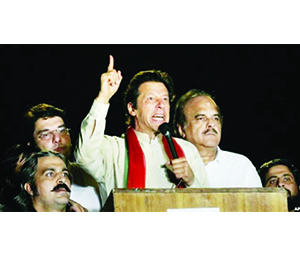
The protest in Pakistan appears to have reached a crossroads. Late August 20th evening, Pakistan Tehreek-e-Insaf (PTI) leader Imran Khan addressed his supporters at a massive rally in Islamabad, hours after his deadline for Prime Minister Nawaz Sharif’s resignation lapsed. While his stance remained unchanged, earlier in the evening, the other leader of the protest, populist cleric Tahir-ul-Qadri was engaged by negotiators from the government and the opposition.
But Imran Khan wants no talks before Sharif steps down. “If Nawaz Sharif does not resign then we will enter into the PM house,” Khan said while addressing thousands of anti-government protesters who entered the heavily fortified ‘Red Zone’ and set up camp in front of Pakistan’s parliament house. Meanwhile, the military called for calm after protesters breached the Red Zone that houses important government buildings including the parliament house, prime minister house, president house, the supreme court besides embassies.
“Situation requires patience, wisdom and sagacity from all stakeholders to resolve prevailing impasse through meaningful dialogue in larger national and public interest,” military spokesman Maj Gen Asim Saleem Bajwa tweeted. -

UK RESEARCHERS CONFIRM WORRYING INCREASE IN SUICIDE TOURISM
LONDON:
The first recorded case of an Indian travelling to Switzerland for “suicide tourism” has now been confirmed. In a first of its kind study, researchers in UK have confirmed tremendous spike in a worrying trend of suicide tourism. The numbers of ‘suicide tourists’ going to Switzerland to take their own lives have doubled within four years with citizens from Germany and UK contributing to the largest per cent.
Those with neurological conditions, such as paralysis, motor neurone disease, Parkinson’s and multiple sclerosis, account for almost half of the cases. While 123 people undertook suicide tourism in 2008, the number rose to 172 in 2012. The data shows that nationals from 31 different countries were helped to die in Switzerland between 2008 and 2012, with German (268) and UK (126) nationals making up almost two thirds of the total.
Other countries in the top 10 include France (66), Italy (44), USA (21), Austria (14), Canada (12), Spain and Israel (each with 8). The data base made public on Thursday morning shows one case from India as well in 2012. The study by Oxford University looked at whether the availability of suicide tourism in Switzerland had prompted changes in the law on assisted suicide elsewhere. While assisted suicide (AS) is strictly restricted in many countries including India, it is not clearly regulated by law in Switzerland.
This imbalance leads to an influx of people — suicide tourists — coming to the Canton of Zurich with the sole purpose of committing suicide. Political debate regarding ‘suicide tourism’ is taking place in many countries. Swiss medico legal experts are confronted with these cases almost daily, which prompted our scientific investigation of the phenomenon, said the researchers.
Researchers therefore searched the databases of the Institute of Legal Medicine in Zurich for information on investigations and post mortem examinations among non-Swiss nationals who had been helped to take their own lives between 2008 and 2012. There are six right to die organisations in Switzerland, of which four permit nationals from other countries to use their services.
The search revealed that 611 people who were not resident in Switzerland had been helped to die between 2008 and 2012, all but four of whom had gone to Dignitas. Their ages ranged from 23 to 97, with the average being 69; over half (58.5%) of the ‘tourists’ were women, who were 40% more likely to choose assisted suicide in Switzerland than men. The rises were particularly steep in certain countries, especially Italy — up from 4 in 2009 to 22 in 2012, and France, up from 7 in 2009 to 19 in 2012. Overall, the numbers of people being helped to die in Switzerland doubled between 2009 and 2012.
Virtually all the deaths were caused by taking sodium pentobarbital. Four people inhaled helium — deaths which were widely publicised and described as “excruciating”, and possibly responsible for the dip in numbers of suicide tourists to Switzerland between 2008 and 2009, say the researchers. Around one in three people had more than one condition, but neurological conditions accounted for almost half of the total cases, followed by cancer and rheumatic diseases.
The study published on Thursday in the Journal of Medical Ethics suggest that the phenomenon of suicide tourism, which is unique to Switzerland, has prompted legislative changes and/or serious debate in Germany, the UK, and France—the principal sources of this type of tourism. But Dr Charles Foster of Green Templeton College at the University of Oxford is not convinced that this is the case in the UK. He argues that there are two possible connections between suicide tourism and policies surrounding assisted suicide in the UK. -

FIGHTING OUTSIDE KEY UKRAINIAN CITY KILLS 9 TROOPS
KIEV, UKRAINE (TIP):
A Ukrainian official said nine troops were killed in overnight fighting in the streets of the town of Ilovaysk, which lies just east of the rebel stronghold Donetsk. Anton Herashchenko, an adviser to the Ukrainian interior minister, said in a Facebook post on Augusut 20 morning that government troops now control half of the town, but rebels are offering fierce resistance after more than a day of fighting.
Government efforts to quell the pro-Russia insurgency in eastern Ukraine are focused on encircling Donetsk and also driving rebels out of the city of Luhansk. The Kiev government also has pursued diplomatic efforts to resolve the conflict, which has killed more than 2,000 people and displaced 300,000. The Ukrainian president hosts the German chancellor this weekend before meeting next week with Russia’s president. -

China arrests ‘nearly 1,000’ members of banned cult
BEIJING (TIP):
Chinese authorities have arrested “nearly a thousand” members of a banned religious group. The crackdown comes after members of Quannengshen, or the Church of Almighty God, thrashed a woman to death inside a McDonald’s outlet in Shandong province in May.
The suspects are allegedly involved in more than 500 criminal cases, Chinese ministry of public security said on August 19 without explaining the nature of the cases. Over one hundred of the suspects are “high-level organizers and backbone members,” it said. The cult, which originated in central Henan province, believes Jesus was resurrected as Yang Xiangbin, wife of the sect’s founder, Zhao Weishan, Xinhua said.
Zhao, who is also known as Xu Wenshan, fled to the US in September 2000. Authorities earlier arrested five members of the cult, and charged them with intentional homicide for the killing of a woman at a McDonald’s outlet in Shandong. The woman was beaten to death merely because she refused to give her telephone number, which cult leaders needed for their drive to recruit new members, investigators said. -

Thailand’s junta chief appointed PM by hand-picked House
BANGKOK (TIP):
Thailand’s coup leader General Prayuth Chan-ocha was appointed prime minister on August 21 by a legislature he hand-picked, giving the army chief a veneer of legitimacy even while the military presses on with efforts to silence its critics. The army seized power on May 22 in a bloodless coup following six months of street protests that contributed to the ousting of Yingluck Shinawatra, whose government was opposed by the Bangkok royalist establishment.
Although Prayuth’s appointment paves the way for an interim government to be set up in the coming weeks, power will remain in the junta’s hands. The general has said he plans to press ahead with a year of political reforms before a new election takes place by late 2015. “It is designed to give him the power to run the country according to the law.
The premier position will give him legal power in the Thai governance system,” Gothom Arya, a lecturer in human rights studies at Mahidol University, said. The nomination comes as no surprise – the National Legislative Assembly that chose Prayuth, 60, is largely considered a rubber stamp parliament tasked with enacting sweeping reforms under the army’s watch. Prayuth will retire as army chief in September but will stay on as head of the junta, formally known as the National Council for Peace and Order. reuters -

Kashmir a bilateral issue, stick to Simla pact: India to Pak
Kashmiri separatists are stakeholders: Pakistan envoy
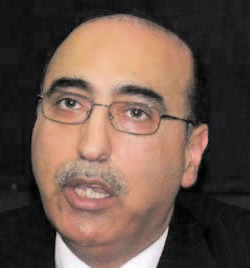
NEW DELHI (TIP): Pakistan high commissioner Abdul Basit has justified his meetings with Kashmiri separatists, describing them as “stakeholders”, and indicated that his country will not budge from its stance despite India’s decision to cancel foreign secretary-level bilateral talks in protest.
Basit’s comments on August 20 , two days after the Narendra Modi-led NDA government cancelled the talks when he ignored foreign secretary Sujatha Singh’s warning to refrain from meddling in India’s internal affairs and desist from the meetings, evoked a sharp reaction from India. Only India and Pakistan are stakeholders, Syed Akbaruddin, spokesman of the external affairs ministry said emphatically, maintaining that as per the 1972 Simla Agreement the Kashmir issue was a bilateral matter and no other approach would yield results.
NEW DELHI (TIP):
India on August 20 made it clear to Pakistan that Jammu and Kashmir was a bilateral issue and that the neighbouring country must adhere to the 1972 Simla Agreement and the 1999 Lahore Declaration if it desired an amicable settlement of the issue. “After the signing of the Simla Agreement (1972) by Prime Ministers of India and Pakistan, there are only two stake-holders on the issue of Jammu and Kashmir—the Union of India and the Islamic Republic of Pakistan,” MEA spokesman Syed Akbaruddin said.
He rejected Pakistan High Commissioner Abdul Basit’s statement earlier in the day that he met Hurriyat leaders since they were representatives of the people of Kashmir and stakeholders on the issue. The Indian official affirmed that the Simla Agreement was the bedrock of ties between the two countries and this was reaffirmed in the Lahore Declaration signed in 1999 between the then Indian Prime Minister Atal Behari Vajpayee and his counterpart Nawaz Sharif.
Asked why India permitted meetings between Pakistan’s representatives and the Hurriyat leaders in the past, the spokesman said, “Pakistan assured us at the highest level that they were committed to a peaceful dialogue on the issue of J-K and would not allow Pakistan or territories under its control to be used for terrorism against us.’’ However, India was now aware, particularly after the Mumbai terror attacks and the manner in which Pakistan had pursued subsequent investigations and trials, that this assurance had no meaning and that an approach which was different to the one laid down by the Simla Agreement and the Lahore Declaration would not yield results, he added.
Talking to mediapersons, the Pakistani envoy claimed that he had not breached any diplomatic propriety by meeting the Kashmiri separatists. “This has been a long-standing practice. It is important to engage with all stake-holders to find a peaceful solution to the issue,” he said, indicating Islamabad would continue talking to the separatists despite India’s objection. -

Raja, Kani get bail in 2G money laundering case
NEW DELHI (TIP):
Former Telecom Minister A Raja, DMK MP Kanimozhi and seven others, chargesheeted by the Enforcement Directorate (ED) in a 2G scam-related money laundering case, were on Aug 20 granted bail by a special CBI court. “All bail applications are allowed,” Special CBI Judge OP Saini said and asked them to furnish a personal bond of Rs 5 lakh each and a surety of similar amount. Earlier during the day, the court granted bail to DMK supremo M Karunanidhi’s wife Dayalu Ammal, who was also chargesheeted in the case.
Ammal (83) was given bail on a personal bond of Rs 5 lakh with two sureties of the like amount. The court, however, dismissed the plea of Ammal seeking discharge in the case on the ground that she was not well and was suffering from unsoundness of mind. The ED had chargesheeted 19 accused — 10 individuals and nine firms — in the case saying that the transaction of Rs 200 crore, which was allegedly paid to DMK-run Kalaignar TV, was “not genuine” and it was a “bribe for grant of telecom licences to DB Group companies”.
Ammal was holding a 60% stake in Kalaignar TV while Kanimozhi and Sharad Kumar were holding a 20% stake each, the agency had said. It had also claimed that its probe into the case emanates from the 2G spectrum allocation scam and the accused had allegedly conspired and committed offences under provisions of the Prevention of Money Laundering Act (PMLA). Besides Raja and Kanimozhi, the ED had named Swan Telecom promoters Shahid Usman Balwa and Vinod Goenka, Directors of Kusegaon Fruits and Vegetables Pvt Ltd Asif Balwa and Rajiv Agarwal, Kalaignar TV MD Sharad Kumar, Bollywood producer Karim Morani, Ammal and P Amirtham as accused in the case. They all had moved bail applications which were allowed by the court. -

Yoga legend BKS Iyengar passes away
PUNE (TIP):
World-renowned yoga guru and founder of the Iyengar School of Yoga B K S Iyengar passed away here early on August 20 morning following illness. 96-year-old Iyengar had been ailing since some time and was admitted to a private hospital here a week back. He was put on dialysis after his condition worsened two days back.He breathed his last at 3.15 AM. Iyengar, honoured with Padma Vibhushan, is survived by a son and daughter.
The legendary yoga guru was admitted to a city hospital on August 12 following complaints of acute breathlessness and palpitation, Dr Deepali Mande, who attended on him, said. “He did not want to be admitted to hospital even though he was unwell at home for almost three weeks. Iyengar had a cardiac (ailment) history. His condition subsequently worsened leading to renal failure after which he was put on dialysis,” she said.
During the last phase, Iyengar was feeling drowsy, she said. “He was not keen on having any food,” the doctor added. Iyengar was considered one of the foremost yoga teachers in the world and had written many books on yoga practice and philosophy including ‘Light on Yoga’, ‘Light on Pranayama’, and ‘Light on the Yoga Sutras of Patanjali’. rime Minister Narendra Modi condoled the death of Iyengar.
“I am deeply saddened to know about Yogacharya BKS Iyengar’s demise & offer my condolences to his followers all over the world,” he said on Twitter. “Generations will remember Shri BKS Iyengar as a fine Guru, scholar & a stalwart who brought Yoga into the lives of many across the world,” the Prime Minister said. An eminent exponent of yoga as enunciated in the ancient “Patanjali Sutra”, Iyengar was credited with spreading practice of yoga to about 60 countries which he visited carrying message from the east to the west. -

MODI’S TOKYO VISIT MAY FAST-TRACK SUPPLY OF AMPHIBIAN AIRCRAFT
New Delhi (TIP):
India and Japan will seek to end impasse over the supply of Japanese US-2 amphibian aircraft to the Indian Navy during Prime Minister Narendra Modi’s visit to Tokyo from August 31 to September 3. Though the two countries have been negotiating the deal for a couple of years now, Japan’s reluctance to transfer technology to India has resulted in an impasse. New Delhi was insisting on provisions in the agreement that would facilitate co-production of the aircraft in the future.
New Delhi, however, expects that Modi’s Tokyo visit will lend momentum to the negotiation, as Prime Minister Shinzo Abe’s Government in Japan is keen to boost defence cooperation with India. Modi will hold the annual bilateral summit with Abe during his stay in Tokyo. He will also have an audience with Japanese Emperor Akihito. According to diplomatic sources in New Delhi, Tokyo of late had indicated its willingness to allow manufacture of some of the components of the US-2 amphibian aircraft in India.
The negotiators of the two countries are now discussing technical details, extent of the technology transfer and co-production that the proposed deal would mandate for, an official familiar with the talks told Deccan Herald. The US-2 amphibian aircraft is manufactured by ShinMaywa Industries of Japan. The STOL (short take-off and landing) aircraft is used by the Japanese Maritime Self Defence Force for sea and air rescue operations. Tokyo in 2012 offered New Delhi a civilian version of the aircraft, ostensibly to get around Japan’s strict self-imposed restrictions on sale of military hardware to other countries.
The two countries constituted a Joint Working Group to work out a deal and formal negotiations began in December 2013. New Delhi is keen to buy 15 US-2 aircraft, beginning with two to be flown in from Japan while the rest will be assembled in India. Each plane could cost approximately $115 million, said sources. The hurdle to the supply of military version of the aircraft was done away with, when Abe Government earlier this year announced its decision to end Japan’s half-a-century-old self-imposed ban on export of weapons system and sale of defence equipment to friendly nations that commit not to pass them on to a third country.
The new policy opened the doors for Japan’s defence companies to start coproduction with firms abroad. The second meeting of the Joint Working Group on US-2 in March saw Tokyo’s representatives amenable to New Delhi’s proposal to allow assembling of the aircraft and manufacture of some of its components in India under licence from ShinMaywa Industries. -

Obama’s phone call thawed US-Modi relations: US interim envoy
AHMEDABAD (TIP):
US President Barack Obama’s congratulatory telephone call to Narendra Modi after the Lok Sabha results brought about a thaw in the frosty relationship between the US and the Prime Minister, interim US Ambassador to India Kathleen Stephens said on Aug 20. She said the US president made the call even before Modi was sworn in and that set the tone for future engagement between the US and the PM.
She was responding to a question on what changed the US stance towards the Indian leader particularly in light of the fact that he was labelled persona non grata and denied US visa in 2005 over the 2002 riots in Gujarat and alleged human rights violations under his watch. Stephens said the US holds India high in importance as is evident from top-level visits of US officials like Senator John McCain, John Kerry (Secretary of State), Penny Pritzker (Secretary of Commerce) and Chuck Hagel (Secretary of Defence).
“So we are placed well and signals from the (Indian) government are very clear. Not only at the prime ministerial level but at the level of the government also…a great priority has been given to the India-US relationship which President Obama has called a defining relationship,” Stephens said. -

Cong, BJP wrangle over booing of Opposition CMs
After Hooda, jeers for Jharkhand CM at PM function * Prithviraj Chavan skips Modi event
NEW DELHI (TIP):
Maharashtra chief minister Prithviraj Chavan on August 21 boycotted both the government functions in Nagpur and refused to share the dias with Prime Minister Narendra Modi in the wake of heckling of non – BJP chief ministers by BJP workers in recent past, in such programmes. Chavan kept away from the inauguration of the Mouda Super Thermal Power Project Phase I, and later also skipped the function for laying the foundation stone of the proposed Nagpur Metro project.
The guardian minister for the district, Nitin Raut, also refused to share the dais with Modi. The minister for social justice, Shivajirao Meghe received Modi at the airport on behalf of the state government, in keeping with protocol. The decision came after two other chief ministers, Bhupinder Singh Hooda of Haryana and Hemant Soren of Jharkhand, were booed by Bharatiya Janata Party (BJP) supporters at meetings addressed earlier by the Prime Minister.
Chavan himself was heckled by BJP activists at a function attended by Modi in Raigad last week. Chavan accused the BJP of politicising the Prime Minister’s public events ahead of assembly polls. “I have decided not to attend the Prime Minister’s function because of the incidents that took place in recent days,” he said. A group of Congress supporters, meanwhile, staged a demonstration with black flags near the venue of a function attended by the PM.
Hemant Soren booed
Crowds heckled Jharkhand chief minister Hemant Soren in the presence of Prime Minister Narendra Modi on Thursday, the third instance of public humiliation of opposition leaders, fuelling talk over whether there was a BJP design to undermine the chief ministers in some election-bound states. The crowd, comprising mainly BJP supporters, booed and kept shouting “Modi, Modi” throughout Soren’s speech at a public rally in Ranchi.
At one point, he asked the gathering to forget the political rivalry for a day, but that further irked the 70,000-odd crowd and the booing became louder. “Political powers keep changing; we need to respect the dignity of this stage,” Soren said, which irked the crowd of about 70,000 even more and led to louder chants. The reaction of the crowd appeared to have taken the chief minister by surprise, causing some errors in his speech. Soren mistakenly referred to Modi as the president at least five times.
Modi was in Ranchi to inaugurate a substation of the Power Grid Corporation in the district. Later, the ruling Jharkhand Mukti Morcha (JMM) took a strong stand and said the party will not let the BJP hold such events in the state in future. Asking Modi to apologise to the public and leaders of Jharkhand and Haryana, the party’s national general secretary Supriyo Bhattacharya said the BJP should learn how to control its men.
CM Soren too criticised the incident calling it a “pre-planned stunt by the BJP” and “an insult of the federal structure”, a reference to Modi’s repeated assertions that his government believed in “cooperative federalism” and taking along all states. “The PM must look into it… the federal system he talks about. I feel it is like raping the system, the tradition of the federal system.
There is a plan to break it.” Soren had earlier asked the Prime Minister’s Office (PMO) to ensure no ‘Hooda-like incident’ occurs at the event in Ranchi. The JMM had said that in case of any such incident the party would take strong steps. The BJP has reacted to the incidents saying its government gives due respect to all CMs. -

Tamil Nadu panchayat president’s hubby chops teen’s hand for ‘disrespect’
MADURAI (TIP):
Three men allegedly severed the hand of a 17-year-old teenager in Virudhunagar district on August 19 because he disrespected one of them — the husband of a village panchayat president. Police said Karthik, son of Rajadurai of Siruvanoor in Narikudi panchayat union, apparently did not stand up when Krishnan, whose wife Devi is the village panchayat president, crossed him two days ago.
Karthik was sitting on a platform at the time. Krishnan confronted Karthik as to why he was disrespectful. The two entered into an altercation, and villagers intervened and brokered peace. Fearing that her son may be attacked, Karthik’s mother advised him to stay away from the village for some time and stay in Sivaganga, where he worked as a labourer. Karthik was on his way to Sivaganga when Krishnan and his brothers Kannan and Kumar waylaid and attacked him on Tuesday.
They dragged him into nearby bushes and severed a portion of his left hand. Villagers who found the teenager in an unconscious condition, with a portion of his left hand missing, rushed him to Government Rajaji Hospital in Madurai. Doctors informed them that the hand could be reattached if they were able to retrieve it within an hour. But a late-night search went in vain as his attackers had thrown the hand some distance away. Villagers finally traced it around 7am on Wednesday, by which time it was too late, police said. Mukkulam police registered a case and are searching for the three men. -

Assam cops fire at mob trying to attack police station, 2 killed
GUWAHATI (TIP):
Two people were killed and at least seven were injured in Golaghat town in Assam on Wednesday after police fired to stop an armed mob of thousands from attacking a police station. The administration clamped an indefinite curfew in Golaghat district and called out the Army to help restore peace and normalcy. “The Army has been called out this evening to assist the district administration in restoring normality,” state home secretary G D Tripathi said. “The Army has staged a flag march in Golaghat and other places.”
The mob beat up an assistant sub-inspector and a constable before attempting to storm the Sadar police station in retaliation to Tuesday’s police lathicharge on people to clear the economic blockade imposed by different groups on NH-39 in the district against Nagaland. The mob also torched at least eight police vehicles on the highway, besides a few goods-carrying trucks stranded since August 14 due to the economic blockade.
Chief minister Tarun Gogoi said the government would institute a judicial inquiry into Wednesday’s police firing by a retired high court judge. On August 12 and 13, Naga miscreants, aided by NSCN (IM) cadres, raided several border villages in Assam, killing 14 villagers and setting hundreds of houses on fire. Tripathi said Gogoi and Nagaland chief minister T R Zeliang would meet in Guwahati on Thursday to defuse the situation on the border.
Union minister of state for home Kiren Rijiju is also scheduled to be present at the meeting along with DoNER minister Lt-Gen (retd) V K Singh, who arrived in the city on August 21. The border dispute between the two states is awaiting a solution from the Supreme Court after Assam filed a petition in 1988, seeking a settlement. While the Assam government wants no change in the current border demarcation, which is a constitutional boundary, Nagaland refuses to accept this and instead wants to follow the historical boundary that was demarcated before the colonial rule.