NEW YORK (TIP): Top-ranked Serena Williams is seeded No. 1 as she seeks her third straight US Open title. The US Tennis Association followed this week’s WTA rankings in announcing the seedings Wednesday. French Open runner-up Simona Halep is seeded second after reaching a career-best ranking this month.
She has never advanced past the fourth round at the US Open. Wimbledon champion Petra Kvitova is seeded No. 3 with third-ranked Li Na out because of a knee injury. Agnieszka Radwanska moves up to No. 4. Five-time major champ Maria Sharapova is seeded fifth, meaning there’s a chance she could face Williams in the quarterfinals. The runner-up the last two years, Victoria Azarenka, is seeded 16th after an injuryplagued season. Venus Williams is seeded 19th.
Month: August 2014
-

Sikhs For Justice to picket White House, if US hosts Modi
NEW YORK (TIP):
A petition calling on President Barrack Obama to cancel the controversial Indian Prime Minister Narendra Modi’s visit to the United States surpassed the 100, 000 mark which means the White House is required to issue an official response. Sikhs For Justice a New York based group which is spearheading the online protest against Modi said that the 100, 000 threshold was achieved Tuesday a week before the White House deadline of August 20.
The petition urges the President to condemn PM Modi his BJP for perpetrating violence against Muslims Sikhs and Christians. The petition went online on July 21 on the White House’s We the People Web site with the headline Cancel White House invitation to PM Modi.
Petitions that cross a threshold of signatures on the We the People website are reviewed by the Obama administration and an official response is issued. The overwhelming response to the petition indicates that strong anti-Modi sentiments exist among the American public who want that White House should cancel invitation to a known human rights violator the SFJ petition said.
While Narendra Modi is infamous for his role in 2002 Gujarat massacre the ruling party of India BJP is notorious for participating in the attacks on places of worships belong to the minorities starting with the instigating Army invasion of the Golden Temple in 1984 carrying out demolition of Babri Masjid in 1992 and burning of Christian churches in Orissa during 2008.
Gurpatwant Singh Pannun SFJ’s legal advisor said they also plan to picket White House on September 30 with the help of Muslims and Christian organizations if Obama administration went ahead with its plan to host Modi. -

DR. SUBHADRA NORI happiness in service of humanity and God
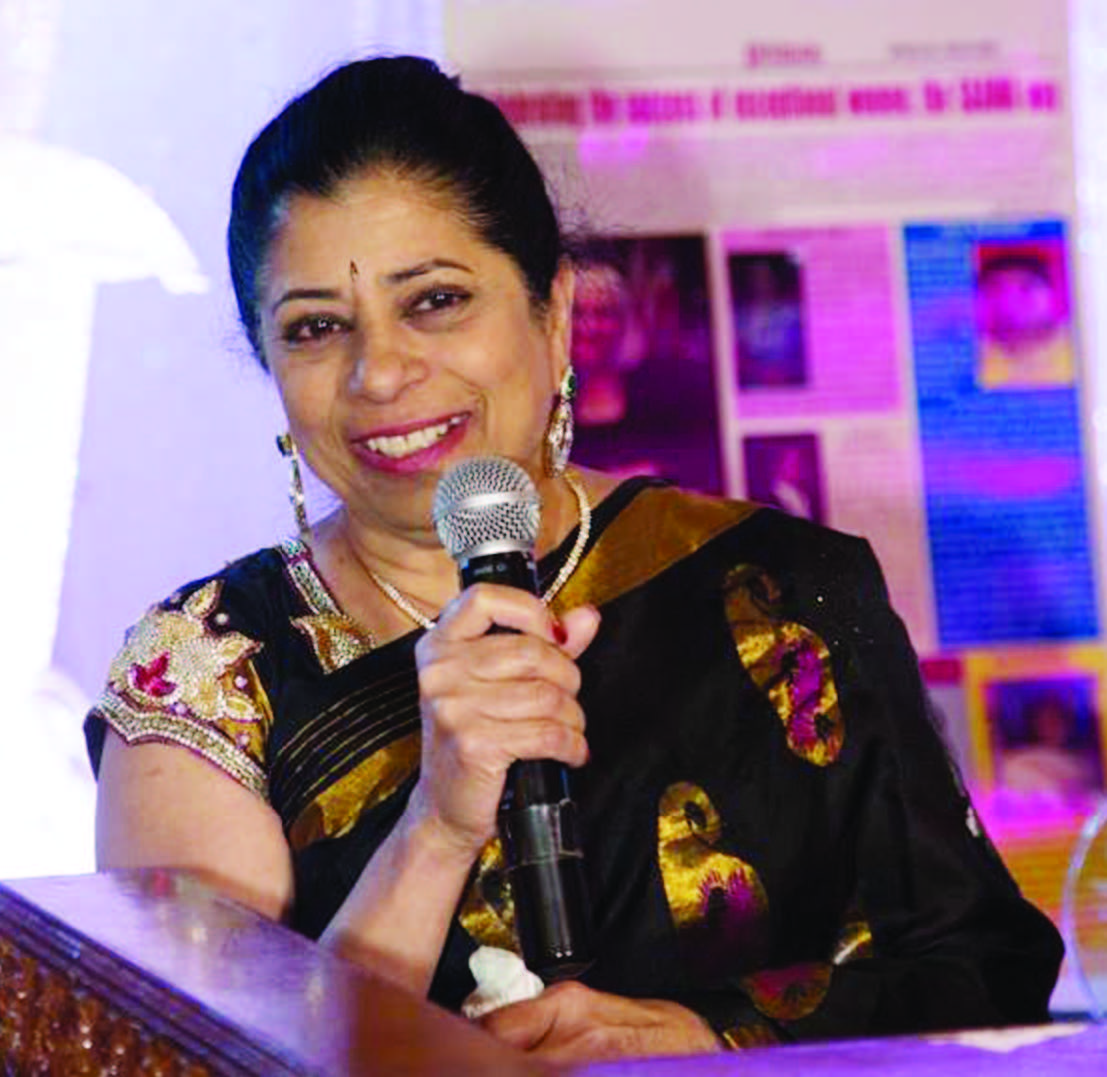
The South Asian and American Women’s Alliance (SAAWA), a Long Island based organization, recently recognized a few ladies at their 2014 annual gala. One of the honorees who drew my attention, in particular, was Dr. Subhadra Nori who was recognized for her “contribution to medicine”.
I felt impelled to speak with her after the formal part of the function was over to know more about her, primarily to satisfy my curiosity as to how a busy physician could train herself in to a motivational speaker and, also because I felt the readers of The Indian Panorama will get to know what made Dr. Subhadra Nori “a successful woman”. Such success stories prove to be very educative and serve as source of inspiration to others.
So, here we go. Dr. Subhadra Nori is a physician in physical medicine and rehabilitation. Working as the Regional Director of the Department of Physical Medicine and Rehabilitation at the Queens health network composed of Elmhurst and Queens Hospitals in New York, she is responsible for 4o Therapists, 10 attending physicians, 28 rotating residents through Mount Sinai School of medicine and hospital. What better way to understand a persona than to know what ideals are dear to him or her.
What vision does he or she have of the variegated life? So, in order to unravel Dr. Nori’s personality, I asked her a couple of questions which she readily answered. Here they are. The first question I asked her related to the most important institution in the life of a personfamily. Asked about her views on family, she said, “Family is the most important part of your life. You need the support and love of your spouse for achieving anything in career, life and happiness. It’s not how many gifts, jewelry or clothes are given but simple things as taking care of you, making sure you are comfortable, is the most important thing.

Judy Bosworth, North Hempstead Town Supervisor gives away the award to Dr. Subhadra Nori for her “contribution to Medicine”. Also seen in the picture, to the left of Bosworth, is Anila Midha, MD, Founder and President of South Asian American Women’s Alliance.
I am lucky and proud to say I have that 100%. To achieve the pinnacle of happiness you need the children’s acceptance and love. The last comment of hers brought me to the subject of children. I asked her what she thought about the upbringing of children, particularly, in a country which has a lot different set of values than Indians normally subscribe to. Dr. Nori said, “I was just like my mother.

Noris at their daughter’s wedding, with son, daughter in law, daughter, son in law and their parents
I didn’t think twice before providing, nurturing or pushing them when needed, to achieve many different aspects as culture, dance, music etc. However, their education was the primary goal for me”. She recalled how her parents also laid a great emphasis on education. “Our family’s emphasis was on education. without any discrimination between a boy or a girl. My parents were hard working, goal oriented, paying close attention to budget. Yet, they never hesitated when needed on education, for example, my medical college”.

Noris have always had political connections though they are not politically involved. Seen here with Hillary Clinton, then a Senator
Asked about the values she cherished most, she counted on her fingers, family, friendship and religious values. Dr. Subhadra Nori said she was proud of her heritage. “I am proud to say that both my parents came from solid families with many teachers and again, with emphasis on education. My paternal grandparents lived in Burma and spoke Burmese”.

Dr. Subhadra Nori with New York Mayor Michael Bloomberg (right).
Asked to give her views on religion, Dr. Nori said, “I believe in one Supreme God, and recently started reading on meanings of Vishnu Sahasranamamas, Aditya Hrudayam etc. I have great respect for the speaker of the pravachans Brahmsree SamavedamShanmukha Sharma. I have great faith in our Guruji Sree Vishwayogi Vishvamji. I believe he is always with me”. Asked if it gave her strength, she was emphatic in her affirmation. I thought it was time to bring her down from the high perch of philosophical reflections to other mundane affairs.
Knowing that most people in America are fitness conscious and Dr. Nori herself looked physical extremely fit, I asked her what she thought of health and fitness. “I am a big fan of exercise and use every possible available time to exercise. I have been a regular attendee of the gym for over 15 years. I do 2 days of circuit training with a personal trainer and attend 2 days of aerobics classes at the gym.
Zumba and kick boxing are my favorites. A little swimming in the summer as well. I am also careful with my diet and still read quite a few books and magazines on health and fitness, using audiobooks while doing dishes or commuting or gardening”. Asked to comment on her attitude to work, she said,” I believe in honesty and dedication towards work and ethics. I am a straight shooter and avoid cunning people.
I despise those who try to take advantage of the weak and the system. ” Dr. Subhadra Nori is a recipient of a number of awards and honors. These include the Best Teacher Award by Albert Einstein College of Medicine, Montefiore and Jacobi Medical Centers, and award for outstanding contribution to the residency program in PM &R 2003- 2005. And then, the SAAWA 2014 Award for her contribution to Medicine.
Asked what she thinks is the satisfying thing for her to do, she said, if human beings could help each other it would be the best thing to do. And she added she and her husband, the renowned Radiation Oncologist, Dr. Dattatreya Nori find real happiness in serving humanity and divinity. She said, “I was the secretary of Indo American Cancer Association which, in association with the Basavatarakam Foundation in Hyderabad was responsible for building a cancer hospital in Hyderabad. “The hospital is exclusively treating cancer patients from all over India, and is well known for its association with world renowned Sloan Kettering cancer center in New York.
10% to 15% patients get free service. We are very proud to be one of the founding members of this hospital. This hospital now has a nursing school, a wellness center and a chowltry for the needy.” Coming to the other source of happiness, the divine, Mrs. Nori said,” Along with my husband, Dr. Dattatreya Nori, myself and my family is fortunate to have established two Shirdi Sai Baba temples and cultural centers in New York and New Jersey. We conduct not only religious services but also run health camps, dance classes, tabla classes, SAT instructional classes and many others”.
It is a large canvass of life, of which any person could be legitimately proud. Kakinada, Andhra Pradesh born Subhadra, in her own words, is “successfully and happily married to Dr. Dattatreya Nori”. The Noris have two childrena son, Sateesh who is a lawyer and a daughter, Priya who is an infectious diseases physician. To the satisfaction of Noris both are successful in their professions and life. A life lived well in the service of humanity and God: that’s the source of happiness and success for Dr. Subhadra Nori and her illustrious husband Dr. Dattatreya Nori. -

YHS STARTALK HINDI LANGUAGE AND CULTURE CAMP HELD
HARLEYSVILLE, PA (TIP):
Hundreds of men, women and children burst into applause as dozens of 8 to 12 years old students, clad in colorful costumes, performed a dance number, ‘Taare Zameen Par’, and spoke humorous dialogues in Hindi. The children were performing on the final day of a three-week summer camp to learn Hindi and practice Indian culture.
The camp, known as ‘YHS STARTALK Hindi Language and Culture Program 2014’ was hosted by North Penn School District at Nash Elementary School in Harleysville, PA and organized by Yuva Hindi Sansthan, a New Jersey based non-profit educational and cultural organization. “It is a heartwarming experience to see the younger generation of Indian Americans to demonstrate knowledge of Hindi”, commented Shambhu Amitabh, vice consul, culture, Consulate General of India in New York.
Expressing his happiness over the wide range of activities that took place during the camp, Amitabh said that his office was very happy to support the cause of Hindi in the United States. Ambassador Dnyaneshwar Mulay, Consul-General of India in New York sent his special message congratulating Yuva Hindi Sansthan for organizing the camp and complimenting students for learning Hindi. A colorful T-shirt, made by a student, Pragun, was presented to the consulate official as a token of respect towards the native country of the Indian American community.
“This is the fifth year in a row for Yuva Hindi Sansthan, to have won federal award for conducting STARTALK student program for Hindi learning”, said Ashok Ojha, program Director, YHS STARTALK Hindi 2014. “We have trained hundreds of students speak, read and write Hindi and in the process helped them connect with India and its culture.” About 45 heritage children between the ages 8 to 12 participated in the program based on an overarching theme, ‘Crossing Borders: Bringing India Alive’, during which they engaged in a variety of interpersonal conversation leading to creative work by students in classroom as also on computer.
North Penn School District provided the school facilities where all classrooms were Internet connected and dozens of laptop computers were made available for all students. “Students learn about India and Indian culture during the camp using Hindi language”, said Mamta Puri, classroom teacher of elder students. “They practiced speaking in Hindi while exchanging ideas, doing research or explaining their presentations.”
They presented their work about India’s food, geography, science and scientists and family like at an exhibition on the final day of the program, which were liked and appreciated by parents and guests. All five teachers presented their classes at the concluding day event when students’ work was shown on big screen. “We introduced a number of songs and opportunities to experiment with the Hindi language during the program”, said Rashmi Gupta, lead instructor of the program.
“Once they learned vocabulary terms of a lesson and practices sentence structures, they could use and experiment with the language on their own.” Varsha Naik, a New Jersey based choreographer, Sandhya Bhagat, an Atlanta based stage director, along with Sanjyot Tatke, Alka Singhvi, and Usha Mishra trained students of different age groups and grade levels. “I wish this program continues for a longer period”, said one parent who thought the program was very useful for young learners to learn about their native culture. -

UN chief urges meeting on nuclear-free Mideast
UNITED NATIONS (TIP):
Secretary-General Ban Kimoon warned that the failure to hold a conference on establishing a nuclear-weapons-free-zone in the Middle East this year could jeopardize the success of next year’s review of the landmark 1970 agreement aimed at stopping the spread of nuclear arms.
Ban urged all parties to finalize arrangements for a Mideast conference to be held as soon as possible this year, in a report to the U.N. General Assembly circulated Thursday. At the 2010 conference to review the Nuclear Nonproliferation Treaty, the 189 member nations that are party to the NPT called for convening a meeting in 2012 “on the establishment of a Middle East zone free of nuclear weapons and all other weapons of mass destruction.” It was scheduled to take place in Finland in late 2012, but the United States announced it would be delayed, apparently to save Israel, which is widely believed to possess a nuclear arsenal, though it has never confirmed having nuclear weapons.
The final preparatory conference for the 2015 review of the NPT ended in May without agreement on final recommendations, and one of the two key issues was the failure to hold a conference on a Mideast weapons-free zone. One recommendation called for convening the conference this year. Iran, Israel and Arab states have taken part in several informal meetings, most recently in Geneva on June 24- 25, attended by veteran Finnish diplomat Jaakko Laajava, who is serving as facilitator of the proposed Mideast conference to discuss the arrangements and outcomes of a conference.
these extended consultations, there continue to be differences among the parties on several important aspects of the conference, including on its agenda, and hence agreement on the modalities for the conference has not yet been reached,” the secretarygeneral said. Ban said he “remains concerned” that a failure to convene the Mideast weapons-free-zone conference before the 2015 NPT review conference “may frustrate the ability of states to conduct a successful review of the operation of the (NPT) treaty and could undermine the treaty process and related nonproliferation and disarmament objectives.” -

Robin Williams suffered from early Parkinson’s at death: Wife
LOS ANGELES (TIP):
Robin Williams was sober but suffering from the early stages of Parkinson’s disease as well as severe depression and anxiety at the time of his apparent suicide, the actor’s widow said in a statement on August 14. Susan Schneider said Williams “was not yet ready to share publicly” his struggles with Parkinson’s, an incurable and debilitating nervous system disorder that causes tremors and slowness of movement.
“It is our hope in the wake of Robin’s tragic passing, that others will find the strength to seek the care and support they need to treat whatever battles they are facing so they may feel less afraid,” Schneider said in the statement. The 63-year-old Oscar-winning comedic virtuoso, whose madcap style and dramatic versatility made him one of film and television’s top stars, was found hanged at his Tiburon, California, home north of San Francisco on Monday.
The news that the comedian also suffered Parkinson’s disease has drawn attention to the correlation between the disorder and depression. “While a diagnosis of any serious disease can be overwhelming, Parkinson’s and depression can go hand in hand,” the National Parkinson Foundation said in a statement following Schneider’s announcement.
“Depression affects quality of life more than the motor impairments of the disease,” the foundation said, adding that more than half of those who suffer from Parkinson’s also experience clinical depression as part of the disease.Actor Michael J Fox, boxer Muhammad Ali and singer Linda Ronstadt have all be diagnosed with Parkinson’s. Ronstadt said last year that the disease had robbed her of her singing voice. Between 50,000 and 60,000 people are diagnosed with Parkinson’s each year in the United States. It typically affects people over 50 years old. -

Message of Peace and Harmony marked Eid Celebration at the Indian Consulate
NEW YORK CITY, NY (TIP):
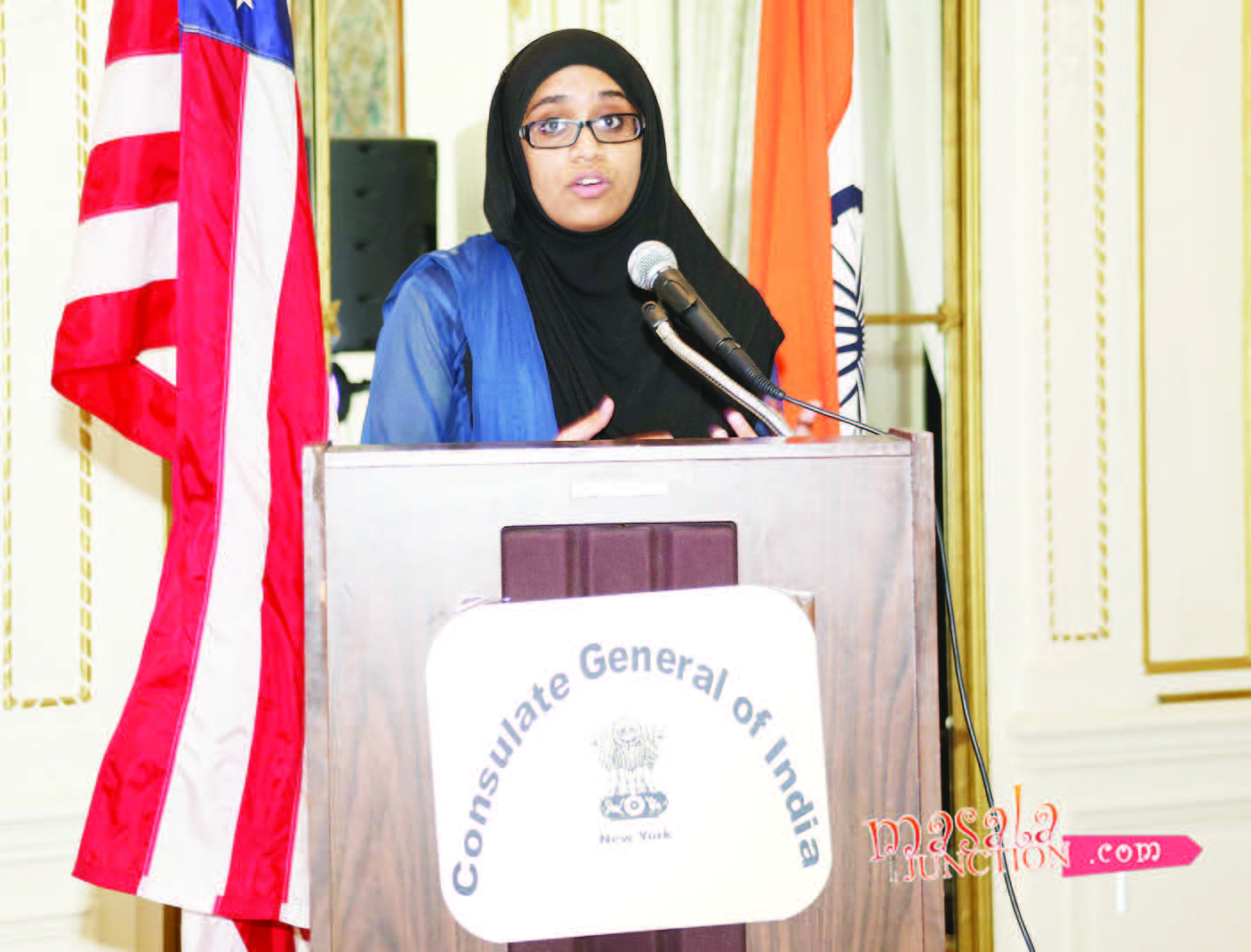
Prominent members of the Indian American community gathered, August 12, at the Indian Consulate to celebrate and exchanged greetings on the occasion of Eid-Ul-Fitr. Eid-Ul-Fitr is celebrated all over the world as an auspicious day after a month of fasting– a ritual meant for purification of the soul, developing self control and bringing us closer to God, an amazingly wonderful spiritual connection with ones self and the creator. Miss Sidra Fatima enlightened guests on the significance of Eid-Ul-Fitr.
This event and the festivities conducted at the Consulate General of India in New York is a continuation of its tradition of celebrating diversity of Indian culture and its Diaspora. Consul General Dyaneshwar Mulay addressed the gathering and expressed his best wishes to the community at large and also emphasized the peaceful co Existence of the diverse communities within India and the Indian Diaspora here in the US in harmony and peace.
He pointed out the capabilities of Indian Muslims to lead and be an example to the Muslim community of the world for peaceful co-existence and the solidarity with which various communities of Indian origin achieve common goals and synergies. This he reiterated will continue to lead us on the path of stronger, dynamic and vibrant India as depicted in the Indian constitution.

Ghazal maestro Sudhir Narain captivated the audience with his soulful ghazal singing
A true highlight of the night was the recognition of a few remarkable and accomplished individuals from the community who were honored at this event for their achievements. More importantly for the contributions they have made of time and resources towards the less fortunate within our communities here in the US and back home in our Mother Land India.

Honorees with the Consul General and Ghazal maestro Sudhir Narain
The assistance they provide has touched many in the area of Medical, Economic and Educational outreach amongst may other important matters affecting the Diaspora. The honored included Naim Dum, Dr. Sultan Khan, Ahmed Shakir, Saeed Patel, Dr. Abu Taher, Malik Zakaria, Dr. Syed Ali, Mohammed Azam and Amin Himani. The event was attended by many prominent members of the Indian Community, The celebration reflected a rare combination of social and cultural integration with an inclusive and secular gathering.

A view of the appreciative gathering Photos/ Gunjesh Desai-MasalaJunction/732-371-0013
An added attraction of the evening was the enchanting Ghazal recital by Sudhir Narain, a well known singer of Agra Gharana. The Master of Ceremonies was Mrs. Sabina Ali who was supported by Pankaj Mathur. The event was organized by Juned Qazi who is a promising young entrepreneur and New York based community leader. -

Commemorative Event hosted by India at the United Nations to mark the contribution of Indian soldiers in the First World War
UNITED NATIONS (TIP):
The Permanent Mission of India to the United Nations organized a Special Commemorative Event to highlight the sacrifices of Indian soldiers who lost their lives in the First World War. Ten other Missions to the United Nations including the Missions of Belgium, Egypt, France, Greece, Iraq, Jamaica, Kenya, Nigeria, South Africa and Tanzania joined as co hosts of the special event.
The immense sacrifices and widespread destruction caused by the War resulted in the decision of the participants in the Paris Peace Conference of 1919 to establish the world’s first intergovernmental organization, the League of Nations. As a signatory of the Treaty of Versailles, India became a founder – member of the League of Nations, the precursor of today’s United Nations. The Event featured an audio visual presentation of the various War Memorials in Europe, West Asia and Africa where Indian soldiers are commemorated.
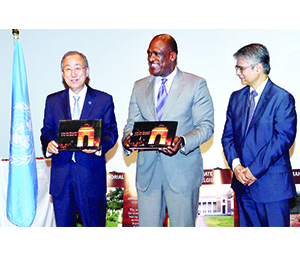
On the occasion, the UN Secretary General H.E. Ban ki Moon and the President of the UN General Assembly H.E. John Ashe jointly released a publication “Indian War Memorials of the First World War”, which was conceived and edited by the Permanent Representative of India to the United Nations, Ambassador Asoke K Mukerji. Speaking on the occasion, Mr. Ban kimoon, UN Secretary General reminded the distinguished audience to “never forget the roll call of carnage” of the First World War.
Quoting excerpts from an Indian Garhwali solider, the UNSG recounted the sacrifices of more than 60000 Indian soldiers who had given their lives, and stated “history often ignores such sacrifices”. Full text of his remarks at Ambassador John Ashe, President of the 68th UN General Assembly in his remarks highlighted the key lessons from the First World War, which had impacted on people across the world, primarily that of loss, and termed the war as being a “great tragedy”.
Ambassadors of over 60 countries, senior UN officials, and members of civil society attended the Event, which was followed by a Photo Exhibition of the First World War Memorials attended by Mr. Jan Eliasson, Deputy Secretary-General of the United Nations.
The Event was organized on the eve of the hundredth anniversary of Mahatma Gandhi’s historic letter of 14 August 1914 to the British Government in which Gandhiji had stated that India’s assistance to the War effort was guided by the idea “to share the responsibilities of membership of this great Empire, if we would share its privileges.” -

New York City’s Economy shows fastest growth in nearly a year
NYC Growth Expected to Top National Rate in 2014, but Unemployment Remains Flat
NEW YORK, NY (TIP):
New York City’s economy grew more than three percent in the second quarter because of robust job growth and higher personal income, New York City Comptroller Scott M. Stringer found in his quarterly update on the City’s vital economic stats released today. The City’s Real Gross City Product (GCP) grew an estimated 3.1 percent and represented an estimated four percent of the nation’s total economic output.
“As the weather heated up, so did the City’s economy,” said Comptroller Stringer. “Across the board the City has outperformed previous quarters. While unemployment remains stuck at 7.9 percent, the economy has added tens of thousands of jobs in the private sector, pointing to a firmer labor market, stronger tax revenues and a more stable economy.
The “New York City Quarterly Economic Update” analysis summarizes economic results for the second quarter of 2014, including GCP, job growth, income growth, unemployment rates and inflation, among others. Findings include:● The City’s private sector added 22,400 payroll jobs. Except for two quarters, the City’s private-sector job base has grown faster than the nation’s for the past eight years.
● Both New York City total jobs and private-sector jobs were up by 6.5 percent and 8.4 percent respectively, since August 2008 -the previous peak. The most significant gains this quarter were in leisure and hospitality and education and health services.
● The unemployment rate in the City stayed at 7.9 percent, the same as the previous quarter. This rate is deceiving however, as the City’s labor force increased by 37,100 in the second quarter – the largest increase in over 12 years as a result of more people reentering the labor force.
● Personal income tax withheld rose 6.6 percent in the second quarter to about $1.6 billion indicating positive income trends, job growth, salary increases and late bonuses.
● Shoppers woke up from their winter slumber, with general sales tax collections rising 5.2 percent to $1.7 billion.
● Transit ridership remained steady, with 1.5 percent more straphangers on New York City subways in April and May. Ridership fell 3.3 percent on buses, but the Long Island Railroad saw ridership gains of 4.3 percent.
● Manhattan apartment sales climbed 6.3 percent higher than the same time last year – up to 3,342. The Brooklyn housing market also continued to do well, though the Queens’ median sale price dipped 9 percent, while the number of sales fell 3.6 percent.
● The tourism industry is booming – with Manhattan hotel occupancy at 93.2 percent, the highest quarterly rate since records became available.
● Broadway also continued its showstopping year with ticket sales up 21.7 percent in the second quarter of 2014 and total attendance rising 21.7 percent during that same period. “We must remember these are not the boom-town years of the late 1990s or of the credit bubble years. There is mounting evidence that the national and local economies have settled into a prolonged period of steady but modest growth,” Comptroller Stringer said. -

Come, make in India. Manufacture here: Modi’s call to investors
NEW DELHI (TIP):
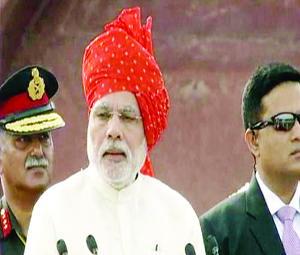
In his first address to the nation from the ramparts of Red Fort in Delhi on the occasion of the 67th anniversary of India’s independence, August 15, Prime Minister Narendra Modi spoke at length on a number of issues, all tending to the development of India. In an extempore speech, invited investors saying, “Come, make in India. Sell anywhere, but manufacture here. We have the skill and the talent.” The bullet proof glass that previous Prime Ministers have stood behind was conspicuous by its absence as the Prime Minister reached out – not just to investors, but also to political rivals.
“We want to move forward not on the basis of majority but on consensus,” Modi said. Wearing a cream short-sleeved kurta and a red Gujarati safa or turban, Modi reiterated the commitments that powered his campaign for the national election this year – a focus on creating jobs and attracting investment. He once again stressed on good governance and development as the core strength of democracy and said his priority was “people private partnership” where the young would create many jobs. In another break with tradition, more than 10,000 members of the public were present at the Red Fort; the occasion is usually reserved for VIPs.
The Prime Minister began by stating that he is “not the pradhan mantri (prime minister) but the pradhan sevak (prime servant),” promising that his government, now three months old, will serve, not rule. In a speech high on emotional content, he also said that it was a tribute to Indian democracy that “a person from a poor family, an ordinary family is today addressing the nation from the Red Fort.” He described himself as an “outsider in Delhi, not liked by the city’s elite.”
The Prime Minister talked less about policy or schemes, and more about the need for urgent social fixes. He talked about communal and caste violence as an obstacle to growth. And about the shame of rape and female feticide: “Don’t kill daughters in the womb. It is a blot on 21st century India,” he said. us take a pledge to defeat poverty,” the prime minister said, also announcing a ‘ people wealth scheme’ (jan dhan yojna) to ensure all Indians can have a bank account, while blaming the high level of suicides among farmers on their inability to pay back money-lenders.
Here is what Modi said.
*To all Indians celebrating our Independence Day, greetings from the Pradhan Sewak. I stand before you not as Pradhan Mantri (Prime Minister) but Pradhan Sevak (Prime servant) * It is a tribute to Indian democracy that a person from a poor family, an ordinary family, is today addressing the nation from the Red Fort. * I tell the world – Come, Make in India. Sell anywhere but manufacture here.
We have the skill and talent. * All previous governments have a hand in developing India. State governments have a hand in it as well. I offer my respect to all previous governments and Prime Ministers. * We want to move forward not based on our majority but on consensus. The session that just ended reflects our thinking. * We don’t believe in the force of majority. We worked with everyone.
The credit for this goes not to the PM but the MPs and the opposition. * I am an outsider to Delhi. But an outsider came to Delhi and got an insider view. I was surprised. It was as if in one government there were different governments. * We have seen instances of communal violence for too long. Till when will this go on? Be it caste or communal violence, they stall the growth of the nation.
*Have we seen our sex ratio? Who is creating this imbalance? Not God. I appeal to the doctors not to kill the girl child in the mother’s womb. I request the parents not to kill daughters because they want a son. Don’t kill daughters in the womb; it is a blot on 21st century India. I have seen families where one daughter serves parents more than five sons. *The world used to think we are a land of snake charmers and black magic. But our youth has surprised the world with its IT skills.
* Our heads hang in shame when we hear about rapes. Parents ask about daughters but did anyone dare ask their sons. After all, the rapist is someone’s son. As parents, have we asked our sons where he is going? Why not put same yardstick for sons too? Earlier in the morning, Modi greeted the nation on Independence Day. He tweeted: “Greetings to my fellow Indians on Independence Day! May our tricolour fly high and our nation scale new heights of development. Jai Hind!” He later paid homage to Mahatma Gandhi at the Raj Ghat.
He offered flowers at the blackstone memorial before heading to the Red Fort to deliver his maiden Independence Day speech. In view of the security threat to the Prime Minister, an additional 2,000 paramilitary personnel besides over 5,000 policemen were deployed to keep vigil during this year’s Independence Day celebration at the Red Fort. -

Iraq PM Al-Maliki steps down
BAGHDAD (TIP):
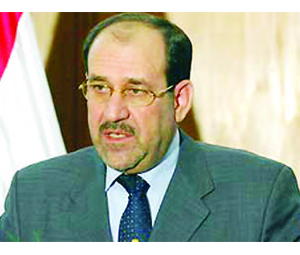
Iraq’s embattled Prime Minister Nouri al-Maliki has stepped down in the face of international and domestic pressure to give up his post to a rival politician. The move defuses a political deadlock that has plunged Iraq into uncertainty and opens way for the formation of a new government that could take on a growing insurgency by Sunni militants that has engulfed much of the country.
Al-Maliki made the announcement on national television late Thursday, August 15, standing alongside senior members of his Islamic Dawa Party, including rival Haider al- Abadi. He said he was stepping aside in favor of his “brother,” in order to “facilitate the political process and government formation.”
The premier-designate al-Abadi, a veteran Shiite lawmaker, now faces the immense challenge of trying to unite Iraqi politicians. The country’s major political factions deeply distrust each other and the army seems unable to regain territory in the north and west taken by militants from the Islamic State group.
Al-Maliki had been struggling for weeks to stay on for a third four-year term as prime minister amid an attempt by opponents to push him out, accusing him of monopolizing power and pursuing a fiercely pro-Shiite agenda that has alienated the Sunni minority.
The United States, the U.N. and a broad array of political factions in Iraq had backed al-Abadi, saying only a new leader could unify a country under siege from the Islamic State extremists who have captured large swaths of Iraqi territory. Al-Maliki said his decision reflected a desire to “safeguard the high interests of the country,” adding that he would not be the cause of any bloodshed. -

Celebrating Indian Independence at the 3rd India Day Parade of Hicksville
HICKSVILLE, NY (TIP):
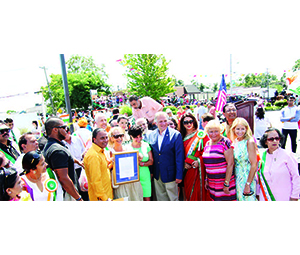
It was a fine August day. No rains. Not very hot, though a little humid. It seemed to be an almost perfect setting for an outing for a parade. The 3rd India Day Parade USA, in Hicksville, was taken out Saturday, August 9, 2014. The route from Patel Plaza on South Broadway to the destination in front of Asa Mai Hindu temple saw the presence of hordes of people who chose to stay at one point to look at the passing parade rather than walk with it. At the head of the parade that started from Patel Plaza around 1 P.M. were the Grand Marshal Miss Poonam Dhillon, the famous Bollywood star. Another notable dignitary at the parade was Nassau County Executive Edward P. Mangano.

Grand Marshall Poonam Dhillon walks in the parade. Accompanying her are Chairman of IDPUSA Peter Bheddah (in cap), his wife Dorothy, IDPUSA Coordinator Indu Jaiswal and others
Then there were legislators, judges, officials, among others. The parade which started from Patel Plaza terminated in the open grounds in front of Asa Mai Hindu temple where a stage was erected for the conference and cultural presentations.

Poonam Dhillon praised Indian Americans for their love of India and exhorted them to do their best for their country of adoption as well as their country of origin.
In front of the stage were booths, giving an impression of an Indian fair, with food items, jewelry and clothing, among other wares. Bolla Oils had set up a huge tent where visitors were treated to free snacks and drinks, known amongst the Punjabis as langar. Harry Singh Bolla, the owner of the largest chain of gas stations on Long Island, himself was there with his wife, Kamljit Kaur who was one of the honorees this year, their children and a large number of the staff of Bolla Oils and sister companies.

Ed Mangano, the beloved Nassau County Executive appreciated the contribution Indian American community was making and greeted them on the forthcoming Independence day of India.
On a specially erected spacious stage, singers and dancers performed to the great delight of the audiences who took the day long cultural program as a rare gift in their otherwise daily struggle filled lives. Certainly, a relief to most people who hardly ever find time for such exotic cultural extravaganza. The performances rightly drew the applause of an appreciative audience. DJ Kutcha, as usual, was at his best.
Not only did he play the right tunes, he played the master of ceremonies with aplomb. This young Sikh will go far should he continue to be so amiable and alert. The Indian Panorama will bring to its readers detailed report on the awards presentation in the next issue. We will also feature a people’s report card on the parade. So, please watch out for the next edition on August 22nd.

A view of the Bolla Oils booth which had the distinction of being the largest booth. Harry Singh Bolla with his staff. Also seen is Parade coordinator Indu Jaiswal

The Entertainers and DJ Kucha. They entertained and won applause

The appreciative audience
-

Pakistan in turmoil: Thousands march to Islamabad in anti-government rally in Pakistan
LAHORE, PAKISTAN (TIP):
Even as Pakistan celebrated 68th Independence Day, the political storm brewing in India’s neighboring country, threatens to engulf the Islamic nation in a civil war. Thousands of Pakistani opposition supporters on August 14, Pakistan’s Independence Day, joined a large convoy headed to the capital, Islamabad, for a key rally to demand the ouster of the Prime Minister over allegations of vote fraud.
The rally is seen as the strongest challenge yet to the government of Pakistan Prime Minister Nawaz Sharif, just a year after he took office in the first democratic transfer of power in a country long plagued by military coups. The protesters set out on Thursday morning from the city of Lahore in cars, trucks and busses, while others walked or drove motorcycles as they embarked on the 300 kilometer-long journey to Islamabad.
Police official Mohammad Mahmood said there were about 5,000 protesters on the march, and more were expected to join along the way. The convoy is led by Imran Khan, famous cricketer-turned-politician who heads the Tehrik-e-Insaf party, the third-largest in parliament. The demonstration was called to coincide with the country’s Independence Day. Thousands of policemen were deployed across Islamabad and along the convoy’s route while the capital’s entry points were blocked since earlier this week with large shipping containers.
“We are taking measures to secure the capital from any violence,” said police official Jamil Hashmi. In Lahore, the convoy got off to a colorful start, with protesters dancing to the beat of the drums and singing patriotic songs. Many women had the green and white of the Pakistani national flag painted on their cheeks, along with the red and green of Khan’s party.
“A fight has to be fought for securing independence,” Khan told supporters as the rally kicked off. Also at the march on Thursday was Tahirul- Qadri, a Pakistani cleric who is also a Canadian national and who commands a loyal following of thousands through his network of mosques and religious schools in Pakistan. He left Lahore with his followers and was expected to join Khan’s rally on the road or in Islamabad. Both the cleric and Khan contend that Sharif’s government must step down and have called for new elections.
Khan alleges last year’s vote was invalid due to widespread rigging by government supporters. There was also concern that, once in Islamabad, the rally could descend into violence. “We are out on the streets to do our struggle for a change in the system,” said one of the protesters, Mohammad Faheem. Pakistan, a nuclear-armed country of 180 million people, has largely been ruled by military dictators since it was carved out of India in 1947.
Sharif, himself overthrown in the 1999 coup that brought former army chief Pervez Musharraf to power, has met regularly with top advisers ahead of the rally. The government has also invoked a rarely-used article in the constitution allowing the military to step in to maintain law and order if needed. Speaking at an Independence Day ceremony in southwestern Pakistan, Sharif criticized the opposition rally, calling it “negative politics.” Sharif said Khan would be better advised to “work to alleviate poverty and improve law and order” in Pakistan. -

Rahul Gandhi does it again: Skips Lok Sabha debate, lets party down
NEW DELHI (TIP):
Rahul Gandhi shied away from the debate on communal violence that he forced by leading a protest in Lok Sabha, defying enormous pressure from within that he speak on the party’s top concern and raising eyebrows in friendly quarters. The Congress vice-president sat quietly during the second day of the debate which saw Congress and BJP spar with claims and counter-claims.
The same happened on Thursday when Congress leader in Lok Sabha Mallikarjuna Kharge opened the discussion to slam the BJP, only to find saffronite Yogi Adityanath resort to strident Hindutva rhetoric. Sources said there was considerable push from party managers that Rahul lend his face to the allegation that communal incidents were on the rise since the advent of the Narendra Modi government.
More so, when Rahul last week found it serious enough an issue to lead the party contingent in Lok Sabha into the well with sloganeering and, later, even accuse the Speaker of partisan behavior. “I don’t know why he did not speak. The party wanted him to and had repeatedly nudged him to take the mike,” a party MP, in the know of things, said. Another party MP expressed similar surprise, pointing out that Rahul appeared to prepare a speech. The AICC vice-president is also said to have made preparations for the debate.
It again highlighted the Gandhi scion’s reluctance to plunge into parliamentary proceedings that would involve sparring with the rivals and, in the aftermath of the electoral debacle, face snide comments from Hindutva champions. Having played a key role in ensuring that the debate takes place, Rahul’s disappearing act let down the Congress MPs who argued that he should have finally assumed a more engaged leadership in Parliament. “Nobody knows why such a sharp person shrinks in crunch situations,” a young Congress MP said.
While some feel Rahul developed cold feet because his espousal of the sensitive issue would help BJP with religious polarization, it does not tally with the tone adopted by the Congress leadership lately. Party chief Sonia Gandhi for two days in a row this week accused the Modi government of having a role in the rise in communal incidents, once at a rally in Kerala and then at the meeting of the parliamentary party.
One reason for Rahul to keep away could be that BJP punctured the profile of the debate. It fielded a Hindutva leader like Adityanath to lead its case and then fell back on young members, not appearing to give it the importance that Congress attached to it. The absence of home minister Rajnath Singh to reply to the debate because of illness further dimmed the political interest. -

Govt can function without leader of opposition: Naidu
NEW DELHI (TIP):
The government has again made it clear that absence of a Leader of Opposition in the Lok Sabha would not impact its functioning. Asked whether the government would follow a similar formula like the one adopted for the judicial commission,— that put the leader of the largest opposition party in the panel — for selection of Lokpal, chief vigilance commissioner (CVC) and chief information commissioner (CIC), Naidu said, “The judicial appointments commission has a clear cut mandate.
So a certain process has been created. In other committees also there are provisions for situations where there is no LoP.” “If there is absence of one member, it does not make any void,” he said when asked about the necessity of LoP of Lok Sabha in the selection process for the Lokpal, CIC and CVC.
“It is beyond my jurisdiction,” Naidu said, at the end-of-the session press conference when reporters persisted with the query on whether the government would go without a LoP and implied that it was for Speaker Sumitra Mahajan to take the call. -

Jan Dhan scheme to help poor open bank accounts: PM
NEW DELHI (TIP):
Prime Minister Narendra Modi on August 15 launched ‘Pradhan Mantri Jan Dhan Yojana’ to help the poor open bank accounts which will come with the facility of a debit card and an insurance cover of Rs 1 lakh. “We want to integrate the poorest of the poor with bank accounts with Pradhan Mantri Jan Dhan Yojana,” he said in his maiden Independence Day address to the nation. Observing that people have mobile phones but not bank accounts, Modi said, the scheme will help in bringing the benefits of formal banking system to them.
“Today there are crores of families which have mobile phones but no bank accounts. We have to change this. The economic development must benefit poor and it should start from here,” he said. Under the Jan Dhan Yojana, he said, “the person who will open bank account will get a debit card and the family will get Rs. 1 lakh insurance cover. This will help the family to tide over the unforeseen eventuality.”
The Union Cabinet has already cleared the two-phase financial inclusion scheme under which bank accounts will be opened for 15 crore poor persons with an overdraft facility of Rs 5,000 and accident insurance of Rs. 1 lakh. The scheme, to be pushed by the government in a mission mode, seeks to provide two accounts to 7.5 crore identified households by August 2018.
The main features of the scheme include Rs. 5,000 overdraft facility for Aadhar—linked accounts, Ru Pay Debit Card with inbuilt Rs. 1 lakh accident insurance cover and minimum monthly renumeration of Rs. 5,000 to business correspondents who will provide the last link between the account holders and the bank.Caste, communal violence stalls progress, says Modi
Modi asked the nation to eschew caste or communal violence as stalled the growth of the nation. “Let us affirm that we will be free from these tensions,” Narendra Modi said. Earlier, he had arrived at the Red Fort and hoisted the National Flag from there. In the course of his speech, he tried to address a wide-range of issues before the nation.
-

INDIAN FREEDOM FIGHTERS
Known and revered worldwide as Mahatma Gandhi, he advocated nonviolence (ahimsa) as the only path to victory.
India as we know it today would not have been, but for the efforts of selfless and courageous men and women who deemed it their life’s purpose to liberate the country from colonial rule and retain its sovereignty and heritage. Some of these leaders adopted moderate approaches of dialogue, protests and civil disobedience in their struggle for independence, while others wanted self-rule and were literally willing to lay down their lives fighting for it.
However, it cannot be denied that one and all, in their own ways, these freedom fighters were responsible for making India an independent country and helped realise the dream of Swaraj. Here are some of the great leaders to whom we owe our present status as an independent and sovereign republic.

Jawaharlal Nehru
The first Prime Minister of independent India, he was a staunch believer in democratic ideals and helped realize the vision of India as a democracy.

Bhagat Singh
Considered one of the most influential revolutionaries of the Indian independence movement, he, along with Shivaraj Rajguru and Sukhdev Thapar became the symbols of courage, action, and spiritedness for Indian youth.

Subhash Chandra Bose
Founder of the Indian National Army, he enlisted the help of Japan in regaining control of several Indian territories under the rule of the British.

Dr. Rajendra Prasad
The first President of the Republic of India, Prasad was one of the architects of the Constitution of India.

Lal Bahadur Shastri
The second Prime Minister of independent India was instrumental in pushing forward the Green Revolution, which made India a food surplus country.

Chandrashekhar Azad
He was one of the fierce patriots who believed in freedom at any cost and accomplished daring deeds in the course of his lifelong fight. He was also the mentor of Bhagat Singh, the famous Indian martyr.

Sardar Vallabhbhai Patel
Known as the Iron man, he helped achieve the political integration of the princely states towards forming a unified independent India.

Bal Gangadhar Tilak
The first leader to boldly declare that complete selfgovernance (Swaraj) was the only position acceptable to him, Tilak was instrumental in inciting the desire for freedom in the Indian consciousness as well as saving Indian culture and heritage from insidious western influences.

Gopal Krishna Gokhale
He was one of the most learned men in India, and a leader of social and political reformists as well as a senior leader of the Indian National Congress. He was also a mentor to Mahatma Gandhi when the latter had returned from South Africa and was just beginning to actively participate in the Indian independence movement.

Dr. Bhimrao Ambedkar
Widely known as the father of the Indian Constitution, he was also instrumental in improving the plight of the dalits, tribals, and other marginalized.

Bagha Jatin Mukherjee
One of the great leaders of the underground resistance, Jatin, along with other revolutionaries, participated in guerrilla warfare on British nationals along with sabotaging British properties, all to disarm the British might.

Dadabhai Naoroji
One of the earliest leaders to lay the foundation for India’s freedom struggle, Naoroji was a founder of the Indian National Congress.

Jhansi Ki Rani Lakshmibai
One of the leading figures of the Great Indian Mutiny of 1857, she rode into battle to save Gwalior Fort, the last bastion of the uprising, and died

Mangal Pandey
Widely known as the initiator of the first war of independence, the Sepoy Mutiny of 1857, Pandey fired at British officers to vent mass anger among the Sepoys at being made to chew off the pig fat-containing outer layer of the new gun cartridges the Sepoys were to use.

Rabindranath Tagore
Tagore was a great writer and poet who stirred the emotions of the people and fired the spark of patriotism in them through his works. He is most famously known as the author of India’s national anthem ‘Jana Gana Mana’.

Vinayak Damodar Savarkar
Popularly known as ‘Veer’ Savarkar, he actively denounced British policy and boycotted British goods. He underwent imprisonment in the infamous Andamans prison.

C. Rajagopalachari
A great statesman and scholar, ‘Rajaji’ as he was known, was close to Mahatma Gandhi. He practiced Gandhi’s ideology throughout his life and worked for the Congress party for more than half a century.

Shivaram Hari Rajguru
He was an Indian revolutionary from Maharashtra, known mainly for his involvement in the murder of a British police officer. He was a member of the Hindustan Socialist Republican Army(HSRA), who wanted India to be freed from British rule by any means necessary.

Sukhdev Thapar
Sukhdev was a famous Indian revolutionary who played a major role in the India’s struggle for Independence. Sukhdev Thapar was a member of the Hindustan Socialist Republican Association (HSRA), and organised revolutionary cells in Punjab and other areas of North India. A devoted leader, he even went on to educate the youth at the National College in Lahore.

Ram Prasad Bismil
Ram Prasad Bismil was an Indian revolutionary who participated in Mainpuri conspiracy of 1918, and the Kakori conspiracy of 1925, both against British Empire. As well as being a freedom fighter, he was also a patriotic poet and wrote in Hindi and Urdu using the pen names Ram, Agyat and Bismil. But, he became popular with the last name “Bismil” only.

Tatya Tope
Ramachandra Pandurang Tope was an Indian Maratha leader in the Indian Rebellion of 1857 and one of its more renowned generals. He was a personal adherent of Nana Saheb of Bithur. He progressed with the Gwalior contingent after the British reoccupation of Kanpur and forced General Windham to retreat from Kanpur.

Lala Lajpat Rai
Lala Lajpat Rai was an Indian Punjabi author and politician who is chiefly remembered as a leader in the Indian fight for independence from the British Raj. He was popularly known as Punjab Kesari meaning The Lion of Punjab also known as “Sher-EPunjab” in Punjabi. He was part of the Lal Bal Pal trio. He was also associated with activities of Punjab National Bank and Lakshmi Insurance Company in their early stages. He sustained serious injuries by the police when leading a non-violent protest against the Simon Commission and died less than three weeks later.

Udham Singh
He was an Indian revolutionary, best known for assassinating Michael O’Dwyer in March 1940 in what has been described as an avenging of the Jallianwalla Bagh Massacre. He is a prominent figure of the Indian independence struggle. He is also referred to as Shaheed-i-Azam Sardar Udham Singh. -

India’s Independence Movement – a Timeline
By Nitin Vora
“At the stroke of midnight hour when the world sleeps, India will awake to life and freedom…are we brave
enough and wise enough to grasp this opportunity and accept the challenge of future? “The great day” that
millions of people have been dreaming about for years, at last materialised – a day of rapturous jubilation.”
Friends, these are the words of India’s first Prime Minister Jawaharlal Nehru on the eve of August 15, 1947, first day of our freedom.

Mahatma Gandhi
The British control of India began in the 1600′ with the East India Company as a commercial venture. However, over the decades Britain’s strong hold and political aspirations over the country became stronger. A growing sentiment to overthrow Britain’s domination culminated in the Indian mutiny of 1857. Some of you must have seen the movie “Mangal Pandey”, yes, I am talking about that young Mangal Pandey who gave a clarion call to all the Indian soldiers to revolt against Britain.

Jawaharlal Nehru
This was known as “sepoy mutiny” he was sentenced to death and within 2 months the great war of Independence started on 29th March, 1857. Rani Laxmibai of Jhansi created history by fighting a great battle, she succumbed to her wounds in the battlefield. The Indian National Congress, the political party was founded and spearheaded the freedom struggle in 1885. Swami Vivekanands’s presentation of India’s religion and culture to the parliament of world religions in 1893 in Chicago (USA), made the whole world aware of India’s rich heritage.

Sardar Vallabhbhai Patel
On his return, he electrified the whole nation with his clarion call “Arise, awake, and stop not till the goal is achieved”. Dadabhoy Navaroji’s “Poverty and un- British-rule in India” stimulated economic nationalism in 1901. The bifurcation of Bengal in 1905, which then comprised of Assam, Bihar, Orissa and Bengal sparked off yet another revolutionary movement with burning and boycotting of foreign goods. In 1906, Bal Gangadhar Tilak, the first nationalist leader voiced the idea of home rule,.

Subhash Chandra Bose
Tilak gave us the mantra “Swaraj is my birth right”. In 1911, King George Vth annuls the partition of Bengal and Delhi is made the capital of India. Rabindranath Tagore, the author of our national anthem jan gan man…. becomes the first Indian to receive Nobel Prize in 1912. Mohandas Karamchand Gandhi returns to India in 1915 from South Africa, where he had led a successful peaceful-resistance movement against the British government. South Africa beautifully says : “You gave us Gandhi, we are giving back Mahatma” The Rowlett act was introduced in 1918 so that any political subject could be arrested and imprisoned. Both Gandhi and Tilak condemned this and the country rose, imbued with the spirit of rebellion.

Lala Lajpat Rai
On 13th April 1919, General Dyer enters Jallianwala Bagh with armored cars and troops and orders fire on unarmed men, women and children. 3,000 + were massacred in Jallianwala Bagh. The carnage of such heinous magnitude awakened the whole country . In 1920, Congress led by Gandhiji proposed a non-violent, non-co operation movement. Countless gave up their career and joined the movement.

Bhagat Singh
Jawaharlal Nehru and Subhash Chandra Bose, two radical nationalists emerge as important national leaders in 1928. Inquilab Zindabad was the mantra for three revolutionaries- Bhagat Singh, Sukhdev and Rajguru who were hanged to death in 1929. Gandhiji, along with colleagues embarked on a 60 mile march to the sea coast at Dandi in Gujarat, protesting against the excise tax on salt known as the famous Dandi March in December 1929 civil disobedience. Nehru becomes the Congress President at Lahore annual convention and declares nothing short of poorna swaraj. Nehru unfurls the first tricolor flag in Punjab.
January 26, 1930 was declared as Independence Day. India’s Republic Day is also celebrated on 26th January for this reason. Louis Fischer wrote, “the British beat the Indians with batons and rifle butts but the Indians neither cringed nor complained nor retreated, that made England powerless and India invincible.” Netaji, in 1939 forms Forward Block party. He was the most fierce and visionary activist who shook the very foundation of the British empire.
In 1940, Muslim League under Mohammad Ali Jinnah, demands separate state of Pakistan. Britain encouraged this in pursuance of their policy of divide and rule. Rasbehari Bose formed Azad Hind Fauj and handed it over to Netaji who said ” give me blood, I’ll give you freedom”. “Karenge ya marenge, do or die “quit India”, the national slogan given by Gandhiji was adopted on August 8th, 1942. British Prime Minister Atlee agrees to India’s Independence in 1945. Mohammad Ai Jinnah on August 16, 1946 gave a call for direct action day through countrywide demonstrations. This triggered Calcutta killing of 5000 people which also spread to other parts of the country.
Britain agreed to Jinnah’s demand and Congress Party accepted the partition of the country into India and Pakistan. On June 3 , 1947, Lord Louis Mountbatten announced the partitin of India as Union of India and Islamic Pakistan. Sardar Vallabhbhai Patel, the iron man of India with great wisdom and political foresight consolidated about 600 princely states, scattered all over India, without any bloodshed. Pakistan was born on 14th August 1947 and India achieved her freedom on August 15, 1947.
India became a Republic on January 26, 1950. Bankimchandra composed the song Vande Mataram in an inspired moment,. Rabindranath Tagore sang it by setting a glorius tune to it and it was left to the genius of Shri Aurobindo to interpret the deeper meaning of the song from which India received new nationalism. “We owe a lot to the Indians, who taught us how to count, without which no worthwhile scientific discovery could have been made”, this is India’s gift to the world”.
Albert Einstein said, paying tribute to India. “India is the cradle of the human race, the birth place of human speech, the mother of history, the grandmother of legend and the great grandmother of tradition. our most valuable and most astrictive materials in the history of man are treasured up in India only” said the great American writer Mark Twain. -

KERRY EYES US-CHINA partnership despite tensions
HONOLULU(TIP):
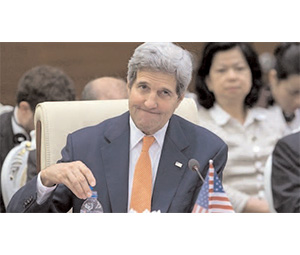
Improving US cooperation with China is critical to maintaining stability and security in the Asia-Pacific as well as combating the effects climate change, US secretary of state John Kerry said. Wrapping up an eight-day, around-theworld diplomatic trip and his sixth visit to Asia as America’s top diplomat, Kerry on Wednesday outlined renewed priorities for much of the Obama administration’s much-touted “pivot to Asia” during its final 2 years, including a focus on strengthening US-Chinese partnership in areas of agreement and bridging gaps in areas of contention.
“One thing I know will contribute to maintaining regional peace and stability is a constructive relationship between the United States and China,” Kerry said in an address to the East-West Center think tank in Honolulu. “The United States welcomes the rise of a peaceful, prosperous and stable China: one that plays a responsible role in Asia and the world and supports rules and norms on economic and security issues.”
“We are committed to avoiding the trap of strategic rivalry and intent on forging a relationship in which we broaden our cooperation on common interests and constructively manage our differences and disagreements,” he said. Kerry arrived in Hawaii after stops in Afghanistan, Myanmar, Australia and the Solomon Islands during which tensions between China and its smaller neighbors over competing territorial claims in the South China Sea were a major subject of discussion.
At a Southeast Asia regional security forum in Myanmar over the weekend, Kerry formally unveiled a US proposal for a voluntary freeze on provocative actions by all claimants, including the Chinese. The US says that it has no position on the competing claims but does regard stability in the South China Sea as a national security issue, given the region’s role as one of the world’s busiest maritime shipping zones. “We do care about how those questions are resolved, we care about behavior,” Kerry said.
“We firmly oppose the use of intimidation, coercion or force to assert a territorial or maritime claim by anyone. And we firmly oppose any suggestion that freedom of navigation and overflight and other lawful uses of the sea and airspace are privileges granted by big states to small ones. All claimants must work together to solve the claims through peaceful means. These principles bind all nations equally, and all nations have a responsibility to uphold them.” While welcomed in general by the 10 members of the Association of Southeast Asian Nations, China took a dim view of Kerry’s proposal and suggested it would not agree.
In an apparent nod to such disagreements, Kerry said that building better ties with Beijing will not be easy or inevitable. “Make no mistake: This constructive relationship, this `new model,’ is not going to happen simply by talking about it,” he said. “It’s not going to happen by engaging in slogans or pursuing spheres of influence. It will be defined by more and better cooperation on shared challenges. It will be defined by a mutual embrace of the rules, norms and institutions that have served both our nations and the region so well.”
Kerry said he was pleased at some areas of current US-China cooperation, including multination talks on Iran’s nuclear program, a shared interest in denuclearizing North Korea and promoting calm in South Sudan. In addition, on climate change, which he regularly describes as the biggest threat facing Earth, Kerry hailed US-Chinese initiatives to reduce greenhouse gas emissions and deforestation as well as working on sustainable, clean energy options.
At the same time, he noted that the US and China, along with other Asian nations, routinely disagree on human rights. Kerry pointed out backsliding in rights protection and democratic principles in Myanmar and Thailand and repression in North Korea but said the United States would not relent in its drive to improve conditions. “We will continue to promote human rights and democracy in Asia, without arrogance but also without apology,” he said.