Month: August 2014

  • Chinese man gets death for killing 6 upset over wife’s affairs

    Chinese man gets death for killing 6 upset over wife’s affairs

    BEIJING (TIP):
    A Chinese man has been sentenced to death for killing six people after discovering that his wife had extramarital affairs with two different men. Shao Zonggi (38) had shot nine people using a semi-automatic rifle leaving six dead and the other three injured. He was found guilty in an initial trail in Yunnan province last January. His sentence has now been confirmed by a higher court.

    The court on Monday awarded cash compensation of 604,000 Yuan ($98,000) to the people who survived the shooting. The shooting spree took place on the eve of the Chinese New Year in 2013. Shao killed of one of his wife’s lovers, his father, wife and child. The other lover survived along with his son and mother. Though enraged, Shao did not hurt his own wife. The court described the attack which took place in Tengcheng County in Yunnan province as revenge killing, according to the official Xinhua news agency.

    Shao said that he would lodge an appeal against his sentence, Xinhua reported. He may have been encouraged to appeal in view of a judgement of the Supreme Court which overturned a death sentence against a woman who killed her husband after months of domestic abuse.

    The woman, Li Yan, beat her husband Tan Yong to death in 2010. She complained that Tan was torturing her in different ways that included thrusting lighted cigarettes on her body for over a year since their marriage in 2009. Her story elicited widespread public sympathy over the Chinese Internet. But the Sichuan court initially rejected her appeal against a death sentence before the Supreme Court upheld it recently.

  • North Korea fires rockets as pope visits South Korea

    North Korea fires rockets as pope visits South Korea

    SEOUL (TIP):
    As Francis became the first pope in 25 years to visit South Korea on August 13, Seoul’s never-timid rival, North Korea, made its presence felt by firing three short-range projectiles less than an hour before he arrived, officials said. Although, North Korea declined an invitation to Seoul for the papal visit, Francis plans to reach out to North Korea during his five-day trip in a Mass for peace and reconciliation on the war-divided Korean Peninsula.

    But Pyongyang has a long history of making sure it is not forgotten during high-profile events in the South. The apparent test firing was conducted from Wonsan on the North’s east coast and the projectiles flew about 220 kilometers (135 miles), according to a ministry official who spoke on condition of anonymity, citing office rules. It wasn’t immediately clear what the projectiles were. North Korea this year has conducted an unusually large number of short-range missile and artillery test firings.

    Pyongyang has expressed anger over annual military drills between the United States and South Korea, which it says are invasion preparations. A new round of the drills, which Seoul and Washington call routine and defensive, are expected to start in coming days. During his visit, Francis also plans to beatify 124 Korean martyrs and encourage a vibrant and growing local church seen as a model for the future of Catholicism.

    At an airport just south of Seoul, the pope shook hands with four relatives of a South Korean ferry sinking that killed more than 300 and two descendants of Korean martyrs who died rather than renounce their faith. Some elderly Catholics wiped tears from their faces, bowing deeply as they greeted the pope. A boy and girl in traditional Korean dress presented Francis with a bouquet of flowers.

    The pope then stepped into a small, black, locally made car for the trip into Seoul, where he and President Park Geunhye were expected to make speeches. “Because our country has undergone many unfortunate situations, South Korean people are heartbroken. My wish is that the pope’s visit can heal those heartbroken people,” said Cho Young-rae, a 58-year-old Buddhist.

    As his plane flew through Chinese airspace on the way to South Korea early Thursday, Pope Francis sent a telegram of greetings and prayers to Chinese President Xi Jinping. It was a rare opportunity for an exchange since the Holy See and Beijing have no diplomatic relations, and furthers a low-key push for better relations with China and efforts to heal a rift between the Chinese authorities and those Catholics who worship outside the state-recognized church.

    Vatican protocol calls for Francis to send telegrams to heads of state whenever he flies through their airspace. Usually they pass unnoticed, but Thursday’s telegram was unique because the last time a pope wanted to fly over China, in 1989, Beijing refused. Vatican officials say there is a dialogue with Chinese authorities. But the core issue dividing them — Rome’s insistence on naming bishops — remains.

    Relations between Beijing and Rome have been tense since 1951, when China severed ties with the Holy See after the officially atheistic Communist Party took power and set up its own church outside the pope’s authority. China persecuted the church for years until restoring a degree of religious freedom and freeing imprisoned priests in the late 1970s.

  • Basics very much in Indian economy’s favor

    Basics very much in Indian economy’s favor

    INDIA’S JOURNEY TO DEVELOPMENT AND CHALLENGES

    The economy of India is the tenthlargest in the world by nominal GDP and the third-largest by purchasing power parity (PPP).The country is one of the G-20 major economies, a member of BRICS and a developing economy that is among the top 20 global traders according to the WTO.

    India was the 19th-largest merchandise and the 6th largest services exporter in the world in 2013. India’s economic growth slowed to 4.7% for the 2013-14 fiscal year, in contrast to higher economic growth rates in 2000s. However, India’s decisive election outcome has created the potential for further structural reform that could result in a near 7 per cent GDP growth rate over the coming decade, and bank capital injections could enable banks to facilitate funding for that growth.


    32


    This would have meaningful implications for India’s fixed income markets. It is believed that the next decade for India’s foreign exchange (FX) and fixed income markets will be marked by policy-driven reforms driving accelerated growth with increasing market liberalization. Recent figures already appear more encouraging than the dynamics that have been supporting stagflationary recession conditions: The country’s balance of payments has improved, spurred by FX depreciation and the Reserve Bank of India’s (RBI’s) non-conventional measures. The growth outlook has turned moderately positive, helped by a global recovery; and bad loan formation, even at state-owned banks, may now be moderating.


    33


    The narrative for Indian markets began to brighten even before the elections. Following the second stage of India’s economic liberalization and the foreign direct investment (FDI) reforms initiated in September 2012, foreign investment will likely be a major contributor to a jump in private investment. However, despite liberal FDI limits, it has remained moderate, constrained, in part, by administrative hurdles. As the obstacles are reduced, we expect FDI to lead an investment boom over the next decade, similar to China’s mid-1990s experience. We project FDI will rise to an average of 2.5 per cent of GDP (FY2014-24) from an average of 1.5 per cent of GDP (FY2008-14). We believe such foreign capital flow will lend significant support to India’s balance of payments trajectory.

    Improving public health

    Health care services in India have undergone a vast change over the past few decades and encompass the entire nation. The industry is expected to supersede China by 2030 in terms of population expansion. Hence, it becomes one of the essential duties of the state to raise the nutrition level, the standard of living of the people together with improving public health.

    Health care Industry of India The rapidly increasing health care industry of India is one of country’s largest sectors, both in terms of revenue and employment. It has been estimated that the healthcare industry of India is will grow by & 40 billion. The continuous increase in the population of India is considered one of the principal reasons for the growth in the healthcare industry of India. The rise in the infectious as well as chronic degenerative diseases has contributed to the rise in the healthcare sector of India. Additionally, because of diseases like AIDS and several lifestyle diseases of India, the healthcare sector of India will have a constant growth.

    In spite of the fact that the Indian healthcare industry is rapidly expanding, healthcare infrastructure in India is very poor. A noticeable percentage of India suffers from poor standard of healthcare services. Most of the healthcare facilities of India provided by the various healthcare services are limited and of low standard. In order to understand the current status of the healthcare services in India, it is important to know about the different healthcare services found in the country.

    Public health services, essential public health services, preventive health services, mental healthcare services, home health services, magellen health service and school health services are some of the healthcare services found in India. Companies providing Health Insurance in India The various companies providing health insurance policies in India can also be put under the healthcare services of India. Some of the companies that provide health insurance coverage in India are Appollo DKV Insurance Company Ltd., Bajaj Alliance General Insurance Co. Ltd., Birla Sun Life Insurance, Aviva Life Insurance and the like.

    Points to note

    1).It has been found out that while the private health services have been rising for meet the needs of the rich citizens and foreigners, public health services in India are lagging behind and suffering in a major way.

    2).It has also been found out that less than 1% of the GDP is spent on the public health care services in India.

    3).Surveys made throughout India points out that 65% of the Indian population cannot access to modern medicines.

    4).In addition, a number of drugs and even many diagnostic tests are still unavailable in the public health care sector of India.

    5).Most of the hospitals, one of the prime healthcare services in India, are located in the urban areas, thereby making it almost impossible for the rural people to access.

    Indian industry sees green shoots of manufacturing growth
    A green shoots of revival have started to appear in the manufacturing sector, which is critical for job creation, with a majority of segments likely to post higher output, according to industry bodies. The survey conducted by CII-Ascon for the April-June quarter indicates positive growth in important sectors like consumer durables including the vehicle industry and white goods industry, which recorded a growth of 5- 10 per cent, leading to improvement in the overall industry growth.

    The FICCI survey found that eleven out of fourteen sectors are likely to show improvement in production during the second quarter (Jul-Sept) of the current fiscal. Over 64 per cent respondents are not likely to hire additional workforce in the next three months, though this proportion is less than that of the previous quarter (75 per cent), indicating improvement in hiring outlook in coming months.

    The survey gauges the expectations of manufacturers for Q2 for fourteen major sectors namely textiles, capital goods, metals, chemicals, cement, electronics, automotive, leather and footwear, machine tools, FMCG, tyre, textile machinery and more. Responses have been drawn from 392 manufacturing units from both large and small and medium (SME) segments with a combined annual turnover of over Rs 4 lakh crore.

    An upturn in demand condition is also reflected in the improved order books of the manufacturers, said Ficci survey. While only 36 per cent respondents reported higher order books for the April-June quarter in the last survey, 43 per cent respondents reported higher order books for July-September quarter.

    Foreign relations
    Soon after the 2014 Lok Sabha election results declared a thumping victory for the BJP-led NDA government, Prime Minister Narendra Modi invited the heads of all the SAARC countries including Pakistan, Bangladesh, Sri Lanka, Nepal, Maldives, Bhutan and Afghanistan, for his oath-taking ceremony, sending a major diplomatic signal to the global community.

    Credited with being a focused administrator, Modi signalled that his decisive win would reshape India’s foreign relations and leverage the diaspora to increase investments, business opportunities and better relations. Modi went on to choose neighbouring country Bhutan over others for his first foreign visit.

    “I will follow the (foreign) policies of the Vajpayee-led NDA government, and that also applies to the relationship with the United States. I don’t think a decision taken by any individual or one event should impact the overall policy,” Modi said in an interview. The winds of change were clearly being felt at home and abroad.


    29


    SAARC: A refocus on the neighbourhood
    For the first time, leaders of all South Asian Association Regional Corporation (SAARC) countries were invited for the swearing-in ceremony of an Indian Prime Minister. The presence of all seven countries, Pakistan Prime Minister Nawaz Sharif, Afghanistan President Hamid Karzai, Sri Lanka President Mahinda Rajapaksa, Bhutan Prime Minister Tshering Tobgay, Maldives President Abdulla Yameen Abdul Gayoom, Nepal Prime Minister Sushil Koirala, Speaker of Jatiyo Sangshad in Bangladesh Shirin Sharmin Chaudhury, was a welcome step towards strengthening India’s relations with the SAARC countries. However, political parties in Tamil Nadu voiced their displeasure at Sri Lanka’s president Mahinda Rajapaksa attending the ceremony and held demonstrations against him.


    30


    Bhutan visit: Asserting influence in South Asia
    PM Narendra Modi’s maiden foreign trip to Bhutan was intended to show that in the new scheme of things, the neighbourhood enjoys high priority. Inaugurating Bhutan’s Supreme Court building that was built with India’s assistance, Modi also laid the foundation stone of the 600MW Kholongchu Hydro-electric project, a joint venture between the two countries.

    He also proposed to hold a joint sports festival between Bhutan and north-eastern states of India, doubling scholarships for Bhutanese students in India and establishing e-libraries in 20 districts in Bhutan Though his faux pas of referring to Bhutan as Nepal while addressing the Bhutan Parliament caused some embarrassment, Modi went ahead to say that “when Bhutan calculates its happiness quotient, having a friend in India is also a major factor.”

    Meet with Pakistan Prime Minister Nawaz Sharif: Picking up the threads
    Relations between India and Pakistan have always been tense, but differences between the two countries had escalated after the 26/11 Mumbai terror attack. Modi’s invitation to Pakistan’s Prime minister Nawaz Sharif for his oath ceremony was seen as an attempt at cooperation rather than confrontation, which was reciprocated by his Pakistani counterpart.

    In their first meeting, Modi pressed for confidence-building measures, peace and security as well as enhancing bilateral trade, sending a positive message among the people of both the countries. Modi struck a pragmatic note with Sharif, underlining India’s concerns on terrorism and urging his Pakistani counterpart to crack down on militants and speed up trial of the 2008 Mumbai attack suspects.

    Sharif also responded to the meeting positively, accepting the fact that the two countries must strive for better cooperation. In the interaction which was widely seen as an “icebreaker”, the leaders also decided that their foreign secretaries would be in touch and discuss a way forward on talks that had been suspended since January 2013.

    BRICS Summit: New inroads
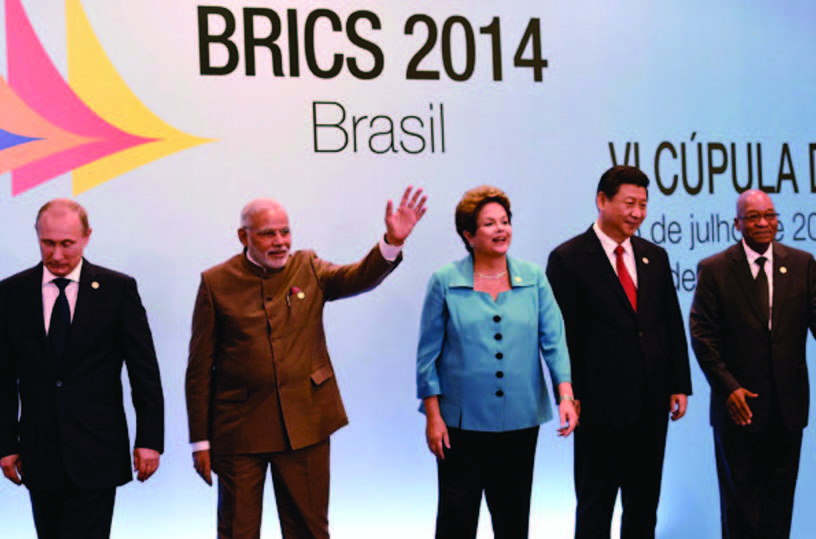
    Pushing for better international governance, Narendra Modi said he favoured an open, rule-based, international trading regime which is critical for global economic growth. Modi’s first BRICS summit saw significant inroads towards the establishment of the New Development Bank and though the headquarters of the bank is slated to be in China, its first President will be from India.

    Addressing the BRICS leaders, Modi also pressed for zero tolerance towards terrorism. He also met Chinese President Xi Jinping and both addressed the need for a solution to the boundary question. Further, Modi also favoured broadening the strategic partnership with Russia in nuclear, defence and energy sectors and invited President Vladimir Putin to visit the Kudankulam atomic power project during his trip in December.

    India poised to make further progress on UN’s development goals
    India has made progress on different indicators such as health and nutrition under the UN’s Millennium Development Goals and is expected to improve further upon them. “There has been progress in all the indicators and further progress is expected to be made in the remaining period up to 2015,” Planning Minister Rao Inderjit Singh had said recently.

    Challenges
    As far as India is concerned, 8 MDGs with 12 targets are relevant which are sought to be achieved during the period 1990 to 2015, the minister said. MDGs are international development goals that UN member states and numerous international organizations, including India, have agreed to achieve by the year 2015.

    Eradicating poverty
    These include eradicating extreme poverty and hunger; achieving universal primary education; promoting gender equality; reducing the child mortality rate and ensuring environmental sustainability. The minister’s said India had achieved the MDG target regarding poverty eradication. India had to halve the proportion of people whose income is less than one dollar a day between 1990 and 2015.

    In 1990, India had 47.8 per cent such poor people and thus the proportion of this population is to be reduced to 23.9 per cent. However, India’s poverty ratio was 21.92 per cent for 2011-12. Similarly, India has to half the proportion of people who suffer from hunger by 2015 to 26 per cent. However, the latest figure for 2004-05 reveal that the percentage of such population was 40 per cent.

    Education: Improving enrolment ratio
    In the education sector, India has to improve the net enrolment ratio in primary schools to 100 per cent by 2015. The country achieved 99.89 per cent enrolment in primary education in 2011-12. The proportion of pupils starting grade 1 who reach grade 5 was 86.05 per cent in 2011- 12 against the target of 100 per cent. The literacy rate in India was 61 per cent in 1990. It went up to 86 per cent in 2017-08.

    The ratio of girls to boys in primary education was 0.73 in 1990 which went up to 1.01 in 2011-12. Similarly the ratio of literate women to men (15-25 years) was 0.67 in 1990, which was 0.88 in 2007-08. MDGs target for both ratios is 1. The mortality ratio among children under the five-year age was 126 per 1,000 live births in 1990 which was brought down to 52 in 2012. The MDGs target is 42 for that.

    Infant mortality ratio
    The infant mortality ratio was 80 per 1,000 live births in 1990 which was brought down to 42 in 2012 against the MDGs target of 27. The proportion of one year old children immunized against measles was 42.2 per cent in 1990 which was improved to 74.1 per cent against targeted 100 per cent coverage.

    Similarly, the maternal mortality ration per 1,00,000 live births was 437 in 1990 which was brought down to 178 by 2011-12 against targeted 109 by 2015.

  • Indian-American Scientist to Introduce Wound-Healing Products for India

    Indian-American Scientist to Introduce Wound-Healing Products for India

    LOS ANGELES (TIP):
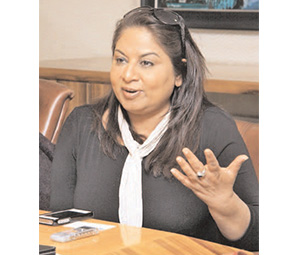
    An Indianborn American researcher plans to introduce her pioneering range of speedy wound-healing products in the country to benefit the poor. Molecular biologist Chanda Zaveri ran away from Kolkata 30 years ago to escape an arranged marriage and became a top scientist after training under twotime Nobel prize winner Linus Pauling. She was the first to use peptide (short strings of biological molecules) in skin care products and eventually formed her own companies Actiogen and Skin Healix. Currently, animal trials of her peptide-based product Angiohealix Wound Management are underway at Kolkata’s R.G. Kar Medical College and Hospital.

    “The product, an ointment, can heal non-healing wounds with minimal scarring. It can be applied topically to chronic ulcerative wounds like bed sores etc. and diabetic wounds as well. “Since it is cheaper than other conventional drugs, I hope it can benefit the poor and let them lead a dignified life,” Zaveri told reporters here Wednesday, August 13 at a lecture on wound management at the Peerless Hospital. She will act as a consultant for the hospital’s proposed wound wellness clinic.

    “After the animal trials are completed, we will go for human trials in about three months. We want to test it on diabetic patients too,” she said. Ms Zaveri will also distribute 20,000 tubes of the ointment among the underprivileged sections here. The secret to the wound-healing formula is a peptide (ACT-1) composed of a series of 28 building blocks or amino acids. Zaveri claims her find can heal wounds faster, is easy-to-use and also has no side effects. “It took me 20 years to find the 28 amino acid long peptide.

    It is in the first stage of clinical trials in the US. It hasn’t got the approval of the US Food and Drug Administration yet. “It does angiogenesis (forms new blood vessels) at the wound site and we have not found any residues in the stomach or blood circulation,” she explained, adding it was meant for application on clean wounds. According to Anjan Adhikari of R.G. Kar’s department of pharmacology, who is heading the mice studies, the results so far are “promising”.

    “We have been doing the trials for three months and the results are promising. However, once the trials are complete, we will have to get regulatory permission and then we can go ahead with human trials,” Mr Adhikari told media.

  • Vijay Jolly, BJP Global Convener, Overseas Affairs on US Tour

    Vijay Jolly, BJP Global Convener, Overseas Affairs on US Tour

    NEW YORK (TIP):
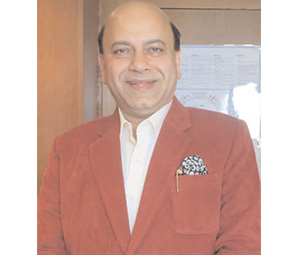
    Vijay Jolly, BJP Global Convener, Overseas Affairs is on US Tour from August 18 to 30. During this period he will be crisscrossing the US, visiting Los Angeles, Dallas, Atlanta, Chicago, New York, New Jersey and Washington. Here is his proposed itinerary.

    Aug 18 Mon: Canada to Los Angeles, CA
    o Leaving Vancouver, Canada and reaching Los Angeles, CA, USA
    o Dinner meeting with Karyakartas in LA

    Aug 19 Tue: Los Angeles, CA
    o Luncheon meeting with corporate leaders
    o Quick city tour of LA
    o Dinner and Community out-reach program

    Aug 20 Wed: LA to Dallas, TX
    o Leaving LA and reaching Dallas by evening
    o Dinner meeting with Karyakartas in Dallas
    o Press conference in Dallas

    Aug 21 Thu: Dallas, TX
    o Luncheon meeting with corporate leaders
    o Tour of Kennedy assassination site
    o Dinner and Community out-reach program

    Aug 22 Fri: Dallas to Atlanta, GA
    o Leaving Dallas in the morning and reaching Atlanta by Afternoon
    o Coca Cola plant tour
    o Dinner meeting with Karyakartas

    Aug 23 Sat: Atlanta to Chicago, IL
    o Luncheon meeting with FIA and Community out-reach program
    o Early evening flight to Chicago, IL
    o Dinner meeting with Karyakartas

    Aug 24 Sun: Chicago, IL
    o Luncheon meeting with community leaders
    o Press Conference
    Dinner and Community out-reach program

    Aug 25 Mon: Chicago to New York, NY
    o Leaving Chicago for NY – JFK airport
    o Luncheon meeting with corporate leaders of NY
    o Evening press conference with snacks in NY
    o Dinner with top-notch community leaders of NY

    Aug 26 Tue: New York to New Jersey
    o Show the venue Madison Square Garden in NY
    o Meeting with Indian Consul General in NY
    o Dinner meeting with Karyakartas in New Jersey

    Aug 27 Wed: New Jersey
    o Luncheon meeting with corporate and community leaders of NJ
    o Possible meeting with Congressman Frank Pallone or Senator Bob Menendez
    o Dinner and Community out-reach program

    Aug 28 Thu: New Jersey to Washington DC Metro
    o Leaving NJ to DC BWI airport station by Amtrak
    o Luncheon meeting with Think-Tank groups: Heritage Foundation, Cato Institute, and CAP in DC
    o Meeting with India’s Ambassador and Dy. Ambassador in DC
    o Dinner meeting with Corporate and Community leaders of DC

    Aug 29 Fri: Washington DC Metro
    o Meeting with US lawmakers
    o Press conference with ethnic print media and US print media
    o TV interviews
    o Dinner with Karyakartas and Sangh leaders

    Aug 30 Sat: Washington DC to Delhi, India
    o Any remaining meetings

  • ROBIN WILLIAMS: THE SADNESS OF A CLOWN THAT COULDN’T BE FIXED

    ROBIN WILLIAMS: THE SADNESS OF A CLOWN THAT COULDN’T BE FIXED

    Robin Williams, the versatile actor whose madcap comic style made him one of television and film’s biggest stars, was found dead on Monday from an apparent suicide at his home in Northern California. He was 63. Robin McLaurin Williams was born in Chicago. His father, Robert, was an executive for the Ford Motor Company, while his mother, Laurie, was a fashion model.

    The comedian and actor came into the world on 21 July 1951 in Chicago, Ilinois to former model Laura and Ford Motor executive Robert. Williams was bullied badly during childhood for being chubby and would often spend much of his time playing alone in the family’s large home to avoid his tormentors. Eventually, he conquered his overweight label though by joining the wrestling and tracks teams, and realised he could make the other children laugh as a way of gaining respect from them.

    Williams’ father took early retirement when he was 16 and they moved to California where he finished his education at Redwood High School. After graduation in 1969, Williams attended Claremont Men’s College, studying political science and playing soccer. He ended up taking lessons in improvisation, which perfectly suited his sharp wit and he was soon hooked.

    After leaving Claremont, Williams enrolled at the College of Marin to study acting and quickly won a full scholarship to the renowned Juilliard School in New York City where he studied with Christopher Reeve. The pair became great friends – a friendship that would last until Reeve’s death in 2004. He also met dancer Valerie Velardi while at Juilliard and the couple wed in 1978 and had a son, Zachary.

    Williams practiced stand-up in his spare time and he soon realised, after taking advice from a friend, that comedy rather than acting was his best way forward. He promptly left Juilliard for Los Angeles and ended up working his act on the West Coast comedy circuit. In 1977, Williams won a spot on ‘The Richard Pryor Show’ but his big break was just around the corner. Garry Marshall, creator of the hugely popular ‘Happy Days’ TV programme, was planning an ‘out-there’ episode where the Fonz would be abducted by aliens.

    At the auditions, Marshall asked Williams to sit down but he instead sat on his head and was instantly employed. Playing Mork from the planet Ork, Robin was a sensation so much so that a new show was created for him – ‘Mork And Mindy’. The show was a hit, earning Williams his first Golden Globe win in 1979 – Mork’s greeting, ‘Nanu-nanu’, became a worldwide catch-phrase. In 1980, Hollywood finally came knocking and Williams took the title role in Robert Altman’s ‘Popeye’.

    The critics and audience alike panned the film though and Williams was forced to seek solace in the comfort of Mork and Mindy for a further two years, until he starred in the film ‘The World According To Garp’. 1982 marked a downfall in Williams’ personal life as his battle with alcohol and drugs, specifically cocaine, had a destructive effect on his marriage, despite Valerie’s attempts to curb his addictions. 1983’s ‘The Survivors’ was another relative flop and it wasn’t until 1987 and five films later, that Williams finally hit the jackpot with ‘Good Morning Vietnam’.

    Playing real-life military DJ Adrian Cronauer, Williams earned himself his first Academy Award nomination and his second Golden Globe win. The following year, Valerie hired Marsha Garces to be nanny to Zachary. By 1987, Valerie and Williams had separated and Marsha became his assistant, travelling with him before the pair eventually fell in love and married in 1989, going on to have two children together – Zelda Rae and Cody Alan. Three films were released starring Williams in 1988, ‘The Adventures of Baron Munchausen’, ‘Rabbit Ears: Pecos Bill’ and ‘Portrait of a White Marriage’. However, it wasn’t until the following year that he would firmly grab the critic’s attention once more with his star turn as a maverick teacher in ‘Dead Poet’s Society’, a role which notched him his second Oscar nomination.

    1990 saw Williams star in ‘Cadillac Man’, ‘Back to Neverland’ and ‘Awakenings’ – his performance as doctor Oliver Sacks alongside Robert De Niro was celebrated as being one of his most moving and heartfelt to date. Terry Gilliam’s ‘The Fisher King’ (1991) is often classed as Williams’ best film and his role as a down-and-out who saves Jeff Bridges’ life saw him nominated for an Academy Award for the third time.

    Steven Spielberg’s ‘Hook’ in the same year was the total opposite theme of The Fisher King with its action-packed plot, yet despite breaking the $100 million barrier, the film was deemed to be overly sentimental and Spielberg’s first flop. Disney’s ‘Aladdin’ in 1992 was a landmark in establishing the talents of Williams as a voice actor in his role of the Genie, the majority of which he improvised and ad-libbed. His performance as one the film’s most notable A-list stars carried the box office receipts past $200 million.

    Following on from the less successful ‘Toys’ (1992) and ‘’Being Human’ (1993), it was Williams’ wife Marsha who stumbled upon the script for ‘Mrs Doubtfire’ in 1993 and in turn, she went on to produce the film. The film was a huge international hit and won Williams a Golden Globe, plus the achievement of once again making a $200 million taking. Williams was reunited with director Chris Columbus (Mrs Doubtfire) in the film ‘Nine Months’ (1995) which was far less of a success by comparison. He then received an Emmy nomination for a brief role in the TV programme ‘Homicide: Life On The Streets’, before returning to the children’s market with the fantasy film ‘Jumanji’. ‘The Birdcage’ (1996) saw Williams play the part of a gay club-owner whose son wants to bring his girlfriend (Calista Flockheart) and her strict conservative parents (Gene Hackman and Dianne Wiest) to stay and was yet another $100 million hit.

    Williams followed this flamboyant part with the lead in ‘Jack’, directed by Francis Ford Coppola. He played a child with an ageing disorder that saw him in a 40-year-old body at the age of 10 and while he gave an endearing performance, the premise of the film failed to attract a wide audience.

    Williams diversified his work throughout 1996 and 1997, taking small parts in ‘Hamlet’ (1996) and ‘The Secret Agent’ (1996) as well as Woody Allen’s ‘Deconstructing Harry’ (1997). 1997 was set to be a great year, first marking success with the release of Disney’s ‘Flubber’ – a box office triumph. Yet it was to be the collaboration with newcomers Matt Damon and Ben Affleck that would raise the stakes in Williams’ career. ‘Good Will Hunting’ saw Williams play Sean Maguire, psychiatrist to Damon’s troubled genius, and his performance earned him his first Academy Award for Best Actor in a Supporting Role.

    A series of less impacting films between 1999 and 2001 followed, until Williams played a ‘baddie’ for the first time in his career in the film ‘One Hour Photo’ (2002). He won rave reviews as a photo lab worker who becomes devoted to a young local family, but gradually starts to become more strange and sinister. ‘Death To Smoochy’ in 2002 failed to rake in the box office big bucks despite having a great script and cast including Ed Norton, with Danny De Vito in the director’s chair.

    That year, as ‘Death to Smoochy’ and ‘Insomnia’ were released, Williams returned to his roots, selling-out on Broadway with another impressive stand-up show. Despite not being seen on screen again for another two years, he was in fact extremely busy and his stock of alreadycomplete films were being released in slow droves. These included 2004 movies ‘Noel’, a Christmas-themed drama, David Duchovny’s directorial debut ‘House of D’ and ‘The Final Cut’, which also co-starred James Caviezel and Mira Sorvino. He went on to star in ‘The Aristocrats’ and ‘Robots’ in 2005 and picked up a nomination for a Blimp Award for Favourite Voice from an Animated Feature. Six movie releases in 2006 highlighted Williams’ versatility as an actor.

    In ‘Man of the Year’, he played the role of Tom Dobbs, the host of a comedy/political talk show. He then took on a different character in computer animated feature film ‘Everyone’s Hero’ in which he had a voice role. ‘Runaway Vacation’ saw him portray a California beverage company executive struggling with a dysfunctional family on a holiday full of mishaps. ‘The Night Listener’, based on the novel by Armistead Maupin, saw Williams as a gay radio show host who, on air, befriends a 14-year-old abuse victim – a role which he accepted for only $65,000. This was followed by the rather more cheerful animation ‘Happy Feet’, which was a global hit.

    ‘Night At The Museum’, with Ben Stiller, followed suit, with Williams playing a comic version of the former president Theodore Roosevelt. In 2007, Williams entertained fans in romantic comedy ‘License to Wed’ and drama ‘August Rush’, which were followed by roles in ‘Shrink’ and ‘World’s Greatest Dad’ in 2009. During this period his marital status changed again as Marsha filed for divorce citing irreconcilable differences in 2008. Reprising his role as President Roosevelt, Williams teamed up with Ben Stiller and Owen Wilson once more in ‘Night at the Museum: Battle of the Smithsonian’.

    Despite mixed reviews from critics, the movie was a commercial success like its predecessor. ‘Old Dogs’ (2009), a collaboration with John Travolta, Kelly Preston and Matt Dillon, also performed well at the box office. Since then he has reprised his voice roles in animated ‘Happy Feet Two’ in 2011, which was his only project that year. Williams married his third wife, graphic designer Susan Schneider, on 23 October 2011 in St Helena, California. In 2012, he appeared in the TV comedy ‘Wilfred’, which stars Elijah Wood who is the only man that can see his neighbour’s dog as a full-grown man.

    This was followed by an appearance in ‘The Big Wedding’, which was released in November 2012, as well as ‘The Face of Love’, ‘The Butler’ in 2013 and ‘The Angriest Man In Brooklyn’, in 2014. With a career spanning 30 years, during which he has received over 40 awards, including an Oscar, and been nominated nearly 50 times, Williams’ appeal will no doubt span many more generations to come. Robin died on 11 August 2014 at his home in California in an apparent suicide. His spokesperson released a statement stating that Robin had recently been struggling with depression.

  • Israel, Gaza violence defies truce ‘deal’

    Israel, Gaza violence defies truce ‘deal’

    GAZA CITY, Palestinian territories:
    Israeli jets bombed targets across Gaza on Thursday, retaliating to Palestinian rocket attacks in spiraling violence that left a truce extension teetering on the brink of collapse. The resumption of hostilities shattered nearly three days of calm over the skies of Gaza and southern Israel, raising fears that a new ceasefire announced in the Egyptian capital could quickly unravel.

    More than 1,950 Palestinians and 67 people on the Israeli side have been killed since July 8, when Israel launched an offensive to destroy Hamas rockets and attack tunnels burrowing under the Jewish state. After days of shuttle diplomacy, the agreement clinched by Egypt had appeared to secure the longest period of calm in the five-week conflict and allow more time for talks on the thorniest issues that separate the two sides, the Palestinians said. An official at the Palestinian interior ministry reported four air strikes over open ground about 30 minutes into the extension of a new truce, from midnight.

    Israel said it was targeting “terror sites across the Gaza Strip” in response to rocket fire. The military “will immediately respond to any threat to Israel,” it added. A spokeswoman for the Israeli army told AFP that Palestinian militants launched eight rockets towards Israel late Wednesday, six of which hit open areas and one of which was intercepted. At least two of the rocket attacks were reported after midnight, the expiry of the previous truce and the continuation of the other.

    Millions of people had banked on Egyptian mediators to avoid a resumption of the violence. A previous three-day truce collapsed in a firestorm of violence on August 7.The new truce will last five days, senior Palestinian negotiator Azzam al-Ahmed said in Cairo, adding that more time was needed to discuss “some” remaining disputes with Israel over a longterm truce.

    An official told AFP that Israel was willing to extend the lull by three days, but also sounded a note of caution, saying that the Palestinians were digging their heels in.”The way things stand now, it doesn’t look like it’s going to stay quiet,” he said before an Egyptian official announced an agreement.

  • Jet Pilot was Asleep, Co-pilot was on iPad, Both Suspended

    Jet Pilot was Asleep, Co-pilot was on iPad, Both Suspended

    MUMBAI (TIP):
    While the plane they were flying plunged 5,000 feet, a Jet Airways pilot was asleep and the co-pilot was busy on an iPad checking out flight information. Both have been suspended by aviation regulator DGCA which is now investigating the incident. 280 passengers were on the flight from Mumbai to Newark via Brussels when it fell from 34,000 feet to 29,000 feet. While the plane was in Turkish airspace, Air Traffic Controllers noted the descent and sent an emergency message to the aircraft ordering it to climb back up.

    The co-pilot then woke up the commander. Both pilots were summoned by the DGCA yesterday for questioning. While the commander said he was on “controlled rest”, a short nap inside the cockpit which is allowed by flight operation procedures, the co-pilot testified that she was working on her iPad which had aircraft documents loaded on to it, said unnamed sources to the Press Trust of India. Confirming the incident, an airline spokesperson said Jet Airways has initiated an internal inquiry into the matter.

    “The airline is also extending all cooperation in the matter to the DGCA by providing all necessary assistance for the inquiry,” the spokesperson said. The DGCA is now dissecting Jet Airways’ training procedures for pilots. The regulator also wants to know why the airline or the pilots failed to report the incident to it – an anonymous message to the DGCA disclosed the mid-air scare. While both the pilots kept flying until they were grounded two days ago, they did not file a flight safety report, which is a mandatory exercise to document any unusual incident during the course of a flight.

  • 2 sisters from Maharashtra’s Kolhapur may become the first women to be hanged in India

    2 sisters from Maharashtra’s Kolhapur may become the first women to be hanged in India

    KOLHAPUR (TIP): Two Kolhapur women, who were sentenced to death in 2001 for kidnapping 13 children and killing nine of them, may become the first women ever to be hanged in India. President Pranab Mukherjee late last month rejected Renuka Kiran Shinde and her sister Seema Mohan Gavit’s mercy petitions.

    The buffer period before their hanging – time taken by the state home department to inform all concerned after receiving the note from Rashtrapati Bhavan – ends on Saturday. The number of people executed in India since Independence is a matter of dispute. Government statistics claim that only 52 people have been executed since independence. However, research by the People’s Union for Civil Liberties indicates that the actual number of executions is in fact much higher, as they have located records of 1,422 executions in the decade from 1953 to 1963 alone. However, there is no record of any woman’s execution.

    Renuka and Seema, who partnered their mother Anjanabai Gavit to kidnap the kids and push them into begging and killed some of them after they stopped being productive, are currently lodged at the Yerwada jail in Pune. Anjanabai passed away during the trial, and the sisters’ father Kiran Shinde turned approver and was acquitted. The President has also rejected the mercy petition of Rajendra Wasnik, who was sentenced to death for raping and killing a three-year-old in Amravati in March 2007.

    Wasnik had lured the girl with the promise of buying her biscuits before sexually assaulting and eventually killing her. The note from Rashtrapati Bhavan on Wasnik arrived at the state home department on Tuesday and the process of informing the convict, his relatives, and the Nagpur jail where he is lodged has been initiated. Desk officer Deepak Jadiye of the home department said no objections have been received yet on the Kolapur sisters’ hanging.

    “We have informed the two convicts, their relatives, the legal remedial cells of the Supreme Court and also the district court about the rejection (of their mercy plea),” he said. While awarding the death sentence to the sisters in 2001, Judge G L Yedke in Kolhapur had described the nine kids’ murders as ‘the most heinous’, and observed that the two sisters seemed to have enjoyed killing the children. There are currently 24 convicts on death row in Maharashtra, including the three Shakti Mills rapists. All convicts facing death sentences in Maharashtra are moved to Yerwada in Pune or the Nagpur jail as these are the only two prisons in the state that have gallows.

  • SUPREME COURT REJECTS PLEA TO BAN AAMIR’S ‘PK’, SAYS “JUST DON’T WATCH IT.”

    SUPREME COURT REJECTS PLEA TO BAN AAMIR’S ‘PK’, SAYS “JUST DON’T WATCH IT.”

    NEW DELHI (TIP):
    The Supreme Court today refused to stop the release of Aamir Khan’s film “PK”, rejecting a petition that said some scenes hurt religious sentiment. The Chief Justice of India, RM Lodha, said, “If you don’t like don’t watch the film. Don’t bring religious facets here. These are matters of entertainment. If you restrict it, it will affect others’ rights. Everything is on the internet.

    What will you hide?” The petitioner, an NGO called “All India Human Rights and Social Justice Front”, argued that some scenes in the film would hurt religious sentiments and also disturb public order. The court said, “Indian society is very matured and knows the difference between entertainment and other things.” The film’s first-look poster released recently caused a sensation.

    It featured Aamir Khan, 49, posing nude with a strategically placed boom-box. Critics called it one more in Aamir’s list of innovative publicity stunts and the buzz on social media has been unrelenting. “PK”, directed by Rajkumar Hirani, is set to release on December 19.

  • NOW, GET YOUR PASSPORT IN THREE DAYS

    NOW, GET YOUR PASSPORT IN THREE DAYS

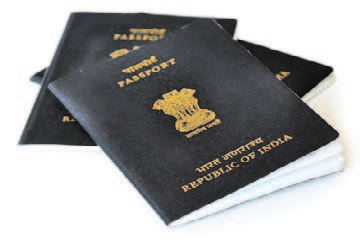
    SURAT (TIP): This Independence Day, regional passport office (RPO) is set to win the hearts of tens of thousands of people in south Gujarat region who were waiting for the printing and dispatch of their passports for a long time. The passport office has cleared a printing backlog of more than 5,000 passports, which was stalled for one-and-a-half-month following a shortage of booklets that come from a press in Nashik.

    From the Independence Day, the passport office will print the passports on the same day for those who cleared the appointment interview at Passport Seva Kendra (PSK) and the applicants will get the passport delivered within three days. “We have been successful in clearing the pending print queue for the passport. The cases cleared by the PSK will get their passports printed on the same day and that it will be delivered within two days via postal department, provided how fast the police is able to verify the cases,” said passport officer Kumar Nityanand.

    Officials said that the huge backlog was because of India Security Press in Nashik that had suspended production of passport booklets owing to a shortage in import of laminated sheets required to make the 36-page booklets. The import shortfall, officials said, was a result of suppliers not being able to meet orders in time. This had left tens of thousands of applicants in a limbo.

    Apart from job-seekers, several applicants awaiting their passports need to go abroad for medical treatment, officials said. The Surat RPO and PSK at Udhna Darwaja receive around 700 applications each day from Bardoli, Bharuch, Dang, Narmada, Navsari, Surat, Tapi and Valsad. Officials said that many job seekers and those wanting to travel for business, tour and immigration purposes now have a reason to smile. Nityanand said, “Passport holders applying for reissue at PSK will get their new passport within three days.”

  • Rajnath Singh undergoes tests at AIIMS

    Rajnath Singh undergoes tests at AIIMS

    NEW DELHI (TIP): Union home minister Rajnath Singh on August 14 underwent tests at the All India Institute of Medical Sciences (AIIMS) where he was admitted with complaints of abdominal pain. Doctors performed colonoscopy on him along with few other tests. Colonoscopy is an endoscopic examination of the large intestine and the distal part of the small bowel. “He underwent colonoscopy test Thursday morning. His condition is perfectly stable. He will be discharged by the afternoon,” said a senior doctor at AIIMS. 63-year-old Singh was admitted on August 13 night with complaints of pain in his lower abdomen, sources close to him had said.

  • PM Modi Will Not Address the US Congress. Here’s Why

    PM Modi Will Not Address the US Congress. Here’s Why

    WASHINGTON DC (TIP): Indian Prime Minister Narendra Modi will not be addressing the US Congress when he visits Washington DC in September for a summit with President Barack Obama. The Republican Speaker of the US House of Representatives, John Boehner has sent a “welcome but” invitation to the PM.

    In a July 30 letter to the PM, Boehner said he wanted to ensure that Modi “is aware of the interest that exists in the US House of Representatives in inviting you to address a Joint Meeting of Congress at some future date.” “If not for the unpredictability of the House schedule in late September of this year, an invitation for you to address a Joint Meeting during your upcoming trip to the United States would have been extended,” he wrote.

    Prime Ministers Atal Bihari Vajpayee and Manmohan Singh both addressed a joint session of the two chambers, viewed as the highest honour Congress can bestow on a foreign head of state. An invitation to Modi to address Congress were endorsed in eight separate letters circulating in the House and Senate. Meanwhile, the Indian American Community Foundation plans to host Modi at a special event being held on Septermber 28 at Madison Square Garden in New York to provide him a platform to officially address the Indian-American community in the US.

  • Yashwant Sinha Frontrunner to be Next Planning Commission Chief: Sources

    Yashwant Sinha Frontrunner to be Next Planning Commission Chief: Sources

    NEW DELHI (TIP):
    Two months after coming to power, the Narendra Modi government seems ready to restructure the Planning Commission, the term of which is coterminus with that of the government. Sources in the government said a deputy chairman is to be named soon and three names are doing the rounds for the post — Yashwant Sinha, NK Singh and Arun Shourie. Veteran BJP leader and former finance minister Mr Sinha is said to be the the front-runner for the post. With the government dragging its feet on naming the commission so far, there were some doubts on whether the body would be reconstituted at all.

    In fact, days after the new government came to power, the Independent Evaluation Office, which evaluates the effectiveness of the Central flagship schemes, had suggested that the commission be dismantled and replaced with a new Reforms and Solutions Commission. The report was submitted to Mr Modi on May 29 — three days after his government was sworn-in. But the evaluation was called internal, since it was not properly sanctioned, sources said. On August 7, in reply to a question in Rajya Sabha, Union minister of state for planning Rao Inderjit Singh had said, “There is no proposal at present under the consideration of the government to restructure the Planning Commission”.

    On how the work will be handled in absence of members, he said, “The Prime Minister is the chairman of the Planning Commission. Besides, in the current council of ministers, the MoS (Planning) has been given Independent Charge”. Yashwant Sinha had not contested the Lok Sabha elections this time. Instead, his son Jayant Sinha had contested and won the Hazaribagh seat. Mr Sinha was the finance minister in the Atal Bihari Vajpayee government and is considered to be pro-reform.

  • Party With Bar Dancers at Children’s Home: Bombay High Court Cracks the Whip

    Party With Bar Dancers at Children’s Home: Bombay High Court Cracks the Whip

    MUMBAI (TIP): The Bombay High Court ordered today that the chief of Children’s Aid Society, which hit the headlines after allegations of forcing special children to watch performances by bar dancers, be suspended immediately. Navnath Shinde has been accused of threatening some staff members for blowing the whistle on the New Year’s eve party — held on December 31, 2012, at the shelter home in Mankhurd – in which the alleged incident took place. The organisation runs five shelter homes for children in the state. The case came up for hearing when the employees had approached the police seeking protection. The court, expressing its shock, had asked the police to investigate the matter and file a case.

  • CBI Starts Probe in Jiah Khan Death Case

    CBI Starts Probe in Jiah Khan Death Case

    MUMBAI (TIP):
    The CBI on Wednesday registered a formal case to investigate the death of Bollywood actress Jiah Khan, five weeks after a Bombay High Court order, an official said. The development came after the high court transferred the case to the Central Bureau of Investigation (CBI) and asked it to consider whether it was a case of suicide or homicidal death.

    “If it comes to a conclusion that it is a homicidal death, then further investigation be made to find out who is the perpetrator of the crime and accordingly action will be taken,” a division bench of Justice V.M. Kanade and Justice P.D. Kode had said in its order July 3.

  • Govt will not reduce food, fertiliser subsidy

    Govt will not reduce food, fertiliser subsidy

    NEW DELHI (TIP): The government will not reduce subsidy on food items, fertilisers and development schemes in the current financial year starting April from what was paid in 2013-14, Minister of State for Finance Nirmala Sitharaman said. “The government does not plan to cut subsidies given in schemes like Mahatma Gandhi National Rural Employment Guarantee Act and National Food Security Act,” the minister said in reply to a question in the Rajya Sabha. The Budget for 2014- 15 has allocated Rs 2.60 lakh crore for overall subsidy, compared with Rs 2.55 lakh crore estimate for 2013-14.

  • SARADHA SCAM: CBI CONDUCTS RAIDS AT 28 LOCATIONS

    SARADHA SCAM: CBI CONDUCTS RAIDS AT 28 LOCATIONS

    New Delhi (TIP):
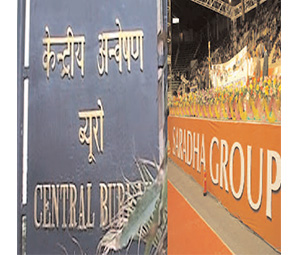
    The CBI conducted searches at 28 locations, including the residence of a former minister, in connection with Rs.10,000-crore Saradha chit fund scam, an official said on August 14. “In the multi-crore-rupee chit fund scam, searches are on at 28 locations in Kolkata, Delhi, Guwahati and Odisha, including at the residence of former Congress minister Matang Singh, among others,” an official said.

    The official added that a search was conducted at Saradha group chief managing director Sudipto Sen’s residence as well. The agency has till now registered 48 cases, including four in West Bengal and 44 in Odisha, in the alleged chit fund scam on the directions of the Supreme Court.

    The Supreme Court had handed over the Saradha chit fund scam case to the Central Bureau Of Investigation (CBI) in May 2014 and asked the state governments to provide all logistical help to the agency.

  • PLACES TO VISIT NEAR AHMEDABAD

    PLACES TO VISIT NEAR AHMEDABAD

    From glimpses of wildlife at Gir National Park to exploring the architectural marvels of Ajanta and Ellora to the charming hill town of Mount Abu, there are a range of places to visit near Ahmedabad. Offering a respite from the daily bustle of Gujarat’s commercial hub, these rejuvenating long weekend escapes will compel you to pack your bags and hit the road.

    SURAT

    From by-lanes lined with quaint eateries offering the most delectable Gujarati snacks to upscale markets housing massive jewellery showrooms, Surat is a city that offers almost everything you can ask for. One of the most rapidly growing cities in India, Surat is the second largest city in Gujarat and also known as the Diamond City. With the majestic Surat Fort and the Mughal-era monument Mughal Sarai for history buffs, the Lake Garden on the banks of Tapi River for those who want to take it easy, and a line-up of street markets for shoppers—Surat has a range of options for all kinds of travellers.


    25

    Baroda

    Formerly the seat of the Gaekwad dynasty, a Maratha clan which ruled over it from the mid-18th century till 1947, the erstwhile princely state of Baroda (also known as Vadodara), is today best known for its heritage and historic university. Often described as the cultural capital of Gujarat, much of modern Baroda was shaped by Sayajirao III, a far-sighted ruler in the late 19th century who patronised art and music, introduced free primary education, and established institutions such as the Bank of Baroda, a railway system and the university.

    The city’s beautiful old quarter filled with heritage buildings, and the historical city of Champaner – a UNESCO World Heritage Site – located an hour’s drive out of town, provide a fascinating insight into the past and will prove irresistible for history and culture buffs.

    Daman

    A short three-hour-long drive from Mumbai, the Union Territory of Daman (no, it’s not in Gujarat, which also means you’re good for a tipple) offers all the perks of a Goa vacation sans the teeming crowds. There are two beaches—Devka and Jampore—of which the latter is infinitely better for sun and sand.

    The Mirasol Lake Garden—replete with an artificial lake, swan boats and even a toy train chugging along the periphery—is a good spot if you’re travelling with kids in tow. For the more culturally inclined, this former Portuguese colony is dotted with architectural remains (Fort of Nani Daman, the lighthouse, Our Lady of Rosary Church) that speak of its bygone glory.

    Rann of Kutch

    Currently under consideration as a biosphere reserve, this salt wetland is abundant in biodiversity, and shrimp farming is one of the chief means of a livelihood in the area. With a host of wildlife sanctuaries, and rich presence of rare animals, this is one of Gujarat’s major tourist draws. Occupying about 4,953 square kilometres spread across the districts of Surendranagar, Banasakantha, Patan, Kutch and Rajkot, the topography of the Little Rann of Kutch features large marshlands interspersed with patches of soil supporting shrubbery. While you’re there, be sure to pay a visit to the Indian Wild Ass Sanctuary, which is one of the largest wildlife reserves in the country, and keep aside a morning to go bird spotting at Banjana Creek.

    Gir National Park

    No trip to Gujarat is complete without a visit to the Gir national Park. Sprawling across a vast expanse of 1412 square kilometres of dense forest, it is the natural abode of the lion – the only place outside of Africa where you get to experience the wild cats in their natural habitat. Take in the experience in its entirety by exploring everything, from the 250 species of chirping birds darting out of the thick canopy of trees overhead, to the crocs in the marsh waters.

    Spot the leopard, nilgai, hyenas, chinkara and antelopes, including the world’s only four-horned antelopes known as chousingha. Additionally, the Gir is the homeland of a tribe called the Maldharis, that thrives on pasturing and livestock. Spend a few days to really take it all in. We suggest a visit to the Crocodile Breeding Farm, and both the morning and evening safaris – the forest tells a different story after sundown.

    Ajanta and Ellora

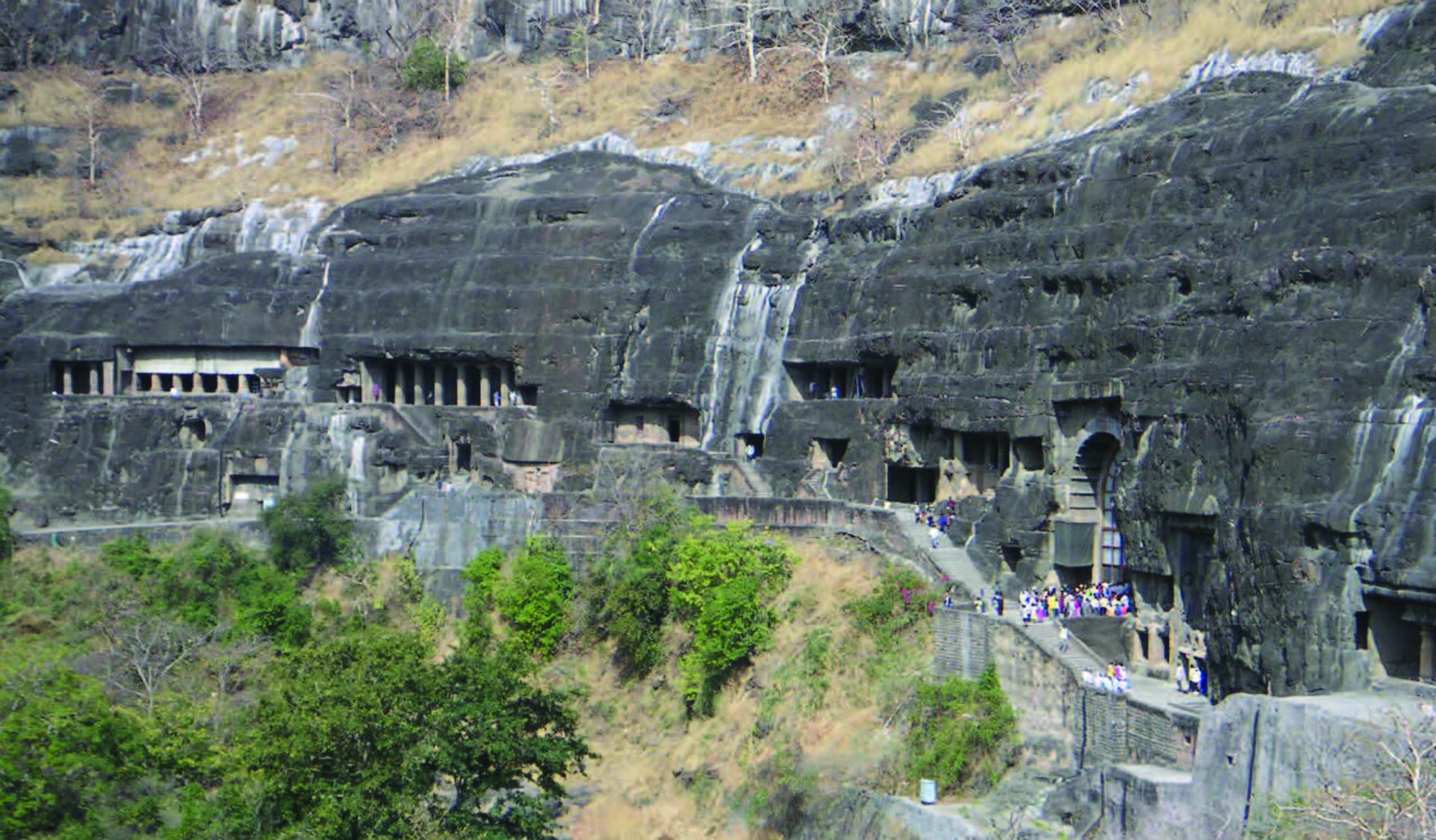
    Ajanta and Ellora are two monumental rock-cut caves that define Indian art and architectural accomplishment. Though these two monuments are separated by a distance of approximately 100 km, they are often mentioned together since their aesthetics and importance are at par and the fact that both are situated in the Aurangabad district of Maharashtra.

    While Ajanta is mostly about beautiful paintings made on cave walls on the theme of Buddhism, Ellora is all about sculpture and architecture belonging to three different religions prevailing in the country during those times—Buddhism, Hinduism and Jainism. Ajanta is a cluster of 30 caves of different sizes excavated in a horseshoe shaped stretch of rock embedded in a hill facing a narrow stream called Waghora. Each cave was connected to the stream by a flight of steps, which are now demolished with few remnants left behind. These caves are named after a nearby village called Ajanta.

    It includes masterpiece paintings of Buddhist religious art, with figures of the Buddha and depictions of the stories that tell about the previous lives of Buddha. The caves were built in two phases— starting around the 2nd century BC, with the second group of caves built around 400- 650 AD. Buddhist monks used to retreat to this serene place during the monsoon, and as they had plenty of time during such retreats, they used it for deepening their religious quest through prayer and discussion.

    Jodhpur

    The second largest city (after Jaipur) in Rajasthan, Jodhpur is an architecturelover’s feast for sore eyes. The older historic section of the city of Jodhpur is located around the grand Mehrangarh Fort which is bounded by a wall and several gates. Winding streets and unending bazaars run throughout the city that are littered with shops and thronged by visitors throughout the year.

    Also referred to as the Blue City, Jodhpur is home to the magnificent Umaid Bhawan Palace. A fivehour- drive from the hill-station of Mount Abu, Jodhpur makes for a perfect getaway once the hill station’s charms stop making an impression on you.

  • Pakistani court bars Imran, Qadri from holding march

    Pakistani court bars Imran, Qadri from holding march

    LAHORE (PAKISTAN (TIP):
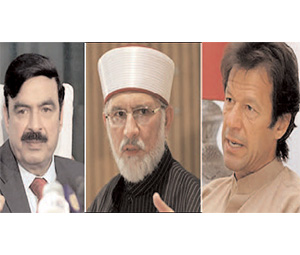
    A Pakistani court on August 13 restrained a cricketerturned politician and a Canada-based populist cleric from launching a march on Islamabad in an unconstitutional way, a lawyer said. The Lahore high court’s order came as authorities blocked almost every entry point to Islamabad on Wednesday, with more than 20,000 police and paramilitary forces deployed to try to thwart a major anti-government rally.

    “Pakistan Tehreek-e-Insaf (PTI) and Pakistan Awami Tehreek (PAT) are restrained from launching a march/sit-in in Islamabad in any unconstitutional way keeping in view sensitivity of independence day and current uncertain situation in the country,” PTI’s lawyer Ahmad Owais said in Lahore quoting from a short order by a three-judge panel headed by Justice Khalid Mehmood.

    Major roads were barricaded with shipping containers and police used excavators to dig up smaller roads in Islamabad, a day before two opposition protest marches are due to converge on the capital. Imran Khan and Canada-based preacher Tahir-ul-Qadri, who heads PAT, plan to march on the city on Thursday, Pakistan’s independence day, to demand Prime Minister Nawaz Sharif resign and call fresh elections. Both Khan and Qadri, who led mass demonstrations in Islamabad early last year to urge electoral reform, allege that the May 2013 general election was rigged.

    By late Wednesday afternoon only the highway to the airport remained open and even there shipping containers were on standby ready to be moved into place. The heavily-guarded “red zone”, home to parliament, the president and prime minister’s residences and foreign embassies, was already sealed with containers, barbed wire and concrete blocks. Mobile phone services were shut down in the red zone on Wednesday — a common practice on sensitive occasions in Pakistan aimed at stopping militants using cell phones to detonate bombs.

    In front of the five-star Serena hotel, the road was blocked with several containers guarded by around 50 to 60 policemen. The city streets were largely deserted on Wednesday, with almost all offices and shops closed. The government on Wednesday asked the Supreme Court to set up a panel of judges to investigate claims of rigging in last year’s general election — a move announced by Sharif late on Tuesday to try to ease political tension.

    The judicial probe was a key demand of Khan, who leads the country’s third largest party, but he rejected Sharif’s proposal and demanded he step down. Sharif’s landslide general election victory in May 2013 saw Pakistan’s first ever handover of power from one civilianled government to another after a full term, in polls that local and foreign observers called credible.

    In his television address on Tuesday, the 64-year-old prime minister said economic progress had been made under his government but the opposition groups’ protests would reverse the gains. and Qadri, who says he is struggling for an “interim national government” consisting of technocrats and experts, have announced they will merge their marches.

    Tension has gripped parts of the country since last week, with running clashes between police and supporters of Qadri in the eastern city of Lahore over several days leaving at least one protester dead.The government for its part has rejected the allegations of vote-rigging and accuses the opposition groups of attempting to obtain by force what they could not achieve through democratic means.Punjab provincial law minister Rana Mashhood told AFP that more than 1,000 Qadri and Khan activists had been detained in recent days on suspicion of inciting or perpetrating violence.

  • Pakistan seals capital ahead of protests

    Pakistan seals capital ahead of protests

    ISLAMABAD (TIP):
    Pakistan’s government has deployed thousands of security personnel and put up barricades to deny entry to protesters who want to march into Islamabad. Cricketer-turned-politician and Pakistan Tehreek-e-Insaf chief Imran Khan and Pakistan Awami Tehreek chief and Canada-based preacher Tahir-ul-Qadri plan to march on the city on Thursday, Pakistan’s independence day, to demand Prime Minister Nawaz Sharif’s resignation.

    Both leaders allege the government was formed as a result of rigged elections in May 2013. Khan has given the call for an ‘azadi’ (independence) march and Qadri for an ‘inqilab’ (revolution) march. On Wednesday, Islamabad’s inspector general of police told Khan that security for his long march won’t be assured due to the imposition of section 144 (restriction on gathering of more than four persons) in the capital city.

    He warned Khan about the possibility of a terror attack in the wake of military operations in the North Waziristan tribal region. Despite shipping containers having been placed on all roads in and outside Islamabad, ruling PMLN sources said the government was uncertain about the success of its efforts to stop the protesters on the periphery of the capital city

  • ADANI BUYS LANCO PLANT IN RS 6,000 CRORE DEAL

    ADANI BUYS LANCO PLANT IN RS 6,000 CRORE DEAL

    NEW DELHI (TIP): Adani Power will buy Lanco Infratech’s 1,200-MW imported coal-fired power plant at Udupi in Karnataka in a deal valued at more than Rs 6,000 crore, marking the biggest acquisition in India’s thermal power industry. The acquisition, in a way, comes as redemption for the Adani group, which lost out to Anil Ambani’s Reliance Power for picking up hydel assets of the Jaypee Group.

    R-Power outbid the Adani group by offering Rs 12,000 crore for Jaypee’s hydel capacity aggregating 1,800 MW. For Lanco’s Udupi plant, Adani would pay Rs 2,000 crore in cash and take over the plant’s long-term debt of Rs 4,000 crore. The deal would bring down Lanco’s debt by Rs 4,000 crore. Lanco has a total debt of Rs 36,000 crore ($6 billion) and is reported to be examining options, including selling Griffin Coal in Australia it had bought for Australian $750 million ($665 million) in 2011, to retire outstandings.

    Lanco is seeking to sell Griffin Coal after reaching an agreement with banks to restructure debt. Coal acquisitions in Australia by foreign companies have soured as prices for the fuel fell for three straight years. The Udupi plant is the first imported coal-based unit set up by a private power producer in the country, Lanco said in a release. It comes with a captive jetty to handle import of four million tonnes of coal per year and an external coal handling system in the new Mangalore Port Trust. This capacity too can be doubled. The infrastructure would add to Adani’s coal import capacity.

    The company runs India’s largest coal handling port at its Mundra special economic zone in Gujarat. The Udupi power plant has an added advantage since its capacity can be raised by another 120 MW and the special purpose vehicle that operates the plant has an agreement with the Karnataka government. The plant supplies 90% of the power to the state and the rest goes to Punjab. Adani Power has an installed generation capacity of about 8,620 MW and is looking at the acquisition as one of the options to ramp up capacity to 20,000 MW by 2020.

    The company is in talks with several other players such as GMR, Indiabulls, Avantha Power and Athena, who want to sell their projects, with aggregate capacity estimated at 50,000 MW, in the face of coal and gas shortage and other problems. It has a presence in almost the entire value chain of the power industry and uses this strength to turn around stranded projects.

  • 4 civilians killed in attack on Nato convoy in Kabul: Official

    4 civilians killed in attack on Nato convoy in Kabul: Official

    KABUL (TIP): A suicide attacker targeting a Nato troop convoy in Kabul on August 11 killed four civilians and wounded at least seven others, Afghan officials said, as emergency services rushed to the scene.

    “At around 11:30am, a convoy of foreign forces was targeted by a suicide bomber in police district 6, killing four civilians and wounding seven,” interior ministry spokesman Sediq Sediqqi said on his Twitter account. There was no immediate comment from the Nato

  • Modi seeks help of World Bank to cut poverty

    Modi seeks help of World Bank to cut poverty

    NEW DELHI (TIP): Prime Minister Narendra Modi has suggested that World Bank should help India in making a visible impact on reducing mass poverty in the underdeveloped regions of the country to show a perceptible change. Modi had raised the issue during his meeting with World Bank president Jim Yong Kim last month in Delhi and the multilateral agency is expected to come back to the government after firming up a strategy that addresses the concerns raised by the government, said sources.

    While there was no demand for funds, Kim had later told the World Bank staff that the prime minister wants three things — skills, scale and speed. “A critical priority of this trip was to meet the new PM, Narendra Modi, listen to his vision for development, and seek to enhance our partnership with India. We had a great meeting — one of the most inspiring I’ve had as president of the World Bank,” he had remarked. For the World Bank, India is the largest borrower and the head of the multilateral agency was key to get the new government’s inputs.

    During the meeting, Modi had sought suggestions on skill development, a key focus area and said he wanted inputs on “enhancing production for the masses, not just mass production”. The statement, officials said, is a pointer to boosting jobs by focusing on manufacturing, especially in the employment-intensive sectors of the economy.

  • Sri Lanka disappearances probe panel term extended

    Sri Lanka disappearances probe panel term extended

    COLOMBO (TIP):
    The term of a Sri Lankan government-appointed panel probing the cases of missing persons during the three-decade war with the LTTE has been extended by nearly seven months.President Mahinda Rajapaksa extended the term of the commission investigating disappearances in the North and East until February 15, 2015.Its term was to expire at the end of this month, said commission’s secretary HW Gunadasa.Rajapaksa yesterday announced he may add three more international experts to the existing three-member panel.

    Last month, he had named a three-member international advisory panel comprising Sir Desmond de Silva, Sir Geoffrey Nice and Professor David Crane to advise the disappearances commission headed by ex-Sri Lankan judge Maxwell Paranagama. The members of the panel Desmonde Silva and Nice are from Britain while David Crane is a US national.

    The probe panel was set up in August 2013 and mandated to probe disappearances of persons between 1990 to May 2009 when the war with Liberation Tigers of Tamil Eelam (LTTE) ended. It was set up as a recommendation of the Lessons Learnt and Reconciliation Commission (LLRC),which again was Sri Lanka’s answer to calls for reconciliation with the Tamil minority after the end of the bitterly fought conflict.