NEW DELHI (TIP): The Modi government has made it clear it would not open the doors for FDI in multi-brand retail in India. Commerce minister Nirmala Seetharaman said in Rajya Sabha on August 13 that the BJP government was voted to power on the basis of the party’s election manifesto which clearly said it is against FDI in multi-brand retail. “The mandate given to government is on the basis of our manifesto … we do not entertain FDI in multi-brand retail,” she said.
The government though is yet to initiate any move to scrap the UPA-II government’s decision to allow FDI in the same sector. She said FDI flows have not been consistent in the past few years. “During the last three years FDI inflow has fluctuated. FDI inflow decreased by 26.33% in 2012-13 and increased by 6.12% in 2013-14,” she said.
FDI flow is dependent on the business environment and how decisions are made, she said, adding it has been skewed in favour of Mauritius which accounted for $80.809 billion out of $222.89 billion that came to India between 2000 and 2014. “We are using FIPB (Foreign Investment Promotion Board) to carry out check (on investing companies),” she said. Even in sectors where FDI is allowed under automatic route, Reserve Bank of India (RBI) scrutinises the funds flow, she said.
RBI and department of revenue, through FIPB, scrutinise investments coming into India, she said. “Under the liberalised economic environment, investment decisions of investors are based on the macro-economic policy framework, investment climate in the host country, investment policies of the trans-national corporations and other commercial considerations,” the minister said.
Month: August 2014
-

NEPAL HIKES INSURANCE FOR SHERPAS AFTER EVEREST AVALANCHE
KATHMANDU (TIP):
Foreign mountaineers will have to spend more for the insurance cover of their Sherpa guides to climb any Himalayan peak in Nepal including Mount Everest, the government said. Wedged between India and China, Nepal is home to more than 1,300 Himalayan peaks – 414 of them, including Mount Everest, are open to foreign climbers who turn up in hundreds every year.
An ice avalanche on Mount Everest in April killed 16 Sherpa guides in the biggest disaster in the history of the world’s tallest mountain, highlighting concerns that the Sherpas were paid too little compared to the risks they take in guiding their clients on the dangerous slopes of Mount Everest. Dipendra Paudel, a tourism ministry official, said the insurance cover for the guides would be raised to $15,000 from $10,000.
Medical insurance for each guide has also been increased to $4,000 from $3,000. The new rates, to apply for all mountains including the 8,850 metre (29,035 feet) Everest, will come into force from next month, Paudel told Reuters. “The hike will address to some extent the demand by Sherpas for better compensation,” said Dambar Parajuli, chief of the Expedition Organisers’ Association, said on Friday.
Following the Everest avalanche Sherpas criticised the government for doing little for their welfare compared to the hefty amount of money it collected from climbers as permit fees. They also called for a climbing ban out of the respect for their fallen colleagues forcing 334 foreign climbers to call off their attempts to scale Everest this year. The government said their permits would remain valid for five years as authorities moved to encourage climbers to return. Sherpas earn up to $7,000 or more every year — 10 times Nepal’s per capita income. -

Freedom, not just Independence
Independence is a sweet sounding word. However, mere political independence does not guarantee freedom. The constitution may enumerate freedoms available to a nation’s citizens, yet they may not enjoy them. That’s what precisely has been happening in India during 67 years of independence. We are on August 15th entering the 68th year of independence. But freedoms elude the laege mass of India.
Going by the statistics, India has developed and made progress. Politicians in India do not tire repeating that Indian economy is one of the most stable economies, growing at a reasonably good rate despite global recession. They keep telling the people of the country that it is a matter of pride for India that she will be one of the three major economies of the world by 2050. Nobody will dispute that India’s GDP has shown remarkable progression and that Indian economy has survived the scare of global recession.
India has wealth, no doubt. But this wealth is concentrated in the hands of a small percentage of the Indian population. Benefits of national growth have not percolated down to the common people. It is the unequal distribution of wealth that is the bane of India. India’s claim to democracy will be a hollow claim if India cannot reach the benefits of growth to every single person. In the absence of means of sustenance, freedoms enshrined in the Constitution have no real worth, no meaning, and no relevance.
On the 67th anniversary of India’s independence let each Indian ponder how each Indian can have real freedom which means freedom from hunger, from ignorance, from exploitation. One of the worst enemies of freedom not reaching people is the corrupt system obtaining in the country. Hordes of scandals involving politicians, businessmen, government officials are an indication that our society is sick. There is a mad race for amassing wealth. There is a wanton desire to have power.
Gandhi Ji who prized means so much must be an uncomfortable soul in heavens to see the “by hook or by crook” approach being adopted by the people of the country he rid from slavery to a foreign rule. He must be very uncomfortable that no body had the vision he so much cherished to wipe every tear in every eye. Let him have peace. Let us resolve to annihilate the corrupt people and the corrupt system and ensure the people have not independence but freedom.
The sooner the better it will be for all. Prime Minister Modi will do well to speed up the pace to bring about the change the country is crying for. We will well be reminded of an Urdu couplet which reads: “Kaun rahata hai teri zulf ke sir hone tak”? which means who can wait for all that long to happen. Happy Independence Day, nevertheless. -

Opposition to installation of Bapu’s statue is wrong
“His (Gandhi’s) message of love and nonviolence has become more important than ever before in our fractured world. Peace can only come when world leaders start to follow Gandhi Ji’s ideals. His statue will reminds us of his contribution to nonviolence and a peaceful coexistence. Those who attempt to denigrate the memory of Bapuji, in fact do the same for humanity itself and this cannot be allowed to happen”, says the UK based author.
Iam saddened by the reaction of a few misguided fellow Indians who are campaigning against the statue of Mahatma Gandhi which is to be erected near the Houses of Parliament in Britain in recognition of his immense contribution to the free world. Their protest is unwarranted and unnecessary and above all, counterproductive. If Britain wishes to acknowledge the contribution of a leader who was also the architect for bringing an end to the British rule in India, then it surely speaks volumes about the great man.
In fact, I shudder to think what our future would have been if it wasn’t for Mahatma Gandhi’s struggle for our independence. This is not the way to show gratitude to someone who put our interests above his own. How many people do we know who can give up everything for a cause that they believe in? Gandhi Ji was well educated and could have easily continued to live a comfortable life like most prefer to do. However, he instead rose to fulfil the needs of a nation which needed clear leadership and that too in a way which was in keeping with the peaceful psyche of its citizens.
He gave up his personal comfort and wealth for the sake of freedom for his countrymen and today there are a few misguided individuals who choose to mock and belittle his great achievements. History shows us that there are only a handful of such people to have lived and served in this way and Mahatma Gandhi was one of them. Condemning or criticising our own leader, who is revered the world over, by finding faults in him is detrimental to our future as they are trying to tarnish our memory and the teachings of a great soul and we cannot take his wisdom forward to our future generations. We cannot blame Gandhi Ji for the breakup of India.
Had some Muslim leaders, unlike the Sikhs not opted for a separate homeland for Muslims, then partition would not have taken place. The modus operandi of an imperial power was very clear; first to ‘Divide & Rule’ and then to ‘Divide & Run’ and leave a sting in the independence and the call for a split to the country to separate some of the communities served this end. Today Britain is no longer an imperial power and its approach has changed completely hence the acknowledgement of our great leader.
The statue of someone who renounced violence and spoke of civility many decades ago, when violence is still being perpetrated today on minorities by majorities on a daily basis, will act as a great symbol of peace and harmony. His famous saying, “an eye for an eye only ends up making the whole world blind” would serve us well today. It serves to show us that an ideal can be achieved through peaceful remonstration and on the merits of the cause. In fact, he once said, “Strength does not come from physical capacity.
It comes from an indomitable will” This was the basis of the peaceful Quit India movement which brought India independence. Mahatma Gandhi’s wisdom and respect for his principles have spread the world over. In Britain, apart from the British monarchs, no other person in history has had stamps issued to honour him as many times as this great man and over 50 countries have issued postage stamps to honour our fellow Indian. This must be a matter of pride for us and the benefits from his leadership are now being enjoyed by over 1/5th of mankind. Mahatma Gandhi was known affectionately as “Bapuji” meaning father in Hindi).
Bapuji was not only an Indian leader but a universal icon who inspired people across the globe with his ideals. The shape of the world as we see today owes him a great deal. The civil rights movement in America under Dr. Martin Luther King was a direct result of Bapuji’s inspiration. The struggle against apartheid in South Africa by Nelson Mandela is yet another example with both Bapuji and Madiba holding strong beliefs on non-violent approaches to social change.
History is littered with leaders who fought for their independence with arms which resulted in the death and destruction of millions of innocent lives but Gandhi Ji on the other hand advocated a peaceful and nonviolent freedom struggle based on true Indian values. He knew that violence would generate more violence which would result in the loss of hundreds and thousands of innocent Indian and British lives to achieve the ultimate goal of freedom.
The loss of even a single life was very precious to him whether Indian or British. He knew that once people become violent, then their character would change forever and they then would remain violent even after their objectives had been achieved. We can still see such behavior in people in certain countries where leaders have encouraged violence to achieve their objectives; their gains are often temporary as violence becomes ingrained in the culture as a way to achieve your objectives and the spiral of violence continues.
Bapuji was a visionary. Where some leaders opted for a religious state, Bapuji opted for a democratic and secular country. He knew that no country could move forward by keeping a section of its own population behind by systematically discriminating against them on the basis of their religion or caste. The result is in front of you. You can see how India is surging ahead whereas religion based countries are in turmoil.
Leaders in religious countries always keep their citizens down in the name of religion just to cover their own failings. This is the reason Indians are shining across the globe because they are the product of a democratic and secular country and as a result can easily integrate in any society quickly. Bapuji was unique in many ways. He had no desire to rule people. Instead, it was to serve them selflessly.
We see leaders like Robert Mugabe who put their personal interests above that of their people and bring the people of their countries to their knees for their own selfish gains. His message of love and nonviolence has become more important than ever before in our fractured world. Peace can only come when world leaders start to follow Gandhi Ji’s ideals. His statue will reminds us of his contribution to nonviolence and a peaceful coexistence. Those who attempt to denigrate the memory of Bapuji, in fact do the same for humanity itself and this cannot be allowed to happen. -

SwaasthIndia Web Portal Launched
CHICAGO (TIP):
There are over 100,000 Indian American physicians in the United States and several hundred thousands across the globe. They want to contribute to their Janmabhoomi, India, by sharing their expertise, skills, knowledge and resources with those in need of their services in India. However, they are not familiar, how and where they will begin providing these services to those who would benefit from them. Often without an infrastructure and a method to reach out to the needy, they are unable to be of help to the needy patients back “home.”
Now, under the leadership of American Association of Physicians of Indian Origin (AAPI), a new initiative, SwaasthIndia Portal has been officially launched with the mission to provide a platform to connect Government of India’s health related requirements with medical expertise of physicians of Indian origin globally and to ensure a seamless and easy online interaction for users of SwaasthIndia, ensuring a comfortable, efficient and productive experience.
“SwaasthIndia seeks to achieve a web based two way communication system to help identify and coordinate a two way need based system, for medical educational and service delivery to the people of India,” says Dr. Ravi Jahagirdar, president of AAPI. “This system functions as a “match maker” between various public and private medical and paramedical institutions in India and any healthcare provider from around the globe who are willing and wanting to provide such service for their Janmabhoomi.” Swaasth India is collaboration between the Ministry of Health & Family Welfare (Government of India), the American Association of Physicians of India origin USA (AAPI), Global Association of Physicians of Indian origin (GAPIO), the British Association of Physicians of Indian origin, UK, and the Apollo Hospital.
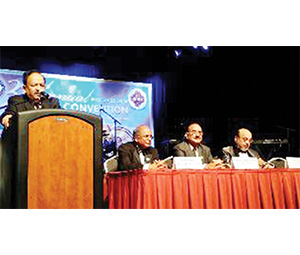
The Government of India, under the guidance of Prime Minister Narendra Modi, and Dr. Harsh Vardhan, Minister of Health, India, has pledged its full support, Dr. Jahagirdar confirms. On June 28th 2014, the SwaasthIndia Portal was inaugurated by Dr. Harsh Vardhan, during AAPI’s Annual Convention. Describing the many userfriendly features, Dr. Jahagirdar says, “In this system, there, will be an input from both sides, the Central and State Governments, as well as private organizations and hospital systems in India that will identify and upload all forums like meetings and Conferences, medical camps and workshops from the India end.
From the Global side, the healthcare provider currently limited to physicians, will Register onto the website with their individual details. Similarly institutions worldwide can also offer their services through AAPI.” Dr. Seema Jain, president-elect of AAPI, says, “Swaasth India provides an online platform, offering information and requirements of government or NGO run health and wellness programs in India to physicians of India origin from around the world, enabling them to enroll and support healthcare needs in villages, districts and states of your choice in India.” AAPI is the apex body that will manage this portal first for two full years.
AAPI, in its special E – Newsletter to all its Members last week has informed and is urging them its members to register and participate in this well planned and meticulously presented initiative. If you work for the government and are responsible for health related issues, you can post your requirements on the Swaasth India website. These requirements may include health screening camps or capacity building programs. These posted requirements will be made visible to the Indian origin physicians from all around the world, who may apply to offer their services in order to support these programs. Information shared on this website is processed in a highly secure and confidential manner.
Only physicians, with approved profiles, would be able to access government’s health related requirements. This is to prevent misuse of your information and to ensure a seamless, secure interaction between the government and the physicians offering these services. Anwar Feroz, Honorary Advisor to AAPI (USA), who has been associated with it since its inception, considers this to be “a very positive collaboration between various associations representing physicians of Indian origin from several countries, which makes it easier to identify, register and sign up for opportunities to support either training, skills development or clinical programs in various locations throughout India.”
The success of this initiative is up-to every physician of Indian origin residing in any part of the world and has a desire to help and contribute, by effectively utilizing this forum. The genesis of Swaasth India was during the Pravasi Bharitya Diwas (PBD 2010) in Jaipur, India. Most physicians of Indian origin are passionate about doing something meaningful, about contributing towards the continued growth and advancement of India.
Swaasth India is expected to enable physicians of India origin residing globally to support the Government of India’s objectives to improve the standard of living and health status of the Indian population in a coordinated way. “The goal to be achieved is a direct and organized involvement by healthcare providers globally to help provide a highly desired universal high quality and affordable healthcare delivery to all people of India,” Dr. Jahagirdar summarizes. For more information and to register,
please visit: www.swaasthindia.gov.in. -

Humanitarian Assistance Operations Near Sinjar, Iraq continue
TAMPA, FLA (TIP):
The U.S. military conducted, August 12 night, a sixth airdrop of food and water for thousands of Iraqi citizens threatened by the Islamic State of Iraq and the Levant (ISIL) on Mount Sinjar, Iraq, a press release issued by the State Department. This airdrop was conducted from multiple airbases within the U.S. Central Command area of responsibility and included two C-17 and two C-130 cargo aircraft that together dropped a total of 108 bundles of supplies. U.S. fighter aircraft in the area supported the mission.
The two C-17s dropped 80 container delivery system bundles of fresh drinking water totaling 7,608 gallons. In addition, the two C-130s dropped 28 bundles totaling 14,112 meals ready to eat. To date, in coordination with the government of Iraq, U.S. military aircraft have delivered nearly 100,000 meals and more than 27,000 gallons of fresh drinking water, providing muchneeded aid to the displaced Yazidis, who urgently require emergency assistance.
The United States military will continue to work with the Department of State, the U.S. Agency for International Development, as well as international partners including the Government of Iraq, the United Nations, and non-government organizations to assess the need for additional humanitarian operations in Iraq going forward. -

USIBC Convenes Industry to Support the Defense Trade & Technology Initiative on the Occasion of Secretary Hagel’s Visit to India
WASHINGTON (TIP):
On the sidelines of U.S. Secretary of Defense Chuck Hagel’s visit to India, the U.S.-India Business Council (USIBC) convened several high-level industry meetings to clarify and implement the Defense Trade and Technology Initiative (DTTI). USIBC also met with key stakeholders in the Secretary’s delegation. The industry group hosted the Honorable Frank Kendall, Department of Defense Under Secretary for Acquisition, Technology, and Logistics, who is the U.S. co-chair of this important initiative which offers new areas for cooperation geared towards enhancing bilateral defense trade and technology transfer.
During Secretary Hagel’s visit, Minister Arun Jaitley announced India’s Ministry of Defence counterpart to the DTTI, which will be filled by the position of Secretary, Defense Production in India’s Ministry of Defence. “Secretary Hagel’s visit marks an exciting new chapter in not only our bilateral strategic relationship, but in laying the foundation for greater defense industrial cooperation,” said Diane Farrell, USIBC Acting President.
“The net benefit of the DTTI will be felt on both sides, with American companies eager to partner more closely with Indian industry while harnessing India’s vast manufacturing, research, engineering, and knowledge base,” Farrell said. During the Secretary’s visit, defense industrial cooperation was featured significantly on the agenda of both Governments. USIBC will continue to support both U.S. and Indian stakeholders across Government and industry alike, and congratulates Secretary Hagel, Defense Minister Jaitley, and the new co-chairs of the Defense Trade and Technology Initiative on a successful visit.
Formed in 1975 at the request of the U.S. and Indian governments, the U.S.-India Business Council (USIBC) is the premier business advocacy organization advancing U.S.-India commercial ties. Today, USIBC is the largest bilateral trade association in the United States, with liaison presence in New York, Silicon Valley, and New Delhi, comprised of 300 of the toptier U.S. and Indian companies. Ajay Banga, President & CEO of MasterCard, is USIBC’s Chairman. -

Attorney for Indian National Congress Party opposes appeal by the SFJ in 1984 riots case
NEW YORK (TIP):
Indian-American attorney Ravi Batra, on behalf of Indian National Congress party, filed opposition in federal court to the appeal by the Sikhs for Justice (SFJ). He has opposed an appeal filed by a Sikh group that challenged dismissal of the 1984 rights violation case against it, saying the group does not represent the victims and US courts cannot rule on cases involving an incident that took place in India 30 years ago. SFJ had in May challenged the dismissal of the 1984 rights violation case against the Congress party saying that the case “concerns” the US and it has “institutional standing” to seek judgment on behalf of the Sikh community.
Batra said US federal judge Robert Sweet was right to dismiss SFJ’s case in April since the rights group is no victim and neither does it represents the victims of the 1984 anti-Sikh riots .He argued that US courts must “honor India’s sovereignty in a matter that arose 30 years ago in India by and between Indians,” and so it must be dealt with in India alone. Batra said that the Indian National Congress (INC), as a legal corporate entity and not a natural living breathing person, is incapable of extra-judicial killings or torture.
“SFJ’s cases seek mere publicity and not justice, as SFJ cannot legally be a plaintiff, and a genuine victim, precious to the law, deserves a better champion,” Batra said. Batra also criticized SFJ for “making noises” against Prime Minister Narendra Modi’s upcoming visit to the US and said the group had improperly sued former Prime Minister Manmohan Singh also last year, “despite his head-of-state immunity.”
SFJ has launched an online petition campaign urging President Barack Obama to cancel invitation to Modi for the 2002 communal riots in Gujarat. He said SFJ’s actions are “unbecoming, and at worst an exposure of SFJ’s unlimited hunger for publicity while it indiscriminately dishonors India and all Indians in these United States without cause.” The US Court of Appeals has granted SFJ time till August 22 to file its brief against Congress party’s arguments. -

The Counter-insurgency in North Waziristan: A Discussion with Ikram Sehgal
NEW YORK (TIP):
East West Institute Board Member Ikram Sehgal led a discussion on the serious security situation in North Waziristan, Pakistan on August 7, 2014 here in New York. During an hour-long discussion, Ikram Sehgal spoke about security threats and opportunities within North Waziristan, Pakistan.
He began by noting that Pakistani public opinion is united around the current military campaign in the region to combat the ever present Taliban forces in the area. He claimed that terrorism in Pakistan is no longer about ideology but rather economic gains and mentioned that groups within the country have gained financial support from the private sector, adding to their power.
To fight terrorism, Sehgal pointed to four key steps:
1. Destroying terrorist safe havens
2. Eliminating terrorist groups
3. Restoring the power of the Pakistani government
4. Shaping a suitable environment for sustainable development.
Additionally, because terrorism within Pakistan is not a country specific problem but rather a regional one, a regional counter-terrorism force should be implemented. There is not likely to be an end to terrorism in Pakistan anytime soon due to its long-standing establishment within the country and the weakness of Pakistan’s army. However, there are other options moving forward.
China is now one of the largest players within Pakistan, investing in Pakistan’s compromised energy sector and helping with development. Sehgal ended the discussion optimistically, but stressed the need for continued cooperation both with China and the U.S Ikram Sehgal is the Chairman of PATHFINDER GROUP, comprising two of the largest private security Pakistani companies, with 15,000 employees in over 50 cities and towns in Pakistan, supported independently by electronics security and facility services companies. -

India’s Prime Minister Narendra Modi to host Special Event at New York’s Madison Square Garden
NEW YORK (TIP):
The Indian American Community Foundation will host India Prime Minister Narendra Modi at a special event being held on September 28th, 2014 at Madison Square Garden in New York. This will be Mr. Modi’s first visit to the United States since his election in May as India’s newly elected Prime Minister. The Madison Square Garden event looks to provide Prime Minister Modi a platform to officially address the Indian-American community in the United States.
The program will also include various cultural performances, Special guest speakers and many surprise guests. Dr Bharat Barai, President of the Indian American Community Foundation said “It is a great honor for us to be able to host Prime Minister Modi during his first official visit to the US as India’s Prime Minster. Indian-Americans across the US are very excited following the unprecedented and historic victory of him and the BJP party.
We know his schedule here in the US is very busy but the time he has set aside to be a part of this event and interact with the Indian community here is a true indicator of his character and why we are so proud he is our new Prime Minister.” Mr. Modi is scheduled to address the United Nations General Assembly and hold bilateral talks with world leaders on the sidelines of UNGA.
He will also hold high level India US summit talks with President Barack Obama in Washington. Mr. Barai also mentioned that “while additional details are still being planned, we urge individuals to visit www.pmvisit.org for the latest updates and information leading up to this grand event”.
About Indian American Community Foundation:
Indian American Community Foundation based in New Jersey is a newly registered not-for-profit organization. The purpose of the organization is to provide non-political, non-religious and broad based platform for all Indian American organizations, associations to celebrate Indian culture and bring awareness of issues effecting Indian communities domestically and internationally. -

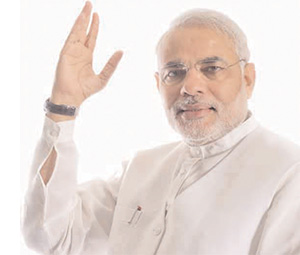
PM Modi May Speak Extempore In First Independence Day Speech
NEW DELHI (TIP):
Prime Minister Narendra Modi is likely to speak extempore when he makes his first Independence Day speech at Delhi’s Red Fort on Friday. If he does, he will probably be the first prime minister to address the nation on August 15 without a script. Modi is expected to reach the Red Fort at around 7.20 am. After a Guard of Honour by the armed forces, he will unfurl the national flag. His speech, which is likely to last 45 minutes to one hour, is set to break new ground in more ways than one. For the first time, seating is being prepared for more than 10,000 people to attend.
The Prime Minister has asked four ministers to help him with his speech. (Young Ministers Smriti Irani, Piyush Goyal on PM’s Independence Day Speech Committee) Modi, 63, is used to making long speeches without prepared text and is seen by many as a speaker who can keep his audience engaged. Sources close to him say a prepared speech or a teleprompter would take away from his natural ease at connecting with people. But officials have voiced concern that an unscripted address in Hindi would be lost on foreign diplomats.
The PM’s idol is former prime minister Atal Behari Vajpayee, the BJP veteran known to be one of the country’s best orators. BJP leaders believe Mr Vajpayee’s Independence Day speeches missed his sparkling wit as he read from a text. Modi, who led his party to a stunning victory in the national election, reportedly wants his first Independence Day speech to set a benchmark.
He is likely to outline his government’s priorities in broad strokes but avoid specifics. On August 14 last year, Mr Modi had challenged that his Independence Day speech the next day in Gujarat, as chief minister, would draw as much attention as that of then Prime Minister Manmohan Singh’s from the Red Fort. He later criticised Dr Singh’s address as uninspiring and disappointing. Many BJP leaders had then wagered that Modi’s next Independence Day speech would be at the Red Fort. -

Insurance Bill sent to select committee of RS
NEW DELHI (TIP):
Giving in to opposition pressure, the government on August 14 referred the controversial Insurance Bill to the select committee of Rajya Sabha. The House adopted a motion in this regard after finance minister Arun Jaitley moved it while informing members that the panel has been asked to look into the Bill and submit its report on the last day of the first week of the next session. The Committee will have Chandan Mitra, Mukhtar Abbas Naqvi and Jagat Prakash Nadda (all BJP), Anand Sharma, BK Hariprasad and JD Seelam (all Cong), Satish Chandra Misra (BSP), KC Tyagi (JD-U), Derek O’Brien (TMC), V Maitreyan (AIADMK), Naresh Gujral (SAD), Ram Gopal Yadav (SP), Kalpataru Das (BJD), P Rajiv (CPIM) and Rajiv Chandrasekhar (Ind) as its members.
The government had to buckle under the opposition pressure after it failed to convince an adamant opposition to get its support for the first major economic reform initiative of the new government. Cutting across party lines, major opposition parties had joined hands on the issue demanding that the Bill be sent to the select committee. The bill, which proposes to hike FDI limit in insurance sector to 49 per cent, was caught in logjam with the Congress-led opposition insisting that certain new provisions incorporated in the bill required a fresh look and expert consideration.
Though government was confident of getting the bill passed in Lok Sabha, it was wary of its passage in the Rajya Sabha, where the ruling NDA does not enjoy majority. Though government had earlier listed the bill in Rajya Sabha, it was deferred and, strategically, not listed later as it continued consultations with various parties for support. With a view to gaining support, the government has made it clear that it is open to amendments in the bill. Congress, which had supported a hike in the FDI cap when it was in power, wanted the bill to be referred to a Select Committee for threadbare examination of the issue since the government has brought some amendments. -

No proof against CAG, can’t nix appointment: HC
NEW DELHI (TIP):
The Delhi High Court on Wednesday refused to quash the appointment of Shashi Kant Sharma as Comptroller and Auditor General of India (CAG), saying no material has been brought on record to substantiate the plea questioning the “integrity” and “competence” of the CAG. “Thus, neither on integrity nor on competence, is there any material to substantiate the plea of the petitioners that the respondent No. 2 (CAG) was not eligible for appointment as the CAG,” a bench of justices B D Ahmed and Vibhu Bakhru said.
In its 74-page judgment, the bench considered the fact that there was no criminal case against the CAG and moreover, no “disciplinary proceeding” is pending against him. “There is no disciplinary proceeding pending against him. There is no criminal case pending against him. There is only a supposition on the part of the petitioners that as he had dealt with defence procurements in his various capacities in the past, there might be a conflict of interest when he prepares audit reports in respect of the defence procurements.
This is merely a surmise, conjecture and presumption on the part of the petitioners insofar as the audit report in respect of purchase of helicopters is concerned,” it said. It dismissed two separate PILs, filed by former Chief Election Commissioner N Gopalaswami and eight other eminent persons and by advocate M L Sharma in personal capacity. It said Sharma, a 61-year-old 1976-batch Bihar cadre IAS officer, has an unblemished service record and his “appointment does not violate the principles of institutional integrity nor was the appointment arbitrary”. -

308 communal incidents till June: Govt
NEW DELHI (TIP):
Even as the Congress party tried to corner the BJP-led NDA government on communal riots, fresh data showed that the country witnessed 308 communal incidents this year until June, with Uttar Pradesh, Maharashtra and Karnataka topping the list. An analysis of two sets of statistics provided by the government over a period of one month also showed that there was a surge in communal incidents in the two months of May and June with 113 cases compared to the first four months of the year, which reported 195 incidents.
The government placed the statistics in the Rajya Sabha through a written reply on Tuesday on a day when Congress forced the government to discuss the “need for more effective mechanisms to deal with communal violence”. The Congress has been alleging that there is an increase in communal riots in the country after the new government took over on May 26. Leader of Opposition Mallikarjun Kharge claimed that 600 communal incidents took place after the Modi government took over, an allegation vehemently contested by the BJP.
Kharge’s claim could not be backed by any official data and when countered, he himself cited the figures for May and June. “Why are these incidents happening now? What is the reason? Who is behind these? These have increased in the last 2- 3 months since the new government came. This is not a good sign,” Kharge said in the Lok Sabha. As per the fresh figures, the Union Home Ministry said Uttar Pradesh recorded the highest number of communal incidents this year at 56 followed by Maharashtra at 51 and Karnataka 44.
Telangana, which came into existence on June 2, has already registered one case of communal incident. Interestingly, almost half (27) of the communal incidents (56) in UP took place during May and June while the 20 in Maharashtra took place during the same period. In Karnataka, 11 incidents took place during these two months. Gujarat reported 26 incidents out of which 11 happened in May and June. In these two months alone, 15 people were killed and 318 injured. Last year, the communal incidents numbered 823 while in 2012 it was 668. In 2010, it was 580. Except for 2011, Uttar Pradesh topped the list.