Month: September 2014

  • A New Sunrise

    A New Sunrise

    India and Japan have enjoyed the best of relations over the decades. Yet, their trade and economic partnership has, strangely, been underperforming, belying the promise and potential. Bilateral trade at $16.29 billion in 2013-14 accounted for just 2.13 per cent of India’s total trade and barely 1 per cent of Japan’s.

    The low-profile trade relationship is especially disappointing considering how much Japan has to offer in terms of investment and technology, and how much India needs both. India may be one of the largest recipients of Japanese ODA (Official Development Assistance), but when it comes to foreign direct investment (FDI), it ranks low, well behind China.

    Between April 2000 and February 2014, Japanese companies cumulatively invested $15.97 billion in India, accounting for just 7.46 per cent of total FDI inflows into India, which in a way epitomises the state of the economic relationship between the second and third largest economies of Asia. All this could change for the better, post-Prime Minister Narendra Modi’s visit to Japan, which seems to have breathed new life into economic relations.

    Japan has said it would invest 3.5 trillion yen ($33.5 billion) in India in the next five years in the sectors of infrastructure, manufacturing, transport and clean energy, and on smart cities, all thrust areas for development for the Modi government. To be sure, this is not the first time we have seen positive intent in the leadership of the two Asian giants to improve trade and investment. Ever since India liberalised in the early 1990s, there has been steady interest among Japanese companies and investors – but they have often been frustrated by complicated procedures and cumbersome processes.

    Actually, Japanese companies willingly ceded market space in India to competitors from South Korea and China rather than deal with the red tape. It is in this context that Mr. Modi’s promises of “red carpet, not red tape”, and a special track in the Prime Minister’s Office to facilitate Japanese investments, have to be seen. Mr. Modi harped on all the right themes including the three Ds that India can boast of, namely democracy, demography and demand, while making his pitch to Japanese business.

    With manufacturing costs increasing in China and given the political issues between the two countries, Japanese businesses are looking to diversify, and India presents a good choice with its huge market. New projects such as those for superfast trains and smart cities are ideal destinations for Japanese investments. The Modi government has to now move quickly to fulfil its promises of easing procedures and facilitating investment to capitalise on the optimism and goodwill generated from what has clearly been a successful visit in economic terms.

    British English (The Hindu)

  • Why Australia selling India uranium is a big deal

    Why Australia selling India uranium is a big deal

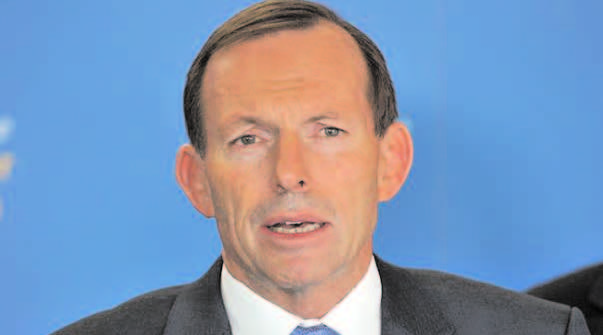
    During his visit to India this week, Australia’s Prime Minister Tony Abbott is expected to sign a deal to sell Australian uranium that will be the singlemost significant advance in bilateral relations with India in decades. The journey to get to this point has been tortuous and the controversy is unlikely to fade anytime soon. The main impetus for the change in Australia’s policy came from geopolitical changes and the increased importance of the bilateral relationship with India, rather than commercial calculations.

    Nuclear energy is used by about 30 countries to generate 11 per cent of the world’s electricity, with almost zero greenhouse gas emissions. Currently there are 437 operating reactors and around 70 under construction. Nuclear energy is tipped to grow between 23-100 per cent by 2030 (the long-term impact of the 2011 Fukushima disaster remains impossible to predict with certainty, hence the wide range in the estimates).

    Most of the growth in nuclear energy will be in Asia (China, India, Indonesia, Malaysia, Pakistan, Thailand and Vietnam). The world’s current total requirement for uranium is 66,000 tonnes. The biggest users are the US (18,800 tonnes) and France (9,900 tonnes). India’s uranium requirement is 900 tonnes, compared to 6,300 tonnes for China and 5,500 tonnes for Russia. In Asia, the other big uranium consumers are South Korea (5,000 tonnes) where nuclear energy accounts for 28 per cent of electricity generation, and Japan (2,100 tonnes in 2014) where nuclear energy produced 29 per cent of electricity before the Fukushima accident in March 2011 but has fallen to below 2 per cent.

    Australia holds 31 per cent of the world’s uranium reserves but its share of the global uranium market is only 12 per cent. The policy framework for the export of Australian uranium was set in the 1970s. The Non- Proliferation Treaty (NPT) obligates Australia to facilitate the peaceful uses of nuclear energy, but uranium sales would be restricted to countries that could satisfy Canberra it would not be diverted to non-civilian purposes. For this, recipients had to be in good nonproliferation standing and conclude a bilateral safeguards agreement to account for the use of Australian uranium and any nuclear material produced from it.

    Enrichment process

    Uranium processed at Australian mines must go through three more processes (conversion, enrichment, fuel fabrication) before it can be used in a nuclear reactor. The high-energy density of uranium fuel means that a 1,000 MW nuclear reactor requires 27 tonnes of fresh fuel each year, compared to a coal power station that requires more than 2.5 million tonnes of coal to produce equivalent electricity.

    There are, thus, clear environmental benefits of adding nuclear fuel to the portfolio of energy grids. Uranium enriched to between 3-4 per cent for civilian uses cannot be used in a nuclear weapon, which requires enrichment to 80-90 per cent. Thus, it is not too difficult to put in place safeguards measures against diversion for non-civilian uses. The Howard Government (1996-2007) announced in-principle willingness to sell uranium to China, Russia and India.

    The Labor Government (2007-13) insisted that ‘good nonproliferation standing’ meant being party to the NPT. Accordingly, negotiations were successfully concluded with China in 2008 and Russia in 2010 as both were NPT States Parties, but not with India, which from the start has rejected the NPT as fostering a world of “nuclear apartheid”: those that have nuclear weapons and can keep them, and others that must be stopped from getting them by any means necessary.

    Following the 2008 India-US civil nuclear cooperation deal, the Labor Government joined Washington in the India-specific waiver by the Nuclear Suppliers Group. But this left it with an illogical and untenable policy of supporting open access to global nuclear trade for India but not selling it Australian uranium. The Bush administration’s position, ultimately accepted by Australia and many other supplier countries, was that there were significant nonproliferation benefits of bringing India inside the tent of safeguarded nuclear commerce and export controls, that putting most of its nuclear reactors under international safeguards was better than having none under such controls, and that all evidence pointed to the conclusion that its nuclear weapons programme would continue regardless of international civil cooperation.

    These international advances were complemented by an Indian statement in 2008 reaffirming its “impeccable non-proliferation record” and credentials, highlighting its strengthened domestic and export controls, its posture of restraint on nuclear weapons doctrine and deployment (including no first use), the ‘voluntary, unilateral moratorium’ on nuclear testing, openness to a fissile materials cut-off treaty, and continued support for total nuclear abolition through a universal nuclear weapons convention. Australia’s uranium recalcitrance became a major hindrance to the broader bilateral relationship. The oddity of selling uranium to China and Russia was also questioned.

    As a responsible uranium exporter, Australia has to satisfy itself about the safety record and risks of reactors in the recipient countries; the security of materials and facilities against theft, leakage and raids; the adequacy of safeguards against diversion to non-civilian uses, such as making nuclear weapons; and proliferation risks. There are also not insignificant issues of safe nuclear waste disposal, as shown by the controversy over Muckaty in Australia’s Northern Territory that was touted as a possible repository but the indigenous community
    living there vigorously resisted.

    Like China and Russia, India operates nuclear reactors for both peaceful purposes and military uses. Those designated as civilian are subject to international safeguards under IAEA oversight, while those classified as military are not. In the past, the world has had greater worries about the security of nuclear materials and facilities in Russia – the problem of the so-called loose nukes – than in India. And India’s record of proliferation to third-world countries is superior to China’s past complicity in the proliferation of materials and designs to North Korea and Pakistan (remember A.Q. Khan’s global nuclear bazaar?).

    Getting it wrong

    Bilateral problems in the recent past between India and Australia have included on and offfield controversies in cricket, attacks on Indian students, and the occasional assaults on Australian tourists and missionaries in India. The noisy media in both countries can inflame popular passions and prejudices and complicate government-to-government relations.

    The most consequential mutual misperceptions arose from the failure to understand each other’s nuclear policy underpinnings and imperatives. Each side was firmly convinced of its own intellectual and moral rectitude and smugly contemptuous of the other. Australia held India to have been deceitful in conducting a nuclear test in 1974 and a stubborn recalcitrant on the Comprehensive Nuclear-Test-Ban Treaty (CTBT), in the passage of which Canberra played a key role in 1996.

    India considered countries like Australia and Canada to be grossly hypocritical in having permitted British atomic tests on their territory, sheltering under the US nuclear umbrella, hosting US military installations that are tightly integrated in the global US nuclear infrastructure and deeply implicated in global US nuclear doctrines and deployments, yet moralising self-righteously to India about the virtue of nuclear weapons abstinence. Three drivers of the shifting global order are the re-emergence of China and India as major nodes of global activity and the relative US decline from dominance.

    All three trends were reflected in the India-US nuclear deal that left Australia trapped between legacy national policy and a shifting global geopolitical-cumnormative order.When Canberra cancelled the quadrilateral security dialogue among the four great democracies of Australia, India, Japan and the US in 2008, the quixotic nature of Australian policy was confirmed for many Indians amid suspicion that Mandarinspeaking Prime Minister Kevin Rudd was merely betraying his China leanings.

    Yet, the public debate over the rise of China, its rapid military modernisation and what this means for Australia’s defence planning, reveals considerable differences of opinion. Against these larger considerations of bilateral relations with a democratic India across the Indian Ocean at a time when assertive Chinese visibility and activity is growing in the East and South China Seas, the anticipated economic gains from uranium sales are modest. Compared to the A$63bn iron ore export industry, for example, uranium exports are worth only $1bn and the most optimistic projections would see the rise restricted to under $2bn. Asia will provide most of the market growth opportunity for uranium in the foreseeable future. Australia has the advantages of proximity to this growing market.

    The bilateral agreements with China and India mean that Australia is already covering one-third of the world’s population and has been given access to the two big growth-potential markets. The world price of uranium has been depressed for some time and the finalisation of the India deal could give it a boost to incentivise uranium exploration and production. While the fear of losing market share in the long run to competitors might be a relevant commercial consideration, the changed Australian policy is more persuasively attributable to adjustments to changed geopolitical circumstances and efforts to consolidate and deepen bilateral relations with one of the key emerging powers of this century that will matter greatly to Australia both economically and geopolitically.

    Strategic interests

    In an extraordinary fact considering their reciprocal importance and cross-ocean proximity, the last Indian PM to visit was Rajiv Gandhi in 1986. Prime Minister Modi will not only attend the G-20 summit in Brisbane in November; he will add an official bilateral visit to Australia to the itinerary. India and Australia have a shared strategic interest in a stable Indo-Pacific Asia that links them also to Indonesia and South Africa around the Indian Ocean rim: Perth is closer to Chennai than Melbourne, Sydney or Brisbane are to Seoul, Tokyo and Beijing.

    They can be policy and operational partners in combating piracy, ameliorating climate change, and providing disaster relief; and fighting the scourge of international terrorism and Islamic fundamentalism. There are deepening trade, security, cultural, and educational ties. Bilateral trade could grow substantially with more policy clarity in India, deeper liberalisation, deregulation and privatisation, and less regulatory ambiguity and corruption. Indian investors in Australia are impressed by the transparency of doing business here and the absence of official and public suspicions that add hurdles to Chinese investment proposals in Australia.

    There is considerable scope for a tighter defence and strategic partnership without a formal alliance. There is equally great scope for market efficiencies in consolidation of mining exploration, extraction and processing; engineering and construction services; and skills training and educational exchanges: Australia is a global education powerhouse and the world’s third most popular international student destination after the US and UK. India is also the current largest source of immigrants. In sum, the uranium deal could potentially provide considerable ballast to the bilateral relationship.

    (The author is Director of the Centre for Nuclear Non-proliferation and Disarmament (CNND) in the Crawford School, Australian National University and Adjunct Professor in the Institute of Ethics, Governance and Law at Griffith University. He was Vice Rector and Senior Vice Rector of the United Nations University (and Assistant Secretary-General of the United Nations) from 1998-2007. He can be reached at ramesh.thakur@anu.edu.au)

    British English (Source: Tribune, Chandigarh)

  • Political storm ebbs in Pakistan, ‘concrete solution’ in sight

    Political storm ebbs in Pakistan, ‘concrete solution’ in sight

    ISLAMABAD (TIP): After weeks of turmoil, the political storm that has engulfed Pakistan seemed to be ebbing on Wednesday as protesters returned to talks with the government and a mediator between the two warring sides said a “concrete solution” is in sight. The positive development came after a war of words in the Parliament between lawmakers of the Imran Khanled Pakistan Tehreek-I-Insaf (PTI), who had quit but their resignations have not been accepted by the speaker, and progovernment leaders.

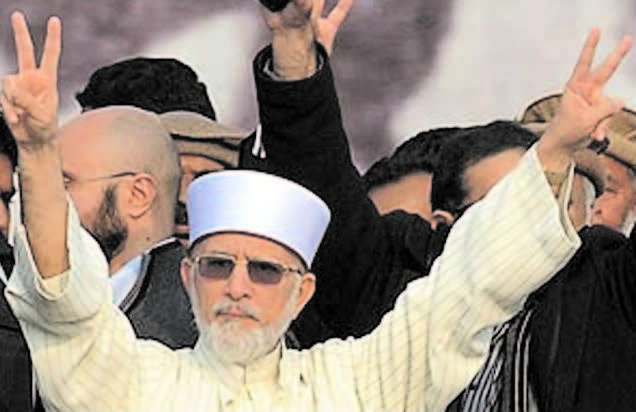
    In a significant development, an opposition ‘jirga’, a committee of opposition politicians led by Jamaat-i- Islami (JI) chief Sirajul Haq, held talks with the leadership this evening. Both Khan and cleric Tahir-ul-Qadri of the Pakistan Awami Tehreek (PAT) agreed late last night to talk to the opposition ‘jirga’ that is mediating between the embattled Nawaz Sharif-led government and the protesters who have been demanding the Prime Minister’s resignation over alleged vote rigging in last year’s general election.

    Speaking to reporters after meeting the jirga which included Haq and Pakistan People’s Party leader Rehman Malik, senior leader Shah Mehmood Qureshi said his party is ready to move ahead and agreed to move forward in a democratic manner,” he said. In the joint media briefing, Haq said, “It has been a productive meeting. There is still a deadlock, but 70 per cent of the work has been done.

    We believe there will be a concrete solution soon.” “I would like to advise the government to refrain from issuing statements, which spread negativity. If both sides show patience, then we are not far in ending this crisis,” he said. Malik said, ” showed maturity and didn’t say anything negative. I request the Prime Minister’s team not to talk about any individual. We have also requested the PAT committee to resolve the issue through dialogue.” “Everyone wants a peaceful solution.

    I believe that in the next 24 yo 48 hours, things will normalize,” he said. in the day, a joint session of Parliament saw all parties except put aside their differences to stand against what they termed were attempts to derail the democratic process in the country prone to coups. Heated exchanges between opposing camps that have regularly figured in the political discourse during the threeweek impasse today moved inside the Parliament. Impassioned speeches continued to be made in the Parliament with leader Qureshi leading the party’s reply to countless accusations made by progovernment leaders.

  • Al-Qaida announces India wing, renews loyalty to Taliban chief

    Al-Qaida announces India wing, renews loyalty to Taliban chief

    DUBAI (TIP): Al-Qaida leader Ayman al Zawahri on Wednesday announced the formation of an Indian branch of his militant group he said would spread Islamic rule and “raise the flag of jihad” across the subcontinent. In a 55-minute video posted online, Zawahri also renewed a longstanding vow of loyalty to Afghan Taliban leader Mullah Omar, in an apparent snub to the Islamic State armed group challenging al- Qaida for leadership of transnational Islamist militancy.

    Zawahri described the formation of “al-Qaida in the Indian subcontinent” as a glad tidings for Muslims “in Burma, Bangladesh, Assam, Gujurat, Ahmedabad, and Kashmir” and said the new wing would rescue Muslims there from injustice and oppression. Counter-terrorism experts say al-Qaida’s ageing leaders are struggling to compete for recruits with Islamic State, which has galvanised young followers around the world by carving out tracts of territory across the Iraq-Syria border.

    Islamic State leader Abu Abu Bakr al-Baghdadi calls himself a “caliph” or head of state and has demanded the loyalty of all Muslims. The group fell out with Zawahri in 2013 over its expansion into Syria, where Baghdadi’s followers have carried out beheadings, crucifixions, and mass executions. As well being an indirect repudiation of Islamic State, the announcement could pose a challenge to Prime Minister Narendra Modi.

    However, while al-Qaida is very much at home in the Afghanistan-Pakistan border area, due to influential contacts and a long presence there, it is a minnow compared to local militant groups in terms of manpower and regional knowledge.

    Safe haven

    Over the years Zawahri and his predecessor Osama bin Laden, killed by US forces in 2011, repeatedly pledged allegiance to Mullah Omar, in return for the safe haven he granted their followers in Afghanistan. The statement did not mention Islamic State or Baghdadi, but it appear to take a subtle dig at the group’s efforts at administering areas it has seized in Iraq and Syria.

    Islamic State’s effort at state-building is something never attempted by al-Qaida’s central leaders, who traditionally have preferred to plot complex attacks on targets in the West. Zawahri called for unity among militants and criticised “discord” — echoing a common al-Qaida complaint against Islamic State’s record of clashing with rival Islamist groups in Syria. The statement also warned al-Qaida’s new wing against oppressing local populations — another complaint levelled against Islamic State by critics in Iraq and Syria.

    “If you said that you are doing jihad to defend the sanctities of the Muslims, then you must not transgress against them or their money or honour, and not even transgress your mujahideen brothers by word and action,” he said. “Discord is a curse and torment, and disgrace for the believers and glory for the disbelievers,” he said.

    “If you say that by your jihad you do not want but the pleasure of Allah, then you must not race for governance and leadership at the first opportunity.” Muslims account for 15 percent of Indians but, numbering an estimated 175 million, theirs is the third-largest Muslim population in the world.

  • Sri Lanka rape doctor to be executed

    Sri Lanka rape doctor to be executed

    COLOMBO (TIP): A Sri Lankan doctor has been sentenced to death for raping and murdering a patient at a hospital near Colombo. Dr Indika Sudharsana Balage was found guilty of killing the young woman, a garment factory worker, at the hospital in the town of Negombo in 2007.

    He was convicted of strangling the 23-year-old before throwing her body from a sixth-floor window.Hundreds of people are on death row in Sri Lanka. The country’s last execution was in 1976. Dr Balage’s victim, Chamila Dissanayake, was at the hospital following an operation. A janitor saw Dr Balage dragging a body on the hospital’s sixth floor and testified against him in court, reports say. Ms Dissanayake’s family said they were happy that justice had been done, reports BBC Sinhala’s Saroj Pathirana.

  • Rape victim used as sex slave is disowned by family

    Rape victim used as sex slave is disowned by family

    DHAKA (TIP): A YOUNG woman held captive as a sex slave in Bradford has become a suicidal outcast, disowned by her family because she was raped, a court heard. The Bangladeshi student was a naive virgin when she was abducted from London and beaten and kept prisoner by takeaway worker, Abdul Hanif.

    Jailing Hanif for 17 years yesterday, Judge Peter Benson told him: “You began to use her as a sexual resource and you controlled her and isolated her and locked her in. “You took her phone and bank card and repeatedly raped her on an almost daily basis. “Essentially, you treated her as a slave. She was a prisoner and had no life at all.”After four months of degradation, the 26-year-old woman plucked up the courage to escape Hanif’s tyranny when he threatened to force her into prostitution to pay off his gambling debts.

    When she objected, he strangled her with a cable, leaving marks on her throat.Labelling Hanif intelligent and extremely manipulative, Judge Benson said: “These were acts of calculated depravity where you cruelly and deliberately enslaved a vulnerable young woman.” The victim, who came to London in 2009 on a student visa, was struggling to pay for her accountancy course and about to be made homeless when Hanif seized his chance to abduct, isolate and imprison her.

  • UK to not give in to ISIS demands: Cameron

    UK to not give in to ISIS demands: Cameron

    LONDON (TIP): UK Prime Minister David Cameron on September 3 announced his plans to build a coalition for a full-fledged military-led intervention against ISIS in Iraq even as the group threatened to kill a British hostage. Cameron said, “A country like ours will not be cowed by these barbaric killers.” ISIS said the Briton who has family in Scotland would be killed unless US air strikes in Iraq were halted.

    Relatives have asked the media not to name him. Britain’s foreign secretary Philip Hammond said the seizure of the British hostage did not make airstrikes on the militants more likely, but said he wasn’t ruling that option out. “It doesn’t make any difference at all to our strategic planning,” he said. “If we judge that airstrikes could be beneficial … then we will certainly consider them.

    But we have made no decision to do so at the moment.” Making a statement in the House of Commons, Cameron said: “If they think we will weaken in the face of their threats, they are wrong. It will have the opposite effect. We will be more forthright in defence of the values – liberty, under the rule of law, democracy and freedom – that we hold dear.” Cameron said, “I am sure the whole House and the whole country will join with me in condemning the sickening and brutal murder of another American hostage and share our shock and anger that it again appears to have been carried out by a British citizen.

    All our thoughts are with the British hostage and his family. Their ordeal is unimaginable.” “Let me be very clear: this country will never give in to terrorism. Our opposition to ISIS will continue, at home and abroad. It is important that we are clear about the nature of the threat we are facing. It makes no distinction between cultures, countries and religions.

    There is no way to appease it. The only way to defeat it is to stand firm, and to send a very straightforward message,” he added. “I think what has happened to the two hostages so far and what may happen again in the future is utterly abhorrent and barbaric. These people need to understand we will not waver in our aim of defeating terrorism,” the PM said

  • CHINA OFFERS REWARD FOR MIXED MARRIAGES IN RESTIVE XINJIANG

    CHINA OFFERS REWARD FOR MIXED MARRIAGES IN RESTIVE XINJIANG

    BEIJING (TIP): A city in China’s Muslim-majority Xinjiang is offering cash rewards and welfare benefits for marriages between minority ethnic groups and majority Hans to promote unity in the province hit by Islamic militancy. Xinjiang’s Qiemo county government announced an annual cash reward of 10,000 yuan (US$ 1,627) for five years for mixed marriage couples besides welfare benefits but skeptics argued that it may not work.

    “We are no longer publicising the policy, but we will still go ahead with it,” an official from the county’s government office told state-run Global Times. The policy offers family members of mixed marriage couples privileged access to housing, education, employment and welfare benefits. Ninety per cent of these couples’ medical expenses after insurance fees will be covered by the local government.

    Their children will also be exempted from school fees within the county until high school, while an annual 5,000 yuan scholarship will be given to those who reach university. Their parents will also be eligible for housing and medical benefits if their marriage lasts longer than three years. The scheme was announced as Xinjiang witnessed a spate of attacks, which China blames on the East Turkestan Islamic Movement, an al- Qaida backed outfit fighting for independence of the province.

    “The intention of the policy is good, but it has to be carefully implemented,” said Li Xiaoxia, a professor with the Xinjiang Academy of Social Sciences. “It might end up strengthening ethnic identity and create social pressure on (mixed-race) families,” he said. Li said such mixed marriages are rare in Xinjiang and are not likely to spread.

    The new move, mirroring similar cash incentives offered in Tibet, is believed by some to be a measure to ease social conflicts amid increasing incidence of terrorist attacks in the region. However, analysts believe the policy will remain limited to the single county and is unlikely to spread across Xinjiang. “I put a call into a Xinjiang official immediately after I heard the news, and he said he disapproves of the policy,” said Pan Zhiping, a research fellow with the Xinjiang Academy of Social Sciences.

    “Marriage is a personal freedom and cannot be encouraged using money. We should not stop mixed marriages, but neither should we encourage them (through policy),” Pan said.

  • UK royal guard in trouble over silly walks at Buckingham Palace

    UK royal guard in trouble over silly walks at Buckingham Palace

    LONDON (TIP): A royal guardsman at the Buckingham Palace is under investigation after he broke into an impromptu jig during one of London’s most attended events — the change of guard. A video uploaded on YouTube last month shows a Grenadier guard spinning around as he walks outside Buckingham Palace.

    At times, the guard dressed in the usual red uniform with a black hat slows down, shakes his body, struts around and breaks into a jig while the other Granadiers march on during the change of guards at the British monarch’s official residence in London. While some in the audience gathered to watch the change of guard appreciates the break away from tradition with a clap or a cheer, others didn’t take it favorably.

    One individual wrote online in reaction to the incident “This is a Grenadier Guardsman making a mockery of the uniform, the regiment and comrades,” while another responded, “I think it is great. Entertaining for the crowd too. He is not rude or disrespectful, you cannot question his soldiering skills over the matter that he has a sense of humour”.

    The ministry of defence meanwhile has said they are now investigating the matter. “Anyone who is found to fall short of the army’s high standards can expect to face appropriate action”. The video was uploaded on August 20 when the Queen was at her residence in Balmoral in Scotland. The men you see on guard at Buckingham Palace are not just ceremonial guards but professional infantry soldiers.

    While upholding the traditions of the past, the guards also perform duties around the world as professional soldiers, who in their infantry role have a reputation as some of the most elite and skilled soldiers in the British Army. The Household Division comprise two regiments of the Household Cavalry, The Life Guards and The Blues and Royals plus five Regiments of Foot Guards.

    The responsibility of guarding the Sovereign by the Household Troops dates back to the time of Henry VII (1485 – 1509). The guards do not just perform ceremonial duties at Buckingham Palace they also take an active role in protecting their Sovereign. At night they patrol the grounds of both Buckingham Palace and St. James’s Palace. The Guards have the same scarlet uniform, distinctive bearskin hat and gold buttons.

  • Ex-partner reveals suicide bid after Hollande’s affair

    Ex-partner reveals suicide bid after Hollande’s affair

    PARIS (TIP): French President Francois Hollande’s former companion writes in a tell-all book to be published this week that months after their breakup he was trying to win her back with flowers, dinner invitations and barrages of text messages.

    Valerie Trierweiler, a journalist for the magazine Paris Match, lived with Hollande at the Elysee presidential palace for a year and a half until a gossip magazine exposed his secret relationship with actress Julie Gayet, 42, in January. Her 320-page book — written in secret and due to be published on Thursday —describes episodes including how Hollande tore a bag of sleeping pills out of her hand when she tried to swallow them during their breakup.

    Trierweiler also writes of her own “uncontrollable” jealousy toward Segolene Royal, the woman with whom Hollande had four children and who is now a minister in his government. She also speaks of coldness and mean-spirited stabs, and of his attempts to win her back after their breakup by sending up to 29 text messages in a day. “The news of Julie Gayet was on the morning news,” reads one excerpt of the book, titled “Thank you for this Moment”.

  • ONAM- the biggest festival of Kerala

    ONAM- the biggest festival of Kerala

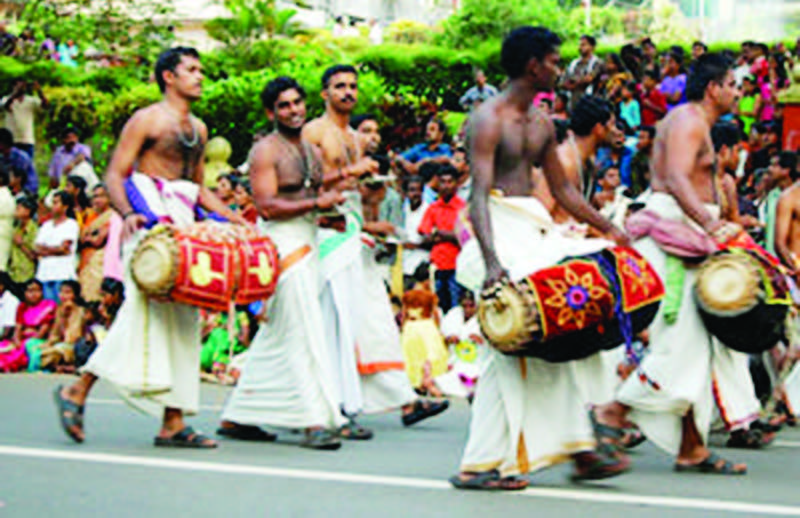
    Onam is celebrated in the beginning of the month of Chingam, the first month of Malayalam Calendar (Kollavarsham). There are actually four days of Onam. The most important day of Onam (known as Thiru Onam) is the second day. Festivities actually commence around 10 days before this day (on Atham), with the preparation of floral arrangements (pookalam) on the ground in front of homes. This year Thiru Onam is on September 7. (Atham was on August 29).

    ONAM is like a Dream!

    Kerala is known for its enchanting beauty. The swaying palms, the sky kissing hills, the sun-bleached plains, the lush paddy fields, the placid lakes, the shimmering lagoons, all make it a veritable paradise on earth. I often hear the phrase ‘God’s on country’ as Kerala is often characterized. We are all too familiar with the legend behind the festival. For the sake of the young people, let me briefly state two versions of the story. Maveli, the king Mahabali, the legendary king who was unjustly pushed down into the Nether world by Vamana, the fifth ‘avatar’ of Vishnu.


    25
    Thiruvathira is a popular folk dance performed by women at Onam


    It is said that, there was perfect equality, peace and happiness in his kingdom. No one dared to lie or cheat. However, gods grew envy at his acts of benevolence and growing popularity. After the banishment, Mahabali was given the special privilege to visit his subjects once a year. Historians give a different twist to the legend. According to them, Mahabli, who was a Buddhist, defeated by Hindu kings from Narmada (currently Maharashtra) in the North.

    Subsequently, they conquered the land and sent him into exile in Ezahm which is currently known as Sri Lanka. It was believed that permission was granted to Mahabali to come and visit his subjects during the period when they traditionally celebrated Sravanolsavam. Therefore, for Keralites, it may be a symbolic description of the Aryan invasion and the imposition of its culture on the native Dravidian populace of Kerala.


    26
    Snake boat races are popular attractions during Onam celebrations. The most famous snake boat race that’s held during Onam celebrations is the Aranmula carnival, along the Pampa River


    Regardless, Onam is a grand harvest festival which is celebrated with flowers, sumptuous feasts, and swings under mango trees. Onam represents the spirit of Kerala transcending the people of Kerala the world over to an enchanting mood of thanksgiving, idyllic pleasure and music and dance. People irrespective of religion celebrate Onam with traditional gaiety and fervor. It is stated that where there is a Keralite there will be Onam.

    Now the celebration is extended to the Diaspora, Mahabali needs to travel around the globe to visit all his subjects. Onam embodies the message of basic goodness of man who is selfless in his deeds towards fellow man. It is also about a dream; it is a dream about peace and tranquility in the world. It is dream about economic well-being and resource sharing; it is a dream about love and brotherhood, it is a dream about high ethics and morals; and it is a dream about human justice and preservation of nature.

    Great men in history dreamed before they embarked on a course to achieve them. Mahatma Gandhi had a dream. He set out to gain freedom for the 300 million Indians from the colonial rule and slavery. He mobilized and motivated the masses through non-violent protests which eventually gained the long cherished independence. Fulfilling own dream was fraught with dangers. He paid the ultimate price with his own life to preserve what he dreamed about.

    Jawaharlal Nehru had a dream which was set out in the preamble of the Indian constitution: to setup a secular republic with equal rights for everyone with freedom to think and speak and freedom to worship; to build a democratic society which fights fascism and communism; to promote equal opportunity and justice for the common man and independence in International relations. Today, that dream is being challenged by the forces of communalism which would like turn India on a path towards Hindutva.

    It is quite a surprise to see that this divisive philosophy are tacitly endorsed by some in our own community who enjoy the secular freedom in this country yet, want to deny the same freedom to others who live in India The great Martin Luther King who emulated the non-violent method which Gandhi has pioneered had a dream of his own. He had a dream to deliver his people from the slavery and second-class status – We are all too familiar with his ‘I have a dream’ speech. – ‘I have a dream that one day this nation will rise up and live out the true meaning of its creed. We hold these truths to be self-evident that all men are created equal ‘With the voting rights acts in 1964, his dreams were come to fruition.

    Yes, there are continuing challenges faced by the black community at the social level which may require further attention. America as a nation had a dream as well. When the pilgrims took the boat and landed on the Plymouth seeking religious freedom, their dream was to develop the most democratic, secular and prosperous society based on capitalism. They seemed to have accomplished that by making America a superpower, second to none, economically and militarily.

    Yet there are great challenges ahead of this nation as it is falling victim to a valueless culture which could eat away the core of the principles on which this nation was founded. Yes, there are challenges; however, we all need to dream as individuals, as a society and as a nation. For many of us the dream of prosperity is only half of the puzzle. We might have accomplished them. We may be still missing that spiritual and moral dimension which made Kerala once a land of prosperity, justice and brotherhood.


    27
    A colorful float that’s part of the Onam Pulikkali festivities


    All of us should have clear goals in life. This is a non-optional component of a spiritually healthy life. You can see from many of these examples I have elicited, there Is a close connection between dreams or in other words, goalorientation and motivation and fulfillment? The lack of those dreams is a big reason why so many of us are unmotivated in our tasks. It is said that performance is equal to motivation and ability. The component motivation requires expectancy and that is where the dream fits in. If it is motivating, it has to be making progress and accomplishing something.

    This week as we celebrate Onam, let us once again become nostalgic. Let Onam transcends our thoughts and process. Above all, it remains a dream. Attainable or not it symbolizes human yearnings; which keep the dreams alive. It motivates us to go on. Bible says, without vision, people perish; keep dreaming and let the spirit of Onam burn within us forever. Happy Onam to everyone

    (The author is a former Chief Technology Officer, United Nations)

  • SRI GURU GRANTH SAHIB

    SRI GURU GRANTH SAHIB

    CONTINUED FROM PREVIOUS ISSUE

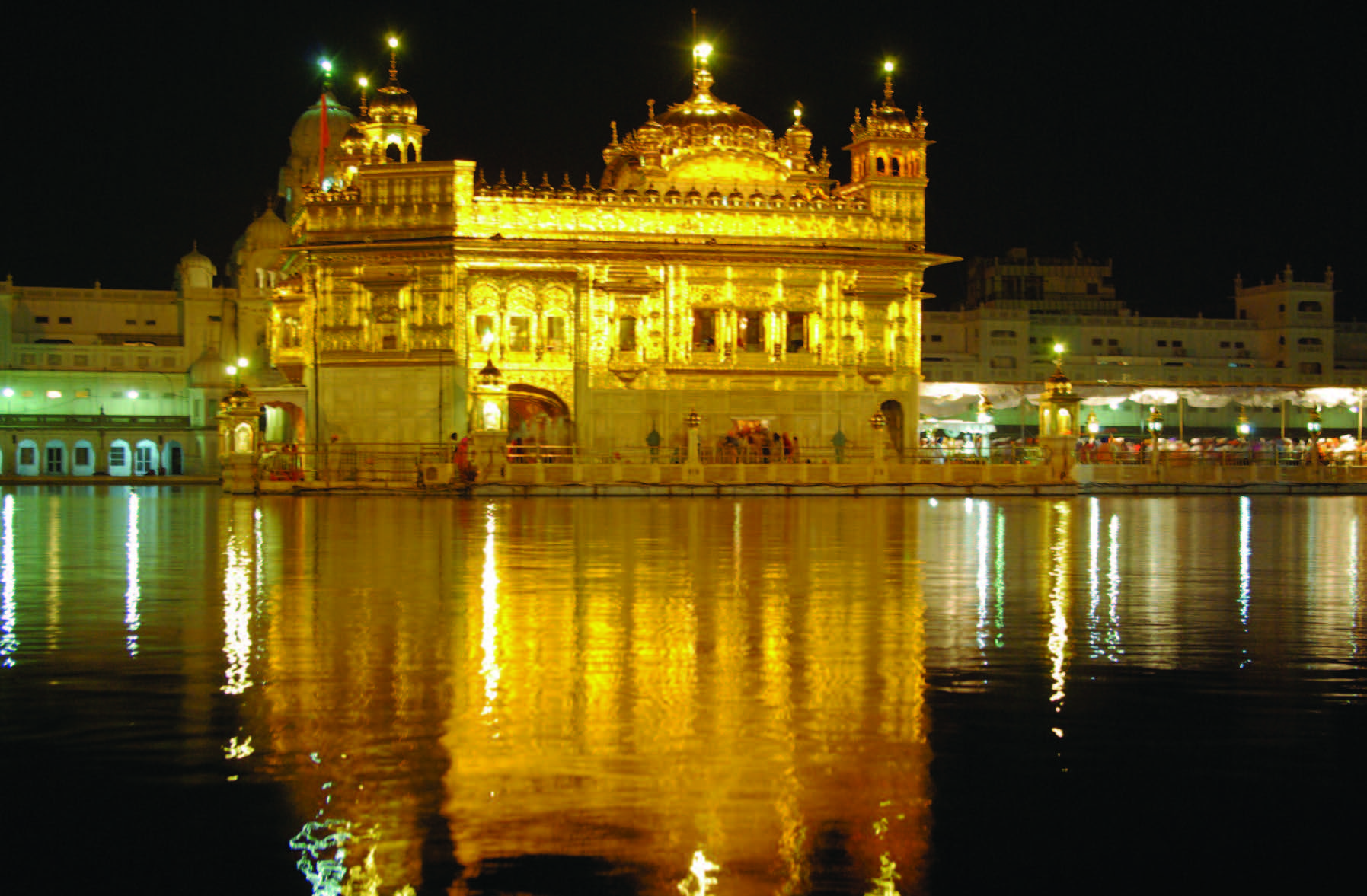
    || 8 || 2 || SIREE RAAG, FIRST MEHL: O Lord, You are Your Own Glorious Praise. You Yourself speak it; You Yourself hear it and contemplate it. You Yourself are the Jewel, and You are the Appraiser. You Yourself are of Infinite Value. O True Lord, You are Honor and Glory; You Yourself are the Giver.

    || 1 || O Dear Lord, You are the Creator and the Cause. If it is Your Will, please save and protect me; please bless me with the lifestyle of the Lord’s Name.

    || 1 || Pause || You Yourself are the flawless diamond; You Yourself are the deep crimson color. You Yourself are the perfect pearl; You Yourself are the devotee and the priest. Through the Word of the Guru’s Shabad, You are praised. In each and every heart, the Unseen is seen.

    || 2 || You Yourself are the ocean and the boat. You Yourself are this shore, and the one beyond. O All-knowing Lord, You are the True Way. The Shabad is the Navigator to ferry us across. One who does not fear God shall live in fear; without the Guru, there is only pitch darkness.

    || 3 || The Creator alone is seen to be Eternal; all others come and go. Only You, Lord, are Immaculate and Pure. All others are bound up in worldly pursuits. Those who are protected by the Guru are saved. They are lovingly attuned to the True Lord.

    || 4 || Through the Shabad, they recognize the Dear Lord; through the Guru’s Word, they are attuned to Truth. Filth does not stick to the body of one who has secured a dwelling in his True Home. When the Lord bestows His Glance of Grace, we obtain the True Name. Without the Name, who are our relatives?

    || 5 || Those who have realized the Truth are at peace throughout the four ages. Subduing their egotism and desires, they keep the True Name enshrined in their hearts. In this world, the only real profit is the Name of the One Lord; it is earned by contemplating the Guru.

    || 6 || Loading the Merchandise of the True Name, you shall gather in your profits forever with the Capital of Truth. In the Court of the True One, you shall sit in truthful devotion and prayer. Your account shall be settled with honor, in the Radiant Light of the Name of the Lord.

    || 7 || The Lord is said to be the Highest of the High; no one can perceive Him. Wherever I look, I see only You. The True Guru has inspired me to see You. The Divine Light within is revealed, O Nanak, through this intuitive understanding.

    || 8 || 3 || SIREE RAAG, FIRST MEHL: The fish did not notice the net in the deep and salty sea. It was so clever and beautiful, but why was it so confident? By its actions it was caught, and now death cannot be turned away from its head.

    || 1 || O Siblings of Destiny, just like this, see death hovering over your own heads! People are just like this fish; unaware, the noose of death descends upon them.

    || 1 || Pause || The whole world is bound by death; without the Guru, death cannot be avoided. Those who are attuned to Truth are saved; they renounce duality and corruption. I am a sacrifice to those who are found to be Truthful in the True Court.

    || 2 || Think of the hawk preying on the birds, and the net in the hands of the hunter. Those who are protected by the Guru are saved; the others are caught by the bait.Without the Name, they are picked up and thrown away; they have no friends or companions.

    || 3 || God is said to be the Truest of the True; His Place is the Truest of the True. Those who obey the True One – their minds abide in true meditation. Those who become Gurmukh, and obtain spiritual wisdom – their minds and mouths are known to be pure.

    || 4 || Offer your most sincere prayers to the True Guru, so that He may unite you with your Best Friend. Meeting your Best Friend, you shall find peace; the Messenger of Death shall take poison and die. I dwell deep within the Name; the Name has come to dwell within my mind.

    || 5 || Without the Guru, there is only pitch darkness; without the Shabad, understanding is not obtained. Through the Guru’s Teachings, you shall be enlightened; remain absorbed in the Love of the True Lord. Death does not go there; your light shall merge with the Light.

    || 6 || You are my Best Friend; You are All-knowing. You are the One who unites us with Yourself. Through the Word of the Guru’s Shabad, we praise You; You have no end or limitation. Death does not reach that place, where the Infinite Word of the Guru’s Shabad resounds.

    || 7 || By the Hukam of His Command, all are created. By His Command, actions are performed. By His Command, all are subject to death; by His Command, they merge in Truth. O Nanak, whatever pleases His Will comes to pass. Nothing is in the hands of these beings.

    || 8 || 4 || SIREE RAAG, FIRST MEHL: If the mind is polluted, then the body is polluted, and the tongue is polluted as well. With false mouths, people speak falsehood. How can they be made pure? Without the Holy Water of the Shabad, they are not cleansed. From the True One alone comes Truth.

    || 1 || O soul-bride, without virtue, what happiness can there be? The Husband Lord enjoys her with pleasure and delight; she is at peace in the love of the True Word of the Shabad.

    || 1 || Pause || When the Husband goes away, the bride suffers in the pain of separation, like the fish in shallow water, crying for mercy. As it pleases the Will of the Husband Lord, peace is obtained, when He Himself casts His Glance of Grace.

    || 2 || Praise your Husband Lord, together with your bridesmaids and friends. The body is beautified, and the mind is fascinated. Imbued with His Love, we are enraptured. Adorned with the Shabad, the beautiful bride enjoys her Husband with virtue.

    || 3 || The soul-bride is of no use at all, if she is evil and without virtue. She does not find peace in this world or the next; she burns in falsehood and corruption. Coming and going are very difficult for that bride who is abandoned and forgotten by her Husband Lord.

    || 4 || The beautiful soul-bride of the Husband Lord – by what sensual pleasures has she been doomed? She is of no use to her Husband if she babbles in useless arguments. At the Door of His Home, she finds no shelter; she is discarded for seeking other pleasures.

    || 5 || The Pandits, the religious scholars, read their books, but they do not understand the real meaning. They give instructions to others, and then walk away, but they deal in Maya themselves. Speaking falsehood, they wander around the world, while those who remain true to the Shabad are excellent and exalted.

    || 6 || There are so many Pandits and astrologers who ponder over the Vedas. They glorify their disputes and arguments, and in these controversies they continue coming and going. Without the Guru, they are not released from their karma, although they speak and listen and preach and explain.

    || 7 || They all call themselves virtuous, but I have no virtue at all. With the Lord as her Husband, the soul-bride is happy; I, too, love that God. O Nanak, through the Shabad, union is obtained; there is no more separation.

    || 8 || 5 || SIREE RAAG, FIRST MEHL: You may chant and meditate, practice austerities and self-restraint, and dwell at sacred shrines of pilgrimage; you may give donations to charity, and perform good deeds, but without the True One, what is the use of it all? As you plant, so shall you harvest. Without virtue, this human life passes away in vain.

    || 1 || O young bride, be a slave to virtue, and you shall find peace. Renouncing wrongful actions, following the Guru’s Teachings, you shall be absorbed into the Perfect One.

    || 1 || Pause || Without capital, the trader looks around in all four directions. He does not understand his own origins; the merchandise remains within the door of his own house. Without this commodity, there is great pain. The false are ruined by falsehood.

    || 2 || One who contemplates and appraises this Jewel day and night reaps new profits. He finds the merchandise within his own home, and departs after arranging his affairs. So trade with the true traders, and as Gurmukh, contemplate God.

    || 3 || In the Society of the Saints, He is found, if the Uniter unites us. One whose heart is filled with His Infinite Light meets with Him, and shall never again be separated from Him. True is his position; he abides in Truth, with love and affection for the True One.

    || 4 || One who understands himself finds the Mansion of the Lord’s Presence within his own home. Imbued with the True Lord, Truth is gathered in. God is known throughout the three worlds. True is the Name of the True One.

    || 5 || The wife who knows that her Husband Lord is always with her is very beautiful. The soulbride is called to the Mansion of the His Presence, and her Husband Lord ravishes her with love. The happy soul-bride is true and good; she is fascinated by the Glories of her Husband Lord.

    || 6 || Wandering around and making mistakes, I climb the plateau; having climbed the plateau, I go up the mountain. But now I have lost my way, and I am wandering around in the forest; without the Guru, I do not understand. If I wander around forgetting God’s Name, I shall continue coming and going in reincarnation, over and over again.
    TO BE CONTINUED

  • THE RAMAYANA

    THE RAMAYANA

    continued from previous issue

    For a gladness stirs thy bosom when thy greatest woo is nigh! Who that hath a woman’s wisdom, who that is a prudent wife.

    Smiles in joy when prouder rival triumphs in the race of life,
    How can hapless Queen Kaikeyi greet this deed of darkness done,
    When the favoured Queen Kausalya wins the empire for her son? Know the truth,
    O witless woman! Bharat is unmatched in fame, Rama,
    deep and darkly jealous,
    dreads thy Bharat’s rival claim,
    Younger Lakshman with devotion doth on eldest Rama wait,
    Young Satrughna with affection follows Bharat’s lofty fate,
    Rama dreads no rising danger from the twins,
    the youngest-born,
    But thy Bharat’s claims and virtues fill his jealous heart with scorn! Trust me, queen,
    thy Bharat’s merits are too well and widely known,
    And he stands too near and closely by a rival brother’s throne,
    Rama hath a wolf-like wisdom and a fang to reach the foe,
    And I tremble for thy Bharat, Heaven avert untimely woe! Happy is the Queen Kausalya,
    they will soon anoint her son, When on Pushya’s constellation gaily rides to-morrow’s moon, Happy is the Queen Kausalya in her regal pomp and state,
    And Kaikeyi like a bond-slave must upon her rival wait! Wilt thou do her due obeisance as we humble women do, Will thy proud and princely Bharat as his brother’s henchman go,
    Will thy Bharat’s gentle consort,
    fairest princess in this land,
    In her tears and in her anguish wait on Sita’s proud command?
    With a woman’s scornful anger Manthara proclaimed her grief,
    With a mother’s love for Rama thus Kaikeyi answered brief: “What inspires thee,
    wicked woman, thus to rail in bitter tone,
    Shall not Rama, best and eldest,
    fill his father’s royal throne,
    What alarms thee, crooked woman,
    in the happy rites begun,
    Shall not Rama guard his brothers as a father guards his son?
    And when Rama’s reign is over,
    shall not Gods my Bharat speed,
    And by law and ancient custom shall not younger son succeed,
    In the present bliss of Rama and in Bharat’s future hope, What offends thee,
    senseless woman, wherefore dost thou idly mope?
    Dear is Rama as my Bharat,
    ever duteous in his ways, Rama honours Queen Kausalya,
    loftier honour to me pays, Rama’s realm is Bharat’s kingdom,
    ruling partners they shall prove,
    For himself than for his brothers Rama owns no deeper love!”
    Scorn and anger shook her person and her bosom heaved a sigh, As in wilder,
    fiercer accents Manthara thus made reply: What insensate rage or madness clouds thy heart and blinds thine eye, Courting thus thy own disaster,
    courting danger dread and high,
    What dark folly clouds thy vision to the workings of thy foe,
    Heedless thus to seek destruction and to sink in gulf of woe? Know,
    fair queen, by law and custom, son ascends the throne of pride,
    Rama’s son succeedeth Rama, luckless Bharat steps aside,
    Brothers do not share a kingdom, nor can one by one succeed,
    Mighty were the civil discord if such custom were decreed! For to stop all war and tumult,
    thus the ancient laws ordain,
    Eldest son succeeds his father,
    younger children may not reign,
    Bharat barred from Rama’s empire,
    vainly decked with royal grace, Friendless,
    joyless, long shall wander,
    alien from his land and race! Thou hast home the princely Bharat,
    nursed him from thy gentle breast, To a queen and to a mother need a prince’s claims be pressed,
    To a thoughtless heedless mother must I Bharat’s virtues plead,
    Must the Queen Kaikeyi witness Queen Kausalya’s son succeed? Trust thy old and faithful woman who bath nursed thee, youthful queen,
    And in great and princely houses many darksome deeds hath seen,
    Trust my word, the wily Rama for his spacious empire’s good,
    Soon will banish friendless Bharat and secure his peace with blood!
    Thou hast sent the righteous Bharat to thy ancient father’s land,
    And Satrughna young an valiant doth beside his brother stand,
    Young in years and generous-hearted,
    they will grow in mutual love,
    As the love of elder Rama doth in Lakshman’s bosom move,
    Young companions grow in friendship,
    and our ancient legends tell,
    Weeds protect a forest monarch which the woodman’s axe would fell,
    Crownéd Rama unto Lakshman will a loving brother prove,
    But for Bharat and Satrughna, Rama’s bosom owns no love,
    And a danger thus ariseth if the elder wins the throne,
    Haste thee, heedless Queen Kaikeyi,
    save the younger and thy son! Speak thy mandate to thy husband,
    let thy Bharat rule at home,
    In the deep and pathless jungle let the banished Rama roam, This will please thy ancient father and thy father’s kith and kin, This will please the righteous people, Bharat knows no guile or sin! Speak thy mandate to thy husband, win thy son a happy fate,
    Doom him not to Rama’s service or his unrelenting hate,
    Let not Rama in his rancour shed a younger brother’s blood,
    As the lion slays the tiger in the deep and echoing wood! With the magic of thy beauty thou hast won thy monarch’s heart,
    Queen Kausalya’s bosom rankles with a woman’s secret smart,
    Let her not with woman’s vengeance turn upon her prouder foe,
    And as crownéd Rama’s mother venge her in Kaikeyi’s woe,
    Mark my word,
    my child Kaikeyi, much these ancient eyes have seen,
    Rama’s rule is death to Bharat,
    insult to my honoured queen!” Like a slow but deadly poison worked the ancient nurse’s tears,
    And a wife’s undying impulse mingled with a mother’s fears,
    Deep within Kaikeyi’s bosom worked a woman’s jealous thought,
    Speechless in her scorn and anger mourner’s dark retreat she sought.

    THE QUEEN’S DEMAND

    Rama shall be crowned at sunrise, so did royal bards proclaim,
    Every rite arranged and ordered, Dasaratha homeward came,
    To the fairest of his consorts,
    dearest to his ancient heart,
    Came the king with eager gladness joyful message to impart,
    Radiant as the Lord of Midnight, ere the eclipse casts its gloom,
    Carne the old and ardent monarch heedless of his darksome doom! Through the shady palace garden where the peacock wandered free.
    Lute and lyre poured forth their music,
    parrot flew from tree to tree,
    Through the corridor of creepers,
    painted rooms by artists done,
    And the halls where scented Champak and the flaming Asok shone,
    Through the portico of splendour graced by silver,
    tusk and gold. Radiant with his thought of gladness walked the monarch proud and bold.
    Through the lines of scented blossoms which by limpid waters shone,
    And the rooms with seats of silver,
    ivory bench and golden throne.

    to be continued

  • DUMP A FEW BEANBAGS IN LIVING ROOM

    DUMP A FEW BEANBAGS IN LIVING ROOM

    Want a cozy, comfortable and yet light and sophisticated chair or couch to put in the living room? Buy a beanbag. Today beanbags are the rage coming in stunning range and attractive colours and sizes as big as to accommodate your entire family. Bean bag furniture can be used to furnish almost any room in your home, from the family room or den to a kids’ playroom.

    They are incredibly comfortable and soft, providing a great place to relax and unwind. Whether you’re enjoying a drink with close friends, watching a favourite show on TV, or reading the kids a bedtime story – a bean bag is a wonderful place to sit and be snug.What’s so great about bean bags? Bean bag chairs were the craze of the 70s. The reason they have made such a big comeback recently is really a nobrainer.

    Versatile, long wearing, ‘child proof,’ portable, practical and fun are keywords used in describing bean bag chairs, and why they remain popular in so many households – especially those with children. Though initially a favourite, the old Styrofoam beans/pellets filling became a safety issue especially for children and people avoided buying them.

    But now with improved designs, made of fashionable material, with polyurethane shredded foam/memory foam – which adheres to all safety standards – beanbags are staging a grand comeback. Bean bags vs traditional furniture With most traditional furniture you couldn’t dream of sliding them outside to lounge by the pool (if you are strong enough to), as some sofas can run up to thousands of rupees and you wouldn’t dare think of ruining the beautiful leather.

    A convenient and easy way to take a comfortable and lightweight chair is to make a bean bag chair your new best friend. They will help you relax and are especially great for easing back or neck pain. Think of it as your own personal masseuse. Kids rooms Great for kids as they provide a soft place for your children to sit while watching TV, reading or playing a video game.

    Things you need to know about bean bags As great as they are, there is also a safety issue to be addressed when using bean bags in your home. If you do decide to by yourself or someone else a bean bag chair, make sure you remove the pull tag once the bag is filled with polystyrene beans. This is done to prevent a choking hazard for children.

    A liner that slides between the bag cover and the beans can also be purchased as extra child hazard prevention. Shapes There are typically four shapes of beanbags – teardrop, armchair, cylinder and a sack. Sack, the beanbag couch, is now the most popular beanbag – finding favour with young and old alike. Now that beanbags can be customised, you can get it to exactly match the decor of wherever you are going to put it. Size When looking for a bean bag chair, look at the shape that best suits your needs.

    Bean bag chairs with a pear shaped design offer better back support because they are taller and cover more of your body. The flatter pancake shaped bean bag chair works great for two people or as a coffee table substitute. The pancake works better as a lounger than as a chair. Fabric With the wide variety of bean bags available in the market, there is a wide variety of fabrics available.Vinyl is very common in bean bag chairs, although some people feel that vinyl is too sticky and not as comfortable as cloth bean bag chairs.Vinyl is easy to wipe up and keep clean which is a definite advantage.

    When selecting vinyl ensure the fabric uses leadfree vinyl inks. Other bean bags come in leather, fun fur, microfiber, denim and cotton. If possible when choosing a fabric, look for a bean bag chair that has a liner so that the cover can be removed and washed periodically. Microfiber, leatherbased, cotton and denim are the most popular materials used for covering. Fill Bean bag stuffing is cheap to buy and offers a simple way to refill your favourite bean bag arm chair with fresh beads, plumping it up and giving it a new lease of life. When choosing the fill for your bean bag chair, look for high quality recycled polystyrene fill.

    You want a bean bag chair that has enough fill to offer support but soft enough to be comfortable. Polystyrene fill is the best as it is soft enough to provide great comfort but is also strong enough to withstand lots of compression without losing its sponginess. For the benefit of the environment, choose 100 per cent recycled polystyrene. When choosing fill is sure to look for polystyrene that is fire retardant or complies with flammability standards. Make your own bean bag chair filler Why not make your own filler. It is appropriate, isn’t it? You can find some dried beans or rice and fill your bag with them – of course, these food items might attract some pests. Also, you need to watch out for moisture. Something else that you might consider is wood shavings.

    Perhaps you have seen the pet beds that come filled with wood shavings. Cedar shavings have a very pleasant smell, as well. For some added fluff,why not use feathers from old feather pillows? Or you could try nut shells, Styrofoam or plastic pellets, or polyester stuffing. Be creative with your bean bag chair filling! Brilliant colors. These days the bean bag is available to you in myriads colour combinations that you cannot even imagine. You will get options that are very different from the normal and plain looking ones.

    Some shops are also providing great patterns to the customers like polka dots, stripes and various other selections that are great for your office as well as home. The colours are very vibrant and they would look good in any home. If you are looking for a particular colour combination then you can purchase your own material and get a customised sofa.

    Portable Bean bags are lightweight and easy to move about, so it’s easy to rearrange your seating. For instance, if you got friends around and you’re playing a board game at a coffee table and you need to sit closer than your other furniture allows, then bean bags are the perfect solution. They are perfect to take along to a picnic, while visiting distant relatives, for enjoying a firework display outside, or to bring along for small children to nap on while visiting friends.

    What about while camping, to relax in after a long day of hiking and campfire cooking? Bean bag covers Bean bag chair covers come in a huge variety of colours, patterns and fabrics, so you can choose whatever will match your decor or add a splash of colour to a room. Beanbags put up with a lot of rough use. Removable covers are a good idea so that it is easy to clean when necessary.

  • TRAIN YOUR MIND BEFORE YOUR BODY

    TRAIN YOUR MIND BEFORE YOUR BODY

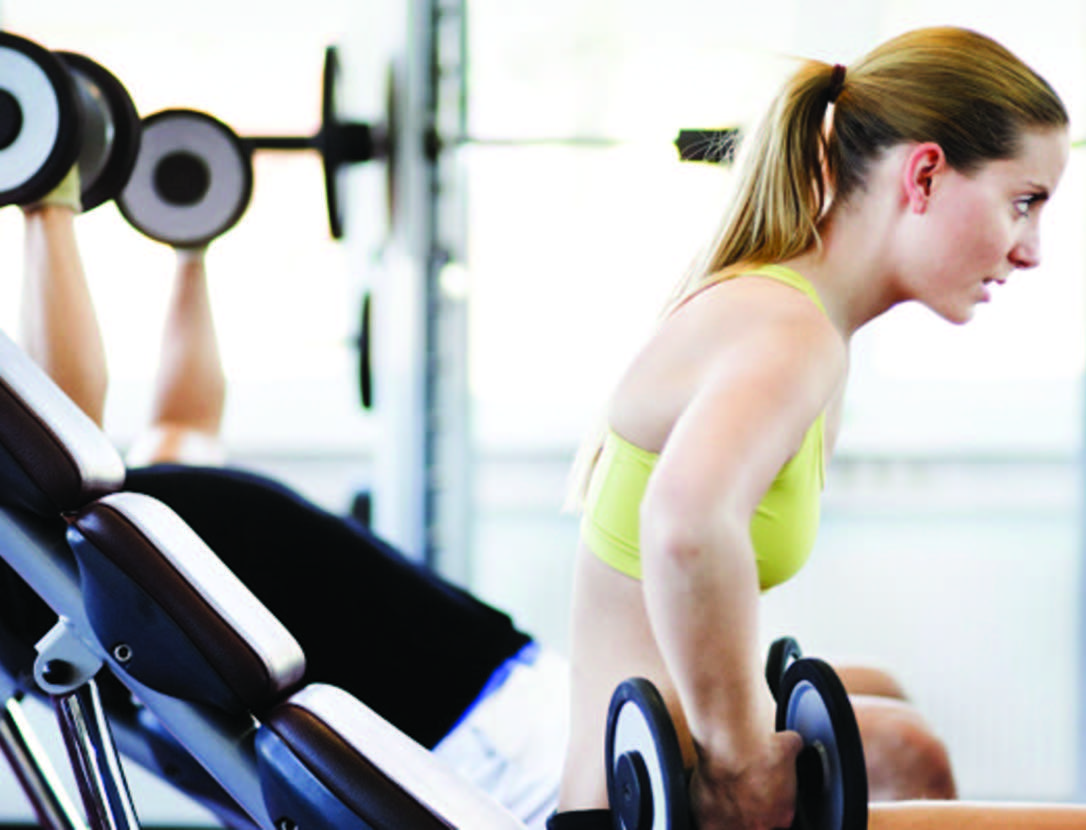
    Your inability to drag yourself to the gym is only in your head. Here’s how to overcome it and train your brain. Exercise not only makes you feel fitter, happier and sexier, it also increases your tendency of living to see your next meal. At least that’s how your brain’s `pleasure means reward centres’ (the frontal cortex and nucleus accumbens) view the situation. In fact, the brain is wired to allow the body to rest. When we push ourselves, it wonders why.

    The hardwiring that promotes voluntary movement or exercising -is tied to the same neurocircuits involved in searching and feeding. So if our bodies have evolved to conserve energy and resist things like fat loss, then it makes perfect sense that our brains will actually defend against moving too much. The solution is to correct your brain’s hardwiring to trick those pleasure-reward centres into perceiving exercise as necessary to your survival.

    In other words, you need to make your workouts desirable. Here’s how you can do it with just a few simple tweaks to your current fitness regime.

    SPEED UP

    When you sprint all out toward a goal your brain’s reward is a blast of dopamine thanks to the previous memory of your success and how good it felt.High-intensity workouts have similar effects.Unlike resistance training or even long-distance cardio, it significantly increases blood flow in the frontal cortex.Your Move: Find a slope that takes about 20 to 30 seconds to sprint up, and after a brief warmup (10 minutes of jogging on the spot is enough), run up to the top as fast as you can. When you get there, do 40 mountain climbers followed by 10 push-ups, and then walk back down.

    Repeat the entire circuit (sprint, mountain climbers, pushups, walk) as many times as you can in 20 minutes.

    SEX DRIVE

    Have you ever found yourself doing thoroughly boring activities -spending half a day at a mall, attending random get together parties -only to please a woman? Well, there is science behind it. The neurochemistry in the brain is prodding you to muscle through the anguish to increase your odds of having sex.

    Similarly, you can use sex as a motivator to keep yourself moving through your exercise routine.Your Move: Each month, take a week out and strike a bargain with your partner -you can have sex only on the days you (better still, both of you) exercise. Besides, increased blood flow from exercise stimulates the genitals, enhancing arousal and pleasure. Sex requires plenty of repetitive motions, especially in the core. So, if you want to sustain that partner-pleasing rhythm, you’d better hit the gym regularly.

    FLAUNT YOUR SKILLS

    Socialising, playing, and being cordial with fellow human beings can have an impact on workout perform ance. A recent research found that people who worked out together as part of a team exercised harder and more than twice as long as those who pumped iron solo. Their motivation? Fear of being the weakest link. Your Move: Participate in more group workouts like zumba or aerobics, pref like zumba or aerobics, pref erably with complete stran gers.

    Or join a pickup game at an unfamiliar basketball court. If you’re playing or exercising with new people, you’ll hustle and work harder to elevate your game.

    SWEET SOMETHING

    There’s a reason you have a sweet tooth. Your brain rewards you for ingesting sugar, which is a major source of cellular energy once it’s converted into glucose. Energy drinks are meant to replenish those glucose stores. But you don’t need to actually drink them to enjoy a boost. Your Move: When you feel yourself hitting a wall during a spin class or long run, swish a mouthful of your favorite sports drink and spit it out. You’ll get the neurochemical reward without the caloric price tag.

  • Have a ‘tomato pill’ for super heart health

    Have a ‘tomato pill’ for super heart health

    Tomatoes have many health benefits, but a new study finds that a daily supplement of an extract found in tomatoes may improve the function of blood vessels in patients with cardiovascular disease. Lycopene – a powerful antioxidant that is 10 times more potent than vitamin E – is good for your heart. “There is a wealth of research that suggests that the Mediterranean diet that includes lycopene found in tomatoes is good for our cardiovascular health.

    But so far, it has been a mystery what the underlying mechanisms could be,” explained Joseph Cheriyan, an associate lecturer at University of Cambridge. One component of the Mediterranean diet thought to play a role in reducing cardiovascular risk is lycopene found in tomatoes and other fruits. Its potency appears to be enhanced when it is consumed pureed in ketchup or in the presence of olive oil.

    To understand the underlying mechanism, researchers carried out a randomised trial investigating the effects of lycopene. Thirty six cardiovascular disease patients and 36 healthy volunteers were given either Ateronon pill (an off-the-shelf supplement containing seven mg of lycopene) or a placebo treatment. The researchers found that seven mg of oral lycopene supplementation improved and normalised endothelial (inner lining of blood vessels) function in the patients but not in healthy volunteers.

    Lycopene improved the widening of the blood vessels by over a half (53 per cent) compared to baseline in those taking the pill. The supplement had no effect on blood pressure arterial stiffness or levels of lipids. “It reinforces the need for a healthy diet in people at risk from heart disease and stroke. A daily ‘tomato pill’ is not a substitute for other treatments but may provide added benefits when taken alongside other medication,” Cheriyan maintained.

  • Soak up more sunshine, women!

    Soak up more sunshine, women!

    Sunlight missing from the lives of busy young women is making them deficient in Vitamin D, which has emerged as a major health issue among them, experts say. Vitamin D deficiency in young girls can precipitate osteoporosis and increase the risk of fractures. “Vitamin D is a major regulator of calcium metabolism and hence is an important determinant of bone health.

    Despite abundant sunshine, Vitamin D deficiency is widespread in India,” Palash Gupta, senior consultant, Orthopaedics, Max Super Speciality Hospital, Shalimar Bagh, told us. Osteoporosis is a skeletal disorder characterized by low bone mass and deterioration of bone architecture leading to increased bone fragility and susceptibility to fractures. Primary osteoporosis refers to a reduction in bone mass related to aging and menopause, whereas secondary osteoporosis results from specific diseases or drugs.

    Osteoporosis is also characterized by abnormality in the amount and architectural arrangement of bone tissue. Estimates suggest that 20 percent of women and 10 percent of men by would be osteoporotic by 2015. Palash Gupta said: “Judicious exposure of arms and legs or hands to sunlight, typically for not more than 5-15 minutes per day, for 2-3 times per week during spring and summer is all that is required to satisfy the body’s requirements.” Anoop Mishra, Chairperson of the Fortis-C-DOC Centre of Excellence for Diabetes, Metabolic Diseases and Endocrinology, said: “It is one of the important health issues in women because of lack of exposure to sunshine due to clothes and lack of outdoor activity”. Vitamin D deficiency is the cause of bone loss (osteopenia and osteoporosis) which leads to fractures, he added.

  • INDIA SLIPS TO 71ST RANK IN GLOBAL COMPETITIVENESS LIST

    INDIA SLIPS TO 71ST RANK IN GLOBAL COMPETITIVENESS LIST

    GENEVA/NEW DELHI (TIP): Weighed down by challenging economic conditions for most part of the past year, India has slipped to 71st position — the lowest among BRICS countries — in an annual global competitiveness list, with Switzerland claiming the top spot.

    The annual list, released on September 3 by Geneva-based World Economic Forum (WEF), comes at a time when the new Indian government has completed 100 days in power and has promised further steps to revive its economy and the ease of doing business in the country. “Continuing its downward trend and losing 11 places, India ranks 71st.

    The country’s new government faces the challenge of improving competitiveness and reviving the economy, which is growing at half the rate of 2010,” WEF said. As per the Global Competitiveness Report 2014-15, Switzerland is the most competitive economy, followed by Singapore. Other countries in the top ten are Finland (4), Germany (5), Japan (6), Hong Kong SAR (7), Netherlands (8), United Kingdom (9) and Sweden (10). China, which has improved its position by one place to 28th spot, leads the BRICS grouping, among which India has the least ranking.

    Russia is ranked at 53rd position, followed by South Africa (56) and Brazil (57). “India’s decline of 11 places to 71st, set against the gains of the ASEAN 5 countries, suggests that the competitiveness divide South and Southeast Asia is becoming more pronounced,” WEF said. Besides India, WEF said that some of the world’s largest emerging market economies continue to face difficulties in improving competitiveness.

    These include Saudi Arabia (24th rank), Turkey (45), Mexico (61), Nigeria (127th), South Africa and Brazil — all of them have slipped in their rankings. According to the report, India’s slide in the competitiveness rankings began in 2009, when its economy was still growing at 8.5 per cent (it even grew by 10.3 per cent in 2010). “Back then, however, India’s showing in the Global Competitiveness Index (GCI) was already casting doubt about the sustainability of this growth. “Since then, the country has been struggling to achieve growth of 5 per cent.

    The country has declined in most areas assessed by the GCI since 2007, most strikingly in institutions, business sophistication, financial market development, and goods market efficiency,” it added. Noting that improving competitiveness would yield huge benefits for India, WEF said it would help re-balance the economy and move the country up the value chain ensuring more solid and stable growth. “This in turn could result in more employment opportunities for the country’s rapidly growing population,” it added. WEF further said that India needs to create a sound and stable institutional framework for local and foreign investors as well as improve connectivity.

    The rankings are based on WEF’s GCI which is based on scores covering 12 categories. They are institutions, infrastructure, macroeconomic environment, health and primary education, higher education and training, goods market efficiency, labour market efficiency, financial market development, technological readiness, market size, business sophistication and innovation.

    “The strained global geopolitical situation, the rise of income inequality, and the potential tightening of the financial conditions could put the still tentative recovery at risk and call for structural reforms to ensure more sustainable and inclusive growth,” WEF founder and executive chairman Klaus Schwab said. As per the report, there is uneven implementation of structural reforms across different regions and levels of development as the biggest challenge to sustaining global growth. Talent and innovation are the two areas where leaders in the public and private sectors need to collaborate more effectively in order to achieve sustainable and inclusive economic development, it added.

  • RBI NORMS MAY HIT CO-OPERATIVE DEPOSITORS

    RBI NORMS MAY HIT CO-OPERATIVE DEPOSITORS

    MUMBAI (TIP): In a bid to encourage strong banks take over ailing co-operative banks, the Reserve Bank of India (RBI) has said that large depositors in failed cooperatives must now sacrifice a portion of their deposits in proportion to the deposit erosion. This is to ensure that other lenders can acquire the failed bank without incurring any losses. Until now, a bank acquiring a cooperative had to pump in funds if the failed bank’s assets could not cover at least 65% of its total deposits.

    In its latest circular, the RBI has said that under the new guidelines, the acquiring bank should not incur any loss arising out of the said merger or transfer of assets and liabilities of cooperative banks. “Big depositors holding deposits in excess of Rs 1 lakh each will be required to sacrifice in proportion to the deposit erosion of the target bank,” the circular said. At present, all bank deposits are covered up to Rs 1 lakh by the Deposit Insurance and Credit Guarantee Corporation (DICGC) — an arm of the RBI. DICGC receives its funds from premium collected from all banks (10 paise for every Rs 100 of deposits).

    A bulk of the premium comes from commercial banks, but most of the funds are consumed by claims in respect of cooperative banks. The deposit insurance fund stood at Rs 36,120 crore as of March 2013, which was enough to cover 1.7% of insured bank deposits (up to Rs 1 lakh). “With a view to ensuring that the process of consolidation by way of non-disruptive exit of weak entities by a scheme of transfer of assets and liabilities of UCBs (urban cooperative banks) to commercial banks is undertaken in a transparent manner without affecting the financial health of the acquiring entities and the banking system as a whole, it has been decided to modify the existing guidelines for transfer of assets and liabilities of UCBs to commercial banks,” RBI said in the circular.

    During the year 2012-13, DICGC settled aggregate claims for nearly Rs 200 crore in respect of 63 co-operative banks. The corporation has made provisions of over Rs 1,000 crore towards the estimated claim liability in respect of depositors of 195 banks, which are under amalgamation/liquidation and whose licence/application to carry on banking business has been cancelled.

  • Audi to recall 70,000 cars for potential brake problem

    Audi to recall 70,000 cars for potential brake problem

    FRANKFURT (TIP): Volkswagen’s premium brand Audi will recall 70,000 cars world wide because of a potential fault with the brake booster, a spokesman for the company said. Audi’s A4, A5, A6, A7 and Q7 models equipped with the three litre diesel engine and which were built between March and December 2012 are being recalled, the company said. The brakes will still function but the brake enhancing function from the booster may fail because of a potential leak in a membrane, Audi said.

  • Narayana Murthy invests in realty, Azim Premji to follow suit

    Narayana Murthy invests in realty, Azim Premji to follow suit

    BANGALORE (TIP): Property has always been a major investment avenue of the rich. Now, some of the people one would expect to focus on enterprising ventures are also looking at rent-yielding property. Infosys co-founder NR Narayana Murthy’s family office has bought high-end luxury apartments in Bangalore and Mumbai, said sources familiar with the development. Catamaran Ventures, which manages part of Murthy’s wealth, has previously invested in e-commerce, FMCG and education ventures.

    Another source said that Premji Invest, the family office of Wipro chairman Azim Premji, is also scouting for real estate assets in metros. A couple of years ago, Premji, in his personal capacity, had picked up a few properties in Mumbai that were subsequently rented out, sources in the real estate industry said. Sources said Catamaran Ventures, which manages Rs 600 crore of funds, had invested at the pre-launch phase, providing scope for steep appreciation once the projects are completed.

    TOI couldn’t ascertain whether Catamaran is also considering investment in commercial real estate. An email sent to Catamaran remained unanswered at the time of going to press. Murthy’s colleague and former Infosys CEO S D Shibulal’s penchant for real estate has been much reported. His family office, Innovations Investment Management, has property investments in the US, including in New York and Seattle, as also in Germany and India. In Seattle, it has a portfolio of over 700 apartments.

    The real estate investments, managed by a professional team, comprise both residential and commercial assets. Another Infosys co-founder NS Raghavan, through his family office Nadathur Estates, manages an investment portfolio of multiple asset classes, including hospitality and real estate. “Residential real estate does not bring the highest yields globally, but it is a reliable source of rental revenue coupled with capital appreciation and relatively better monetizing potential than commercial real estate,” said Anuj Puri, country head of real estate consultancy JLL India. While A-grade commercial office space gives a annual yield of 10% in India, residential properties give an average yield of 3%-4%.

    In some luxury residential properties, the yield could touch 7%. “Residential properties sit well on balance sheets and in inheritances, too. Not surprisingly, it is a preferred investment class for Indian HNIs with global reach and business interests,” said Puri. J Vishnu Shankar, founder of real estate consultancy firm Crorepati Homes, said that much of the investment action by family offices has been happening in top dollar markets like Mumbai and New Delhi. “My guess is that Bangalore has a limited number of properties that cost Rs 20 crore upwards, which is the typical asset class that interests such high-profile buyers,” he said.

  • SCIENTISTS DEVELOP BATTERYLESS CARDIAC PACEMAKER

    SCIENTISTS DEVELOP BATTERYLESS CARDIAC PACEMAKER

    LONDON (TIP): Researchers have developed a new batteryless cardiac pacemaker which is based on an automatic wristwatch and is powered by heart motion. “Batteries are a limiting factor in today’s medical implants. Once they reach a critically low energy level, physicians see themselves forced to replace a correctly functioning medical device in a surgical intervention,” said Adrian Zurbuchen from the University of Bern, Switzerland. “This is an unpleasant scenario which increases costs and the risk of complications for patients,” Zurbuchen said. He has now come up with a way to power a cardiac pacemaker with an alternative energy source – the heart motion.

    Four years ago Professor Rolf Vogel, a cardiologist and engineer at the University of Bern, had the idea of using an automatic wristwatch mechanism to harvest the energy of heart motion. “The heart seems to be a very promising energy source because its contractions are repetitive and present for 24 hours a day, 7 days a week,” Zurbuchen said.

    “Furthermore, the automatic clockwork, invented in 1777, has a good reputation as a reliable technology to scavenge energy from motion.” The researchers’ first prototype is based on a commercially available automatic wristwatch. All unnecessary pa8rts were removed to reduce weight and size. They developed a custommade ho8using with eyelets that allows suturing the device directly onto the myocardium. The prototype works the same way it would on a person’s wrist.

    When it is exposed to an external acceleration, the eccentric mass of the clockwork starts rotating. This progressively winds a mechanical spring. After the spring is fully charged it unwinds and thereby spins an electrical micro-generator. To test the prototype, the researchers developed an electronic circuit to transform and store the signal into a small buffer capacity. They then connected the system to a custom-made cardiac pacemaker.

    The system worked in three steps. First, the harvesting prototype acquired energy from the heart. Second, the energy was temporarily stored in the buffer capacity. And finally, the buffered energy was used by the pacemaker to apply minute st8imuli to the heart. The researchers successfully tested the system in in vivo experiments with domestic pigs. The mechanism allowed them for the first time to perform batteryless overdrive-pacing at 130 beats per minute.

    “We have shown that it is possible to pace the heart using the power of its own motionThe next step in our prototype is to integrate both the electronic circuit for energy storage and the custom-made pacemaker directly into the harvesting device. This will eliminate the need for leads,” Zurbuchen said.

  • Modern airships brace for space odyssey

    Modern airships brace for space odyssey

    Airships are dusty relics of aviation history. Lighter-thanair vehicles conjure images of the Hindenburg, in its glory and destruction, and the Goodyear Blimp, a floating billboard that barely resembles its powerful predecessors. But now engineers are designing sleek new airships that could streak past layers of cloud and chart a course through the thin, icy air of the stratosphere, 65,000 feet above the ground — twice the usual altitude of a jetliner.

    Steered by scientists below, these aerodynamic balloons might be equipped with onboard telescopes that peer into distant galaxies or gather oceanic data along a coastline. “Stratospheric airships could give us spacelike conditions from a spacelike platform, but without the spacelike costs,” said Sarah Miller, an astrophysicist at the University of California, Irvine.

    High-altitude airships are still in their relative infancy. None has ever flown at 65,000 feet for longer than eight hours. But a recent study from the Keck Institute for Space Studies at Caltech suggests that a more capable airship may not be far-off. And NASA is expected to sponsor a contest to build better airships, breathing new life — and funding — into the idea. These airships would not be the first vehicles to venture into the stratosphere, of course.

    Rockets and satellites routinely whiz past 65,000 feet into earth orbit and beyond, and weather balloons already bob about in the upper reaches of the atmosphere. “Balloons have been around for 200 years, so everybody thinks, well, gosh, it’s such old technology, how hard can it be?” said Steve Smith, an aerospace engineer who in 2005 designed one of the first successful stratospheric airships. “That’s the farthest thing from the truth.” Unlike free-flying weather balloons, a blimp can be actively maneuvered, providing the control necessary to carry out advanced missions with expensive equipment. But that maneuverability is compromised the moment it begins to lose its aerodynamic shape.

    For that reason, airship design is a balancing act. During the day, the helium inside the balloon warms and expands; at night, it contracts as the temperature drops. “That’s the real technical challenge,” Smith said. “You want enough gas in there so that it won’t collapse at night, and strong materials so it won’t burst during the day.” This problem is compounded in a stratospheric airship, which must maintain its aerodynamic shape as it ascends through rapid temperature and pressure changes between layers of the atmosphere.

    For Mr. Smith’s first successful stratospheric airship, the Hi- Sentinel 20, he chose a milky white polyester fabric that was tear-resistant and highly flexible. The United States Army commissioned test flights of the Hi-Sentinel 20 to determine whether blimps could hoist communications satellites above enemy territory. The airship took off from New Mexico in 2005 and remained aloft only about eight hours, but it proved that an unmanned blimp could be steered through the stratosphere by a team of engineers on the ground.

    Other test ships — the Hi-Sentinel 50 and the Hi-Sentinel 80 — were also successful. But the Army’s interest waned with the end of the Iraq war, leaving Mr. Smith and his team short on funds. In search of a new market, he approached scientists with his promise of an inexpensive aircraft that could carry remote-controlled telescopes above the clouds.

  • NASA TESTS 3D-PRINTED ROCKET ENGINE PARTS

    NASA TESTS 3D-PRINTED ROCKET ENGINE PARTS

    WASHINGTON (TIP): Nasa has successfully tested the most complex rocket engine parts ever designed by the agency and created by 3D printing, pushing the limits of the technology. The advance at Nasa’s Marshall Space Flight Centre in Huntsville, Alabama shows just how the 3D printing technology could potentially revolutionize how the agency makes use of additive manufacturing in rocket design.

    Nasa engineers pushed the limits of the technology by designing a rocket engine injector — a complex part that sends propellant into the engine — with design features that took advantage of 3D printing. To make the parts, the design was entered into the 3D printer’s computer. The printer then built each part by layering metal powder and laser-fusing it together, a process known as selective laser melting.

    The additive manufacturing process allowed rocket designers to create an injector with 40 individual spray elements, all printed as a single component rather than manufactured individually. The part was similar in size to injectors that power small rocket engines and similar in design to injectors for large engines, such as the RS-25 engine that will power Nasa’s Space Launch System (SLS) rocket, the heavy-lift, exploration class rocket under development to take humans beyond Earth’s orbit and to Mars.

    “We wanted to go a step beyond just testing an injector and demonstrate how 3D printing could revolutionise rocket designs for increased system performance,” said Chris Singer, director of Marshall’s Engineering Directorate. “The parts performed exceptionally well during the tests,” said Singer. Using traditional manufacturing methods, 163 individual parts would be made and then assembled.

    But with 3D printing technology, only two parts were required, saving time and money and allowing engineers to build parts that enhance rocket engine performance and are less prone to failure. Two rocket injectors were tested for five seconds each, producing 20,000 pounds of thrust. Designers created complex geometric flow patterns that allowed oxygen and hydrogen to swirl together before combusting at 1,400 pounds per square inch and temperatures up to 3,315 degrees celsius. Additive manufacturing not only helped engineers build and test a rocket injector with a unique design, but it also enabled them to test faster and smarter, Nasa said.

  • Japanese researchers develop 30-minute Ebola test

    Japanese researchers develop 30-minute Ebola test

    TOKYO (TIP): Japanese researchers said on Tuesday they had developed a new method to detect the presence of the Ebola virus in 30 minutes, with technology that could allow doctors to quickly diagnose infection. Professor Jiro Yasuda and his team at Nagasaki University say their process is also cheaper than the system currently in use in west Africa where the virus has already killed more than 1,500 people.

    “The new method is simpler than the current one and can be used in countries where expensive testing equipment is not available,” Yasuda said. “We have yet to receive any questions or requests, but we are pleased to offer the system, which is ready to go,” he said. Yasuda said the team had developed what he called a “primer”, which amplifies only those genes specific to the Ebola virus found in a blood sample or other bodily fluid.

    Using existing techniques, ribonucleic acid (RNA), biological molecules used in the coding of genes, is extracted from any viruses present in a blood sample. This is then used to synthesise the viral DNA, which can be mixed with the primers and then heated to 60-65 degrees Celsius (140-149 Fahrenheit). If Ebola is present, DNA specific to the virus is amplified in 30 minutes due to the action of the primers. The byproducts from the process cause the liquid to become cloudy, providing visual confirmation, Yasuda said.