EDINBURGH (TIP): Voters in Scotland rejected independence from Britain in a referendum that had threatened to break up a 307-year union, according to projections by the BBC and Sky early Friday, September 19. The outcome was a deep disappointment to the vocal, enthusiastic pro-independence movement led by the Scottish first minister, Alex Salmond, who had seen an opportunity to turn a centuries-old nationalist dream into reality, and forced the three main British parties into panicked promises to grant substantial new power to the Scottish Parliament.
The decision spared Prime Minister David Cameron of Britain a shattering defeat that would have raised questions about his ability to continue in office and diminished his nation’s standing in the world. But while the result preserved a union molded in 1707, it left Mr. Cameron facing a backlash among some of his Conservative Party lawmakers. They were angered by the promises of greater Scottish autonomy that he and other party leaders made just days before the vote, when it appeared that the independence campaign might win.
Some lawmakers called for similar autonomy for England itself, and even the creation of a separate English Parliament. The outcome headed off the huge economic, political and military imponderables that would have flowed from a vote for independence. But it also presaged a looser, more federal United Kingdom. And it was unlikely to deter Scottish nationalists from trying again. The passion of the campaign also left Scots divided, and Mr. Salmond was expected to call later on Friday for reconciliation after a vibrant exercise in democracy that had episodes of harshness and even intimidation.
President Obama had made little secret of his desire that the United Kingdom remain intact. Indeed, Britain had long prided itself on a so-called special relationship with the United States, and Britain’s allies had been concerned by, among other things, Mr. Salmond’s vow to evict Britain’s nuclear submarine bases from Scotland, threatening London’s role in Western defenses.
As the vote approached, the margin between the two camps narrowed to a few percentage points, and at one point, the “yes” campaign seemed to have the momentum. That was enough to alarm Britain’s political leaders from the three main parties in the Westminster Parliament in London. In a rare show of unity, they promised to extend significant new powers of taxation to Scotland, while maintaining a formula for public spending that many English voters saw as favoring Scots with a higher percapita contribution.
Month: September 2014
-

SCOTLAND REFERENDUM: In a Close Vote Scotland Rejects Independence from Britain
-

ISLAMIC STATE PLOT IN AUSTRALIA RAISES QUESTIONS
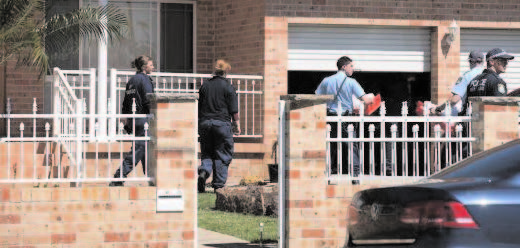
CANBERRA, AUSTRALIA (TIP): The Islamic State plot to carry out random beheadings in Sydney alleged by police is a simple and barbaric scheme that has shaken Australians. But terrorism experts on September 19 questioned whether the ruthless movement had the capacity or inclination to sustain a terror campaign so far from the Middle East. Police said they thwarted a plot to carry out beheadings in Australia by Islamic State group supporters when they raided more than a dozen properties across Sydney on Thursday.
Two of the 15 suspects detained by police were charged on Thursday, officials said. Nine others were freed before the day was over. Prime Minister Tony Abbott conceded it was difficult to safeguard the Australian population against such attacks. “The regrettable reality is that to mount the kind of attacks which ISIS in Syria and in Iraq has in mind for Australia, all you need is a determined individual who will kill without compunction, a knife, an iPhone and a victim,” Abbott told Seven Network television on Friday, using a name that Islamic State no longer goes by, Islamic State of Iraq and the Levant.
Some terrorism experts saw the plot as a potential shift in Islamic State’s focus from creating an Islamic caliphate in the Middle East. Others said it is more likely a symptom of policy confusion within a disparate group. “If you have people coming in from different backgrounds from all these countries, when it comes to policy making, they’re going to fight each other, they’re going to kill each other,” said Samuel Makinda, professor of International Relations and Security Studies at Murdoch University.
“On ISIS, I see no direct threat to Australia or to any other country at the moment except those in the Middle East,” he added, using the movement’s former name, Islamic State of Iraq and Syria. The raids involving 800 federal and state police officers — the largest in the country’s history — came in response to intelligence that an Islamic State group leader in Syria was calling on Australian supporters to kill, Abbott said.
The raids sparked protests by hundreds of Muslims in the Sydney suburb of Lakemba on Thursday night, where speakers accused the government of exploiting public fear in a bid to get contentious counterterrorism laws through Parliament. Abbott said Friday that police were taking over security at Parliament House in Canberra, telling Australian Broadcasting Corporation radio that the building, “government and government people” had been identified as targets.
With national grand finals approaching in Rugby League and Australian Rules Football — among the country’s most popular sports — police have said security will be stepped up at sports arenas and other public venues where people gather in large numbers. Greg Barton, a Monash University global terrorism expert, said that Islamic State could be starting to direct its global followers to take the fight to their home communities in a bid to usurp al-Qaida’s position as the leading global jihadist network. The movement could eventually mount attacks in Australia like the attack last year by militant group al- Shabaab gunmen on the Westgate Mall in Nairobi, Kenya, that claimed 67 lives, Barton said. -

BBC reporters ‘badly beaten’ in Russia
MOSCOW (TIP): A team of BBC journalists was beaten and their camera smashed in southern Russia, where they were looking into reports of Russian soldiers killed while on secret deployments near Ukraine, the broadcaster said on September 18. The three reporters were working in the southern city of Astrakhan when they were “assaulted by unidentified men in a coordinated attack,” the BBC said in a statement. “Our staff were badly beaten, their camera destroyed and then taken,” the statement said. BBC spokesman James Hardy added separately: “All are OK.” “The cameraman is continuing to receive treatment for concussion and other injuries,” he added in written remarks. After the assault the journalists were questioned at a police station. They later “discovered that recording equipment, which was in their vehicle, at the police station, had been electronically wiped”.
-

Floods shut down Philippine capital
MANILA, PHILIPPINES (TIP): Heavy rain due to a storm and the seasonal monsoon has caused widespread flooding in the Philippine capital and nearby provinces, shutting down schools and government offices. Local officials interviewed on radio reported hundreds were evacuated early on Friday from severely inundated communities, some under rapid-flowing flood waters more than neck high. Manila airport authorities said that the rain and a broken radar caused delays and the cancellation of at least 28 domestic flights to and from northern and central Philippines affected by Tropical Storm Fung- Wong. At least three international flights heading to Manila were diverted to Clark International Airport in northern Pampanga province. Presidential spokeswoman Abigal Valte said that work in government offices in the capital and 15 other provinces has been suspended.
-

OBITUARY
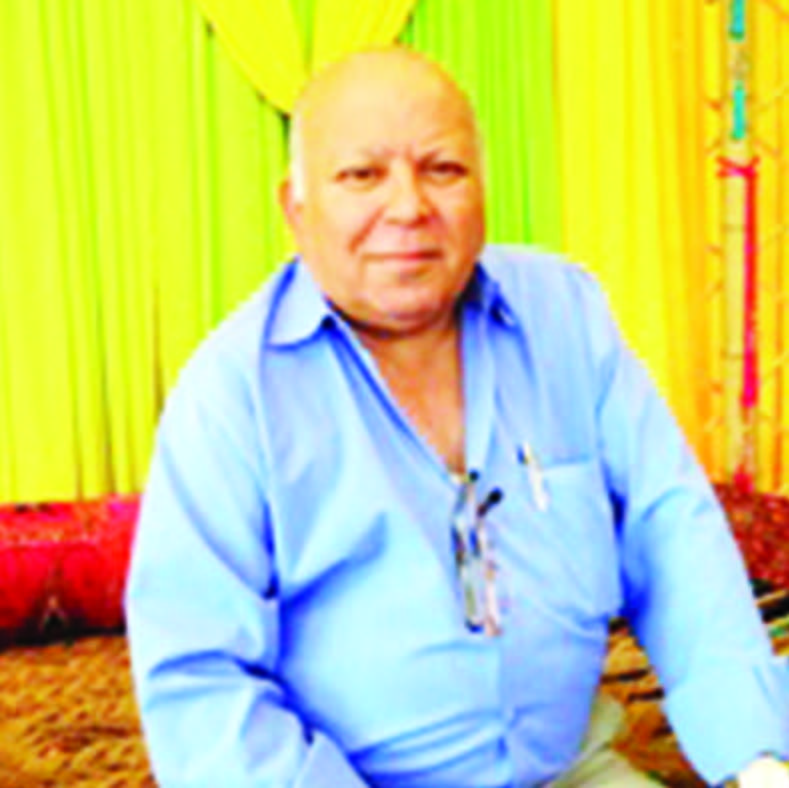
It is with regret and deep sorrow that we announce the passing of Ashok Puri. He passed away suddenly this past Saturday, September 13th, from a heart attack while on vacation in Bermuda.
He was a gentle and loving soul who only knew how to give love and support to all those he touched.
FUNERAL AND CREMATION: Saturday September 20th at 11am
Moloney Funeral Home 132 Ronkonkoma Avenue, Lake Ronkonkoma, New York 11779 (631) 588-1515.
-

India, China Vow Cooperation: Sign 12 Agreements in Delhi
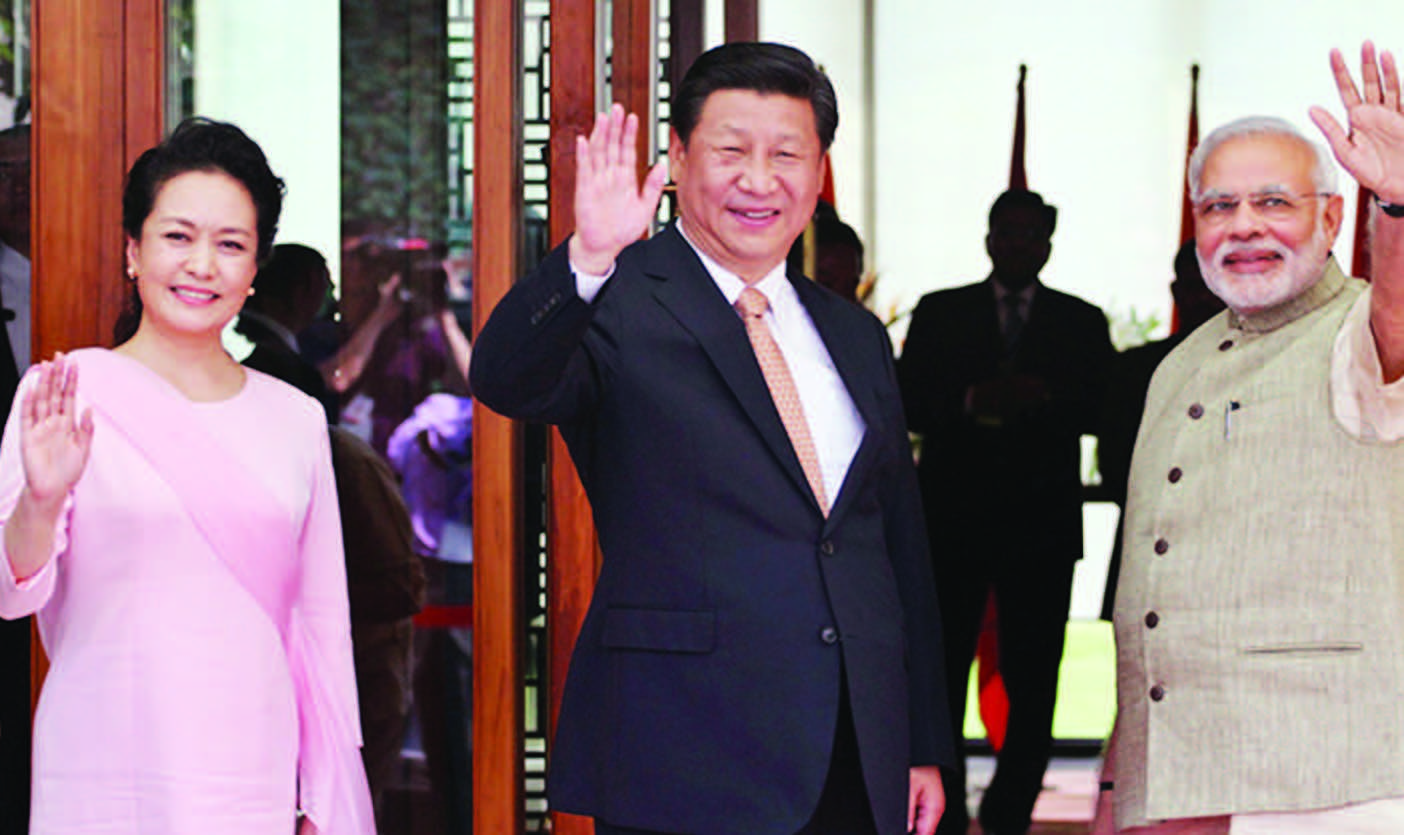
NEW DELHI (TIP): India and China have signed 12 agreements in Delhi, one of which will see China investing $20bn in India’s infrastructure over five years. At a news conference with Chinese President Xi Jinping, India’s PM Narendra Modi said “peace on the border” was important for progress. Talks came as India accused China of fresh territorial incursions in Ladakh.
China is one of India’s top trading partners but they vie for regional influence and dispute their border. Mr Modi and Mr Xi made separate statements at the end of their talks in Delhi on Thursday, September 18.
Under the investment plans, China pledged to:
● Help bring India’s ageing railway system railway system up-to-date with high-speed links and upgraded railway stations.
● Set up industrial parks in Gujarat and Maharashtra.
● Give more market access to India to products, including pharmaceuticals and farm products. Both sides also focused on increasing cooperation in trade, space exploration and civil nuclear energy. Mr Modi called for an early settlement on the disputed common border between the two countries and said the “true potential of our relations” would be realized when there was “peace in our relations and in the borders”.
There have been reports in the Indian media of Chinese troops trying to construct a temporary road into Indian territory across the Line of Actual Control (the de facto boundary) in the disputed Ladakh region over the past week. Mr Xi said he was committed to working with India to maintain “peace and tranquility” on the border. “China-India border issue is a problem which has troubled both sides for long… As the area is yet to be demarcated, there may be some incidents,” he said.
The border dispute is an old one, dating back to 1914 when Britain, India’s former colonial power, signed an agreement with Tibet making the McMahon Line the de-facto border between the two countries. China has always rejected this. Both sides also claim each other’s territory – India, the Aksai Chin region of Kashmir and China refuses to recognize Ladakh and Arunachal Pradesh as part of India. There have been several incursions of Chinese troops across the border in these areas which have been highlighted by the Indian media. Diplomats from both sides, however, play down these transgressions.
The simple fact is that there are differing perceptions on where the border lies – what India believes is Chinese troops crossing into their territory is seen by Beijing as the exact reverse: Indian troops occupying Chinese land. It is extremely unlikely that these confrontations will lead to an outright conflict or even sour ties between the two countries. But they do reflect the suspicion and distrust that exist on both sides of the border. Mr Xi began his visit in Gujarat, the homestate of Mr Modi, on Wednesday, before heading to Delhi.
China has pledged to upgrade India’s ageing railway tracks On Wednesday, the two sides signed several agreements, including one to set up a Chinesebacked industrial park in Gujarat. Indian and Chinese companies have also signed preliminary deals worth more than $3bn (£1.8bn) in aircraft leasing and telecoms, among other sectors. Despite the continuing tensions, trade between India and China has risen to almost $70bn (£43bn) a year, although India’s trade deficit with China has climbed to more than $40bn from $1bn in 2001-2002. -

HONOR RESTORED: ATTORNEY RAVI BATRA WINS FOR KRITTIKA BISWAS CASE AGAINST NY CITY
$225,000 settlement along with an acknowledgment that Krittika was an Honor Student at the time of her false arrest
I.S. Saluja : NEW YORK (TIP)When on September 30, 2013, SDNY Judge Koetl issued a scholarly and thorough Order, in which the court rebuffed the defendants’ (New York City) ignoble attempt to dismiss Krittika’s case in its entirety, it was becoming clear that defendants were losing ground in the case. Therefore , when in September, 2014 New York City came forward with the Stipulation of Settlement, it didn’t surprise Krittika’s attorney Ravi Batra.
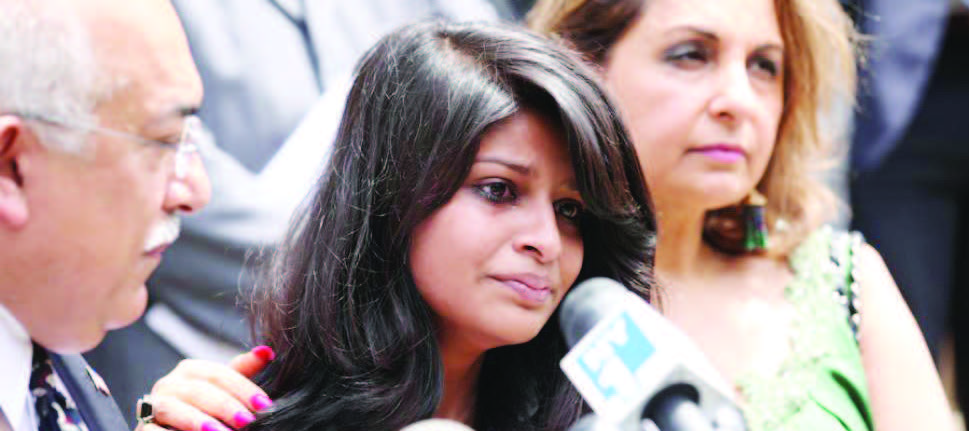
“We have vindicated Krittika’s honor, Indian Diplomats’ honor, and India’s honor in the United States” said Ravi Batra, Krittika Biswas’ lawyer, in announcing a $225,000 settlement won from New York City along with an acknowledgment that Krittika was an Honor Student at the time of her false arrest and 1-day spent in jail on February 8, 2011 awaiting arraignment in court on misdemeanor charges. Attached hereto, is the Stipulation of Settlement, which has been submitted for the Court’s approval.
Recalling the incident which shocked the entire Indian American community, Mr. Batra said, “On February 9, 2011, while I was on my way to Supreme Court in Manhattan to fight my then-pending libel-in-fiction case against Dick Wolf and Law & Order before Justice Lucy Billings, I got a frantic call from my friend and India’s then Consul General, Ambassador Prabhu Dayal, saying that one of his viceconsul’s daughter had been arrested yesterday, and despite all efforts, including with the US State Department, and his officers being in Court, they had not gotten anywhere and could I rush to Queens.
I promised him that I would do so. And indeed, I rushed to Queens Criminal Court and met Deputy Consul General Gondane (Devyani Kobragade’s uncle), Krittika’s parents and many other officials of India” recalled Batra. “Within minutes of my arrival, I personally met on February 9, 2011 with Queens District Attorney Richard Brown and during such meeting assured him that Krittika was actually innocent and this case was going to blow up and become a problem case.
Judge Brown, as DA Brown is known given his exemplary service to all New Yorkers for over 50 years, including, as counsel to NYS Governor Hugh Carey and later as a high ranking appellate Justice, took the rare step to administratively dismiss all criminal charges against Krittika based upon my word – such that Krittika never had to step into Criminal Court and pled “not guilty,” her file was “sealed,” and she could legally say that she was never arrested.
It is for this reason, I called Judge Brown an American Hero” said Batra. “Of course, the ethically compromised and arrogant Principal Howard Kwait upon learning of the unconstitutional charges being dismissed, retaliated by suspending Krittika. During those proceeding we proved Krittika’s innocence – that her Internet Service Provider (ISP) was Time- Warner’s “Roadrunner” while the culprit’s ISP was “Earthlink.” One day later, with our forensic expert’s sworn report, the actually guilty student was identified and he confessed – except he was not arrested or criminally charged – proof of foul discriminatory disparate treatment of Krittika despite her actual innocence” said Batra.
Krittika then filed a Notice of Claim, and given then-Secretary of State Clinton’s Legal Advisor’s stance on the Vienna Convention on Consular Relations of 1963, and on May 7, 2012 we sued in Federal District Court for the SDNY in Manhattan the following defendants: City of New York, it’s Department of Education, John Bowne High School’s arrogant principal Howard Kwait, who has since been punished by NYC for being unethical, Teacher Jamie Kim-Ross, nowretired, who dreamt up false and unreasonable suspicion that Krittika was the author of offensive emails threatening violence, and several police officers who should have known better that they had no probable cause to arrest Krittika” Batra added.
The defendants moved to dismiss the complaint, we filed an amended complaint, the City moved again to dismiss and after argument before the scholarly and learned SDNY Federal Judge John G. Koeltl, he issued an Order that refused to dismiss Krittika’s entire case. The City then took an interlocutory appeal to the second highest court in the country, the Lofty Second Circuit Court of Appeals and we did a full briefing of 4th Amendment’s unreasonable searches and seizures jurisprudence across our nation -including probable cause, arguable probable cause and qualified immunity.
After that, on August 20, 2014, we argued against the appeal before legal giants – Judge Jose A. Cabranes of the Kiobel-fame, Judge Chester J. Straub who has served as a senator and chief of federal judge-selection committee and Judge Raymond J. Lohier, Jr. of SDNY United States Attorney’s Office fame. A transcript of the Argument is available upon request – and empowers the parents of 1.1 million of our kids who attend public school and run the risk of being falsely arrested, falsely charged, and end up in jail with a criminal record.
Within 3 days of the Argument, on August 25, 2014, the three appellate Judges issued a lightening fast Order agreeing with our argument in toto and denied the defendants’ appeal and sent the case back to J. Koetl for discovery and trial. “Having completely won Krittika’s case on the law, I advised, and Krittika agreed, with her diplomatic family’s support, that in recognition of the warm relations between India and United States, exemplified by President Obama having Prime Minister Manmohan Singh as his First State Guest in November 2009 and PM Narendra Modi’s upcoming meeting with him this month, as well as having nominated the now-legendary Preet Bharara as a SDNY US Attorney and Sri Srinivasan as a federal appellate judge on the DC Circuit, our family friend Mayor Bill de Blasio having Indian-Americans in various important cabinet-level positions governing NYC, the greatest city in the world, and India having released NYPD Police Officer Manny Encarnicion and dismissed the criminal charges arising out of 3 bullets in packed luggage, that a just resolution of this case also needed to be mutually respectful in both tone and timing so as to enhance the bilateral relationship – itself in need of what I call a ‘mutually respectful reset’” said Batra.
So, I’m happy to announce on Krittika’s behalf that she joins me in “thanking Judge Brown, Senior Senator Chuck Schumer, Senior Congressman Gary L. Ackerman, the Indian- American community, everyone in India, members of the international media, Ambassadors Prabhu Dayal and Meera Shanker, and all her former classmates and teachers at John Bowne High School who gave her emotional and moral support to give her the strength so that she has been able to settle the case in full measure.” “Finally, I thank NYC’s Corporation Counsel Zach Carter and City’s Senior Federal Litigation Division Attorney Sumit Sud, worthy adversaries, for rising to the occasion and seizing the moment of graciousness and mutual respect and bringing an honorable closure to this case of ‘many tears.’ Of course, NYC Comptroller Scott Stringer’s genius is in saving taxpayers’ money that would otherwise have been spent in giving us, as lawyers, a bigger legal fee approaching a million dollars.
I proud of having protected Krittika, and vindicating India’s daughter’s honor in full measure with legal Orders documenting same, even as we forgave the defendants obligation to pay our legal fees in full measure, given my desire to enhance our nation’s foreign relations with India and every Indian.” said Batra. “As a comparison, on January 15, 2014, after nearly a decade of litigation by New York Civil Liberties Union against NYC, a class settlement was reached for $18 million for 1800 protesters arrested during the 2004 Republican Convention that nominated President George W. Bush for his Second term – that settlement netted each protester $6,400 each and legal fees of $7.6 million. Krittika’s settlement far exceeds that $18 million historic settlement, even as we forgave our City it’s obligation to pay much more towards legal fees as a proud New York Lawyer-Citizen” concluded a happy Batra.
No doubt, Attorney Ravi Batra deserves congratulations and gratitude of not only Krittika Biswas and her family, but of the entire Indian American community to put up a determined legal fight to vindicate the honor of a young Indian girl. I must also mention here that Attorney Batra’s wife Ranju Batra has been a constant and strong source of encouragement and comfort to Krittika and her family during the most stressful period for them. All is well that ends well. -

A Mushaira Celebrates
DALLAS (TIP): A Mushaira in celebration of unity and peace was organized by the local Al Noor International in Irving on September 12 to honor a celebrated Indian poet Munawwar Rana. Several local and guest poets from India and America participated. Munawwar Rana was born in Rae Bareli in Uttar Pradesh but spent most of his life in Kolkata. He published his poetry not only in Urdu but also in Hindi and Bengali.

Dr. Hasan Hashmi presided over the Mushaira
The notable feature of his poetry is that he used the genre of ghazal to eulogize mother, which is unique, as ghazal was considered a poetic form in which lovers’ conversed with each other. He avoids using flowery language and shuns chaste Urdu in his couplets, which is a reason that he is successful in poetic meetings in non-Urdu areas also.
He is considered[ to be one of the most successful poets at Mushairas and is popular outside India also. “Yeh Aisa Karz Hai Jo Main Ada Kar hi Nahin Sakta Main Jab tak Ghar na Lautun meri Maa Sajde Mein Rehti hai” Noor Amrohvi who has been organizing Mushairas in Dallas for the last couple of years, despite all odds- financial constraints and opposition from some in his own community- has once again proved he is an organizer par excellence.

Surinder K. Mital graced the occasion as Chief Guest of the evening
Noor who belongs to the famous Amroha in Uttar Pradesh in India which has given quite a few artists, including the famous film maker and director Kamaal Amrohvi, is very proud of his heritage. He has great attachment for Urdu and has been trying to promote it in America ever since he arrived in the United States. An experienced compere, Noor conducted the proceedings of the Mushaira in a very professional and orderly manner. While Dr.Hasan Hashmi presided over the Mushaira, a local businessman Surinder K. Mital graced the occasion as the chief guest. Sunil Jogi, a State Minister from India, who excels in humorous poetry, displayed his skill with a torrent of anecdotes, jokes and amusing satire.

Dr. Hashmi(second from left), Surinder K Mittal (third from left) and Noor Amrohvi(extreme right) honoring Dr. Munawwar Rana(extreme left) with a Souvenir Calendar that listed Dr. Rana’s achievements in the field of poetry
He was the most appreciated poet of the evening. Dr. Irfan is a celebrated and widely popular poet for his humorous, hilarious and witty four line compositions. His verses are meaningful satire on social evils and peoples’ attitude. Shah Alam is a versatile poet with a distinction. He has been quite active in literary circles for many years. He recited his latest composition that was highly applauded for its originality and message. It had spiritual undertones that gave a new dimension to his poetic vision. He was greatly applauded by the audience for his presentation Saeed Qureshi has a long literary background both as a writer and a poet. He recited his latest Ghazal portraying the uncertainties of human life and mysteries that a person encounters. The tone and tenor and the depth of the ghazal that he presented received great ovation and admiration.

Sunil Jogi, a State Minister from India, who excels in humorous poetry, displayed his skill with a torrent of anecdotes, jokes and amusing satire
Khalid Khaja has an originality of both thought content and style of delivery of his poetic compositions. He is a favorite with mushairas in America and elsewhere in the world. His picks the themes from the daily life and writes in a unique diction that is only unique to him. His ghazal was greatly appreciated and clapped by the audience. Dr. Shamsa arrived in Dallas only in the recent past. She has been reciting her poetry at various Mushairas held in Dallas Fort Worth area. She presented her Ghazal and was loudly applauded. The Mushaira continued till midnight- an indication of the strength and success of the event.
Unity and Peace
Reciting their compositions

Noor Amrohvi

Jyoti Kumar welcomes guests

Shazia Khan compered well

Naheed Shad

Mike Ghouse- thinker, writer and poet is a well known activist for pluralism

Shah Alam Siddiqui

Dr. Shamsa Qureshi

Zohra Chishti

Dr. Amir Suleman

Saeed Qureshi

Tariq Hashmi

Yunus Ijaz

Khalid Khaja

Archuna Pandit

Farah Iqbal

Fayaz Hussain

Arif Imam

A group photo of poets at the Mushaira

A view of the audience

Dr. Nirmal Mann
-

By-poll results shock BJP
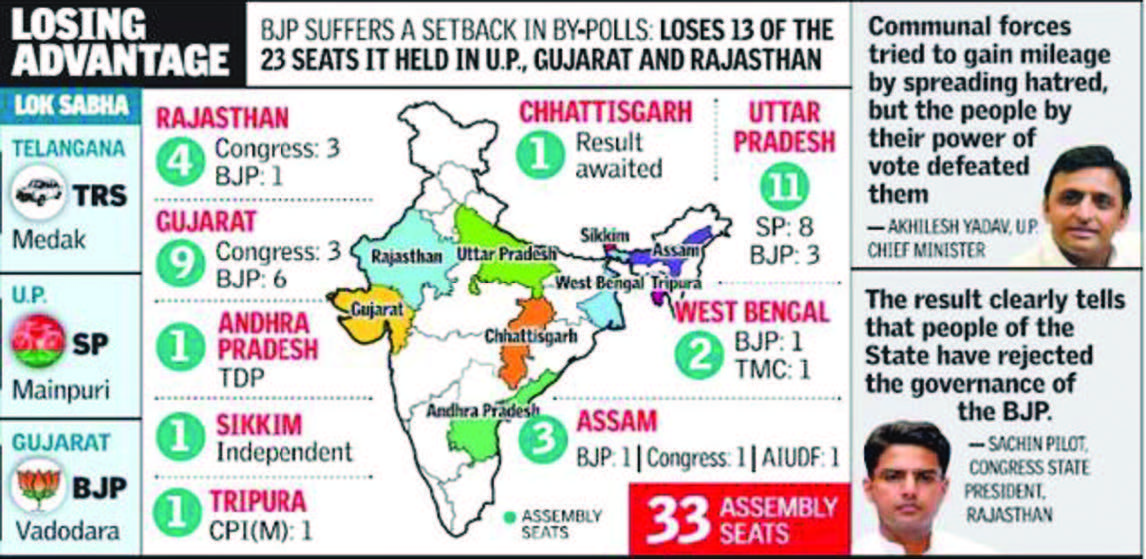
New Delhi (TIP): The results of the Assembly byelections have come as a blow for the BJP in Uttar Pradesh, Rajasthan and Gujarat — the states it had swept in the Lok Sabha polls four months ago — losing 13 of the 24 seats held by it. Of the 32 Assembly seats across nine states for which counting of votes was held today, the BJP won 12, Congress seven and Samajwadi Party eight while TDP (Andhra), Trinamool Congress (West Bengal), AIUDF (Assam) and CPM bagged one each. One seat in Sikkim was won by an Independent.
This is the third consecutive setback for the saffron party after its disappointing performance in Assembly byelections in Bihar, Uttarakhand, Karnataka and Madhya Pradesh in the past two months. All 11 seats in Uttar Pradesh, Gujarat (9) and Rajasthan (4) were held by the BJP and the bypolls were necessitated after the sitting MLAs were elected to the Lok Sabha. It was Uttar Pradesh — the party’s recently acquired stronghold where the BJP managed a near-total sweep in the LS elections — that delivered a humiliating blow to the saffron party as it lost seven of the 11 seats held by it, including the one held by its ally, the Apna Dal.
The BSP’s absence in the byelections had made it a virtual straight fight between the SP and the BJP in the politically crucial state. BJP strongman Amit Shah was credited with crafting the spectacular win for his party in UP in the Lok Sabha polls. The party lost six out of 13 seats in Rajasthan and Gujarat, where it’s in power. Lost for words, BJP leaders could not even blame rival parties for playing foul in the elections. Senior BJP leader Rajiv Pratap Rudy said the results “deserve a small introspection”. “This is not a national mandate. It is a localised issue.
Surely, it is a wake-up call for better planning in the upcoming Haryana and Maharashtra Assembly elections,” he said. Senior leader Uma Bharti dismissed questions about efficacy of the “Modi wave” saying “state leaders and workers need to introspect.” It was a significant comeback by the SP, which won eight out of 11 seats in Uttar Pradesh —and the Congress, which trounced BJP on three out of four seats in Rajasthan. “The people of the state have given a befitting reply to the communal forces and clearly expressed their desire for harmony and brotherhood,” said a beaming UP CM Akhilesh Yadav.
Among BJP’s big losses is the Rohaniya seat, which falls within Modi’s parliamentary constituency Varanasi. The saffron party just about managed to hold to its own in Modi’s home state Gujarat, winning six out of nine seats. Rajasthan Chief Minister Vasundhara Raje was left re-faced as the Congress won three out of four seats. One of the seats — Surajgarh—was being contested by her close aide Digambar Singh who lost to Shravan Kumar of the Congress by 3270 votes.
The BJP had swept the Lok Sabha and Assembly elections in the desert state earlier this year. High on the win, Rajasthan Congress chief Sachin Pilot advised the “BJP to take a lesson from these elections and introspect” The BJP retained Kota South, losing Surajgarh, Weir and Nasirabad to the Congress. The only silver lining for the BJP was the inroads into WB where it has won Basirhat Dakshin (South) seat. -

AFTER BY-POLL SETBACK, BJP BLINKS ON SEAT-SHARING WITH SHIV SENA
Mumbai (TIP): Late on September 17 night, the BJP drew up a list of 119 seats that the party would like to contest in next month’s state elections in Maharashtra. It is seen as a climb down from the 135 it was insisting on a few days ago. Since then, however, it has suffered reverses in by-elections giving ally Shiv Sena an advantage in tough negotiations over seat-sharing.
After a meeting at Union Minister Nitin Gadkari’s Mumbai residence on Wednesday night, attended by senior Maharashtra unit leaders, the BJP said it wanted its 25-year alliance with the Sena to continue. “We have sent a list of 119 seats to central leadership… 135 seats was just an estimate. We have communicated this to the Sena. Discussions will go on as far as distribution of seats is concerned,” BJP leader Sudhir Mungantiwar said. Earlier in the evening, sources said, BJP president Amit Shah had met central party leaders OP Mathur and Rajiv Pratap Rudy after the Sena, emboldened by the BJP’s losses in Tuesday’s by-elections, blandly stated that it will contest more seats than the BJP.
Sena MP Sanjay Raut said his party wanted the alliance to continue, but on its terms. “In Maharashtra, the chief minister will be from the Shiv Sena and we will contest more seats. There will be no change in that,” he said. The BJP earlier argued that its superior performance in the national elections four months ago has earned it the right to an equal number of seats to contest. It had suggested a formula that the two partners contest 135 seats each in the 288-member state Assembly and leave 18 for their smaller allies.
The Sena insisted that it must continue to be the senior partner in the state and contest more seats, at least 155. It said the by-election results vindicate its stand that the general elections will have no bearing on state elections. The stakes are high as the party with the most legislators will have the bigger claim to the Chief Minister’s post if the alliance wins.
DON’T LET SUCCESS GO TO YOUR HEAD: SENA TAUNTS BJP
The BJP’s losses in by-elections has further emboldened its partner in Maharashtra, the Shiv Sena, to blandly state that it will contest more seats than the BJP in next month’s state elections. Sena MP Sanjay Raut today said his party wants the 25-year alliance to continue, but on its terms. “In Maharashtra, the chief minister will be from the Shiv Sena and we will contest more seats. There will be no change in that,” he said. This morning’s issue of the Sena magazine “Saamna” cautioned the BJP against taking “voters for granted.”
It praised Prime Minister Narendra Modi, saying he should not be blamed for the by-election setback. But it also said, “The by-election results are a lesson for the Maharashtra elections,” adding, “Each election comes with its tides and tides change after every election. Vidhan Sabha elections cannot be fought on the basis of the Lok Sabha wave.” The sub-text was that the BJP cannot count on the “Modi wave” to win the Maharashtra elections. Shiv Sainiks across the state have backed their chief Udhav Thackeray in his tussle with the BJP over seat sharing and say they are gearing up to win 150 of the 288 assembly seats. “There is only one wave in Maharashtra, the Shiv Sena wave,” said Sanjay Raut. -

1,000 Chinese soldiers enter India, Army rushes 3 battalions to LAC
NEW DELHI: Nearly 1,000 Chinese soldiers intruded into India in Ladakh’s Chumur sector on September 18 a day when Chinese President Xi Jinping is on a visit here. According to Army sources, nearly 1,000 Chinese soldiers moved inside the Line of Actual Control (LAC) in Jammu and Kashmir’s Ladakh region, and refused to go back. The Indian Army has rushed three battalions to the LAC in the sector.
This Chinese incursion is being touted as the worst in recent years. PM Narendra Modi raised the issue of incursions with Chinese President Xi Jinping last night during their meeting. The issue will be raised again today, MEA spokesman Syed Akbaruddin said today. National security adviser Ajit Doval is said to be monitoring the situation himself. A flag meeting that was held on Wednesday to diffuse the gnawing tension was of brigadier-level. It was held at a border personnel meeting point in Chushul, where the issue of intrusion of Chinese civilians in the Demchok area was also discussed, Army sources said. The meeting discussed the situation in Chumar where the Chinese troops have entered into Indian area and have been asked to leave, they said.
This was the second flag meeting that has taken place in the last one week between the two sides to defuse the situation. Chumar is one of the very few places along the Line of Actual Control where access to the border areas is easier from the Indian side and this place has witnessed several face-off situations in the last two-three years. It is being reported that senior members of the external affairs ministry and defence ministry are in constant touch with their counterparts in China to bring a swift end to the growing troubles at the border. -

SC questions lack of transparency in appointment of CVC
NEW DELHI (TIP): The Supreme Court on September 18 questioned Centre on lack of transparency in the appointment of chief vigilance commissioner and vigilance commissioner. The top court was hearing a petition challenging the method adopted by NDA government to select CVC. Questioning the method adopted by the government, the Supreme Court said there could not be uniformity when Cabinet secretary and 36 other secretaries were individually doing the shortlisting to reduce the number of candidates in zone of consideration from 120 to 20. “Transparency is hallmark of selection procedure and people across should be allowed to apply for the post and not only bureaucrats,” the apex court said. “Government did not want to advertise for the post as it would lead to a deluge of applications,” the AG said. Attorney general assured the apex court that no final decision will be taken in the appointment of CVC till SC decides the legality of the process of shortlisting of candidates for the post. The court has posted the matter for final hearing on October 14.
-

J-K Civil Secretariat reopens
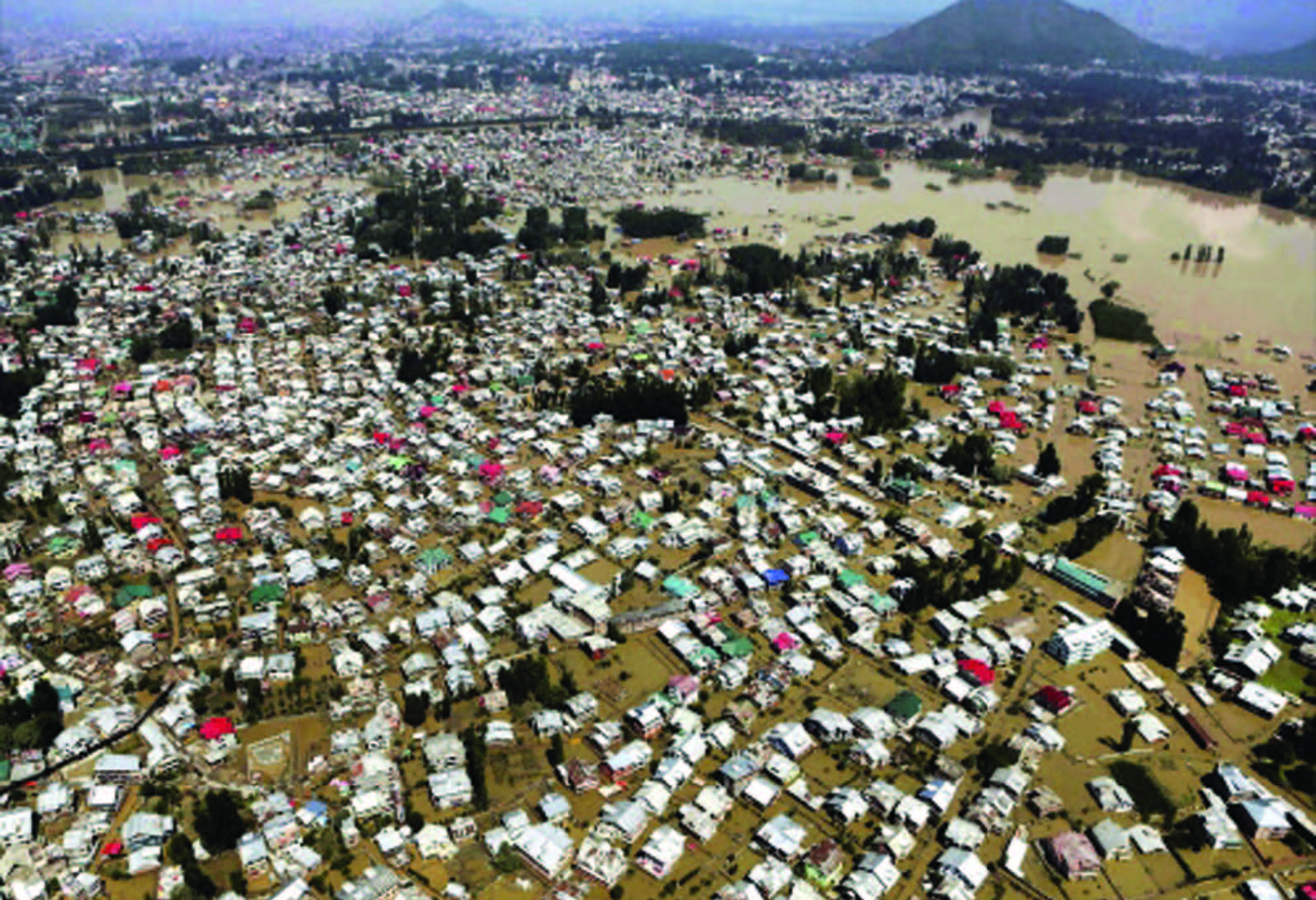
SRINAGAR (TIP): After remaining closed for 11 days due to massive floods, Jammu and Kashmir’s Civil Secretariat reopened on September 18. However, less than 10 per cent employees reported for work at the scheduled opening time at 9:30 AM, the official incharge of security at the Secretariat said. The area around the secretariat including the main entrance is still submerged in nearly one feet of water. The ground floor of the secretariat is not functional due to water logging.
-

Kashmir flood tragedy a manmade disaster: Bombay Natural History Society chief
SHIMLA (TIP): The recent tragedy in Kashmir valley is being increasingly looked at as a manmade disaster, aggravated by reckless “developmental” activities with no regard for nature conservation. Bombay Natural History Society (BNHS) India’s studies in the valley over the years reveal that there has been a severe loss of wetland habitat for various commercial activities. BNHS has termed recent floods as an “ecological disaster” that highlights the urgency to enact Wetland (Conservation) Act, on the pattern of Forest (Conservation) Act, 1980.

It is obvious from field studies that there has been massive loss of wetlands in Kashmir valley over the years. For instance, the famed Dal Lake in Srinagar has seen numerous reclamations all along its periphery in the marshy areas. This has drastically reduced the lake area to just about 1,200 hectares, which is almost half of its earlier spread, said a report from BNHS. The vast expanse of Wular Lake and associated marshes — an Important Bird Area (IBA) – is another case in point.
Once spread across 20,200 hectares, it now remains restricted to a mere 2,400 hectares. In the last 30 years, nearly 50% of wetlands in Kashmir valley have been encroached upon or severely damaged, it said. Commenting on the recent floods, Dr Asad Rahmani, director, BNHS, said, “This can be termed as an ecological disaster. The disastrous damage caused to life and property could have been minimized if the large number of wetlands, that once existed in the valley, had been preserved. Wetlands act as a sponge that retains excess water. Wular Lake is a classical example”.
Even the British and former Maharajas of Kashmir used to consider Wular as a buffer for the floods, where excess water can be absorbed. Rahmani said that wrong policies on the part of successive governments in the state have contributed to the wetland loss. “For example, encroachment upon shallow portions of the wetland by the forest department for plantation of willow trees has significantly reduced the size of Wular Lake over the years,” he said. Kashmir valley has one narrow opening towards the west for water from catchment areas to get drained down the Jhelum river. From all other sides, it is encircled by high mountains, he said.
During the reign of Maharajas of Kashmir, a well functioning water drainage system that was synchronous with the natural topography of the region was in place, Rahmani said. The same lay neglected in the recent decades. The myriad lakes and wetlands of the valley, which acted as sponge, were also well preserved in the past. Considering the importance of wetlands, not just in Jammu and Kashmir, but across India, Rahmani recommends the passing of a Wetland (Conservation) Act on the lines of Forest (Conservation) Act at the earliest.
“Protection of wetlands will not only help in flood control, but will also help in recharging ground water levels across the country and thus ensure better food security by way of increased water availability. Although the Central Wetlands Regulatory Authority exists at present, it has been proving ineffective in saving the wetlands,” Rahmani added. He said it is also important not to classify wetlands as wastelands, as wetlands play an important biological, cultural, economical, aesthetic and spiritual role. -

Assam ex-top cop, grilled in Saradha scam, commits suicide
NEW DELHI (TIP): Former Assam director general of police Shankar Baruah, who was interrogated by the CBI in connection with the multi-crore Saradha chit fund scam, committed suicide on September 17. According to the police, Shankar Baruah shot himself with his revolver. A 1974 batch Indian Police Service officer, Shankar Baruah had returned from a four-day stay in a hospital, where he was undergoing treatment for depression.
A TV report says that the retired IPS officer could not handle the humiliation of the CBI interrogation. Probing the Saradha scam, the CBI Thursday raided 22 locations in West Bengal and Assam, including the residences of two former Assam ministers and a retired police chief and the offices of Kolkata businessman Sandhir Agarwal. The searches by the CBI took place at seven locations in Kolkata, 14 in Assam (12 in Guwahati and two in Dhubri) and one in Mumbai, including the residence of Assam’s former education minister Himanta Biswa Sarma and former Assam director general of police (DGP) Shankar Baruah, an official said in New Delhi.
The CBI has till now registered 48 cases, including four in West Bengal and 44 in Odisha, in the alleged chit fund scam on the directions of the Supreme Court. The Supreme Court had handed over the Rs 10,000 crore Saradha chit fund scam case to the CBI in May 2014 and asked the state governments to provide all logistical help to the agency. The scam came to light after a large number of investors last year complained that many firms collected huge amounts of money from them promising high returns, but later refused to pay them back as promised. -

Nirbhaya centers will solve half of the problems: Maneka Gandhi
NEW DELHI (TIP): Women and Child Development Minister Maneka Gandhi said Wednesday that setting up ‘Nirbhaya centers’ for women in distress, and women helpline will together solve half of the problems of women in the country. Addressing a press conference here, the minister said the consultations on setting up these ‘Nirbhaya centers’ are at an advanced stage, and these will be established in a phased manner. “Nirbhaya centres are at an advanced stage of consideration.
We are working with states to get them off the ground,” she said. “Nirbhaya centres will be integrated with women helpline 181 which is being universalized. If we can get Nirbhaya centres and women helpline up and running quickly, more than 50 percent of the problem would be solved,” the minister said. The ‘Nirbhaya centers’ are named after the braveheart who was brutally raped in Delhi Dec 16, 2012, and died subsequently. The 23-year-old woman, whose real name is not published as per law on protecting identity of raped women, came to be popularly known as ‘Nirbhaya’ for her brave attempt to fight her rapists.
Maneka Gandhi said the centers will provide all kinds of help, including police and legal aid, to women in distress. According to ministry officials, 330 of the 660 planned centers are likely to materialise by March 2015. These will be set up in phased manner. The minister also launched a logo for the central government’s ‘Beti Bachao, Beti Padhao’ scheme, saying that she was launching it on Prime Minister Narendra Modi’s birthday as it is his pet scheme. -

US scientist: Ebola unlikely to become airborne
WASHINGTON (TIP): It’s incredibly unlikely that Ebola would mutate to spread through the air, and the best way to make sure it doesn’t is to stop the epidemic, a top government scientist told concerned lawmakers on Sep 17. “A virus that doesn’t replicate, doesn’t mutate,” Dr Anthony Fauci of the National Institutes of Health told a House Foreign Affairs subcommittee. Fauci said US researchers are monitoring for mutations in the virus, which has killed at least 2,400 people.
But considering all the dire things to worry about with this out-of-control epidemic in West Africa, that mutation concern is not “something I would put at the very top of the radar screen,” said Fauci, head of NIH’s National Institute of Allergy and Infectious Diseases. The unprecedented Ebola outbreak is believed to have sickened nearly 5,000 people, mostly in Liberia, Sierra Leone and Guinea. The deadly virus also has reached Nigeria and Senegal. Ebola is spread through direct contact with the bodily fluids of sick patients. But as the epidemic has grown, so have questions about whether, if left unchecked, the virus might transform and become more contagious.
In hearings in the Senate and House on Tuesday and Wednesday, lawmakers asked Fauci if it might even become airborne. Viruses certainly mutate all the time, making mistakes as they copy themselves in order to grow and spread, Fauci explained. Most of those mutations are irrelevant, not associated with any biological change. But sometimes, those mutations can make a virus a little more or a little less virulent, or make it a little more or a little less efficient at spreading in whatever way it normally is transmitted, he said. “Very, very rarely does it completely change the way it’s trnsmitted,” Fauci said. -

US edges up to Mission Creep in Middle East
WASHINGTON (TIP): Mission Creep, a term that has come to describe a gradual shift in objectives during the course of a military campaign, often resulting in unplanned long-term commitment, came into the American lexicon during the Somali civil war in the 1990s. On Tuesday, it crept back into US parlor talk after a top American general suggested ground forces may be required to meet President Barack Obama’s pledge to degrade and destroy the Islamic State terrorists in Iraq and Syria.
US Army Gen. Martin Dempsey, the chairman of the Joint Chiefs of Staff and the President’s top military adviser, laid it out tactfully. ”My view at this point is that this (American-led) coalition is the appropriate way forward.
I believe that will prove true,” General Dempsey said at a Congressional hearing, expressing confidence that the IS could be defeated. ”But if it fails to be true, and if there are threats to the United States,” he added, he would go back to the President and ”make a recommendation that may include the use of US military ground forces.” The remarks jolted the capital’s punditry, which has been stewing about an American return to the Middle-East minefield just three years or so after Obama fulfilled his campaign pledge to pull out US troops from the region after a decade-long war that cost the country more than a trillion dollars.
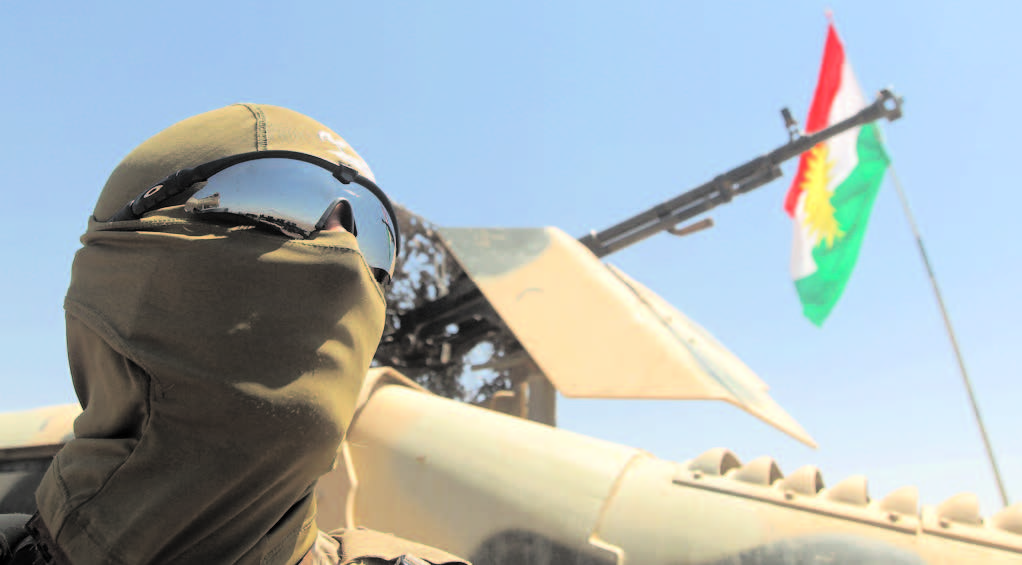
On his part, Dempsey acknowledged that recommending re-induction of US forces would run counter to the president’s policy, but the President, he said, ”has told me as well to come back to him on a case-by-case basis.” The White House demurred about any change in policy, saying, ”It’s the responsibility of the president’s military advisers to plan and consider all the wide range of contingencies,” and what Dempsey was referring to was a ”hypothetical scenario.” Obama has repeatedly said there will be no boots on the ground in the sense of US troops having combat missions, but administration officials have indicated that military advisors and special forces may be inducted on a case-by-case basis to train and guide Iraqi and Kurdish forces taking on the ISIS.
Already, the US has inducted more than 1,600 military advisors and special troops, ostensibly to safeguard US diplomatic missions and personnel. But some are also believed to be helping pinpoint airstrikes and train pro- American forces. The fear in the capital and across the country is that this may creep up to tens of thousands. Some war enthusiasts are already asking how the 5000 Syrian rebels the US is training can take on an Islamic State force that the CIA estimates to be more than 30,000. -

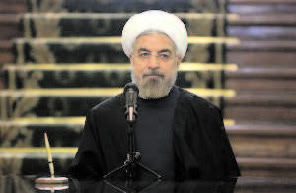
Iranian President Rouhani terms US led anti-ISIS coalition ‘ridiculous’
WASHINGTON (TIP): Iranian President Hassan Rouhani has decried the US-led international coalition against Islamic State in Syria and Iraq (ISIS) describing this as “ridiculous,” move and alleged that some of the 40-member of this group had previously supplied the terror group with arms and training.
“Are Americans afraid of giving casualties on the ground in Iraq? Are they afraid of their soldiers being killed in the fight they claim is against terrorism?” Rouhani told the NBC news in an interview which was taken in Tehran yesterday. “If they want to use planes and if they want to use unmanned planes so that nobody is injured from the Americans, is it really possible to fight terrorism without any hardship, without any sacrifice? Is it possible to reach a big goal without that? In all regional and international issues, the victorious one is the one who is ready to do sacrifice,” Rouhani said.
It is necessary for airstrikes in some conditions and some circumstances, he said. “However, air strikes should take place with the permission of the people of that country and the government of that country,” the Iranian President said in his interview to the major American television network. Responding to questions, Rouhani said the brutal murder of two American journalist and one British national by ISIS is against the tenants of Islam. “They want to kill humanity,” he said.
“And from the viewpoint of the Islamic tenets and culture, killing an innocent people equals the killing of the whole humanity. And therefore, the killing and beheading of innocent people in fact is a matter of shame for them and it’s the matter of concern and sorrow for all the human and all the mankind,” Rouhani told the NBC News in his interview. According to the NBC news, Rouhani alleged that many members of the US-led coalition had helped ISIS with weapons and training.
But he declined to name the countries. Rouhani said Iran will give Iraq any support it requests for combating ISIS, but made a point of saying religious sites must be protected. “When we say the red line we mean the red line. It means we will not allow Baghdad to be occupied by the terrorists or the religious sites such as Karbala or Najaf be occupied by the terrorists,” he said. The Iranian President said he believes that the latest round of nuclear talks can still lead to a resolution. “Maybe the time could be arguable, either today or tomorrow. “However, we have no doubt that the only solution to the nuclear issue goes through negotiation,” he said. Rouhani also called for close relationship between US and Iran. -

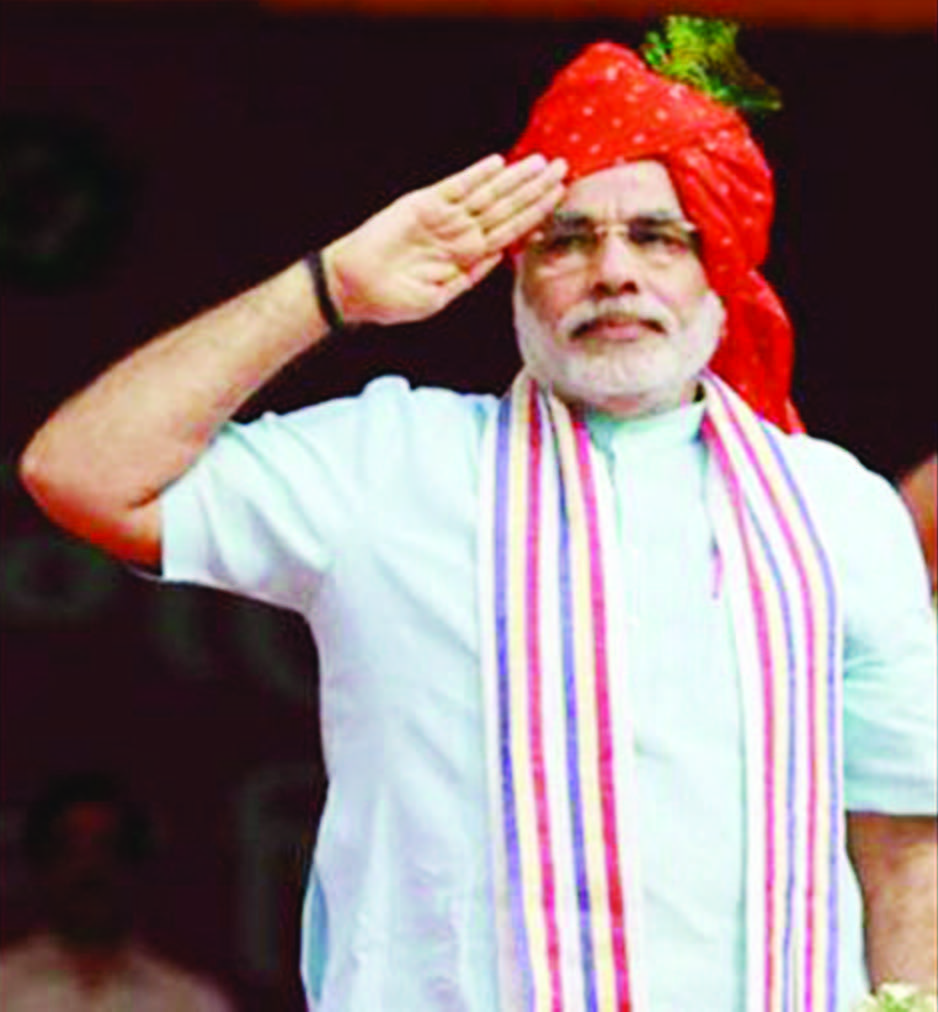
Indian Prime Minister Modi’s Madison Square Garden Event Sold Out
Those who could not get one of the 18,000 free tickets, will be able to watch Modi in Times Square or live streaming at watch parties around the country
NEW YORK (TIP): A community reception at Madison Square Garden for India’s Prime Minister Narendra Modi on September 28 is completely sold out, announced the host, the Indian American Community Foundation (IACF). To accommodate the thousands of people who were not lucky enough to get one of the 18,000 free tickets, IACF said that the event would also be broadcast live in Times Square. Facing continued requests for tickets, the Foundation and its Welcoming Partners – – a collective comprised of hundreds of American community organizations –moved rapidly , September 15, to announce that Mr. Modi’s speech will be broadcast with real time subtitles, to one of the larger screens in Times Square where members of the community are welcome to gather.
“The incredible demand to be a part of Indian American history in greeting Prime Minister Modi has pushed us to find more ways to let the community participate” said Anand Shah, the spokesperson for IACF. “And that is why we decided to broadcast the event in Times Square, stream it online at www.pmvisit.org, and provide English subtitles and audio translation — ensuring that as many people as possible could be part of what promises to be one of the largest ever gatherings to hear a foreign leader speak on American soil.”
The IACF is also helping student groups and community organizers arrange “viewing parties” in their local areas. Organizers plan to send tickets to community partner organizations by Friday, September 19 and those organizations will distribute them to their local members before the event on September 28th. With doors set to open on 9:00 a.m., Shah urged ticket holders to arrive early to pass through the significant security arrangements expected at Madison Square Garden. Attendees are also urged to regularly check http://www.pmvisit.org for updated information leading up to the event.
A spectacular laser light show, holograms of India’s historical luminaries, and live folk dances will precede Mr. Modi’s speech, Shah said. Several members of the U.S. Congress, state Governors, and city leaders are confirmed to attend the event. “Prime Minister Modi taking the stage along with dozens of America’s most important political leaders in front of tens of thousands of cheering supporters will demonstrate the potential of a relationship across borders,” added Shah.
“The time has come for the world’s most significant democracies – India and America – to join together on a platform of mutual respect and shared values.” Indian American Community Foundation (IACF) which has put together the community reception, is a not-for-profit organization which has been established to promote cooperation between the United States and India. Its goal is to further advance the nations’ shared values of democracy, inclusive economic development, and mutual respect. IACF is working with 400 other Indian organizations to organize the speaking engagement at Madison Square Garden on September 28, 2014. -

House authorizes arming Syrian rebels to fight ISIS
WASHINGTON (TIP): The House of Representatives voted on Wednesday, September 17, afternoon to approve President Obama’s controversial proposal to arm and train moderate Syrian rebels in effort to defeat the terrorist group known as the Islamic State of Iraq and Syria (ISIS). Lawmakers approved the amendment by a 273-156 vote after six hours of debate. The amendment, which includes no new money to pay for the operation, was then incorporated into a larger spending bill that will fund the U.S. government through December 11 and avoid a partial government shutdown.
“As we continue to take targeted military action against ISIL terrorist targets, today’s vote is another step closer to having the authorization to train and equip vetted elements of the moderate Syrian opposition so they can defend themselves against, and ultimately push back on, ISIL forces in Syria, while creating the conditions for the political solution necessary to solve Syria’s crisis once and for all,” Obama said in a statement Wednesday evening.
ISIL is an acronym for the terror group. That vote on the entire Continuing Resolution passed 319-108 and will now move to the Senate. Majority Leader Harry Reid announced Wednesday evening that the Senate would vote on the legislation Thursday. The Senate will begin debate on the bill at 1 p.m. and a vote would begin later in the evening. Reid has said he expects the bill to pass in the upper chamber of Congress.
The House vote on the final Continuing Resolution was divided among party lines. Fifty-three Republicans and 55 Democrats voted against the bill, while 176 Republicans and 143 Democrats voted in favor of it. While leaders of both parties back Obama’s goal of destroying ISIS, some lawmakers have expressed concerns that weapons given to the rebels could end up in the hands of terrorists.
Others say Obama’s plans do not go far enough while some are concerned about the U.S. getting embroiled in yet another war. “The amendment provides few limits on the type of assistance that our government may commit, and the exit out of the civil war is undefined,” said Republican Rep. Justin Amash in explaining his “no” vote on Facebook. Democratic Rep. Adam Smith argued in favor of arming the rebels on the floor shortly before the vote.
The Washington lawmaker said that while it’s “not a perfect plan,” if ISIS can go into Syria and “have a safe haven where they can go without being pressured, it’s going to be very, very difficult to defeat them.” Smith said the U.S. must “find a local force that will fight our fight.” At a weekly briefing on Wednesday, House Minority Leader Nancy Pelosi – who was against the Iraq War – said before the vote that while she’s in favor of Obama’s plan, “it’s not a whip operation. Members will do what members are comfortable of doing.”
House Speaker John Boehner said Obama’s request is “a sound one,” but added, “I think there is a lot more we need to be doing, but there is no reason for us not to do what the president asked us.” The U.S. has already engaged in airstrikes against ISIS in Iraq. U.S. Central Command announced on Wednesday that it conducted seven airstrikes in Iraq on Tuesday and Wednesday. Those attacks destroyed ISIS vehicles, ground units and a small boat resupplying the group’s forces.
CENTCOM said it has launched a total of 174 airstrikes in Iraq since the U.S. intervened on Aug. 7. Despite an acknowledgement on Tuesday by Chairman of the Joint Chiefs of Staff Martin Dempsey that sending U.S. ground troops into Iraq is a possibility, President Obama insisted on Wednesday that U.S. troops won’t have a combat role in Iraq. -

BJP GETS THE JOLT IT DESERVED
The folly of polarization boomerangs
Normally no great importance is attached to by-elections in this country which should explain why no Prime Minister has ever canvassed during them. Interestingly, Congress president Sonia Gandhi and her son and party vice-president Rahul Gandhi have stuck to this routine even after losing power. During the most recent by-elections to 33 assembly and three parliamentary seats, the Congress’ First Family chose to be abroad.

It must have regretted this because it lost the opportunity to celebrate the jolt the Bharatiya Janata Party has suffered exactly four months after its spectacular success in the parliamentary poll under Narendra Modi’s leadership. Particularly prominent is the saffron party’s overwhelming defeat in the politically key state of Uttar Pradesh where it had won 71 of the 80 Lok Sabha seats on May 16. This time around it has surrendered eight of 11 assembly seats to the Samajwadi Party that rules the state even though the latter’s own record is conspicuously poor.
Even more hurtful to the BJP is that the Congress that was virtually wiped out in the Lok Sabha elections has wrested from it three assembly seats each in the BJP’s bastions, Rajasthan and Mr.Modi’s Gujarat. In UP, however, the Congress has drawn a complete blank. Having slid in nine of the 10 states where by-elections were held, the BJP has a cause for comfort only in West Bengal, where it has wrested a seat from Chief Minister Mamata Banerjee’s Trinamool Congress. From the day the Modi government came to power, there have been 50 by-elections across the country.

Of these the BJP and its allies have won only 18 and lost all others. The reason for this serious setback is crystal clear and it is writ large on the political landscape.Mr. Modi may have spoken about development and good governance in the past. Those in charge of the by-elections or chief campaigners in the by-elections never used these expressions. Arrogantly confident of coming to power in this most populous state in 1917, the BJP adopted the wrong, disruptive and dangerous strategy of polarization along religious lines. “Love jihad” was one of its favorite slogans.
As time passed, the tone of the BJP’s UP leaders – such as the president of the party’s state unit, Lakshamikant Bajpai, and the saffron-clad Yogi Adityanath, a five-time MP and the principal campaigner in the state – became more provocative and indeed poisonous. It is noteworthy that neither Prime Minister Modi, nor party president Amit Shah, nor any other senior leader did anything to restrain the Hindutva hotheads. On the contrary, their silence greatly encouraged those spewing venom.
The situation is not without irony. At a time when Bajpai and Yogi Adityanath were shouting hoarse about “love jihad”, an oxymoron that is supposed to mean that Muslims were busy luring Hindu women to marry them and then convert to Islam, the country’s Home Minister and a former president of the BJP, Rajnath Singh, told a press conference that he didn’t know what “love jihad” was. Exactly at that time, Sakshi Maharaj, another saffron-wearing BJP leader in UP, harangued his audience and the media not only about “love jihad” but also about “education in terrorism”.
He thundered that madrasas were teaching “terrorism” to their pupils and “motivating” youth to lure women of other religions with “offers of cash awards – Rs 11 lakh for an affair with a Sikh girl, Rs 10 lakh with a Hindu girl and Rs 7 lakh for a Jain girl”. Not to be left behind, Usha Thakur, a BJP MLA in Madhya Pradesh who is also the vice-president of the party unit in the state, made another startling disclosure: At the prolonged Hindu festival of Garba, according to her, Muslims joined in large numbers. Consequently at the end of this festival every year, four and a half lakh Hindu women were converted to Islam.
Yogi Adityanath reaffirmed that wherever in India the proportion of Muslims in the population was 35 per cent or more “non- Muslims could not be safe”. At this stage no less a person than Union Cabinet minister Maneka Gandhi intervened to declare that “profits made from the trade in slaughtered animals was financing terrorism” and to demand that the slaughter of all animals should be “banned completely”. If this strange and highly controversial statement went relatively unnoticed the reason is that by-election results had started coming and it was immediately obvious that the electorate in UP had rejected with contempt the BJP’s strategy to polarize and divide the country along religious lines.
An accompanying development of significance is that the Election Commission took note of some of Yogi Adityanath’s “hate speeches” and “use of religion for electoral purposes”. He has been asked to explain why requisite action should not be taken against him. An earlier FIR against the BJP’s national president Amit Shah, issued by the UP police, was set aside by a district judge. The critically important need now is for the BJP to abandon its dangerously disastrous electoral strategy of polarization that has already boomeranged.
So Mr. Modi must give priority to this for two reasons, and make up his mind on the subject because he alone can take crucial decisions. The first reason is that assembly elections are due in Maharashtra and Haryana very soon, and the saffron party would be courting huge trouble if it repeats in these two states what it did in UP. It should fully exploit the heavy anti-incumbency the Congress has piled up against itself in both these states. The second reason is that in view of the worsening of the overall situation, our duty is to promote communal harmony, not communal hatred.
(The author is a senior journalist and editor.) -

U.S. Involvement in Iraq
How far are we from sending our soldiers in to the battlefield in Iraq again? It is a question which comes to the mind of every American. First, we admitted we had no business to be in Iraq. We should not have entangled ourselves in a war that was never ours, we said. And we said we will withdraw all our troops and will expect Iraqis to manage their affairs.
We were really tired of “a stupid involvement”. We were equally tired of the prolonged and unyielding struggle in Afghanistan. And we realized we were losing American lives for a failing cause. We said that the civilian government in Afghanistan must take care of the security aspect of the nation and that US soldiers will be withdrawn by the end of 2014. However, we seem to have all wrong stars on our side. We are back in action in Iraq, with one more nation added-Syria. This time, the threat is from the Islamic State of Iraq and Syria (ISIS). ISIS has challenged American might and the US has accepted the challenge.
Obama said the other day that the ISIS terrorists must know what we did to Al Qaeda. They must know they will not get safe haven anywhere in the world. They must know we will find them and deal with them. The US and its allies have vowed to “degrade and ultimately destroy” the ISIS, the terrorist organization that now calls itself Islamic State. The US has got an endorsement from 40 countries for its campaign of air strikes and what it promises as a “comprehensive and sustained counter-terrorism strategy.”
What is also obvious is that other countries have shown reluctance to commit their military resources to the operation, and thus boots on the ground are going to be a problem even in Iraq, let alone Syria, where their writ does not run. President Obama’s top military adviser, Gen. Martin E. Dempsey, the chairman of the Joint Chiefs of Staff, told the Senate that he would recommend deploying troops to serve as ground forces providing tactical and targeting advice if the current air strikes were not sufficient to vanquish the militant group, the Islamic State.
But, a day later, on September 17, President Obama promised a military audience in Tampa, Florida that he would not send troops into combat in the campaign against Islamic militants in Iraq, an attempt by the White House sought to dispel growing confusion over exactly what role American soldiers are going to play on the battlefield in the unfolding operation.