Month: October 2014

  • THE RAMAYANA

    THE RAMAYANA

    continued from previous issue

    And the food by Rama tasted shall be Sita’s cherished food! Bid me seek the sylvan greenwoods, wooded hills and plateaus high, Limpid rills and crystal nullas as they softly ripple by,
    And where in the lake of lotus tuneful ducks their plumage lave,
    Let me with my loving Rama skim the cool translucent wave! Years will pass in happy union,–happiest lot to woman given,– Sita seeks not throne or empire,
    nor the brighter joys of heaven, Heaven conceals not brighter mansions in its sunny fields of pride, Where without her lord and husband faithful Sita would reside! Therefore let me seek the jungle where the jungle-rangers rove, Dearer than the royal palace,
    where I share my husband’s love, And my heart in sweet communion shall my Rama’s wishes share,
    And my wifely toil shall lighten Rama’s load of woe and care!” Vainly gentle Rama pleaded dangers of the jungle life,
    Vainly spake of toil and trial to a true and tender wife!

    BROTHER’S FAITHFULNESS

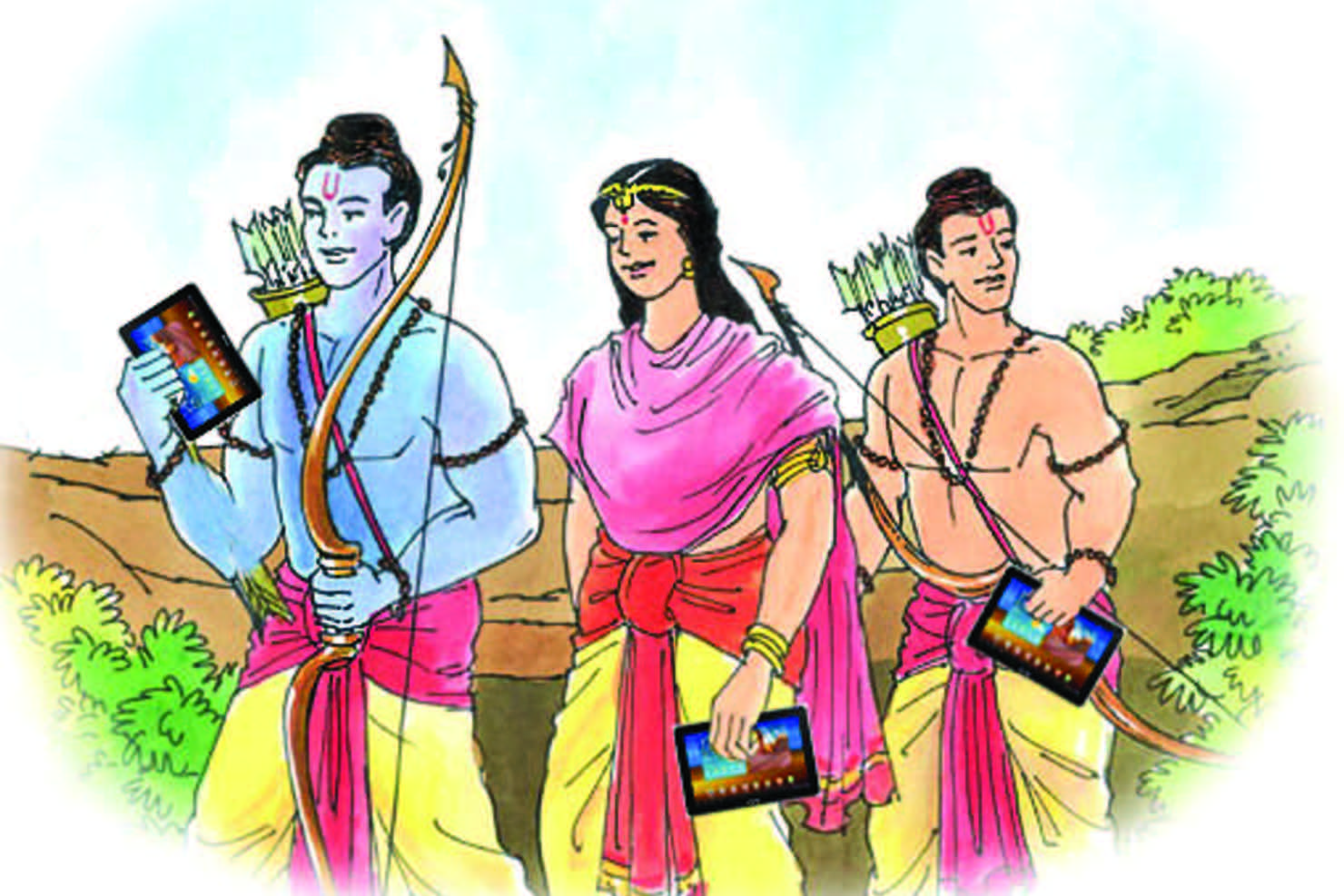
    Tears bedewed the face of Lakshman as he heard what Sita, said, And he touched the feet of Rama and in gentle accents prayed: “If my elder and his lady to the pathless forests wend,
    Armed with bow and ample quiver Lakshman will on them attend,
    Where the wild deer range the forest and the lordly tuskers roam,
    And the bird of gorgeous plumage nestles in its jungle home,
    Dearer far to me those woodlands where my elder Rama dwells,
    Than the homes of bright Immortals where perennial bliss prevails! Grant me then thy sweet permission,– faithful to thy glorious star, Lakshman,shall not wait and tarry when his Rama wanders far,
    Grant me then thyloving mandate,– Lakshman hath no wish to stay,
    None shall bar the faithful younger when the elder leads the way!” “Ever true to deeds of virtue, duteous brother, faithful friend, Dearer than his life to Rama, thou shall not to forests wend,
    Who shall stay by Queen Kausalya, Lakshman, if we both depart,
    Who shall stay by Queen Sumitra, she who nursed thee on her heart? For the king our aged father, he who ruled the earth and main, Is a captive to Kaikeyi, fettered by her silken chain,
    Little help Kaikeyi renders to our mothers in her pride, Little help can Bharat offer,
    standing by his mother’s side. Thou alone can’st serve Kausalya when for distant woods I part,
    When the memory of my exile rankles in her sorrowing heart,
    Thou alone can’st serve Sumitra, soothe her sorrows with thy love,
    Stay by them, my faithful Lakshman, and thy filial virtues prove,
    Be this then they sacred duty, tend our mothers in their woe,
    Little joy or consolation have they left on earth below!” Spake the hero: “Fear no evil,
    well is Rama’s prowess known, And to mighty Rama’s mother Bharat will obeisance own,
    Nathless if the pride of empire sways him from the righteous path,
    Blood will venge the offered insult and will quench our filial wrath!
    But a thousand peopled hamlets Queen Kausalya’s hests obey, And a thousand arméd champions own her high and queenly sway,
    Aye, a thousand village-centres Queen Sumitra’s state maintain,
    And a thousand swords like Lakshman’s guard her proud and prosperous reign! All alone with gentle Sita thou shalt track thy darksome way, Grant it, that thy faithful Lakshman shall protect her night and day,
    Grant it, with his bow and quiver Lakshman shall the forests roam,
    And his axe shall fell the jungle,
    and his hands shall rear the home! Grant it,
    in the deepest woodlands he shall seek the forest fruit,
    Berries dear to holy hermits and the sweet and luscious root, And whenwith thy meek-eyed Sita thou shalt seek the mountain crest,
    Grant it, Lakshman ever duteous watch and guard thy nightly rest!” Words of brother’s deep devotion Rama heard with grateful heart, And with Sita and with Lakshman for the woods prepared to part: Part we then from loving kinsmen, arms and mighty weapons bring,
    Bows of war which Lord VARUNA rendered to Videha’s king, Coats of mail to sword impervious, quivers which can never fail, And the rapiers bright as sunshine, goldenhilted, tempered wen, Safely rest these goodly weapons in our great preceptor’s hall, Seekand bring them, faithful brother,
    for me thinks we need them all!” Rama spake; his valiant brother then the wondrous weapons brought, Wreathed with fresh and fragrant garlands and with gold and jewels wrought,
    “Welcome, brother,” uttered Rama, “stronger thus to woods we go,
    Wealth and gold and useless treasure to the holy priests bestow,
    To the son of saint Vasishtha, to each sage is honour due, Then we leave our father’s mansions, to our father’s mandate true!”

    MOTHER’S BLESSINGS

    Tears of sorrow and of suffering flowed from Queen Kausalya’s eye,
    As she saw departing Sita for her blessings drawing nigh, And she clasped the gentle Sits, and she kissed her moistened head,
    And her tears like summer tempest choked the loving words she said: “Part we, dear devoted daughter,
    to thy husband ever true, With a woman’s whole affection render love to husband’s due! False are women loved and cherished, gentle in their speech and word, When misfortune’s shadows gather,
    who are faithless to their lord, Who through years of sunny splendour smile and pass the livelong day,
    When misfortune’s darkness thickens, from their husband turn away,
    Who with changeful fortune changing oft ignore the plighted word, And forget a woman’s duty, woman’s faith to wedded lord, Who to holy love inconstant from their wedded consort part,
    Manly deed nor manly virtue wins the changeful woman’s heart! But the true and righteous woman,
    loving, spouse and changeless wife, Faithful to her lord and consort holds him dearer than her life,
    Ever true and righteous Sita, follow still my godlike son,
    Like a God to thee is Rama in the woods or on the throne!” “I shall do my duty, mother,” said the wife with wifely pride, “Like a God to me is Rama, Sita shall not leave his side,
    From the Moon will part his lustre ere I part from wedded lord, Ere from faithful wife’s devotion falter in my deed or word, For the stringless lute is silent, idle is the wheel-less car,
    And no wife the loveless consort, inauspicious is her star! Small the measure of affection which the sire and brother prove, Measureless to wedded woman is her lord and husband’s love,
    True to Law and true to Scriptures, true to woman’s plighted word, Can I ever be, my mother, faithless, loveless to my lord?”

  • DHANTERAS THE FESTIVAL OF WEALTH

    DHANTERAS THE FESTIVAL OF WEALTH

    The festival of Dhanteras falls in the month of Kartik (Oct-Nov) on the thirteenth day of the dark fortnight. This auspicious day is celebrated two days before the festival of lights, Diwali.

    How to Celebrate Dhanteras

    On Dhanteras, Lakshmi – the Goddess of wealth – is worshiped to provide prosperity and well being. It is also the day for celebrating wealth, as the word ‘Dhan’ literally means wealth and ‘Tera’ comes from the date 13th. In the evening, the lamp is lit and Dhan-Lakshmi is welcomed into the house. Alpana or Rangoli designs are drawn on pathways including the goddess’ footprints to mark the arrival of Lakshmi. Aartis or devotional hymns are sung eulogizing Goddess Lakshmi and sweets and fruits are offered to her. Hindus also worship Lord Kuber as the treasurer of wealth and bestower of riches, along with Goddess Lakshmi on Dhanteras. This custom of worshiping Lakshmi and Kuber together is in prospect of doubling the benefits of such prayers. People flock to the jewelers and buy gold or silver jewelry or utensils to venerate the occasion of Dhanteras. Many wear new clothes and wear jewelry as they light the first lamp of Diwali while some engage in a game of gambling.

    Diwali Shopping is Completed

    Dhanteras is observed differently by different communities. It is considered to be highly auspicious day to do new purchases and investment. Most people complete the Diwali shopping on the day. The first lamps of Diwali are lit on the day. People hang up paper lanterns with festoons and sends out the message of the arrival of Diwali.

    Get-Together of All Family Members

    Dhanteras is not all about material wealth it is also a time to develop spiritual wealth and family bonding. All family members arrive at ancestral home on the day. Grand Parents and Parents wait for the day as sons, daughters and grand children arrive from distant places.

    Welcoming Goddess Lakshmi

    Goddess Lakshmi is welcomed into the house on Dhanteras day in many regions in the evening. Rangoli is drawn on doorways and tiny footprints of Lakshmi are drawn in vermilion to symbolize her arrival. Devotional songs dedicated to Goddess Lakshmi are sung in the evening. Sweets are offered to the Goddess on the day.

    Goddess Lakshmi Puja for Three Days

    In some regions Goddess Lakshmi Puja is performed for three days – Dhanteras, Choti Diwali and Diwali. On the first day, Dhanteras day, all family members especially men and women bathe after applying fragrance, medicinal herbs or preparation and fragrant oils. Murti – painting or idol or picture – of Goddess Lakshmi is washed with water and worshipped for three days commencing from Dhanteras.

    Buying Gold – Silver or Utensil

    Dhanteras – Dhan means ‘wealth’ and theras indicates ‘the thirteenth day’. In most places in North India, Gujarat and Maharashtra, Dhanteras is an auspicious day to buy precious metals like gold, platinum and silver. Women shop for gold or silver or at least one or two new utensils on the day. Precious metal bought on the day is seen as a sign of good luck.

    Earthern Diyas in the Evening

    Earthern diyas are lit on Dhanteras day in the evening to banish the evil spirits.

    Legend behind the Dhanteras and Naraka Chaturdashi:

    An ancient legend ascribes the occasion to an interesting story about the 16 year old son of King Hima. His horoscope predicted his death by snake-bite on the fourth day of his marriage. On that particular day, his newly-wed wife did not allow him to sleep. She laid out all her ornaments and lots of gold and silver coins in a heap at the entrance of the sleeping chamber and lit lamps all over the place.

    Then she narrated stories and sang songs to keep her husband from falling asleep. The next day, when Yama, the god of Death, arrived at the prince’s doorstep in the guise of a Serpent, his eyes were dazzled and blinded by the brilliance of the lamps and the jewelry. Yam could not enter the Prince’s chamber, so he climbed on top of the heap of gold coins and sat there the entire night listening to the stories and songs. In the morning, he silently went away.

    Thus, the young prince was saved from the clutches of death by the cleverness of his new bride, and the day came to be celebrated as Dhanteras. And the following days came to be called Naraka Chaturdashi (‘Naraka’ means hell and Chaturdashi means 14th). It is also know as ‘Yamadeepdaan’ as the ladies of the house light earthen lamps or ‘deep’ and these are kept burning throughout the night glorifying Yama, the god of Death. Since this is the night before Diwali, it is also called ‘Chhhoti Diwali’ or Diwali minor.

  • SRI GURU GRANTH SAHIB

    SRI GURU GRANTH SAHIB

    CONTINUED FROM PREVIOUS ISSUE

    || 1 || Pause || The Lord Himself, the Life of the World, is the Giver. He Himself forgives, and unites us with Himself. What are these poor beings and creatures? What can they speak and say? God Himself grants glory to the Gurmukhs; He joins them to His Service.

    || 2 || Beholding your family, you are lured away by emotional attachment, but when you leave, they will not go with you. Serving the True Guru, I have found the Treasure of Excellence. Its value cannot be estimated. The Dear Lord God is my Best Friend. In the end, He shall be my Companion and Support.

    || 3 || In this world of my father’s home, the Great Giver is the Life of the World. The self-willed manmukhs have lost their honor. Without the True Guru, no one knows the Way. The blind find no place of rest. If the Lord, the Giver of Peace, does not dwell within the mind, then they shall depart with regret in the end.

    || 4 || In this world of my father’s house, through the Guru’s Teachings, I have cultivated within my mind the Great Giver, the Life of the World. Night and day, performing devotional worship, day and night, ego and emotional attachment are removed. And then, attuned to Him, we become like Him, truly absorbed in the True One.

    || 5 || Bestowing His Glance of Grace, He gives us His Love, and we contemplate the Word of the Guru’s Shabad. Serving the True Guru, intuitive peace wells up, and ego and desire die. The Lord, the Giver of Virtue, dwells forever within the minds of those who keep Truth enshrined within their hearts.

    || 6 || My God is forever Immaculate and Pure; with a pure mind, He can be found. If the Treasure of the Name of the Lord abides within the mind, egotism and pain are totally eliminated. The True Guru has instructed me in the Word of the Shabad. I am forever a sacrifice to Him.

    || 7 || Within your own conscious mind, you may say anything, but without the Guru, selfishness and conceit are not eradicated. The Dear Lord is the Lover of His devotees, the Giver of Peace. By His Grace, He abides within the mind. O Nanak, God blesses us with the sublime awakening of consciousness; He Himself grants glorious greatness to the Gurmukh.

    || 8 || 1 || 18 || SIREE RAAG, THIRD MEHL: Those who go around acting in egotism are struck down by the Messenger of Death with his club. Those who serve the True Guru are uplifted and saved, in love with the Lord.

    || 1 || O mind, become Gurmukh, and meditate on the Naam, the Name of the Lord. Those who are so pre-destined by the Creator are absorbed into the Naam, through the Guru’s Teachings.

    || 1 || Pause || Without the True Guru, faith does not come, and love for the Naam is not embraced. Even in dreams, they find no peace; they sleep immersed in pain. || 2 || Even if you chant the Name of the Lord, Har, Har, with great longing, your past actions are still not erased. The Lord’s devotees surrender to His Will; those devotees are accepted at His Door.

    || 3 || The Guru has lovingly implanted the Word of His Shabad within me. Without His Grace, it cannot be attained. Even if the poisonous plant is watered with ambrosial nectar a hundred times, it will still bear poisonous fruit. || 4 || Those humble beings who are in love with the True Guru are pure and true. They act in harmony with the Will of the True Guru; they shed the poison of ego and corruption. || 5 || Acting in stubbornmindedness, no one is saved; go and study the Simritees and the Shaastras. Joining the Saadh Sangat, the Company of the Holy, and practicing the Shabads of the Guru, you shall be saved.

    || 6 || The Name of the Lord is the Treasure, which has no end or limitation. The Gurmukhs are beauteous; the Creator has blessed them with His Mercy. || 7 || O Nanak, the One Lord alone is the Giver; there is no other at all. By Guru’s Grace, He is obtained. By His Mercy, He is found.

    || 8 || 2 || 19 || SIREE RAAG, THIRD MEHL: The soul-bird in the beautiful tree of the body pecks at Truth, with love for the Guru. She drinks in the Sublime Essence of the Lord, and abides in intuitive ease; she does not fly around coming and going. She obtains her home within her own heart; she is absorbed into the Name of the Lord, Har, Har. || 1 || O mind, work to serve the Guru. If you walk in harmony with the Guru’s Will, you shall remain immersed in the Lord’s Name, night and day.

    || 1 || Pause || The birds in the beautiful trees fly around in all four directions. The more they fly around, the more they suffer; they burn and cry out in pain. Without the Guru, they do not find the Mansion of the Lord’s Presence, and they do not obtain the Ambrosial Fruit. || 2 || The Gurmukh is like God’s tree, always green, blessed with the Sublime Love of the True One, with intuitive peace and poise. He cuts off the three branches of the three qualities, and embraces love for the One Word of the Shabad. The Lord alone is the Ambrosial Fruit; He Himself gives it to us to eat.

    || 3 || The self-willed manmukhs stand there and dry up; they do not bear any fruit, and they do not provide any shade. Don’t even bother to sit near them – they have no home or village. They are cut down and burnt each day; they have neither the Shabad, nor the Lord’s Name. || 4 || According to the Lord’s Command, people perform their actions; they wander around, driven by the karma of their past actions. By the Lord’s Command, they behold the Blessed Vision of His Darshan. Wherever He sends them, there they go. By His Command, the Lord, Har, Har, abides within our minds; by His Command we merge in Truth.

    || 5 || The wretched fools do not know the Lord’s Will; they wander around making mistakes. They go about their business stubborn-mindedly; they are disgraced forever and ever. Inner peace does not come to them; they do not embrace love for the True Lord.

    || 6 || Beautiful are the faces of the Gurmukhs, who bear love and affection for the Guru. Through true devotional worship, they are attuned to Truth; at the True Door, they are found to be true. Blessed is their coming into being; they redeem all their ancestors.

    || 7 || All do their deeds under the Lord’s Glance of Grace; no one is beyond His Vision. According to the Glance of Grace with which the True Lord beholds us, so do we become. O Nanak, the Glorious Greatness of the Naam, the Name of the Lord, is received only by His Mercy. || 8 || 3 || 20 || SIREE RAAG, THIRD MEHL: The Gurmukhs meditate on the Naam; the self-willed manmukhs do not understand. The faces of the Gurmukhs are always radiant; the Lord has come to dwell within their minds. Through intuitive understanding they are at peace, and through intuitive understanding they remain absorbed in the Lord.

    || 1 || O Siblings of Destiny, be the slaves of the Lord’s slaves. Service to the Guru is worship of the Guru. How rare are those who obtain it! || 1 || Pause || The happy soul-bride is always with her Husband Lord, if she walks in harmony with the Will of the True Guru. She attains her Eternal, Ever-stable Husband, who never dies or goes away. United with the Word of the Shabad, she shall not be separated again. She is immersed in the Lap of her Beloved.

    || 2 || The Lord is Immaculate and Radiantly Bright; without the Guru, He cannot be found. He cannot be understood by reading scriptures; the deceitful pretenders are deluded by doubt. Through the Guru’s Teachings, the Lord is always found, and the tongue is permeated with the Sublime Essence of the Lord. || 3 || Emotional attachment to Maya is shed with intuitive ease, through the Guru’s Teachings. Without the Shabad, the world wanders lost in pain. The self-willed manmukh is consumed. Through the Shabad, meditate on the Naam; through the Shabad, you shall merge in Truth.

    || 4 || The Siddhas wander around, deluded by Maya; they are not absorbed in the Samaadhi of the Lord’s Sublime Love. The three worlds are permeated by Maya; they are totally covered by it. Without the Guru, liberation is not attained, and the double-mindedness of Maya does not go away. || 5 || What is called Maya? What does Maya do? These beings are bound by pleasure and pain; they do their deeds in egotism. Without the Shabad, doubt is not dispelled, and egotism is not eliminated from within.

    || 6 || Without love, there is no devotional worship. Without the Shabad, no one finds acceptance. Through the Shabad, egotism is conquered and subdued, and the illusion of Maya is dispelled. The Gurmukh obtains the Treasure of the Naam with intuitive ease. || 7 || Without the Guru, one’s virtues do not shine forth; without virtue, there is no devotional worship. The Lord is the Lover of His devotees; He abides within their minds. They meet that God with intuitive ease. O Nanak, through the Shabad, praise the Lord. By His Grace, He is obtained.

    || 8 || 4 || 21 || SIREE RAAG, THIRD MEHL: Emotional attachment to Maya is created by my God; He Himself misleads us through illusion and doubt. TO BE CONTINUED

  • PM Modi calls for end to differences on caste, creed, community basis at ‘Run for Unity’

    PM Modi calls for end to differences on caste, creed, community basis at ‘Run for Unity’

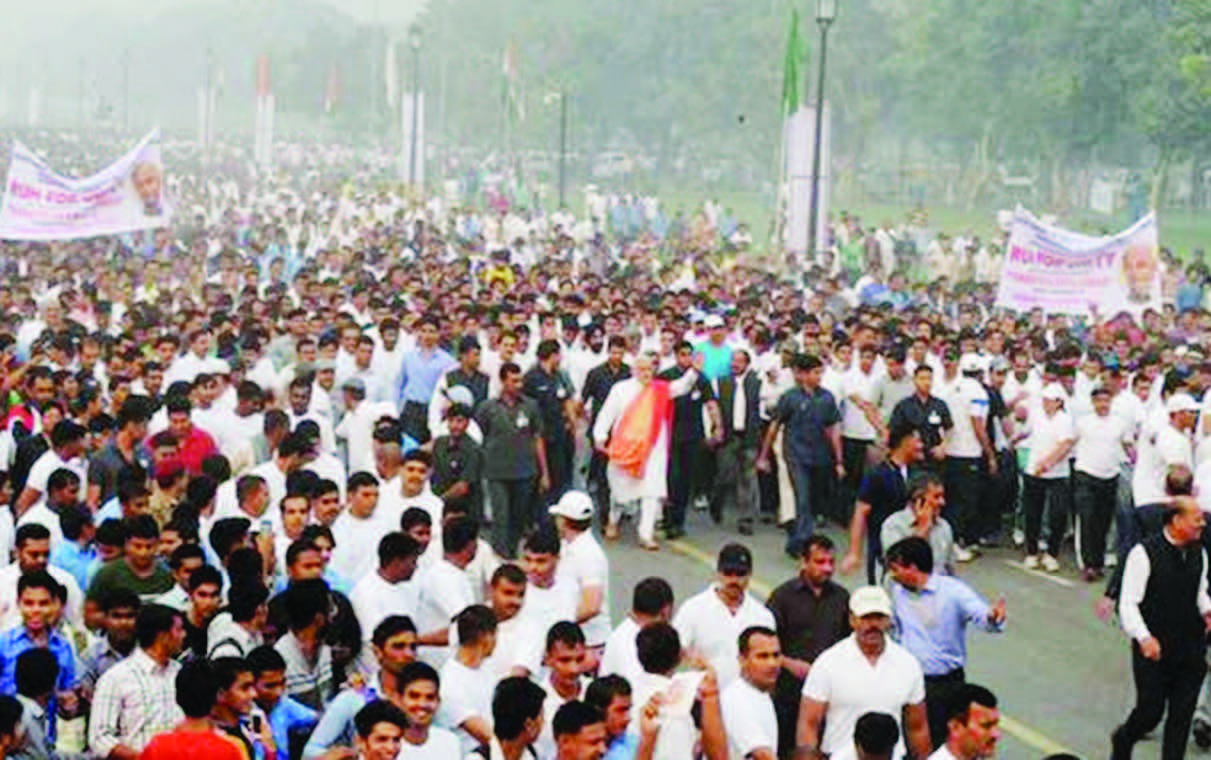
    NEW FDELHI (TIP): Prime Minister Narendra Modi flagged off the ‘Run for Unity’ here on Friday, October 31, on the occasion of the birth anniversary of Sardar Vallabhbhai Patel, which is being commemorated as Rashtriya Ekta Diwas. Modi walked along the Raj Path to India Gate after flagging of the run in which hundreds of people participated. Flanked by Union Ministers Sushma Swaraj, Naidu, Arun Jaitely among others, the Prime Minister administered the oath of unity to participants. Sportspersons like Sushil Kumar, Vijender Singh, Virendra Sehwag and Gautam Gambhir also participated in the event.

    PM Modi paid floral tributes at the statue of independent India’s first home minister at Patel Chowk, Parliament Street today morning. And thereafter addressed the participants of the ‘Run for Unity’ at Vijay Chowk.The run from Vijay Chowk to India Gate on Rajpath was flagged off at 8.15 am. Flagging off the ‘Run for Unity’ on the 139th birth anniversary of the first Home Minister of the country, PM Modi said Sardar Patel’s life was a journey of “service to the motherland” and he was “truly the architect of modern India”.”Let us not forget that a nation that disregards its history can never create one…Don’t divide history, legacy in narrow confines of ideology,” Modi said.

    “Sardar Patel’s life is a journey of deep-rooted courage, dedication & service to the Motherland. He is truly the architect of Modern India,” Modi tweeted on the occasion of Sardar Vallabhbhai Patel’s birth anniversary. “The country which forgets history can never create history, so for a country filled with aspirations, a country whose youth has dream, we should not forget our personalities of history…. country should not divide history and legacy according to our ideologies,” Modi said as he addressed the gathering on the occasion of Rashtriya Ekta Diwas– commemorating the birth anniversary of Sardar Vallabhbhai Patel. “Today is the inspiring day when we remember Sardar Patel,” he added.

    Modi said Patel devoted his life for the unity of the nation and it was unfortunate that “our very own people” were killed on his birth anniversary 30 years ago. In an apparent reference to riots which took place after the assassination of then Prime Minister Indira Gandhi in 1984, Modi said, “Patel never deviated from his vision of national unity despite facing obstacles in his political life. It is a misfortune of this country that 30 years ago on the birth anniversary of such a leader an incident which shook the unity of nation took place.” “Hamare apne logon ko maut ke ghaat utar diya gaya (our own people were killed on that day).

    That incident was not a wound on the hearts of people of a particular religion it was a dagger into the heart of thousands of years of country’s heritage and culture,” he said. He also noted that it was also the death anniversary of former Prime Minister Indira Gandhi. President Pranab Mukherjee also took the initiative to flag off the ‘Run for Unity’ from Rashtrapati Bhavan on the occasion of the birth anniversary of Sardar Patel. Union Minister Arun Jaitley remembered Sardar Patel and paid salutations. Here’s what he said: Sardar Patel guided our nation’ integration into a united, independent nation. My salutations to this great leader on his birth anniversary

  • University of Dallas Breaks Ground on New Home for the Satish & Yasmin Gupta College of Business

    University of Dallas Breaks Ground on New Home for the Satish & Yasmin Gupta College of Business

    SB Hall to be a state-of-the-art centerpiece of UD’s business school, ‘global meeting ground’ for students, faculty, staff

    IRVING, Texas (TIP): A benign Sun shone on the venue of groundbreaking celebration on Friday, Oct. 17, to officially mark the start of construction on SB Hall, the new state-of-the-art home of the Satish & Yasmin Gupta College of Businessin the University of Dallas. When completed in early 2016, the $12 million, 45,000-square-foot academic building will be the centerpiece of UD’s acclaimed Satish & Yasmin Gupta College of Business, which grants master of business administration (MBA), Master of Science, doctor of business administration and bachelor’s degrees.

    The college is accredited by AACSB International – a distinction earned by fewer than five percent of business schools worldwide – and was renamed in 2013 after Dallas-based global steel entrepreneurs Satish and Yasmin Gupta, whose gift will fund the building. The Guptas are graduates of the university’s MBA program. “We are thrilled to break ground on a wonderful new facility that will advance students to the cutting edge of technology and business,” said Satish Gupta.

    “The University of Dallas was like a new home for us when we first came to the United States from India, and we hope this new home for the college of business will play an equally important role in the lives of University of Dallas students, faculty and staff.” “It is a privilege for to us to be able to give back to the university and help empowertomorrow’s leaders,” said Yasmin Gupta. “We hope SB Hall and the college of business will become a global meeting ground for students of all cultures who will go forth into the world and have a positive impact on their communities.”

    She noted that 20 percent of the university’s business students are international, representing 40 different countries. The Guptas’ $12 million gift to build SB Hall is the single largest donation in the University of Dallas’ 58-year history. The new academic facility is designed by Perkins+Will, a national leader in higher education architecture, and is being constructed by The Beck Group, a thirdgeneration, family-owned Dallas firm. Additional funding is necessary for the purchase and installation of fixtures, furniture and computer hardware, as well as for the completion of landscaping and parking facilities.

    In total, the project will exceed $16 million, giving Dallas/Fort Worth another premier, elite higher education facility. Situated amid the rolling hills of the 222-acre University of Dallas campus in Irving, SB Hall will stand at one of the highest points in the area. When completed, the facility will support the university’s commitment to energy efficiency and green architecture. The building will incorporate classrooms on every floor, community gathering places and study lounges, and numerous meeting spaces for student groups. SB Hall will boast an abundance of natural light and interactive classrooms and is designed to evolve through the decades, allowing reconfiguration of spaces as the campus population and its needs change.

    “It’s going to be a jewel for the entire campus,” said Robert Scherer, dean of the Satish & Yasmin Gupta College of Business. “We’re so thankful to Satish and Yasmin Gupta for helping us build a facility that will have a transformative effect – not only on the college of business but on the entire University of Dallas community.” The groundbreaking of SB Hall is the latest milestone in the half-century evolution of the University of Dallas’ business program. Since the university opened in 1956, offerings in business and economics have been an important component of the curriculum. In 1966, the Braniff Graduate School was established and began offering an MBA program.

    UD later launched the Graduate School of Management. Today, the Satish & Yasmin Gupta College of Business enrolls 1,400 graduate and undergraduate students. “The groundbreaking of SB Hall marks an important new chapter in our university’s history,” said University of Dallas President Thomas W. Keefe. “I’d like to thank Satish and Yasmin Gupta for their extraordinary generosity and their steadfast commitment to the university and the entire community.” In 1981, while a business graduate student at the University of Dallas, Satish Gupta founded SB International, Inc., a privately held global steel company headquartered in Dallas.

    SB International is one of the largest suppliers of oil country tubular goods (OCTG) to the North American oil and gas industry. The company and its affiliates and subsidiaries manufacture, supply and distribute high-quality steel products, as well as invest in the global supply chain of natural resources for the energy sector. Yasmin Gupta is the company’s executive vice president. The Guptas serve Dallas/Fort Worth through various organizations related to cultural education and outreach, including the Gupta Agarwal Charitable Foundation, which Satish Gupta founded. They also support the Primary Care Clinic of North Texas and the Greater Dallas Arya Samaj Cancer Clinic, a system of non-profit health care facilities providing medical care to local uninsured adults. SB International, Inc. was founded in 1981 and is a privately held steel manufacturing and distribution company headquartered in Dallas, Texas.

    The company is primarily focused on the energy sector and is one of the largest suppliers of high-quality oil country tubular goods and line pipe to the oil and gas industry in North America, as well as an importer and exporter of specialized steel products. The company began as an exporter of metals and secondary steel, subsequently expanding into importing and exporting stainless steel products, becoming a global trader of prime products in the domestic and international markets. Today, SB International’s reach within the energy sector spans servicing the drilling industry to investing in the global supply chain of natural gas and other resources to emerging markets.

    For more information, visitwww.SBISteel.com. The University of Dallas is a leading Catholic university widely recognized for academic excellence by well-known publications, organizations and accrediting bodies. It offers distinctive individual undergraduate, graduate and doctoral programs in the liberal arts, business and ministry that are characterized by an exceptional, engaged faculty, a commitment to shaping principled, well-skilled leaders and academic rigor in the Catholic intellectual tradition. For more information, visit www.udallas.edu.

  • SIAEA president Mihir Patel admires Modi’s firm grip

    SIAEA president Mihir Patel admires Modi’s firm grip

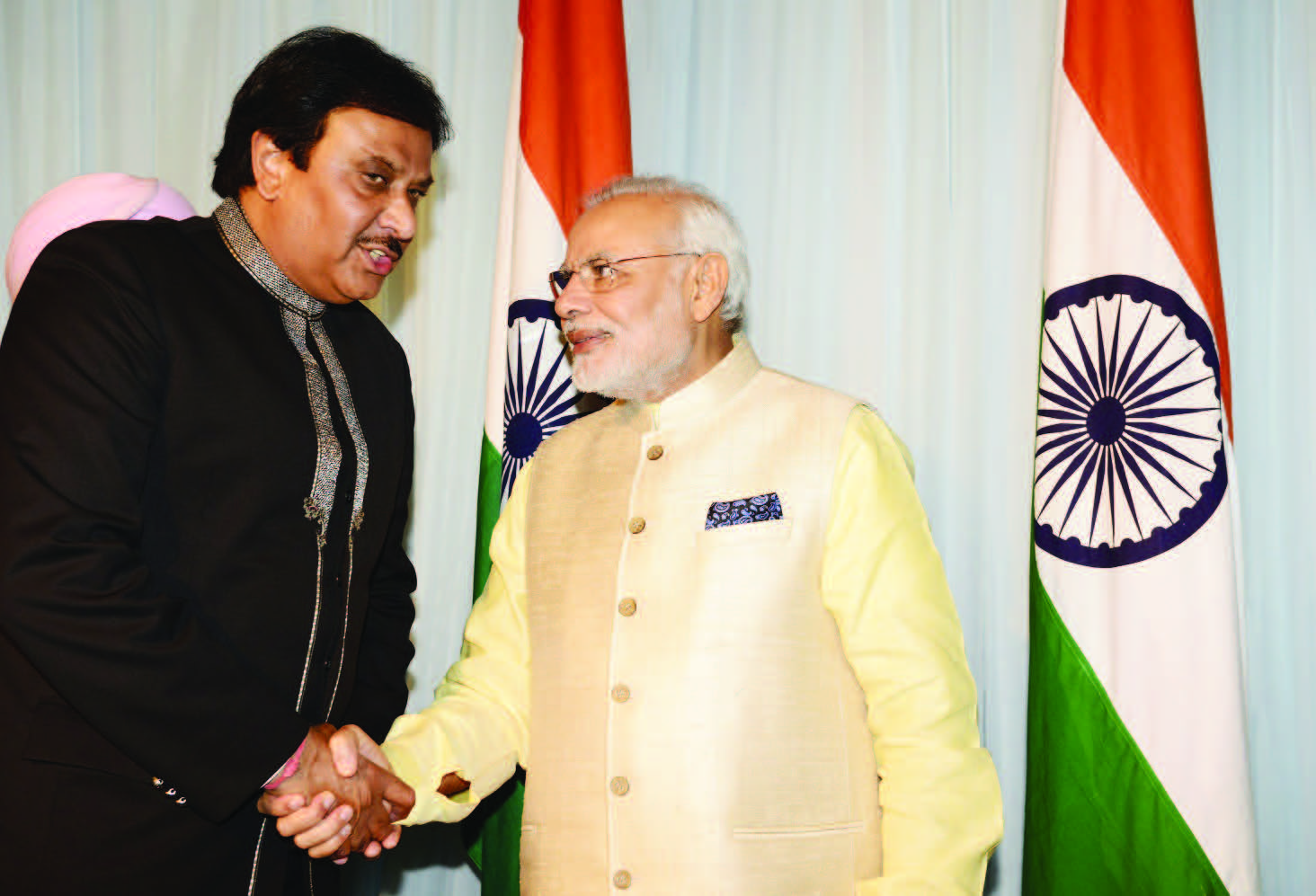
    NEW YORK (TIP): Ambassador S. Jaishankar hosted a dinner for Prime Minister Narendra Modi at The Pierre in New York City. Around 500 Indian Americans from across North America were invited to the dinner. Prime Minister Modi made it a point to meet each of the guests individually and also pose for a photograph with the guest. Obviously, the community was immensely pleased. A photograph with the Prime Minister is a treasure to be proud of. Mihir Patel, President of 1400 member strong Society of Indian American Engineers and Architects was one of the invitees to the dinner. He said he had shaken hands with many but it was quite a different experience shaking hands with Modi. He said Modi has a firm grip and he exudes warmth.

  • South Asians For Right Choice (SA4RC) Celebrates Diwali with Elected Officials

    South Asians For Right Choice (SA4RC) Celebrates Diwali with Elected Officials

    NEW YORK (TIP): The spirit of Diwali continues with South Asians for Right Choice (SA4RC) celebrating the event with several elected officials. Hosted by SA4RC (South Asian For Right Choice – Pam Kwatra, Eric Kumar & Team), Co-hosted by Congresswoman Grace Meng & Public Advocate Letitia “Tish” James, several elected officials, Organization Presidents, Community leaders and over 350 people from all over Tri- State graced the occasion at Richie Rich Restaurant in Queens.


    52
    Congresswoman Grace Meng presents a proclamation to SA4RC


    The overall event was coordinated by Eric Kumar and Flora Parekh – General Secretary for SA4RC. Elected officials and representatives included Senator James Sanders, Senator Toby Stavisky, Assembly Member David Weprin, Councilmen Peter Koo, Assembly Member Felix Ortiz, Hon. John Liu, Emily Saltzman Representative from Governor Cuomo’s office, Meena Malik Representative from District Attorney Ken Thompson’s office, Mohammad Hack Representative from Queens Borough President Melinda Katz’s office, and Dev Awasthi, Representative from NYC comptroller Scott Stringer’s office.


    53
    Congresswoman Grace Meng honors Flora Parekh


    Inspector Brian Maguire Head of Queens Narcotics and Captain Danielle Raiai, Executive officer from 102nd Pct, graced the event with their presence. Elected Officials shared their views on Diwali and the importance of South Asian community’s involvement & support in the political process. “SA4RC is a goal-based united front to deal with elected officials & candidates running for offices, become influential in legislation that affects the concerns of the South Asian community, encourage and support our fellow South Asians in running for offices and increase the number of appointed officials and enhance the coordination & bonding with our community”, said Pam Kwatra -the Founder and Chairperson. “SA4RC was created with the goal and need of providing a united front for the South Asian community to actively participate in the American governing and electoral process” – said Eric Kumar-the Co-Founder & vice Chair.


    55
    Hemant Mathur is honored by Letitia James


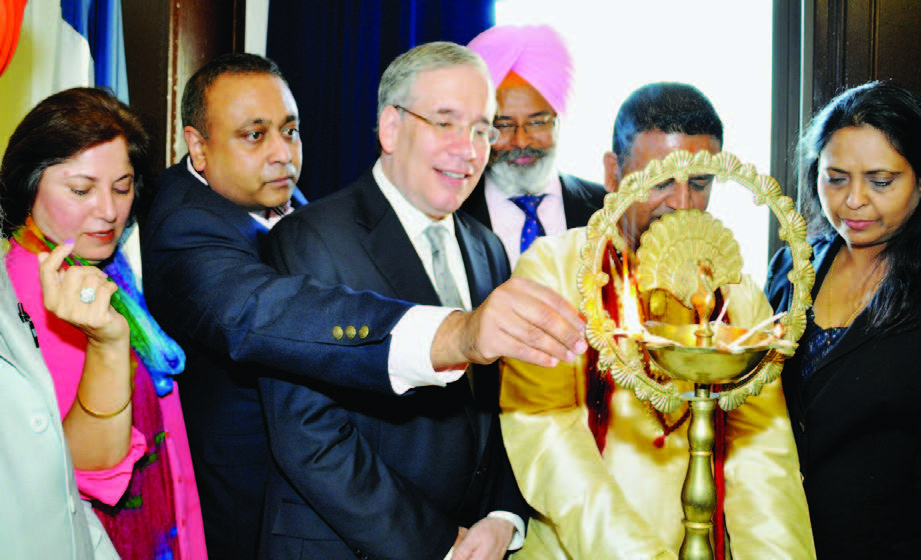
    Congresswoman Grace Meng & Public Advocate Letitia “Tish” James honored SA4RC with a Proclamation for its outstanding services to the South Asian & American community. Three distinguished community leaders – Hemant Mathur, Jarnail Singh & Flora Parekh were honored by Congresswoman Grace Meng & Public Advocate Letitia “Tish” James for their excellent contribution to community services. The festivities started with lightning of the lamps or diyas by the elected officials, SA4RC team & distinguished community leaders, followed by American Anthem & Indian Anthem by Master of Ceremonies Eric Kumar & Flora Parekh. The celebrations continued with the surprise birthday celebration of Congresswoman Grace Meng followed by several official / community leaders greeting and dancing to the tunes of professional Singer Varsha Joshi & DJ Vic.


    54
    Public Advocate Letitia James honors Jarnail Singh


    The venue was beautiful decorated with traditional diyas & rangoli by Taran Bir Kaur – Joint Secretary of SA4RC. Miss South Asia International 2014, Trisha Guduru welcomed all guests with a traditional Vermillion tika and the guests were warmly hosted by SA4RC Executive Committee members Dr. Raj Bhayani, Paresh Parekh and SA4RC Treasurer Raj Wadhwa. SA4RC Advisors Rupal Sehgal & Vishal Sharma along with a team of volunteers welcomed at over 350+ attendees at the weekday event. Richie Rich restaurant provided delicious food to all invitees. Beautiful dance number by Nikki and Simran Jagda cast a magic spell on the audience. The event ended with a Vote of thanks from Pam Kwatra and a box of delicious Diwali sweets to all attendees.

  • MANGANO ANNOUNCES DRUG ABUSE PREVENTION PROJECT FOR STUDENTS

    MANGANO ANNOUNCES DRUG ABUSE PREVENTION PROJECT FOR STUDENTS

    MINEOLA, NY (TIP): Nassau County Executive Edward P. Mangano announced, October 30, a Drug Abuse Prevention Project to promote awareness of the dangers of substance abuse and risk taking behaviors. High schools and middle schools throughout Nassau County were once again invited to create a Public Service Announcement (PSA) as part of National Red Ribbon Awareness Campaign activities. County Executive Mangano stated, “My administration is seeking to partner with local schools to build a drug and alcohol abuse-free Nassau County. I urge all middle and high school officials – principals, health teachers, film teachers, and social workers – to encourage their students to enter the contest.”

    Students should demonstrate in a 30- second video how they would express one of the following themes:

    1. End the Stigma: Challenge the stereotypes concerning substance abuse and mental illness. After all, these are illnesses like any other physical illness. Encourage classmates to seek help if they feel extremely sad, lonely and/or hopeless. Let them know it’s OK to talk to someone about it; know that you are not alone – someone cares.

    2. Promote the New 24/7 Nassau County Confidential Helpline 227- TALK: This information, resource and referral HELPLINE provides Nassau County residents a forum to discuss problems, pose questions, receive guidance concerning challenges related to mental health or substance use concerns and receive assistance with accessing help.

    3. Red Ribbon Pledge-Talk to Your Kids-Role Models: Children of parents who talk to their teens regularly about drugs are 42% less likely to use drugs than those who don’t. Yet only 25% of teens report having these conversations. Have your parents talked to you about the dangers of drugs?

    4. Love Yourself – Be Drug Free – Mindfulness: Healthy behaviors, including positive coping and timemanagement skills can help teenagers navigate through a time in life that can be confusing and filled with uncertainties, stress and risk-taking behaviors. Accepting yourself is an important part of the path to a healthy, drugfree lifestyle.

    All PSA submissions must be made by 4:45pm on Friday December 5th, 2014. Each winning entry will receive a prize, countywide recognition, and be awarded the opportunity to have their PSA showcased at Nassau County events. To participate in the PSA contest, please contact Paula Pontrelli at (516) 227-7038 or email Paula.Pontrelli@hhsnassaucountyny.us.

  • Comptroller Scott Stringer hosts Diwali Celebration

    Comptroller Scott Stringer hosts Diwali Celebration

    NEW YORK CITY (TIP): As usual, New York City Comptroller Scott Stringer hosted Diwali breakfast. With “Namaste,” and “Diwali Mubarak” Stringer tried to establish some kind of a rapport with the large gathering of Indian Americans. “It is great to be here celebrating Diwali-and to see so many familiar faces from all across the city. So let me begin by saying: welcome to the Comptroller’s office.

    This is your office. It will always be open to you.” “Thank you Neeta Bhasin for your generous introduction. And more important– thank you for serving on our MWBE advisory board.” “As many of you know, we recently created an advisory board to ensure that all city agencies reach out to minority and women-owned businesses when it comes to granting contracts. And that’s because diversity is our strength in New York City. It’s what makes us a beacon of tolerance, compassion and welcome to the entire world.” We’re meeting here in the spirit of truth and justice. And in New York City, that means justice for all. Diwali is festival of lights and also gives courage to fight against darkness no matter what kind of darkness in any facet of life but God always supports you all. So, enjoy.”

  • 1984 RIOTS: AMITABH BACHCHAN SUMMONED BY US COURT FOR ‘INSTIGATING’ VIOLENCE AGAINST SIKHS

    1984 RIOTS: AMITABH BACHCHAN SUMMONED BY US COURT FOR ‘INSTIGATING’ VIOLENCE AGAINST SIKHS

    NEW YORK (TIP): A press release issued, October 28, by the Sikhs For Justice says that Bollywood mega star Amitabh Bachchan has been summoned by Los Angeles federal court for allegedly instigating violence against the Sikh community during the November 1984 massacre. Bachchan has been accused of raising a slogan “Khooon Ka Badla Khoon” (blood for blood) on October 31, 1984 after the then Prime Minister Indira Gandhi was shot dead by her two Sikh bodyguards.


    46
    47
    Gurpatwant Singh Pannun (left) is the legal advisor of the Sikhs For Justice and Ravi Batra (right) represents the Congress Party and Sonia Gandhi in cases filed against them by the Sikhs For Justice


    The press release says, “As per the Federal Rules of Civil Procedure, Bachchan has 21 days after the service of summons to respond to the charges of human rights violations.” “If you failed to respond, judgment by default will be entered against you for relief demanded in the complaint”, reads the October 27 summon issued by the US federal court. The US district court issued the summons on a complaint filed by New York-based Sikhs for Justice (SFJ) and two alleged victims of the anti- Sikh riots. Running into 35-pages, the complaint alleges that Bachchan instigated people for violence after the assassination of the then Prime Minister Indira Gandhi.

    In the past several years, SFJ has unsuccessfully tried to drag several Indian leaders to US courts in the alleged human rights violations cases. The Indian Panorama sough the comment of attorney Ravi Batra who has represented Congress party and Sonia Gandhi in cases filed against them by the Sikhs For Justice . Here is what he says:- “This SFJ-filed case follows its tried and failed recipe of suing in United States federal courts for events that occurred on foreign soil by and between non-Americans 30 years ago. These are matters that must be dealt with in India – be it in the courts or politically – as principles of sovereignty require.What everybody agrees with is that even one death is one too many, and a Sikh death is precious.

    What disturbs me most is that Sikhs have earned a place of honor in history for their sacrifices in defense of others – every Hindu family used to have its oldest son become a Sikh – a singular act that recognized Sikhs’ necessary role as protectors of society as well as respectful honor for Sikhism and the Ten Gurus, none more than Guru Nanak and Guru Gobind Singh. In the United States,we did wrong to our Japanese-American kids born on American soil, when FDR in 1942 sent them to Internment Camps in violation of the Constitution during WWII.

    It took president Jimmy Carter and later in 1988 (46 years after the start of these Camps) president Ronald Reagan to sign a law apologizing for the wrong and paying every surviving Camp Internee $20,000. While the sum was and is paltry, given the perpetual pain and constitutional violation that lasted years, it did bring respectful closure. Congressman Mike Honda is Exhibit A. I suggest that India needs to consider steps to bring respectful closure to this painful wound in that nation’s soul, and by doing so it can benefit to the maximum with the forward-looking contributions of the Sikh community once again – isn’t that the goal of every sane human being? The land of Guru Gobind Singh owes his followers that: respect and prosperity.”

  • As nature of conflicts change, UN Women urges swifter action to protect targets of violence

    As nature of conflicts change, UN Women urges swifter action to protect targets of violence

    NEW YORK (TIP):With the worst levels of displacement since the Second World War, UN Women Executive Director Phumzile Mlambo- Ngcuka , October 28, at the UN Security Council called upon UN Member States to address the violent extremism that is on the rise and threatens the lives and futures of women and girls worldwide. Presenting the UN Secretary-General’s Report on women, peace and security, she emphasized a shift in the nature of conflict, from Iraq to Mali, whereby women and girls are being specifically targeted by extremists.Ms. Mlambo-Ngcuka further called attention to the fact that displacement is exacerbating conflicts and is compounded by the number of ongoing crisis situations, including in Afghanistan, Central African Republic, South Sudan and others.

    She highlighted the need to accelerate efforts to achieve gender equality, saying “…empowered women are the best hope for sustainable development, following conflict.” The crises in Afghanistan, Syria, and Somalia created more than half of the 10.7 million persons displaced by conflict or persecution in 2013. The theme for this year’s Security Council Open Debate therefore focused on the situation of women refugees and displaced persons around the world.

    Next October, the Security Council will conduct a High-level Review of the women, peace and security agenda. In his message to the Council, the UN Secretary- General welcomed the Global Study on the implementation of resolution 1325, led by a high-profile Advisory Group, which will inform next year’s Security Council debate. 2015 marks the 15th anniversary of the adoption of resolution 1325, the 20th anniversary of the Beijing Declaration and Platform for Action, and the start of a new global development agenda building on the Millennium Development Goals.

  • Prakash Patil: New Jersey’s Young Rising Star

    Prakash Patil: New Jersey’s Young Rising Star

    NEW YORK (TIP): Who says miracles don’t materialize? Prakash Patil is the true living example of passion, commitment, humanity and inspiration to the young generation. Talented all-rounder and handsome Prakash Patil from New Jersey holds the title of MR.INDIA GALAXY 2014 in the recently concluded pageant, after beating 15 semi-finalists. Earlier Prakash has won several other titles such as International Model of the year from New York Fashion Awards, Young Entrepreneur of the Year held at the United Nations, Mr. South Asian Prince USA 2013, Mr. White Star 2013 at President Obama’s Inaugural 2013, Winner of Jewel of India International Calendar hunt 2013, Winner of B4U Channel Reality Show 2012, Mr. Prince USA 2012.

    With so many feathers already donning his cap, it gives us a tremendous pride, as Prakash climbs a steady path to his success. Prakash is a package of talent and a winner all the way. One can see him walk the ramp at several Fashion events in New York city. He had the honor of walking for the top designers at the Mercedes Fashion Week 2014 in New York city.

    He has had the honor to grace several high profile events in New York, New Jersey and Pennsylvania as a special guest. Besides being a model, Prakash has also tried his hands at acting. He has acted as the lead actor in the film named ‘The Other Side of New York’, which won an award at the Colorado International Film Festival 2014 for Best Dramatic Director. The movie was also showcased at the Golden Door International Film Festival 2014 and The Cinema Fast Film Festival in Mexico.

    With a Bachelor’s degree in Engineering, Masters in Business Administration, and Masters in Managing Information Technology in United States. Prakash’s journey was far from being easy, especially things that he has accomplished in such a short time. It is extremely commendable to see this dynamic young man achieve milestones of success beyond imagination. Currently, Prakash works as an IT engineer for a company in New York. The humble and soft-spoken Prakash gives all the credit of his success thus far, to his parents who live in India. Prakash adds, “I wish to thank everyone for giving me such a great opportunity to showcase my talent across the globe.

    It is a great moment of glory as I am honored at such a prestigious event in front of such illustrious guests. I look forward to using this opportunity to achieve greater heights and giving back to those who have showered their love on me and believed in me. I will utilize my achievements for the welfare of people in the world and towards world peace”.

    We sincerely wish this young shining star the best in all his endeavors. You can find Prakash on most of the social networking sites:
    https://www.facebook.com/Prakash.Patil.model
    https://www.facebook.com/MrIndiaGalaxyPrakashPatil

    Instagram: ModelPrakash For more information or interviews with Prakash Patil, contact Cineviews Media & PR at nutan@cineviews.com

  • Professor beheaded in what witnesses first thought was Halloween prank

    Professor beheaded in what witnesses first thought was Halloween prank

    NEW YORK (TIP): A man with a history of psychiatric problems beheaded his mother in her Long Island, N.Y., apartment late Tuesday, October 28 and then dragged the body and head out onto a street, where onlookers initially thought they were witnessing a macabre Halloween prank, police and witnesses said. Patricia Ward, 66, was killed inside her apartment by her son, 35-year-old Derek Ward, who jumped in front of a commuter train near the Farmingdale, N.Y., moments later, killing himself, Nassau County police said. Derek Ward was arrested previously for gun possession and criminal mischief and also had a psychiatric history going back about 10 years. Police sources told Newsday that he also had a “drug problem, apparently.” Patricia Ward was identified by Farmingdale State College as a longtime professor who taught language arts at the university.

  • Emergency was a blunder; Operation Bluestar an unmitigated disaster

    Emergency was a blunder; Operation Bluestar an unmitigated disaster

    Operation Bluestar was grievously handled. Everything that could go wrong did go wrong. I know that Indira Gandhi’s instructions were disregarded by those who in Amritsar were in charge of the operation. The Golden Temple complex could have been cordoned, electric and water supply could have been switched off. Instead tanks entered the complex. The rest is too well known. It cost Indira Gandhi her life. The Sikh community both in India and abroad was not only outraged, it was deeply hurt, deeply offended”, says the author.

    What was I doing in the morning of 31st October 1984? I was getting ready to leave for Bharatpur to do some politicking. The RAX telephone rang. It was H.Y. Sharada Prasad, “Natwar, this is the worst day of our lives. PM has been shot. Come over to No 1 Akbar Road, as soon as you can.” I asked a dazed Sharada, “What happened. Who shot her?” “She was walking from 1 Safdarjung Road to 1 Akbar Road to be interviewed by film actor and producer Peter Ustinov.

    When she was walking on the glass “river” (presented by the government of Czechoslovakia), which led to 1 Akbar Road, she was shot by the two Sikh guards at the gate leading to 1 Akbar Road. I heard the shots, but thought it must be someone playing with fire crackers… it was over in a few seconds.” I walked up to the gate to see the spot where she had fallen. Her blood had not dried. Her spectacles, chappals and bag were still lying on the glass river. Peter Ustinov’s camera men had recorded the sound of the shots. It took Sharda and me a long time to persuade Ustinov not to use that portion of the film. He eventually agreed.

    I met him in 1997 at a seminar in Valencia, Spain, I reminded him our conversation on 31.10.1984. “I remember it well. I never used the ‘shots’ recording.” She was 19 days short of her 67th birthday on that fateful and searing day. Even after three decades her fame and name, her achievements, her qualities as a leader have not been forgotten. For me, it is not easy to sum up her life objectively. My affection and respect for her have not diminished. In more ways than one she enriched, uplifted my life. She broadened the contours of my vision. To some readers this may sound as crass sentimentalism and melodramatic. I worked in her secretariat for five years, 1966-71, meeting her every other day, sometimes three times a day.

    Jawaharlal Nehru never faced the challenges she did. Nehru’s leadership was never questioned for 15 years. In the last two years of his life he encountered serious dissatisfaction in the Congress party. Indira Gandhi’s road to power between 1966 and 1969 was strewn with boulders. The syndicate was breathing down her neck. Several were patronising and treated her as the daughter of Nehru and not as the Prime Minister. Krishna Menon referred to her as “that chit of a girl”. Ram Manohar Lohia was vicious.

    In Parliament she was nervy, tense and diffident. She was not comfortable in the Cabinet or in meetings with her elderly colleagues – Kamraj, Nijilingappa, Morarji Desai, S.K Patil, Swaran Singh, Y.B Chavan and Jagjivan Ram. They too felt uneasy with a woman Prime Minister. They did not take her seriously. Later they would. Gradually her diffidence and shyness began to erode. By 1970 she had come to grips with her job and responsibilities. The jeering stopped. The cheering began. She had a flair for foreign affairs. Her international image grew by the week.

    At the UN she was heard with respect. At NAM and Commonwealth summits, she often stole the show. In 1983 she was the chairperson of the NAM and Commonwealth summits, both held in New Delhi. She strengthened the Non- Aligned Movement – “the greatest peace movement in the world”, she called it. At the Commonwealth Summit she produced awe in Margaret Thatcher. I one day asked her what she thought of the Iron lady. Her response: “What Iron lady. I saw a nervous woman sitting at the edge of the sofa.” She wrote an article in the October 1972 issue of “Foreign Affairs” magazine.

    She wrote, “India’s foreign policy is a projection of the values which we have cherished through centuries as well as our present concerns.We are not tied to the traditional concepts of a foreign policy, designed to safeguard overseas possessions, investments, the carving out spheres of influence and the creation of cordons sanitaires.We are not interested in exporting ideologies.” Her finest hour came in 1971. She created a new nation – Bangladesh. She isolated Nixon and Kissinger, won over the Western media and liberal members of the US Congress.

    Teddy Kennedy was one of them. We now come to the other side of the Indira Gandhi coin. The Emergency was a blunder, Operation Bluestar an unmitigated disaster. In the words of P.N. Dhar, her Principal Secretary for half a decade, “the Emergency changed the basic relationship between the citizen and the state and indeed threatened to change the character of the Indian State.” During the Emergency I was the Deputy High Commissioner in London. There it was impossible to ‘sell’ the Emergency. I wrote to the PM, “I know what to say to our critics but do not know what to say to our friends”.

    Untypically she did not respond. Professionally it was the duty of High Commissioner B.K. Nehru and myself to defend the Emergency.We suppressed our conscience. Operation Bluestar was grievously handled. Everything that could go wrong did go wrong. I know that Indira Gandhi’s instructions were disregarded by those who in Amritsar were in charge of the operation. The Golden Temple complex could have been cordoned, electric and water supply could have been switched off. Instead tanks entered the complex. The rest is too well known. It cost Indira Gandhi her life.

    The Sikh community both in India and abroad was not only outraged, it was deeply hurt, deeply offended. If one were to take an overall view of Indira Gandhi’s life and labours, she would still rank very high in the Prime Ministerial pecking order. Even today her admirers outnumber her detractors. I remain an admirer. (The author is a diplomat turned politician) (British English. Courtesy The Tribune, Chandigarh)

  • Punish the Guilty of 1984 Anti-Sikh Riots NOW

    Punish the Guilty of 1984 Anti-Sikh Riots NOW

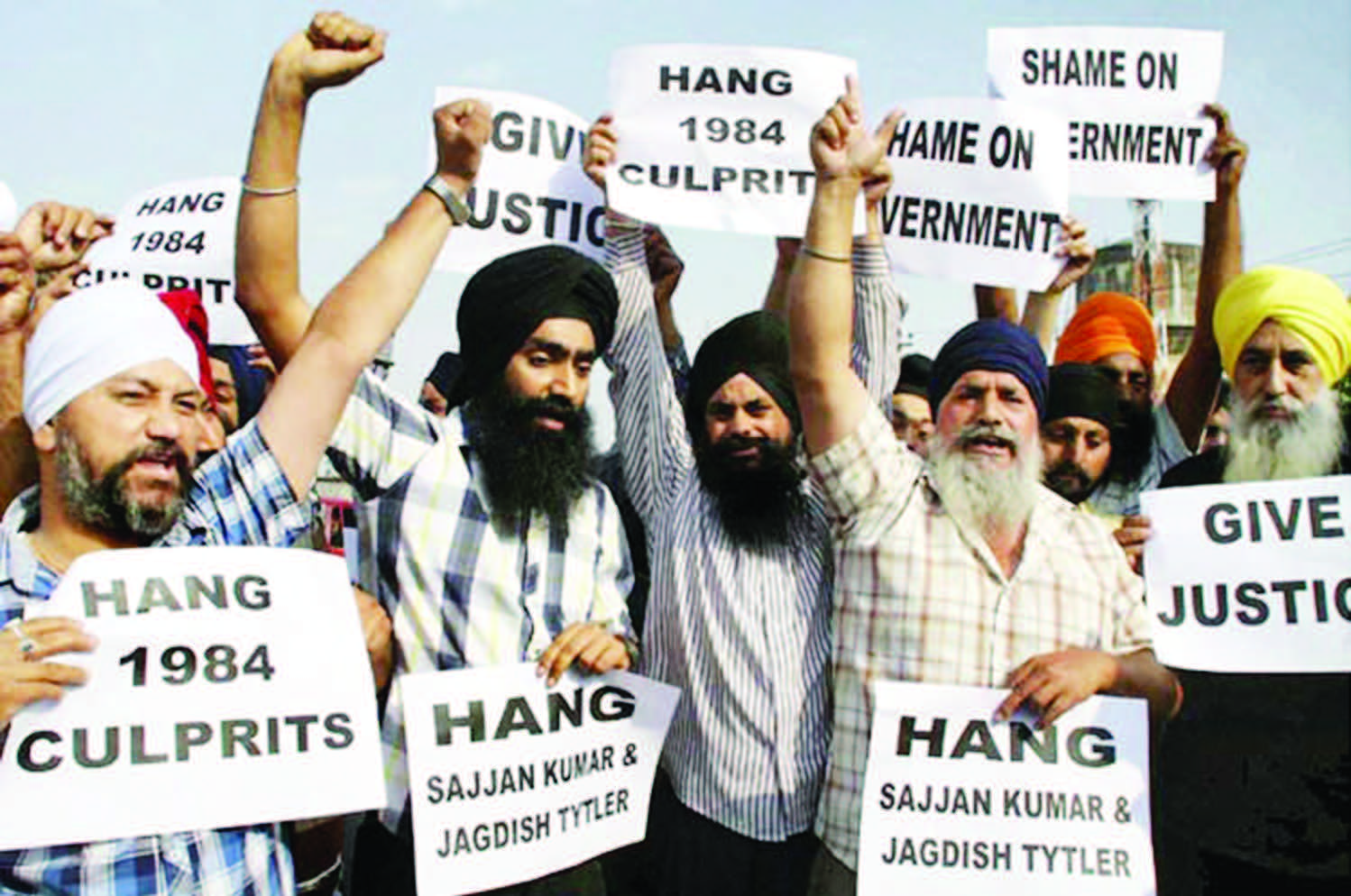
    Narendra Modi government on October 30 announced compensation of INR 500,000 each to be given to the kin of 3325 people killed during anti-Sikh riots in the national capital in 1984. What Modi seems to be forgetting is that no compensation amount will satisfy the community. What the community has been demanding is punishment for those who were guilty of instigating and conducting violence against the Sikhs. It is a matter of national shame that 30 years have gone by since the worst massacre took place in 1984 and despite some being found to be responsible for the heinous crimes, they still manage to roam around freely.

    It hurts the community that those who deserved to be hanged for their crimes are given positions of power. The community feels it is being mocked at. It is natural for it to fume. One had thought the new BJP government will do justice to the Sikhs but it has given the community a rude shock and the community is terribly disappointed. The announcement of compensation of INR 500,000 is not likely to make the community happy. Money is important for survival, no doubt. But then money is not all. A proud community like the Sikhs will prefer honor and dignity to material gains.

    I am reminded of a journalist’s recent comment on delay in bringing the culprits to book and the community’s disillusionment with the successive governments. Mr. Mohinder Singh says, “Thirty years after the anti-Sikh riots that raged in Delhi, there are no easy answers to these questions: What should the Sikhs do? Should they forget the past? Should they live in the past? Or should they live with the past?” One would only hope, a sensible approach to the issue would be adopted by Modi government to remove the grievance of the community, or else, the community’s alienation will deepen and may pose a formidable challenge to the unity and sovereignty of the Indian nation. Punish the guilty NOW, without any further delay.

  • Reliving the Memories of 1984

    Reliving the Memories of 1984

    Thirty years after the anti-Sikh riots that raged in Delhi, there are no easy answers to these questions: What should the Sikhs do? Should they forget the past? Should they live in the past? Or should they live with the past?

    By Mohinder Singh

    Let me begin my story from my diary of 1984, to be precise, that of March 24. On that day I escorted my teacher Dr Ganda Singh to the Rashtrapati Bhawan where he was to be conferred the Padma Bhushan by Giani Zail Singh, the then President of India. In the glittering ceremony, I noticed Mrs Indira Gandhi, the Prime Minister, Members of her Cabinet and other dignitaries and distinguished citizens who were to be honoured for their contribution in different fields. After the ceremony when we were going out for tea, Dr Ganda Singh, who had some eye problem, banged into the glass door of the Ashoka Hall and his Padma medal and spectacles fell on the floor. Rajiv Gandhi, who was walking beside him, quickly picked up the two items and passed them on to him and gently escorted him till the tea was over.

    Prominent Sikhs

    Later that evening, the Guru Nanak Foundation had arranged a reception for Dr Ganda Singh. It was attended by almost all prominent Sikhs in the national capital with the late Khushwant Singh as the main speaker. While writing my diary for that day, I felt proud that the Sikh community, which constituted less than 2 per cent of the Indian population, has done so well in independent India. Some of the prominent names that came to my mind were those of Baldev Singh, the first Defence Minister of independent India, Surjit Singh Majithia, Deputy Defence Minister of India, Swaran Singh as the Minister for Defence and later External Affairs, Hukam Singh and Gurdial Singh Dhillon as Speakers of the Lok Sabha, Buta Singh, Minister for Parliamentary Affairs, Sport, Works and Housing, Dr Manmohan Singh as Governor of the Reserve Bank of India, Arjan Singh and Dilbagh Singh as Chiefs of the Indian Air Force and many Sikhs in other important positions.

    In spite of talk of grievances, some real and some imaginary, Sikhs were doing well in all walks of life, be it business, sports or services. Little could I imagine that this best period in the history of the Sikh community would turn out to be the worst because of Army action in the Golden Temple, killing of Prime Minister of India, Indira Gandhi by two of her Sikh bodyguards and countrywide anti- Sikh riots that followed. On that fateful day, I happened to be in Chandigarh for an official meeting where we got to know that Prime Minister Indira Gandhi was dead though a formal announcement was made late that evening.

    While I managed to reach my home in Hauz Khas late that evening, what came as the first shock was to see the Green Park gurdwara set on fire. My family heaved a sigh of relief when I knocked at the door. In that group of 40 houses, I was the only turbaned Sikh. My immediate neighbours, all Hindus, were more worried about my safety than me. On the top floor, a young boy had stocked soda water bottles and stones to keep the mob away in case of any attack. Another neighbour who carried his service revolver offered to stay with our family the whole night to ensure that we were duly protected.

    Alarming situation

    On November 1, when violence spread throughout the city as a result of organised gangs taking over command of the anti-Sikh pogrom, the situation became rather alarming. I was advised by my teacher Prof Bipan Chandra to move to his home in the JNU campus. I was told that the mob was checking all vehicles at the IIT crossing, looking out for Sikhs and it was advisable for me to hide myself in a blanket and lie down in the leg space in the Ambassador car, with my wife and daughters occupying the backseat. My wife was advised to camouflage her identity by changing her dress.

    It was for the first time that I found my distinct identity, of which I always felt proud, had become my liability in spite of my opposing militant activity in Punjab and fighting the ideology of hate throughout my teaching career. My daughters who faced this trauma for the first time could not understand as to what was happening in a secular country. My younger daughter asked as to who had killed the Indian Prime Minister. Before I could answer, Bipan Chandra replied, “Ideology of hate”. She was too young to understand that it was this ideology which had led to the division of India and, later, the killing of Mahatma Gandhi who was opposed to any division on communal lines.

    That night I missed my sleep and kept on thinking how political parties use the ideology of hate for electoral gains. What disturbed me the most was the fact that Sikhs outside Punjab, who for their own reasons did not support the militant movement in Punjab, had become victims of mob violence for no fault of theirs.

    Communal politics

    In spite of my best efforts, I could not reconcile to the overnight change of the Sikh image from trusted lieutenants of the Indian State to a potential threat to its unity. I regretfully recalled how Punjab politics was communalised for electoral gains, with disastrous consequences for the Sikh community and the Indian State. The next day we heard about the violence spreading to different parts of Delhi and other parts of the country and the police and state machinery mutely watching this carnage. Later in the evening, Gopi Arora, a senior civil servant, asked Bipan for his advice as to how to check the growing violence.

    Bipan’s answer was simple, “You control the media. Let the TV and radio keep on announcing rioters being killed by the police.” But HKL Bhagat, who was the Minister for Information and Broadcasting, had other plans up his sleeve. On the contrary, he wanted to use the media to create a mass hysteria against the Sikhs, with an eye on the forthcoming Parliamentary elections. The Mishra Commission noticed that when Mrs Gandhi’s dead body was lying in state in Teen Murti, a group of people walking passed the body raised slogans, “Khoon ka Badla Khoon,” which was duly covered by the country’s only television channel, Doordarshan, and repeated 18 times for obvious reasons.

    Attacks and pelting stones on the cars in the entourage of the President of India, who rushed to the AIIMS, soon after his return from Yemen, and other incidents of October 31, 1984, are mentioned by the Nanavati Commission as “first signs of public resentment resulting in an angry outburst in Delhi,” but what happened for three consecutive days and nights between November 1 and November 3, in the national capital in the presence of heads of many countries who had joined in the national mourning, could not have happened without a free hand given to the organised gangs consisting of party workers and criminal elements from different political outfits.

    Gangsters armed with weapons of destruction like pistols, petroleum and other inflammable materials surrounding hapless Sikhs inside their localities and houses points toward an organised pogrom. According to the Mishra Commission, “If troops had been called on the morning of November 1, 1984 and Army columns had been moving in the streets properly, lives of at least 2,000 people could have been saved.” According to Nanavati Commission’s report, “There is enough material on record to show that at many places police had taken away their (Sikhs) arms and other articles with which they could have defended themselves against the attacks by the mobs.” According to the Nanavati Commission, at some places mobs indulging in violence were allowed to use DTC buses or other vehicles belonging to the State Transport Corporation.

    The modus operandi of the attackers was almost the same in various localities. The attackers “either came armed with weapons and inflammable materials like kerosene, petrol and some white powder or were supplied with such materials soon after they were taken to the localities where the Sikhs were to be attacked.”…. “Male members of the Sikh community were taken out of their houses. They were beaten first and then burnt alive in a systematic manner. In some cases, tyres were put around their necks and then were set on fire by pouring kerosene or petrol over them. In other cases, a white inflammable powder was thrown on them which immediately caught fire. This was a common pattern which was followed by the big mobs which had played havoc in certain areas.”

    The silver lining in the otherwise dismal picture was the role played by the wellmeaning members of the civil society and organisations like the People’s Union for Civil Liberties (PUCL), People’s Union for Democratic Rights (PUDR) and the Sikh Forum. At that difficult moment when most of the Sikhs had taken shelter in the homes of non-Sikh neighbours and friends and poor widows and children taken to relief camps, it were mainly non-Sikhs, especially Mrs Mohini Giri and her colleagues from the Guild of Service and War Widows Bhavan, who rushed relief to Teliwara and other areas in East Delhi which were not easily accessible. Faculty and students of the JNU played a positive role in coming out in open defence of the hapless Sikhs, who had become objects of hate and ridicule overnight. It was only appropriate that when Sant Harchand Singh Longowal came to visit Delhi to express sympathy with the members of the Sikh community, the first thing he did was to visit the JNU, wherein he started his speech by thanking non-Sikh sisters and brothers for saving many Sikh lives.

    While immediate relief was provided to the victims of the riots in different camps, no long-term strategy was planned for their emotional and economic rehabilitation and integration in the mainstream. VP Singh, who became the Prime Minister of India in 1989, in his wisdom provided small flats to the widows of 1984 riots in Tilak Vihar, Sector 16-J, Rohini and Garhi in East of Kailash, thus giving the national capital the dubious distinction of having “widows colonies” to be used as a votebank during every election. In spite of nine inquiry commissions, during the Congress, Janata Dal, NDA and UPA rule at the Centre, justice has eluded the Sikhs. This shows that the State is either unequipped or unwilling to punish the guilty.

    In spite of the Mishra Commission fixing the responsibility of the Delhi carnage on Congress workers and criminal elements and giving a clean chit to Congress leaders, popular Sikh memory will neither forgive nor forget HKL Bhagat, Sajjan Kumar, Jagdish Tytler, Dharam Das Shastri and others for their role in the anti-Sikh riots. Now that history has come full circle – from November 1984, when the Sikhs were hiding their identity and taking shelter in safe havens – to May 2004 when Dr Manmohan Singh, a turbaned Sikh, was elected to highest executive office of the Prime Minister of the world’s largest democracy: What should the Sikhs do? Should they forget the past? Should they live in the past? Or should they live with the past? These are the questions to which there are no easy answers. -The writer is Professor of Eminence, Punjabi University, Patiala

    Violence unleashed

    * After the assassination of Indira Gandhi on October 31, 1984, by two of her Sikh bodyguards, anti-Sikh riots erupted on November 1, 1984, and continued in some areas for days, killing more than 3,000 Sikhs.
    * Sultanpuri, Mangolpuri, Trilokpuri, and other Trans-Yamuna areas of Delhi were the worst affected.
    * Mobs carried iron rods, knives, clubs, and combustible material, including kerosene and petrol.
    * The mobs swarmed into Sikh neighbourhoods, and arbitrarily killed any Sikh men or women they could find.
    * Their shops and houses were ransacked and burned down.
    * In other incidents, armed mobs stopped buses and trains, in and around Delhi, pulled out Sikh passengers and either lynched them or doused them with kerosene before burning them alive.
    * Others were dragged out from their homes and hacked to death with bladed weapons. (British English. Courtesy The Tribune, Chandigarh)

  • Bottles, eggs greet Bilawal at London’s Kashmir rally

    Bottles, eggs greet Bilawal at London’s Kashmir rally

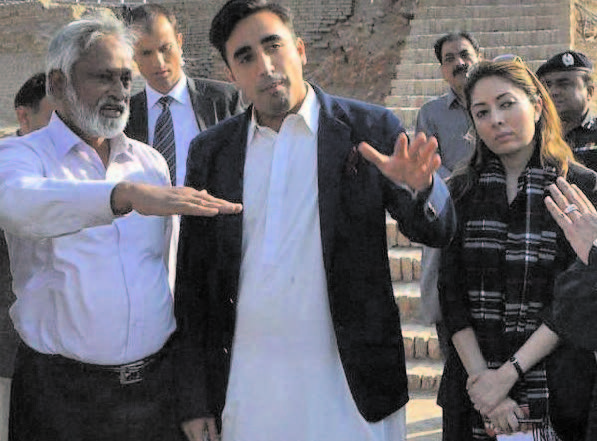
    LONDON (TIP): Pakistan People’s Party chief Bilawal Bhutto Zardari was forced to leave a ‘Million March’ to protest “rights violations” in Kashmir here on Sunday after bottles, eggs and cans were thrown at him. Police had to whisk him away to safety telling him his life was in danger. “This march was to be about Kashmir and for the welfare of Kashmiris. Bilawal has no business being here,” said a protester, who had travelled from Derby for the rally.

    Chaos followed as soon as Bilawal, the son of slain ex-Prime Minister Benazir Bhutto, appeared on the makeshift stage at Trafalgar Square. Rival groups in the crowd came to blows. The organizers failed to quell a few hundred flag-waving protesters as they booed and abused Bilawal, who had provoked outrage in India by vowing to make Kashmir part of Pakistan at a rally in Multan recently. The rally was billed as a ‘Million March’ from Trafalgar Square to Downing Street, but it failed to live up to expectations in terms of numbers. Police allowed a small group to march to 10 Downing Street to submit a petition.

    Ex-Pakistan Occupied Kashmir Prime Minister Sultan Mehmood Chaudhry had organized the protest to push Britain to force India resolve the Kashmir dispute with Pakistan. “The purpose of the rally was to exert pressure on the Indian government to resolve Kashmir issue and stop human rights violations in the occupied Kashmir,” said Chaudhry. He asked British parliamentarians to raise the issue of independent Kashmir in the British parliament. “The people of Kashmir have been struggling for many years to have the right to their own destiny,” he said.

    “Imagine Scotland being partitioned into two parts with one being given independence and the other half occupied by British troops at a ratio of one soldier for every two civilians, with restrictions on all their movements.” He said Kashmiris have always rejected the idea of having a border separating the two sides of the divided state. The rally went ahead even as external affairs minister Sushma Swaraj asked British foreign secretary Philip Hammond to stem the “anti-India march” as the two met for their first meeting last week. Swaraj had taken up the issue with Deputy Prime Minister Nick Clegg as well. A British foreign office official assured his country would not mediate over Kashmir. But he added Britain cannot stop the rally provided the protesters do not break the law.

    “People in the UK have the right of expression and right to protest.” Clegg maintained Kashmir can only be resolved by India and Pakistan through dialogue and clarified the UK does not intend to be a mediator. “This is a long-running conflict, and we stand by to help; but ultimately it can be resolved only by the two countries in question.”

  • Pakistan second-worst country in gender equality

    Pakistan second-worst country in gender equality

    ISLAMABAD (TIP): Pakistan has emerged as the world’s second-worst country in terms of gender equality, according to the annual Global Gender Gap Report published by the World Economic Forum. The report, published on Tuesday, measures the size of gender inequality in 142 countries in areas of economic participation and opportunity (salaries, participation and highly-skilled employment), educational attainment (access to basic and higher levels of education), political empowerment (representation in decision-making structures), health and survival (life expectancy and sex ratio).

    In terms of equal economic participation and opportunity for women, Pakistan is ranked 141, followed by Yemen, 132 in empowerment terms of education attainment, 119 for health and survival and 85 for political empowerment. Since 2006, when the WEF first began issuing its annual Global Gender Gap Reports, women in Pakistan have seen their access to economic participation and opportunity gone down to 141 from 112. It maintains the position of second to last ranking for the third year. India’s ranking fell from 101 out of 136 countries last year to 114 out of 142 countries this year.

    According to the report, Iceland tops the list with the most equitable sharing of resources among men and women, followed by Finland, Norway, Sweden and Denmark in the top five spots. The other countries in the top 10 are Nicaragua, Rwanda, Ireland, the Philippines and Belgium.The United States climbed three spots from last year to 20th, after narrowing its wage gap and hiking the number of women in parliamentary and ministerial level positions.WEF said that the worldwide gender gap in the workplace had barely narrowed in the past nine years. While women are rapidly closing the gender gap with men in areas like health and education, inequality at work is not expected to be erased until 2095, the report added.

    “Based on this trajectory, with all else remaining equal, it will take 81 years for the world to close this gap completely,” the WEF said in a statement.

  • Afghan presidential rivals sign pact for ‘unity government’

    Afghan presidential rivals sign pact for ‘unity government’

    KABUL (TIP): Afghanistan’s rival presidential candidates signed a deal to share power in a unity government on Sunday, capping months of turmoil over a disputed election that destabilised the nation at a crucial time as foreign troops prepare to leave. Ashraf Ghani, a former finance minister who will be named president under the deal reached on Saturday night, embraced rival Abdullah Abdullah after they signed the agreement. The ceremony at the presidential palace, still occupied by outgoing leader Hamid Karzai, was broadcast live on television. Karzai spokesman Aimal Faizi said Ghani is expected to be sworn in as president within a week. He said one of Ghani’s first acts would be to sign a long-delayed bilateral security agreement with the United States to allow a small force of foreign troops to remain in Afghanistan after 2014.

  • Last king of Nepal suffers heart attack

    Last king of Nepal suffers heart attack

    KATMANDU: Doctors say Nepal’s former king has suffered a heart attack and has been hospitalized. Dr Bharat Rawat at the Norvic Hospital in Katmandu said Gyanendra Shah was brought to the hospital Saturday night. He was recovering in the intensive care unit and was out of danger. Hundreds of his supporters crowded the hospital on October 22. Gyanedra was the last king to rule Nepal before the Constitution Assembly abolished the centuries-old monarchy from the Himalayan nation and turned the country into a republic.

  • Bangladesh court commutes top Islamist’s death sentence

    Bangladesh court commutes top Islamist’s death sentence

    DHAKA (TIP): Bangladesh’s Supreme Court on Wednesday commuted the death sentence of Delwar Hossain Sayedee, a top Islamist preacher whose sentencing last year triggered the deadliest political violence in the country’s history, , to life term. In a surprise ruling, the court said Sayedee should spend “the rest of his natural life” in jail, attorney general Mahbubey Alam said. “We had expected that the court would uphold his death sentence,” Alam told reporters. Lawyers for Sayedee said they were not satisfied with the court’s ruling on the 74-year-old, who was convicted last year on eight counts including murder, rape and persecution of the country’s minority Hindu community. “He should have been acquitted of all charges as the case was tainted by a number controversies,” Khandaker Mahbub Hossain told reporters. Last February’s judgement by a war crimes court triggered weeks of bloody protests left more than 100 people dead and plunged the impoverished nation into a major crisis. Security was tightened nationwide ahead of Wednesday’s ruling, with thousands of police, the elite security force, Rapid Action Battalion, and the paramilitary border guards being deployed in major cities and towns.

  • Pope Francis may declare Sri Lanka’s first Roman Catholic saint

    Pope Francis may declare Sri Lanka’s first Roman Catholic saint

    COLOMBO (TIP): Pope Francis may make a 17th century priest Sri Lanka’s first Roman Catholic saint during his trip next year, making good on his promise to give Asia more saints as models for the faithful, Sri Lankan and Vatican officials said on October 23. Francis plans to visit the island nation from January 13- 15 and then travel onto the Philippines to meet with survivors of Typhoon Haiyan. The archbishop of Colombo, Cardinal Malcolm Ranjith, said he hoped that the Vatican would give final approval to the sainthood case of India-born Reverend Joseph Vaz so that Francis himself could celebrate the canonisation Mass at Colombo’s Galle Face Green. “We are hopeful,” Ranjith said. Vaz was born in Goa, India, in 1651 but chose to work in Sri Lanka amid persecution of Catholics by Dutch colonial rulers, who were Calvinists. Vaz is credited with having revived the Catholic faith in the country, using disguises and learning the local Sinhala and Tamil languages to meet secretly with underground Catholics. He died in 1711.

  • US to check troops for chemical exposure in Iraq

    US to check troops for chemical exposure in Iraq

    WASHINGTON (TIP): The Pentagon will offer medical examinations and long-term health monitoring to service members and veterans who were exposed to chemical warfare agents in Iraq, the army and navy said in separate statements this week, as part of a review of how the military handled encounters with thousands of abandoned chemical munitions during the American occupation. The review was ordered by defense secretary Chuck Hagel in response to an investigation by The New York Times of how troops who were exposed to nerve and mustard agents were treated by the military’s medical and awards systems.

    The report found that while the United States had gone to war looking for an active weapons of mass destruction program, troops instead quietly found and suffered from the remnants of the long abandoned arsenal built by Saddam Hussein with help from the West. Since that article was published on Oct. 15, detailing several instances of exposure that the military kept secret in some cases for nearly a decade, more veterans and active-duty service members have come forward with their own accounts of exposure and inadequate treatment. To date, neither the Pentagon nor any of the services have released a full list of chemical weapons recoveries and exposures. The investigation by The Times found that the military did not follow its own health care guidelines in the initial care of many patients, and did not establish a means for following their health over time, as the guidelines also required.

    It also found that the services applied different standards for awarding Purple Hearts, a medal that recognizes wounds received in action, engendering bitterness and feelings of betrayal among troops and veterans who were exposed. In response, two senior Army doctors said in interviews this week that new medical examinations for troops and veterans who were exposed to chemical munitions would begin in early 2015. Maj. Gen. Gary Cheek, deputy commanding general for army operations, said the veterans’ accounts of poor medical care and follow-up were disturbing. “I am not going to try to excuse it,” he said. “The No. 1 thing for us is to make sure we are taking care of soldiers” and veterans, he said, and added that the military planned to work with the department of veterans affairs to ensure exposures were documented and treated if necessary.

    But he defended the continued secret classification of chemical-weapons incidents, saying that the military did not want to provide information to insurgents that Iraq’s old chemical munitions “could be effective.” “These are some of the rationales for keeping this stuff within secret channels,” he said. Rear Adm. John Kirby, Mr. Hagel’s spokesman, suggested that position was now under review. “The secretary obviously remains committed to preserving operational security but also recognizes the value in making available as much information as possible to veterans preparing — or continuing to file — VA claims,” he said.

    The new accounts increase to at least 25 the total number of American troops exposed to chemical agents from some of the thousands of aged and corroding munitions that the troops found in abandoned stockpiles or came across in roadside bombs made from those old munitions. The latest accounts mostly fit a pattern that is now familiar. They include two army bomb disposal technicians who picked up a mustard shell at a roadside bombing in 2004; two navy disposal technicians who handled mustard shells in separate incidents in 2006 and 2007; and members of an army infantry platoon who said they were denied decontamination and swift medical evaluation after inhaling mustard vapors in 2008, when soldiers were destroying a buried chemicalmunitions stockpile.

    “It was a failure of leadership,” said Reid Wilbraham, a former sergeant and squad leader in B Company, First Battalion, 14th Regiment, who said that his platoon leader had pressed more senior officers to allow soldiers to be examined but was rebuffed for days. Wilbraham said that while the two soldiers with chemical burns had been evacuated to a military hospital and then to Germany, those with inhalation complaints were told to remain at their posts. “They told us to burn our uniforms and take showers,” Wilbraham said. The soldiers may have contaminated each other in the close quarters they shared, he said.

  • Man suspected of killling US cop captured after massive manhunt

    Man suspected of killling US cop captured after massive manhunt

    TANNERSVILLE, Pennsylvania (TIP): The survivalist suspected of killing a Pennsylvania state trooper and seriously wounding a second officer in a sniper attack in September was taken into custody after a seven-week manhunt, police said on October 30. Eric Matthew Frein, 31, eluded capture by hundreds of law enforcement officers who had been searching for him since the Sept 12 ambush of the troopers outside a state police barracks in Blooming Grove. The attack killed Corporal Bryon Dickson, 38, and wounded Trooper Alex Douglass, 31.

    Frein’s capture may finally shed light on some of the questions that have baffled authorities and the public since the shooting, including a motive for the ambush and how Frein was able to stay one step ahead of the intense search for so long. The search has involved hundreds of officers from state, local and federal agencies, using helicopters, armored vehicles and sophisticated tracking technology. Officers from the US Marshals service captured Frein in an abandoned aircraft hangar at the shuttered Birchwood Resort in Tannersville, Pennsylvania, according to the supervisor at the Monroe County 911 Emergency Dispatch Center.

    Authorities were intending to take him to Blooming Grove, site of the ambush, the supervisor said. Frein surrendered without incident, according to local media, citing unnamed sources. Tannersville, about 100 miles (160 km) north of Philadelphia, is the area of the Poconos where police have concentrated their search. Since the start of the manhunt, authorities have insisted that Frein, an expert marksman who lived with his parents in Canadensis, was hiding nearby, taking refuge in the dense state forests and game lands that blanket the region.

    There were several reported sightings of him during the manhunt, but police said they were unable to get close enough to apprehend him. A search of a computer hard drive used by the suspect, Eric Frein, revealed he had studied survivalist skills and tips on how to evade law enforcement. Police have also said that the suspect, who dressed like a Serbian soldier in a war reenactment group and had a penchant for foreign languages, held a longstanding grudge against law enforcement.

  • Banker disappears with $1.5m put in a/c by mistake

    Banker disappears with $1.5m put in a/c by mistake

    WASHINGTON (TIP): In the board game Monopoly, when the bank makes an error in your favour, the player gets to keep the money. A hedge fund manager is acting as if he has drawn that lucky card for real, a lawsuit against him contends. Credit Suisse says it wired a total of $1.5 million in three transactions to the hedge fund’s bank account on one day in January. Two weeks later, according to its lawsuit, the bank realized it had made a mistake: At the time of the wire transfers, the hedge fund, Galbraith Capital Investment Management, was winding down operations and it had no cash left in its account with Credit Suisse.

    The bank asked for its money back. It is still waiting. The bank sued Galbraith Capital and its manager, Joseph B. Galbraith, seeking to recover the money. Credit Suisse filed a motion in a New York State court in August seeking a default judgment against Galbraith and the hedge fund. At a hearing this month, a New York state judge orally granted a judgment against the hedge fund but not against Galbraith, a person briefed on the matter said. Galbraith has yet to file a legal response in the case or be personally served with court papers. So now Credit Suisse is left to play a different game: Where in the world is Joseph B. Galbraith? People who know Galbraith, 42, who renounced his US citizenship in 2011, say they think he is living with his second wife in Europe, possibly in Monaco.