Month: October 2014

  • Jaya spent Rs 3 crore on Sudhakaran’s wedding: Spl court

    Jaya spent Rs 3 crore on Sudhakaran’s wedding: Spl court

    BANGALORE (TIP): Holding that it was AIADMK supremo Jayalalithaa who had paid for the arrangements for the lavish marriage of her now estranged foster son V N Sudhakaran, the special court in the disproportionate assets case against her pegged the expenses incurred by her at Rs three crore.

    Sudhakaran’s marriage, dubbed as “mother of all weddings” was held in 1995 when Jayalalithaa was Chief Minister and had raised a huge controversy, inviting public criticism for ostentation, protests and petitions to court.

    “It is established in evidence that huge amount was spent towards the printing of invitation, publication of thanks in the dailies, ‘tamboolam’ and valuable presents given to the guests, all of which would certainly entail an expense of more than Rs three crores even by modest and conservative estimation,” Special Judge John Michael D’ Cunha said.

    “Taking into consideration all the above facts and circumstances, a sum of Rs three crores is taken as the expenses incurred by A-1 (Jayalalithaa) towards arrangement for the marriage of A-3 (Sudhakaran),” he said rejecting their contention that the expenses were met by the bride’s family.

    The judge noted that oral and documentary evidence produced by the accused in support of their defence is “replete with the inconsistencies and irreconcilable contradictions”.

    The evidence indicates that the arrangements were sponsored by Jayalalithaa and at her instance all the arrangements were made and even the payment was made by her, he said.

    The prosecution had come up with the case that over Rs six crore was spent for the marriage.

    The judge also said that witnesses have clearly stated that VIPs were invited and had attended the marriage and accommodation was arranged for them in hotels, the payment of which was made by Jayalalithaa.

    “All these circumstances falsify the contention of the accused that the marriage expenses were met by the family of the bride,” he said.

    The prosecution had come up with the case that a sum of Rs.6,45,04,222 was spent for the marriage, out of which, Rs 5,21,23,532 were spent for putting up pandals.Though the said amount looks exorbitant, but having regard to the accommodation provided to more than 40,000 to 50,000 people at two places and special arrangements made for the stage and decoration, the said amount does not appear to be unreasonable, the judge said.

  • INDIA’S FARM SOPS UNDER LENS AT WTO

    INDIA’S FARM SOPS UNDER LENS AT WTO

    NEW DELHI (TIP): The United States and Pakistan have questioned several of India’s farm trade policies, including its land holding laws and the subsidy mechanism at the World Trade Organization, which is the latest assault being faced by the country after it raised the red flag over domestic support to farmers in Bali.

    Since the Bali ministerial meeting last December, WTO members have repeatedly put the lens on India’s farm sector policies, especially those related to exports and the scrutiny has only gone up since the BJP government blocked a deal on trade facilitation this July, arguing that it will not back it till concerns over domestic support for public stockholding are sorted out.

    In a document released by WTO on Wednesday, Australia and Brazil’s attempts to get some answers to their concerns over the export subsidy for sugar once again come through. In a detailed questionnaire, they not only asked about the support that is provided, but Australia has reiterated that the subsidy is not compatible with WTO rules.

    Similarly, the US and Canada have expressed concern over India exporting subsidized wheat and the Americans have even given a detailed cost analysis, which includes calculations from Comptroller & Auditor General’s report. The government has, however, parried the questions and did not disclose the data, arguing that the tender process was underway.

    In fact, several countries have blocked India’s attempts to push through the plan to allow limitless minimum support price (MSP), arguing that it will help it export subsidized grains into the world market, and distort the price. The government has been exporting excess stock of wheat to reduce the burden on overflowing silos, raising fears that subsidized grains are being sold in the international markets.

    Pakistan – which was part of the coalition that was pushing the food subsidy proposal at the WTO but walked out at the last minute – has also alleged that India is following a “double subsidization” process, which means that subsidized inputs such as power and fertilizer are given to farmers along with MSP to offer an assurance to buy the rice and wheat. While India countered it by saying that the policies were in line with the WTO agreement on agriculture, the US and Pakistan have sought detailed data, arguing that India is the largest rice exporter in the world.

    For the US, even the farm holdings and land laws in India are a big area of concern as data released by India has showed that between 2000-01 and 2010-11, there was a spurt in the proportion of land with marginal and small farmers, while the population of those with large farms went down. India has responded by saying that this is due to an increase in the holdings or population with existing hereditary laws.

  • XOOM ANNOUNCES INSTANT DEPOSIT SERVICE

    XOOM ANNOUNCES INSTANT DEPOSIT SERVICE

    XOOM ANNOUNCES INSTANT DEPOSIT SERVICE TO ICICI BANK ACCOUNTS IN INDIA

    Expands instant deposit service to one of India’s leading financial institutions

    NEW YORK/ SAN FRANCISCO, CA (TIP): Xoom Corporation (NASDAQ: XOOM), a leading digital money transfer provider, is now offering instant deposits to ICICI Bank accounts in India. This revolutionary service allows Xoom customers to instantly deposit money into their recipients’ ICICI Bank accounts, 365 days a year, including bank holidays. Instant deposits to ICICI Bank are processed through Xoom’s partnership with Punjab National Bank.

    A company statement said: “Through our partnership with Punjab National Bank and the breakthrough IMPS technology, we are thrilled to expand our instant deposit service to ICICI Bank, one of India’s largest banks,” said Julian King, Senior Vice President of Marketing and Business Development for Xoom. “Instant deposits are available 365 days, including bank holidays, so customers will never have to wait. Speed and convenience are what customers expect from Xoom’s service and we continue to do just that in our mission to provide instant deposit to even more banks in India.”

    In addition to ICICI Bank, Xoom also offers instant deposits to Punjab National Bank, HDFC Bank, Union Bank of India, Bank of Baroda, Federal Bank and Yes Bank.

    Xoom provides great locked-in exchange rates for money transfers to India, and there is no fee when customers send more than $1,000 and pay with their U.S.-based bank account. Plus, Xoom continues to provide fast bank deposits within four hours to all other banks in India, including to NRE and NRO accounts, when sent during bank processing hours in India.

    Customers can also download the Xoom App for Android and iOS mobile devices for free. Visit https://www.xoom.com/india for more information.

    About Xoom
    Xoom is a leading digital money transfer provider that enables consumers to send money to 30 countries in a secure, fast and cost-effective way, using their mobile phone, tablet or computer. During the 12 months ended June 30, 2014, Xoom’s more than 1.1 million active customers sent approximately $6.3 billion to family and friends. The company is headquartered in San Francisco and can be found online at www.xoom.com.

  • BILL GATES RANKED RICHEST AMERICAN BY FORBES

    BILL GATES RANKED RICHEST AMERICAN BY FORBES

    NEW YORK (TIP): Microsoft co-founder Bill Gates topped Forbes’ latest list of the 400 richest Americans for the 21st straight year.

    The list, released on Monday, was largely unchanged for 2014 and showed the rich getting richer. The combined wealth of those on the list rose 13 percent to $2.29 trillion, helped by a stronger US stock market.

    Gates’ net worth totaled $81 billion, up $9 billion from 2013. Investor Warren Buffett, the head of Berkshire Hathaway Inc, remained in second place at $67 billion. Oracle Corp co-founder Larry Ellison also kept his No. 3 spot with $50 billion.

    Brothers Charles and David Koch, co-owners of Koch Industries Inc, stay tied for fourth with $42 billion each.

    There were 27 new members of the list, including WhatsApp co-founder Jan Koum in the 62nd spot. Facebook announced plans to buy the mobile messaging app for $19 billion in February. The biggest gainer is Facebook CEO Mark Zuckerberg, No. 11, whose net worth grew $15 billion since last year to $34 billion.

    The net worth of America’s wealthiest people has risen in the years since the financial crisis, widening the gap between the exceptionally well-to-do and the rest of the country. The average net worth of a Forbes 400 member is $5.7 billion, up from $5 billion last year.

    The top 10
    Bill Gates, $81 billion
    Warren Buffett, $67 billion
    Larry Ellison, $50 billion
    Charles Koch, $42 billion
    David Koch, $42 billion
    Christy Walton & family, $38 billion
    Jim Walton, $36 billion
    Michael Bloomberg,$35 billion
    Alice Walton, $34.9 billion
    S Robson Walton,$34.8 billion

  • TOYOTA RECALLS 690,000 PICKUPS IN US OVER FIRE RISK

    TOYOTA RECALLS 690,000 PICKUPS IN US OVER FIRE RISK

    WASHINGTON (TIP): Toyota said it was recalling about 690,000 Tacoma pickup trucks in the United States to fix a suspension system flaw that could result in vehicle fires.

    The safety recall covers model years 2005-2011 Tacoma 4×4 and Tacoma PreRunner pickup trucks, the US unit of Toyota Motor Corporation said.

    The trucks’ rear suspension system contains springs that could fracture due to stress and corrosion, it warned. If the broken spring moves out of position and contacts the fuel tank repeatedly, it could puncture the tank, causing a fuel leak that increases the risk of a vehicle fire. Toyota, the world’s largest automaker, said it was not aware of any fires, crashes, injuries or fatalities associated with the condition. A Toyota spokeswoman said the company also was recalling about 100,000 of the Tacoma trucks outside the US.

    US-traded shares in Toyota were down 0.6 percent at USD 117.95 in early-afternoon trade on the New York Stock Exchange.

    It was the third safety recall issued by Toyota USA this month, bringing the total to 840,000 vehicles. On September 18, the Japanese automaker recalled 20,000 cars due to bad welding on a fuel delivery pipe in the engine compartment that could cause a fuel leak and subsequent fire.

  • Rajan hints at higher G-sec limit for foreign investors

    Rajan hints at higher G-sec limit for foreign investors

    MUMBAI (TIP): The Reserve Bank of India governor Raghuram Rajan has hinted at increasing the ceiling for foreign investment in government debt. The governor, however, ruled out India being part of JP Morgan bond indices as the ceiling on foreign investment in debt will continue but the central bank is in talks with European bond trading platform Euroclear to encourage foreigners to invest here.

    Rajan said that the RBI will re-examine foreign investment limit in government debt. Rajan said that he expects the allocation available for foreign investors in government bonds to increase as short-term debt matures, but added the central bank will over time “re-examine the limit and see what we can do”.

    Commenting on the pros and cons of being included in JP Morgan’s bond index, Rajan said, “Inclusion in global indices has some advantages. We become part of portfolio invested by foreign investors. But we know there are issues increasing the vulnerability when things turn the other way. It also requires some changes on our side in terms of regulation and policy,” said Rajan. The main roadblock to India being included in the JP Morgan indices is the limit for foreign investors. Global indices require all the debt in the market to be open to international investors.

  • MAJOR CAR COMPANIES CONTINUE TO SEE REVIVAL

    MAJOR CAR COMPANIES CONTINUE TO SEE REVIVAL

    NEW DELHI (TIP): With auto industry continuing on the revival mode, major car makers including Maruti Suzuki, Hyundai, Honda, Toyota and M&M reported good domestic sales growth in September ahead of the festive season.

    Others like Tata Motors, General Motors and Ford India, however, reported decline in sales in September during which the 15-day ‘shraadh’ period, considered inauspicious by some Hindus for new purchases, was observed.

    Maruti Suzuki said its domestic sales during the month stood at 99,290 units, up 9.8 % from 90,399 units in September last year. The company’s sales were driven by its compact cars, comprising Swift, Estilo, Celerio, Ritz and Dzire, which clocked 43,304 units as against 36,679 units in the year-ago month, up 18.1 %.

    Sales of mini passenger cars, including Alto, A-Star and WagonR, were down 13.4 % at 35,547 units as against 41,061 units in the same month previous year. Rival Hyundai Motor India sold 35,041 units last month in the domestic market as compared to 30,601 units in September 2013, up 14.5 %.

    HMIL senior vice-president (sales and marketing) Rakesh Srivastava said the domestic growth was on the back of strong performance of new models, including the new Elite i20, that clocked 8,902 units. “In this festive season, we are seeing a significant increase in first time buyers and exchange buyers which is very encouraging as it will accelerate the positive momentum already being experienced in the last few months,” he added.

    Honda Cars India also reported 45 % increase in domestic sales in September 2014 at 15,015 units as against 10,354 units in the same month last year. “We continue to perform strongly with strong demand for all our models during this festival period,” HCIL senior vice-president
    (marketing and sales) Jnaneswar Sen said. He added that the company has resumed production of its flagship model Honda City during September 2014 and in coming months, the firm would be able to ensure better availability and timely deliveries to fulfil the huge demand.

    Toyota Kirloskar Motor (TKM) said its sales in domestic market stood at 12,552 units during the month, up 4.46 % as compared to 12,015 units in the same month last year.

    TKM Senior Vice President (Sales and Marketing) N Raja said: “We have registered growth this month. The industry is beginning to gradually turnaround. Positive market sentiments combined with the festive season is expected to boost sales in the coming months as well.”

  • ASIAN GAMES 2014 | A glance at winners who made India proud on Day 14 in Incheon

    ASIAN GAMES 2014 | A glance at winners who made India proud on Day 14 in Incheon

    The Day 14 of Asian Games saw India’s unhindered supremacy in the Asian Games’ kabaddi competition continued after both the men’s and women’s teams successfully defended their respective gold medals with hard-fought final triumphs over Iran here on Friday. Staging a fantastic second-half recovery, Indian men surged to their seventh straight gold by defeating Iran 27- 25 in a thrilling final at the Songdo University Gymnasium.

    India thus completed a golden double on the kabaddi mat for the second successive edition after the women defeated the same nation 31-21 in their final held earlier in the day. The country thus boosted its overall gold tally to 11 on the final day of competitions here.

    ASIAN GAMES 2014 A glance at winners who made India proud on Day 14 in Incheon1

    But it was touch and go for the Indian men, who have won the gold medal with ease on the six previous occasions since kabaddi was introduced in the 1990 Games at Beijing. They played catch-up with Iran for most part of the game before drawing level with the last seven minutes of the 40-minute match left.

    The winners were trailing by a big margin of 13-21 at half time and a huge upset was on the cards before the defending champions pulled it around in the second half with some aggressive raiding and smart catching.

    Captain Rakesh Kumar, who played with a bandaged head after getting injured by a rival defender’s knee during his raid in the second half, said after the game, “By god’s grace we won. It was tougher than we expected. Iran is a good team, but we made some mistakes initially and fell behind before recovering.”

    Rakesh also said at half time, the strategy chalked out was to pack off Iran quickly for a ‘lona’ — with only four players of the rivals left as compared to their own five — at that stage and come back into the game. “That’s what we did. Had we fallen even further behind then, it would have been curtains,” he conceded.

    India started on the wrong foot against the super-fit Iranians who looked like men possessed as they raided with gusto and defended with zeal to jump to a 17-7 lead before the Indians, who even conceded a ‘lona’ (after being all out), knew what happened.

    Experienced raider Jasvir Singh appeared to be a bit overconfident and paid the penalty for that as he was packed off when raiding thrice in the initial stages. It was left to India’s most experienced player Anup Kumar to pull in three points with a good raid and narrow the lead.

    With five minutes left for the end of the opening half, India trailed 11-18 which became 13-21 before the first half ended. The crucial turnaround happened soon after the start of the second half when India secured a ‘lona’ and then caught up with their rivals at 21-all.

    They, however, slipped down to 21-24 before staging another recovery to catch up at 24-all when seven minutes were left. Anup raided to secure a valuable point to help India lead 25-24, the first time they had done in the entire match. They added one more when Iranian’s fast raider Meraj Sheykh was caught and though Anup failed in his next raid, Meraj was again caught just as the clock ticked to full time with India ahead by two points.

    Earlier, Indian women too staged a strong second half performance to get the better of a fighting Iran 31-21 to retain the gold.

    The Indian women led 15-11 at the halfway stage of the 30-minute final but then put up a determined show in the second half to maintain their supremacy for the second edition running, having clinched gold when the event made its debut four years ago in Guangzhou.

    They, in fact, had only a two-point lead at 12-10 soon after securing the first of their two lonas (all outs) in the gold medal contest against the fitter-looking Iranian women who played with head scarves and leggings. Abhilasha Mhatre then effected a crucial raid to not only get back two points for her side but also revive two players who had been packed off by Iran’s aggressive raider Khalaj Ghazal.

  • Hockey hero Sreejesh claims he kept his emotions in check against Pakistan

    Hockey hero Sreejesh claims he kept his emotions in check against Pakistan

    NEW DELHI (TIP) Still revelling in India’s triumph against Pakistan in the Asian Games hockey final, “The Wall of Indian Hockey” goalkeeper PR Sreejesh said that he had entered the field with an intuition to win but keeping his emotions under check was the key to a great performance.

    “When I entered the ground the only thought came in my mind was that we have to win this and we can win this. I had the intuition that it will be our day and we will create history,” Sreejesh told PTI Bhasha from Incheon, South Korea. A spirited India edged past defending champions Pakistan 4-2 in a nerve-wracking shoot-out to regain the Asiad men’s hockey gold after a gap of 16 years and also sealed a direct entry into the 2016 Rio Olympic Games.

    Hero of the match Sreejesh, who excelled in regulation time and shoot out as well, said that handling pressure is always key. ”There was pressure as it was a match against Pakistan but I took it as any other normal match. Everyone including me did not let emotions dominate us and we played with passion . That was our key to success,” he said.

    It was not an easy task to cope up with additional pressure while playing the final against a side which had also beaten them in the league phase, but Sreejesh opined that the first loss was an eye opener.

    “The loss against Pakistan in pool phase was an eye opener . After that we worked harder and were more focused that resulted in semifinal win against strong team like Korea,” he said. Asked about the heart-breaking 1-7 Asiad final loss against Pakistan in 1982, Sreejesh said that the present win will wipe out all the bad memories.

  • Manju Bala’s wins silver medal

    Manju Bala’s wins silver medal

    Manju Bala’s wins silver medal in Asian Games 2014 after China’s Zhang Wenxiu fails dope test

    INCHEON (TIP): Indian athlete Manju Bala’s Asian Games women’s hammer throw bronze, which she won September 28, was upgraded to silver after China’s Zhang Wenxiu, who won the gold, was stripped of the medal following a failed dope test. A sample taken from Zhang Sep 26 was found to contain the banned substances Zeranol and its metabolite. Zeranol is approved for use as a growth promoter in livestock, reports Xinhua.

    “The competitor has been disqualified from the competition as well as these Games and as such her accreditation cancelled, and gold medal was withdrawn,” said an Olympic Council of Asia (OCA) statement. The disqualification means the gold will now go to Zhang’s compatriot Wang Zheng, the silver to Manju and the bronze to Japan’s Aya Masumi.

  • Hockey India lays out grand welcome to Bronze medal winning women’s team

    Hockey India lays out grand welcome to Bronze medal winning women’s team

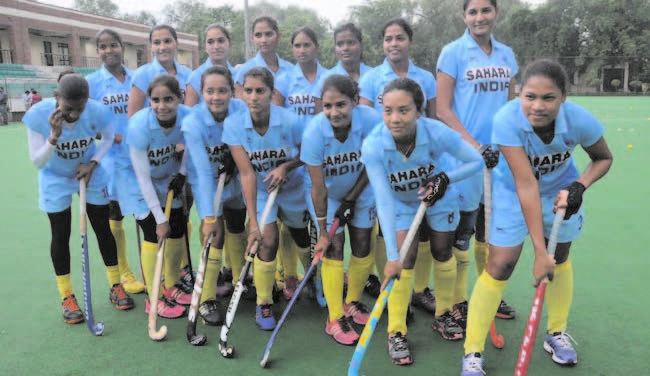
    NEW DELHI(TIP): Hockey India (HI) congratulated its bronze medal winning women’s team and extended a grand welcome to them on their return here from the Incheon Asian Games.

    The team defeated Japan 2-1 to claim third spot. South Korea won gold while China clinched silver. ”It’s a proud moment for the country that our women’s team have won the bronze medal at the 17th Asian Games. Each player of the team contributed towards this glory and I am proud of this team and wish them continued success in the future,” HI secretary general Narinder Batra said.

    India captain Ritu Rani said her team will aim to better themselves in the future. ”The entire team is ecstatic by this win. When we lost our semi-final, we were adamant to take the bronze by beating Japan. I am happy that we played with elan and won the match. We will aim to continue this form and better ourselves in our performances in the future,” Ritu said.

  • Sarita Devi calls for better judging after Asian Games 2014 Controversy

    Sarita Devi calls for better judging after Asian Games 2014 Controversy

    NEW DELHI (TIP) She has offered unconditional apology for an emotionally-charged protest at the Asian Games but Indian boxer L Sarita Devi hoped that her outburst would ensure better judging at next month’s World Championship in Korea — the country where she felt “wronged”.

    After returning from Incheon, Korea with a controversial bronze medal, which she refused to accept at the presentation ceremony, Sarita said the episode has left her “mentally drained”.

    “I hope the judging is better in the World Championship (scheduled from November 13 to 25 in Jeju Islands). Korea is hosting it and I am hoping that my protest will make some difference to the standard of judging. I hope nobody feels wronged like I did. No boxer should go through this, we work so hard,” she said. Sarita lost a contentious semifinal in the Asian Games to Korean Jina Park despite dominating the bout. The Indian later cried bitterly at the podium and refused to wear the medal that was presented to her.

    instead gave it to Park as a mark of protest during the ceremony, prompting the International Boxing Association (AIBA) to initiate disciplinary proceedings against her.

    Sarita later offered an “unconditional apology” to AIBA for her actions. “I apologised because I did not want any other Indian boxer to suffer. I fight for my country and by apologising I have tried to ensure that no other Indian gets affected. I feel I was wronged,” she said.

    “We suffered a lot due to the federation’s termination earlier, I didn’t want anything new to affect our boxers.” Recalling her emotional moments at the podium, Sarita said she was not in control.

    “I could not control myself on the podium. I offered her (Park) the medal because that’s what she deserved. I deserved better. She came to me to return the bronze but I could not take it, I was too overwhelmed. She requested me to take it back,” Sarita recalled. “I am not angry with her. She was just fighting like me. The wrong was done by others. It was not her fault,” she added. Sarita had to borrow money to lodge a protest after the semifinal as no Indian official came forward to help her but the boxer said she does not want to dwell on it anymore.

  • Asian Games 2014: Kabaddi heroes and heroines get special message from PM Narendra Modi

    Asian Games 2014: Kabaddi heroes and heroines get special message from PM Narendra Modi

    NEW DELHI (TIP) Good news from kabaddi continues,” Prime Minister Narendra Modi said today as he congratulated the women’s and men’s kabaddi teams for winning gold medals in Incheon Asiad games today. In separate congratulatory messages, Modi said “the Indian women’s Kabaddi team has made us very proud. I congratulate them on winning the Gold. A phenomenal accomplishment!”

    After the men’s team won the gold a few hours later, the Prime Minister said “good news in Kabaddi continues and this time it is the men’s team. Congrats for the gold. We are delighted.” Indian women staged a strong second half performance to get the better of a fighting Iran 31-21 to retain the Asian Games kabaddi.

    The Indian men’s kabaddi team clinched its seventh successive gold medal at the Asian Games after coming from behind to beat a spirited Iran 27-25 in the summit clash today. The Indian team, which has been winning gold ever since the sport was introduced on the Asiad roster in 1990, was given a massive scare by Iran which had finished runners-up in the 2010 edition as well.

  • Modi’s American Journey Building bridges for the future

    Modi’s American Journey Building bridges for the future

    By S Nihal Singh

    “Behind the new approaches being made by the two countries to revive the elan of earlier years are the geopolitical realities of Asia and the balancing of the great power status of an assertive China”, says Singh.

    Modi’s American Journey Building bridges for the future

    Above (President Barack Obama shakes hands with Indian Prime Minister Narendra Modi, Tuesday, Sept. 30, 2014, in the Oval Office of the White House in Washington. Modi’s five day visit to the U.S. was a useful bridge-building exercise in an important relationship that had gone cold)

    Prime Minister Narendra Modi went to New York and Washington on an official visit and wowed both non-resident Indians (NRIs) and stay home people. Thisparadox speaks of the limits of a first visit in office of a man denied a US visa for a decade but adept at creating an impact.

    While Mr. Modi himself has expressed satisfaction over his five-day visit, the verdict must be that it was a useful bridge-building exercise in an important relationship that had gone cold. The Prime Minister pressed all the right buttons, including meetings with Israeli Prime Minister Benjamin Netanyahu and representatives of the influential Jewish lobby, American politicians and office holders from President Barack Obama down and the chiefs of major companies.

    If at the end of the exercise and tour de force, there was no prize catch to grasp in the way of a major investment deal, the fault was not entirely the Prime Minister’s. There were simply too many problem areas left over from the previous five years and the conclusion of those with the power and ability to invest billions of dollars was encapsuled in the adage former US President Ronald Reagan was fond of citing: Trust but verify.

    US business tycoons liked what they heard from the Prime Minister, but, given the Indian record, wanted Mr. Modi to deliver what he promised. In essence, he has a six-month window, which could be stretched to the next budget, to show results. Indo-US problems fall largely into two categories: the hurdles to investments and setting up businesses more susceptible to Mr. Modi’s steamroller and knottier problems involving legislation and the states’ cooperation.

    Foremost in the latter category are the introduction of GST, goods and services tax, and the elephant in the room, the nuclear question former US President George W. Bush did so much to promote and conclude. Thanks to the narrow-minded legislation the Bharatiya Janata Party did so much to help pass, the horrific penalties suppliers are saddled with have kept American companies (and some others) out of any nuclear deal.

    On foreign investments, India has tied itself in knots by the kind of labor and land laws that have been passed at several levels making it arduous to acquire land and set up businesses. True, some BJP-ruled states are beginning to peel away some of the penal labor laws but it is patchy work very much in progress. And the BJP’s own bugbear, opposition to foreign direct investment in retail, is another hurdle to be crossed.

    On the broader political plane, Mr. Modi had some success in moving the stalemate that had developed, partly from the United Progressive Alliance-II having lost steam and distracted by scams, partly from President Obama’s own distractions and loss of interest in India. The defense cooperation agreement has been extended by another 10 years and there has been a significant movement in cooperation in counter-terrorism operations and sharing of intelligence although neither side expected India formally to commit itself to fighting the ISIS or the Islamic State. New Delhi was pleased at the inclusion of Pakistani terrorist organizations within the ambit.

    Behind the new approaches being made by the two countries to revive the élan of earlier years are the geopolitical realities of Asia and the balancing of the great power status of an assertive China. New Delhi itself is seeking to balance China, not in the sense of containing it, but in seeking to place limits on Beijing’s tendency to appropriate sea lanes and territory to its advantage through partnerships with the US, Japan and perhaps Australia. In any event, India has expressed its interest in East Asia while linking to the West.

    The BJP has an advantage in practicing realpolitik in international affairs because it does not suffer from the inhibitions of the Congress Party stemming from ideological reasons. Somewhat unexpectedly, Mr. Modi has demonstrated a sure touch in his dealings with world leaders during his earlier visit to Japan and now the United States while playing host to China’s President Xi Jinping.

    However, for Mr. Modi, international politics is only a route to economic diplomacy and commerce. Indeed, in his heart, he must have been disappointed that despite his marathon efforts, he could not take home even one major investment deal from his US trip. Suspicions of Indian methods of doing business and making retrospective legislation simply run too deep in the American trading community to melt their hearts to Mr. Modi’s seductive blandishments.

    The essence of the argument is that Mr. Modi must now win his battles at home before much of the world will walk the red carpet he has spread out for foreign investors. In view of the BJP’s lack of numbers in the Rajya Sabha and the expedient of calling a joint session to pass legislation can only be an exception, rather than the rule, he must devise innovative ways to cross the hurdles to foreign investment.

    In a sense, Mr. Modi must be rejuvenated by his American visit because his ethos is very American in the free-wheeling ways of commerce he prefers and the limitless opportunities offered to a hardy entrepreneur. Indian enterprises, particularly those in the competitive service industries, have their own legitimate grouses because projected immigration laws will further restrict the work of Indian professionals. And on the political plane, US policy is weighted in favor of Pakistan despite its misdemeanors because Washington needs it in withdrawing its troops and heavy equipment from Afghanistan.

    Perhaps Mr. Modi’s appeal to the non-resident Indians to have “one foot in India” by investing at home will yield more immediate results and he was generous in distributing sweeteners not only to NRIs but also to persons of Indian origin to simplify their visa and stay requirements, also promising American citizens visas on arrival. Apparently, the Navratri fast he observed during his entire stay in the US did not interfere with his schedule.