Cast: Michelle Monaghan, James Marsden, Luke Bracey,Liana Liberato, Gerald McRaney
Direction: Michael Hoffman
Genre: Romance
Duration: 1 hour 58 minutes
Review: Like The Notebook, the narrative plays out in two time-frames. It oscillates between the past and present. Luke Bracey and Liana Liberato play the younger Dawson and Amanda respectively. Amanda, the spirited rich girl, falls in love with the quintessential good boy Dawson. Since he comes from a family of thugs, the two are forced to part ways.
But destiny ensures they meet 20 years later. The film is based on Nicholas Sparks’ book, and if you like his concept of an idealistic romance set against the backdrop of beautiful landscapes with dollops of melodrama thrown in, The Best of Me is for you. But if you don’t like his ‘typical’ love stories, the film may offend your sensibility for being unabashedly cheesy, formulaic and painfully predictable.
As far as casting is concerned, much to our surprise, the younger actors do not resemble James and Michelle at all. Wonder if Luke was cast keeping the late Paul Walker (original choice) in mind, but even that seems weird as he looks a lot like Heath Ledger instead. However, in spite of the flaws and the too-good-to-betrue concept, The Best of Me manages to strike a chord, thanks to Michelle Monaghan and Gerald McRaney’s heartrending performances. Michelle’s emotional outburst towards the end and McRaney’s portrayal of Tuck is tear-evoking.
The actress beautifully depicts the emotional upheaval of her character. While Marsden too renders a mature act, it’s Michelle who steals the show. We are yet to see the best of you, James! Beautiful visuals are another asset. A scene shot in a lake where the actress is shown to be rotating and floating in water is liberating – a metaphor for letting go of fixed notions and following your heart. The film has a lot of hidden messages like these, which unfortunately get overshadowed by an overdose of mush and superficial love scenes that get massive footage.
Month: October 2014
-

1984 SIKH MASSACRE: AN ENDLESS WAIT FOR JUSTICE
Nearly 3,000 members of India’s Sikh community were massacred after the assassination of Prime Minister Indira Gandhi by her two Sikh bodyguards on 31 October 1984. The wave of ethnic cleansing which raged unhindered across the country, especially in Delhi, after Mrs Gandhi was shot dead ended only with her cremation on 2 November. During these three days, droves of Sikhs were determinedly hunted down by Hindu mobs from their homes, corralled and slaughtered like animals.
The trigger for Mrs Gandhi’s killing was the storming of the Golden Temple in Sikhism’s holy city Amritsar four months earlier to flush out Sikh militants fighting for an independent homeland of Khalistan or Land of the Pure. The heavily-armed militants – many of them former soldiers – had barricaded themselves inside the temple and were dislodged only after three days of bitter fighting. Some 1,000 people, including women and children pilgrims and about 157 soldiers, died.

Tanks too were employed to end the siege, leaving Sikhs highly aggrieved. The eventual and possibly avoidable storming of the Golden Temple generated a wave of violence leading to Mrs Gandhi’s assassination, the anti-Sikh riots and a vicious insurgency across Punjab that was eventually stamped out by the military around 1993, although not without widespread human rights abuses.
But, the 1984 Delhi riots rocked the world, more so for the state’s direct involvement and public justification of the blood-letting. Reacting to the continuing Sikh killings in Delhi and other places, newly appointed Prime Minister Rajiv Gandhi declared at a massive rally in the capital that “once a mighty tree falls, it is only natural that the earth around it shakes”. One of the worst massacres took place in two narrow alleys in the city’s poor Trilokpuri colony where some 350 Sikhs, including women and children, were casually butchered over 72 hours.

The charred and hacked remains of the hundreds that perished in Trilokpuri’s Block 32 on the smoky and dank evening of 2 November 1984 were stark testimony to the unimpeded and seemingly endless massacre. Soon after news of Mrs Gandhi’s killing by her Sikh bodyguards spread, Hindu mobs swung into action – like they did elsewhere in the city armed with voters’ lists – in Trilokpuri against the low caste Sikhs inhabiting oneroomed tenements on either side of two narrow alleyways barely 150 yards long.
With local police connivance they blocked entry to the neighborhood with massive concrete water pipes and stationed guards armed with sticks atop them. For the next three days marauding groups armed with cleavers, scythes, kitchen knives and scissors took breaks to eat and regroup in between executing their bloodthirsty mission. No one spoke and nothing, except the bizarre, dancing shadows moved during this surrealistic interlude. The police arrived in Trilokpuri 24 hours later when a newspaper revealed the horrific massacre. Sadly, there were no Sikhs left to protect.
Tragic stories
BHAGWANI KAUR, RIOT VICTIM On November 1 morning, there was stone-pelting between both parties (Sikhs and non-Sikhs) in Trilokpuri area. When the police came, they first cordoned off the area and then indicated the non-Sikhs to go ahead. Rioters barged into our homes, pulled out utensils and other goods and looted our homes. The men were dragged out by their hair and killed. On the third day, trucks were brought in, the bodies were taken away and dumped in the Yamuna.
‘They threw my father from top floor’ Paramjeet Kaur, lost her father and three uncles in riots I was just 11 years old in 1984. My father, three of my uncles, a brother-in-law and a cousin were killed in the riots. One of my cousins tried to hide on the windowsill but he couldn’t escape. The rioters burnt him alive. I still remember the ghastly scene. My father was thrown from the top floor. His head was smashed. My younger brothers were made to wear girls’ dresses to escape. The women, my two sisters and 3-4 other women, had a horrific time.
‘When will we get justice?’
HUKM SINGH, lost his two toddler sons, a brotherI lost my two sons — four and two-and-a-half years — and a brother at Jagatpuri during the three-day rioting in 1984. They were among the 11 people from three families in our building to be killed. My landlord and his family were killed. My plyboard factory in Radhapuri was set afire.
Timeline of events
November 1984: Sikhs were killed in the riots following the assassination of then prime minister Indira Gandhi Oct 31, 1984.
Feb 8, 2005: Justice G.T. Nanavati Commission appointed to look into the 1984 anti-Sikh riots, submits its report.
October 2005: A case is registered by the Central Bureau of Investigation (CBI) on the recommendation of the Nanawati Commission.
Feb 1, 2010: Court issues summons against Sajjan Kumar and seven other accused — Balwan Khokkar, Mahender Yadav, Girdhari Lal, Kishan Khokkar, Captain Bhagmal, Maha Singh and Santosh Rani. Six accused are alive and facing trial.
Feb 8, 2010: Delhi High court appoints special public prosecutor R.S. Cheema to conduct the trial on a daily basis so that the proceedings can be concluded in six months.
Feb 15, 2010: Sajjan Kumar’s anticipatory bail rejected by additional sessions judge.
Feb 17, 2010: Non-bailable warrants issued against Sajjan Kumar
Feb 23, 2010: Sajjan Kumar untraceable.
Feb 26, 2010: Anticipatory bail granted to Sajjan Kumar by the Delhi High Court.
July 1, 2010: Prosecution produces 17 witnesses.Witnesses Jagdish Kaur, Jagsher Singh and Nirpreet Kaur identify Sajjan Kumar in court and depose against him.
June 2011: Prosecution evidence ends.
August 2011: Defence prosecution starts. They produce 17 witnesses, of whom six are officials from Delhi Police who depose in favour of Sajjan Kumar.
April 2012: Prosecution concludes its arguments
January 2013: Defence concludes its arguments and a judgment is pronounced.
April 30: District and sessions court acquits Sajjan Kumar, convicts former councillor Balwan Khokkar, former legislator Mahender Yadav, Kishan Khokkar, Girdhari Lal and Captain Bhagmal.
VICTIMS TO GET ADDITIONAL RS 5 LAKH NEW DELHI (TIP):
As the nation prepares to mark the 30th anniversary of the 1984 anti-Sikh riots, the government has said it would offer Rs 5 lakh each to the next of kin of the 3,325 victims. This amount would be additional to whatever compensations they have received so far. The Union Home Ministry has also approved a proposal to substantially increase compensations to civilians falling victim to communal, Maoist or terrorist violence from Rs 3 lakh to Rs 5 lakh.
Compensation to the anti-Sikh riot victims, which would cost the exchequer an additional Rs 166.25 crore, will be dispersed soon. The riots were triggered after the assassination of Prime Minister Indira Gandhi by her Sikh guards. The decision to disperse additional compensation follows petitions by several Sikh organisations to the NDA government. The previous UPA government announced an Rs 717 crore package for the Sikh victims, including financial compensation of Rs 3.5 lakh to the next of kin of those killed, but it could only spend Rs 517 crore due to dispute over claimants.
Home Minister Rajnath Singh also decided to increase compensation for victims of communal, Maoist and terrorist violence at a high-level meeting where the issue came up. “Till now the next of kin of persons killed or civilians who suffered permanent incapacitation as a result of violence were paid Rs 3,00,000 as per provisions of the Central Scheme for Assistance to Civilian Victims of Terrorist/Communal/Naxal violence since 2008,” an official statement said.
Families of victims are eligible for the assistance irrespective of previous compensations. Official figures reveal that the government had dispersed Rs 6.12 crore as compensation to civilian victims in 204 incidents of terrorist, communal and naxal violence in 2011-12 and Rs 3.99 crore in 133 incidents in 2012-13. However, no compensations could be given in 2013-14 and 2014-15 (till July) since state governments have not mooted the proposals. -

THE BIRTH AND GROWTH OF AN IDEA
Every big idea has a small beginning. Gift of Life has been no exception.
In 1974, Rotary District 7250 brought a little 5-year old named Grace Agwaru on an intercontinental voyage from Uganda to New York. Grace suffered from a hole between the two lower chambers of her young but strong heart. On November 15, 1974 surgeons at Saint Francis Hospital in Roslyn, New York successfully operated on little Grace. A big idea was born that day. The Gift of Life now includes Rotarians from all over the world, with independent chapters in countries as far away as Korea and India.
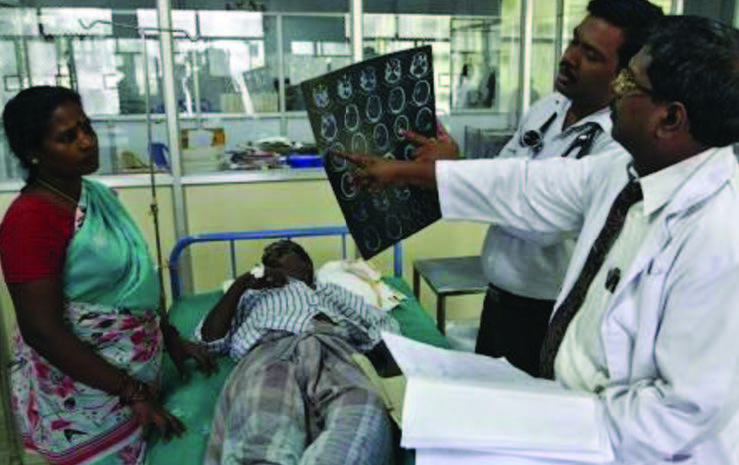
Today, the Gift of Life is a worldwide Rotary International Service Program responsible for approximately 5000 heart surgeries for children from over 30 countries. The Gift of Life has gone global. Every good idea grows exponentially. In 2001, PDG of District 7250 Eileen Gentlecore had a simple conversation with a friend of hers and related the altruistic vision of the Gift of Life. Her friend, Past District Governor Ravishankar Bhooplapur, with the assistance of Past RI Director Sushil Gupta – Trustee of Rotary Foundation , Dr. Rajan Deshpande and many other devoted Rotarians, AC Peter, PDG Rajendra Rai, Rtn OP Khanna, DGE Kamlesh Raheja, took up the challenge to provide critical heart surgeries for the children of India.
PDG Ravishankar Bhooplapur still serves as Honorary Chairman of Gift of Life, India today. Is it not amazing what can come of a conversation? The sole purpose of the Gift of Life, India is to secure life saving heart surgery for children in desperate need regardless of race, creed, color or country of origin. The Gift of Life, India is a not-for-profit, tax-exempt corporation with no administrative costs. All of our team members work voluntarily; all of the monies are generously donated by caring donors and through the numerous matching grants disbursed by the Rotary Foundation.
Gift of Life program in New York has the unique distinction of bringing children from all over the world to the New York Metro Area and providing free heart Surgeries to them. These children are housed in Ronald McDonald house which is specifically given to us for this purpose. Rotarians have significantly contributed to build the Ronald McDonald house and continue to give financial support on the local level in exchange our children are accommodated pre & post-operative their surgeries. The Gift of Life still grows. We reach more children in more countries than ever before. We would like to reach more. There is no limit to this idea as long as we remain committed to saving children’s lives.
Mission:
To further the cause of world peace and understanding by facilitating free medical services to children suffering from heart disease regardless of race, creed, sex or national origin and who otherwise lack access to such services.
“A Crusade of the Heart”
The Gift of Life is a crusade of the heart, touching children in peril. An idea born in 1975 to a group of Rotarians from Manhasset, Long Island, NY, is today a global effort. We reach out to many children, who would otherwise die, and heal their failing hearts with the miracle of cardiac surgery. Our outreach spans the world, nurtured by compassion for young victims we alone can cure. Each child whose future we restore is a tribute to humanity and love, helping build bridges of friendship and peace among people everywhere.
History
The lives of more than 10,000 children from countries throughout the world have been saved through the miracle of open-heart surgery, in medical centers throughout the U.S. and in participating Gift of Life hospitals in Russia, Israel, Malaysia, China, Ukraine, India, Dominican Republic and the Philippines. Dedicated surgeons and nurses donate their skill to the cause. American families assist Rotarians as hosts and interpreters, bringing warmth and comfort to children and their escorts.
Board of Directors and Officers
Gift of Life is a dynamic program of Rotarians of Brooklyn, Queens and Nassau in partnership with the Rotary members and physicians worldwide who evaluate children for treatment in our country. Foreign doctors may also receive technical training on these shores and return to help children in their own lands. We have since opened pathways to Korea, Poland, the Russian Republics, China, Caribbean Nations and to places as distant as Mongolia, medically screening many thousands of children for lifesaving surgery.
The spirit of the Gift of Life ignores borders. Medically advanced countries are being encouraged to do as we do – to open their own hospital doors to imperiled youngsters from developing nations. With the Gift of Life as an international model, cardiac medicine will extend its power to save many who were unreachable before. The Gift of Life has also become more of a public presence through our fund raising program Save-A-Child. In addition we hold four annual fundraisers: the Crusade of the Heart Kick-Off Dinner and black tie Gala, the Agnes T. Funk Kids for Kids Memorial 5K Walk, and our new skydiving event Jump for Life.
Partnering Hospitals
The following hospitals support the Gift of Life program:
● Loma Linda University Medical Center, Loma Linda, California
● Maria Fareri Children’s Hospital at Westchester Medical Center Valhalla, New York
● St. Francis Hospital, The Heart Center Roslyn, New York
● The Children’s Hospital at Montefiiore Medical Center Bronx, New York
● The Hospital for Sick Children Toronto, Canada
● The Steven and Alexandra Cohen Children’s Medical Center of New York New Hyde Park, New York -

Gift of Life (New Delhi) India
20 percent of infant mortality is due to Congenital Heart Diseases (CHD). Poor children have no access to quality medical care and cannot afford high cost of surgery. 3000 children (India, Uganda, Kenya, Sudan, El Salvador, Sri Lanka, Nepal, Pakistan) benefited from GOL India New Delhi project alone. PRID Rtn Sushil Gupta (Advisor), PDG Ravi Bhooplapur (Chair) and Dr AC Peter (National Coordinator) monitor this life saving project. Rotary (Delhi NCR) Gift of Life Trust is auxiliary. This project was launched in New Delhi India in July 2005. Our partner hospitals are Escorts, NHI and PCH in Delhi. PRID Jackson Hsieh, D3460 to D3520 are also MG Donors. Children were given medicine, food and accommodation, conveyance etc. free of cost. Rotarians visit the children in the hospital and offer motherly care. Past and current RI Presidents, TRF Trustee, Ministers, Ambassadors etc visited the project. This is truly an international peace project signifying “service above self”
-

PM MODI CALLS FOR END TO DIFFERENCES
NEW FDELHI (TIP): Prime Minister Narendra Modi flagged off the ‘Run for Unity’ here on Friday, October 31, on the occasion of the birth anniversary of Sardar Vallabhbhai Patel, which is being commemorated as Rashtriya Ekta Diwas. Modi walked along the Raj Path to India Gate after flagging of the run in which hundreds of people participated. Flanked by Union Ministers Sushma Swaraj, Naidu, Arun Jaitely among others, the Prime Minister administered the oath of unity to participants.
Sportspersons like Sushil Kumar, Vijender Singh, Virendra Sehwag and Gautam Gambhir also participated in the event. PM Modi paid floral tributes at the statue of independent India’s first home minister at Patel Chowk, Parliament Street today morning. And thereafter addressed the participants of the ‘Run for Unity’ at Vijay Chowk. The run from Vijay Chowk to India Gate on Rajpath was flagged off at 8.15 am. Flagging off the ‘Run for Unity’ on the 139th birth anniversary of the first Home Minister of the country, PM Modi said Sardar Patel’s life was a journey of “service to the motherland” and he was “truly the architect of modern India”. “Let us not forget that a nation that disregards its history can never create one…Don’t divide history, legacy in narrow confines of ideology,” Modi said.
“Sardar Patel’s life is a journey of deeprooted courage, dedication & service to the Motherland. He is truly the architect of Modern India,” Modi tweeted on the occasion of Sardar Vallabhbhai Patel’s birth anniversary. “The country which forgets history can never create history, so for a country filled with aspirations, a country whose youth has dream, we should not forget our personalities of history…. country should not divide history and legacy according to our ideologies,” Modi said as he addressed the gathering on the occasion of Rashtriya Ekta Diwas– commemorating the birth anniversary of Sardar Vallabhbhai Patel.
“Today is the inspiring day when we remember Sardar Patel,” he added. Modi said Patel devoted his life for the unity of the nation and it was unfortunate that “our very own people” were killed on his birth anniversary 30 years ago. In an apparent reference to riots which took place after the assassination of then Prime Minister Indira Gandhi in 1984, Modi said, “Patel never deviated from his vision of national unity despite facing obstacles in his political life.
It is a misfortune of this country that 30 years ago on the birth anniversary of such a leader an incident which shook the unity of nation took place.” “Hamare apne logon ko maut ke ghaat utar diya gaya (our own people were killed on that day). That incident was not a wound on the hearts of people of a particular religion it was a dagger into the heart of thousands of years of country’s heritage and culture,” he said. He also noted that it was also the death anniversary of former Prime Minister Indira Gandhi.
President Pranab Mukherjee also took the initiative to flag off the ‘Run for Unity’ from Rashtrapati Bhavan on the occasion of the birth anniversary of Sardar Patel. Union Minister Arun Jaitley remembered Sardar Patel and paid salutations. Here’s what he said: Sardar Patel guided our nation’ integration into a united, independent nation. My salutations to this great leader on his birth anniversary.