Year: 2014

  • When Comes another Khushwant?

    When Comes another Khushwant?

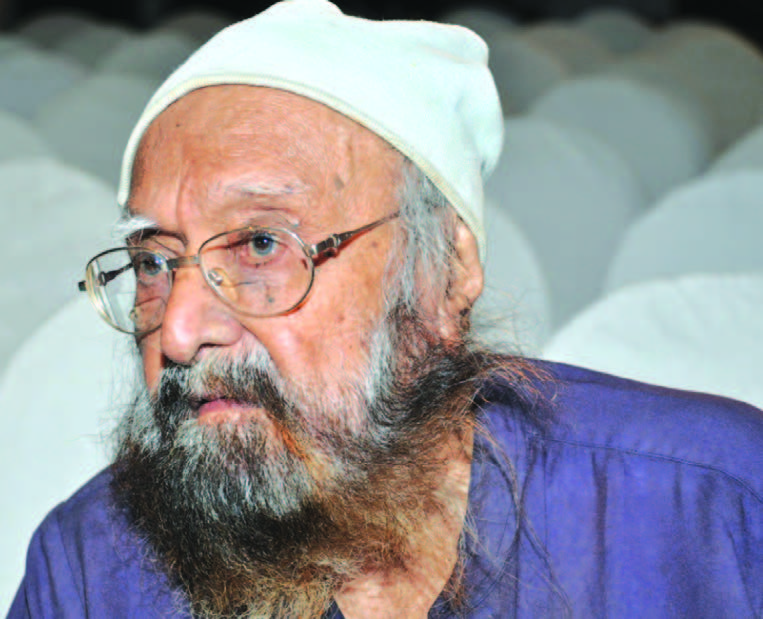
    Iam reminded of Antony’s words in Julius Caesar: “Here was a Caesar! When comes such another?” Yes, here was a Khushwant. When comes such another? A literary monarch who literally held sway over the literary scene of India for more than three quarters of a century decided not to complete a century and bowed out a month after he had completed 99 years.

    The journey that Khushwant Singh started on February 2, 1915, in Hadali, now in Pakistan’s Punjab reached its destination on March 20, in Lutyens’ Delhi in the making of which Khushwant’s father had a great role. Khushwant Singh will be missed by everyone who loves a good reading. A prolific writer, he wrote dozens of novels and short story collections.

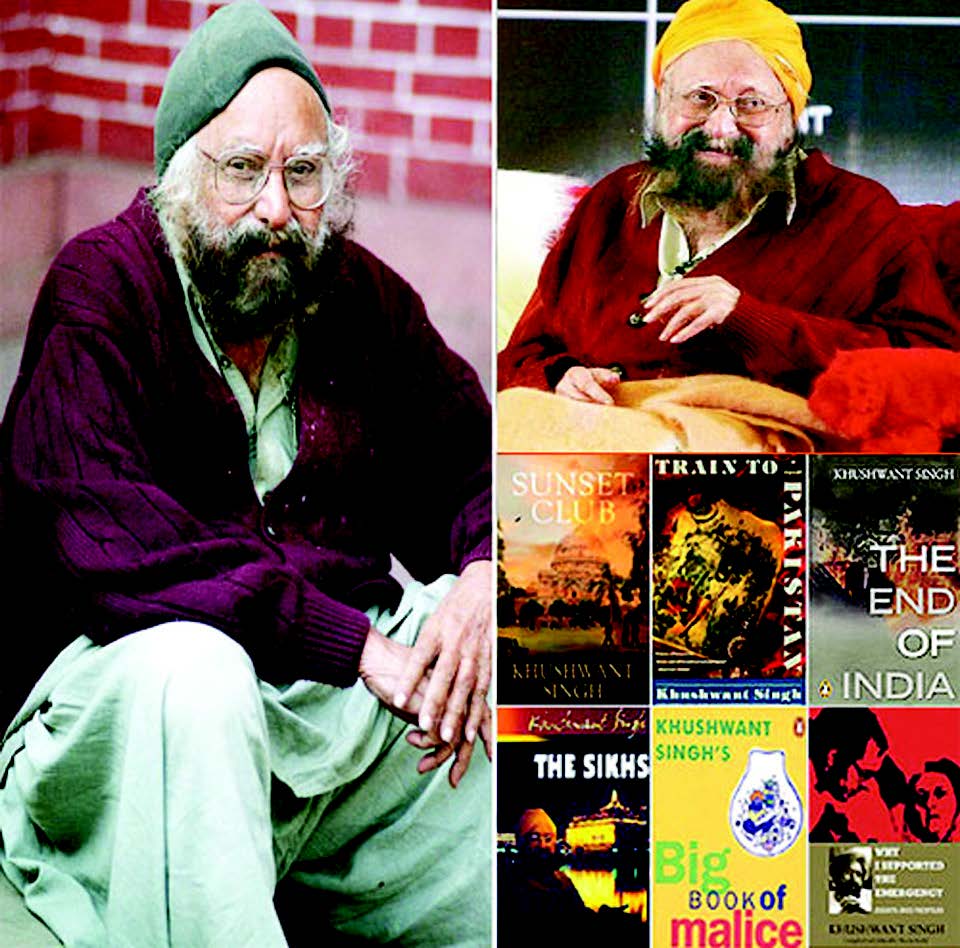
    He also edited several magazines and newspapers in the 1970s and 80s. Unstoppable even at 95, he wrote the novel “The Sunset Club” about a group of pensioners. Here was a man who churned out all kinds of literary pieces- from serious novels to satirical writings of immense wit and infectious humor. His classics, such as ‘Train to Pakistan’ and ‘I Shall Not Hear the Nightingale’ will remind the coming generations of the literary art of this grand old man of Indian literature.

    Nor can the coming generations remain unaffected by the wit and saucy humor of the man that readers so hungrily savored in his column “With Malice towards One and All”. His novel “Train to Pakistan” on the heartrending bloody situation at the time of partition of India in 1947 was made in to a film. Khushwant Singh was conferred the third highest civilian award of the nation- Padma Bhushan in 1974 which he returned in 1984, in protest against the storming of the Golden Temple in Amritsar by the Indian Army ( Operation Bluestar) under the then prime minister Indira Gandhi.

    Ironically, earlier, he had defended Indira Gandhi’s Emergency of 1975-77, when opposition leaders were jailed or punished, saying protest had to be suppressed if it turned violent. Khushwant was nominated to Rajya Sabha and was a Member of Parliament from 1980 to 1986. He was awarded the second highest civilian award of the nation- Padma Vibhushan- in 2007. “He liked to call a spade a spade. He hated hypocrisy, fundamentalism, and was a gentle person,” son Rahul Singh said of his father.

    Author Vikram Seth described him as “a fearless writer; a man of great discipline yet full of zest for life; a great Indian who embodied our national values of affection, tolerance and understanding; and a true friend.” And Prime Minister Dr. Manmohan Singh, in his tribute to the great author, wrote on Twitter, “A gifted author, candid commentator and a dear friend. He lived a truly creative life.” For me, it is a personal loss.

    Back in 1995 when I launched a monthly English magazine “Punjab Beat” from Ludhiana, Punjab, I went to his Sujan Singh Park residence to seek his blessings. I vividly recall when I requested him to contribute to the magazine, he asked me to get back to him with dummies for 6 months and he would then consider whether or not to contribute. I learnt a lesson then that in the world of journalism you have to look beyond the present edition. Surely, the lesson learnt has stood me in good stead. Thank you, Khushwant for that lesson. I will miss you. Rest in peace, monarch of literature.

  • Obama expands sanctions, threatens Russian economy

    Obama expands sanctions, threatens Russian economy

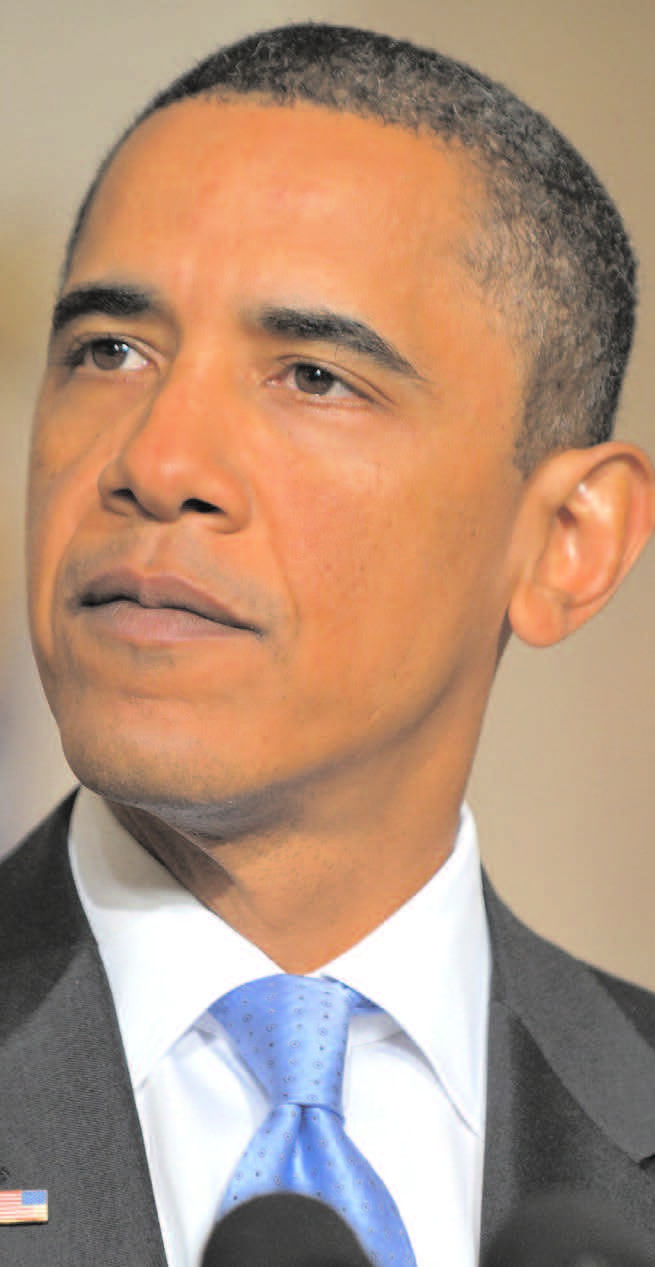
    WASHINGTON (TIP): US President Barack Obama imposed sanctions on more Russian officials and a bank on Thursday and threatened to target the broader Russian economy if Moscow escalates its actions against Ukraine.

    “Russia must know that further escalation will only isolate it further from the international community,” Obama said at the White House. The new measures targeted a new list of 20 lawmakers and senior government officials in addition to 11 people already sanctioned by Washington.

    Obama made his announced just hours after Russian lawmakers rubberstamped a treaty signed by President Vladimir Putin to absorb the Ukrainian region of Crimea into Russia. The US move freezes assets within American jurisdiction and bars US firms from conducting business with those concerned. The US treasury department identified the financial institution involved as Aktsionerny Bank of the Russian Federation, also known as Bank Rossiya.

    Senior officials said the bank held significant assets of the Russian ruling elite and key figures around Russian President Vladimir Putin. “Bank Rossiya’s shareholders include members of Putin’s inner circle associated with the Ozero Dacha Cooperative, a housing community in which they live,” the US treasury said.

    Obama said: “Now we’re taking these steps as part of a response to what Russia has already done in Crimea.” But he also raised the prospect of tougher future action if Russian behavior does not change, adding he had signed a new executive order that would allow him to target specific sectors of the Russian economy. “This is not our preferred outcome,” Obama said, warning that the moves would have a “significant impact” on the Russian economy.

  • Indian-American professor receives NEH Award for Faculty

    Indian-American professor receives NEH Award for Faculty

    WASHINGTON (TIP): Susmita Roye, an Indian- American associate professor of English at the Delaware State University, has been named as a recipient of the National Endowment for Humanities (NEH) Award for Faculty.

    The award has been given in recognition and support of her current book manuscript project, which is about the women writers of India during British rule (1757-1947). She has tentatively titled the book “Mothering India”. Roye will receive financial support from the grant award, which will enable her to take some time off from teaching to finish the book.

    She was one of only eight people to receive the award out of 101 applications, according to an announcement on the university website. The NEH, an independent federal agency created in 1965, is one of the largest funders of humanities programs in the US. Previously, Roye co-edited and contributed a chapter to the book “The Male Empire under The Female Gaze”, which explored the perspective of British white women amid British rule of India.

    Roye, who did her Phil in English from the University of Calcutta in 2006 and PhD in English in 2011 from Britain’s University of Bristol, has been a faculty member of DSU since 2011. Her research interests include “Women’s Writing, World Literature, Gender and Imperialism, Anglophone Literature of the World, Post/Colonial Literature, Orientalism, Race and Ethnic Studies, and Cultural Studies”.

  • Army general fined, reprimanded in sex case

    Army general fined, reprimanded in sex case

    FORT BRAGG, North Carolina: An Army general who carried on a threeyear affair with a captain and had two other inappropriate relationships with subordinates was reprimanded and docked $20,000 in pay Thursday, avoiding jail time in one of the military’s most closely watched courts-martial.

    Brig. Gen. Jeffrey A Sinclair, the former deputy commander of the storied 82nd Airborne Division, was believed to be the highest-ranking US military officer ever court-martialed on sexual assault charges, but earlier this week those charges were dropped when he pleaded guilty to inappropriate relationships with the three women. Sinclair smiled and hugged his two lawyers in the courtroom. Outside the building, he made a brief statement.

    “The system worked. I’ve always been proud of my Army,” he said. “All I want to do now is go north and hug my kids and my wife.” The case unfolded with the Pentagon under heavy pressure to confront what it has called an epidemic of rape and other sexual misconduct in the ranks. As part of the plea deal, Sinclair’s sentence could not exceed terms in a sealed agreement between defense lawyers and military attorneys.

    The agreement, unsealed Thursday, called for Sinclair to serve no more than 18 months in jail, but the judge’s punishment was much lighter. Prosecutors did not immediately comment. Capt. Cassie L. Fowler, the military lawyer assigned to represent the accuser’s interests, had a grim expression after the sentence was imposed and declined to comment. In closing arguments, prosecutors argued Sinclair should be thrown out of the Army and lose his military benefits, while the defense said that would harm his innocent wife and children the most.

    Defense attorney Richard Scheff said Sinclair will retire from the military. Scheff said the case against Sinclair was one of pure adultery, which is a crime in the military. Prosecutors did not ask the judge to send Sinclair to jail, even though the maximum penalty he faced on the charges to which he pleaded guilty was more than 20 years. The judge could have also dismissed Sinclair from the Army, which would have likely wiped out his veterans administration health care and military retirement benefits.

  • INDIAN WOMAN IN US FOUND GUILTY OF SETTING HUSBAND AFIRE

    INDIAN WOMAN IN US FOUND GUILTY OF SETTING HUSBAND AFIRE

    HOUSTON: A 27-year-old Indian-origin woman in the US state of Texas has been found guilty of causing arson that killed her husband two years ago. Shriya Bimal Patel was convicted on Monday of dousing her husband Biman Patel in gasoline and setting him on fire in 2012.

    Bimal, 29, died at the burn centre of the San Antonio Military Medical Center, nearly five months after the April 17 incident. She faces five to 99 years in prison. In closing arguments on Monday, the state asked jurors to recommend a life sentence for Shriya, who witnesses have said intentionally ignited an explosion that killed Bimal. Defence lawyers, however, sought probation for her.

    They said Shriya would be deported to India should she receive community supervision. Testimonies ended on Friday when defence attorneys called their only witness, an associate professor of Indian culture from the University of Texas. Her lawyers have argued that her husband killed himself and forced her to help.

    Prosecutors said Shriya, who had studied in London and lived in Dubai was used to an upper-class lifestyle, was upset because Bimal did not lived up to her expectations. They said she was disappointed that Bimal had been laid off from a telemarketing job and was struggling to pay his rent.

  • Russia has promised not to attack east Ukraine: US

    Russia has promised not to attack east Ukraine: US

    WASHINGTON (TIP): Russian defence minister Sergei Shoigu promised his US counterpart Chuck Hagel in a telephone call on Thursday that Moscow would not assault eastern Ukraine.

    Hagel voiced concern about Russian military movements but Shoigu assured him that “the troops he has arrayed along the border are there to conduct exercises only and they have no intention of crossing the border into Ukraine and that they would take no aggressive action,” Pentagon spokesman Rear Admiral John Kirby told reporters.

    Hagel also asked how long the military “exercise” would last but Shoigu “didn’t have a firm time frame for that,” Kirby said. Washington has watched a Russian buildup on Ukraine’s eastern border with growing concern after Moscow’s intervention in Crimea.

  • NRI Perspective of Muzaffarnagar Refugee Camps

    NRI Perspective of Muzaffarnagar Refugee Camps

    INOC and NRI-SAHI Team cite deplorable conditions upon visiting the Muzaffarnagar refugee camps

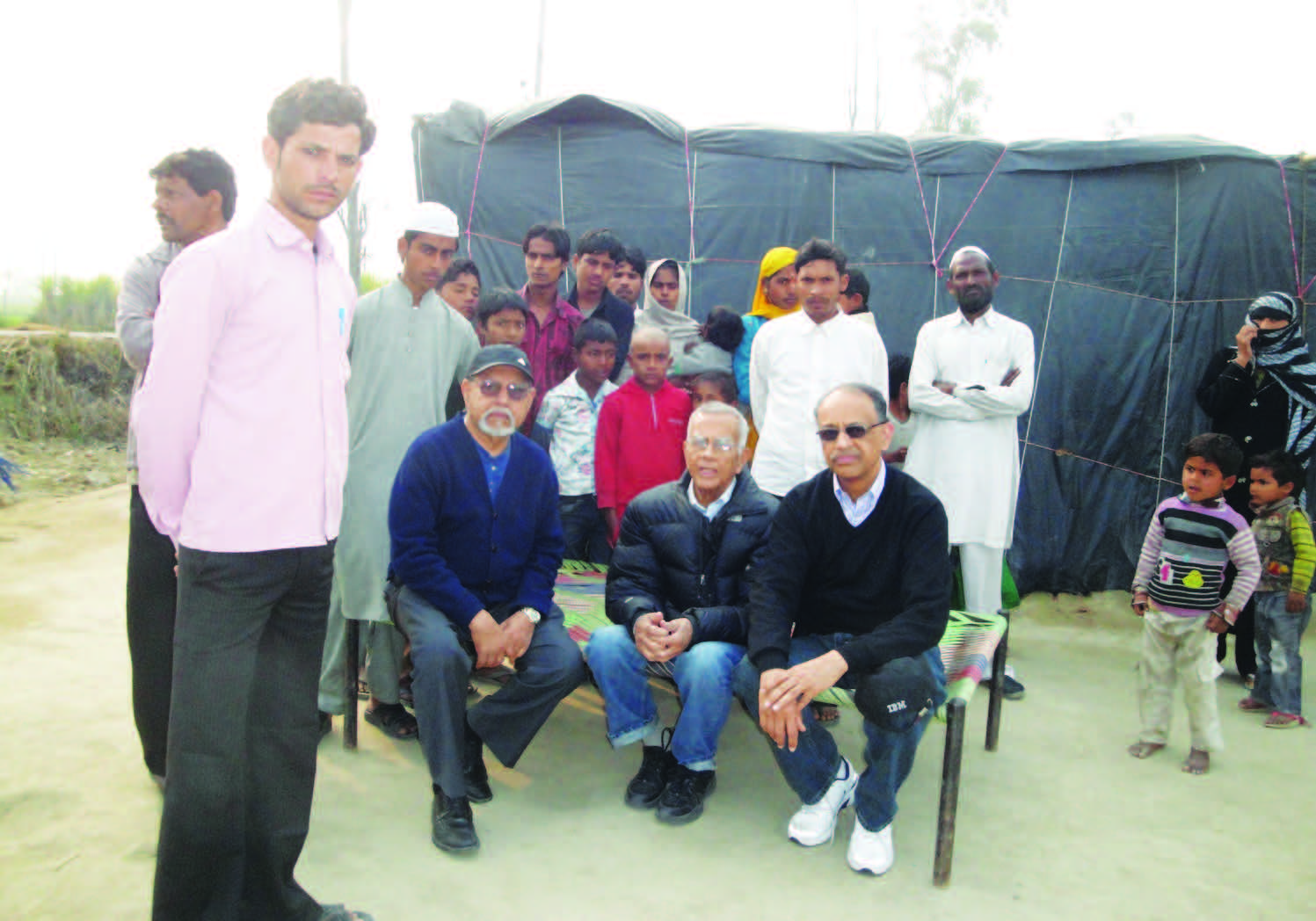
    Ateam consisting of George Abraham, Chairman and Harbachan Singh, General Secretary of the INOC (I) (Indian National Overseas Congress (I), USA) along with Mohammed Imran, Joint Coordinator of the NRI-SAHI (Non-resident Indians for a Secular and Harmonious India) visited the Malakpura refugee camp for the Muzaffarnagar riot victims and learned first hand the deplorable conditions under which those victims are forced to live.

    ‘It is a shame on our great democracy when we let these riots happen and then disregard the plight of the innocent victims to live in such a wretched condition without basic necessities and growing threat of diseases’ said George Abraham, who headed the team to visit Muzaffarnagar. ‘This is the height of incivility and indecency and a responsible system of governance has to be held accountable’ he added.

    ‘It is shocking to see the inaction by a Government that is supposed to protect the lives and properties of its citizens’ said Mohammad Imran who also vowed to do his very best in getting the information across to the authorities and the media. The team first visited Muzaffarnagar where a legal team is doing their best to assist the victims. The team met with Rahimuddin, Sajjad Hussain and Saifan who briefed us on the events leading to the riots and the political motives and the players behind the scenes.

    These volunteers are working with an NGO called ‘Popular Front of India Civil Rights Movement’ to get justice for the victims including compensation for resettlement. In our discussions, we were told that FIRs were filed against 19 politicians for inciting riots and three of them have been arrested for a short time and then released. The team repeatedly heard of the criticism of the appointment of Amit Shah, the former home minister of Gujarat who was arrested on charges of encounter killings in Gujarat as the Modi Campaign Coordinator for the Western U.P. before the riots.

    The Muzaffarnagar riots took place in September 2013 that killed about 67 people, injured 150 and displaced about 45000 people to the refugee camps. In addition, several women were raped and scores of houses were looted and torched including places of worship and items. Although 566 FIRs were filed, very few cases are currently being heard in the courts. It is alleged that the State Government headed by the Samajawadi party is more interested in pushing people out of camps for a Public Relations exercise than hearing their complaints of settling the claims.

    ‘The Jats and the Muslims are the same people culturally who have lived in peace over the years’ said one of the volunteers who is involved with relief efforts. ‘When an Imam issued a fatwa over the use of cell phone by Muslim women, the whole community, including the Jats and Muslims went to the Police Station and filed an FIR against such an illegal action. Breaking up of that unity was politically motivated’ The team traveled another 52 Km to the village of Malakpura to visit the largest camp where about 5000 victims are housed.

    It took almost 3.5 hours to cover that distance where the roads are of such bad conditions that one couldn’t help but to think that these camps were deliberately put in remote places where people would not dare to travel thereby leaving the victims without proper support from NGOs or Civil Society groups. The mere sight of the camp looked dusty and dirty with numerous tents covered with sheets of tarpaulin providing protection from scorching sun and severe cold temperature at night. The Children were running around barefoot while others were huddled indoors hoping to stay warm. Tents were torn and some looked collapsed barely surviving the winter months.

    The family belongings are scattered across and few bricks put together made up of a cooking facility outside the tent. Except for some hand pumps providing water, there was no steady supply of milk for the infants or fuel for cooking other than cut leaves from nearby sugar canes, They have lived through one of the harshest winters in history and often at nights, we were told, freezing water would be seeping down through the tarp and causing many children to fall ill and succumb to deaths right at the camp. We met a woman who is grieving for two of her children who recently died at the camp.

    We were also shown the freshly dug grave sites where many of these bodies of the children were recently buried. The men we met at the camp were eager to get back to work however; there was very little opportunity to find jobs around the camp. The children are deprived of their education as there are no logistics to send them to nearby schools. The refugees are afraid to go back to their own villages as they fear for their lives and the authorities are doing very little either to assure their safety or resettle them in other parts of the State where they could possibly resume normal lives. It is a great tragedy that is heart breaking and yet still unfolding.

  • Muslim Vote Bank

    Muslim Vote Bank

    Isee positive things happening in India, and it is good. An increasing number of Muslims are contesting elections as Indians – and not as a Muslims. This is a positive movement of inclusiveness on the part of Muslims.

    This is a clear and rightful distinction, indeed, no one, be it Hindu, Muslim, Sikh or other should be voted in if he or she represents his or her own community – every elected representative represents his constituency and not religion.

    My friend Dr. Javed Jamil wrote in response to Kejriwal comment that Muslims have lend themselves as a vote bank, he says, “The truth on the other hand is that Muslims have failed to become “Vote Banks”. If they had succeeded in becoming vote banks, they would have by now got what they deserve.”

    One the other hand I advocate against becoming vote banks, be it Muslim, Hindu, Dalit, Sikh, Christian or others. It is not good for India. We need to break the stereotyping – that Muslims vote as a block, which is sheer nonsense. Muslims vote for the candidate who is inclusive and cares for them as much as he or she cares for fellow Indians.

    The argument that several Members of BJP run on exclusive interests of Hindus is true, but it is not good for India -because they do it, we have to do it logic is wrong. We have to rise above, we have to be better than the exclusive people and show them the right path of inclusiveness.

    It will take time, what have we done in the last six decades? Let Muslims run against Advani, Joshi, Modi, Rahul, Kejriwal and others as Indians with a determination to represent every resident – reach them out, even if some Hindu is resentful, reach them, the power of justness and caring is far more powerful than the agenda of duping the public with promises to build temples or mosques. A handful of Muslims will make a lot of noise, just like a handful of Hindus do, let them.

    One should be daring and say – I am running as an Indian from this constituency to represent all residents. I am not running as a Muslim. I will be fair and equitable to every citizen. If Muslims, Dalits, Brahmins or others are disadvantaged, I will give attention to their issue, but I will never represent any one community exclusively, as I am an Indian and my public service is for every Indian.

    From this day forward, if you find me cater to the interests of one community over the other, I will withdraw from public service. We have lost six decades, let’s take this approach and start getting ready for THE next elections – start taking initiative and see how we cannot change an India that cares for every one’s development without tearing into its cohesiveness. We can do it, all of us Indians together. Jai Hind, Mike Ghouse

  • RANA International Convention Kicks Off

    RANA International Convention Kicks Off

    NEW YORK (TIP): Rajasthan Association of North America (RANA) International Convention Committee had its kick off meeting at Bombay Palace, New York, on March 9, 2014, announcing the Convention dates, venues and various Committee Members and Chairs.

    This Convention will be held at the Islandia Marriott on Long Island, New York, from July 3rd till July 6th, 2014. RANA is expecting 1,500 to 2,000 delegates to participate in this International Convention. RANA President and Convener Dr. Narendra Hadpawat presented the theme of this Convention which is to help build a Healthy and Literate Rajasthan.

    World-renowned Orthopedic Surgeon Dr Chitranjan Ranawat will be chairing the Fundraising Committee and will be raising close to one million dollars for this Convention. Famous New York Cardiologist Dr. Samin Sharma will be the Grand Sponsor for this Convention. The main focus of the Convention will be to provide a platform for networking for all the non-resident Rajasthanis in New York for the three days.

    The Convention will also be the showcase for Rajasthani handicraft, cuisine, art, music and culture. Several programs are designed to attract the younger generation of NRIs to connect with the culture and values of Rajasthan. The well known Hasya Kavi, Shailash Lodha from India has accepted our invitation to entertain all delegates. Many other leading artistes and folk dancers are invited from Rajasthan to perform on July 4th for Rajasthani Night.

    A Group of Bollywood Singers will also entertain the audience on July 5th. Current Rajasthan Chief Minister Smt. Vasundhra Raje is invited to be the Chief Guest for this Convention. A Delegation from the Rajasthan Government is expected to participate in this Convention promoting investment and tourism. A large portion of the proceeds from this convention will be used to improve primary healthcare and female literacy in Rajasthan.

  • The Water Rent is Too Damn High!

    The Water Rent is Too Damn High!

    Northeast Queens Council Members, Community Leaders Call on Mayor to Honor Commitment to Cease Gouging Taxpayers with Water Rates

    NEW YORK (TIP): Northeast Queens Council Members and community leaders, on Thursday, March 20, called on Mayor Bill de Blasio to honor his pledge to cease gouging taxpayers with excessively high water rates — a practice that the Mayor decried as “wrong” and a “stealth tax” during his campaign.

    The Council Members, Rory I. Lancman, Mark S. Weprin and Paul A. Vallone, released a letter to the Mayor at a press conference held in Fresh Meadows, Queens, following Lancman’s demand for action at a City Council Environmental Protection hearing held last week. Water rates are set annually by the New York City Water Board, which comprises seven members appointed by the Mayor. The revenues in part pay the debt service on bonds sold to build the City’s environmental infrastructure (water tunnels, filtration plants, etc.) issued by two sources: (a) the New York City Water Finance Authority (WFA) (comprising seven members, four of whom are appointed by the Mayor), and (b) the City itself prior to the Water Finance Authority’s creation in 1984.

    The bonds are repaid through rent installments to the City for leasing its environmental infrastructure to the Water Board in an amount either (a) equal to the City’s annual debt service obligations on the City’s bonds, or (b) 15% of the Water Finance Authority’s annual debt service — whichever is greater, although the Mayor has the authority to seek the lesser amount in his annual payment demand to the Water Board. Prior to 2005, the City had always secured the former sum from the Water Board; payment equaled the debt service on City bonds. Starting in 2005 however, the City started demanding the latter sum at 15%, which had become greater than the total represented by the city’s general obligation for water and sewer debt service.

    Since then, water rates have exceeded the cost of the City’s debt service. The prior Mayor refused to lower the City’s annual rent demand to the amount necessary to pay only the City’s water and sewer-related debt service. What resulted were astronomical water tax increases that have been used to prop up the City’s general fund. Despite the City’s water and sewer debt gradually shrinking over time, by 2012, the gap between the 15% figure and the City’s water debt had grown rapidly due to increases to the WFA debt service. Although payments were capped at the FY11 payment (given the rate of inflation), in many of the last ten years water rates have increased by double digits, and have cumulatively increased by an incredible 78% since 2005:

    Fiscal Year          Increase
    2014                   5.6%
    2013                   7.0%
    2012                   7.5%
    2011                   12.9%
    2010                   12.9%
    2009                    14.5%
    2008                   11.5%
    2007                   9.4%
    2006                   3.0%
    2005                    5.5%

    This fiscal year, for example, the City owes approximately $50 million in debt service; however, the Water Board is expected to pay an approximate $205 million in rent. In other words, water users will be overbilled $155 million. During his 2013 campaign, then-Public Advocate Bill de Blasio condemned the city’s practice of using water rates imposed on middle class homeowners and small businesses to divert money into the City’s general fund: “For decades, the water system only charged customers what it needed to cover its costs. But now, anyone who pays a water bill is sending more and more of their money into the city’s general budget.

    It’s wrong and it has to stop.” — Public Advocate Bill de Blasio, April 16, 2013 “I’m urging the Mayor to honor his commitment to eliminate these hidden taxes and not charge residents for a cost greater than what the system’s infrastructure requires,” Lancman said. Council Members Mark Weprin and Paul Vallone joined in penning the letter demanding an end to the inflated water tax. “We need the mayor to stop this back door tax once and for all,” Council Member Weprin stated. “Anyone who has lived in New York City for the past decade can tell you that water and sewer rates have risen dramatically,” said Council Member Vallone. “I’m proud to stand with my fellow Council Members in asking our Mayor to stop overcharging the Water Board for rent so that excessive billing doesn’t fall onto the backs of our City’s taxpayers.”

    Some of the community leaders in attendance at the press conference included Bob Harris, President of the West Cunningham Park Civic Association; Yolanda Delacruz-Gallagher, board member of the Fresh Meadows Homeowners Civic Association; Jennifer Martin, Co-President of the Kew Gardens Hills Civic Association; Harbachan Singh, Vice President of the Queens Civic Congress; Rosa Chong, Board Member of the Fresh Meadows Homeowners Civic Association; and Jackie Forrestal, Board Member of the Hillcrest Estates Civic Association. Homeowners voiced their outrage over the exorbitant increases in water rates.

    “It’s impossible for us to survive these increases,” said Ms. Delacruz-Gallagher. “The simple gift of sustenance is a right, one we need to survive. Years ago, you paid thirty to fifty dollars. Now, you have to watch every drop that comes from the faucet.” Harbachan Singh spoke on behalf of the Queens Civic Congress: “Rising water rates has been the cash cow of the Mayor for too long. These funds are being used to bridge budget gaps and fuel other projects unrelated to water service.

    Water is a precious commodity and a basic human right; this policy is totally wrong.” Residents stressed the everyday strains they faced because of water woes. Ms. Chong decried being unable to afford using basic appliances such as dishwashers and sprinklers, hand washing dishes and using rainwater collected in barrels to water her garden instead. “Every little bit helps when the cost is so high.” “Progressive government means fair and transparent taxes,” said Lancman, “and as the Mayor acknowledges, our water rate system has been neither for too long. He has all the authority he needs to change that, and I urge him to do so this year.”

  • GOODBYE KHUSHWANT SINGH

    GOODBYE KHUSHWANT SINGH

    The country is grieving the death of its celebrated Indo-Anglian novelist Khushwant Singh. He was 99 and passed away on March 20. Here’s a look at his story: On February 2, 1915, Khushal Sobha Singh was born in Delhi.

    When boys his age would mock his name, Khushal Singh would grow frustrated. He finally decided to change his name to ‘Khushwant Singh’. As a young boy, Khushwant would often be thrown out of class for his mischief. He despised mathematics and did not follow much of English either.

    After having terrible days at school, he would return home to find solace in his grandmother’s lap. It probably had something to do with the pro masculine society that India abides by, where the children are traditionally seen to be more emotionally connected to the women of the house rather than the men. His father Sobha Singh was a wealthy man. Having constructed huge villas in Delhi and other prominent areas, Sobha Singh had laid down a fairly comfortable future for his children.

    Khushwant Singh, shifted to Lahore for his further studies. It was during this time that he fell in love with music. His drive to learn the Sitar, urged him to move to Kolkata. It was here that he met Rabindranath Tagore. He soon had to leave for London, where he would further pursue Law. When in London, he met his childhood friend Kawal Malik. She was a fair, carefree woman who soon caught his fancy. Before he knew it, they were courting and were married too. When he returned to India, he started practising law. The evil turn of events in India before Independence, took their toll on him.

    He started despising the subject. He would often turn to Kasauli for a break from his saddening life. This is where his romance with creativity and writing started. Soon his heart was set. He finally bid farewell to Lahore and decided to settle down in Kasauli itself. Khushwant Singh was fortunate to have encapsulated the entire event of the Indian Independence. Soon after independence, he was called by Mohammad Ali Jinnah to Lahore. Jinnah promised to make him a judge at the court there but Khushwant Singh refused. He was provided a job to work with the Indian embassy at London.

    However, some unfortunate incidents lead to him giving in his resignation. He soon became the mock of the country. His parents criticized him. He soon jumped jobs. He was given names, people also went to the extent of calling him a communist. However each time, his father was his saviour. He was also a member of the Rajya Sabha from 1980 to 1986. His work was largely inspired by his own life. It is said to have had so much spice, that Khushwant never felt the need to look elsewhere for inspirations. Times changed and Khushwant Singh started writing with vigour. His first book ‘Mark of Vishnu and other stories’ was published in London. His account of his grandmother in the book ‘Portrait of a lady’, remained his personal favourite. He also managed to write another influential book ‘Mano Majra’. This was a documentation of the Indo-Pakistan separation. It was later published as ‘A Train to Pakistan’. How much ever he would write, the monetary returns dissatisfied him.

    His constant dependence on his family, depressed him further. This is when he took to Sikhism. His research on the community, laid the thesis for his books in the series ‘The History of Sikhs’. He turned into a scholar over night and universities all over the world started inviting him for delivering speeches and seminars. He later joined the Illustrated Weekly of India. It was during this tenure that the Weekly reached its peak. The circulations increased manifold. However, exactly a week before his retirement the weekly asked him to leave, thus terminating his employee-ship with the company He also worked with National Herald and The Hindustan Times. “Khushwant Singh may seem like a carefree man, but he was as conservative as his own ancestors,” says Rahul Singh, his son. He would not attend Gurudwaras or even chant his prayers.

    He made fun of astrologers and superstitions too. However, he believed in his faith. He felt extremely responsible and attached to the Sikh community. He was a shy man, always trying to hide away his true colours from the society. Khushwant, often would be portrayed as a lover of wine and woman. However that was just a façade. Khushwant Singh was as rooted to his family, as he was to his passion. His love and respect for his wife was so intense that he vow to shun writing after his wife’s death. However, his romance with his pen was more intense than that with his wife. He continued to write and amuse the masses.

    Today as the world mourns his death, we take a look at his masterpieces.
    1. Mark of Vishnu and other stories: It was the first boom to be written by Khushwant Singh. It is an account of his childhood days and largely draws inspirations from his life.
    2. The History of Sikhs: It was a series of two books which spoke of the Sikh religion like never before. He spent three years to write these books and is yet believed to be one of the best works of Khushwant Singh.
    3. Train to Pakistan: It is a documentation of the Indo- Pakistan separation. It is one of his celebrated works.
    4. The Company of Women: The Khushwant Singh novel “The Company of Women” was considered to be a work reeking with explicit sex, infidelity and questions of the trust and sensuality.
    5. Delhi: A novel: This novel was probably the best reflection of Singh’s life as a writer. Though replete with fictional elements, one cannot help but draw heavy comparisons with his own. It traces the journey of a journalist in Delhi and his rendezvous with the city and its offerings.

    Khushwant Singh is a story untold. His life remains just as interesting as his literary works. His jokes, his love for poetry and his magnificent style and splendour continues to captivate millions, yet making millions fall in love with a man named Khushwant Singh.

    LIFE AND TIMES
    1915:
    Born on 2nd February 1915 in Hadali District Khushab, Punjab (which now lies in Pakistan), in a Sikh family.
    1934-1938: The Modern School, New Delhi; St. Stephen’s College, New Delhi; Government College, Lahore, B.A. 1934: King’s College, London, LL.B. 1938: Called to the bar, Inner Temple, London.
    1938: He began his legal career on the eve of the Second World War and spent eight years practising law at the High Court of Lahore.
    1939-47: Practicing lawyer, High Court, Lahore.
    1947: In 1947 he entered the diplomatic service of a newly independent India and served his country for four years in London and Ottawa.
    1947-51: Press attache, Indian Foreign Service, in London and Ottawa.
    1951: He joined All India Radio in 1951 as a journalist.
    1954-56: Staff member, Department of Mass Communications, Unesco, Paris.
    1956-58: Editor, Yojna, an Indian government publication, New Delhi.
    1956: His first novel, Train to Pakistan, has been in print since 1956.
    1969-78: Editor, Illustrated Weekly of India, Bombay.
    1974: In 1974 he was awarded the Padma Bhushan, the third highest civilian award, which he returned in 1984 in protest against the siege of the Golden Temple by the Indian Army.
    1978-79: Editor-in-chief, National Herald, New Delhi.
    1980-83: Editor-in-chief, Hindustan Times and Contour, both New Delhi.
    1980: He was a member of the Rajya Sabha from 1980 to 1986.
    1999: Prime Minister Manmohan Singh lost the Lok Sabha election from South Delhi in 1999 but he immediately returned Rs.2 lakh he had taken from writer Khushwant Singh for hiring taxis saying he had not used it; This act of Dr. Singh’s integrity finds a mention in a new book “Absolute Khushwant: The Low-Down on Life, Death and Most things In-between” in 2010
    2006: Punjab Rattan for Khushwant Singh by Government of Punjab.
    2007: He was awarded the Padma Vibhushan, the second highest civilian award.
    2013: Khushwant Singh feted with lifetime achievement award by Tata Literature Live! The Mumbai Litfest.
    2014: In recognition of his exceptional achievements in the fields of literature and journalism, King’s College London has awarded esteemed alumnus Khushwant Singh a Fellowship of the College, its highest honour. The award was given by Professor Sir Rick Trainor, Principal and President of King’s College London at a private ceremony at Mr Singh’s home in Delhi on January 12, also attended by Professor Sunil Khilnani.
    2014: Died on March 20.

  • Mayor Bill de Blasio signs paid sick leave expansion set to take effect April 1

    Mayor Bill de Blasio signs paid sick leave expansion set to take effect April 1

    BROOKLYN, N.Y. — Mayor Bill de Blasio signed legislation Thursday, March 20 expanding paid sick leave to companies with at least five employees starting next month.

    “This will be the first city law that I will have the privilege to sign as mayor, and I could not be more honored that that law is the expanded paid sick leave law — so important to the people of this city,” de Blasio said.

    The bill removes many of the compromises reached in a paid sick bill passed under former City Council Speaker Christine Quinn — that legislation applied only to larger businesses, and was phased in over the course of several years, depending on the size of the company.

    This legislation will take effect April 1. The bill signed Thursday will apply to any business with five or more employees — but there will be a grace period for those smaller businesses that wouldn’t have been covered by the previous law, which would have applied first to businesses with 20 or more employees and later to those with 15 or more employees.

    “We have prevailed at last — we have achieved our full goal — half a million more people about to be covered under a law that will protect their rights,” de Blasio said. City Council Speaker Melissa Mark- Viverito offered the example of a lowwage worker whose wife was killed and son injured in the East Harlem gas explosion in her district. The man has been at his son’s bedside since the explosion, she said. “Those individuals now have protection to be able to stand by the beside, at a hospital, of a child,” Ms. Mark-Viverito said. “This is very real to many families many times over in this city.”

    The mayor — who ran on the promise of representing the outer boroughs — opted to sign his first bill at a Brooklyn ice cream manufacturer, rather than the City Hall Blue Room, where bills are often signed. Staten Island’s two Republican Council members, Minority Leader Vincent Ignizio (South Shore) and Councilman Steven Matteo (Mid- Island/Brooklyn), were among those voting against the legislation in the Council — where many members expressed concerns about how the bill might affect small businesses but voted for it anyway.

    While a six-month grace period applies to businesses with fewer than 19 employees, it won’t apply to those with more — the businesses that would have been covered by the original law. But with the law going into effect in under two weeks, Staten Island Chamber of Commerce President Linda Baran said businesses haven’t even been educated about the original law, let alone this one. But de Blasio said there has been plenty of information out over the “the last four years” as the bill has been discussed. “There’s been a lot of information out since the original bill was passed last year,” he added.

    “So I don’t think there’s too many businesses that haven’t heard the basics, but we’re going to continue that education effort.” Consumer Affairs Department Deputy Commissioners Alba Pico said the department would launch a “big campaign” in the subways and buses at the end of the month. “We have the paperwork that is required for them to enforce the law, and also a notice that they have to give out to the employees,” she said.

    “So, we’re ready, and many businesses are ready now.” The mayor said education and making aggrieved workers whole — rather than fining businesses — would be his focus for the law. “I care deeply about fairness for small business. I think the way this law is structured, with the emphasis on education, the emphasis on working with small business, it’s going to turn out to be a great result for everyone,” de Blasio said.

  • Connect India & USA in 2014

    Connect India & USA in 2014

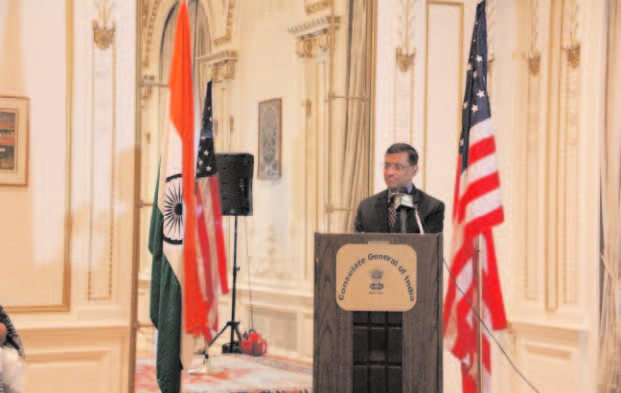
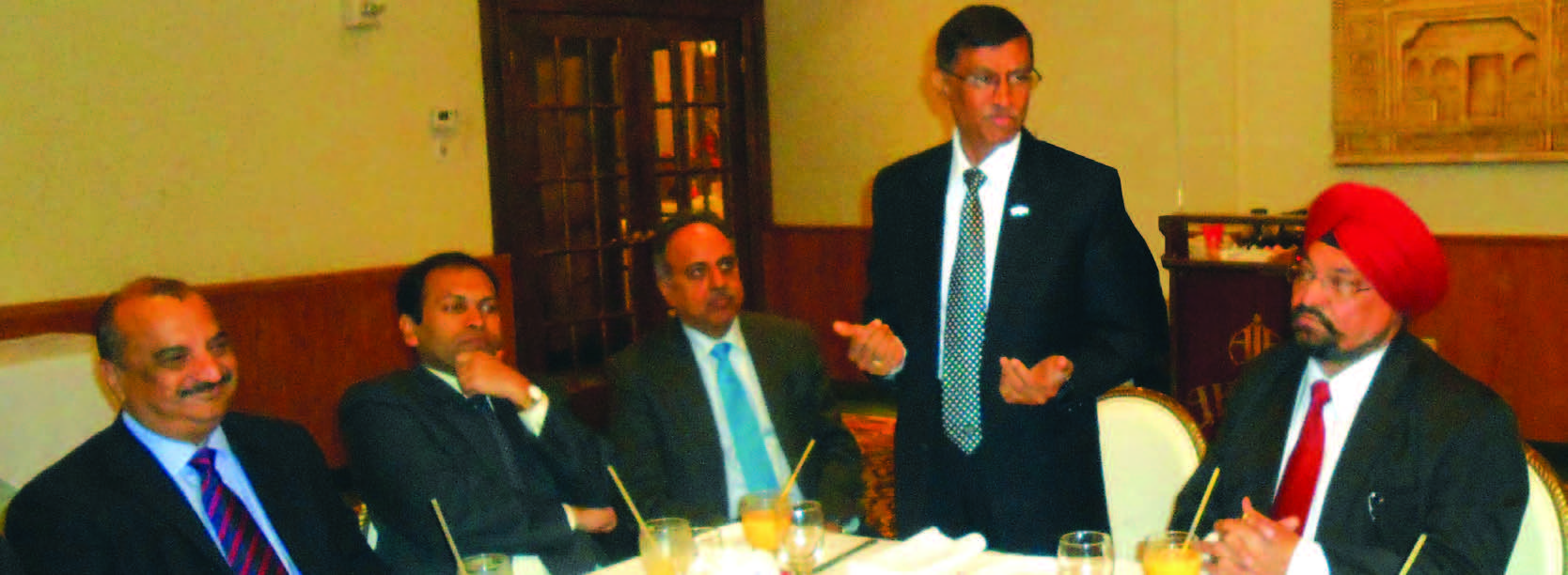
    NEW YORK (TIP): The Consulate General of India, New York organized a presentation titled “Connect India & USA in 2014” at the Consulate’s ball-room on March 18, 2014,.

    The presentation was focused on the development of business relations between India and the USA. Consul General, Ambassador Dnyaneshwar M. Mulay in his opening remarks emphasized not only the need of better connection between India and USA in all respects but also invited young members of Indian American community as well as American mainstream community to work together for building co-operative relationships and partnerships between both the countries.


    6

    Keith Zendler, CEO & Founder of The Cspace, Michigan in his presentation highlighted his efforts to connect India and USA through his innovative idea and technology which will be available free to the users on this web-space “C Space” not only to the business organizations but also to NGOs, Government organizations, private institutions desirous of getting connected with India. Govind S. Sovale illustrated the technology and how it will work and Ms Shyamala Desai associated with the NGO ‘PREM’ briefed about the organizations who have already joined the initiative.

  • Meera Gandhi’s The Giving Back Foundation Honors Barbara Tober and Nimesh Kampani

    Meera Gandhi’s The Giving Back Foundation Honors Barbara Tober and Nimesh Kampani

    NEW YORK, NY (TIP): Barbara Tober, the Museum of Arts and Design’s Chairman Emerita and Chairman, Global Leadership Council, and Nimesh Kampani, Chairman of the JM Financial Group, were the honorees at the inaugural Giving Back Foundation Gala held Wednesday, March 19, 2014 at the Pierre Hotel in New York City.

    Actor/director Phylicia Rashad emceed the event. The cocktail reception and dinner were followed by a live auction and entertainment with DJ Logic providing the music, with singer Lara Anderson and Bina Menon’s dance troupe from the Kalashri School performing.

    Meera Gandhi, CEO and Founder of The Giving Back Foundation, said, “We are truly delighted to honor Barbara Tober and Nimish Kampani. Both Barbara and Nimesh repsesent the true spirit of “giving back.”

    Among the co-chairs were Raymond Bickson; Olympic gold medalist Kristi Yamaguchi; His Highness Maharaja Gajsingh II of Marwar-Jodphur; Chris and Grace Meigher; TV host Deborah Norville; actor Tim Blake Nelson; Hugh Warrender; designer Elizabeth Emanuel; Patricia Valesquez, singer Priyanka Chopra, Arshad Zakaria and many more.

    Live auction items were a couture designer outfit by Elizabeth Emanuel; luxurious vacations at the Taj Hotels and Palaces in India and at Elite Island Resorts in the Caribbean; art by renowned artists such as Tarik Currimbhoy; Qadri from Sundaram Tagore Gallery; Kelli Bickman; Parris Jaru and Juan Bernal; a design consultation with interior designer Clodagh; an exclusive handbag from Samia Kamar of London; a designer pet carrier by Emre Erturk of Emre NY; jewelry by Jyoti Singhvi and photographs by Anders Corr and Daniel Aubry.

    The Giving Back Foundation’s mission is education to empower and uplift young people, with a goal to alleviate poverty, illness and suffering, and to support the arts through philanthropy. The Giving Back Foundation, a 501 (3)(C) entity with headquarters in New York and operations in London, Hong Kong and New Delhi, was established in 2010 by humanitarian Meera Gandhi. Contact: Ellen Sweeney ellensweeney@thegivingbackfoundation. net or tel. 212 751 2623 or 917854 5100, or Bill Darnellgala2014@thegivingbackfoundati on.net or tel. 917 593 8617.

  • California major target for cyber-criminals: Kamala Harris

    California major target for cyber-criminals: Kamala Harris

    SACRAMENTO (TIP): California has become a major U.S. target of cyber crimes committed by outlaw groups with ties to Eastern Europe, China and Africa, according to a report by state Attorney General Kamala Harris released on Thursday, March 20.

    As part of a broader report on international organized crime groups, Harris said about 17 percent of attempts to hack into major computer networks in the United States in 2012 were aimed at California, which is the most populous U.S. state.

    “Transnational criminal organizations are relying increasingly on cybercrime as a source of funds – which means they are frequently targeting, and illicitly using, the digital tools and content developed in our state,” Harris said in a statement attached to the 97-page report.

    In addition to computer crimes, Harris’s report detailed activities of international organized crime groups including human trafficking and drug smuggling, along with classic scams. Many groups are organized along ethnic lines, with ringleaders often outside the United States and foot soldiers and victims in immigrant communities in the country, it said. “The growth of transnational criminal organizations seriously threatens California’s safety and economic well-being,” said Harris, who plans to lead a series of meetings in Mexico next week to discuss the problem.

    Criminal groups with ties to the former Soviet Union and Central Europe run gangs throughout California, including the Armenian Power gang, which has links to cyber-crime, financial fraud, identity theft gambling, narcotics and human trafficking, the report said. More than two-thirds of methamphetamine imported into the United States comes through California from Mexico, trafficked by international gangs, Harris said. In addition, the state’s technology and entertainment-driven economy has made it particularly vulnerable to computer virus attacks and stolen intellectual property, the report said.

    The amount of online activity used for copyright infringement across the world has grown about 160 percent from 2010 to 2012 and threatens to affect California more than other U.S. states, the report said. “There is little doubt that over the years digital piracy has robbed creative industries based in California of hundreds of millions of dollars in revenue and jobs,” it said. Online fraud schemes in which goods or services are purchased online but never delivered have affected Californians more than people in other states, the report said. “As transnational criminal organizations evolve in the search for profits, California will continue to be an attractive target,” Harris said.

  • Consul General Mulay Reaches out to Indian American Community of Long Island

    Consul General Mulay Reaches out to Indian American Community of Long Island

    NEW YORK (TIP): Consul General of India, Ambassador Dnyaneshwar Mulay met with leaders of Indian American community of Long Island on March 19 and held discussion on a variety of issues of their interest and concern.

    Mulay emphasized the importance of trying to know the issues that might be troubling the community. He was candid in admitting that the present service provider was not able to deliver. “The community has had difficult time vis-a-vis our service provider. I have openly apologized for inefficient, substandard, non-transparent services provided” said the Consul General.

    He said steps have been taken to remedy the situation and the situation would improve in about a month. He appealed to the community to have patience and a spirit of cooperation . “You have problems. We may have constraints. But we have to work together”, he said. The Consul General spoke at length about his efforts in the last 10 months that he has been here, to create closer relationship with the community.

    He said, “I have tried to get the community in the Consulate”. He said his vision is to see the Consulate as for the community, of the community and by the community. Ambassador Mulay shared with the gathering what all he wished to do in the coming months. He said he was keen to build an image of India in the eyes of the mainstream Americans. To achieve that end, it was necessary to have Americans come to witness our heritage and culture.

    He called upon those gathered to ensure they bring along at least one American to the events in the Consulate. He also spoke of various programs he had envisaged to achieve the goal. He said a lecture series is planned over the next 12 months. The Media lecture series as it is called, will have one distinguished person talk about some aspect of India.

    The first lecture of its kind is scheduled for March 2. Such lectures will prove educative for the Indian American community and particularly, their American guests. Similarly, India’s states will be showcased in a phased manner. The proposal is to showcase each month one state. The culture , the life style and the cuisine of the state will then be better understood, particularly by the American friends. Finally, he said there was need to have think tanks.

    He said these think tanks can analyze and suggest ways and means to take India and Indians on a fast track in every sphere. The gathering appreciated greatly the eloquence of Ambassador Mulay who invited and answered questions. Some friends made some observations on a variety of issues which included better services by the Consulate and how the community can get involved in creating a better image of India.

    The interactive meeting attended by around 35 community leaders was organized by Prof. Indrajit S Saluja, Editor of The Indian Panorama. Kirti Bhatia, a local entrepreneur hosted the lunch, in celebration of Holi with the Consul General. Also present were Consul (Political) Mr. Raja Ram and Consul (Visa & Passport) Mr. Ajay Puruswani.

  • Khushwant Singh dies at 99

    Khushwant Singh dies at 99

    NEW DELHI (TIP): Writer, historian and columnist Khushwant Singh died of cardiac arrest at his residence here on March 20 morning. He was 99. The mortal remains of Singh were consigned to the flames later in afternoon, but not before the family donated his eyes as per his wish.

    The renowned journalist’s son, Rahul, said he was perfectly fine in the morning and “had his favourite malt whisky, his first meal of the day.” Condoling his death, President Pranab Mukherjee described Singh as a “fearless intellectual.” Prime Minister Manmohan Singh described the journalist as a “gifted author, candid commentator and a dear friend who lived a truly creative life.”

    He went in complete peace, says son Well known author and journalist Khushwant Singh was perfectly fine until he died of cardiac arrest on March 20 morning. “He was perfectly all right except that he was complaining of some breathing trouble for the last two days and he had started sleeping a bit more of late. Today he got up at his usual time at 4 a.m. and at 7 a.m. had his favourite malt whisky, his first meal of the day.

    Till the end he was solving the crossword puzzle as he was very fond of it. He read newspapers as usual. His mental faculties were perfect. He went exactly the way he wanted to; in complete peace and in the presence of his close ones in the family,” son Rahul Singh said. The renowned journalist’s death was announced by his son at 12.50 p.m. His immediate family members, including his two cousin sisters, granddaughter Naina Singh, his staff of six people, including his old secretary and typist and his tailor Samiuddin were the first to reach the house on hearing the news.

    Others who rushed there were his close friends and seasoned journalists Prem Shankar Jha and M.J. Akbar, painter Arpana Caur and her mother, eminent Punjabi writer Ajeet Caur. Prime Minister Manmohan Singh and Congress president Sonia Gandhi were among those who paid their respects at Mr. Singh’s residence. A number of media personalities and Mr. Singh’s long-time associates also paid their respects. Among them were columnist Kuldip Nayar, Justice Leela Seth, author Vikram Seth, Sadia Dehlvi, Planning Commission member Syeda S. Hameed, Justice Shahbuddin Ahmad, cricketer Bishan Singh Bedi and socialite Bina Ramani.

    “His death should not be mourned, it should be celebrated as he lived his life on his conditions and went with his head held high,” Mr. Bedi said. Around 4.10 p.m., the body was taken to the crematorium where Union Ministers Salman Khurshid and Farooq Abdullah, senior BJP leader L.K. Advani, former Chief Election Commissioner M.S. Gill, jurist Soli Sorabjee, former Union Minister and journalist Arun Shourie were among those present.

  • LK Advani to contest from Gandhinagar

    LK Advani to contest from Gandhinagar

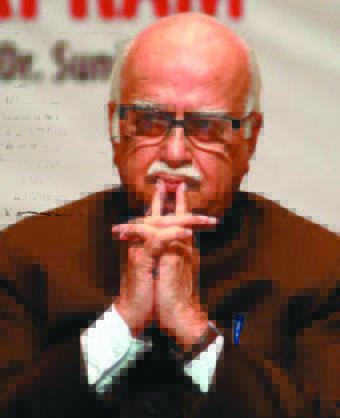
    NEW DELHI (TIP): LK Advani relented on March 20, as he’s done after earlier shows of rebellion, but he did so after forcing personal interventions from virtually the entire BJP-RSS brass.

    The late evening announcement that Advani will contest from Gandhinagar, as decided by BJP, came after strong RSS intervention and assurances by Narendra Modi and other BJP leaders that Advani will be backed by local cadre in his contest from the Gujarat seat.

    BJP leaders, who refused to be quoted, said Thursday’s agreement, essentially brokered by RSS, prevented any significant damage to Modi’s authority. A senior leader said Advani toeing the party line was “proof that Modi’s word finally prevailed”. Advani was visited by Modi, Sushma Swaraj, Arun Jaitley and Venkaiah Naidu. Rajnath Singh issued a statement saying Advani can choose his seat.

    But it was the concerted intervention by RSS brass — Mohan Bhagwat and Bhaiyyaji Joshi — that persuaded Advani to fall in line. Leaders in BJP and Sangh said one of the reasons they were worried about Advani contesting from Bhopal was the possibility of a “Madhya Pradesh morcha” in BJP. They said an Advani win from MP could have strengthened an anti-Modi section in BJP, with Advani as the rallying point and MP CM Shivraj Singh Chouhan as the power behind the faction.

  • Malaysia Airlines Flight MH370 Hijacked?

    Malaysia Airlines Flight MH370 Hijacked?

    Actions Likely ‘Deliberate,’ Prime Minister Najib Razak States

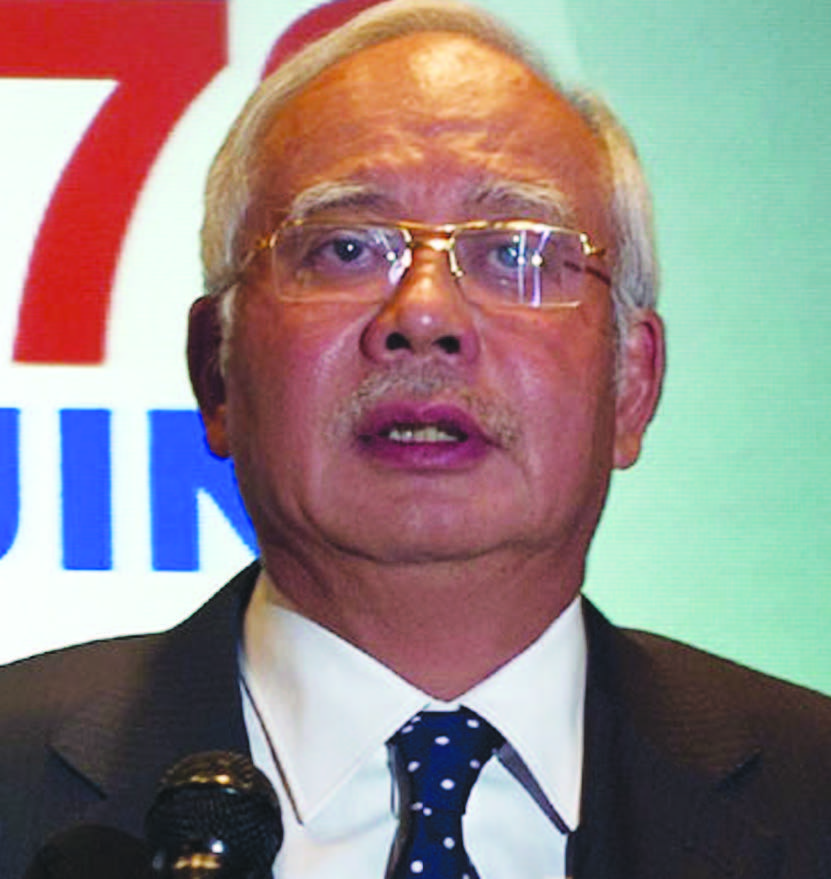
    KUALA LUMPUR (TIP) The mystery of the missing Malaysia Airlines Flight MH370 remains unresolved. Malaysia Prime Minister Najib Razak declared on Saturday, March 15 that “deliberate” actions were likely taken by someone on the missing Malaysia Airlines jet. He informed the press that authorities are confident the plane’s transponder was disabled. Malaysia Airlines Flight 370 left Kuala Lumpur, Malaysia, for Beijing, China, at 12:40 A.M. on March 8 with 239 people on board.

    Evidence is “consistent with the deliberate action of someone on the plane,” Razak said, adding that the investigation is “entering a new phase,” with search operations ending in the South China Sea. There is a “high degree of certainty that the Aircraft Communications Addressing and Reporting System (ACARS) was disabled just before the aircraft reached the east coast of peninsular Malaysia. Shortly afterwards, near the border between Malaysian and Vietnamese air traffic control, the aircraft’s transponder was switched off,” the prime minister stated. The radar then indicates that the plane turned back.

    “It then flew in a westerly direction back over peninsular Malaysia before turning northwest. Up until the point at which it left military primary radar coverage, these movements are consistent with deliberate action by someone on the plane.” The prime minister confirmed the aircraft on the radar was flight MH370. Aviation authorities now believe the plane’s last communication with the satellite was either in a northern corridor between the border of Kazakhstan and Turkmenistan to northern Thailand, or a southern corridor from Indonesia to the southern Indian Ocean, Razak said. Despite speculation about a hijacking, Razak reiterated that “we are still investigating all possibilities as to what caused MH370 to deviate from its original flight path.”

    Meanwhile, investigators have concluded that one or more people with significant flying experience hijacked the missing Malaysia Airlines jet, switched off communication devices and steered it off-course, a Malaysian government official involved in the investigation said Saturday, March 15. No motive has been established and no demands have been made known, and it is not yet clear where the plane was taken, said the official, who spoke on condition of anonymity because he was not authorized to brief the media. The official said that hijacking was no longer a theory. “It is conclusive,” he said. He said evidence that led to the conclusion were signs that the plane’s communications were switched off deliberately, data about the flight path and indications the plane was steered in a way to avoid detection by radar.

    The Boeing 777’s communication with the ground was severed just under one hour into a flight March 8 from Kuala Lumpur to Beijing. Malaysian officials have said radar data suggest it may have turned back toward and crossed over the Malaysian peninsula after setting out on a northeastern path toward the Chinese capital. Earlier, an American official told The Associated Press that investigators are examining the possibility of “human intervention” in the plane’s disappearance, adding it may have been “an act of piracy.” While other theories are still being examined, the U.S. official said key evidence suggesting human intervention is that contact with the Boeing 777’s transponder stopped about a dozen minutes before a messaging system on the jet quit. Such a gap would be unlikely in the case of an in-flight catastrophe.

    The Malaysian official said only a skilled aviator could navigate the plane the way it was flown after its last confirmed location over the South China Sea, and that it appeared to have been steered to avoid radar detection. The official said it had been established with a “more than 50 per cent” degree of certainty that military radar had picked up the missing plane after it dropped off civilian radar. Why anyone would want to do this is unclear. Malaysian authorities and others will be urgently investigating the backgrounds of the two pilots and 10 crew members, as well the 227 passengers on board. Some experts have said that pilot suicide may be the most likely explanation for the disappearance, as was suspected in a SilkAir crash during a flight from Singapore to Jakarta in 1997 and an Egypt Air flight in 1999.

    A massive international search effort began initially in the South China Sea where the plane’s transponders stopped transmitting. It has since been expanded onto the other side of the Malay Peninsula up into the Andaman Sea and into the Indian Ocean. The plane had enough fuel to fly for at least five hours after its last know location, meaning a vast swath of South and Southeast Asia would be within its reach. Investigators are analyzing radar and satellite data from around the region to try and pinpoint its final location, something that will be vital to hopes of finding the plane, and answering the mystery of what happened to it.

  • Dallas officials back off GOP convention preparation claim

    Dallas officials back off GOP convention preparation claim

    DALLAS (TIP): Dallas officials are backing off a claim that they could prepare American Airlines Center for the 2016 Republican convention a month faster than the period GOP officials have demanded, says a report published in March 14 Dallas Morning News. But as a Dallas contingent readies to present its bid next week to the party’s site selection committee in Washington, it still appears unlikely that the city will be able to guarantee anything close to the full six weeks outlined in bid specifications.

    The trouble for Dallas – and fellow bidders Denver, Phoenix, Cleveland and Columbus – is the playoff schedule for the NBA and the NHL. Dave Brown, the arena’s general manager, said Dallas is proposing a “sufficient window to get it accomplished” – longer than two weeks.He declined to elaborate. He said he didn’t recall telling The Dallas Morning News in an interview last month that “there’s no reason why a two-week window in front cannot accommodate the convention.” But if he did, Brown said this week, then he “probably shouldn’t have.”

    The timing dilemma is a key snag in Dallas’ bid to land the convention,where Republicans will formally nominate their next presidential candidate.Officials with extensive experience in political convention planning say it takes several weeks to prepare an arena for such an event, with construction often running right up until the event starts. As for a two-week time frame? “Impossible,” said Phil Alongi, executive producer of the 2012 Republican National Convention in Tampa, Fla. “People who say that, they quite frankly don’t know what they are talking about.” Dallas is one of eight competitors for the 2016 GOP convention,which would attract up to 50,000 people.

    And while all the cities feature pluses and minuses, Dallas is considered one of the front-runners, based on the availability of hotels near the arena and local organizers’ ability to raise money. But the preferred GOP timetable could prove vexing for Dallas officials. The GOP wants to hold its convention much earlier than in recent years, starting on a Monday between June 27 and July 18. GOP brass appear to favor the earliest possible date to give the next GOP nominee an even greater head start on the general election. The Republican National Committee’s 2016 bid specifications require that the party be granted “unlimited and exclusive access” to the main convention area six weeks before the event starts.

    That would mean early June at the latest. Over the last 10 years, the NBA Finals’ Game 7 has been scheduled, on average, for June 20. For the NHL, it’s been June 13. The latest finals game for either sport over the last 10 years was in 2013,when the NHL finished June 24. Those schedules typically aren’t finalized until before that year’s regular seasons. And officials with the Dallas Mavericks and Dallas Stars have said they wouldn’t move any playoff games to accommodate a convention. So to be safe, Dallas officials will have to account for the worst-case scenario – logistically, at least – that the Mavs and Stars make their league’s respective finals in 2016.That would probably leave just four weeks for arena prep time, a crunch that wouldn’t be an issue in Las Vegas, Kansas City and Cincinnati,which don’t have pro basketball or hockey teams. “We’re proposing an availability and a plan that will certainly be able to accommodate their needs,” Brown said.

    He reiterated that the city wouldn’t ask the teams to move possible playoff games. “Our first obligation is to our teams,” he said. “We’re going to save every playoff date.”Six weeks may seem excessive for a convention that usually lasts four days. American Airlines Center routinely shifts quickly between basketball and hockey. Major concerts come through all the time. And the arena has hosted other major events.Brown said last month that the arena’s setup and staff experience lend itself to a “much shorter move-in and make-ready time” for the convention. He suggested a “two-week window” rather than “five, six, seven weeks,which they would like to have.””We move in massive shows overnight, in six-, eight-hour time frames,” he said then.

    “The window the RNC has requested, I think, has probably got a lot of slack in it.”Experienced convention planners say that’s not the case. They emphasize that every extra moment counts in the rush to get ready. Workers build the podium, an elaborate, high-tech display with multiple video screens. Seats are rearranged, and many are completely removed. Luxury suites often have to be ripped apart and rebuilt. Miles upon miles of cable are brought in. Television networks from around the world build full broadcast studios.Workspace is constructed for thousands of media members and convention staff.

    And sometimes the changes go even deeper – in 1996, the setup of the Democratic convention required that large slabs of concrete be carved out of the United Center in Chicago. Then everything must be checked. The production has to be rehearsed. And all of it has to be done within the confines of extremely tight security. “You just need every asset you can bring to bear to make it happen,” said Don Foley,who managed the 1996 Democratic convention. Officials said it might be possible to shrink the preparations down to four weeks. But that would cost more, as crews would have to work around the clock.

    There would be little room for error. And elements of the production might have to be scaled back.The city’s reputation could also take a hit – as Sochi’s did before the recent Winter Olympics – if major work still needs to be finished when the media arrives in earnest the week before the convention.”The first rounds of stories will be, ‘Do you have your act together?’” said Wally Podrazik,who has planned media logistics for several Democratic conventions. “It’s really important for the party to have sufficient time.”

  • Indian diplomat Devyani Khobragade is indicted again

    Indian diplomat Devyani Khobragade is indicted again

    NEW YORK (TIP): Barely two days after the dismissal of her indictment, the Indian diplomat whose arrest led to a long drawn diplomatic row between India and the US has again been indicted by the federal government and faces arrest if she returns to the United States, federal prosecutors said Friday, March 14.

    Devyani Khobragade faces one count of visa fraud and one count of making false statements for allegedly lying on a visa application about how much she paid her housekeeper, according to the indictment filed in a Manhattan federal court Friday, March 14. An arrest warrant also was issued, said Jerika Richardson, spokeswoman for the United States attorney’s office for the Southern District of New York. The fresh indictment comes just 2 days after the original indictment against Khobragade was dismissed by a federal judge who agreed with her lawyers’ assertion that she was protected under diplomatic immunity at the time of the first indictment.

    The judgment handed out by USDJ Shira A. Scheindlin on March 12 said, “Khobragade’s motion to dismiss the Indictment on the ground of diplomatic immunity is granted. Khobragade’s conditions of bail are terminated, and her bond is exonerated. It is ordered that any open arrest warrants based on this Indictment must be vacated.” The judge’s dismissal of the indictment was widely applauded by the Indian American community who have been worried over the worsening relations between India and the US over the diplomat’s case. Khobragade’s attorney, Daniel Arshack had apprehended a fresh indictment even as he commented that the former deputy general consul, now back in India, was pleased by the ruling.

    “She is heartened that the rule of law prevailed,” he said, adding that a new indictment “might be viewed an aggressive act and one that (prosecutors) would be ill-advised to pursue.” The indication of the fresh indictment had come on the day Judge Shira A. Scheindlin handed down the judgment dismissing the indictment. James Margolin, a spokesman for Manhattan US Attorney Preet Bharara had said in a statement post verdict, March 12,”The District Court found that Devyani Khobragade had immunity during a limited period of time between January 8 and January 9, when the indictment was returned by a grand jury. As the court indicated in its decision and as Devyani Khobragade has conceded, there is currently no bar to a new indictment against her for her alleged criminal conduct, and we intend to proceed accordingly.”

    So, in a quick move, on March 14, the office of Preet Bharara, the District Attorney of the NY Southern District handling Devyani Khobragade case, re-indicted Khobragade. Her attorney, Daniel Arshack, declined comment Friday. “The government of India will respond in due course,” he said in a statement. Meanwhile, government of India has expressed dismay and shock at the re-indictment of the diplomat. A statement issued by the Ministry of External Affairs (MEA) said, “We reiterate that the case has no merit. Therefore this second indictment has no impact on our stated position. Now that Dr Khobragade has returned to India, the court in the US has no jurisdiction in India over her. Government will, therefore, no longer engage on this case in the US’ legal system.” The vital question is : can Dr. Khobragade ignore the criminal case against her in a US court? The MEA Spokesperson further said: “This was an unnecessary step. Any measures consequent to this decision in the US, will unfortunately impact upon efforts on both sides to build the India-US strategic partnership, to which both sides are committed.”

    The question arises whether individual legal issues are so important as to relegate in to the background “the strategic partnership” between two countries. India Americans, worried about the relations between India and the US, have voiced their opinion on the issue. Here is what an eminent attorney Ravi Batra has to say, ” I am disturbed by what I have seen occur from December 12th to March 12th, when Judge Scheindlin issued her surprising and unexpected technical-dismissal of the January 9th Indictment. There has been much noise from all quarters since December 12th, who sought to vilify the United States and our above-politics United States Attorney Preet Bharara. Some, perhaps, to derail the bilateral relationship. Others, perhaps, questioning how could a friendly nation treat another so. Yet others, were playing for personal advantage – much as an undertaker does upon every death. But the most painful cut, made repeatedly, was the legally false or factually false-laced comment coming from a source whose job was to defend Devyani, within the bounds of law. While lawyers, like doctors, can misdiagnose, they ought not misrepresent facts.

    Certainly, to do both, and repeatedly, when you have over 1 billion good and decent people worried about national respect and national honor is beyond comprehension as it is a core wrong.” Khobragade was arrested in December, with prosecutors saying she claimed she paid her Indian maid $4,500 per month to get the woman a visa but actually paid her less than the US minimum wage. Prosecutors said the maid received less than $3 per hour for her work. The arrest outside Khobragade’s daughter’s Manhattan school created outrage in India, particularly because of the strip-search. The US Marshals said Khobragade was treated no differently than others who are arrested. Bharara said Khobragade was arrested discreetly, given coffee and offered food while detained and afforded courtesies most Americans wouldn’t get, such as being allowed to make phone calls for two hours to arrange child care and sort out personal matters. Bharara, who was born in India but moved with his family to the US, also said Khobragade wasn’t handcuffed, restrained or arrested in front of her children. Still, many in India saw the arrest as unnecessarily humiliating. Indian National Security Adviser Shivshankar Menon called the treatment “despicable and barbaric.”

    Khobragade had pleaded not guilty. Indian officials said the housekeeper had tried to blackmail the diplomat, which the housekeeper’s advocates disputed. The episode chilled US-Indian relations, and India took such steps as removing concrete traffic barriers around the US Embassy and revoking diplomats’ ID cards. US Secretary of State John Kerry called a top Indian official to express his regret over what happened. After being indicted, Khobragade complied with a Department of State request to leave the US. The Indian government then asked Washington to withdraw a diplomat from the US Embassy in New Delhi. The US complied. Of late, a section of the Indian American community has been critical of Preet Bharara who they perceive as targeting Indians, whatever the reason and the motive. It appears the ace attorney realized it was time to clarify his position.

    He, therefore, had a statement put out on the issue. Refuting the perception that Preet Bharara is targeting Indians, James M. Margolin, Chief Public Information Officer, United States Attorney’s Office, SDNY, said, March 12 late afternoon: “Regarding the perception that Preet Bharara is “targeting Indians,” I would note that the US Attorney’s Office does not “target” any group of individual. The Office prosecutes people for whom there is evidence of criminal conduct. A very small percentage of defendants in cases brought by this office happens to be Indian or of Indian descent, but their ethnicity or national origin has nothing to do with why they are prosecuted. Nor does ethnicity, national origin, religion or any other demographic characteristic have any bearing on the prosecution of any of the hundreds of other defendants prosecuted by this Office every year. And the U.S. Attorney himself does not suggest charges or decide to bring them; cases are investigated and brought by law enforcement agents working with the prosecuting attorneys in our Office.” What next?

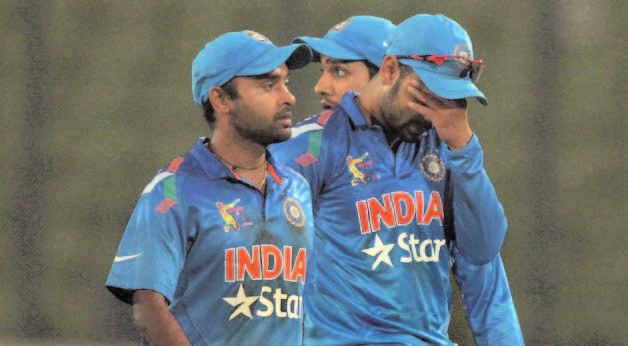
  • World Twenty20: Chance to check combination as India take on Sri Lanka

    World Twenty20: Chance to check combination as India take on Sri Lanka

    MIRPUR (TIP): Their confidence at its lowest ebb after continuous failures, a beleaguered India would look to pick up the pieces and make a fresh start when they take on an upbeat Sri Lanka in their first warm-up game of the ICC World Twenty20 on Monday.

    While the tournament proper will begin for India on March 21 against arch-rivals Pakistan, the two warm-up ties will provide captain Mahendra Singh Dhoni with a chance to sort out his playing combination before the real action begins. The warm-up tie gives the team a chance to try out all 15 players in the squad. Therefore while all the batsmen can expect to get a hit in match situation, the bowlers will also get an opportunity to prove their worth to the skipper.

    Also the fact that Indian players, smarting from disastrous tours of South Africa and New Zealand besides the failed Asia Cup campaign, will be playing competitive T20 after five months will also help them adapt quickly having last played a T20 international in October against Australia. The result of the match is of little consequence as various combinations are expected to be tried out. The most interesting aspect will be the opening combination in this format. Sikhar Dhawan and Rohit Sharma are a regular opening pair in ODIs. But Rohit’s initial struggle against white kookaburra in the 50-over format is well documented.

    T20 would not give the Mumbaikar enough time to settle down. Ajinkya Rahane, who has successfully opened for Rajasthan Royals in the Indian Premier League, might just partner Dhawan in such a scenario. If the last match of the Asia Cup against Afghanistan is an indicator, then Rahane has a bright chance of opening the batting for India. Yuvraj Singh, one of India’s proven matchwinners, will be making a comeback along with Suresh Raina, who is also returning to the national team after being dumped from the Asia Cup squad on grounds of indifferent form. But Raina has been one among India’s better T20 batsmen — the only one from the country to score an international T20 century.

    Skipper Dhoni, having recovered from a side strain, would like a couple of good knocks under his belt while Virat Kohli would also aim to get into the groove before Pakistan come calling. The warm up match against Sri Lanka will certainly give both the left-handers the much needed confidence they had lost due to string of poor scores in earlier international matches. The likes of Ambati Rayudu and Stuart Binny will aim to keep their captain interested for a place in the side. A quickfire 50 off 30 balls from Rayudu or a couple of wickets and a cameo from Binny might prompt the team management to think differently although they haven’t shown any inclination towards being flexible with team combination.

    “We might not have played a lot of T20 internationals but the IPL exposure will certainly help us.We need to play as a unit in order to do well,” team’s premier batsman Virat Kohli told the mediapersons during an open session at the team hotel yesterday. India’s bowling certainly is their problem area in the slam-bang version of the game. India do not have bowlers who have enough variations to keep the batsman guessing in the back 10 of a T20 game. Mohammed Shami is India’s strike bowler but he has proved to be quite expensive in the death overs as far as ODIs are concerned.


    14

    Bhuvneshwar Kumar and Mohit Sharma have also never been a problem for top-class international batsman. This brings the focus on Varun Aaron — India’s fastest bowler at the moment. While there’s no denying that Aaron has the pace, he is inconsistent and it has already been proved in the few IPL matches that he has played for the Delhi Daredevils. A lot will depend on how well Ravichandran Ashwin and Ravindra Jadeja bowl on slowish tracks.With both being more than capable batsmen, they are an automatic choice in the playing XI. Sri Lanka will be very upbeat, having won the Asia Cup and the impasse on Players’ Payment issue with Sri Lanka Cricket (SLC) on the verge of end. Young Dinesh Chandimal will have some of the greatest players of modern era like Mahela Jayawardene, Kumar Sangakkara to teach him a few tricks on the leadership issues. Lasith Malinga, who has been a terror for the batsmen in IPL, will be again asking questions to the Indian willow wielders. In all a victory will boost the fledgling confidence of an Indian team that has been on the wane for some time now.

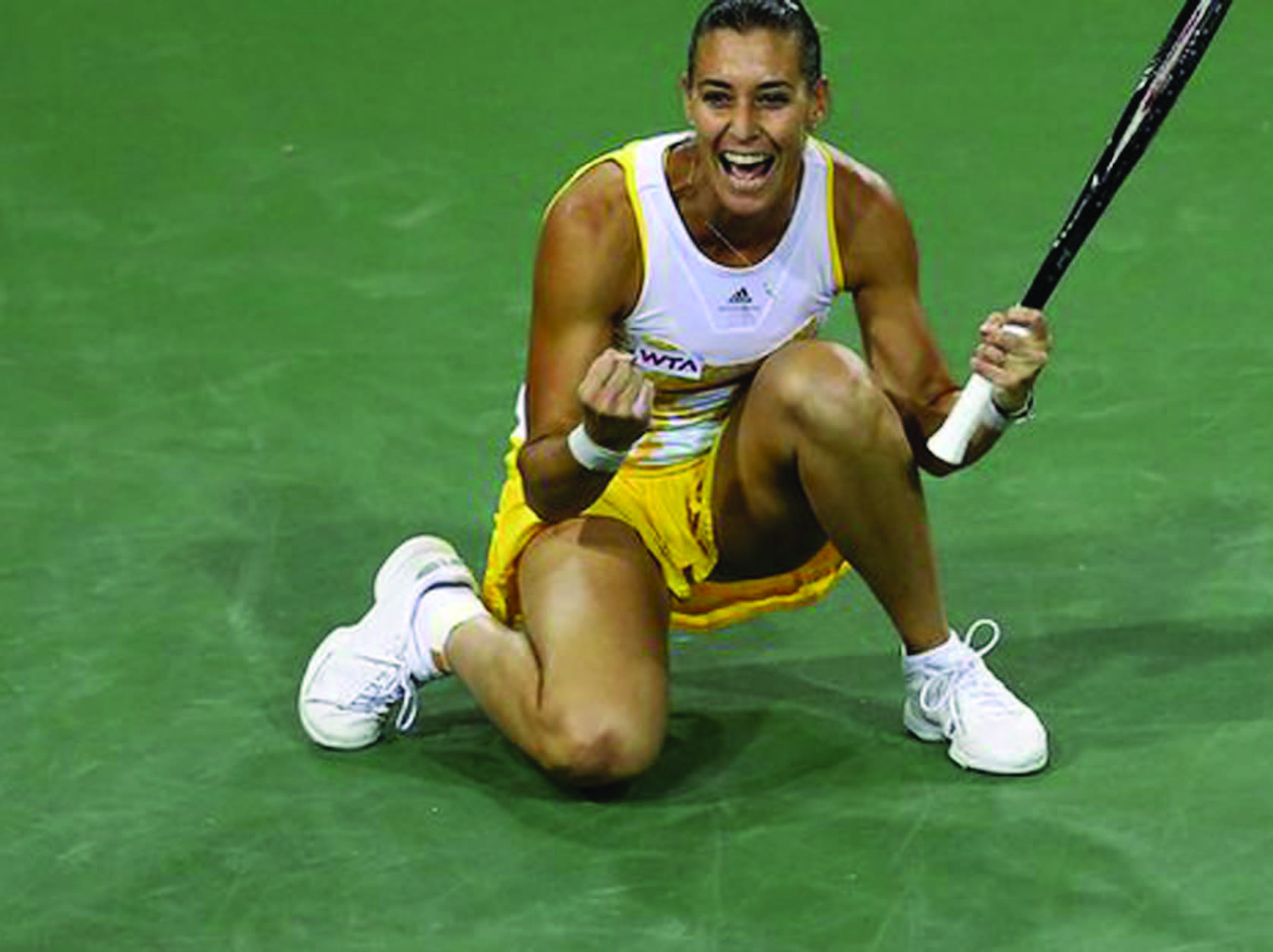
  • Pennetta shocks Li to reach Indian Wells final

    Pennetta shocks Li to reach Indian Wells final

    INDIAN WELLS (TIP): Flavia Pennetta shocked Li Na in the semifinals at Indian Wells on Friday, beating the Australian Open champion 7-6 (7/5), 6-3 to set up a title clash with Agnieszka Radwanska. Li, the Chinese world number two who was the top seed in the elite WTA premier event, had pounded winners past Pennetta in a crushing 6-2, 6-2 victory in the Australian Open quarterfinals in January.

    But her bid to reach the final in the California desert for the first time was hampered by a welter of forehand errors and nine double faults. “I don’t think I was playing bad,” Li said. “I think it was pretty high level match. Some points I was feeling I still have chance (but) more important point I got double fault.”

    Eight of her nine double faults came in the opening set, including one to hand Pennetta the set on her second set point in the tiebreaker. Li put the double faults down to a change in the mechanics of her serve, and said it was something she would just have to fight through. “Of course if I want to change something, you cannot change for one or two days,” she said.

    “You need time to organize everything. “I was feeling better and better. Should be OK in next tournament or tournament after,” she added. Pennetta, ranked 21st in the world and seeded 20th here, had never made it past the fourth round in 11 prior appearances. Now she will vie for the title on Sunday against Poland’s Radwanska, the world number three and second seed who beat sixth-seeded Romanian Simona Halep 6-3, 6-4.

  • THE BHAGAVAD GITA

    THE BHAGAVAD GITA

    CONTINUED FROM Vol 2 ISSUE 9

    DIVINE AND DEMONIC QUALITIES
    A list of major divine qualities that should be cultivated for salvation

    The Supreme Lord said: Fearlessness, purity of the inner psyche, perseverance in the yog of Self-knowledge, charity, sense-restraint, sacrifice, study of the scriptures, austerity, honesty; nonviolence, truthfulness, absence of anger, renunciation, calmness, abstinence from malicious talk, compassion for all creatures, freedom from greed, gentleness, modesty, absence of fickleness, splendor, forgiveness, fortitude, cleanliness, absence of malice, and absence of pride — these are the (twenty-six) qualities of those endowed with divine virtues, O Arjun. (16.01-03)

    A list of demonic qualities that should be given up before spiritual journey can begin
    O Arjun, the marks of those who are born with demonic qualities are: Hypocrisy, arrogance, pride, anger, harshness, and ignorance. (16.04) Divine qualities lead to salvation (Moksh); the demonic qualities are said to be for bondage. Do not grieve, O Arjun, you are born with divine qualities. (16.05)

    There are only two types of human beings, the wise and the ignorant
    Basically, there are only two types or castes of human beings in this world: The divine, and the demonic. The divine has been described at length. Now hear from Me about the demonic, O Arjun. (16.06) Persons of demonic nature do not know what to do and what not to do. They have neither purity nor good conduct nor truthfulness. (16.07) They say that the world is unreal, without a substratum, without a God, and without an order. The world is caused by sexual union of man and woman alone and nothing else. (16.08)

    Adhering to this wrong, atheistic view, these degraded souls — with small intellect and cruel deeds — are born as enemies for the destruction of the world. (16.09) Filled with insatiable desires, hypocrisy, pride, and arrogance; holding wrong views due to delusion; they act with impure motives. (16.10) Obsessed with endless anxiety lasting until death, considering sense gratification their highest aim, and convinced that sense pleasure is everything; (16.11) Bound by hundreds of ties of desire and enslaved by lust and anger, they strive to obtain wealth by unlawful means to fulfill sensual pleasures.

    They think: (16.12) This has been gained by me today; I shall fulfill this desire; I have this much wealth and will have more wealth in the future; (16.13) that enemy has been slain by me, and I shall slay others also. I am the lord. I am the enjoyer. I am successful, powerful, and happy; (16.14) I am rich and born in a noble family. Who is equal to me? I shall perform sacrifice, I shall give charity, and I shall rejoice. Thus deluded by ignorance, (16.15) bewildered by many fancies, entangled in the net of delusion, addicted to the enjoyment of sensual pleasures, they fall into a foul hell. (16.16) Self-conceited, stubborn, filled with pride and intoxication of wealth, they perform sacrifice (charity,Yajn) only in name, for show, and not according to scriptural injunction. (16.17) These malicious people cling to egoism, power, arrogance, lust, and anger; and hate Me who dwells in their own bodies and those of others. (16.18)

    Suffering is the destiny of the ignorant
    I hurl these haters, cruel, sinful, and mean people into the cycles of rebirth in the womb of demons again and again. (16.19) O Arjun, entering the wombs of demons, birth after birth, the deluded ones sink to the lowest hell without ever attaining Me. (16.20)

    Lust, anger, and greed are the three gates to hell
    Lust, anger, and greed are the three gates of hell leading to the downfall (or bondage) of the individual. Therefore, one must (learn to) give up these three. (16.21) One who is liberated from these three gates of hell, O Arjun, does what is best and consequently attains the supreme abode. (16.22)

    One must follow the scriptural injunctions
    One who acts under the influence of his or her desires, disobeying scriptural injunctions, neither attains perfection nor happiness nor the supreme abode. (16.23) Therefore, let the scripture be your authority in determining what should be done and what should not be done. You should perform your duty following the scriptural injunction. (16.24)

    THREEFOLD FAITH
    Arjun said: What is the mode of devotion of those who perform spiritual practices with faith, but without following the scriptural injunctions, O Krishn? Is it in the mode of goodness (Saattvik), passion (Raajasik), or ignorance (Taamasik)? (17.01)

    Three types of faith
    The Supreme Lord said: The natural faith of embodied beings is of three kinds: Goodness, passion, and ignorance (Saattvik, Raajasik, and Taamasik). Now hear about these from Me. (17.02) O Arjun, the faith of each is in accordance with one’s own natural disposition (governed by Karmic impressions). One is known by one’s faith. One can become whatever one wants to be (if one constantly contemplates on the object of desire with faith). (17.03) Persons in the mode of goodness worship celestial controllers (Devas); those in the mode of passion worship supernatural rulers and demons; and those in the mode of ignorance worship ghosts and spirits. (17.04) Ignorant persons of demonic nature are those who practice severe austerities without following the prescription of the scriptures, who are full of hypocrisy and egotism, who are impelled by the force of desire and attachment, and who senselessly torture the elements in their body and also Me who dwells within the body. (17.05-06)

    Three types of food
    The food preferred by all of us is also of three types. So are the sacrifice, austerity, and charity. Now hear the distinction between them. (17.07) The foods that promote longevity, virtue, strength, health, happiness, and joy are juicy, smooth, substantial, and nutritious. Such foods are liked by persons in the mode of goodness. (17.08) People in the mode of passion like foods that are very bitter, sour, salty, hot, pungent, dry, and burning; and cause pain, grief, and disease. (17.09) People in the mode of ignorance like foods that are stale, tasteless, putrid, rotten, refuse, and impure (such as meat and alcohol). (17.10)

    Three types of sacrifices
    Selfless service (Seva, Yajn), enjoined by the scriptures and performed without the desire for the fruit, with a firm belief and conviction that it is a duty, is in the mode of goodness. (17.11) Selfless service (Seva, Yajn) that is performed only for show and aiming for fruit, is in the mode of passion, O Arjun. (17.12) Selfless service (Seva, Yajn) that is performed without following the scripture, in which no food is distributed, which is devoid of mantra, faith, and gift, is said to be in the mode of ignorance. (17.13)

    Austerity of thought, word, and deed
    The worship of celestial controllers (Devas), the priest, the guru, and the wise; purity, honesty, celibacy, and nonviolence – — these are said to be austerity of deed. (17.14) Speech that is non-offensive, truthful, pleasant, beneficial, and is used for the regular study of scriptures is called the austerity of word. (17.15) Serenity of mind, gentleness, calmness, selfcontrol, and purity of thought — these are called austerity of thought. (17.16)

    Three types of austerity
    The above mentioned threefold austerity (of thought, word, and deed), practiced by yogis with supreme faith, without a desire for the fruit, is said to be in the mode of goodness. (17.17) Austerity that is performed for gaining respect, honor, reverence, and for the sake of show, yielding an uncertain and temporary result, is said to be in the mode of passion. (17.18) Austerity performed with foolish stubbornness or with self-torture or for harming others, is said to be in the mode of ignorance. (17.19)

    Three types of charity
    Charity that is given at the right place and time as a matter of duty to a deserving candidate who does nothing in return, is considered to be in the mode of goodness. (17.20) Charity that is given unwillingly, or to get something in return, or to gain for some fruit, is said to be in the mode of passion. (17.21) Charity that is given at a wrong place and time to unworthy persons, or without paying respect to the receiver or with ridicule, is said to be in the mode of ignorance. (17.22)

    Threefold name of God “
    OM TAT SAT” is said to be the threefold name of the Eternal Being (Brahm). Persons with good (Braahmanic) qualities, the Vedas, and the selfless service (Seva, Yajn) were created by and from Brahm in the ancient time. (17.23) Therefore, acts of sacrifice, charity, and austerity prescribed in the scriptures are always commenced by uttering “OM” by the knowers of the Supreme Being (ParBrahm). (17.24) Various types of sacrifice, charity, and austerity are performed by the seekers of salvation (Moksh) by uttering “TAT” (or He is all) without seeking a reward. (17.25) The word “SAT” is used in the sense of Reality and goodness. The word “SAT” is also used for an auspicious act, O Arjun. (17.26)

  • SRI GURU GRANTH SAHIB

    SRI GURU GRANTH SAHIB

    The Sikh Gurus never believed in the exclusivity of their teachings. The Gurus undertook travels to spread their message to peoples of different cultures in their own native languages. The Gurus did not believe in the ideas of any language being ‘sacred’ or ‘special’. It is in this spirit that various Sikh scholars have undertaken efforts to translate Sri Guru Granth Sahib into a number of languages in order to spread the teachings of the Gurus and to bring the Sikh religion to the people of the world as Guru Nanak wished.

    Enshrine the Lord’s Name within your heart. The Word of the Guru’s Bani prevails throughout the world; through this Bani, the Lord’s Name is obtained.” (Guru Amar Das, Maru, pg. 1066)

    CONTINUED FROM VOL 2 ISSUE 9 She who knows her Husband Lord to be always with her, enjoys His Constant Presence. || 1 || O woman, you must walk in harmony with the Guru’s Will. Night and day, you shall enjoy your Husband, and you shall intuitively merge into the True One. || 1 || Pause || Attuned to the Shabad, the happy soul-brides are adorned with the True Word of the Shabad. Within their own home, they obtain the Lord as their Husband, with love for the Guru. Upon her beautiful and cozy bed, she enjoys the Love of her Lord. She is overflowing with the treasure of devotion. That Beloved God abides in her mind; He gives His Support to all. || 2 || I am forever a sacrifice to those who praise their Husband Lord.

    I dedicate my mind and body to them, and give my head as well; I fall at their feet. Those who recognize the One renounce the love of duality. The Gurmukh recognizes the Naam, O Nanak, and is absorbed into the True One. || 3 || 29 || 62 || SIREE RAAG, THIRD MEHL: O Dear Lord, You are the Truest of the True. All things are in Your Power. The 8.4 million species of beings wander around searching for You, but without the Guru, they do not find You. When the Dear Lord grants His Forgiveness, this human body finds lasting peace. By Guru’s Grace, I serve the True One, who is Immeasurably Deep and Profound. || 1 || O my mind, attuned to the Naam, you shall find peace. Follow the Guru’s Teachings, and praise the Naam; there is no other at all. || 1 || Pause || The Righteous Judge of Dharma, by the Hukam of God’s Command, sits and administers True Justice.

    Those evil souls, ensnared by the love of duality, are subject to Your Command. The souls on their spiritual journey chant and meditate within their minds on the One Lord, the Treasure of Excellence. The Righteous Judge of Dharma serves them; blessed is the Lord who adorns them. || 2 || One who eliminates mental wickedness from within the mind, and casts out emotional attachment and egotistical pride, comes to recognize the All-pervading Soul, and is intuitively absorbed into the Naam. Without the True Guru, the self-willed manmukhs do not find liberation; they wander around like lunatics. They do not contemplate the Shabad; engrossed in corruption, they utter only empty words. || 3 || He Himself is everything; there is no other at all. I speak just as He makes me speak, when He Himself makes me speak. The Word of the Gurmukh is God Himself.

    Through the Shabad, we merge in Him. O Nanak, remember the Naam; serving Him, peace is obtained. || 4 || 30 || 63 || SIREE RAAG, THIRD MEHL: The world is polluted with the filth of egotism, suffering in pain. This filth sticks to them because of their love of duality. This filth of egotism cannot be washed away, even by taking cleansing baths at hundreds of sacred shrines. Performing all sorts of rituals, people are smeared with twice as much filth. This filth is not removed by studying. Go ahead, and ask the wise ones. || 1 || O my mind, coming to the Sanctuary of the Guru, you shall become immaculate and pure. The self-willed manmukhs have grown weary of chanting the Name of the Lord, Har, Har, but their filth cannot be removed. || 1 || Pause || With a polluted mind, devotional service cannot be performed, and the Naam, the Name of the Lord, cannot be obtained.

    The filthy, self-willed manmukhs die in filth, and they depart in disgrace. By Guru’s Grace, the Lord comes to abide in the mind, and the filth of egotism is dispelled. Like a lamp lit in the darkness, the spiritual wisdom of the Guru dispels ignorance. || 2 || “I have done this, and I will do that” – I am an idiotic fool for saying this! I have forgotten the Doer of all; I am caught in the love of duality. There is no pain as great as the pain of Maya; it drives people to wander all around the world, until they become exhausted. Through the Guru’s Teachings, peace is found, with the True Name enshrined in the heart. || 3 || I am a sacrifice to those who meet and merge with the Lord. This mind is attuned to devotional worship; through the True Word of Gurbani, it finds its own home. With the mind so imbued, and the tongue imbued as well, sing the Glorious Praises of the True Lord. O Nanak, never forget the Naam; immerse yourself in the True One.

    || 4 || 31 || 64 || SIREE RAAG, FOURTH MEHL, FIRST HOUSE: Within my mind and body is the intense pain of separation; how can my Beloved come to meet me in my home? When I see my God, seeing God Himself, my pain is taken away. I go and ask my friends, “How can I meet and merge with God?” || 1 || O my True Guru, without You I have no other at all. I am foolish and ignorant; I seek Your Sanctuary. Please be Merciful and unite me with the Lord. || 1 || Pause || The True Guru is the Giver of the Name of the Lord. God Himself causes us to meet Him. The True Guru understands the Lord God. There is no other as Great as the Guru. I have come and collapsed in the Guru’s Sanctuary. In His Kindness, He has united me with God. || 2 || No one has found Him by stubbornmindedness. All have grown weary of the effort. Thousands of clever mental tricks have been tried, but still, the raw and undisciplined mind does not absorb the Color of the Lord’s Love. By falsehood and deception, none have found Him. Whatever you plant, you shall eat.

    || 3 || O God, You are the Hope of all. All beings are Yours; You are the Wealth of all. O God, none return from You empty-handed; at Your Door, the Gurmukhs are praised and acclaimed. In the terrifying world-ocean of poison, people are drowning – please lift them up and save them! This is servant Nanak’s humble prayer. || 4 || 1 || 65 || SIREE RAAG, FOURTH MEHL: Receiving the Naam, the mind is satisfied; without the Naam, life is cursed. If I meet the Gurmukh, my Spiritual Friend, he will show me God, the Treasure of Excellence. I am every bit a sacrifice to one who reveals to me the Naam. || 1 || O my Beloved, I live by meditating on Your Name. Without Your Name, my life does not even exist. My True Guru has implanted the Naam within me. || 1 || Pause || The Naam is a Priceless Jewel; it is with the Perfect True Guru. When one is enjoined to serve the True Guru, He brings out this Jewel and bestows this enlightenment. Blessed, and most fortunate of the very fortunate, are those who come to meet the Guru.

    || 2 || Those who have not met the Primal Being, the True Guru, are most unfortunate, and are subject to death. They wander in reincarnation over and over again, as the most disgusting maggots in manure. Do not meet with, or even approach those people, whose hearts are filled with horrible anger. || 3 || The True Guru, the Primal Being, is the Pool of Ambrosial Nectar. The very fortunate ones come to bathe in it. The filth of many incarnations is washed away, and the Immaculate Naam is implanted within. Servant Nanak has obtained the most exalted state, lovingly attuned to the True Guru. || 4 || 2 || 66 || SIREE RAAG, FOURTH MEHL: I sing His Glories, I describe His Glories, I speak of His Glories, O my mother. The Gurmukhs, my spiritual friends, bestow virtue. Meeting with my spiritual friends, I sing the Glorious Praises of the Lord. The Diamond of the Guru has pierced the diamond of my mind, which is now dyed in the deep crimson color of the Name.

    || 1 || O my Lord of the Universe, singing Your Glorious Praises, my mind is satisfied. Within me is the thirst for the Lord’s Name; may the Guru, in His Pleasure, grant it to me. || 1 || Pause || Let your minds be imbued with His Love, O blessed and fortunate ones. By His Pleasure, the Guru bestows His Gifts. The Guru has lovingly implanted the Naam, the Name of the Lord, within me; I am a sacrifice to the True Guru. Without the True Guru, the Name of the Lord is not found, even though people may perform hundreds of thousands, even millions of rituals. || 2 || Without destiny, the True Guru is not found, even though He sits within the home of our own inner being, always near and close at hand. There is ignorance within, and the pain of doubt, like a separating screen. Without meeting with the True Guru, no one is transformed into gold.

    The self-willed manmukh sinks like iron, while the boat is very close. || 3 || The Boat of the True Guru is the Name of the Lord. How can we climb on board? One who walks in harmony with the True Guru’s Will comes to sit in this Boat. Blessed, blessed are those very fortunate ones, O Nanak, who are united with the Lord through the True Guru. || 4 || 3 || 67 || SIREE RAAG, FOURTH MEHL: I stand by the wayside and ask the Way. If only someone would show me the Way to God – I would go with him. I follow in the footsteps of those who enjoy the Love of my Beloved. I beg of them, I implore them; I have such a yearning to meet God! || 1 || O my Siblings of Destiny, please unite me in Union with my Lord God. I am a sacrifice to the True Guru, who has shown me the Lord God. || 1 || Pause || In deep humility, I fall at the Feet of the Perfect True Guru. The Guru is the Honor of the dishonored.