Year: 2014

  • Left to go it alone in Tamil Nadu after Jayalalithaa’s snub

    Left to go it alone in Tamil Nadu after Jayalalithaa’s snub

    NEW DELHI (TIP):
    Smarting under Jayalalithaa’s snub over the request for two seats each to CPI and CPM, the top Left leaders on Thursday attributed it to the Tamil Nadu chief minister’s confidence that the AIADMK would sweep the polls in a four-cornered contest. “All along, Tamil Nadu had twocornered fight between DMK and AIADMK. But for the first time there is a possibility of DMK, AIADMK, Congress and BJP fighting as separate groups. She has done her calculation and is confident that opposition votes will split very badly. Tamil Nadu has never witnessed election like this,” said a top left leader who didn’t want to be named. He said indication that the alliance will fall apart had come few days back when she decided to offer one seat each to CPM and CPI.

    “We would have settled for two seats each but she was unwilling,” he said. He though dismissed speculation that by dumping the Left, Jayalalithaa has opened window for BJP. “BJP’s alliance with Vijayakanth’s party is almost certain. She wants the opposition vote to get as fragmented as possible,” said a senior CPI leader said adding that the post-poll scenario couldn’t be predicted now. Jayalalithaa’s reported order to the party cadre to keep the attack confined to Congress and go soft on BJP during the campaign had dropped hints about her plans to change tack after having shared the stage with the Left and other leaders for a Third Front. The Left now says it will not be part of any alliance but rather become the fifth political formation in Tamil Nadu.

    “After having campaigned so much against DMK’s corruption, we cannot join them or any other alliance,” said the Left leader. CPM and CPI leaders have now decided to contest at least 10 to 12 seats in the state. Both the parties won one seat each in Tamil Nadu in 2009. While CPM won Coimbatore, CPI got Tenkasi. Without alliance with either of the big two – DMK and AIADMK – it is unlikely that Left will repeat its 2009 performance. The Left has roughly 6-7% vote with few areas of dominance.

  • Himachal MP in cash-on-camera case

    Himachal MP in cash-on-camera case

    SHIMLA (TIP):
    The Himachal Pradesh Vigilance and Anti-Corruption Bureau on March 6 booked sitting BJP MP Virender Kashyap, who was allegedly caught accepting cash on camera. The case against the MP was registered under Section 9 of the Prevention of Corruption Act in Shimla. The party has retained the one-time MP from the Shimla (reserved) seat.

    “The case was registered after the authenticity of the video CD was proved by the Central Forensic Science Laboratory of Chandigarh,” said the investigating official. In November, the Himachal Pradesh high court had issued a notice to Kashyap on a petition for quashing a police inquiry report giving a clean chit to him after he was allegedly caught accepting cash.

  • Ready to contest polls: VK Singh

    Ready to contest polls: VK Singh

    NEW DELHI (TIP):
    Former Army chief General V K Singh, who joined the BJP recently, said he was ready to fight the coming Lok Sabha elections, even as he came down heavily on the UPA government, especially the Congress, for allegedly neglecting the military. “Let me make a statement, so far as the armed forces are concerned, Congress party has not been a good party. It has not been a good party because a lot of things which the forces wanted, whether it was the commissions, whether it was the way the equipment should have been done, whether it was the protocols, Congress party has always tried to be against the forces if I can say so,” Gen Singh told a TV channel.

    In an unprecedented move, Gen Singh, when he was the Army chief, dragged the UPA government to Supreme Court claiming that he was born in 1951 and not in 1950 as the official records showed. The former chief withdrew the petition, amid a noticeable breakdown in his relations with the political establishment. Justifying his decision to join BJP, Gen Singh said, “See, if you look at the wide range of issues I started on right after retirement, some things appear as being close to BJP because they were pointing out faults with the existing system.” He said he joined the BJP not because of any assurance. “I am in the party because I was convinced by myself that I should join a political platform,” he said.

  • Michelle Obama felicitates Indian acid attack victim Laxmi

    Michelle Obama felicitates Indian acid attack victim Laxmi

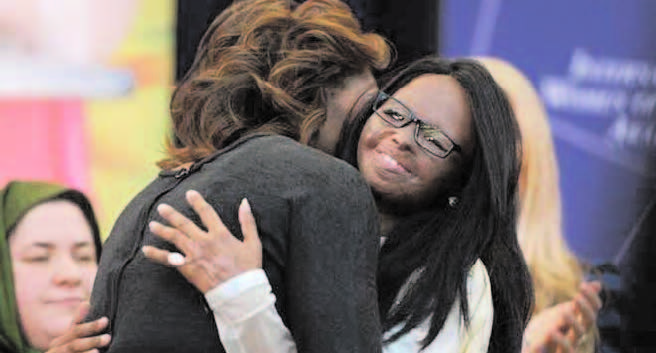
    WASHINGTON (TIP): US First Lady Michelle Obama has felicitated Indian acid attack victim Laxmi after she won the International Women of Courage Award for successfully leading the campaign against acid attacks on women in India.

    Michelle Obama and the large crowd at the US State Department auditorium was moved and touched when Laxmi, a standard-bearer of the movement to end acid attacks, recited a poem recounting her experience on the occasion on march 4. “You haven’t thrown acid on my face; you threw it on my dreams.

    You didn’t have love in your heart; you had acid in it,” Laxmi recited soon after receiving the prestigious award along with several other women from different parts of the world including Afghanistan and Fiji. The original poem was in Hindi. Laxmi was 16 when an acquaintance threw acid on her face while she waited at a bus stop in New Delhi’s busy Khan Market in 2005, disfiguring her permanently.

    Her attacker, a friend’s 32-year-old brother, threw the acid to destroy Laxmi’s face after she refused to respond to his romantic advances. Recognition for her effort through this award, is a great encouragement and motivation for the girls and women of India, many of whom still are not able to speak out against the atrocities inflicted upon them, Laxmi said soon after receiving the award. “After this award, girls of India would think, if Laxmi can do this, I can also raise my voice against injustice,” Laxmi told in an interview.

    Last year, Nirbhaya, the courageous 23-year-old girl whose brutal gang rape and murder on a moving bus in Delhi in December 2012 triggered widespread protests, was honoured with the award. Ruing that acid is still being sold without following the recent Supreme Court order in this regard; Laxmi demanded the creation of a high level committee at the national level to prevent acid attacks against women.

    “Victims of acid attacks not only be given compensation, but also the entire medical expense be meted by the government. The victim should be given a government job and given justice through fast track courts,” Laxmi said and urged the political parties to incorporate this in their election manifesto for the forthcoming elections. “There was never any love in your eyes. They burn me with caustic glance. I am sad that your corrosive name will always be the part of my identity that I carry with this face. Time will not come to my rescue.

    Every Thursday will remind me of you,” Laxmi said reciting her poem with the First Lady and other top US officials on the dais. “When we see these women raise their voices and move their feet and empower others to create change, we need to realize that each of us has that same power and that same obligation,” the First Lady said in her speech. “And as I learned about this year?s honorees and I thought about how we could support their work, I realized that for most of these women, there is a common foundation for their efforts. It’s a foundation of education,” she said.

    Observing that she always walks away feeling inspired by these women, determined to reflect their courage in her own life, Obama said she is not alone in that feeling because every day with every life they touch and every spirit they raise, these women are creating ripples that stretch across the globe. “Last year on this stage, we honoured the memory of a tremendous young Indian woman known simply as Nirbhaya. This tragedy sparked outrage and inspired people all over the world to come together to say no more looking the other way when genderbased violence happens, no more stigma against victim or survivors,” said Deputy Secretary of State, Heather A Higginbottom.

    “That is also the message of Laxmi from India. Acid attacks are committed almost exclusively on women, particularly on young women,” she said. “Many of the victims feel they have no choice but to withdraw from society or even commit suicide, and they’re more common than you might realise, in part because it’s such an easy weapon to get your hands on. Until recently, anyone could walk into a store and buy a litre of acid as cheaply and as easily as a bottle of window cleaner,” she said.

    “But after her attack, Laxmi became a tireless campaigner against acid attacks. Thanks to her hard work and tremendous diligence, Laxmi was successful in petitioning the Supreme Court to order the Indian government to regulate the sale of acid and to make prosecutions of acid attacks easier to pursue. And she continues to push for progress still today,” she said. “For fearless advocacy on behalf of victims of acid attacks and for bringing hope to survivors of gender-based violence and disfigurement, we name Laxmi a Woman of Courage,” Higginbottom said.

  • Cabinet clears Jat reservation, drops Rahul’s anti-graft ordinances

    Cabinet clears Jat reservation, drops Rahul’s anti-graft ordinances

    NEW DELHI (TIP):
    The Union Cabinet cleared the ordinance for Jat reservation in government jobs. The anti-graft ordinances, which were pushed by Congress vice-president Rahul Gandhi, were not passed after President Pranab Mukherjee reportedly expressed reluctance to support government’s ordinance route. Ahead of Lok Sabha polls, the government decided to include the Jat community in the central list of OBCs in nine states, a move that is expected to benefit about nine crore people from the community. The decision would pave the way for the community members to avail benefits of reservation in central government jobs and central education institutions as per the existing norms.

    The Central list of OBCs for the states of Bihar, Gujarat, Haryana, Himachal Pradesh, Madhya pradesh, Rajasthan, Uttarrakhand, Uttar Pradesh and the National capital territory of Delhi will include the Jat community. On the other hand, after President Pranab Mukherjee’s reluctance over the seven anti-graft bills, the government decided not to bring ordinances. Earlier, Senior Congress leaders had met the President just before the crucial meeting. On the Telangana front, the Cabinet decided to direct Planning Commission to implement grant of special category status to Seemandhra for 5 years. The Cabinet also decided to make amendments in Andhra Pradesh Reorganisation Bill to facilitate smooth and full resettlement and rehabilitation as part of Polavaram project. Polvarum project will be executed by Central Government.

    Both the submerged area and the area where the people will be relocated, will be transferred to Seemandhra. The Union Cabinet also tried to address the concerns regarding electricity supply in the states. Congress leader Jairam Ramesh informed that the power from central generating stations will be allocated on the basis of consumption of last 5 years. He said the Telangana Bill says that only 15 per cent of unallocated power will be allocated on the basis of power consumption trends.

    The rest will be allocated on the basis of population. The Cabinet also approved transfer of 123 properties in Delhi under DDA and Land and Development Department to Wakf Board. Defending the ordinance recourse to pass the pending bills, information and broadcasting minister Manish Tiwari blamed the Opposition for disrupting Parliament. “We believe probity is public life. UPA endeavoured during various sessions bills are passed but disruptions by opposition did not allow them to be deliberated in Parliament or enacted as laws. There was a marked difference between what Opposition said and did on the issue,” he said.

  • Obama unveils election year ‘growth and jobs’ budget

    Obama unveils election year ‘growth and jobs’ budget

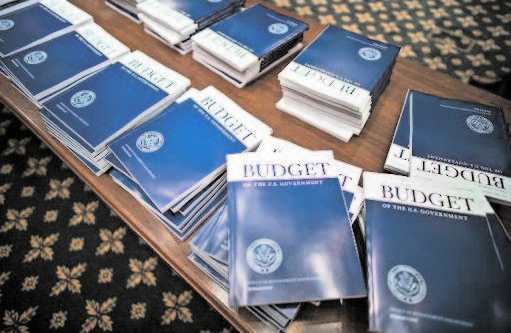
    WASHINGTON (TIP): President Barack Obama proposed a budget on Tuesday for the coming fiscal year that has less to do with managing US finances than with stemming his party’s losses in congressional elections.

    The mildly expansionary $3.9-trillion plan has little chance of passing Congress but Obama will use it as a platform to underline his populist voter-friendly narrative ahead of the polls in November.

    Obama’s Democrats have almost no chance of winning back the House of Representatives and are in grave peril of losing the Senate — a scenario that would guarantee a miserable last two years in office for the president. A Washington Post/ABC News poll on Tuesday revealed the challenge, showing that of 34 states with Senate races, 50 percent of voters favor Republicans and 42 percent favor Democrats.

    Obama, however, sought to stay positive and reiterated the vision that saw him reelected in 2012, telling supporters in a speech at a Washington elementary school, that the budget was about “choices” and “values”. “As a country, we have to make a decision, if we are going to protect tax breaks for the wealthiest Americans, or create jobs, grow our economy, and expand opportunity for every American,” he said.

    Senior White House officials admit the budget document is largely aspirational, given that the president’s top priorities are routinely blocked by Republicans in Congress. Broad spending levels have also already been set by a two year budget agreement reached by top Democratic and Republican negotiators in Congress in December. But Obama used the budget to showcase ideas he thinks will give him, and his beleaguered supporters in Congress, the edge, despite his 41 percent approval rating which is heavily attributed to an unpopular health care law.

    The president’s budget director Sylvia Matthews Burwell, hailed the document as a “fiscal road map for accelerating economic growth, expanding opportunity and ensuring fiscal responsibility.” “It includes fully paid for investments in infrastructure, job training, preschool and pro-work tax cuts,” she said. “At the same time it reduces deficits and strengthens our long-term fiscal outlook through additional health care reforms, tax reform and by fixing our broken immigration system.”

    Obama proposed an extra $56-billion in spending above agreed budget levels, to be financed by closing tax loopholes which benefit the rich and in mandatory spending reform. The budget foresees the American economy growing by 3.1 percent this year and by 3.4 per cent the next, with inflation remaining under control, rising to only 2.0 per cent in 2015. It also predicts growing revenue, so that the government can reach a primary surplus — spending excluding debt service — by 2018. It suggests the country’s budget deficit, which boomed after the 2008 crisis, can be brought down to $564-billion, or 3.1 per cent of GDP, in the fiscal year beginning October 1, and to 2.2 per cent by 2020.

    While the absolute level of US debt — now $17.3 trillion — will continue to grow, its ratio to the overall size of the economy will fall, from nearly 75 perc ent this year to 69 per cent by 2024. The White House said the budget would expand the Earned Income Tax credit, which would cut taxes for 13.5 million working Americans and expand tax cuts to finance child care and college education. And the plan would close a loophole that allows wealthy people to treat investment income as capital gains, and thus avoid the 40 per cent top federal tax rate on this income.

    Obama is also pinning his hopes for November’s poll, in which a third of the Senate and all of the House of Representatives is up for grabs, on a rise to the federal minimum wage from $7.25 to $10.10. The proposal is popular with voters but opposed by Republicans, who say it would squeeze small businesses and cost jobs. The spending blueprint effectively rescinds an offer from Obama to Republicans to recalculate inflation in a way that would gradually reduce benefits to senior citizens from social programs.

    The offer — known as chained CPI — was included in the budget last year as Obama held out hope of concluding a “grand bargain” on taxes, spending and the deficit with Republicans on Capitol Hill. But negotiations have collapsed, and senior Obama aides say they have omitted the concession. In effect, the move means that there is now little chance of a lasting fiscal agreement between Obama and his Republican foes for the rest of his presidency, which ends in January 2017.

  • Kiran Reddy moves SC on Telangana issue

    Kiran Reddy moves SC on Telangana issue

    NEW DELHI (TIP):
    Former Andhra Pradesh Chief Minister Kiran Reddy approached the Supreme Court against the Centre’s decision to create Telangana by bifurcating the State. A bench headed by Chief Justice P Sathasivam, before whom the matter was mentioned, agreed to list his plea along with other petitions which will be taken up tomorrow for hearing. A batch of petitions is listed for hearing tomorrow against the bifurcation of the State.

    The apex court had earlier on February 7 and 17 respectively refused to entertain petitions challenging the division of Andhra Pradesh on the ground that they were “premature” as the Bill was not cleared by Parliament at that time. Parliament gave its approval on February 20 for the creation of Telangana by bifurcating Andhra Pradesh. The court had on February 7 refused to stay the tabling of Telangana Bill and on February 17, it had dismissed two petitions challenging the division of Andhra Pradesh.

    The apex court had said it cannot take a different stand and different view from what it had taken on February 7 while terming the plea against Telangana as “premature”. The court had declined to accept the contention that it can now go into the issue of Telangana as the Bill was before Parliament.

  • Uphaar tragedy: SC holds Ansals guilty

    Uphaar tragedy: SC holds Ansals guilty

    NEW DELHI (TIP):
    The Supreme Court held real estate barons Sushil and Gopal Ansal guilty in the 1997 Uphaar cinema tragedy that claimed the lives of 59 persons saying they were more interested about making money than ensuring safety of the cinegoers. A two-judge bench, however, disagreed over the quantum of punishment to be given to them. The issue has been referred to a three-judge bench to pronounce a final verdict. While Justice T S Thakur retained one-year jail term of Sushil and Gopal Ansal as imposed by the Delhi High Court, Justice Gyan Sudha Misra reduced the jail term to already undergone by Sushil considering his age but enhanced the sentence of Gopal to two years.

    Justice Misra also imposed a fine of Rs 100 crore on the Ansal brothers to be used for construction of trauma centre and a superspeciality hospital.The bench, however, was concurrent in its finding that there was contemptuous disregard of civic laws on the part of Ansals that led to the tragedy as they were more interested in making money than ensuring safety of people. The bench passed the order on cross appeals filed by the CBI, the Association of Victims of Uphaar Fire Tragedy (AVUT) and Ansals challenging the Delhi High Court order.

    The Ansals had challenged their conviction and maintained that they were in no way responsible for the incident as the fire mishap was on account of the DVB transformer. The CBI filed the appeal challenging the alteration in conviction and reduction of sentence by the Delhi High Court on December 19, 2008. The sentence for the Ansals was reduced to one year as against the two-year sentence imposed by the sessions court.

  • Vince Chhabria to be the first Indian-American judge in California

    Vince Chhabria to be the first Indian-American judge in California

    WASHINGTON (TIP): Indian- American attorney Vince Chhabria, who has represented San Francisco in defense of its health insurance law, adoption rights of same-sex couples and other major cases, has won Senate confirmation for a federal judgeship.

    Chhabria, 44, who presently serves as the deputy attorney of San Francisco City, will become California’s first federal judge of South Asian descent and one of only a few South Asian federal judges across the US. The Senate vote on Wednesday, March 5, was 58-41, with four Republicans joining Democrats in approving President Barack Obama’s nomination of Chhabria.

    A University of California Berkeley Law School graduate, he fills the last of three vacancies on the Bay Area’s 14- member US District Court. Born to Indian parents, who are Mumbai natives, Chhabria is currently visiting family in India. “I am thrilled to begin this new chapter of my career in public service, and to set up shop down the hall from my greatest mentor, Judge Charles Breyer,” he said in a press statement.

    “While I had high expectations when I started here nine years ago, I never dreamed I would be lucky enough to work on so many exciting cases, for so many dynamic clients, with so many dedicated and high-caliber public lawyers.” Chhabria also thanked the members of the South Asian legal community saying: “The fact that I have been confirmed while traveling in India with my family makes this an especially proud moment for me.”

    He began his legal career by clerking for Judge Charles R. Breyer of the US district court for the Northern District of California from 1998 to 1999. The South Asian Bar Association of North America and the South Asian Bar Association of Northern California have applauded Chhabria’s historic confirmation to the US district court.

    The lone Indian-American member of the US House of Representatives, Ami Bera, the Congressional Asian Pacific American Caucus chair, Judy Chu, and CAPAC chair emeritus, Mike Honda, also applauded Chhabria’s confirmation. “Vince Chhabria will make an excellent judge for the US district court. I’m delighted that he was confirmed,” Bera said. “As the first South Asian to serve on the federal bench in California, he has also made California’s Indian-American and South Asian community proud.”

  • Prima facie Arvind Kejriwal violated Model Code: Election Commissioner

    Prima facie Arvind Kejriwal violated Model Code: Election Commissioner

    NEW DELHI (TIP):
    Arvind Kejriwal, who is in Gujarat, has violated the election code of conduct by not getting prior police permission for his road-show, the Election Commission said, adding a new installment to the drama that has surrounded his tour. Kejriwal says he is in Gujarat to check on the claims of uber-development brandished by Narendra Modi, the BJP”s candidate for prime minister, who has governed the state since 2001. So far, Kejriwal says, he has seen no evidence of the clean and effective governance that Modi offers as his main qualification for running the country. Kejriwal, the 45-year-old leader of the Aam Aadmi Party or AAP, was detained briefly at a police station in the western town of Radhanpur yesterday where he was asked to explain why he had not got clearances for his large convoy.

    Once elections are called, the code of conduct applies and any political procession requires police sanction. “If you go strictly by law, Kejriwal violated the model code of conduct. The whole world knew that the code was in place after the announcement of the national election dates in the morning,” Election Commissioner HS aid. Kejriwal’s detention triggered egregious street battles in Delhi and Lucknow where his party workers gathered at BJP offices to protest against what they described as their leader’s harassment in Gujarat.

    Nearly 30 people were injured in clashes between the rival parties in Delhi; the police has blamed AAP for instigating the violence, an accusation Mr Kejriwal’s colleagues firmly reject. (Day 1 of Gujarat road-show bumpy for Arvind Kejriwal) As Kejriwal drove through the region of Bhuj, he was escorted by 10 police cars, a consequence of an attack last night on his convoy which left the windshield of his car shattered. Though Mr Kejriwal refused to press charges, the Gujarat police says it has filed a case and formed two teams to identify and locate the vandals. So far, nobody has been arrested.

  • POLICE QUIZ AAP’S ASHUTOSH, SHAZIA

    POLICE QUIZ AAP’S ASHUTOSH, SHAZIA

    NEW DELHI (TIP):
    The BJP-AAP confrontation escalated on March 6 with the BJP accusing its opponent of waging a surrogate battle on behalf of the Congress that wanted to deflect focus from allegations of corruption and scams. Adding to the political attack, the police questioned senior AAP leaders Shazia Ilmi and Ashutosh and party workers after they were named in an FIR and accused of instigating violence outside the BJP headquarters on Wednesday.

    It promised to take action if “sufficient” evidence was found against them. Both Aushtosh and Ilmi were among 14 named in the FIR. They were charged with obstructing a public servant from doing his duty, unlawful assembly and under the Prevention of Damage to Public Property. “We found that prima facie, these 14 persons were part of unlawful assembly and indulged in violence,” a police officer said. The BJP moved the Election Commission demanding strict action — including de-recognition — against the fledgling party. AAP, too,moved the EC calling for an independent probe into the matter and alleged intimidation of its volunteers and members by the BJP.

    Soon after approaching the Election Commission, BJP spokesperson Meenakshi Lekhi said: “AAP happens to be the latest goon squad hired by the Congress’ dirty tricks department. A minor issue with Kejriwal in Gujarat has been blown up as if it impacts national security.Why? Simply because the practised deception of Congress is to create a diversion each time one of its scams starts unravelling. AAP is not a threat to the BJP or Modi. They are not even a national party of consequence. Everything about them is murky, including their funding sources.” Lekhi sought to draw attention to a statement made by an AAP council member suspecting the source of the party’s foreign funding. She also likened the tactics of the AAP with those adopted by Maoists in the country.

  • US Senate blocks Obama pick for civil rights post

    US Senate blocks Obama pick for civil rights post

    WASHINGTON (TIP): Bipartisan Senate opposition blocked swift confirmation on Wednesday for President Barack Obama’s choice to head the US justice department’s civil rights division, the emotional residue of the long-ago murder of a policeman and the legal representation his killer received.

    The vote against advancing Debo Adegbile toward confirmation was 47- 52, short of the majority needed under new procedures Democrats put in place earlier this year to overcome Republican stalling tactics. In this case, all 44 voting Republicans and eight Democrats lined up to block confirmation, leaving the nomination is grave jeopardy. Obama swiftly condemned the vote.

    In a statement, he called it a “travesty based on wildly unfair character attacks.” Administration officials declined to say if they would seek a second vote in the hopes they could change the minds of a few Democrats. The vote was a victory for Republicans and the National Fraternal Order of Police, who said Adegbile’s connection with the legal case of Mumia Abu-Jamal disqualified him from holding high public office.

    Abu-Jamal was sentenced to death for the 1981 murder of Philadelphia Officer Daniel Faulkner. Prosecutors agreed to a life term after a federal appeals court ordered a new sentencing hearing, citing flawed jury instructions. Abu-Jamal, a one-time radio journalist and former Black Panther, garnered worldwide support for his claims that he was the victim of a racist justice system. Shortly before the vote, Sen.

    Pat Toomey, a Pennsylvania Republican, read from a letter written by Maureen Faulkner, the widow of the policeman. “Today, as my husband lies 33 years in his grave, his killer has become a wealthy celebrity,” she wrote. “Old wounds have once again been ripped open, and additional insult is brought upon our law enforcement community in this country by President Obama’s nomination of Debo Adegbile.” Supporters also noted that Adegbile was working at the NAACP Legal Defense Fund at the time it intervened in the case — years after Abu-Jamal had been convicted, but that he had not made the decision to join the effort on his behalf.

  • High school girl who sued parents loses first round

    High school girl who sued parents loses first round

    WASHINGTON (TIP):
    Whoever said parenting is a thankless task can cite this as prime evidence. In a case that has caught the even rebels in a litigious society slack-jawed, an 18-year old high-school girl in New Jersey sued her parents to force them to pay for her schooling and living costs after storming out of the home because she didn’t want to follow some basic house rules they sought to establish – like helping with chores. Rachel Canning turned up in school uniform for the first day of hearing at a family court, but it didn’t go well for her. Judge Peter Bogaard scolded her and lamented the breakdown of the family after reading an expletive-laden message from Rachel to her mother, according to courtside reports.

    “‘Have you ever in your experience seen such gross disrespect for a parent?” he was quoted as saying. “What is the next step …are we going to open the gates for a 12-year-old to sue for an Xbox, a 13-year-old to sue for an iPhone… what about a 15-year-old asking for a 60 inch TV?” Rachel’s parents, Elizabeth and Sean Canning, broke down in court as details of how their family was torn apart were read out. But the high-schooler, on the cusp of going to college, stared ahead without remorse after the judge ruled that the parents did not have to pay her school fees amounting to $5,300 and denied her request for weekly allowance and additional financial support, including attorney fees of $13,000.

    He delayed a ruling on whether the parents must pay her college tuition from a fund they had set up, while asking lawyers to consider whether it’s wise to “establish precedent where parents live in fear of establishing rules of the house.” Rachel Canning, from all accounts a bright student who wants to be a bio-medical engineer, says that her parents kicked her out of their home when she turned 18 last October. She has claims her mother called her ‘fat’ and ‘porky,’ insults that led her to suffering bulimia. “My parents simply will not help me any longer.

    They want nothing to do with me and refuse to even help me financially outside the home although they certainly have the ability to do so. … I am unable to support myself and provide for my food, shelter, clothing, transportation and education,” she said in court documents. But her parents say she opted to leave because she didn’t want to follow their house rules that included being respectful, keeping a curfew, returning borrowed items to her two sisters, managing a few chores, and reconsidering or ending her relationship with a boyfriend the parents believe is a bad influence.

    “Private school, new car, college education; that all comes with living under our roof,” her father, Sean Canning, a retired police chief of the township where they live, told a local television station. “We’re heartbroken, but what do you do when a child says ‘I don’t want your rules but I want everything under the sun and you to pay for it?’” Canning told the local Daily Record, adding that his daughter’s college fund is available to her and not withdrawn or re-allocated, as she has alleged. “We love our child and miss her. It’s killing me and my wife.

    We’re not Draconian and now we’re getting hauled into court. She’s demanding that we pay her bills but she doesn’t want to live at home and she’s saying, ‘I don’t want to live under your rules’.” Meanwhile, the twitterati has weighed in on the case in what some say amounts to a witchhunt. “Rachel canning is a stupid idiot and her parents should kick her out! she is the daftest person on the planet #meanbiatch,” wrote one Twitterer. Another tweeted: “Rachel Canning is giving current teens a bad name, can we just ignore her already so she’ll crawl back in the bubble she came out of ?” A third warned: Wondering if #RachelCanning realizes that every future prospective employer will Google her. Rachel has reportedly been living with a school friend, whose lawyer father has been helping her with the litigation but not representing her.

  • Sandeep Shah and Shailesh Shah charged with wire fraud in US court

    Sandeep Shah and Shailesh Shah charged with wire fraud in US court

    BOSTON (TIP): Two Indians are among seven people charged in a US federal court here with wire fraud for their roles in a stock kickback scheme and face up to 20 years in prison if convicted. The charges against stock promoter Sandip Shah, 40, and CEO of a firm Shailesh Shah, 47 – both from California – followed a lengthy investigation focusing on preventing fraud in the microcap stock markets.

    They also face a $250,000 fine on each count. According to the charges, the schemes involved secret kickbacks to an investment fund representative in exchange for having the investment fund buy stock in certain companies. The kickbacks were to be concealed through the use of sham consulting agreements.

    The defendants, however, were not aware that the investment fund representative was actually an undercover government agent. Microcap companies are small publicly traded companies whose stock often trades at pennies per share. Fraud in the microcap stock market is of increasing concern to regulators since such markets tend to be fertile grounds for fraud and abuse, the FBI said in a release. “Secret deals like the ones alleged today harm hard working Americans who invest their savings in the financial markets.

    Illegal kickbacks undermine fair competition and ultimately destabilize financial markets. For the sake of the investing public, it is critical to protect the integrity of the financial markets and promote fair play by combating the types of illegal agreements alleged in these cases,” US attorney Carmen Ortiz said on Thursday. The others charged in the scheme are Shmuel Shneibalg, Gerard Haryman, Ronald Lawrence Schuman, Barry Hawk and Hadi Aboukhater.

  • Nato and Russia agree to meet as Ukraine tension eases

    Nato and Russia agree to meet as Ukraine tension eases

    WASHINGTON (TIP):
    Representatives of US-led Nato and Russia have agreed to meet to discuss the Ukraine issue in signs that the Cold War opponents are stepping back after drawing red lines on how far the other will tolerate intrusion into a rival’s sphere of influence. The Obama administration rolled out a raft of punitive measures, including suspending Pentagon’s military engagements and trade talks with Russia, but it stopped short of any provocative diplomatic or military response after Moscow signalled that it was only interested in protecting its people and equity, and reasserting its primacy in the region. Washington was appeared mollified if not relieved to a degree by Moscow indicating its forces, having taken control of the Crimean peninsula, will not advance further into the Ukraine, although President Putin asserted that Russia reserves the right to use all means to protect Russian in Ukraine.

    There were also signs that Russia may withdraw from Crimea once its mission of restoring its proxies in Kiev is accomplished. Secretary of State John Kerry arrived in Ukraine’s capital to show support to the troubled nation and announce a $ 1 billion aid to a country heavily dependent on Russia. But it was clear that Washington and Moscow will now have to engage on the “sphere of influence” issue once the heat over the Russian invasion cools off. Here;s how former U.S National Security Advisor Tom Donilon explained the crisis from the U.S perspective: “This is about Putin reacting to the loss of a sphere of influence, a loss of a proxy in Ukraine, the real blow to his plan to have some sort of counter organization to the European Union,” Donilon said. “… The loss of Ukraine in his view…is really a traumatic event.” But Moscow sees the US, some 7000 miles from Ukraine, increasingly pushing into its backyard.

    Many analysts reckon that Moscow has recovered both it spunk and tis economy nearly two decades after it was worsted and weakened by the Cold War. The Russian leadership evidently saw an opportunity to reassert itself at a time when the U.S itself has been debilitated by two wars and a slowing economy. If the U.S and its allies back off from their growing clout — or growing their clout — in Kiev that resulted in the ouster of Russia-backed President Yanikovich, then Moscow has indicated that it will have no problem withdrawing from Crimea, which houses Russian military assets including a naval base.

    The situation is complicated only by hardliners in both countries — those in Russia who want a not just a reassertive Russia protecting its interests in the region, but also regaining its lost pride and glory as a counterforce to the USA, and those in Washington thirsting for continued American dominance that has been unchallenged for the last two decades. There are many sober voices in Washington counseling the Obama administration not to push the envelope, but the the crisis is godsend for hardline conservatives and militarists intent on painting President Obama as a weak leader who is selling out U.S interests and presiding over the diminution of its power.

  • Facebook announces steps to stop illegal gun sales

    Facebook announces steps to stop illegal gun sales

    SAN FRANCISCO (TIP): Facebook is taking aim at people who are using the social network or Instagram photo-sharing platform to sell guns. Under pressure from gun safety advocates, the social network will block members under 18 years of age from viewing pages or timeline posts reported to involve private sales of firearms and will set up online “checkpoints” warning people that such deals may be illegal.

    And people offering guns for sale on Facebook will not be allowed to indicate that background checks are not required or that sales will be done across state lines without involving licensed firearms dealers, it said. “We will not permit people to post offers to sell regulated items that indicate a willingness to evade or help others evade the law,” Facebook head of global policy management Monika Bickert said in a blog post.

    The California-based company said that it worked with New York attorney general Eric Schneiderman and advocacy groups to modify policies to fight illegal gun sales. “Responsible social media sites know that it is in no one’s interest for their sites to become a 21st century black market in dangerous and illegal goods that place our families and communities at risk,” Schneiderman said in a statement praising Facebook’s move.

    Facebook and Instagram will remove content that represents a “direct, credible risk” to users and notify police when appropriate, according to Bickert. Facebook’s new rules also require people using social network pages to sell guns or other regulated items to display messages instructing buyers to obey applicable laws.

    “By taking these unprecedented educational and enforcement steps, we’ve been able to strike an important balance in helping people express themselves, while promoting a safe and responsible community,” she added. The leading social network’s hardened policy will also apply to its smartphone photo sharing service Instagram, where gun sellers had taken to showing pictures of wares tagged with terms such as #gunsforsale.

  • Niagara Falls freezes for second time this year

    Niagara Falls freezes for second time this year

    BUFFALO (TIP):
    The bitterly cold weather that currently has much of the east coast of America in its icy grip has demonstrated its chilling intensity by partially freezing Niagra Falls for the second time in just weeks. Remarkable images taken of the falls at night show them partially frozen and lit up in an array of bright colours. The falls on the American side, which in combination with the Bridal Veil Falls usually see the passage of 567,811 litres per second, have frozen amid temperatures of -1° celsius and lower.

    Temperatures in the area fell to -23° celsius with wind chill last week bringing the rushing waters to an icy standstill. The US east coast is currently in the grip of a deadly winter storm that has seen near-record temperature lows, around 3,000 flights cancelled and the mass closure of schools and local government buildings. It is the latest in a series of weather systems caused by a so-called “polar vortex” which is pummelling the winter-weary eastern United States. A polar vortex is a rotating pool of cold, dense air held in place by strong winds. This year the polar air has slipped through the belt that usually holds it in place. This has meant plummeting temperatures as far south in the US as Alabama.

  • Nepal to force Everest climbers to collect rubbish

    Nepal to force Everest climbers to collect rubbish

    KATHMANDU (TIP): Climbers scaling Mount Everest will have to bring back eight kilograms (17.6 pounds) of garbage under new rules designed to clean up the world’s highest peak, a Nepalese official said on Monday.

    The rule, one of several new measures for mountaineering in the Himalayan nation, will apply to climbers ascending beyond Everest’s base camp from April onwards, said tourism ministry official Madhusudan Burlakoti. “The government has decided in order to clean up Mount Everest, each member of an expedition must bring back at least eight kilos of garbage, apart from their own trash,” he said.

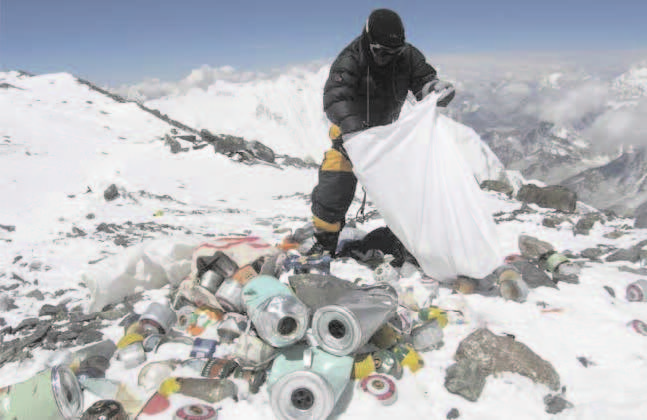
    Burlakoti said authorities would take legal action against climbers who failed to comply with the new rule, although it was unclear whether this would involve a fine or other penalty. Decades of mountaineering have taken a toll on the peak, which is strewn with rubbish from past expeditions, including oxygen cylinders, human waste and even climbers’ bodies, which do not decompose in the extreme cold. Expeditions will have to submit their trash to an office to be set up next month at base camp. It will also offer medical aid and resolve conflicts, after a brawl between European climbers and local guides last year.

  • Pakistan court issues non-bailable arrest warrant against Musharraf

    Pakistan court issues non-bailable arrest warrant against Musharraf

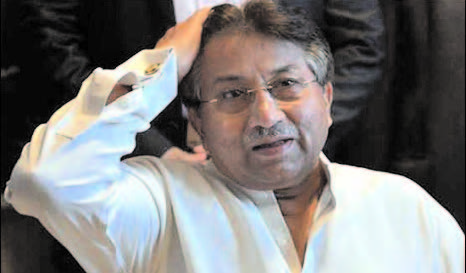
    ISLAMABAD (TIP): A Pakistani anti-terrorism court on march 6 issued a non-bailable arrest warrant against former President Pervez Musharraf to secure his presence in the hearing in the Benazir Bhutto assassination case. The court in Rawalpindi issued the warrant after hearing the arguments of prosecution lawyers.

    The Federal Investigation Agency also submitted a detailed charge-sheet that named Musharraf as an accused in the case related to the murder of Bhutto. The judge subsequently adjourned the case till February 19. The FIA had earlier this week named Musharraf as an “absconder” for failing to cooperate in the probe into the assassination. Musharraf, currently living in self-exile in Britain, had refused to cooperate with investigators and answer their questions, prosecutors said.

    The detailed charge-sheet said that there was a conspiracy behind Bhutto”s assassination, and that Musharraf allegedly provided slain Tehrik-e-Taliban Pakistan chief Baitullah Mehsud with the opportunity to carry out a suicide attack on Bhutto by failing to provide her adequate security. A report compiled by the FIA”s investigation team said: “Musharraf was equally responsible for facilitation and abetment of the assassination of Benazir Bhutto through his government and justified failure in providing her the requisite security protection that her status demanded twice.

    The FIA has also alleged that two top former police officials, who were recently arrested for alleged negligence in providing security to Bhutto, were acting on the orders of Musharraf. Musharraf”s spokesman and legal aides have dismissed the charges levelled against him, saying the Pakistan People”s Party-led government was trying to deflect attention from charges of inefficiency and corruption levelled against it. Bhutto was killed by a suicide bomber shortly after she addressed an election rally in Rawalpindi in December 2007. The former military ruler has been living out Pakistan since April 2009. Former Pakistani Taliban chief Baitullah Mehsud was killed in a US drone strike in 2009.

  • Attacks in Baghdad area kill 21 people

    Attacks in Baghdad area kill 21 people

    BAGHDAD (TIP):
    Bombings mainly targeting Shiite areas of Baghdad and attacks on security force checkpoints in and around the capital killed at least 21 people Wednesday, officials said. Iraq has been hit by a year-long surge in bloodshed that has reached levels not seen since 2008, driven by widespread discontent among its Sunni Arab minority and the bloody civil war in neighbouring Syria. And Baghdad is hit by near-daily bombings and shootings. Wednesday’s seven car bombs and two roadside bombs, which struck six different areas of Baghdad, killed at least 14 people and wounded more than 70 people, the officials said. One of the car bombs exploded near the University of Technology in the Karrada district of central Baghdad, killing three people and wounding at least 10.

    “The terrorist was planning to blow up the car on the main road near the university,” but security forces do not allow cars to stop there so he instead left it on a side street, a police officer at the scene said. An AFP journalist saw the charred remains of the car, and said two cars and several nearby homes were damaged by the blast. While there was no immediate claim of responsibility for the attacks, Sunni jihadists often target members of Iraq’s Shiite Muslim majority, whom they consider to be apostates. Gunmen later attacked three checkpoints in Baghdad while a roadside bomb exploded near a fourth in Tarmiyah, north of the capital, killing at least four police and three soldiers.

    Gunmen also attacked a bus northeast of the city of Baquba, killing an Indian man and wounding four others. The violence came a day after two suicide bombers attacked the city council headquarters in Samarra, north of Baghdad, and took employees hostage. A third bomber detonated an explosivesrigged vehicle after police and anti-al-Qaida militiamen arrived at the scene, while the two inside blew themselves up after exchanging fire with security forces. The violence, which showcased the impunity with which militants can strike even targets that should be highly secure, killed six people and wounded 46. Powerful militant group the Islamic State of Iraq and the Levant ( ISIL), which operates in both Iraq and Syria, claimed the attack in a statement posted on the Honein jihadist forum.

    The statement said that “three lions of the Islamic State” attacked the building, “killed its guards and executed its members, and took complete control of the council.” Militants have carried out similar assaults elsewhere in Salaheddin province, north of Baghdad, and battled security forces for control of the Sulaiman Bek area, killing dozens of people. The government also faces a more than two-month crisis in Anbar province, west of Baghdad, where it has lost the city of Fallujah as well as shifting parts of provincial capital Ramadi to anti-government militants.

    This is the first time anti-government forces have exercised such open control in major cities since the peak of the deadly violence that followed the US-led invasion of 2003. More than 370,000 people may have been displaced by the violence in Anbar during the latest crisis, according to the United Nations. Violence in Iraq has killed more than 1,800 people since January 1, according to AFP figures based on security and medical sources.

  • Afghanistan president Hamid Karzai’s elder brother Qayyum Karzai quits Afghan presidential race

    Afghanistan president Hamid Karzai’s elder brother Qayyum Karzai quits Afghan presidential race

    KABUL (TIP): Afghan president’s elder brother is dropping out of the April 5 presidential race and throwing his support behind the country’s former foreign minister, a campaign official said march 5.

    The official, who asked not to be named because he was not authorized to speak to the media, told The Associated Press that President Hamid Karzai’s brother, Qayyum Karzai, was dropping out of the race and will back Zalmai Rassoul. The decision came after days of speculation and backroom meetings, including some held at the presidential palace.

    Although Hamid Karzai has not come out in support of any one candidate, he publicly declared he did not support his brother’s candidacy. He said he had urged his brother not to run. Hamid Karzai, who has served two terms, is not eligible to run under Afghanistan’s constitution. The elder Karzai’s decision to step out of the race leaves 10 hopefuls in the upcoming presidential elections.

    Karzai’s campaign official, who participated in some of the meetings, said it was decided that Rassoul and Karzai shared similar visions for their country and their competing candidacy would split the vote, likely denying either one of them a win at the polls. The soft-spoken Rassoul served as Karzai’s foreign minister until announcing his intention to seek the presidency.

    Known as a loyalist to former King Zahir Shah, Rassoul has come out in favor of Afghanistan signing a Bilateral Security Agreement with the United States, which would allow for a residual U.S. and NATO force of up to 15,000 soldiers to remain behind after the final withdrawal of international combat troops at the end of December. President Karzai has so far refused to sign the agreement.

  • 1 in 3 women abused in European Union

    1 in 3 women abused in European Union

    LONDON (TIP):
    One in every three women in the European Union have admitted to experiencing either physical or sexual violence from the age of 15. The European Union Agency for Fundamental Rights says this corresponds to 62 million women. This came to light in the largest survey on the issue which interviewed 42,000 women. Women aged from 15 to 74 were interviewed. The survey is the most ambitious effort to gauge the extent of sexual violence and harassment experienced by the 186.6 million women in 28 EU member nations. The survey found that over 100 million women were subject to sexual harassment. Only one in seven women reported intimate partner violence to police.

    Around 10% women reported some form of sexual violence since the age of 15, with one in 20 saying she had been raped. That would be more than 9 million rape victims. Around 75 % of women working in a professional capacity or in top management jobs have experienced sexual harassment in their lifetime and one in four of these women have been confronted with sexual harassment in the 12 months prior to the survey. Morten Kjaerum, director of the Agency for Fundamental Rights said, “What emerges is a picture of extensive abuse that affects many women’s lives but is systematically under-reported to the authorities.

    ” Some 27 % of women have experienced some form of physical abuse in childhood (before the age of 15) at the hands of an adult. Over one in 10 women (12 %) has experienced some form of sexual abuse or incident by an adult before the age of 15. These forms of abuse typically involve an adult exposing their genitals (8%) or touching the child’s genitals or breasts (5%). At the extreme, 1% of women indicate that they were forced to have sexual intercourse with an adult when they were a child. In 97% of cases of sexual violence in childhood, the perpetrator was male whereas in cases of physical violence slightly more cases were attributed to men than to women.

    Other shocking statistics said that an estimated 13 million women in the EU have expe-rienced physical violence in the course of 12 months before the survey interviews. An estimated 3.7 million women in the EU have experienced sexual violence in the course of 12 months before the survey interviews. The report calls on EU countries to treat domestic violence as a public and not a private issue. It says laws and policies relating to sexual harassment should be reviewed. The survey noted that 22% had suffered from physical or sexual violence by a partner but that 67% did not report the most serious incidents of domestic violence to the police.

  • Sri Lanka family finds mass grave in garden

    Sri Lanka family finds mass grave in garden

    COLOMBO (TIP): A Sri Lankan family has stumbled upon the remains of at least nine bodies buried in the garden of their home, police said Saturday, the latest mass grave to be discovered in the country’s former war zone.

    The family made the grisly find on Friday while clearing out their garden in the town of Puthukkudiririppu in the northern district of Mullaittivu, police spokesman Ajith Rohana said.

    “Remains of nine people had been found so far and the skeletal remains were taken for analysis by the judicial medical officer in the area,” Rohana told reporters.The discovery comes just days after officials raised the number of bodies found in December in an unmarked mass grave in the adjoining district of Mannar to 80.

  • Caught between Russia and the EU

    Caught between Russia and the EU

    Ukraine threatens to become the Syria of Eastern Europe. And like Syria, civil war could ultimately decimate a vibrant and ethnically diverse society, and a rich civilisational legacy”, says the author.

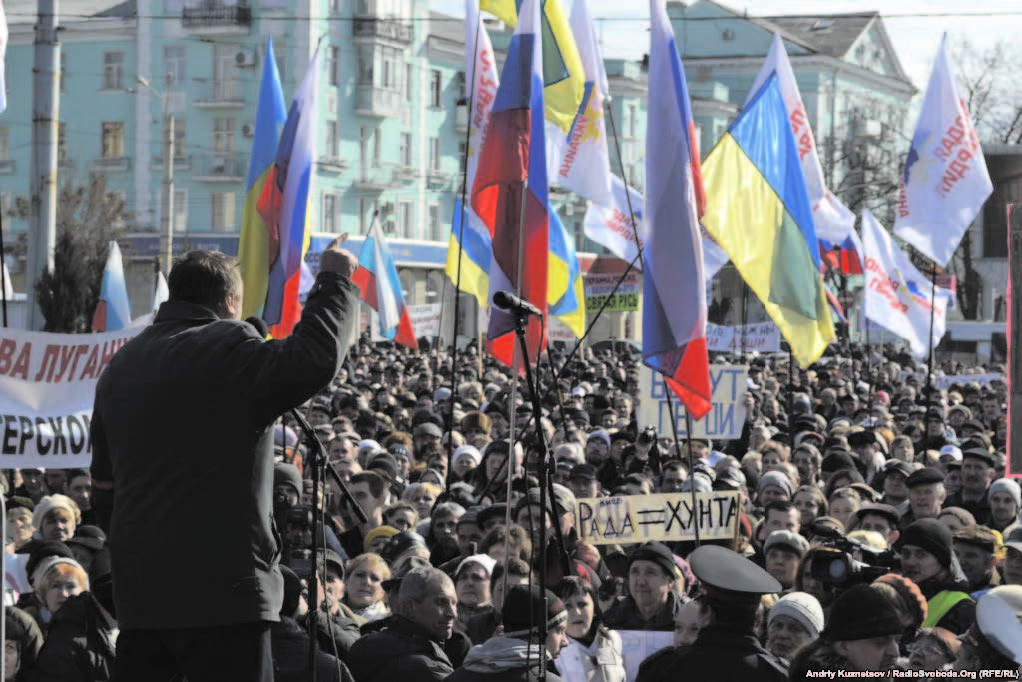
    Ukraine threatens to become the Syria of Eastern Europe. And like Syria, civil war could ultimately decimate a vibrant and ethnically diverse society, and a rich civilisational legacy The political crisis in Ukraine, that has now entered its fourth month, is rapidly reaching a point of no return.

    Territorial fissures in the country along political, linguistic and ethnic lines, the real possibility of civil war, and the emergence of the southern (autonomous) Ukrainian republic of Crimea as a potential, international military flashpoint, are among the different aspects of the current situation in the country, which is the second largest state in Europe. The focus has shifted from Kiev to the southern province of Crimea where the interim government that deposed former President Viktor Yanukovych has not been recognized. With its complex ethnic mix and historical past, the region has traditionally had strong ties with Russia.

    Russia has stepped up its military presence in Crimea – it already has a treaty with Ukraine that allows it to station its Black Sea Fleet in Sevastopol, and its Parliament recently passed a resolution reserving the right for limited military intervention to defend the rights of 1.5 million Russians in Crimea. The western bloc has accused Russia of the “armed seizure” of Crimea, and Washington is putting together legislation for a package of sanctions against Russia that could include trade restrictions, visa bans and asset freezes. These countries have withdrawn from preparations for the G8 Summit that is to be held in Sochi, the venue of the Winter Olympics.

    Euromaidan and agreement
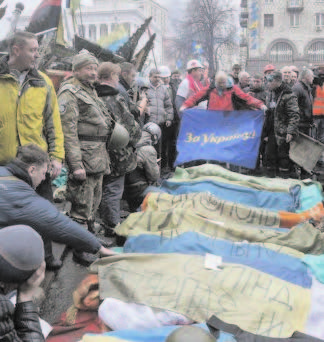
    The background to the crisis goes back to the three month occupation of the Euromaidan in Kiev which grew out of opposition to President Yanukovych’s decision to postpone signing an Association Agreement with the European Union (EU). The protests and sit-ins rapidly spiraled into pitched battles between protesters and police. Police reprisals against protesters – of whom a large section were armed with deadly weapons including Molotov cocktails to force entry into government buildings – resulted in 85 deaths. In the face of escalating street clashes, and increasing pressure from the EU and the United States to accommodate the opposition’s demands, Mr. Yanukovych was forced to sign an EU-brokered agreement with his Maidan opponents on February 21.

    The agreement represented the first real breakthrough in the deadlock, as it had the support of all the players in the conflict – including the western bloc and Russia. Mr. Yanukovych promised a return to the 2004 Constitution within 48 hours, the setting up of a government of national unity, and presidential elections between September and December of this year. The opposition parties and their backers, however, clearly had a bigger agenda. A day later they broke the agreement and seized power in Kiev. This sent the deposed President, who now faces charges of mass murder, into refuge in southern Russia.

    Ukraine is now facing an acute economic crisis as well. It is close to bankruptcy with a debt of nearly $73 billion. In December, President Yanukovych had secured a bailout deal with Russia, which offered to buy $15 billion of Ukrainian debt in two-year bonds, plus a $3.5 billion discount on natural gas purchases. The offer stands withdrawn in the light of the recent political changes. With elections announced for May, the new government is seeking a $35 billion aid package from the International Monetary Fund, which, if it does come, will have unpopular strings attached in the form of harsh austerity measures. The U.S. government has also offered $1 billion in immediate aid.

    Two perspectives
    History shows how swiftly the root causes of international conflict often get buried under the layers of subsequent events. This seems to be fast happening in the Ukrainian crisis with the ground now shifting to the Crimean crisis, and the Russian military threat there. Nevertheless, the two perspectives on the conflict remain unchanged. Europe and the U.S. view regime change in Kiev as the outcome of a democratic revolution and President Yanukovych as a corrupt and tyrannical surrogate for Russian President Vladimir Putin. This view permeates most sections of the western media.

    The Euromaidan reportage continued to see the protest as popular and spontaneous long after its leadership had been infiltrated by avowedly right wing and neo-Nazi nationalist groups. The overt western support for the protests was at best glossed over and at worst justified. The resistance to the new Kiev government in the Crimea and eastern regions, which derives from a complex play of factors, is still presented as Russia-sponsored dissent. The other perspective sees regime change in Kiev as a coup, funded by the West, with right-wing forces firmly in the driving seat.

    The regime of President Yanukovych was undoubtedly authoritarian and corrupt but he was not only a democratically elected President, but had also agreed to an interim government ahead of an advanced schedule of elections. A stream of high-profile figures from the EU and the U.S. visited the Maidan actively stoking dissent, actions that would not be tolerated in any western capital where antigovernment protests are taking place. The visitors included Special Representative of the EU, Baroness Ashton; former U.S. presidential candidate John McCain; and the U.S. Assistant Secretary General for Europe and Eurasian Affairs, Victoria Nuland. In fact, the substantial part of Ms Nuland’s infamous leaked conversation with U.S. Ambassador Geoffrey Pratt – which the western media swooped on for her abusive dismissal of the EU – has only lent credence to the allegation of U.S. micromanagement of regime change in Kiev.

    Western-backed coup
    “Without doubt a western-backed coup,” is how Marcus Papadopoulos, London-based Editor of Politics First magazine, described the political change in Ukraine. “Ukraine is an independent country. How has the U.S. and the EU respected its independence? By joining the protests that they called a prodemocracy movement,” he told The Hindu. “Ukraine has a huge industry-military complex. Forty per cent of south and east Ukraine are Russian-speaking, and Russia will seek to protect them. It has a right to make sure its economic interests are protected. It does not want a country on its borders that is illegitimate.

    “In 1997, Russia and Ukraine signed an agreement on the division of the Black Sea Fleet, with 81 per cent going to Russia along with Sevastopol and other military installations in the Crimea. In return, Moscow compensated Kiev with a large sum of money as well as writing off a large amount of Ukrainian debt. Russia also pays Ukraine an annual fee.” After its independence in 1991 from the former Soviet Union, Ukraine has swung between its desire for integration into the European Union and keeping friendly ties with Russia, which continues to be its largest single trading partner that it depends on for cheap energy resources. According to Mr. Yanukovych, integration into the EU through a Deep and Comprehensive Free Trade Agreement (DCFTA) would have cost the Ukrainian economy 20 billion.

    Restrictive trade policy
    “This is a highly restrictive and bullying trade policy by the EU,” said Robert Oulds, Director of the Bruges Group, a Londonbased think-tank. “When President Yanukovych postponed signing an Association Agreement in late 2011 it did not create a political issue. This time the EU and the U.S. whipped up opposition to him,” he said. According to Mr. Oulds, Mr. Yanukovych had strong reasons for caution as 75 per cent of the United Kingdom’s industrial exports go to Russia, and a major part of Ukraine’s export is to the Commonwealth of Independent States (CIS).

    “Ukraine cannot be part of an EU Free Trade Association and also be part of the Russian[-led] Custom’s union. An EU agreement will put quotas on Ukraine, the highest being on agricultural goods like sugar and wheat. The quota for wheat is limited to 20,000 ton [subsequently negotiated to two million ton], whereas globally, Ukraine exports 10-15 million ton. European integration will result in huge job losses owing to the closure of many businesses because of higher EU regulations. For Ukraine it is a very bad deal,” he said. Clearly, the EU’s vision for the integration of Ukraine has ramifications beyond the economic as it seeks to draw Ukraine into a defense, security and political framework that would give it strategic importance as a pro- NATO state on the very borders of Russia.

    A policy paper prepared by the Razumkov Centre, a pro-EU think-tank located in Kiev, set this framework out clearly. “The EU’s interests (that condition its actions and influence with respect to Ukraine) ensue from the ideology of the European Neighborhood Policy and priorities of the Eastern Partnership,” it states. “They involve creating around the EU a belt of democratic, prosperous and stable states sharing common values … forming a security area around it and expanding its sphere of influence to the South and East. The EU is interested in ‘Europeanizing’ Ukraine, introducing the European norms and standards to its domestic and foreign policy.”

    Meanwhile, the interim government in Kiev has announced elections on May 25, an exercise that Crimea has already said it will boycott and replace by a referendum on whether to stay within Ukraine. In the Kiev ministry, 10 key posts have gone to the Fatherland Party of former Prime Minister Yulia Tymoshenko, including President Olexander Turchyonov and Prime Minister in the interim government Arseniy Yatsenyuk. Of significance however is the presence of the far-right parties, who acted as the steel fists of the Euromaidan movement.

    The neo-Nazi and Russo-phobic Svoboda Party is not far behind with major portfolios including defense, economic affairs, education, ecology and agriculture. Also represented are members of the Right Sector party, another far-right outfit. Tetyana Chornovol, portrayed as a crusading journalist, but who has also been involved with the ultra-right Ukrainian National Assembly, was named chair of the government’s anti-corruption committee. Ukraine threatens to become the Syria of Eastern Europe. And like Syria, civil war could ultimately decimate a vibrant and ethnically diverse society, and a rich civilisational legacy.

  • 70 dead in Bolivia Carnival: Official

    70 dead in Bolivia Carnival: Official

    LA PAZ (TIP): Carnival festivities in Bolivia left 70 people dead, most of them in road accidents but at least 15 in acts of violence, the government said march 5. Four days of partying at the carnival, an annual pre- Lenten event that draws thousands of people onto the streets, ended on Tuesday. Police reported 70 deaths, including 37 in traffic accidents, said Interior Minister Carlos Romero. That toll did not include another five people killed in celebrations in the city of Oruro.

    A metal bridge in that city collapsed under the weight of huge crowds, also leaving dozens injured. Romero said that tragedy — at festivities with more than 30,000 dancers and 6,000 musicians — had been treated separately from the tally of violent crime or bloodshed. About 350,000 people turned out for carnival festivities in Oruro alone, authorities said.