Year: 2014

  • SIKH GROUPS CALL ON OBAMA TO REINSTATE IRS AGENT FOR WEARING RELIGIOUS ARTICLE OF FAITH

    SIKH GROUPS CALL ON OBAMA TO REINSTATE IRS AGENT FOR WEARING RELIGIOUS ARTICLE OF FAITH

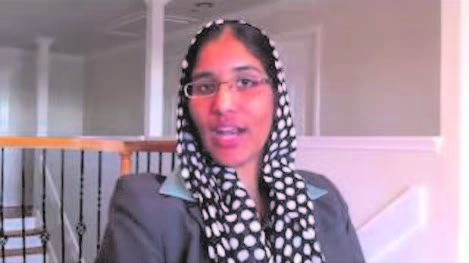
    HOUSTON, TX (TIP): Twelve major American Sikh advocacy organizations, on January 28, 2014 sent letters to President Obama and Attorney General Eric Holder calling on the Obama Administration to immediately reinstate Kawaljeet Tagore, a Sikh IRS Agent based out of Houston, TX fired in July, 2006 for wearing a kirpan, a Sikh religious article of faith.

    Following her termination, Tagore sued the IRS and the Federal Protective Service (FPS),the federal agency responsible for the security of federal buildings, under Title VII and the Religious Freedom Restoration Act for failing to accommodate her Sikh religious practice of wearing the kirpan, a dagger-like article that symbolizes the Sikhs’ commitment to justice.

    Even though FPS and IRS allow saws, box cutters, letter openers, and cake knives into federal buildings for work-related purposes, the IRS and FPS defended Tagore’s lawsuit by claiming that a federal criminal law, 18 U.S.C. section 930, prohibits them from according Tagore any accommodation for her kirpan.

    In 2012, a Houston federal judge sided with the government and dismissed Tagore’s lawsuit. However, on November 13, 2013, the United States Court of Appeals for the Fifth Circuit-relying on a December, 2012 FPS Policy Directive that requires accommodation of kirpans -reversed the federal judge’s ruling in favor of FPS. The Fifth Circuit held that the new FPS Policy Directive “contradicts the arguments previously advanced by the government for denying Tagore an exception or exemption for the wearing of her kirpan.

    Yet, to date, the government has refused to reinstate Tagore to her position as an IRS agent, compensate her, or accommodate her kirpan. “A hard working IRS agent is being kept from work due to her religious beliefs in a country founded on diversity and religious freedom. The FPS has already allowed 2.5 inch kirpans in almost 9,000 federal buildings but will not allow Ms. Tagore to wear her kirpan to work in an IRS building.

    Now that this inconsistency has been addressed by the Fifth Circuit, it is time to give Ms. Tagore her job back,” said Anisha Singh, staff attorney and policy advocate for UNITED SIKHS. In their letter, UNITED SIKHS, along with other Sikh advocacy groups, claim that the IRS and FPS’ continuing violation of Ms. Tagore’s right to religious accommodation is contrary not only to RFRA and FPS Directive 15.9.3.1 but to the guiding principles and tenets of the Obama Administration,” including an Executive Order that requires federal agencies to promote diversity. The Sikh groups call on Obama to “direct the Civil Division of the Department of Justice, IRS, and FPS to appropriately resolve” Tagore’s lawsuit, by “reinstating her employment with the IRS and providing her her with an exemption to wear her kirpan to work.”

  • US Economy in a better shape, say 36% of the questioned

    US Economy in a better shape, say 36% of the questioned

    WASHINGTON (TIP): The percentage of Americans who rate current economic conditions as good now stands at its highest level in six years, according to a new CNN/ORC International survey, released on February 6th.

    Thirty-six percent of those questioned rate the current economic conditions favorably. That’s up four percentage points from December and is the highest level since January 2008. Sixty-four percent continue to say the economy is in poor shape.

  • Sri Lanka refuses visa to top US official

    Sri Lanka refuses visa to top US official

    COLOMBO (TIP): The Sri Lankan government has refused to issue a visa to US ambassador at large for women’s issues, Catherine Russell, forcing her to cancel a high-level visit scheduled for Feb 10-11.

    “It is regrettable that the government of Sri Lanka has refused to grant a visa to Ambassador Catherine Russell for this trip,” Xinhua cited local media on Tuesday as quoting a US embassy spokesman. Ambassador Russell had planned to spend a day in Colombo and a day in Jaffna.

    Her agenda had included meetings with government officials, the Women’s Parliamentary Caucus as well as with women’s organisations from around Sri Lanka. Her visa application was officially submitted on Jan 27 and rejected Jan 31. The US official, who is a high-ranking, former senior White House aide, will be travelling in the region over the next week.

    Authoritative sources said the US embassy now expects to connect Sri Lankan civil society, parliamentarians, women’s groups and other representatives with her via video conference. Her objective is reportedly to raise their concerns about the issues women in Sri Lanka. The Sri Lankan government is seething over remarks made in Colombo by US assistant secretary of state for south and central Asian affairs Nisha Biswal.

    Addressing the media at the end of an official visit last week, she said frustration and scepticism among the US and international community about Sri Lanka’s lack of progress in investigating the final days of the war have led to increasing calls for an international investigation.

    “Patience is wearing thin,” she warned. Sri Lanka’s ministry of external affairs in Colombo hit back, saying the US had a desire to believe the worst of Sri Lanka. “There is a lack of objectivity in recognising the substantial progress in addressing the challenges during the brief span of four-and-a-half years since the end of an armed conflict of 30 years,” its statement said.

    “Therefore, ‘patience wearing thin’ is a misnomer.” “It is the trajectory of the democratically elected government of Sri Lanka to ensure the best for its people,” the ministry asserted. “Statements during the last few days are indicative of a desire to believe the worst and to work to a preconceived political agenda.” The rejection of Ambassador Russell’s visa, however, preceded Biswal’s press conference Feb 1.

  • US warns its citizens to defer all non-essential travel to Pakistan

    US warns its citizens to defer all non-essential travel to Pakistan

    WASHINGTON (TIP): The US has issued a fresh travel alert, asking its citizens to defer all nonessential travel to Pakistan in the wake of threats from several foreign and indigenous terrorist groups across the country.

    At the same time, the US state department has lifted ordered departure status of non-emergency US government personnel from its consulate in Lahore. Consular services at the US consulate in Lahore will remain unavailable but the US embassy in Islamabad and the US consulate general in Karachi will continue to provide routine consular services for American citizens.

    “The department of state warns US citizens to defer all non-essential travel to Pakistan. This travel warning replaces the travel warning dated September 6, 2013, to remind US citizens of ongoing security concerns in Pakistan,” the state department said. Noting that the presence of several foreign and indigenous terrorist groups poses a potential danger to US citizens throughout Pakistan, it said across the country, terrorist attacks frequently occur against civilian, government and foreign targets.

    Attacks have included armed assaults on heavily guarded sites, including Pakistani military installations. The government of Pakistan maintains heightened security measures, particularly in the major cities. Threat reporting indicates terrorist groups continue to seek opportunities to attack locations where US citizens and westerners are known to congregate or visit. Terrorists and criminal groups regularly resort to kidnapping for ransom, it said.

  • 14 killed as bus plunges into river in Nepal

    14 killed as bus plunges into river in Nepal

    KATHMANDU (TIP): At least 14 people were killed and seven others injured on Feb 6 when a passenger bus veered off a mountain highway and fell some 500 metres into a river.

    The bus, carrying 21 people, was en route to Bhirahawa from Pokhara when it skidded off the Siddhartha Highway in Palpa district and fell into the Bhalukhola river at around 2am (local time). All the deceased are men and their identities are yet to be established, Palpa DSP Shiva Shrestha said.

    “The bus might have lost control of the vehicle after the driver dozed off at the steering wheel leading to the accident,” he said. Shrestha said 12 people died on the spot and two others succumbed to injuries while undergoing treatment. The bus driver and bus owner were also killed in the mishap. At least seven persons, including two women, were injured in the accident.

    Of them, four are undergoing treatment at Mission Hospital, Bhusaldanda while others are being treated at Lumbini Teaching Hospital of the district, The Himalayan Times reported. Locals, police and army personnel are carrying out the rescue operation at the site of the accident.

  • WHY SEX IS TRAUMATIC FOR SOME WOMEN

    WHY SEX IS TRAUMATIC FOR SOME WOMEN

    In addition, physiological factors also hamper lubrication. The Bartholyn glands located in the vaginal wall are responsible for secreting lubricating fluid. However, in the presence of infection, they swell up, says Dr Duru Shah, scientific director of Gynaeworld. Treating this fungal or bacterial infection helps ease the pain, says Shah, who tackles at least two cases of painful sex a week.

    A deep pain In the case of Vaginusmus, the pain occurs at entry point. Sometimes, women, who do not experience pain at this stage of the act, may reel under debilitating pain during or after the act. In the case of women who are battling endometriosis, the uterus and ovaries are placed close to the vaginal wall. Thrusting may cause friction, leading to pain. The treatment — medical or surgical — would depend on the cause of the condition. “Most women who suffer from deep dyspareunia also live with painful periods,” says Shah.

    Enter botox When the cause of pain is psychological, there are doctors who will help you with a Botox jab. Two ml of botulinum toxin is injected into the skin in a non-surgical cosmetic procedure to block muscular nerve signals, which then weakens the muscle so that it can’t contract. Each dosage of two jabs costs Rs 30,000. Dr Sanjay Pandey, consultant urology, andrology and gender reassignment surgeon at Andheri’s Kokilaben Dhirubhai Ambani Hospital, “helps patients relax the muscles of their vaginal wall with a Botox shot, so that they don’t clamp up.”

    This, he admits, is reserved for rare cases of Refractory Vaginusmus after counselling and exercises have failed to help and starts showing results in a few weeks. Pandey has offered the treatment to 24 patients in the last six-and-a-half years. The effect of the jab lasts between four to six months, which means women have to come in for ‘follow ups’. “There are no side effects, except that it may not work on some patients at all,” adds Dr Sejal Desai, consultant gynaecologist and director of Saral Hospital in Santacruz. “Although it’s possible in some cases, that the woman dissociates pain from sex and is able to have intercourse normally even after the Botox wears off.”

  • 11 people killed as boat capsizes in Bangladesh

    11 people killed as boat capsizes in Bangladesh

    DHAKA (TIP): At least 11 people were killed and over 50 were missing after a boat sank in the Surma river in Bangladesh’s Sunamganj district, an official said Tuesday.

    The boat sank around 9 pm on Monday after it caught fire. Six bodies were recovered until 3 am when the rescue work was stopped due to heavy fog, reported bdnews24.com. Police and fire service personnel resumed the rescue efforts on Tuesday morning and found five more bodies, Sunamgnaj’s Superintendent of Police Harunur Rashid said.

    Mohammad Tareque, a fire department official, said the recovered bodies were hard to recognize as they were severely burnt. Most of the boat passengers were workers at a stone quarry in Sunamganj district. The boat, which was carrying 15-20 children and women, caught fire from a stove and sank as the passengers panicked triggering a stampede. Around 40-45 passengers managed to swim to safety but more than 50 are still missing, officials said.

  • Pakistan govt, Taliban panel hold talks

    Pakistan govt, Taliban panel hold talks

    ISLAMABAD (TIP): After initial hiccups, Pakistani state negotiators and a Taliban-nominated committee met at an undisclosed location today to frame a roadmap for parleys aimed at ending terrorism and bringing peace to the country.

    The coordinator of the government’s four-member committee, senior journalist Irfan Siddiqui, said the panel will negotiate with the banned Tehrik-e-Taliban Pakistan (TTP) with an open mind. The state negotiators earlier met in Islamabad to discuss how to start the dialogue and take it forward.

    The TTP-nominated committee and state negotiators were originally scheduled to hold talks on February 4 but the meeting was put off after the government panel sought clarifications on some unspecified issues. The committee nominated by the TTP comprises Samiul Haq, a radical cleric known as the “father of the Taliban”, Jamaat-e- Islami leader Ibrahim Khan and cleric Abdul Aziz of the radical Lal Masjid. Earlier, Aziz said the Taliban wanted to have a meeting with their nominees.

    He said the panel was deliberating to visit Waziristan or to call the Taliban to a spot near Peshawar for a meeting. He further said they could ask Taliban to provide their demands in writing. However, a final decision would be made after meeting the government committee.

    The state negotiators include Siddiqui, former ambassaor Rustam Shah Mohmand, journalist Rahimullah Yousufzai and former ISI officer Maj (retired) Muhammad Amir. Meanwhile, cleric Samiul Haq telephoned interior minister Chaudhry Nisar Ali Khan and discussed ways to bring peace to the country. Khan told him the government initiated the dialogue process with seriousness as it wants to normalise the situation.

    He said the country and the government are praying for the success of the dialogue. The government will extend full cooperation to its committee for the talks, he said. Haq appreciated Khan’s role in promoting dialogue and hoped it would yield positive results, state-run Radio Pakistan reported.

  • HOW TO BANISH STOMACH FAT FOREVER

    HOW TO BANISH STOMACH FAT FOREVER

    For how long are you going to hide that paunch? Let’s not run away from the problem and, instead, face it head on! Arnav Sarkar, our Strength and Conditioning coach gives you the weapons to banish stomach fat forever. Read Arnav’s tips below to shed those baggy clothes… Strength train atleast 3 days a week. This will help boost your metabolism and help you burn more calories even at rest. Ditch the “500 crunches” workouts and do more intense core work with exercises like windmills, Turkish situps, hanging leg raises, etc. Perform 2-3 HIIT or high intensity interval training workouts a week.

    These need not and should be long in duration, 10-20 minutes is enough if done correctly. Get more active. Even if you spend 1 hour a day in the gym on all days of the week, it is still just 7 hours of a total of 168 hours in the week. Try to make the best of the remaining hours by getting more active. Plan playtime with friends/kids, and move a lot more during the day. Get 6-8 hours of sleep each night. Less than that and your hormones will always be in a fat storing state, and you will find your dreams of a flat stomach hard to realize. Meditate, and use other stress reduction strategies that will keep your cortisol levels under control and keep you from gaining abdominal fat and not make you age faster.

    Eat more protein, fiber, and healthy fats. This means more lean meats, veggies, and nuts. Eat less junk, refined and sugary foods. These are the worst enemies of a flat stomach, and they are often the cause of many other chronic diseases like diabetes, hypertension, etc. Drink more water, atleast 2 liters a day is a bare minimum. Less than that and your body will not be able to burn fat most efficiently. These are some of the best tips you can get to lose abdominal fat and flaunt a flat stomach. Want it? Then lose it and flaunt it!

  • Nepalese man dies after drinking whisky for bet

    Nepalese man dies after drinking whisky for bet

    KATHMANDU: A 47-year-old man in Nepal who downed a bottle of whisky after a bet with a friend has died from medical complications three weeks after the drinking challenge, officials said on February 6. Pancharam Bishwokarma, owner of a gold shop in the town of Gopetar 300 kilometres (186 miles) east of Kathmandu, agreed to drain a 750 millilitre bottle of Royal Stag on January 16 if his friend paid the bill.

    “Bishwokarma then left for home that afternoon. But by 8 pm, he was vomiting. He could not sleep and was rushed to a local hospital,” said local police officer Sanjeev Khadka. The doctors at the district hospital referred him to another hospital in a town in the southern plains. From there, he was again moved to a hospital in Siliguri, a town in the Indian state of West Bengal.

    “He was unconscious when he was brought here,” Pashupati Chaudhary, a doctor at the second hospital, BP Koirala Institute of Health Science in Dharan, said. “We found that he had consumed the concentrated alcohol, which was 42 percent, without any food, finishing it in five minutes. It damaged his vital organs,” Chaudhary said.

  • YOUR BREAST TOO NEEDS TO STAY YOUNG

    YOUR BREAST TOO NEEDS TO STAY YOUNG

    Your face is not your only fortune. Here’s how to keep your assets as young and healthy as the rest of you. Women have long complained about sagging frames and crinkly cleavages, but it is far from a storm in a D-cup. According to Steve Horvath, a geneticist at UCLA’s medical school in the US, different parts of the body age at different rates. “Healthy breast tissue,” he says, “is about two to three years older than the rest of a woman’s body.” Which makes it even more important to prevent your torso from ageing. Here’s a list of factors to keep in mind.

    The wrong bra size
    With around 80 per cent of women believed to be wearing illfitting lingerie, we could be inadvertently contributing to sagging breasts, bad posture, back pain or even abrasions and rashes. Several factors including weight loss or gain, medication, contraceptive pills, the menstrual cycle, pregnancy and menopause can affect breast size. It’s important to buy new bras every year to make sure you have the correct size. Get an in-store fitter to measure you. And don’t forget to wear a sports bra when you exercise.

    Lack of nutritious food
    Our bodies are made from the nutrients we consume, meaning a diet lacking in essential vitamins and minerals may show in the condition and look of our skin. Sweet potato, spinach, kale and butternut squash are rich in vitamin A, and can help nourish the delicate skin in the breast area and other parts of the body. Vitamin C is good for collagen production and vitamin E is great for skin production.

    Alcohol overdose
    It’s not just food you should be thinking about — that wine habit could also affect your breast health. Alcohol can triple the oestrogen levels in a woman’s body. A lot of breast cancers are hormone-sensitive and having higher oestrogen levels could cause cancer cells to multiply. By minding oestrogen levels, you reduce your potential risk of oestrogen-related cancers. Cut down your alcohol intake and eat broccoli, cabbage, brussels sprouts and greens since they contain indoles that are believed to aid the body in reducing oestrogen levels and helping fight cancer.

    Neglect moisturising
    A wrinkly decolletage can really age you. The bust is an area we often neglect as we focus on our face. But breast are exposed to friction from clothes and underwear which can end up chaffing the delicate skin. It is worth investing in products to help combat that. Any cream that has almond oil, cocoa butter or evening primrose oil will help keep the bust area soft. Skin on the neck and chest gets almost as much sun as the face and, being much thinner than skin elsewhere, it is more prone to showing the tell-tale signs of ageing. So, use a sunscreen that’s suitable to your skin.

  • YOU SHOULD AVOID ENERGY DRINKS

    YOU SHOULD AVOID ENERGY DRINKS

    Energy drinks are very popular among youngster, because most of them believe that these drink helps them stay up studying or partying. While these drinks claim to provide you with instant energy that will keep you going, they do have a downside to them. They can harm your health in the long run and so it is important to know about the negative impact they have on your body.

    Caffeine dependence
    It is commonly known that caffeine is the main ingredient of energy drinks. But do we really check how much caffeine we consume in those energy drinks? Once your body gets used to this excess consumption of caffeine, your body will begin to depend on this supply to keep it going.

    Insomnia
    You might have consumed the energy drink to give you that extra boost to get you through the day but what happens when this energy lingers on through the night as well? You end up going through a sleepless night and end up with another energy drink the next day. This will keep the vicious circle going and lead to insomnia.

    Affects the mood
    Studies show that frequent consumption of caffeine lowers serotonin levels in the body. This serotonin is known to be the “feel good” neurotransmitter of the body and a decrease in it is easily linked to depression and low moods.

    Sugar rush
    Other then stimulated energy, these drinks also contain a lot of sugar. Some of these drinks can have upto about 13 spoons of sugar in each drink. This causes an individual to go on a sugar high. Apart from that, sugar can leave a person dehydrated, suppress the immune system, decay teeth and cause weight gain.

    Stresses organs
    Another ill effect of energy drinks is that it can stress out your organs. When you put additional stress on your organs, they get tired and need some time to relax. But, when you gulp down energy drinks, you send a signal to your organs to respond and work even though they are exhausted, thereby stressing them further.

  • America’s Prejudiced Media

    America’s Prejudiced Media

    “Hysteria and groupthink prevail over professionalism in covering non-western countries”, says the author.

    The observation that wealth, power and influence are shifting from the West to some key emerging actors among the rest has become a staple of international analysis. Relative decline in US global dominance will inevitably lead to a retreat of the American media footprint around the world as well and translate into a corresponding erosion of US soft power.

    This trend will accelerate if outsiders lose faith in the professional integrity of US media. An important explanation for the surprisingly rapid inroads of Al Jazeera was dissatisfaction with biased coverage of Middle East news by oncedominant western media. The vulnerability of US media to manipulation of facts, evidence and opinion was vividly shown during the 2003 Iraq war.

    Journalists failed to challenge the Bush administration’s inflated threat assessment based on manipulated evidence, cherry-picked intelligence and flawed analysis. Former Australian diplomat Alison Broinowski notes: “Of Rupert Murdoch’s 174 newspapers worldwide, not one editorially opposed the war; and, once the invasion began, many of their commentaries became hysterically supportive.”

    Mainstream US media also collaborated with the Orwellian redefinition of torture. In the seven decades before 2002, the Los Angeles Times, New York Times, USA Today and Wall Street Journal described waterboarding as torture between 81% and 96% of the times. After 2002, when the US itself began to practice waterboarding, the papers called it torture in under 5% of cases. A more recent example is Iran.

    10
    After a month in the US, Rami Khouri wrote: “Any impartial assessment of the professional conduct of most American media outlets in covering the Iran situation would find it deeply flawed and highly opinionated to the point where I would say that mainstream media coverage of Iran in the US is professionally criminal.” To this litany can now be added the coverage and analysis of the ongoing India-US diplomatic row. Multiple layers of complexity and nuance are reduced to India wrong, America right.

    It is not too hard to connect the dots and detect the structural bias against Devyani Khobragade in the following equation. The maid worked for Khobragade in New York, her husband for a US diplomat in New Delhi. The latter’s and his wife’s antipathy to Indian conditions was posted on social media. A trafficking visa is the easiest route to permanent entry into the US but requires criminal charges being filed and a willingness by the employee to testify against the employer.

    A gullible advocacy NGO and a grandstanding attorney accepted the maid’s testimony without due diligence that fit their predetermined narrative and agenda. The whole chain could of course be false. But that requires independent and impartial investigation. The US media accepted the maid’s narrative and prosecution case seemingly at face value and strongly applauded the diplomat’s arrest for committing crimes against US visa and labor laws, on the basis of two American self-sustaining myths: egalitarianism and rule of law.

    But the big picture reality is that in effect they endorsed the role of the US as a global bully that imposes rank double standards, compelling foreign diplomats to US legal jurisdiction but using all its economic and diplomatic muscle to keep its officials beyond the reach of foreign legal jurisdictions. Editorials and op-eds in the New York Times, Washington Post, Guardian, Financial Times and Australian repeatedly recalled previous Indian diplomats caught in similar troubles, but stayed silent on more heinous crimes committed by US officials misbehaving abroad, from accidental deaths in Kenya (2013) to murders in Pakistan (2011).

    In the electronic media, BBC and CNN showed better balance. They also neglected to mention that the case, involving a contract signed in India between two Indian citizens, was already before India’s courts. By failing to mention it, they saw no need to explain and justify why the US inserted itself into the middle of the case and privileged its own over India’s legal jurisdiction. Providing a justification might have been right or wrong; not noting the facts was deceitful. Similarly, in an intriguing outbreak of groupthink, they kept mentioning the recall of ID cards for US officials in India as an example of petty and vindictive overreaction.

    India had unilaterally issued diplomatic ID cards to all US embassy and consular officials. After the shabby treatment of its consular officer, it recalled all diplomatic ID cards and reissued consular ID cards. The second part was simply ignored as just another inconvenient fact that might contradict the self-righteous narrative. Outraged opinion writers pointedly noted how security barriers had been removed from around the US embassy in Delhi, but neglected to point out they were removed from public land only for causing great inconvenience to Delhi’s citizens and some adjoining foreign embassies.

    India substantially increased the police presence around the embassy to ensure there was no net reduction in the level of security coverage. All this information is publicly available. Because “few governments in the world have the geopolitical heft that India has,” says Kishore Mahbubani from Singapore, “virtually every other government in the world was quietly cheering on the Indian government as it insisted on total reciprocity in the treatment of Indian and American officials”. You’d never know this from US media. Which begs the question: Were they lazy, incompetent or deliberately dishonest?

    The whole chain could of course be false. But that requires independent and impartial investigation. The US media accepted the maid’s narrative and prosecution case seemingly at face value and strongly applauded the diplomat’s arrest for committing crimes against US visa and labor laws, on the basis of two American self-sustaining myths: egalitarianism and rule of law.

  • INCREDIBLE COMPLEXITY

    INCREDIBLE COMPLEXITY

    India’s politics is in disarray at a time when Delhi needs to connect the various dots and come up with a policy matrix of incredible complexity involving several interlocking templates – security situation within Afghanistan; evolving US regional priorities toward Afghanistan, Pakistan and India to optimize its ‘pivot to Asia’; rising tensions in the US’ equations with both China and Russia; US-Iranian engagement; India- Pakistan dialogue,” says the author

    The US-Pakistan Strategic Dialogue took place early last week in Washington after an interruption of three years following the American raid on Osama bin Laden’s secretive residence in Abbottabad in May 2011. These three years have been marked by much US-Pakistan discord and public acrimony.

    A brave attempt was made by both sides during Prime Minister Nawaz Sharif’s visit to the White House last October to put behind the bitterness of betrayal and get on with the relationship. But such deep wounds as Abbottabad take time to heal. At best, they could be cauterized for temporary relief. Indeed, bin Laden’s ghost was present at this week’s cogitation in Washington, as is apparent from the recent US legislation to make financial aid to Pakistan $33 million conditional on Islamabad pardoning and releasing the Pakistani doctor Shakil Afridi (who secretly helped the CIA to track down the elusive al-Qaeda leader’s hideout).

    Whereas Pakistan sees Afridi’s collaboration with the CIA as an “act of treason”, Americans hail him as a hero. In turn, Pakistan seeks the release of lady doctor Aafia Siddiqui whom the US locked up for an 80-year jail term for allegedly firing at US soldiers. While Washington regards her as a cold-blooded murderer, she is the stuff heroism in the Pakistani folklore. Clearly, this is much more than a war of words between two estranged partners.

    There is a crisis of confidence in their “spirit of cooperation”, to borrow the expression from the Pakistani foreign ministry statement condemning the US decision to link Afridi’s case to American aid. Meanwhile, hovering above is also the CIA-controlled drone mission haunting the US-Pakistan ties with President Barack Obama vaguely promising that he’d exercise greater “prudence” when Pakistani air space is violated in future and its citizens killed in missile attacks. The cup of Pakistani anger is overflowing. The testiness in the US-Pakistani ties was apparent at the strategic dialogue.

    Washington tried to inject some romance in the run-up to the strategic dialogue with the US special representative for AfPak James Dobbins even penning an article in the Pakistani media affirming that the meet would be an “important opportunity to advance a comprehensive agenda of mutually beneficial initiatives” and a sign of the “firm US commitment to advancing our relationship with Pakistan.” But in the event, the strategic dialogue ended without a compass to navigate the journey ahead. Sharif has since unilaterally ordered talks with Pakistani Taliban. For the Obama administration, the key agenda item was the post- 2014 Afghan scenario. Pakistan’s foreign and security policy advisor Sartaj Aziz said in his opening statement at the strategic dialogue meeting that the Afghan endgame provided “the overbearing and sobering background in which we are meeting to explore ways and means for transforming the post- 2014 US-Pakistan transactional relationship into a strategic partnership.”

    Strategic relationship
    Pakistan needs to know what is there in it for its interests. To quote Aziz, “At what stage does a normal transactional relationship become strategic? Are there one or more thresholds that must be crossed before a relationship can qualify as a strategic partnership?” Interestingly, Aziz proceeded to spell out the three “important prerequisites” of a US-Pakistan strategic partnership. One, “mutual trust at all levels and among all key institutions”; two, respect for each other’s security concerns; and, three, US willingness to “convey” to India Pakistan’s “legitimate concerns” with the “same intensity” with which Washington exerts “a lot of pressure” on Pakistan over “issues of concern to India”.

    Aziz dwelt on the Afghan scenario at some length to underscore that Pakistan is willing to cooperate with a “responsible and smooth drawdown” in Afghanistan and to facilitate “a continued flow of the lines of communication” as well as to “help in every possible way” the stabilization of Afghanistan “including through a comprehensive reconciliation process” – provided, of course, Islamabad could “at the same time hope that our security concerns are comprehensively addressed.” He then summed up that a resolution of the Kashmir issue would have an all-round salutary effect on the range of issues. To be sure, major security challenges lie ahead for India in the period ahead in its region.

    The USPakistani tango is a high-stakes game for both sides and it has commenced in right earnest at a juncture when the Indian government is in limbo and during the next 3-4 months at the very least, a new political order will be struggling to be born on the Raisina Hills. India’s politics is in disarray at a time when Delhi needs to connect the various dots and come up with a policy matrix of incredible complexity involving several interlocking templates – security situation within Afghanistan; evolving US regional priorities toward Afghanistan, Pakistan and India to optimize its ‘pivot to Asia’; rising tensions in the US’ equations with both China and Russia; USIranian engagement; India-Pakistan dialogue.

    The last point becomes crucial since much time has been lost in engaging Pakistan in a meaningful dialogue due to our competitive domestic politics leading to the April poll. Maybe, the Bharatiya Janata Party estimates that a new government dominated by it can always pick up the threads of Atal Behari Vajpayee’s dalliance with Sharif and, therefore, what is the hurry today about. But, as the USPakistan strategic dialogue forewarns, it will be first-rate naivety to imagine things are as simple as that. Lost time is never found again.

  • Dealing with a toxic legacy

    Dealing with a toxic legacy

    President Barack Obama’s recent statement of his Afghanistan policy has again revealed the intractable situation the United States has faced since it led the invasion of that country in 2001.

    In his State of the Union address to Congress on January 28, Mr. Obama said the mission there would be completed by the end of the year, and that thereafter the U.S. and its allies would support a “unified Afghanistan” as it took responsibility for itself. With the agreement of the Afghan government, a “small force” could remain to train and assist Afghan forces and carry out counterterrorism operations against any al- Qaeda remnants.

    Washington has withdrawn 60,000 of its troops from Afghanistan since Mr. Obama took office in 2009, but 36,500 remain, with 19,000 from other countries in the NATO-ISAF coalition. Western plans are for a residual force of 8,000 to 12,000, two-thirds of them American, but sections of the U.S. military have suggested a U.S. strength of 10,000, with 5,000 from the rest of the coalition. Mr. Obama is discussing the options with senior officers.

    The President wants to avoid a repeat of Iraq, which with the exception of Kurdistan has become a battleground between Sunni and Shia leaders, claiming over 7,000 lives in 2013 alone. But over Afghanistan he is caught in a cleft stick. Afghan President Hamid Karzai is yet to sign the deal for NATO-ISAF troops to stay; he would prefer his successor to sign the agreement after he leaves office in April 2014, but the successor will not take office until September.

    Secondly, Mr. Karzai has infuriated Washington by planning to release 37 Taliban detainees, by blaming American forces for terrorist attacks on civilians, and by calling the U.S. a “colonial power.” Yet the Afghan National Security Forces, which include the police, number 334,000, or about 20,000 below the numbers envisaged for them, and the U.S. Department of Defense has reported to Congress that the ANSF cannot operate on their own.

    The U.S. public have little wish to continue the war, but the military may have its own agenda. The September 2013 quarterly report by the Special Inspector General for Afghan Reconstruction shows that of nearly $100 billion in reconstruction aid, $97 billion went towards counter-narcotics, security, and other operations; only $3 billion was used for humanitarian aid. If the President feels hemmed in, it is because of the toxic legacy of his predecessor George W. Bush who went into the country in search of Osama bin Laden and al-Qaeda. At the end of 12 years of American occupation, Afghanistan has not emerged as a more secure place; nor has the U.S. had much of a success in nation-building.

  • Teri McLuhan

    Teri McLuhan

    MEN LIKE BADSHAH KHAN COME ONLY EVERY 100 YEARS

    Author of 5 books and director of countless documentaries and films, Teri McLuhan offered to the world some of the most heart-rending stories that are easy to overlook in the world of elapsed morals. Her film, Frontier Gandhi: Badshah Khan, A Torch for Peace, took 22 years in the making. But the fruit it bears is deliciously sweet.

    The Consulate General of India in association with Bharatiya Vidya Bhavan had a special screening of ‘Frontier Gandhi: Badshah Khan, A Torch for Peace’ at the Indian Consulate in New York on 27th January. Below are some excerpts from an interview with Teri McLuhan and The Indian Panorama’s Pooja Premchandran.

    Q. When everyone is looking towards a quicker commercial success, what made you look at Badshah Khan, a hero from a region you weren’t familiar with?
    It all started with a book. A friend gave me a book called ‘Non-violent Soldiers of Islam’ by Eknath Ishwaran. I began reading it and by around 3 AM, all the electrons in my bedroom shifted. I had realized that I have found a new form of human spirit, and that got me involved.

    Then a little bit later, I was invited to visit India by the Government of India, where Satyajit Ray and Shyam Benegal hosted two other filmmakers and me. We were generally discussing our forthcoming ventures and when they asked me what I was planning on, I said I want to make a movie on Badshah Khan. There was silence in the room when I announced this. But both Satyajit Ray and Shyam Benegal wished me luck. This is how it started.


    7
    Teri was amused when Pooja asked her what her future held for her.

    Q. How different is this movie from your usual work?
    The five books I have written so far, all highlight different cultures from around the world and they all deal with concepts such as land, earth and memory. They all involve an amount of respect for the Earth, which includes a peaceful manner of living on the earth. I never worked on anything about this region of the world, so that is new. But in terms of themes, non-violence and peace, no, it’s just a different personality.

    Q. The film that took 22 years to complete. That must have meant immeasurable research and exhausting deadlines. Did you face any challenges or obstacles that seemed incessant?
    We were working with the Indian crew in Afghanistan and Pakistani borders. There were plenty of challenges, plenty of obstacles, and many of them were present with us 24/7. We were dodging missiles, and in those days most of the lines were unmarked. We have faced major sandstorms and multiple equipment disappearances and even arrests. We were dealing with that part of the world, where there is no infrastructure. So whatever you wanted, you had to build it.

    There were no roads, there were just boulders. Yet, whatever it was, when you are on a mission, when you are passionate, none of it matters. You always go forward. Also, the more I learned of this remarkable individual called Badshah Khan, the more I moved into his spirit. Three things kept me going during all times. First was his spiritual and moral certainty about his life and his own mission. Second was his uncommon courage and fearlessness and lastly his profound absence of doubt. Imagine that, living without doubts.

    While in India, did you sample any Bollywood movies? What are your thoughts on them?
    I love Bollywood musicals. I actually watch Indian cinemas a great deal. They are so much fun and highly imaginative. Hollywood doesn’t come close to be able to put on such show. But yes, I love Aparna Sen’s work. I absolutely loved Rakeysh Omprakash Mehra’s Bhaag Milka Bhaag. It left everyone of us moved. The thing about Bollywood is that everything is possible. And that is true; we should not put ourselves in a box and say we will make only Hollywood movies or independent movies. It’s all about stretch.


    8
    Maker of the much talked about film on Frontier Gandhi Badshah Khan, Teri McLuhan speaks about the subject and making of the film at the Indian Consulate in New York on January 27, 2014.

    Besides a moving book, what else got you passionate about Badshah Khan?
    One of the reasons why I feel Badshah Khan is of such significance today is because my feeling is that men like him come only every 100 years. And why do they come? To lift us and to assist us. Many such individuals have come and walked this earth like Gandhi, Mother Theresa and even now countless nameless people are here whose job is to enlighten and awaken us. To me, Badshah Khan is a lighthouse, a beacon of light when times are dark. When I became aware of his spirit, how could I not walk with him?

    In today’s world though, has ideals of Badshah Khan or Gandhi become forgotten morals?
    Well, yes. I mean, look at Mahatma Gandhi. People don’t pay much attention to his teachings. There is a cursory attention among people, which basically says that he is important. But many of these people have no morals on how they live today. In fact, we are living in the completely opposite way than what these ideals preached. We have wandered away from what mattered. But I believe, we are now moving back again to what matters. It’s happening.

    What does your future hold for you?
    I have another book coming up called ‘Daring of it all’. But because I am in the process of writing it, I do not want to say much. I have written for two movies. The first one is called ‘Cave of Light’. It is much like an Indiana Jones story and it will be shot in India. The second one is not named yet. But it is about 2 figures coming together from different parts of the world over a span of 2000 years. It basically says that 2000 years doesn’t matter. They both are narrative films. I am going to take a break from documentaries. Besides this, I plan visiting India a lot. India is the home of my heart.

  • Ratanjit Sondhe speaks of superiority of Spiritual Intelligence over IQ and EQ

    Ratanjit Sondhe speaks of superiority of Spiritual Intelligence over IQ and EQ

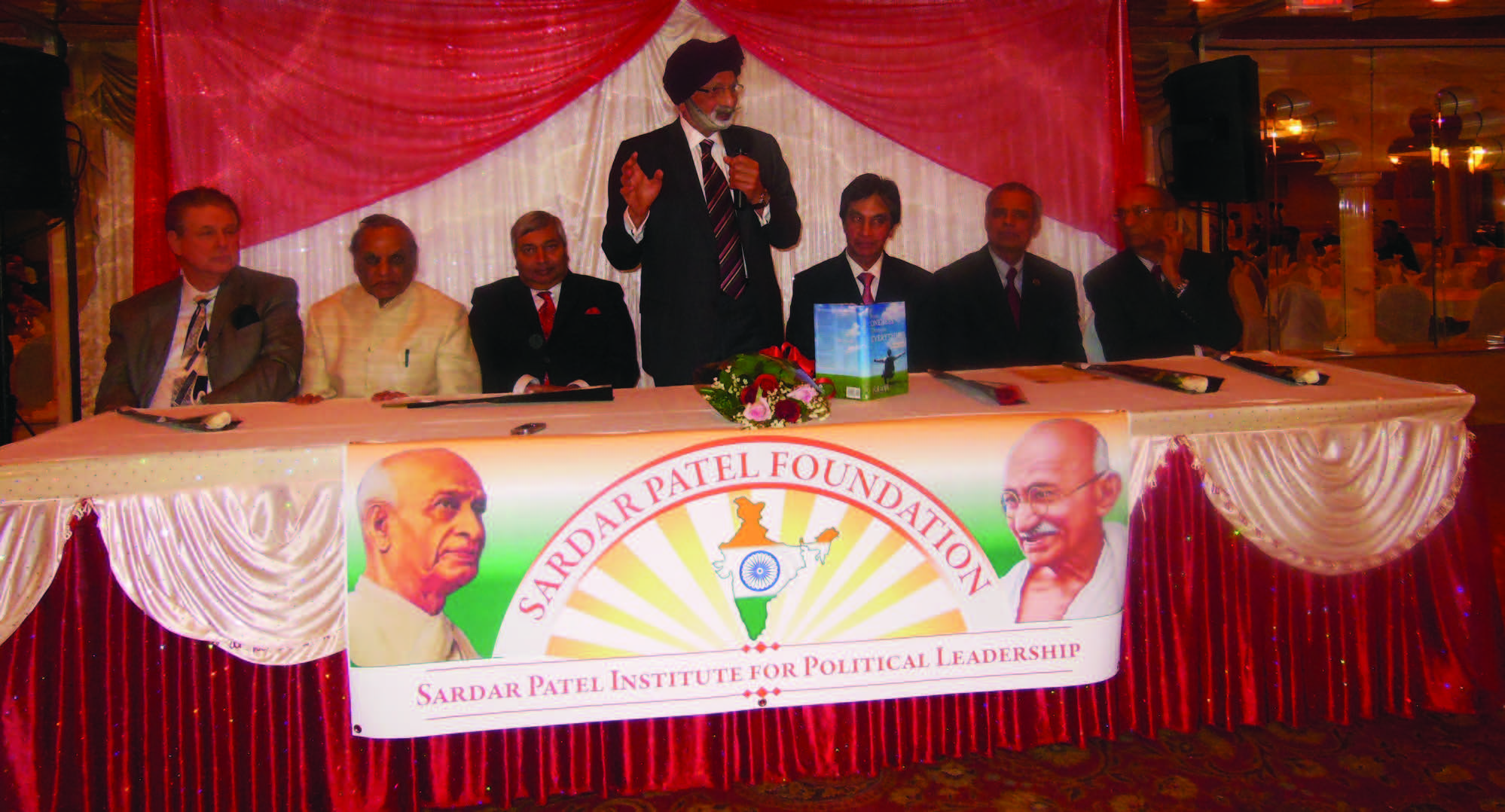
    EDISON, NJ (TIP): A book-signing ceremony of Ratanjit Sondhe’s How ONENESS changes EVERRTHING was organized by Sardar Patel Foundation -USA on 29th January 2014 in Edison, NJ as part of India’s 65th Republic Day. Dr. Navin Mehta and Prof. Bipin Sangankar were guests of honor who spoke highly of Cleveland based Ratanjit Sondhe who came to USA in 1968 to earn a Ph. D. degree in polymer chemistry at The University of Akron, Ohio with Eight Dollars in his pocket.

    After substantial Ph.D. course work he started his company POLY-CARB in 1973 and after 35 years he sold his highly successful company to The Dow Chemical Company at an astronomical bidding price and opted to be an Educator, Author, Business Coach, Radio and Television host.

    To the large gathering Ratanjit Sondhe narrated his remarkable entrepreneurial journey how started the company, saved from bankruptcy and reshaped his material science company which he sold to the highest bidder in 2008 The Company was started d in 1973 and growing well in right direction but to his astonishment one day in 1980 his accounts revealed that the company was not in a position to pay its supplies and employees.


    5
    A view of the gathering

    The company lawyers advised me to take refuse into bankruptcy protection chapter 11. He refused to take advice of his accountants and lawyers. He narrated his story to the gathering: ‘ I brought all of the account books home and analyzed them . I was completely shocked to discover that 90% of the sales were generated by me and substantial of my time was spent in helping and collecting 10% sales of my seven vice presidents and a number of sales managers’.

    In his book: How ONENESS changes EVERYTHING, which he autographed for readers on the occasion, he tells about 9 Universal laws beyond IO and EQ [Emotional intelligence] which he describes as Spiritual Intelligence into practical focus. Interests of your suppliers and your clients are also parts of your business that is the message of his book. Ms.Michelle Dowling read the message of Congressman Frank Pallone and meeting was conducted by Mukesh Kashiwala.

    Among Executive Committee members of Sardar Patel foundation Vinod Patel and Himanshu Shah played important role organizing the book signing ceremony. Mr. Sondhe signed the books and answered questions from the audience. Everybody felt the need for another long session with the author. Ratanjit Sondhe promised to do it after he returns from India from his lecture series organized by Tata Consultancy in Mumbai, New Delhi, Chennai and other cities in India.

  • Fewer than 2 million signed up for Medicaid under the health law: REPORT

    Fewer than 2 million signed up for Medicaid under the health law: REPORT

    WASHINGTON (TIP): The Obama administration has said that 6.3 million people were determined to be eligible for Medicaid between October and December.

    But the study, from health-care industry consulting firm Avalere Health, suggests that only a fraction of the enrollments are strictly the result of the health-care law, according to a news report in Washington Post.

    The study reveals that between 1 million and 2 million Americans signed up for Medicaid last year because of the health-care law, suggesting that many of the people who have joined the program since the initiative’s rollout in October would have done so absent the law.

    The study is the latest effort by industry experts to dive into the enrollment numbers that have been released by the Obama administration. The administration’s figures have done little to illuminate whether the law is accomplishing one of its chief goals: reducing the ranks of the uninsured in America.

    The new report shows that the administration has an uphill climb, said Caroline Pearson, vice president of Avalere. “One major goal of the [Affordable Care Act] was to reduce the number of uninsured, and Medicaid expansion is a key part of that,” she said. “These numbers show that the administration has a ways to go toward its enrollment goal and will need to conduct sustained outreach and education efforts to draw more people into coverage throughout the year.”

    The Medicaid figures have been a source of controversy since the Obama administration began releasing private health insurance enrollment data and Medicaid eligibility figures. The administration has said that its 6.3 million figure is incomplete and includes renewals. Nevertheless, the administration has used the number – along with statistics showing that 3 million people signed up for private plans and a similar number benefited from a rule allowing young adults to stay on their parents’ health plans – to show that the health law is succeeding.

    “Already, because of the Affordable Care Act, more than 3 million Americans under age 26 have gained coverage under their parents’ plans,” President Obama said in his State of the Union address last month. “More than 9 million Americans have signed up for private health insurance or Medicaid coverage – 9 million.” Asked Wednesday, February 5 by WAMU radio host Diane Rehm how he responds to persistent criticism of the health-care law, Labor Secretary Thomas Perez said: “I think we overcome that with the facts,” citing as one fact that “6 million are enrolled through Medicaid expansion.”

    Joanne Peters, a spokeswoman for the Department of Health and Human Services, declined to address the specific details in the Avalere report. “We’re thrilled that since October, millions of Americans have enrolled in health insurance coverage,” she said in a statement. “Three million people have signed up for private plans in the Marketplace and more than 6 million learned they were eligible for Medicaid and CHIP [the Children’s Health Insurance Program], including new determinations in states expanding coverage as well as those made based on prior law and renewals.”

    It’s also hard to pin down how many people who bought private health plans via the new online marketplaces were previously uninsured. A McKinsey & Co. survey of 4,563 consumers eligible to enroll in private plans found that only 11 percent of individuals who bought new coverage were previously uninsured in 2013. For its analysis, Avalere compared the Medicaid enrollment numbers reported by the administration to the average monthly number of applications submitted over three months last summer.

    It estimated that between 1.1 million and 1.8 million people signed up for Medicaid through December because of the health law. That includes people who became newly eligible for the program because of the Medicaid expansion, as well as those who already were eligible but signed up only after the law got so much publicity. The rest of the enrollees, Avalere determined, were part of the typical flow of people who go on and off programs as their incomes and life circumstances change. Some Medicaid experts were skeptical of Avalere’s conclusion because it didn’t take seasonal variations into consideration.

    During the summer months, “we tend to have an influx of farm workers who are temporarily on Medicaid,” said Diane Rowland, executive vice president of the Kaiser Family Foundation. In addition, Rowland said, the study uses new and incomplete data. Some states count the number of individuals who sign up, while other states count applications, which may include four or five people. But Judith Solomon, vice president of health policy at the Center on Budget and Policy Priorities, said the Avalere figure is probably more accurate than the number put forward by the administration.

  • Medical Plaza to Visually Improve Redevelopment Area, Offer Quality Medical Services

    Medical Plaza to Visually Improve Redevelopment Area, Offer Quality Medical Services

    NEW JERSEY (TIP): Architect Paritosh Kumar, AIA, together with Dr. Bikramjit Singh, Dr. Sukhjender Goraya, and Carteret Mayor Daniel Reiman broke ground on a new medical arts facility that will provide high quality medical offices and services.

    The $1.4M public/private partnership will redevelop a property located on Washington Avenue, between Longfellow Street and Whittier Street that has been vacant and underutilized for years. When complete, the medical building titled, “Carteret Professional Plaza” will offer convenient, state of the art, medical offices and aesthetically revitalize the area.

    The building is scheduled to be completed Fall 2014. “Carteret Professional Plaza will physically transform one of Carteret’s busiest streets and place quality health care closer to locals and residents in surrounding towns”, stated Paritosh Kumar, AIA. “We are honored to be chosen to design this facility and create an atmosphere of health and healing that promotes improved patient/doctor relationships, is aesthetically pleasing, and raises the standard of Architecture and quality of life in the area.”

    Carteret Professional Plaza will be a three-story medical facility, fully compliant with the current Americans with Disabilities Act (ADA). The building will feature a modern facade using monumental arched windows complimented with brick, stone and stucco as exterior finishing materials in earth tone colors and stepped parapets to create an aesthetically pleasing look. The interior of the building will include approximately 8,400 square feet (2,800 square feet per floor).


    3
    (From L to R) : Dr. Sukhjender Goraya, Architect Paritosh Kumar and Dr. Bikramjit Singh display a model of the proposed Medical Plaza

    The first floor plans of the medical plaza include among other areas two doctors’ offices, seven exam rooms, waiting room, reception area, a computer server room. The first floor will also include the main and rear entrances, common lobby area, a stretcher compliant elevator, two stairways and fire exits which will service all floors of the medical plaza. At this time, the second and third floors will be completed as “vanilla boxes” ready for future tenant fit outs.

    The entire building will be fully wheelchair accessible, include a fire sprinkler system and outside ADA curb ramps for easy access. In addition, the plaza will have a 34 spot parking lot as well as existing on-street parking. The parking lot will be shared with the adjacent Church, who will use the spaces on weekends and when the professional building is not open. “We are very pleased to break ground on the Carteret Professional Plaza. We had two previous locations but due to environmental issues we moved to the current site at Washington Avenue which we are most pleased with,” stated Dr. Bikramjit Singh.

    “We could not have completed this project without the expertise of Paritosh Kumar, AIA, and Principle of P.K. Architecture. He expertly completed the building design and construction drawings as well as attended meetings with the municipality to ensure the project was approved for construction and ran within budget. Additionally our building will be very beautiful and offer state of the art equipment and first rate staff. We will also take all insurances to ensure that people have access to quality health care regardless of their financial situation,” stated Dr. Sukhjender Goraya.

  • MANGANO ATTRACTS QUEENS MANUFACTURER TO NASSAU COUNTY

    MANGANO ATTRACTS QUEENS MANUFACTURER TO NASSAU COUNTY

    MINEOLA, NY (TIP): Nassau County Executive Edward P. Mangano announced, February 6, that a Queens County-based cabinet manufacturer, New York Vanity Manufacturing, will move its entire operation and 25 jobs to the former site of Stein M. Cosmetics Company – located at 10 Henry Street in the Village of Freeport.

    County Executive Mangano stated, “Nassau County’s economic development team is working hard to create new jobs and opportunities for our residents. Attracting New York Vanity Manufacturing, along with our success of attracting other companies such as Hain Celestrial, is good news for Nassau County as they provide new employment opportunities for our residents.”

    Through a public-private partnership, real estate company AJM Capital recovered approximately $325,000 in back taxes for Nassau County residents through the sale of the property as it had faced real estate tax delinquencies dating back to 2007. Prior to such conveyance, AJM Capital remediated the vacant property so that it could once again serve as home to a local employer.

    With oversight provided by the Nassau County Department of Health, New York State Department of Environmental Conservation, and United States Environmental Protection Agency, AJM Capital performed environmental remediation at the site as cosmetic chemicals had contaminated the soil and dry well.

    About New York Vanity Manufacturing
    In 1984, New York Vanity Manufacturing was founded in a small 1,200 square foot store front in Jamaica Queens. The company began manufacturing quality cabinets at affordable prices. As the company grew, high-end quality cabinetry was introduced to the production line.

    With technological advances and JIT manufacturing principles, the company produced cabinets on a per order basis. Through the years, New York Vanity has grown into a high-tech production factory with many different product lines.

  • Queens Borough President Melinda Katz

    Queens Borough President Melinda Katz

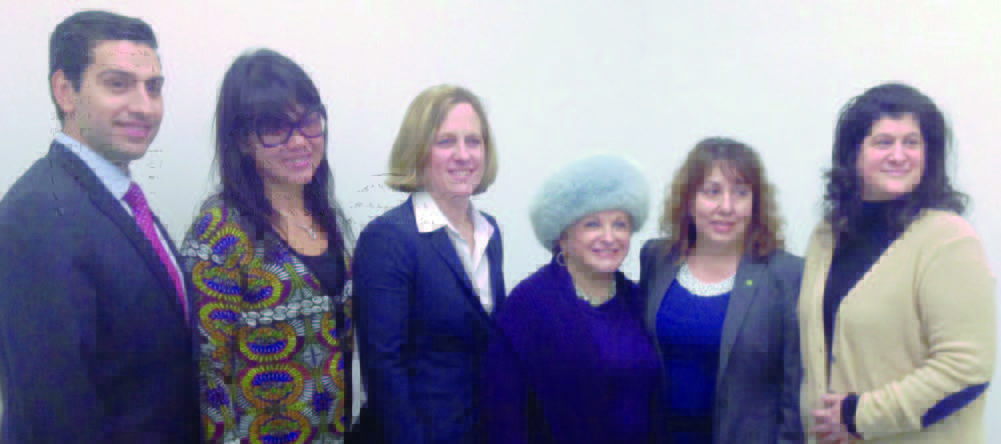
    Queens Borough President Melinda Katz swore in the Board of Trustees for the Queens Council on The Arts (QCA) on Wednesday, February 5, during the board’s meeting at the Council’s offices in Astoria.

    The Council promotes art organizations throughout Queens and was founded by the Borough President’s mother, the late Jeanne Dale Katz, in 1966.

  • YOUTH CLUB celebrates India Day

    YOUTH CLUB celebrates India Day

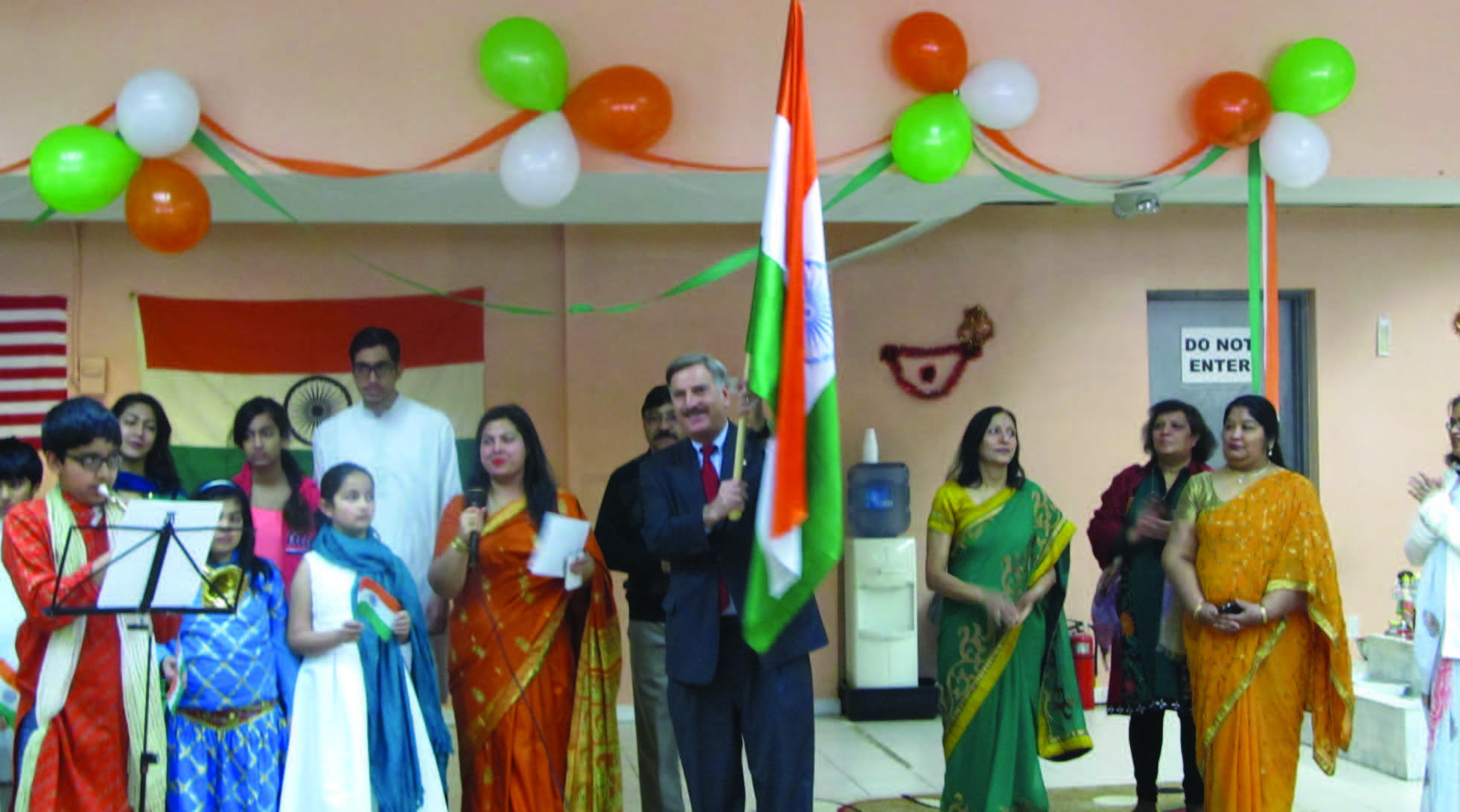
    Youth Club celebrated the 65th Republic Day of India at Hanuman Mandir in Glen Oaks, February 2. Assemblyman David Weprin did the flag hoisting to officially inaugurate India Day in New York which was followed by Indian and US anthems.

    Over 500 kids & adults participated in the day long event. Cash prizes were given for debate & drawing competitions. Malini Shah representing Paul Vallone (District 19) presented to the organizers citations from Council Member Mark Weprin & Council Member Paul Vallone.

    Among those who attended were Harbachan Singh, Harpreet Singh Toor, Neel Modi, Dr Anila Midha, Prof. Indrajit S Saluja, Jeet Singh Sohi, Manu Rampal, and Vidya Bhushan Sharma.

  • Indian National Flag Hoisting Ceremony organized by Hindu Temple

    Indian National Flag Hoisting Ceremony organized by Hindu Temple

    The Hindu Temple Society of North America organized Indian National Flag Hoisting Ceremony on the solemn occasion of the 65th Republic Day of India and celebrated Mahatma Gandhi Day (Sarvodaya Day), Martin Luther King Day and Remembering Nelson Mandela on Saturday, February 1st 2014 at the Hindu Temple Auditorium. Several elected officials and community leaders participated in the function.


    13

    Three youngsters proudly spoke about Mahatma Gandhi, Dr. Martin Luther King Jr. and Nelson Mandela. Program also included patriotic songs, folk dance and instrumental music.

  • Satya Nadella named Microsoft CEO

    Satya Nadella named Microsoft CEO

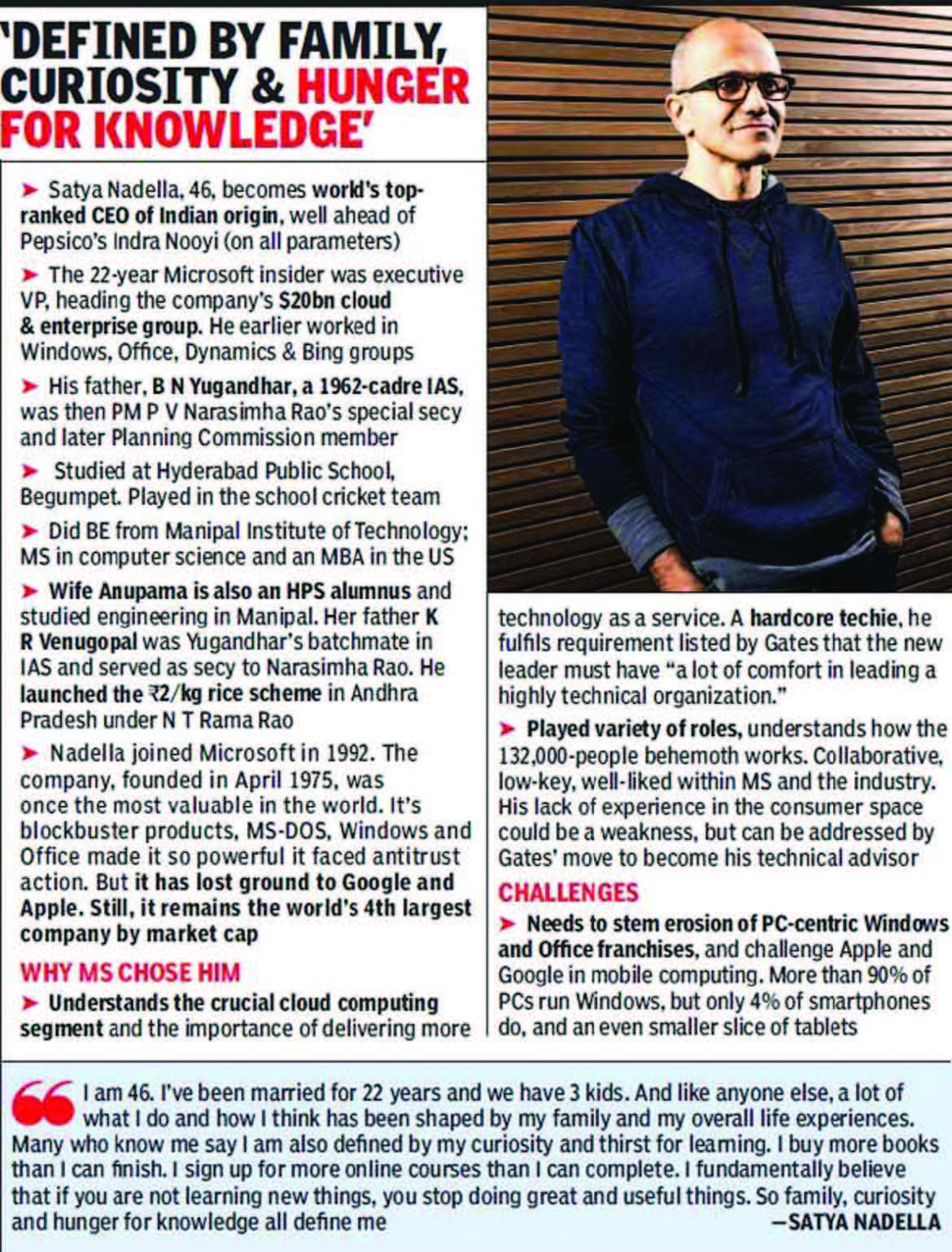
    WASHINGTON (TIP): Microsoft’s board on February 4 named Hyderabad-born Satya Nadella as chief executive of the legendary tech giant that has given the world products which have become household names like Windows, Word, Excel, PowerPoint and Outlook Express.

    The announcement elevates Nadella, an offspring of the Indian system, to one of the highest-profile corporate jobs globally. WASHINGTON (TIP): Microsoft’s board on February 4 named Hyderabad-born Satya Nadella as chief executive of the legendary tech giant that has given the world products which have become household names like Windows, Word, Excel, PowerPoint and Outlook Express.

    The announcement elevates Nadella, an offspring of the Indian system, to one of the highest-profile corporate jobs globally. Nadella, 46, will be only the third CEO of Microsoft after founder Bill Gates and Steve Ballmer, the man he is succeeding. The elevation of Nadella, a company insider for 22 years (he recently joked that he has also been married for 22 years), was expected once heavyweight outsiders like Ford’s Alan Mulally and Nokia’s Stephen Elop dropped out or were passed up.

    The names of Google’s Sundar Pichai and Motorola’s previous CEO Sanjay Jha also briefly made the rounds, serving to highlight the intensity of PIOs breaking the glass ceiling, something that began some two decades ago, but has become more pronounced now. In picking Nadella, Microsoft directors selected both a company insider and an engineer.

    11

    It has often been noted that Microsoft was more successful under the leadership of Gates, a programmer and its first chief executive, than it was under Ballmer, who had a background in sales. Satya Nadella now finds himself the head of an icon of American business that has struggled for position in big growth markets like mobile and Internet search. The company has correctly anticipated many of the biggest changes in technology — the rise of smartphones and tablet computers, to use two examples — but it has often fumbled the execution of products developed to capitalize on those changes.

    It remains to be seen whether Nadella’s technical background, along with the closer involvement of Gates in product decisions, will give the company an edge it lacked during the Ballmer years. Microsoft said in a statement that Gates will “devote more time to the company, supporting Nadella in shaping technology and product direction.” Relinquishing his role as chairman will allow Gates to spend over a third of his time with product groups at Microsoft, “substantially increasing my time at the company,” he said in a video made for the news of Nadella’s selection.

    Gates said Nadella asked him to make the change in his duties at Microsoft. Nadella is a contrast to Ballmer in other ways. Most recently the executive vice president of Microsoft’s cloud and enterprise businesses, Nadella peppers his conversations and speeches with technical buzzwords that people outside the industry would most likely find impenetrable. Nadella showed ambition early in his career. He received degrees in engineering and computer science, then earned an MBA from the University of Chicago Booth School of Business while working full time at Microsoft.

    He flew to Chicago from Seattle to attend classes on the weekend, according to Steven Kaplan, a professor at the school who taught Nadella in a course on entrepreneurial finance and private equity. “He is take charge, smart, but in a likable way,” Kaplan said, adding that Nadella received an A in the course. While many executives within Microsoft tend to be polarizing figures, Nadella appears to be well liked in much of the company.

    Still, those who know him well say he is not a pushover as a boss. Nadella’s star at Microsoft rose considerably in the past several years as he took charge of the company’s cloud computing efforts, a business considered vital as more business customers choose to rent applications and other programs in far-off data centers rather than run software themselves. For years, Microsoft did not pay enough attention to how the cloud was attracting the creativity of a new generation of developers. When he got control of the division that included Microsoft’s cloud initiatives, Nadella changed that.

    He began meeting with start-ups to hear more about what Microsoft needed to do to become more responsive to their needs. “When you look at the most exciting things happening in tech, all the platform shifts happening and disruption — social, mobile, cloud — Microsoft has not even been part of the conversation until recently,” said Brad Silverberg, a Seattle-area investor and a former Microsoft executive. “With Satya’s leadership, Microsoft is doing interesting things in cloud.” But Nadella has to grapple with a much broader set of challenges in markets in which he has little experience, like mobile devices.

    He inherits a deal to acquire Nokia’s mobile handset business, along with 33,000 employees, and a wideranging reorganization plan devised by Ballmer and still in progress. In an interview in July, Nadella was supportive of the reorganization plan, which he predicted would allow Microsoft to adapt to changes in the market more quickly than in the past. “It’s not like our old structure didn’t allow us to do some of this,” he said. “The question is whether you can amplify.”

  • Prof CNR Rao becomes 3rd scientist to be awarded Bharat Ratna

    Prof CNR Rao becomes 3rd scientist to be awarded Bharat Ratna

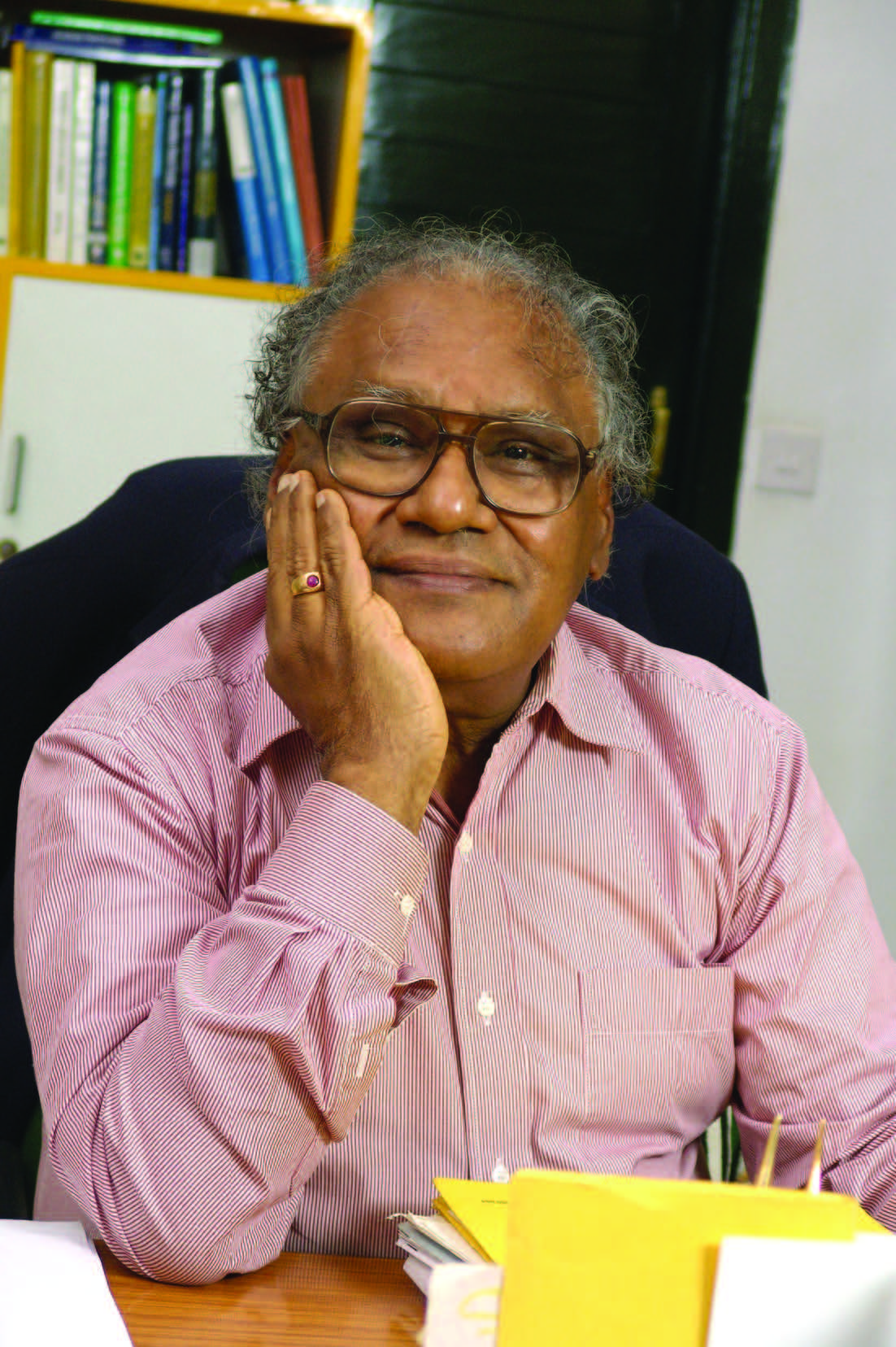
    NEW DELHI (TIP): Professor Chintamani Nagesa Ramachandra Rao is the third scientist to be awarded the highest civilian award — Bharat Ratna, a crowning glory of his inexorable list of outstanding achievements. Before Rao, C V Raman and former President A P J Abdul Kalam were bestowed with the award.

    Professor Chintamani Nagesa Ramachandra Rao is the third scientist to be awarded the highest civilian award — Bharat Ratna, a crowning glory of his inexorable list of outstanding achievements. Rao was conferred with the honour along with cricket icon Sachin Tendulkar on Saturday. Before Rao, C V Raman and former President A P J Abdul Kalam were bestowed with the award.

    The 79-year-old Prof Rao has honorary doctorates from 60 universities that speaks volumes about the world wide acclamation and recognition that he has earned as a scientist par excellence. Rao is the third scientist after C V Raman and former President A P J Abdul Kalam to be bestowed with the honour. Rao, founder of the Bangalore-based Jawharlal Nehru Centre for Advanced Scientific Research, has served as Chairman of the Scientific Advisory Council to Prime Minister under different regimes, a manifestation of immense faith different governments have placed in him.

    A renowned scientist and an institution builder, Rao has worked mainly in solid-state and structural chemistry. Rao, born on June 30 in 1934 to Hanumantha Nagesa Rao and Nagamma Nagesa Rao in Bangalore, could have settled for a cushy job armed with a BSc in 1951 but his unsatiable quest for learning took him to the path of unending scientific journey. Rao was thinking of joining IISc for a diploma or a postgraduate degree in chemical engineering after obtaining bachelors degree from Mysore University in 1951 but destiny took him to Banaras Hindu University where he got admitted for a MSc course.

    He obtained his Ph.D. in 1958 from Purdue University and joined the faculty of Indian Institute of Technology, Kanpur, in 1963. The only son to his parents, he grew up in the old part of Bangalore. Rao recalled once that his mother telling him mythological stories and her daily pujas greatly impacted him, which influenced his own journey into spirituality. “My father wanted me to speak in English too, and it helped that there was an academic atmosphere at home,” Rao noted in an article. During his school days, the freedom movement was in full swing and a young Rao listened to the stirring speeches by leaders like Pandit Jawaharlal Nehru and Dr Sarvapalli Radhakrishnan. He also took part in some of the freedom movement meetings in whatever capacity he could.

    During the early years, Rao once recollected, one of the fondest memories was meeting Nobel laureate professor C V Raman when he visited his school in 1946. MIT, PennState, Columbia and Purdue offered admission with financial support, but Rao chose Purdue, where he completed PhD in two years and nine months, a record of sorts. Life was on a swing for Rao but home pull prevailed and in 1959 he landed in Bangalore to join the IISc as a lecturer on a monthly salary of Rs 500. Rao has made immense contributions to nanomaterials over the last two decades, besides his work on hybrid materials.

    He has worked mainly in solid-state and structural chemistry. His work on transition metal oxides has led to basic understanding of novel phenomena and the relationship between materials properties and the structural chemistry of these materials. Rao was one of the earliest to synthesize two-dimensional oxide materials such as La2CuO4 and his work has led to a systematic study of compositionally controlled metal-insulator transitions. Such studies have had a profound impact in application fields such as colossal magneto resistance and high temperature superconductivity.

    He is the author of around 1,500 research papers and authored and edited 45 books. Rao is currently is serving as the Head of the Scientific Advisory Council to Prime Minister Manmohan Singh. It has been fame and glory all through for Rao until two years ago when he was involved in a plagiarism related controversy. He had been accused of indulging and allowing plagiarism. In December 2011, Rao apologised to ‘Advanced Materials’ — a peer-reviewed journal, for reproducing text of other scientists in his research paper. Rao’s collaborator and other senior author of the paper Professor S B Krupanidhi accused a co-author PhD student at IISc for the mistake.

    “These sentences were part of the introduction of the paper, which was written by our student, that neither of us — namely, the senior authors, Rao and Krupanidhi — paid attention to.” The PhD student took the responsibility for the incident and issued an apology. Later Rao offered to withdraw the article from the journal, but the editor let the publication stay as it is. Rao is also the recipient of Padma Shri and Padma Vibhushan and Karnataka Ratna, the state’s highest civilian honour. Rao received Honorary Doctorates from many Universities spread across the world such as Colorado, Khartoum, Liverpool and Oxford among others.

    He is currently the National Research Professor and Linus Pauling Research Professor and Honorary President of the Jawaharlal Nehru Centre for Advanced Scientific Research in Bangalore. He is also the director of the International Centre for Materials Science. Rao has been bestowed with other awards such as Hughes Medal by the Royal Society in 2000 and he became the first recipient of the India Science Award, instituted by the Union government for his contributions to solid state chemistry and materials science in 2004. The important academic positions Rao held include; Prof of Chemistry, Indian Institute of Technology, Kanpur, India (Head of Department and later Dean of Research of the Institute) (1963-76), Visiting Professor, Purdue University, 1967-68, Commonwealth Visiting Professor, University of Oxford and Fellow, St. Catherine’s College, Oxford (1974-75).

    He was also Distinguished Visiting Professor, LaTrobe University, Melbourne, Australia, Jawaharlal Nehru Professor, University of Cambridge and Professorial Fellow, King’s College, Cambridge Rao is the Founder Chairman, Solid State and Structural Chemistry Unit and Materials Research Laboratory, Indian Institute of Science (1977-84). He was also Director, Indian Institute of Science (1984-94), Visiting Professor, University Joseph Fourier, Grenoble, France (1990), Honorary Professor, University of Wales, Cardiff (1993-1997), President, Jawaharlal Nehru Centre for Advanced Scientific Research (1989-99), Albert Einstein Research Professor (1995-1999) Honorary Professor, Indian Institute of Science (1994). Rao is also Fellow of Indian Academy of Sciences, The Royal Society, London and Foreign Associate, National Academy of Sciences, USA and Founding Fellow and Third World Academy of Sciences, among others.

    Important positions in National and International Bodies include Chairman, Science Advisory Council to the Prime Minister, Immediate Past President, The Academy of Sciences for the developing world (TWAS), Trieste, Chairman, National Nano Initiative, Government of India and Member, Atomic Energy Commission of India. Rao had also served as Member, Planning Commission, Government of India and Chairman and Director of Reserve Bank of India. At the Hall of Sciences at JNCASR are a bust of Rao’s guru Pauling — one of the two greatest scientists of the 20th century (the other being Einstein). Rao’s advice to school children who visit JNCASR is dream big, study hard, and study science.