Year: 2014

  • Akkineni Nageswara Rao is dead: Condolences pour in from across the world

    Akkineni Nageswara Rao is dead: Condolences pour in from across the world

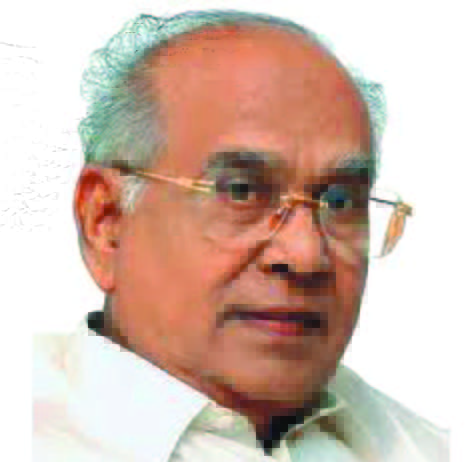
    HYDERABAD (TIP): Legendary Telugu actor and film producer Akkineni Nageswara Rao, also known as ANR, died January 22 in Hyderabad at the age of 90. Dada Saheb Phalke Award winner ANR, who is the father of famous Telugu actor Nagarjuna, had been battling cancer for several months.

    He had in October last year told media that he was diagnosed with cancer and that he would fight it till the end. Nageswara Rao, who recently underwent a surgery for intestinal cancer, is survived by three daughters and two sons. His funeral on January 23 was attended by thousands of grieving admirers. The Telugu film industry wants a monument to be constructed for Akkineni Nageswara Rao on the premises of Annapurna Studios which he founded.


    6
    Thousands of grieving admirers of Akkineni Nageswara Rao joined the funeral procession on January 23, 2014Photos/

    Paying respect to ANR, Movie Artistes Association (MAA) president M Murali Mohan said it would be appropriate to have a monument near ANR’s museum where his awards are located. “We have made a suggestion to the family about it,” he said. Meanwhile, as a mark of respect, the film industry cancelled all shootings for two days. Mohan said an appeal has also been made to theatre owners to stop screenings and cancel shows on Thursday, January 23. Throughout the day, condolences and praises flooded in for the late actor from his Tollywood and Bollywood colleagues and politicians.

    Dadasaheb Phalke award winner D Rama Naidu said ANR had always adopted a discipline towards his work and life. “It used to be a pleasure working with him,” he said. Union minister for tourism Chiranjeevi said he had met ANR only a couple of weeks ago and spent nearly an hour with him. “I want to hit a century with the best wishes of the people,” ANR reportedly told him. “It is sad that he is no more,” Chiranjeevi said. He also recalled how his mother was a big fan of ANR and how when she was pregnant she wanted to watch a film. “My father was concerned. However, she did go to watch the movie in which ANR had acted,” he said, adding that his mother gave birth to a boy a few days later.

    “That boy was me,” he reminisced. Filmmaker S S Rajamouli said he was “saddened by the news of the legendary Nageswararao garu.” “He stood as a towering father figure for the Telugu film industry. Irreparable loss,” he said. Tributes also poured in from other parts of the country. Veteran actor Amitabh Bachchan tweeted: “Another great iconic legend of cinema passes away this morning: Nageshwar Rao, of Telugu cinema, a most affable considerate human!” Actor Anupam Kher described ANR as “an actor, a gentleman and a cinematic phenomenon”. “Have learnt a lot from him,” he . “He was not just a great artist but a wonderful human being. I had the opportunity to meet him four years ago… I had received an award from him.

    May god bless his soul and I pray for his family,” 84-year-old singer Lata Mangeshkar tweeted. Several political leaders also joined in paying tributes. Gujarat chief minister Narendra Modi described ANR as “one of Indian cinema’s stalwarts who will be remembered for his rich contribution. Saddened by his demise. RIP.” Union minister of state for information and broadcasting Manish Tewari recalled that he had met Nageshwar Rao in Hyderabad last January, describing it as an “inspirational experience”. BJP leader Rajnath Singh said Nageshwar Rao’s contribution to Indian cinema would always be cherished. TDP president N Chandrababu Naidu also said he was grieved beyond words at the demise of ‘legend’ ANR. “An era comes to an end.

    Great actor & a great human being,” he said on a social networking site. Naidu also visited Annapurna Studios to pay tributes to actor. In New York, Rao Anumolu, President, CEO & Founder at ASR International Corporation, a close friend of late ANR, said he was deeply saddened to hear of ANR’s death and that whereas in his death, Telugus had lost a great actor and a fine human being, for him it was the loss of a close friend and end of an era.

  • Permanent Mission of India hosts Republic Day reception with GA President John Ashe

    Permanent Mission of India hosts Republic Day reception with GA President John Ashe

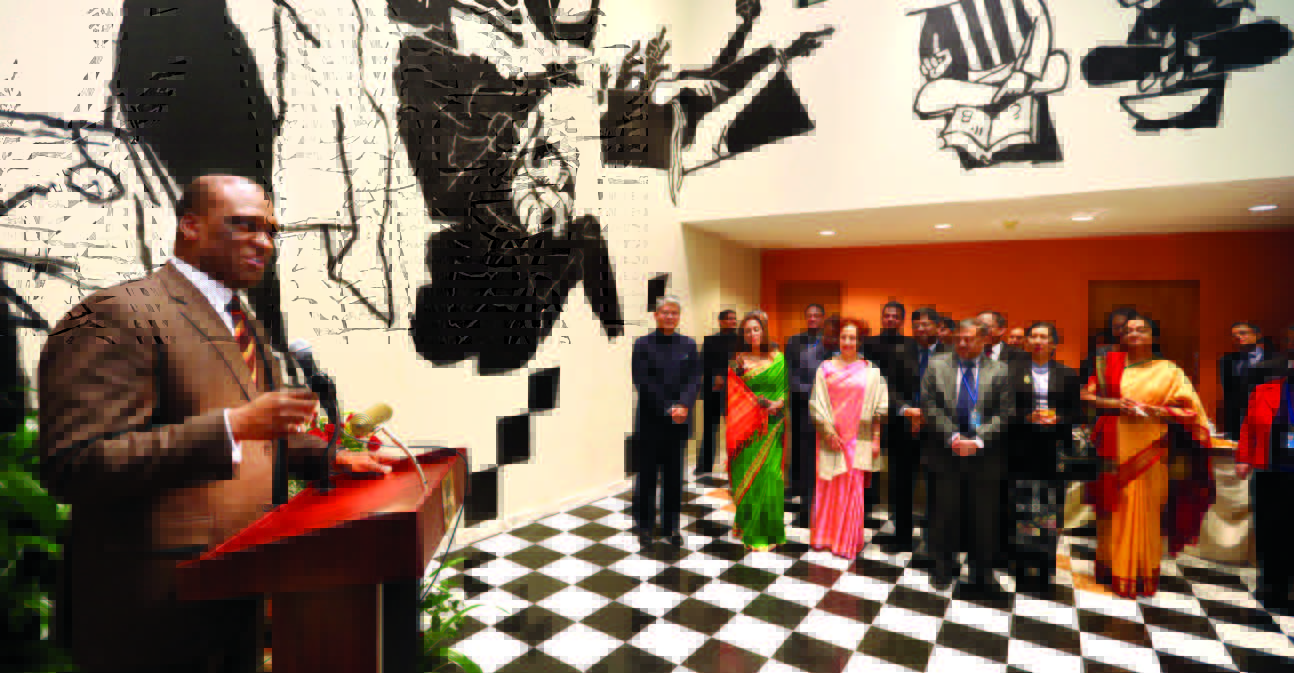
    NEW YORK, NY (TIP): The Permanent Mission of India to the United Nations hosted the traditional Republic Day reception on Thursday, January 23, with President of the General Assembly John Ashe.

    Permanent Representative Ambassador Asoke Mukerji, who was hosting his first Republic Day celebration, received with his wife Vanita Mukerji, over 100 guests, a mix of diplomats from the UN and Indian-American community. Ambassador Asoke Mukerji lovingly addressed Honorable President of the General Assembly John Ashe as the son-in-law of India and welcomed the couple warmly.

    John Ashe who arrived with his Indian wife Anilla Cherian expressed his best wishes to all Indians for the upcoming Republic Day “I am extremely pleased to be here to celebrate India’s 65th year of being Republic. I am married to an Indian so I have fair idea about India. Every time I get big for my shoes, my wife reminds me that I come from a country which is probably the size of a village in India,” he added.

    John W. Ashe comes from Antigua and Barbuda which has a population of 90,156 (July 2013). Mr. Mukerji stressed that on India’s 65th year at being a republic, cooperation is the key to making progress. “We all are participants in maintaining and developing modern international relations. This is the key to building a modern India. We must address all our issues with the agenda of development. We must rededicate ourselves in cooperating and collaborating with our international friends. Our issues can only be addressed if we all come together in a spirit of cooperation” said Mr. Mukerji. The Republic Day celebrations started with playing of the Indian national anthem.

  • Mayor de Blasio Picks Indian American Ram Raju as Commissioner of Health & Hospitals

    Mayor de Blasio Picks Indian American Ram Raju as Commissioner of Health & Hospitals

    NEW YORK, NY (TIP): Mayor Bill de Blasio named January 21, the new heads of the Department of Small Business Services and the Health and Hospitals Corporation, pledging to deepen each agency’s connections to neighborhoods across the five boroughs.

    Mayor de Blasio appointed Maria Torres-Springer as Commissioner of the Department of Small Business Services and Dr. Ramanathan Raju as Commissioner of Health and Hospitals Corporation. As public servants with deep expertise at their respective agencies, both Torres-Springer and Raju are poised to aggressively implement progressive, community-based reforms. “We sought out progressive, proven leaders who are committed to serving diverse communities across this city.

    And in Maria and Raju, we found them. Whether it’s deepening our outreach to immigrant entrepreneurs long overlooked by City Hall, or bringing new community health care clinics to low-income neighborhoods, our approach will be the same: We will lift up every community. This will be one city, where everyone rises together,” said Mayor Bill de Blasio. A former Executive Vice President and Chief of Staff at the New York City Economic Development Corporation, Maria Torres-Springer was a key leader in project teams that helped launch the Applied Sciences Initiative and the redevelopment of Coney Island.

    As Commissioner of Small Business Services, she will establish a new revolving loan fund to help local businesses grow, expand outreach to immigrant-owned businesses, and help launch new economic development hubs in underserved communities. “As the child of immigrants, I understand our city is strongest when every New Yorker has access to quality economic opportunities and good middle class jobs,” said Torres-Springer. “As Commissioner at the Department of Small Business Services, I look forward to ensuring that every small business owner-no matter where they are from, where they live, or what they look like-has access to the resources they need to succeed.”

    Currently CEO of the Chicago’s Cook County Health and Hospital System, Dr. Ramanathan Raju is a respected physician who has led some of the nation’s largest and most complex health care systems. As President of the New York City Health and Hospitals Corporationthe nation’s largest public hospital system-he will work to raise standards of care at HHC hospitals and deepen the agency’s approach to providing primary and preventative care at the neighborhood level. Dr. Ramanathan Raju’s appointment must be ratified by the HHC board. “I am excited to return to the Health and Hospitals Corporation,” said incoming HHC President Ramanathan Raju.

    “Under my leadership, the HHC will continue its mission of ensuring New Yorkers have access to quality health care optionsfrom major hospitals to neighborhood clinics-no matter where they live.” Dr. Ramanathan Raju brings more than 30 years of experience in public and not-for-profit hospital systems. Dr. Raju began his medical career at Lutheran Medical Center in Brooklyn, where he ascended to the positions of Director of Surgery, Director of Medical Education, and Senior Vice President. He went on to serve as the COO and Chief Medical Officer at Coney Island Hospital, and then as Chief Medical Officer, Corporate COO and Executive Vice President at the New York City Health and Hospitals Corporation.

    Most recently, he has served as CEO of Cook County Health and Hospitals System, the third largest health system in the US. He is credited with improving CCHHS’s quality of care, increasing revenues, and cutting costs by leveraging federal resources, restructuring the system’s operation, and utilizing technology to increase efficiency and make the health care system more accessible to patients. A native of Madras (now Chennai), India, Dr. Raju received his medical degree from the Madras Medical College and was a Fellow of the Royal College of Surgeons of England in the United Kingdom. He received his Masters in Business Administration from the University of Tennessee.

  • Ukraine opposition sets 24-hour deadline

    Ukraine opposition sets 24-hour deadline

    KIEV (UKRAINE) (TIP): Ukrainian opposition leaders issued a stark ultimatum to President Viktor Yanukovych on January 22 to call early elections within 24 hours or face more popular rage, after at least two protesters were killed in confrontations with police in a grim escalation of a two-monthlong political crisis. The protesters’ deaths, the first since the largely peaceful protests started in November, fueled fears that the daily demonstrations aimed at bringing down the government over its decision to shun the European Union for closer ties to Moscow and over human rights violations could turn more violent.

    With a central Kiev street ablaze and covered with thick black smoke from burning tires and several thousand protesters continuing to clash with riot police, opposition leaders urged tens of thousands of demonstrators in a nearby square to refrain from violence and remain in the main protest camp for the next 24 hours. They demanded that Yanukovych dismiss the government, call early elections and scrap harsh anti-protest legislation. It was last week’s passage of the laws cracking down on protests that set off the violent clashes.

    “You, Mr. President, have the opportunity to resolve this issue. Early elections will change the situation without bloodshed and we will do everything to achieve that,” opposition leader Vitali Klitschko told some 40,000 people who braved freezing temperatures on Kiev’s Independence Square late Wednesday. If Yanukovych does not concede, “tomorrow we will go forward together. And if it’s a bullet in the forehead, then it’s a bullet in the forehead, but in an honest, fair and brave way,” declared another opposition leader, Arseniy Yatsenyuk Yanukovych has showed little willingness to compromise, however.

    A three-hour meeting with opposition leaders accomplished “nothing,” said Oleh Tyahbnybok, who attended the session. Meanwhile, the government handed security forces extra powers, including closing off streets and firing water cannon against protesters despite the freezing temperatures. Police have already used water cannon but insisted it was only to put out fires. The government also deployed an armored personnel carrier at the site of the clashes. During Wednesday’s confrontations, riot police violently beat and shot at protesters, volunteer medics and journalists. The Interior Ministry announced that 70 protesters had been arrested.

    Prime Minister Mykola Azarov said the police did not have live ammunition and that opposition leaders should be held responsible for the deaths. City health officials and police said that two people died of gunshot wounds during the clashes Wednesday morning, while the opposition contended as many as five people died. Oleh Musiy, coordinator of the protesters’ medical corps, told the Associated Press that four people died of gunshot wounds and the fifth died after falling from a colonnaded gate at a sports arena near the site of the clashes.

    Health officials contend that man survived and is in the hospital. Hundreds of others were injured in the clashes, Musiy said. Meanwhile, another protester, Yuri Verbitsky, was found dead in a forest outside Kiev on Wednesday, according to his niece Oksana Verbitska. His friends and supporters believe he was kidnapped. The United States responded by revoking the visas of Ukrainian officials linked to violence and threatened more sanctions. But it also condemned the extreme-right radical protesters for their aggressive actions.

    The EU condemned the violence and said it was also considering action against the Ukrainian government. One of the victims was identified as Sergei Nigoyan, a 20-year-old ethnic Armenian who joined the protests in December after traveling from his home in the eastern city of Dnipropetrovsk. A video shows Nigoyan reciting poetry in the protest camp in Kiev’s Independence Square, also known as the Maidan. He then clenched his fist in a victory sign as a yellow-and-blue Ukrainian flag flapped in the background. A Ukrainian journalist, Kristina Berdinskikh, who has been profiling protesters for several weeks, interviewed Nigoyan in early January.

    “I saw on TV what is happening on the Maidan, I didn’t sleep at night, I was following the news,” Nagoyan said, according to a transcript of the interview posted online. “Then I decided to come. This is also my future.” The mass protests erupted after Yanukovych spurned a pact with the European Union in favor of close ties with Russia, which offered him a $15 billion bailout. They swelled to hundreds of thousands after a small peaceful rally on Nov. 30 was violently broken up by police.

    Seeing the government ignore their demands and opposition leaders unable to present a coherent plan or select a single
    leader, radical protesters have clashed with riot police since Sunday, hurling fire bombs and stones as police fired back with tear gas, stun grenades and rubber bullets. The two victims’ bodies were found before police moved to tear down protesters’ barricades near official buildings in central Kiev and chase demonstrators away.

    Helmeted riot police moved in on hundreds of protesters, dismantling barricades, beating many with truncheons and firing shots at some. One man was attacked by over a dozen policemen, then forced to take off his winter jacket before being dragged away, where he was beaten again. The police drove demonstrators down a hill toward the main protest site on Independence Square, where protesters have set up an extensive tent camp and rallied around the clock since Nov. 21. But the protesters soon returned, building barricades from giant sacks of snow and hurling rocks and firebombs at police lines.

    There was no immediate police move on the main camp. Oleksandr Turchynov, one of the opposition leaders, called on Ukrainians to rush to the center of Kiev to defend their country. “Ukraine will not be a dictatorship, it will be an independent, European country,” he said. “Let us defend Ukraine!” The protests were the biggest since the peaceful 2004 Orange Revolution, which annulled Yanukovych’s fraud-tinged victory in a presidential election and forced a new vote that brought his pro-Western rival to power.

    Largely peaceful, the rallies turned violent after Yanukovych, elected in 2010, pushed through sweeping anti-protest legislation and ignored all the protesters’ demands. The deaths mark a turning point in the standoff that could lead to more violence. “Look, the deaths and the injuries speak to the actions of those in power. They’ve crossed the line,” said Andriy Kolosovich, a 20-yearold protester who was injured in the legs by a stun grenade and was being treated in a medical unit set up by the protesters.

  • Seven dead in tit-for-tat killings in Central African Republic

    Seven dead in tit-for-tat killings in Central African Republic

    BANGUI (TIP): Seven people died in inter-religious attacks and reprisal killings in Central African Republic’s capital Bangui on January 22, a human rights campaigner said, underlining the challenge the new interim president faces in restoring peace.

    The local Red Cross said it also found another 11 corpses, most burnt beyond recognition. Close to one million people, or a quarter of the population, have been displaced in the former French colony by clashes that began when mostly Muslim Seleka rebels seized power in a coup in March.

    Christian self-defence groups known as ” anti-balaka” (anti-machete) have since taken up arms against them, and the United Nations estimates that tit-for-tat violence has claimed more than 2,000 lives. Wednesday’s violence erupted after Seleka fighters left a military base looking for food and shot and killed two Christians, Human Rights Watch (HRW) said. In reprisal, “the youth from the neighbourhood went to the prison and took out five Seleka detainees and killed them,” Peter Bouckaert, an HRW researcher in Bangui, told Reuters.

    The other 11 bodies were found behind a military camp in another part of the city. Antoine Mbao Bogo, president of the Central African Red Cross Society, said nine of the bodies collected in the mostly Muslim northern neighbourhood of PK11 had been set on fire. “They were not buried, they were dumped on the ground,” he told Reuters by telephone. He added that the Red Cross had collected 87 bodies in the past five days across the country. The figure did not include the seven people killed on Wednesday.

    Out of control
    The arrival of a 1,600-strong French military mission and another 5,000 African Union peacekeepers has so far failed to stop the violence in Central African Republic. A source with the French force said on Wednesday its soldiers were involved in overnight clashes after coming under attack from unidentified gunmen. This week the European Union said it would send 500 soldiers to support international troops already on the ground. And the United States said on Wednesday it was giving an additional $30 million to help ease the country’s crippling humanitarian crisis.

    Interim President Catherine Samba-Panza, the mayor of Bangui, was appointed as leader on Monday and is due to formally take office on Thursday. She replaced former interim President Michel Djotodia, a former Seleka leader who stepped down on January 10 amid intense international pressure. Samba-Panza has pledged to meet with armed groups in an effort to restore order. However, ending the cycle of violence will not be easy. HRW researcher Bouckaert witnessed hundreds of Christians attack and embark on a looting spree in the mainly Muslim PK13 neighbourhood on Wednesday. Rwandan peacekeepers, newly arrived in the country, were forced to intervene to protect around 30 Muslim civilians surrounded by the mob until they were evacuated by French soldiers.

  • Permanent Mission of India hosts Republic Day reception with GA President John Ashe

    Permanent Mission of India hosts Republic Day reception with GA President John Ashe

    NEW YORK, NY (TIP): The Permanent Mission of India to the United Nations hosted the traditional Republic Day reception on Thursday, January 23, with President of the General Assembly John Ashe.

    Permanent Representative Ambassador Asoke Mukerji, who was hosting his first Republic Day celebration, received with his wife Vanita Mukerji, over 100 guests, a mix of diplomats from the UN and Indian-American community. Ambassador Asoke Mukerji lovingly addressed Honorable President of the General Assembly John Ashe as the sonin- law of India and welcomed the couple warmly.

    John Ashe who arrived with his Indian wife Anilla Cherian expressed his best wishes to all Indians for the upcoming Republic Day “I am extremely pleased to be here to celebrate India’s 65th year of being Republic. I am married to an Indian so I have fair idea about India. Every time I get big for my shoes, my wife reminds me that I come from a country which is probably the size of a village in India,” he added.

    John W. Ashe comes from Antigua and Barbuda which has a population of 90,156 (July 2013). Mr. Mukerji stressed that on India’s 65th year at being a republic, cooperation is the key to making progress. “We all are participants in maintaining and developing modern international relations. This is the key to building a modern India. We must address all our issues with the agenda of development. We must rededicate ourselves in cooperating and collaborating with our international friends. Our issues can only be addressed if we all come together in a spirit of cooperation” said Mr. Mukerji. The Republic Day celebrations started with playing of the Indian national anthem.

  • Syrian peace talks stuck over Assad’s future

    Syrian peace talks stuck over Assad’s future

    MONTREUX (SWITZERLAND) (TIP): Peace talks intended to carve a path out of Syria’s civil war got off to a rocky start on January 23 as a bitter clash over President Bashar Assad’s future threatened to collapse the negotiations even before they really begin. The dispute over Assad cast a pall over the start of an international peace conference that aims to map out a transitional government and ultimately a democratic election for the wartorn Middle East nation. While diplomats sparred against a pristine Alpine backdrop, Syrian forces and opposition fighters clashed across a wide area from Aleppo and Idlib in the north to Daraa in the south, where the uprising against Assad began three years ago, activists and state media said.

    The US and the Syrian opposition opened the conference by saying the Syrian leader lost his legitimacy when he crushed a once-peaceful protest movement. In a strong riposte, Syrian Foreign Minister Walid al-Moallem countered that terrorists and foreign meddling had ripped his country apart. He refused to give up the podium despite requests from the UN chief. “You live in New York. I live in Syria,” he angrily told UN chief Ban Ki-moon. “I have the right to give the Syrian version here in this forum.

    After three years of suffering, this is my right.” Less than three hours into the peace talks in the Swiss city of Montreux, the two sides seemed impossibly far apart. “We really need to deal with reality,” said US secretary of state John Kerry. “There is no way — no way possible in the imagination — that the man who has led the brutal response to his own people could regain the legitimacy to govern. One man and those who have supported him can no longer hold an entire nation and a region hostage.”

    The Syrian opposition leader, —Amhad al- Jarba of the Western-backed Syrian National Coalition — had wavered up to the last-minute on whether to attend peace talks that have been largely opposed by rebel brigades in Syria. He insisted Wednesday that the whole point of the peace conference was to create a transitional government without Assad. Al-Moallem insisted that no one except Syrians could remove Assad. He also accused the West and neighboring countries — notably Saudi Arabia, which he did not name — of funneling money, weapons and foreign fighters to the rebellion. “The West claims to fight terrorism publically while they feed it secretly,” he said.

    “Syrians here in this hall participated in all that has happened, they implemented, facilitated the bloodshed and all at the expense of the Syrian people they claim to represent.” State Department spokeswoman Jen Psaki later criticized the Syrian government’s rhetoric as “inflammatory” and al-Jarba’s chief of staff called it a false distraction. “All of what they say is lies,” Jarba’s chief of staff, Monzer Akbik, told The Associated Press.

    “The Syrian people are fighting al-Qaida in the North and it was the regime that brought al- Qaida in.” At least 130,000 people have been killing in the fighting that began with a peaceful uprising in March 2011 against Assad’s rule, according to activists, who are the only ones still keeping count after the UN abandoned its efforts. The fighting has forced millions of Syrians to flee their homes.

  • UK’s Cumbria is first public university to accept fees in bitcoin

    UK’s Cumbria is first public university to accept fees in bitcoin

    LONDON (TIP): A university in the UK has become the first public varsity in the world to allow students to pay their tuition fees with the digital currency bitcoin.

    Students at Cumbria University attending two courses examining the role of complementary currencies will be allowed to use the units. Last year the University of Nicosia, a private university in Cyprus, announced it would accept bitcoin, but the University of Cumbria is the first public university to do so, and for courses that are already accepting students.

    Cumbria’s system for accepting payments, via the bitpay system, is already operational, the university said. “We believe in learning by doing, and so to help inform our courses on complementary currencies, we are trialling the acceptance of them,” said professor Jem Bendell, the founder and director of the Institute for Leadership and Sustainability, which will run the two courses.

    “Some support bitcoin due to its speed and cost, others due the new era of financial freedom it could enable. Others are concerned about it and how it will affect economies and society. Others think that what comes next will be even more important. We think it is essential to become better informed, and analyse it from many different perspectives,” he said. agencies

  • Despite intel warning, UK to free terror suspects

    Despite intel warning, UK to free terror suspects

    LONDON (TIP): Five terror suspects, including the one who allegedly plotted a Mumbai style attack in London, are set to be freed within days. Restrictions on their movements under the Terrorism Prevention Investigation Measure (T-PIM) would be lifted despite intelligence warning against it.

    This would include removal of a tag and an end to strict curfew on them from Sunday under new rules introduced to protect human rights. The alleged Mumbai style attack plotter, referred to as CD, was put under T-PIM in January 2012. He had attended a terror camp with five attempted suicide bombers involved in London attacks on July 21, 2005.

    Britain’s security agencies have warned CD could revive his plans to undertake attacks in the UK to “cause mass casualty just like in Mumbai”. The five suspects are believed to still be inclined to travel to Syria, Somalia and Pakistan for terrorist-related activities. They were subjected to two-year T-PIMS restrictions, which are due to lapse on January 26. They cannot be renewed unless fresh evidence is produced.

    British home office said they have put in place “tailored plans” to keep the suspects under watch. Restrictions on seven of the eight suspects currently subjected to T-PIMS would be lifted this month. Shadow home secretary Yvette Cooper said the court papers showed at least five of them remained a threat. “The home secretary has said nothing at all about what she is doing about these men now T-PIMS are ending.”

  • KEEP YOUR WOODEN FURNITURE SHINY

    KEEP YOUR WOODEN FURNITURE SHINY

    Varnished wood is considered to be one of the most popular surfaces available in furniture. Rooms with varnished woodwork not only look elegant, but it is also considered stylish, but it needs special care. Cleaning your varnished wood furniture from time to time helps restore its appearance and sheen. Here’s how you can do it:

    1. Protect the wood from water and other liquids, such as alcohol, food or cosmetics. Don’t allow water or other liquids to settle on a wood surface as it leaves behind a stain.

    2. Keep varnish wood free of dust and dirt, as it can make the surface grimy. Use a vacuum cleaner, or a dry, soft, lint free cloth can also help remove dust and smudges. Lightly soiled varnished surfaces can be cleaned by using teak oil. For heavily soiled surfaces, dampen a soft cloth with a mixture of mild soap, and warm water.

    3. Stickiness or light soil can be removed, by first cleaning the wood surface with a damp cloth and then immediately rubbing it with a dry cloth. Test in an inconspicuous spot before you do this, and never leave a damp cloth sitting on the varnished surface.

    4. Varnished wood should be waxed or polished each year to keep its lustre. This prevents wax build-up and also protects the surface from moisture and dust. To remove the wax buildup, use a cloth dampened with mineral spirits or synthetic turpentine. Do not use natural turpentine as it may leave a sticky residue. Protect your skin by wearing rubber gloves and wash the gloves in hot sudsy water before storing.

  • AGREEMENT BETWEEN ENNORE PORT AND FORD INDIA TO BOOST AUTO EXPORTS

    AGREEMENT BETWEEN ENNORE PORT AND FORD INDIA TO BOOST AUTO EXPORTS

    NEW DELHI (TIP): Ennore Port Limited (EPL), Chennai and Ford India Private Limited have signed an agreement for export of Ford cars though the Ennore port for a period of 10 years.

    Speaking on the occasion the Union Minister for Shipping Shri G.K. Vasan said that this is a part of series of initiatives by the UPA government for attracting investments in the infrastructure sector, particularly in ports and automobile sectors. The agreement provides for various volume based discounts on wharfage by EPL ranging from 5% to 30% to encourage more exports through EPL. Ford India Private Limited has set up a modern integrated manufacturing facility at Maraimalai Nagar, near Chennai, for export of their automobile products.

    In the last few years, Chennai has emerged as the hub of automobile manufacturing sector with all global auto majors having their manufacturing plants in the city. Besides, Chennai has also emerged as a major centre for export of automobiles. Ennore Port has played a key role in facilitating these exports. Between September 2010 and December 2013 about 4,49,720 automobile units have been exported from Ennore Port, including those of manufacturers like Nissan, Ford & Ashok Leyland from Chennai, Toyota from Bangalore and Honda from Delhi. Ennore Port has developed a General Cargo-cum-Car Terminal at a cost of Rs.140 crore, which includes a car parking yard of 35 acres for parking of 10000 cars at a time, the biggest amongst the Major Ports.

    Giving details of the future projects of the port, the minister said that the Ennore Port has planned to set up an LNG storage and regasification terminal with IOCL for import of LNG at an estimated investment of Rs.4500 crores having capacity of 5 Million Metric Tonnes Per Annum. The IOCL plans to commission the project by 2016-17. The Port has also commenced preproject activities for the construction of the third coal berth to handle additional 9 million tonnes of coal required by Tamil Nadu Generation and Distribution Corporation (TANGEDCO).

    In keeping with the global trend of containerised transportation of cargo, Ennore Port has also come up with a proposal to develop a container terminal at an estimated cost of Rs. 1,270 crore with a capacity of 1.4 million TEUs. This project is targeted for award during 2013-14 along with Multi Cargo Terminal. The Port is expected to handle 24 MMT during 2013-14 as against 17.89 MMT during 2012-13. During the 12th five year plan, Ennore port has plans to increase the Port capacity from present 30 MTPA to 66.8 MTPA. All these measures are expected to generate more employment opportunities, promote the growth of Indian exports as well as boost the domestic economy.

  • Benefits of a head massage

    Benefits of a head massage

    Getting a head massage is one of the best ways to release every day stress and anxiety. It also helps relieve headaches. Here are some of the advantages.
    1. It relaxes and calms your mind
    2. It helps reduce stress
    3. Helps improve concentration
    4. Activates blood circulation in different parts of your body
    5. It aids in quick and sound sleep
    6. It strengthens your hair roots Here are a few ways you can do it at home
    7. Take an oil of your choice. Olive oil and coconut oil are considered to be the best ones.
    8. Heat the oil a bit
    9. Start by applying the oil slowly on your scalp with fingers
    10. Make sure that you apply oil slowly with your fingers on your scalp
    11. After you’ve applied the oil properly, put your fingers inside your hair and rub your scalp slowly.
    12. Do not rub your scalp forcefully as it could lead to hairfall
    13. Apart from this, you can also massage your forehead and neck during this process
    14. You can do this just before you go off
    to sleep

  • AFTER FACEBOOK, GOOGLE BUYS STARTUP WITH INDIAN LINK

    AFTER FACEBOOK, GOOGLE BUYS STARTUP WITH INDIAN LINK

    BENGALURU (TIP): After Facebook’s acquisition of Bangalore-based Little Eye Labs earlier this month, it’s Google that has now bought a three-year-old startup that had two Indians — Vish Ramarao and Naveen Jamal — as co-founders and offices in Bangalore and California.

    The startup, Impermium, had a third co-founder Mark Risher. Jamal was based in Bangalore and looked after the office here, while Ramarao and Risher were based in California. All three had previously worked together in Yahoo and came out of it in 2010 to found Impermium. The startup focused on building security products for websites. Impermium’s website now has just a note from Risher, who was the CEO, with the headline ‘Impermium is joining Google’.

    It goes on to say: “By joining Google, our team will merge with some of the best abuse fighters in the world. With our combined talents we’ll be able to further our mission and help make the internet a safer place. We’re excited about the possibilities.” Impermium had received $9 million in funding from a host of venture firms including Accel Partners, AOL Ventures, Charles River Ventures and Highland Capital Partners. Google has not disclosed the terms of its deal with Impermium. Acquisitions of India-based startups by the likes of Google and Facebook are expected to provide a big boost to the startup ecosystem. Not too many Indiabased startups have had great exits yet, but the latest instances look to be changing that trend.

    Software product startup associations like iSpirt are actively engaged in trying to marry Indian startups with global ones. Jamal is originally from Thanjavur in Tamil Nadu, went to the US to study, worked as a software engineer in a small US company and then joined Yahoo in 1998. He moved to Bangalore around the time Impermium was being founded and established the office here. Ramarao is from Bangalore, went to the US for higher studies, and has since been there. Prior to Impermium, all three cofounders were in Yahoo Mail, where they dealt with problems of spam, web security and fraudulent account creation. In an interview to TOI early last year, Risher said they realized that the problems they dealt with weren’t an issue with just Yahoo’s services but rather a problem with every website on the internet, and that encouraged them to found Impermium.

    Risher said the company had built a number of services that worked as a riskdetermination system, which could help identify when an account had been compromised. The system calculates the risk from parameters like where you accessed the account from, the device software and historical usage pattern of the links you’re posting. And Risher then had this to say about his new employer: “Security is always a balance between convenience and safety. And a complete overhaul (of the password system) becomes difficult. Google talked about an RFID ring that you would wear and which would transfer a secure certificate. Yes it would work but it would be a hassle and everybody would have to buy a reader. It’s not going to happen overnight.” Impermium has said it has 300,000 clients, including Tumblr, Pinterest, CNN, ESPN, Typepad and Washington Post.

  • Rs 5-lakh-crore investments: PM wants solar energy target advanced

    Rs 5-lakh-crore investments: PM wants solar energy target advanced

    NEW DELHI (TIP): Prime Minister Manmohan Singh has instructed advancing the planned commissioning of 100,00 Megawatt (Mw) of solar power generation capacity to 2027, against the originally envisaged target of 2031. The long-term target for the ambitious solar mission will be made public soon.

    The government received bids from 68 companies, including Tata Power, Moser Baer, Welspun, Azure Power, Jakson Power and KSK Energy, for setting up 2,170 Mw capacity projects for the second phase of the mission. This is three times the proposed 750 Mw to be supplied at a fixed tariff of Rs 5.5 per unit. The highest bidders included Azure Power (200 Mw), Welspun (160 Mw) and ILF&S Energy (100 Mw). The PM’s Office has asked the largest power equipment manufacturer, Bharat Heavy Electricals Ltd (BHEL) and the Ministry of New and Renewable Energy (MNRE) to give next week presentations on the blueprint of the strategies to implement the plan that could attract investment in excess of Rs 5-6 lakh crore.

    “PM’s Principal Secretary Pulok Chatterjee is guiding the entire initiative. MNRE had earlier worked out the 2031 plan and the PM has now asked for an aggressive target of 2027. This is now possible as we believe the grid-parity for solar power is expected to be achieved by 2018,” an executive involved in the discussions told Business Standard. As part of the plan, BHEL is setting up integrated facilities to manufacture equipment across the value chain, from polysilicon wafers to photovoltaic cells and modules that capture sunlight light for conversion into electricity. The first 500-Mw capacity factory is under construction and will start producing in 18 months.

    The PSU will also take up the role of a producer by utilising its surplus resources to take up minority equity stakes in the solar power generation projects that will be set up under the initiative. BHEL had a cash balance of Rs 6,221 crore at the end of September quarter. The company is currently building a 4,000-Mw solar power plant 75 km from Jaipur in Rajasthan. Singh had launched the National Solar Mission, as one of the seven schemes under the National Action Plan on Climate Change (NAPCC), in January 2010. The scheme targeted setting up 20,000 Mw of solar power capacity by 2022 in three phases. Since then, over 2,000 Mw of such capacity has been commissioned in the first phase (2010-13).

    The success of the first phase was owed to the mechanism of bundling expensive solar power with electricity from the unallocated quota of the centre’s thermal power stations, which is relatively cheaper. Also, a reverse-bidding mechanism was followed that enabled qualified bidders to benefit from declining global prices for solar components, thereby reducing purchase prices of solar PV equipment. In reverse bidding, developers quote the amount of investment needed to construct a project to qualify for viability gap funding (VGF) rather than quoting the electricity tariff. Prices were pulled down due to a slump in demand for solar components in key economies.

  • FOREIGN RELATIONS OF INDIA

    FOREIGN RELATIONS OF INDIA

    India has formal diplomatic relations with most nations; it is the world’s second most populous country, the world’s mostpopulous democracy and one of the fastest growing major economies. With the world’s seventh largest military expenditure, ninth largest economy by nominal rates and third largest by purchasing power parity, India is a regional power, a nascent great power and a potential superpower.

    India’s growing international influence gives it a prominent voice in global affairs. The Economist magazine argues, however, that underinvestment in diplomacy and a lack of strategic vision have minimised India’s influence in the world. India is a newly industrialised country, it has a long history of collaboration with several countries and is considered one of the leaders of the developing world along with China, Brazil, Russia and South Africa (the BRICS countries). India was one of the founding members of several international organisations, most notably the United Nations, the Asian Development Bank, G20 industrial nations and the founder of the Non-aligned movement.


    32
    India has often represented the interests of developing countries at various international platforms. Shown here is Prime Minister Manmohan Singh with Dmitry Medvedev, Hu Jintao and Luiz Inácio Lula da Silva during BRIC summit

    India has also played an important and influential role in other international organisations like East Asia Summit, World Trade Organisation, International Monetary Fund (IMF), G8+5 and IBSA Dialogue Forum. Regionally, India is a part of SAARC and BIMSTEC. India has taken part in several UN peacekeeping missions and in 2007, it was the secondlargest troop contributor to the United Nations.[12] India is currently seeking a permanent seat in the UN Security Council, along with the G4 nations. India’s relations with the world have evolved since the British Raj (1857–1947), when the British Empire monopolised external and defence relations. When India gained independence in 1947, few Indians had experience in making or conducting foreign policy. However, the country’s oldest political party, the Indian National Congress, had established a small foreign department in 1925 to make overseas contacts and to publicise its freedom struggle.

    From the late 1920s on, Jawaharlal Nehru, who had a longstanding interest in world affairs among independence leaders, formulated the Congress stance on international issues. As a member of the interim government in 1946, Nehru articulated India’s approach to the world. India’s international influence varied over the years after independence. Indian prestige and moral authority were high in the 1950s and facilitated the acquisition of developmental assistance from both East and West. Although the prestige stemmed from India’s nonaligned stance, the nation was unable to prevent Cold War politics from becoming intertwined with interstate relations in South Asia.


    33

    In the 1960s and 1970s India’s international position among developed and developing countries faded in the course of wars with China and Pakistan, disputes with other countries in South Asia, and India’s attempt to balance Pakistan’s support from the United States and China by signing the Indo- Soviet Treaty of Friendship and Cooperation in August 1971. Although India obtained substantial Soviet military and economic aid, which helped to strengthen the nation, India’s influence was undercut regionally and internationally by the perception that its friendship with the Soviet Union prevented a more forthright condemnation of the Soviet presence in Afghanistan. In the late 1980s, India improved relations with the United States, other developed countries, and China while continuing close ties with the Soviet Union. Relations with its South Asian neighbours, especially Pakistan, Sri Lanka, and Nepal, occupied much of the energies of the Ministry of External Affairs.

    In the 1990s, India’s economic problems and the demise of the bipolar world political system forced India to reassess its foreign policy and adjust its foreign relations. Previous policies proved inadequate to cope with the serious domestic and international problems facing India. The end of the Cold War gutted the core meaning of nonalignment and left Indian foreign policy without significant direction. The hard, pragmatic considerations of the early 1990s were still viewed within the nonaligned framework of the past, but the disintegration of the Soviet Union removed much of India’s international leverage, for which relations with Russia and the other post-Soviet states could not compensate. After the dissolution of the Soviet Union, India improved its relations with the United States, Canada, France, Japan and Germany. In 1992, India established formal diplomatic relations with Israel and this relationship grew during the tenures of the Bharatiya Janata Party (BJP) government and the subsequent UPA (United Progressive Alliance) governments.

    In the mid-1990s, India attracted the world attention towards the Pakistan-backed terrorism in Kashmir. The Kargil War resulted in a major diplomatic victory for India. The United States and European Union recognised the fact that Pakistani military had illegally infiltrated into Indian territory and pressured Pakistan to withdraw from Kargil. Several anti-India militant groups based in Pakistan were labeled as terrorist groups by the United States and European Union. India has often represented the interests of developing countries at various international platforms. Shown here are Prime Minister Manmohan Singh with Dmitry Medvedev, Hu Jintao and Luiz Inácio Lula da Silva during BRIC summit in June, 2009. In 1998, India tested nuclear weapons for the second time which resulted in several US, Japanese and European sanctions on India.

    India’s then-defence minister, George Fernandes, said that India’s nuclear programme was necessary as it provided a deterrence to potential Chinese nuclear threat. Most of the sanctions imposed on India were removed by 2001. After the 11 September attacks in 2001, Indian intelligence agencies provided the U.S. with significant information on Al-Qaeda and related groups’ activities in Pakistan and Afghanistan. India’s extensive contribution to the War on Terror, coupled with a surge in its economy, has helped India’s diplomatic relations with several countries. Over the past three years, India has held numerous joint military exercises with U.S. and European nations that have resulted in a strengthened U.S.-India and E.U.-India bilateral relationship. India’s bilateral trade with Europe and United States has more than doubled in the last five years.

    India has been pushing for reforms in the UN and WTO with mixed results. India’s candidature for a permanent seat at the UN Security Council is currently backed by several countries including France, Russia,[50] the United Germany, Japan, Brazil, Australia and UAE. In 2004, the United States signed a nuclear co-operation agreement with India even though the latter is not a part of the Nuclear Non- Proliferation Treaty. The US argued that India’s strong nuclear non-proliferation record made it an exception, however this has not persuaded other Nuclear Suppliers Group members to sign similar deals with India. During a state visit to India in November 2010, US president Barack Obama announced US support for India’s bid for permanent membership to UN Security Council as well as India’s entry to Nuclear Suppliers Group, Wassenaar Arrangement, Australia Group and Missile Technology Control Regime.

  • INTERESTING CRUNCHES TO SCULPT SIX-PACKS

    INTERESTING CRUNCHES TO SCULPT SIX-PACKS

    Bored of doing the standard sit ups? Here’s how to sculpt sixpack abs with interesting crunches Doing the basic sit-ups to firm your abdominal muscles is not a bad choice. But if you find yourself wondering why you have been unable to achieve a surfboard tummy even after doing 100 crunches a day, it is time you sit up and think different. TOI lists few of the most recommended abdominal exercises that will help you achieve a flat stomach.

    1. Crunch on a ball
    Sit on a Swiss ball with your feet flat on the floor at shoulder-width distance. Lie back on the ball such that your back is parallel to the ground. At this point, your lower back must feel like it is curved around the ball. Raise your arms towards the ceiling, and raise your chest up in a crunching motion. Your head should be in line with your upper body and neck must not strain. End your range of motion when your middle back loses contact with the Swiss ball. If you rise further, the ball may slip from under your hip. Hold the contracted position for three seconds and go back to the starting position. Do 10 reps.

    2. Twist and crunch
    Lie down on your back on a mat. Place your hands near your ears and lift your legs in the air folded at 90 degrees at the knees. Contract your abs and bring your right elbow across your body towards your left knee. Hold for three seconds. Return to the starting position and repeat the contraction on the other side with the left elbow. Do 10 reps on each side. If you can’t, start with five reps on each side.

    3. Russian crunch
    Sit on a decline bench, with your legs held under the pads. If you do not have a decline bench, lie on the ground on your back with your feet on the floor and knees folded. Take support on your feet such that they remain rooted on the floor, or ask someone to stand on your feet. Now lean back so that your thighs and torso form a 90-degree angle.

    With abs crunched, keep both your hands on your chest and twist your abdomen to the right first, then left, then right and left again. All of this will make for one repetition. Perform the motion as quickly as you can without compromising on the form. Do 10 reps if possible. Or start with five and work your way up to 10.

    4. Hip raise and leg raise
    Lie down on a flat bench with your legs up and perpendicular to the ground. Hold the bench behind your head to remain steady. Now contract your lower ab muscles and lift your hips off the bench. Make sure your legs remain perpendicular to the ground. Hold for three seconds and lower your hips to normal position.

    Remain in the position and lower your legs till they are at an angle of 180 degrees with your body. Hold for three seconds and return your legs to the perpendicular position. This is one repetition. Perform 10 reps in all.

    5. Woodchop
    The wood chop targets the obliques. Unlike the static plank, it targets your middle while it is in motion. Grab a ball, the size of a football with both hands. Stand with your knees slightly bent and your feet apart — a little wider than the hip distance. Raise your hands with the ball at higher than eye level and twist your abdomen on the left.

    Imagine that you are holding an axe in your hands and chopping wood. Now, chop the ball down diagonally across your body towards your right knee. Return to the starting position and do 10 reps on each side.

    6. Jackknife
    Lie down on your back on the ground and your body straight. Raise your arms towards the ceiling. Now, with hands raised, abs crunched, simultaneously raise your legs off the ground. The weight of your body should be on your glutes and knees should not be bent. Your legs and torso should form a 90-degree angle, and your fingertips should be almost touching your toes. Slowly return to the starting position. Repeat 10 times.

    7. Wiper crunch
    Lie on your back with your arms in the T-position for better balance. Lift your legs in the air so that they are perpendicular to the ground and your knees are straight. Let both legs fall towards the ground on the left side (without touching the floor). Now, move your legs together from the left to the right, and let them fall towards the ground (without touching the floor) on the right. The motion is very similar to how wipers move on the windshield of your car. This makes for one repetition. Repeat 10 times.

    8. Reverse crunch
    Lie down on a bench with your legs raised in the air and knees bent at 90 degrees. Grab the bench behind your head for remain steady. Keeping your back straight, raise your hips off the bench. Crunch your ab muscle to pull your knees towards your chest. At this point your body weight should lie on your shoulders and upper back. Hold the crunch for three seconds. Return to the starting position and perform 10 reps.

    9. Side on crunch ball
    Turn sideways and firmly place your right hip on a Swiss ball. Ensure that you are leaning into the ball, with your weight on the right hip, and torso and legs in a straight line. For support, press the soles of your feet against the bottom of a wall. Place your hands near your ears, and lift your torso as far up as you can by contracting your left oblique muscles. Hold for three seconds and repeat on the other side. Perform 10 reps on each side.

    If 10 seems difficult start with five. These abdominal exercises must be performed with a proper diet and a fatburning cardio regimen. Do these exercise five times a week. If all goes as per plan, you will start developing six pack abs in three months.

  • JOURNEY OF INDIAN REPUBLIC

    JOURNEY OF INDIAN REPUBLIC

    Asalute of 21 guns and the unfurling of the Indian National flag by Dr. Rajendra Prasad heralded the historic birth of the Indian Republic on January 26, 1950; 894 days after our country became a dominion following withdrawal of British Rule. Since then, every year the day is celebrated with great pride and happiness all over the nation. The transition of India from a British colony to a sovereign, secular, and democratic nation was indeed historical. It was a long journey of around two decades that started with the conceptualisation of the dream in 1930 to its actual realization in 1950. A look into the journey that led to the birth of Indian Republic will make our celebrations more meaningful.

    Lahore Session of the Indian National Congress
    The seeds of a republican nation were sowed at the Lahore session of the Indian National Congress at the midnight of 31st December 1929. The session was held under the presidency of Pt. Jawarhar Lal Nehru. Those present in the meeting took a pledge to mark January 26 as “Independence Day” in order to march towards realizing the dream of complete independence from the British. The Lahore Session paved way to the Civil Disobedience movement. It was decided that January 26, 1930 would be observed as the Purna Swaraj (complete Independence) Day. Many Indian political parties and Indian revolutionaries from all over the country united to observe the day with honour and pride.

    Indian Constituent Assembly Meetings
    The Indian Constituent Assembly, which was constituted as a result of the negotiations between the Indian leaders and members of the British Cabinet Mission, had its first meeting on December 9, 1946. The Objective of the Assembly was to give India a constitution, which would serve a lasting purpose and hence appointed a number of committees to thoroughly research the various aspects of the proposed constitution. The recommendations were discussed, debated and revised many times before the Indian Constitution was finalized and officially adopted three years later on November 26, 1949.


    29

    Constitution came into force
    Though India became a free nation on August 15, 1947, it enjoyed the true spirit of Independence on January 26, 1950 when the Constitution of India finally came into force. The Constitution gave the citizens of India the power to govern themselves by choosing their own government. Dr. Rajendra Prasad, took oath as the first President of India at the Durbar Hall in the Government House and this was followed by the Presidential drive along a five-mile route to the Irwin Stadium, where he unfurled the National Flag. Ever since the historic day, January 26 is celebrated with festivities and patriotic fervor all around the country. The day owes its importance to the constitution of India that was adopted on this day.

    Constitution of India
    The Indian constitution is the Constitutional supreme law of India. It lays down the framework defining fundamental political principles, establishes the structure, procedures, powers, and duties of government institutions, and sets out fundamental rights, directive principles, and the duties of citizens. It is the longest written constitution of any sovereign country in the world, containing 448 articles in 25 parts, 12 schedules, 5 appendices and 98 amendments. Besides the English version, there is an official Hindi translation.

    Dr. Bhimrao Ramji Ambedkar is widely regarded as the father of the Indian Constitution. The Constitution follows parliamentary system of government and the executive is directly accountable to legislature. Article 74 provides that there shall be a Prime Minister of India as the head of government. It also states that there shall be a President of India and a Vice-President of India under Articles 52 and 63. Unlike the Prime Minister, the President largely performs ceremonial roles. The Constitution of India is federal in nature. Each State and each Union territory of India have their own government. Analogues to President and Prime Minister, the Governor in case of States, Lieutenant Governor for Union territories and the Chief Minister. The 73rd and 74th Amendment Act also introduced the system of Panchayati Raj in rural areas and Municipality in urban areas.

    Also, Article 370 of the Constitution gives special status to the state of Jammu and Kashmir. The Constitution was adopted by the India Constituent Assembly on 26 November 1949, and came into effect on 26 January 1950. The date of 26 January was chosen to commemorate the Purna Swaraj declaration of independence of 1930. With its adoption, the Union of India officially became the modern and contemporary Republic of India and it replaced the Government of India Act 1935 as the country’s fundamental governing document. To ensure constitutional autochthony, the framers of constitution inserted Article 395 in the constitution and by this Article the Indian Independence Act, 1947 was repealed. The Constitution declares India to be a sovereign, socialist, secular, democratic republic, assuring its citizens of justice, equality, and liberty, and endeavors to promote fraternity among them. The words “socialist” and “secular” were added to the definition in 1976 by constitutional amendment (mini constitution). India celebrates the adoption of the constitution on 26 January each year as Republic Day.

    Constituent Assembly
    The Constitution was drafted by the Constituent Assembly, which was elected by the elected members of the provincial assemblies. Dr B.R. Ambedkar, Sanjay Phakey, Jawaharlal Nehru, C. Rajagopalachari, Rajendra Prasad, Sardar Vallabhbhai Patel, Kanaiyalal Munshi, Purushottam Mavalankar, Sandipkumar Patel, Maulana Abul Kalam Azad, Shyama Prasad Mukherjee, Nalini Ranjan Ghosh, and Balwantrai Mehta were some important figures in the Assembly. There were more than 30 members of the scheduled classes. Frank Anthony represented the Anglo- Indian community, and the Parsis were represented by H. P. Modi. The Chairman of the Minorities Committee was Harendra Coomar Mookerjee, a distinguished Christian who represented all Christians other than Anglo-Indians.

    Ari Bahadur Gururng represented the Gorkha Community. Prominent jurists like Alladi Krishnaswamy Iyer, Benegal Narsing Rau and K. M. Munshi, Ganesh Mavlankar were also members of the Assembly. Sarojini Naidu, Hansa Mehta, Durgabai Deshmukh, Rajkumari Amrit Kaur and Vijayalakshmi Pandit were important women members. Dr. Bhimrao Ramji Ambedkar is hailed as the prime architect of the Indian Constitution The first temporary 2-day president of the Constituent Assembly was Dr Sachidanand Sinha. Later, Rajendra Prasad was elected president of the Constituent Assembly. The members of the Constituent Assembly met for the first time on 9 December 1946.

    Preamble to the Constitution of India
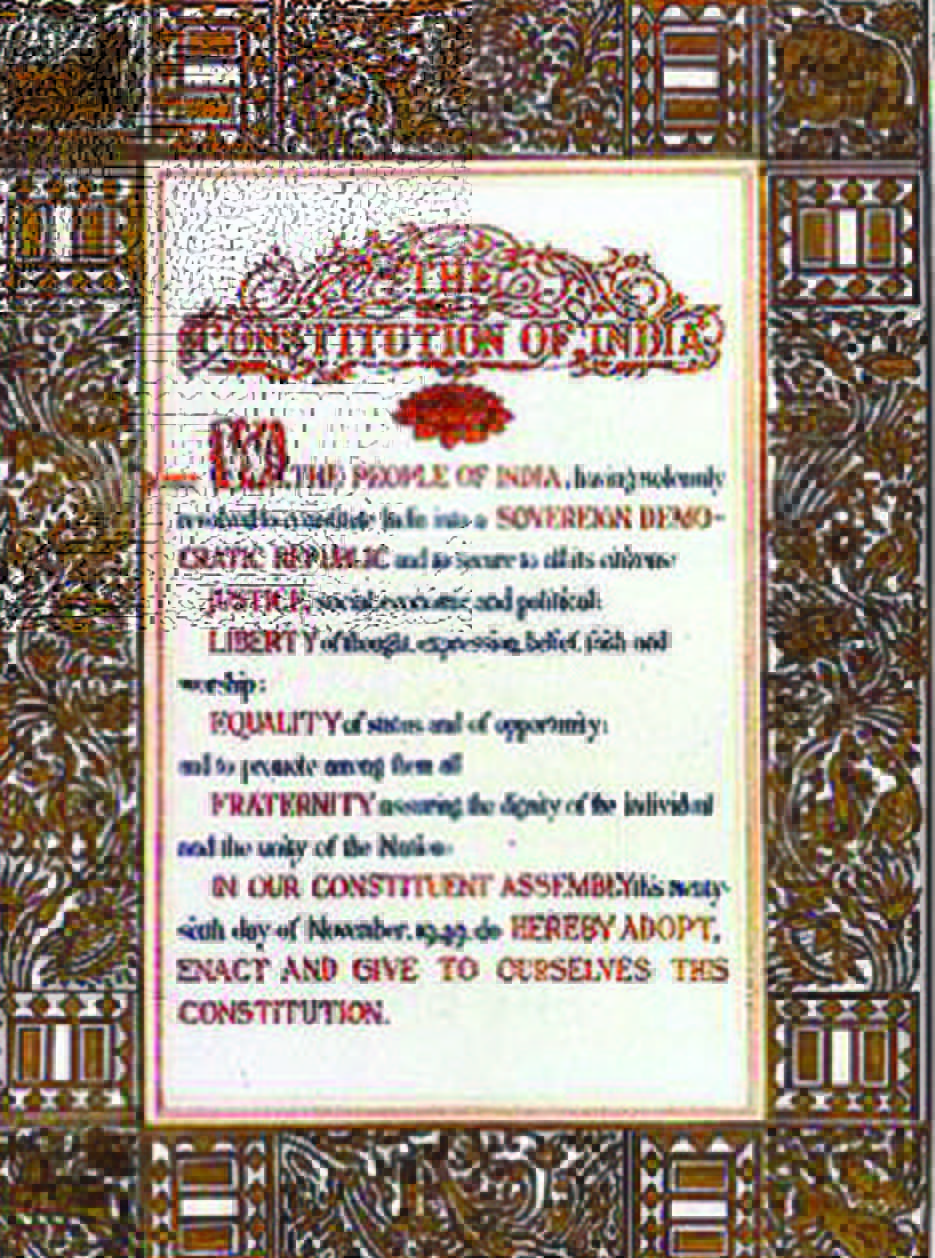
    The preamble to the Constitution of India is a brief introductory statement that sets out the guiding purpose and principles of the document. The preamble-page, along with other pages of the original Constitution of India, was designed and decorated solely by renowned painter Beohar Rammanohar Sinha of Jabalpur who was at Shantiniketan with acharya Nandalal Bose at that time. Nandalal Bose endorsed Beohar Rammanohar Sinha’s artwork without any alteration whatsoever. As such, the page bears Beohar Rammanohar Sinha’s short signature Ram in Devanagari lower-right corner.

    The preamble is not an integral part of the Indian constitution was first decided by the Supreme Court of India in BeruBari case therefore it is not enforceable in a court of law. However, Supreme Court of India has, in the Kesavananda case, recognised that the preamble may be used to interpret ambiguous areas of the constitution where differing interpretations present themselves. In the 1995 case of Union Government Vs LIC of India also the Supreme Court has once again held that Preamble is the integral part of the Constitution. As originally enacted the preamble described the state as a “sovereign democratic republic”. In 1976 the Forty-second Amendment changed this to read “sovereign socialist secular democratic republic”.

  • FOODS TO AVOID FOR HIGH BLOOD PRESSURE

    FOODS TO AVOID FOR HIGH BLOOD PRESSURE

    Do not panic if you have been diagnosed with High Blood Pressure. Besides regular exercise, one can control it with diet low in sodium and fat. So here are some of the top foods you should avoid:
    1. Pickles are low calorie but they are loaded with sodium.
    2. Papads are again low calorie but high in sodium.
    3. French Fries provide a large dose of fat and sodium. A medium serving of fries has about 19 grams of fat and 270 mg of sodium.
    4. Bacon is mostly fat. Three slices have 4.5 grams of fat and about 270mg of sodium.
    5. Readymade soup may be comfort food but it has about 800 mg of sodium in one cup serving.
    6. Dairy is a great source of calcium, but high fat dairy sources, like whole milk, provide more fat than you need. A one cup serving of whole milk provides eight grams of fat, five of which are saturated.
    7. Alcohol consumption actively causes the blood pressure to elevate. It also damages the walls of the blood vessels, while simultaneously increases risks of further complications.
    8. Donuts may be yummy, but they sure aren’t very good for your health and body. Just one donut packs in 200 calories with 12 grams of fat.

  • BENEFITS OF GINGER TEA

    BENEFITS OF GINGER TEA

    Nothing beats cold in the winter like a piping hot cup of ginger tea. With its high levels of Vitamin C, magnesium and other minerals, ginger root is extremely beneficial for health. Once made into tea, you can add peppermint, honey or lemon to mask the taste of the ginger. Here’s why you should have this soothing beverage.

    Relieve nausea
    Drinking a cup of ginger tea before travelling can help prevent the nausea and vomiting associated with motion sickness. You can also drink a cuppa at the first sign of nausea to relieve the symptom.

    Improve stomach performance
    Useful in improving digestion and increasing absorption of food, ginger tea can bloating after eating too much.

    Reduce inflammation
    Ginger contains anti-inflammatory properties that make it an ideal home remedy for muscle and joint problems. In addition to drinking ginger tea, you can also use it to soak inflamed joints.

    Fight respiratory problems
    Ginger tea can help relieve congestion associated with the common cold. Try a cup of ginger tea for the respiratory symptoms associated with environmental allergies.

    Improve blood circulation
    The vitamins, minerals and amino acids in ginger tea can help restore and improve blood circulation that may help decrease the chance of cardiovascular problems. Ginger may prevent fat from depositing in the arteries helping to prevent heart attacks and stroke.

  • PARANTHE WALI GALI

    PARANTHE WALI GALI

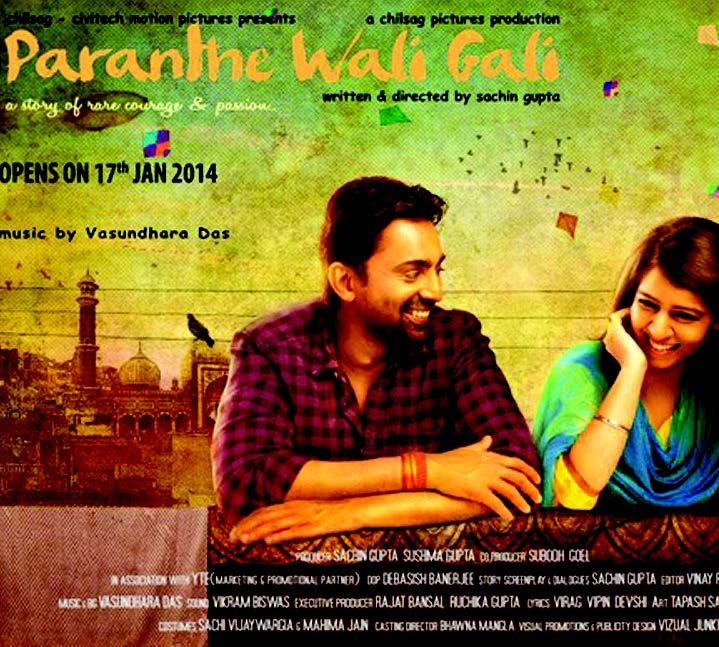
    STORY: A struggling theatre actor and a young girl, ‘mad over paranthas’, bump into each other in the famous paranthe wali gali of old Delhi and talk each other into fulfilling their dreams. REVIEW: Playwright and theatre director Sachin Gupta’s debut film with an interesting title offers a fresh perspective on life, ambition and our ability to hit back harder when life hits you hard. Very rarely do films focus on simple and light-hearted everyday conversation.

    Gupta brings that aspect to the forefront with the beautiful backdrop of Chandni Chowk in Old Delhi (or Delhi-6, thanks to Rakeysh Omprakash Mehra). We also liked the fact that though based on the hero’s love for theatre, most songs and scenes don’t look theatrical. Gupta keeps it real with locations, performances, interactions. While the sight of scrumptious paranthas and pickle leave you salivating, lack of a concrete plot coupled with the film’s stagnant pace also unfortunately leave you hungry and tired.

    Plus, the story lacks direction; it wanders around aimlessly, lacking continuity and failing to connect with the audience. This makes you question the motive of the film. For example, the protagonist Maulik ( Anuj Saxena), a theatre actor/director, who struggles to get himself a show, goes on and on about his passion for ‘theatre’, but his actions do not back his words. We don’t feel for his character or his love for the art, which is the biggest drawback of the film. Saxena is a tad too understated for his character.

    On the contrary, his young heroine ( Neha Pawar), who plays a loud Punjaban, tries to imitate Anushka Sharma and ends up looking over-animated in most scenes. She gets better when she’s herself. The lead actors have good screen presence but need to undergo voice modulation for their pitch stays constant. The chemistry between the two doesn’t work either. Supporting actors are pleasant, but don’t add much to the proceedings. The abrupt climax doesn’t live up to the strong initial build-up either.

  • KANGANA RANAUT EXPERIENCES DÉJÀ VU!

    KANGANA RANAUT EXPERIENCES DÉJÀ VU!

    Kangana Ranaut got a sense of deja vu when she was shooting for ‘Badra Bahaar’ from the film ‘Queen’. Kangana, who is originally from Manali, had come to Mumbai all alone to become an actor. Before she worked her way to the top and became a successful star, Kangy had to live alone and figure out her way in the big city. What is commendable is that she successfully carved a niche for herself in Bollywood without a Godfather.

    Coincidentally, in the movie Rani leaves India to visit Paris, venturing out on her own for the very first time in her life. Braving it out in a new place, Rani discovers a whole new world. She fights every situation and thoroughly enjoys moments that life throws at her.

  • DON’T LEAVE RANVEER, FRIENDS WARN DEEPIKA

    DON’T LEAVE RANVEER, FRIENDS WARN DEEPIKA

    Deepika Padukone’s rumoured beau Ranveer Singh has got the seal of approval from her friends who are now urging the actress to get ‘serious’ about the relationship. This happened during their rendezvous in New York during New Year which Mirror reported. Deepika’s circle met her Goliyon Ki Raasleela Ram-Leela co-star and the advice followed. The pair was joined by friends over dinner and the conversation soon veered towards their ‘relationship’.

    At this point Deepika tried to change the topic but her pals refused to drop the subject. “They unanimously suggested that Deepika should not leave Ranveer,” said the source. “One of them blurted out, “Can’t you see the man loves you madly? Don’t leave him.” Perhaps Deepika’s friends were hinting at her history of her break-ups; Nihar Pandya, Yuvraj Singh, Ranbir Kapoor and Sidhartha Mallya.

  • GAINING INDEPENDENCE FROM ILLITERACY

    GAINING INDEPENDENCE FROM ILLITERACY

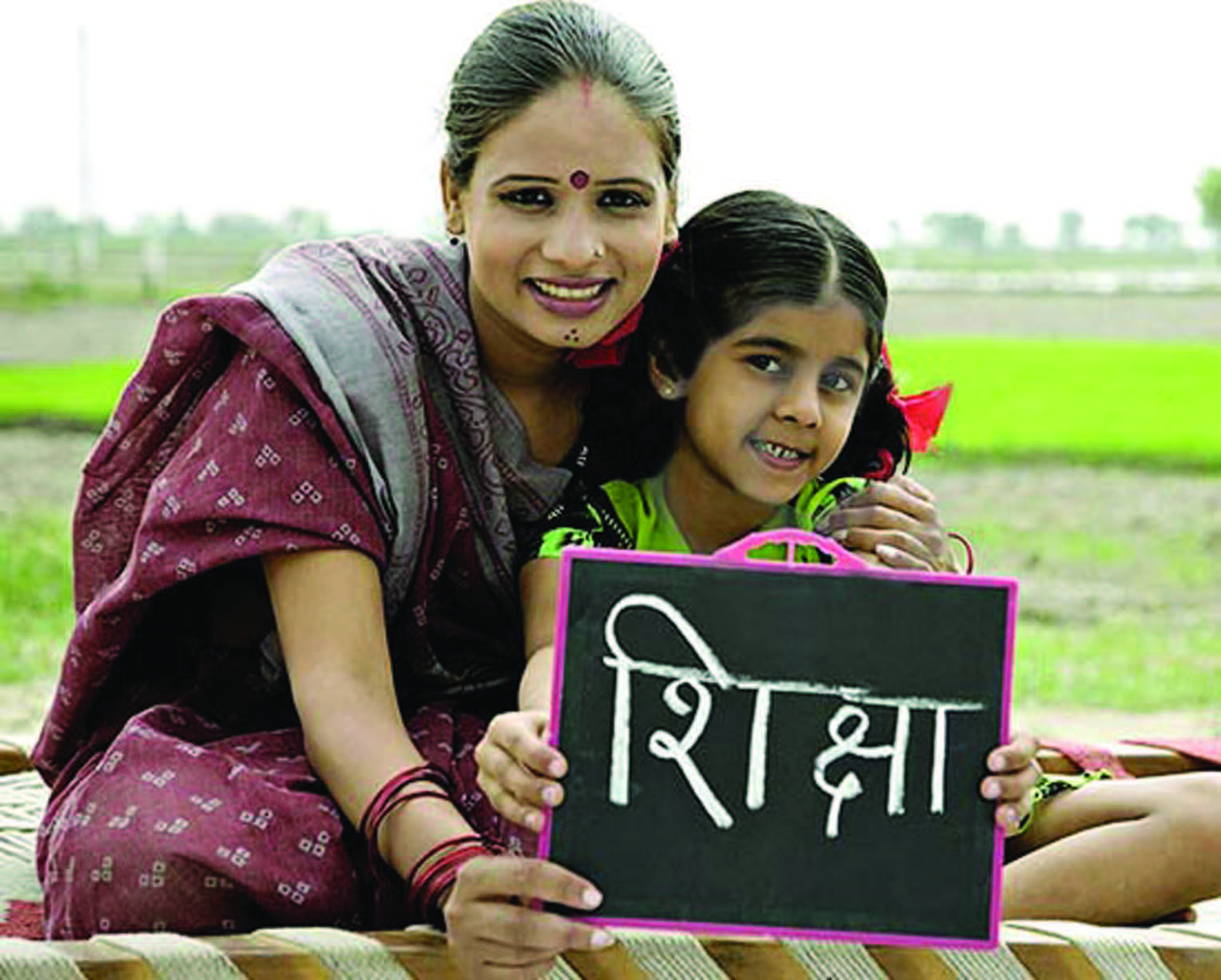
    Statistics mentioned above indicate that while progress has been made, measures have been far from adequate. We therefore need to upgrade our education system so that illiteracy can be completely uprooted from India. No matter how hard we try to fight the problem, it simply seems to persist.

    That even after 66 years of independence we have to lay stress on this issue is a shamebut at least it’s better than brushing it under the carpet. India, the land of Vedas, where we have learnt over the years that culture flourishes with literature, is one of the nations with highest illiteracy rates. Even underdeveloped countries like Sri Lanka, Myanmar, Vietnam and Thailand have achieved higher literacy levels in shorter time.

    In his India Development Report 2002, Kirit S. Parikh pointed out, “With a literacy rate of 65, we have 296 million illiterates, age seven years and above, as per the 2001 census. The number of illiterates today exceeds the population of the country of around 270 million at Independence, age seven and above.” Our society faces several challenges in the form of poverty, unemployment, child labour, female feticide, overpopulation etc. But all of them evolve from illiteracy which is actually the mother of most our problems. A high literacy rate can contribute to valuable social and economic participation by the people which will go a long way in human development and poverty eradication.

    Spread of education is necessary for modernization, urbanization, industrialization, communication and commerce. You name an issue and literacy will be a prerequisite for its solution. Illiteracy in India can be easily characterized by the wide gaps between the urban and rural populations. The urban population is more educated and therefore desires a life of comfort and luxury. On the other hand, the rural population depends on agriculture for their survival. They are the food providers of our country, who work for basic necessities and thus feel no need for education in their lives. Children in rural areas drop out of schools for a variety of reasons: some leave because of a sheer lack of interest; others quit so that they can work in fields or elsewhere, while some have no other choice due to inaccessibility and lack of school teachers.

    In villages, a large percentage of the dropouts are females. Forced by their parents, they are limited to performing household chores. They are married at a very early age and are taught since birth that what is important for them is their family and the looking after the house. Education is not even a secondary item on their to-do lists. Inadequate number of teachers and their absence in schools across the country is another roadblock towards complete literacy. A large number of teachers refuse to teach in rural areas and those who do, are usually under-qualified. Many teachers lack the necessary enthusiasm because of their meagre salaries. In one of his research papers, Nobel laureate Amartya Sen has mentioned, ‘Absenteeism of comparatively well-paid teachers, particularly where bulk of the students come from scheduled castes and tribes, poses a major problem.

    Students are circumstantially forced to go in for private tuitions. Sometimes the very institutions that were created to overcome disparities and barriers tend to act as reactionary influences in reinforcing inequality.’ Lack of infrastructure like buildings, benches, books etc is a widespread problem too. Some schools are located in warehouses while others in small thatched rooms which are of little use during rains. Many rural schools operate without electricity. The distribution of government funds is another major hindrance in the reform of our educational system. According to World Bank, ‘30 % of the total educational funding goes toward higher educational institutions.’ What with announcements of quota in higher education and an increase in the number of IIMs & IITs, the government clearly cares little for primary education. Even private institutions are seen to be a hindrance in the progress of children. In such schools, the children from poor households are seen as lowly, below average and thus not fit to sit and study with the children of upper caste or class.

    Untouchability has been abolished but this new rift between rich and poor students continues to take its toll on the country’s fortunes. Our education system is more or less a remnant of the long gone colonial system of the British Empire. No emphasis is ever laid on vocational courses, which can provide many job opportunities. “We are bumbling along with this out modeled system of elementary education, which is a real shame,” says Krishna Kumar, director of the Central Institute of Education in New Delhi. Reservation is yet another problem. Though it exists in other countries as well, reservation in India has a totally different approach. Our government grants reservations on the basis of caste when the correct basis of granting quotas must be the economic standards of the people. As a result, even better off backward caste students seek to get an entry in venerable institutions like the AIIMS through petty quotas. Quality be damned, seems to be the motto of such policies.

    Amidst this gloom, a recent welcome measure has been the passage of the Right to Education bill, during this session of Parliament. Its guidelines are like this: – Compulsory education for children between 6-14 yrs – Rs 10,000 fine if any child prevented from going school – No selection and screening process to choose preference over candidates – No physical punishments – States need to plan techniques to monitor advancements in the program – Roping in private schools to keep 25% seats reserved at entry level – Banning capitation fees It is a commitment that has taken decades to get fulfilled, but more efforts will be needed to implement it properly. As we have seen all these years, only directions and guidelines cannot resolve any crisis in the country. Various organizations and schemes have been fighting this problem.

    In 2003, the Magsaysay Award was awarded to Shantha Sinha in recognition of her work to end child labour, a major reason for illiteracy. The Supreme Court, in 1993, ruled that children had a fundamental right to free education. The Sarva Siksha Abhiyan launched in 2001 was to ensure that all children in the age group 6–14 years attend school and complete eight years of schooling by 2010. District Primary Education Programme launched in 1994 has so far started more than 160,000 new schools, including almost 84,000 alternative schools. The National Literacy Mission, launched in 1988 aimed at attaining a literacy rate of 75% by 2007. India is developing but at a very slow rate and one of the main reasons is the low level of literacy.

    Literacy enables a person to think rationally- for himself and others around him. A literate person is aware of all his fundamental rights and duties. It is a kind of panacea to fight problems like communalism, terrorism and under development. Not only the government, but also every literate citizen should contribute in battling the demon of illiteracy. Each one should teach one if we are to become a superpower. Mahatma Gandhi once said, ‘Be the change you want to see in the world.’ So let us enlighten the world by bringing this change into our and everybody’s lives.

    EDUCATION AS A DRIVER OF GROWTH
    India’s need for an enormous skilled work force that can drive its growth story forward is now a well accepted fact. But developing and honing these skills is where the real challenge lies. The first-ever Education Investment Conclave, 2013, in London, backed by India Inc, explored some of the complex issues linked with meeting the country’s educational demands. India is poised for its much-talked-about demographic dividend to kick in, which roughly translates into a requirement of around 200 million graduates and 500 million skilled people by 2022 – by which time nearly 25 per cent of the global work force will come out of the country.

    The Literacy rate of India has shown as improvement of almost 9 percent. It has gone up to 74.04% in 2011 from 65.38% in 2001, thus showing an increase of 9 percent in the last 10 years. It consists of male literacy rate 82.14% and female literacy rate is 65.46%. Kerala with 93.9% literacy rate is the top state in India. Lakshadweep and Mizoram are at second and third position with 92.3% and 91.06% literacy rate respectively. Bihar with 63.08% literacy rate is the last in terms of literacy rate in India. The Government of India has taken several measures to improve the literacy rate in villages and towns of India. State Governments has been directed to ensure and improve literacy rate in districts and villages

  • Vidya’s sexy avatars in Shaadi Ke Side Effects

    Vidya’s sexy avatars in Shaadi Ke Side Effects

    While Vidya Balan may prefer wearing a sari in real life, she dresses up glamorously for her character in the upcoming film Shaadi Ke Side Effects.

  • KEIRA KNIGHTLEY ‘TERRIBLE’ AT KEEPING SECRETS

    KEIRA KNIGHTLEY ‘TERRIBLE’ AT KEEPING SECRETS

    Keira Knightley has revealed that she couldn’t be a CIA agent like her onscreen lover in ‘Jack Ryan: Shadow Recruit’, because she is ”terrible” at keeping secrets. While the 28-year-old beauty plays the love interest of a CIA agent in the new flick, she insists she could never be a covert operative herself because she would end up spilling all the classified information. Speaking at the European premiere of ‘Jack Ryan’ in London’s Leicester Square, she told BANG Showbiz that she’s terrible at keeping secrets, and it would come straight out of her mouth, so she would be an awful CIA agent.