Kim Kardashian has revealed that after experiencing the wonder of bringing up her first daughter, North, she now wants at least six children. The reality TV star gave birth to her first daughter, North, last June and is eager to go through the joys of having a child again. She told talk show host Ellen DeGeneres that she always wanted about six kids, and after having North, she would like to have a million, Contactmusic reported. Even though is keen to increase her brood, she isn’t looking forward to pregnancy again, after suffering health problems during her first, including preeclampsia, which caused her body to swell and was dangerous to the health of both her and the baby.
Year: 2014
-

ENHANCING CAPABILITIES
DEFENSE
With personnel strength of 1.1 million soldiers (6 regional commands, a training command, 13 corps, and 38 divisions), the Indian Army has kept the nation together through various crises, including four wars since Independence, Pakistan’s “proxy war” in J&K since 1989–90, and insurgencies in many of the northeastern states.Given its large-scale operational commitments on border management and counterinsurgency, the army cannot afford to reduce its manpower numbers until these challenges are overcome. Many of its weapons and equipment are bordering on obsolescence and need to be replaced. The next step would be to move gradually toward acquiring network-centric capabilities for effects-based operations so as to optimize the army’s full combat potential for defensive and offensive operations.
The army is also preparing to join the navy and the air force in launching intervention operations in India’s area of strategic interest when called on to do so in the future. Lieutenant General J.P. Singh (retired), former deputy chief of the army staff (planning and systems), stated in an interview with the CLAWS Journal that “the critical capabilities that are being enhanced to meet challenges across the spectrum include battlefield transparency, battlefield management systems, nightfighting capability, enhanced firepower, including terminally guided munitions, integrated maneuver capability to include self-propelled artillery, quick reaction surface-to-air missiles, the latest assault engineer equipment, tactical control systems, integral combat aviation support and network centricity.” [6] The army’s mechanized forces are still mostly “night blind.”
Its artillery lacks towed and self-propelled 155- mm howitzers for the plains and the mountains and has little capability by way of multi-barrel rocket launchers and surface-to-surface missiles. Infantry battalions urgently need to acquire modern weapons and equipment for counterinsurgency and counterterrorism operations to increase operational effectiveness and lower casualties. Main battle tanks (MBT) and infantry combat vehicles (ICV) are the driving forces of India’s conventional deterrence in the plains. This fleet is being modernized gradually by inducting two regiments of the indigenously developed Arjun MBT and importing 310 T-90S MBTs from Russia. A contract has also been signed for 347 additional T-90S tanks to be assembled in India. The BMP-1 and BMP-2 Russian ICVs, which have long been the mainstay of the mechanized infantry battalions, need to be replaced as well.
The new ICVs must be capable of performing internal security duties and counterinsurgency operations in addition to their primary role in conventional conflicts. Artillery modernization plans include the acquisition of towed, wheeled, and self-propelled 155- mm guns and howitzers for the plains and the mountains through import as well as indigenous development. The Corps of Army Air Defence is also faced with problems of obsolescence. The vintage L-70 40-mm air defense (AD) gun system, the four-barreled ZSU-23-4 Schilka (SP) AD gun system, the SAM-6 (Kvadrat), and the SAM-8 OSA-AK, among others, need to be replaced by more responsive modern AD systems that are capable of defeating current and future threats.
The modernization of India’s infantry battalions is moving forward but at a similarly slow pace. This initiative is aimed at enhancing the battalions’ capability for surveillance and target acquisition at night and boosting their firepower for precise retaliation against infiltrating columns and terrorists hiding in built-up areas. These plans include the acquisition of shoulder-fired missiles, hand-held battlefield surveillance radars, and hand-held thermal imaging devices for observation at night. A system called F-INSAS (future infantry soldier as a system) is also under development. One infantry division has been designated as a rapid reaction force for employment on land or in intervention operations and will have one amphibious brigade and two air assault brigades. Similarly, the
Indian Army proposes to substantially enhance the operational capabilities of army aviation, engineers, signal communications, reconnaissance, surveillance, and target acquisition branches in order to improve the army’s overall combat potential by an order of magnitude. Modern strategic and tactical level command and control systems need to be acquired on priority for better synergies during conventional and sub-conventional conflict. Plans for the acquisition of a mobile corps-to-battalion tactical communications system and a battalion-level battlefield management system likewise need to be hastened. Despite being the largest user of space, the army does not yet have a dedicated military satellite for its space surveillance needs. Cyberwarfare capabilities are also at a nascent stage. The emphasis thus far has been on developing protective capabilities to safeguard Indian networks and C4I2SR (command, control, communications, computers, intelligence, information, surveillance, and reconnaissance) from cyberattack. Offensive capabilities have yet to be adequately developed. All these capabilities will make it easier for the army to undertake joint operations with multinational forces when the need arises and the government approves such a policy option.
INDIAN DEFENSE POWER AND MISSILE SYSTEMS

- Indian Army is the 3rd biggest military contingent in the World after USA and China.
- India’s indigenous nuclear-powered ICBM (Inter-Continental Ballistic Missile) AGNI-V puts India into the Elite Club consisting of USA, China, France and Russia.
- India claims AGNI-V to have a reach of 5,000 kms to which Chinese and Australian delegates and experts suspect to have a range of 8,000 kms. and that India is hiding these facts just to avoid any concern from foreign countries.
- AGNI-VI(being built) will have a range of 10,000 kms. which would give India the power to strike in any part of the world barring South America and very small parts of North America.
- In the hilly terrains, it gives an advantage as the missile goes from the side of the mountains and attacks the target from the rear side.
- The missile BrahMos-2 (built under collaboration with Russia)(under testing)(Named after its rivers Brahmaputra+Moscow) is the fastest hypersonic missile in the world travelling at a speed of Mach-7 (7 times the speed of sound in air).
- India’s INS-Vikrant (bought from the UK) is the first nuclear-powered aircraft carrier of India.
- The HMS Harriers(airplanes on INS VIRAAT) are one of its kind which has the ability of vertical landing and take-off.
- INS Viraat: Centaur class carrier (ex-HMS Hermes) in service since 1987.
- INS Vikramaditya : Modified Kiev class carrier (ex-Admiral Gorshkov) due in service October 2013.
- INS Vikrant: 40,000 ton Vikrant class carrier. It is being built at Cochin Shipyard and is expected to enter service in 2017.
- INS Vishal: 65,000 ton Vikrant-class carrier. Expected to enter service in 2022.
- India’s INS-ARIHANT is the first indigenous(built completely in India, by India) nuclear powered submarine in India. It has a capability to shoot missiles with nuclear war-heads even after being at some tens of kilometers beneath the water-level.
- The Sukhoi Su-30MKI, Dassault Mirage 2000, and MiG-29 serve in the Indian Air Force and are also seen as a means to deliver nuclear weapons.
- In addition India maintains SEPECAT Jaguar and MiG-27M which can be used to drop gravity bombs.
- The new in queue for the indigenous aircraft of India is HAL-Tejas
- It integrates technologies such as relaxed static stability, fly-by-wire flight control system, multi-mode radar, integrated digital avionics system, composite material structures, and a flat rated engine.
- It is a tailless, compound delta-wing design powered by a single engine.
- Indian Army is the 3rd biggest military contingent in the World after USA and China.
- India’s indigenous nuclear-powered ICBM (Inter-Continental Ballistic Missile) AGNI-V puts India into the Elite Club consisting of USA, China, France and Russia.
- India claims AGNI-V to have a reach of 5,000 kms to which Chinese and Australian delegates and experts suspect to have a range of 8,000 kms. and that India is hiding these facts just to avoid any concern from foreign countries.
- AGNI-VI(being built) will have a range of 10,000 kms. which would give India the power to strike in any part of the world barring South America and very small parts of North America.
- India’s cruise missile (being tested) NIRBHAYA is a cruise nuclearwarhead missile which when blasted, takes the form of a plane and when the target is in nearby range, attacks it with a random procedure thus eliminating the probability of it getting stopped by any anti-missile system as its process is itself not defined. In other words-unstoppable.
- In the hilly terrains, it gives an advantage as the missile goes from the side of the mountains and attacks the target from the rear side.
- The missile BrahMos-2 (built under collaboration with Russia)(under testing)(Named after its rivers Brahmaputra+Moscow) is the fastest hypersonic missile in the world travelling at a speed of Mach-7 (7 times the speed of sound in air).
- India’s INS-Vikrant (bought from the UK) is the first nuclear-powered aircraft carrier of India.
- The HMS Harriers(airplanes on INS VIRAAT) are one of its kind which has the ability of vertical landing and take-off.
- INS Viraat: Centaur class carrier (ex-HMS Hermes) in service since 1987.
- INS Vikramaditya : Modified Kiev class carrier (ex-Admiral Gorshkov) due in service October 2013.
- INS Vikrant: 40,000 ton Vikrant class carrier. It is being built at Cochin Shipyard and is expected to enter service in 2017.
- INS Vishal: 65,000 ton Vikrant-class carrier. Expected to enter service in 2022.
- India’s INS-ARIHANT is the first indigenous(built completely in India, by India) nuclear powered submarine in India. It has a capability to shoot missiles with nuclear war-heads even after being at some tens of kilometers beneath the water-level.
- The Sukhoi Su-30MKI, Dassault Mirage 2000, and MiG-29 serve in the Indian Air Force and are also seen as a means to deliver nuclear weapons.
- In addition India maintains SEPECAT Jaguar and MiG-27M which can be used to drop gravity bombs.
- The new in queue for the indigenous aircraft of India is HAL-Tejas
- It integrates technologies such as relaxed static stability, fly-by-wire flight control system, multi-mode radar, integrated digital avionics system, composite material structures, and a flat rated engine.
- It is a tailless, compound delta-wing design powered by a single engine.
India’s cruise missile (being tested) NIRBHAYA is a cruise nuclearwarhead missile which when blasted, takes the form of a plane and when the target is in nearby range, attacks it with a random procedure thus eliminating the probability of it getting stopped by any anti-missile system as its process is itself not defined. In other words-unstoppable.

-

Jack Ryan: Shadow Recruit
STORY: Based on the character created by author Tom Clancy, ‘Jack Ryan’ is a geopolitical thriller set in the post 9/11 world. REVIEW: While the previous films in the series were adapted from Clancy’s best-selling novels, Shadow Recruit is a reboot, which works as a prequel to the original Jack Ryan stories. In this one, Jack Ryan (Chris Pine), CIA’s covert financial analyst, discovers a Russian conspiracy to destroy the American economy and must travel to Moscow to save his country. But it’s not that easy when Russian Mogul Viktor Cherevin (Kenneth Branagh), is at the helm of the attack.
Who will win? While the film is certainly not yawn-inducing and keeps the suspense level high, it fails to create its own identity. In spite of being fast-paced and sleek in terms of stunts, it looks like a generic action thriller, which seems to be made to keep the franchise going. We don’t mind the ‘lack of originality’, as long as what you see onscreen is engaging enough. The film does manage to capture attention in the beginning, but as it proceeds, the execution gets mediocre and what you end up seeing is a run-of-the-mill espionage thriller.
While you crave to see the urgency, suspense and high-octane action that the Bourne series or Mission Impossible exhibit, here you get an uninspiring, one-dimensional film instead, which doesn’t look real. The ‘Russians as the bad guys’ theme has been done to death. The protagonist conveniently dodges danger while the girlfriend ( Keira Knightley) has nothing much to do, except for suspecting he’s having an affair. Chris Pine, known more for his looks than performance, does a decent job, but it’s the regular direction and script which undo his effort. The background score works and (villain-cum-filmmaker) Kenneth Branagh does look vicious; unfortunately, the climax fails him too. Kevin Costner is wasted.
-

INDIA: A RISING ECONOMIC POWERHOUSE
The India economy, the third largest economy in the world in terms of purchasing power, is going to touch new heights in coming years. As predicted by Goldman Sachs, the Global Investment Bank, by 2035 India would be the third largest economy of the world just after US and China.
It will grow to 60% of size of the US economy. This booming economy of today has to pass through many phases before it can achieve the current milestone of 9% GDP. The history of Indian economy can be broadly divided into three phases: Pre- Colonial, Colonial and Post Colonial. PRE COLONIAL: The economic history of India since Indus Valley Civilization to 1700 AD can be categorized under this phase. During Indus Valley Civilization Indian economy was very well developed.
It had very good trade relations with other parts of world, which is evident from the coins of various civilizations found at the site of Indus valley. Before the advent of the East India Company, each village in India was a self sufficient entity and was economically independent as all the economic needs were fulfilled within the village COLONIAL INDIAN ECONOMY: The arrival of the East India Company in India caused a huge strain to the Indian economy and there was a two-way depletion of resources. The British would buy raw materials from India at cheaper rates and the finished goods were sold at higher than normal price in Indian markets.
During this phase India’s share of world income declined from 22.3% in 1700 AD to 3.8% in 1952. POST COLONIAL INDIAN ECONOMY: After India got independence from colonial rule in 1947, the process of rebuilding the economy started. For this various policies and schemes were formulated. First five year plan for the development of Indian economy came into implementation in 1952. These Five Year Plans, started by Indian government, focused on the needs of the Indian economy. If on one hand agriculture received the immediate attention on the other hand the industrial sector was developed at a fast pace to provide employment opportunities to the growing population and to keep pace with the developments in the world. Since then the Indian economy has come a long way.
The Gross Domestic Product (GDP) at factor cost, which was 2.3 % in 1951-52 reached 6.5 in the financial year 2011-2012 Trade liberalization, financial liberalization, tax reforms and opening up to foreign investments were some of the important steps, which helped Indian economy to gain momentum. The Economic Liberalization introduced by Man Mohan Singh in 1991, then Finance Minister in the government of P V Narsimha Rao, proved to be the stepping-stone for Indian economic reform movements. To maintain its current status and to achieve the target GDP of 10% for financial year 2006-07, the Indian economy has to overcome many challenges.
Challenges before Indian economy:
Population explosion:The rising population is eating into the success of India. According to 2011 census of India, the population of India has crossed one billion and isgrowing at a rate of 2.11% approx. Such a vast population puts lots of stress on economic infrastructure of the nation. Thus India has to control its burgeoning population. Poverty: As per records of National Planning Commission, 36 crore people are living below the poverty line in India in 2012. Unemployment:The increasing population is pressing hard on economic resources as well as job opportunities. Indian government has started various schemes such as Jawahar Rozgar Yojna, and Self Employment Scheme for Educated Unemployed Youth (SEEUY). But these are proving to be a drop in an ocean. Rural Urban Divide:It is said that India lies in villages, even today when there is lots of talk going about migration to cities, 70% of the Indian population still lives in villages. There is a very stark difference in pace of rural and urban growth. Unless there isn’t a balanced development Indian economy cannot grow.These challenges can be overcome by the sustained and planned economic reforms. These include:
- Maintaining fiscal discipline
- Orientation of public expenditure towards sectors in which India is faring badly such as health and education.
- Introduction of reforms in labour laws to generate more employment opportunities for the growing population of India.
- Reorganization of agricultural sector, introduction of new technology, reducing agriculture’s dependence on monsoon by developing means of irrigation.
- Introduction of financial reforms including privatization of some public sector banks.
A Global Economic Super Power by 2030
India is poised to take over the developed countries to emerge at the top of the heap in the global economic superpower league by 2030, says a survey.More than half of the respondents (53 per cent) of a survey commissioned by London-based independent think-tank Legatum Institute said India is likely to be the world’s most important economic power by 2030.According to the respondents of the survey, India is now on course to outstrip developed nations such as — the United States, Japan, Germany and the fast-emerging economic giant China over the next two decades. The survey, which questioned nearly 2,400 Indian senior managers, entrepreneurs and aspiring entrepreneurs said the levels of confidence among the country’s wealth-creators is very high, with nearly nine in ten saying they expected India to be in a stronger economic position in the next five years. Only one in five said the world economic crisis had badly affected business in India, the survey said.
India is already moving up the economic league tables as the 12th largest economy in the world, as per the World Bank. Besides, it also ranked 45th in the internationally respected 2009 Legatum Prosperity Index — which embraces social and political data to provide a wider measure of national success. About two-thirds of the respondents said Indians were more entrepreneurial than people from other countries and 84 per cent said their country was going in the right direction. Beyond making money, Indian entrepreneurs are also highly motivated by the broader social impact of their work. Over half (54 per cent) of respondents say the social effects of their business, such as improving the quality of life in their communities or developing people, are a main motivation for what they do, the survey said.
-

INDIAN REPUBLIC DAY: ITS HISTORY AND ORIGIN
Indian Republic Day is an event that commemorates the date, 26 January 1950, on which the “Constitution of India” came into existence by replacing Government of India Act, 1935. This day is very significant in Indian history as on this day India became republic from the ‘British Dominion’. Every year, this day is celebrated with much enthusiasm throughout India. A massive parade is organized to showcase the growth of the country in every field.
Origin
Though India had got its freedom from the hands of the British in 15th August 1947, but there was no permanent constitution. The laws were based on the modified colonial Government of India Act, 1935, and India was then a dominion. India was then headed by King George VI, until the adoption of the Indian Constitution in 1950. On 28 August, 1947, a Drafting Committee was appointed to draft a permanent constitution. This committee was headed by Dr. B.R. Ambedkar along with several other members. A draft constitution was prepared and submitted to the Assembly on 4th November 1947. After many considerations and some modifications the 308 members of the Assembly signed two hand-written copies of the document on 24th January 1950. Two days later, the constitution came into effect throughout the nation that is on 26th January, 1950. The Indian Constitution included 395 Articles and 8 Schedules. After the withdrawal of British Rule in 1947 it took India 894 days to come up with its own constitution. For the first time election were held and Dr. Rajendra Prasad was elected as the first President of free India. He took the oath at the Durban Hall in the Government House, which was followed by the Presidential drive to the Irwin Stadium. He unfurled the National Flag at the stadium. This transition of India into a sovereign democratic republic nation is indeed a historical event. Today, the Indian Constitution is the longest in the world. The national holiday is celebrated with festivities and patriotic fervor across the country.

Spirit of Indian Republic Day
Indian Republic Day is one of the most awaited events of the year. On 26th January, 1950, India became republic and since then it is a joyous occasion for the Indians as it commemorates the sacrifices of those souls who fought for the freedom. Every year, this day is celebrated with great elegance and pomp and it is also a gazetted holiday.Celebrations
A huge effort is laid upon organizing cultural events and celebration throughout India on this day. Large military parades are held in New Delhi and the state capitals of India. Indian Army, Navy and Air Force and other traditional dance group represent themselves in this parade. The parade in New Delhi is a grand affair. Several branches of the armed forces, the police, National Cadet Corps, and students from various schools and institution take part in it. Participants of various states showcase their cultural heritage in a very colorfl manner.Latest armaments that country has recently acquired are also on display during the parade. The parade starts from India Gate and proceeds through Rajpath. Children from various schools also get chance represent their cultural programmes in this parade. Republic Day is also the day for those people who have done an emblematic achievement. And it also is the time for them to get recognized for their achievements through rewards. Selected children are awarded the Children’s Bravery Awards on this day. Soldiers who have performed exceptionally are awarded the bravery medals, Param Veer Chakra, Veer Chakra and Maha Veer Chakra.
Public Life
Republic Day of India is a gazette holiday. Every National state and local government offices, post offices and banks are closed on this day. Organization or businesses other than this are closed or they have reduced their opening hours. Public transport is usually unaffected as many locals travel for celebrations. Republic Day parades cause significant disruption to traffic and there may be increased security on this date, particularly in areas such as New Delhi and state capitals. And last but not the least, this is the day when we come together and proudly identify ourselves as true Indians, and not with some particular religion or caste. This feeling for the country is what makes this day a special one from the rest of the days.Republic Day Parade
The day commence with the offering of a floral wreath by the Indian Prime Minister to the Amar Jawan Jyoti. It commemorates those souls of the freedom fighters who fought for the freedom of their country. The Prime Minister is then escorted to the main dais at Rajpath, where he is joined by the President and the other dignitaries. The President unfurls the Indian flag. People show respect to the nation by playing the National Anthem.A 21-gun salute is then presented in honor of the guests. Next in the row is the bravery award, medals for the bravery such as Ashok Chakra and Kirti Chakra. These are presented to those who have shown exceptional skills in their respective fields. This marks the beginning of the parade by the three pillars of Indian Army (the Army, the Navy and the Air Force). Dressed in their finest attires and adorned with official decorations, the soldiers take part in the parade. While passing by the President as gesture of respect they bring down their weapons and salute the president.
The winners of the gallantry awards move on the premise riding on open jeeps. Kids, who win National Bravery Awards, also participate riding on elephants. The parade continues in a grand manner with the Indian Military showcasing its their latest acquisitions (Missiles, radars, tanks etc). Different helicopters of the Indian Air Force showcase their skills and stunts while flying over the ceremonious ground. They also shower petals of rose on the audience who are present on the premise. Latest inventions and developments of the various government departments and ministries are also put on display during the parade.
Cultural groups from different parts of the country also exhibit their cultural heritage through dance and other forms. Children from various schools get a chance to display their tableaus on patriotic songs. This is followed by displays of dangerous and exciting skilful motorcycle shows by the armed forces personnel. And last but not the least, the jets and the fighter planes show their dangerous skills and they symbolically salute the President. It then marks the conclusion of the Republic Day parade.
-

CREED GUIDING MATURE REPUBLIC
Modern societies emerge out of their primitive forms. As India enters its 65th year as a republic, it is not what it used to be for the past several centuries: ruled by kings and nawabs, brutalised by Hindu orthodoxies of caste and sati, or dependent on agriculture.
“India has changed more in last six decades than in six previous centuries,” said president Pranab Mukherjee on the eve of the Republic Day last year, adding: “It will change more in the next ten years than in the previous sixty.” The motor of change is democracy, or the republic’s politics reaffirmed every five years through the conscious act of voting.
Democracy refers to demokratia—a political system that began in 5th to 4th centuries BC when the people (demos) of Athens revolted against the dynasties of tyrants and established their own kratos (rule). Over past decades, democracy in India has emerged as a revolt against caste and other social inequalities, empowering millions of dalits, minorities and women.

India still subjugates its women, but it will change as more than a million women, elected to political nurseries of panchayati raj, are about to alter the balance of gender relations. The Indian republic is a Greek city state in microcosm, whose citizens interact with philosophical concepts every day, acquiring new understandings of liberty and rationality. As it matures, it inculcates egalitarian ideals in its citizens who in turn guard demokratia, the republic’s dharma, or creed. The egalitarian Indian defends the order, defeating Indira Gandhi after the Emergency when democracy appeared to be failing, or producing an Aam Aadmi Party when corruption of an industrial scale emerged.
The republic is nurtured from below. It just gave Kashmiri secessionists a recurring opportunity to prove their worth through the ballot option of NOTA, none of the above. In primitive societies, consensus emanated from similarities of beliefs and identities; in modern India consensus is derived from differences and moderated by media, political parties, voters, and the judiciary. The voter is the sane oracle, inaugurating an era of coalition politics in 1989 and shifting the polity towards federalism, in tune with the diversity of India. From the post-Emergency rise of anti-Congress parties to the AAP, the republic births new parties. It secures the confidence of minorities.
According to a BJP research, India has seen the emergence of “smaller Muslim parties” that are determining outcomes in states from Assam to Kerala. Indian polity is ripe where any new party could transform into a countrywide behemoth by practising simple politics: electing leaders through organisational polls. There is space for all, as no party has got 50 per cent votes. In some way, parties are dying, or being obscured, eclipsed and forgotten. The Congress is forgotten in UP, Bihar, West Bengal, Delhi and many states; the BJP was reduced to irrelevance as a national opposition until Narendra Modi rose from below; the Rashtriya Janata Dal was dumped; and demokratia caught up with communists in West Bengal in 2011. It happens due to parties’ failure to abide by the republic’s dharma: more politics, more democracy. Politics has its own independent dignity.
More parties could thrive if their funds were audited and if they held polls to elect party leaders or used secret ballot to elect chief ministers or Prime Minister. If the Congress practised politics, US-style primaries to elect party leaders could herald a revolution. Among democracies, some are religious states such as Britain whose societies are overwhelmingly secular; some are secular states like the US and India whose societies are predominantly religious. Religious neutrality, established first by Akbar, characterises the Indian state. The founders—Gandhi, Nehru and Ambedkar— wrote an array of liberties into the Constitution: equality of rights, multi-party elections, free press, individual freedoms, rule of law, independent judiciary, etcetera. Speaking at Oxford in 2005, Prime Minister Manmohan Singh noted that the founders were “greatly influenced by the ideas associated with the age of Enlightenment in Europe.”
The political and religious freedoms Indians enjoy would not be possible if the British hadn’t arrived in India. Democracy is defined as the majority rule, but the majority is of the people, not of communities. For those who feed pessimism among minorities, the day is not far when India will see a Muslim prime minister, as religion will become irrelevant. For now, a Muslim politician is yet to be born who could read the republic’s political mind, the way Barack Obama read the American mind. There are reasons: Muslims must shed the fear of the BJP; the politics of secularism and reservation must be defeated by effective policing and through job creation by people. Primitive societies were dependent on agriculture.
In a modern nation, while the agricultural output grows, its share in the gross domestic product must decline, accompanied by growth in knowledge sectors like biotechnology and financial services. Once seen by the West as the land of snake charmers, India is transformed into an information technology destination today. However, it is an inward-looking mystical civilisation, failing to grasp notions of power. India contemplated sending troops to Iraq in 2003, but succumbed to a perennial weakness to comprehend its place in the international state system. There were military roles in Bangladesh, Sri Lanka and Maldives that indicate India could exercise hard power abroad. Amid problems, the republic is maturing, aided by the Supreme Court which forced candidates to declare assets and criminal antecedents, disqualified elected representatives upon conviction in criminal cases, and enshrined negative voting through NOTA.
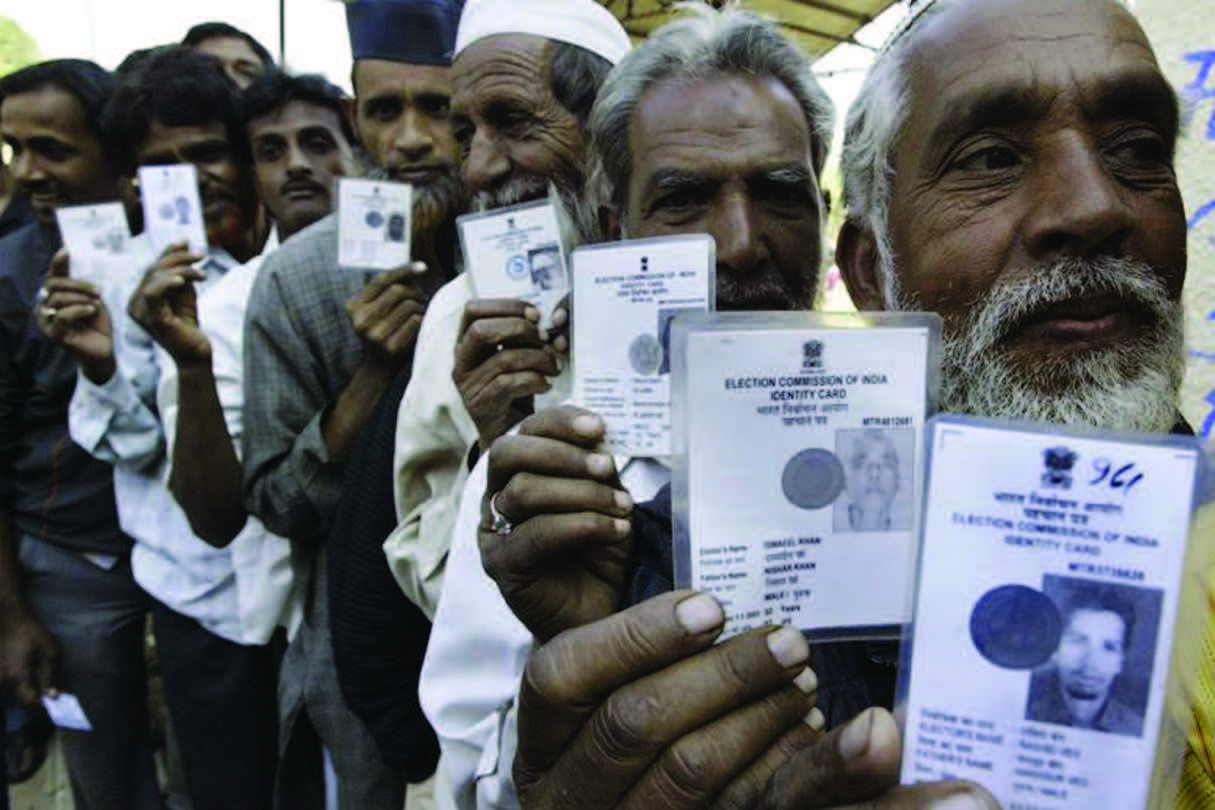
If T N Seshan alone could retrieve autonomy of the election commission, it appears the Central Bureau of Investigation and other government institutions could cease being the ruling party’s mistress. At the heart of the country’s politics is the sane oracle, the voter: the elderly who walk to polling booths, tribesmen who defy Naxalites to vote, women who stand with men, youth who secure their aspirations in ballots. Of 790 million voters, 120 million are 18-23-yearolds, the first-time voters who must establish a relationship with people, not leaders, to secure the republic for their next generations. (The writer, Tufail Ahmad, is director of South Asia Studies Project at the Middle East Media Research Institute, Washington DC.)
-

Who betrayed Sardar Patel?
“The abolition of Privy Purses will remain one of the most shameful events in our constitutional history. The nation saved Rs.4 crore annually but lost its honor. It is equally regrettable that neither the Janata Party in 1977 nor any subsequent non-Congress government did anything to redeem Patel’s pledge. What purpose will, then, be served by spending Rs.2,500 crore to build the tallest statue in his memory?”, asks the author.
By Arvind P Datar
Sardar Patel persuaded the Constituent Assembly to guarantee payment of Privy Purses and preserve the rights of the erstwhile rulers. But the Congress betrayed him. In the recent media coverage on Sardar Vallabhbhai Patel, there was not one word about the greatest insult to his memory: the abolition of the Privy Purses, first by a Presidential Order and, later, by a constitutional amendment.Article 1 of the Constitution states that India, that is, Bharat, shall be a Union of States. No person can claim greater credit for the creation of Bharat than Sardar Patel, ably assisted by V.P. Menon (Constitutional Adviser to Lord Mountbatten). In 1947, princely states numbering 555 covered 48 per cent of the area of pre-Independent India and constituted 28 per cent of its population. Legally, the princely states were not a part of British India and the people of these states were not treated as British subjects. But, in reality, they were completely subordinate to the British Crown.
The Indian Independence Act, 1947, provided for the lapse of paramountcy of the British Crown over the Indian states. Each ruler had the option to accede to the dominion of India or to Pakistan, or continue as an independent sovereign ministate. The rulers were often seen, perhaps rightly, as lackeys and stooges of the British Empire. Even in the “mutiny” of 1857, many of them actively assisted the British. Lord Canning acknowledged their role as “breakwaters in the storm which would have swept over us in one great wave.” From the beginning, therefore, several members of the Congress were totally opposed to the payment of Privy Purses.
Integration
The tireless efforts of Sardar Patel and V.P. Menon resulted in the princes agreeing to the dissolution of their respective states. They surrendered several villages, thousands of acres of scattered jagir land, palaces,museums, buildings, aircraft, and cash balances and investments amounting to Rs.77 crore. In addition, there was the railway system of about 12,000 miles which the states surrendered to the Centre without receiving any compensation. In consideration of their agreeing to integrate with India, the princes were to be paid a Privy Purse, which was approximately 8.5 per cent of the annual revenue of each princely state.The amounts varied from Rs.43 lakh a year to the Nizam of Hyderabad to just Rs.192 a year to the ruler of Katodia. Of the 555 rulers, 398 were to get less than Rs.50,000 a year. The total cost to the Indian exchequer in 1947 was Rs.6 crore, which was to be progressively reduced. At the time of abolition in 1970, the total amount payable to all the erstwhile princes was just Rs.4 crore a year. On October 12, 1949, Sardar Patel persuaded the Constituent Assembly to include Articles 291 and 362 in the Constitution to guarantee the payment of Privy Purses and also preserve the personal rights, privileges and dignities of the rulers.
His brilliant speech bears clear testimony to his statesmanship and deserves to be carefully read: “The privy purse settlements are, therefore, in the nature of consideration for the surrender by the rulers of all their ruling powers and also for the dissolution of the States as separate units … Need we cavil then at the small – I purposely use the word small – price we have paid for the bloodless revolution which has affected the destinies of millions of our people? … “The capacity for mischief and trouble on the part of the rulers if the settlement with them would not have been reached on a negotiated basis was far greater than could be imagined at this stage.
Let us do justice to them; let us place ourselves in their position and then assess the value of their sacrifice. The rulers have now discharged their part of the obligations by transferring all ruling powers by agreeing to the integration of their States. The main part of our obligation under these agreements is to ensure that the guarantee given by us in respect of privy purses are fully implemented. Our failure to do so would be a breach of faith and seriously prejudice the stabilization of the new order.” He also informed the Assembly that if the cash received from the rulers of Madhya Bharat alone were invested, the interest would cover the payment of Privy Purses to all the princes.
Nobody but Sardar Patel and V.P. Menon could have negotiated such a settlement with them. After Patel’s death, there were repeated demands to abolish the Privy Purses, but Pandit Jawaharlal Nehru refused to do so. Appalled at these demands, Menon remarked: “As an honorable party to an agreement, we cannot take the stand that we shall accept only that part of the settlement which confers rights on us, and repudiate or whittle down that part which defines our obligations. As a nation aspiring to give a moral lead to the world, let it not be said of us that we know the ‘price of everything, and the value of nothing’.”
Privy Purses case
In the 1967 election, several rulers had joined the Swatantra Party headed by C. Rajagopalachari, and many of them defeated Congress candidates. Indira Gandhi was, therefore, determined to abolish the Privy Purses. On June 25, 1967, the All India Congress passed a resolution to abolish them. The Constitution (Twentyfourth Amendment) Bill, 1970 was introduced and passed in the Lok Sabha by a majority of 332:154 votes, but it was defeated in the Rajya Sabha by 149:75. Having failed in Parliament, Indira Gandhi asked President V.V. Giri to derecognize all the rulers.This derecognition was successfully challenged by N.A. Palkhivala before the Supreme Court in the historic Privy Purses case. Indira Gandhi’s landslide victory in the 1971 election enabled her to amend the Constitution that abolished the Privy Purses and extinguished all rights and privileges of the rulers. In Parliament, Indira Gandhi stated that the concept of Privy Purses and special privileges were incompatible with an “egalitarian social order.” Thus, just 20 years later, the Congress Party, of which Sardar Patel was a member, betrayed the solemn constitutional guarantee given to the rulers by the Constituent Assembly.
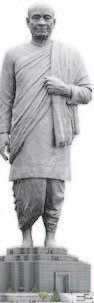
It was primarily on the assurance of Sardar Patel that the rulers signed the Instruments of Accession that created a united India. In the end, the abolition of Privy Purses will remain one of the most shameful events in our constitutional history. The nation saved Rs.4 crore annually but lost its honor. It is equally regrettable that neither the Janata Party in 1977 nor any subsequent non-Congress government did anything to redeem Patel’s pledge. What purpose will, then, be served by spending Rs.2,500 crore to build the tallest statue in his memory?
-

Winds of Change
November, 2013 gave a clear idea of which way the political wind in India was blowing. The rout of Congress in Delhi and Rajasthan; and its rejection by the electorate in Madhya Pradesh and Chhattisgarh indicated the loss of popularity of the party.
Without going in to details of causes for the decline in popularity of a party that had managed to rule the center for almost 10 years at a stretch, it can now be said that the grand old party is tottering. The latest India Today Group’s Mood of the Nation opinion poll indicates huge losses for the Congress led UPA.
The BJP led National Democratic Alliance (NDA) has been found to make significant gains. The projections are it could win 200-odd seats if the general elections were held in January 2014, the findings of the poll say. The opinion poll gives the Congress-led United Progressive Alliance (UPA) only around 100 seats, down by over 150 seats in the current Lok Sabha.
It also underlines the significance of a possible Third Front in the forthcoming Lok Sabha election as the non-UPA, non- NDA parties and Independents are expected to win 220- odd seats. The NDA thus crosses the 200-mark for the first time since 2010. Both, the NDA and the likely Third Front, gain substantially in numbers and vote share at the cost of the Congress led UPA. The opinion poll suggests that the NDA’s vote share of 34 per cent will be significantly more than the UPA’s 23.
However, the others will have the maximum vote share of 43 per cent. The scenario is frightening. The BJP emerges as the single largest party and yet it will not be able to form a government on its own. With its alliance partners, Shiv Sena, SAD and a few others, too, that form NDA, a government led by BJP does not appear in sight. The “others” are disparate groups. They cannot be expected to cobble together a government even though they will together be the largest group, according to the results of the poll. What happens then? Horse trading and unholy alliances will prevail. What happens then? Another round of misrule. Another five years of suffering for the common man. The writing is on the wall.
-

6.3 million eligible for Medicaid since Obamacare launch: US agency
NEW YORK (TIP): More than 6.3 million Americans were deemed eligible for government healthcare plans for the poor since the October 1 launch of President Barack Obama’s healthcare law through December, federal officials reported on Wednesday.
The swelling rolls for Medicaid and the Children’s Health Insurance Program (CHIP) reflect both an expansion of Medicaid under Obama’s Affordable Care Act (ACA) and what healthcare policy analysts call an “out-of-the-woodwork effect,” in which people who heard about Obamacare sought to obtain health insurance and discovered that they had qualified for Medicaid even before the law expanded eligibility.
“We have people who for the first time will have some health security that they never had before,” Kathleen Sebelius, secretary of the Department of Health and Human Services, said of the Medicaid numbers at the winter meeting of the U.S. Conference of Mayors in Washington, D.C. It was not clear how much credit goes to the healthcare law, however.
“What many people don’t read far enough to learn is that this number also can include people in some states who are eligible under pre-expansion — the woodwork effect — and whose Medicaid enrollment was simply renewed,” said Matt Salo, executive director of the National Association of Medicaid Directors. The 6.3 million people determined eligible for Medicaid or CHIP last fall swamps the 2.2 million people who had purchased private health insurance on the state-based Obamacare marketplaces that launched on Oct. 1.
The ACA also raised the income threshold for Medicaid eligibility to 138 percent of the federal poverty level, or $15,856 for a single person. A Supreme Court decision in 2012 allowed each U.S. state to decide whether to accept the expansion. So far, 25 states have reached an agreement with the administration to do so. Prior to the ACA, just over 60 million Americans were covered by Medicaid. In December alone, 2.3 million individuals were determined eligible to enroll in Medicaid or CHIP, an increase of over 20 percent from November, according to the report from the Centers for Medicare & Medicaid Services (CMS), the lead Obamacare agency.
About 1.2 million of these were in the 25 states (and the District of Columbia) already expanding Medicaid, and just over 1 million were in the 25 states that have not. The CMS figures refer to the number of people that meet Medicaid eligibility rather than actual enrollment in the program due to the troubled HealthCare.gov website, which is run by the federal government to serve Obamacare sign-ups in 36 states.
For months, the website did not correctly transmit information that applicants are eligible for Medicaid to their state Medicaid program. The state offices do the actual enrollment, and have been scrambling to send out tens of thousands of letters to residents to actually enroll them, the Washington Post reported this month. At the same time, the national figures mirror what many of the Medicaid-expansion states have reported. In California, for instance, 625,000 individuals have gained coverage through private policies purchased on the state’s Obamacare exchange, Covered California, while 1.2 million enrolled in Medi-Cal, the state’s Medicaid program.
The websites through which people can shop for insurance under Obamacare are required to have what the Obama administration calls a “no wrong door” policy, meaning that even if people went to their state’s exchange expecting to buy private insurance, the site would determine if they were instead eligible for Medicaid or CHIP, which generally charge zero premiums. Several states have gone beyond that, seeking out Medicaid-eligible people by contacting those who receive food stamps or other benefits that indicate they have very low incomes
-

Obama fails to persuade Americans on NSA reform: poll
WASHINGTON (TIOP: Reforms to US surveillance announced by President Barack Obama have failed to reassure most Americans, with three-quarters saying their privacy will not be better protected under the changes, according to a new poll.
By a margin of 73-21%, Americans who followed Obama’s speech last week on the National Security Agency say his proposals will not make much difference when it comes to safeguarding privacy rights, said the Pew Research Center/USA Today poll published on January 22.
The poll of 1,504 adults, carried out between Wednesday and Sunday, showed the speech was not widely followed by Americans and that skepticism of the NSA’s electronic spying is growing. The survey said half of those surveyed heard “nothing at all” about Obama’s proposed measures and another 41% said they heard “only a little bit.”
And fully seven in 10 poll respondents said they should not have to give up privacy to stay safe from potential terror attacks, the poll said. A majority of 53% now disapprove of the NSA’s collection of telephone and internet data. In July, 50% approved and 44% disagreed with the surveillance program.
The shift in public opinion follows the explosive leak last June of NSA documents by former intelligence contractor Edward Snowden, who has sparked a global uproar over the US government’s far-reaching surveillance. Nearly half of Americans, 48%, said there are insufficient limits on what telephone and internet data the government can collect, while 41% said there are adequate parameters on the government’s spying.
The survey revealed a division over whether Snowden’s unprecedented disclosures of classified information have damaged the country, with 45% saying the leaks have served the public interest and 43% saying the leaks have harmed it. Snowden faces espionage charges from US authorities over his leaks and has obtained temporary asylum in Russia, where he has said he has been vindicated by the public reaction to the disclosures. However, 56% of Americans say the government should prosecute Snowden while 32% did not favor pursuing criminal charges.
In his speech last Friday, Obama said a third party – not the government – should hold vast stores of phone metadata, and that the NSA would need a court order to search the data except in genuine emergencies. The US president also promised Washington would no longer eavesdrop on the leaders of friendly foreign governments and that a panel of independent lawyers should be allowed to argue in the interest of privacy rights before the secret court that oversees the NSA surveillance. The poll found 79% of Americans were not worried that Obama’s proposed reforms would undercut the government’s ability to fight terror groups.
-

‘Russian spy’ tag absurd, I acted alone, Snowden says
WASHINGTON (TIP): Edward Snowden has rejected suggestions he was a Russian spy, saying in remarks published on January 22 that he acted alone in exposing US surveillance programmes.
“This ‘Russian spy’ push is absurd,” the US fugitive told The New Yorker. In an interview, the magazine said was carried out by “encrypted means” from Moscow, Snowden said he “clearly and unambiguously acted alone, with no assistance from anyone, much less a government.”
On Sunday two Republican lawmakers had hinted Snowden may’ve acted in concert with a foreign power, possibly Moscow. House Intelligence Committee chairman Mike Rogers, for one, said at a talk show that he didn’t think “it was a gee-whiz luck event that (Snowden) ended up in Moscow under the handling of the FSB” (Russian state security agency).
Michael McCaul, chairman of House Homeland Security Committee, said he could not say “definitively” that Russia was involved, “but I believe he was cultivated.” Meanwhile, Snowden is standing as a candidate for rector of Glasgow University in Scotland after students nominated him for exposing US intelligence secrets, the university said. agencies
-

Putin, Obama discuss Syria conference over telephone: Kremlin
MOSCOW (TIP): US President Barack Obama spoke with his Russian counterpart Vladimir Putin by telephone on Tuesday, and the leaders discussed an internationally sponsored conference on Syria, the Kremlin said in a statement.
The conference in Switzerland is due to start on January 22. The United States and Russia have found themselves taking opposing sides during the three-year conflict in Syria. The Kremlin said the tone of the conversation was “businesslike and constructive”.
-

The end of poverty? There will be ‘almost no poor countries by 2035,’ Bill Gates says
LONDON (TIP): Bill Gates has said there will be “almost no poor countries by 2035”, and that child mortality rates in the poorest nations will plummet to the same levels as in the US and UK in 1980.
The world’s richest man made the prediction in the Gates Foundation’s annual letter, in which he and his wife Melinda Gates sought to dispel three common “myths” surrounding the issues of world poverty. The foundation, which is expected to have given away the entire Gates fortune of around $67 billion (£40 billion) by the time the couple have been dead for 20 years, has published a letter for each of the last five years detailing global philanthropic progress.
Speaking to Forbes Magazine’s editor Randall Lane, Gates said there will soon come a point where “you’ll have to give a reason why a country is poor.” He said that while it is difficult to make predictions for nations where politics hinders progress (naming North Korea as an example), for almost everyone else there are “good examples to learn from”.