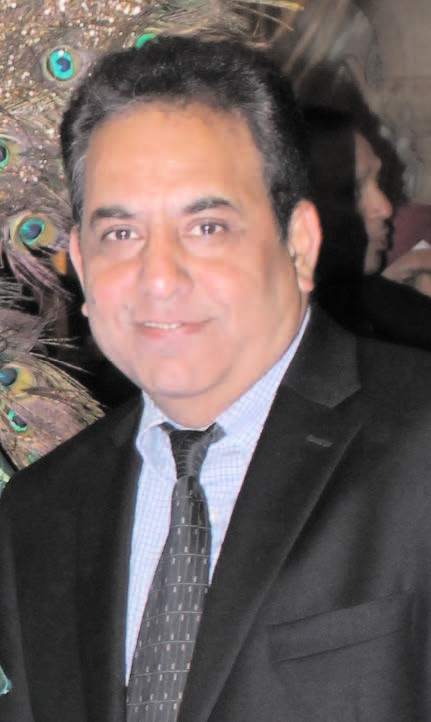
Year: 2014

  • Members-at-Large

    Members-at-Large

    Ajay Batra is an Engineer by profession. He works in Aerospace Industry. He is owner of IVS TV Channel. He also owns Educational Training Centers. Happily married, his wife is an Education Director with YMCA. The couple have two talented.


    9Nishi Behl – Senior Forum – Suffolk County Chair
    Nishi Behl holds a Master’s degree in literature. She has published PHD thesis. She is a member of school PTA board. She has volunteered for Girl Scout and Boy Scout. She plays Soccer and baseball. She has taught after school art and craft classes and has been involved as a volunteer for blood drive, soup kitchen of Inter Nutritionist Network, IALI. She has been Women’s Chair for 3 years, Senior Forum chair for 5 years , and a Member at Large for 4 years. She has organized socio/religious trips for the community at large. She Graduated in 2013 from Huntington Flagship Leadership Program, a program by the town of Huntington to develop future leaders for the community.


    11Vimal Goyal
    Vimal K. Goyal hails from New Delhi. He owns Self Storage and other Commercial Real Estate properties in NY and NJ. He lives with my wife Divya and two children Nikhil 18 and Nikita 15 in Woodbury.


    10Damayanti Goklani -Senior Forum – Nassau County Chair
    Damayanti Goklani is a retired social worker. She has worked for almost 20 years in hospitals which include Metropolitan, Elmhurst and Nassau County Medical Center.


    12Jyoti Gupta -Sangeet Forum Chair
    Jyoti Gupta has lot of passion for music and loves to sing for any cause, any where.L She loves to help people with her knowledge. She is a proud mother and loves her family. She is a Past President of Adabi Sangam, runs The Karaoke Club, Mehfil e Sangeet and Daati and is a member of Rana and AIA.


    13Rakesh ‘Pinki’ Jaggi -Women’s Forum Chair
    Pinki, as she is popularly known, is the Women’s Forum chairperson for India Association Long Island (IALI). She is hardworking and is committed to help others in the community. She has been a member of IALI for seven years and has organized many community events..


    15
    Sushil Khanna

    Sushi Khanna owns a business that caters to International airlines. He is married to Manju and the two have a daughter. “I am very excited and proud to be a part of the newly elected team”, said Khanna.


    16Mohinder Singh Miglani

    Mohinder Singh Miglani is member at large in IALI and takes part in all activities of IALI . He owns a cellphone business which is 15 years old and also owns Aeroworld Travel Agency. He is family oriented and a very caring person.

  • Meet the new leadership of India Association of Long Island

    Meet the new leadership of India Association of Long Island

    Satnam Singh Parhar has been involved with the I.A.L.I. for almost two decades. He has been an Executive Member since 2008 and a Member-at-Large for four years. He was Vice President prior to his election as President. A resident of Long Island for the past 38 years, Parhar is an established businessman in the Development and Construction Industry. Parhar has made significant contribution in the socio-cultural arena. He is the Founder of Sant Baba Nidhan Singh Ji Cultural Society and Founder and Chairman of the Rajput Cultural Society. He is an Executive Committee Member of Gurdwara Sant Sagar, Bellerose and an Executive Member of the Sikh Cultural Society, Richmond Hill. He has been active in spreading awareness about the Sikh religion and identity and has visited various airports, schools and police stations to educate the community about Turban and the Sikh community at large.

    A lover of sports and a fitness buff, Parhar is a sportsman himself. Recently, he participated with Dr. Avtar Singh Tinna in the New York City Marathon and ran all the way. At his inauguration on January 12, he listed his priorities in the year 2014. They include celebration of festivals (Holi, Vaisakhi, and Diwali amongst other festivals as per demand), musical evenings organized by IALI Sangeet Forum, annual picnic, soccer and cricket tournaments, health fair, leadership and business seminars, essay competition, a walk for breast cancer awareness, activities of Women’s Forum, Seniors Forum and Sangeet Forum, Youth Forum and Men’s Forum. Also included are walks and a runs in which all- young adults, older adults, seniors, children, men, women of any age will participate. “We continue to raise funds for Interfaith Nutrition Network and Rotacare. I would like to support other charitable causes also”, said Satnam.

    Vice President: Bina Sabapathy


    4
    Bina Sabapathy- Vice President

    Born and brought up in Udupi, Southern part of India, Bina graduated from SPP College with a double major in History & Economics and minor in Sociology. She speaks Hindi, Kannada, Tulu, Konkani &Tamil, and understands Telugu, Marathi and Gujarathi. Back home she was very active in many organizations; to name a few: Jaycees, Lions Club, Bantara Yane Nadavara Sangha, an active volunteer of Vishwa Hindu Parishad, Jana Sangha and Swayam Sevaka Dala. After coming to America, her interest for community services got her involved with IALI. She worked behind the scenes for many years. During Dr. Anila Midha’s term, she became a member-at-large. She was a member-atlarge for 4 years, and then became a Treasurer for 2 consecutive years, and now serves as the Vice President.

    She says, ” I gained a lot of knowledge and learnt about the ins and outs of the organization. I have also been well recognized for my involvement in other organizations such as: AWB Food Bank, IAF, IDP, SAPAC, Arya Samaj, the Hindu Center, and the Vedic Heritage. As a Fund Raising Director of the Vedic Heritage, I have been honored by Her Holiness Prathama Parvathyacharya Guru Maa Jyothishyanand Saraswathi with the ” Uttam Sewa” award.” She is married to Mr. V.K. Sabapathy, a Mechanical Engineer and has lived in the neighborhood of Plainview-Old Bethpage for more than 27 years. She has 3 children, Kalpana (Lawyer), Karthik (Medical Student), and Karunya (aspiring Veterinarian).

    Secretary: Rekha Valliappan


    6
    Rekha Valliappan – Secretary

    Rekha Valliappan says she has been “looking forward enthusiastically to her second successful term as Secretary of the India Association of Long Island (IALI)”. Her community service and involvement with IALI for many years now has been at a variety of different levels – as Member-at-Large, on Senior Forum and Women’s Forum Committees and as Editor and Co-Editor for the IALI Newsletter and Annual Journals. With a Master’s Degree in English Language and Literature and an LL.B. London (Honors) Degree in Law she has been able to successfully put her learning and copious copy-writing skills to good uses to help many other individuals and Organizations.

    Her publications in local newspapers are several. She hails from Bombay, is widely traveled and comes from a community-service driven family with strong ties to Rotary, Lions and Jaycees International to name a few. In her student days she was known for her natural flare in a wide range of extra-curricular activities which she retains at her core. Two of her three beautiful children are third generation Rotarians dexterously following in the footsteps of their parents and grand-parents. Her passion is poetry, arts, drama, reading and writing. She writes short stories, articles and blogs. She also loves music and dance – Indian, western, contemporary and classical.

    Treasurer: Gunjan Rastogi


    7
    Gunjan Rastogi – Treasurer

    Gunjan has been affiliated with IALI for several years and has served in various capacities with the organization including Membership Co-Chair, Member-atlarge and Cultural Co-Chair. In addition, she has served in leadership roles with many other organizations. An entrepreneur, Gunjan has successfully conceived and executed a business/financial plan to own her businesses in senior care for the last 12 years. Prior to that, she spent 10 years as a Technical Programmer /Analyst for many of Wall Street’s leading firms. With a passion for the arts, Gunjan is an accomplished dancer who has won numerous awards for dance performances and choreography. In her spare time, she enjoys karaoke with friends. “I thank the IALI members for electing me as Treasurer. I’m very excited for this opportunity and look forward to a very successful 2014”, said Gunjan.

  • Old Order Changeath Yielding Place to New: IALI New Leadership Takes Over

    Old Order Changeath Yielding Place to New: IALI New Leadership Takes Over

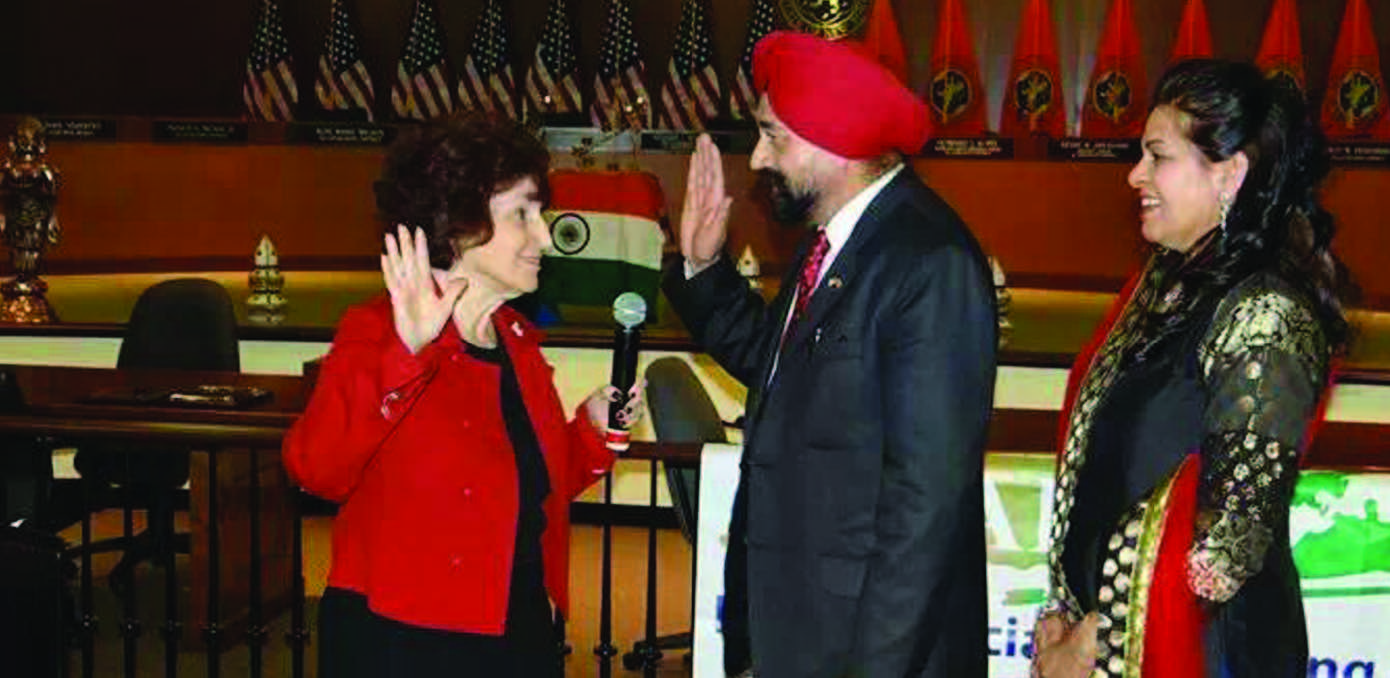
    NEW YORK (TIP): India Association of Long Island (IALI) one of the largest organizations serving the Indian community on Long Island held the inauguration of office-bearers for the year 2014 on January 12. The inauguration held at the Nassau County Legislature on Long Island was attended by over 300 people comprising of IALI members, past presidents, dignitaries and community leaders The Oath of office was administered by Nassau County Legislature Presiding Officer Norma Gonzalez to the four ranking officers of the Association – President, Vice President, Secretary and Treasurer.

    Mike Venditto, Nassau County legislator swore in Members-at-Large, Standing Committees, Chairs and Co-Chairs. It was the 26th Installation function. The 2000 member strong India Association of Long Island is more than 30 years old. It had a humble beginning when the idea occurred to a small band of pioneering individuals who had made Long Island their home more than 30 years ago to forge a bond whereby the extrinsic beauty, culture, history, festivals, food and arts & crafts of India aptly showcased could “foster a better understanding of the diversity and the rich culture of the Indian subcontinent to Indians and the larger community of Long Island”, as IALI’s mission statement expresses. There were bridges to be built and crossed and the need to assimilate as new immigrants in the new homeland which was America.

    This then became the creed and mission statement of the newly formed not-for-profit India Association of Long Island. It was the 1970s and Indians back then had mostly just started to trickle in and arrive on Long Island shores. They were a mix of different languages and varied geographical locations, India being the vast sub-continent that it is, and in some ways impossible to define. There was a need to be met for unity and of a broad-based organization uniting Indians from all regions – east, west, north, south and central – however dissimilar their origins, customs, languages and practices. The dedication and commitment of those few paid off. A foundation was laid which was carried through. decades. Membership grew. A fledgling Association weathering daunting obstacles and hurdles took shape and became much more sizeable and visible in the fluidity of its expanding reach and scope. The rest as they say is history.

    Today IALI has many year-long signature events outstandingly and energetically showcased – Indiafest, Family Picnic, Valentine’s Dinner & Dance / Holi Festival, Health Camps, Diwali, Annual Fund-Raising Dinner and more – besides its regular monthly programs for Women, Seniors and Youth. All of these are looking to expand. Music, song and dance have found a voice. Sports has been added to the mix so that tennis and particularly the ever popular game of cricket may be loudly encouraged and kept alive among the youth. IALI’s collaborative efforts of teaming up with Nassau and Suffolk Counties through local universities or at Eisenhower Park to celebrate cultural diversity at Asian Summer Festivals is widely received. IALI’s on-going relationships with many other organizations such as National Indo-American Association for Senior Citizens (NIAASC), Association of Indians in America (AIA), Federation of Indians in America (FIA), Indian American Forum (IAF), India Day Parade (IDPUSA) and many others is active.

    Many of IALI’s well known members and leaders have gone on to staying in the forefront in other noteworthy organizations such as American Association of Physicians of Indian Origin (AAPI) and Nargis Dutt Memorial Foundation (NDMF) besides political organizations. IALI’s Annual Food Drive and donations to Interfaith Nutrition Network (INN) which supports soup kitchens and provides shelters for the homeless on Long Island and to Rotacare is in its 18th year of continued promise receiving robust support from the community at large to be able to give back to the community.

    The development of an India Center where the richness of our Indian heritage may be maintained and displayed and relegated for posterity is on the table and one of the main projects awaiting fruition for this current year 2014. The Indian community on Long Island has certainly come a long way. With the India Association of Long Island (IALI) this journey has taken exciting strides and could go much further. It is a journey which once embarked upon continues to this day. “Accomplishments have been met through commitment, hard work, endeavors of the many and diligence on the part of its multitude of members and of the leadership. However, the journey is never at an end till goals are met, challenges overcome and ports of call are reached. The journey endures”, says Rekha Valliappan, the dynamic General Secretary of IALI.

  • HSI returns stolen antiquities to the Indian Consulate

    HSI returns stolen antiquities to the Indian Consulate

    NEW YORK (TIP): India and the US firm ties again after Homeland Security Investigations (HSI) returned three stolen sculptures at the Indian Consulate in New York City on Tuesday, January 14, during a repatriation ceremony. The event marks the first attempt made by both countries at solving the dispute after senior diplomat Devyani Khobragade’s arrest and eventual eviction from the US. The three stolen sculptures, one which was listed in INTERPOL’s top ten most wanted stolen works of art, are valued at more than $1.5 million. Two of the three sculptures were reported stolen by the Archaeological Survey of India from Gadgach Temple in Rajasthan. Two sandstone sculptures of Vishnu and Lakshmi and Vishnu and Parvati date back to the 11th or 12th century. The third artifact from the same era is a black sandstone sculpture depicting Bodhisattva, a popular subject in Buddhist art.

    Indian Consul General Dnyaneshwar M. Mulay, Director of Interpol (Washington) Shawn A. Bray and Executive Associate Director, HSI James Dinkins, preceded the official transfer of the items. The three valuable sculptures were on display at the Consulate. “The excellent international cooperation between the United States and India led to the recovery and return of these priceless antiquities. These items represent history and culture of India and we are happy to have recovered them and return them to be enjoyed by the people of India,” said Dinkins. Shawn Bray also commended on the excellent working relation of both countries. “This signifies what is possible when two countries come together despite cultural, linguistic and legal barriers,” he added.

    Although the sculptures were recovered by 2011, the delay in returning and assigning the transfer dates was due to certain ‘legal process that can take long’. On being asked if this was a feeble attempt at making amends after the diplomat’s arrest, the panel unanimously pointed it as a mere coincidence. “I have had this event marked on my calendar for a while now and having it on this day is purely coincidental,” said Dinkins. “The relation between India and the US is multi-dimensional and multi-faceted. Our relation spans to culture, education, finance, nuclear and other divisions. We all have issues that can be sorted if we keep the spirit of friendship in mind,” added Mr. Mulay. HSI confirms that so far no arrests have been made over the case of stolen sculptures and the case if not over unless all the culprits are bought to justice.

  • No PM Candidate: Rahul to lead Election Campaign

    No PM Candidate: Rahul to lead Election Campaign

    NEW DELHI (TIP): Despite a majority of leaders at the Congress Working Committee meet pushing for Rahul Gandhi to be made the party’s prime ministerial candidate, the party demurred from the decision and instead decided to appoint him the poll campaign chief. “We had one major resolution that has to be passed tomorrow and all the issues in it were discusses…The Congress President and Vice President placed their views on the resolution,” Congress spokesperson Janardan Dwivedi told reporters, refusing to disclose all its contents. “Many of the members in the CWC wanted that he (Rahul) should be made the Prime ministerial candidate but after some debate Congress president Sonia Gandhi intervened,” he said.

    “She said that there was no such tradition in the Congress. If someone declares their PM candidate it doesn’t mean that we have to do the same,” Dwivedi said. He said that Sonia had endorsed making Rahul Gandhi the head of the party’s campaign in the upcoming elections. “The resolution in today’s meeting says: ‘This meeting of the AICC declares that the campaign of the elections will be headed by Rahul Gandhi’,” he said. Rahul Gandhi said that he would do everything to strengthen the party and that he would do anything that the party sought of him, Dwivedi said. “Rahulji said the decision on other matters will be taken at the appropriate time,” he said.

    Sources said that Rahul had himself said that he didn’t want to be the party’s prime ministerial candidate and was backed by the top brass of the party on his decision, including by Sonia Gandhi. The Congress leader is to be appointed the party’s poll committee chief at the AICC meet tomorrow, thus making him the face of the party’s campaign, but not pitting him in a direct race against the BJP’s Narendra Modi. In a recent interview, Rahul had said that he was willing to accept any responsibility for the party which had been interpreted by some as saying he was set to be the party’s prime ministerial candidate.

  • Mayor de Blasio vows to try bringing Pope to New York

    Mayor de Blasio vows to try bringing Pope to New York

    NEW YORK, NY (TIP): Upon meeting Cardinal Dolan, newly elected Mayor Bill de Blasio vows to try and bring the Pope to New York. “We have a common passion and a common wish,” de Blasio said after meeting with Dolan at the cardinal’s residence, their first get-together since the Mayor took office. “We hope that someday Pope Francis will visit our city, which will be an extraordinary blessing for the people of New York.

    The two may have long-standing differences about a few policies but Cardinal Dolan said that the topic of faith never came up in the meeting. The discussion primarily centered on ‘bridging the gap between the haves and the have-nots.’ Additionally, the Mayor has come off looking excellent in recent polls where New Yorkers have voted in favor of the new Mayor. Two thirds of New York City voters expect good things from de Blasio, who took over on January 1 after the exit of three-term mayor Michael Bloomberg.

  • DALLAS WILL DECIDE ON PLASTIC-BAG BAN IN MARCH

    DALLAS WILL DECIDE ON PLASTIC-BAG BAN IN MARCH

    DALLAS (TIP): Dallas City Council will finally decide in March, whether or not to ban single-use plastic (and paper) bags.For the first hour of the meeting at City Hall, January 14, it looked as though the issue would stagnate as council members retread the same tired ground they’ve been covering for the past 10 months: Caraway said the bags are an eyesore and environmental nuisance that have to go; Sheffie Kadane countered that businesses and consumers should be allowed to determine the best course; Scott Griggs chimed in with things like “we have a system in place where our externalities are not internalized.” But then, Mayor Mike Rawlings took charge.

    “We need to get something on paper, and we need to take action on it. We’ve talked about this enough,” he said. The discussion, he added, has been fueled by each council member’s philosophical beliefs, which none of them seems willing to change. He turned to Caraway. “Work with legal try to find something creative,” Rawlings said. “Whatever we find, put it on a piece of paper, put it in an ordinance, take it in [the council chambers], and vote it up or down.” So maybe it won’t be a ban. Maybe it’ll be a requirement that stores charge for bags. Maybe a mandate that groceries be carried in pockets. We’ll see. Whatever the specifics, there will be a vote. After a brief consultation with City Attorney Warren Ernst, Caraway announced it will be in March.

  • Facebook sued over alleged private message ‘scanning’

    Facebook sued over alleged private message ‘scanning’

    MENLO PARK, CA (TIP): Facebook is facing a class action lawsuit over allegations that it monitors users’ private messages. The lawsuit claims that when users share a link to another website via a private message, Facebook scans it to profile the sender’s web activity. It alleges that Facebook systematically intercepts messages to mine user data and profits by sharing it with data aggregators, advertisers and marketers. Facebook said the allegations were “without merit”. “We will defend ourselves vigorously,” the world’s biggest social networking site added.

    The lawsuit is claiming the greater of either $100 (£61) a day for each day of alleged violations or $10,000, for each user. “Start Quote The lawsuit, filed earlier this week, cites independent research that, it claims, found Facebook reviews the contents of its users’ private messages “for purposes unrelated to the facilitation of message transmission”. “Representing to users that the content of Facebook messages is “private” creates an especially profitable opportunity for Facebook,” it says. It says this is “because users who believe they are communicating on a service free from surveillance are likely to reveal facts about themselves that they would not reveal had they known the content was being monitored.

    “Thus, Facebook has positioned itself to acquire pieces of the users’ profiles that are likely unavailable to other data aggregators.” However, others have come forward to defend Facebook. Writing on his blog, security expert Graham Cluley said that if the site was not examining links shared privately, Facebook would be failing a “duty of care” to its users. “If you didn’t properly scan and check links there’s a very real risk that spam, scams, phishing attacks, and malicious URLs designed to infect recipients’ computers with malware could run rife,” he argued.

    Criticism
    Facebook has come under attack over its privacy policies in the past. In September last year, it faced criticism over a proposed change to its privacy policy which would have allowed ads to be created using the names and profile pictures of Facebook users. The firm had claimed that its proposal merely clarified the language of its privacy policy, rather than making any material changes to it. Facebook undertook to change the wording in the wake of a legal action launched in 2011 which saw it pay $20m to compensate users who claimed it had used their data without explicit permission.

  • Congress passes USD 1.1 trillion spending bill

    Congress passes USD 1.1 trillion spending bill

    WASHINGTON (TIP): The US Senate has passed the USD 1.1 trillion omnibus spending bill that eliminates the threat of another government shutdown at least until October and puts conditions on Pakistan for continuation of aid. Passed by the House of Representatives a day earlier, the bill now goes to the White House for President Barack Obama to sign it into law, thus preventing another shutdown. While the Senate passed the massive bill by 72-26 votes yesterday, the House approved it by 359-67 votes on Wednesday. All Senate Democrats supported the spending package and also 17 Republicans voted in its favour.

    Obama has pledged to sign the 1500-page bill, which among others puts conditions on Pakistan with regard to continuation of civilian and military aid. As in the previous year, the Congress requires a certification from the Secretary of State and the Defense Secretary to release the civil and military aid to Pakistan. The officials require to certify that Pakistan is co-operating with the US in counter-terrorism efforts…And taking steps to end support for terrorist groups and prevent them from basing and operating in Pakistan and carrying out cross border attacks into neighboring countries.

    The Secretary of State also requires to certify the Congress that Pakistan is not supporting terrorist activities against US or coalition forces in Afghanistan, and Pakistan’s military and intelligence agencies are not intervening extra- judicially into political and judicial processes. It also seeks certification that Pakistan is dismantling improvised explosive device, networks and interdicting precursor chemicals used in the manufacture of IEDs; preventing the proliferation of nuclearrelated material and expertise; and implementing policies to protect judicial independence and due process of law.

    However, in the national security interest, these provisions are waived off. Further, the Congress has also withheld USD 33 million assistance until Pakistan releases Dr Shakil Afridi, who helped the US in locating Osama bin Laden, from prison. It also seeks from the Obama Administration a spending plan including achievable and sustainable goals, benchmarks for measuring progress, and expected results regarding combating poverty and furthering development in Pakistan, countering extremism, and establishing conditions conducive to the rule of law and transparent and accountable governance.

    The Secretary of State is authorised to suspend assistance if Pakistan fails to make measurable progress in meeting such goals or benchmarks, the bill says. The White House supported the Consolidated Appropriations Act, 2014 describing it as a positive step forward for the Nation and the economy. “This bipartisan legislation provides funding for investments in areas like education, infrastructure and innovation ? investments that will help grow our economy, create jobs, and strengthen the middle class,” said Sylvia Mathews Burwell, Director of the Office of Management and Budget.

  • City to pay $17.9 million to 2004 Republican Convention protestors

    City to pay $17.9 million to 2004 Republican Convention protestors

    NEW YORK, NY (TIP): New York City is to pay $17.9 million to rest the case of civil rights claims of those arrested during the Republican Convention protests of 2004 that nominated George W. Bush for a second stint as President. NYPD arrested more than 1500 protestors including bystanders and journalists during the event. Over 600 people filed a lawsuit against the city and the police after they were put into unhygienic, overcrowded and dirty rooms that were converted as temporary jails.

    Another 1,200 were included in a class-action lawsuit. According to the city law department, New York and the New York City Police Department defended itself against the lawsuits, maintaining that the conduct of the police had been constitutional and that its goal was to keep order and prevent the protests from spiraling.

  • President proclaims January 20 as Martin Luther King, Jr. Federal Holiday

    President proclaims January 20 as Martin Luther King, Jr. Federal Holiday

    NEW YORK (TIP): The world will celebrate, January 20, the legacy of the Rev. Martin Luther King Jr. who, in the words of President Barack Obama, “gave mighty voice to the quiet hopes of millions, offered a redemptive path for oppressed and oppressors alike, and led a Nation to the mountaintop”. While issuing a proclamation to observe January 20 as Martin Luther King, Jr. Federal holiday, President Obama said, “Dr. King taught us that “an individual has not started living until he can rise above the narrow confines of his individualistic concerns to the broader concerns of all humanity.”

    In honor of this spirit, Americans across the country will come together for a day of service. By volunteering our time and energy, we can build stronger, healthier, more resilient communities. Today, let us put aside our narrow ambitions, lift up one another, and march a little closer to the Nation Dr. King envisioned”.

  • Chennai-born Indian- American elected to Chinese Academy of Sciences

    Chennai-born Indian- American elected to Chinese Academy of Sciences

    WASHINGTON (TIP): Subra Suresh, Chennai-born Indian-American president of Carnegie Mellon University, has been elected a foreign member of the Chinese Academy of Sciences (CAS), a rare and highly coveted distinction within the academic fraternity. The head of the Pittsburgh, Pennsylvania based university, Suresh, 57, was chosen for his scientific contributions in materials science and engineering, including his work connecting nano-mechanical cell structure to disease states, according to the university.

    He was also honoured for his leadership in building the worldwide scientific and engineering research dialogue through the Global Research Council, which he helped to found while director of the US National Science Foundation. The council will have its annual meeting in May 2014 in Beijing.

  • The 24/7 diplomatic prodigy!

    The 24/7 diplomatic prodigy!

    The word “prodigy” in the title of this column is used as a notable happening and an act so extraordinary as to inspire wonder.

    India’s unusual tough response over the arrest of its diplomat Devyani Khobragade has forced the US to initiate an ‘inter agency review’ to look into the lapses that happened in the high profile case,” reported the Dubai-based Gulf News under the front page heading: “India’s stand over diplomat shocks US officials.” The said write-up goes further: “In a tacit acknowledgment of the fact that there was a ‘judgmental error’ in handling this case, sources said the inter-agency team led by the State Department is ‘working 24/7’ to get it resolved as quickly as possible.”

    Earlier, India had invoked “the law of strict reciprocity” that governs diplomatic relations between countries in the contemporary nationstate system under the Vienna Convention for Diplomatic Relations and the Vienna Convention for Consular Relations and recalled “the identity cards of all US consulate personal and their families based in India, withdrew all airport passes for consulates and embassy vehicles,” said a press report. In addition, Indian External Affairs Ministry has sought information on salaries paid to all Indian staff employed in the US missions (to check if the US law on minimum wages has been violated) and bank account details of all American nationals working at the American School to find out if they pay income tax. India’s tit-for-tat diplomacy has resulted in the withdrawal of all extra privileges enjoyed by American Ambassador Nancy Powell and other diplomats. Indian fury over the Khobragade affair is unprecedented, highly vocal and expressed with powerful diplomatic political acts of retribution against the US.

    New Delhi has demanded an unconditional apology from the US. There appears to be national unity throughout the Indian political establishment on the issue. Information Minister Manish Tewari said, “America cannot behave ‘atrociously’ and get away with it.” “Earlier, Lok Sabha speaker Meira Kumar, federal home minister Sushil Kumar Shinde, the ruling Congress party vice president Rahul Gandhi and principal opposition Bharatiya Janata Party’s prime ministerial candidate Narendra Modi cancelled their prescheduled meetings with a visiting delegation of US Congressmen to register their protests.” Parliamentary Affairs Minister Kamal Nath said, “they should tender a clear apology.We will not accept this conduct against India under any circumstances… The US has to understand that the world has changed, times have changed and India has changed.”

    India, Pakistan’s arch enemy, historical adversary and unmistakable political nemesis (the word is used as a cause of endless frustration) must be given credit when it is due. The fact of the matter is that India in the Khobragade affair has forced imperialist US to rethink its historically appalling diplomatic and political conduct as the world’s policeman towards non-Western nations. Hats off to the Indian Prime Minister, politicians of the Left, Right and Center, the whole of the political establishment and the entire nation for standing in absolute unity and challenging a Super Power for its obvious diplomatic-political misconduct. It is not a victory for India only, but for the rest of the emerging Third World in an attempt to transform a global system in which the US, as a leader of the Western imperialist block, has been dictating its will by fair and foul means since early last century, by an inhumane ideological pretext that “all means justify the end”.

    India, at last, has said “enough is enough.” It is a political, diplomatic, philosophical and ideological struggle to change the contemporary global system for which the Pakistani nation must applaud the Indian political leadership. This is how sovereign, self-reliant, selfrespecting, democratic and free nations behave and ought to conduct themselves. There are lessons to be learned from Indian political behavior in its recent diplomatic row with the US and forcing America to rethink its police-state mindset towards lesser powerful nations. India has instigated a new ideological balance of power equilibrium in the nation state global system. It, in itself, is a fundamental development towards a balanced and peaceful world. However the vital questions are:Will India treat Pakistan with the same kind of respect and diplomatic equality that it is demanding from the US? Will there be a glaring Indian behavioral contradiction when it comes to dealing with Pakistan? Islamabad, with its relentless pro Indiancentric foreign policy focus, appears to be conducting itself under US dictates and IMF pressures.

    The irony is that Pakistan’s political establishment and leadership does not seem to have an understanding of the contemporary Indian mindset, its emerging independent and political (artful, strategic, calculating, judicious and shrewd) political behavior and its manifest objectives. India will continue to treat Pakistan as a political military adversary for the foreseeable future because, in doing so, India is likely to promote its strategic regional and global objectives. Unless Pakistani political leadership becomes logically able to comprehend India’s political mindset and its future regional plans, Islamabad will continue to flaw in its political discourse towards New Delhi, as it has been doing endlessly and most specifically recently under the PML-N stewardship. Look from an Indian perspective, for example, at Islamabad’s recent over-zealousness in promoting Indo-Pak friendship. India knows that Pakistan and India are not in a state of war (or are we?).

    It also knows that a limited or an all-out military conflict between the two nuclear-armed nations is an absolutely remote possibility. India is also aware that Pakistan is economically nearly bankrupt and its Right-wing government is dependent on the IMF and US financial assistance; consequently, it is under US and IMF dictates in its domestic and foreign policy options – specifically when it comes to Indo-Pak relations. The Indian political leadership is fully cognizant that Pakistan is faced with serious domestic problems of law and order, regional insurgency (in which RAW is involved) and other massive economic and political problems. India is absolutely clear that Pakistan has no domestic or diplomatic leverage to conduct its relations with India (or for that matter with other nations) from a position of strength. It is also fully informed that the recent Indo-Pak friendship mantra from Islamabad’s political leadership is a tactical and rhetorical approach to divert public attention from domestic failures and growing economic problematics.

    Hence, the question is: why would India offer the kind of friendship that the PML-N leadership in Islamabad is seeking from it at the zenith of its diplomatic and strategic global glory? Let us be rational: Present-day India is in the business of conducting its “Politics” with an eye on its emerging global role and merciless Realpolitik. It is not going to be involved in handing out a freebie to its historical adversary no matter how humbly and persistently the Pakistani Prime Minister continues to ask for it – that is, if we think rationally. Indeed, Pakistan and India must live in peaceful coexistence. But will India compromise its regional hegemonic ambitions for the sake of its immediate neighbor’s friendship? We would be foolish to believe so. We all know perfectly well that even massive trade cooperation with India cannot and will not resolve Pakistan’s economic problems, unemployment and its domestic socio-economic problematics.

    The fact of the matter is that Pak- India friendship is not a remedy to Pakistan’s growing domestic problems nor should it be Islamabad’s top national priority. Islamabad’s Indian diplomacy can wait – the sky will not fall on us. But the magical approach for Pakistan’s survival and development is: Our political leadership’s diligent and relentless 24/7 engagement in setting national priorities correctly, finding head-on “out-of -the-box” resolutions of common citizens’ problems, issues, and deprivations, and serving the nation faithfully, honestly and tirelessly. Islamabad needs to switch off its Indian friendship mantra and switch on a 24/7 formula as a fresh political initiative to save this country. The vital question is:Will Islamabad consider this proposal and agree to it? That remains to be seen.

    “Hats off to the Indian Prime Minister, politicians of the Left, Right and Center, the whole of the political establishment and the entire nation for standing in absolute unity and challenging a Super Power for its obvious diplomatic-political misconduct. It is not a victory for India only, but for the rest of the emerging Third World in an attempt to transform a global system in which the US, as a leader of the Western imperialist block, has been dictating its will by fair and foul means since early last century, by an inhumane ideological pretext that “all means justify the end”, says the author.

  • The pitfalls of prosecuting Devyani on Sangeeta’s word

    The pitfalls of prosecuting Devyani on Sangeeta’s word

    “Trafficking” this is not, but “Amnesty” for an illegal alien it is, including, paid-for family reunification

    It is a fact that passports come in three “colors”: Red-for diplomatic; White for official; and Blue for everyday citizen. The colors become important, as is the fact that a person may only have one passport at a time – i.e. if you have a White passport, you no longer have a valid Blue passport. To start comprehending this Devyani Odyssey, it is important to recall that according to press reports, Philip Richard, Sangeeta’s husband, was employed by US Embassy in Delhi as a driver – perhaps for Wayne May.

    According to the Indictment (Ind.), Sangeeta and Devyani arrived at their “final” bargained-for deal prior to October 15, 2012 for 30,000 rupees a month, with Sangeeta, exercising free will, refused the original 20,000 Rupees a month (Ind. at 13). Sangeeta, after cutting her 30,000 Rupees deal gave Devyani her personal “Blue” passport, which the Indictment charges, Devyani never returned to Sangeeta (Ind. at 14). Contrary to press reports, the Indictment makes clear that the IP address used by Devyani to get her own A-1 visa on September 27, 2012, was the same one used to apply on October 15, 2012 for Sangeeta – and admits that the “$4500 monthly income” was not applicable to either Sangeeta’s expected pay or Devyani’s income (Ind at 10 and15).


    8
    Sangeeta Richard

    On November 1, 2012, Sangeeta, without Devyani present, appeared at the US Embassy for her 1st Interview, but without any written contract was rebuffed (Ind. at 17). Then, Sangeeta and Devyani, knowing their actual deal, jointly, willingly and voluntarily entered on November 11, 2012 into a so-called Fake Employment Contract (Ind. at Ex. “E”) to deceive the US Embassy, when Sangeeta, again alone, went for her 2nd Interview on November 14, 2012 and successfully lied to the US Embassy, such that her visa application was processed and granted on November 15, 2012 (Ind. at 18 – 28.) Then, hours before Devyani and Sangeeta left for New York on the morning of November 24, 2012, they entered into a written contract on November 23, 2012 (True Employment contract) that memorialized the original and actual October agreement between the two: 30,000 Rupees a month (Ind. at 29 – 37, and Ex. “F”).

    Relying solely upon Sangeeta’s unadorned word, the Indictment accuses Devyani of overworking and exploiting Sangeeta, and lists hours Sangeeta claims to have worked – as much as “94 to 109” hours a week, including, Sundays (Ind. at 38 – 41). To challenge the hours claimed by an employee, and a domestic worker have been known to lie – as I successfully exposed while representing then-CG Amb. Dayal that she was not sleeping in a closet but a studio apartment and suffered from sexual fantasies and indeed, within 2 weeks those allegations were dropped from the amended complaint. Lurking, however, is a latent problem: the powerful Confrontation Clause would ultimately require the diplomat-employer to confront the employee with the diplomat’s Office’s officially immune and confidential calendar to establish the hours actually worked, except that no government, who owns that office calendar, would permit its use and spill into the public record their official meetings.

    Per the Indictment, Sangeeta wanted to go back to India starting February 2013, and ultimately, coming to CGI in June 2013 – but lacking money and her “personal” passport, could not (Ind. at 42-43). So, on June 22, 2013, she left her place of employment and went AWOL (Ind. at 44). On November 19, 2013, an arrest warrant was issued in India charging Sangeeta with extortion, cheating, and participating in a conspiracy based upon the July 3, 2013 FIR filed in India (Ind. at 48 – 49 and Ex. “G”), which lists the 30,000 Rupees a month deal and that Sangeeta disappeared with her Official passport, after being told she cannot work during her “off days” outside her legal employment to earn extra monies. Indeed, the Indictment states that Devyani alleged that Sangeeta (Accused #1) always intended, [obviously, unbeknownst to Devyani], to use Devyani to gain entrance into the United States.

    Indeed, Devyani filed a motion in Delhi High Court, which attached the so-called Fake Employment contract as well as her FIR, which listed the actual agreement of 30,000 Rupees (albeit, Devyani did not provide the High Court with the November 23, 2012 so-called True Contract with 30,000 Rupees a month payment). The FIR also listed Sangeeta’s husband, Philip, as Accused #2. And as to Count Two, False Statement, the Indictment charges Devyani alone for the false statements made during both Interviews by Sangeeta, when Sangeeta alone went for her interviews. The core problem here is that Sangeeta willfully, voluntarily and with free will entered into three contracts: an oral contract, followed by two written agreements, with the first and third contracts each calling for 30,000 Rupees to be paid per month. Then, Sangeeta, alone, was twice was interviewed by the US Embassy to negotiate the fraud upon the US Embassy, aided by her-executed Fake Contract, and Sangeeta did so successfully.

    Of course, once Sangeeta agreed to work as Devyani’s domestic worker, Sangeeta gave her “Blue” passport to Devyani, who then got Sangeeta her Official “White” passport, with obvious “cancellation” of the Blue passport. Sangeeta then traveled on her White passport on November 24, 2013 to New York, and which was missing, as reported in the FIR when Sangeeta left Devyani’s employ in June 2013. Hence, the claim that Devyani, was somehow preventing Sangeeta from traveling on her Blue passport is incomprehensible – as Sangeeta had her White passport, which Sangeeta knew, she could not use to go back to India, given her violation of her employment-terms. Additionally, with an arrest warrant for Sangeeta issued on November 19, 2013 by the Delhi High Court and her husband listed as an Accused #2, Sangeeta’s claimed desire to return to India is not credible.

    Finally, since Philip Richard was in the employ of the US Embassy in Delhi, Sangeeta was always empowered to seek advice and counsel from Philip’s employer, prior to her entering into two contracts for 30,000 Rupees, both before and after the Fake Contract. That Sangeeta’s family was flown out of Delhi, “evacuated,” on December 10, 2013, per press reports at American taxpayer expense, and also granted a T-Visa like Sangeeta, while legal proceedings were already under way in India is troubling beyond the moment, as it affronts sovereignty and comity of nations – while extrajudicially accepting Sangeeta as a “victim” and preventing the Indian court, in its first-filed case, to be deprived of the presence of Accused #2 – Philip Richard. The law is a splendored thing, as it can also be, as Dickens in Oliver Twist eloquently said, “an ass”: “If the law supposes that,” said Mr. Bumble,… “the law is an ass-an idiot. If that’s the eye of the law, the law is a bachelor; and the worst I wish the law is that his eye may be opened by experience-by experience.”

    That our State Department required our Justice Department to file criminal charges against Devyani, while giving Sangeeta and family a T-visa, under these circumstances is nothing short of an avoidable itch becoming a roaring rash. Sinful human trafficking, modern day slavery, this is not – no matter the powerful incentive of getting a T-visa causing one to fake being trafficked. Now, hopefully, a generous dose of an ointment, consisting of a small amount of amnesia and a large amount of bilateral mutual respect, will get this vital relationship between the united States and India to an even stronger footing – similar to the one we have with Israel – then reciprocity can give way to the wiser sibling, proportionality and we can get the “optics” of security barriers being reinstalled in Delhi and Washington DC.

  • LOK PAL BILL

    LOK PAL BILL

    The historic anti-graft bill The Lok Pal Bill has been passed by both houses of the Parliament and the UPA Government deserves the gratitude in sensing the sentiment of the people and doing the right thing for the nation. ‘This landmark legislation will have profound impact on the country in detecting corruption and dealing strongly with culprits who engage in the practice’ said George Abraham, Chairman, Indian National Overseas Congress (I), USA.We want to congratulate all those party leaders who worked together on this landmark legislation and Ms. Sonia Gandhi for fulfilling a promise and Mr. Rahul Gandhi in particular for his strong leadership in pushing for the final passage.

    A special tribute is also in order for Mr. Anna Hazare who rekindled the imagination of the ordinary folks in the street that resulted in demanding quick action from their political leaders to establish a framework to deal with this growing menace. We hope that soon the States will follow suit and constitute its own Lokayukta to put a check on the growing cases of corruption. This legislation is line with the Right to Information Act that was implemented by the UPA Government that has unearthed scores of cases of corruption and became a catalyst for the enactment of this new and remarkable legislation.

    TEN KEY PROVISIONS OF THE LANDMARK LEGISLATION:
    Lokpal members shall not be affiliated to any political party. A panel of Prime Minister, Leader of Opposition (Lok Sabha) and Chief Justice of India to appoint the Lokpal. An eminent jurist to be one of the members of Lokpal. The President of India to appoint eminent jurist on the recommendations of the selection panel. The Prime Minister’s Office will be under the Lokpal’s purview. The body also covers societies, trusts and associations funded by the government.Non-Governmental Organizations or NGOs remain outside its ambit. Investigations under the Lokpal to be time-bound.

    A maximum punishment of 10 years for those convicted under the Act. CBI to have separate Director (Prosecution), to be appointed on the recommendations of the Chief Vigilance Commissioner,who reports to the agency’s director. CBI Director and Director (Prosecution) to have fixed term of two years. Transfer of investigating officers can only take place with the approval of the Lokpal President can suspend a Lokpal member on the recommendation or interim order of the Supreme Court. A Lokpal member can be removed by the President after a Supreme Court inquiry. Supreme Court can probe Lokpal member on reference from President of India after a petition signed by at least 100 Members of Parliament. Each state must have a Lokayukta within one year of the notification of the Lokpal Act.

  • RAMDEV TWEAKS TAX PROPOSAL, SUGGESTS AMNESTY

    RAMDEV TWEAKS TAX PROPOSAL, SUGGESTS AMNESTY

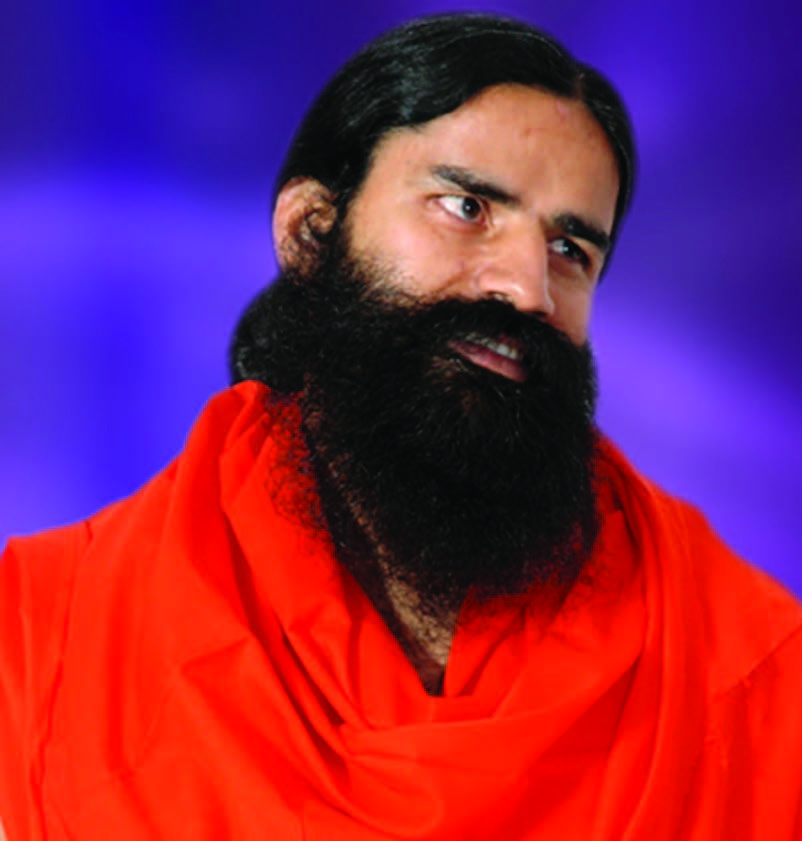
    NEW DELHI (TIP): With mounting criticism over the proposal to introduce a tax on bank deposits and abolish all other levies, yoga guru Baba Ramdev, who is one of the key proponents of the new regime, on Thursday tweaked the plan and suggested separate slabs for salaried as well as industries, while suggesting a tax amnesty scheme as a pre-cursor. Suggesting that the reform proposal will take a year, “provided there is political will”, Ramdev said that in the first phase the government will need to develop banking infrastructure, do away with currency notes of Rs 500 and Rs 1000 and also introduce a tax amnesty scheme, something that the Supreme Court has frowned upon.

    Although he recognized that getting states on board may be a tough task, he suggested that states and the Centre should get 40% each of the mop up, while local bodies will have a share of 18-19% and the rest will go to banks that collect the tax. Ramdev said that his proposal is different from the one being pushed by ArthaKranti, a Pune-based think tank, which has suggested a 2% levy. “You need slabs for it to be successful and equitable. The tax rate can be 0.1 or 0.2% to 30%, with a higher levy on alcohol and tobacco and an exemption for farmers and labourers,” he said in a bid to deal with criticism from BJP leaders like Arun Jaitley. Some BJP leaders had initially backed the proposal to move to a new tax regime, but have now backed out saying that the proposal is flawed.

  • More autonomy for CBI A good start, but more needs to be done

    More autonomy for CBI A good start, but more needs to be done

    The premier investigating agency of India seems to be acquiring a certain measure of freedom, after all. The Director of the Central Bureau of Investigation (CBI) will now be free to appoint consultants and employ people on contract. He can now approve projects worth Rs 15 crore in a year. He And he gets the rank of Secretary to the Government of India, and will, in effect, now be allowed to handle India’s premier investigating agency autonomously. Why is everyone not cheering? For one, he will not be totally autonomous, and overall, the reforms fall short of the demands made by activists and opposition leaders.

    The CBI has demanded many times that it be allowed to function freely. Even as the demand fell on deaf ears for many years, recently the Opposition became shrill in demanding a fixed term for the Director. It has also suggested that the CBI be bifurcated into two wings, one which would look after prosecution while the other should handle investigations. The CBI is held in high esteem by the public, more so since it is seen as an independent agency which is not susceptible to the kinds of pulls and pressures that the police forces face from various state governments. However, the CBI, too, has come under criticism for being selective in its investigation and prosecution, and being susceptible to the Central Government’s pressure.

    The CBI has been given more powers, even some degree of autonomy. Now, it can handle some of the administrative matters like small purchases and even some transfers and postings without having a junior official looking over its shoulders. However, we must remember that this has been because of the political and judicial pressure. The organization now needs to demonstrate how this autonomy will help it do its job properly. Far too many cases have languished even after the CBI started investigating these. Wrapping up cases and taking these to their logical end will help it justify the faith that the common people repose in India’s most respected investigating agency.

  • AAP effect: Haryana reduces power tariff

    AAP effect: Haryana reduces power tariff

    CHANDIGARH (TIP): In an apparent AAP effect, Haryana government today gave a major relief to power consumers by reducing tariff in the state. While the Congress Government rolled back tariff hike for consumption of up to 500 units by domestic consumers, power rate for farm sector was reduced by 60 per cent for current fiscal. The decision, which will cost Rs 600 crore per annum to the state exchequer, will benefit 38 lakh domestic consumers, which account for 95 per cent of total consumers, and 5.50 lakh agriculture consumers. It comes just a fortnight after Delhi chief minister Arvind Kejriwal announced a 50 per cent cut in electricity tariffs for households consuming up to 400 units of power per month, fulfilling a second key electoral promise of his Aam Aadmi Party (AAP).

    “Government has withdrawn the tariff increase (about 13 per cent) made from April 2013 onward for domestic consumers consuming up to 500 units per month. Moreover, the Fuel Surcharge Adjustment (FSA) of financial year 2013-14 will also remain same,” chief minister Bhupinder Singh Hooda said in a release. “As a result of this decision, up to 1000 units bimonthly consumption will get the benefit of old slab system as well as reduction in tariff and FSA to the last year’s level,” he said. The domestic sector power rate from April 1, 2013 were Rs 5.24, Rs 5.94 and Rs 6.32 per unit for those consuming up to 250 units, between 250 and 500 units and above 500 units respectively. Giving relief to farm consumers, Hooda said tariff being charged to agriculture consumers has been reduced by 60 per cent in the state.

    “Now the agriculture consumer will have to pay 10 paisa per unit (present rate 25 paise per unit) or Rs 15 per BHP per month,” he said. Hooda said that the decision, which comes just months ahead of Lok Sabha polls, would provide relief to the electricity consumers in the state and the entire expenditure would be borne by the state government. Haryana government had already decided not to hike power tariff for 2014-15.

  • UN issues distress call over war-affected Syrians

    UN issues distress call over war-affected Syrians

    KUWAIT CITY (TIP): UN secretary general Ban Ki-moon warned on January 15 that nearly half of Syria’s population needs urgent humanitarian help, as aid groups urged access for relief delivery to civilians trapped by the fighting. Ban’s warning came in an address to a oneday donors’ conference in Kuwait City aimed at raising $6.5 billion in aid for war-affected Syrians. The Second International Humanitarian Pledging Conference for Syria comes a week before the so-called Geneva II peace conference, which is aimed at ending the conflict that has killed 130,000 people in nearly three years.

    In the build-up to the January 22 peace conference, which is being driven by the US and Russia, Syria’s President Bashar al- Assad held talks in Damascus on Wednesday with the foreign minister of Iran, a key ally of his regime, Syrian state news agency SANA said. The report quoted Zarif as saying the purpose of his visit “was to help ensure that the Geneva II conference brings about results that are in the interests of the Syrian people.” Zarif also said he would “work to coordinate a position … that would restore calm and security to Syria,” while urging “all parties to battle extremism and terrorism, which are threats to us all.” Iranian media reported that UN chief Ban had reiterated his stance on the “necessity” of Iran’s presence at the Syria peace conference.

    “In our negotiations with all regional and international parties who are involved in the Syrian crisis, I emphasized the necessity of Iran’s participation,” Ban was quoted as saying during a meeting with Iran’s deputy foreign minister Hossein Amir-Abdollahian in Kuwait. Syria’s opposition has issued several calls rejecting Iran’s presence at the Geneva talks, citing Tehran’s alleged military and political support to the Damascus regime. US secretary of state John Kerry has said Tehran could participate in talks only if it agrees to the principles set out at the creation of a transitional government. Kerry at the Kuwait donors conference announced $380 million in US supplementary humanitarian aid to Syria, which he said would go to people inside Syria affected by the war and to refugees in neighbouring countries.

    Ban in his address to the gathering said nearly 9.3 million Syrians — almost half the population — urgently needed humanitarian aid. “When we met a year ago, four million Syrians needed aid … A year later, we face a regional crisis and a humanitarian crisis,” Ban said, pointing out that more than three million people have fled. Human Rights Watch called on international donors at the conference to demand access for relief deliveries to civilians trapped by the fighting. “Syrian authorities have … been unwilling to allow access into besieged areas or civilians to leave towns where an estimated 288,000 people are trapped with little or no aid,” the New York-based group said on Tuesday. Several battleground areas of Damascus province and Homs province to its north have been under siege for at least a year.

    Activists have given harrowing accounts of food and medical shortages in besieged areas, including the Old City of Homs and the Yarmuk Palestinian refugee camp in south Damascus. Advocacy group Amnesty International for its part said the world community must act now to end the suffering of Syrian civilians, many of whom face severe shortages of food supply, medical care and adequate shelter. It also called on the Syrian government to lift blockades on the civilian population in opposition held towns and areas. On the battlefield, the jihadist Islamic State of Iraq and the Levant has retaken the Syrian city of Raqa after fierce fighting for the northern provincial capital, a monitoring group said on Tuesday. The jihadist group has been battling a coalition of Islamist and moderate rebels in opposition-held areas across northern Syria. Raqa is the only provincial capital the rebels have managed to fully prise from government control and subsequently became an ISIL stronghold.

  • Member Parliament Priya Dutt joins Indore Cancer Foundation

    Member Parliament Priya Dutt joins Indore Cancer Foundation

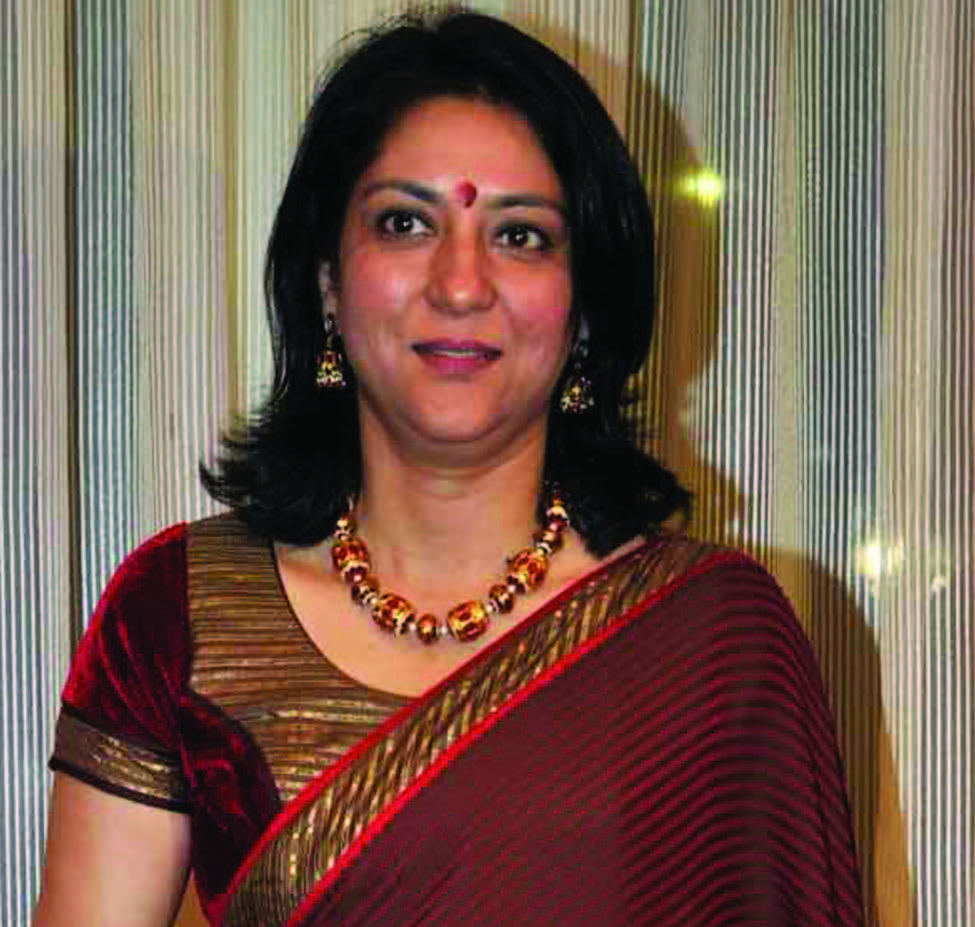
    INDORE (TIP): After a monthlong speculation, Member of Parliament Priya Dutt has finally given her consent to formally join the Indore Cancer Foundation as a member of the board of permanent trustees. Confirming about the development, honorary secretary of the foundation Dr Digpal Dharkar said, “Yes, it is true that Priya Dutt has agreed to join us from this year. Nargis Dutt Memorial Foundation, which is chaired by Priya Dutt, has stood beside us since a really long time and we are glad to have Priya join us now.

    Together we not just wish to achieve greater heights, but also reach out to greater number of people affected with cancer and save more lives.” Accepting the offer, Dutt replied to a member of board of permanent trustees of foundation Yashoda Dharkar, saying, “I am honored that you considered me as one of the trustees for the foundation. I would humbly accept and do the best I can.” Priya Dutt said, “It was the passion and commitment of Dr Dharkar that inspired me to join the trust. Our vision is to develop a full-fledged hospital here to treat patients suffering from head and neck related cancer in future.”

  • Gang-rape of Pakistan’s Mukhtar Mai inspires NY opera

    Gang-rape of Pakistan’s Mukhtar Mai inspires NY opera

    NEW YORK (tip): To those who complain that opera is an elitist indulgence served up to snobs in dinner jackets, New York’s latest world premiere may come as something of a shock. Inspired by the horrific gang-rape of illiterate Pakistani woman Mukhtar Mai on orders of a village council, ” Thumbprint” is a $150,000 production currently having an eight-night run in a basement theater in Manhattan. One of the most infamous sex crimes against women in South Asia, Mai’s 2002 rape, survival and metamorphosis into an international rights icon is as far removed from opera-house pomp as possible.

    It may have earned a less-than-glowing review from The New York Times — “muted,” “not quite enough” — but the score is an alluring blend of South Asian and Western music, and the production starkly innovative. With a simple backcloth doubling up as a film projection screen, a few chairs and charpoys, the simple but powerful staging evokes the heat, the dust and the traditions of a Pakistani village. Mai, now in her 40s, was raped to avenge her 12-year-old brother’s alleged impropriety with a woman from a rival clan. Six men were sentenced to death for her rape in a landmark ruling. But five were later acquitted and the main culprit had his sentence reduced to life imprisonment – facts the opera omits.

    Mai’s story has fresh resonance since the brutal gang-rape of a student on a New Delhi bus and her death a little over a year ago sparked international outrage about the levels of violence against women in India. “It’s inspiring,” said the opera’s Indian- American composer Kamala Sankaram, who also sings the lead role. “This is a person who was completely illiterate and knew nothing of her rights and the laws of her country and yet she had the courage to step out,” she told AFP. There is no staged recreation of the rape, which is instead portrayed by muffled shrieks of terror interspersed with a knife slashing open bags of sand. Sankaram worked to recreate Mai’s world by combining Hindustani music,Western composition, qawwali and Bollywood.

    “I am a sitar player as well as being a Western musician so I wanted to bring in elements of traditional culture but still keep it something acceptable to Western listeners,” she said. Pakistan may be thousands of miles from New York but playwright and novelist Susan Yankowitz, who wrote the libretto, says the opera is about courage and universal vulnerability of women. “The main question that is repeated throughout the opera is where did you find your courage… In a dry season, someone must be the first drop of rain,” Yankowitz told AFP. “The courage is to be the first drop of rain and that’s what I hope people will take away from it and inspire people to take some action they would otherwise not have the courage to do.”

    Compared to the majesty of New York’s Metropolitan Opera House a couple of miles up the road, “Thumbprint” is a tiny production with a six-person chamber orchestra and cast of just six singers. Shown as part of a small chamber music opera festival in its second year, tickets cost just $25 for the 90-minute production, which organizers hope will eventually tour India and Pakistan. Unable to find a suitable sarangi player, Sankaram’s score has been written for flute, violin, viola, piano (with harmonium on the side), and a brilliant double bass and percussionist. Most of the singers perform more than one part and the Baruch Performing Arts Center seats just 170 people. The run ends on Saturday, but it’s unclear what Mai makes of it all.

    Since the attack, she has set up a school for girls and won prominence in the West for her outspoken stance on the oppression of women. Manu Narayan, the Broadway star who has won rave reviews as an all-too-realistic unrepentant rapist, welcomed the opera and the Prototype opera festival as a vital platform for young composers. Bankruptcy forced New York City Opera to close last year. Some artists and musicians complain that original culture in New York City is being priced out of the metropolis by big business. “I think the music’s spectacular,” Narayan told AFP. “This festival is so wonderful. It really creates a very focused platform for new works and great stories that need to be told, and the story of Mukhtar Mai is one of the prime examples

  • Shashi Tharoor accused of having Twitter affair

    Shashi Tharoor accused of having Twitter affair

    NEW DELHI (TIP): Indian minister and former UN Under Secretary General Shashi Tharoor and his wife are once again in the limelight on Twitter. Tharoor has been accused of having a more than required relation on Twitter with a Pakistani journalist. With more than two million followers on Twitter, this is not the first controversy Tharoor has faced on the social media portal. He is India’s human resource minister and married Sunanda Pushkar, a former Dubai-based businesswoman, in 2010.

    The allegations erupted after tweets appeared on Tharoor’s account on Wednesday, January 15, showing messages between Tharoor, 57, and Pakistani journalist, Mehr Tarar, which appeared to hint at a relationship between the two. He later announced that his account had been hacked and denied any affair. Pushkar also assured those concerned that all is well between the couple and there is no ‘marital discord’.

  • Shooter held for US school firing is just 12 years old

    Shooter held for US school firing is just 12 years old

    ROSWELL (TIP): A 12-year-old boy drew a shotgun from a band-instrument case and shot and wounded two classmates at his middle school before a teacher talked him into dropping the weapon and he was taken into custody, officials said. A boy and a girl were injured following the shooting at Berrendo Middle School in Roswell on January 14 morning. Governor Susana Martinez said the students were in the gym, where they typically hang out before classes start, when the 12-year-old boy opened fire with the shotgun at about 8am.

    However, he was “quickly stopped by one staff member who walked right up to him and asked him to set down the firearm, which he did,” Martinez said at a news conference. Superintendent Tom Burris said the school’s faculty had participated in “active shooter” training, and they responded appropriately. Officials at University Medical Centre in Texas, said that the 11-year-old boy was the shooter’s target. The shooter has now been shifted to a psychiatric hospital for treatment.

  • First appeal in US based on spying

    First appeal in US based on spying

    LOS ANGELES (TIP): For the first time in the US, a man convicted on terror charges has asked authorities for documents obtained by the NSA to try to reverse his conviction, a document obtained has showed. Mohamed Osman Mohamud was convicted last year of trying to use a weapon of mass destruction at a Christmas tree lighting in Oregon in 2010.

    The former student was ensnared, his attorneys say, in an FBI sting. It later emerged police used information collected by the NSA in its massive cybersnooping operation. Mohamud was not informed of the snooping, they added. “The record reflects that government actors failed to communicate discoverable material to local prosecutors,” argued his lawyers in an appeal filed in Portland.

  • UK GOVT ORDERS PROBE INTO ‘BRITISH HAND’ IN OPERATION BLUE STAR

    UK GOVT ORDERS PROBE INTO ‘BRITISH HAND’ IN OPERATION BLUE STAR

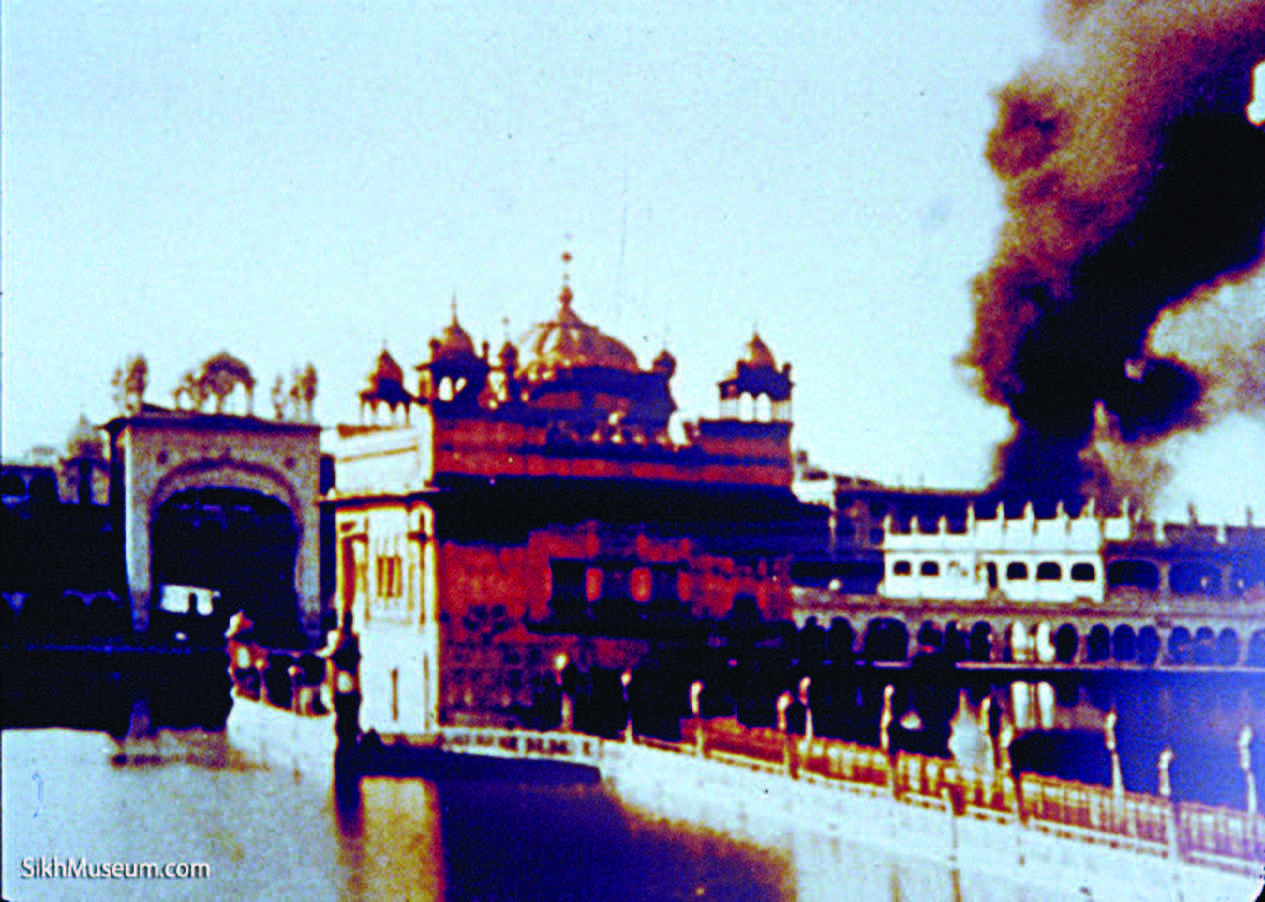
    NEW DELHI (TIP): Three decades after the Army stormed the Golden Temple, freshly declassified British documents show that the UK gave military advice to India on retaking the temporal seat of Sikhs, kicking off political storms in both London and New Delhi. The British government has ordered an inquiry into the revelations and the BJP has demanded an explanation. Intelligence officials involved in operations against Sikh extremists in Punjab during the period and military commanders who led Operation Blue Star have denied using any British plan. They said as far as they were concerned, the entire operation was planned and executed by the Indian Army. Lt Gen K S Brar, who headed the 1984 military operation, said he was not aware of any such British involvement. “As far as I am concerned, Operation Blue Star was planned and executed by Indian Army commanders.

    There was no involvement of anyone from the British government,” he told a TV channel. The bloody and heavily criticized operation led to the assassination of then PM Indira Gandhi in October 1984, which was followed by anti- Sikh riots that saw hundreds being butchered. The revelation is contained in a series of letters declassified recently by the National Archives of UK after the 30-year secrecy rule. In an official communication dated February 23, 1984 titled ‘Sikh Community’, an official with the foreign secretary told the private secretary to the home secretary that “the foreign secretary wishes him to be made aware of some background which could increase the possibility of repercussions among the Sikh communities in this country”. “The Indian authorities recently sought British advice over a plan to remove Sikh extremists from the Golden Temple in Amritsar.

    The foreign secretary decided to respond favourably to the Indian request and, with the prime minister’s agreement, a SAD (probably misspelling SAS) officer has visited India and drawn up a plan which has been approved by Mrs Gandhi. The foreign secretary believes that the Indian government may put the plan into operation shortly,” the letter said. The letter went on to say that the visit of the British special forces officer from SAS was kept a secret in both London and New Delhi. It also expressed apprehension that if the British advice were to emerge in public, it could increase tension in the Indian community in Britain. However, there is no evidence in any of the communication if the British plan was finally used for the June 1984 operation.

    In London, the UK government said it will investigate its involvement. “These events led to a tragic loss of life and we understand the very legitimate concerns that these papers will raise. The prime minister has asked the cabinet secretary to look into this case urgently and establish the facts,” a UK government spokesperson said in a statement. Labour lawmaker Tom Watson said the documents suggest that “Margaret Thatcher made a decision in secret without telling the British parliament to provide military planning support to the government of India in the buildup to the raid on the Golden Temple”.

    ‘Thatcher backed Indira after Operation Bluestar’
    Former Prime Minister Margaret Thatcher fully supported Indira Gandhi’s efforts to apply the ‘healing touch’ in the aftermath of Operation Bluestar in 1984 and assured her of steps to deal with pro-Khalistan elements operating in Britain at the time. Gandhi wrote to Thatcher on 9 and 14 June 1984 (Operation Bluestar ended on 10 June). The letters were about Sri Lanka and developments in trouble-torn Punjab. Her 14 June letter to Thatcher was specifically about Punjab.

    In her reply, Thatcher wrote on 30 June 1984: “These have been anxious weeks for you, involving difficult decisions. I have followed closely your efforts to restore calm there, and I very much hope that the ‘healing touch’ for which you have called will open the way to a peaceful and prosperous future for that troubled region”. Thatcher’s reply sent by telegram to New Delhi is among several documents de-classified and released by National Archives here.

    They include controversial documents of February 1984 that suggest that India sought, and Thatcher agreed to provide, advice from Britain’s special forces to flush out Sikh militants from the Golden Temple. Thatcher’s 30 June letter to Gandhi reflects the close relationship between the two leaders. Gandhi had raised concerns in her letter about pro-Khalistan elements operating from Britain and the effect of their activities on the tense situation in India.