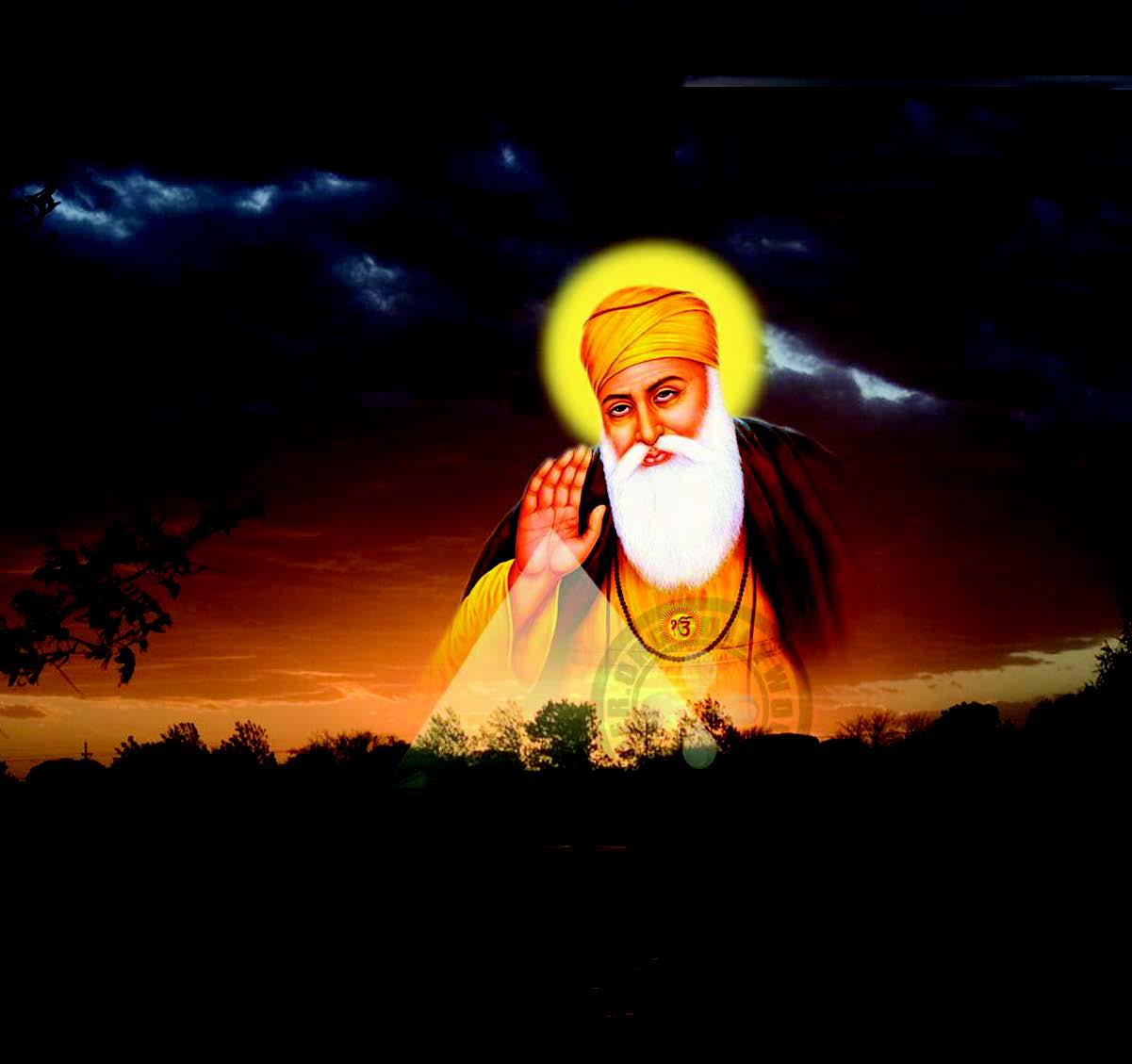
“Guru Nanak remains as vital and relevant today, as the day he left home to become what he became. His message of inclusion, warmth, compassion, justice, forgiveness, principled stance, love of friend and enemy alike, speaks to our world’s most dangerous problems – such as ISIS. Of course, all the Gurus that followed him, none more than Guru Gobind Singh, were needed to “flush out” Guru Nanak’s meaning, message and purpose even as each Guru and their sacrifices, personal and worldly, added much needed nuance to complete Guru Nanak’s teachings. Is it any wonder that over 1 billion Hindus love, adore and cherish Guru Nanak and his successive Gurus – so much so – that its unfair to limit his loving public and followers, known and unknown, to a mere 25 million self-identifying Sikhs. Just as non-Christians can adore, respect and cherish Jesus Christ, same is also true of Guru Nanak, and by that additional definition, you have 7 billion lovers and followers of Guru Nanak – even if not by rituals. Fact is that God-loving people, of every faith, close and not so close, love other faithworshipers. What is most curious, and a total mystery is when people hate others of a different faith, because they are of a different faith. This virulent virus of the soul, more powerful than Ebola, mutated over time is best seen today when looking at ISIS. That faith-haters exists, is why our hallowed Constitution has separation of church and state, while guaranteeing freedom of religion – to worship and protect, but not to hurt and kill in name of God. So, like every person of good will toward others, and as one who holds Guru Gobind Singh as a hero, its always time to celebrate,
Year: 2014
-

North Texas transportation planners shift away from toll projects
DALLAS (TIP): The Regional Transportation Council on Thursday, November 13, excluded a controversial rural toll road from its long-range plan and dropped efforts to involve the state Transportation Department in financing the divisive Trinity Parkway toll project. Those votes highlight a shift away from the planning entity’s years-long practice of using tolls to finance road construction as state lawmakers repeatedly failed to solve transportation funding shortfalls. The moves also come amid mounting public opposition to toll roads in North Texas, where virtually every major highway project under construction includes tolling.
The region will soon be home to the nation’s largest network of managed toll lanes, which are being added to existing highways to help add capacity and finance renovations or expansions. “It’s been by force of nature, really, from Austin,” said RTC vice chairman Mark Riley, who also is Parker County judge. “We’ve been given a task but no funds.” Texas voters last week agreed by a nearly 4- 1 ratio to give TxDOT about $1.7 billion a year in additional funding, with the caveat that the new money could not be used on toll projects.
That still leaves TxDOT with an estimated $3.3 billion shortfall that the agency says it needs to maintain existing roads and build more to keep up with expected population growth. RTC member Jungus Jordan called the election results a mandate. “If the Legislature didn’t get a message out of that, I don’t know what it will take,” he said. Lawmakers have already begun filing bills aimed at further shoring up TxDOT’s funding gap during the legislative session that begins in January. House Speaker Joe Straus, R-San Antonio, said he expects transportation funding to be a top issue in the upcoming session.
Northeast Gateway
The North Central Texas Council of Government’s transportation department, which executes the RTC’s policies, originally recommended putting the divisive Northeast Gateway toll road into a long-range transportation plan. NCTCOG staffers rescinded that recommendation amid massive opposition to the project and criticism over how the agency managed public information about it. The road was planned to run from Garland to Greenville. Residents criticized NCTCOG for basing its support for the road on traffic estimates that far outpaced population growth projections. The project remains an “area of study” in the plan, but the chairman of the private company developing it said he’s not likely to move forward. Texas Turnpike Corp.
chairman John Crew said he’s already spent $5 million developing the project. He said he has other deals to try to move forward with. “Until you can get the leadership to say we really do need this, it’s not worth using my capital to fight the politics,” he said in an interview last month. The portion of the project that remains a subject to be studied does not include a potential leg that could have run from Garland into Dallas. That phase of the project was identified as a potential extension in an oversight agreement between Texas Turnpike and TxDOT. A Texas Turnpike spokeswoman said that extension was added to the agreement at the behest of NCTCOG officials. NCTCOG spokeswoman Amanda Wilson said the extension would have replaced State Highway 78 through Garland and would not have been tolled. “So, the [agreement] shows it as an extension of the toll road, but if this project would have moved forward, the concept would have been a nontolled arterial to facilitate moving traffic off the toll road in the direction of LBJ,” she said.
Too cozy?
Northeast opponents also accused NCTCOG officials of working too closely with the private company and sometimes on its behalf. Many of those complaints centered on emails between NCTCOG senior program manager Tom Shelton and Texas Turnpike executives. NCTCOG transportation director Michael Morris announced Thursday that Shelton is leaving the agency to take a job in the private sector. Morris defended the agency’s traffic estimates and dealings with Texas Turnpike during the Northeast Gateway development. He said Shelton’s departure was unrelated to the project. “Tom did exactly what I asked him to do,” Morris said.RTC members and NCTCOG staffers praised Shelton’s work for the agency and applauded his tenure.
Trinity Parkway
NCTCOG staffers had also recommended lobbying state lawmakers to give TxDOT the authority to find a private developer to help finance the Trinity Parkway tollway. They backed away from that proposal after Texas Transportation Commission member Victor Vandergriff said he didn’t want the agency involved in the controversial project. Dallas and North Texas Tollway Authority have an agreement to build that road, which would mostly run inside the Trinity River’s levees.
But more than $1 billion in funding needed for the $1.5 billion project has yet to be identified. Traffic estimates used to justify that road have also been criticized. But many Trinity opponents also say that the project will further subsidize suburban sprawl to the detriment of Dallas’ downtown core. And they say it is incompatible with planned lakes, parks and recreational areas the city plans to put along the road and the Trinity River. Nonprofit Trinity Commons Foundation is raising money for a design summit aimed at alleviating those concerns. The group wants to have urban planners make tweaks and additions to plans so the road has more landscaping and inviting features.
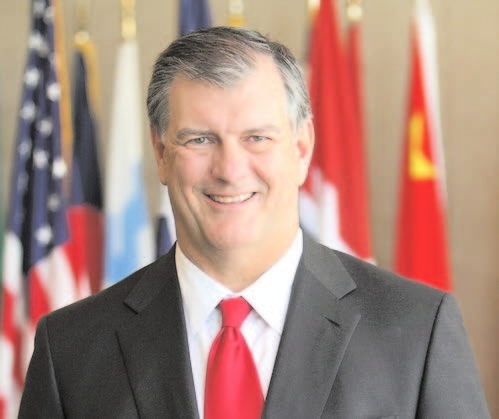
Dallas Mayor Mike Rawlings, a toll road supporter, said Thursday that he will present ideas about better designing the road at a breakfast next week. “This project is critical to the future of our city, and how the design is finalized is one of the most important things we can do,” he said. “I believe this project should be studied and reviewed by recognized experts using the best urban design principles that exist as we move to our next phase.” -

Texas sets a new wind power record in November
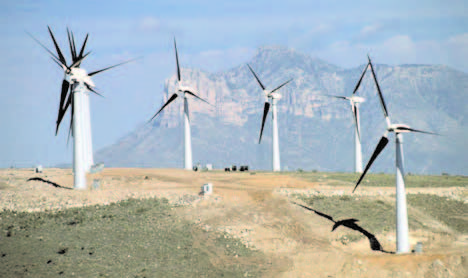
DALLAS (TIP): Wind power set a new record in Texas in November with 10,301 megawatts of power generated, according to the Electric Reliability Council of Texas. Wind turbines set the record at 10:39 a.m. Nov. 2, providing 33.4 percent of the power within ERCOT, which covers 85 percent of Texas. The state of Texas currently has 11,500 MW of installed wind power so the grid used nearly 90 percent of the power available when it set the record. The previous record was 10,296 MW set on March 26. Wind power produced 23.9 million MWh so far in 2014, or 9 percent of the power in the state. Texas has by far the most wind power of any state and produces more wind power than many countries. Still, wind power has faced criticism from politicians in Austin who say it relies too much on subsidies and should stand on its own. Supporters say all types of energy, including coal, oil and natural gas, receive their share of incentives and tax breaks. One Dallas company has a unique take on building community wind farms in West Texas and the Panhandle
-

Texas Leads Best States For Future Job Growth
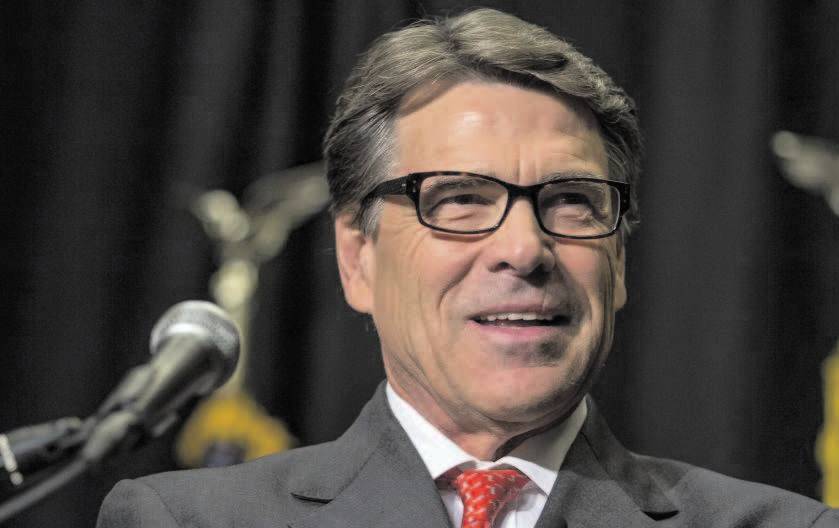
DALLAS (TIP): Rick Perry ascended from Lieutenant Governor to Governor of Texas in December 2000 when thengovernor George Bush resigned after being elected the 43rd President of the United States. Perry will retire in January with the tenth longest gubernatorial tenure in U.S. history. Perry made job creation one of his principle mantras, and he has overseen remarkable employment gains under his watch with 2.1 million jobs added during his tenure.
The total represents 30% of the jobs added in the U.S. since 2000 and more than twice as many as any other state. The so-called “Texas miracle” does not show any signs of slowing either with 413,000 jobs added over the last 12 months. Texas is expected to have the nation’s fastest annual job growth rate at 2.7% over the next five years, according to data from Moody’s Analytics. Texas has low taxes and light regulation, but Perry’s record also has benefited from the headwinds at his back regarding energy. Oil prices hovered around $30 a barrel between 1986 and 2002 before a stunning climb that peaked at $145 in 2008. Prices plummeted during the Great Recession and over the past month, but oil is still trading around $80 a barrel. The higher prices have propelled massive investments in Texas both financially and in regards to human capital. “Texas has done well primarily because it is an energy center.
You really can’t get around that,” says Edward Friedman, an economist who tracks Texas for Moody’s Analytics. “Every major energy and oil company has realized over the last 15 years that the only place to be is Houston.” Texas’ prosperity and pro-business environment have led companies outside of the energy sector to flock to the state in recent years. Toyota announced plans to move its North American headquarters from California to a new campus in Plano that will create 4,000 jobs. The Texas Enterprise Fund granted Toyota $40 million to sweeten the pot.
San Francisco brokerage firm Charles Schwab is moving hundreds of jobs out of California with Austin and El Paso targeted for company expansion. Apple is undergoing an expansion that will roughly double its Austin workforce by hiring 3,600 new employees. Texas ranks first for both its current economic climate and growth prospects in our annual study on the Best States for Business. There are 118 of the largest companies in the U.S. based in Texas, including heavyweights like AT&T ,Exxon Mobil and Dell . -

New York Emmy Nominated Filmmaker Tirlok Malik’s New Film ‘On Golden Years’ Premiered in New York
NEW YORK (TIP): New York Premiere of Tirlok Malik’s new film On Golden Years was hosted by Indian American Forum, SVA Theater (School of Visual Arts), the filmmaker Tirlok Malik and the team of On Golden Years. Most of the 500 audiences who were at the event had witnessed the journey of Tirlok Malik as a filmmaker: from Lonely in America to On Golden Years. Malik’s films deal with the issues and conflicts, which come with the migration.

L to R: Actress Jyoti Singh, Actress Kamlesh Gupta, Filmmaker Tirlok Malik, Filmmaker Mira Nair, Indu Jaiswal
At the event, Manhattan Borough President Ms. Gale A. Brewer presented a proclamation to the filmmaker Tirlok Malik for his work in films proclaiming Saturday November 1, 2014 “Tirlok Malik Appreciation Day”. Tirlok Malik acknowledged some of his friends who have played important part in his journey as a filmmaker, which included his brother Chander Malik and his friend Ashok Wahi. H.R. Shah CEO of TV Asia spoke very highly of Tirlok Malik and his continued efforts to make movies about NRI’s. Many prominent guests attended the premiere.

Cast and Crew of On Golden Years, on set.
Mira Nair the Film-maker congratulated Tirlok Malik on his new film. Dr. Palitha T.B. Kohona , Sri Lanka’s Ambassador to UN also expressed his appreciation for Tirlok Malik’s film. Deputy Consul General of India, Dr Manoj, Kumar Mohapatra congratulated Tirlok Malik and the host committee. Indra Nooyi, the chairperson of Pepsico, sent a message with best wishes to Tirlok Malik for the premiere of his film On Golden Years. The Chair of the Film Division of the School of Visual Arts (SVA) Mr. Reeves Lehmann spoke about the school and the film. SVA is one of the most prestigious film schools in America and a great supporter of Tirlok Malik’s work.
The film On Golden Years portrays the complex emotions, which come at the time of retirement for immigrants. Through various characters, who are residents of an Indian retirement community, the film deals with the conflicts such as India vs. America, contentment vs. regrets and places to retire etc. This is the story about the retirement of the American Dream. The film stars RANJIT CHOWDHRY who was also the lead of Lonely In America, JYOTI SINGH, REEVES LEHMANN, SHETAL SHAH, NOOR NAGHMI, TIRLOK MALIK, SHRUTI TEWARI, FAROKH DARUWALA, INDU GAJWANI, PROF. INDRAJIT S. SALUJA, LOVLLIEN KAURR, SANDEEP SURI, IGGY IGNATIUS, KAMLESH GUPTA and many more. There are some new talents making their debut in the film.

Cast of On Golden Years with friends
The film On Golden Years is written and directed by Tirlok Malik. The film is co produced by Iggy Ignatius who is also the codirector of the film. The film has been shot at the only Indian retirement community Shantiniketan in Florida. Other credits of the film are Director of Photography Christo Bakalov B.A.C., Music by Peter Lobo, Art Direction by Sunita Babber, Editing by Tom Knight and others. Singer Falu makes her film debut doing the item number song ‘Raba Raba’ in the film On Golden Years. Falu has sung at Carnegie Hall and has sung twice in the White House in the presence of President Obama and Oprah Winfrey along with the composer of Slumdog Millionaire A.R. Rahman.
The opening song of the film ‘Gayatri Mantra’ is sung by Sumitra Iyer who is an award winning Bollywood singer and who now lives in America. She has performed all over the world with top names of Indian music industry such as Anu Malik, Sonu Nigam, Shankar Ehsaan Loy and Hariharan. The film On Golden Years is in English language and is made for NRIs and an international audience. It is a romantic emotional comedy. Its length is 85 minutes. -

India, ASEAN can be ‘great partners’: Modi
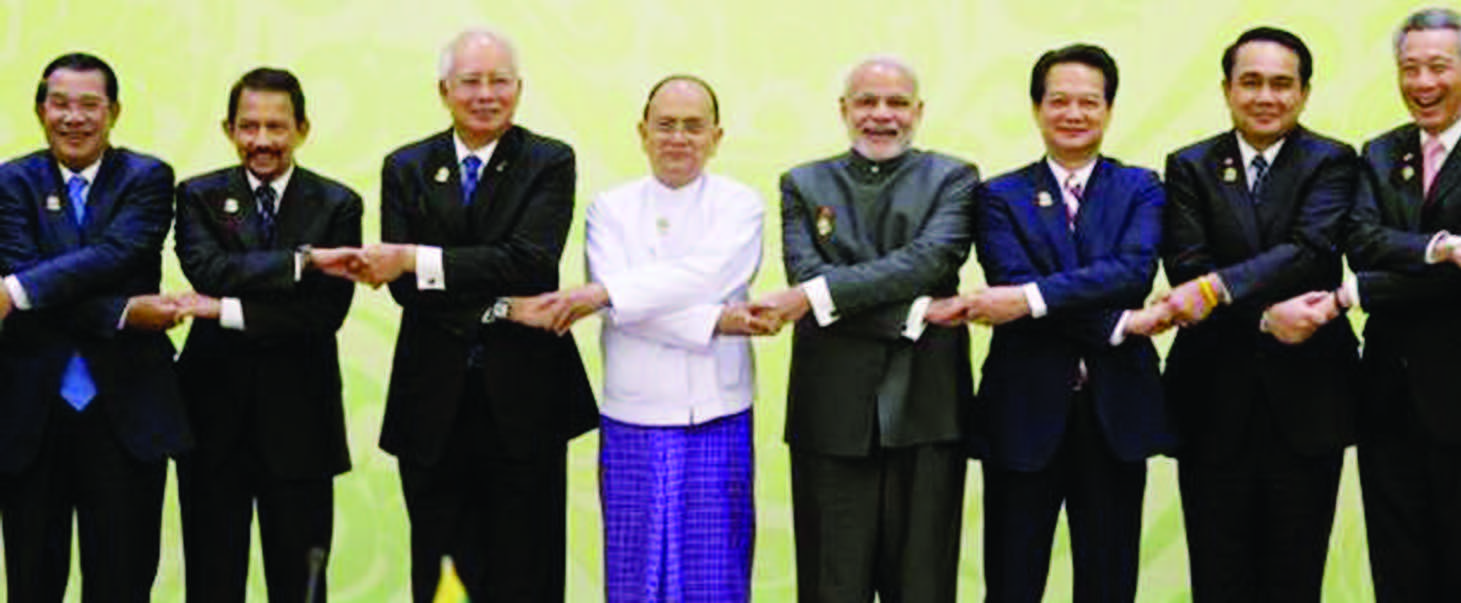
NAY PYI TAW (TIP): Asserting that there are “no irritants” in the India- ASEAN relationship, Prime Minister Narendra Modi on Wednesday told ASEAN leaders that a new era of economic development, industrialisation and trade has begun in India and they can be “great partners” for each other. As India seeks to deepen its engagement with the 10-nation bloc of small and medium economies, Modi said both India and the Association of Southeast Asian Nations (ASEAN) are keen to enhance their cooperation in advancing balance, peace and stability in the region.
“The ASEAN community is India’s neighbour. We have ancient relations of trade, religion, culture, art and traditions. We have enriched each other through our interaction. This constitutes a strong foundation of a modern relationship,” Modi said in his opening statement in Hindi at the 12th India—ASEAN summit in the Myanmarese capital. “That is why our world view is similar in many respects; our mutual confidence and trust is strong. We have no irritants in our relationship.
We see encouraging opportunities and challenges in the world in similar ways,” he said. Observing that India and the ASEAN have been successful to a considerable extent in pursuing their dreams, Modi said they have laid a foundation for a strong and comprehensive strategic partnership. “My government has been in office for six months and the intensity and momentum with which we have enhanced our engagement in the East, is a reflection of the priority that we give to this region,” the Prime Minister said at the summit held at the sprawling Myanmar International Convention Centre on the second day of his 10—day three—nation tour of Myanmar, Australia and Fiji. “A new era of economic development, industrialisation and trade has begun in India. Externally, India’s ‘Look East Policy’ has become ‘Act East Policy’,” he said. “Rapidly developing India and ASEAN can be great partners for each other. We are both keen to enhance our cooperation in advancing balance, peace and stability in the region,” the Prime Minister said. -

Society of Indian American Engineers and Architects goes National
Prof. I.S. Sluaja
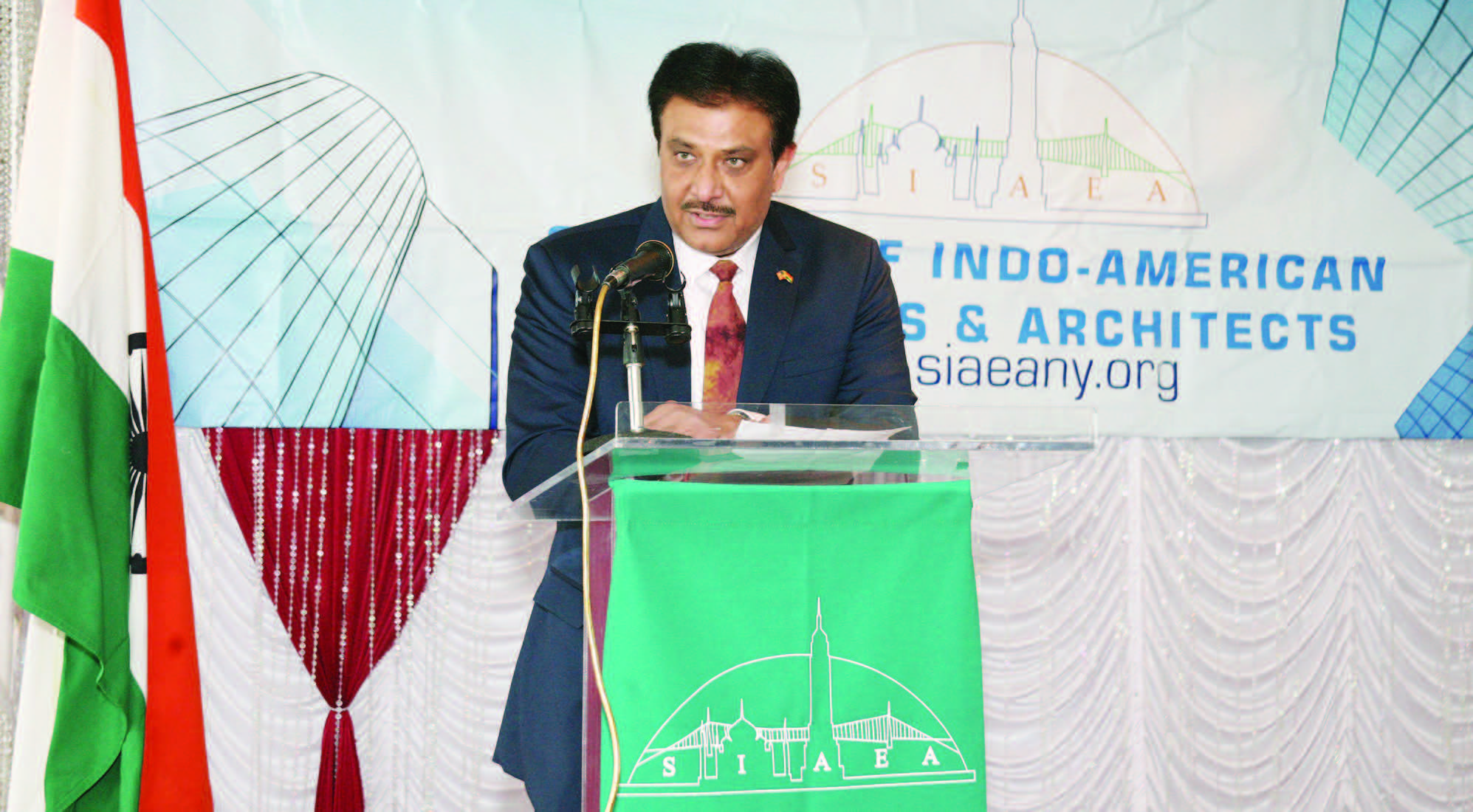
By now a must attend gala for all engineers and architects of Indian origin, the SIAEA annual gala dinner is scheduled for November 15 at Grand Hyatt Hotel, Grand Central, New York. And it is an event which draws the attention and energy of each SIAEA member, in particular the ones on the Executive, specially, the President. SIAEA President Mihir Patel has been a man with nerves on tenterhooks for months together, since the annual gala is the most prestigious event of the SIAEA. I have seen this happen to his predecessor and mentor Nayan Parikh and others before him.
Despite being so awfully busy, Mihir was gracious enough to speak with me on the course that SIAEA was on, his plans for the growth of this organization which has over a thousand best of Indian American engineers and architects as its members, and on the coming annual gala. Mihir’s major concern is to have an image of Indian American engineers and architects in the mainstream. For that he said the SIAEA has to ensure that it involves itself with the mainstream. That is why, he said, “We have a number of guests from outside the Indian Diaspora.
We try to get our lawmakers and eminent Americans to the gala to have the kind of relationship and rapport that will stand in good stead.” The honored guest list this year includes Ambassador Dnyaneshwar M Mulay, Consul General of India, Alphonso P David, NYS Deputy Secretary for Human Rights, Dominick M. Servedio , Executive Chairman- STV Group, Inc., Sen. Ruth Hassell Thomson, Thomas F. Prendergast, MTA, Lash Green, PANYNJ, Michael Clay, DASNY, Earl Walker, Regional Alliance,Walter Mosley, Assembly Member, Stacey Cumberbatch, NYCDCAS, Craig Collins, NYCSCA, Michael Garner, MTA, Michael Jones-Bey, CON EDISON, and Cheryl McKissack & McKissack On the advantage of being an SIAEA member, Mihir said the membership of the Society provided exposure to the mainstream American society and the construction business that was worth more than $2 billion.

All the President’s men. Mihir’s team
The gala offered an opportunity for networking which was so essential for the growth of any business. Asked about the awards being presented this year, Mihir said quite a few were being honored. They included Abhay Wadhwa, Ahmed Shakir, Amil Patel, Mita Amin, Nayan Parikh , Nitin Patel, Sharon Lobo, Sneha Patel, and Sunil Bold. George Toma and Suzanne Veira are special honorees while Alok Saksena and Manan Garg are honorees under 40. Mihir also disclosed that SIAEA was continuing with the scholarship program and had increased the amount of scholarship from $1000.00 to $ 2000.00. He said he wanted the younger generation engineers and architects to get involved in the local network. He also said he would like the number of members increase to 10,000 by 2020.

Consul General of India in New York Dnyaneshwar M. Mulay will give a special address at the gala
Mihir was obviously proud that during his presidency SIAEA had become a national organization, with the creation of Philadelphia Chapter on June 22nd, 2014. Mihir said the chapter started with 22 members and in 5 months it has a membership of 72. He also spoke of plans to open a chapter in Washington DC in November, 2014 and a chapter in Chicago in March, 2015. Mihir is doing hard work, no doubt. But how experienced he is ? Asked when he got associated with the SIAEA, he said he joined the Society in 1996. He served on Board of Directors from 2004 to 2013, after which he took over as President.
Mihir says that “the only way our voice can be heard in our adopted country is to get actively involved in politics. It is then that we can fight for issues that impact us. It is good to see that awareness is growing among Indians in this country. It is important for us to become an integral part of the American mainstream society. At the same time we must not forget our rich Indian heritage”. He opines that integration should be encouraged, not assimilation.
He adds “as ambassadors of the rich heritage of India, we should share our culture and heritage with our neighbors. We need to become part of the social fabric”. He maintains “at the work place, hard work, honesty and quality are the golden keys to success. One should not go for short cuts because then the success would also be short-lived”. Mihir’s construction company Monpat was established in 1993 and had a turnover of 1.5 million approximately. It has completed business worth 150 millions in 22 years. The company is registered with City, State and Federal agencies.
Mihir is married to Bhavana and the couple have a son-Priyank. He has done Architecture from Penn State and is now working for the home company. Miten Patel, Mihir’s younger brother, is a great support to Mihir. Miten is married to Rekha and the two have a son- Roshun and a daughter-Trisha. Closing the conversation Mihir renewed me the invitation to the Gala on the 15th and said proudly, “This gala is my Presidency’s last gala. I have tried to make the most memorable one. For one, it is going to be the biggest gala ever. Last year the number of attendees was 700. And I expect between 900 and 1000 guests at this gala. Please do come”. And I readily accepted his invitation because I know SIAEA gala is a real treat. -

Council Members Lancman, Cornegy and Williams announce Bill Criminalizing Chokeholds
NEW YORK CITY (TIP): New York City Council Members Rory I. Lancman, Jumaane D. Williams and Robert E. Cornegy, Jr. announced, November 12, the introduction of legislation making it a misdemeanor to perform a chokehold. In the light of the tragic death of Eric Garner, other documented chokehold incidences and the recognition by the Civilian Complaint Review Board that it has inadequately investigated chokehold complaints, the legislation is a necessary step to eradicate the use of chokeholds once and for all.


In addition, other legislation being introduced will require the New York City Police Department to produce reports on officers’ use of force and limiting that use of force to that which is proportionate in a given situation. “Although chokeholds have been banned as a matter of NYPD internal policy for over 20 years, their use still remains prevalent,” said Council Member Rory I. Lancman, Chair of the Committee on Courts & Legal Services. “With this bill, we make chokeholds not merely a violation of NYPD policy, but a crime, reflecting the inherent danger which chokeholds present to our city’s public safety.”
“The police force of New York City is endowed by the people’s collective power to enforce the law in the public interest,” said Council Member Robert E. Cornegy, Jr. “When police power is used to the people’s detriment, we must respond accordingly, in this case, by clarifying the law. This bill is as clear and simple as they come. No chokeholds – period. This tactic is simply too dangerous to be within the NYPD’s arsenal. Passing this bill will ensure that going forward, any police officer or civilian who uses a chokehold can be criminally prosecuted for that act and further prosecuted for any resulting harms.
In memory of Brother Eric Garner and for the hundreds of New Yorkers whose complaints of chokeholds have gone uninvestigated and unpunished, this bill represents the hope that they will receive a measure of justice. I hope that this body will move quickly toward passage.” “No New Yorker should be a victim of police brutality, especially when it means being placed in a chokehold,” said Council Member Jumaane D. Williams, Deputy Leader and cochair of the Council’s Task Force to Combat Gun Violence.
“Despite the chokehold being banned from NYPD more than two decades ago, the Civilian Complaint Review Board has received more chokehold complaints in the last 12 months than in any year since 2001. Due to these record numbers of complaints and the tragic death of Eric Garner, my colleagues and I have worked hard legislatively to combat police brutality, especially in communities of more color. I applaud Council Member Lancman for his leadership on this issue, and hope the Council passes this important bill.” -

Farhan Akhtar announced as UN Women’s Goodwill Ambassador for South Asia
Actor calls on men and boys to join the UN Women’s HeForShe initiative, and mobilize for gender equality
NEW YORK (TIP): UN Women, the United Nations organization dedicated to gender equality and women’s empowerment, announced, Thursday, November 13, the appointment of actor-filmmaker-singer Farhan Akhtar as its South Asia Goodwill Ambassador. Farhan is the first man to be chosen as a Goodwill Ambassador in the organization’s history. An accomplished and well-respected actorfilmmaker- singer, Farhan Akhtar has not only made his presence felt in the Indian film industry with his versatility, but has represented the voice of numerous concerned men on the important issue of gender equality and violence against women and girls in India through his Men Against Rape and Discrimination (MARD) campaign.
Farhan will dedicate his efforts as UN Women’s Goodwill Ambassador for South Asia towards the empowerment of women and girls, and will serve as an advocate for UN Women’s newly launched HeForShe initiative in advocating for gender equality and women’s empowerment. “We are pleased and honored to have Farhan as our Goodwill Ambassador for South Asia, for we believe his work and values represent the core values of UN Women,” stated UN Women Executive Director and Under-Secretary-General Phumzile Mlambo-Ngcuka. “Farhan started his own campaign, MARD – Men Against Rape and Discrimination – that aims to sensitize men and create awareness about the safety of women. That kind of engagement is essential. We need creative and committed men like Farhan to push the gender equality and women’s empowerment agenda.
I am convinced that Farhan’s passion and conviction for the cause will galvanize a multiplier effect and reach the hearts and minds of men and boys in South Asia and beyond,” added Ms. Mlambo-Ngcuka. The MARD campaign has successfully encouraged many actors to join this campaign and spread awareness. Corporations like Google have also engaged with the initiative to empower women through Internet literacy. “I am honored to serve UN Women as the Goodwill Ambassador for South Asia,” said Mr. Akhtar. “This gives me and our MARD initiative an added impetus to work together towards a more gender equal India and world.
I am a supporter of UN Women’s HeForShe campaign and the role men and boys can play in stopping crime against women and girls, and working towards gender equality. Through this new partnership I want to call on all men and boys to be a catalyst for change and, through our actions, create a value system to end gender disparity.” Mr. Akhtar’s appointment coincides with the visit of UN Women’s top official to India. Earlier in the week she met with the President of India and senior ministers of the new government, and participated in the 2nd Global MenEngage Symposium, which brought together more than 400 NGOs working on gender justice in New Delhi.
The visit to India comes as UN Women’s global initiative Beijing+20 “Empowering Women, Empowering Humanity: Picture It” is reigniting a global conversation on gender equality and women’s rights in the lead up to the 20th anniversary of the historic 1995 Beijing Conference, which produced what is considered the most comprehensive women’s rights agenda, the Beijing Platform for Action. UN Women’s other Goodwill Ambassadors include British actor Emma Watson, Academy Award winner Nicole Kidman and HRH Princess Bajrakitiyabha Mahidol of Thailand.
UN Women is the UN organization dedicated to gender equality and the empowerment of women. A global champion for women and girls, UN Women was established to accelerate progress on meeting their needs worldwide. For more information, visitwww.unwomen.org. UN Women, 220 East 42nd Street, New York, NY 10017, New York. Tel: +1 646 781-4400. Fax: +1 646 781-4496. HeForShe is a solidarity movement which calls upon men and boys to stand up against the persisting inequalities faced by women and girls globally. The campaign strengthens the support for women’s rights as human rights by enlisting the support of men and exhorting them to put themselves forward as advocates for gender equality. For more information, visit http://www.heforshe.org/
-

The Army Is Making Me Choose Between My Faith and My Country
All my life, I’ve dreamed of serving my country.
But when I tried to enlist in the Reserve Officers’ Training Corps (ROTC) program at Hofstra University, I was told I couldn’t because of my religious beliefs. I follow the Sikh faith, which requires that I keep my hair long and wear a turban and beard. The ROTC recruiters said I would not be able to enlist unless I complied with all Army grooming and uniform rules, which would require me to immediately cut my hair, shave off my beard, and remove my turban.
I couldn’t believe the military was asking me to make the impossible decision of choosing between the country I love and my faith. Sikhs have had a long and rich tradition of military service in nations across the globe since World War I. Currently, we are allowed to serve in the armed forces of Canada, Great Britain, and India, among others. How is it possible that most Sikhs like me are prohibited from serving in the United States–a nation whose founding principle is religious freedom?
After learning that the Army had granted religious accommodations to several Sikhs and soldiers of other faiths, I decided to apply for one too, but my request was denied. The decision made little sense to me. In addition to religious accommodations that have been granted, the Army allows men to wear beards for medical reasons and wigs to cover baldness. Women may have long hair provided they keep it neat and out of the way. There is no indication that these existing grooming policies and accommodations have caused problems. That’s why I decided to file a lawsuit with the help of the ACLU and UNITED SIKHS. Religious beliefs and practices shouldn’t prevent military service where, as in my case, they don’t pose any risk to the military and they don’t harm others. In the aftermath of 9/11, many Sikhs were mistaken for Muslims.
The Sikh turban and beard were equated with terrorism. Sikhs became the victims of the unfortunate and sad wave of anti-Muslim sentiment that swept many parts of the country, including a mass shooting at a Sikh temple in Wisconsin two years ago. Barring us from serving in the military because of our religious practices helps reinforce these hurtful stereotypes. It is my hope that, when fellow Americans see Sikhs like me defending this great nation, the misperception of Sikhs being “terrorists” and “foreigners” will fade away.
They will start judging Sikhs for who we are, based on our character, as opposed to how we look. Many of my non-Sikh friends and peers have already joined the ROTC program or enlisted in various branches of the military.We had nurtured our dreams together to join athe armed forces ever since we were little kids. I don’t want to be left behind just because I’m adhering to the tenets of the faith I was born into. Choosing between one’s faith and serving one’s country is a decision that no one should have to make.
(Source: The Blog by Iknoor Singh in Huffington Post) -

New Balance of Power in Asia? India is challenging China’s assertiveness
“India must increase investments in education and infrastructure, achieve more equitable economic development if it is to emerge as a major driver of the global economy. Only then will it be able to make a significant contribution to Asian and international security and contribute to a new peace-promoting balance of power in Asia”, says the author.
By Anita Inder Singh
India’s decision to help Vietnam boost its defense modernization – against China’s wishes – raises yet again the question whether a new balance of power is emerging in Asia. India, Vietnam and Japan will try to coordinate security and economic policies. That suggests India is challenging China’s assertiveness in the Asia-Pacific region and staking a claim to explore the energy-rich resources of the South China Sea. Economic and strategic diplomacy were intertwined when Prime Minister Modi visited Japan and the US – and when Chinese President Xi Jinping visited India in mid-September.
India needs investment to improve its rickety infrastructure and Japan, China and the US have come forward with offers to help India renew it. Companies in all three countries seek new investment destinations and potentially India is one of the biggest. Mutual economic interests are not enough for India to increase its contribution to Asian and global security. The simultaneous interest of Japan and the US in India’s development and its greater role in Asian security only highlight India’s economic weakness and the blunt fact that its ability to enhance its regional role will hinge on its economic performance improving quickly and steadily.
India has much to gain – and learn – from closer ties with Japan, which is Asia’s oldest democracy. Neither history, nor political/territorial disputes divide India and Japan. As Asia’s post-1945 economic wunderkind Japan had surpassed India, China and many west European countries by the early 1960s. India and Japan are already collaborating on maritime security, counter-terrorism, and energy security. At their summit talks, Modi and Prime Minister Shinzo Abe decided to strengthen defense ties and forge a special strategic global partnership, emphasizing that a developed India and a prosperous Japan were important for Asia and for global peace and security.
Economics and strategy mixed again when Modi met Japanese business leaders. The 21st century, Modi asserted, would belong to Asia – exactly how would depend on “how deep and progressive” the Indo-Japanese relationship is. This is the immediate context in which he deplored the “expansionist” tendencies among countries, caught in an 18th-century time-warp, to “engage in encroachment” and “intrude” into the seas of others. Evidently Modi was not letting trading interests blur the real political differences with such countries. These comments, made before President Xi Li Ping visited India, were widely interpreted as anti-China. The state-steered Chinese Global Times has downplayed any idea that China counted less than Japan with India.
“China’s GDP is five times that of India’s. Mutual trust between Beijing and New Delhi, facing strategic pressure from the north, is difficult to build as there is also an unresolved border conflict between the two,” its editorial said. That appeared more of a threat than an olive branch to India. Modi carefully avoided running China down. Before leaving for the US he stated that the world should trust China to observe international law. But Xi’s visit did not enhance trust between New Delhi and Beijing. Even as Xi assured Modi of $20 billion in investment in Gujarat Chinese troops made one of their frequent forays into north-eastern Indian territory, which Beijing claims belongs to China.
Those forays followed a pattern. China unilaterally invokes “history” (its version) when referring to territorial conflicts with India – and other neighbors. China’s attitude to India echoes that with its Asian neighbors, including Japan, Vietnam and the Philippines. By claiming a territory in the name of history it creates a dispute, dispatches its ships or aircraft – (or in India’s case, troops) – to back up that claim. That is how it unilaterally outlined last November an “air-defense identification zone” over an area of the East China Sea covering Senkaku islands that are also claimed by Japan (and Taiwan). Strong trading ties have not stopped China from using history to make claims on neighboring territories.
In fact Japan is the largest foreign investor in China. And China is ASEAN’s largest trading partner. In New Delhi Xi’s reference to historical ties between ancient civilizations was marred by the assertion that the Sino-Indian border dispute had historical roots. Such statements imply that the border disputes will remain unsettled; more importantly, that Beijing will continue to lay claim to the Arunachal Pradesh and Ladakh regions. In that case India – like Japan and Vietnam – may find itself simultaneously taking up the politicalstrategic gauntlet and engaging in much-needed trade with China.
China does nothing to dispel the fears of its neighbors and insists on bilateral solutions. Its claims to un-demarcated maritime waters, including the East and South China Seas (Beijing defines the latter as a ‘core’ interest) are contested by its neighbors, who want the disputes those claims give rise to be settled through international arbitration. That explains why, without naming China, the Obama-Modi communiqué, called on all parties to avoid the use, or threat of use, of force in advancing their claims. It also urged a resolution of their territorial and maritime disputes through all peaceful means, in accordance with the international law, including the UN Convention on the Law of the Sea. At another level, China has taken advantage of America’s planned withdrawal from Afghanistan and is increasing investments there. It is also securing its energy supplies in the oil and gas fields of Central Asia. Moreover, it is India’s main competitor for influence in the Indian Ocean area, which is bounded by Asia on the north, on the west by Africa, on the east by Australia, and on the south by the Southern (Antartic) Ocean.
There is nothing improper about these activities. But they alarm China’s neighbors and the US, none of whom wants China to gain primacy in Asia. Unsurprisingly, Obama and Modi stressed the need to accelerate infrastructure connectivity and economic development corridors for regional economic integration linking South, Southeast, and Central Asia. The US and India want to promote the India- Pacific Economic Corridor, which will link India to its neighbors and the wider Asia-Pacific region, with a view to facilitating the flow of commerce and energy. That will not be lost on China. Meanwhile uncertainty hovers over the nature of America’s rebalance or pivot to Asia since it has been announced at a time when Washington is cutting defense expenditure. India must increase investments in education and infrastructure, achieve more equitable economic development if it is to emerge as a major driver of the global economy. Only then will it be able to make a significant contribution to Asian and international security and contribute to a new peace-promoting balance of power in Asia.
(The author is a visiting professor at the Centre for Peace and Conflict Resolution, New Delhi) -

An Avoidable Tragedy
It is at once sobering and shocking that the sterilization procedures (laparoscopic tubectomy) carried out on 83 women at a camp in Pendari village of Chhattisgarh’s Bilaspur district on November 8 ended up killing 11 women and leaving 69 others ill, some of them critically. In another such sterilization camp held in Guarella in the same district on November 10, one of the 56 women sterilized has died and 12 remain in critical condition. Even as the precise cause of the tragedies is being investigated, what is abundantly clear is that the standard operating procedures were thrown to the winds.
It is appalling that a single doctor and a health worker carried out the procedures on all the women in both the camps. According to a 2008 document dealing with standard operating procedures for sterilization services in such camps, a surgeon can carry out no more than 30 tubectomies using three laparoscopes on a given day. Even a team with additional surgeons, support staff and instruments can at the most conduct 50 procedures a day. Even if more than one laparoscope was used, the detailed procedure of decontaminating and cleaning the laparoscope prior to disinfecting it for 20 minutes would have made it impossible to conduct 83 procedures in less than five hours at Pendari and 56 procedures at Guarella in such a short time.
It is an irony that though laparoscopic tubectomy is a bloodless procedure, many women in the Pendari camp went into hemorrhagic shock due to excessive blood loss. Along with anesthesia and drugs given to women, the needle of suspicion points to sepsis arising from the use of contaminated laparoscopes. Sadly, rules will continue to be flouted and deaths will be the order of the day as long as the lethal combination of pressure to meet sterilization targets, “compensation” amounts given to women and payment to doctors on the basis of numbers, are in place. Making it worse is the undivided attention the government has been giving to sterilization as a means of achieving by 2020 the Millennium Development Goal on reproductive, maternal, newborn, child and adolescent health.
This comes out clearly in a letter sent out on October 20, 2014 by the Ministry of Health and Family Welfare to the Chief Ministers of 11 “high focus States.” The “compensation” and payment made to all the parties have been increased for these States. Already, the number of sterilization procedures carried out in India is disproportionately high compared with other family planning measures such as the use of intrauterine devices. If the accredited social health activists (ASHA) are under pressure to mobilize women for sterilization, the increased focus on the 11 States would mean that women in these States are even less likely to be counseled and informed of safer contraceptive methods to choose from.
(The Hindu) -

PRESIDENT PRANAB MUKHERJEE ARRIVES IN BHUTAN
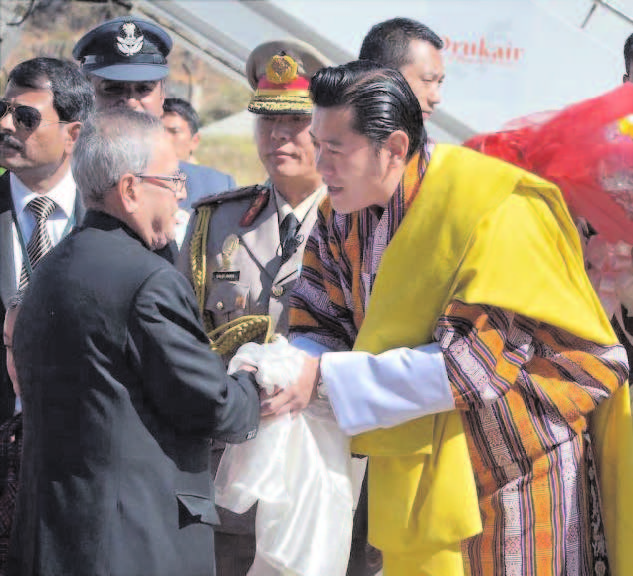
THIMPHU (TIP): President Pranab Mukherjee on Friday arrived here on a two-day visit to Bhutan and was received by the King and his wife in a special gesture. King Jigme Khesar Namgyel Wangchuck along with his wife turned up unexpectedly at the airport as a special gesture to receive Mukherjee, the first Indian head of state to visit to the country in 26 years. Hundreds of school children were lined up along the way, holding Indian and Bhutanese flag. During the visit, Mukherjee will hold meetings with Wangchuck and Prime Minister Tshering Tobgay besides other leaders to take bilateral ties to a new level. Some agreements in education sector are likely to be signed during the trip.
The President is accompanied by a high-level delegation comprising Minister of State for Railways Manoj Sinha, Members of Parliament Mukhtar Abbas Naqvi, Anil Shirole, Mahendra Nath Pandey (all BJP) and Gaurav Gogoi (Congress), besides officials and representatives of a few educational and academic institutions. Sources said as India is keen to revive the ancient Nalanda University, an agreement will be signed for seeking cooperation from Bhutan in this regard. Mukherjee’s visit to Bhutan comes nearly five months after Prime Minister Narendra Modi’s trip to the country. It was Modi’s first foreign visit as Prime Minister. The meetings of the President with the King of Bhutan and the Bhutanese Prime Minister, who will call on him, will provide an opportunity to discuss all issues of mutual interest and ways of further strengthening close bilateral relations. India shares a unique and special relationship with Bhutan nurtured by successive Kings of Bhutan and Indian leaders. -

Russia to sell Mi-35 helicopters to Pakistan
ISLAMABAD (TIP): Russia will sell Mi-35 helicopters to Pakistan to strengthen its counter-terrorism efforts, media reported November 14. Russia’s Ambassador Alexey Dedov said the deal between Pakistan and Russia would help combat terrorism, The Nation reported. He said politically the deal has been approved, however, further negotiations on details of political-commercial contract are in progress.
Dedov also said that Russian Defence Minister Sergey Shoygu would soon visit Islamabad and his agenda of talks with his counterparts includes the sale of defence equipments to Pakistan. He said that Russia was also interested in various energy-related projects, including the development of Gwadar Liquefying Facility and construction of a pipeline between Gwadar and Nawabshah. The Russian ambassador said that the Pakistan-Russia Intergovernmental Commission’s meeting would take place in Moscow Nov 26, which would give new impetus to the bilateral economic cooperation. He said bilateral trade volume of the two countries did not coincide with the actual potential and plenty of room existed which needed to be tapped. -

Bangladesh arrests hardline cleric over TV host’s death
DHAKA (TIP): Bangladesh police said on Monday they have arrested a hardline Muslim preacher for allegedly inciting the murder of a popular television host. Sheikh Nurul Islam Faruqi, the 60-year-old chief cleric of a Dhaka mosque and host of television shows on Islamic issues, was found tied to a chair with his throat slit at his home in the capital in August.
Police suspect he was murdered by Ansarullah Bangla, a little-known group of hardline Islamists whose members were accused of killing an atheist blogger last year. On Monday police said they had arrested 35-year-old preacher Mozaffor bin Mohosin after video footage of him calling Faruqi an “apostate” emerged. “We’ve arrested him for inciting the murder. He has been remanded for two days for questioning,” police spokesman Monirul Islam told AFP. “We have seen the video in which he (Mohosin) could be seen seeking Faruqi’s punishment because he promoted (Sufi) shrines in his programmes.” Mohosin has denied the charge, he said.
The gruesome murder highlighted the growing faultline between hardline Saudi-style Salafi Islamists in Muslim-majority Bangladesh and the country’s centuries-old tradition of Sufi-inspired moderate Islam. Salafists say that worshipping at Sufi shrines is anti-Islamic. The police spokesman said Mohosin regularly preached at a Dhaka mosque attended by militants from the Ansarullah group. Faruqi’s murder triggered protests by moderate Islamic groups, who called a nationwide strike to demand the culprits’ swift arrest. In the last decade, Islamic militants in Bangladesh have killed around 100 people seen as critical of Islam, including secular and cultural activists and bloggers. They have also bombed Sufi shrines which were deemed un-Islamic. -

Lankan minister accuses IPKF of rape during LTTE war
COLOMBO (TIP): A Sri Lankan minister on November 12 accused the Indian Peace Keeping Force (IPKF) of raping Tamil women during the LTTE war. The 48-year-old Vinayagamurthi Muralitharan alias Karuna, who was a former LTTE leader and now a deputy minister in the Mahinda Rajpaksa government, told the parliament that the IPKF who conducted peacekeeping operations in Sri Lanka between 1987 and 1990, had raped several Tamil women while also killing Tamil’s. “There is evidence for that,” Muralitharan, who was then the LTTE’s feared eastern leader said.
The IPKF was invited into north and eastern Sri Lanka in terms of the Indo- Lanka Accord of 1987. Karuna brokeaway from the LTTE in 2004 to form his own movement and later his own political party. He was later allied with Rajapaksa’s ruling coalition to become a deputy minister. He was also appointed a Vice President of the dominant party in the ruling coalition, Sri Lanka Freedom Party (SLFP). Meanwhile, the opposition United National Party (UNP) said that Karuna, a terrorist leader has become a senior member of the SLFP.
Karuna warned the UNP saying he will not hesitate to reveal a lot of information which will cause the main opposition party much embarrassment if they continued to raise allegations against him. In his speech in the parliament he praised the Sri Lankan Navy of preventing poaching in Lankan waters by Indian fishermen. He accused former President Ranasinghe Premadasa of strengthening the LTTE by giving the rebels more weapons.
Muralitharan said that around 1989 only 350 LTTE cadres remained in the outfit but it eventually grew in numbers as a result of the actions of Premadasa. “He gave 5000 weapons to the LTTE. That 300 changed into 6000 in 3 months,” he said. The Deputy Minister also accused the Tamil National Alliance (TNA) of attempting to scuttle the peace by promoting the UN led investigation on Sri Lanka
-

Pakistani Taliban splinter group releases Wagah bomber’s pictures
ISLAMABAD (TIP): A splinter group of Pakistani Taliban on November 13 released pictures of a suicide bomber, who had killed nearly 60 people at Wagah border. Jamaat ul Ahrar has claimed responsibility for the attack on a crowd, who gathered to witness the traditional flag-lowering ceremoney. Around 100 people had also been injured in the attack, Xinhua reported. The Jamaat ul Ahrar’s spokesman Ehsanullah Ehsan emailed the photos of Hanifullah alias Hamza to the media in Pakistan and also posted it online. There was no independent confirmation of the photo. The bomber is shown in the picture sitting with two automatic guns and the group’s white and black flags. Ehsan said he will also issue a video of the deadly attack which had killed mostly civilians.
-

OBAMA MEETS MYANMAR LEADER AMID FEARS OF BACKSLIDE
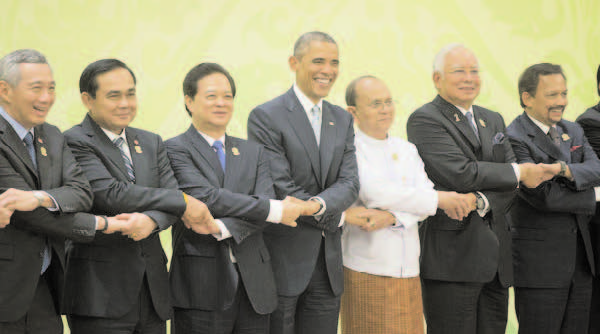
NAYPYITAW, MYANMAR (TIP): President Barack Obama received a hero’s welcome two years ago during his historic visit to Myanmar, whose rapid rebirth after decades of repression was a source of hope for the region and beyond. Yet when he meets on Thursday with President Thein Sein in the nation’s sparking new capital, Obama will carry a far grimmer message as he warns of a worrisome backslide in the country’s march toward a freer and fairer society.
A nationwide cease-fire with armed ethnic groups has yet to materialize. Myanmar’s prodemocracy opposition figure, Nobel laureate Aung San Suu Kyi, is banned from next year’s pivotal elections. Scores of Rohingya Muslims are fleeing for fear of violence at the hands of Buddhist mobs, while roughly 1,40,000 more remain trapped in camps under dismal conditions. This was not the Myanmar that Obama had hoped for when he made US engagement with the nation, also known as Burma, a centerpiece of his efforts to promote human rights and expand US influence in Asia. “The work is not yet done,” Obama said after meeting with members of Myanmar’s parliament. To be sure, the country has made great strides.
But the optimism that once radiated here has faded, tempered by the realization that, to transition successfully away from five decades under a military junta, Myanmar needs more than just the right words from its leaders and high-profile visits from an American president. So when Thein Sein hosts Obama for a sitdown at his new marbled, moat-enclosed palace, all eyes will be on how hard a line Obama will toe. After all, Obama has staked part of his legacy overseas on Myanmar’s success, and Obama is facing tough questions about why he’s rewarding Myanmar with a second presidential visit when the progress Thein Sein promised has, in many cases, been slow to emerge.
“It’s a very fluid situation right now inside of Burma,” Obama’s deputy national security adviser, Ben Rhodes, said Thursday before the meeting. “We have significant concerns that there has to be further follow-through.” Obama’s meeting with Thein Sein, himself a former member of the junta, offers Obama his first major opportunity to address Myanmar’s state of affairs since he set off Sunday on a weeklong tour of Asia and Australia. But in China, on the first leg of the trip, Obama treaded lightly on human rights issues and other areas where pushing a firm stance could have upset his hosts. On his first full day in Myanmar, Obama announced the US would start sending Peace Corps volunteers there in late 2015.
The White House said the volunteers would train for three months to learn Myanmar’s language, culture and technical needs, then serve at sites in Myanmar for two years. Obama’s first encounter with Suu Kyi during his visit came on Thursday at a sparsely equipped building in Naypyitaw, a city whose very existence is an ode both to Myanmar’s aspirations for democracy and its challenges in making it work. Carved from scratch out of scrubland in the early 2000s, Naypyitaw has the lush hotels and grandiose public buildings of a modern capital, but its vast empty spaces and eerily empty multilane highways have led to its reputation as a ghost town.
At the parliamentary resource center, a hub for aid organizations, Obama told Suu Kyi and her fellow parliamentarians he was heartened by their determination to move ahead with the transition. He said in some ways, the questions facing Myanmar echo those that Americans have faced, like how to include minorities or prevent institutional discrimination. “There are times when we’ll offer constructive criticism about a lack of progress,” Obama said. “But our consistent aim and goal will be to see that this transition is completed so that it delivers concrete benefits for the people” Soe Thane, and former high-ranking junta leader now in Thein Sein’s government, said in an op-ed on Thursday that Myanmar was determined to confront its challenges, including ending armed conflict with a groups, holding fair elections and addressing the humanitarian crisis in Rakhine state, home to the Rohingya people.
“All people in Myanmar, regardless of ethnicity or religion, deserve the same fundamental rights and freedoms,” he wrote in The New York Times. White House officials said Myanmar’s treatment of the Rohingya would be high on Obama’s agenda when he meets with Thein Sein. Another key US concern is the need for constitutional reforms, such as the elimination of a rule that is keeping Suu Kyi off the ballot because her sons hold British citizenship. In a sign of Obama’s high regard for the opposition leader, when Obama called Thein Sein late last month to lay the groundwork for the visit, he placed a call the same day to Suu Kyi.
And when Obama flies on Friday to Yangon, Myanmar’s largest city, he’ll not only meet with Suu Kyi but hold a joint news conference with her and visit the secretariat, the infamous building where her father, Gen. Aung San, was assassinated.
-

Andy Warhol’s Elvis, Brando paintings fetch record $151m
NEW YORK (TIP): Two iconic Andy Warhol paintings of Elvis Presley and Marlon Brando sold for more than $151 million at auction in New York on Thursday, shattering pre-sale estimates by several million dollars. Pop-art legend Warhol’s ‘Triple Elvis’ — a 1963 silkscreen depicting three images of the King of Rock and Roll posing as a gunslinging cowboy —sold for $81.9 million at the Christie’s sale. The striking seven-foot tall work, derived from a publicity still for the 1960 Don Siegel-directed Western ‘Flaming Star,’ had been estimated to fetch $60 million. The final sale price topped out at more than$ 20 million above the estimate after six minutes of frenzied bidding. It was a similar story for the other Warhol classic sold on Nov 13, ‘Four Marlons,’ a giant set of four images of the legendary actor taken from his 1953 motorcycle gang classic ‘The Wild One’. Both of Wednesday’s auction prices however were well short of the all-time record for a Warhol work set by ‘Silver Car Crash (Double Disaster)’ which fetched $105.4 million in November last year at Sotheby’s. A flurry of bids also greeted the sale of Cy Twombly’s ‘Untitled’ from his blackboard series, which went under the hammer for the first time. The painting — a series of energetic looping spirals resembling chalk scribblings on a school blackboard — sold for $69.6 million, the highest amount ever paid for a work by the American, who died three years ago in Italy.
-

US internal review cites secret service failures in White House intrusion
WASHINGTON (TIP): An intruder was able to scale the White House fence and enter the executive mansion in September because of major secret service failures including an agent who was distracted by a personal cellphone call, according to an internal review released on Thursday. Iraq war veteran Omar Gonzalez, 42, is accused of breaking into the heavily guarded complex on Sept 19 armed with a knife in one of the most significant security breaches since President Barack Obama took office in 2009.
The suspect was not stopped until he entered the main floor of the White House. In addition to the knife he was carrying, officers found more weapons in his car. The incident helped spur the resignation of Secret Service Director Julia Pierson. According to the review by the US department of homeland security, the suspect climbed over the 7-foot (2- metre) fence where a “trident,” or ornamental spike was missing. Several uniformed secret service agents were stationed in the area but were unable to see the intruder because of a construction project along the fence line, the report said, which also cited breakdowns in radio communications.
A canine officer stationed on the White House driveway with a guard dog was on his personal cellphone at the time of the intrusion and was not wearing his earpiece, the review said. After spotting the intruder, the officer moved toward him and gave the dog the command to apprehend the suspect. But the canine “did not have enough time to lock onto” the intruder and “may not have seen him at all,” according to the report’s executive summary.
“This report indicates that the Secret Service’s response at the White House was significantly hampered on September 19th because of critical and major failures in communications, confusion about operational protocols and gaps in staffing and training,” the review said. “While some of these problems can be attributed to a lack of resources, others are systemic and indicative of secret service culture.” Michael McCaul, who chairs the US House of Representatives homeland security committee, introduced legislation on Thursday to form a panel “to conduct a top-to-bottom review” of the Secret Service. House judiciary committee chairman Bob Goodlatte said the review “reads as a comedy of errors by the U.S. Secret Service and confirms that fundamental reform is needed to improve both the security of the White House grounds and staff training.”
-

FBI’s ‘suicide letter’ to Martin Luther King found
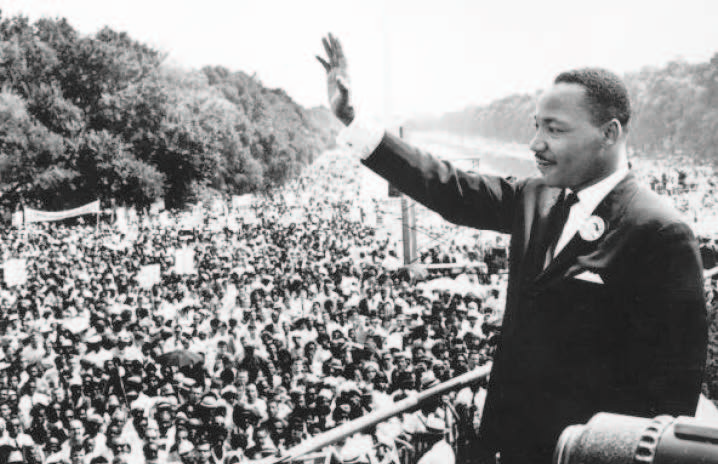
WASHINGTON (TIP): The uncensored contents of a letter sent from the FBI to Martin Luther King in which he is called an “evil, abnormal beast” and apparently encouraged to kill himself have been made public for the first time. In what appears to be a heavy-handed attempt to unsettle the civil rights leader, the anonymous letter was written by a deputy of the bureau’s director J Edgar Hoover, posing as a disappointed activist, and sent to King in the weeks before he received the Nobel Peace Prize in 1964.
While the existence of the document, dubbed the “suicide letter”, has been known for some time, only heavily redacted versions had previously been available. It has now been published in full in The New York Times Magazine after an unredacted version was discovered in the National Archive by Yale University historian Beverly Gage, as she researched a book on Hoover. It shows the FBI director was apparently willing to use King’s extramarital affairs in an attempt to disconcert the pastor.
Writing in The New York Times, Gage describes how, “The largest unredacted section focuses on King’s sex life, recounting in graphic language what the bureau believed it knew.” Littered with apparently deliberate typos and mistakes, the letter warns King: “There is but one way out for you. You better take it before your filthy, abnormal fraudalant [sic] self is bared to the nation.” At the time King and his associates suspected the letter had come from the FBI, a belief that was confirmed a decade later by the Senate’s Church Committee on intelligence overreach.
The FBI’s attempt to keep tabs and discredit King, who was assassinated in 1968, has been reported to have come under the umbrella of the Cointelpro programme. Launched in the 1950s, the programme was initially intended to trail and, if possible, discredit members of the Communist Party. Through the 1960s however it shifted its focus to civil rights activists.
In September last year, historical archives released to researchers at George Washington University showed the NSA under a programme dubbed ‘Minaret’, was monitoring the overseas phone calls and cables of a number of figures of note including King and boxing champion Muhammad Ali. The documents relate to a period from 1967 to 1973, a time when it appears paranoia about foreign governments stoking the anti-Vietnam War movement was rife. -

Gay marriage advocates get victories in Kansas, South Carolina
CHARLESTON (TIP): Gay marriage advocates won another two victories on November 12 as the US Supreme Court allowed Kansas to become the 33rd US state where same-sex couples can wed and a federal judge struck down South Carolina’s ban. The high court declined a request from Kansas officials to block US District Court Judge Daniel Crabtree’s on November 4 ruling that struck down the state’s gay marriage ban as a violation of the US Constitution.
Two of the nine justices, conservatives Antonin Scalia and Clarence Thomas, said in the brief court order they would have granted the stay. In Charleston, US District Judge Richard Gergel ruled that South Carolina is bound by an earlier federal appeals court decision striking down Virginia’s similar law. Gergel’s decision will not take effect for one week, allowing South Carolina time to appeal. That could allow gay couples to file for marriage licenses or begin receiving them starting November 20 if the state cannot obtain a further delay through the courts. “We’re ecstatic,” said Colleen Condon, 44, who filed the lawsuit heard by Gergel after she and her fiancee were denied a marriage license in Charleston last month.
South Carolina attorney general Alan Wilson, a Republican, said he would appeal Wednesday’s ruling. Wednesday’s court actions follow decisions last week rejecting bans in Missouri and West Virginia, the latest in a series of such federal district court rulings across the nation. Although gay marriage advocates have had the advantage in the courts over the past year, the landscape changed last week when a Cincinnati-based federal appeals court became the first to uphold gay marriage bans. That decision by the 6th Circuit US Court of Appeals backing four states’ bans created a split within the courts, increasing the chances the Supreme Court will rule once and for all on whether states can ban gay marriage. -

US nurses hold strikes, protests over Ebola measures
SAN FRANCISCO/WASHINGTON (TIP): Tens of thousands of nurses across the United States staged protest rallies and strikes on Wednesday over what they say is insufficient protection for health workers dealing with patients possibly stricken with the deadly Ebola virus. California-based National Nurses United had expected about 100,000 nurses nationwide to participate in the protest, and a spokesman for the union said he expected about that many people to take part before the end of the day.
The union is embroiled in contract talks with the operators of nearly 90 California hospitals and clinics, and one hospital in Washington, DC. About 19,000 nurses who on Tuesday began a two-day strike against those California facilities were part of the Ebola measures protest, which in other parts of the country did not involve nurses walking off the job. Healthcare provider Kaiser Permanente, which operates most of the California facilities where the nurses were striking, has accused the union of using Ebola as a pretext for labor action.
The nurses are pressing hospitals to buy hazardous materials suits which leave no skin exposed, as well as powered air-purifying respirators, to properly protect them from exposure, and they are seeking more training to handle patients suspected of having Ebola. “The best way to protect our community is to protect our nurses,” said Evan Brost, a nurse who joined more than 30 people in a protest outside the White House over Ebola measures. Elsewhere, protests took place in Chicago, Oakland, and outside the offices of some state governors, said National Nurses United Executive Director Rose Ann DeMoro. The US Centers for Disease Control and Prevention says it has ordered $2.7 million worth of personal protective equipment to help hospitals care for Ebola patients, but union officials contend that is insufficient.