Year: 2014

  • Pakistan army chief renews offer to train Afghan troops

    Pakistan army chief renews offer to train Afghan troops

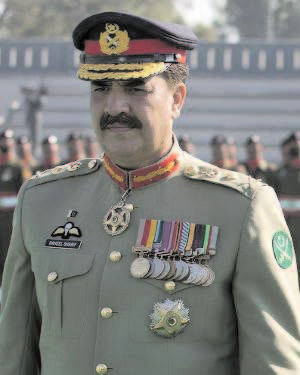
    ISLAMABAD (TIP): Pakistan army chief general Raheel Sharif has renewed the offer to train Afghan military during his meeting with the new President Ashraf Ghani in Kabul and promised weapons for an infantry brigade. Raheel paid a day-long visit to Kabul Thursday and met Afghan President, chief executive officer Abdullah Abdullah and senior military leaders. The military chief offered the training courses and facilities in Pakistan’s training institutions to Afghan security forces.

    “The COAS also offered the capacity enhancement of an infantry brigade, including provision of equipment,” military spokesman said. He discussed a host of issues with Afghan leaders including the Pak- Afghan relations post-2014. Pakistan has made the offer to train the military earlier but former Afghan president Hamid Karzai refused it saying that they do not want to get training form neighbouring countries. Pakistan is keen to train the Afghanistan military to counter India who is already training them. Raheel also briefed about operations against Taliban militants.

  • Bangladesh turns to Russia for submarines

    Bangladesh turns to Russia for submarines

    KOLKATA (TIP): When it became known to India that Bangladesh is on the hunt for two submarines for its navy, there was some consternation. More so when it came to be known that Bangladesh is negotiating with China for the Ming-class submarines. Something that India can do without at the moment is a spurt in military ties between China and Bangladesh. The level of anxiety has come down somewhat in recent times after information was received that Bangladesh is planning to procure the submarines from Russia.

    “From reliable sources, we have come to know that Bangladesh is making efforts to move away from the Chinacentric approach where it comes to defence procurement. Nearly half of Bangladesh’s military hardware is sourced from either China or Pakistan. This provided an excuse for Chinese and Pakistani military presence along India’s east coast. Russia is different. India enjoys good relations with Russia and also uses military hardware built there. Better ties between Russia and Bangladesh are encouraging. We don’t believe that Russia will not do anything to harm India’s interests,” a highly placed source in Delhi said. For years now, India has been attempting to keep the ‘dragon’s presence’ away from Bangladesh and other neighbouring countries.

    In certain cases, India has even offered products and services at rates that would be convenient for these countries. By the end of this year, India hopes to deliver the ‘Barracuda’, a Naval Offshore Patrol Vessel for the Mauritian Navy. The ‘Barracuda’, being fitted-out at Kolkata’s Garden Reach Shipbuilders and Engineers (GRSE) will be India’s first such export. “This is more of a diplomatic move rather than a financial deal. One can also call this a confidence building measure. Once Mauritius is satisfied with the NOPV, India may get more orders from this region. This is good diplomacy,” the source added.

    According to sources in Dhaka, Bangladesh proposes to purchase two diesel-electric submarines from Russia. Plans are also afoot to procure aircraft for the navy. Bangladesh already uses Russian hardware in the form of Mig-29 fighters and military helicopters. In 2013, Russia allegedly offered a $1.5 billion loan to Bangladesh that would be used to purchase military hardware. The Bangladesh government wants the submarines to join its navy by 2019. Bangaldesh air force’s fleet of eight MiG-29s is due for upgradation. So is its fleet of Russian made Mi-17 helicopters. HAL has maintenance facilities in India for both aircraft as they are used by the IAF as well. India has offered to upgrade and maintain the Mig-29s and helicopters at HAL facilities to bolster ties with Bangladesh.

  • Lankan minister accuses IPKF of rape during LTTE war

    Lankan minister accuses IPKF of rape during LTTE war

    COLOMBO (TIP): A Sri Lankan minister on Wednesday accused the Indian Peace Keeping Force (IPKF) of raping Tamil women during the LTTE war. The 48-year-old Vinayagamurthi Muralitharan alias Karuna, who was a former LTTE leader and now a deputy minister in the Mahinda Rajpaksa government, told the parliament that the IPKF who conducted peacekeeping operations in Sri Lanka between 1987 and 1990, had raped several Tamil women while also killing Tamil’s. “There is evidence for that,” Muralitharan, who was then the LTTE’s feared eastern leader said. The IPKF was invited into north and eastern Sri Lanka in terms of the Indo- Lanka Accord of 1987. Karuna brokeaway from the LTTE in 2004 to form his own movement and later his own political party.

    He was later allied with Rajapaksa’s ruling coalition to become a deputy minister. He was also appointed a Vice President of the dominant party in the ruling coalition, Sri Lanka Freedom Party (SLFP). Meanwhile, the opposition United National Party (UNP) said that Karuna, a terrorist leader has become a senior member of the SLFP. Karuna warned the UNP saying he will not hesitate to reveal a lot of information which will cause the main opposition party much embarrassment if they continued to raise allegations against him.In his speech in the parliament he praised the Sri Lankan Navy of preventing poaching in Lankan waters by Indian fishermen. He accused former President Ranasinghe Premadasa of strengthening the LTTE by giving the rebels more weapons. Muralitharan said that around 1989 only 350 LTTE cadres remained in the outfit but it eventually grew in numbers as a result of the actions of Premadasa.

  • CIA tweets ‘Argo’ errors on Iran crisis anniversary

    CIA tweets ‘Argo’ errors on Iran crisis anniversary

    LOS ANGELES (TIP): The CIA on Friday good naturedly highlighted the inaccuracies in Oscar-winning Iran hostage drama “Argo,” in a series of tweets to mark the anniversary of the 1979 crisis. The 2012 film tells the story of a bold Central Intelligence Agency (CIA) operation to rescue six US diplomats trapped in the Canadian ambassador’s residence in Tehran. It is well known that the movie takes liberties with the facts, including a white-knuckle airport runway chase at the end, and the significant underplaying of Canada’s role in resolving the crisis and rescuing the diplomats. But just in case anyone had forgotten, the CIA gave a blow-by-blow account on their Twitter feed, under the keywords “reel” (cinema) and “real” (genuine).

    Here are some excerpts: Reel #Argo: “When the US Embassy is overtaken the 6 US diplomats go right to the Canadian ambassador’s residence to live for the 3 months.” Real #Argo: “5 of them went to many different places until they ended up at the homes of the Canadian Ambassador & the Dep. Chief of Mission.” Reel #Argo: The CIA officer and the six diplomats go into town to scout locations. – Real #Argo: They never went to the marketplace to scout a location. The six hid in the Canadian’s homes for 79 days.

    Reel #Argo: Airline tickets are not waiting at the counter and have to be rechecked before the tickets are authorized and confirmed. Real #Argo: The Canadians had already purchased the tickets for the Americans. There were no issues at the counter nor the checkpoints. Reel #Argo: The Americans are detained at the airport by security guards & a call is made back to “Studio Six” to verify their identity. Real #Argo: It didn’t happen. An early flight was picked so airline officials would be sleepy & Revolutionary Guards would still be in bed. Reel #Argo: The plane clears Iranian air space and the Americans cheer and celebrate.

    Real #Argo: That happened; there was even a round of celebratory Bloody Marys. #ThankYouCanada. When “Argo” was released the Canadian ambassador, Ken Taylor — who is now 80 years old — made his views clear about regarding some aspects of the movie’s accuracy. “The movie’s fun, it’s thrilling, it’s pertinent, it’s timely,” he told the Toronto Star. “But look, Canada was not merely standing around watching events take place. The CIA was a junior partner,” he said. The US embassy was stormed on November 4, 1979, triggering a crisis which lasted 444 days and is widely credited with ending any re-election hopes president Jimmy Carter might have had.

  • US air force believes fighter jet crashed in Gulf of Mexico

    US air force believes fighter jet crashed in Gulf of Mexico

    TYNDALL AIR FORCE BASE (TIP): US air force officials say they believe an F-16 fighter jet has crashed in the Gulf of Mexico. A news release from Tyndall Air Force Base says the jet was on a routine training mission over the Gulf on November 6 morning when the Florida Panhandle base lost contact with the pilot. Aircraft and rescue forces were immediately sent to the missing jet’s last known location. No wreckage has been found, but officials are working under the assumption that the plane went down in the water. The US coast guard is leading the search. 325 Fighter Wing Vice Commander Col Mark O’Laughlin says in the news release that finding the pilot is their top priority.

  • Robin Williams’ autopsy found no illegal drugs

    Robin Williams’ autopsy found no illegal drugs

    SAN FRANCISCO (TIP): Robin Williams’ autopsy found no alcohol or illegal drugs were in his body when he killed himself at his Northern California home in August, sheriff’s officials said on November 7. The results released by the Marin County sheriff’s office found that the actor had taken prescription medications, but in “therapeutic concentrations.” The coroner ruled Williams’ death a suicide that resulted from asphyxia due to hanging. Sheriff’s officials have said Williams was found in the bedroom of his home in Tiburon on the morning of August 11.

    His death had been preliminarily ruled a suicide, with sheriff’s officials saying he hanged himself with a belt. Williams’ wife, Susan Schneider, has said the actor and comedian was struggling with depression, anxiety and a recent Parkinson’s diagnosis when his personal assistant found him dead. Williams had publicly acknowledged periodic struggles with substance abuse, and he had entered a substance abuse program shortly before his death. According to the coroner’s report, his wife told an investigator Williams did not go there because of recent drug or alcohol abuse, but rather to reaffirm the principles of his rehabilitation.

    According to his wife, Williams was having trouble sleeping and had shown increased signs of paranoia before he committed suicide, the autopsy report said. Medical records confirmed he was diagnosed with Parkinson’s disease in November 2013 but had symptoms since 2011, including a left arm tremor and the slowing of left hand movements. Treatments with drugs in May 2014 led to some improvement, according to the report, and he remained physically active until his death. Williams had two types of antidepressants in his system when he died, as well as a Parkinson’s medication, caffeine and another ingredient found in tea and cocoa, the autopsy found. Authorities have said Williams was last seen alive by his wife when she went to bed the night of Aug. 10.

    She woke up the next morning and left, thinking he was still asleep elsewhere in the house. Shortly after that, Williams’ assistant came to the home and became concerned when he failed to respond to knocks at a door. The assistant found the 63-year-old actor in a bedroom, according to sheriff’s officials. Williams also had superficial cuts on his wrist, and a pocketknife was found nearby. The results of Williams’ autopsy, including the toxicology tests, were originally slated to be released Sept. 20. Marin County officials later announced a Nov. 3 release date, but the report was further delayed. Toxicology reports routinely take up to six weeks to complete.

  • Obama authorizes 1,500 additional military personnel to Iraq

    Obama authorizes 1,500 additional military personnel to Iraq

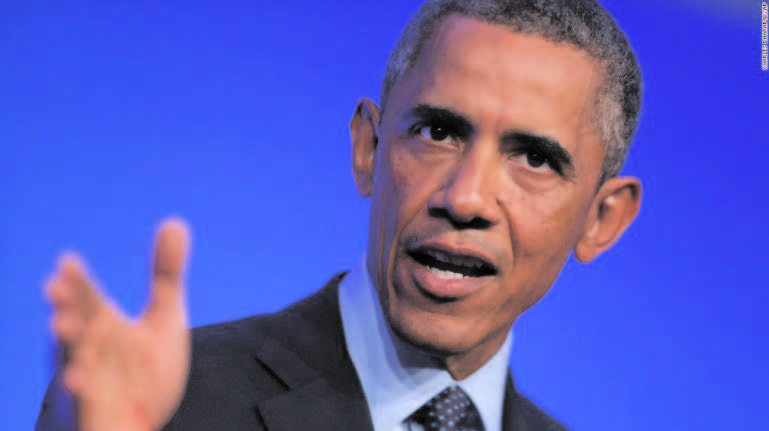
    WASHINGTON (TIP): President Barack Obama has authorized the deployment of up to 1,500 more US troops for Iraq, roughly doubling the number already there to advise and retrain Iraqi forces battling Islamic State militants, US officials said on November 7. The United States has about 1,400 troops in Iraq, slightly below a previous limit of 1,600. The Pentagon said it planned to establish several sites across the country to train nine Iraqi army brigades and three brigades of Kurdish Peshmerga fighters.

    They will be set up in northern, western and southern Iraq. US military would also establish “advise and assist” operations centers, adding to similar centers already set up in Baghdad and Arbil. Alarmed by the advance of Islamic State militants across Iraq, Obama began sending non-combatant troops back to Iraq in the summer for the first time since US forces withdrew from the country in 2011. One US military official said one location military advisors would head to soon was western Anbar province, which borders Syria and where Islamic State fighters are still on the offensive.

    Iraq’s main military divisions in Anbar – the seventh, eighth, ninth, tenth and twelfth – have been badly damaged. At least 6,000 Iraqi soldiers were killed through June and double that number have deserted, say medical and diplomatic sources. The announcement came the same day that US President Barack Obama met members of Congress at the White House, where he updated them on the fight against Islamic State in Iraq and in Syria. The White House will ask Congress for $5.6 billion for the operations in Iraq and Syria, which includes $1.6 billion for the new “Iraq Train and Equip Fund,” the White House Office of Management and Budget said. Obama has launched air strikes against Islamic State targets in both Syria and Iraq, but he has ruled out sending ground troops into combat.

  • Obama picks Brooklyn US prosecutor Lynch for attorney general

    Obama picks Brooklyn US prosecutor Lynch for attorney general

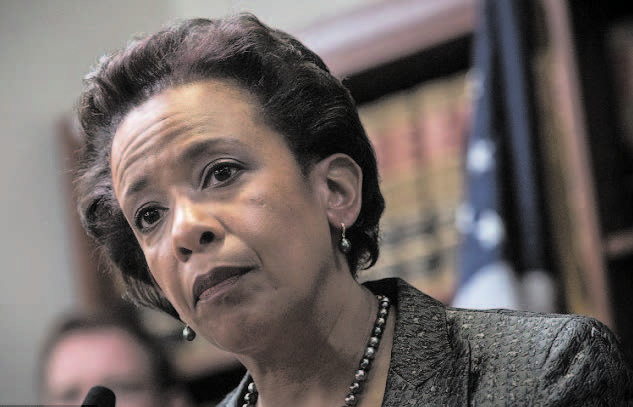
    WASHINGTON (TIP): President Barack Obama plans to nominate veteran New York federal prosecutor Loretta Lynch to succeed Eric Holder as US attorney general, the White House said on November 7. If confirmed by the Senate, Lynch would be the first African-American woman to serve as the nation’s top law enforcement officer. Obama will make the announcement at the White House on Saturday, with Lynch and Holder — who announced his resignation in late September — at his side, spokesman Josh Earnest announced.

    Lynch’s confirmation potentially could be difficult after Republicans seized control of the Senate earlier this week in a midterm election rout of Obama’s Democrats. But she is not seen as a member of Obama’s inner circle — which may help her in the confirmation process. “Ms Lynch is a strong, independent prosecutor who has twice led one of the most important US attorney’s offices in the country,” Earnest said in a statement. The spokesman praised Holder — a close friend of Obama — saying his “tenure has been marked by historic gains in the areas of criminal justice reform and civil rights enforcement.”

    Lynch, who is in her mid-50s, will be the second African-American attorney general, after Holder. She is in her second stint as the top federal prosecutor for the Eastern District of New York. She earned Senate confirmation under president Bill Clinton and again in 2010 under Obama. Lynch oversees federal prosecutions in three New York boroughs — Brooklyn, Queens, Staten Island — as well as two suburban counties on Long Island.

    “Loretta Lynch will make a terrific AG,” Senator Chuck Schumer of New York said on Twitter. Lynch first came to prominence as a member of the legal team that prosecuted and won convictions in a high-profile case against uniformed New York City police officers who beat and sexually assaulted Haitian immigrant Abner Louima after arresting him. The North Carolina native has both undergraduate and law degrees from Harvard University. Before her return to the US Attorney’s office in Brooklyn, Lynch was a partner in the New York office of law firm Hogan & Hartson LLP, where she focused her practice on commercial litigation, white-collar criminal defense and corporate compliance issues.

    She also served as Special Counsel to the Prosecutor of the International Criminal Tribunal for Rwanda, according to her official biography on the Department of Justice website. In that capacity, Lynch “conducted a special investigation into allegations of witness tampering and false testimony at the Tribunal,” the biography says. In September, Obama called Holder’s departure “bittersweet,” but said he empathized with the sacrifices Holder and his family had made as he served in one of the toughest jobs in government. Holder — who agreed to stay on until his successor is confirmed — is seen as a champion of civil rights by supporters but reviled as an ideologue by Republicans.

    He is one of just three original cabinet members still serving in the job they took when Obama assumed power in 2009, alongside Education Secretary Arne Duncan and Agriculture Secretary Tom Vilsack. Only three other US attorneys general have served longer than Holder, whose tenure was notable for significant inroads made in the civil rights arena, including gains in rights and benefits for same-sex couples and reductions in prison sentences for certain drug offenses.

  • US NURSE WHO CAUGHT EBOLA: ‘I’M NOT CARELESS’

    US NURSE WHO CAUGHT EBOLA: ‘I’M NOT CARELESS’

    ATLANTA (TIP): The Dallas nurse who flew on a commercial jet before being diagnosed with Ebola says she wasn’t careless or reckless. In an interview Thursday on NBC’s “Today” show, Amber Vinson also said she didn’t get enough training to feel comfortable treating Ebola patients. She said the first time she donned special protective gear was when she was heading in to take care of an infected patient at her Dallas hospital. Vinson said she checked with health officials before flying Oct 10 from Dallas to Cleveland and returning three days later. The Atlanta-based Centers for Disease Control and Prevention has acknowledged that Vinson wasn’t stopped from flying, something the agency later said was a mistake on its part. Vinson has recovered from Ebola. She said Thursday she feels good, but still gets tired sometimes.

  • Detroit wins court approval for plan to exit bankruptcy

    Detroit wins court approval for plan to exit bankruptcy

    DETROIT (TIP): Detroit won US Bankruptcy Court approval on November 7 for a road map to end its fiscal free fall and revitalize a city sinking under a huge debt load and dysfunctional government. Judge Steven Rhodes confirmed the city’s plan to shed about $7 billion of its $18 billion of debt and obligations and plow $1.7 billion into improvements, finding it both fair to creditors and feasible to implement.

    “The city has worked honestly, diligently, and tirelessly to accomplish precisely the remedy that the bankruptcy code establishes for municipalities,” Rhodes said in the ruling he read from the bench. He acknowledged the anger the bankruptcy fueled among many Detroit residents and urged them to look forward. “And so I ask you, for the good of the city’s fresh start, to move past your anger. Move past it and join in the work that is necessary to fix this city,” he said. He also called Detroit’s inability to provide adequate services to its residents “inhumane and intolerable,” saying that the city’s plan aims to fix that problem.

    Once the proud symbol of US industrial strength, Detroit fell on hard times after decades of population loss, rampant debt and financial mismanagement left it struggling to provide basic services to residents. During the 15-1/2-month bankruptcy process, the city’s historic collection at the Detroit Institute of Arts (DIA) came into play as a potential pot of assets to satisfy creditors. The journey through Chapter 9 municipal bankruptcy began on July 18, 2013, with major creditors girding for battle, and has wound down in a flurry of settlements.

    A socalled Grand Bargain taps in to $816 million from foundations, the DIA and the state of Michigan to ease pension cuts and protect city-owned art work from sale. In his ruling, Rhodes said that settlement, which was key in winning the support for the plan from Detroit’s two retirement systems and scores of city workers and retirees, “borders on miraculous.” Bigger cuts to retiree healthcare were justified because that benefit, unlike pensions, was not protected under Michigan’s constitution, he said. However, a deal that granted unsecured holders of the city’s unlimited tax general obligation bonds a 74 percent recovery was possibly at the top range of reasonableness, Rhodes said. He also noted that bond repayment can no longer be the only top budget priority in Michigan ahead of pensions.

    Richard Ciccarone, head of Merritt Research Services, said Detroit changed the risk profile for municipal bonds. “It’s a milestone for municipal credit risk. If we look back over the past 50 years, this stands out as evidence that municipal bonds are not risk-free.” Two companies that guaranteed payments on Detroit bonds and were the last major holdout creditors in the case, Syncora Guarantee Inc and Financial Guaranty Insurance Co , received options to develop parcels of land. Rhodes imposed the plan on two classes of miscellaneous creditors. With the cost of Detroit’s consultants and lawyers topping $140 million, Rhodes said a process will be established to determine if those fees are reasonable.

    Attending Rhodes’ ruling were Detroit’s state-appointed emergency manager, Kevyn Orr, who took Michigan’s biggest city to bankruptcy court, and Mayor Mike Duggan, who is now tasked with carrying out the plan. Orr came under fire from many Detroit constituents and city-elected leaders when he was appointed by Michigan Governor Rick Snyder to turn the city around. “The rule of law, comity, civility and unity prevailed. Sometimes not too easily – but eventually,” Orr said at a news conference following the ruling. Duggan, at the same news conference, took issue with Rhodes’ concern that it is a possible conflict of interest for the mayor and a member of the city council to have a seat on a nine-member, statecreated oversight board for a post-bankruptcy Detroit. “I am going to sit on that financial review commission to make darn sure that every single document they ask for, every single concern they raise is responded to promptly by the city of Detroit,” Duggan said.

  • GOVT PUSHING TO COMPLETE ROAD PROJECTS ALONG CHINA BORDER

    GOVT PUSHING TO COMPLETE ROAD PROJECTS ALONG CHINA BORDER

    NEW DELHI (TIP): Defence Minister Arun Jaitley on November 7 said the government is working towards an early completion of 22 border roads prioritised by the Army. The government is intensely monitoring the road projects entrusted for speedy completion with the Border Roads Organisation, Jaitley informed the Parliamentary Consultative Committee on Friday. The 22 road projects were among the 73 Sino-Indian border roads running a total length of 3,812 kilometres which the government had identified almost a decade ago. However, a mere 17 of them covering 590 kilometres were completed, as a series of bottlenecks crippled the progress of other projects. Director General of BRO Lt Gen AT Parnaik told the panel that the projects were hit by delays in getting forest and wildlife clearances, trying terrain conditions, hard road structures, extreme weather conditions limiting the working periods, paucity of construction materials and natural disasters.

  • Modi picks up spade, cleans Assi Ghat

    Modi picks up spade, cleans Assi Ghat

    VARANASI (TIP): Bringing Swachh Bharat campaign to his Lok Sabha constituency, Prime Minister Narendra Modi on November 7 wielded a spade to remove silt deposited along the banks of River Ganga and nominated nine persons, including Chief Minister Akhilesh Yadav, to carry forward the cleanliness drive in UP. Modi arrived at the Assi Ghat where he climbed down three stairs and worked through an uneven muddy track to reach a makeshift stage where five priests were waiting for the Prime Minister to assist him in a special Ganga puja.

    The Prime Minister spent close to 15 minutes offering prayers to the river, as hymns echoed through speakers installed at the venue. After the prayers, Modi, who was accompanied by a few BJP leaders including party president Laxmikant Bajpai and city mayor Ram Gopal Mohale, picked up a spade and began vigorously digging the huge amount of silt that had deposited along the ghat after the rainy season. Speaking to media persons assembled at the spot, he said that just like the launch of Swacch Bharat Campaign in Delhi on Gandhi Jayanti, he was nominating nine noted persons from UP to take the drive forward in the state.

    Besides the Uttar Pradesh Chief Minister, those nominated by Modi include Bhojpuri actor Manoj Tiwari, Sufi singer Kailash Kher, comedian Raju Srivastava, cricketers Mohd Kaif and Suresh Raina, Chancellor of University of Blind at Chitrakoot Swami Ram Bhadracharya, Sanskrit scholar Devi Prakash Dwivedi and writer Manu Sharma. From the Assi Ghat, the Prime Minister left for the ashram of Shri Anandamayi. Modi is understood to have met inmates of the ashram and visited a charitable hospital inside the premises.

  • Army admits to killing Budgam boys

    Army admits to killing Budgam boys

    SRINAGAR (TIP): The Army on November 7 accepted that it had mistakenly killed two boys in central Kashmir’s Budgam district recently, and promised a transparent and time-bound probe into the incident. Addressing a press conference at the 15 Corps headquarters here, Northern Command chief Lt Gen D S Hooda said: “We take responsibility for the death of the two boys in Kashmir.

    We admit that a mistake was made, and that a transparent investigation will be taken up.” Assuring that such incidents would not happen in future, he said, “We are aiming to complete the inquiry within days and not months. Hopefully, if all goes well and all the witnesses come in, we will have completed the inquiry in the next 10 days. Around 15 civilian witnesses have recorded their statements, apart from those from the Army.” The commander also announced a compensation of Rs 10 lakh to the families of the deceased, and Rs 5 lakh for injured. “We would like to assure the families of our fullest support and cooperation. We are committed to rehabilitation and full recovery of those injured,” he said.

    He also said the military unit involved in the incident, the 53 Rashtriya Rifles, has been replaced with troops from 25 Rashtriya Rifles. On Monday, Defence Minister Arun Jaitley had also promised action against those found guilty. “The Budgam incident in the Kashmir Valley is highly regrettable. A fair inquiry will be held and action taken against those found guilty,” he had tweeted. Faisal Bhat (14) and Meraj-ud-Din Dar (20) were killed when soldiers fired at the vehicle they were travelling in after they allegedly refused to stop at an Army checkpost in the Chatergam area of Budgam on Monday evening.

    Two more boys—Zahid and Shakir— were critically injured in the incident and are undergoing treatment at Army hospital here. Basim Amin, the fifth boy who accompanied his friends, had a providential escape and returned home safe. All five belonged to the Nowgam area on the outskirts of the city.There has been huge outrage over the killings, with all the political parties cutting across ideologies demanding the severest punishment for the accused soldiers.

    THE INCIDENT

    Faisal Yousuf (17) and Mehraj-u-din Dar (21) were killed and two others were injured when troops of 53 Rastriya Rifles, manning a checkpoint at Chattergam village in Budgam, opened fire on a car they were travelling in on November 3

    The incident had triggered widespread
    outrage across the Valley

    While the J&K police have registered a murder case, a Colonel of the Rashtriya Rifles is holding probe into the circumstances which led to the killing

  • SC SEEKS CENTRE’S STAND ON J&K FLOOD RELIEF DEMAND FOR RS 44K CR

    SC SEEKS CENTRE’S STAND ON J&K FLOOD RELIEF DEMAND FOR RS 44K CR

    NEW DELHI (TIP): The Supreme Court on November 7 asked the Centre to clarify its stand on the Jammu and Kashmir government’s demand to disburse Rs 44,000 crore, including blueprints, to carry out relief and rehabilitation work in floodaffected areas. A bench of Chief Justice H L Dattu and Justice A K Sikri also expressed displeasure on being informed about news reports that the ration distributed to the people was of poor quality, even as the Election Commission (EC) submitted that the Model Code of Conduct in the pollbound state would not come in the way of relief work. “Don’t treat it as adverse litigation.

    Treat the people as human beings. Now for the relief and rehabilitation, you don’t have to be bothered about the Model Code of Conduct. You are supplying inferior quality ration. What citizens expect is good governance. Please don’t ask the court to monitor these things,” the bench told state government counsel. The state government counsel, however, claimed that even the Supreme Court appointed panel did not say the quality of ration was not good. However, he promised to bring the news report to the government’s notice.

    The court put the matter for further consideration on November 17 on a plea by petitioner Vasundhara Pathak Masoodi, who wanted direction to the Union government to spell out its stand on the state government’s demand of Rs 44,000-crore monetary package. At the outset, advocate Amit Sharma, appearing for the poll panel, submitted that a communication was issued to the Cabinet Secretary here and the J&K Chief Secretary on November 5 stating that emergent relief work could be carried out without the approval of or reference to the EC. He said the model code of conduct code would not be any kind of obstruction.The apex court had earlier issued direction to the Centre and the state to take adequate measures, including steps to check outbreak of epidemics and supply of essential commodities, in the state.

  • Apex court asks Centre for list of allottees of govt bungalows

    Apex court asks Centre for list of allottees of govt bungalows

    NEW DELHI (TIP): The Supreme Court on November 7 asked the Centre to furnish the list of allottees of government bungalows in the national capital, including those who occupied the accommodation under the five per cent discretionary quota. A bench of Chief Justice H L Dattu and Justice A K Sikri also told solicitor general Ranjit Kumar, representing the Centre, to submit a list of people who over-stayed in the government bungalows, particularly in type VI, VII and VIII categories. The court’s order to the Government came after amicus curiae and senior advocate Meenakshi Arora submitted that a large number of bungalows were occupied by former ministers. The squatters continued occupation on the ground that they were re-elected to Parliament, she claimed. She gave the example of former Union minister Arjun Singh, whose wife continued to squat in the allotted bungalow due to health reasons.

  • BJP skirts Art 370 for Kashmir polls

    BJP skirts Art 370 for Kashmir polls

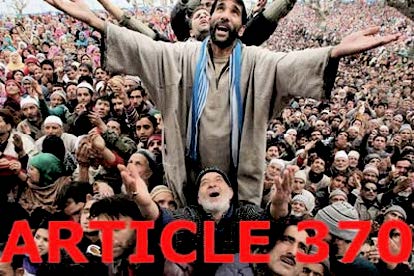
    NEW DELHI (TIP): The Bharatiya Janata Party (BJP) has decided to drop two contentious issues, abrogation of Article 370 and the repeal of Armed Forces Special Powers Act (AFSPA), from its manifesto for the Jammu & Kashmir Assembly polls. Instead, the saffron party will fight the polls on development plank, brand Modi and to free the state from the dynastic rule of the Abdullahs and the Muftis.

    The BJP leaders said they have managed to rope in an important politician who is known nationally and will join the party on Sunday. Though sources refused to divulge the name, it is being speculated that separatist leader Sajjad Lone could be one among them. BJP general secretary Ram Madhav, the latest leader to join the party from the Rashtriya Swayamsevak Sangh, met Lone in Srinagar recently. The party’s move to get on board an important leader stems from its strategy to do well in Muslim dominated Kashmir which has the maximum number of seats out of the 87 constituencies in the state.

    Jammu region has 37 seats, Ladakh four and the rest are in Kashmir. While the party feels it would do well in Hindu dominated Jammu and Ladakh, reflected in good show in the Lok Sabha polls, Kashmir is a real worry. The People’s Democratic Party (PDP) appears to be benefiting the most out of the anti-incumbency mood against the National Conference (NC) in the Valley. The state BJP unit has prepared the manifesto which would be vetted by the central leadership in the next couple of days before its release around November 15.

    “We will go to the people in the name of development and getting the state rid of these two families. Their family raj stands for corruption and deprivation,” said party state in-charge Ram Madhav. Senior party sources said the manifesto is likely to mirror the BJP’s 2014 Parliamentary poll document. On J&K, the national manifesto, too, had reiterated its stand on the abrogation of Article 370 after speaking to stakeholders and omitted AFSPA.

    It had promised to pursue an agenda of equal and rapid development in all the three regions of the state–Jammu, Kashmir and Ladakh–address grievance of refugess from Pakistan-occupied Kashmir and ensure the return of Kashmiri Pandits to the Valley. Sources said: “Article 370 is a national issue for us. State government has nothing to do with it and any decision on the issue will vest with the Union government.” The party leaders claimed that sentiment in the state is against the Omar Abdullah government given its failure to handle the worst ever floods that had hit the Valley.

  • Govt does a U-turn, tells EC no relief announced for anti-Sikh riot victims

    Govt does a U-turn, tells EC no relief announced for anti-Sikh riot victims

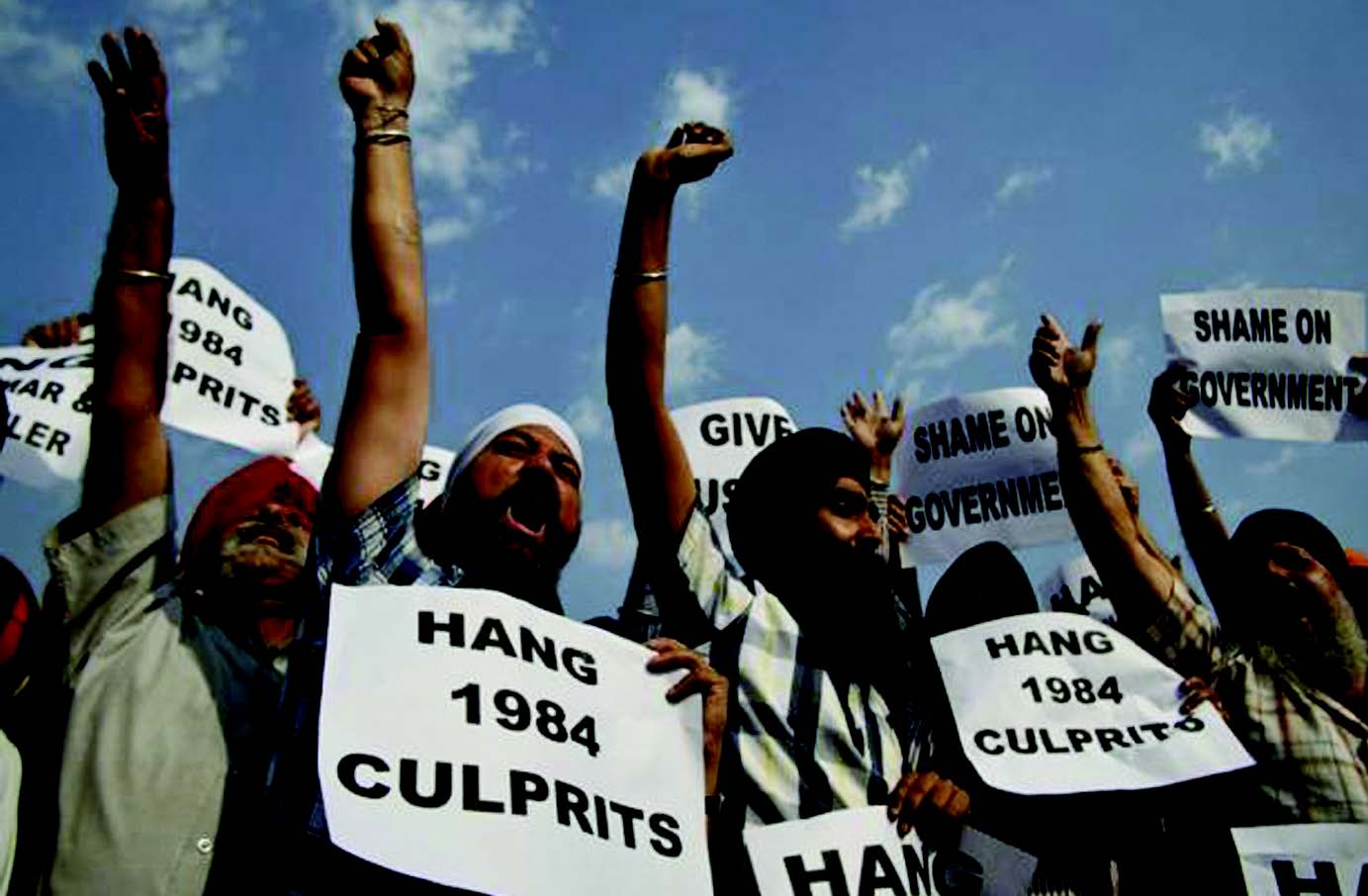
    NEW DELHI (TIP): In a dramatic aboutturn, the Central Government has told the Election Commission (EC) that no decision was taken to give additional Rs 5 lakh compensation each to the families of those killed in the 1984 anti-Sikh riots. This comes a week after the media extensively reported on October 30 that the Union Ministry of Home Affairs (MHA) had okayed Rs 5 lakh compensation to families of riots victims.

    The EC had sent a notice to the MHA saying “this was in violation to the model code of conduct which was in force in Delhi for byelections to Mehrauli, Tughlakabad and Krishna Nagar Assembly segments. In its response to the EC, the MHA said: “No decision (additional compensation to Sikh families) has been taken so far.” Leading Sikh right activists and persons, including Punjab Chief Minister Parkash Singh Badal had welcomed the announcement. Not satisfied with the MHA response, the EC said the news of announcing additional compensation was widely published and disseminated in the media and several panel discussions on the subject were held on TV channels.

    “The commission has also not come across any denial of the news by the government,” the EC told the MHA in written response on November 7 The ECI added, “Thus, it cannot be denied that the above news item gave an unmistakable impression to the electorate that a decision to the above effect was, in fact, taken by the government and that had the likelihood to effect of disturbing the level playing field”. The EC has hinted that the MHA used media to send the impression of additional compensation for Sikh families.

    Like all newspapers, The Tribune had also reported this based on the information originating from the ministry. On October 30, the MHA had held a meeting on enhancing compensation for those killed in communal violence. A press release was issued saying, “The Union Home Minister approves grant of higher compensation to victims of riots, naxal and terrorist violence”. It further said, “Union Home Minister Rajnath Singh has approved a proposal to substantially enhance the compensation to civilian victims of communal, terrorist or Naxal violence from Rs 3 lakh to Rs 5 lakh”. At least 3,325 persons, including 2,733 in Delhi, were killed in the riots triggered by the assassination of former Prime Minister Indira Gandhi by her bodyguards on October 31, 1984.

    EC letter to ministry

    After news reports emerged that additional compensation had been announced on October 30, the ECI shot off a notice to the MHA

    The letter said the compensation was in violation to the Model Code Conduct which was in force in Delhi

    The code was imposed due to the ongoing bye-elections to the Delhi Legislative Assembly for three constituencies

    Source: The Tribune)

  • EYE ON CHINA, INDIA AND US SET TO RAMP UP JOINT NAVAL DRILLS

    EYE ON CHINA, INDIA AND US SET TO RAMP UP JOINT NAVAL DRILLS

    NEW DELHI: India and the US are set to deepen and broaden their bilateral military exercises to include more warfare components involving nuclear submarines and aircraft carriers. They would also invite more countries to join the Malabar exercises as the two nations share concerns about the growing Chinese naval presence in the Indian Ocean. Both the Indian and US navies have been warily watching the growing Chinese naval presence in the Indian Ocean, especially its submarine manoeuvres.

    In the recent weeks, India conveyed its displeasure to the Sri Lankan government at least twice over its decision to permit Chinese submarines to dock in its ports. According to dependable sources, India and US officials have had detailed discussions, including at the Defence Policy Group meeting in Washington DC, on stepping up the bilateral naval exercises. The decision involves a series of steps, starting with increasing the nuclear submarine and aircraft carrier warfare components. The two sides are also looking at adding both army and air force components to the traditionally naval exercise. Sources said the two sides are looking at inviting more countries, thus expanding them mostly into trilateral exercises.

    In July 2014, India and the US invited Japan to the exercises held in north-western Pacific. Malabar has featured Australia and Singapore, besides Japan, in 2007. Through most of the UPA tenure, especially under defence minister AK Antony, Malabar exercises off Indian coast have mostly been bilateral affairs, in an effort not to raises Chinese hackles. However, under the new regime in New Delhi there is a noticeable shift in the strategic posturing, especially vis-a-vis China. In Washington DC in October, the joint statement issued by Narendra Modi and Barack Obama had referred to the situation in South China Sea. It was the first time that the two sides had so explicitly referred to the issue in an Indo-US joint statement.

    The move to deepen and broaden the Malabar exercises flow from Modi’s declared strategic vision, especially reflected in the joint statement. The move comes even as the government is warily looking at the growing Chinese submarine activities in the region. It has for sometimes been uncomfortable about Chinese sending its submarines as part of their anti-piracy patrols.When INS Vikramaditya was sailing from Russia starting November 2013, a Chinese submarine was in Indian Ocean observing the carrier.

  • China, Japan take steps to bury hatchet after 3 years of dispute

    China, Japan take steps to bury hatchet after 3 years of dispute

    BEIJING (TIP): China and Japan have reached an agreement on maintaining peace in the disputed chain of islands in the East China Sea after three years of war mongering. The agreement was reached in Beijing between China’s State Councilor Yang Jiechi and the visiting National Security Advisor of Japan, Shotaro Yachi. The new move may also pave the way for the first ever meeting between Chinese president Xi Jinping and Japanese prime minister Shinzo Abe on the sidelines of the Asia Pacific Cooperation summit next week.

    India and other Asian countries are watching the new move closely because it might have an impact on their territorial disputes with China, sources said. They include Philippines, Indonesia and Malaysia, which are sending their heads of state to the APEC summit. In Tokyo, Japan’s Abe said, “Both Japan and China are coming to the view that it would benefit not just the two countries but regional stability if a summit is held”.

    But China has not yet confirmed that president Xi would meet him. Under the agreement, the two sides said they would prevent the situation around the disputed Diaoyu Islands, which is called Senkaku in Japan, from aggravating with the use of dialogue and consultation. They will establish crisis management mechanisms to avoid contingencies. Japan controls the strategically located islands but China claims ownership of it. They “agreed to gradually resume political, diplomatic and security dialogue through various multilateral and bilateral channels and to make efforts to build political mutual trust”.

    Beijing has managed Tokyo to accept that it would abide by the spirit of “facing history squarely and looking forward to the future”. This is a catch phrase of Chinese officials when they demand that Japan should admit the torture of Chinese people by Japanese soldiers during World War II, and tender an apology. The two countries have acknowledged that each has a different positions on the disputed islands and some parts of the East China Sea. Commerce ministers of the two countries agreed to meet during the APEC summit next week indicating a slight improvement in the relationship.

  • Harvard University under fire for secret classroom photos

    Harvard University under fire for secret classroom photos

    CAMBRIDGE: Harvard University is under fire from faculty and students for secretly photographing about 2,000 undergraduates in 10 lecture halls last spring as part of a study on classroom attendance. The experiment was disclosed at a faculty meeting Tuesday and first reported in The Harvard Crimson student newspaper. Harvard computer science professor Harry Lewis asked administrators about the study during the meeting, saying he learned about it from two colleagues. “You should do studies only with the consent of the people being studied,” Lewis told The Boston Globe on Wednesday.

    Brett Biebelberg, a junior involved in student government, called the study’s secretive nature “strikingly hypocritical,” given that the university recently adopted an honor code for the first time. Students and teachers were not notified because researchers did not want to introduce potential bias into the study, Harvard administrators said. The cameras took pictures every minute and a computer program used them to count empty and occupied seats.

    The study was done by Harvard’s Initiative for Learning and Teaching, overseen by Vice Provost Peter Bol, and authorized by the school’s Institutional Review Board. Professors whose lectures were monitored were told in August and all gave permission for the data to be used in the study, he said. Students were not told and the images themselves were destroyed, he said. Harvard in March 2013 was criticized for secretly searching the university email accounts of 16 deans to find out who leaked information about a cheating scandal to the media. That led to new privacy policies on electronic communication this spring.

  • Iran’s draft law moots 74 lashes, fines for dog lovers

    Iran’s draft law moots 74 lashes, fines for dog lovers

    TEHRAN (TIP): Dog lovers in Iran could face up to 74 lashes under plans by hardline lawmakers that would ban keeping the pets at home or walking them in public. A draft bill, signed by 32 members of the country’s conservative-dominated parliament, would also authorize heavy fines for offenders, the reformist Shargh newspaper reported. Dogs are regarded as unclean under Islamic custom and they are not common in Iran, although some families do keep them behind closed doors and, especially in more affluent areas, walk them outside.

    Iran’s morality police, who deploy in public places, have previously stopped dog walkers and either cautioned them or confiscated the animals. But if the new bill is passed by parliament then those guilty of dog-related offences could face lashes or fines ranging from 10 million rials to 100 million rials ($370 to $3,700 at official rates). Patting dogs or coming into contact with their saliva is seen as “najis” — direct contact and behaviour that leaves the body unclean — in the Islamic republic. “Anyone who walks or plays with animals such as dogs or monkeys in public places will damage Islamic culture, as well as the hygiene and peace of others, especially women and children,” the draft law states.

  • Suspected UK murderer ate woman’s body parts: Report

    Suspected UK murderer ate woman’s body parts: Report

    LONDON (TIP): In a suspected case of cannibalism, a 22- year-old woman was killed and her suspected attacker died during interrogation after he was caught allegedly eating parts of the woman’s face at a hotel in UK’s South Wales. Matthew Williams, 34, who was caught in a room with the woman with severe facial injuries by police, died after he was struck by a high voltage taser which was being used to apprehend him, the Telegraph reported. Security staff of the hotel which was also used as temporary accommodation for homeless people, raised the alarm after they broke the door open and discovered Williams red handed.

    He had only been released from a long sentence for violence just two weeks ago. The woman died of her injuries in the room of the Sirhowy Arms Hotel in the village of Argoed, near Blackwood, South Wales. Williams had taken the woman there for a drink. “We were called at 1.23 Am local time on Thursday after a report that a man was attacking a woman in the Sirhowy Arms Hotel. On arrival both the male and female were still at the location,” Gwent Police spokeswoman was quoted as saying by the paper yesterday. The Independent Police Complaints Commission has been called in to investigate Williams’ death because he was in police custody after being tasered. A post mortem and formal identification of the man will take place at a later date.

  • UK police arrest 4 men on suspicion of terrorism

    UK police arrest 4 men on suspicion of terrorism

    LONDON: British police have arrested four men suspected of preparing terrorists acts. Police said on November 6 the arrests and searches of several properties in west London and the Thames Valley are part of an ongoing investigation into “Islamist related terrorism.” Police said armed officers participated in two of the arrests but that no shots were fired. The men range in age from 19 to 27. Searches are continuing. Officials have classified the threat level in Britain as “severe,” meaning a terrorist attack is viewed as highly likely. There have been numerous arrests in recent weeks as police have taken action against some Britons who have returned from fighting in Syria and are feared to be planning attacks in Britain. Police have been warned to be vigilant against attacks on officers.

  • MEXICO CANCELS BULLET TRAIN DEAL WITH CHINA

    MEXICO CANCELS BULLET TRAIN DEAL WITH CHINA

    BEIJING (TIP): Mexico has suddenly canceled a $3.75 billion contract to buy bullet trains from China. This is a major blow to the Chinese railway manufacturing industry, which is trying to sell high-speed trains to India and other countries. Justifying the decision, Mexican president Enrique Pena Nieto said he wanted to avoid “any doubts about the legitimacy and transparency” of the bidding process. The cancellation came within days of the contract being signed on November 3. Earlier, two other Latin American countries, Brazil and Argentina, postponed their own high-speed rail projects.

    The Nieto government came under pressure from local politicians and lawmakers, who said China Railway Construction Corp. has been favored in the deal. The country’s transport ministry said a new auction for the contract would be held soon. The decision, which came soon after the deal was signed, would mean new opportunity for rivals like Germany’s Siemens, Canada’s Bombardier and France’s Alsthom. Japan’s Mitsubishi also expressed an interest in the contract. Reports said their requests for more time to make submissions were refused. Only CRCC and its Mexican partners had submitted a joint proposal by the 15 October deadline.

    The issue may come up during discussion when the Mexican president visits Beijing next month. Work on the new line was due to begin in December but it might be delayed now. The project involves building a 210- kilometer high-speed line to connect the capital, Mexico City, with the growing industrial hub of Queretaro to the north by 2017. The goal is to cut travel time from about two and a half hours to less than an hour, with trains traveling at a maximum of 300 km/h.

  • Venezuelan crowned transgender beauty queen in Thailand contest

    Venezuelan crowned transgender beauty queen in Thailand contest

    PATTAYA (TIP): A 22-year-old Venezuelan was crowned “Miss International Queen” on November 7 night at a beauty contest that bills itself as the world’s largest and promotes the rights of transsexuals and transvestites. Isabella Santiago beat 21 contestants from 18 countries to win the title and prize money of $12,500 at a glittering pageant in the Thai resort town of Pattaya. The winner of the 2014 contest can also opt for free cosmetic surgery. Santiago, who wore a shimmery white evening gown, laughed and said “Sleep!” when asked about her plans after the win. “When on stage, she is so elegant and that’s why the judges’ decision was unanimous,” said Seri Wongmontha, one of the pageant’s judges. The contest, in its tenth year, was held at the Tiffany’s nightclub famous for its transvestite cabaret. Like other beauty pageants, contestants for “Miss International Queen” paraded in their national costumes, evening gowns and swimsuits. Miss USA Samira Sitara told Reuters TV that participating in the contest was a “dream come true”, and this was the first time she was coming out publicly after being encouraged by friends. “You know what, this is life and you can’t run away from the past. I can’t hide it anymore,” she said.