Year: 2014

  • Hundreds of ‘Darknet’ sites shut in global raid, 17 held

    Hundreds of ‘Darknet’ sites shut in global raid, 17 held

    THE HAGUE (TIP): Police have closed hundreds of online “dark” markets selling illegal drugs, weapons and services, arresting 17 people in a massive international operation against the Tor network that allows users to be invisible online. Investigators from the US and 16 European countries, including France, Germany and Britain, on Thursday “undertook a joint action against dark markets running as hidden services on Tor network,” the Europol police agency said. Tor is an encryption service that masks a computer user’s identifying IP address, allowing them to set up private web connections in what is known as the Darknet — a hidden network used for both licit and illicit ends. “The action aimed to stop the sale, distribution and promotion of illegal and harmful items, including weapons and drugs, which were being sold on online ‘dark’ marketplaces,” Europol said. A total of 414 sites have been seized and closed down in the operation codenamed “Onymous”.

  • Australian government awards scholarship for 60 Indians

    Australian government awards scholarship for 60 Indians

    NEW DELHI (TIP): The Australian government on November 6 awarded 60 scholarships to Indian scholars to undertake study and research in the country. “I congratulate the successful recipients of Endeavour Scholarships and Fellowships. The fact that 60 Indians were selected for this award is a testament to the talents in this country,” said Australian High Commissioner Patrick Suckling. The number of Indians receiving scholarship have increased to 60 from 40 recipients in 2014. The recipients will undertake study or research at vocational, postgraduate, and postdoctoral level or undertake professional development at some of Australia’s most prestigious universities across a broad range of academic fields. “The Endeavour Scholarships and Fellowships facilitate knowledge sharing, strengthen mutual understanding between Indian and Australian scholars and build international networks. This serves to reinforce our strong and enduring bilateral relations with India,” said Suckling. The scholarships for the academic year 2015 have been given to 528 international students and 154 to Australians to undertake study and research overseas and three of them will be traveling to India in 2015.

  • GURU NANAK DEV JI (1469 – 1539)

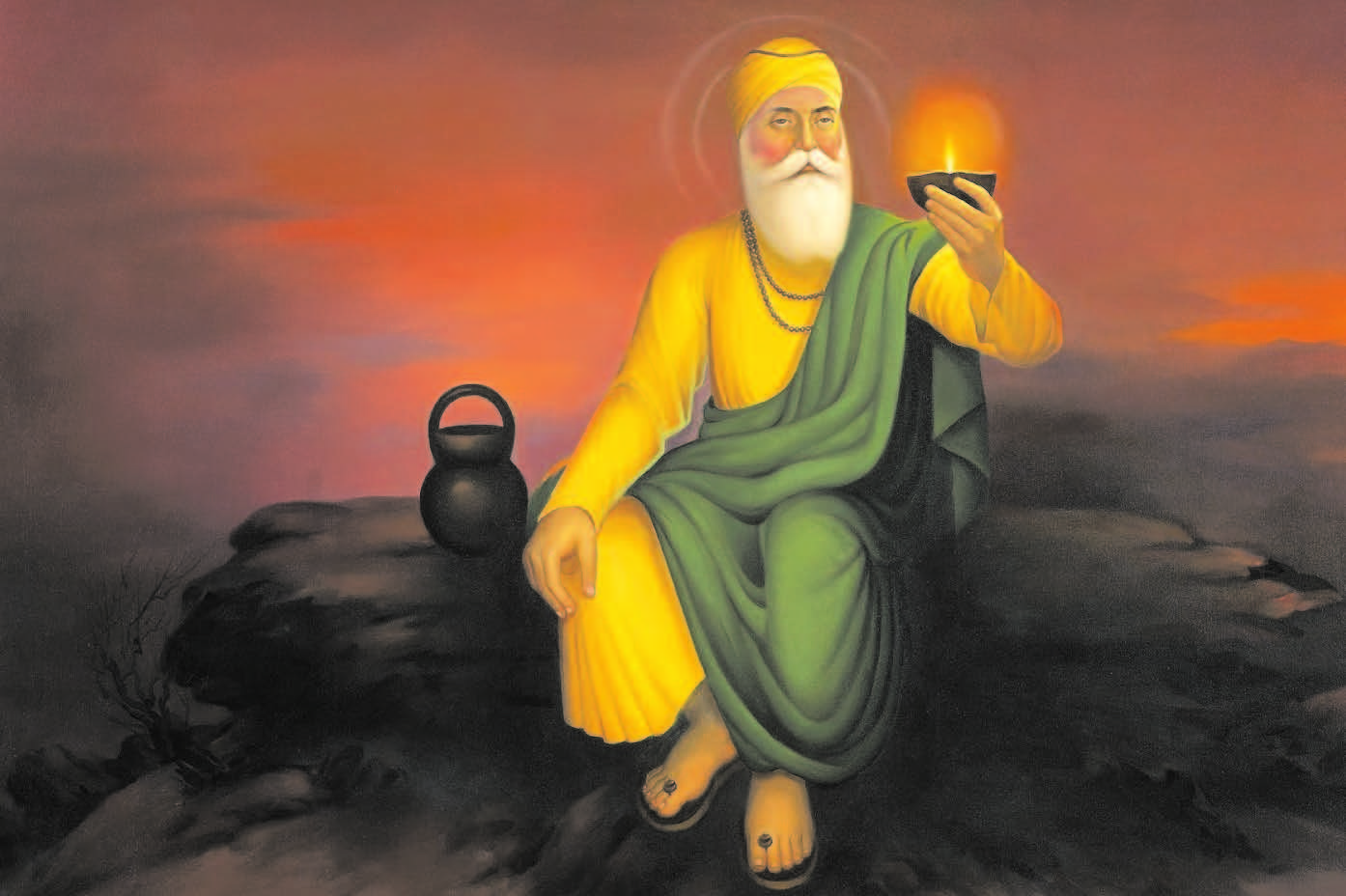
    GURU NANAK DEV JI (1469 – 1539)

    SATGURU NANAK PRAGATYA, MITI DHUND JAG CHANAN HOA

    Sri Guru Nanak Dev ji was born in 1469 in Talwandi, a village in the Sheikhupura district, 65 kms. west of Lahore. His father was a village official in the local revenue administration. As a boy, Sri Guru Nanak learnt, besides the regional languages, Persian and Arabic. He was married in 1487 and was blessed with two sons, one in 1491 and the second in 1496. In 1485 he took up, at the instance of his brother-in-law, the appointment of an official in charge of the stores of Daulat Khan Lodhi, the Muslim ruler of the area at Sultanpur. It is there that he came into contact with Mardana, a Muslim minstrel (Mirasi) who was senior in age.

    By all accounts, 1496 was the year of his enlightenment when he started on his mission. His first statement after his prophetic communion with God was “There is no Hindu, nor any Mussalman.” This is an announcement of supreme significance it declared not only the brotherhood of man and the fatherhood of God, but also his clear and primary interest not in any metaphysical doctrine but only in man and his fate. It means love your neighbor as yourself.

    Gurdwara nankana sahib In addition, it emphasized, simultaneously the inalienable spirituo-moral combination of his message. Accompanied by Mardana, he began his missionary tours. Apart from conveying his message and rendering help to the weak, he forcefully preached, both by precept and practice, against caste distinctions ritualism, idol worship and the pseudo-religious beliefs that had no spiritual content. He chose to mix with all. He dined and lived with men of the lowest castes and classes Considering the then prevailing cultural practices and traditions, this was something socially and religiously unheard of in those days of rigid Hindu caste system sanctioned by the scriptures and the religiously approved notions of untouchability and pollution. It is a matter of great significance that at the very beginning of his mission, the Guru’s first companion was a low caste Muslim. The offerings he received during his tours, were distributed among the poor. Any surplus collected was given to his hosts to maintain a common kitchen, where all could sit and eat together without any distinction of caste and status. This institution of common kitchen or langar became a major instrument of helping the poor, and a nucleus for religious gatherings of his society and of establishing the basic equality of all castes, classes and sexes. When Guru Nanak Dev ji were 12 years old his father gave him twenty rupees and asked him to do a business, apparently to teach him business.

    Guru Nanak dev ji bought food for all the money and distributed among saints, and poor. When his father asked him what happened to business? He replied that he had done a “True business” at the place where Guru Nanak dev had fed the poor, this gurdwara was made and named Sacha Sauda. Despite the hazards of travel in those times, he performed five long tours all over the country and even outside it. He visited most of the known religious places and centres of worship. At one time he preferred to dine at the place of a low caste artisan, Bhai Lallo, instead of accepting the invitation of a high caste rich landlord, Malik Bhago, because the latter lived by exploitation of the poor and the former earned his bread by the sweat of his brow. This incident has been depicted by a symbolic representation of the reason for his preference.

    Sri Guru Nanak pressed in one hand the coarse loaf of bread from Lallo’s hut and in the other the food from Bhago’s house. Milk gushed forth from the loaf of Lallo’s and blood from the delicacies of Bhago. This prescription for honest work and living and the condemnation of exploitation, coupled with the Guru’s dictum that “riches cannot be gathered without sin and evil means,” have, from the very beginning, continued to be the basic moral tenet with the Sikh mystics and the Sikh society. During his tours, he visited numerous places of Hindu and Muslim worship. He explained and exposed through his preachings the incongruities and fruitlessness of ritualistic and ascetic practices.

    At Hardwar, when he found people throwing Ganges water towards the sun in the east as oblations to their ancestors in heaven, he started, as a measure of correction, throwing the water towards the West, in the direction of his fields in the Punjab. When ridiculed about his folly, he replied, “If Ganges water will reach your ancestors in heaven, why should the water I throw up not reach my fields in the Punjab, which are far less distant ?” He spent twenty five years of his life preaching from place to place. Many of his hymns were composed during this period. They represent answers to the major religious and social problems of the day and cogent responses to the situations and incidents that he came across. Some of the hymns convey dialogues with Yogis in the Punjab and elsewhere.

    He denounced their methods of living and their religious views. During these tours he studied other religious systems like Hinduism, Jainism, Buddhism and Islam. At the same time, he preached the doctrines of his new religion and mission at the places and centres he visited. Since his mystic system almost completely reversed the trends, principles and practices of the then prevailing religions, he criticized and rejected virtually all the old beliefs, rituals and harmful practices existing in the country.

    This explains the necessity of his long and arduous tours and the variety and profusion of his hymns on all the religious, social, political and theological issues, practices and institutions of his period. Finally, on the completion of his tours, he settled as a peasant farmer at Kartarpur, a village in the Punjab. Bhai Gurdas, the scribe of Guru Granth Sahib, was a devout and close associate of the third and the three subsequent Gurus. He was born 12 years after Guru Nanak’s death and joined the Sikh mission in his very boyhood. He became the chief missionary agent of the Gurus. Because of his intimate knowledge of the Sikh society and his being a near contemporary of Sri Guru Nanak, his writings are historically authentic and reliable. He writes that at Kartarpur Guru Nanak donned the robes of a peasant and continued his ministry.

    He organised Sikh societies at places he visited with their meeting places called Dharamsalas. A similar society was created at Kartarpur. In the morning, Japji was sung in the congregation. In the evening Sodar and Arti were recited. The Guru cultivated his lands and also continued with his mission and preachings. His followers throughout the country were known as Nanak-panthies or Sikhs. The places where Sikh congregation and religious gatherings of his followers were held were called Dharamsalas. These were also the places for feeding the poor. Eventually, every Sikh home became a Dharamsala. One thing is very evident. Guru Nanak had a distinct sense of his prophethood and that his mission was God-ordained. During his preachings, he himself announced. “O Lallo, as the words of the Lord come to me, so do I express them.”

    Successors of Guru Nanak have also made similar statements indicating that they were the messengers of God. So often Guru Nanak refers to God as his Enlightener and Teacher. His statements clearly show his belief that God had commanded him to preach an entirely new religion, the central idea of which was the brotherhood of man and the fatherhood of God, shorn of all ritualism and priestcraft. During a dialogue with the Yogis, he stated that his mission was to help everyone. He came to be called a Guru in his lifetime. In Punjabi, the word Guru means both God and an enlightener or a prophet. During his life, his disciples were formed and came to be recognised as a separate community. He was accepted as a new religious prophet.

    His followers adopted a separate way of greeting each other with the words Sat Kartar (God is true). Twentyfive years of his extensive preparatory tours and preachings across the length and breadth of the country clearly show his deep conviction that the people needed a new prophetic message which God had commanded him to deliver. He chose his successor and in his own life time established him as the future Guru or enlightener of the new community. This step is of the greatest significance, showing Guru Nanak s determination and declaration that the mission which he had started and the community he had created were distinct and should be continued, promoted and developed.

    By the formal ceremony of appointing his successor and by giving him a new name, Angad (his part or limb), he laid down the clear principle of impersonality, unity and indivisibility of Guruship. At that time he addressed Angad by saying, Between thou and me there is now no difference. In Guru Granth Sahib there is clear acceptance and proclamation of this identity of personality in the hymns of Satta-Balwand. This unity of spiritual personality of all the Gurus has a theological and mystic implication. It is also endorsed by the fact that each of the subsequent Gurus calls himself Nanak in his hymns. Never do they call themselves by their own names as was done by other Bhagats and Illyslics. That Guru Nanak attached the highest importance to his mission is also evident from his selection of the successor by a system of test, and only when he was found perfect, was Guru Angad appointed as his successor.

    He was comparatively a new comer to the fold, and yet he was chosen in preference to the Guru’s own son, Sri Chand, who also had the reputation of being a pious person, and Baba Budha, a devout Sikh of long standing, who during his own lifetime had the distinction of ceremonially installing all subsequent Gurus. All these facts indicate that Guru Nanak had a clear plan and vision that his mission was to be continued as an independent and distinct spiritual system on the lines laid down by him, and that, in the context of the country, there was a clear need for the organisation of such a spiritual mission and society.

    In his own lifetime, he distinctly determined its direction and laid the foundations of some of the new religious institutions. In addition, he created the basis for the extension and organisation of his community and religion. The above in brief is the story of the Guru’s life. We shall now note the chief features of his work, how they arose from his message and how he proceeded to develop them during his lifetime. (1) After his enlightenment, the first words of Guru Nanak declared the brotherhood of man. This principle formed the foundation of his new spiritual gospel. It involved a fundamental doctrinal change because moral life received the sole spiritual recognition and status.

    This was something entirely opposed to the religious systems in vogue in the country during the time of the Guru. All those systems were, by and large, otherworldly. As against it, the Guru by his new message brought God on earth. For the first time in the country, he made a declaration that God was deeply involved and interested in the affairs of man and the world which was real and worth living in. Having taken the first step by the proclamation of his radical message, his obvious concern was to adopt further measures to implement the same. (2)The Guru realised that in the context and climate of the country, especially because of the then existing religious systems and the prevailing prejudices, there would be resistance to his message, which, in view of his very thesis, he wanted to convey to all. He, therefore, refused to remain at Sultanpur and preach his gospel from there.

    Having declared the sanctity of life, his second major step was in the planning and organisation of institutions that would spread his message. As such, his twentyfive years of extensive touring can be understood only as a major organizational step. These tours were not casual. They had a triple object. He wanted to acquaint himself with all the centres and organisations of the prevalent religious systems so as to assess the forces his mission had to contend with, and to find out the institutions that he could use in the aid of his own system. Secondly, he wanted to convey his gospel at the very centres of the old systems and point out the futile and harmful nature of their methods and practices. It is for this purpose that he visited Hardwar, Kurukshetra, Banaras, Kanshi, Maya, Ceylon, Baghdad, Mecca, etc. Simultaneously, he desired to organise all his followers and set up for them local centres for their gatherings and worship.

    The existence of some of these far-flung centres even up-till today is a testimony to his initiative in the Organizational and the societal field. His hymns became the sole guide and the scripture for his flock and were sung at the Dharamsalas. (3) Guru Nanak’s gospel was for all men. He proclaimed their equality in all respects. In his system, the householder’s life became the primary forum of religious activity. Human life was not a burden but a privilege. His was not a concession to the laity.

    In fact, the normal life became the medium of spiritual training and expression. The entire discipline and institutions of the Gurus can be appreciated only if one understands that, by the very logic of Guru Nanak’s system, the householder’s life became essential for the seeker. On reaching Kartarpur after his tours, the Guru sent for the members of his family and lived there with them for the remaining eighteen years of his life. For the same reason his followers all over the country were not recluses. They were ordinary men, living at their own homes and pursuing their normal vocations. The Guru’s system involved morning and evening prayers. Congregational gatherings of the local followers were also held at their respective Dharamsalas. (4) After he returned to Kartarpur, Guru Nanak did not rest.

    He straightaway took up work as a cultivator of land, without interrupting his discourses and morning and evening prayers. It is very significant that throughout the later eighteen years of his mission he continued to work as a peasant. It was a total involvement in the moral and productive life of the community. His life was a model for others to follow. Like him all his disciples were regular workers who had not given up their normal vocations Even while he was performing the important duties of organising a new religion, he nester shirked the full-time duties of a small cultivator. By his personal example he showed that the leading of a normal man’s working life was fundamental to his spiritual system Even a seemingly small departure from this basic tenet would have been misunderstood and misconstrued both by his own followers and others. In the Guru’s system, idleness became a vice and engagement in productive and constructive work a virtue.

    It was Guru Nanak who chastised ascetics as idlers and condemned their practice of begging for food at the doors of the householders. (5) According to the Guru, moral life was the sole medium of spiritual progress In those times, caste, religious and social distinctions, and the idea of pollution were major problems. Unfortunately, these distinctions had received religious sanction The problem of poverty and food was another moral challenge. The institution of langar had a twin purpose. As every one sat and ate at the same place and shared the same food, it cut at the root of the evil of caste, class and religious distinctions. Besides, it demolished the idea of pollution of food by the mere presence of an untouchable. Secondlys it provided food to the needy. This institution of langar and pangat was started by the Guru among all his followers wherever they had been organised.

    It became an integral part of the moral life of the Sikhs. Considering that a large number of his followers were of low caste and poor members of society, he, from the very start, made it clear that persons who wanted to maintain caste and class distinctions had no place in his system In fact, the twin duties of sharing one’s income with the poor and doing away with social distinctions were the two obligations which every Sikh had to discharge. On this score, he left no option to anyone, since he started his mission with Mardana, a low caste Muslim, as his life long companion. (6) The greatest departure Guru Nanak made was to prescribe for the religious man the responsibility of confronting evil and oppression. It was he who said that God destroys ‘the evil doers’ and ‘the demonical; and that such being God s nature and will, it is man’s goal to carry out that will.

    Since there are evil doers in life, it is the spiritual duty of the seeker and his society to resist evil and injustice. Again, it is Guru Nanak who protests and complains that Babur had been committing tyranny against the weak and the innocent. Having laid the principle and the doctrine, it was again he who proceeded to organise a society. because political and societal oppression cannot be resisted by individuals, the same can be confronted only by a committed society. It was, therefore, he who proceeded to create a society and appointed a successor with the clear instructions to develop his Panth. Again, it was Guru Nanak who emphasized that life is a game of love, and once on that path one should not shirk laying down one’s life.

    Love of one’s brother or neighbour also implies, if love is true, his or her protection from attack, injustice and tyranny. Hence, the necessity of creating a religious society that can discharge this spiritual obligation. Ihis is the rationale of Guru Nanak’s system and the development of the Sikh society which he organised. (7) The Guru expressed all his teachings in Punjabi, the spoken language of Northern India. It was a clear indication of his desire not to address the elite alone but the masses as well.

    It is recorded that the Sikhs had no regard for Sanskrit, which was the sole scriptural language of the Hindus. Both these facts lead to important inferences. They reiterate that the Guru’s message was for all. It was not for the few who, because of their personal aptitude, should feel drawn to a life of a so-called spiritual meditation and contemplation. Nor was it an exclusive spiritual system divorced from the normal life. In addition, it stressed that the Guru’s message was entirely new and was completely embodied in his hymns. His disciples used his hymns as their sole guide for all their moral, religious and spiritual purposes.

    I hirdly, the disregard of the Sikhs for Sanskrit strongly suggests that not only was the Guru’s message independent and self-contained, without reference and resort to the Sanskrit scriptures and literature, but also that the Guru made a deliberate attempt to cut off his disciples completely from all the traditional sources and the priestly class. Otherwise, the old concepts, ritualistic practices, modes of worship and orthodox religions were bound to affect adversely the growth of his religion which had wholly a different basis and direction and demanded an entirely new approach. The following hymn from Guru Nanak and the subsequent one from Sankara are contrast in their approach to the world. “the sun and moon, O Lord, are Thy lamps; the firmament Thy salver; the orbs of the stars the pearls encased in it. The perfume of the sandal is Thine incense, the wind is Thy fan, all the forests are Thy flowers, O Lord of light. What worship is this, O Thou destroyer of birth ? Unbeaten strains of ecstasy are the trumpets of Thy worship. Thou has a thousand eyes and yet not one eye; Thou host a thousand forms and yet not one form; Thou hast a thousand stainless feet and yet not one foot; Thou hast a thousand organs of smell and yet not one organ.

    I am fascinated by this play of ‘l hine. The light which is in everything is Chine, O Lord of light. From its brilliancy everything is illuminated; By the Guru’s teaching the light becometh manifest. What pleaseth Thee is the real worship. O God, my mind is fascinated with Thy lotus feet as the bumble-bee with the flower; night and day I thirst for them. Give the water of Thy favour to the Sarang (bird) Nanak, so that he may dwell in Thy Name.” Sankara writes: “I am not a combination of the five perishable elements I arn neither body, the senses, nor what is in the body (antar-anga: i e., the mind). I am not the egofunction: I am not the group of the vital breathforces; I am not intuitive intelligence (buddhi). Far from wife and son am 1, far from land and wealth and other notions of that kind.

    I am the Witness, the Eternal, the Inner Self, the Blissful One (sivoham; suggesting also, ‘I am Siva’).” “Owing to ignorance of the rope the rope appears to be a snake; owing to ignorance of the Self the transient state arises of the individualized, limited, phenomenal aspect of the Self. The rope becomes a rope when the false impression disappears because of the statement of some credible person; because of the statement of my teacher I am not an individual life-monad (yivo-naham), I am the Blissful One (sivo-ham ).” “I am not the born; how can there be either birth or death for me ?” “I am not the vital air; how can there be either hunger or thirst for me ?” “I am not the mind, the organ of thought and feeling; how can there be either sorrow or delusion for me ?” “I am not the doer; how can there be either bondage or release for me ?” “I am neither male nor female, nor am I sexless.

    I am the Peaceful One, whose form is self-effulgent, powerful radiance. I am neither a child, a young man, nor an ancient; nor am I of any caste. I do not belong to one of the four lifestages. I am the Blessed- Peaceful One, who is the only Cause of the origin and dissolution of the world.” While Guru Nanak is bewitched by the beauty of His creation and sees in the panorama of nature a lovely scene of the worshipful adoration of the Lord, Sankara in his hymn rejects the reality of the world and treats himself as the Sole Reality. Zimmer feels that “Such holy megalomania goes past the bounds of sense. With Sankara, the grandeur of the supreme human experience becomes intellectualized and reveals its inhuman sterility.” No wonder that Guru Nanak found the traditional religions and concepts as of no use for his purpose.

    He calculatedly tried to wean away his people from them. For Guru Nanak, religion did not consist in a ‘patched coat or besmearing oneself with ashes”6 but in treating all as equals. For him the service of man is supreme and that alone wins a place in God’s heart. By this time it should be easy to discern that all the eight features of the Guru’s system are integrally connected. In fact, one flows from the other and all follow from the basic tenet of his spiritual system, viz., the fatherhood of God and the brotherhood of man. For Guru Nanak, life and human beings became the sole field of his work. Thus arose the spiritual necessity of a normal life and work and the identity of moral and spiritual functioning and growth.

    Having accepted the primacy of moral life and its spiritual validity, the Guru proceeded to identify the chief moral problems of his time. These were caste and class distinctions, the institutions, of property and wealth, and poverty and scarcity of food. Immoral institutions could be substituted and replaced only by the setting up of rival institutions. Guru Nanak believed that while it is essential to elevate man internally, it is equally necessary to uplift the fallen and the downtrodden in actual life. Because, the ultimate test of one’s spiritual progress is the kind of moral life one leads in the social field. The Guru not only accepted the necessity of affecting change in the environment, but also endeavoured to build new institutions. We shall find that these eight basic principles of the spirituo-moral life enunciated by Guru Nanak, were strictly carried out by his successors.

    As envisaged by the first prophet, his successors further extended the structure and organised the institutions of which the foundations had been laid by Guru Nanak. Though we shall consider these points while dealing with the lives of the other nine Gurus, some of them need to be mentioned here. The primacy of the householder’s life was maintained. Everyone of the Gurus, excepting Guru Harkishan who died at an early age, was a married person who maintained a family. When Guru Nanak, sent Guru Angad from Kartarpur to Khadur Sahib to start his mission there, he advised him to send for the members of his family and live a normal life. According to Bhalla,8 when Guru Nanak went to visit Guru Angad at Khadur Sahib, he found him living a life of withdrawal and meditation. Guru Nanak directed him to be active as he had to fulfill his mission and organise a community inspired by his religious principles.

    Work in life, both for earning the livelihood and serving the common good, continued to be the fundamental tenet of Sikhism. There is a clear record that everyone upto the Fifth Guru (and probably subsequent Gurus too) earned his livelihood by a separate vocation and contributed his surplus to the institution of langar Each Sikh was made to accept his social responsibility. So much so that Guru Angad and finally Guru Amar Das clearly ordered that Udasis, persons living a celibate and ascetic life without any productive vocation, should remain excluded from the Sikh fold. As against it, any worker or a householder without distinction of class or caste could become a Sikh. This indicates how these two principles were deemed fundamental to the mystic system of Guru Nanak. It was defined and laid down that in Sikhism a normal productive and moral life could alone be the basis of spiritual progress. Here, by the very rationale of the mystic path, no one who was not following a normal life could be fruitfully included.

    The organization of moral life and institutions, of which the foundations had been laid by Guru Nanak, came to be the chief concern of the other Gurus. We refer to the sociopolitical martyrdoms of two of the Gurus and the organisation of the military struggle by the Sixth Guru and his successors. Here it would be pertinent to mention Bhai Gurdas’s narration of Guru Nanak’s encounter and dialogue with the Nath Yogis who were living an ascetic life of retreat in the remote hills. They asked Guru Nanak how the world below in the plains was faring. ‘ How could it be well”, replied Guru Nanak, “when the so- called pious men had resorted to the seclusion of the hills ?” The Naths commented that it was incongruous and self-contradictory for Guru Nanak to be a householder and also pretend to lead a spiritual life. That, they said, was like putting acid in milk and thereby destroying its purity.

    The Guru replied emphatically that the Naths were ignorant of even the basic elements of spiritual life.9 This authentic record of the dialouge reveals the then prevailing religious thought in the country. It points to the clear and deliberate break the Guru made from the traditional system. While Guru Nanak was catholic in his criticism of other religions, he was unsparing where he felt it necessary to clarify an issue or to keep his flock away from a wrong practice or prejudice. He categorically attacked all the evil institutions of his time including oppression and barbarity in the political field, corruption among the officialss and hypocrisy and greed in the priestly class. He deprecated the degrading practices of inequality in the social field. He criticised and repudiated the scriptures that sanctioned such practices. After having denounced all of them, he took tangible steps to create a society that accepted the religious responsibility of eliminating these evils from the new institutions created by him and of attacking the evil practices and institutions in the Social and political fields.

    T his was a fundamental institutional change with the largest dimensions and implications for the future of the community and the country. The very fact that originally poorer classes were attracted to the Gurus, fold shows that they found there a society and a place where they could breathe freely and live with a sense of equality and dignity. Considering the religious conditions and the philosophies of the time and the social and political milieu in which Guru Nanak was born, the new spirituo- moral thesis he introduced and the changes he brought about in the social and spiritual field were indeed radical and revolutionary. Earlier, release from the bondage of the world was sought as the goal. The householder’s life was considered an impediment and an entanglement to be avoided by seclusion, monasticism, celibacy, sanyasa or vanpraslha. In contrast, in the Guru’s system the world became the arena of spiritual endeavour.

    A normal life and moral and righteous deeds became the fundamental means of spiritual progress, since these alone were approved by God. Man was free to choose between the good and the bad and shape his own future by choosing virtue and fighting evil. All this gave “new hope, new faith, new life and new expectations to the depressed, dejected and downcast people of Punjab.” Guru Nanak’s religious concepts and system were entirely opposed to those of the traditional religions in the country. His views were different even from those of the saints of the Radical Bhakti movement. From the very beginning of his mission, he started implementing his doctrines and creating institutions for their practice and development.

    In his time the religious energy and zeal were flowing away from the empirical world into the desert of otherworldliness, asceticism and renunciation. It was Guru Nanak’s mission and achievement not only to dam that Amazon of moral and spiritual energy but also to divert it into the world so as to enrich the moral, social the political life of man. We wonder if, in the context of his times, anything could be more astounding and miraculous. The task was undertaken with a faith, confidence and determination which could only be prophetic.

  • GURU NANANK’S 545TH BIRTHDAY CELEBRATIONS – HAPPY GURPURAB

    GURU NANANK’S 545TH BIRTHDAY CELEBRATIONS – HAPPY GURPURAB

    It’s the 545th birth anniversary celebrations of Guru Nanak Dev, founder of Sikhism. Let’s pray that this Gurpurab nurtures goodwill and removes ill-will between people of all faiths. That would be the highest tribute we can pay to the Guruji, indeed that was one of his missions for people to live in harmony with each other. Guru Nanakji’s birthday has a special significance to me.

    Indeed, the religion we called Sikhism started out as an interfaith movement, in which Guru Nanak primarily brought people from different religions together and taught common sense goodness, serving humanity and caring for the neighbors. On this auspicious day of Guru Nanak Devji’s birthday, on behalf of World Muslim Congress and the Foundation for Pluralism, we wish peace and blessing to the world. As a Pluralist, I have been writing about the “Festivals of the world” for the last twenty years, I write the essence of every major Festival of every religion and a message to go with it for the common man of other faiths to get a gist of it and a special message on the occasion.

    Last month, I wrote an article on Gandhi’s birth celebrations – the best tribute to Gandhi; do not poison your children at http://www.foundationforpluralism.blogspot. com/2014/10/mahatma-gandhi-do-not-poisonyour. html and also wrote a message about the Sikh Genocides, Muharram, Diwali, Rosh Hashanah and other festivities and commemorations. This Month, I hope to contribute my message is dedicated to ease the relationship between Sikhs and Muslims, the discomfort is not on the surface, but lurking deep inside their psyches, perhaps not with the 2nd generation after independence. Guru Nanak Jayanthi is the birth celebration of the first Sikh Guru, Guru Nanak, and one of the most sacred festivals in Sikhism.

    The festivities in the Sikh religion revolve around the anniversaries of the 10 Sikh Gurus. These Gurus were responsible for shaping the beliefs of the Sikhs. Their birthdays, known as Gurpurabs, are occasions for celebration and prayer among the Sikhs. The Guru Granth Sahib, the holy book of guidance in poetry composed by Hindu and Muslim spiritual teachers.

    Indeed, the land for the Golden Temple was a grant by King Akbar and the first brick for the Golden Temple was laid out by a Muslim fakir. Happy Gurpurab to all the Sikhs and to everyone who is a well-wisher of the ideals of Sikhism. I hope, on this auspicious occasion of Gurpurab, that Muslims and Sikhs make a genuine effort to pay tribute to the spirit of Guru Nanak Devji and remove the misunderstandings that erupted from a wrong translation of Quran that happened 350 years ago and has rightfully etched in the psyche of Sikhs. In an article in The Huffington Post about Kentucky Senator David William’s bigotry expressed against Hindus, I wrote, “No one has a right to belittle other’s faiths.

    If Senator Williams has a problem let it be his problem and no one should malign Christianity for his bigotry.” Likewise, King Aurangzeb’s bigotry should not be slapped on Muslims. I have nothing to do with it, nor does any Muslim has anything to do with him. Sadly there was a lot of bloodshed during the partition of India that has deepened the ill-will among a few Muslims and a few Sikhs. It is time to forgive for our own sake, as it will release the tension and apprehension within us and free us to deal with each other as free individuals. May the noor (divine light) of Guru Nanankji brighten the world. Amen! Sikhism was one of the first formal religions that began as a reconciliatory goodwill nurturing faith and let’s give the full value to it.

  • Time to celebrate, honor and respect Guru Nanak

    Time to celebrate, honor and respect Guru Nanak

    “Guru Nanak remains as vital and relevant today, as the day he left home to become what he became. His message of inclusion, warmth, compassion, justice, forgiveness, principled stance, love of friend and enemy alike, speaks to our world’s most dangerous problems – such as ISIS. Of course, all the Gurus that followed him, none more than Guru Gobind Singh, were needed to “flush out” Guru Nanak’s meaning, message and purpose even as each Guru and their sacrifices, personal and worldly, added much needed nuance to complete Guru Nanak’s teachings.

    Is it any wonder that over 1 billion Hindus love, adore and cherish Guru Nanak and his successive Gurus – so much so – that its unfair to limit his loving public and followers, known and unknown, to a mere 25 million self-identifying Sikhs. Just as non-Christians can adore, respect and cherish Jesus Christ, same is also true of Guru Nanak, and by that additional definition, you have 7 billion lovers and followers of Guru Nanak – even if not by rituals. Fact is that God-loving people, of every faith, close and not so close, love other faithworshipers. What is most curious, and a total mystery is when people hate others of a different faith, because they are of a different faith.

    This virulent virus of the soul, more powerful than Ebola, mutated over time is best seen today when looking at ISIS. That faith-haters exists, is why our hallowed Constitution has separation of church and state, while guaranteeing freedom of religion – to worship and protect, but not to hurt and kill in name of God. So, like every person of good will toward others, and as one who holds Guru Gobind Singh as a hero, its always time to celebrate,

  • WAYS TO GET RID OF DANDRUFF

    WAYS TO GET RID OF DANDRUFF

    Dandruff, also known as seborrhea, is a common noncontagious condition of skin areas rich in oil glands (the face, scalp, and upper trunk) they are marked by flaking and sometimes redness and itching of the scalp, varying in severity from mild flaking of the scalp to scaly, red patches. While there are an array of hair products that promise dandruff treatment here are a few home remedies to treat dandruff. Heat a small amount of olive oil and rub into the scalp, leave for an hour and wash off with warm water.

    Later wash your hair with shampoo. Stop use of any hairstyling products. Neem treatment: Soak some neem leaves in water and boil it. Use it neem water to wash your hair. Neem leaf has antifungal and antibacterial properties, making it effective in treating dandruff. Amla power: Take amla powder and grind it with tulsi leaves and apply it to the scalp for an hour. And then thoroughly wash it off. Oil your skin with vitamin E (found in avocados) and zinc (found in seafood, nuts and seeds).

    It’s best to use the lemon juice in squeeze bottles since it’s easier to control. Stand over either your kitchen or bathroom sink and squirt the lemon juice all over your head and massage. Leave on for about fifteen minutes, then wash your hair. It usually takes no more than two treatments for the dandruff itch to disappear. Olive oil and almond oil– Mix the two together and apply to scalp and leave on for five minutes. Once it starts to tingle rinse and shampoo. Olive oil is an excellent natural conditioner that seeps into the scalp. Apply olive oil into scalp and leave it overnight covered with a cotton cloth Take multi-vitamins full of Vitamin B, B6, B12 and E. These vitamins help to produce scalp oil and protect from dandruff. Aloe Vera is one of the best herbs to cure all kinds of hair problem.

    To add natural moisturizer into your scalp use Aloe Vera gel. Increase intake of fresh fruits as much possible. Add zinc, omega3 fatty acids, and vitamin B complex food into your diet. Cut down intake of sugar base food. Minimize caffeine containing drinks and foods. Baby oil works well for dandruff. Baby oil can be massaged on the scalp. A towel can be wound around the head after the application of oil. It should then be left overnight. The next day, the oil could be washed using a herbal shampoo.

    Warm oil is massaged on the scalp, then a warm moist towel is wrapped around the head. After a few minutes, the hair can be washed. Yoghurt treatment: In bowl add a tsp of lime juice, one tsp mustard oil to one cup yoghurt. Apply this mixture to the scalp and let it rest for one hour. Then thoroughly wash the head and hair. Fenugreek treatment: Soak 2 tbsp. of fenugreek seeds (meethi) in water overnight and crush them into a fine paste next morning.Apply this paste to your hair and scalp for at least 30 minutes.Wash your hair thoroughly after 30 minutes. Follow this treatment for continuous four weeks, for best results.

  • Keep your house is germ free

    Keep your house is germ free

    Your house can be a breeding area for germs if you don’t take enough care. Start by ensuring that you don’t keep dirty clothes lying around for long. Make sure they’re washed everyday or at least once in two days. And make it a habit to clean your washing machine as well. An effective way to do this is to add a fistful of bleach in it and let it run for a few minutes. This will kill all the accumulated viruses and bacteria in the machine. Another problem areas can be dirty towels — change them every few days and wash them in warm water with disinfectant to remove germs. Keep different towels for each member of the family. Change the linen on your bed every weekend. And don’t allow food on the bed. It will only attract ants and mold. Use a sanitiser to clean glass and plastic surfaces and don’t forget to clean cupboard and door knobs and handles. Use a mini vacuum cleaner to clean your computer keyboard. You’ll be amazed at the number of germs it can collect. Your kitchen sink can also be a breeding ground for germs so ensure that it is clean. The same goes for your kitchen platform.

  • HEALTHY BREAKFAST FOR EVERYDAY NUTRITION

    HEALTHY BREAKFAST FOR EVERYDAY NUTRITION

    Healthy breakfast ideas help you save time and effort and get straight to the point of optimal everyday nutrition. Healthy breakfasts fire up your metabolism for the day besides keeping your hormone and blood sugar levels stable. Apart from this, one of the biggest advantages of healthy breakfasts is that they help you keep potential overeating and bingeing at bay. Still not convinced? How about the fact that healthy breakfasts keep your mind sharp and active so that you can perform better at work and play! Here are our top 5 brain-boosting healthy breakfast ideas for everyday nutrition…

    Egg muffin sandwich

    Cook eggs along with brain-boosting foods, such as tomatoes, raw cabbage and olives and your healthy breakfast is ready in a jiffy. Make sure you add an apple or two on the side, which will provide you with important antioxidants. Make your egg sandwich with 1 whole wheat English muffin, 1 slice of low-fat cheese, 2 pieces of sliced tomatoes and 3 raw cabbage leaves. In this, add one fried egg, tossed in half a teaspoon of olive oil. Your healthy breakfast is ready!

    Mango-banana smoothie with honey

    Smoothies are simple to make. Just whip a handful of healthy ingredients and your healthy smoothie is ready. Try a mango or banana smoothie. It is a great idea as it is rich in antioxidants, fibers, and omega-3 fatty acids. Make this smoothie by taking half a cup of mangoes, 1/4th banana, 1 tabelspoon of ground flaxseed, and 1/3rd cup of skimmed yogurt. Add 1 cup of skimmed milk, along with a dash of cinnamon. Pair it with two slices of honey oatmeal bread topped with low-calorie butter, and two slices of carrots or tomatoes, and your smoothie breakfast is ready.

    Protein oatmeal pancakes

    Jazz up your morning pancakes by adding dry fruits, such as chopped apricots, dates, raisins or cherries. Top it with chopped or freshly sliced fruits, such as bananas, mangoes or apples and add a pinch of cinnamon or sugar to it, along with a generous sprinkling of ground flaxseed. Mash in a processor – 1 big ripe banana mashed with some reduced apples in a pan or 1tbs of olive oil, 1 and a 1/2 cup low-fat cheese, 1 cup powdered or crushed oatmeal, 1/4 cup flax seeds, 1/2 cup low fat milk, 2 scoops whey protein and 1/2 tsp cinnamon powder together. Then add a little oil (1tsp) to a non-stick pan and pour out batter, 1 cup at a time. Flip when bubbles start forming on the up side. Done when slightly brown.

    Whole wheat breakfast delight

    This healthy whole wheat sandwich is full of healthy fats from olive oil, antioxidants from salsa sauce and fiber and protein from the yogurt and vegetables – all the properties that make it a great breakfast to kickstart the day. Simply buy a readymade 12 inch-long whole wheat bread and fill it up with 1 egg yolk and 2 egg whites tossed in a bit of olive oil. Add a generous sprinkling of low-fat cheese. Add some lettuce and tomatoes to this filling. Grill the sandwich. Top this will 2 tabelspoon of thick yogurt (this can be prepared by hanging the curd in a muslin cloth overnight) and salsa sauce. Serve this 350 calories breakfast with sliced apples or any other fresh seasonal fruit available and your breakfast is ready.

    Thick yogurt french toast

    This is especially healthy in hot summer months when the sun is out with a vengeance and the mercury is rising. Yogurt is a great way to substitute sour cream and readymade mayo-based fattening sauces. Full of probiotics, yogurt helps fight bloating, constipation and diarrhoea.

  • POOR EATING HABITS AFFECT YOUR HEART

    POOR EATING HABITS AFFECT YOUR HEART

    Poor eating habits can affect your heart for a long time and the effects can persist long after dietary habits are improved, shows a research. Poor eating habits alter the way genes express themselves, including genes related to immunity, the findings showed. This change in gene expression (epigenetics) ultimately keeps the risk of cardiovascular disorders higher than it would be had there been no exposure to unhealthy foods in the first place, the researchers noted.

    “I hope that this study demonstrates the importance of diet-induced changes in the epigenome and encourages further research into the interaction between dietary patterns, DNA methylation and disease,” said Erik van Kampen, a researcher involved in the work from Leiden University at Leiden in the Netherlands. The effects of an unhealthy lifestyle could affect the way the immune system functions even after successful treatment of atherosclerosis – plaque builds up inside the arteries that could limit the flow of oxygen-rich blood to your organs and other parts of your body. To make their discovery, scientists used two groups of mice that had an altered gene making them more susceptible to developing high blood cholesterol and atherosclerosis. These mice were either fed a high-fat, high-cholesterol diet (western-type diet) or a normal diet.

  • EAT TO LOSE WEIGHT

    EAT TO LOSE WEIGHT

    Having the right kind of breakfast can also help you losing weight in the simplest way. Weight loss might be one of the most frequent things on your mind, and if you are not one of those who like to hit the gym, then having the right breakfast can come to your rescue. Here are few things you can do to lose weight. Have lots of fiber in your breakfast. It not only makes you feel full, but also is good for bowel movements. Eat your breakfast soon after you wake up. It has been proved that having an early breakfast helps in regulating your metabolism which helps in weight loss. It will also help you to have proper time gap between breakfast and lunch and will kick start your morning. Keep a tab on your sugar intake. Things like cupcakes, pancakes, jams etc are delicious options, but they increase sugar levels and gain weight. Instead, have fruits, whole grain breads etc to avoid extra sugar. While a hot cup of coffee or tea is what we look at during breakfast, if you want to lose weight then replace these tastier options with more healthier drinks like green tea or jasmine tea. And finally, never skip your breakfast. It is the most important meal of the day for more reasons that one. Skipping breakfast would lead to overeating during lunch or dinner or make wrong choices of food.

  • EXERCISE REDUCES RISK OF BREAST CANCER

    EXERCISE REDUCES RISK OF BREAST CANCER

    Everybody is aware of the fact that exercise is good for your health, but very few know that it can help in preventing breast cancer too, says an expert. Middle aged women, who regularly partake in some form of exercise each day, are significantly reducing their chances of getting cancer. And it is said that just 30 minutes of exercise a day, such as a game of squash or a spinning class reduces the risk of cancer by a fifth, reports femalefirst.co.uk.

    Scientists have found that obese women are 50 percent more likely to get cancer than those who have a healthy Body Mass Index (BMI). Also those women who did three hours of exercise per week were 21 percent less likely to get breast cancer. Currently 1 in 8 women get breast cancer, which equates to 50,500 a year, however this new evidence is positive in showing that a healthy lifestyle can reduce the probability of a woman being affected. Researchers at Oxford University have spent three years monitoring 126,000 women going through menopause and noted if they got the disease or not. They filled in questionnaires about their exercise levels, weight, diet, drinking and smoking.

    Scientists believe that being obese increases the risk of cancer, most likely due to the fat cells containing oestrogen which encourage the growth of tumours. “What’s really interesting about this study is that (reduction in breast cancer risk) does not appear to be solely due to the most active women being slimmer, suggesting that there may be some more direct benefits of exercise for women of all sizes,” said Tim Key, a Cancer Research UK scientist from the cancer epidemiology unit at Oxford University.

    “We don’t yet know exactly how physical activity reduces risk … but some small studies suggest that it could be linked to the impact on hormone levels in the body,” he added. Tim Key also says that more research is still required to find the link between women’s hormone levels and the prevention of cancer.

  • Infosys to hire over 2,100 in US, including 600 graduates

    Infosys to hire over 2,100 in US, including 600 graduates

    NEW DELHI (TIP): Announcing a major recruitment drive, Infosys, India’s second-largest IT services exporter said that it will be hiring over 2,100 people in US, in order to support the growth of its business. “The company plans to hire 1,500 professionals for consulting, sales and delivery during the current financial year. In addition, it will hire close to 600 Bachelors and Masters graduates from US Universities over the next twelve months,” a statement from Infosys said.

    “The addition of these employees will help Infosys provide its clients local market insights, industry-leading technology expertise, and timely responsiveness to critical issues,” the statement added. Infosys will recruit up to 300 management and technology graduates from US universities. They will work across multiple technology domains including digital, big data, analytics and cloud. Up to 180 graduates will be recruited into the Infosys consulting practice in the US. They will join existing teams advising clients on business and technology transformation strategies.

    Speaking on the recruitment drive, Peggy Tayloe, Head of Human Resources in Americas, Infosys said, “We believe in hiring professionals who will help us build a nextgeneration services company. Technology is truly reshaping the world around us today.” Sandeep Dadlani, Executive Vice President, Head of Infosys Americas, Infosys added, “We are particularly looking forward to bringing a large group of graduates into Infosys in the US. This is a terrific time for young, smart and talented leaders to be graduating from the best American schools and choosing a career in the technology industry.”

  • FINANCE MINISTER SIGNALS LOWER RATE, CHEAPER FUNDS

    FINANCE MINISTER SIGNALS LOWER RATE, CHEAPER FUNDS

    NEW DELHI: Finance minister Arun Jaitley on November 5 told industry captains that he expects the cost of capital to come down, a statement which CEOs read as a signal to a rate cut in the coming months. The issue of high cost of capital, mounting bad debt in public sector banks and infrastructure gap came up for discussion during Jaitley’s closed-door meeting with a group of Indian and foreign CEOs, including Bharti Group’s Sunil Mittal, Religare’s Malvinder Singh and Etihad Airways president and CEO James Hogan.

    Source present in the meeting told TOI that some of the foreign CEOs raised concerns over the steep rise in nonperforming assets of banks, and the minister responded by saying that the government is taking steps to address the concern. On October 24, Jaitley had made a case for an interest rate cut by the Reserve Bank of India in an interview to TOI. “Currently, interest rates are a disincentive. Now that inflation seems to be stabilizing somewhat, the time seems to have come to moderate the interest rates,” the minister had said. Despite inflation moderating to a five-year low, the RBI has so far resisted the temptation.

    But, given the surplus cash in the system, the cost of funds for companies raising loans has come down in recent days. Corporate chiefs see a rate cut by the central bank as the best way to step up investment in the economy. “It may be time for the RBI to think of a rate cut,” Mahindra group chairman Anand Mahindra said. Pointing out that inflation is moderating, he added, “The need of the hour has changed and it is time to start looking at supporting growth.” Mahindra sought relief for automakers in the form of lower excise duty. Uday Kotak, vice-chairman and MD of Kotak Mahindra Bank, also pitched for a rate cut.

    “The RBI should be considering a rate cut between December and February. The macroeconomic conditions have improved significantly now.” Kotak said with the Modi government kick-starting the economic reforms process, the economy has started to pick pace. However, he added that one should not expect an immediate recovery. “It has to be seen as a marathon, rather than a sprint.” Kotak added that the Indian economy should see an average growth of 6.5% over five years. Sunil Mittal, chairman of Bharti Enterprises, also hoped that a rate cut happens soon. “Once the finance minister asks for it, he speaks for the nation.”

    The telecom czar said that the new government has moved ahead with “some big reforms” which have led to a movement in the Indian economy. “But just give it some time for a pick-up.” Rahul Bajaj, chairman of Bajaj Auto, said further steps are required to give a big thrust to the economy. “They cannot happen all of a sudden.” He said interest rates should be lowered, though the final call remains with RBI governor Raghuram Rajan.

  • RIL to sell 49.9% stake in US joint venture

    RIL to sell 49.9% stake in US joint venture

    NEW DELHI: Reliance Industries is looking to sell its 49.9% stake in a US joint venture that owns a 460 miles pipeline network for transportation of shale oil and gas. RIL, as well as its partner Pioneer Natural Resources Co, are seeking a buyer for their stakes in Eagle Ford Midstream venture as they focus on shale oil production. “Pioneer Natural Resources today announced that the company is pursuing the divestment of its 50.1% share of the Eagle Ford Shale Midstream business. “Reliance Holding USA, Inc owns the remaining 49.9% of the EFS Midstream business and also plans to pursue the divestment of its share in a joint process with Pioneer,” the Dallas-based independent oil and gas producer said in a statement. RIL, through its subsidiary Reliance Holding USA Inc. had acquired 49.9% stake in EFS Midstream LLC in June 2010. Current investments in EFS Midstream LLC is $208 million.

  • Hyundai, Kia to pay $100 million to US govt for overstating fuel economy ratings

    Hyundai, Kia to pay $100 million to US govt for overstating fuel economy ratings

    WASHINGTON (TIP): Hyundai and Kia agreed to pay $100 million on Monday to settle a US government investigation into exaggerated fuel efficiency on 2012 and 2013 car models sold in the United States by the South Korean automakers. The US department of justice said it marked the largest civil penalty ever secured under the four-decadeold Clean Air Act.

    This will send a strong message that cheating is not profitable, and that any company that violates the law will be held to account” said attorney general Eric Holder. The settlement involved the sale of nearly 1.2 million vehicles, many of which now need to reduce their stated fuel economy by one to two miles per gallon. “Because they used inaccurately low numbers to demonstrate compliance with emissions standards — cherry-picking data and conducting tests in ways that did not reflect good engineering judgment — Hyundai and Kia calculated higher fuel economy and lower greenhouse gas emissions than these vehicles actually have,” Holder told reporters.

    The result is that the six vehicle models implicated will emit approximately 4.75 million metric tons of greenhouse gases, above and beyond what the automakers certified with the Environmental Protection Agency. As part of the settlement, Hyundai and Kia will “forfeit the greenhouse gas credits that the companies wrongly claimed based on their inaccurate reporting,” Holder said. Relinquishing those 4.75 million metric tons of credits could be valued at hundreds of millions of dollars, he said. The automakers also agreed to have an independent certification test group oversee its fuel economy testing, training, data management and reporting in the future.

    “Businesses that play by the rules shouldn’t have to compete with those breaking the law,” said EPA administrator Gina McCarthy, describing the settlement as “historic.” “This settlement upholds the integrity of the nation’s fuel economy and greenhouse gas programmes and supports all Americans who want to save fuel costs and reduce their environmental impact.” Hyundai said in a statement that the agreement requires the company to adjust about a quarter of its 2011-13 model year vehicles, reducing their combined city/highway fuel economy by one to two miles per gallon.

    In addition to paying a $56.8 million civil penalty, Hyundai agreed to forgo the use of approximately 2.7 million greenhouse gas (GHG) emission credits, representing the difference between the original emissions pledge and the newly adjusted one. “Hyundai has acted transparently, reimbursed affected customers and fully cooperated with the EPA throughout the course of its investigation,” said David Zuchowski, president and CEO of Hyundai Motor America. Hyundai said its adjusted fuel ratings are 27.2 miles per gallon for 2011, 28.3 mpg for 2012 and 29.0 mpg for 2013 model year vehicles.

  • Oil prices hit four-year low after Saudi discount

    Oil prices hit four-year low after Saudi discount

    LONDON (TIP): Oil prices sank to four-year lows on November 4 following reports Saudi Arabia, OPEC’s largest oil producer, is cutting its prices for customers in the US. By early afternoon London time, a barrel of benchmark crude was down $2.07, or 2.6 percent, at $76.79, its lowest level since September 2010. Meanwhile, Brent crude, the international benchmark, was down $2.14, or 2.5 percent, at $82.63 a barrel, its lowest level since October 2010. The market was shaken by news that Saudi Arabia was cutting prices for the US to compete with the surge in oil production there.

    “A snowballing effect is what we are seeing in crude oil price today,” said Fawad Razaqzada, an analyst at Forex.com. “News that Saudi has cut its asking price to customers in the US suggests even the largest OPEC producer is now worried about its market share. This does not bode well for the future of the cartel.” OPEC members are due to meet on November 27 in Vienna, Austria, but investors doubt the cartel will agree to cut production to raise prices. That is another reason why oil prices have remained under pressure. “With just 3 1/2 weeks to go before OPEC’s meeting, Saudi Arabia does not appear willing to curb its supply,” analysts at Commerzbank said in a report. “This makes it rather unlikely that any agreement to jointly reduce production will be reached … and suggests that pressure on oil prices will persist.”

  • RADIATION MAY CAUSE BRAIN TUMOURS LATER IN LIFE

    RADIATION MAY CAUSE BRAIN TUMOURS LATER IN LIFE

    NEW YORK (TIP): Exposure to radiation either as a result of a nuclear accident or during treatment of diseases may increase the risk of brain tumours in people under the age of 30, says an Indian-origin specialist. “People who have been exposed to large doses of radiation to the head face a small risk of later developing brain tumors,” said first author of the study, Vikram Prabhu, a neurosurgeon at the Loyola University Medical Center, Chicago in the US. “If such a person experiences symptoms associated with brain tumours, including headaches, seizures, vomiting and blurry vision, he or she should see a doctor,” Prabhu added.

    Researchers analysed records of 35 patients, who were diagnosed with a form of brain tumour called meningiomas before the age of 30. Five had been exposed to ionizing radiation earlier in their lives. Two patients received radiation for leukaemia at ages five and six respectively; one who received radiation at age three for a brain tumour known as medulloblastoma; and one who received radiation for an earlier skull base tumour that appeared to be a meningioma. The fifth patient had been exposed at age nine to radiation from the Chernobyl nuclear power plant disaster in Ukraine. Twenty years later, he was diagnosed with a meningioma.

    “The results of this preliminary study have prompted us to look closely at radiation’s effects on the brain,” Prabhu said. They are doing a follow-up study on patients of all ages who have been treated at Loyola for meningiomas. Researchers so far have identified 14 meningioma patients who were exposed to radiation earlier in their lives. They include three patients who were exposed to Chernobyl radiation and 11 patients who received therapeutic radiation for such conditions as leukaemia, medulloblastoma tumours and fungal infections of the scalp.

  • VIRGIN GALACTIC LOOKS TO RESUME TESTS IN 2015

    VIRGIN GALACTIC LOOKS TO RESUME TESTS IN 2015

    ALBUQUERQUE, New Mexico (TIP): The head of the space tourism company that suffered a tragic setback when its experimental rocket ship broke apart over the California desert says test flights could resume as early as next summer. Virgin Galactic CEO George Whitesides told The Associated Press that work is underway at the company’s shop in the Mojave desert to finish a second spacecraft. It will replace the first SpaceShipTwo, which was destroyed last week when it disintegrated during a test flight, killing one pilot and seriously injuring another. Whitesides says the new ship’s frame is complete, but critical flight control systems, wiring and windows still need to be installed. He says the work has become a form of therapy for employees as they try to focus on something constructive in the wake of the accident.

  • WORLD’S FIRST INHALABLE EBOLA VACCINE PASSES ANIMAL TESTS

    WORLD’S FIRST INHALABLE EBOLA VACCINE PASSES ANIMAL TESTS

    LONDON (TIP): The world’s first inhalable Ebola vaccine in development has proved highly successful in animal studies. Scientists from the University of Texas have confirmed that a potentially breathable, respiratory vaccine in development has been shown to provide long-term protection for nonhuman primates against the deadly Ebola virus. Results from a recent pre-clinical study represent the only proof to date that a single dose of a non-injectable vaccine platform for Ebola is long lasting, which could have significant global implications in controlling future outbreaks.

    A breathable vaccine could surmount the logistical obstacles of storing, transporting and administering injectable vaccines in parts of Africa most afflicted by the virus. Professor Maria Croyle along with Dr Gary Kobinger at the National Microbiology Laboratory in Winnipeg will make the announcement on Nov 5. The Ebola virus is an often fatal illness that is spread among the human population via direct contact with blood or bodily fluids from an infected individual. The current Ebola outbreak in West Africa is the largest and most complex epidemic since the virus was first discovered in 1976, according to the World Health Organization. With a fatality rate currently as high as 70 percent, officials are declaring this outbreak a public health emergency of international concern.

    Croyle worked over seven years to develop a respiratory formulation that improved survival of immunized nonhuman primates from 67% to 100% after challenge with 1,000 plaque forming units of Ebola Zaire 150 days after immunization. This improvement is statistically significant because only 50% of the primates given the vaccine by the standard method of intramuscular injection survived challenge. Although progress has been made in understanding the virus’ biology, no licensed vaccines or treatments currently exist, noted the researchers. “There is a desperate need for a vaccine that not only prevents the continued transmission from person to person, but also aids in controlling future incidences.

    The main advantage of our vaccine platform over the others in clinical testing is the long-lasting protection after a single inhaled dose,” scientists said. They added “This is important since the longevity of other vaccines for Ebola that are currently being evaluated is not fully evaluated. Moreover, this immunization method is more attractive than an injectable vaccine given the costs associated with syringe distribution and needle safety and disposal”. The next stage of research for Croyle’s team is a phase I clinical trial that tests the effectiveness of their vaccine on human subjects. They will also further explore preliminary data they have collected for administration of the vaccine as a thin film under the tongue in non-human primates.

  • Nasa rocket to click 1,500 images of Sun in 5 minutes

    Nasa rocket to click 1,500 images of Sun in 5 minutes

    WASHINGTON (TIP): A sounding rocket fitted with technology to gather 1,500 images of the Sun in flat five minutes is set for launch on November 10. Capturing five images per second, the Rapid Acquisition Imaging Spectrograph Experiment (RAISE) mission will focus in on the split-second changes that occur near active regions on the Sun. These are areas of intense and complex magnetic fields that can give birth to giant eruptions on the Sun that shoot energy and particles out in all directions, the US space agency said in a statement. “Even on a five-minute flight, there are niche areas of science we can focus on well.

    There are areas of the Sun that need to be examined with the high-cadence observations we can provide,” said Don Hassler, solar scientist at the Southwest Research Institute in Boulder, Colorado. RAISE will create a kind of data product called a spectrogram which separates the light from the Sun into different wavelengths. “The Sun has been extremely active recently, producing several X-class flares in the past few weeks. The team will aim their instrument at one of these active regions to try to understand better the dynamics that cause these regions to erupt,” Hassler explained. The team hopes to see how heat and energy move through such active regions, which, in turn, helps scientist understand what creates the regions and perhaps even what catalyses the sun’s eruptions. RAISE’s launch time is planned for 2.07pm(EST) from the White Sands Missile Range near Las Cruces, New Mexico.

  • Super Nani

    Super Nani

    Cast: Rekha, Randhir Kapoor, Sharman Joshi,
    Shweta Kumar
    Direction: Indra Kumar
    Genre: Drama
    Duration: 2 hours 13 minutes

    Story: A sixty-something selfless grandma is worth as much as a kitchen mop to her selfish family. But her foreign-returned grandson transforms her into a woman of substance, in Pygmalion style.

    Review: A progressive thought on women’s empowerment is presented in the most regressive movie plot in Super Nani. Bharti Bhatia (Rekha)’s NRI grandson, Mann (Sharman Joshi) who gets his tenses mixed up when he speaks Hindi (unfortunately, that is meant to evoke laughter), arrives in India, without any bags, to see his grandma! At home, he sees her being relegated to the kitchen by her family of bullies that includes her boorish husband, R K Bhatia (Randhir Kapoor in flashy maroon jackets), her son, her daughter-in-law (who aspires to be an actress) and a terribly irritating daughter – all of who take turns to remind Rekha that she shouldn’t even attempt crossing the threshold of their home. Obviously, director Indra Kumar (who has previously given us hits like Dil, Beta, Raja, Ishq, Grand Masti) is stuck in a time warp.

    As are his lead characters, his writers and everyone else who is associated with this hackneyed movie. So for the first half, you have the ‘bechari nani’ sporting grey strands in her hair and dark under-eye make-up constantly talking to her ‘Kanha'(God). As expected, in the second half, the grandson pays for her trip to the beauty salon and voila, what do you have? Rekha, the mannequin! Super Nani becomes super model (nothing less, mind it), selling everything from dishwashers to detergents.

    To showcase her acting skills, Nani also does take-offs on cinema greats like Nargis, Waheeda Rehman and Madhubala. And, just when you are falling off your seat laughing, wondering what’s next in store, you are told Nani has won the woman of substance award for inculcating values in her errant children and wayward husband. Really? Somewhere along the 133 minutes, you’re bound to wonder – why did drop-dead gorgeous Rekha agree to do this film? One can say that India’s self-styled Greta Garbo is a frog in the well. She obviously hasn’t seen English Vinglish and Queen during her Parliament break.

  • NANDANA SEN: I WAS DESTINED TO STAR IN ‘RANG RASIYA’

    NANDANA SEN: I WAS DESTINED TO STAR IN ‘RANG RASIYA’

    Actress Nandana Sen, an admirer of legendary Indian painter Raja Ravi Varma’s works since her childhood, says she was destined to be a part of ‘Rang Rasiya’, which is based on the artist’s life. The actress will be seen essaying the role of Ravi Varma’s muse Sugandha in the Ketan Mehta directed period film. “I have always loved Ravi Varma’s works. When I was studying at Harvard I had a painting of Hamsa Damayanti in my dorm room. I also have two large Ravi Varma paintings at my home.

    I feel I was destined to play this role. I have always been fascinated by his works,” Nandana said. The ‘Black’ actress added, “I have been looking at the eyes of these women while I was growing up and now I get to play the woman who inspired these paintings.” Nandana, who is the daughter of Nobel Laureate and Bharat Ratna economist Amartya Sen and Padma Shri winner and acclaimed Bengali author Nabanita Dev Sen, said that with ‘Rang Rasiya’, her dream of working with Mehta came true. “It was a wonderful, magical and special experience working in this film.

    I always wanted to work with Ketan because I feel he is a wonderful artiste. All his films have always, in a very effortless way, given the message of freedom. This film is about freedom of expression,” she said. Actor Randeep Hooda is playing the role of the painter in the film, which is set to release on November 7. Besides Nandana, the film has three other actresses- Feryna Wazheir, Triptha Parashar and Rashaana Shah. Triptha, who plays a princess and Varma’s wife, said the prospect of working with Randeep made her say yes to the film. “I got the film by chance… I had no intention to be an actress. When I was offered the role I asked who the hero was and when I was told it is Randeep Hooda, I said yes immediately.

    I am thankful to Ketan sir for giving me the confidence,” the newcomer said. The film has been produced by Mehta’s wife Deepa Sahi and Aanand Mahendroo.

  • PARINEETI CHOPRA: STOP COMPARING ME WITH MY COUSINS

    PARINEETI CHOPRA: STOP COMPARING ME WITH MY COUSINS

    Her cousin Priyanka Chopra is a star. Now, another family member, Mannara, is all set to enter Bollywood with ‘Zid’ and Parineeti feels that it is unfair to pit her against her cousins. ‘Zid’ trailer is out and when Parineeti was asked whether she had seen it and did she think Mannara will be a competitor, she said, “Yes, I saw the teaser and I think she looks sexy. We grew up together and there is just two years difference between us.” “I think it’s time that people stopped comparing me with my sisters in a negative way.

    We all have immense love for each other,” she added. The actress is currently busy promoting ‘Kill Dil’, a film helmed by Shaad Ali. Govinda, Ranveer Singh, and Ali Zafar are part of the movie that is slated for a Nov 14 release. With just five films in three years, Parineeti has not only found a firm foothold in filmdom, she also won a Special Mention National Award for ‘Ishaqzaade’. Is she hoping to bag another National Award for ‘Kill Dil’? “When I did ‘Ishaqzaade’, I only wanted that my critics, the audience, and my parents should like my work. With this film (‘Kill Dil’), I have tried something different and National Awards definitely motivates you.”

  • ‘FAME’ DOES NOT EXCITE ‘SHADOW-WHISPERER’ JESSICA CHASTAIN

    ‘FAME’ DOES NOT EXCITE ‘SHADOW-WHISPERER’ JESSICA CHASTAIN

    Admitting that she’s a “shadowwhisperer” who likes to hide in the shadows, Jessica Chastain said that “fame” does not excite her. The Interstellar actress, who shot to fame and received critical acclaim in the last few years, said that she avoids being photographed and does not think of herself as a movie star but an actress, reported US Magazine. The Oscar-nominated actor has largely been quiet about her private life and has chosen not to publicize her relationships. She said that she chooses to not date other celebrities because it puts a “magnifying glass” on you. Chastain is currently dating movie-star handsome Italian fashion exec Gian Luca Passi de Preposulo and said she is “very very happy” in her relationship. She added that she is not attracted to the fame surrounding male stars but would appreciate a man who “gets her business” and is comfortable with it.

  • NICOLE KIDMAN MAY REPLACE GWYNETH PALTROW IN SECRET IN THEIR EYES

    NICOLE KIDMAN MAY REPLACE GWYNETH PALTROW IN SECRET IN THEIR EYES

    NICOLE KIDMAN MAY REPLACE GWYNETH PALTROW IN SECRET IN THEIR EYESNicole Kidman is in talk to replace Gwyneth Paltrow in Englishlanguage remake of Argentinean thriller The Secret in Their Eyes. The project, which was penned and would be helmed by Billy Ray, would also star Julia Roberts and Chiwetel Ejiofor, and if the deal works out, Kidman and Roberts would be working together for the first time, the Hollywood Reporter reported. The film would be fully financed by IM Global. The original Oscar winning Spanishlanguage movie had centered on a retired attorney who seeks closure for an unsolved case and for his unrequited love for his former superior by writing a book.