KABUL (TIP): Afghanistan’s rival presidential candidates signed a deal to share power in a unity government on Sunday, capping months of turmoil over a disputed election that destabilised the nation at a crucial time as foreign troops prepare to leave. Ashraf Ghani, a former finance minister who will be named president under the deal reached on Saturday night, embraced rival Abdullah Abdullah after they signed the agreement. The ceremony at the presidential palace, still occupied by outgoing leader Hamid Karzai, was broadcast live on television. Karzai spokesman Aimal Faizi said Ghani is expected to be sworn in as president within a week. He said one of Ghani’s first acts would be to sign a long-delayed bilateral security agreement with the United States to allow a small force of foreign troops to remain in Afghanistan after 2014.
Year: 2014
-

Last king of Nepal suffers heart attack
KATMANDU: Doctors say Nepal’s former king has suffered a heart attack and has been hospitalized. Dr Bharat Rawat at the Norvic Hospital in Katmandu said Gyanendra Shah was brought to the hospital Saturday night. He was recovering in the intensive care unit and was out of danger. Hundreds of his supporters crowded the hospital on October 22. Gyanedra was the last king to rule Nepal before the Constitution Assembly abolished the centuries-old monarchy from the Himalayan nation and turned the country into a republic.
-

Bangladesh court commutes top Islamist’s death sentence
DHAKA (TIP): Bangladesh’s Supreme Court on Wednesday commuted the death sentence of Delwar Hossain Sayedee, a top Islamist preacher whose sentencing last year triggered the deadliest political violence in the country’s history, , to life term. In a surprise ruling, the court said Sayedee should spend “the rest of his natural life” in jail, attorney general Mahbubey Alam said. “We had expected that the court would uphold his death sentence,” Alam told reporters. Lawyers for Sayedee said they were not satisfied with the court’s ruling on the 74-year-old, who was convicted last year on eight counts including murder, rape and persecution of the country’s minority Hindu community. “He should have been acquitted of all charges as the case was tainted by a number controversies,” Khandaker Mahbub Hossain told reporters. Last February’s judgement by a war crimes court triggered weeks of bloody protests left more than 100 people dead and plunged the impoverished nation into a major crisis. Security was tightened nationwide ahead of Wednesday’s ruling, with thousands of police, the elite security force, Rapid Action Battalion, and the paramilitary border guards being deployed in major cities and towns.
-

Pope Francis may declare Sri Lanka’s first Roman Catholic saint
COLOMBO (TIP): Pope Francis may make a 17th century priest Sri Lanka’s first Roman Catholic saint during his trip next year, making good on his promise to give Asia more saints as models for the faithful, Sri Lankan and Vatican officials said on October 23. Francis plans to visit the island nation from January 13- 15 and then travel onto the Philippines to meet with survivors of Typhoon Haiyan. The archbishop of Colombo, Cardinal Malcolm Ranjith, said he hoped that the Vatican would give final approval to the sainthood case of India-born Reverend Joseph Vaz so that Francis himself could celebrate the canonisation Mass at Colombo’s Galle Face Green. “We are hopeful,” Ranjith said. Vaz was born in Goa, India, in 1651 but chose to work in Sri Lanka amid persecution of Catholics by Dutch colonial rulers, who were Calvinists. Vaz is credited with having revived the Catholic faith in the country, using disguises and learning the local Sinhala and Tamil languages to meet secretly with underground Catholics. He died in 1711.
-

US to check troops for chemical exposure in Iraq
WASHINGTON (TIP): The Pentagon will offer medical examinations and long-term health monitoring to service members and veterans who were exposed to chemical warfare agents in Iraq, the army and navy said in separate statements this week, as part of a review of how the military handled encounters with thousands of abandoned chemical munitions during the American occupation. The review was ordered by defense secretary Chuck Hagel in response to an investigation by The New York Times of how troops who were exposed to nerve and mustard agents were treated by the military’s medical and awards systems.
The report found that while the United States had gone to war looking for an active weapons of mass destruction program, troops instead quietly found and suffered from the remnants of the long abandoned arsenal built by Saddam Hussein with help from the West. Since that article was published on Oct. 15, detailing several instances of exposure that the military kept secret in some cases for nearly a decade, more veterans and active-duty service members have come forward with their own accounts of exposure and inadequate treatment. To date, neither the Pentagon nor any of the services have released a full list of chemical weapons recoveries and exposures. The investigation by The Times found that the military did not follow its own health care guidelines in the initial care of many patients, and did not establish a means for following their health over time, as the guidelines also required.
It also found that the services applied different standards for awarding Purple Hearts, a medal that recognizes wounds received in action, engendering bitterness and feelings of betrayal among troops and veterans who were exposed. In response, two senior Army doctors said in interviews this week that new medical examinations for troops and veterans who were exposed to chemical munitions would begin in early 2015. Maj. Gen. Gary Cheek, deputy commanding general for army operations, said the veterans’ accounts of poor medical care and follow-up were disturbing. “I am not going to try to excuse it,” he said. “The No. 1 thing for us is to make sure we are taking care of soldiers” and veterans, he said, and added that the military planned to work with the department of veterans affairs to ensure exposures were documented and treated if necessary.
But he defended the continued secret classification of chemical-weapons incidents, saying that the military did not want to provide information to insurgents that Iraq’s old chemical munitions “could be effective.” “These are some of the rationales for keeping this stuff within secret channels,” he said. Rear Adm. John Kirby, Mr. Hagel’s spokesman, suggested that position was now under review. “The secretary obviously remains committed to preserving operational security but also recognizes the value in making available as much information as possible to veterans preparing — or continuing to file — VA claims,” he said.
The new accounts increase to at least 25 the total number of American troops exposed to chemical agents from some of the thousands of aged and corroding munitions that the troops found in abandoned stockpiles or came across in roadside bombs made from those old munitions. The latest accounts mostly fit a pattern that is now familiar. They include two army bomb disposal technicians who picked up a mustard shell at a roadside bombing in 2004; two navy disposal technicians who handled mustard shells in separate incidents in 2006 and 2007; and members of an army infantry platoon who said they were denied decontamination and swift medical evaluation after inhaling mustard vapors in 2008, when soldiers were destroying a buried chemicalmunitions stockpile.
“It was a failure of leadership,” said Reid Wilbraham, a former sergeant and squad leader in B Company, First Battalion, 14th Regiment, who said that his platoon leader had pressed more senior officers to allow soldiers to be examined but was rebuffed for days. Wilbraham said that while the two soldiers with chemical burns had been evacuated to a military hospital and then to Germany, those with inhalation complaints were told to remain at their posts. “They told us to burn our uniforms and take showers,” Wilbraham said. The soldiers may have contaminated each other in the close quarters they shared, he said. -

Man suspected of killling US cop captured after massive manhunt
TANNERSVILLE, Pennsylvania (TIP): The survivalist suspected of killing a Pennsylvania state trooper and seriously wounding a second officer in a sniper attack in September was taken into custody after a seven-week manhunt, police said on October 30. Eric Matthew Frein, 31, eluded capture by hundreds of law enforcement officers who had been searching for him since the Sept 12 ambush of the troopers outside a state police barracks in Blooming Grove. The attack killed Corporal Bryon Dickson, 38, and wounded Trooper Alex Douglass, 31.
Frein’s capture may finally shed light on some of the questions that have baffled authorities and the public since the shooting, including a motive for the ambush and how Frein was able to stay one step ahead of the intense search for so long. The search has involved hundreds of officers from state, local and federal agencies, using helicopters, armored vehicles and sophisticated tracking technology. Officers from the US Marshals service captured Frein in an abandoned aircraft hangar at the shuttered Birchwood Resort in Tannersville, Pennsylvania, according to the supervisor at the Monroe County 911 Emergency Dispatch Center.
Authorities were intending to take him to Blooming Grove, site of the ambush, the supervisor said. Frein surrendered without incident, according to local media, citing unnamed sources. Tannersville, about 100 miles (160 km) north of Philadelphia, is the area of the Poconos where police have concentrated their search. Since the start of the manhunt, authorities have insisted that Frein, an expert marksman who lived with his parents in Canadensis, was hiding nearby, taking refuge in the dense state forests and game lands that blanket the region.
There were several reported sightings of him during the manhunt, but police said they were unable to get close enough to apprehend him. A search of a computer hard drive used by the suspect, Eric Frein, revealed he had studied survivalist skills and tips on how to evade law enforcement. Police have also said that the suspect, who dressed like a Serbian soldier in a war reenactment group and had a penchant for foreign languages, held a longstanding grudge against law enforcement. -

Banker disappears with $1.5m put in a/c by mistake
WASHINGTON (TIP): In the board game Monopoly, when the bank makes an error in your favour, the player gets to keep the money. A hedge fund manager is acting as if he has drawn that lucky card for real, a lawsuit against him contends. Credit Suisse says it wired a total of $1.5 million in three transactions to the hedge fund’s bank account on one day in January. Two weeks later, according to its lawsuit, the bank realized it had made a mistake: At the time of the wire transfers, the hedge fund, Galbraith Capital Investment Management, was winding down operations and it had no cash left in its account with Credit Suisse.
The bank asked for its money back. It is still waiting. The bank sued Galbraith Capital and its manager, Joseph B. Galbraith, seeking to recover the money. Credit Suisse filed a motion in a New York State court in August seeking a default judgment against Galbraith and the hedge fund. At a hearing this month, a New York state judge orally granted a judgment against the hedge fund but not against Galbraith, a person briefed on the matter said. Galbraith has yet to file a legal response in the case or be personally served with court papers. So now Credit Suisse is left to play a different game: Where in the world is Joseph B. Galbraith? People who know Galbraith, 42, who renounced his US citizenship in 2011, say they think he is living with his second wife in Europe, possibly in Monaco. -

DEBRIS REVIVES HOPE OF FINDING AMELIA EARHART’S PLANE
LOS ANGELES: Researchers probing the 1937 disappearance of famed American aviator Amelia Earhart’s plane said on October 28 they now believe a slab of aluminum found decades ago on an uninhabited island in the Pacific Ocean came from her aircraft. The warped piece of metal was uncovered on a 1991 voyage to the island of Nikumaroro in the Republic of Kiribati by The International Group for Historic Aircraft Recovery (TIGHAR), which has spent millions of dollars searching for Earhart’s plane in a project that has involved hundreds of people.
“We don’t understand how that patch got busted out of (the plane) and ended up on the island where we found it, but we have the patch, we have a piece of Earhart’s aircraft,” TIGHAR executive director Ric Gillespie said. Earhart was the first female aviator to fly solo across the Atlantic Ocean. The announcement that new analysis had determined the piece was from her lost craft was met with scepticism from some aviation experts, without independent review or a definitive marking such as a serial number. Pennsylvania-based TIGHAR, which in 2012 made a naval expedition to look for remnants of Earhart’s famed Lockheed Electra on the island, has been trying for years to determine the origin of the piece of metal, found on the island about 1,800 miles (2,897 km) southwest of Hawaii. -

US nurse defies Maine’s Ebola quarantine, takes bike ride
WASHINGTON (TIP): A nurse who treated Ebola patients in Sierra Leone but has tested negative for the virus ventured out of her home in Maine and took a bike ride on October 30 night, defying a quarantine order and setting up a legal collision with state authorities. Attorneys for Kaci Hickox, 33, said they had not yet been served with a court order to enforce a 21-day quarantine — matching the virus’s maximum incubation period — but remained prepared to fight such an order if necessary.
Hickox left her home in the small Maine town of Fort Kent, along the Canadian border, and television news images showed her taking a morning bicycle ride with her boyfriend. Hickox has given the state a deadline of Thursday to lift an order that she remain at home until Nov 10, or she will go to court. It’s a beautiful day for a bike ride,” said Hickox, dressed in bike gear including a helmet as she headed out for a three-mile (5 km) ride while police stationed outside her house stood by without trying to stop her, according to local media. Maine governor Paul LePage, a Republican locked in a tough re-election battle, said he is seeking legal authority to keep Hickox isolated at home.
President Barack Obama, who has criticized state mandatory quarantine policies for returning medical workers like Hickox, was scheduled to arrive in Maine later on Thursday to campaign for Democratic candidates including Mike Michaud, who is trying to unseat LePage in Tuesday’s mid-term elections. Norman Siegel, one of Hickox’s lawyers, defended her decision to go for a bike ride as a public statement but noted that she avoided the center of town so as not to “freak people out.” “Since there’s no court order, she can be out in public,” Siegel said. “Even if people disagree with her position, I would hope they respect the fact that she’s taking into account the fear, which is based on misinformation about the way the disease is transmitted.” Medical professionals say Ebola is difficult to catch and is spread through direct contact with bodily fluids from an infected person and is not transmitted by asymptomatic people.
Ebola is not airborne. Siegel also criticized LePage for stoking fear of Ebola rather than using his office to educate the public about the disease. “People tell me politics isn’t involved in this?” Siegel said. “Give me a break.” Concern about Ebola is high in the United States even though there is only one person in the country currently being treated for it, a New York doctor who cared for patients in West Africa. But with elections next Tuesday, Republicans aiming to take full control of the US Congress have made criticism of Obama’s response to Ebola — they call it inept and too weak — a part of their campaign message.
The nurse’s confrontation with Maine officials highlights how states have been struggling to protect their citizens from Ebola without resorting to overzealous, useless precautions or violating civil rights. Hickox says she is completely healthy and has been monitoring her condition and taking her temperature twice a day. Hickox tested negative for Ebola after returning from working with the humanitarian group Doctors Without Borders in Sierra Leone, one of the three impoverished countries at the heart of an outbreak that has killed about 5,000 people, all but a handful in West Africa. The disease causes fever, bleeding, vomiting and diarrhea. -

US commando who killed Osama Bin Laden to reveal identity on TV
WASHINGTON (TIP): The US Navy Seal commando who fired the shots which killed al-Qaida chief Osama Bin Laden is to reveal his identity in a Fox News television documentary next month, the network announced on October 29. “The Man Who Killed Osama Bin Laden” will air in two segments November 11-12, with the commando recounting his role in the raid that killed Bin Laden at his Pakistani compound in 2011. The Navy SEAL “will share his story of training to be a member of America’s elite fighting force and explain his involvement in Operation Neptune Spear, the mission that killed Bin Laden,” the network said in a press release. “Offering never before shared details, the presentation will include ‘The Shooter’s’ experience in confronting Bin Laden, his description of the terrorist leader’s final moments as well as what happened when he took his last breath,” it said. The program would also offer a look at a “secret” ceremony in which the commando donated the shirt he was wearing during the mission to the National September 11 Memorial & Museum in New York City, it said.
-

India and US discuss military ties and global security issues
WASHINGTON (TIP): The US and India will continue to work together to further strengthen their military-tomilitary relations as the top defense officials of the two countries have discussed a range of bilateral security issues. Top defense officials from India and the US ON Tuesday, October 28 discussed bilateral military-to-military relationship, strategic ties and global security issues, the Pentagon said. “During the dialogue, they discussed US-India common security interests, continuing to further strengthen the military-to-military relations, their commitment to the strategic partnership and future areas of security cooperation,” a defense department official told PTI.
The 13th annual Defense Policy Group (DPG) meeting held at the Pentagon was the first high level meeting between the two countries after the September visit of Prime Minister Narendra Modi to the US. The Indian delegation was led by the Defense Secretary Radha Krishna Mathur and the US side was led by its Under Secretary of Defense for Policy Christine Wormuth. The two leaders also discussed both countries’ efforts in combating global threats, such as terrorism and the Ebola epidemic and the need to continue to cooperate on security and development in the Indo-Pacific region, the official said. “Both Wormuth and Mathur stated their commitment to continuing progress on defense cooperation and build on the positive momentum brought about by recent seniorlevel engagements,” the official said. The last defense policy group meeting was held in New Delhi. The meeting is the annual senior-level US-India bilateral defense engagement and primary mechanism for guiding the two countries strategic defense relationship. -

Kansas airport crash death toll at 4
WICHITA (TIP): Authorities say at least four people are dead after a small plane lost power and crashed into a building at a Kansas airport. The twin-engine Beechcraft airplane lost power shortly after takeoff from Wichita’s Mid-Continent Airport on October 30 . Wichita Fire Marshal Brad Crisp says at least four people inside the building were killed and five others injured. Four people remained missing early Thursday afternoon, but a search was halted at midday after a portion of the building collapsed and was too dangerous for crews.
-

In tight electoral race, Bill Clinton bats for Ami Bera
WASHINGTON (TIP): Congressman Ami Bera’s reelection bid has got a major boost with former US President Bill Clinton campaigning for him in the California seat where the Indian-American is locked in a tight contest. With Clinton, the star campaigner for the Democratic Party, personally seeking votes for Bera, the only Indian- American in the current Congress and only the third ever Indian-American to be elected to the US House of Representatives, his electoral chances brightened on Wednesday. Clinton described Bera as the embodiment of the American dream. 49-year-old Bera is facing tough competition from Republican Doug Ose, a businessman who served three terms in Congress through 2005. Appreciating Bera, Clinton described him as a “local remedy” for the intransigence gripping Washington. He cited Bera’s support for the federal health care overhaul, equal pay for women and increasing the minimum wage.
-

2G case: Raja, Kanimozhi, Ammal & others put on trial
NEW DELHI (TIP): Former Telecom Minister A Raja, MP Kanimozhi, DMK supremo M Karunanidhi’s wife Dayalu Ammal and 16 others were on October 31 put on trial in a 2G scam related case by a special court which observed that charges of money laundering are prima facie made out against all of them. Special CBI Judge O P Saini framed charges under section 120B (criminal conspiracy) of the IPC and under the provision of the Money Laundering Act against 19 accused, including 10 individuals and nine companies, who were charge sheeted by the Enforcement Directorate (ED) in connection with the case.
“All charges are prima facie made out against each accused for laundering of money of Rs 200 crore from DB Group company to Kalaignar TV Pvt Ltd,” the judge said. As soon as the court pronounced its order, the judge asked all the accused that whether they were pleading guilty to the offence or were claiming trial. To this, all the accused said that they claim trial for the charges framed against them.
ED, in its charge sheet, had alleged that the accused were involved in the Rs 200- crore money transaction which was not “bonafide” and “genuine” and it was a “bribe for grant of telecom licences to DB Group companies” by Raja. The agency had claimed that the series of transactions relating to transfer of Rs 200 crore from DB group company to DMKrun Kalaignar TV through Kusegaon Fruits and Vegetables Pvt Ltd and Cineyug Films Pvt Ltd were not “genuine business transaction”.
Besides Raja, Kanimozhi and Dayalu Ammal, the other accused in the case are Shahid Usman Balwa, Vinod Goenka, Directors of Kusegaon Fruits and Vegetables Pvt Ltd Asif Balwa and Rajiv Agarwal, Sharad Kumar, Bollywood producer Karim Morani and P Amirtham. Countering the allegations, Raja and Kanimozhi had argued that documents filed along with the ED’s complaint nowhere show that they were connected with Rs 200-crore transaction from DB group to Kalaignar TV. Similarly, other co-accused, including Swan Telecom Pvt Ltd promoters Shahid Usman Balwa and Vinod Goenka, had argued that there were no evidence to connect them with the alleged crime and its proceeds. -

INDIA VOTES AGAINST UN DRAFT RESOLUTIONS ON NPT
UNITED NATIONS (TIP): India has voted against the provisions of draft resolutions that would have required it to accede to the Nuclear Non-Proliferation Treaty (NPT), saying there is “no question” of it joining the treaty as a nonnuclear weapon state. Deeply concerned about the growing dangers of nuclear and other mass destruction weapons caused by proliferation networks, the First Committee of the 193-member UN General Assembly that deals with disarmament and international security issues approved a draft resolution yesterday urging all member states that had not yet done so to sign and ratify the Comprehensive Nuclear-Test-Ban Treaty.
Prior to approval of that draft as a whole, votes were polled on provisions, including on operative paragraph, by which the Assembly would call on all those countries that have not joined the Nuclear Non-Proliferation Treaty (NPT) to accede to it as non-nuclear weapon states. The provision was retained by a recorded vote of 164 in favour, with Democratic People’s Republic of Korea, India and Israel voting against it. In its explanation of vote, India said it cannot accept the call to accede to NPT as a non-nuclearweapon state. “India’s position on the NPT is well-known.
There is no question of India joining the NPT as a non-nuclear weapon state. Nuclear weapons are an integral part of India’s national security and will remain so, pending non- discriminatory and global nuclear disarmament,” it said. The Committee then took four recorded votes on a resolution ‘Towards a nuclear weapon-free world: accelerating the implementation of nuclear disarmament commitments’. The text was approved as a whole by a vote of 166 in favour to seven against, with Korea, France, India, Israel, Russian Federation, the UK and the US opposing it.
By another provision in the resolution, the Assembly would stress the fundamental role of NPT in achieving nuclear disarmament and nonproliferation and urge India, Israel and Pakistan to promptly accede to the Treaty as non-nuclearweapon states and place all their nuclear facilities under IAEA safeguards. The provision was retained by a recorded vote of 163 in favour with India, Israel, the US and Pakistan voting against. In its explanation of vote, India said it remains committed to the goal of complete elimination of nuclear arms.
“We are concerned about the threat to humanity posed by the continued existence of nuclear weapons and their possible use or threat of use. India also shares the view that nuclear disarmament and nuclear non-proliferation are mutually reinforcing. We continue to support a time-bound programme for global, verifiable and non-discriminatory nuclear disarmament,” it said. -

CENTRE CUTS COSTS; HALTS FRESH APPOINTMENTS
NEW DELHI (TIP): In a bid to bring down day-to-day expenses, the government on October 30 asked bureaucrats to abstain from holding meetings in 5-star hotels, avoid travelling abroad in first class and also put a freeze on appointments. In the run-up to the 2015-16 Budget, the move to freeze fresh appointments and fill up posts that have been vacant for the last year may decelerate Prime Minister Narendra Modi’s commitment to create new jobs. The Finance Ministry has asked all government departments to make effective use of video-conferencing as part of the austerity drive.
Only seminars and conferences that are absolutely essential should be organised, it said. Holding exhibitions, seminars and conferences abroad have been strongly discouraged except in case of exhibitions for trade promotions. The austerity drive is expected to cut non-plan expenditure by 10 per cent, the ministry said, though it did not provide any estimate of savings on this account.The non-Plan expenditure relates to subsidy outgoes, interest payments, salary expenses among others.
For the current fiscal, the government has proposed a non-Plan expenditure of over Rs 12.19 lakh crore. The government has been resorting to austerity drives since 2008-09 to promote better fiscal discipline. The last one was put into effect in September 2013. The measure will help the government’s plan to keep the fiscal deficit for the current year at 4.1 per cent of the GDP. “Such measures are intended at promoting fiscal discipline, without restricting the operational efficiency of the government.
In the context of the current fiscal situation, there is a need to continue rationalising expenditure and optimising available resources,” the Finance Ministry stated. The secretaries of all the ministries have been asked to ensure strict compliance, while financial advisers have been asked to submit reports to the Finance Ministry on a quarterly basis. The austerity measures will also apply to autonomous bodies such as the All India Institute of Medical Sciences and All India Radio.
These organisations will not make fresh commitments over and above what has been provided in the Budget, according to the ministry. However, the announcement on halting creation of new posts and freeze on hiring comes on the back of Modi’s promise to generate more employment opportunities for the youth. “It sends contradictory signals on the government’s aim to create more jobs at a time when the economy shows early signs of recovery,” said an analyst. -

Five Indian fishermen get death term in Lanka
COLOMBO/NEW DELHI (TIP): Five Indian fishermen were given death penalty by a Sri Lankan court on October 30 for alleged drug trafficking, invoking a sharp reaction from India which took up the matter with Sri Lanka and said it would appeal to a higher court against the judgment. The five Indians – Emerson, P Augustus, R Wilson, K Prasath and J Langlet –were among a group of eight people sentenced to death by the Colombo High Court. The other three were Sri Lankan nationals.
The eight were apprehended by Sri Lankan Navy near Delft Island on the Palk Strait on November 28, 2011. They were accused of narcotics smuggling. Sri Lankan Navy claimed that the group of drug smugglers had pretended to be fishermen, when they were caught and handed over to police. The Tamil Nadu fishermen, however, claimed innocence right from the beginning of the trial. “The Government of India through the High Commission of India, Colombo and the Consulate General of India, Jaffna has been extending all possible consular assistance to them,” the MEA spokesperson said.
After the Colombo High Court verdict, New Delhi asked the Indian High Commission in Colombo to help them appeal against the verdict in a higher court there. India also took up the issue with the Sri Lankan government through diplomatic channels, both in New Delhi and Colombo. Syed Akbaruddin, spokesperson of the Ministry of External Affairs, said the government was committed to helping the TN fishermen. He said India’s High Commissioner to Sri Lanka, Yash Sinha, was in touch with the island nation’s Foreign Minister G L Peiris after the court pronounced its judgment. -

Haryana Cabinet announced, CM keeps Home and Power
CHANDIGARH (TIP): Two days after being sworn in, Haryana Chief Minister Manohar Lal Khattar on October 28 allocated departments to his nine Cabinet colleagues, while retaining key departments, including Home, Power and Town and Country Planning, for himself. Khattar returned from Delhi this afternoon with the “final approval” of the BJP high command over work distribution. Third in the chain of command, Captain Abhimanyu, a firsttimer, has emerged as a “big gainer” with the Finance, Revenue and Excise and Taxation departments among others.
Placed ahead of Abhimanyu in the Khattar Cabinet, Ram Bilas Sharma, an Education Minister in the Bansi Lal government in 1996, has been allocated the same portfolio yet again in addition to the Transport, Tourism and Food and Supplies. Despite being a chief ministerial aspirant and the state unit chief of the party, Sharma, eyeing Town and Country Planning, is likely to be disappointed with his “share of work” especially since Abhimanyu has clearly scored over him despite being a “junior minister”.
Rao Narbir, another minister of the Bansi Lal Cabinet, has been pleased with the PW (B and R) and Public Health Departments he will head, while farmer leader Om Prakash Dhankar will be the state’s new Agriculture and Irrigation Minister while also getting Development and Panchayat. This allocation is on expected lines. The BJP’s face in the Haryana Vidhan Sabha till the recent elections, Anil Vij has got the “ailing” Health Department and the Sports portfolio.
Having “waged war” against the Congress government in the House, Vij “deserved a better deal” since he is the only other five-time MLA after Sharma. Also, he seems twice unlucky since he has been placed fourth, after Abhimanyu and Dhankar, both first-timers. The only woman in the Khattar Cabinet, Kavita Jain, has been given Social Justice and Empowerment besides Women and Child Development Department.
Minister of State (independent charge) Vikram Singh Thekedar has been allocated Cooperation (Independent charge) and Development and Panchayats, for which he will be attached with the minister. MoS Krishan Kumar has been allocated Social Justice and Empowerment, Women and Child Development for which he will be attached to Kavita Jain, while Karan Dev Kamboj got Food and Supplies. They are all first-timers.
WHO’S GOT WHAT
Manohar Lal Khattar
Home, Power, Town & Country Planning and Urban Estates, Mines & Geology, General Administration, Science & Technology, Urban Local Bodies, Administration of Justice, Archives, Architecture, Electronics & Information Technology, Housing, Jails, Information, Public Relations & Cultural Affairs, Personnel & Training, Raj Bhawan Affairs, Renewable Energy & any department not specifically allotted to any minister
CABINET MINISTERS
Ram Bilas Sharma
Education & Languages, Transport, Technical Education, Food & Supplies, Tourism, Civil Aviation, Parliamentary Affairs, Archaeology & Museums, Hospitality
Capt Abhimanyu
Finance, Revenue & Disaster Management, Excise & Taxation, Planning, Forests, Environment, Industries & Commerce, Labour & Employment, Law & Legislative, Institutional Finance & Credit Control, Consolidation, Rehabilitation, Industrial Training
OP Dhankar
Agriculture, Development & Panchayats, Irrigation, Animal Husbandry & Dairying, Fisheries
Anil Vij
Health & Medical Education, AYUSH, ESI, Election, Sports & Youth Affairs
Rao Narbir
Public Works (B&R), Public Health Engineering
Kavita Jain
Social Justice & Empowerment, Women & Child Development, Welfare of Scheduled Castes & Backward Classes
MoS
Vikram Singh Thekedar Cooperation (Independent Charge), Printing & Stationery (Independent Charge), Development & Panchayats
Krishan Kumar
Social Justice & Empowerment, Women & Child Development, Welfare of Scheduled Castes & Backward Classes
Karan Dev Kamboj
Food & Supplies, Transport, Tourism, Hospitality -

Ex-coal secretary HC Gupta, two govt officials get bail
NEW DELHI (TIP): Former coal secretary and four others, including two serving government officials, were today granted bail by a Special Court in connection with a coal blocks allocation scam case. The five accused including H C Gupta and two senior serving government servants K S Kropha and K C Samaria appeared before the court in pursuance to the summons issued against them and sought bail in the case. After hearing the arguments, Special CBI Judge Bharat Parashar granted bail to all the accused.
Besides Gupta, the then Joint Secretary, Kropha, and the then Director (Coal Allocation-I section), Samaria, Managing Director of Madhya Pradesh-based firm Kamal Sponge Steel and Power Ltd (KSSPL) Pawan Kumar Ahluwalia, Chartered Accountant Amit Goyal and authorised representative of the company appeared before the court. All of them were already summoned as accused for offences under sections 120-B (criminal conspiracy), 409 (criminal breach of trust by public servant) and 420 (cheating) under the IPC. Only Gupta has been summoned before the offences punishable under the Prevention of Corruption Act.
The court had summoned them as accused in the case while refusing to accept the closure report filed by the CBI in the case pertaining to alleged irregularities in the allocation of coal block to KSSPL. The court had yesterday allowed CBI to carry out further probe in the case, saying the agency may place records of the case before the authorities for grant of sanction to prosecute the public servants. The court had also asked CBI to file a progress report of its further investigation on December 15 and said the agency should be at a liberty to probe any other aspect of the matter if found necessary by them.
On October 13, the court had summoned six accused including Gupta, Samaria, Kropha and KSSPL. Refusing to accept the CBI’s closure report, the special court had observed that the probe carried out by it was “sketchy” and its conclusion “apparently wrong”. The court, in its detailed order had noted that no cognisance of offences under the Prevention of Corruption Act could be taken against Kropha and Samaria for want of sanction as they are still in government service.
The case pertains to alleged misrepresenting of facts, including inflated net worth, by KSSPL to acquire Thesgora-B/ Rudrapuri coal block in Madhya Pradesh. According to CBI, KSSPL had allegedly given false statement about its annual turnover for two financial years that is 2004-2005 and 2005-2006 in their application form while applying for coal block allocation. CBI had earlier told the court that officials of KSSPL had furnished unaudited balance sheet and had allegedly inflated its capacity to produce sponge iron by 25 per cent. -

INDIA MAY RELAX CITIZENSHIP RULES
NEW DELHI (TIP): The Union home ministry has moved to amend the Citizenship Act to relax the stipulation of one-year continuous stay in India by certain categories of applicants — including a person of Indian origin (PIO), a foreign national married to an Indian citizen and an overseas citizen of India (OCI) of 5 years – before they can seek Indian citizenship. The proposed amendments, on which comments/ suggestions of Indian citizens have been sought by November 11, are also aimed at merging the PIO and OCI schemes and renaming the combined product as “Indian Overseas Cardholder” scheme.
Under the proposed amendments, certain clauses of Section 5 and Section 6 are proposed to be amended to allow breaks for a total period not exceeding 30 days during the prescribed period of one year immediately before applying for Indian citizenship. These clauses provide for acquisition of Indian citizenship by a PIO; acquisition of citizenship on grounds of marriage to an Indian citizen; re-acquisition of citizenship by erstwhile citizen of independent India,who has been residing in India for one year immediately before making application; and acquisition of citizenship by an OCI cardholder of five years. -

Jerusalem on edge after police kill Palestinian gunman
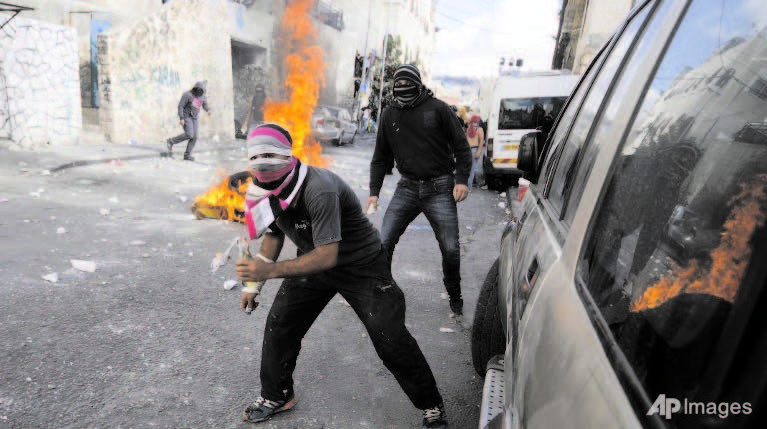
JERUSALEM (TIP): Clashes raged in east Jerusalem on October 30 after police shot dead a Palestinian accused of trying to kill a Jewish hardliner, prompting officials to close the flashpoint al-Aqsa mosque compound. Israel said its closure of the shrine, which is holy to Jews and Muslims, was a temporary measure aimed at calming tempers, but Palestinian president Mahmud Abbas said it was tantamount to a “declaration of war”.
Wednesday night’s shooting incident and the subsequent killing of the suspected gunman sent tensions soaring to a new high, following months of almost daily clashes between Palestinians and Israeli police in the occupied eastern sector of the Holy City. “This dangerous Israeli escalation is a declaration of war on the Palestinian people and its sacred places and on the Arab and Islamic nation,” Abbas said through his spokesman Nabil Abu Rudeina, warning it would only fuel “more tension and instability”.
Jordan’s Islamic Waqf, which has responsibility for the Muslim holy sites in Jerusalem, confirmed it was the first time such a measure had been taken since Israel seized Arab east Jerusalem during the 1967 Six Day War. But a spokesman for Israeli Prime Minister Benjamin Netanyahu insisted that the closure of the compound was a temporary measure aimed at restoring calm. “Closing the Temple Mount is temporary and meant to prevent riots and escalation as well as to restore calm and status quo to the Holy Places,” Ofir Gendelman said in a statement.
Meanwhile, residents of the Jerusalem neighbourhood of Abu Tor were left reeling after the early morning police raid which killed 32- year-old Muataz Hijazi. Israel said he was behind the attempt to gun down hardline activist Yehuda Glick, who has lobbied for Jewish prayer rights at the Al-Aqsa compound. Police said Hijazi began shooting at officers who returned fire, killing him. But his family had a different version. “They burst into the house shortly before 6am, ransacked Muataz’s room and then shot him on the roof,” said his brother Khalil, 34. The radical Islamic Jihad movement said Hijazi was one of its militants.
Abu Tor straddles west Jerusalem and the Arab eastern sector, and borders the volatile Palestinian district of Silwan that has been the focus of months of confrontations. Inside the house, the living room still reeked of tear gas from the raid, and on nearby sidestreets riot police were firing gas canisters and rubber bullets at around 50 stone-throwing Palestinian youths in clashes that erupted after the shooting. In a diplomatic development that the Palestinians claimed was related to the ongoing unrest in east Jerusalem, the Swedish government announced its formal recognition of a Palestinian state, becoming the first EU member in western Europe to do so.
Abbas immediately hailed Stockholm’s decision as “brave and historic” and called for others to follow suit. Israeli foreign minister Avigdor Lieberman lashed out at the move as “deplorable,” issuing a sardonic statement noting that “relations in the Middle East are a lot more complex than the self-assembly furniture of IKEA”. In a bid to restore order in Jerusalem, Netanyahu ordered a “significant increase” in police deployments but called for calm on both sides after right-wing groups reacted furiously to the attempted hit on Glick.
In the Old City, police could be seen fanning through the streets and alleyways, imposing a near lockdown in parts, an AFP correspondent said. “We must first of all lower the flames. No side should take the law into its own hands,” Netanyahu said. The assassination attempt followed months of tensions over the al-Aqsa compound, which houses Islam’s third holiest site but is also the most sacred spot for Jews who refer to the site as the Temple Mount. Although non-Muslims are allowed to visit the site, Jews are not allowed to pray there for fear it could disturb the fragile status quo. -

Gurdwara vandalized in Australia’s Perth
MELBOURNE (TIP): A newly-built gurdwara has become target of anti-Islamic slurs after it was vandalized and painted with obscene messages in Australia’s Perth city. The multi-million dollar Sikh shrine in Bennett Springs was painted with the words like “Aussie pride” and “go home”, ABC reported. Security cameras of the gurdwara were also damaged. “We are from India, particularly from Punjab, we have got no relation with any other religion. We are Sikhs and our religion is totally different from any other religion,” said the pastor Satjit Singh. The treasurer of the gurdwara, Aman Deep Singh, said it was very hurtful. “Make the difference between Arabs and Sikhs and above all we all are here, we have left our businesses, jobs. They have done so much damage. They have not actually just done the damage to this temple, they have done the damage to the whole country,” he said. Labor MP Margaret Quirk said the racial slurs showed “complete ignorance”. “Most of the people that worship in this temple are in fact Australian citizens and this of all weeks; it’s particularly shocking,” she said. The incident has occured few days after two Perth mosques and an Islamic school were vandalised and had been painted with slogans.
-

Around 30 dead, 100 injured in Burkina Faso violence
OUAGADOUGOU (TIP): Around 30 people were killed and more than 100 injured in violence that rocked Burkina Faso on Thursday, leading opposition figure Benewende Sankara told AFP. It was not clear if the toll related to the whole of the country or just the capital Ouagadougou, where protesters burned down parliament in an uprising against the 27-year rule of President Blaise Compaore. Burkina Faso’s President Blaise Compaore refused to give up power but called off a state of emergency imposed after a violent uprising against his 27-year rule that saw parliament set ablaze. remained unclear who was in charge of the country after an earlier announcement by the army that it had taken control, dissolved parliament and would put in place a transitional government. Hundreds stormed parliament and other public buildings including the national television headquarters in the capital Ougadougou, ransacking offices and setting fire to cars despite a heavy police and army presence. Compaore initially called a state of emergency but appeared on television just a few hours later to say it had been called off.
-

Hong Kong tycoon removed from key post for backing protest
BEIJING (TIP): The Communist Party of China has kicked out a tycoon from its top political advisory body who criticized the chief executive of Hong Kong C Y Leung during the pro-democracy protest. Hong Kong-based James Tien (67) had demanded Leung’s resignation last week and seemed to support the protestors. Sources said Tien’s criticism exposed chinks in the government’s armor because he is the leader of the pro-Beijing Liberal Party which is publicly opposing the protesters.
Tien said he accepted the Chinese People’s Political Consultative Conference decision to expel him for telling a local radio station less than a week ago that Leung should consider resigning because he’s done a poor job of running the city. Tien told reporters he would also resign from his position as leader of Hong Kong’s pro-Beijing Liberal Party. The advisory body doesn’t have any formal power in China’s political system. embership is a sign of Beijing’s favor and an opportunity for high-level networking, sources said. The government has been backed by Hong Kong star Jackie Chan and Asia’s biggest magnet Li Kai Shing who advised the protesting students to return to their homes.
It earlier indicated it was blacklisting popular movie actor Chow Yunfat for criticizing the police decision to tear gas demonstrators. Celebrities who have backed the month-long protests include singer Denise Ho, actor Tony Leung and actor-singer Andy Lau. Hong Kong singer Anthony Wong personally joined the demonstrations. The street sit-ins in Hong Kong completed a full month on Wednesday with the students vowing they will battle it out for a year if their demand for full democracy was not met.
The government has offered to introduce adult franchise with voting rights for all citizens but said it will vet the candidates who stood for election to the post of the city’s chief executive. Protesting students have said it was a “fake democracy” as the government intended to put its own supporter in office. -

EU, Russia, Ukraine sign gas supply deal
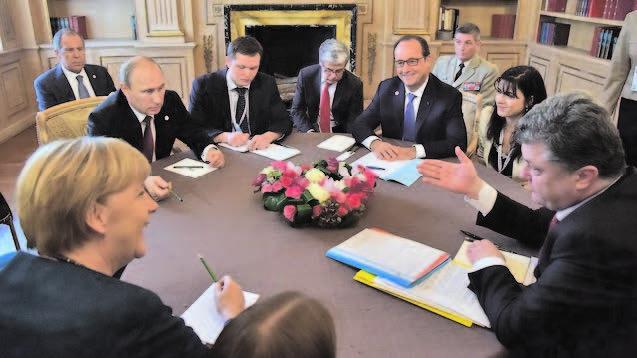
BRUSSELS (TIP): Ukraine, Russia and the European Union signed a deal on October 30 on the resumption of Russian natural gas supplies to Ukraine for winter after several months of delay during the conflict in Ukraine. European Commission president Jose Manuel Barroso, who witnessed the three-way signing ceremony in Brussels as he prepares to leave office on Friday, said: “There is now no reason for people in Europe to stay cold this winter.” Talks had been broken off in the early hours as Moscow sought more guarantees from the EU that it would help Ukraine pay for its natural gas.
They resumed on Thursday evening. EU officials said both Russia and Ukraine had bargained hard for commitments from the Western bloc, with Moscow looking for EU cash to help Ukraine pay off debts to Gazprom and the Kiev authorities anxious to get a deal that they could present to domestic voters as not overpaying for vital Russian supplies. Ukrainian Prime Minister Arseny Yatseniuk said in Kiev that the EU had agreed to serve as guarantor for Kiev in holding Russia to an agreement, notably on the price Ukraine would pay. Yatseniuk, in figures later confirmed by Moscow, said Ukraine would pay $378 per 1,000 cubic metres to the end of 2014 and $365 in the first quarter of 2015.
He said Kiev was ready to pay off debts for gas immediately after any deal was signed. A total of $1.45 billion would be paid immediately and a further $1.65 billion paid by the end of the year, he said. Russian energy minister Alexander Novak insisted that Ukraine would still have to pay up front for new deliveries to see its 45 million people through winter. Moscow expects some $1.6 billion for gas to be supplied. Some critics of Russia question whether its motivation is financial or whether prolonging the wrangling with ex-Soviet Ukraine and its Western allies suits Moscow’s diplomatic agenda. Ukraine is in discussions with existing creditors the EU and the IMF.
The gas cut-off has had little impact for months. But pressure is mounting for a deal as temperatures start to drop below freezing. European energy commissioner Guenther Oettinger, who has been mediating, also leaves office on Friday, making way for a new European commission. “We can say to the citizens of Europe that we can guarantee security of supply over the winter,” he said of what he called the $4.6-billion deal to supply Russian natural gas to Ukraine. EU member states west of Ukraine would also, he said, have stable supplies, passing through Ukrainian pipelines, while Russia would gain the benefit of payment for its energy.
The two sides came close to an agreement in September, but last week differences were wide. Weekend elections returned a pro- Western parliament in Kiev, potentially stoking tensions with Moscow, although Russia’s EU envoy, Vladimir Chizhov, said on Thursday the mood could be more relaxed now the vote had taken place. Ukraine’s Naftogaz company has set aside $3.1 billion in a special escrow account to pay the debt. Kiev says it is working to raise more money from all possible sources of financing, including the EU. The commission is considering Ukraine’s request, made last week, for a further loan of 2 billion euros.
Russia provides around a third of the European Union’s natural gas, roughly half of which is pumped via Ukraine. Ukraine in turn relies on Russia for around 50 percent of its own natural gas and despite storage has a winter shortfall of around 3 billion to 4 billion cubic metres, depending on the weather. For Russia, the natural gas sector contributes approximately a fifth of the national budget.