Year: 2014

  • Obama signs bill to sanction Venezuelan officials

    Obama signs bill to sanction Venezuelan officials

    WASHINGTON (TIP): President Barack Obama has signed legislation into law allowing him to sanction Venezuelan government officials who were involved in a crackdown on anti-government protesters.

    The bill authorizes sanctions that would freeze the assets and ban visas for anyone accused of carrying out acts of violence or violating the human rights of those opposing the South American nation’s socialist government. Last summer, the State Department imposed a travel ban on Venezuelan officials who were accused of abuses during street protests that left dozens of people dead. Venezuela criticized the legislation as it moved through Congress.

  • ‘300 Chinese fighting for ISIS in Mideast’

    ‘300 Chinese fighting for ISIS in Mideast’

    BAGHDAD (TIP): About 300 Chinese people are fighting alongside the ISIS in Iraq and Syria, a Chinese state-run newspaper said on Monday, December 15, a rare tally that is likely to fuel worry in China that militants pose a threat to security. China has expressed concern about the rise of ISIS in the Middle East, nervous about the effect it could have on its Xinjiang region. But it has also shown no sign of wanting to join US efforts to use military force against the group.


    Chinese members of the East Turkestan Islamic Movement are traveling to Syria via Turkey to join the ISIS, the Global Times, a tabloid run by China’s ruling Communist Party’s official newspaper, the People’s Daily, said.

    “According to information from sources, including security officers from Iraq’s Kurdish region, Syria and Lebanon, around 300 Chinese extremists are fighting with IS in Iraq and Syria,” the Global Times reported.

    Chinese officials blame the ETIM for carrying out attacks in Xinjiang, home to the Muslim Uighur people. But the government has been vague about how many people from China are fighting in the Middle East.

    In July, China’s envoy to the Middle East, Wu Sike, cited media reports when he said about 100 Chinese citizens, most of them from the ETIM, were in the Middle East fighting or being trained.

    China says ETIM militants are also holed up along the ungoverned Afghan-Pakistani border and want to create a separate state in Xinjiang, though many foreign experts doubt the group’s cohesiveness.

    Instead, human rights advocates argue that economic marginalization of Uighurs and curbs on their culture and religion are main causes of ethnic violence in Xinjiang that has killed hundreds of people in the past two years.

    China has criticized the Turkish government for offering shelter to Uighur refugees who have fled China through Southeast Asia and said such a channel creates security risks.

  • 80 per cent back Putin even as Russian ruble falls

    80 per cent back Putin even as Russian ruble falls

    MOSCOW (TIP): From a Western perspective, Vladimir Putin’s days as president of Russia should be numbered: The ruble has lost more than half its value, the economy is in crisis and his aggression in Ukraine has turned the country into an international pariah.

    And yet most Russians see Putin not as the cause, but as the solution.

    The situation as seen from a Russian point of view is starkly different from that painted in the West, and it is driven largely by state television’s carefully constructed version of reality and the Kremlin’s methodical dismantling of every credible political alternative.

    An Associated Press-NORC Center for Public Affairs Research poll released Thursday found that about 80 per cent of Russians still support him, hours before Putin vowed in a live news conference to fix Russia’s economic woes within two years, voiced confidence the plummeting ruble will recover soon and promised to diversify Russia’s economy.

    But the poll also showed that confidence in the economy is slipping. This is particularly true in Moscow, where people have become accustomed to imported goods and foreign travel, now once again off-limits for many because of the fall of the ruble and Western sanctions over Ukraine.

    The poll was conducted between November 22 and December 7, when the ruble was steadily declining. But this week’s catastrophic collapse is likely to have a much greater effect on consumer prices and the standard of living.

    For Putin, the question is whether he will be able to convince Russians to tighten their belts, and not just for a few months but possibly for years to come.

    “The Russian people have a sense that they are under sanctions, they are a fortress under siege,” said Maria Lipman, an independent analyst. “This kind of mentality is disseminated consistently and steadily by Russian television: Who else is there to rely on except Putin? Putin is seen as the savior of the nation, and I think he sees himself in this fashion.” Putin addressed his countrymen’s concerns over three hours at Thursday’s news conference, sending a message that he’s in charge and all will be fine.


    An advertisement before the news conference showed Putin surrounded by Sochi Olympic athletes, petting a baby tiger and greeting cosmonauts. “We are absolutely capable of doing everything ourselves,” he promises the audience.

    How Russians view Putin is associated with how they get their news, the poll showed. Those who identified state television as their main source of news are more likely to approve of Putin (84 per cent) than those who have other sources (73 per cent), while those who tune into the news often also have a more favorable opinion of him.

    After becoming president in 2000, Putin benefited from high prices for oil, the mainstay of Russia’s economy. In the past decade, Russians saw their living standards rise faster than at any other point in modern history, transforming many average citizens into car owners and globe-trotters for the first time ever.

    “I very much support Putin — who else is there to support?” said Valentina Roshupkina, a 79-year-old resident of Gryaz, a town several hours’ drive south of Moscow. “The country is moving in the right direction, I believe, because he lifted up the army, he made the government stronger. People started to be a little bit afraid of us.”

    Poll respondents were asked whether they would be willing to speak with an AP reporter, and Roshupkina was among the many who agreed.

  • Eight children killed in Australia in reported mass stabbing

    Eight children killed in Australia in reported mass stabbing

    SYDNEY (TIP): Eight children have been killed and a woman injured, police said on December 18, during what several media outlets reported was a mass stabbing in Australia’s tropical northern city of Cairns.


    Australia is already in a state of heightened alert after police stormed a Sydney cafe early on Tuesday morning to end a 16-hour hostage standoff in which three people were killed, including the hostage-taker.

    Queensland state police said in a statement they were called to a house in the Cairns suburb of Manoora just before midday after reports of a woman with serious injuries on the premises.

    They found the bodies of the children, aged between 18 months and 15, when they were examining the location.

    The woman is receiving medical treatment for her injuries, police said, and is assisting them with their investigation.

    While unrelated to the mass stabbing in Cairns, the Sydney siege has triggered an outpouring of grief, with shocked Australians laying thousands of bouquets at a makeshift shrine in a central city mall near the siege cafe.

  • Woman in China tries to sell daughter for husband’s operation

    Woman in China tries to sell daughter for husband’s operation

    BEIJING (TIP): A Chinese woman was spotted trying to sell her baby daughter to raise money for the medical treatment of her hospitalized husband in Fuzhou city on December 10. Her husband suffered serious injuries after falling from a building, where he was working.


    Photographs in several online news sites in China show the woman, Ni Qiong, on her knees carrying a placard with the words, “Begging to sell child”. The placard further said, “The supervisor disappeared after my husband’s work injury. We have no money for the treatment. Trying to sell my child in order to save her father.”

    “I have no other option,” Ni told local journalists. She was carrying her year-old daughter, and was accompanied by two other daughters. Her husband Zhou Guixing needs surgery which she cannot afford, Ni said.

    Zhou fell from the third floor of a building, where he was working last Thursday. His supervisor gave him 7,000 RMB ($115) before disappearing. However Ni’s older daughters told local journalists, “No, please don’t sell our sister.”

  • First of its kind law in Britain concerning babies with three genetic parents

    First of its kind law in Britain concerning babies with three genetic parents

    LONDON (TIP): Britain has announced a series of laws — the first of its kind in the world — which will concern babies being born with three genetic parents in the UK.

    One of the laws will be that only two of the three adults involved in the process will be considered legal parents of the offspring.

    Other regulations include that the fertility regulator must assess each case for a significant risk of disability or serious illness, fertility clinics would need a new licence to offer the technique, the woman donating her egg would not be related to the child and any child born would have no right to information about the donor.

    The first baby in Britain with three genetic parents is all set to take birth by next year.

    Fetuses can now be conceived using genetic material from three people — a mother, father, and a second woman, who serves as a donor of a vital cellular component.

    The controversial IVF method will prevent mothers from passing on serious mitochondrial diseases to their children. Mitochondrial disease is passed from mother to child through faults in the mitochondrial DNA. It is estimated that 1 in 6,500 children are born every year in the UK with a serious mitochondrial DNA disorder.

    The defect lies in so-called mitochondria, the “power houses” of cells. To get rid of defective mitochondria the nucleus of one egg cell has to be transferred to another egg cell bearing intact mitochondria.

    Mitochondria are cell organelles located within animal and human cells. They produce energy for the organism, possess their own genetic material -mitochondrial DNA (mtDNA) – and are transmitted exclusively by the mother.

    Depending on their activity and tasks, different numbers of mitochondria are present in a cell -usually a few hundred to a thousand per body cell. Inherited mitochondrial disorders occur in about one of 10,000 humans throughout the world. Diseases such as diabetes, stroke, cardiac defects, epilepsy, or muscle weakness may originate from mitochondrial defects.

    Inherited mitochondrial disorders have been incurable so far. Therefore, efforts are now being made to enable women with this disease to bear healthy children by means of nuclear transfer.

    The process is currently illegal throughout the world.

    The technique was pioneered by researchers in Newcastle, and the first of the procedures will be carried out in that city. The new regulations would likely keep such conceptions down to just 10 zygotes each year. “I’m delighted that it’s being moved forward to the next stage. We want to apply for a licence next year and hope to do the procedure in 2015,” Doug Turnbull of Newcastle University said.

    Regulations will remain in draft form until Parliament votes on the rules around May 2015.

    Public Health Minister Jane Ellison said “The government considers that the time is now right to give Parliament the opportunity to consider and vote on these regulations”.

    Rules clearly state that the Human Fertilisation and Embryology Authority (HFEA) would have to be satisfied that there is both a particular risk of mitochondrial abnormality and a significant risk the person will develop a serious illness or condition. The HFEA will consider each application on a case-by-case basis.

  • MADONNA IS MY STYLE ICON, SAYS SUSHMITA SEN

    MADONNA IS MY STYLE ICON, SAYS SUSHMITA SEN

    Bollywood actress Sushmita Sen calls pop diva Madonna her style icon. The 39-year-old former Miss Universe was the showstopper for designer Namrata Joshipura at the Blender’s Pride fashion tour here. “I love Madonna. She is my icon as I feel her music is her style quotient,” said Sushmita.

    Donning a glass-embroidered dress, the
    ‘Filhaal…’ actress said people automatically look stylish when they are successful.
    “People are stylish when they are successful in every walk of life,” said the mother-of-two. Sushmita, who walked the ramp in the city after a long time, said she loves coming back to her ‘homecity’.

    “I enjoy speaking in Bengali. To me Kolkata is home.”

  • ANUSHKA-VIRAT TO MOVE IN TOGETHER?

    ANUSHKA-VIRAT TO MOVE IN TOGETHER?

    Ranbir Kapoor and Katrina Kaif made headlines when they decided to move in together and it is rumoured that the duo has recently moved in together in their Carter Road apartment. With their bold move, they seem to have set an example of sorts for celebrity couples for whom the institution of marriage is too old school. Following in their footsteps, it is being reported that Virat Kohli and Anushka Sharma are also planning to move in together. According to a report, the two are rather serious about each other and have decided to take it to the next level. Reportedly, Virat had met Anushka’s parents who approved of him. The two want to spend more time with each other and hence are deciding to rent out an apartment near Anushka’s Versova pad so that they can be together whenever Virat is in town.
    After keeping mum about their relationship for quite sometime, both Anushka and Virat agreed to their relationship, refusing to divulge details and make it entertainment news. Here’s an account of what their romance looked like.

  • KATIE HOLMES : I LEARNT TO FIRE GUN FOR NEW FILM

    KATIE HOLMES : I LEARNT TO FIRE GUN FOR NEW FILM

    Actress Katie Holmes says she had to learn how to shoot a gun for ‘Miss Meadows’.

    The 35-year-old actress enjoyed playing the titular character in her latest movie, which tells the story of a teacher who moonlights as a vigilante, partly because she got to handle a powerful weapon.

    “Miss Meadows is a new character for me because she’s kind of funny – a substitute teacher who turns into a vigilante when she sees a child being harmed. She was fun to play -plus, I learned how to shoot a gun,” she said.

    Holmes, who has eight-year-old daughter Suri Cruise with ex-husband Tom Cruise, said she is pleased to be back on the big screen after a few years off.

    “Work ebbs and flows but I have been fortunate recently to have more projects come my way. And because my child is growing up, I have a bit more time to focus on my work – and I’m excited about it.”

  • JENNIFER LAWRENCE YEAR’S MOST GOOGLED CELEBRITY

    JENNIFER LAWRENCE YEAR’S MOST GOOGLED CELEBRITY

    Oscar-winning actress Jennifer Lawrence has become the most-searched celebrity on Google over the past 12 months.

    The 24-year-old actress repeatedly made headlines this year with her nude photos that leaked in massive celebrity hacking, her brief fling with Chris Martin, and her box office blockbuster “The Hunger Games: Mockingjay Part 1”.

    The actress is followed by reality TV star Kim Kardashian at the second place. French actress Julie Gayet is ranked third, while comedian Tracy Morgan, who is recovering from a serious car accident earlier this year and actress Renee Zellweger who caused a buzz with her new look round up the top five.

    The rest of the top 10 are occupied by “Dallas Buyers Club” star Jared Leto, chart-topping singer Lorde, Leto’s “Dallas” co-star Matthew McConaughey, George Clooney’s wife Amal Alamuddin, and the NBA team owner Donald Sterling.

  • WHY IS HENNA GOOD FOR YOU

    WHY IS HENNA GOOD FOR YOU

    Henna isn’t just for covering grey hair. It makes your hair strong, voluminous and shiny. Find out why applying henna pack is good for your hair.

    Henna is one of the most popular beauty herbs in India and tropical countries that is known for its cooling effects. Since ages it has been used to make hair shiny, healthy and gorgeous. The power of this green herb is not only used to decorate hands or cover greys, but is also applied on hair to bring back the health of your tresses.

    Healthy hair

    Apply henna pack twice a month to make hair healthy, glossy and voluminous. It helps bring back the lost health of your hair and repairs damaged locks. Henna restores the acid-alkaline balance of the scalp without affecting the natural balance of your hair. Steep henna for two hours in amla-brewed water and apply on hair including scalp to get the best results.

    Conditions hair

    Henna is a very good conditioner for your hair. It covers each hair shaft and builds a protective layer that safeguards the strands from damage. Regular use of henna makes your hair thick and strong by locking the essential moisture in the hair. This herbal hair pack adds a natural shine and gloss to your mane and makes them two times stronger.

    Covers greys

    If you want a rich coloured mane without affecting the health of your hair like other chemical dyes, then henna is your answer. It has no amino acid or other chemicals that takes away the moisture from your hair which leaves it damaged and dull. Boil water with two tablespoons of dried amla, one teaspoon of black tea and two cloves. Strain the water and add in henna to make a thick paste. Leave overnight or for at least two hours and apply on hair.

    Treats dandruff

    Henna is known to cure dandruff quite effectively. Soak one two teaspoons of fenugreek seeds overnight in water and grind them in the morning. Heat some mustard oil and add a few henna leaves. Let it cool down and add fenugreek paste in the oil. You can strain the oil mixture to get rid of coarse particle and apply on the scalp an hour before the shampoo.

  • SIMPLE BREATHING CAN HELP YOU SHED EXTRA KILOS

    SIMPLE BREATHING CAN HELP YOU SHED EXTRA KILOS

    Tlose extra fat, all you have to do is breathe in and breathe out more during exercise or brisk walking, new research has revealed.

    “Our calculations show that the lungs are the primary excretory organ for fat,” the researchers said, noting that more than 80 percent of body fat can be exhaled away.

    Excess carbohydrate or protein in the diet is converted to triglyceride, which consists of just three kinds of atoms – carbon, hydrogen and oxygen.

    Shedding unwanted fat requires unlocking the atoms in triglyceride molecules by a process known as oxidation, the researchers explained.

    “Losing weight requires unlocking the carbon stored in fat cells, thus reinforcing that often heard refrain of ‘eat less, move more,” said researchers Ruben Meerman and Andrew Brown from University of New South Wales in Australia.

    They discovered that when 10 kg of fat are fully oxidised, 8.4 kg departs via lungs as carbon dioxide (CO2). The remaining 1.6 kg becomes water (H2O).

    Their analysis showed that the inhaled oxygen required for this metabolic process weighs nearly three times more than the fat being ‘lost’.

    To completely oxidise 10 kg of human fat, 29 kg of oxygen must be inhaled producing a total of 28 kg of carbon dioxide and 11 kg of water.

    “Keeping the weight off simply requires that you put less back in by eating than you have exhaled by breathing,” the authors explained.

  • FOODS THAT HELP YOU SHED WEIGHT

    FOODS THAT HELP YOU SHED WEIGHT

    If losing weight is on your mind, then running the whole day on the treadmill after over-eating unhealthy food won’t work.

    Without making some changes in your lifestyle, your goal to lose weight will not be achieved. Though there are many hoax assurances available in the market for fast weight loss, most of them are dangerous and unreal. The key to weight loss, besides exercise and diet changes is boosting your metabolism. The best way to kickstart your metabolism is by including some fat burning foods in your regular diet.

    Today, Priya Kathpal – Nutritionist, Mumbai, shares a list of fat burning food items to make your weight loss program more simple and effective.

    Calcium

    You must have heard that calcium helps to strengthen bones and teeth, but you will be amazed to hear that calcium also helps to control hunger pangs. Consumption of dairy products and other calcium rich products have low fat mass in their body and have more control over appetite. Hence, consume more of calcium rich products, if you want to shift your body to a fat burning mode.

    Apples

    Besides keeping the doctor visits away, consumption of apple everyday also assists in reducing fat cells in the body. The skin of the apple possesses great magical properties towards fulfilling your goal of weight reduction. The presence of pectin limits the absorption of fat by the cells and also releases fat deposits through its water binding property.

    Walnuts

    Walnuts possess a healthy dose of omega-3 fat alpha-linolenic acid and mono-unsaturated fats. The presence of mono-unsaturated fat helps to burn a large amount of fat and boosts the metabolism at the same time. Just a handful of walnuts are needed to reduce weight in a healthy way. It is also one of the healthiest nuts available.

    Beans

    Beans are low-fat, low glycemic index and high – fiber and protein. This is the best food for protein intake for vegetarians. Besides, it is the best fat burning food as it provides great a metabolic environment for releasing and metabolizing fatty acids.

    Ginger

    Ginger possesses many magical properties. It helps to relieve digestive problems, reduces inflammation, increases blood flow and aids muscle recovery. If you are on a weight loss program, include ginger in your diet as it helps to boost calories and fats.

    Oatmeal

    Include oatmeal in the morning after a workout or after a normal morning walk. Oatmeal is a slow-digesting carb which helps to keep blood sugar and insulin level at its minimum whilst fastening the fat burning process. Due to its slow-digesting carb property it is a must have food for every individual who wants to reduce some pounds.

    Green tea

    The presence of anti-oxidants EGCG creates a suitable environment for metabolism in healthy people. Besides, it also possesses anti cancer and cholesterol maintenance properties.

  • Chocolates keep you healthy

    Chocolates keep you healthy

    It’s a well known fact that too much consumption of sugar is bad for health. But a little bit of sugar in moderation isn’t as terrible as one thought, say researchers.

    The sweet delicacies not only help in preventing ageing and ensuring proper blood flow but they also help in losing weight and making you happy.

    It’s that time of the year when chocolates are everywhere, so enjoy the delicacies without thinking twice as some of the research conducted by different brands suggests that chocolate can be good for you too, reports mirror.co.uk.

    Cocoa helps in blood flow

    The main ingredient in chocolate contains a wonderful antioxidant called flavanol, which is found in plants. Scientists at head quarters of chocolate brand Mars Bar teamed up with the University of L’Aquila in Italy to find that these antioxidants can increase blood flow to the brain. The higher the cocoa content in your chocolate, the better it is for you.


    Brain power

    Scientists discovered you could have the brain power you had 20 years ago, if you consume plenty of flavanol-rich cocoa. To make the most of its health benefits, stick to ‘healthy’ variants with at least 70 percent cocoa.

    Prevents ageing

    The antioxidants found in fruit and vegetables, which help fight free-radicals that lead to wrinkles, are just as potent in cocoa-rich chocolate. Some research suggests that chocolates could be even more beneficial than fruit, because of their higher antioxidant level.

  • Massacre of Innocence in Pakistan – Peshawar school carnage leaves 141 dead

    Massacre of Innocence in Pakistan – Peshawar school carnage leaves 141 dead

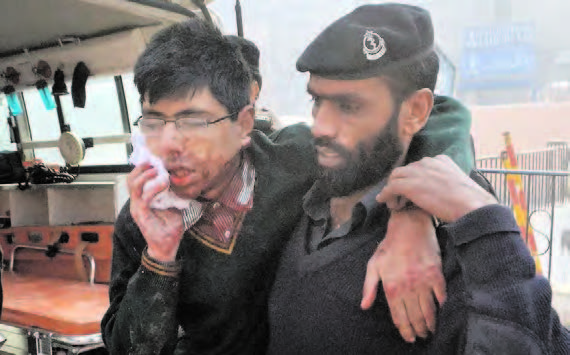
    As many as 141 people, nearly all of them school children, were massacred on December 16 when heavily armed Taliban suicide bombers stormed a Pakistan army-run school here, firing indiscriminately, leaving another 130 injured.

    Massacre of Innocence in Pakistan5 Massacre of Innocence in Pakistan3
    Dressed in para-military Frontier Corps uniforms, the seven Arabic-speaking terrorists entered the Army Public School on Warsak Road around 10 am (local time) from the rear side and went from classroom to classroom shooting innocent children indiscriminately in one of the most gruesome terror attacks anywhere.

    Chief Military Spokesman Maj Gen Asim Bajwa told a news conference tonight that 132 of the dead were children and another nine were staff members. A total of 130 people –118 students, three staffers, seven SSG soldiers and two officers — were injured, he said. He also said that 960 students and staffers were rescued. Bajwa said all seven militants were killed in the operations involving Special Services Group (SSG), or commandos. Some of them reportedly blew themselves up.

    “The operation is over. The school has been handed over to its administration. SSG troops are withdrawn,” he added.
    Bajwa said about 1,000 students and staffers were in the school at the time of the attack.

    Earlier, reports had put the death toll at 160 but later it was scaled down.

    The death toll is likely to go up given the huge number of injured, some of them critically, senior officials in the Khyber-Pakhtunkhwa province said

    During the over eight-hour standoff, the terrorists also took several hostages, including teachers and the principal of the school, and used them as human shield during the assault.All seven militants died in the attack with four of them blowing themselves up.

    “Want them to feel our pain” The Tehreek-e-Taliban Pakistan claimed responsibility for the attack, the bloodiest in recent years since the 2008 suicide bombing in Karachi in which 150 people were killed.

    A Taliban spokesman claimed that six suicide bombers attacked the army school, saying it was a revenge for the military’s operation against militants in the North Waziristan tribal area close to Peshawar. “We want them to feel our pain,” the spokesman said.

    World leaders united in condemning the attack as Prime Minister Nawaz Sharif termed it a “national tragedy” and chaired a security meeting in Peshawar where he was briefed about the attack and the operation.

    Sharif reiterated that military operation ‘Zarb-e-Azab’ to flush out terrorists from the country’s tribal belt will continue. “It’s a sheer act of cowardice… the country should unite to combat terrorism,” he added. A three-day nationwide mourning has been announced in Pakistan. Army Chief General Raheel Sharif also reached Peshawar to monitor the situation.

    Massacre of Innocence in Pakistan2

    One rescued student told reporters that the attackers had long beards and they were wearing ‘shalwar kamiz’. He said they were speaking Arabic and looked like foreigners.

    The Taliban attack on Tuesday brought back chilling memories of the 2004 incident in Beslan in North Ossetia, Russia, when at least 32 Chechen rebels stormed a school and took more than 1,000 hostages, majority of them children. Over 330 people, mostly children, were killed in that assault

    About 500 students and teachers were believed to be inside the Peshawar school at the start of the attack, which appeared to be the worst in the country since the 2008 suicide bombing in the port city of Karachi killed 150 people.

    The attack ended after all six Taliban attackers were eliminated and a clean-up operation was being undertaken. Mushtaq Ghani, provincial information minister, said the militants entered through a graveyard which is adjacent to the school. The school is close to Saint Mary High School, which has also been under threat since the last couple of days.

    A heavy contingent of police and security forces blocked the roads leading to the school, taking control of the entire area.

    The army had launched the massive military operation ‘Zarb-e-Azb’ in June following a brazen militant attack on Karachi’s international airport and the failure of peace talks between the government and the Taliban negotiators.

    The military has said more than 1,300 militants have been killed during the operation in North Waziristan and adjacent tribal region and it will continue till militancy was completely wiped out of Pakistan.

    Opposition Pakistan Tehreek-i-Insaf chief Imran Khan, whose party rules Khyber-Pakhtunkhwa province, termed the attack as an act of “barbarism”.

    In the wake of the attack, Khan postponed his plan to shut down the entire country that was planned for December 18.

    Shagufta, who lives near the school, told Geo TV that she heard two explosions, a smaller one followed by a huge bang.

    A student who identified himself as Shuja told Samaa TV that they were taking examination when firing started.They were told by the teacher to lie down on the floor. He said they remained on floor for about one hour when army soldiers came and told them to go out.

    Several students escaped through the back gate. One of students who escaped said that the fourth period was in progress when they heard firing.

    “First we didn’t know what has happened. But later an army officer told us to escape through back gate,” he said.

    A welcome ceremony planned in Lahore for the hockey team which won silver medal in the champion trophy in India was postponed in the wake of the attack.

    Defence Minister Khawaja Asif said in a statement, “We are deeply fragmented today as a nation. For the sake of the children martyred today and our children fighting the enemy for our existence, we must have one message for the enemy (that) we shall overcome inshallah and rid our land of this scourge. Zarb-e-Azb to continue with full force and (our) armed forces remain undeterred.”

  • INDIA IS FASTEST-GROWING, THIRD-LARGEST MARKET FOR DELL

    INDIA IS FASTEST-GROWING, THIRD-LARGEST MARKET FOR DELL

    BENGALURU (TIP): Michael Dell’s decision to take Dell private last year has started showing signs of change for the company in India, where it has grown to become a $2-billion entity. Growing at close to 50% in the last one year, India has now become Dell’s third largest market in terms of revenue after the US and China.

    “Our pace of growth makes India the fastest growing market for Dell globally and India has now emerged as the third largest market for Dell, next only to the US and China,” Alok Ohrie, managing director at Dell India, told ET. “India is also the largest workforce for Dell outside of the US and representative of every single business of Dell”

    The company has been rapidly growing in most of the segments it is present in. As per market research firm IDC’s latest India PC market report, Dell has inched closer to the top position in the third quarter of 2014 with 22% market share, trailing HP by 3.5% in terms of total number of units.

    For the same period last year, the company was the third largest player with only 11.8% marketshare. “In the server business, we have grown at an even faster rate,” Ohrie said.

    The growth has been driven by the company’s aggressive expansion in smaller towns and cities, using partners to sell its products instead of selling everything directly to the customer, and due to IBM’s exit from the entry-level server business.

    Dell India has completely revamped its go-to-market strategy in India post privatisation—trying to offer integrated solutions to enterprises as it attempts to fill in a void created by IBM’s exit from commoditised x86 server business.

    “We are in a very unique position because now we are the only company in the IT industry with truly end-to-end solutions, starting from tablets to cloud computing and everything in between. That is our biggest strength in the market,” Ohrie said.

    Dell went private in November last year after CEO and founder Michael Dell acquired the company with the help of private equity firm Silver Lake Partners for $24.9 billion. In an interview with ET in January, Dell said “Privatisation just gives us an enormous amount of freedom to execute in the way we believe is the right way and that is for me incredibly energising.”

    With its new aggressive go-to-market strategy, Dell has expanded its presence from 15 top cities to 45 cities in the country. The company is also now using distributors to sell its PCs, notebooks and entry-level servers and storage. This has given the company access to additional 1,000 towns in India.

    “In the last 6-12 months, Dell has been moving up the value chain, targeting solutions like virtualisation, cloud and mobility to large enterprises in India,” said Naveen Mishra, research director at Gartner. “They are trying to have more feet on the ground, which has helped them win some large deals.

    “Not only did the renewed strategy help the company expand its presence in the country, but has also enabled them to sell larger IT solutions to companies instead of selling just servers and storage—thus improving profitability as well.

    “The model has expanded our IT solutions capability by the addition of new partners with different skills that we did not have. We can now offer everything together as an end-to-end solution,” Ohrie said.

  • SPICEJET’S LOSS IS OTHER CARRIERS’ GAIN

    SPICEJET’S LOSS IS OTHER CARRIERS’ GAIN

    NEW DELHI (TIP): SpiceJet’s fall from grace has led the cash registers ringing for other Indian carriers. Troubles at Kalanithi Maran-owned low cost carrier (LCC) started from mid-November when leasers started repossessing aircraft, leading to reduction of flights. As SpiceJet’s slashed its schedule, passengers of its cancelled flights made a beeline for other carriers — mainly IndiGo and Jet.

    According to directorate general of civil aviation ( DGCA) data, market shares of IndiGo and Jet shot up from October (when SpiceJet was flying its entire fleet) to November (see graph). Wadia Group’s GoAir also gained and carried more flyers. State-owned Air India, which is being kept alive by pumping in thousands of crores of tax-payers’ money, could not capitalize on the situation. It actually saw its market share drop by two percentage points from October to November. AI (domestic) even pipped SpiceJet in terms of numbers of passengers being affected by flight cancellations. As many as 4,242 AI passengers had seen their flights cancelled, while the figure for SpiceJet was 3,290. And, 27,200 AI (domestic) flyers faced delays of over two hours. “The focus may be on SpiceJet but AI should be the real worry for the government,” said an official.

    Meanwhile on December 18, sources said SpiceJet operated over 140 flights by evening and had six cancellations by then— out of its truncated schedule of 230 daily flights. Oil companies have put SpiceJet on cash-and-carry and the LCC is paying cash to get fuel.

    Full service carriers, Jet and AI, are now planning to fill in the void created by SpiceJet’s flight reduction. They are both planning to deploy wide body aircraft on domestic routes. AI has three Boeing 777-200 (long range) which it will lease out by next summer. It plans to utilize these three twin aisle planes on domestic sector till then.

    Jet on December 18 introduced 12 additional daily flights on domestic routes. It will deploy wide body Airbus A-330 on routes like Delhi-Bengaluru-Delhi and Delhi-Chennai-Delhi from next Tuesday to January 29, 2015.

  • Government plans  multi-model transport body for movement of goods

    Government plans multi-model transport body for movement of goods

    NEW DELHI (TIP): The government plans to set up a multi-model transport organization to facilitate faster movement of goods through rail, water, air and road, railways minister Suresh Prabhu said on Decedmber 18.

    The Minister said it will help farmers and agriculturists enable better price discovery and the government is already working on a Cabinet proposal for the same.

    “We want to provide you (industry) a better logistics and supply chain infrastructure. For that we are working on a proposal to set up multi-model transport organization for movement of goods and cargo, it will comprise of all four means of transport, including road, rail, air and ship,” Prabhu said at a food processing event.

    Speaking on the sidelines, he said the government will move a Cabinet note for setting up of this multi-model transport organization. “… so whosoever wants to move goods, they can approach this authority which will then facilitate the movement of goods and will convey through which medium it could be delivered in faster way and will be cost effective,” the Railways Minister said.

    Prabhu was speaking at National Conference on Food Processing, organized by Yes Bank and food processing ministry.

  • ‘ALIBABA FOUNDER JACK MA BIGGEST BILLIONAIRE GAINER OF 2014’

    ‘ALIBABA FOUNDER JACK MA BIGGEST BILLIONAIRE GAINER OF 2014’

    NEW DELHI (TIP): Alibaba founder and executive chairman Jack Ma is this year’s biggest financial gainer as the billionaire entrepreneur’s fortune has swelled by a whopping USD 18.5 billion this year to USD 29.2 billion, a report says.

    According to private wealth consultancy, Wealth-X, the former English teacher-turned billionaire entrepreneur is the biggest gainer of this year as his fortune increased 173 per cent, largely due to Alibaba’s blockbuster IPO in September and the subsequent strong performance of the company’s
    stock.Legendary investor Warren Buffett stood at second place on the Wealth-X list of this year’s top gainers.

    The Berkshire Hathaway chairman raked in USD 13.5 billion in 2014, a 23 per cent increase from last year, to push his fortune to USD 72.6 billion.

    Meanwhile, the world’s richest man, Bill Gates, saw his net worth grow by USD 10.5 billion in 2014 to reach USD 83.1 billion, earning him third place on the Wealth-X ranking of this year’s biggest gainers.

    The top five biggest gainers of this year also include, Mark Zuckerberg, ranked fourth on the list as his fortune rose by USD 8.4 billion to USD 33.1 billion, followed by telecommunications company Altice’s founder Patrick Drahi whose fortune increased by USD 5.1 billion to USD 12.9 billion.The individual who lost the most money this year is Russian energy tycoon Leonid Mikhelson. Mikhelson’s fortune now stands at USD 10 billion, Wealth-X said. The biggest shareholder of natural gas producer Novatek lost USD 7 billion, or 41 per cent of his wealth, in 2014, due to the plummeting Russian currency, weak oil prices and economic sanctions imposed by the West over the Russia-Ukraine conflict.

    The top five losers of 2014 include Masayoshi Son (CEO, Softbank) whose net worth eroded by USD 5.9 billion to USD 13.2 billion this year, followed by Lui Chee Woo who suffered a loss of USD 5.5 billion in his fortune which stood at USD 14.1 billion in 2014. Amazon’s Jeff Bezos’ fortune eroded by USD 5.5 billion to USD 28.9 billion in 2014, while Sheldon Adelson lost USD 5.2 billion of his wealth which now stands at USD 30.1 billion, Wealth-X said. Wealth-X is the world’s leading ultra high net worth (UHNW) intelligence and prospecting firm with the largest collection of curated research on UHNW individuals, defined as those with net assets of USD 30 million and above.

  • GST Bill gets Cabinet nod

    GST Bill gets Cabinet nod

    NEW DELHI (TIP): The Cabinet on December 17 cleared the GST Constitutional Amendment Bill for its tabling in the current session of Parliament, as it races against time to keep the April 2016 deadline to usher in the nearly all-encompassing indirect tax that will unify markets and avoid tax cascades.

    Although states have not said it in so many words, on many contentious issues, the Centre could get them agree after a series of confabulations over the past week. The Centre’s decision to table the Bill that seeks to allow it to tax transactions beyond the first point of sale of goods at the factory gate and states to tax services is also seen as a persuasive tactic.

    The Constitution 122nd Amendment Bill requires to be passed by both houses of Parliament (with votes of two-thirds of the members present) and half the state legislatures. The Bill, as cleared by the Cabinet, doesn’t exclude petroleum products from the purview of GST, but the Centre may agree to keep them out for an initial three to four years to address states’ concerns.

  • ISRO GETS CLOSER TO MANNED MISSION, TESTS CREW MODULE

    ISRO GETS CLOSER TO MANNED MISSION, TESTS CREW MODULE

    SRIHARIKOTA (TIP): This rocket didn’t put a satellite in orbit. In fact, its payload plunged into the Bay of Bengal 20 minutes after the vehicle lifted off from Sriharikota. And that made it a success, for it was the first step to India’s manned space mission.

    Indian Space Research Organisation (ISRO) achieved success of a different kind on December 18 when its GSLV Mark III on a suborbital experimental flight carried an unmanned crew module which was ejected at a height of 126km. Re-entering the atmosphere, its parachutes ensured a soft-thud on the sea. Recovered by the Indian Coast Guard, the Crew Module Atmospheric Re-entry Experiment (CARE) will undergo tests to ascertain its efficiency in bringing back future astronauts from India.

    “Everything went as per plan,” said ISRO chairman K Radhakrishnan. “After a decade of developing the GSLV Mk II, we have tasted the first success of an experimental flight. The performances of the solid and liquid stages were as expected. The unmanned crew module worked extremely well.”

    GSLV Mark III, weighing 630.5 tonnes – the heaviest rocket to be made by ISRO – lifted off from the second launch pad of Satish Dhawan Space Centre at 9.30am. Designed not to take the payload to a higher orbit, the rocket had a dummy cryogenic engine. The rocket went through the stage separations as planned and, 20 minutes later, ejected the crew module at an altitude of 126 km at a velocity of 5.3km per sec. The module re-entered the atmosphere at 80km and plunged into the Bay of Bengal, about 180km from the Andaman and Nicobar Islands.

    For once, there was something more exciting than the launch—the recovery of the payload. CARE was fitted with a system that eludes a chemical that turns the sea water at the point of impact a fluorescent green. This was for the overflying Dornier aircraft to spot it even if its beacon and GPS tracker failed. But the signals were loud and clear as the Indian Coast Guard vessel Samudra Paheradar made a deft approach.

    A 17-member team from ISRO on board the vessel recovered CARE at 4.30pm. S Somnath, project director, GSLV Mark III, said the module looked intact, signifying that it had withstood the high friction and temperature during the re-entry into the atmosphere. The crew module, which is expected to reach the Chennai port on December 21, will be further developed to send India’s first men in space, some ten years later.

    Before that, ISRO will test the emergency ejection (crew safety mechanism) system in 2015. “We plan to have the (full-fledged) development launch of GSLV Mark III after two years,” said Radhakrishnan.

    Scientists said the biggest challenge of the project was avoiding the separated parts of the rocket colliding with the crew module during re-entry. The cryogenic stage of the launch vehicle was not activated as its indigenous C 25 cryo engine is still in early ground test phase.

  • US MAKES BULLET THAT CAN CHANGE DIRECTION MID-AIR

    US MAKES BULLET THAT CAN CHANGE DIRECTION MID-AIR

    The United States department of defence has successfully tested a bullet that can change direction after it has been fired, apparently using fins built into the shell to direct it in the air and account for wind and targets moving.

    The Extreme Accuracy Tasked Ordnance weapon, known as Exacto, is made by American industrial company Teledyne Technologies. The firm is making the bullet for the American government’s military research agency, Darpa.

    A video made by the company shows the bullet being fired twice, deliberately off target. The second time it swings back in towards the target and hits. The companies involve have not disclosed how the bullet works, but it is thought to have small fins that redirect its path. The sniper shines a laser at the target, which the bullet then follows as it moves through the air. That stops the complicated adjustments that snipers have to make for wind, weather, the dip of the bullet as it flies through the air and any movement by the target, and could mean that snipers’ targets could be hit from much further away. The record kill by a sniper rifle stands at 8,120 feet. That was done by UK soldier Craig Harrison in 2010, during the war in Afghanistan.

  • 53 antibiotics found to be effective against Ebola

    53 antibiotics found to be effective against Ebola

    LONDON: In a big boost to the global fight against the deadly Ebola virus, scientists have found 53 existing drugs that may keep the Ebola virus from entering human cells, a key step in the process of infection.

    Among the better known drug types shown to hinder infection by an Ebola virus model include several cancer drugs, antihistamines and antibiotics.

    Among the most effective at keeping the virus out of human cells were found to be microtubule inhibitors used to treat cancer, according to researchers at the Icahn School of Medicine at Mount Sinai and the National Institutes of Health (NIH).

    The next step is to test the re-purposed drug candidates in animal studies to see if useful doses against the virus come with toxic side effects.

    If any of prove to be safe and effective, the government may opt to deploy them in the outbreak areas.

    At present, there is no approved treatment for Ebola virus infection and the estimated mortality rate of the current Ebola outbreak is nearly 70%.

    Antibody-based therapy (ZMapp) has proven effective in animal studies and has been used for the treatment of a few patients but has not been confirmed in clinical trials.

    It is also expensive to make and in short supply.

    Ebola vaccine trials are getting underway as well, but vaccines will not be available for some time.

    “In light of the historic and devastating outbreak of Ebola virus disease, there is an urgent need to rapidly develop useful treatments against Ebola infection and our study results argue that repurposing existing drugs may be among the fastest ways to achieve this,” said lead author Adolfo Garcia-Sastre from Icahn School of Medicine.

    “Any of the compounds identified in this study promise to become lead compounds in near-future drug development efforts studies targeting this virus,” he added.

    What the team has done is sift through sample libraries of 2,816 compounds already approved by the US Food and Drug Administration for other uses. They used a miniaturized, high-speed technology to screen through.

    Their assay was designed to identify compounds that blocked the ability of the Ebola virus to enter and infect human cells by at least 50%.

    While fully intact Ebola virus is a biosafety level (BSL) 4 pathogen and dangerous to work with, the team created a virus-like particle comprised of the Ebola proteins
    (glycoproteins and matrix proteins) that enable the virus to enter cells, but without many of the genes and proteins that make the virus deadly.

  • NASA finds methane in Mars

    NASA finds methane in Mars

    LONDON (TIP): Nasa has announced that the Mars Curiosity rover has detected methane on the red planet. Whether the Martian atmosphere contains traces of the gas has been a question of high interest for years because methane is a potential sign of life.

    The team responsible for the Sample Analysis at Mars (SAM) instrument suite on the Curiosity rover announced it has made the first definitive detection of organic molecules at Mars. This comes a year after the Curiosity rover team announced that it had found no evidence of methane on the Red Planet. The surface of Mars is currently inhospitable to life but there is evidence that the Red Planet once had a climate that could have supported life billions of years ago. For example, features resembling dry riverbeds and minerals that only form in the presence of liquid water have been discovered on the Martian surface. The organic molecules found by the team were in a drilled sample of the Sheep bed mudstone in Gale crater, the landing site for the Curiosity. Scientists think the crater was once the site of a lake billions of years ago and rocks like mud stone formed from sediment in the lake.

    The mud stone was also found to contain 20% smectite clays. On Earth such clays are known to provide high surface area and optimal interlayer sites for the concentration and preservation of organic compounds when rapidly deposited under reducing chemical conditions.

    The discovery shows that the ancient environment offered a supply of reduced organic molecules for use as building blocks for life and an energy source for life.

    “We think life began on Earth around 3.8 billion years ago, and our result shows that places on Mars had the same conditions at that time -liquid water, a warm environment and organic matter,” said Caroline Freissinet of Nasa’s Goddard Space Flight Centre.

    “So if life emerged on Earth in these conditions, why not on Mars as well,” Freissinet added.

  • Conflict of interest: BCCI list includes Gavaskar, Ganguly

    Conflict of interest: BCCI list includes Gavaskar, Ganguly

    NEW DELHI (TIP): The BCCI on Wednesday submitted a list of individuals to the Supreme Court with potential conflicts of interest. The list reportedly includes names of Sunil Gavaskar, Ravi Shastri, Kris Srikkanth, Venkatesh Prasad and Sourav Ganguly. ?The SC has also reserved the order on Srinivasan’s future in the BCCI and the fate of the Chennai Super Kings franchise. The court observed that there is deep rooted conflict of interest and it has dented the game.

    The apex court continued their hearing on the issue of conflict of interest in N Srinivasan’s stakes in the Chennai Super Kings franchise and asked the BCCI how a selector can hold two posts at the same time. The court cited the example of Srikkanth’s example during his stint in the IPL. Srikkanth was a selector in the BCCI and he had held stakes in the CSK franchise during his tenure.

    The court asked the board to submit the names of individuals, other than N Srinivasan, who would be affected if Rule 6.2.4 of BCCI’s Constitution is struck down.This rule was amended in September 2008 where it permitted office bearers, administrators, players and others to have a commercial interest in the IPL.