Month: April 2015

  • 2 Indians Awarded for Saving Toddler Dangling From Balcony in Singapore

    2 Indians Awarded for Saving Toddler Dangling From Balcony in Singapore

    SINGAPORE: Two Indian nationals in Singapore have been hailed as heroes and commended for saving a dangling toddler stuck between the rails on a parapet of a second floor apartment block.

    S Shammugun Nathan, 35, and P Muthukumar, 24, were both lauded by the Singapore Civil Defence Force (SCDF) on Thursday for their bravery act.

    Both men work in the construction sector and were on a project in the Jurong East estate, a planning area of Singapore near the apartment block from where the toddler was heard crying.

    The two workers were awarded the Public Spiritedness Award for their actions in helping the toddler, SCDF said.

    Shammugun Nathan climbed up to a second floor unit to support the three-year-old girl whose head was trapped in between the rails of an external clothes drying rack outside the service yard.

    SCDF said they were alerted of the incident on Thursday and its rescue vehicle arrived at the scene within five minutes.

    The toddler was freed by the time the SCDF rescue vehicle had arrived, SCDF firefighters brought her to safety with a ladder.

    Shammugun Nathan has been in Singapore for four years, while Mr Muthukumar has been the the country for three years.

    “The toddler was playing with an iPad when it fell over, which was why she tried to climb out after it,” Mr Muthukumar said.

    On receiving the award, Mr Muthukumar said that he was very happy, and that he hoped more people would take similar actions.

    “I believe in paying it forward,” added Mr Muthukumar, who said he believes that someone will help his own kids in the future.

    No visible injuries were seen on the toddler except some redness on the face, and the parent at the scene had refused to send her to the hospital, SCDF spokesperson was quoted as saying by a news channel.

  • British PM David Cameron’s Party Woos Indian-Origin Voters with Hindi Song

    British PM David Cameron’s Party Woos Indian-Origin Voters with Hindi Song

    Britain’s Conservative Party has launched a new campaign song in Hindi aimed at wooing Indian-origin voters in the run up to the May 7 general elections.

    Prime Minister David Cameron led party, which heads the current coalition government in the country, launched ‘Neela Hai Aasma (Blue Sky)’ today in reference to the symbolic blue colour of the party.

    The catchy tune set to Indian beats encourages the British Indian community to join hands with the British PM in taking the UK forward with a chorus repeating the name ‘David Cameron’.

    “The Conservative Party has the largest number of British Indian parliamentary candidates standing for election including four incumbent MPs – Shailesh Vara (Minister of Justice), Priti Patel (Exchequer Secretary to the Treasury and Indian Diaspora Champion), Alok Sharma (Vice-Chairman of the Conservative Party and Member of the Treasury Select Committee) and Paul Uppal (Member of No.10 Policy Board) together with 14 new candidates of British Indian origin,” the Conservative Friends of India (CFI) group, which commissioned the ditty, said in a statement.

    The Bollywood-style campaign song is reflective of the Indian tradition of election propaganda, which often relies on popular film beats to praise key candidates.

    “Your dreams will be fulfilled; He’ll keep his commitments; The job which David has started; He’s determined to finish,” are among the lyrics of the song performed by British artists of South Asian origin such as Navin Kundra, Pandit Dinesh and Rubayyatt Jahan.

    The CFI, which seeks to build stronger links between the Conservative Party, the British Indian community and India, said: “Over the last five years, the Prime Minister has consistently engaged with the British Indian community across a series of high profile political, business, social, religious and cultural events.”

    He visited the Swaminarayan Hindu Mandir in Neasden and the Sikh Gurdwaras in Leamington Spa and Gravesend as well as the Golden Temple in Amritsar. He unveiled the Encyclopaedia of Hinduism last year as well as attending the Asian Business Awards, it said.

    Last month, David Cameron joined Indian Finance Minister Arun Jaitley and Bollywood Actor Amitabh Bachchan, to unveil a statue of Mahatma Gandhi in Parliament Square alongside statues of Winston Churchill and Nelson Mandela, it said.

    A video accompanying the song presents a snapshot of some of these key India-related highlights in Cameron’s career.

    “David Cameron has done more than any other British Prime Minister since World War II to help build a strong and positive relationship with India and engage actively with the British Indian community. The Conservatives are also the only party to have made specific commitments in their manifesto about India, including pushing for an ambitious EU-India trade deal and supporting India’s bid for permanent representation on the UN Security Council,” the CFI added.

    The Indian diaspora is estimated as 1.5 million strong and forms a crucial vote-bank for each of the major parties – Conservative and Labour – in the UK elections.

  • Calyx Group Revolutionizes Real Estate Industry

    Calyx Group Revolutionizes Real Estate Industry

    Pune, India April 24th 2015. Calyx group, one of the leading real estate companies has set a new trend across the property industry. Their exciting offers and spectacular constructions have bagged sale of more than Rupees 300 Crores. The group brings exciting Shubh Labh offers on various residential projects all around Pune.

    Calyx group is one of the top real estate development and land acquisition companies in Pune. They have completed several projects all around the city. From affordable residential schemes to exclusively luxurious projects, the company has an edge over all types of property developments. The group owns majestic projects in and outside the ambit of Pune city in areas like, Bibewadi, Warje, Wanowarie, Hadapsar, Kothrud, Sinhgad Road, Shukrawar Peth, Pirangut and a lot of other places. Calyx group served a treat to the Punekars by offering great deals throughout Gudi-Padwa to Akshay Tritya festival months.

    Various 1, 2 and 3 BHK residential apartments and commercial shops are being offered by the group across the geography of Pune city. Calyx group has received a great response from Pune residents. More than Rupees. 300 Crores worth property has already been sold. Following are some of the ongoing projects with surprising offers:

    Calyx Artemis Project: Located at Sinhgad Road, these 2 BHK luxurious apartments can be owned by paying amount for only 1 BHK flats.

    Calyx Navyangan Phase 1 Project: Huge phase of 700 flats at Pirangut, New Pune, offering booking of flats on just 5% down payment.

    Calyx Vanalika Project: Another massive project of 1000, 1 and 2 BHK apartments at Pirangut, Pune where flats can be owned at 5% down payment.

    Calyx Signature Project: Unbelievable offer on limited 2 and 3 BHK luxury apartments and shops where an Audi A3 comes free with every flat.

    Calyx Parineeta Project: Offer on limited 2 BHK luxurious homes in Kothrud where bookings can be done at 40% down payments and rest of the amount can be paid on possession.

    Calyx Future City Project: 1 and 2 BHK flats can be booked by paying just INR 21,000 at Urawade, Pune. The vast project comprises of 700 flats with 1 BHK worth only INR 21 Lacs (all Inclusive service tax, VAT and registration charges and stamp Duty).

    The premier real estate construction organization believes in quality work and timely delivery of projects. Their enormous success in the past has created tremendous reputation in the realty industry. Whether your requirement is to live amidst the core of the city or away from the buzz of the city, the group offers multitude of projects that answer all your needs.

    Traditionally known as a reliable name in realty, the Calyx Group is now venturing into the exciting realms of entertainment and telecom. Over the years, the Calyx Group has earned a reputation of forging long-term business associations that make an indelible impact on the industry.

    Facebook page URL: https://www.facebook.com/calyxgroup

    Website URL: http://www.calyxcorp.co.in/

    Calyx Constructions Pvt. Ltd.
    Contact : admin@calyxcorp.co.in / +(91) 88888 50014

  • US is often unsure about who will die in drone strikes

    US is often unsure about who will die in drone strikes

    WASHINGTON (TIP): Barack Obama inherited two ugly, intractable wars in Iraq and Afghanistan when he became president and set to work to end them. But a third, more covert war he made his own, escalating drone strikes in Pakistan and expanding them to Yemen and Somalia.

    The drone’s vaunted capability for pinpoint killing appealed to a president intrigued by a new technology and determined to try to keep the United States out of new quagmires. Aides said Obama liked the idea of picking off dangerous terrorists a few at a time, without endangering American lives or risking the years long bloodshed of conventional war.

    “Let’s kill the people who are trying to kill us,” he often told aides.

    By most accounts, hundreds of dangerous militants have, indeed, been killed by drones, including some high-ranking al-Qaida figures. But for six years, when the heavy cloak of secrecy has occasionally been breached, the results of some strikes have often turned out to be deeply troubling.

    Every independent investigation of the strikes has found far more civilian casualties than administration officials admit. Gradually, it has become clear that when operators in Nevada fire missiles into remote tribal territories on the other side of the world, they often do not know who they are killing, but are making an imperfect best guess.The president’s announcement on Thursday that a January strike on al-Qaida in Pakistan had killed two Western hostages, and that it took many weeks to confirm their deaths, bolstered the assessments of the program’s harshest outside critics. The dark picture was compounded by the additional disclosure that two American members of al-Qaida were killed in strikes that same month, but neither had been identified in advance and deliberately targeted.

    In all, it was a devastating acknowledgment for Obama, who had hoped to pioneer a new, more discriminating kind of warfare. Whether the episode might bring a long-delayed public reckoning about targeted killings, long hidden by classification rules, remained uncertain.Even some former Obama administration security officials have expressed serious doubts about the wisdom of the program, given the ire it has ignited overseas and the terrorists who have said they plotted attacks because of drones. And outside experts have long called for a candid accounting of the results of strikes.

    “I hope this event allows us at last to have an honest dialogue about the US drone program,” said Rachel Stohl, of the Stimson Center, a Washington research institute. “These are precise weapons. The failure is in the intelligence about who it is that we are killing. “Stohl noted that Obama and his top aides have repeatedly promised greater openness about the drone program but have never really delivered on it.

    In a speech in 2013 about drones, Obama declared that no strike was taken without “near-certainty that ano civilians will be killed or injured.” He added that “nevertheless, it is a hard fact that US strikes have resulted in civilian casualties” and said “those deaths will haunt us as long as we live.”

  • Now, tax to be levied on PF withdrawn before five years

    Now, tax to be levied on PF withdrawn before five years

    NEW DELHI (TIP): While the Modi government is allaying perceptions of tax terrorism among foreign investors and projecting a pro-poor stand to counter opposition allegations, a peculiar clause in the Finance Bill can undo its efforts as it brings the retirement savings of millions of workers under the income tax net, even if they earn as little as Rs 2,120 a month.

    To put that in perspective, the annual income threshold above which personal income tax is payable isRs 2.5 lakh or about Rs 21,000 per month.

    From June 1, workers’ retirement savings exceeding Rs 30,000 will be taxed at 10.3% or the maximum marginal rate of 30.6% if they leave the employees’ provident fund before completing five years of service.

    Tax will be deducted at the highest rate from the provident fund account balances of such employees who don’t have a PAN card, used to identify taxpayers, according to the new Section 192A introduced in the Income Tax Act. Even those with a PAN card who save a higher amount and pay income tax will need to refile their past tax returns where deductions were claimed against EPF contributions.

    Alarmed officials in the PF office said that 90% of the Employees’ Provident Fund Organisation’s 8.5 crore-plus members don’t have PAN cards and would end up paying an “exorbitant and unfair” tax on their savings. The EPFO board chaired by labour and employment minister Bandaru Dattatreya took up the issue with the finance ministry last month.

    However, officials said there is no move yet to reconsider the issue, in contrast to the alacrity with which the finance ministry announced a review of new I-T return forms that sought details of foreign travel and attracted severe flak.

    “A vast majority of EPF members may not have a PAN card. The charging of income tax in respect of such members at the maximum marginal rate will be exorbitant and unfair,” Central Provident Fund Commissioner KK Jalan noted in a missive to the labour ministry on the issue last month.

    Drawing a parallel between another provision in the Finance Bill that makes quoting of PAN necessary for purchasing jewellery overRs 1 lakh, the PF department has asked for ‘the same logic’ to be applied to EPF members so that workers are not subject to unnecessary hassles.

    An EPF account is mandatory for all employees earning up to Rs 15,000 per month (raised recently fromRs 6,500 per month) in firms employing over 20 workers. As per the law, 24% of an employee’s salary is diverted to her or his PF account as a social security net for old age.

    The Rs 30,000 threshold set in the Finance Bill for deducting tax from the PF balance implies that tax would be payable on contributions of as little as Rs 508 to the EPF every month for up to 59 months. The retirement savings of those earning over Rs 2,120 a month could be taxed at 30.9% if they don’t have a PAN card.

    “The EPFO provides social security to employees who are mainly from the lower income strata of the society. In majority of the cases, the yearly income of these employees would be less than the exemption limit prescribed in the Income Tax Act and therefore, may not be required to pay tax at all,” Jalan pointed out, adding that the Rs 30,000 tax-free limit on such PF balances is ‘too low’.

    Unlike banks that deduct income tax at 10.3% on interest income of over Rs 10,000 earned from fixed deposits, the provisions for taxing PF accounts envisage taxing the principal amount (EPF contributions) as well as the interest earned (annual dividend credits). In cases where a depositor hasn’t shared his PAN card details with the bank, such interest income is taxed at 20.6%.

    In contrast, the finance ministry has asked the EPFO to levy the highest possible tax rate for those who don’t hold PAN cards, if their accumulated PF savings are Rs 30,000 or more. Once tax is deducted from those who don’t have a PAN card, they are required to submit different forms to the income tax department (Forms 15G, 15H and 60).

    “Filling such forms would add to woes of EPF subscribers and more so when it is the avowed policy of the present government to move towards an era of paperless offices,” Jalan wrote in his letter to Labour Secretary Shankar Aggarwal, pleading for the matter to be taken up with the finance ministry, “keeping in view the financial interests” of workers.

  • RBI CHANGES PRIORITY SECTOR LENDING NORMS

    MUMBAI (TIP): The Reserve Bank of India has revised the priority sector lending norms which direct banks to lend to certain segments by prescribing targets as a percentage of their total business. The new norms require banks to ensure that 8% of their loans go to small and marginal farmers.

    New sectors like renewable energy and social infrastructure will get a boost as these are now classified as priority sector. Any bank that lends up to Rs 10 lakh to a household for solar power and biomass-based generators can classify the loan as priority sector.

    Earlier, there were sub-limits for direct lending and indirect lending to agriculture. These two segments have been merged making it easier for banks to achieve the 18%agri target as large loans to processed food industry are also now covered under agriculture. The challenge for banks lies in disbursing 8% of their total credit to small farmers and 7.5% of bank credit to micro enterprises.

    Foreign banks, which until recently enjoyed relaxed priority sector norms, will face new challenges. Under the new norms, the sub-targets for small and marginal farmers and micro enterprises would be made applicable post 2018 after a review in 2017 for foreign banks with more than 20 branches. Foreign banks with less than 20 branches will move to the total priority sector target of 40% of loans or ‘Credit Equivalent Amount of Off-Balance Sheet Exposure’, whichever is higher, on a par with other banks by 2019-20. What this means is that if any foreign bank issues a guarantee for Rs 1 crore, it will have to disburse loans worth Rs 40 lakh in the priority sector.

    Banks can also lend up to Rs 5 crore per borrower for building social infrastructure such as schools, healthcare facilities, drinking water facilities and sanitation facilities in tier II to tier VI centres. Home loans up to Rs 28 lakh in metros and Rs 20 lakh in other centers will form part of the directed lending as long as the cost of the property is not more than Rs 35 lakh and Rs 25 lakh, respectively.

    Large-ticket education loans are also expected to receive a boost. Under the new norms loans, up to Rs 10 lakh, including vocational courses, irrespective of the sanctioned amount, will be reckoned as part of priority sector lending.

  • DEUTSCHE BANK FINED RECORD $2.5 BILLION IN RATE RIGGING INQUIRY

    LONDON/NEW YORK (TIP): US and British regulators fined Deutsche Bank$2.5 billion and its British subsidiary pleaded guilty to criminal wire fraud on Thursday as it became the eighth financial group to settle allegations of rigging interest rate benchmarks.

    The record penalty in a seven-year investigation that has shredded the banking industry’s reputation takes the total fines imposed on some of the world’s top financial institutions to more than $8.5 billion. Twenty-one traders and brokers face criminal charges.

    US regulators fined Germany’s largest bank $2.175 billion and British watchdogs imposed a 227 million pound ($341 million) penalty for its role in a scam to manipulate the London Interbank Offered Rate (Libor) and its Euribor cousin – together benchmarks for hundreds of trillions of dollars of financial products and loans worldwide.

    Britain’s Financial Conduct Authority (FCA) said the misconduct involved at least 29 Deutsche Bank individuals including managers, traders and submitters based mainly in London but also in Frankfurt, Tokyo and New York.

    It accused Deutsche Bank of inadequate systems and controls, failing to provide timely, accurate information and misleading the UK watchdog by claiming its German regulator BaFin had prevented it from sharing a report, when this was untrue.The New York State Department of Financial Services regulator said the German lender would from now dismiss and ban employees who engaged in misconduct and install an independent monitor.

    “This case stands out for the seriousness and duration of the breaches by Deutsche Bank – something reflected in the size of today’s fine,” said Georgina Philippou, acting director of enforcement and market oversight at the British regulator. “One division at Deutsche Bank had a culture of generating profits without proper regard to the integrity of the market. This wasn’t limited to a few individuals but, on certain desks, it appeared deeply ingrained.”

  • YES BANK READIES US LISTING PLAN

    MUMBAI (TIP): Yes Bank is gearing up to become the third Indian bank to have its shares listed on American stock exchanges. The youngest private bank has received a go-ahead from its board to raise up to $1 billion by way of American Depository Receipts or through a Qualified Institutional Placement. The permission follows a proposal to hike investment by foreign investors to 74% of the bank’s paid-up share capital from the existing limit of 49%.

    The shares of Yes Bank jumped 7% to close at Rs 851 on BSE following the announcement on Thursday. At the current market price, the market capitalization of the bank stands at Rs 35,566 crore. “We are fully geared up for an ADR or any other form of capital-raising. For an ADR, we will have to additionally file the accounts in US GAAP,” said Rana Kapoor, MD & CEO, Yes Bank. The only two other Indian banks to be listed in the US are ICICI Bank and HDFC Bank.

    Besides US Accounting norms, Yes Bank will also have to comply with the demanding Sarbanes Oxley (Sox) Act of 2002. In addition to changes in practices, Sox involves high legal costs for certifying compliance.

    According to Kapoor, capital raising will be through primary issuance. “Depending on when we go to the market, we see a stake dilution of between 12-15%. Following the decision to do away the distinction between FII and FDI, we have the headroom to increase total foreign investment by another 28% of our capital,” he said. The enabling provision gives the bank room to time the issue in line with market conditions.

  • ATOMIC CLOCK THAT WILL BE ACCURATE FOR 15 BILLION YEARS

    ATOMIC CLOCK THAT WILL BE ACCURATE FOR 15 BILLION YEARS

    PARIS (TIP): Physicists said they have fine-tuned an atomic clock to the point where it won’t lose or gain a second in 15 billion years – longer than the universe has existed.

    The “optical lattice” clock, which uses strontium atoms, is now three times more accurate than a year ago when it set the previous world record, its developers reported in the journal Nature Communications. The advance brings science a step closer to replacing the current gold standard in timekeeping: the caesium fountain clock used to set Coordinated Universal Time (UTC), the official world time. “Precise and accurate optical atomic clocks have the potential to transform global timekeeping,” the study authors wrote.

    Accurate timekeeping is crucial for satellite navigation systems, mobile telephones and digital TV, among other applications, and may open new frontiers in research fields like quantum science. The world’s official unit of time, the second, has since 1967 been determined by the vibration frequency of an atom of the metallic element Caesium 133 – a method of measurement similar to monitoring the pendulum swings of a grandfather clock.

    The instrument used to set international time is the caesium fountain clock, which has improved significantly over the decades and can keep time to within one second over 100 million years. But new, experimental optical clocks that work with strontium atoms at optical frequencies much higher than the microwave frequencies used in caesium clocks, have been shown in recent years to be even more accurate.

    The clock in the latest study, developed by scientists at the National Institute of Standards and Technology (NIST) and the University of Colorado in Boulder, measures time by detecting the natural vibrations or “ticks” of strontium atoms in red laser light, said the team.

    The clock’s stability — how closely each tick matches every other tick, “has been improved by almost 50 percent, another world record,” said an NIST statement.

    “This enhanced stability… brings optical lattice clocks closer to the point of replacing the current standard of measurement, the caesium fountain clock,” said a Nature press summary.

    The clock is also sensitive enough, the researchers said, to measure tiny changes in the passage of time at different altitudes — a phenomenon predicted by Albert Einstein a century ago and studied ever since.

    Einstein’s relativity theory states a clock must tick faster at the top of a mountain than at its foot, due to the effects of gravity.

    “Our performance means that we can measure the gravitational shift when you raise the clock just two centimetres (0.78 inches) on the Earth’s surface,” said study co-author Jun Ye.The team had built a radiation shield around the atom chamber of their clock, which means it can be operated at room temperature rather than in cryogenic conditions.

    “This is actually one of the strongest points of our approach, in that we can operate the clock in a simple and normal configuration,” said Ye.

  • Nasa scientists join search for extraterrestrial life

    Nasa scientists join search for extraterrestrial life

    WASHINGTON (TIP): Nasa scientists have joined the hunt for extraterrestrial life and will adapt a global climate model to simulate conditions on potentially habitable exoplanets.

    The effort by Nasa Goddard Institute for Space Studies (GISS) is part of a broader push to identify Earth-like worlds. Nasa’s space-based Kepler telescope has pinpointed more than 1,000 alien planets by observing the brief interruption of starlight that signals a planet passing in front of its parent star.

    At least five of these planets are similar in size to Earth and located in the ‘habitable zone’, where liquid water could persist.

    “We have to start thinking about these things as more than planetary objects,” said Anthony Del Genio, a climate modeller who is leading the GISS effort. “All of a sudden, this has become a topic not just for astronomers, but for planetary scientists and now climate scientists,” Del Genio said.

    Del Genio’s group is one of around 16 – ranging from Earth and planetary scientists to solar physicists and astrophysicists – that are participating in Nasa’s new Nexus for Exoplanet System Science (NExSS) programme, ‘Nature.com’ reported.

    “We are bringing together a bunch of different disciplines, and they all look at the formation and functioning of planets in different ways,” said Mary Voytek, who directs Nasa’s astrobiology programme and organised NExSS.

    NExSS will expand the network of researchers collaborating on exoplanets, she said.

    That should help scientists to make sense of existing data and observations from the James Webb Space Telescope and the Transiting Exoplanet Survey Satellite, which are both scheduled for launch in 2018. It could also help Nasa develop missions to hunt for exoplanets in the 2020s and beyond.

    At GISS, Del Genio’s team has started repurposing the institution’s workhorse Earth-system climate model.

    The researchers are trying to locate simple parameters that are fixed for Earth, such as 24-hour days and 365-day orbits, in order to create an exoplanet model that can be adjusted for different planetary systems.

    Initial simulations will focus on the Earth’s ancient past and the evolution of Venus and Mars. Although neither can support life today, each may have had liquid surface water at some time.

    The team’s ultimate goal is to explore the concept of a habitable zone by mixing and matching some of the key factors that determine whether a planet can support life.

    By feeding these parameters into the exoplanet model, the group will create a database of ‘hypothetical atmospheres’ with spectra that could be visible to astronomers.

  • First malaria vaccine clears final hurdle

    LONDON (TIP): The world’s first malaria vaccine has passed its final test but the results haven’t been emphatic.

    The results demonstrated that vaccination with RTS,S, followed by a booster dose administered 18 months after the primary schedule, reduced the number of cases of clinical malaria in children (aged 5-17 months at first vaccination) by 36% over an average follow-up of four years.

    This however was a fall in efficacy from the 50% protection against malaria which was seen in the first year after the vaccine was administered.

    In infants (aged 6-12 weeks at first vaccination) it reduced malaria cases by only 26% to the end of the study (an average follow-up of 38 months).

    Efficacy decreased over time in both age groups.

    Without the booster dose, the three-dose vaccine only reduced clinical malaria cases by 28% in children and 18% in infants to the study end.

    The vaccine against malaria, which does not exist at present, will therefore, be available in the market by next year. Pharma company GSK has submitted a regulatory application to the European Medicines Agency (EMA) for RTS,S.

    In an exclusive interview to TOI from Ghana, Dr Kwaku Poku Asante, the chair of the Clinical Trial Partnership Committee, which managed the RTSS Phase 3 trial in Africa said “The good news is that this a first generation malaria vaccine candidate and) actually the first human parasite vaccine that has been developed to this level. This trial was conducted at 11 African research centres in seven countries. The RTSS malaria vaccine has now been shown to prevent 1,700 cases of clinical malaria per 1000 children vaccinated on average and more than 6,000 cases averted in an area of high malaria transmission”.

    He added “It is true that the efficacy fell off over the four year period. But what we learned from the trial is that the booster dose enhanced efficacy over the longer term for both age groups. It will be up to the regulatory authorities to determine what efficacy is sufficient for recommendation, but it is likely that they will also look at the public health impact and the large number of cases averted through the use of the vaccine. The data from this trial has been submitted to the European Medicine Agency for review and an opinion on the data is expected sometime late this year”.

    “It is not a setback to see an efficacy of 26% in infants. Indeed beyond the low efficacy results, 983 cases of clinical malaria, on average, were prevented for every 1,000 infants vaccinated across trial sites over an average of 38 months of follow-up. More cases were averted in areas of higher malaria transmission. There are two paths in the future for the RTS,S candidate vaccine: the regulatory pathway and the research pathway”. “On the regulatory pathway, the EMA is currently reviewing the regulatory application for RTS,S. A positive opinion from the EMA together with a potential policy recommendation from the World Health Organisation (anticipated by the end of 2015), would be the basis for licensure applications. If positive, these regulatory decisions would help pave the way for the introduction of RTS,S through African national immunisation programmes”.

    “The next step in the research pathway is what we call Pharmacovigilance studies or phase 4 studies. These are very large-scale studies meant to identify very rare reactions or occurrences of clinical events to a vaccine,” he added

    Brian Greenwood, author and professor of clinical tropical medicine at London School of Hygiene and Tropical Medicine in the UK explains, “Despite the falling efficacy over time, there is still a clear benefit from RTS,S/AS01. An average 1363 cases of clinical malaria were prevented over 4 years of follow-up for every 1000 children vaccinated, and 1774 cases in those who also received a booster shot. Over 3 years of follow-up, an average 558 cases were averted for every 1000 infants vaccinated and 983 cases in those also given a booster dose”.

  • Ash piles up from eruption of Chile’s Calbuco volcano

    Ash piles up from eruption of Chile’s Calbuco volcano

    ENSENADA, CHILE (TIP): Twin blasts from the Calbuco volcano in southern Chile sent vast clouds of ash into the sky, covering this small town with thick soot and raising concerns on Thursday that the dust could contaminate water, cause respiratory illnesses and ground more flights.

    Ensenada, in the foothills of the volcano, looked like a ghost town but for an occasional horse or dog roaming its only street. Most of the 1,500 residents had evacuated after the initial eruption on Wednesday, with only about 30 people refusing to leave out of worry for their homes and animals.

    Daniel Patricio Gonzalez left with his wife, 7-year-old son and 4-year-old twins, but he returned to town Thursday night to assess the damage. The roof at the restaurant he manages had caved in from the weight of the mounting ash.

    “This hurts a bit, but there’s nothing to do against nature. The important thing is that my family is fine,” Gonzalez said.

    The volcano erupted Wednesday afternoon for the first time in more than four decades, spewing out a plume of ash more than 6 miles (10 kilometers) high. Emergency officials were taken by surprise and had only a few minutes to issue an alert.

    Calbuco had another spectacular outburst early Thursday with lightning crackling through a dark sky turned reddish orange by the explosion.

    As the ash cloud spread Wednesday, “people went into a state of panic,” said Miguel Silva Diaz, an engineer who lives in Puerto Montt, a city about 14 miles (22 kilometers) from the volcano. “Then, at around 1am, I heard a loud noise, as if somebody had detonated an atomic bomb.”

    Winds blew ash in a widening arc across to Argentina. No injuries were reported and the only person reported missing since the eruption was located on Thursday.

    Authorities evacuated 4,000 people as gas and ash continued to spew, and they closed access to the area around the volcano, which lies near the cities of Puerto Varas and Puerto Montt, some 620 miles (1,000 kilometers) south of Santiago.

    “I was shocked. I had just arrived home when I looked through the window and saw the column of smoke rising up. We called our families, posted photos,” said Daniel Palma, a psychologist who lives in Puerto Varas.

    “We woke up today with a blanket of fog and it hasn’t cleared. We have a layer of smoke above us,” Palma said, adding that many were concerned about the possible effects of the ash on their health.

    The Chilean national geology and mining service warned that people should prepare for a third and “even more aggressive eruption.”

    President Michelle Bachelet, who visited the area Thursday, declared a state of emergency.

    “We don’t have any problems with supplies, water or sewage up to now. That’s not the problem,” she said. “Our problem is a respiratory one, from inhaling all of this ash, and the fact that this ash could generate some sort of environmental contamination.”

    The short-term dangers related to the ash include eye and skin infections as well as water contamination, said Bernardo Martorell, a physician and the head of the sanitary planning division at Chile’s health ministry.

    “That’s why the people in the area need to evacuate,” Martorell said.

    The ash continued to fall Thursday in Puerto Montt and other nearby cities. Patricio Vera, director of a local radio station, said that after the initial eruption, hundreds of people rushed to buy gasoline, forcing stations to ration sales, while supermarkets closed early to avoid the risk of looting.

    LATAM and other airline companies cancelled flights to and from Puerto Montt because airborne ash can severely damage jet engines.

    The 6,500 foot (2,000-meter) Calbuco last erupted in 1972 and is considered one of the top three most potentially dangerous among Chile’s 90 active volcanos.

    By Thursday afternoon, ash had made its way to Villa La Angostura, Argentina, a small town about 56 miles (90 kilometers) northeast of Calbuco. Cars and streets were coated with a thin layer of ash, but people were otherwise going about their business.

    “We are praying that the volcanic activity will be as short as possible,” said mayor Roberto Cacault.

  • EU LEADERS COMMIT SHIPS, AID TO ADDRESS MIGRANT CRISIS

    EU LEADERS COMMIT SHIPS, AID TO ADDRESS MIGRANT CRISIS

    BRUSSELS (TIP): Late to the rescue, European leaders came through on April 23 with pledges of big ships, aircraft and a tripling in funds to save lives in the Mediterranean after the deaths at sea of more than 1,300 migrants over the past three weeks, and agreed to lay the groundwork for military action against traffickers.

    Italian Prime Minister Matteo Renzi, whose country has been faced with almost daily tragedy as rescuers plucked bodies from frigid waters, called it “a giant step forward.”

    Within days, Britain’s aptly named HMS Bulwark and the German supply ship Berlin could be steaming to the heart of the Mediterranean in the biggest sign of the European Union’s belated commitment to contain the tide of rickety ships making the perilous crossing.

    The pledge of resources came as victims of the worst-ever migrant disaster in the Mediterranean were buried Thursday in Malta. Two dozen wooden caskets containing the only bodies recovered from a weekend capsizing off Libya that left at least 800 migrants feared dead were laid out for a memorial service.

    None of the bodies was identified: One casket had “No. 132” scrawled on it, referring to the number of the DNA sample taken from the corpse in case a relative ever comes to claim it.

    For several years as death tolls have mounted, EU leaders have done little more than deplore the loss of lives and mark tragedies with moments of silence and wreaths instead of fundamental action. When Libya disintegrated politically after the overthrow of longtime leader Moammar Gadhafi and unrest spread in neighboring countries, Europe failed to take forceful action.

    On Thursday, EU leaders pledged to do more, committing at least nine vessels to monitor the waters for traffickers and intervene in case of need. Other member states, from France to Latvia, also lined up more ships, planes and helicopters that could be used to rescue migrants.

    The member states agreed to triple funding to 9 million euros ($9.7 million) a month for the EU’s border operation that patrols the Mediterranean.

    They also assigned EU foreign policy chief Federica Mogherini to line up the diplomatic options that would allow EU militaries to strike against the boats used by traffickers. Officials said the lack of a strong Libyan government would likely make UN backing necessary.

    “Leaders have already pledged significantly greater support, including many more vessels, aircraft and experts” than had been anticipated before the summit, EU President Donald Tusk said.

    Despite the sudden deluge of goodwill, huge questions remained about whether it would be enough to defeat the smugglers and human traffickers.

    “Right now, it’s a question of fixing yesterday’s errors,” French President Francois Hollande said.

    He said the EU would hold a summit in Malta with African countries by this summer to see how the continents can work together to better deal with a crisis that has grown dramatically in recent years.

    In contrast to the Italian premier, the head of another Mediterranean nation on the frontline of the tragedies was far less enthusiastic.

    For tiny Malta, the smallest EU member state with a population of 450,000, the summit produced nothing particularly new, apart from a fresh resolve to break up the smuggling networks.

    The assets being proposed “will never be enough,” Malta’s prime minister, Joseph Muscat said. “It is definitely not enough if the numbers that are being communicated about prospective migratory flows are anything to go by.”

    Over the past week alone, more than 10,000 people have been plucked from the high seas between Italy and Libya as desperate migrants fleeing war, repression and poverty threw their lot in with smugglers who charged $1,000 to $2,000 for a spot on overcrowded and unseaworthy boats to make the perilous crossing.

    At least 1,300 people have died in April alone, putting 2015 on track to be the deadliest year ever.

    Ending that is Europe’s main challenge. Even optimists say any measures agreed at Thursday’s summit would not fully stem the tide of unstable ships crossing the Mediterranean.

    But Dutch Prime Minister Mark Rutte insisted that Europe should not take the brunt of blame. “We also ask that Africa, the source of the problem, also collectively takes up its responsibility,” Rutte said. “Last time I checked Libya was in Africa, not Europe.”

    Over the past year, what little political structure Libya had has collapsed. There are two rival governments, neither with any real authority, and each fighting the other on the ground. Local militias hold sway around the country, some of them with hard-line Islamist ideologies, and the Islamic State group has emerged as a strong and brutal force.

  • Number of reported rapes at its highest ever in UK

    LONDON (TIP): Britain which has called the recent rapes in India an outrage, has now recorded the highest number of sexual crimes in the past decade, with incidents of rape soaring.

    India’s Daughter – a BBC aired documentary on the 2012 Delhi bus rape caused a global outcry recently and made several countries including Britain call on India to protect its women.

    But the latest figures released by Britain’s Office for National Statistics (ONS) show that UK itself saw a 32%rise in sexual offences last year to reach its highest level since the introduction of the National Crime Recording Standard (NCRS) in 2002/03.

    In 2003, the police forces in England and Wales recorded 56,652 cases of sexual offences which rose to 80,262 in 2014. When it comes to rape specifically, the number of recorded cases rose from 12,295 to 26,703 during the same period.

    The number of rapes involving knives increased by 40% last year. Britain’s Human Rights and Democracy Report released by former British foreign secretary William Hague used the 2012 rape in Delhi as a case study to access the state of women in India.

    UK’s Foreign and Commonwealth office had said “the rape brought women’s rights sharply into focus”.

    UK said that “inequality, discrimination and domestic violence are still pervasive, particularly in India’s poorest states”.

    Hague had said “India is one of the world’s vibrant democracies with strong belief in human rights. The case study has been used to draw attention to the larger issue of women’s safety.”

    The Foreign and Commonwealth Office had told TOI “India isn’t a country of concern as regards to human rights violation. But the rape of the female student had a global resonance and hence we decided to flag it in the report”.

    The BBC too openly confronted the Indian government over the recent spate of rapes in India.

    Danny Cohen who is the director of BBC Television had said “We do not feel the film as currently edited could ever be construed as derogatory to women or an affront to their dignity. Indeed, it highlights the challenges women in India face today”.

    According to Cohen, the purpose of including the interview with the perpetrator was to gain an “insight into the mind-set of a rapist with a view to understanding the wider problem of rape and not just in India”.

    ONS says there are likely to be two main factors in the rise in police recorded rape and other sexual offences; an improvement in crime recording by the police for these offences and an increase in the willingness of victims to come forward and report these crimes to the police.

    Overall crime recorded by police in England and Wales increased by 2% to 3.8 million offences – the first time it has risen since 2003/04.

  • China fines Mercedes $57 million in price-fixing probe

    BEIJING (TIP): A Chinese regulator said on April 23 it has fined Mercedes Benz 350 million yuan ($57 million) on price-fixing charges in a wide-ranging probe of the auto industry that has prompted complaints foreign automakers are being treated unfairly.

    The unit of Germany’s Daimler AG was fined for violating anti-monopoly law by enforcing minimum prices dealers were required to charge for vehicles and replacement parts, according to the price bureau of the eastern province of Jiangsu. Setting minimum retail prices is common in other countries but Chinese regulators reject it as a violation of free market competition. Regulators have targeted automakers, technology suppliers and dairies in a series of anti-monopoly investigations over the past two years in an apparent effort to force down prices.

  • 21 confirmed dead in north China coal mine flood

    BEIJING (TIP): Search teams have recovered the bodies of 21 Chinese coal miners who died when the shaft where they were working filled with water, an official said April 23.

    After days of frantic rescue efforts following the accident Sunday, the final death toll of 21 was confirmed by a Datong city government official who gave only his surname, Meng. More than 600 rescuers had been working to pump water from the shaft and drill holes from the surface at the Jiangjiawan mine near the northern city of Datong. A total of 247 miners were underground when water rushed into the shaft Sunday evening.

  • UP project runner-up at UK award

    LONDON (TIP): First the good news – a rural project in the heart of Uttar Pradesh that plans to use abundantly and cheaply available agricultural waste as feedstock to co-produce reliable and affordable electricity and clean household cooking gas has become the runner up for the first prize floated by world famous Imperial College for its most innovative female student entrepreneurs in science and technology.

    The bad news however is that two female students from India, who had made it to the top five shortlist failed to make it to the winner’s podium.

    The £10,000 Althea-Imperial prize was won by Charikleia Spathi, a PhD student from the faculty of engineering for her idea of creating ultra-waterproof concrete additive that makes buildings less vulnerable to natural hazards like flooding.

    Spathi draws on the use of paper sludge ash, a waste product to create a super waterproof powder.

    The two Indian students – one who has developed a vaccine delivery system and another who is working on a way of enabling citizen scientists to help find potential new antibiotics failed to win the prize.

    Meanwhile the UP project Oorja is by Clementine Chambon, a PhD student which aims to build and install decentralised, easy to operate plants to power off-grid villages in rural India, where it will be owned and leased by micro-entrepreneurs and women’s self-help groups.

    These ‘mini power-plants’ will coproduce renewable energy and biochar from crop residues. Clean and reliable electricity will help increase the time children can study, facilitate mobile phone charging and use of computers and extend business hours beyond daylight. Provision of cooking gas will reduce the time women spend collecting firewood and reduce health hazards.

    Biochar will also help improve soil fertility by improving its water retention capacity, resulting in higher crop yields and enhanced food security.

    Speaking exclusively to TOI, Chambon said, “We are developing an innovative and sustainable technological solution to address the challenges of energy poverty, soil degradation, food security and greenhouse gas emissions simultaneously. Biochar is a natural and safe soil remediation product which will help restore degraded agricultural soils by improving its water and micro-nutrient retention capacity, thereby significantly increasing crop yields and improving farmer incomes. It will reduce the dependence on fertilizers and store up to 80%of organic carbon by mass permanently and safely in the soil, providing negative carbon emissions.”

    Chambon added, “We will pilot our solution in rural Eastern UP where nearly 80% of villages are un-electrified. They rely on fossil-fuels such as kerosene for household lighting, firewood for cooking and diesel for irrigation and commercial power. All of these are expensive and unreliable alternatives and harmful to health and environment, releasing large amounts of CO2 in the atmosphere. Here, 75% of people are engaged in agriculture for their livelihood and a major driver of poverty is crop failure, due to soil degradation resulting from frequent droughts and floods, exacerbated by the pernicious effects of climate change. Our mission is to develop locally available crop wastes”.

  • China cracks down on strippers at funerals

    BEIJING (TIP): Chinese authorities on Thursday bared the details of their latest anti-vice sweep: a campaign to halt the hiring of strippers at funerals

    In a statement posted on its website, China’s ministry of culture pledged a “crackdown” on the practice, which it said has become increasingly common in rural areas.

    “From time to time, ‘stripteases’ and other illegal performances have occurred in the countryside,” the statement said, adding that authorities will “promptly investigate and punish” businesses and individuals involved in the risque shows.

    China’s official Xinhua news agency said such performances are typically organised in order to draw a larger crowd at last rites. One example cited by the ministry of culture was a funeral in north China’s Hebei province. “Two strippers wearing revealing clothes danced on a stage at a public square in our village at night on February 15,” an eyewitness surnamed Zhang told the state-run Global Times newspaper earlier this month.

    “They first danced passionately and then took off their clothes piece by piece,” the man said. “Behind them, an electronic screen was displaying a picture of the deceased with elegiac couplets on either side.”

    In another case later that month, a troupe in east China’s Jiangsu province was detained for funeral performances that drew crowds of as many as 500 local residents, according to provincial news site xichu.net.

    The troupe engaged in “erotic performances on the stage with sexual organs exposed and imitating sexual acts,” police officer Tang Jinyang told the news site.

  • Rocket from Gaza fired at Israel on its independence day: Army

    JERUSALEM (TIP): Militants in the Gaza Strip fired a rocket at Israel as it celebrated its independence day on April 23, the first such attack this year, causing no injuries or damage, Israeli authorities said.

    Air raid sirens sounded in the late evening in the southern border town of Sderot and surrounding communities after at least one rocket was fired, the military said.

    No group claimed responsibility for firing the rocket, which struck an open area.

    Israeli tanks fired back into the Hamas-ruled territory, striking what a military spokesman called “terrorist infrastructure”. Palestinian officials said no one was wounded.

    The Israel-Gaza border has been largely quiet since a 50-day conflict last summer.

    Israel marked its 67th independence day on April 23, Thursday.

  • Bank of Baroda’s CGM-International Operations visits New York Office

    Bank of Baroda’s CGM-International Operations visits New York Office

    NEW YORK CITY (TIP): Mr. R. S. Setia, Bank of Baroda’s Chief General Manager-International Operations visited New York office and held meetings with the senior members of the staff on the functioning of the branch. Mr. Ashok Garg, bank’s CE for US Operations led the team of officers in meetings with Mr. Setia.

    Mr. Setia spoke briefly with the editor of The Indian Panorama on a couple of issues. In reply to a question Mr. Setia said there were no plans as yet to introduce checking and savings account facilities for customers. He said the bank had to comply with the regulatory provisions of the US administration.

    In reply to another question, he said the bank rate reduction or increase does not affect the local customers of the bank.

  • Kejriwal on farmer’s death: I am guilty, should not have given my speech

    Kejriwal on farmer’s death: I am guilty, should not have given my speech

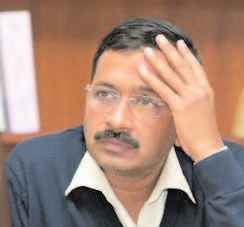
    NEW DELHI (TIP): Speaking for the first time about the death of farmer Gajaendra Singh during AAP’s kisan rally at Jantar Mantar, Delhi CM Arvind Kejriwal said on April 24 that “he made a mistake”.

    “I should not have gone ahead with my speech and we should have called off the rally,” Kejriwal admitted.

    “I apologize If I have hurt people’s sentiments,” Kejriwal said.

    Kejriwal also said that he could not see what was happening on that tree. “If we had any inkling that he would do something like that, someone would have acted,” Kejriwal said.

    “I am saying that the incident took place in front of me. I am not able to digest it, I could not sleep that night,” the Delhi CM said.

    Kejriwal said that since he had accepted his mistake, now the focus should shift to plight of farmers in the country.

    “I want to ask to people of country that what is going on since last two days, is that right? If it is, then let it continue,” Kejriwal said in a sarcastic tone.

    “We should not indulge in blame games,” Kejriwal said. Reacting to Kejriwal’s appeal to end blame games over Gajendra’s death, BJP spokesperson Nalin Kohli said: “Arvind Kejriwal’s entire politics is focused on allegations. He is the king of blame games.”

    Meanwhile, Vijendra Singh, Gajendra Singh’s brother, appealed to Arvind Kejriwal to personally look into investigations into his brother’s death.

    “Investigating agencies should bring out the truth and Kejriwalji should support in that,” Vijendra Singh said

    Farmer Gajendra Singh, from Dausa in Rajasthan, on April 22 had hanged himself to death during AAP’s kisan rally at Jantar Mantar.

  • Govt likely to delay land bill

    Govt likely to delay land bill

    NEW DELHI (TIP): The government is taken aback by events following the suicide of a farmer at the Aam Admi Party (AAP) rally.

    The Opposition in Parliament squarely blamed the “anti-farmer” policy of the Narendra Modi government  for  driving farmers to take the drastic step.

    Consequently, there is perceptible worry among BJP ministers and MPs that it could cast shadow on the government’s plans to legislate a bill to replace the land acquisition ordinance, which had to be re-promulgated. The government did not place the bill in the Rajya Sabha because it does not have majority there.

    There is every possibility that the bill will not be allowed to come up in the Upper House again, said BJP floor managers.

    Given the political atmosphere following the suicide episode, the government itself could decide not to bring the bill to replace the ordinance until the fag end of the session, which ends in the second week of May.

    As yet, however, there is no indication that Modi will back down on his resolve on the matter though he may want more safety measures to end the distress of farmers.

    In fact, shortly before he addressed the Lok Sabha on Thursday, Modi met seniors ministers Rajnath Singh, Arun Jaitley, Venkaiah Naidu and Nitin Gadkari to formulate the government’s response. The PM’s line was that the issue of farmer suicides should not be allowed to be mixed up with the issue of amending the land acquisition law passed by the UPA, which is blamed for hurdles in acquiring land for key infrastructure project.

    In keeping with the PM’s statement that “we have to find a way and we can’t leave farmers helpless”, the government might re-examine relief package for agriculturists, which have been announced from time to time. An all-party meet could also be called on the subject. As a counter measure, the BJP has blamed Congress for the suicide, saying misrule by the previous Congress-led UPA is responsible to present situation. Over 3,000 farmers have committed suicide in the past three years and nearly three lakh farmers took their lives since 1995, according to the National Crime Research Bureau.

    The five worst-hit states are Maharashtra, Andhra Pradesh, Karnataka, Madhya Pradesh and Kerala. Maharashtra alone has recorded over 10,000 suicides between 2011 and 2013. Its Marathwada region has seen over 200 suicides in three months.

    “It should be our determination to find a solution to this problem. The issue has been there for long, we will take all good suggestions: For years the issue of farmers committing suicide is a matter of great concern,” Modi said on April 23.

  • RAFALE DEAL MAY BE CONGRESS’S NEXT WEAPON TO TARGET MODI GOVT

    RAFALE DEAL MAY BE CONGRESS’S NEXT WEAPON TO TARGET MODI GOVT

    NEW DELHI (TIP): Congress is likely to probe the government on how Prime Minister Narendra Modi’s announcement to buy 36 Rafale fighters reconciles with his “Make in India” objective, seeking to get back at the Centre by painting the deal with France as a compromise on manufacturing.

    Sources said party vice president Rahul Gandhi has suggested that Congress focus on the blow the Rafale deal may give to local manufacturing. In contrast, UPA’s deal had put a condition that 108 of the 126 fighters would be manufactured in India. While BJP too espoused “Make in India” in weapons acquisitions, the decision to buy 36 planes off-the-shelf has raised doubts, claim Congress men.

    Congress has been mulling ways of raising the issue in Parliament but is hobbled by the absence of details.

    Former defence minister AK Antony is learnt to have told the party that it may be premature to touch the subject because there is still no agreement between India and France and that Modi’s much-feted announcement of a government-to-government sale earlier this month in Paris remains more an expression of intent.

    If the 90 remaining fighters are also purchased directly, the local manufacturing component would be dead, claim Congressmen.

    Antony’s opinion was cited during a strategy session when Rafale subject came up. However, sources said, Rahul suggested that the party could focus on “Make in India” to seek a response from government.

    Since UPA had ensured a built-in condition that 108 would be manufactured by HAL with technology transfer, it is argued the course taken by the Modi regime could end the possibility of local assembling.

    A final decision on the issue may be taken at the Political Affairs Committee that comprises Congress MPs from Lok Sabha and Rajya Sabha.

    The intent would be to show that the Centre was failing in delivering on its promises despite grand slogans.

    However, the limited focus on Rafale deal being a blow to “Make in India”, if also technology transfer, falls short of the indignation in Congress over the way Modi regime has slammed UPA over defence acquisition.

    Defence minister Manohar Parrikar blamed Antony for delay in buying the fighters, suggesting the direct buy from France was a consequence of UPA’s failure to clinch the deal.

    A senior Congress manager alleged there was no transparency in the new deal, but agreed that absence of an agreement was restraining the party from raising the issue strongly. “The role of HAL in Rafale is under serious doubt now. The government would have to clarify it,” he said.

  • Masarat Alam put under preventive detention again

    Masarat Alam put under preventive detention again

    SRINAGAR (TIP): The Jammu & Kashmir government on April 23 ordered separatist Masarat Alam’s preventive detention under the stringent Public Safety Act (PSA) and shifted him from the Valley to a Jammu jail.

    Alam was arrested on April 17 for seditious activities two days after he was booked for Pakistani flag waving at a rally he had organized to welcome separatist Syed Ali Geelani upon his return from Delhi.

    The government can put a detainee under arrest without trial as per PSA’s provisions for three months. The detention can later be extended for six months.

    Alam was earlier released on March 7 after over four years under preventive detention for organizing 2010 street protesters against the civilian killings. Over 120 people were killed in security forces firings on protesters throughout the summer of 2010

    Alam’s detention under PSA came a day after he moved a local court for bail citing a 1983 high court verdict saying waving Pakistani flag was not an offence.

    The court had heard arguments and counter-arguments about the bail application and fixed April 25 for verdict on Alam’s application.

    Alam’s lawyer, Shabir Ahmad Bhat, said his client challenged sections under which he was arrested on April 17.

    Bhat cited the 1983 high court verdict and said Alam cannot be held or detained under any offence.

    The prosecution opposed the bail saying Alam’s offence amounted to waging war against the country.

    “As such Section 479 (1), Criminal Procedure Code (CrPC), clearly restricts the powers of the court to release the accused on bail,” the prosecution said.

    The prosecution described Masarat a habitual offender, against whom 28 cases were registered.

    It said his activities were against the security, peace and sovereignty of the state while arguing the investigation in the case was at the preliminary stage and Alam’s custodial interrogation was needed.

    Geelani separately called for a shutdown against Alam’s detention under PSA on Saturday and asked people to protest the government’s action. He said Alam faced threats to his life as the atmosphere was “very hostile for the azadi loving people” citing killing of Pakistani prisoner Sanaullah in the Jammu prison.

    “There is no moral or legal justification in arresting and slapping of PSA upon Masarat Alam. Indian TV channels ran a media trial against him and under pressure Mufti (Mohammad Sayeed) led government surrendered before the BJP and detained Masarat Alam Jail under the black law — PSA,” Geelani said in a statement.

  • Ex-general, CIA chief Petraeus gets probation, $100,000 fine in leak case

    Ex-general, CIA chief Petraeus gets probation, $100,000 fine in leak case

    CHARLOTTE, NC (TIP): Former US military commander and CIA director David Petraeus was sentenced to two years of probation and ordered to pay a$100,000 fine but was spared prison time on April 23 after pleading guilty to mishandling classified information.

    The retired four-star general apologized as he admitted in federal court in Charlotte, North Carolina, to giving the information to his mistress, who was writing his biography. He agreed under a plea deal to a misdemeanor charge of unauthorized removal and retention of classified material. US magistrate judge David Keesler raised the fine from the $40,000 that had been recommended to the maximum possible financial penalty for that charge, noting it needed to be higher to be punitive and reflect the gravity of the offense. “This constitutes a serious lapse of judgment,” Keesler said during the hour-long hearing. The guilty plea ended an embarrassing chapter for a man described in letters to the court as one of the finest military leaders of his generation. Petraeus, 62, a counter-insurgency expert with a Princeton University doctorate, served stints as the top U.S. commander in the wars in Iraq and Afghanistan and was once considered a possible vice presidential or presidential candidate.