Month: April 2015

  • Legislation to Speed Up Visa Approvals for Indian and Pakistani Doctors to Work in the U.S. Introduced

    Legislation to Speed Up Visa Approvals for Indian and Pakistani Doctors to Work in the U.S. Introduced

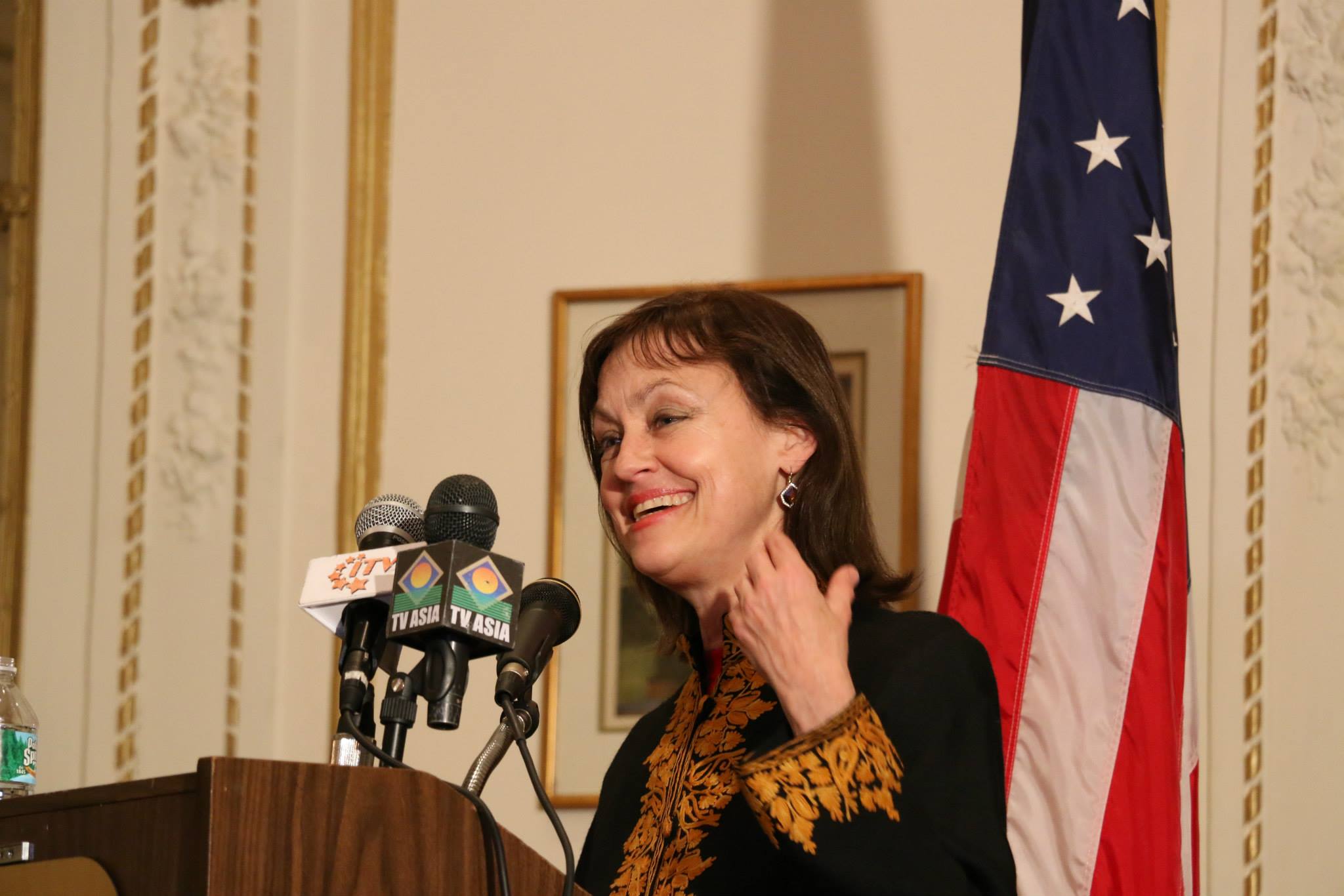
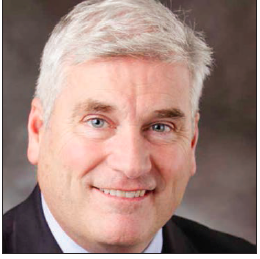
    WASHINGTON (TIP): U.S. Reps. Grace Meng (D-NY) and Tom Emmer (R-MN), members of the House Foreign Affairs Committee have introduced legislation that would direct the State Department to speed-up the visa approval process for international physicians who are slated to work at hospitals in the United States.

    Currently, foreign physicians scheduled to serve their residencies at American hospitals are encountering extremely long delays in obtaining J-1 visas from U.S. Embassies in their countries, particularly in India and Pakistan. The holdups have resulted in major dilemmas for those doctors and the U.S. hospitals – many in rural and underserved communities – at which the physicians are set to work. In many instances, the delays have forced hospitals to withdraw offers from foreign physicians who had already accepted.

    “The excessive delays in approving visas for international physicians is causing unnecessary havoc for those doctors and the American hospitals that are depending on them,” said Meng. “This ineffective approval process must be improved so that these doctors can enter the U.S. as planned, and provide the critical medical care needed in many communities throughout the country. Not resolving this dilemma would be extremely unfair to all and a disservice to the millions of Americans who seek treatment from these hospitals, especially in areas where there is a shortage of doctors. Our bill would finally fix this problem and that’s why Congress needs to pass it.”

    “As American hospitals face doctor shortages, this important legislation will increase healthcare access across the country by eliminating the persistent backlog of J-1 Visas,” said Emmer. “By improving oversight and training at U.S. Embassies we can ensure our Foreign Service Officers have all the tools they need to properly process each application in a timely manner. I’m honored to introduce the GRAD Act with Congresswoman Meng. This bipartisan bill doesn’t just address issues important to the State Department and the applicant; it will also benefit the patients of underserved hospitals by giving them access to medical care when they need it most.”

    Entitled the Grant Residency for Additional Doctors (GRAD) Act of 2015, Meng and Emmer’s bill would require the Secretary of State to designate a State Department officer or employee to facilitate the expedited review of J-1 visa applicants slated to travel to the U.S for graduate medical education or training. The measure would also require that the expedited review be the sole responsibility of this officer or employee from March to June, since the majority of residency programs begin each July. In addition, the legislation would mandate that Foreign Service officers at relevant embassies receive training related to medical graduates and medical graduate programs.

    The J-1 is a temporary nonimmigrant visa that international physicians use to work in U.S. medical residency programs.

  • Pakistan stood by us when China was isolated: Xi Jinping

    Pakistan stood by us when China was isolated: Xi Jinping

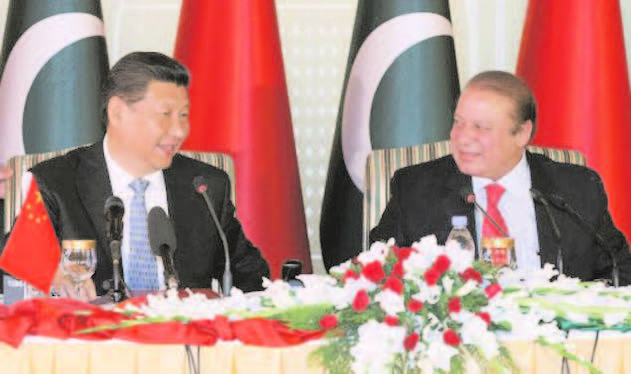
    ISLAMABAD (TIP): Chinese President Xi Jinping on April 21 described Pakistan as China’s “dependable” friend and firmly backed its territorial integrity, as he announced long-term support for the cash-strapped country’s economic development.

    Addressing a joint sitting of Pakistan’s parliament on the final day of his two-day maiden trip during which he oversaw signing of 51 agreements, Xi stressed that the bilateral ties are based on mutual trust and support.

    Xi, also the general-secretary of ruling Communist party, said China and Pakistan will always move forward together and the Chinese people will always stand together with the Pakistani people.

    “During my current visit, President Mamnoon Hussain, PM (Pakistan Prime Minister Nawaz) Sharif and I jointly agreed to elevate China-Pakistan relations to an all-weather strategic partnership,” Xi said, a day after unveiling USD 46 billion ambitious China-Pakistan Economic Corridor.

    The 3,000-km corridor linking China’s far-western region to Pakistan’s south-western Gwadar port on the Arabian Sea through Pakistan-occupied Kashmir (PoK) is massive project of road, rail, energy schemes, pipelines and investment parks.

    Xi lavished praise on Pakistan and said it stood with China from the earliest days of founding of the People’s Republic of China. He said Islamabad stood by Beijing at a time when China stood isolated on the world stage.

    He said both countries have tremendous support to each other and stood by each other in times of need.

    The two countries should support each other’s core interests, Xi said, noting that China firmly backs Pakistan’s territorial integrity.

    “Pakistan is the first foreign country that I visit this year and (it is my) first visit to your country, but Pakistan is not at all unfamiliar to me,” said Xi, the first Chinese President to visit Pakistan in nine years.

    He said he brought warm greetings and best wishes to the “brotherly people of Pakistan” on behalf of the 1.3 billion people of China.

    “Pakistan and China’s struggles have brought their hearts and minds together,” he said.

    He referred to the assistance offered by the two countries to one another in the events of natural disasters.

    Xi also praised Pakistan’s anti-terror effort, saying that Islamabad has always stood at the frontlines in the fight against terrorism and has made huge sacrifices to that end.

    He outlined the vision of Chinese development and said that China wants to go ahead by forging “win-win” cooperative deals with other countries, especially neighbours.

    Xi said China will open up all sectors of its economy. He said South Asia has great potential and China was eager to have close cooperation with all countries of the region.

    He mentioned his last year visit to three regional countries including India.

    Xi mentioned his concept of “Roads and Belts” and said China-Pakistan Economic Corridor will benefit all region of Pakistan and the region.

    He said China was also working for another regional connectivity plan to link with India, Bangladesh and Myanmar.

    Xi also said that China would work with Pakistan for reconciliation and peaceful transition in Afghanistan.

    Earlier, Xi arrived at the Parliament amid tight security. He was welcomed by Pakistan Prime Minister Sharif, National Assembly Speaker Ayaz Sadiq and Chairman Senate Mian Raza Rabbani.

    Sadiq officially welcomed the Chinese president and his delegation for visiting Pakistan.

    Sharif in his brief address at the end said that the two countries were committed to have closer cooperation in all fields.

  • Shots fired at Bangladesh opposition leader Khaleda Zia

    DHAKA (TIP): Shots were fired at a car carrying Bangladeshi opposition leader Khaleda Zia when it stopped at a market in Dhaka, her secretary said on april 22, with television footage showing scores of people attacking her convoy.

    The attack, a dangerous new twist in the country’s deadly political crisis, came as Zia stopped at the busy market while campaigning for a candidate running in mayoral polls due to take place in the capital later this month.

    “She survived because it was a bullet-proof car,” Zia’s private secretary Shimul Biswas, who was with her during the attack, told AFP. “But the car still has bullet marks.”

    Police told media they were looking into the claim of gunfire. “Some people said they heard gunshots during the clashes. We’re investigating the matter,” spokesman Jahangir Alam said.

    Local television footage showed scores of people attacking the convoy Zia was leading with metal rods, sticks and rocks. Media reports said the attackers were shouting pro-government slogans.

    Police spokesman Alam blamed the violence on Zia’s supporters, saying they had attacked protesters waving black flags at the opposition leader over violence in the last three months which has left at least 120 people dead.

    But Biswas said at least six of Zia’s security guards and supporters were injured in the attack, and that Zia later visited them in hospital.

    Her Bangladesh Nationalist Party (BNP) has called a nationwide strike for Wednesday except in Dhaka and the port city of Chittagong in protest at the attack.

    The clashes were the latest episode in Bangladesh’s deadly political crisis.

    Zia, 69, had been confined to her office compound in Dhaka since January 3 after she threatened to lead a massive anti-government rally through the capital on the first anniversary of a disputed national election.The stoppage was intended to force her bitter rival, Prime Minister Sheikh Hasina, to quit and pave the way for a new general election under a neutral administration.

    Zia finally left her office earlier this month.

  • Gunmen storm Afghan police station as mine clearers abducted

    KANDAHAR, AFGHANISTAN (TIP): Insurgents armed with guns and explosives attacked a police station in Afghanistan’s southern city of Lashkar Gar, wounding two officers and a civilian as gunmen elsewhere kidnapped at least a dozen mine clearers, authorities said.

    Nabi Jan Malakhail, the police chief of Helmand province, said at least two insurgents were inside the police station, fighting late on Sunday with police who had the building surrounded. One suicide bomber had blown himself up outside the station to allow the others in, he said. Helmand province is a stronghold of the Taliban, who have been fighting the Kabul government for more than a decade.

    Meanwhile, gunmen kidnapped at least a dozen Afghan mine clearers in the eastern province of Paktia, said Gen. Zelmai Oryakhail, the provincial police chief. He said the clearers had been working without police or soldiers protecting them at their own request.

    No group immediately claimed either attack.

    The attacks come a day after a suicide bomber in Jalalabad killed at least 35 people and wounded around 125. President Ashraf Ghani attributed the attack to the Islamic State group, without revealing the source of his information.

    Also Sunday, the United Nations said that Afghanistan’s women were being failed by the country’s justice system as most complaints of domestic violence were dealt with through mediation rather than prosecution.

    In a new report, it said that only 5 percent of surveyed domestic violence cases were resolved through the judicial system, resulting in criminal prosecution and punishment for perpetrators.

    The UN’s Assistant Secretary General for Human Rights, Ivan Simonovic, said women often choose mediation to resolve complaints of violence, partly because they lack faith in the justice system.

  • Sri Lankan lawmakers protest bribery summons for ex-leader

    COLOMBO (TIP): A protest staged by lawmakers backing former Sri Lankan President Mahinda Rajapaksa ran into a second day after the country’s bribery commission summoned the ex-leader and his brothers to explain their actions while in power.

    The protesters said on April 22 that the summons was an affront to the brothers who were instrumental in ending a 26-year civil war.

    Rajapaksa was asked to appear before the commission to explain why he gave a ministerial position last year to an opposition leader soon after he defected to support Rajapaksa’s presidential re-election campaign. Rajapaksa’s rivals say handing out the ministerial position was a bribe.

    His brothers, former Economic Development Minister Basil Rajapaksa and former Defense Secretary Gotabhaya Rajapaksa, were also summoned over allegations of financial irregularities.

  • 20 militants killed in air strikes in northwest Pak

    ISLAMABAD (TIP): At least 20 militants, including three suicide bombers, were killed on April 23 in a series of air strikes by Pakistani jets in the troubled Khyber Agency.

    Army said that “20 terrorists including three suicide bombers were killed” in precise aerial strikes in Tirah valley of Khyber Agency.

    The jets struck hideouts of terrorists and destroyed their ammunition and ration dumps. The strikes were conducted as part of the ongoing military operation in the tribal area.

    The losses suffered by militants may increase as still the details of attack are coming.

    The strikes came a day after army said that jet strikes killed 22 militants in North Waziristan district.

  • CONGRESS PARTY: Time to pass the baton to a new generation

    CONGRESS PARTY: Time to pass the baton to a new generation

    There was so much commotion made of Rahul Gandhi’s absence from the political scene in India for the last two months. BJP which regularly made him an object of sarcasm and sharp criticism appeared to have missed him the most!Although Mr. Gandhi is supposed to have the SPG protection and the Government might have been privy to his whereabouts, BJP did their utmost to fuel the speculation through leaks and other means that he was absconding.

    Although the timing of his absence could be questioned, where Rahul Gandhi travels for a vacation or vipassana has very little impact on the political dynamics in India as he wields no power or authority to affect any substantive change. Why then all this hue and cry? It is politics as usual in India where the ruling party prefers to talk about Rahul’s vacation more than it does about the 7000 suicides of the farmers under Modi’s watch.

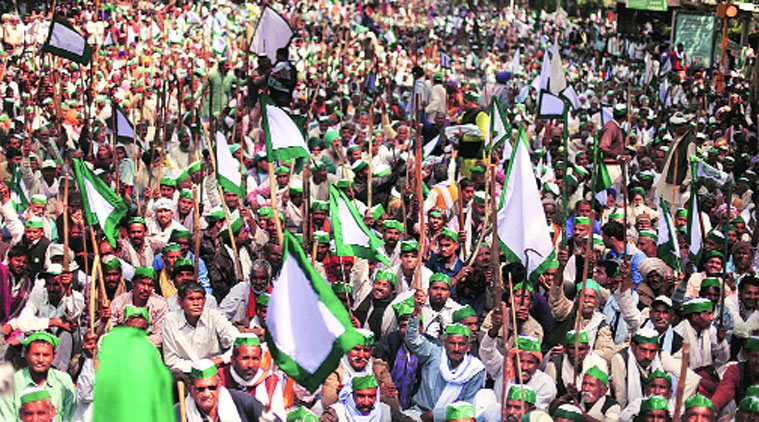
    However, quickly upon his return, he sprung into action by attending a massive rally of farmers in New Delhi and went on the offensive accusing Modi government of turning its back on the poor and ignoring the plight of the farmers. His actions not only put the Prime Minister on the defensive, but Modi was compelled to gather a meeting of all BJP Parliamentarians in a hurry to showcase his concern and sympathy for those rural folks.

    The tables seemed to have been reversed barely within a year after the BJP under the banner of ‘strong and dynamic leadership of Narendra Modi’ promising “Acche Din” rode to power with an impressive mandate. They have characterized Congress as a party with no vision and a thing of the past. They were dismissive of India’s emergence as a global economic power mostly under the leadership of Congress party in the last 65 years and declared their intention to make India ‘Congress free’.

    According to news reports, Farmer Tarachand Mathur was one of millions of Indians who voted for Narendra Modi to power last year, but the government’s push to make it easier for big business to forcibly acquire land means he won’t be backing the premier again. Mathur, 64, believes Modi has turned his back on the plight of farmers, many of them have seen their crops devastated by unseasonable rains since the start of this year.

    Bhupender Rawat, from the non-profit National Alliance for people’s Movement, is quoted as saying
    ‘farmers are not fools; they can see what Modi is trying to do’. ‘Modi has been going abroad and telling investors – come to India, we will give you cheap land and labor – and the farmers are getting cheated’. Rawat added.

    This issue is very close to Rahul’s heart as he has always identified with the poor and empathized with their plight during his crisscrossing of rural India while championing their cause. Even to his fiercest critics, his concern and commitment to the uplifting of the disadvantaged is simply unquestionable!

    Last October, I had the opportunity to sit down with him at his residence in Delhi and to discuss the May election debacle and about the future of the Congress Party. Although I was interested to talk about the need to get the Diaspora more connected as the Party was introspecting, he took the conversation entirely to a different direction; the current dynamics that is underway in the body politic of India.

    He spoke at length of the pre-independence coalition of feudalists, colonialist-sympathizers, royalists, ultra-nationalists who promoted caste hierarchy, division and bigotry and opposed the Independence struggle led by Mahatma Gandhi and Jawaharlal Nehru. According to him, elements from that same coalition have regrouped and are re-branding themselves with strong religious overtones to undo the progress Congress-led governments have made over six decades. He believes that unless checked, these regressive forces would take India backward and nullify the prospects for the poor and the downtrodden to make any progress on their own. He reiterated his strong belief in the principle that political tranquility is fundamental to economic prosperity and that every segment of the society including the minorities should play a part in the development of the nation.

    Obviously, he is a follower of the Nehruvian philosophy of inclusiveness and tolerance and a believer in affirmative actions to level the playing field for those who are backward and disadvantaged in the society. To many in the opposition, this entire clamor about ‘dynastic rule’ merely translates into doing away with the Nehruvian vision and subscribing to a regressive past. Therefore, a successful re-entry of Rahul Gandhi into the political arena assures a continuity that is anathema to this audience.

    Then there are those who blame Rahul Gandhi for the disastrous defeat of the Congress Party in the May election. However, to any independent observer, the election was regarded as Modi’s to lose. With every Congress leader I have interacted, there was a mood of resignation and inertia prior to the election. There was very little enthusiasm from top to bottom as the grass root workers mostly stayed away to make any difference. Why then blame Rahul alone for the defeat of the party?  He tried to do his best while many, if not all, in the top leadership could neither articulate nor defend so many of the accomplishments of the UPA I and UPA II before the public.

    The Congress party was at its rock bottom when Sonia Gandhi assumed its presidency in 1998 and her sheer determination and dedicated effort paved the way for the two successive terms for the Congress-led government. Many of its seasoned leaders have contributed a great deal to its success over the years. However, we are at a juncture where an infusion of new blood and incorporation of innovative ideas is critical to the party’s very survival whereas many in the senior leadership could continue to play a role as elder statesmen providing wisdom and guidance to a new and decisive leadership.

    Time has come for a new generation of leadership for the party. There are indeed many bright young leaders waiting in the wings and willing to get on with rebuilding the Congress party. However, I believe, having been appointed as the Vice-President, Rahul Gandhi ought to be given an opportunity to lead the party. Let him get a chance to prove his metal. He is bound to make his share of mistakes and the senior leaders are not immune on that score till now.

    It is time to end the long introspection and endless analysis. Having two power centers for the party seems to confuse the cadre and obfuscate the message to the public. Let him restructure the organization to make it more responsive to the public and get connected to the Diaspora. The frustration exhibited by the farmers towards this Government is only the tip of the iceberg. At the end of the day, compassionate policies and ethical governance will trump empty oratory and tailored suits. To paraphrase Mark Twain, the death of the Congress party is highly exaggerated. Let the new era begin!

  • Unequal scales for juveniles

    Unequal scales for juveniles

    It is unfortunate that the government seems determined to introduce legal provisions to ensure that children between the ages of 16 and 18 are tried as adults if they commit heinous offences such as murder and rape. Ever since a juvenile offender was given a ‘light’ sentence in the Delhi gang rape case of 2012 under the existing child-friendly laws, there has been a clamor to treat juveniles involved in heinous crimes as adults. A fresh Juvenile Justice (Care and Protection of Children) Bill introduced in the Lok Sabha last year contained clauses that many child rights activists and groups disapproved of. A Standing Committee of Parliament recommended a review and reconsideration of all clauses that sought to carve out an exception for children in the 16-18 age group and subject them to the rigors of regular criminal procedure. However, the amended Bill now cleared by the Cabinet retains the clause that provides that when a heinous crime is committed by one in this age group, the Juvenile Justice Board will assess whether the crime has been committed as a ‘child’ or as an ‘adult’. The trial would take place on the basis of this assessment. The present framework classifies offences as petty, serious and heinous and treats each category under a different process. The government claims that since this assessment will be done with the help of psychologists and social experts, the rights of the juvenile would be protected. It remains to be seen if enough numbers of such professionals would be available across the country to make this work.

    It should not be forgotten that making children face an adult criminal court would mar the prospect of their rehabilitation. The Supreme Court has not seen any special reason to amend the present juvenile law. Nor did the Justice J.S. Verma Committee, which made far-reaching recommendations on the legal framework for treating sexual offences, suggest such changes. The government should stick by the U.N. Convention on the Rights of the Child, which treats everyone up to 18 as a child. To the government’s credit, it has held some consultations with stakeholders before finalizing its latest draft. It has heeded the Parliamentary Committee’s objection to Clause 7, and dropped the arbitrary provision that a person who had committed an offence when aged between 16 and 18 but was apprehended only after crossing the age of 21 would be treated and tried as an adult. However, this is not enough. The government would do well to drop its attempt to have a differential system for those involved in ‘heinous offences’. Instead, it should pursue the other forward-looking aspects of the bill, which has welcome features for the care and protection of children that can help them significantly through provisions such as those for foster homes and a better-regulated adoption mechanism.

  • ADVOCATES SEEK ‘ROADMAP’ FOR BLASIO’S ONENYC PLAN

    ADVOCATES SEEK ‘ROADMAP’ FOR BLASIO’S ONENYC PLAN

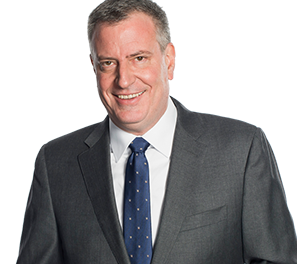
    NEW YORK CITY (TIP): Mayor Bill de Blasio on Wednesday, April 22, unveiled an ambitious revision to PlaNYC, the sweeping sustainability and resiliency blueprint for New York City first introduced by the Bloomberg administration. Rebranded as OneNYC, de Blasio’s update combines his vision for a more equitable city with the goal of dramatically reducing carbon emissions and mitigating waste.

    “Addressing our environmental challenges is part of how we do address our economic challenges. The process of addressing the sustainability needs of our city is how we also battle inequality,” de Blasio said at a press conference in the Hunts Point neighborhood in the Bronx. “And this plan, for the first time in New York City, makes very clear that we’re going to fight income inequality in a very specific and tangible way.”

    But while environmental advocates lauded the mayor’s vision, its sheer scope left some anxious for additional details on how it would be funded and implemented.

    “We applaud the mayor for laying out an aspirational vision of the city we want to become,” said Marcia Bystryn, president of the New York League of Conservation Voters, in a press release. “As PlaNYC showed us, however, successfully achieving our ambitious goals requires a roadmap that allows us to measure progress.”

    De Blasio’s goals are indeed ambitious: lifting 800,000 New Yorkers out of poverty by 2025, eliminating all landfill-bound waste by 2030, and reducing the city’s carbon emissions 80 percent below 2005 levels by 2050. In all, over 200 new initiatives are included in the new plan.

    But the administration promises to deliver on the finer points as well.

    “OneNYC and previous PlaNYCs have always been about overarching goals and initiatives-including the specific metrics that get us there-to create a comprehensive blueprint for the city’s future,” said de Blasio spokesperson Amy Spitalnick. “As the prior administration did, we’ll be rolling out further details on individual plans over the coming months.”

    According to Spitalnick, the plan includes “over 80 specific new metrics and indicators-that will be publicly tracked and reported on annually (online for the public to review).”

    Others point out that OneNYC’s success will depend in part on outside cooperation. Many improvements to bus, subway and rail service, for example, would fall under the jurisdiction of the Metropolitan Transportation Authority, a state-run agency that is by its own estimate facing a $15 billion capital deficit.

    “There’s a lot here that the city can’t do on its own,” said Kate Sinding, a policy analyst at the Natural Resources Defense Council.
    “Another critical component of this is … how the city approaches partners it’s going to need-first and foremost, the state.”

    The administration did not address a request for comment on potential collaborations with the state.

    The total cost of the plan and funding details are yet to be announced. The mayor’s executive budget is due to be released early next month.

  • Bank of India Chief General Manager-International Division Interacts with Indian American Community

    Bank of India Chief General Manager-International Division Interacts with Indian American Community

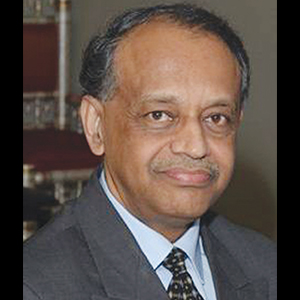
    NEW YORK CITY (TIP): Mr. R. A. Sankara Narayanan, Chief General Manager -International Division of Bank of India  met with Indian American community at the Indian Consulate, April 10. For good two hours that he was at the Consulate he interacted with the guests individually and also spoke formally. In his brief speech he spoke of the strength provided by the NRIs to the growth of Indian economy. He also spoke of the strength of the Indian banking system and dwelt on the services provided by  Bank of India.

    Mr. Narayanan said that Bank of India was one of the large banks  operating abroad, with 56 offices in 22 countries where it has 25 branches, 4 Rep offices and 5 subsidiaries. He said Foreign Operations contributed 28% of the bank’s total business.

    Mr. Narayanan with the staff of BOI New York branch
    Mr. Narayanan with the staff of BOI New York branch

    Earlier, Mr. Pramoda Pattanaik, CE , US Operations welcomed Mr. Narayanan and guests. In his brief welcome note Mr. Pattanaik spoke of the long and rich experience of Mr. Narayanan in banking industry. Praising  Mr. Narayanan’s leadership, he said Mr. Narayanan  was an officer from whom a lot can be learnt and obtained. He said the bank’s international operations had received  a forward thrust under Mr. Narayanan.

    Present on the occasion were bank’s patrons, community leaders, businessmen and media.

  • Indian American Techie Palani Kumanan Shares Pulitzer

    Indian American Techie Palani Kumanan Shares Pulitzer

    NEW YORK (TIP): Indian American software engineer Palani Kumanan of the Wall Street Journal  won (shared) this year’s Pulitzer Prize for graphics team of investigative journalism, in growing recognition of the importance of using IT tools in reporting.

    Palani Kumanan, who is a software architect with  Dow Jones that publishes the Wall Street Journal, was a part of the winning project’s graphics team.

    The Journal won the top journalism award announced on Monday, April 20 for its mammoth investigative project, “Medicare Unmasked.”

    Palani co-authored a series of articles that exposed systematic corruption within the Medicare system.

    He shared the prize along with members of the Journal’s graphics team Martin Burch, Chris Canipe, Madeline Farbman, Jon Keegan and Stuart Thompson.

    “Congrats to the great team at the WSJ! -Wall Street Journal wins Pulitzer Prize for ‘Medicare Unmasked’ @WSJ,” tweeted Michael Siconolfi, the newspaper’s investigations editor.

    Kumanan, a graduate of the PSG College of Technology in Coimbatore, Tamil Nadu, developed the interactive database on Medicare billing used to analyze government payments made to over 880,000 medical service providers, including doctors and hospitals.

  • RANA Showcases Indian Culture at Rajasthan Mahotsav

    RANA Showcases Indian Culture at Rajasthan Mahotsav

    Grand Parade with Elephant
    Grand Parade with Elephant

    LONG ISLAND, NY (TIP): Over 3000 people from various Indian Communities gathered , Sunday April 19, at the SUNY College in Old Westbury to celebrate Rajasthan Mahotsav -Festivals of Festivals. The colorful and musical scene resembled the fabled Festivals of Rajasthan -complete with a grand parade featuring elephants, horses and camels to various dance & musical performances showcasing the variety and depth of Indian culture.

    Speaking on the occasion, Naveen Shah, President of RANA said that – “The objective of the Mahotsav was not just limited to entertaining ourselves, but to enrich from the talent & wisdom which we all bring to this part of the world. We wanted to share our rich culture & heritage and the experience of diversity with others, to integrate communities and lay the foundation of culture for future generations”.

    Showcasing traditional attire
    Showcasing traditional attire

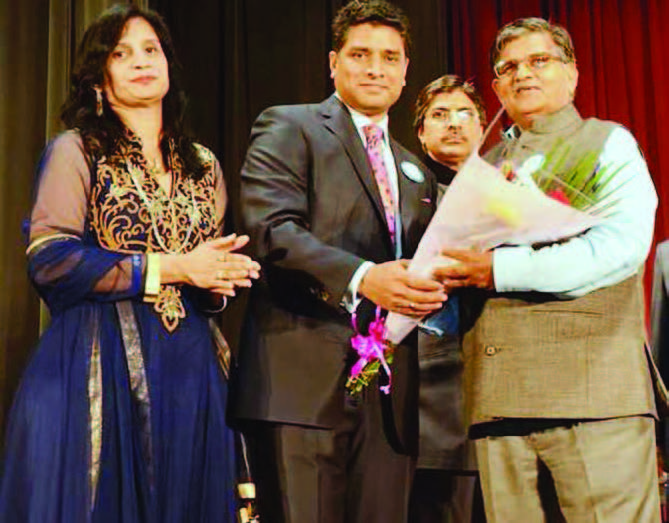
    Home Minister of Rajasthan, Gulab Chand Kataria was the Grand Marshal of the parade and TV star Shailesh Lodha was the Master of Ceremonies. At a glittering ceremony held in the evening, noted Industrialist and Chairman of Vedanta Resources Plc, Anil Agarwal was honored with Rajasthan Ratna Award. Doyen of Indian Diamond & Color Stone Association Haridas Kotahwala was presented the Jaipur Ratna Award and renowned physician and pediatrician Dr. Ajey Jain was presented with the Rajasthan Shiromani award.

    Vice – President of RANA, Kanak Golia said that “An event of such magnitude has never been done before in the tri – state area. Celebrating festivals together will not only help members of the Community in integration into their country of adoption, but also in promoting rich cultures, traditions & heritage of India”.

    Time to enjoy performances
    Time to enjoy performances
    Jaipur Ratna awardee Haridas Kotahwala with Dr. Samin Sharma, Ambassador Mulay, Home Minister Gulab Kataria, RANA President Naveen Shah & others
    Jaipur Ratna awardee Haridas Kotahwala with Dr. Samin Sharma, Ambassador Mulay, Home Minister Gulab Kataria, RANA President Naveen Shah & others
    Poets Ritu Goel, Ved Prakash Ved, Arun Gemini, Shailesh Lodha with Naveen Shah Arvind Bhandari & Kanak Golia
    Poets Ritu Goel, Ved Prakash Ved, Arun Gemini, Shailesh Lodha with Naveen Shah Arvind Bhandari & Kanak Golia


    RANA Members
    RANA Members

  • NRI TV FILM CLUB website Inaugurated

    NRI TV FILM CLUB website Inaugurated

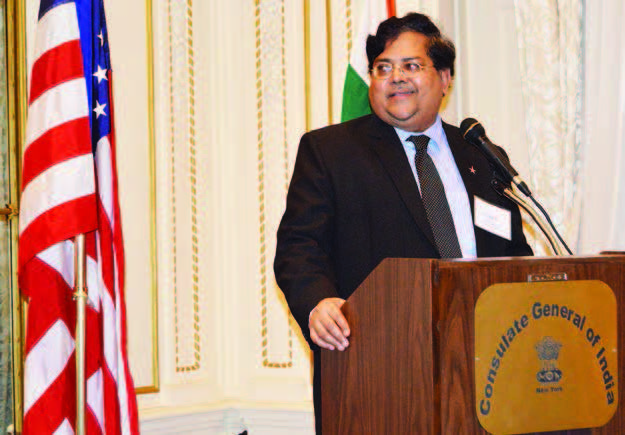
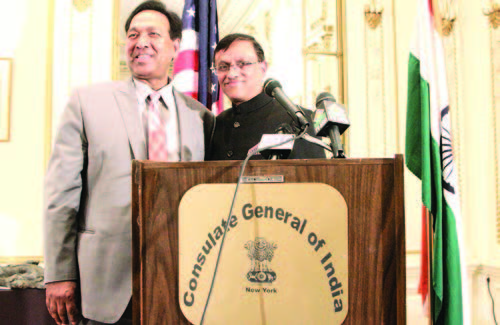
    NEW YORK CITY (TIP): Ambassador  Dnyaneshwar M. Mulay, Consul General of India, New York  inaugurated the launch of www.NRITVFILMCLUB.com website in the presence of many prominent people from the Indian community, media and entertainment, in the ornate ballroom of the Indian Consulate, April 17.

    Congratulating Tirlok Malik, founder of NRI TV FILM CLUB, on the novel idea Ambassador Mulay said: “It is a wonderful idea. Very much needed. And it will make the bridge between Hollywood and Bollywood by creating NRI-wood.”

    Film artists at the event with Ambassador Dnyaneshwar Mulay and Tirlok Malik
    Film artists at the event with Ambassador Dnyaneshwar Mulay and Tirlok Malik

    NRI TV Film Club website is for the audience to watch movies made by NRIs, about NRIs, with NRIs. “It is just like a mini Netflix for NRI movies,” a guest said. NRI TV FILM CLUB website is also a platform to promote and create opportunities for NRI talents in the area of Film, Television, and New Media. It is a collective effort of filmmakers and artists. The website is launched with 15 films made in America by NRI filmmakers with local Indian American talents. Some of the films are award winning and shown worldwide. NRI TV FILM CLUB willbe producing and showing more films, TV Sitcom, Web Series with the Indian American and multi-cultural talents. Membership for the club is 35 dollars annually.

    “These movies have immigrant themes but with universal emotions. Many of these films don’t reach wider audience. But with the new technology of streaming movies just like Netflix, we are able to bring these movies for the audience to watch worldwide. There are more than 25 millions NRIs worldwide and their families in India. We believe you will enjoy these movies,” says New York Emmy nominated filmmaker Tirlok Malik who is the founder of NRI TV FILM CLUB. Tirlok Malik along with many other talented NRI filmmakers and artists are excited about the idea. Malik says, “I am glad other NRI filmmakers have shared this vision with me and joined me.”

    The team behind this vision was announced at the event. H.R. Shah, chairman of TV ASIA, is the honorary chairman of NRI TV FILM CLUB. Dr. Sudhir Parikh who is the chairman and publisher of Parikh Worldwide Media Inc. is supporting this vision.

    At the launching Malik thanked media and many supporters. Some of them were Indu Jaiswal, Prof. Indrajit Saluja, Parveen Chopra, Thomas Abraham (GOPIO), Reeves Lehmann (Chairman of Film division of SVA) and many others.

    All the filmmakers and the artists present at the event said, “Join the Club and Watch Movies. Sign Up for www.nritvfilmclub.com.”

  • ED SET TO ATTACH PROPERTIES WORTH RS 3 CRORE OF EX-IAF CHIEF’S COUSINS

    NEW DELHI (TIP): The Enforcement Directorate, in its money laundering probe in the Rs 3,600 crore AgustaWestland scam, has identified properties of about Rs 3 crore belonging to cousins of former Indian Air Force chief SP Tyagi. These assets, bought with the proceeds of crime, according to top sources, will be attached in the next few weeks.

    This comes as a major setback for S P Tyagi, who had allegedly changed the specifications of VVIP choppers to favour AgustaWestland. It was alleged that bribe money was received by his cousins – Sanjeev alias Julie, Rajeev alias Docsa and Sandeep Tyagi, from European middlemen.

    The attachment of properties is significant when ED is also planning to call S P Tyagi for questioning in the case. A senior official said, “We will examine him very soon”.

    CBI’s FIR in the case, which also became the basis for a money laundering probe by ED, had alleged that close to 36 million euros had come to Indian companies and Tyagi cousins at different intervals in the garb of ‘consultancy’ and ‘engineering’ contracts.

    It was alleged that during the tenure of Air Chief Marshal S P Tyagi and “with his approval” the IAF “conceded to reduce the service ceiling for VVIP helicopters from 6,000 meters to 4,500 metres, a height it had earlier opposed vehemently on the grounds of it being a security constraint and other related reasons.” The reduction of service ceiling – maximum height at which a helicopter can perform normally – allowed UK-based AgustaWestland to enter the fray. Otherwise, its helicopters were not even qualified for submission of bids.

    Further, it alleged that middleman Haschke through his Tunisia-based company Gordian Services Sarl entered into several consultancy contracts with AgustaWestland from 2004-05 onwards, and “almost on back-to-back basis he also made consultancy contracts with the Tyagi brothers (Tyagi’s cousins),”. Under the cover of these contracts, Haschke allegedly sent first 1.26 lakh euros and then another two lakh euros to Tyagi brothers. “Besides these two remittances, Tyagi brothers also received some unquantified sum of money from the middlemen (Haschke and Gerosa). The inflow of remittances to Tyagi brothers and softening of IAF’s stand on service ceiling of the helicopter closely match in terms of time,” officials claimed.

    “Tyagi brothers claimed that they got this money as part of consultancy fee for a subsidiary of AgustaWestland and for another payment they claimed it was for engineering contract but their replies were not satisfactory during questioning and they couldn’t justify it,” said an official. According to FIR, “Haschke and Gerosa managed to send 5.6 million euro through Mohali-based IDS Infotech and Chandigarh-based Aeromatric Info Solutions to India and kept remaining amount out of about 24.30 million euro received from AgustaWestland with them in the account of IDS Tunisia”. “A portion of this amount was sent to India through Mauritius and hawala route in order to pay kickbacks in India for swinging the VVIP helicopter deal in favour of AgustaWestland,” the CBI FIR had alleged.

  • Court denies Pachauri permission to travel abroad

    NEW DELHI (TIP): The Delhi High Court on April 23 denied permission to environmentalist RK Pachauri, accused in a sexual harassment case, to travel abroad to attend the Global Water Summit.

    Pachauri had moved the court seeking permission to go to Greece on April 26-29 for the summit.

    Justice SP Garg denied relief to Pachauri after the Delhi Police vehemently opposed his plea and said his presence was not required at the summit and he may abuse the process of law if allowed to go abroad.

    “I don’t think Pachauri’s presence is required there (at the summit),” Justice Garg said after which the plea was withdrawn by Pachauri’s counsel.

    Pachauri was granted anticipatory bail on March 21 but was directed not to leave the country without the court’s permission.

    He was also directed not to visit the premises of The Energy and Resources Institute (TERI). The allegation against Pachauri was made by a woman research analyst.

    Citing several SMS texts, e-mails and WhatsApp messages as evidence, the woman has accused Pachauri of sexually harassing her soon after she joined TERI in September 2013.

    Pachauri stepped down as chairperson of the UN Intergovernmental Panel on Climate Change (IPCC) in February and proceeded on leave from TERI, where he was the director general. But he has denied the allegations of sexual harassment levelled against him.

    During the hearing, Delhi police said the investigation was at a crucial stage and his visit abroad would hamper the probe.

  • India, China to boost maritime cooperation during PM Modi’s visit

    NEW DELHI (TIP): China may allow India access to the Western Pacific Ocean, while India may countenance Chinese presence in the Indian Ocean. When Prime Minister Narendra Modi travels to China in a couple of weeks, the two Asian powers may sign an innocuous-sounding “scientific cooperation” agreement.

    In reality, it has deeper significance – first, an acknowledgement that India and China are the big powers in these ocean areas and second, acknowledgment of the growing reach of both countries in what is considered their strategic backyard. There are few details available about the proposed agreement, but sources said this could imply India-China cooperation at a different level.

    Any India-China document for cooperation in the oceans will be set up against the strategic vision document on Asia-Pacific and Indian Ocean region between the US and India signed during US President Barack Obama’s January visit. That particular agreement, whose strategic implications reverberated outside India, had compelled the rest of Asia to sit up and take note of the evolving US-India equation, largely because it set out an “acceptable” code of conduct in the region.

    India and China have already agreed to start a maritime cooperation dialogue, as set out in the joint statement when Chinese President Xi Jinping visited India in September. “The two sides decided to hold the first round of maritime cooperation dialogue within this year to exchange views on maritime affairs and security, including anti-piracy, freedom of navigation and cooperation between maritime agencies of both countries.”

    The political dialogue between Modi and Xi Jinping will hold greater value. China watchers have predicted a possible breakthrough discussion on resolution of the boundary dispute that continues to be a thorn in bilateral relations.

    While a resolution may be ambitious at this stage, analysts agree that an exchange of maps in the western sector would be a big step forward.

    China may also conduct a feasibility study of a high speed railway corridor between Delhi and Chennai. As a start, they will conduct a “pilot project” for a certain part of the route, said sources. Japan is already in the final stages of conducting a feasibility study for a Shinkansen (bullet train) corridor between Mumbai and Ahmedabad, while France has agreed to study upgradation of railway link between Delhi and Chandigarh to a semi-high speed line. With the Modi government focused on reviving the railways as an engine of growth and connectivity in India, China, France and Japan will become big players in this area. China has made a huge success of its own high speed railway system, now the largest in the world.

    Modi is expected to begin his trip in South Korea, then to China and ending up in Mongolia. On 14th May, he will accompany Xi Jinping to his hometown in Xian, which holds historical significance particularly with regard to the silk route.

  • Rahul treks to Kedarnath, pays respect to flood victims

    NEW DELHI (TIP): Congress vice-president Rahul Gandhi completed his trek up to the Kedarnath shrine on April 23 and said that he did so to pay his respects to the victims of the massive 2013 floods in the region.

    “I trekked in a bid to pay homage to those pilgrims who had trekked all the way to the shrine and were killed in 2013 disasters,” Rahul said after completing his 20km trek to the shrine.

    The Congress leader attempted to buttress the Uttarakhand government’s attempt to promote the Char Dhams –Badrinath, Kedarnath, Yamnotri and Gangotri – as a safe destination for tourists post 2013 deluge.

    “Pilgrims had a fear factor about safety at Kedarnath. My trek is an attempt to restore faith of pilgrims and locals,” Rahul said. Devastating flash floods in the state in 2013 killed nearly 5,000 pilgrims and dealt a blow to the tourism industry. Official figures suggest that the impact of the disaster continues to loom large over pilgrims visiting the Char Dhams – Badrinath, Kedarnath, Yamnotri and Gangotri – in Uttarakhand.

  • NRI Federation Launched

    NRI Federation Launched

    NEW YORK (TIP): Joining the long list of Indian American associations, some claiming to be “umbrella organization” of a number of associations, yet another association by the name NRI Federation was launched, April 17.

    A press release issued by a journalist Nala Singham said: “Spearheaded by its brainchild and founder, Deepak and Surbhi Kavadia, the grand gala launching of the “NRI Federation” was graced by the presence of their Brand Ambassador Bollywood Star Bappi Lahiri and the Home Minister of Rajasthan, Gulabchand Kataria. Over 500 attendees, including  several honorable dignitaries and influential community leaders were present at the event  that took place at the landmark Hindu Temple Society of North America’s auditorium in Flushing, New York.

    (Based on a press release)

  • India’s Land Acquisition Act: Bonanza for Rulers & their Financiers

    India’s Land Acquisition Act: Bonanza for Rulers & their Financiers

    India has a long history of its ruler’s fascination with farm land. Whether it was ancient Kings or Moghuls or British invaders turned rulers as well as the current rulers after independence; every one has been robbing the farmers of their land in broad daylight by claiming that they are doing it for the sake of development.

    Let us have a close look at the largest democracy of the world. India is a country of 1.35 billion, where 665 million practice open defecation against 37 million doing so in China. India has the world’s largest army of 85 million child labor out of 830 million poor living in extreme poverty. India’s elite, world famous billionaires, part of the 56 million rich Indians, live side by side with almost a billion poor and treat them as sub humans who are viewed as burden for the country.

    A former diplomat, politician, author and thinker Pavan Varma wrote in his book “Being Indian” that in the Indian elite “there is a remarkable tolerance for inequality, filth and human suffering”. He adds that “concern for the deprived and the suffering is not a prominent feature of the Indian personality. The rich in India have always lived a life, quite oblivious to the ocean of poverty around them”. Less than 10-15 minutes from every slum in any major city of India there are very expensive heavily guarded residential areas with mini palaces costing from a few million dollars to $1 billion Mukesh Ambani’s Palace. One city: two universes.

    India’s Land Acquisition Act was enacted in 1894 by British rulers. It gave unlimited power to the government to acquire any land. The Act allowed governments all over India to acquire land from the public. After independence India adopted the same Land Acquisition Act and no one bothered to make any changes in it because it was an easy way for the politicians and corporations to make money. The only person who lost money and livelihood was the individual and his family whose land was acquired. In 1985, an amendment made it easier for politicians and corporate to take over land at throw away prices. “Whenever it appears to the [appropriate Government] the land in any locality [is needed or] is likely to be needed for any public purpose [or for a company], a notification to that effect shall be published in the Official Gazette [and in two daily newspapers circulating in that locality of which at least one shall be in the regional language], and the Collector shall cause public notice of the substance of such notification to be given at convenient places in the said locality.” Practically for 66 years, from 1947 to 2013, every political party and at the center as well as all the states chose not to do anything and has been using this law as a source to generate black money to fight elections. It was only in 2013, the Congress led United Progressive Alliance (UPA) brought in “The Right to Fair Compensation and Transparency in Land Acquisition, Rehabilitation and Resettlement Act 2013. Although this also has some major flaws but it was the first time that some one thought of protecting the farmers, tribals and landless poor. However, UPA could not implement this law as it lost power and in 2014 a new government under Modi was installed at the center by the corporate world.

    Corporations and politicians all these years, in daylight robbery, after taking over farm land at throw away prices, have been getting the “land use” changed overnight and land becomes 1,000 to 10,000 times more its original price. Then the scam of acquiring Panchayat land or Shamlat land that is owned by the entire village marked for animal grazing especially for marginal farmers and landless owners of a few animals has been going on for over a century. This is done by the prospective buyer with bribes to revenue officials, from Patwari, Gram Panchayat members, Nayab Tehsildar, Tehsildar, District Collector, to ministers and judges, in case if a petition against an allotment is made for stay and, of course, the Chief Minister of the State who gets his/her share before any one else and only then a green signal is issued to go ahead with the project. Now after acquiring the farm land, to get its “land use” changed the buyer once again pays bribes to Chief Minister of the State, the District Collector, the Minister concerned, never forgetting the judicial officials in case a petitioner approaches the court for stay. The buyer also pays the usual development charges as per the rules.

    Farm Land has always been the biggest black money source for every ruling party in every state. If a serious investigation is done one can find how the real estate companies came into existence and some of the famous 5 star hotels, resorts, malls, luxury farm houses and residential complexes were built on farm land as well as Shamlat or Panchayat Land. The worst part is the farmers and their family members who used to own this land are now working as help- gardener, watchman, cleaner, cook and drivers on these properties.
    The forest land on which millions of people specially tribal and landless villagers depend for their survival by collecting minor wild oil seeds, herbs, fruits and flower, is much easier to acquire. Bribe all the concerned politicians, bureaucrats, Judges and environmentalists and get the land for a paltry sum per year on a per yard lease for 99 years. There is absolutely no need to buy and spend money on stamp papers etc.! And, in the long rum, have it to yourself, almost for free.
    Every central and state government in India believed that it owned the country’s resources. That is the reason we had numerous scams under Congress, Janata Party and BJP governments and their allies. But this time BJP that has come to rule the country at the Center as a single party with a massive majority for any party, after 30 years, has gone a step forward. It is openly sending a message that they own the resources. BJP must understand that “Country’s resources belong to the people and the land owned by farmers must remain with the farmers.” Let them decide what is to be done with the resources in the best interest of the country. Let the issue be decided by the majority of India’s citizens, not by the 1% that own the politicians and are trying to take over the country.
    Governments in India have always advanced the argument that the land is required for public use. That, it is required to build infrastructure- roads, bridges, power plants etc. That the land is required for the vital defense projects. For each of these projects that go in to private sector, the players get their profits. Even in case of government projects, governments get to recover the cost through various taxes. Where is the need to provide land at subsidized rates to any of them? The Indian industrial houses -Reliance, Adani, Tata, Jindal, Ruia etc have unprecedented political access and power. All these corporations, unlike East India Company, do not have their private army but soon will be making all kinds of warheads, missiles, helicopters, airplanes, ammunition and other sophisticated military gadgets because BJP’s Finance Minister Arun Jaitley has increased the FDI limit to 49% from 26% for defense industry. Just a few days before the budget the institution of Lobbyist ( Middleman) has been legalized in India for deals with the government, including defense deals. Now there won’t be any shortage of Radias openly operating in the corridors of power to influence law makers for favors for their corporate clients. Do these multi-billionaires really need to be given land at a subsidized rate?
    Even after Congress party’s catastrophic defeat in 2014 due to rampant corruption and massive scams the country’s crony capitalists are unlikely to suffer as a result. The nexus between business and politics, today under BJP rule, is as tight as it has ever been. BJP spent Rs 32,000 crore to bring Narendra Modi to power with massive corporate donations. BJP is estimated to have spent at least Rs 6,200 crore on print and broadcast advertising alone. Of these donations, around 90% comes from unlisted corporate sources who will be rewarded when the times comes. May be, under Land Acquisition Act it is pay back time for BJP to its financial supporters with cheap land besides the Rs. 62,398.6 crore for 2014-2015, the revenue government is expected to forego because of exemptions and deductions given to corporates.

    Modi’s Finance Minister Arun Jailey is bringing down the Corporate Tax from 30 per cent to 25 per cent in the next four years. In USA where the corporate Tax is 35% according to CAG ; US Corporation’s effective rate of tax was 12.1% in 2011 that is 40 years low. If the effective rate in USA is 12.1% in India it has to be under 10% or in some cases 0 because Indian Corporations are more innovative; they get subsidized loans, land, electricity, break on all kinds of taxes including custom, excise, dividend tax and can book their profits in foreign countries by over invoicing or under invoicing and route it back through government approved Mauritius route. Besides with the plethora of credits and deductions in tax code they buy super luxury cars, luxury homes & farm houses, air planes, yachts and expensive holidays abroad in their corporation’s name for their personal, family, executive and for the use of politicians and top bureaucrats. Interestingly, the bigger the corporate the more deductions and exemptions they take.!
    PM Modi has been going to every country in the world and telling investors: ‘Come to India; make in India; we will give you cheap land and labor’. PM Modi is certainly not lying. After robbing the farmers of their land, the farmers and their family members will have no choice but to become cheap laborers for his financial supporters- the MNC’s and the local industrial houses.
    (The New Jersey based author is a regular contributor to The Indian Panorama. He can be reached at davemakkar@yahoo.com)

  • New York Times Columnist Emphasizes Economic Importance of Higher Education

    New York Times Columnist Emphasizes Economic Importance of Higher Education

    LONG ISLAND, NY (TIP): “Stay in school” was the clear sentiment from Eduardo Porter’s keynote speech at SUNY Old Westbury’s 11th Annual Faculty Conference, hosted by the Teaching and Learning Resources Committee on Friday, April 17, 2015. The New York Times columnist discussed the importance of education and various systemic inequalities to an audience of students, faculty, and staff. He empirically emphasized the dividing line that higher education creates in the United States both socially and economically.

    According to Porter, the lifetime earning potential a college degree recipient can expect is double that of one with only a high school diploma. Additionally, he is hopeful that “education’s promise can be the leveler of opportunity” to eliminate some cultural disparities. After discussing several disparities including wealth, income, access, race, and social progress, Porter concluded that the challenge the United States faces with inequities may eventually spur meaningful action.

    The Conference also featured a new faculty research showcase, and presentations focusing on the theme of disparities – in immigrant communities, technology, health, and trends in student retention. The event, sponsored by Academic Affairs, concluded the month-long Disparity Project, a community-based photo project making statements on questions related to disparity.

  • Hindu Temple Vandalised in Lake Highlands – Dallas

    Hindu Temple Vandalised in Lake Highlands – Dallas

    A Hindu Temple in Lake Highlands is looking at increasing after vandals covered it in graffiti this week. The number 666 and an upside down cross now appear on the door of the North Texas Hindu Mandir.

    “It makes me sad inside, said 9 year old Gracie Reed. “To me, it’s really horrifying because I don’t know who would do this to a church.” Krishna Singh is on the temple’s board and says members discovered the graffiti Monday.

    “That was a big shock, really… The whole things has been very disturbing to the community.”

    Neighbors are upset, too. “The sentiment of the neighborhood is that we all find it appalling,” said Ted Hoffman, who lives across the street.

    Hoffman said neighbors have offered to help paint over the symbols.

    Singh says, the temple wants to add surveillance cameras, better lighting, and a fence to prevent this from happening again.

    A believer in karma, though, he says he won’t lose sleep waiting for the person responsible to be caught.
    “The forces will take care of it. We don’t have to worry about that.”

  • Indian-Origin Speed Trader Arrested in UK For Role in 2010 US ‘Flash Crash’

    Indian-Origin Speed Trader Arrested in UK For Role in 2010 US ‘Flash Crash’

    WASHINGTON:  A high-frequency trader of Indian origin was arrested in the United Kingdom over charges he manipulated the futures market and played a role in sparking the May 2010 “flash crash”, the US Justice Department said on Tuesday.

    Navinder Singh Sarao, 37, of Hounslow, United Kingdom, was criminally charged on charges of wire fraud, commodities fraud and manipulation, said the DOJ.

    The Commodity Futures Trading Commission (CFTC) also filed parallel civil charges against Mr Sarao on Tuesday, calling him a “very significant player in the market.”

    The case marks the first time US regulators have alleged that market manipulation played a role in the flash crash, in which the Dow Jones Industrial Average plunged more than 1,000 points before recovering somewhat toward the end of the day’s trading.

    Through his company Nav Sarao Futures Limited Plc, Sarao profited to the tune of $40 million, the CFTC said, adding that his alleged manipulation stretched over the period from 2010 to 2014 and continued at least through early April of this year.

    “His conduct was at least significantly responsible for the order imbalance that in turn was one of the conditions that led to the flash crash,” CFTC head of enforcement Aitan Goelman told a conference call with journalists.

    The Department of Justice (DOJ) said it plans to request that he be extradited to the US.

    An October 2010 report by the CFTC and Securities and Exchange Commission traced the flash crash back to a computer-driven trade by a mutual fund which chose to sell a large number of E-mini S&P 500 futures contracts.

    The DOJ said Tuesday that Mr Sarao used an automated trading program to execute his scheme, which the department described as “dynamic layering.”

    That strategy involved placing multiple, simultaneous large volume sell orders at different price points to create the appearance of substantial supply.

    He then modified the orders frequently to keep them close to the market price, and canceled them without executing them. Then, when the prices fell, he would sell futures contracts and buy them back at the lower price.

    Mr Goelman said that Mr Sarao used both software tools and manual trading to manipulate the price of the S&P e-Mini, using off-the-shelf software that he modified.
     

  • Maura Moynihan muses on India’s superpower

    Maura Moynihan muses on India’s superpower

    NEW YORK CITY (TIP): Maura Moynihan’s admiration and love for India oozed out in her statement: ‘I would like to be born an Indian life after life”. She was speaking at the Indian Consulate here at the media India lecture series, which in 2015 has been dedicated to women and for which the Consul General coined a word, hopefully to be added to standard dictionaries of English language, WOMANITY. Maura is a daughter of the late New York Sen. Daniel Patrick Moynihan, who was appointed ambassador to India in 1973. 

    When Maura first went to India, she was just 13. It was love at first sight for her. She stepped off the plane in New Delhi and felt instantly at home. Her admiration and love for India grew with her years. And it was quite evident from what she said at the Indian Consulate where she spoke, April 21, on what makes India a superpower. “I was just 13 when I went to India and instantly fell in love with the country and dived into it. I was drawn to everything Indian. I’m still madly in love with India.” Her lecture was a personal journey where she described how she felt that she belonged to India for ages despite being an American

    She spoke about ancient Vedic world, religion, culture, democracy and other social aspects of India that made it a super power. “Today I see seeds of India everywhere in the world”, she commented. She touched upon sensitive issues, including Indo-China relations and Dalai Lama.

    To Maura, rise of the vast middle class in India makes her a real superpower. To her, a middle class Muslim boy from Delhi-“Shah Rukh Khan- who rules the world today” is a symbol of India’s super power.

    Earlier, Consul General Dnyaneshwar Mulay opened the discussion announcing that the Media India series lectures in 2015 was dedicated to women to show respect towards them and recognize their pre eminent role in the world. Making He also said that “womanity” alone would rule in 2015 in the Consulate, with only women speakers being invited to deliver lectures.

    A woman of many parts, Moynihan is an author, actor, fashion designer, painter and music composer who speaks fluent Hindi and Urdu as well as Tibetan and Nepali.

  • Awareness Film by indiefilmschannel – Raise Your Voice

    Awareness Film by indiefilmschannel – Raise Your Voice

    There are some who are born blind, and then there are the rest of us who prefer to be blind.

     When a girl is being molested or assaulted, we all notice it, but everybody gives a ‘blind eye’ to it.

    This video by indiefilmschannel shows a woman being molested, and one guy coming to her rescue, but with an plot twist at the end.


  • Sikhs honour Attorney General Eric Holder for services to Sikh community

    Sikhs honour Attorney General Eric Holder for services to Sikh community

    WASHINGTON: US Attorney General Eric Holder has been honoured by the Sikh community in America for his “exemplary service” to them during the “challenging times”, especially after the 2012 attack on a Gurdwara in Wisconsin.

    64-year-old Holder was presented with a siropa (a robe of honour) and a Sewa Service Award by the Guru Gobind Singh Foundation (GGSF) of Rockville, Maryland and National Sikh Centre (NSC) of Washington at a ceremony here yesterday at the Justice Department.

    He was also presented with an honorary plaque and a book on Sikhs, a phulkari, a traditional Punjabi embroidered shawl with bright floral craft.

    Holder thanked the Sikh community for the honour. “Felt that there is no one more deserving than Holder, who has contributed tremendously towards the betterment of the Sikhs in the US,” said Inder Paul Singh Gadh, Chairman of GGSF board.

    “We are very grateful to the Attorney General for his exemplary service to the nation and for his positive role in assuring that all communities, including the Sikh community, are safe during the challenging times especially in the aftermath of the terrible shooting at the Oak Creek Gurdwara,” said Rajwant Singh, Secretary GGSF. 

    The Justice Department has recently started tracking hate crimes against Sikhs. This will produce Sikh-specific data on how many hate crimes Sikhs endure, and the overall kinds of biases people of South Asian descent face. 

    Last year GGSF had honoured Brian Murphy of Oak Creek Gurdwara who was hit by 15 bullets as he fought with a gunman who shot dead six Sikh worshippers in the Wisconsin Gurdwara in August 2012.