Month: April 2015

  • Indian American tech engineer Palani Kumanan shares Pulitzer Prize in the US

    Indian American tech engineer Palani Kumanan shares Pulitzer Prize in the US

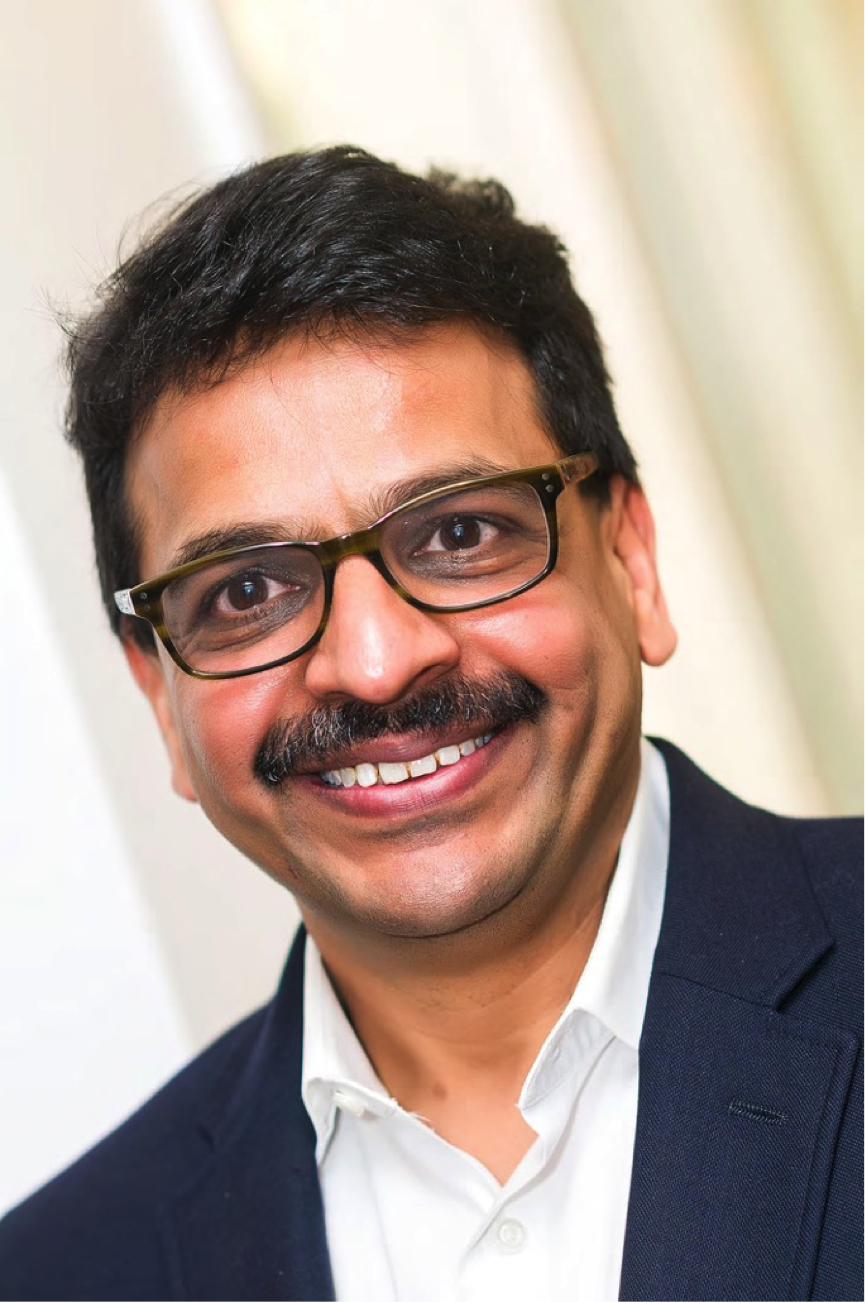
    NEW YORK (TIP): Indian American software engineer ‘Palani Kumananat’ of the Wall Street Journal  won (shared) this year’s Pulitzer Prize for graphics team of investigative journalism, in growing recognition of the importance of using IT tools in reporting. 

    Palani Kumanan, who is a software architect with  Dow Jones that publishes the Wall Street Journal, was a part of the winning project’s graphics team. 

    The Journal won the top journalism award announced on Monday for its mammoth investigative project, “Medicare Unmasked.” 

    Palani co-authored a series of articles that exposed systematic corruption within the Medicare system.

    He shared the prize along with members of the Journal’s graphics team Martin Burch, Chris Canipe, Madeline Farbman, Jon Keegan and Stuart Thompson. 

    “Congrats to the great team at the WSJ! —  Wall Street Journal wins Pulitzer Prize for ‘Medicare Unmasked’ @WSJ,” tweeted  Michael Siconolfi, the newspaper’s investigations editor. 

    Kumanan, a graduate of the PSG College of Technology in Coimbatore, Tamil Nadu, developed the interactive database on  Medicare billing used to analyse government payments made to over 880,000 medical service providers, including doctors and hospitals.

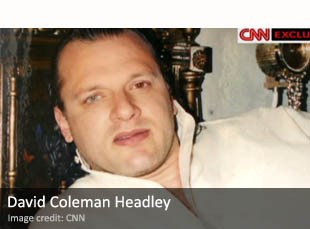
  • David Headley writes his memoir in prison on 26/11 Mumbai attacks

    David Headley writes his memoir in prison on 26/11 Mumbai attacks

    WASHINGTON: Pakistani-American LeT terrorist David Headley, serving 35 years for his role in the 26/11 Mumbai attacks, has written a memoir in prison detailing how Lashkar’s “dedication” to the cause of the “liberation of Kashmir” inspired him to join the terror group.
     
    American public affairs TV programme Frontline was given access to a draft of the memoir Headley, 54, wrote in jail.
     
    Excerpts from the draft offer a “unique window” into Headley’s turn toward extremism, his training with Lashkar-e- Taiba and his preparations for the Denmark attack against the Jyllands-Posten newspaper.
     
    In one of the passages in the memoir, Headley writes about his first encounter with LeT militants in October 2000.
     
    “On one of my trips, October 2000, I made my first contact with Lashkar-e-Taiba (LeT), quite by accident. I attended their annual convection in November. I was very impressed with their dedication to the cause of the liberation of Kashmir from Indian occupation,” Headley writes.
     
    He writes that for the terror attack on Mumbai, the plan was to capture an Indian fishing vessel that would not raise alarm with the Indian Coast Guard as it transported the LeT terrorists to Mumbai’s shores.
     
    “The plan was to capture an Indian fishing vessel, which constantly strayed into Pakistani waters, and commandeer it all the way to Mumbai. The hope was that the Indian Coast Guard would not notice an Indian vessel. The boys would carry a GPS device which would guide them directly to the landing site, I had selected earlier,” he writes.
     
    Headley also writes in detail about his decision to join Lashkar “full time” following the 9/11 attacks, and says that by 2002 the group asked him to take “the Daura Aamma, the basic military training course offered by LeT.”
     
    In 2005, Lashkar asked him to change his name from Dawood Gilani to a “Christiansounding name” so that he could travel easily between the US, India and Pakistan and make it difficult for intelligence agencies to track his activities.
     
    “Finally, in June, my immediate superior, Sajid Mir, instructed me to return to the US, change my Muslim name to a Christian sounding name and get a new US passport under that name. He now informed me I would be going to India, since I looked nothing like a Pakistani in appearance and spoke fluent Hindi and Urdu it would give me a distinct advantage in India,” he said.
     
    Describing the training he got at Lashkar camps, Headley writes “we hid most of the day in caves and under trees, while we were given instructions on various lessons.”
     
    He says most of the “practical aspects” of the lessons were carried out at night and during the course, he was trained in “infiltration, survival, camouflage, raid/ambush tactics, hide out, hiding and retrieving weapons caches, more than a dozen night marches, target practice with AK-47 and 9 mm pistol, RPG, grenades, among other training.
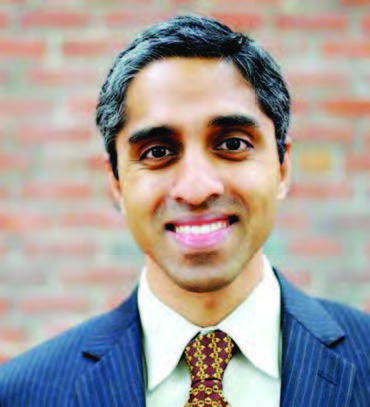
  • Indian American Vivek Murthy Takes Oath as US Surgeon-General

    Indian American Vivek Murthy Takes Oath as US Surgeon-General

    FORT MYER:  Indian-American Vivek Murthy was today administered the oath for the top post of US Surgeon General by Vice President Joe Biden at a ceremonial ceremony in Fort Myer, becoming the youngest-ever in charge of the country’s public health.

    37-year-old Vivek Hallegere Murthy is now the highest ranking Indian-American in the Obama Administration.

    “To have the opportunity to serve as Surgeon General is an extraordinary honour and a profound responsibility, and I want to thank President Obama for entrusting me with the stewardship of this office,” Dr Murthy said in his address on the occasion.

    Attended by eminent Indian-Americans, who flew in the military bastion from across the country to attend the Commissioning and Change of Command Ceremony, Dr Murthy took the oath on the holy Gita.

    As the US Surgeon-General, Murthy carries the rank of Vice Admiral. The Health Secretary Sylvia Burwell also participated in the event.

    “He is eminently qualified for the job,” Mr Biden said on the occasion and described his family as an “incredible” family in particular his grandmother who was present on the occasion.

    “I am who I am because of my grandmother’s faith, my father’s strength, my mother’s love, my sister’s support and my fiance’s unyielding belief in me. I am blessed to have all of them here with me today. I will always be grateful to them for the sacrifices they have made,” he said, with his parents and family members seated in the audience.

    “My family was never supposed to have left our ancestral village. My father is the son of a farmer in rural India. He was supposed to have been a farmer, as was I. But for my grandfather’s insistence that his son get an education – even if that meant going into debt – we might have never left that village to go out in the world and – as my grandfather also insisted – start fixing what needed fixing,” he said.

    “We were not supposed to have become Americans. My parents stopped in three other countries – including a brutal dictatorship – on their journey to get here. They saved up money and scrounged for information about job opportunities, always knowing that America was the destination,” Dr Murthy said.

    In his first major policy speech, Dr Murthy vowed to improve the public health of the country. “Here’s the thing: even as millions of Americans get covered through the Affordable Care Act, we still have much more to do,” he said.

    “Public health does not exist in a vacuum. It is intrinsically linked to education, employment, the environment and our economy. There is a whole world beyond hospital corridors and clinic waiting rooms where people are struggling with issues of transportation, housing and development,” he said.

  • Phones in Bollywood – Who uses what

    Phones in Bollywood – Who uses what

    In the smartphone battlefield there have been many losers, but no outright winner yet. While Android and iPhone both fight it out for the top spot in smartphone sales, Bollywood is one big iPhone monopoly.

    While we have been chronicling the tech tales of the stars, we also took a deeper look at the Twitter habits of the who’s who of Bollywood to find out which platforms do they tweet from the most. 

    We did expect to find a lot of them sending out tweets from iPhones and all of them appear to do so, but there are a few very notable exceptions.

    The Big B of Bollywood is also a big tweeterer with over 14 million followers or over 40 thousand tweets. But much of Amitabh Bachchan’s tweets are not sent from an iPhone or an Android device but they are posted via the good ol’ Twitter Web client. Bachchan stands out from the rest of Bollywood also because no one else appears to tweet as much from a desktop device.

    The Android versus iPhone fight from supremacy gives rise to intense debates and fanatic following quite like the battle of the three Khans of Bollywood. The difference in their films and personalities also extends to their choice of devices. While Shah Rukh Khan, in tune with the greater Bollywood, appears to be an iPhone user. Salman Khan stands out from the fraternity (and also much of the world) with a BlackBerry device. A majority of the @beingsalmankhan’s tweets that we analysed were sent from a BlackBerry device. 

    Android, the choice of the aam aadmi, hasn’t found much currency with the khasam khas of filmdom. But then Aamir Khan, even in this, is different. But at the same time, a few stray tweets from @aamir_khan indicate that they have been sent from an iOS device.

    The only other non-iPhone user we could find amongst the prominent Bollywood twitterati is Vishal Dadlani and the music director also appears to be an Android loyalist as all the tweets from @VishalDadlani in our sample were sent via Twitter’s Android app.

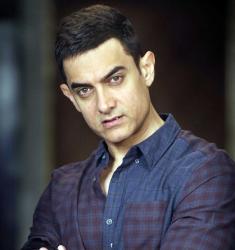
  • 21000 auditions and counting for Aamir Khan’s Dangal!

    21000 auditions and counting for Aamir Khan’s Dangal!

    Aamir Khan will be seen playing a father in his next film Dangal. While he has been prepping for the role, the casting team is having a tough time auditioning girls who can essay the role of his daughters.

    The team has been scouting and has auditioned more than 21,000 girls till now. However, they have not been able to sign anyone.

    It is a tough role. The girls need to be slightly athletic and willing to undergo strenuous training.

    The director of the film, Nitesh Tiwari is certain he does not want to cast someone from the industry. The casting has been going on since a couple of months.

    They are looking for fresh faces who have little or no former training in acting. So even when the team selects someone for auditioning, they have to give them time to prepare for the screen test, making the process even more challenging.

    After breaking all box office records with P.K, Aamir does not have a release this year.

    However he seems to be gearing up for Dangal which will release in 2016.

    It is a very different role he will be seen playing and the casting team needs to ensure they get the casting right.

    Spokesperson confirms and shares, “We have been auditioning but have not been able to zero in on the casting yet.” reports Bollywood.com

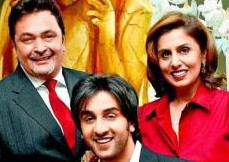
  • Ranbir doesn’t talk about Katrina with dad..

    Ranbir doesn’t talk about Katrina with dad..

    New Delhi, April 21 — Bollywood actor Rishi Kapoor, who is often asked about son, actor Ranbir Kapoor and Katrina Kaif’s relationship, says that he doesn’t know much about the duo’s private life.

    The 62-year-old says that the couple that is now living together, likes to keep things between them. “Ever since I have been on social media, more and more people have been asking me about them. I don’t know much myself,” he says, adding, “They have said they want to keep things private and they like the way things are. They hardly talk about their relationship with anyone, and he (Ranbir) doesn’t talk much about it with us. So I am sorry, but I myself don’t know much about them. What can I say them? And honestly, I am fine with it. I mean, it’s their decision and I respect that,” he tells us.

    The Agneepath actor, who recently shared an adorable childhood picture of Ranbir reading comics online, further tells us that all he can share is fun stories about Ranbir and the time the two spent together.

    “I can share many such stories. A lot of people retweeted that photo and thanked me for sharing a photo from his childhood. I can share many such stories from his childhood. I just chanced upon this one, while going through one of my photo albums,” he says.

  • Obama sends chadar to Ajmer Sufi shrine

    Obama sends chadar to Ajmer Sufi shrine

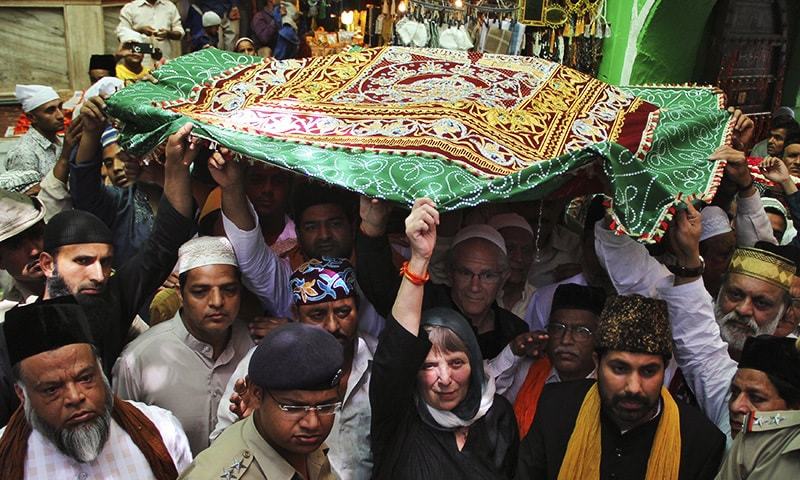
    NEW DELHI: A red coloured Chadar (Holy Cloth), which was sent by US President Barack Obama on the occasion of the 803th annual Urs of Hazrat Khawaja Moinudeen Chishty, was offered at Ajmer Dargah Sharif in Rajasthan on Monday, Press Trust of India said. 

    The Chadar with a message ‘Greeting of Peace’ from Mr Obama was handed over to Haji Syed Salman Chishty, Director of the Chishty Foundation by the US Ambassador in India Richard Verma. 

    According to Haji Chishty, the Chadar was received from the US Embassy a few days back.


    GUEST COMMENTS :

    Thank you Mr. President for this gesture, although a majority of Muslims do not subscribe to this ritual, almost all Indians regardless of their religion respect the Saint and pay a homage to him. It is not an Islamic value, but a cultural value. 

    I’ve been there with my late wife to honor this man who forged healthy relationships between people of different faiths.  I can never forget that day – Najma was around 50 then, and we were not comfortable under the green chaddar (cloth covering the shrine). The Mujawar (care taker of the shrine) suggested that if we do the minnat (wish) for a child, and tie the dhaga (string) to the metal screen around, the saint may bless us to have a child. It is all belief and I wish all the visitors the best. 

    As a Pluralist who admires the pluralistic ethos of India, I welcome this step, and hope Mr. Modi follows it as well. I fully understand Mr. Modi’s predicament, he wants to do a lot of good for “all Indians” but he is not trained to do that. Not all, but many kids coming out of an RSS Madrasa or a Muslim Madrasa have an exclusive language…their language does not figure others, and they don’t know how to talk about all Indians as Indians – A few Muslims talk negatively about Hindus and the same percent of Hindus do the opposite; talk negatively about Muslims. 

    What matters is, if we can have a good heart for all people, every one would be better off. There is no need to do the score keeping either. These are the small things that go a long ways in building better societies, as envisaged by the Vedas – Vasudhaiva Kutumbukum as well as Quran. 

    Mike Ghouse, President
    America Together Foundation
    (214) 325-1916 text/talk


    Mike Ghouse is a public speaker, thinker, writer and a commentator on Pluralism,Islam, India, Israel-Palestine, Politics and other issues of the day. He is a human rights activist, and his book standing up for others will be out soon | He is producing a full feature film ” Sacred” to be released on 9/11 and a documentary “Americans together” for a July 4 release.  He is a frequent guest commentator on Fox News and syndicated Talk Radio shows and a writer at major news papers including Dallas Morning News and Huffington Post. All about him is listed in 63 links atwww.MikeGhouse.net and his writings are at www.TheGhousediary.com – Mike is committed to building cohesive societies and offers pluralistic solutions on issues of the day. 

  • Dallas Businessman Arun Agarwal Receives Prestigious  ‘Non-Resident Indian (NRI) of the Year’ Award

    Dallas Businessman Arun Agarwal Receives Prestigious ‘Non-Resident Indian (NRI) of the Year’ Award

    (Dallas, Texas – April 20, 2015) CEO of Dallas-based home textiles company NexttArun Agarwal, was among 16 successful Indians honored at the second annual “TIMES NOW/ICICI Bank NRI of the Year Awards” at a ceremony in Mumbai on April 14, 2015, attended by top government officials, celebrities and entrepreneurs.

     
    TIMES NOW, India’s No. 1 news channel, and ICICI Bank, India’s largest private sector bank, celebrated the success and achievements of Indians across the world with the announcement of the winners in seven different categories – Entrepreneur, Professional, Academics, Art & Culture, Philanthropy, Special Jury Award, and India’s Global Icon Award. The achievers are contestants from four regions – North America, United Kingdom, Middle East and Asia Pacific. 
     
    Dallas-based home textiles company Nextt is as a key supplier to big retailers such as Walmart, Target, Kohl’s and Dillard’s; the $500-million company manufactures home textiles, garments, apparel fabrics and polyester yarns, primarily from India, and sells under popular name brands such as Trina Turk, Kathy Ireland, Jessica McClintock and Raymond Waites.
     
    “I am thrilled to be honored with this group of the most accomplished people in their fields around the world,” said Agarwal. “Due to their perseverance and creativity, non-resident Indians are making their mark in various industries, and we salute platforms such as these which recognize the diligence and accomplishments of those of living away from the mother land.”
     
    Agarwal, who studied at Harvard University before pursuing his dream to become an entrepreneur, has been building and nurturing the Indian home textiles sector in the U.S. for the past 15 years. Under his leadership last year, Nextt unveiled a 17,000 square feet flagship showroom on Madison Avenue in Manhattan. For more information about Nextt, please visit: www.nextt.com.
     

  • Indian American Develops Car Safety System That Spots Driver Errors

    Indian American Develops Car Safety System That Spots Driver Errors

    WASHINGTON:  Indian-American researchers have developed a new car safety system that anticipates what the driver is going to do a few seconds before it happens to prevent those behind the wheel from committing mistakes.

    By observing the driver’s body language and considering that in the context of what’s happening outside the car, a new computer algorithm determines the probability that the driver will turn, change lanes or continue straight ahead.

     
    “There are many systems now that monitor what’s going on outside the car,” said Ashutosh Saxena, assistant professor of computer science at Cornell University.

    “Internal monitoring of the driver will be the next leap forward,” said Mr Saxena who will describe the system with graduate student Ashesh Jain at the 2015 Robotic Science and Systems conference in Rome.

    “Combining driver anticipation with radar or cameras to locate other vehicles, the car’s safety system could warn the driver when the anticipated action could be dangerous. The warning might be a light, a sound or even a vibration,” Jain said.

    “If there’s danger on the left, the left side of the steering wheel or the seat could vibrate,” Jain said. 

    Drawing on street maps and GPS information, the system also might give an ‘illegal turn’ message if the driver was planning to turn the wrong way on a one-way street. 

    Cornell University researchers said some cars are already equipped with safety systems that monitor a car’s movement and warn if there is an unsafe turn or lane change. But that warning comes too late, after the driver has acted.

    To develop the system, Mr Saxena and colleagues recorded video of 10 drivers, along with video of the road ahead, for 1,899 km of freeway and city driving over a period of two months.

    A computer using face detection and tracking software identified head movements and learned to associate them with turns and lane changes, so that the final system can anticipate possible actions the driver may take.

    The computer continuously reports its anticipations to the car’s central safety system.

    In a test against another data set of videos with different drivers, the system correctly predicted the driver’s actions 77.4 per cent of the time, anticipating an average 3.53 seconds in advance. Those few extra seconds might save lives, Mr Saxena said.

    The system still needs refinement, the researchers noted. 

    Six per cent of the time, they found, face tracking was confused by shadows of passing trees and other lighting variations.

    he system also can be misled by drivers interacting with passengers. In some situations, such as turning from a turn-only lane, drivers don’t always give the same head cues. Sometimes they rely on short-term memory of traffic conditions and don’t turn their heads to check. It may come down to tracking eye movements, the researchers said.

  • Supreme Court Dismisses Plea For Voting Rights of Overseas Citizens

    Supreme Court Dismisses Plea For Voting Rights of Overseas Citizens

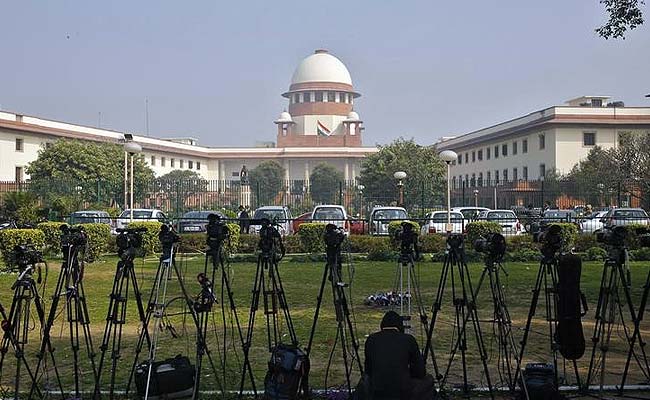
    NEW DELHI:  The Supreme Court, today, dismissed a public interest litigation (PIL) filed by a journalist seeking quashing of amendments made in Citizenship Act which deny voting rights to Overseas Citizens of India (OCI) saying that he cannot espouse the cause of people well settled abroad.

    “The writ petition is for the people who are well settled abroad. The PIL is not for those people but for those who cannot afford to approach this court,” a bench comprising Chief Justice HL Dattu and Justice Arun Mishra said.

    “You cannot be saying that I am trying to espouse the cause of these people,” the bench said when the counsel for the scribe, G Venkatesh Rao, pressed for taking note of this submission.

    The bench also questioned senior journalist S Venkat Narayan for filing the PIL when he himself was not affected and those hit are keeping themselves away from approaching the apex court.

    “Why are you holding the brief for others? The person really affected will come before us,” the bench said while disagreeing with logic that the journalist, who has travelled to 60 countries, was representing those having lost their Indian citizenship.

    The bench did not agree that the present PIL should be treated on different footing than others including the one in which plea has been made for allowing Non-resident Indians (NRIs) to vote by electronic mode from abroad.

    It concluded the hearing by saying that “we decline to entertain the writ petition and accordingly it is dismissed”.

    “We make it clear that the dismissal of this writ petition will not come in the way of other petitions pending in this court,” the bench added.

    The plea had said the denial of voting rights to persons having OCI status violates fundamental rights as it is “discriminative to a class of citizens of India who are not only being denied equality before law and equal protection of laws, but also rights and freedoms relating to life, liberty and dignity of the individual”.

    The PIL had challenged the amendment made in 2004 in the Citizenship Act saying that the restriction of denying a voting right to OCIs is not “reasonable, fair, just and equitable”.

    Denial of voting right to OCI has been effected by introduction of a new section-7-B(2)(f) and simultaneous deletion of section-12 of the Citizenship Act, 1955 which had been dealing with the issue of dual citizenship prior to 2004. The plea had termed the changes as “arbitrary, whimsical, baseless and effecting the legitimate rights to representation to a class of citizens of India” and added that the Indian diaspora of about 25 million expatriate Indians and People of Indian origin were living in 192 countries of the world.

    It said the ‘Citizenship Amendment Act, 2004’ had come into being on the basis of a report of a ‘High Level Committee’ (HLC) on the Indian diaspora under the chairmanship of jurist LM Singhvi.

    The petition had claimed that the recommendations given by the panel on ‘dual citizenship’ issue have not been appreciated in the “larger context of giving rights of representation to this vast group of the Indian diaspora”.

    “These rights of representation have been denied by the central government under the OCI status, the only ostensible reason being administrative difficulties, which is by no stretch tenable in today’s technology-driven world.

    “The ‘HLC’ Report has recognised the fact that ‘dual citizenship’ is being granted in about 70 countries of the world, which consider their diaspora a valuable asset deserving of all recognition and status,” it had said.

  • Arun Jaitley, Prakash Javadekar Celebrate Vaisakhi With Indian Americans in Washington

    Arun Jaitley, Prakash Javadekar Celebrate Vaisakhi With Indian Americans in Washington

    WASHINGTON:  Union Finance Minister Arun Jaitley and Environment Minister Prakash Javadekar attended a colorful Vaisakhi celebration organised by the Indian embassy in Washington for the local Indian-American community.

    “You are far away from India, but you carry the spirit here,” Mr Jaitley told Indian-American community on the lawns of the official residence of the Indian Ambassador to the US.

    Vaisakhi, besides being the festival of harvest, has been one of the most auspicious days, a day identified with the formation of Khalsa, he said, adding that the festival has significance with the country’s independence movement also.

    Speaking on the occasion, Mr Javadekar greeted people and said Indian embassies across the world are “doing real cultural jobs” by networking with the people.

    Maryland Secretary of State John Bapansmith presented a proclamation to Indian embassy Charge de Affairs Taranjit Singh Sandhu with a proclamation issued by Maryland on the occasion.

  • 2 Indians Named 2015 Yale World Fellows in US

    2 Indians Named 2015 Yale World Fellows in US

    NEW YORK:  Two Indians are among 16 people named by Yale University as its 2015 World Fellows, the signature global leadership development initiative at the prestigious US institution.

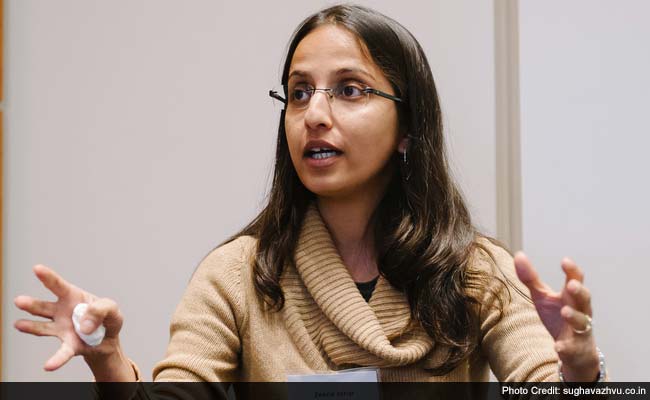
    Zeena Johar, SughaVazhvu Healthcare Founder and journalist and author Rahul Pandita will arrive at the university later this year for an intensive four-month period of academic enrichment and leadership training.

    “The Fellowship was designed to provide people like these, working tirelessly toward large scale change, a valuable opportunity to take a step back from the intensity of their work, to learn from and exchange with the University community and to develop strong relationships with like-minded peers,” said incoming Yale World Fellows Director Emma Sky.

    Ms Johar founded SughaVazhvu Healthcare (SVHC) and IKP Centre for Technologies in Public Health (ICTPH) to create a primary- care delivery network through rural clinics.

    The clinics rely on affordable healthcare technologies and highly trained Indian medical practitioners to provide basic healthcare for hard-to-reach rural populations of India.

    SVHC’s innovative care delivery model has enabled over 70,000 patient visits through its network of nine clinics in Rural Tamil Nadu.

    A PhD in Molecular Diagnostics from the Swiss Federal Institute of Technology, Ms Johar spearheaded ICTPH’s academic alliance with University of Pennsylvania’s School of Nursing, a partnership that helped develop India’s first certificate program for Indian medical practitioners, empowering them to practice evidence-based protocol driven primary-care medicine.

    A member of the Governing Board at Institute of Bioinformatics and Applied Biotechnology Bangalore, Ms Johar is currently pursuing Program for Leadership Development at the Harvard Business School.

    New Delhi-based Mr Pandita has reported extensively about conflicts in Iraq and Sri Lanka and is known for his reportage on Maoist insurgency in central and eastern India, and on the turmoil in Kashmir, Yale said.

    A recipient of the International Red Cross Award for conflict reporting, Mr Pandita was the Opinion and Special Stories editor of the Hindu.

    A total of 18 Indians, including actress Nandita Das and Liberal Democratic Party President Prodyut Bora, have been selected as Yale World Fellows since the program’s commencement in 2002.

    The 2015 class brings the total number of Yale World Fellows to 273, representing 84 countries.

    Yale World Fellows is Yale’s signature global leadership development initiative and a core element of the university’s ongoing commitment to internationalisation.

  • Indian American Rajinder Sachdeva Arrested for Allegedly Accepting Kickbacks

    Indian American Rajinder Sachdeva Arrested for Allegedly Accepting Kickbacks

    NEW YORK:  A 51-year-old Indian-American man has been arrested in the US for allegedly accepting over USD 280,000 in kickbacks for hiring of IT contractors at a transportation authority division in Chicago.

    Rajinder Sachdeva of Schaumburg, Illinois, was arrested Wednesday April 15, and subsequently released on $150,000 cash bond the following day.

    Sachdeva, the Department Manager of Applications at the suburban bus division of the Regional Transportation Authority PACE – receiving federal funds, oversaw the implementation and performance of the database management system Oracle there, according to the criminal complaint filed in court. 

    From January 2010 till date, Sachdeva corruptly demanded, accepted, and agreed to accept kickbacks and gratuities for the purpose of hiring and continued employment of IT contractors who worked at PACE via outside vendors, according to the complaint.

    Sachdeva allegedly concealed payments that he received, either by obtaining the money through a company that employed the IT contractors and in which Sachdeva’s wife possessed an interest, or by obtaining payments directly from the IT contractors.

    Sachdeva was paid in excess of USD 280,000 between 2010 and 2014, in exchange for the influence he exerted in placing certain IT contractors at PACE and in their continued employment there.

    Sachdeva allegedly told a cooperating witness that he wanted his share for placing people at PACE.

    The complaint also alleges that Sachdeva directed a contractor to submit invoices for PACE IT work to the cooperating witness and the company of Sachdeva’s wife using the false name ‘Sue Peters’.

    The contractor then sent an invoice to their company using the false name, and caused an invoice to be submitted to the PACE IT vendor.

  • OVERCOME YOUR IRON DEFICIENCY

    OVERCOME YOUR IRON DEFICIENCY

    Experts say that millions of women around the world suffer from iron deficiency, more popularly known as anaemia. This nutritional insufficiency is known to cause fatigue, lethargy and even low work performance. Include these iron-rich foods in your diet to address this problem…

    • Brown rice is packed with fibre, which flushes out toxins from your body while the iron in it is said to battle anaemia.
    • Oatmeal also has iron apart from several other nutrients. A breakfast comprising oatmeal is a great way to start the day.
    • Potatoes may seem like a high-calorie vegetable but have high sources of iron. Make them a regular part of your diet.
    • Broccoli may not seem like a very appetising choice but is excellent for those suffering from iron deficiency.
    • Strange as this sounds, strawberries all contain iron and its high vitamin C content also helps your body absorb more iron.
    • Packed with nutrients, peas are beneficial when it comes to those looking to ‘up’ their iron intake.
    • Spinach contains a lot of iron as well as vitamin C, which helps your body absorb iron better.
    • Black-eyed peas are another good source of iron.
    • Snack on pumpkin seeds to increase iron in your body.
  • MUST-HAVE JUICY SUMMER FRUIT

    MUST-HAVE JUICY SUMMER FRUIT

    There’s nothing more refreshing in summer than biting into a delicious and juicy fruit. What’s even better is that you can never over indulge in them, given their health benefits.

    So, if you wish to gorge on a generous doze of fruits this season, here is a list of top 5 must-haves…

    Pineapple 

    Though cutting a pineapple is an ardous task, it’s worth the effort. This tropical fruit is loaded with bromelain enzyme that helps in the digestion of fats and proteins. It’s also high in vitamins and minerals, including vitamin A, vitamin C, calcium, phosphorus and potassium, which can prevent colds and strengthen your bones. It also keeps your gums healthy and teeth strong.

    Watermelon 

    This juicy fruit with high water content will keep you hydrated and cool. It also contains lycopene, which protects skin cells from being damaged by the sun. It is also said to be full of potassium, antioxidants, carotenoids, Vitamin A, B6, and C, calcium and fiber. A few slices a day can, apparently, also help prevent hair loss, digestive problems, poor eye sight and even heart attacks.

    Tender Coconut 

    Tender coconut might not have an over-powering taste, but it has health benefits that are unmatched by any other fruit. It not only quenches your thirst on a hot summer day, but also gives your body vitamins, minerals and electrolytes. Tender coconut keeps the body cool, cures feeding infants from intestinal disturbances, kills intestinal worms, helps cure cholera, checks urinary infections, and is effective in the treatment of kidney and urethral stones. It has also been considered to be a blood plasma substitute as it is sterile, does not produce heat, does not destroy red blood cells and is readily accepted by the body.

    Mango 

    No summer’s complete without biting into sweet and juicy mangoes. Known as the king of fruits, mangoes also have a lot of health benefits. The antioxidant compounds in the fruit are said to protect against colon, breast and prostate cancers. It also helps lower cholesterol, clear the skin, improve eye health and alkalize the whole body.

    Strawberry

    Though they’re tiny berries, they’re rich in vitamins, protein, citric acid, fat, iron and phosphorus. The fruit is also known to resolve UTI problems, which is a rather common condition to develop in summer. In fact, a bowl of strawberries a day can even better your immune system, lower your cholesterol and regulate your blood pressure. They also contain folate, a B-vitamin that will enhance a foetus’ development in the early stages of pregnancy.

  • DANCE OF ETERNAL BLISS

    DANCE OF ETERNAL BLISS

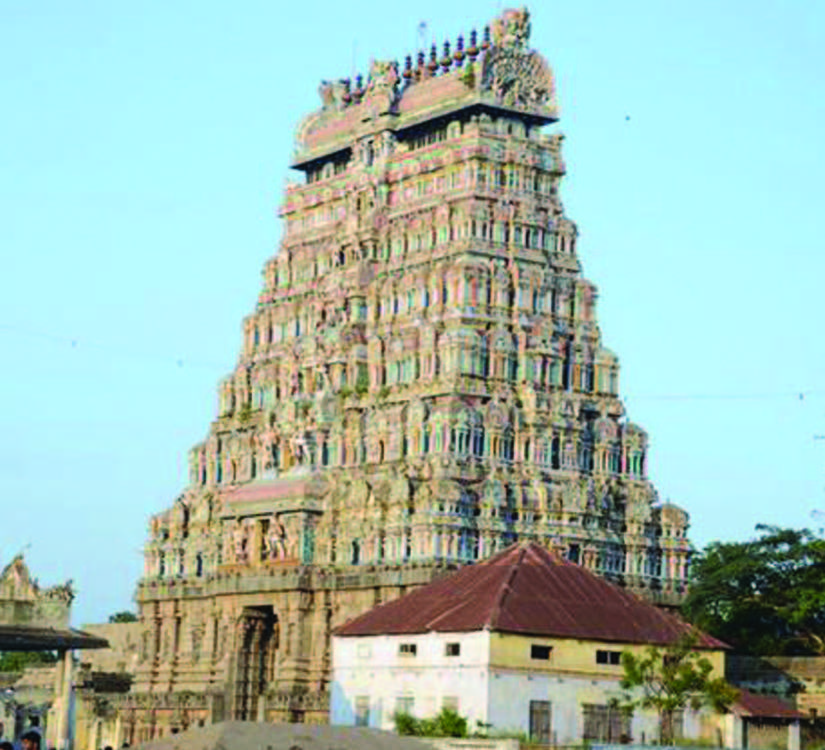
    Ananda Natam Aaduvar…’ the subject of this song heard often on stage is the presiding deity of the Chidambaram temple, which is now under renovation, after 28 years. ‘Temple,’ for a worshipper of Siva, is this abode of Sivakamasundari Samedha Sri Nataraja.

    It is Akasa (ether) kshetra among the five Siva temples (Pancha Bhoota) and also mukti (salvation) sthalam. It is unique that the big toe of the lifted foot of Sri Nataraja is on the central point of the Equator. If the world maap is perceived as a human being (Viratpurusha), India is located in the heart. Tamil Nadu is situated in the heart of the country and Chidambaram is in the heart of the State.

    The proliferation of Thillai trees (Exocoeria agallocha) gave the place its name. It is also the sthala vriksham of the temple. To go back to the beginning, ‘Ananda Natam…,’ the hermits in Dharuka Vana were overcome with pride over the fact that they had Siva under their control. Deciding to teach them a lesson, Siva as a young mendicant accompanied by his beautiful wife (Vishnu as Mohini) went into the forests. The wives of the sages were enchanted by the radiance of the young sanyasin and the husbands were impressed by the woman.

    The illusion soon lifted and they decided to kill the mendicant. The snakes they created became Siva’s ornaments, the tiger was killed and the skin adorned His waist. Muyalagan, the demon was subdued and with one foot holding him in place Siva danced in gay abandon, the Ananda Thandava.

    The story of Nandanar is associated with Chidambaram, immortalised by many compositions describing his devotion to the deity of that temple, his plight and how the bull moved to help Nandanar have a good view of his favourite deity. This is where Patanjali and Vyakrapadar got to see the Ananda Thandava of Siva.

    This is where Tirumurai was given to humanity. The primary four Saiva saints have sung in praise of Sri Nataraja and this is where they attained mukti too. Chidambaram in fact is the first among the Siva shrines the four have sung on (Paadal Petra Sthalam). Tiruvachagam, Manickavachagar’s outpouring of devotion, was found on the steps of Chitsabha with the signature of Nataraja as Tiruchitrambalathan. It was here that Sekkizhar started his ‘Periya Puranam’ with the Cosmic deity Himself providing the first word, ‘Ulagellam.’

    Ramalinga Vallalar, who spent the better part of his life here, has sung many songs. Arunagirinathar, Pattinathar and Kalamegapulavar are among the others who dedicated songs to Sri Nataraja, with Arunagiri leading with 65.

    Thooya Ponninal Ezhudi Veynda Ambalam (roof made of pure gold) – this is how Appar describes the shrine. The golden leaves have the mantra Namasivaya inscribed. Muthuthandavar, whose songs are widely sung and to which dancers perform had the blessings of Chidambaram Nataraja. Legend goes that while returning to Thillai from Sirkazhi, he found the Kollidam in spate. Paying heed to his anguished cry, the river parted, creating a path. Muthuthandavar is said to have merged with the golden flame that appeared in Kanakasabha even as devotees were watching.

    Poet Kambar, after inaugurating the Ramayanam, went to Chidambaram to present the epic in the presence of the 3,000 Dikshitars, referred to as Moovayiravar. After initial difficulties, he achieved his mission in the 1,000-pillar hall of the temple. 

    The four majestic Rajagopurams are said to represent the four Vedas. They also are dedicated to the four saints, each of whom chose to enter the temple from his preferred direction. Cholas, Pandyas and the Nayaks have contributed to the architectural splendour of this 1,500-year old temple, which is a treasure trove of inscriptions.

    The mystery lies behind the screen on the right side of the Nataraja shrine. When the veil lifts for a second, the dazzling garland of golden vilva leaves is revealed. The philosophy is Sri Nataraja is in three forms –discernible image – Sri Nataraja, mystic form – vilva – and representative image –crystal linga. Real joy or ecstasy (Ananda) is hidden by illusion (veil) and when that falls, illumination (wisdom) is obtained. The place, therefore is called Pranava Peetam.

    The temple follows rituals as stated in the Vedas. Legend goes that Siva himself led 3,000 Vedic scholars (Dikshitars) to Thillai. With Him as the Guru, the dikshitars performed the pujas, their number now around 400.

  • EFFICACY OF PRAYER

    EFFICACY OF PRAYER

    Human effort finds fruition when divine will prevails. Faith in this truth takes root in those who have achieved and attained success in their ventures, regardless of the field of their pursuit. Scriptures, the Puranas and the Itihasas make it very clear that any prayer will bear fruit depending on the heartfelt intensity of the appeal, pointed out Sri Rama Sarma in a lecture.

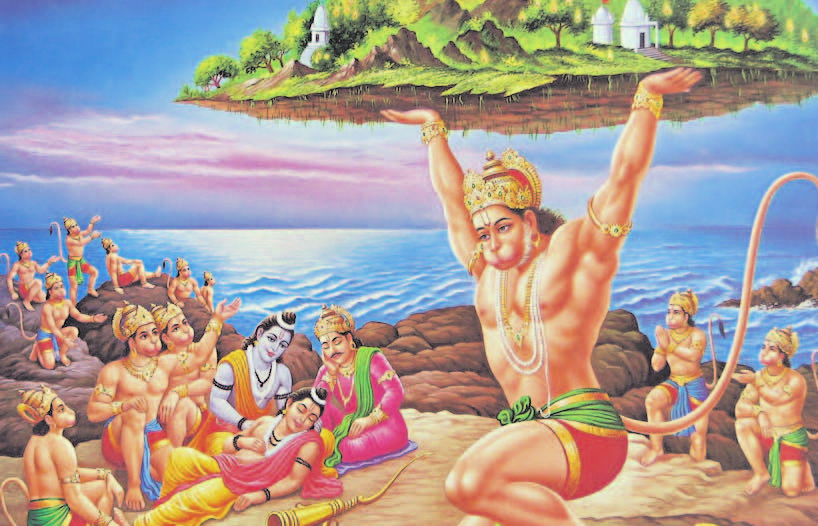
    Valmiki makes it clear that the basis of success in all the ventures of Hanuman is his implicit faith in Rama’s grace. Hanuman, for all his strength, resourcefulness, courage and fearlessness is virtuous and modest.

    The monkeys are despondent when they have not made any headway in their search for Sita. Though they know from Sampati that Sita is in Lanka in Ravana’s custody, crossing the ocean to go to Lanka seems an impossible task.

    The wise Jambhavan talks to Hanuman patiently so that Hanuman finds courage and faith in his innate strength. Hanuman gains confidence but never forgets Rama’s grace. At every step, when he is engaged in this effort that is beset with hurdles and dangers of every kind, this faith is the unseen guide leading him to success. Before crossing the ocean, he offers worship and prayer to Surya, Indra, Vayu, Brahma and all creation.

    He increases his form in size and presses the Mahendra Mountain with his feet and begins to fly across the ocean with outstretched arms and hands. When Hanuman alights on the shores of Lanka, he is more aware of the dangers and hence is alert about the surroundings and people. He passes through the exquisitely planned palaces and gardens of Ravana during the night but does not see Sita anywhere. At such times when his spirit and hope seem to be drained from him, it is his faith that sustains him. Once again he prays to Rama, Lakshmana, Sita, Rudra, Indraand other celestial beings. He then sees Asoka Vana and experiences a strange feeling of exhilaration in his inner self that tells him that Sita is likely to be in this place.

  • DARJEELING – THE QUEEN OF HILLS

    DARJEELING – THE QUEEN OF HILLS

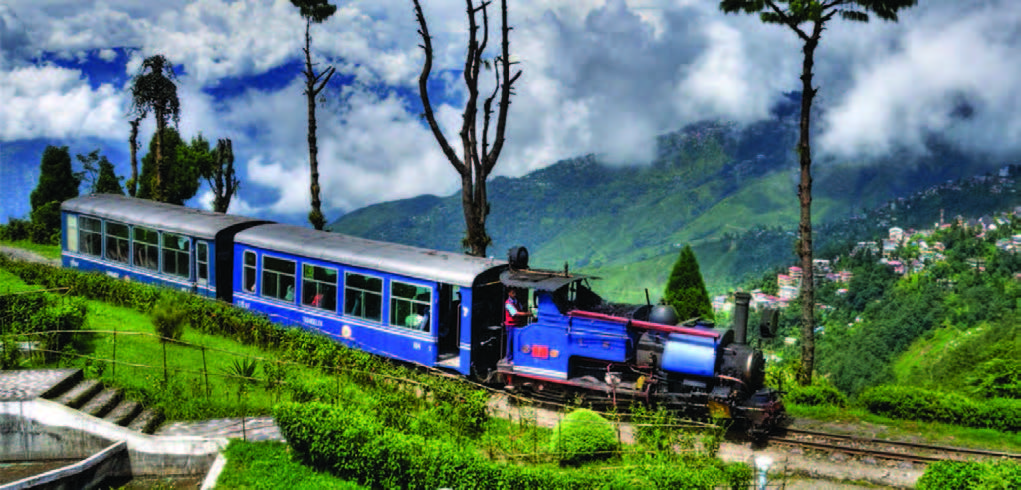
    Darjeeling, also fondly known as the “Queen of hill stations”, is nestled in the Himalayas and is famous for its tea production and the Darjeeling Himalayan Railways, which is also a UNESCO World Heritage Site.

    This hill town was developed in the mid 19th century, when the British set up a sanatorium and a military depot in Darjeeling. Before this, Darjeeling was the ancient Gorkha capital. Later, the Maharaja of Sikkim gifted Darjeeling to the British.

    Darjeeling continues to be a popular holiday destination in India, owing to its scenic beauty and pleasant climate. Apart from tourism, Darjeeling is also popular for its many British style public schools, which attract students from across India and even neighbouring countries.

    Places to see  

    Darjeeling is a travellers delight and is frequented by tourists year after year. Apart from the pleasant weather and scenic beauty, there is a lot to see and do in Darjeeling.

    Tiger Hill

    Situated at an altitude of 2590 meters (8482 ft.) and 13 kilometers from the town, this spot has earned international fame for the magnificent view of the sunrise over the “Kanchanjunga” and the great eastern Himalayan Mountains. Even Mount Everest, the world’s highest peak, is visible from here. The hesitant rays of the early morning sun paint these peaks in pale gold.

    Batasia Loop and the War Memorial

    The Batasia loop situated almost 5 km away from the town is a gigantic railway loop where the Toy Train makes a 360 Degree turn. It was basically built to make it possible for the Toy Train to cut the deep ascend. Strategically located the Batasia Loop offers a panoramic view of the Kanchanjunga Range.A War Memorial constructed in the memory of the brave sons of the soil who laid down their lives in the different wars since the independence of the nation adds to its attraction. There is also a well furbished market where visitors can buy locally made purses, bags and other decorative items.

    Ava Art Gallery

    Situated about 4 km from the Market Square and on the National Highway, Ava.Art Gallery was established in 1965 by the Late. Bhopal Rao Sett and Ava Devi. It is the only Art Gallery of its kind in the Hills. A collection of 60 pieces of art work in water, oil and thread paintings are displayed in the Gallery. Visitors can travel on foot to get to the Gallery or simply hire a taxi. Entrance fees are not charged.

    DARJEELING 2

    Chowrasta and Mall

    Chowrasta, a wide promenade atop a ridge lined with shops and restaurants is taken to be the heart of the town. Here people gather to chat, spend time basking in the sun or just to snatch a moment of peace. The Brabourne Park is attached to the Chowrasta and now features a musical fountain. This place is an open place and free from vehicular movements from where one can watch the scenic beauty of the mountain range and take charm of walking at the Darjeeling Mall. Chowrasta is the central place of the Mall Road.

    Rock Garden and Ganga Maya Park

    Situated 10 km from town, Rock Garden and Ganga Maya Park has now developed into a very attractive picnic spot with natural water falls. The park offers boating facilities and is endowed with great scenic beauty. Ample eateries are available for visitors to indulge in local delicacies and one can even buy souvenirs. No fees are charged for taking photographs. Visitors are however, required to make arrangements for transportation. A two way travel arrangement is advisable.

    Peace Pagoda

    The Japanese Peace Pagoda was established by Nipponzan Myohoji, a Japanese Buddhist order. Situated on the slopes of the Jalapahar Hill the pagoda can be reached by foot or on taxi. The pagoda is the highest free structure in the town. It also showcases the four avatars of the Buddha.

    Botanical Garden

    It is the oldest Botanical Garden named as Lloyd Botanical Garden with varieties of flora and is famous for two living fossils. It is located just below the Eden Sanatorium(Saheed Durga Mall District Hospital) on an open slope covering an area of about 40 acres. Lloyd Botanical Garden is open seven days a week. There are no entrance fees. A camera, a small note book for a botany enthusiast and a couple of hours to spare, is a must.

    Nightingale Park/Srubbery Park

    It is about 2-5 kms from Darjeeling Railway Station and walkable from the Chowrasta. It is a beautiful park with a package of cultural programmes performed daily during the tourist season and its opening time is 4.00 p.m. and closing time is 8.00 p.m. The park has recently been extensively re-developed, and now comprises of a giant Statue of Lord Shiva, a temple, and provisions for live-interactive entertainment. The best time to visit the park is in the evenings. Entrance fee is charged and nominal charges for photography may also be required to be made by the visitor.

    Darjeeling-Rangit Valley Passenger Cable Car

    Darjeeling-Rangit Valley Passenger Cable Car is popularly known as the Ropeway. It is about 3 km north of the town and situated at what is known as the North Point. The Ropeway is India’s oldest passenger ropeway and connects Darjeeling with Singla Bazaar at the bottom of the valley. The present ropeway has been extensively modernized and visitors can now safely travel over the clouds to witness the aerial view of the lush green tea gardens below.

    Senchal Lake

    A scenic place near Tiger Hill. This place has popularly come up as a picnic spot among the tourists. The lake supplies drinking water to Darjeeling Town.

    Observatory Hill & Mahakal Temple

    Also known to the locals as the “Holy Hill”, it is just a few minutes walk from the Chowrasta and is situated on the highest ridge of the town. The Mahakal temple atop the hill is a revered place for the locals and visitors will be surprised to find a Hindu priest and a Buddhist monk sharing a common altar.

    Dhirdham Temple

    Dhirdham temple is modelled on the lines of the famous Pashupatinath temple of Kathmandu and was built in 1939. It is a minute’s walk from the Darjeeling Railway Station.

    Happy Valley Tea Garden

    Happy Valley tea garden is located just a kilometer away from the main town and is situated along 18 Lebong Cart Road (very near to the District Magistrate’s Office) and offers tourist a refreshing ambience far from the otherwise noisy town. One can soak in the ambience of the tea garden and take a walk through the carpeted garden. You can take a pony from the Chowrasta or merely walk down the hill to reach the factory. The garden is presently closed but the residents are running it through a cooperative.

  • Saina Nehwal regains top spot in latest BWF rankings

    Saina Nehwal regains top spot in latest BWF rankings

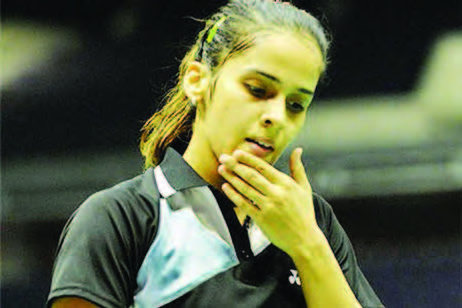
    NEW DELHI (TIP): Ace Indian shuttler Saina Nehwal regained the number one position in international rankings after China’s Li Xuerui dropped a couple of rungs to third in the latest list issued on Thursday.

    Saina, the first Indian woman shuttler to be world number one after her India Open Grand Prix Gold triumph earlier this month, had dropped to the second place following her semifinal finish in the Malaysia Open Super Series.

    She skipped last week’s Singapore Open Super Series but gained in the rankings after Xuerui also pulled out from the tournament, leading to loss of two positions in the women’s singles chart.

    Elsewhere, PV Sindhu dropped out of the top 10 and was placed 12th this week after slipping three spots.

  • Speculation rages over Ganguly’s role as Team India coach

    Speculation rages over Ganguly’s role as Team India coach

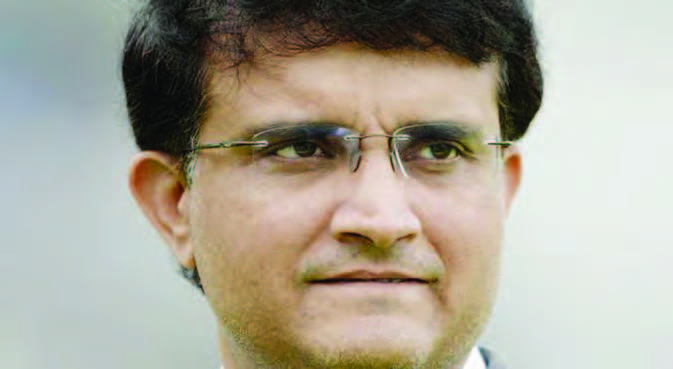
    MUMBAI (TIP): Will another chapter be added to the famous Sourav Ganguly story? Over the past couple of days, there has been intense speculation that the ‘Prince of Kolkata,’ who led India with much success, could be the team’s next coach.

    Reports have said that the charismatic former India skipper has expressed interest in the job left vacant by Duncan Fletcher, whose term ended after the World Cup. Some even said that Ganguly had meet Board of Control for Cricket (BCCI) president Jagmohan Dalmiya in this regard.

    On Thursday, Ganguly vehemently denied that he was in the fray. “I am hearing this for the first time. I don’t want to say anything on this. Let’s not speculate. Don’t jump the gun,” he said.

    He also denied speaking to Dalmiya about it. “No, who says all this? They (BCCI) haven’t spoken to anyone and neither have I spoken to them. That’s the truth and let’s stick to that. I meet him (Dalmiya) every day because he is the president of Cricket Association of Bengal (CAB) and I am the joint secretary of CAB,” he clarified.

    Interestingly, Ganguly also said that both he and Dravid had the skills to do the job. “Both can be (good coaches). Rahul was a great player,” he said.

    Curiously, Dalmiya, a known backer of Ganguly, didn’t deny the possibility completely. “It may happen. It is not ruled out. Till now, there is nothing on this. Who knows what will happen in the future? Let’s wait for the decision.

    We won’t hide anything from the media,” the wily 74-year-old said.

    BCCI secretary Anurag Thakur admitted that he and Dalmiya have had intense discussions in this regard and had sought the views of all the ‘stakeholders involved’.

    “Dalmiya and I will be speaking to senior board members and the senior players. We also sought the captain’s view and we can assure that the best “Dalmiya and I will be speaking to senior board members and the senior players. We also sought the captain’s view and we can assure that the best man available for the job will be appointed,” Thakur said.

    Sources said that Ganguly is more keen on the job of the team director, a position which was occupied by former India all-rounder-turned-commentator Ravi Shastri till the World Cup.

    However, it has also emerged that Shastri himself wants to continue in his new role. Apparently, the players are comfortable with Shastri’s working style.

    A master on technique, Dravid also enjoys the confidence of the ‘boys’ and had a healthy time with the team during his short stint as the batting consultant in England before the Test series last year.

    He has also been a ‘mentor’ of the Rajasthan Royals for the past couple of seasons -a role which he has performed successfully. The only glitch is that Dravid himself has expressed his inability to be with the team for long periods.

    In the mix are Sanjay Bangar, Bharat Arun and R Sridhar, who have assisted Shastri in his Team India job for the past few months. The positive role of the trio has been appreciated by everybody .

    The question is, if the board goes for a desi coach instead of a foreigner, will it be a superstar or a less popular but effective man?

  • India beat Korea on penalties to win bronze medal in Sultan Azlan Shah Cup

    India beat Korea on penalties to win bronze medal in Sultan Azlan Shah Cup

    IPOH (Malaysia) (TIP): India produced a spirited performance to beat Korea 4-1 in the penalty shoot-out after both the teams were locked at 2-2 at regulation time, to finish a creditable third in the 24th Sultan Azlan Shah Cup hockey tournament on Sunday.

    The win is sure to act as a morale booster for the Indian team, which is witnessing a transition phase after new chief coach Paul van Ass took over from Terry Walsh barely a month ago.

    The third place finish also marks a relatively good beginning for Van Ass, who was in his maiden assignment with the Indian team.

    For India, who had earlier drawn 2-2 with Korea in the league stages, the victory came on the back of a stunning 4-2 win over world champions Australia on Saturday at the Azlan Shah Stadium.

    India scored both their goals though field strikes from last match’s hat-trick man Nikkin Thimmaiah (10th minute) and Satbir Singh (22nd), while Korea scored from penalty corners converted by You Hyosik (20th) and Nam Hyunwoo (29th).

    India’s vice-captain and goalkeeper PR Sreejesh had a fantastic day under the bar as he not only made numerous saves in the entire 60 minutes, but also turned out to be India’s hero in the shoot-out, denying two Korean efforts to help his side register the much-needed victory.

    The only blemish for India on Sunday was penalty corners. The Sardar Singh-led side failed to secure a single set piece but their backline as usual crumbled under pressure and gave away seven short corners.

    Both the teams were slow to get off the block and were sloppy in the initial few minutes.

    It was India who had the first shy at the goal in the sixth minute but Akashdeep Singh shot wide after a scramble inside the circle.

    Three minutes later, Korea secured their first penalty corner but Nam Hyunwoo’s effort couldn’t get past the defence of an agile Indian goalkeeper, Sreejesh.

    The Indians took the lead in the next minute through last match’s hero Nikkin. Dharamvir Singh started the move and passed the ball to SK Uthappa, who beat a few Malaysian defenders to enter the circle from the right flank and then neatly pushed the ball towards Nikkin and he made no mistake in slapping the ball home from close range.

    After a relatively sedate start, the Indians started to get into the groove as time passed by.

    Five minutes into the second quarter Korea got their second penalty corner and You Hyosik scored from a rebound with a reverse shot after Jang Jonghyun’s dragflick was well saved by Sreejesh.

    India restored their lead two minutes later through Satbir’s fine field effort. After stealing the ball at the midline, Satbir played a delightful one two with Dharmvir Singh before tapping in the ball pass Korean keeper Hong Doo Pyo.

    But an unnecessary foul by Ramandeep Singh reduced India to 10-man in the last two minutes of the second quarter and that cost them dearly.

  • Thombare shines as India beat Malaysia 2-0 in Fed Cup

    HYDERABAD (TIP): Prarthana Thombare yet again scored an impressive win but Ankita Raina had to work hard as India defeated Malaysia 2-0 in the Asia/Oceania Group II matches in the Fed Cup 2015, here on Thursday.

    Prarthana trounced Yus Syalin Nabila Binti Yusri 6-1, 6-0 in the first singles match to give India a 1-0 lead.

    The second singles match between India’s Ankita Raina and Jawairiah Noordin however, turned out to be a keen contest with both the players trying to outsmart each other.

    Raina sweated out to beat her rival 6-1, 3-6, 6-4.

    The game between the two was a prolonged affair but the Indian, egged on by the spectators, had the last laugh.

    India had thrashed Pakistan 3-0 on Wednesday.

  • ARUN JAITLEY PUSHES US FOR TOTALIZATION PACT

    ARUN JAITLEY PUSHES US FOR TOTALIZATION PACT

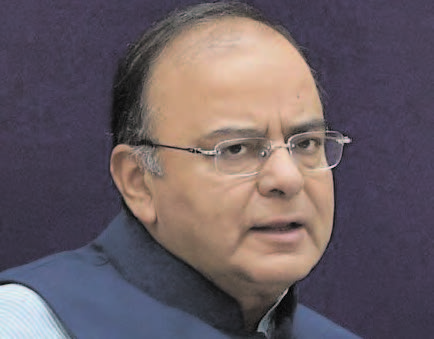
    NEW DELHI (TIP): Finance minister Arun Jaitley has urged US authorities to create a framework that would help Indian workers to get back $3 billion annually, which they contribute as social security in the US.

    “A related issue is totalization. Indians contribute — according to research done by Jacob Kirkegaard at the Peterson Institute — about $3 billion annually to the US government by way of social security contributions, which they will never receive back,” Jaitley said in a speech in Washington on deepening India-US economic ties.

    “This is like an aid programme that Indian workers run for the US government. I would urge the US administration to create a framework and start a process so that we can rectify what is really a very unjust situation. I am confident that the US will take up this matter soon,” he said.

    India has been pushing to sign a totalization agreement with the US but Washington has repeatedly rejected such a proposal. Jaitley detailed the steps being taken by the government to boost growth and benefit from the demographic dividend. He said the potential of India is considerable and the government plans to raise growth to a sustained double-digit trajectory and, hence, realizing the demographic dividend. “The US can both contribute to this process as well as participate in the opportunities that the Indian future will create. In these and other endeavours, the US will continue to remain India’s key strategic ally and partner… The basis for a 21st century relationship for a 21st century country has been established. Let us build on it. Chalein Saath Saath.”

  • Need $60bn a year to power growth: Suresh Prabhu

    Need $60bn a year to power growth: Suresh Prabhu

    NEW DELHI (TIP): Railway minister Suresh Prabhu on Thursday said that the country needs around $50-60 billion in investment every year.

    Speaking at an award function held in the capital, Prabhu said that the country’s growth rate is increasing fast and the next 20-25 years is going to be good for the country. “Who would have thought that sports like football and hockey would be good business a few years ago,” he said. “Also new businesses like e-commerce have been able to attract big funds into the country.” 

    Citing the example of Korean carmaker Hyundai that exports a large number of cars from the country to markets across the world, Prabhu said that India’s change has been auguring well for businesses. “A few years ago, we would have shouted slogans against MNCs. Now, the mentality has changed. And they are doing a great job for the country,” he said.

    Prabhu also emphasized the need for bankers to shape the country’s future.

    “We need bankers who would reach out to everybody in society, even small people. HDFC has done that,” he said.

    Speaking about Sun Pharma MD Dilip Shangvi, Prabhu said that India has become the capital of generic drugs because of entrepreneurs like Shangvi. “It is only possible because companies like his are reinvesting 5%of their top lines into research on the same,” said Prabhu.

    He also said that the government cannot create infrastructure by itself and would require the help of entrepreneurs such as GM Rao, group chairman, GMR Group who has helped built Delhi’s T3, which has become one of the best airports in the world.

  • Successful Indian companies fuelling UK economy: Study

    LONDON (TIP): The success of Indian companies is fuelling the British economy through job creation and high revenues, states a study. ‘India meets Britain — India Tracker 2015’ developed by professional services major Grant Thornton in collaboration with Confederation of Indian Industry (CII), found that the number of Indian companies employing people in Britain has increased by 14 per cent, from 700 in 2014 to 800 in 2015.

    The total number of people in the UK employed by Indian companies has increased by 10 per cent; from 1,00,000 last year to nearly 1,10,000.

    The report released by Ranjan Mathai, Indian high commissioner to the UK also shows that the combined turnover of these businesses has increased by £3 billion in the last year, up from £19 billion in 2014 to £22 billion in 2015.

    “The India Tracker shows that the appetite of Indian companies to do business in the UK remains as strong as ever. The UK has reinforced its position as the leading location for Indian investment in Europe,” Anuj Chande, head of South Asia Group at Grant Thornton UK LLP said.

    “The Indian economy appears to be gathering pace as the Modi government tries to ‘walk the talk’ on key reforms. Its pro-business stance will further encourage many Indian businesses to pursue their global ambitions and as a result Indian investment in the UK is likely to grow,” he said.