Month: April 2015

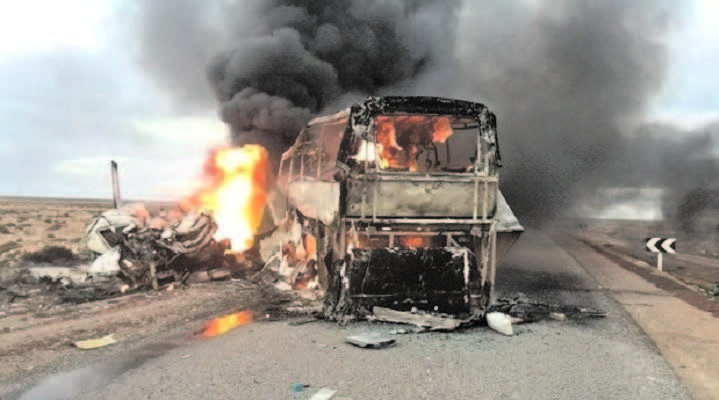
  • 33 people killed, mostly children, IN BUS CRASH IN MOROCCO

    33 people killed, mostly children, IN BUS CRASH IN MOROCCO

    RABAT (TIP): At least 33 people were killed, most of them children, when a bus burst into flames after colliding with a gas tanker in Morocco on Friday, a local official and a rights group said.

    “We have many completely carbonized bodies. Authorities have been in contact with the bus company to identify the victims,” said Benmane Fadli, regional director of the transportation ministry.

    The bus had been heading from the coastal city of Benslimane to Laayoune in Western Sahara when the crash happened near the southern city of Tan-Tan.

    Most of the victims were children returning from a school athletic competition in Benslimane, the Tan-Tan bureau of the Moroccan Association of Human Rights (AMDH) said in a statement.

    Authorities did not confirm the AMDH statement.

    The bus collided with a gas tanker at Shbeka town, around 60 km (40 miles) south of Tan-Tan, AMDH said. Ten people were injured and five had left hospital after treatment, it added.

    Road accidents have been increasing in Morocco, where car ownership has nearly doubled in 15 years. Official statistics say an average of 10 people die every day in traffic accidents.

  • Northern Ireland fields first-ever Sikh candidate for UK polls

    Northern Ireland fields first-ever Sikh candidate for UK polls

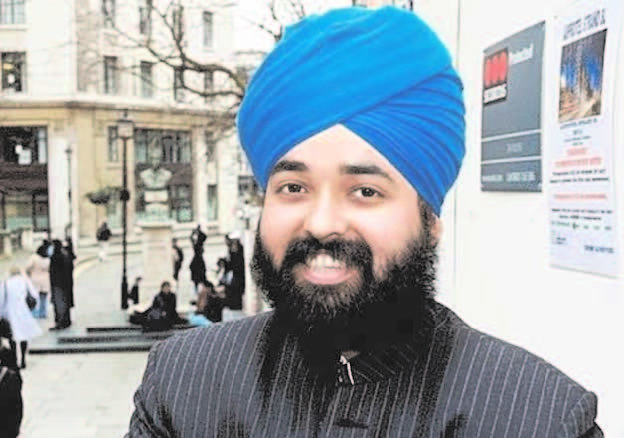
    LONDON (TIP): A 31-year-old Sikh politician will be the first Indian-origin candidate to contest in the UK General Elections from Northern Ireland on May 7. Amandeep Singh Bhogal, who was born in Jalandhar, is already making his mark on the campaign trail for the Conservative party in his trademark blue turban. He represents the Upper Bann constituency in the heart of Northern Ireland, which is 54 per cent Protestant and deeply Christian and churchgoing.

    “The Conservatives want to end sectarian politics in Northern Ireland and introduce some real normal politics,” he said.

    While Bhogal’s candidacy is attracting widespread media interest, he is not expected to win the seat, which is currently held by David Simpson of the Democratic Unionist Party (DUP).

    “We have a long-term electoral plan,” Bhogal said in reference to his decision to stand from what is seen as an un-winnable seat.

    “Together we can in Upper Bann,” is the slogan he has coined and has had T-shirts printed with it. Politics seems to a passion for Bhogal, who has moved to Northern Ireland from Kent in England where he grew up. Over the years, he has put in bids to stand for no fewer than 45 parliamentary seats.

    In 2012, he contested the London Assembly elections alongside current mayor Boris Johnson, who he credits for giving him valuable “never to give up” advice. Bhogal’s grandfather came to the UK in 1959 to “achieve better in life, not just to make extra money”. He was married to Pari when he was 19 at a ceremony in Punjab and the couple have a daughter Sukhamani, 10, and son Arjun, 4.

    With just four weeks to go until polling day, the campaign is yet to fully ignite in Northern Ireland’s 18 constituencies represented in the House of Commons. Some poll pundits predict that the DUP could play the role of kingmaker in the event of a hung Parliament verdict. The Conservatives are unlikely to achieve a great breakthrough in the region, which is historically divided along Catholic and Protestant lines.

    The Tories are fielding 16 candidates in the region, with 11, including Bhogal, parachuted in from England and Scotland.

  • Pope Francis accused of blocking appointment of French ambassador to Vatican ‘because he is gay’

    Pope Francis accused of blocking appointment of French ambassador to Vatican ‘because he is gay’

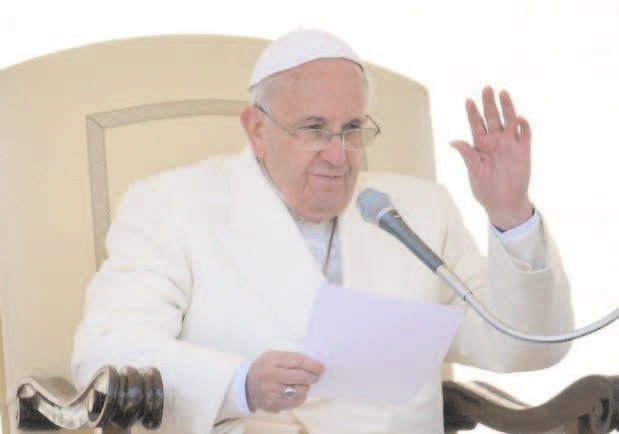
    FRANCE (TIP): Liberal Catholics’ hope for a more progressive Church under Pope Francis have taken another knock with claims that the Pontiff has refused to accept France’s new choice of ambassador to the Vatican because he is gay.

    Laurent Stefanini, the openly gay diplomat at the centre of the row, was nominated as France’s ambassador to the Holy See by the country’s council of ministers on January 5. He should by now have filled the post left when Bruno Jouvert departed the position at the end of February.

    But with the Vatican still failing to confirm officially that it has accepted the new ambassador, the French and Italian press are widely reporting that Stefanini’s sexuality is behind his rejection.

    In France Le Journal du Dimanche quoted a Vatican insider as saying that the rejection was “a decision taken by the Pope himself”. The daily newspaper Liberation headlined its article on the story: “The Pope tarnishes his image”.

    Asked by Independent if Stefanini’s sexuality had led to his rejection, a spokesman for the Vatican said: “We have no comment to make.” 

    A French foreign ministry source told the news agency Ansa, however, that Stefanini remained “the best possible candidate for the role”.

    The Italian media has been quick to remind Francis of his declaration last year: “If someone is gay… who am I to judge him.” But other commentators have noted that the Vatican, which has been hit by numerous lurid sex scandals of its own, has a bit of a history when it comes to blackballing diplomats from overseas on account of its squeamishness about homosexuality.

    In 2008 it blocked the appointment of another gay French diplomat, Jean-Loup Kuhn-Delforge, as ambassador to the Vatican. And in 2012 the Vatican rejected Bulgaria’s then choice of ambassador to the Holy See because, it was claimed, he had written a novel containing a gay sex scene.

    The Bulgarian diplomat Kiril Maritchkov, a 39-year-old lawyer, who speaks Italian and four other languages, and is married to an Italian woman, appeared be an ideal choice for Sofia’s representative at the Vatican.

    But it emerged that Archbishop Janusz Bolonek, the Pope’s representative in Sofia, wrote to his superiors highlighting the offending part of the novel, which was a finalist for a book of the year award in Bulgaria.

  • Indian-origin grandpa kills grandson, self in South Africa

    JOHANNESBURG (TIP): In a bizarre incident, a 64-year-old Indian-origin man took his four -year-old grandson to a car and set it ablaze with them both in it in South Africa in a murder-suicide that has shocked the Indian township of Azaadville, west of Johannesburg.

    Juguthlay Persadh is believed to have called his daughter and son-in-law shortly before the incident on Thursday, April 9, informing them of what he was about to do.

    Shivan Mikyle Maharaj’s shocked parents had to be restrained by police from trying to get to the blazing car, which was under threat of exploding.

    They joined police in a frantic hunt to find the car, only to find it ablaze.

    “Persadh had apparently been involved in a family dispute for several months,” according to a neighbor who said there were frequent late night arguments in the Persadh residence.

    It is believed that Persadh had asked his son-in-law to move out of the house.

    “They had been arguing for a while and he recently told his daughter’s husband to move out of the house. He then threatened them that he was going to kill their child,” a neighbor, who refused to be identified, said.

    “I did not really believe that the threats were serious, but now I am shocked and wish I had intervened,” the neighbor said.

    A private security guard working near the field where the car was parked said he noticed that it was there for about an hour before he saw flames coming from it and summoned police. He said after the fire was extinguished, he saw the charred bodies of the man on the back seat with the child lying in his arms.

    Police spokesman Kay Makhubela said that the police were currently conducting inquest to find the motive behind the tragedy.

  • Lord Swaraj Paul gives a £1 million donation to The University of Wolverhampton

    LONDON (TIP): The University of Wolverhampton, which saw 152 Indian students enrol in 2014/15, has received a£1 million (Rupees 10 crores) donation from Lord Swaraj Paul – the largest in the university’s history.

    The philanthropic gift by Lord Paul is in memory of his daughter Ambika.

    A similar donation of £1 million was made to the London Zoo in 1994 by Lord Paul who has been the chancellor of the university for 19 years now.

    Speaking to TOI, Lord Paul said “My mission has been to ensure that higher education is also for ordinary people. This University is in the heart of the Asian community and 30% of its students are multi ethnic. The money will be used to upgrade the university’s student facilities”.

    Lord Paul has been a vocal advocate campaigning against Britain’s visa regime that has seen a major drop – by almost 25%, in the number of Indian students visiting UK for education.

    Lord Paul said “The number of Indian students have been dipping simply because of UK’s visa regimen. I have constantly brought up the issue in the House of Lords”.

    Lord Paul is leading the university’s delegation to India from April 13-17 April along with vice-chancellor Professor Geoff Layer. The delegation will travel to Delhi and Rajasthan where they will meet India’s Human Resource Development minister Smriti Irani and lunch the University’s Delhi-based alumni.

    Lord Paul has been Chancellor of the University of Wolverhampton since 1999. The university said the donation will be used to enhance the student experience. “A similar donation was made to the London Zoo in 1994, a place Ambika loved to go to. One third of the zoo is named after Ambika. I spent a lot of time there with her”.

  • 100bn barrels of oil deposit found near London airport

    LONDON (TIP): A British energy company says there is oil, and lots of it, near London’s Gatwick Airport. The question is how much of it can be pumped from the ground.

    UK Oil & Gas Investments PLC says analysis of a new well in the Weald Basin indicates there may be as much as 158 million barrels of oil per square mile in the region. That suggests the entire basin may hold as much as 100 billion barrels of oil, more than 10 times earlier estimates. By comparison, Britain has pumped about 42 billion barrels of oil from the North Sea over the past 40 years.

    While oil companies have been drilling in the Weald Basin since the 1930s, UK Oil & Gas says new “concepts, techniques and technology” have given it a better understanding of the region’s potential. As recently as December, the British Geological Survey issued a report suggesting the basin’s shale rock formations held up to 8.8 billion barrels of oil.

    Stephen Sanderson, the CEO of UK Oil & Gas, said the latest estimates shows this is a “world class potential resource.” 

    The U.K. has identified three potential reservoirs of onshore oil and gas as it seeks to get in on the shale oil boom that has made the US the world’s top energy producer. While US developers have relied on hydraulic fracturing, or fracking, to break up the shale and release energy deposits, UK Oil & Gas says the Weald Basin is “naturally fractured” and so can be tapped using conventional drilling techniques.

    But Alastair Fraser, a professor of petroleum geoscience at Imperial College London, warned that the area’s geology is “rather unfriendly.” While the oil may exist, it will be difficult to get out of the ground because the rocks are extremely tight and non-permeable, said Fraser, who worked for British oil producer BP for 30 years.

    “That’s all very well,” he said of the increased estimate of the basin’s oil resources. “But you’ve got to get at that.” 

    Experts agree that only a fraction of the oil in shale rock formations can be extracted.

    Developers have been able to recover from 3 percent to 15 percent of the oil present in areas that are geologically similar to the Weald Basin, Sanderson said.

    Another complication may be opposition to large-scale drilling in a basin that stretches across 4,180 square miles (10,825 square kilometers) of southern England.

  • Alarm bells for India? China plans to build rail link with Nepal through Mt Everest

    Alarm bells for India? China plans to build rail link with Nepal through Mt Everest

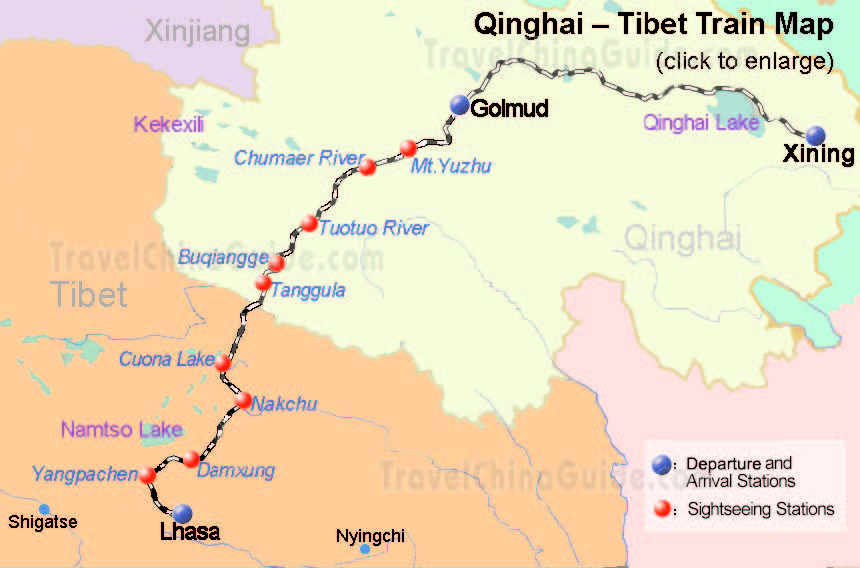
    BEIJING (TIP): China is planning to build a tunnel under Mount Everest, called Qomolangma in Tibetan, as part of its plan to extend its rail link to Nepal, the state run China Daily said on April 9.

    “The line will probably have to go through Qomolangma so that workers may have to dig some very long tunnels,” railway expert Wang Mengshu told China Daily.

    He said that the changes in elevation along the line were remarkable and added that the speed of trains on the proposed Nepal line would be restricted at 120 km per hour because of the difficult mountain terrain.

    China picking major infrastructure deals in Nepal

    This is the first time a tunnel plan has been revealed to reach Nepal. China had earlier discussed extending the Qinghai-Lhasa line to the Nepalese border without digging a tunnel.

    Sources said the idea was to find a short route to Nepal for accessing the vast Indian market. Besides, China might be trying to involve Nepal for its Bangladesh-China-India-Myanmar (BCIM) project because New Delhi has shown little enthusiasm for this corridor, sources said.

    “If the proposal becomes a reality, bilateral trade, especially in agricultural products, will get a strong boost, along with tourism and people-to-people exchange,” Wang said.

    The Nepal rail project, which has been taken up at Kathmandu’s request, will be completed by 2020, China Daily quoted a Tibetan official as saying. The project was discussed during the visit of Chinese foreign minister Wang Yi to Kathmandu in December, according to Nepalese reports.

    In August last year, China completed a 253-km long railway line extending the Lhasa line to Xigaze, the second biggest city of Tibet which is closer to the Nepalese border.

    In another move involving India’s neighborhood, China is likely to sign a deal to help Pakistan build a natural gas pipeline to Iran. The contract is expected to be signed during president Xi Jinping’s upcoming visit to Islamabad.

  • SATYAM VERDICT RAJU GETS 7 YEARS IN JAIL, SLAPPED RS 5 CRORE FINE

    SATYAM VERDICT RAJU GETS 7 YEARS IN JAIL, SLAPPED RS 5 CRORE FINE

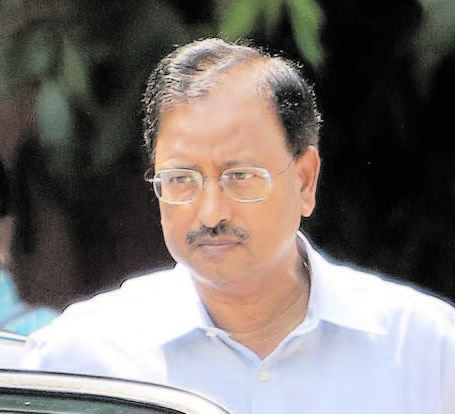
    HYDERABAD (TIP): Satyam scandal prime accused B Ramalinga Raju, once the poster boy of the ITeS industry, and his brother B Rama Raju were sentenced Thursday to seven years rigorous imprisonment and fined Rs 5.5 crore each after they were convicted by a special court in the Rs 7,800-crore accounting fraud that shook the country six years ago.

    Raju’s youngest brother Suryanarayana Raju, Satyam’s chief auditor V Prabhakar Gupta, former chief financial officer Vadlamani Srinivas, former PricewaterhouseCoopers auditors S Gopalakrishna and T Srinivas, former Satyam accounts and auditors G Ramakrishna, D Venkatpathi Raju and C Srisailam, have also been sentenced to 7 years in jail. They were all fined Rs 25 lakhs each.

    Special judge B V L N Chakravarthi convicted the 10 of criminal conspiracy and cheating among other offences.

    All the 10 accused were present in court, where media was not allowed, when the verdict was pronounced. After the order, the judge directed the CBI to take all the accused into custody.

    The court declined to entertain a plea for a lenient view on the quantum of sentence by Ramalinga Raju for his “philanthropic activities”.

    “It is not a fit case either for invoking provisions of the Probation of Offenders Act or taking a lenient view on quantum of sentence,” the judge said.

    In January 2009, Ramalinga Raju, then Satyam chairman, allegedly confessed to manipulating his company’s account books and inflating profits over many years.

    Raju was arrested by Andhra Pradesh CID along with his brother Rama Raju and others. The main chargesheet ran into 2,315 pages and thousands of documents were attached, making it a voluminous 65,000-page case file. It alleged that the Raju brothers devised a mechanism to fudge and fake balance sheets, bank statements and records. They had involved relatives in insider trading.

    The eight other accused assisted them in preparing fake invoices, bank confirmation letters and fixed deposit receipts. Besides statements of the Raju brothers and their family members, the CBI named 432 other witnesses but only 232 were examined by the court, mainly Satyam management officials and auditors.

    Raju founded Satyam Computer Services in 1987 and built it into a top ITeS firm. But he began to assemble a parallel empire in which dozens of benami companies, fictitious salary accounts were opened in the names of nearly 13,000 non-existent employees. He allegedly set up a well-oiled machinery to forge bank and NBFC statements and certificates, and floated fictitious real estate fronts to purchase land.

    By calling for random recruitment from campuses in which thousands were offered jobs, Raju allegedly inflated the company’s staff strength to 53,000 employees when it was only 40,000. Those candidates who were picked up during campus placement were never given appointment letters. But fictitious salary accounts for them were opened.

    Raju allegedly confessed to having made at least 400 benami transactions to buy land in several parts of Andhra Pradesh. The Raju family acquired land in Ranga Reddy, Nalgonda and Hyderabad.

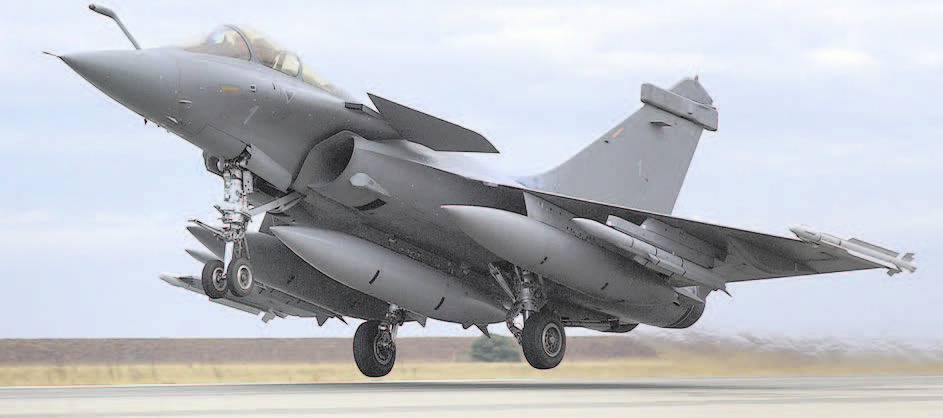
  • INDIA TO BUY 36 RAFALE FIGHTER JETS FROM FRANCE

    INDIA TO BUY 36 RAFALE FIGHTER JETS FROM FRANCE

    NEW DELHI (TIP): Prime Minister Narendra Modi on April 10  announced that India has requested France to give 36 Rafale fighter jets in ‘fly-away condition’ as quickly as possible.

    The decision on Rafale jets was among the several agreements reached between the two countries after a meeting of Prime Minister Narendra Modi with French President Francois Hollande.

    Calling France a valued friend, Prime Minister Narendra Modi said there is no such sphere where India and France are not cooperating.

    Prime Minister heaped praise on France for standing with India on various issues.

    “I’m grateful to France for their support for India’s permanent membership of UN Security Council,” PM Modi said.

    Prime Minister thanked France for supporting his Make in India initiative.

    Earlier, during the talks the two leaders discussed defence, nuclear issues, economy, cultural and educational ties.

    France has also agreed to give tourist visas to Indians in 48 hours.

    Direct purchase to alter original deal

    The “politico-strategic” decision of negotiating the direct purchase of 36 Rafale jets that was taken by Prime Minister Narendra Modi just before he left for Paris on April 9 afternoon, will lead to a “modification” of the original deadlocked $20 billion MMRCA (medium multi-role combat aircraft) project for 126 fighters.

    The final negotiations for the MMRCA project — which envisaged direct acquisition of the first 18 jets from France with the remaining 108 being built in India by Hindustan Aeronautics after transfer of technology — have been stalled for over a year now.France, incidentally, has failed to find international customers for its Rafale fighters, except for Egypt which agreed to buy 24 of them in February.

    The insurmountable hurdle in the MMRCA negotiations was Dassault’s substantial hike in pricing for the 108 fighters to be produced by HAL as well as its refusal to take “full responsibility” for them. India, in turn, was clear it could not accept a hike in the L-1 (lowest bidder) price provided by Dassault since it had led Rafale to defeat the Eurofighter Typhoon in commercial evaluation in January 2012.

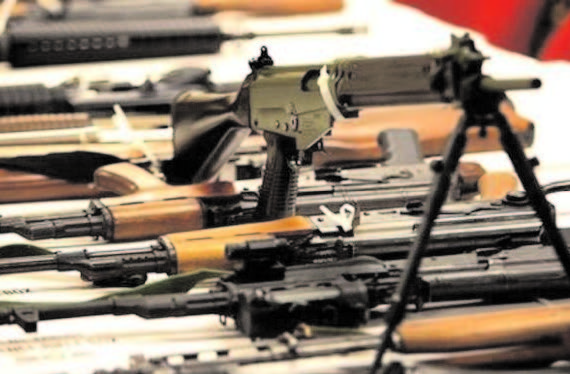
  • Extremists bought 6 million arms illegally in India

    Extremists bought 6 million arms illegally in India

    HYDERABAD (TIP): Various groups of extremists in India possess about 6 million smuggled weapons.

    According to a study by Indian Institute for Peace, Disarmament and Environmental Protection (IIPDEP), illegal guns produced in ‘cottage industries’ in Bihar and UP have been smuggled to all parts of the country including AP and Telangana, and most terror groups consider them to be the second choice for accumulating arms. The slain SIMI terror suspects had also acquired their arms from these places.

    Four years back the five terror suspects who were shot dead in another encounter had got their arms from similar places.

    The study shows that there are no effective measures introduced by the central or state governments to check the smuggling or eliminate the cottage industries, while the number of illegal arms have exceeded legal weapons.

    According to Dr Balakrishna Kurvey, a senior official from IIPDEP, weapons are still smuggled through air, land and sea borders in the country.

    “Chinese weapons reach major militant groups of North East, who then supply them to smaller groups. Earlier, it used to be the Mumbai underworld in the fore front of smuggling, now it’s the extremist groups inside our country,” he said.

    Meanwhile, the arms culture in UP and Bihar are slowly spreading to other parts of the country. “Apart from selling weapons to the needy from other states, migrants from UP and Bihar bring the arms culture to whichever states they move to,” said Dr Kurvey.

    Terror suspects, including slain militant Viquar Ahmed, acquired country-made weapons made in North India. “It’s not difficult in UP to buy a locally manufactured gun, which is as powerful as imported weapons. Militants can easily smuggle them to any part of India without getting caught,” said another expert from IIPDEP.

    In Hyderabad, apart from extremists, several people, including rowdy-sheeters, robbers, realtors, and even small traders have illegal firearms.

  • Bhushans seek FIR against former Supreme Court judge, his son

    NEW DELHI (TIP): The father-son duo of Shanti Bhushan and Prashant Bhushan on April 10 made a high-voltage corruption charge against a former Supreme Court judge and his advocate son while repeatedly pleading with the SC to order registration of an FIR.

    The petition was filed by Prashant Bhushan through advocate Kamini Jaiswal. Arguing for his petitioner son, Shanti Bhushan alleged the ex-judge had indulged in corruption while deciding a case during his stint in the apex court.

    Bhushan senior followed the charge with his favourite doomsday argument, “Unless an FIR is registered against the ex-judge and a thorough inquiry is conducted, the credibility of the Supreme Court as an institution will be endangered.” Citing the apex court’s Lalitha Kumari judgment, Bhushan said the SC had ruled that registration of FIR was mandatory in a complaint disclosing a cognizable offence. “If that is the judgment, an FIR should be registered on the basis of the complaint filed by Prashant Bhushan on December 1, 2014,” he said.A bench of justices Dipak Misra and PC Pant pointed out that the Bhushans were not a party to the case which was decided by the ex-judge. “In our opinion, the person who is aggrieved by any kind of order passed by the ex-judge in the discharge of his judicial duty while functioning as a judge of this court in dealing with a matter on the judicial side can file an application for review or take recourse to curative petition or any other remedy available to him in law,” it said. But the petitioners cannot be allowed to make such a prayer invoking the conceptual facet of public interest litigation under Article 32 of the Constitution of India. We are absolutely convinced that the view expressed by the constitution bench in Lalitha Kumari is not applicable to the facts of the case,” it added.

  • ANOTHER WOMAN RAPED IN DELHI; TAXI DRIVER ARRESTED

    ANOTHER WOMAN RAPED IN DELHI; TAXI DRIVER ARRESTED

    NEW DELHI (TIP): A 32-year-old woman who hired a cab from a Delhi Metro station was allegedly raped at a secluded spot by the driver, who was arrested after a brief chase, police said on Friday, April 10.

    The shocking crime – the second such incident in four months – took place in west Delhi’s sprawling Dwarka area on Thursday, April 9  night, soon after she hired the black color taxi with a yellow stripe around 10.30pm at Dwarka Mor station to reach her Madhu Vihar residence.

    The woman works in a shopping Mall in Rajouri Garden, also in west Delhi, Deputy Commissioner of Police R.A. Sanjeev said.

    He said the driver, Ramesh Kumar, 38, picked up another passenger and dropped him at Rajapuri. He then took the woman to a secluded spot on the pretext of filling up CNG.

    He then raped the victim, the officer said.

    The victim told police that she was punched and slapped on her head and face when she tried to resist the criminal assault.

    A passing motorcyclist heard the woman’s screams and alerted a Delhi Police Control Room patrol van stationed some 75 meters away.

    Just as the police van cruised to the crime spot, the driver took off in his taxi, with the woman still inside.

    A chase followed, and the taxi was forced to stop some half a kilometer away. “The driver tried escape but we arrested him,” said Sanjeev.

    Police said the driver was a resident of Najafgarh and had been plying a taxi since 1996.

    He has been booked on charges of rape, wrongful confinement, voluntarily causing hurt and criminal intimidation.

    The Thursday incident follows the December 5 rape of another woman in an Uber taxi. That driver, 32-years old, is now facing trial.

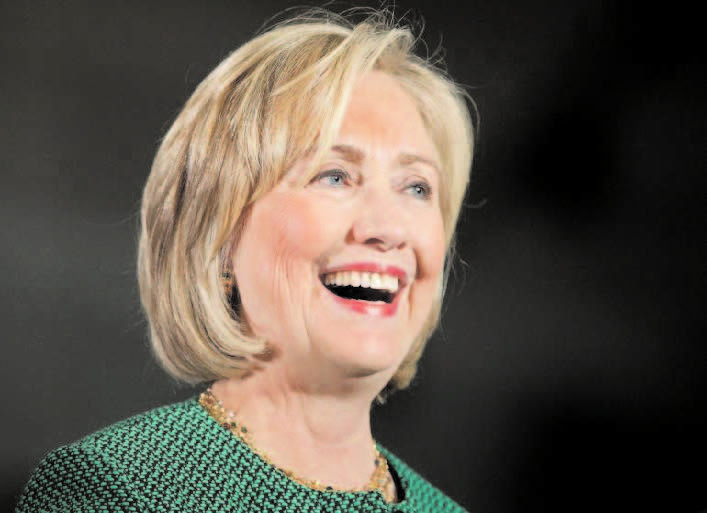
  • Hillary to announce 2016 run for president on Sunday

    Hillary to announce 2016 run for president on Sunday

    WASHINGTON (TIP): The answer to the ”Run, Hillary, Run” exhortation from the Clintonistas will be available this weekend. To no one’s great surprise, Hillary Clinton is expected to formally announce that she will run for President in 2016, aiming to return to the White House where she was the First Lady 24 years ago.

    The announcement is expected to come in the form of a video message that will be posted Sunday on social media, bypassing the traditional legacy media, according to Clinton supporters. She will then head out to the early-voting states of Iowa and New Hampshire to make her case to voters who rejected her bid for the Democratic nomination eight years ago when they chose a young, little-known first-term senator named Barack Obama.

    Among the several challenges Hillary Clinton will face, aside from her age (69) in what will be a grueling 18 months of campaigning before election day in November 2016, is a complex dynamic with the electorate, including with the Democratic party base. She is at once America’s best known and least known politicians, her aides are saying (”most unknown famous person in the world” in their terminology) as they seek to re-introduce her to US voters. They want to go beyond her record as First Lady, New York Senator, and Secretary of State to portray her a woman of substance and an effective Presidential candidate.

    Hillary Clinton has hired key staff in recent days for her campaign, and is also said to have finalized space for campaign headquarters in Brooklyn, New York. Her husband, former President Bill Clinton, said in a recent interview that his role ”should primarily be as a backstage adviser to her until we get much, much closer to the election” – in other words, he will take a backseat for now till she really needs him later.

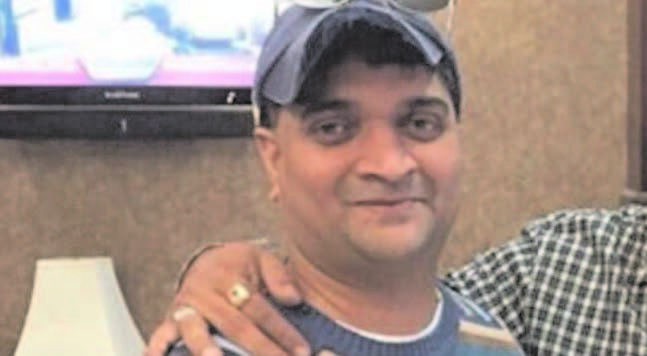
  • Indian American Sanjay Patel Shot dead in Robbery Attempt at US Gas Station

    Indian American Sanjay Patel Shot dead in Robbery Attempt at US Gas Station

    NEW YORK  TIP: A 39-year-old Indian man has been shot dead by two masked men during an apparent robbery attempt at a gas station in the US state of Connecticut where he worked.

    Sanjay Patel, who worked as a clerk at the gas station in New Haven, was shot three times in the chest and once in the hand by two masked men on Monday night.

    A report in NBC Connecticut said Mr Patel was taken to the Yale-New Haven Hospital where he died an hour later.

    Police said they were searching for the two men as the investigation continued.

    Mr Patel’s wife was pregnant with their first child.

    The report quoted New Haven Police as saying that a gunfire broke out at the gas station around 7:30 pm local time during the apparent robbery.

    Gas station-owner Raj Ali told NBC that the robbers took Mr Patel’s life “for a couple hundred dollars. It’s not worth it. It’s bad.”

    Witnesses said they saw two masked men running from the scene after the incident.

    “We are looking for two people that may be involved,” said New Haven police spokesman Officer David Hartman.

    “We don’t necessarily believe that two were firing guns. We know at least one was.”

    Police said they don’t believe there were any customers inside the gas station store when the robbers walked in and will check surveillance video as part of the investigation.

  • Zakiur Rehman Lakhvi released from Adiala jail

    Zakiur Rehman Lakhvi released from Adiala jail

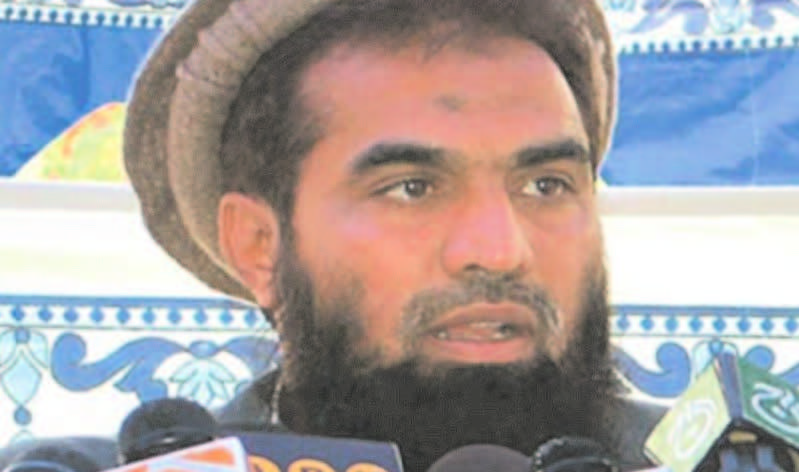
    LAHORE/NEW DELHI (TIP): Mumbai attacks mastermind Zakiur Rehman Lakhvi has been released from Paksitan’s Adiala jail.

    Lakhvi was released from Adiala Jail in Rawalpindi, a day after Lahore high court (LHC) suspended his detention and ordered his immediate release.

    India had strongly reacted to the court’s decision, saying it “eroded” the value of assurances repeatedly conveyed to it by Pakistan on cross-border terrorism.

    Jamaat-ud-Dawa supporters were present outside the prison to receive 55-year-old Lakhvi.

    Lakhvi’s luxury life in jail: Internet, mobiles, TV and visitors

    The court on Thursday suspended the Punjab government’s order to detain Lakhvi under a security act and ordered his immediate release.

    Earlier in the day, Lakhvi’s counsel Raja Rizwan Abbasi had said that the government was left with no other ‘legal option’ but to release his client.

    “The government is left with no other ‘legal option’ but to release his client after the LHC suspended his detention. Neither the government nor the Adiala Jail authorities can violate the court’s order this time,” he said.

  • Iran minister meets Pakistan military chief amid Yemen dilemma

    Iran minister meets Pakistan military chief amid Yemen dilemma

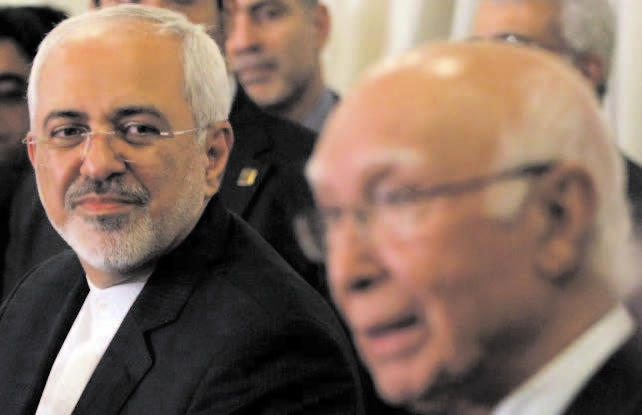
    ISLAMABAD (TIP): Iranian foreign minister Mohammad Javad Zarif met Pakistan’s powerful military chief Thursday, as the Pakistan government wrestled with a dilemma over how to respond to a request from Saudi Arabia for Pakistani troops to fight in Yemen.

    Zarif was winding up a two-day trip during which he was expected to urge Pakistan to reject the Saudi request for troops, planes and naval support for a Saudi-led coalition against Iran-allied Houthi fighters in Yemen.

    Pakistan’s chief of Army staff general Raheel Sharif has publicly remained silent on the request. Army officials say they will defer to the civilian government.

    Saudi Arabia’s request puts Pakistan in a tight spot. The nuclear-armed nation of 180 million people has strong economic, religious and military ties to Saudi Arabia but also a long and porous border with Iran in a mineral-rich region plagued by a separatist insurgency.

    Shi’ite Iran and Sunni Saudi Arabia are rivals for power in the volatile Middle East and many in Sunni-majority Pakistan fear being caught between them if Pakistani troops are sent to Yemen. A military statement on the meeting between Zarif and Sharif emphasised border difficulties and possible defence cooperation. “Focus of the discussion remained on regional security including the evolving situation in the Middle East, Pak-Iran border management and defence and security cooperation between both the countries,” it said. “The unity and integrity of Muslim Ummah (community) and greater harmony amongst the Muslims was emphasized.” 

    A Saudi-led coalition began air strikes against Iran-backed Houthi forces in Yemen last month. Iran denies Saudi and US accusations that it has armed the Houthis, who hail from the Zaidi branch of Shi’ite Islam.

    Although the causes of the Yemen conflict are complex, analysts fear it could spark a bloody sectarian battle between proxies of Iran and Saudi Arabia that could inflame the Middle East. Pakistan’s parliament has been debating the Saudi request to join the coalition this week. Legislators emphasised brotherly ties with Saudi Arabia but no one spoke in favour of going into Yemen. “The consensus that is emerging in parliament is that Pakistan should not participate in any military offensive. We should try to mediate, influence and facilitate peaceful dialogue,” Sartaj Aziz, the prime minister’s adviser on security.

  • Afghan soldier kills 1 US soldier, several others injured

    KABUL (TIP): An Afghan soldier shot and killed a US soldier and wounded several others Wednesday before being shot dead, the first so-called “insider attack” to target NATO troops since they ended their combat mission at the start of the year.

    The shooting happened after Afghan provincial leaders met a US Embassy official at the compound of the Nangarhar provincial governor in the city of Jalalabad. All US Embassy staff were accounted for and safe, the diplomatic mission said. ”Right after the U.S. official had left, suddenly an Afghan army soldier opened fire on the U.S. soldiers who were present in the compound,” said Afghan Gen. Fazel Ahmad Sherzad, the police chief for eastern Nangarhar province 

    The American troops returned fire, killing the Afghan soldier, whom Sherzad identified as Abdul Azim of Laghman province.

    The motive for his attack was not immediately known and no group claimed responsibility for the assault. In past attacks, Taliban insurgents have been known to wear Afghan police or military uniforms to stage attacks on the international troops.

  • 24 killed in bus accident in Bangladesh

    DHAKA (TIP): At least 24 people were killed on April 9 when a bus veered off the road and rammed into a number of trees in central Bangladesh’s Faridpur district.

    “The accident took place around 1.15 AM on the Barisal-Dhaka highway when driver apparently lost control over the wheels at Bhanga area of Faridpur district,” a district police officer told reporters. The bus was heading towards southwestern Barisal carrying about 50 passengers from Dhaka. The officer said most of the 24 people died instantly with 19 of them being men and 5 women.

    Twenty-three people were injured. They were being treated at nearby facilities, some with critical wounds.

  • Malaysia revives detention without trial with new law

    KUALA LUMPUR, Malaysia: Malaysia has revived detention without trial after its lower house passed an anti-terror law that rights groups say is a giant step backward for human rights. The government says the measures were needed after it arrested 92 Malaysians so far this year suspected of supporting the Islamic State militant group. This includes 17 people detained Sunday, whom police say were planning to rob banks and attack police stations and army camps to obtain weapons.

  • 10 killed in Taliban siege on Afghan court complex

    MAZAR-I-SHARIF (Afghanistan) (TIP): At least 10 people died today when Taliban insurgents wearing military uniforms mounted a six-hour gun and grenade siege on a court complex in northern Afghanistan, in an assault highlighting the country’s fragile security situation.

    The attack in the usually tranquil city of Mazar-i-Sharif occurred just before the start of the Taliban’s traditional spring offensive, set to be the first fighting season when Afghan security forces battle insurgents without full NATO support.

    Explosions rang out as the assailants lobbed grenades and exchanged gunfire with Afghan security forces, setting ablaze one of the buildings in the compound, according to officials and an AFP reporter at the scene.

    Dozens of people were left wounded, with reports emerging of blood shortages in hospitals and urgent appeals for donors circulating on social media.

    “Around noon four assailants dressed in military uniforms breached the main gate of the Appeals Court in Mazar-i-Sharif and started firing gunshots and throwing hand grenades inside the complex,” said Abdul Raziq Qaderi, the acting provincial police chief of Balkh province.

    “Five security personnel and five civilians were killed and 66 others were wounded,” he added.

    Noor Mohammad Faiz, a senior doctor at the local public hospital, confirmed the toll, adding that some of the wounded were in critical condition.

    “Police, prosecutors, court staff, women and children are among those wounded,” Faiz told AFP.

    The insurgents were holed up inside the complex for six hours, surrounded by a large number of Afghan security forces before they were taken down.

    The Taliban claimed responsibility for the attack, which underscores Afghanistan’s precarious security situation as US-led foreign troops pull back from the frontlines after a 13-year war against the Taliban.

    “Our mujahideen have carried out a martyrdom attack… in Mazar-i-Sharif city,” Taliban spokesman Zabihullah Mujahid told AFP by telephone.

    Militant attacks are relatively rare in Mazar-i-Sharif, a city well-known as a melting pot of diverse cultures and religious influences where liberal attitudes coexist with conservative traditions.

    The United States’ embassy in Kabul strongly condemned today’s “horrific attack”.

    It “reminds us of the risks that police, prosecutors and judges face in going about their daily work pursuing impartial justice and rule of law in Afghanistan,” the embassy said in a statement.

  • Is Hindutva baggage diluting Modi’s development focus?

    Is Hindutva baggage diluting Modi’s development focus?

    RSS’ Hindutva baggage is once again haunting Prime Minister Narendra Modi  and this time criticism against it has come from an unlikely quarter: the India Inc.

    According to a report in the Times of India, corporate chieftains are increasingly getting disillusioned with the NDA government, which will complete a year in office next month. The reasons for this are two fold: for one, the tax demands being slapped on some of the companies and secondly, “the seemingly unchecked Hindutva agenda of some right wing groups”, the ToI report said.

    Tax notices had been a concern for businesses ever since Pranab Mukherjee introduced retrospective tax in 2012, when he was the finance minister. There have been a slew of tax litigations between corporates and the government ever since. What is creating a heartburn for the business community now is the fear that the NDA government may be continuing with the ‘tax terrorism’ of the UPA, which finance minister Arun Jaitley had recently promised to end.

    According to reports, the income tax department has slapped $5-6 billion as minimum alternate tax on nearly 100 foreign funds. The amount is likely to rise to $10 billion, a PTI report said. This comes close on the heels of the department demanding $3.3 billion tax from Cairn India on the gains it had got when it transferred shares to parent company some 8 years ago.

    Jaitley’s clarification that these are legitimate demands has only heightened the worries of the business community.

    Interestingly, the ‘ease of doing business’, which had been businesses main grudge against the erstwhile UPA government, seems to be no longer a big issue for the corporates. This appears to have been replaced with the ‘Hindutva agenda’.

    “…As a secular nation, we must avoid any form of fundamentalist activity. Random fascist comments lead to communal disharmony and should be dealt with severely,” RPG Group chairman Harsh Goenka has been quoted as saying in the ToI report.

    The report also cites another un-named banker who also has raised worries about the Hindutva agenda.

    The business community’s concerns are not displaced given some of the recent church attacks that have unsettled the Christian community and the conversion drive under the name of ‘Ghar Wapsi’ being undertaken by right wing organizations like the Vishva Hindu Parishad and the Rashtriya Swayamsevak Sangh.

    What is making the matters worse is the insensitive and ill-informed comments made by some of the RSS leaders and even BJP ministers about various issues, ranging from science to gender equality.

    The business honchos’ concerns about the Hindutva assume significance also because rarely do they get vocal about such sensitive issues. One earlier instance was in the aftermath of the Gujarat riots, in which thousands of Muslims and Hindus were killed in clashes.

    Rahul Bajaj, one of the most outspoken industrialists in India, had termed 2002 as the “lost year” for Gujarat because of the riots. He even questioned the leadership of Modi, who was the chief minister of Gujarat during the riots.

    “We would like to know what you believe in, what you stand for, because leadership is important. You are today the undisputed leader of your party and government in Gujarat and we want to know you better…We are prepared to work with governments of all hues, but we also have our own views on what is good for our society and what works for it,” Bajaj told Modi at a CII function.

    The industry leaders now seem to be echoing Bajaj’s sentiment then. This is because Modi, as the prime minister, has not taken any concrete steps yet to address the increasing right wing menace. And the business community has every reason to be worried because, as FICCI president Jyotsna Suri told ToI, “It (statements by the saffron hotheads) is certainly diluting the focus and is uncalled for.” 

  • The GOP Fight Against Obama’s Immigration Order Seems Lost

    The GOP Fight Against Obama’s Immigration Order Seems Lost

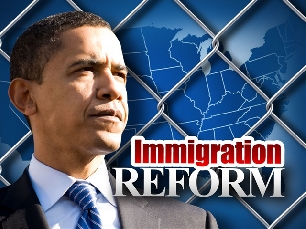
    The White House asked Texas Judge Hanen to stop blocking Obama’s executive orders on immigration. The judge refused, but that might not matter for long, as the appeals court will most likely overturn the ruling. For members of the Republican party, a successful appeal could hurt their standing with fellow conservatives.

    In his ruling, Judge Hanen blasted Obama’s most recent legal defense of his executive orders, which will allow as many as four million undocumented immigrants to avoid deportation.

    “Whether by ignorance, omission, purposeful misdirection, or because they were misled by their clients, the attorneys for the government misrepresented the facts.”

    According to The Hill, Hanen was incensed because the administration failed to report an additional 100,000 work permits for undocumented immigrants until last month. The latest hearing only seemed to steady the Judge’s resolve to stop the immigration orders as long as possible, throwing a few more criticisms at Obama’s attorneys in his ruling.

    “Fabrications, misstatements, half-truths, artful omissions and the failure to correct misstatements may be acceptable, albeit lamentable, in other aspects of life. But in the courtroom, when an attorney knows that both the court and the other side are relying on complete frankness, such conduct is unacceptable.”

    Despite the judge’s indignation, his ruling will face a major challenge on April 17, when the Obama administration brings the case before the United States Court of Appeals for the Fifth Circuit.

    According to the New York Times, the court signaled how it would handle Judge Hanen’s injunction in a ruling on a case similar in many aspects.

    State officials in Mississippi and immigration agents brought a lawsuit against separate immigration orders from Obama in 2012. His executive orders temporarily shielded undocumented immigrants who arrived in the U.S. as minors from deportation, paving the way for the Dreamers Act.

    The Fifth Court of Appeals threw out that lawsuit on Tuesday – the day after Judge Hanen’s ruling. The judges claimed that since the immigration orders didn’t harm the agents or state officials, they had no legal standing to put up the challenge.

    The court will likely overturn Judge Hanen’s injunction using the same logic.

    That could mean a loss of standing to some Republicans on Capitol Hill.

    As Fox News reported last month, Obama’s immigration executive orders were at the center of a battle to defund the Department of Homeland Security. Republicans initially wanted to withhold DHS funding to force a compromise with Obama over the immigration orders. Ultimately, Congress passed a clean DHS funding bill rather than hurt the organization responsible for the defending the homeland, creating a divide in the GOP.

    As previously reported by the Inquisitr, Senator Lindsey Graham was one of the moderate voices rallying against defunding the DHS.

    “I am willing and ready to pass a DHS funding bill and let this play out in court. The worst possible outcome for this nation is to defund the Department of Homeland Security given the multiple threats we face to our homeland. And I will not be part of that.”

    Now, that it looks like the court will likely throw out the injunction, the GOP’s last hope of blocking the Obama’s immigration orders looks bleak, and some members of the Republican Party might have to walk away feeling betrayed by fellow politicians advising them to “leave it to the courts.”

  • Bringing Yemen’s tragedy to an end – Need for a fair Shia-Sunni deal

    The civil war in Yemen, exacerbated by the intervention of outside powers, is poised at a delicate stage which could impinge on the larger picture of the Middle East’s future trajectory. The truth is that the poorest country in the region lies along several fault lines.

    They are the Shia-Sunni schism in the Muslim world, the rivalry between Saudi Arabia and Iran, the interest of outside powers such as the United States and the major European trading nations and the broader state of US-Russian relations. Despite its appeals, the United Nations is, for the present, a spectator, rather than an effective actor.

    The military intervention of Saudi Arabia and its Gulf allies by launching air strikes on Houthi rebels in Yemen, who are aided by Iran and are in the process of capturing the better part of the country, has complicated the picture. In a sense, it was inevitable because Riyadh could hardly stand aside even as a Shia sect set about conquering a Sunni majority country. The Saudis are now demanding the surrender of the Houthis before stopping their bombing runs.

    The United States is helping the Saudis by providing logistical and other technical assistance, a delicate dance for US Secretary of State John Kerry. He decries Iranian help to the Houthis. Tehran denies even as he eyes a landmark deal with Iran on its nuclear program. Pakistan, on its part, is facing a cruel dilemma in accepting the Saudi demand to join the intervention against the backdrop of its substantial Shia population at home.

    For Pakistan, the dilemma is of a state beholden to Riyadh for its generous subsidies. A contingent of Pakistani troops is permanently stationed in Saudi Arabia in part payment for Saudi goodies. Prime Minister Nawaz Sharif himself is beholden to the Saudis for saving him from possible execution in the days of Gen Pervez Musharraf rule, first giving him refuge and then re-injecting him into the Pakistani political scene.

    Grave as the dilemmas for Pakistan are, the larger picture is more menacing because of the fault lines. The most salient is the Saudi-Iranian contest in the Middle East in which Tehran is seeking to spread its wings through fortuitous circumstances and its own activism. Thanks to the American invasion of Iraq, the latter, with its Shia majority, ultimately fell into its lap. Iran is well placed in Lebanon with its allied Hezbollah movement in a confessional division of political factions.

    Bahrain remains a tempting target because it is ruled by a Sunni monarch underpinned by Saudi power over a Shia majority. Saudi apprehension over the proposed nuclear deal with Iran, shared by Israel, is that it would give Tehran greater opportunities to strengthen its regional role.

    As if the picture were not complicated enough, the growth of Sunni extremists, first in the form of Al-Qaida and its affiliates, then their evolution into ISIS and ultimately into a caliphate holding territory in the shape of the Islamic State (IS), is a fact of life. Americans have reluctantly returned to the region by undertaking bombing runs on the IS and are ironically on the same side as Iran in trying to attain this goal.

    How then is the world, or the major powers, to unscramble the mess because of the very nature of the crises? If relations between the United States and Russia were not as frigid as they are over Ukraine and other issues, they could have joined hands to bring about at least a temporary ceasefire in Yemen. After all, in the five plus one (UN Security Council permanent members plus Germany) format of talks on Iran’s nuclear program, Russia was a participant. But the prevailing animosities in what was once the Big Two make the going tough.

    Individuals and circumstances have contributed to creating the Yemen crisis. Mr. Ali Abdullah Saleh, the long-time dictator, was eased out of office with the help of Gulf monarchies in the wake of the short-lived Arab Spring in 2011. He was nursing his wounds while keeping his powder dry and still had ambitions – for son, if not for himself. He chose to ally with the Houthis while still retaining the loyalty of sections of the country’s armed forces.

    Houthis, who traditionally control the north of the country, were ready to revolt against the Sanaa dispensation presided over by an unimpressive Sunni imposed by Saudis. They felt their interests were being sacrificed and, thanks to Saleh’s support, they had the strength to overrun the capital and even try to take over Aden, the principal city of South Sudan.

    The nature of the strikes being what it is, there are reports of increasing civilian casualties. Although some humanitarian aid has now got in and India, among other countries, has managed to evacuate most of its citizens, international demands are growing by the day to stop the bombing runs and seek a political solution.

    Houthis, being a minority, cannot hope to rule Yemen. Yet, given the military prowess they have demonstrated, they will insist on a fair share of the national cake in any future framework agreement. Saudi Arabia shares a long border with Yemen and will not tolerate a Shia-dominated dispensation despite the earlier long rule of Mr. Saleh, himself a Houthi.

    For its part, Iran has already suggested that the Saudi-led action is a “mistake” and the United States is seeking to maintain a balance between the hoped-for nuclear deal with Iran and warnings to Tehran to refrain from aiding the Houthis. Ultimately, the problem will land in the lap of the United Nations, but the question is how much longer the process will take and how long the regional contestants will drag their feet before a truce is called.

    The scale of the fighting and deaths is leading to growing demands for a ceasefire. The Saudis have made their point that there cannot be a Shia-dominated dispensation along its shared border. But a compromise must include a fair sharing of power with Houthis.

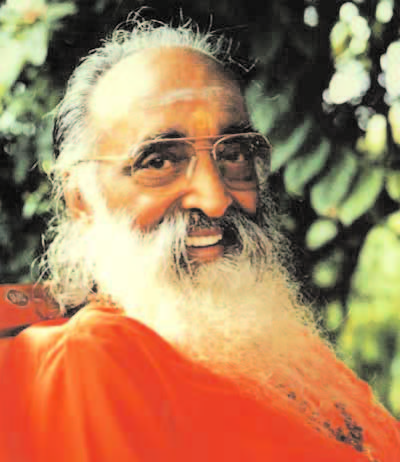
  • Movie made on exponent of Vedanta Swami Chinmayananda

    Movie made on exponent of Vedanta Swami Chinmayananda

    Chandni Trivedi : NEWYORK (TIP): Swami Chinmayananda is one of the world’s most renowned and revered exponents of Vedanta, the foundation of Hindu religion and culture. His life is a story of an unconventional seeker – a mischievous child, a rebellious youth, a revolutionary freedom fighter, a witty journalist and even a daring atheist.

    The movie, ‘On a Quest’ made on the life and vision of Swami Chinmayananda is worth watching. It is not a religious film but a story about transformation and the quest for truth.

    The two hour film directed by noted Director R S Prasanna very succinctly brings to life the journey of the young atheist Balakrishna Menon as he transforms from being a fiery revolutionary, sceptical academician, questioning journalist into a seeker with an ardent Quest for the Truth finally becoming a visionary Master carrying the message of the Rishis to the masses across the world.

    Made by the Chinmaya Mission to mark the birth centenary celebrations of Swami Chinmayananda, this is the first ever documentation of the fiery young revolutionary’s transformation into a missionary. It is a beautifully woven and enacted story.

    Swamiji apart from being a great saint was a fantastic orator. The film crew during the filming used to joke that some his dialogues are like punch lines in a Rajinikanth film. Sample this: “India is free, but are Indians free?”; “God is like the petrol in a car. Without the petrol, the car cannot run. But it is the driver who determines where the car goes.”; “Without the touch of life (read God), a sinner cannot sin neither can a monk meditate”. The film is packed with such meaningful and powerful dialogues.

    The powerful film simply tries to tell a story of a man who never made claims of being a godman offering miracles. Sawmi Chinmayanda simply interpreted the Bhagavad Gita for the masses. The multi-linguist Swami simply shared his knowledge without a fee and alluring promises.

    On a Quest is an unbelievably inspiring story – one that will touch hearts and open minds. It’s a story that was needed to be told. The film premiered in India across 75 plus screens and has already generated a lot of buzz. Chinmaya Mission New York will be screening the film in New York on Saturday, May 2nd at 3pm – 6pm.

    Website Detail:
    www.chinmayanewyork.org

  • Auto Insurance- Myths and Facts

    Auto Insurance- Myths and Facts

    NEW YORK (TIP): This is the 1 simple truth your car insurance company doesn’t want you to know. If you are currently insured, drive less than 50 miles/day and live in a qualified zip code you can get an extremely high discount. Additionally, if you have no DUI’s, you can get even more discounts. Has your car insurance company ever told you that?

    Most just cannot believe that the available rates are in fact real, but the truth is rates have dropped significantly over the past 12 months and thanks to new program policies it’s now easy to save up to 50% with rates as low as
    $29/month.

    Jessica Wagner, the authority on everything related to insurance, set out to do some research and determine whether these types of services live up to their reputations. After several weeks Jessica was able to report back on her findings, with her most exciting of which being that she is now going to save $296.28 on her own insurance premiums over the next year, and there are many other people who have done the same and better.

    So, what is the “One Simple Rule?” NEVER buy insurance without comparing all of the discounts online first.

    LITTLE-KNOWN FACTS ABOUT AUTO INSURANCE

    • It’s a myth that the color of your car affects the price of your car insurance
    • The internet allowed for premiums to decrease dramatically due to ease of comparing quotes
    • All 50 states require drivers to carry car insurance
    • On average a driver will have an accident claim once every 17.9 years
    • Auto premiums usually go down substantially after a driver turns 25.
    • Most common auto insurance claims: fender benders, theft, whiplash, vandalism and windshield damage
    • 55 out of every 100,000 registered motorcycles were involved in a fatal crash, compared with only 9 out of every 100,000 passenger cars.
    • Your car insurance may not cover theft or items from inside your car. Check with your insurance agent
    • Insuring a pre-owned car can save you up to half on your premium
    • Average Loss per Claim is $4,200
    • Married drivers have fewer accidents and therefore get the married discount due to lower risk.
    • Credit rating can affect your premiums as much as a past ticket or accident
    • Your driving record can predict how long you will love. Research shows people with no tickets or accidents live longer on average regardless of the type of death.
    • Paying month to month will increase your premium because you are viewed as a higher risk.