Month: July 2015

  • Given the Time, India can be a Regional Security Provider

    Given the Time, India can be a Regional Security Provider

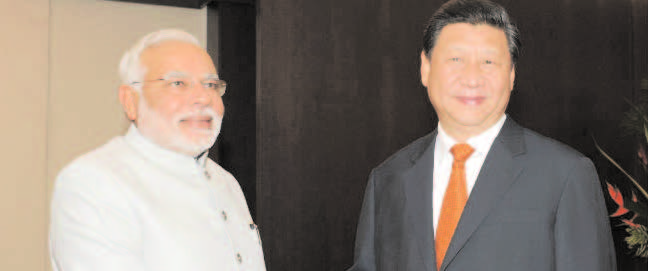
    Despite the cordial meetings between PM Modi and President Xi’s and their  photo ops on the sidelines of the BRICS and SCO summits, India has been drawing the red line with China on its concerns. Official briefings have disclosed clear communiques from India on the issue of China blocking India’s move in the United Nations to question Pakistan on the release of 26/11 attack mastermind Zaki-ur Rehman Lakhvi as well as China’s economic corridor in PoK.

    Only last month the news of Chinese submarines docking in Karachi, had rattled New Delhi. Almost a deja-vu reaction to the Chinese subs making an appearance in Sri Lanka last year. China’s statements that the Indian Ocean is not India’s backyard have only added to Indian anxiety. Not surprisingly, visits in June with US Defense Secretary Ashton Carter, who arrived at an Indian naval base, followed by a trilateral with Australia and Japan on regional security issues have focused on adventurism in the Indian Ocean Region and aggression in the South China Sea.

    There is a growing clamor for India to take up the role of a regional security provider in Asia in the wake of what is being termed as Chinese expansionism. Its was not surprising that both -the renewed India – US Defense Framework Agreement and trilateral discussions, put a strong emphasis on maritime security, and strengthening of India’s defense capabilities to fulfill this ambition. It is a  role that India is eager to take up but, in reality, has a long way to go to achieve in terms of resources and capacity.

    PM Modi’s administration has succeeded in renewing expectations from India, with his first year in office dedicated to revamping the look east policy to act east. The fundamental shift is India’s willingness to work with the U.S. and Asia-Pacific countries on regional security coalitions and shedding of timidity to call China out.

    However, while New Delhi has walked the tightrope to ensure that its strategic choices are not perceived as binary (between the US and China), it is imperative to underline that India’s resource build up is still a work in progress and jumping the gun in terms of expectations will not bode well for India’s long term vision.

    So , beyond the hype it is important to assess how India conceptualizes its own role in Asian security. What roles does it envisage for itself ? The answer perhaps lies in understanding the larger blueprint within which India is calibrating its strategy.

    Conceptually, India’s strategic approach has been rooted in three broad trends : One, revitalizing India’s strategic partnerships with major powers and being recognized as an able contributor to Asian security. Two, reclaiming the south Asian neighborhood to boost India’s role as a regional power. And three, a renewed thrust on economic diplomacy independent of strategic compulsions.

    No longer wanting to sit on the fence, India is looking to play a role in shaping the regional architecture, by increasing economic integration,
    (ASEAN, EAS, RCEP etc), building strategic partnerships and deepening defense cooperation (US, Japan, Vietnam, ASEAN, Australia) with a special emphasis on maritime security. But is all of this easier said than done?

    Realistically, the grand posturing aside, this is a tall order considering the challenges India faces. For one, many a skeptic will tell you that if India can’t even manage its own neighborhood how can it claim to extend its influence in the Asia Pacific?

    An uneasy neighborhood with constant complaints of neglect and lack of leadership from India have been an open secret. Despite PM Modi’s recent efforts, Chinese entrenchment in South Asia – from the ‘One Belt One Road’ initiative to the deepening military ties, is a glaring reality. While this is no zero game of influence, reclaiming the neighborhood would be a pre-requisite to India’s ambitions of a larger role in the great game for Asia. This is no easy task.

    A re-energized look east policy, can only take off if the gaping lacuna in the development of North East India and almost absent physical connectivity with East Asia are fixed. A reputation of slow delivery on projects and the mismatch of political aspirations and resource capacity to deliver are hard truths India has to face up to. The ‘Make in India’ campaign is looking to reverse this but the plans will need time to fructify.

    Even the much celebrated relationship with the US has fallen victim in the past to a lack of momentum and strategic mistrust. Maintaining robust Indo-US ties is imperative to give India a foot in the door of Asian geopolitics. Joint collaborations in defense and technology have to really come through for India to live up to the hype. Till then expectations will only burden India.

    As India gradually rises to its role as a regional balancer in Asia, it is important for India to tell the world to give it time to set its own house in order. New Delhi still has a long way to go in assuring these states of its reliability, not only as an economic and political partner but also as a provider of regional security. The political will is clear, it is time for the commitments to come through. Till then managing China, while building up India’s capacity is the way forward. The hype can wait.

    Shruti PandalaiAuthor | Shruti Pandalai (The author is a Research Analyst & OSD Outreach with Institute for Defence Studies and Analyses. She can be reached at shrutipandalai@gmail.com)
  • My Horrible Lunch at Haveli

    My Horrible Lunch at Haveli

    Perhaps, it was one of the worst experiences of my life, if not the worst experience, that I had a horrible lunch at Haveli restaurant on Queens Blvd in Queens, New York. This incident occurred about 2 months ago.

    I cannot figure out the reasons for such a mistreatment because I am a good tipper – more than 20 percent even at a buffet lunch – but one reason that comes to mind and it may not be the only reason is that I am a Sikh and the employees at the restaurant were Hindus and perhaps Arya Samajis. If that be so, then the restaurant owner should simply be ashamed of himself and be glad that I did not pursue the matter on hate crime grounds.

    I went to Haveli restaurant on a Saturday with a friend of mine who is an executive at a renowned organization. Knowing that I was coming in, the manager seated us at a table which was not set up and had no cutlery on it, while all the other tables were all set up. Trying not to insult him by changing the seat we waited for over 15 minutes before someone came to put knives and forks on our table, I decided not to make a scene about it.

    Since it was buffet lunch – by the way, it is more expensive than most other Indian restaurants – we went to get the food. It was about 1:30 PM and the food carriages were practically empty. I kept quiet. No one came to give us water. I had to ask for it 4-5 times before water came and it was done in a manner as if I was an ACHHOOT and they were Brahmins. I still did not shout and kept quiet.

    At the end of the meal, I asked for tea. It took them about 10 minutes to bring tea. And the tea was cold. The explanation was that they did not serve tea in American way where the milk and sugar is served separately but in the Indian way. I left the cold tea without drinking and still paid for it. Some bad memories become etched in our mind. It was very embarrassing for me and my friend but I did not make a scene. I was disappointed that the same Indian people would serve an American on hand and foot like slaves and mistreat their own people.

    I still find it hard to believe that in this service oriented competitive restaurant business our people do not know how to serve. I hope other Sikhs are not so ill-treated because someone could sue them for their pants.

    Personally, I do regret not taking any action even though I had many witnesses to this mistreatment.

    Dr. J. S. Chandan
    jschandan@aol.com, 917 972 6000

    (The Indian Panorama takes no responsibility for the views of the readers.) 

  • Ramon Magsaysay Award for two Indians with ideas and action

    Ramon Magsaysay Award for two Indians with ideas and action

    Exposing the development bluff, heavily dependent on the huge grants of money that makes little difference to the lives of the poor, Anshu Gupta, the CEO of Goonj, has creatively transformed the currency for development by using donated materials, instead of money. Goonj set an example for governments that harp on lack of resources for social development by acting differently and finding solutions within the available resources. For the non-profit sector, at the receiving end of the present government’s scrutiny and distrust, the Ramon Magsayasay Award, Asia’s equivalent to the Nobel Prize, for Goonj has come at an opportune time. Almost unrecognised hitherto, the NGO has successfully transformed the culture of giving by maintaining dignity of the beneficiaries, who barter labour for the materials received.

    Whistleblower bureaucrat Sanjiv Chaturvedi is another Indian who shares the Magsaysay Award for 2015 with three other recipients from Laos, the Philippines and Myanmar for his sustained crusade against corruption that exposes the hollowness of the Prime Minister’s slogan “Na khaunga, na khane doonga” (will neither indulge in corruption nor let anyone). As the Chief Vigilance Officer, AIIMS, Chaturvedi initiated action against the supply of dubious medicines, irregular appointments of consultants and tenders awarded on fake documents. As a reward for his expose, he was suspended, kept out of work, and harassed. Such examples deter others, especially in the bureaucracy, from speaking out their mind against the prevalence of corrupt practices in the system.

    These contributors to social development need recognition and encouragement. In 2014, the Nobel Peace Prize awarded to Kailash Satyarthi was a grim reminder of the scourge of child labour that persists in the 21st century India. Goonj has distributed three million sanitary napkins processed from discarded clothes to poor women. These campaigners for social change remind us from time to time the vast gulf that persists between word and action. They need to be heeded.

  • Mehtani Group Launches Award winning Cocktails from SM23 at Edison Location

    Mehtani Group Launches Award winning Cocktails from SM23 at Edison Location

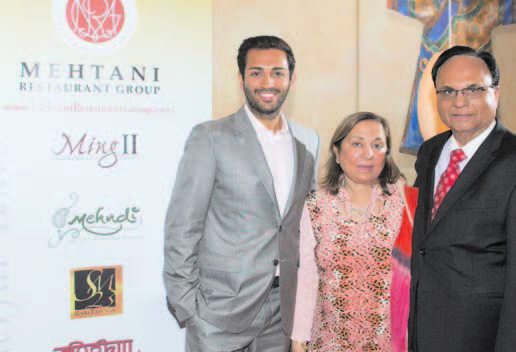
    EDISON, NJ (TIP): Borrowing from their portfolio of restaurants, the folks at Mehtani group have launched their very popular drinks menu at the Ming & Moghul Restaurants in Edison.

    Mehtani Group Launches Award winning CocktailsThe Moghul restaurant was started in 1990 by Satish and Sneh Mehtani and had always been a BYOB establishment until now. With the launch of their Morristown properties a few years ago, they ventured into the Bar and cocktail arena with their Bar named SM23.

    SM23 was listed as one of the top 100 bars by Nightlife & Bar magazine and as the next generation takes over the reins, the drinks have now been introduced at their Edison locations.

    At a well attended press and exclusive guests gathering on Thursday Jul 23, Shaun Mehtani, announced the launch of his drinks menu and guest were treated to some great libations that included the Jalapeno & Cilantro Caipirinha, mango Mojito and the Grilled Pineapple and Cracked pepper martini, which served as Mehtani’s inspiration to start a bar.

    These and other specialty cocktails are now available along with the award winning cuisine of the Moghul and Ming at the Edison locations.

  • Deceptive Business Practices will not be tolerated : Schneiderman

    Deceptive Business Practices will not be tolerated : Schneiderman

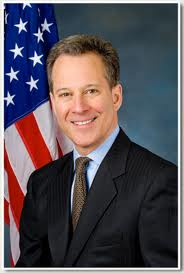
    ALBANY, NY (TIP): As part of a wider investigation into energy service companies, Attorney General Eric T. Schneiderman today announced that claim forms have been sent to more than 25,000 current and former New York customers of HIKO Energy, LLC who purchased HIKO energy products between June 1, 2011 to October 1, 2014. An investigation by the Attorney General’s Consumer Protection Bureau found that the energy service company lured consumers with false promises of lower rates, and then fleeced customers with much higher bills; enrolled new customers without their knowledge or consent; and made it difficult for customers to cancel their enrollments in a timely manner. The Attorney General secured the refunds for customers as part of a settlement that also imposes new restrictions on HIKO’s marketing practices to prevent future frauds.

    “Thousands of New Yorkers were lured by HIKO’s false promises for huge savings, only to be stuck with more expensive energy bills. I am pleased to return more than $1 million to consumers who lost money to this company,” Attorney General Schneiderman said. “These are difficult economic times, and companies that exploit New Yorkers looking to save their hard-earned money will be held accountable. These kinds of consumer frauds will not be tolerated.”

    The Attorney General’s ongoing investigation into energy service companies (or ESCOs) has returned millions to consumers, including, most recently, nearly $2 million to customers of Columbia Utilities Power LLC pursuant to a 2011 settlement.

    The Attorney General’s investigation found that HIKO’s marketers falsely promised savings of 10 to 15 percent on consumers’ energy bills. Customers who enrolled were hit with rates that were frequently much higher than those offered by their local utilities. Energy service companies purchase energy on the open market and then sell it to consumers.

    Utilities still deliver the energy to consumers, but consumers can choose to purchase their energy directly from the utility or through an ESCO. HIKO used its status as an ESCO to charge its customers much higher prices than they would have paid if they purchased energy from their utilities.

    HIKO engaged in telemarketing and door-to-door sales. The investigation found that, in addition to promising lower costs, the company’s marketers enrolled consumers as customers without their knowledge or consent. They used a number of deceptive practices in order to do this, including tricking consumers into providing their account numbers which HIKO then used to transfer their accounts; falsely claiming that they represented consumers’ utilities; and obtaining consent to switch from individuals who were not authorized to provide such consent.

    The settlement between the Attorney General’s office and HIKO required that HIKO pay $1.25 million to the Attorney General’s office for use in a restitution program as well as penalties and fees. The claims process will be handled by the Better Business Bureau of Metropolitan New York. The settlement also requires HIKO to take measures to prevent deceptive practices in the future, including adequate training of sales representatives, recording of communications between customers and customer service representatives, recordings of communications between customers and sales representatives that result in a sale, regular monitoring of sales recordings, and appropriate disciplinary procedures for violations of the law.

    If you bought electricity or natural gas from HIKO before October 2014 and do not receive a claim form by mail, you may still be eligible for a refund if you were subject to certain deceptive practices. You can submit a claim online at go.bbb.org/ny-hiko, or call 212-358-2857 to have a claim form sent to you that you can submit by mail.

    ALL CLAIMS MUST BE RECEIVED BY AUGUST 15, 2015

    Consumers can protect themselves from unscrupulous ESCOs by remembering the following tips:

    • If you receive an offer for energy services, make sure you understand whether the offer is from your utility or an ESCO.
    • You do not have to choose an ESCO to supply your gas or electricity. You may choose to use your utility as your direct supplier.
    • Make sure you understand whether an ESCO contract involves an early termination fee and, if so, the fee amount and the length of your contract commitment.
    • Before accepting any offer, ask the ESCO to show you how its rates have compared with your utility’s rates during each month in the past year. This can help you judge how competitive the ESCO’s rates may be in the future.
    • Remember that you have the right to cancel an ESCO contract with no obligation within three days if you change your mind.
    • If you are uncomfortable with how a marketer behaves, end the conversation with a request to look over their offer in writing so you can get back to them when you have made a decision free of any pressure.
    • If you receive a notice that your service is being switched to an ESCO and you did not authorize the switch, contact the utility and the ESCO immediately to tell them to halt the switch. If you are unable to get an ESCO switch cancelled, contact the New York Public Service Commission at 1-888-697-7728.

    The HIKO investigation was handled by Assistant Attorneys General Jeanna E. Hussey and Kate Matuschak, Deputy Bureau Chief Laura J. Levine and Bureau Chief Jane Azia all of the Consumer Frauds and Protection Bureau, and Executive Deputy Attorney General for Economic Justice Karla G. Sanchez.

  • Commuter Van Reform Act introduced to City Council

    Commuter Van Reform Act introduced to City Council

    NEW YORK CITY, NY (TIP): New York City Council Members I. Daneek Miller and Rory Lancman introduced, July 23, the Commuter Van Reform Act (CVRA), a package of two bills that will create minimum information requirements within the industry and combat illegally operating and unlicensed van services.

    Over the past twelve months a number of shootings and car chases involving commuter vans have occurred, exposing the dangerous underbelly of this industry, legally host to 344 vans and 301 drivers among 46 bases. In this era of Vision Zero, these incidents have triggered great concern over standards within the van industry and, as of last week, the Taxi & Limousine Commission adopted rules requiring that all legal commuter vans, often known as “dollar vans” display decals verifying their license to operate[1].

    While the decal provision is a first step, in communities impacted by criminal activity and subpar service provided by the commuter vans, it is but only a small step towards measures that are needed to reign in the industry and raise standards. In January 2015 Queen Community Board 12, home to one of the highest van populations in the City, called on the Department of Transportation to issue a moratorium on commuter van applications operating in its jurisdiction as “van owners and operators continue to violate traffic rules and regulations”, including illegally idling in bus stops while soliciting commuters. At a March 2014 City Council hearing the TLC acknowledged issues within the commuter van industry with Chief Operating Officer Conan Freud offering that many more vehicles were operating on the street than licensed by DOT and overseen by TLC.

    The CVRA, if passed by the Council and enacted by the Mayor, will allow the City to begin to address legal, safety, and service issues within this industry.

    The first part of the Act (Intro 860) requires the Taxi & Limousine Commission to collect data and perform a study, to be repeated annually, on the state of the legal and illegal commuter van industry. A moratorium on new van licenses will be implemented until the first annual study is released. This study will report data long missing that will become essential to maintaining proper transportation standards in communities populated by the vans, including Eastern Queens, Central and South Brooklyn, and Chinatown.

    The Act’s second bill (Intro 861) serves to raise fines for violations related to commuter vans and for illegally operating a commuter van to $3,000 for a first offense and$4,000 for second and subsequent offenses within two years. Currently, illegally operating a van carries a $500 fine for a first offense and $1,000 for a second offense, with all other violations carrying a fine of $1,000 for a first offense and $2,500 for a second offense – penalty levels that have done little to stem the “revolving door” of illegally operating and unlicensed vans. These higher penalty levels will also serve to level the playing field for licensed operators delivering services who follow applicable regulations and laws, including paying licensing fees and insurance.

    The CVRA has been referred to the Committee on Transportation since its introduction at the Council meeting on Thursday, July 23.

  • India has the potential to  become world’s second largest economy, says World Bank ED Subhash Garg

    India has the potential to become world’s second largest economy, says World Bank ED Subhash Garg

    NEW YORK CITY, NY (TIP): India has the potential  to become a multi-trillion dollar economy with a per capita income of about$40,000 by 2050 if it manages to grow at seven per cent annually for the next 30-35 years, World Bank Executive Director for Bangladesh, Bhutan, India and Sri Lanka Subhash Chandra Garg said while addressing the audience at the Indian Consulate in New York, July 27.

    The Consulate General of India, New York and the renowned NGO Jaipur Foot collaborated in hosting an interaction with the Executive Director of the World Bank.

    The NGO Jaipur Foot presented a short video to introduce the audience to their efforts and then members of their team, including Jaipur Foot USA Chairman; Prem Bhandari (who spoke in Rajasthani), as well as Youth Coordinator; Vibhor Dhadda, addressed the gathering. The Consul General Dnyaneshwar Mulay  made brief remarks to welcome  Garg and inform the audience about the Consulate’s activities.

    Subhash  Garg, addressed the audience on the topic: India’s Growth and Development, Multilateral Agencies and the Indian Diaspora. He spoke at length about the economic reforms in India and the changes and initiatives he believed were needed to catapult India into the world’s second largest economy by the year 2050. “If we can manage to grow at seven per cent for the next 35 years, we will not only be the second largest economy in the world at that time but we will be prosperous and people will be rich enough. But it’s very difficult to maintain the rate. It needs to transform the way we manage our economy,” he said.

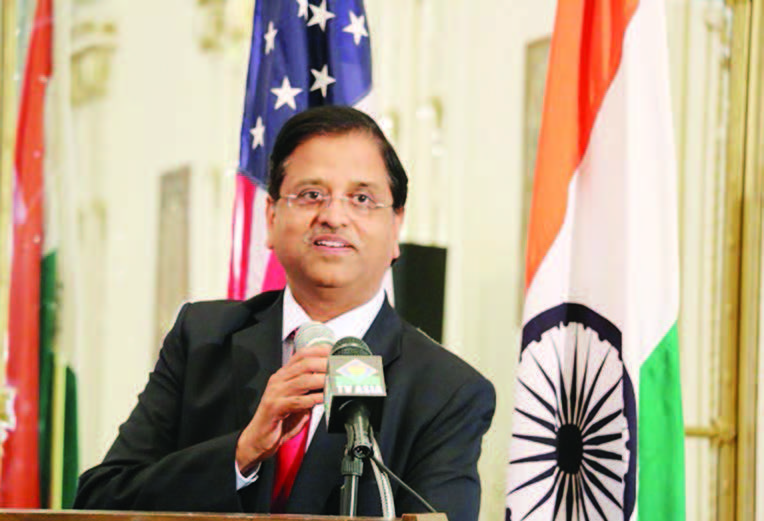
    Subhash Chandra Garg (left) and Consul General Mulay  during question answer session
    Subhash Chandra Garg (left) and Consul General Mulay during question answer session

    He stressed that it is a ‘tough job’ as India will have to transform its agriculture completely, get people out of agriculture and use them in the manufacturing and services sectors, and give a boost to health care and tourism.

    He also spoke about the involvement of multilateral agencies such as the World Bank in furthering the development of India as well as the importance of furthering India’s service industry and infrastructure.

    Garg also mentioned the significance of the Indian Diaspora in India’s economic development and the importance of foreign markets in providing employment to Indian nationals.

    The talk  was followed by a question answer session. in reference to his speech as well as related topics. A lively discussion followed on several subjects related to India’s growth path and factors that would contribute towards it.

  • Britannia joins the Bee Buzz, signs up as presenting sponsor

    Britannia joins the Bee Buzz, signs up as presenting sponsor

    NEW YORK, NY (TIP): Leading food company Britannia, known for their baked goods and biscuits has signed up as the presenting sponsor for the 2015 MetLife South Asian Spelling Bee. After months of hard work from both sides, the brand confirmed their commitment last week in New Jersey. Plans are afoot to now integrate Britannia into the Bee and provide participants with healthy and delicious foods products.

    Britannia will be giving out goody bags, interacting with participants and making the new generation aware of the baked delicacies their parents grew up on back in India. The platform is a key part of the lives of the South Asian community here in the United States and has grown to become the gold standard of the Bee circuit. Britannia feels that this is the right platform to connect with its new generation of consumers and build an emotional quotient with the parents and children alike.

    With its 123 years of golden heritage of making healthy, fresh & delicious food, Britannia is a house hold name among South Asian consumers. This unique platform will help Britannia to reach out to Gen Z spellers & showcase them some of its delicious brands like “MilkBikis”

    Organized by Touchdown Media Inc., the 2015 MetLife South Asian Spelling Bee is conducted in 12 locations across the United States. Regional level events will be held in Los Angeles, the Bay Area, Dallas, Houston, Chicago, Seattle, Atlanta, Charlotte, Washington, D.C. Metro, New Jersey, New York and Boston. All events are free to attend and open to the public.

    “We are very proud and happy to associate with Britannia and feel that this is the start of a very fruitful and long association. Our platform provides the opportunity to directly interact with the generation growing up here in the US,” said Rahul Walia, founder of the South Asian Spelling Bee and CEO of Touchdown Media Inc.

    Each competition will begin with a written test of 25 words. The participants must spell 15 or more words correctly to advance to the afternoon oral round, which will be conducted by experienced pronouncers and judges. The top three in the oral round will receive prize money.

    The top two spellers of each regional competition will advance to the finals to be held in New Jersey in August. Similar to previous years MetLife has once again funded the $10,000 champion’s grand prize that will be awarded to the winner at the finals.

    The Bee is powered by Kawan- the world’s most popular Roti paratha brand and as always, SONY Entertainment Television Asia is the exclusive broadcast partner for the MetLife South Asian Spelling Bee and will be airing the series across 120 countries.

  • People’s President laid to rest with public outpouring of grief

    People’s President laid to rest with public outpouring of grief

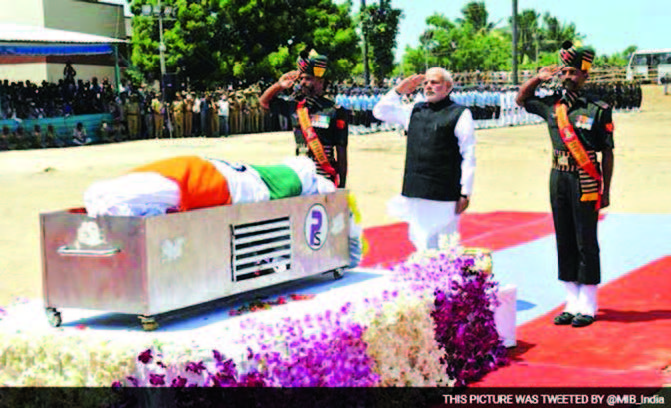
    RAMESHWARAM (TIP): This small temple town, with a population of just about 50,000, turned into mini India as one of the country’s most loved sons was laid to rest with full state honors on Thursday, July 30.

    Hundreds of thousands turned up to pay homage to former President Abdul Kalam, many of them trudging several

    miles for a glimpse of their hero. People waited patiently in a queue stretching four kilometers and those who could not make it in time to pay their last respects walked further to the 1.5 acre ground earmarked as the burial ground for the People’s President.

    After a prayer session was conducted in his house, the mortal remains of the former president draped in the Tricolor were taken to the nearby Juma Masjid.

    Top leaders across party lines including Prime Minister Narendra Modi, a host of his ministers including  Manohar Parrikar, M Venkaiah Naidu besides the Tamil Nadu Governor K Rosaiah, Congress Vice President Rahul Gandhi, chief ministers of Kerala, Karnataka and Andhra Pradesh among others were present.

    Among them was the 99 years old elder brother of the former president, Mohd Muthu Meeran Lebbai Maraicker, some of playmates, relatives as also members of his personal staff.The three services chiefs also paid their respects to the former Supreme commander of the country’s armed forces.

    Tamil Nadu chief minister J Jayalalitha had expressed her inability to attend the funeral, citing health grounds.

    At around noon, Kalam’s body was lowered into the grave by his family members amid a 21 gun salute and strains of the Last Post played by army band. Cries of Bharat Mata ki Jai and Vande Matram rent the air.

    The town as well the areas around it had come to a complete standstill. All shops were shut, educational institutions were closed, so were offices and private institutions. Even petrol stations and eateries were closed as mark of respect for Abdul Kalam.

    A massive security ring was thrown around the town and the surrounding areas in view of the hanging of Mumbai serial blasts accused Yakub Memon in the morning.

    There are already demands for naming several institutions after the former president and words of grief continue to pour in from all parts of the country and abroad.

  • British PM’s ‘swarm’ of migrants comment sparks outrage

    British PM’s ‘swarm’ of migrants comment sparks outrage

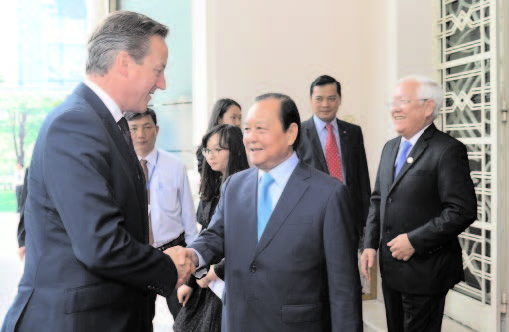
    LONDON (TIP): Prime Minister David Cameron faced heavy criticism on July 31 for saying a “swarm” of migrants was trying to come to Britain, as authorities in France struggle to stop them crossing the Channel.

    “You have got a swarm of people coming across the Mediterranean, seeking a better life, wanting to come to Britain because Britain has got jobs, it’s got a growing economy, it’s an incredible place to live,” Cameron told ITV television during a visit to Vietnam.

    Around 3,000 people from countries including Syria and Eritrea are camping out in the northern French port of Calais and trying to cross into Britain illegally by clambering on board lorries and trains.

    The controversy has dominated British media this week as holidaymakers and truck drivers have been blocked on the British side due to delays caused by the migrants’ actions.

    Acting leader of the main opposition Labour party Harriet Harman said Cameron should “remember he is talking about people, not insects”.

    The Refugee Council, a leading charity which works with asylum seekers, said it was “awful, dehumanising language from a world leader”.

    And Nigel Farage, leader of the UK Independence Party (UKIP), which wants stricter controls on immigration, said he would not use similar words.

    “The prime minister is this morning trying to sound tough. Whether he actually means it or not is quite a separate question,” Farage told BBC radio.

    Cameron is facing calls from tabloid newspapers to deploy the British army to resolve the situation, but insists the correct solution is to cooperate with French authorities.

    “We need to protect our borders by working hand in glove with our neighbours the French and that is exactly what we are doing,” he told ITV.

    Cameron will chair a meeting of the government’s COBRA emergency committee on Friday on the issue. London has also pledged £7 million (10 million euros, $11 million) to improve fencing around the Eurotunnel rail terminal at Coquelles, northern France.

    Britain’s Ministry of Defence is considering freeing up some of its land to become temporary lorry parks to help reduce long queues on the motorway in Kent due to delays, British newspapers The Times and The Daily Telegraph reported.

    The ministry was not immediately available for comment on the reports.

    Keith Vaz, a lawmaker and head of parliament’s home affairs committee, called for a meeting between Cameron and French President Francois Hollande, but said that the problem had to be dealt with at an European Union level.

    “I think the focus is all wrong here. Once people make it to Calais, it’s almost too late. The problem lies fundamentally with the failure of the EU to deal with the migrants crisis in Italy and Greece,” he said.

  • Oxford begins search for first use of ‘email’

    Oxford begins search for first use of ‘email’

    WASHINGTON (TIP): The Oxford English Dictionary has launched a search to find the first recorded use in English of the word ’email’.

    The Oxford English Dictionary (OED), which began tracking the English language in 1857, is looking for the first use of the word ’email’. “Before email was email, it was electronic mail. Although the shorter form is by far the more common name today, the full form electronic mail of course came first,” according to a post on the OxfordWords blog.

    The OED currently has a first quotation for electronic mail from 1975; the shorter email is first attested four years later, in 1979, USA Today reported.

    “Although this does not seem like a very large gap in time, it seems unlikely that the 1979 quotation represents the coinage of email, taken as it is from a professional journal,” the blog post said.

    The OED occasionally issues “OED Appeals” soliciting help in uncovering new information about the history and usage of English.

  • Chechen girls swindle $3000 from IS jihadis

    Chechen girls swindle $3000 from IS jihadis

    MOSCOW (TIP): Turning the tables on Islamic State online recruiters, three Chechen girls allegedly swindled over $3,000 by conning them into giving money on the pretence that they would use it to travel to Syria from their homeland.

    Chechen police have detained the three female con artists who talked fighters of the IS terrorist group into sending them money for travelling to Syria. The young women turned the tables on IS by using their primary recruitment tool, social media, against them. Russia’s predominantly Muslim Chechen Republic is a prime target for IS propagandists, who call on young men and women to join their cause and travel to the Middle East to join their jihadist campaign.

    However, the Chechen girls made a business of meeting recruiters online and pretending to be eager to go to Syria. The only obstacle, they said, was the lack of travel money, which the recruiters were often willing to provide, RT

    News reported. Once the money was sent via anonymous electronic transfers, the swindlers would simply cash the money and delete the social media account used in the con, it said. The three-girl operation managed to swindle some $3,300 from IS representatives before being caught by a Chechen police E-unit specializing in monitoring online activities for evidence of crimes, Russian daily Moskovsky Komsomolets reported.

    “I don’t recall any precedent like this one in Chechnya, probably because nobody digs deep enough in that direction,” Valery Zolotaryov of the E-unit told the newspaper. “Anyhow, I don’t advise anyone to communicate with criminals, especially for grabbing quick money,” she said.

  • London is the third most expensive city in the world to live in

    LONDON (TIP): London is the third most expensive city to live in, coming just behind super-wealthy cities in the Cayman Islands and Switzerland.

    According to figures from Expatistan, which uses crowdfunded data to create a cost of living index for a number of world cities, London comes in third in a list of cities by their cost of living, behind Grand Cayman, in the tax haven of the Cayman Islands, and Zurich, in Switzerland.

    According to the figures, bound to be depressing to Londoners, London has the second most expensive public transport in the world, the third most expensive utility costs, and the fifth most expensive theatre tickets. It’s the second most expensive city in Europe (after Zurich), and, obviously, the most expensive in the UK.

    By contrast, Madras in India was deemed the least expensive city to live in. The bottom end of the list was mostly made up of smaller cities in Eastern Europe. The cheapest city in Western Europe to live in is Lisbon in Portugal, boasting a cost of living index of 127 in comparison to London’s 308.

    It will be little consolation to Londoners that the capital has actually dropped down the global list. In July last year, it occupied the number two spot, but has since been overtaken.

    By contrast with other UK cities, London is significantly more expensive – 36 per cent pricer than Manchester, 38 per cent more than Glasgow, and 40 per cent more than Belfast. After London, the most expensive UK city is Aberdeen – which has notoriously high rents and prices due to it being a centre for Britain’s oil industry in the North Sea. While an interesting insight into skyrocketing prices in London, the new figures prove nothing new.

    The Independent reported in June that London rents were now more than double the national average, and in May is was announced by forecasting group Oxford Economics that it was likely the average home in London would cost £1 million by 2030.


  • E-visas for Chinese launched

    E-visas for Chinese launched

    BEIJING (TIP): The system of electronic visas for Chinese citizens, which was promised by Prime Minister Narendra Modi in Beijing last May has come into effect on Thursday.

    This will help Chinese, who are not based in Beijing, Shanghai and Guangzhou, to avoid travel for visas. They can apply and obtain travel visas for 30 days online.

    But it may not save much time because e-visa rules say that visa seekers must apply at least four days before the planned journey.

    “I am delighted to share that the e-Tourist Visa is now available to passport holders of China,” the Prime Minister said in a post on Weibo, the Chinese version of Twitter on which he has a popular account. “I had talked about this during my China visit & the Government of India has fulfilled this promise. This will deepen connectivity between our nations. Come, experience the beauty of Incredible India!,” he said.

    In a statement, the Indian embassy said, ?”The implementation of e-tourist visa will enable Chinese nationals to visit India with ease for recreation, sight-seeing, casual visit to meet friends or relatives, short-duration medical treatment or casual business visit”.

    “This facility will encourage more people to travel to India during ‘Visit India Year 2015’ and beyond”.

    On the time duration, the e-visa rules state, “Applicants need to apply a minimum of 4 days in advance of the date of arrival with a window of 30 days. Example: If you are applying on 1st Sept then applicant can select arrival date from 5th Sept to 4th Oct”.

  • NASA ORBITER READY FOR MARS LANDER’S ARRIVAL IN 2016

    NASA ORBITER READY FOR MARS LANDER’S ARRIVAL IN 2016

    WASHINGTON (TIP): With its biggest orbit manoeuvre since 2006, NASA’s Mars Reconnaissance Orbiter (MRO) is preparing for the arrival of NASA’s next Mars lander called InSight next year.

    The Mars orbiter will be engaged in a 77-second firing of six intermediate-size thrusters that will adjust the orbit timing of the veteran spacecraft.

    The move will put the orbiter in position to receive radio transmissions from InSight as the newcomer descends through the Martian atmosphere and touches down on September 28 next year, the US space agency said in a statement.

    These six rocket engines, which were used for trajectory corrections during the spacecraft’s flight from Earth to Mars, can each produce about five pounds of thrust.

    “Without making this orbit change manoeuvre, Mars Reconnaissance Orbiter would be unable to hear from InSight during the landing, but this will put us in the right place at the right time,” said MRO project manager Dan Johnston of NASA’s Jet Propulsion Laboratory, Pasadena, California.

    The orbiter will record InSight’s transmissions for later playback to Earth as a record of each event during the critical minutes of InSight’s arrival at Mars.

    This is the same exercise that MRO did for the landings of NASA’s Curiosity Mars rover three years ago and NASA’s Phoenix Mars lander in 2008.

    InSight will examine the deep interior of Mars for clues about the formation and early evolution of all rocky planets, including Earth.

    After the InSight landing, the scientists will prepare MRO to perform a pair of even larger manoeuvres in October 2016 and April 2017 — each using the six intermediate-size thrusters longer than three minutes.

  • PENDULUM CLOCKS SYNCHRONISE USING SOUND PULSES, SCIENTISTS DISCOVER

    PENDULUM CLOCKS SYNCHRONISE USING SOUND PULSES, SCIENTISTS DISCOVER

    Scientists may have finally discovered why pendulum clocks synchronise when placed nearby. After 350 years two Portuguese researchers believe that pendulum clocks eventually swing together because of sound pulses that travel through the wall from clock to clock.

    Henrique Oliveira, a mathematician at the University of Lisbon and co-author of the new study published in the Scientific Report, staged an experiment with study co-author and Lisbon university physicist Luis Melo.

    In it, the pair placed two clocks on an immobile wall – opposed to the movable beam as had been tested previously – and examined how they interacted. What they discovered was that the speed of the clocks synchronisation coincided with the cycles of the recorded sound pulses.

    “We could verify that the energy transfer is through a sound pulse,” Melo told the Guardian.

    Not only does their discovery solve a problem scientists have puzzled over since Huygens – who is credited with creating the first pendulum clock – noticed it in 1665, the research has also pushed forward their understand of other types of oscillators.

    Mr Oliveira told LiveScience that the idea came to the two over coffee, because “nobody had ever tested properly the idea of clock hanging on the same wall”.

  • 3D-PRINTED UAV TAKES FLIGHT IN UK

    3D-PRINTED UAV TAKES FLIGHT IN UK

    A 3D-printed unmanned ae rial vehicle (UAV) was successfully launched off the front of a Royal Navy warship and it landed
    safely on a Dorset beach after covering a distance of around 500 metres. Weighing 3kg and measuring 1.5m, the airframe was created on a 3D-printer using laser sintered nylon by the University of Southampton.

    The SULSA UAV catapulted off HMS Mersey into the Wyke Regis Training Facility in Weymouth, before landing on Chesil Beach. The flight, which covered roughly 500 metres, lasted less than few minutes but demonstrated the potential use of small lightweight UAVs, which can be easily launched at sea, in a maritime environment, researchers said.

    The aircraft carried a small video camera to record its flight and re searchers monitored the flight from their UAV control van with its on board video-cameras.

    Known as Project Triangle the ca pability demonstration was led by Southampton researchers.

    “The key to increased use of UAVs is the simple production of low cost and rugged airframes -we believe our pioneering use of 3D printed nylon has advanced design thinking in the UAV community world-wide,” said professor Andy Keane, from Engineering and the Environment at the University of Southampton.

    In 2011, University of Southampton engineers initially designed, and flew project SULSA, the world’s first entirely `printed’ aircraft.

    With a wingspan of nearly 1.5 metres, the UAV being trialled has a cruise speed of 93 kph but can fly almost silently. The aircraft is printed in four major parts and can be assembled without the use of any tools.

  • SEA SURFACE TEMPERATURES TO PREDICT RAINFALL

    SEA SURFACE TEMPERATURES TO PREDICT RAINFALL

    NEW DELHI (TIP): In a different approach for rainfall forecast, scientists of Indian Institute of Tropical Meteorology (IITM) and Indian Institute of Science Education and Research (IISER) have used variations in sea temperatures to predict monsoon in the subcontinent.

    A team from the Seasonal Prediction Group of IITM and IISER, Pune used historical meteorological data and modern modelling techniques to predict monsoon pattern.

    They have investigated how variations (anomalies) of sea surface temperatures (SSTs) from the extra-tropical, that is temperate, latitudes in the Northern Hemisphere, affected the Asian monsoon rainfall.

    Traditionally, seasonal rainfall in the tropics have been predicted based on extended periods of warm-cold cycles of sea surface temperatures of the tropical central and eastern Pacific ocean. This is referred to as the slow coupled ocean-atmosphere mode called the El Nino and Southern Oscillation

    or ENSO. The cycles develop off the western coast of South America and cause a broad range of climatic changes across the tropics and subtropics, through a process dubbed as ‘teleconnection’.

  • NEW APP TO CURE WRITER’S BLOCK, FIRE IMAGINATION

    NEW APP TO CURE WRITER’S BLOCK, FIRE IMAGINATION

    LONDON (TIP): Writer’s block may soon be a thing of the past, as scientists are developing a smartphone app that aims to measure and boost the mind’s creative ability .

    Scientists aim to uncover the mysteries of the human imagination by using psychometric tests to measure individuals’ Imagination Quotients -or ImQs -and strengthen them through daily exercises. “We will develop new psychometric tests to assess imagination, and then validate them in several studies,” said Sophie von Stumm, from Goldsmiths, University of London, who is heading the two-year project. “Most importantly , however, we will find ways to improve imagination that everybody can use. We will develop an iPhone application that will be freely available with exercises and tips for enhancing imagination,” von Stumm was quoted as saying by The Times.

    The Goldsmiths researchers will work with a team at the King’s College London to assess 400 people, a combination of 200 students from Goldsmiths, UCL and King’s College, and 200 people in the retail sector.

  • Mumbai serial blasts convict Yakub Memon hanged, buried

    Mumbai serial blasts convict Yakub Memon hanged, buried

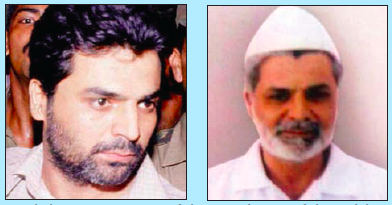
    NEW DELHI (TIP): The two burials on Thursday July 30 represented the spectrum of what is the best and the worst of India. Millions mourned the death of one of the country’s favourite sons, former President APJ Abdul Kalam, as his body was laid to rest in his hometown Rameshwaram. On the other hand few shed any tear on the death of one of the conspirators of the Mumbai serial terror attacks of Mumbai Yakub Memon who was hanged early morning and his body interned in a graveyard in the City where a series of blasts ripped through Mumbai on March 12, 1993, killing 350 people and injuring 1200.

    With Yakub Memon’s execution in the early hours of Thursday morning at Nagpur jail, there may be some closure for the families of the victims but they would rather also see the same fate as Yakub for his brother Tiger Memon and the brain behind the conspiracy Dawood Ibrahim, both reportedly under protection in Pakistan.

    Yakub Memon was hanged in the Nagpur jail after a prolonged legal drama which lasted till early morning hours of his hanging. In fact in an unprecedented move, a bench of the Supreme Court was convened at 3 am following a plea to defer the hanging. The three member bench heard arguments that the President cannot reject a mercy petition at a short notice and also that Yakub had the right to file another mercy petition. However the arguments were contested by the government which said that the death row convict had exhausted all avenues of appeal. The court concurred with its arguments and said that a stay on the execution would be “travesty of justice”.

    Mumbai serial blasts convict Yakub Memon hanged imageWithin one and a half hour of the verdict Yakoob Memon was hanged in Nagpur and his body handed over to his family members. It was later flown to Mumbai and buried amidst tight security ironically what happened to be  his  53rd birthday.

    Yakub had allegedly handled Tiger’s funds and funded the training of 15 youths whom he sent to Pakistan to learn the art of handling arms and ammunition.

    While Yakub, along with other members of the Memon family had left the country just before and after the 1993 blasts, according to the Central Bureau of Investigation (CBI), Yakub later returned. The claims about the purpose of his return are contentious, but he was formally arrested on August 5, 1994, from New Delhi.

    Yakub was charged on July 27, 2007, under the Terrorist and Disruptive Activities Act (TADA) and Section 120-b of the IPC with criminal conspiracy, aiding and abetting and facilitating a terrorist act, arranging funds and vehicles, for planting bombs and possessing detonators and hand grenades that had been used in the 1993 serial blasts.

    Born on 30 July 1962 in Bombay, Yaqub was raised in Byculla. After completing his schooling from a prominent English medium school, Memon went on to complete his Commerce degree from the Burhani College of Commerce and Arts. In 1986, Memon enrolled into the Institute of Chartered Accountants of India, and four years later in 1990, he successfully graduated as a chartered accountant.

    Yakub Memon became the third terror convict to have been sent to the gallows in the last four years.

    Before Memon, Parliament attack convict Mohammed Afzal Guru was hanged on February 9, 2013. Afzal was convicted of conspiracy in the December 2001 attack on Parliament and was sentenced to death by the Supreme Court in 2004.

    Earlier, Ajmal Kasab, the sole Pakistani gunman involved in the 26/11 Mumbai terror attacks to have been captured alive, was hanged to death at the Yerwada central prison in Pune on November 21, 2012.

    He was among the 10 Pakistani Lashkar-e-Taiba terrorists who had descended on Mumbai on November 26, 2008 and had killed 166 people, including some foreigners. Nine of the perpetrators were killed during the 60-hour siege and Kasab was captured alive.

    The Timeline

    In what was an unprecedented turn of events, the Supreme Court of India opened the doors of Court Room Number 4 at 3 am on Thursday to hear a fresh mercy plea by a battery of lawyers representing a convicted terrorist in the 1993 Mumbai serial blast case, Yakub Abdul Razak Memon. Two hours later his fate was sealed.

    The story goes back to Tuesday. In the light of a disagreement between a two judge bench hearing the case to stay Yakub Memon’s execution on July 30, Supreme Court Chief Justice HL Dattu constituted a larger bench of Justice Dipak Misra, Prafulla C Pant and Amitava Roy to discuss Memon’s plea again.

    The next day, one day before his slated hanging of Yakub Memon filed a fresh mercy plea with the President of India at 11 am. The same day at 4.30 pm, a three member bench of the Supreme Court dismissed his petition and at 5.30 pm, the mercy petition filed with the President is sent to the Union Home Ministry as per the usual procedure. Yet another mercy petition filed by him before the Maharashtra Governor is also rejected.

    At 9 pm, union Home Minister Rajnath Singh personally takes the file and goes to meet President Pranab Mukherjee to discuss the mercy plea. This meeting is also attended by Home Secretary L C Goyal and Solicitor General Ranjit Kumar.

    At 11 pm, President Pranab Mukherjee rejects the mercy plea. This paved the way for Yakub Memon to hang at 7 am at the Nagpur Jail.

    The Midnight Drama

    The drama, however, didn’t end there. In a dramatic turn of events, Yakub Memon moves the Supreme Court again, his lawyers urging the President to not take a decision overnight.

    Several lawyers including Prashant Bhushan, Anand Grover, Vrinda Grover, Nitya Ramakrishnan and Yug Choudhary representing Yakub Memon reached the  residence of CJI Dattu seeking a stay on the execution. Citing a Supreme Court judgment in the Shatrughan Chouhan VS Union of India case, a fresh petition was filed with the CJI seeking at least a 14 day clear gap between the rejection of mercy petition of the convict and the hanging. The registrar of the Supreme Court also reached the CJI’s residence and in an unprecedented and remarkable move, the CJI agreed to hear the plea that very night.

    He constituted a three member bench which had earlier in the day rejected the plea. Perhaps for the first time ever a court room in the Supreme Court was opened at 3 am to hear the plea.

    At 3 am, Attorney General Mukul Rohatgi entered court room no.4 and the hearing began. Yakub Memon’s lawyers argued that the earlier mercy plea was filed by his brother, today’s plea was his own. Since the plea has been rejected today, the mandated 14 day period before the hanging must begin today. The Attorney General stressed that multiple mercy petitions were an abuse of the system.

    The bench finally dismissed the petition around 5 am and Yakub Menon was hanged les than an hour and a half later at Nagpur this closing a sad chapter in the history of the country.

  • DEEPIKA PADUKONE’S PHONE ON A BUZZING SPREE

    DEEPIKA PADUKONE’S PHONE ON A BUZZING SPREE

    Deepika Padukone, who is currently spending quality time with her family, has her phone buzzing non-stop!

    The actress, who barely gets time with her family, usually disconnects from her work to be with family. But she is having a hard time with her phone. Reason being, Deepika is getting constant congratulatory messages from all her friends, fans and family for the recently released teaser trailer of Bajirao Mastani.

    Deepika, who will be featuring in an never seen before avatar, is getting calls and messages from across to wish her on the first look of the film! The actress is looking breathtaking in the sneak peek of the film and the audience just can’t seem to get enough!

    Deepika is seen performing some glaring fight scenes and it has definitely intrigued the audience and her fans to a whole new level!

    The Banglore beauty has always stunned the audience with back to back stellar performances in her films like Cocktail, Chennai Express and Piku to name a few.

    In her upcoming film, Deepika has embraced a new look altogether. The film that also features Ranveer Singh and Priyanka Chopra is all set to release on December 25, during Christmas Eve!

    A spokesperson confirms the news and adds,

    “Friends and fans are reaching out to Deepika to express their liking and congratulating her for the first look of the film and the glimpse of hers that was revealed in the teaser.”

  • ISHA KOPPIKAR WANTS BIOPIC ON KIRAN BEDI, INDIRA GANDHI

    ISHA KOPPIKAR WANTS BIOPIC ON KIRAN BEDI, INDIRA GANDHI

    The trend of biopics is gaining prominence in Bollywood and actress Isha Koppikar says if she gets a chance, she would love to be part of one on either late prime minister Indira Gandhi or former police officer Kiran Bedi.

    Isha is returning to Hindi films four years after “Shabri” with a revenge drama “Assi Nabbe Pure Sau”.

    At an event to showcase the first look of the film, Isha was asked who she wanted to make a biopic on. To that, she said: “I haven’t exactly thought about it. I am fond of strong characters…I’d like to make one on the lives of Kiran Bedi or Indira Gandhi. Or perhaps any character that you can choose from mythology.”

    The success of biopics like “Mary Kom” and “Bhaag Milkha Bhaag” have prompted other biopics too.

    Meanwhile, in “Assi Nabbe Pure Sau”, Isha is playing a strong character against the backdrop of revenge and a story spread over several decades. This, Isha claimed, is inspired from various events in real life.

    The film, directed by Ankur Bhatia, also stars Divyendu Sharma. It will go on the floors around October this year.

  • Masaan | MOVIE REVIEW

    Masaan | MOVIE REVIEW

    STORY: Masaan, a desolate place, follows two heart-breaking tales; that of Devi whose life is condemned after she is caught in the act. And that of a lower-caste boy Deepak, who falls in love with an upper-caste girl. Will Devi and Deepak respectively find the rainbow at the end of the tunnel?

    CAST: Richa Chadda, Sanjay Mishra, Vicky Kaushal, Shweta Tripathi
    DIRECTION: Neeraj Ghaywan
    DURATION: 1 hour 49 minutes

    REVIEW: It is in Banaras where Sanskrit Pandit(Sanjay Mishra) and his student-daughter, Devi(Richa) lead an innocuous existence. Richa’s curiosity to know more about the bees and the birds has her checking into a seedy lodge for a rendezvous with college friend Piyush Agarwal (Saurabh Chaudhary). However, their sexapade ends abruptly because a badass cop (Bhagwan Tiwari) raids the place and blackmails them.

    Fear of notoriety forces Piyush to seek an easy way out. However, Devi and her father are hapless victims. The parallel track shows Deepak (Vicky Kaushal), a youngster from the untouchable Dom caste. Though he’s a super-bright student, he can’t help feeling marginalised because like his father and elder brother, he too is forced to work on the Ghats of the Ganges,burning funeral pyres. Deepak’s world lights up when he falls for Shaalu (Shweta Tripathi). This couple steal passionate kisses below the Peepal tree and though they fear that the caste-system could divide them; they nurse starry-eyed dreams.

    Masaan, an Indo-French collaboration that won accolades at Cannes earlier on in May, has adept story-telling by Neeraj Ghaywan, a Anurag Kashyap alumni. The film unspools in an unhurried manner, occasionally tugging hard at your heartstrings. The urgency with which youngsters from India’s heartland feel the need to discover Facebook, forbidden fruit and freedom has been captured well.

    The performances of the entire cast including that of the child actor Nikhil Sahni are praiseworthy. Masaan has pure desi magic woven in.

  • KATE WINSLET: NO WOMEN IN MY LIFE WERE POSITIVE ABOUT BODY IMAGE

    Oscar-winning actress Kate Winslet has revealed she struggled to accept her fuller figure during her youth. The “Titanic” star, who has famously embraced her curves throughout her career, said it was something she had to learn on her own as she was only exposed to “damaging” comments about women’s bodies as a child, reported Us magazine. “When I grew up, I never heard positive reinforcement about body image from any female in my life. I only heard negatives. That’s very damaging, because then you’re programmed as a young woman to immediately scrutinise yourself and how you look,” she said.

    Being a mother of three children, including her 14-year-old daughter, Mia, Winslet, 39, decided to take a different approach when raising her children. “I stand in front of the mirror and say to Mia, ‘We are so lucky we have a shape. We’re so lucky we’re curvy. And she’ll say, ‘Mommy, I know, thank God’,” she added.

  • MOVIE REVIEW Mr. Holmes

    MOVIE REVIEW Mr. Holmes

    STORY: Sherlock Homes is 93 – as his memory fades, will Holmes find his last case quite so elementary?

    REVIEW: An aged Sherlock Holmes (McKellen) has retired to a country cottage where, instead of criminals, bee-keeping occupies his time. His housekeeper, Mrs. Monroe (Laura), wants to leave but her young son Roger (Milo) is a huge Sherlock fan. What happens when Holmes teaches Roger about keeping bees – while losing his memories?

    CAST: Ian McKellen, Laura Linney, Milo Parker, Hattie Morahan, Patrick Kennedy
    DIRECTION: Bill Condon
    GENRE: Drama
    DURATION: 2 hours 4 minutes

    Mr. Holmes is an ironic new spin on iconic Sherlock Holmes which, instead of a deerstalker, raises a wry old eyebrow at the best-selling brand of Baker Street. Ian McKellen’s creaking antique Holmes, a direct contrast to Robert Downey Jr’s sexily pouting, super-athletic Sherlock, underlines a real man, as wheezy as an old harmonium. The veteran McKellen is superb as Sherlock, trailing his own memory, luminescent when he remembers, growling when he can’t. Laura Linney puts on a lovely, lemony Mrs. Monroe, softly sweet but troubled by her own memories. As young Roger, who lives in the bright sunshine of now, Milo walks a dramatic tightrope with flawless, natural ease, fascinated by a legend, then appreciating a fragile old man.

    Alongside wonderful acting, the cinematography captures an enchantingly pretty country, lush green gardens, busy London streets, towering white cliffs, winding steamy trains. The editing, cutting from 1947 to 1917, is swift, but the narrative is actually too rich – a Japan track detracts from Holmes’ last case, involving a mysterious Mrs. Kelmot (Hattie) and her suspicious husband (Patrick). Holmes’ time travelling is excellent -McKellen presents a crisp, dapper Sherlock, from whose body 30 years fall neatly away, donning tails and top hat to stalk London with elegant determination. Had the narrative only moved across time, not continents, the impact of such acting would be far greater.

    However, the philosophy of this tale, inspired by the novel A Slight Trick of the Mind, charms. At the end of his career, his powers fading, Holmes faces his greatest challenge. Having always dismissed emotions while underlining “Logic is rare”, Holmes now needs love to crack his last case.