Month: July 2015

  • A long way to go for America’s minorities

    A long way to go for America’s minorities

    Perhaps America’s greatest victory today is that its Constitution is seen as a living transformative document. However, this alone does not guarantee the same to such groups at the local level. This disconnect is cause for concern. For every extension of rights, there is a movement to remove them”, says the author

    Events over the last month have outlined the contradictions within American society. On June 17, Dylann Roof killed nine African-Americans in a church in Charleston, South Carolina, in a racially motivated act of domestic terrorism. On the other hand, on June 26, 2015, the Supreme Court of the United States (SCOTUS) legalized same-sex marriage across the U.S. through a narrow 5-4 ruling, making the U.S. the 21st country to extend benefits of marriage to same-sex couples. Justice Anthony Kennedy, who previously was instrumental in decriminalizing gay sex and extending federal benefits to same-sex couples, said, “No longer may this liberty be denied”.

    These two events are very telling of American society and politics. For every far-reaching institutional change to embrace social justice, there is a Dylann Roof backed by several white-supremacist forums, who violently disagree with the premise of justice and equality. And for those fighting for social justice, like the lesbian, gay, bisexual, transgender (LGBT) community, SCOTUS has scripted new rights.

    The same-sex marriage ruling has been hailed by many across the world, and has come at a time when racial tensions have demonstrated how infirm liberty and equality are in the U.S. for people of color. Institutional changes have guaranteed liberty, but the fight for equality for all is still being fought. In short, racial, gender and income inequalities are still factors that prove to be obstacles to substantive social justice.

    Let us consider Justice Kennedy, who has previously upheld the Second Amendment’s right to bear arms and facilitated the involvement of big money in American politics. His voting record is an indicator of the deeper contradictions of American politics:

    Those who support gay rights can also support a ban on gun control, those who believe in reproductive rights can also believe that big money is acceptable in politics. These are the contradictions – between equality and inequality, embracing social justice while being unable to facilitate it completely – that are quickly forming the variables of the 2016 American presidential campaign.

    In the last year, the U.S. has seen reinvigorated debates on race, income inequality, gender, immigration, global warming and the status of minorities. In July 2014, Eric Garner was put in a chokehold by the police and died an hour later after saying several times that he “can’t breathe”. A month later, Michael Brown’s shooting in Ferguson by the police sparked off street protests that challenged the relationship between black people and the increasingly militarized police. This was followed by the death of Freddie Gray in police custody in April 2015, which sparked off protests in Baltimore. The Charleston shooting followed two months later. In terms of income inequality, 70 per cent of countries in the world are more equal than America. The Occupy Movement that sculpted the concept of the ‘one per cent’ drew attention to the unequal distribution of income and the benefits that accrued to the wealthy through speculative activities. For instance, a CEO in America today earns roughly 300 times more money than a normal worker. This coupled with less spending on welfare services and the decline of trade unions has meant that it is increasingly hard to find social and economic mobility in the U.S.

    Slow institutional changes

    When race, immigrant status, gender and income dovetail, they produce a section of people that exist on the fringes of the economic, social and political systems. While the U.S. has been aware of these conditions, the institutional changes to facilitate full inclusion of marginalized groups have been slow. Even where legal inclusion has occurred, society has created its own mechanisms to facilitate exclusion, either through extreme violence or through counter legislation at the federal level, or even through job discrimination and state-backed (police) repression of minorities at the local level. Even the same-sex marriage ruling has found local resistance by local public officials refusing to issue licenses to gay and lesbian couples.

    For the U.S. today, the big question is how to reconcile the legal embracing of causes of social justice with the popular acceptance of these ideals to create a more equal society. For instance, while legalizing same-sex marriage offers equal protection to gay and lesbian couples under the Constitution, this does not mean that everyone in the U.S. has accepted gay marriage or are treating gay people with dignity. Similarly, while slavery has been abolished as an institution and affirmative action policies are in place to facilitate equal treatment of African-American people, this has not deterred resentment and exclusion of the community.

    Perhaps America’s greatest victory today is that its Constitution is seen as a living transformative document. However, this alone does not guarantee the same to such groups at the local level. This disconnect is cause for concern. For every extension of rights, there is a movement to remove them. In the case of the same-sex legislation, the chief opposition comes from conservative Christian Evangelicals who see marriage as a union only between man and woman. What remains to be seen is whether Christian organizations can practice discrimination against same-sex couples by taking refuge in their right to religious freedom protected under the First Amendment, which will allow them to adhere to their belief that marriage is not a same-sex union.

    (The author is the Chief Coordinator of Research at The Hindu Centre for Politics and Public Policy and a Non-Resident Fellow at the Atlantic Council, Washington DC.)

  • Appellate Court issues historic decision in Willets West Lawsuit to keep Parkland public

    Appellate Court issues historic decision in Willets West Lawsuit to keep Parkland public

    QUEENS, NY  (TIP): State Senator Tony Avella, along with the City Club of New York, Queens Civic Congress, members of Willets Point United Inc., and nearby residents/business owners opposed to the “Willets West” mega-mall proposal, announced that the Appellate Division of the First Department issued a historic decision in their favor which will keep parkland public.

    The lawsuit filed by State Senator Tony Avella, City Club of New York, Queens Civic Congress, members of Willets Point United Inc., and nearby residents/business owners against the

    “Willets West” mega-mall proposal, challenged the give-away of 47 acres of Queens parkland worth an estimated $ 1 Billion to build the “Willets West” mega-mall adjacent to CitiField.

    The suit sought a declaratory judgment to invalidate approvals already granted to the project, as well as a permanent injunction to prevent the construction of a megamall on City parkland without the proper State legislative authorization or proper zoning. The Supreme Court of New York had ruled against Senator Avella and Petitioners, and the group appealed last August.

    “Today’s decision sends a message loud and clear – our parks are not for sale. The fact of the matter is, this land was intended to be parkland, not the development of a shopping mall. In a city where public land is in short supply, simply handing parkland over is a betrayal of the public trust. The court has affirmed what we have been fighting for all along, and I am thrilled to see this decision come down on the side of justice,” said Senator Tony Avella.

    “I am very pleased that the Appellate Division, in blocking the development of a shopping mall on parkland next to Citifield, has upheld the ancient common law doctrine that requires any government agency to obtain the approval of the State Legislature before disposing of parkland. This extra layer of protection for parkland has evolved in recognition of the fact that parkland is a scarce and precious resource. It makes it a little bit more difficult for our government to give such land away. It makes sure that we think twice before doing so, no matter how worthy or expedient the proposed project may be,” said John Low-Beer, Attorney for the Petitioners.

    “We’d like to thank Senator Avella for being part of this important suit. This decision confirms first that our parks are for our people, and second that city government must comply with the law, just like the rest of us. There are many people who have contributed enormously to this effort. The City Club of New York is delighted to have been instrumental in launching this case, together with Senator Avella, Save Flushing Meadows Corona Park, Queens Civic Congress, Willets Point United, and many other civic organizations and local residents, and in particular, the wonderful group of Plaintiffs” said Michael Gruen of the City Club of New York.

    “Since 2007, we have battled the City at all times over its plans for Willets Point, which expanded in 2012 against the community’s wishes to include the gigantic proposed ‘Willets West’ mall on public parkland,” “Today the Appellate Division agrees with what we’ve said all along: The City and developers failed to follow lawful procedure and now as a result their whole project cannot proceed. If Queens residents knew as much as we do about the horrendous traffic gridlock and other negative impacts of this Willets West/Willets Point Phase One project, they would be celebrating this court victory together with us. Today’s court decision absolutely vindicates all of our efforts and strengthens our resolve to continue challenging and opposing bad development propositions for our area. We’re especially thankful to Senator Avella, who has always done right by his constituents, City Club of New York which spearheaded the lawsuit, and stellar attorney John Low-Beer,” said Gerald Antonacci, leader of Willets Point United.

    “We are very pleased with the decision case. It is disgraceful that these developers are attempting to seize 48 acres of public parkland and the Mayor and City Council supported it,” said Geoffrey Croft, President of NYC Park Advocates.

    “The Queens Civic Congress is thrilled that justice has finally been served and Flushing Meadows Corona park will remain available for use by the people of Queens. QCC, as a party to this action is deeply indebted to Senator Tony Avella, our fellow parks advocates and especially to the City Club and its attorneys for their diligent hard work in making this happen,” said Richard Hellenbrecht, Vice President of Queens Civic Congress.

  • India to be among top three economies globally by 2030: Report

    NEW YORK (TIP): Emerging markets are expected to grow faster than developed economies, and India is likely to become the third largest economy by 2030 in the world after China and the United States, says a report.

    According to the Economist Intelligence Unit (EIU), emerging markets are expected to grow faster than developed economies, and as a result developing countries such as China and India are likely to overtake current global leaders such as the US, Japan and Western Europe.

  • Former PPCC President  H.S. Hanspal applauds contribution of NRI’s

    Former PPCC President H.S. Hanspal applauds contribution of NRI’s

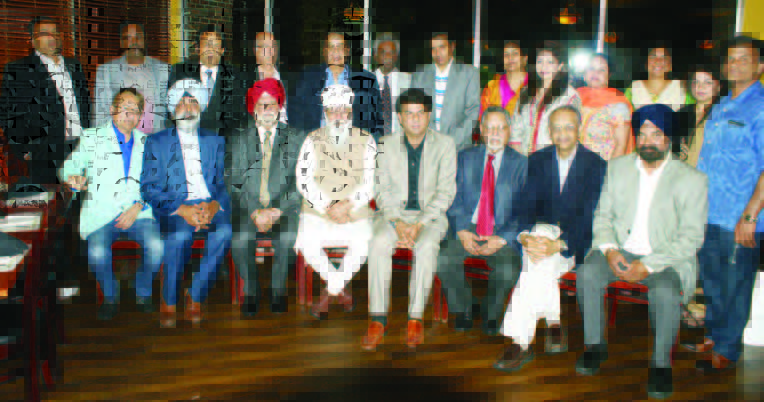
    NEW YORK (TIP): Former President of the Punjab Pradesh Congress Committee H.S. Hanspal, who was instrumental in getting the historic decision taken on inscribing of milestones in Punjabi along with English and Hindi in the state of Haryana, amongst various other significant changes that he brought about during his term, was feted by the Indian National Overseas Congress (INOC, USA) here on Saturday June 27, 2015. Around  fifty Congress supporters and friends gathered at a short notice to honor the visiting dignitary.

    General Secretary of INOC, USA, Harbachan Singh in welcoming Hanspal recalled some of the significant achievements of the latter who has had a long association with the Congress Party in various capacities. He was  applauded for his invaluable services. Harbachan Singh requested him to continue to provide his sagacious  leadership to the party at this critical juncture.

    The President of the Punjab Chapter Tejinder Singh Gill thanked Hanspal for accepting the invitation and pleaded for the rapid resolution of some of the ills, including drug addiction and alcoholism that were holding back the rapid development of Punjab and asked for  an effective link between NRIs and the Punjab Congress party to work jointly.

    The Chairman of INOC George Abraham and the President of INOC  Juned Qazi both spoke at length on the steadfastness and the solid strength of the Indian National Overseas Congress, USA and pointedly elaborated on the esteemed value and unwavering support of each of the senior officials of the party apparatus in New York. They also recounted some of the significant achievements of INOC, USA over the recent past.

    Others who spoke on the occasion included Senior Vice President Mohinder Singh Gilzian, John Joseph, President of the Tamil Nadu Chapter and Zinda Singh, President of the Delhi Chapter and  Prasad Kambhampathy.

    H.S. Hanspal was highly impressed at the unity and deep commitment of the
    INOC,USA and its officials. In his brief inspirational speech, he said that when the chips are down, you have shown political maturity to not lose hope but instead have inspired others here and in India to remain strong. He said he will take back this very encouraging and comforting fact to apprise the senior officials back home. He said: “You not only have a very important role to play in the development of better relations between India and USA but also help in various ways the motherland and her development”. He praised the hardworking NRIs and the contribution they were making and regretted that not enough attention has been paid to them by New Delhi. He informed the audience that his doors were always open in New Delhi and welcomed everyone to visit him when they were visiting home.

  • ANNUAL VAISAKHI MELA 2015 at Gurdwara Glen Cove a huge draw

    ANNUAL VAISAKHI MELA 2015 at Gurdwara Glen Cove a huge draw

    GLEN COVE, NY (TIP): The much anticipated Annual Vaisakhi Mela at Gurdwara Glen Cove was held on Sunday June 28th, 2015. It proved to be another landmark event, much to the satisfaction of the organizers, led by Sardarni Manmeet Kaur Lamba.

    The weather having cleared up after a night long rain, people poured in from all over Tri State area. Some came from as far as Canada and India. Everyone enjoyed and took back beautiful memories of the day.

    Khalsa Carnival, New York Gatka, Innovative Sikhi Nagara, Virsa Bhangra, Adelphi University Bhangra Team and Several Bhangra Gidda performances by young kids, Junior Singh and Kaur competition, Punjabi dresses, show by Nazzakat Bridal Couture, Free Photo Booth by BnB Photographer, DJ Ricky Rocking affairs, Exclusive Events, and much more were the attractions that all seemed to enjoy.

    Gagandeep Kaur won the Mega Raffle Prize of a Brand New Car which is donated every year by Gurdev Singh (DP).

  • Borough President Katz Extends IDNYC Temporary Pop-Up Enrollment Center Through July 10

    Borough President Katz Extends IDNYC Temporary Pop-Up Enrollment Center Through July 10

    QUEENS, NY (TIP): Over 1,000 New Yorkers have enrolled for the IDNYC municipal ID card at the temporary pop-up enrollment center since it first opened at Queens Borough Hall on June 2. Originally scheduled to be up for two weeks, Borough President Melinda Katz announced she would extend the center’s stay to serve through July 10, 2015 due to strong demand.

    “IDNYC is a valuable tool for all City residents who enroll because it helps ensure equal access to municipal services,” Borough President Katz said. “Due to strong demand, we are pleased to extend the temporary satellite location here at Borough Hall for several more weeks.”

    All New York City residents age 14 and older can get an IDNYC card, regardless of immigration status. The IDIDNYCNYC card is an accessible and secure document that enables residents to access City services and grant admission to City buildings, such as schools. In addition, the card can be presented as proof of identification for interacting with the police and is an accepted form of identification for opening a banking account at select financial institutions. An IDNYC card can also be used at all branches of all three of New York City’s public library systems and be used to obtain discounts and other benefits at museums and cultural institutions, entertainment venues, pharmacies and fitness centers.

    All IDNYC applicants can make an appointment at Queens Borough Hall or at any other IDNYC Enrollment Center. Appointments can be made either by calling 311 or online at http://www1.nyc.gov/site/idnyc/card/make-an-appointment.page. Applicants are required to present proof of identity and residency in New York City. Many types of documents are accepted, all of which are listed at http://www1.nyc.gov/site/idnyc/card/documentation.page. Upon submitting an application, the IDNYC Card will be sent to the resident via regular mail.

    The IDNYC card is free for all New Yorkers who apply before December 31, 2015. Cards are valid for five years from the date the application is approved. The IDNYC application is available in various languages including English, Albanian, Arabic, Armenian, Bengali, Chinese (Simplified), Farsi, French, German, Greek, Gujarati, Haitian-Creole, Hebrew, Hindi, Hungarian, Italian, Japanese, Khmer, Korean, Polish, Portuguese (Brazilian), Russian, Serbo-Croatian, Spanish, Tagalog, Thai, Urdu, Vietnamese, Yiddish.

    The City will protect the confidentiality of all IDNYC card applicants to the maximum extent allowable by applicable federal and state law, and in accordance with Local Law 35. In addition, the City will not ask applicants for information about their immigration status for purposes of obtaining the card.

    Queens Borough Hall is located at 120-55 Queens Boulevard in Kew Gardens. It is adjacent to the Kew Gardens-Union Turnpike subway station on the E and F lines.

    Follow Borough President Katz via @melindakatz
    rwww.facebook.com/queensbpkatz

  • Jehovah’s Witnesses plan 3-day convention in Hindi

    Jehovah’s Witnesses plan 3-day convention in Hindi

    NEW JERSEY (TIP): Jehovah’s Witnesses will soon hold their annual 3-day convention to be presented entirely in Hindi at the Turnersville Assembly Hall of Jehovah’s Witnesses. They extend an open invitation for all to attend. The theme of this year’s program is “Imitate Jesus!”

    Landon Young, a convention spokesman, states: “Jesus is widely considered one of the most influential and significant men who ever lived. A core belief of Jehovah’s Witnesses is that Jesus lived his life as a model for us to follow. The ‘Imitate Jesus!’ convention will examine Jesus’ life and emphasize how all-regardless of their background, lifestyle, or religion-can benefit in practical ways from his example and teachings. A highlight of the program will be the keynote address on Friday morning, entitled ‘Concealed in Him Are All the Treasures of Wisdom.’”

    Starting this weekend, and continuing for the next 3 weeks, Jehovah’s Witnesses will endeavor to distribute printed invitations to as many Hindi-speaking members of the public as possible from across the United States and Canada. All are welcome to attend with or without a printed invitation. There is no admission fee. Conventions of Jehovah’s Witnesses are supported entirely by voluntary donations.

    The 3-day event will begin Friday July 31, 2015, at 9:20 a.m. Over one thousand people are estimated to come to the Turnersville Assembly Hall of Jehovah’s Witnesses for the Bible-based program. Jehovah’s Witnesses in the United States are organizing 453 conventions-in 29 languages-in 124 cities. Worldwide, there are over 8,000,000 Witnesses in more than 115,000 congregations.

  • Putting India Emphatically on Global Map – Part 2

    Putting India Emphatically on Global Map – Part 2

    Continued from Putting India Emphatically on Global Map – Part 1

    It defies logic that a country that is considered as our most serious adversary and whose policies in our region has done us incalculable strategic harm should have been accepted as India’s strategic partner during Manmohan Singh’s time. Such a concession that clouds realities serves China’s purpose and once given cannot be reversed. Pursuant to discussions already held during the tenure of the previous government, the Chinese announced during Xi’s visit the establishment of two industrial parks in India, one in Gujarat and the other in Maharashtra, and the “endeavour to realise” an investment of US $ 20 billion in the next five years in various industrial and infrastructure development projects in India, including in the railways sector. The Chinese Prime Minister’s statement just before Modi goes to China on May 14 that China is looking for preferential policies and investment facilitation for its businesses to make this investment suggests that the promised investment may not materialise in a hurry. While the decision during Xi’s visit to continue defence contacts is useful in order to obtain an insight into PLA’s thinking and capacities at first hand, the agreement, carried forward from Manmohan Singh’s time, to explore possibilities of civilian nuclear cooperation puzzles because this helps to legitimise China’s nuclear cooperation with Pakistan.

    Even as Modi has been making his overall interest in forging stronger ties with China clear, he has not shied away from allusions to Chinese expansionism, not only on Indian soil but also during his visit to Japan. During his own visit to US in September 2014 and President Obama’s visit to India in January 2015, the joint statements issued have language on South China Sea and Asia-Pacific which is China-directed. A stand alone US-India Joint Vision for Asia Pacific and the Indian Ocean Region issued during Obama’s Delhi visit was a departure from previous Indian reticence to show convergence with the US on China-related issues. India has now indirectly accepted a link between its Act East policy and US rebalance towards Asia. The Chinese have officially chosen to overlook these statements as they would want to wean away India from too strong a US embrace. During Sushma Swaraj’s call on Xi during her visit to China in February 2015 she seems to have pushed for an early resolution of the border issue, with out-of-the-box thinking between the two strong leaders that lead their respective countries today. Turning the Chinese formulation on its head, she called for leaving a resolved border issue for future generations.

    It is not clear what the External Affairs Minister had in mind when she advocated
    “out-of-the-box” thinking, as such an approach can recoil on us. That China has no intention to look at any out-of-the-box solution has been made clear by the unusual vehemence of its reaction to Modi’s visit to Arunachal Pradesh in February 2015 to inaugurate two development projects on the anniversary of the state’s formation in 1987. The pressure will be on us to do out-of-the-box thinking as it is we who suggested this approach. China is making clear that it considers Arunachal Pradesh not “disputed territory” but China’s sovereign territory. This intemperate Chinese reaction came despite Modi’s visit to China in May. The 18th round of talks between the Special Representatives (SRs) on the boundary question has taken place without any significant result, which is not surprising in view of China’s position on the border. The Chinese PM has recited the mantra a few days ago of settling the boundary issue “as early as possible” and has referred to “the historical responsibility that falls on both governments” to resolve the issue, which means nothing in practical terms. As against this, India has chosen to remain silent on the China-Pakistan Economic Corridor (CPEC) which will traverse territory that is legally Indian, and which even the 1963 China-Pakistan border agreement recognises as territory whose legal status has not been finally settled. The CPEC cannot be built if China were to respect its own position with regard to “disputed” territories which it applies aggressively to Arunachal Pradesh. Why we are hesitant to put China under pressure on this subject is another puzzle.

    Modi’s visit to Seychelles, Mauritius and Sri Lanka in March 2015 signified heightened attention to our critical interests in the Indian Ocean area. The bulk of our trade- 77% by value and 90% by volume- is seaborne. Modi was the first Indian Prime Minister to visit Seychelles in 34 years, which demonstrates our neglect of the Indian Ocean area at high political level and Modi’s strategic sense in making political amends. During his visit Modi focused on maritime security with agreement on a Coastal Surveillance Radar Project and the supply of another Dornier aircraft. In Mauritius, Modi signed an agreement on the development of Agalega Island and also attended the commissioning of the Barracuda, a 1300 tonne Indian-built patrol vessel ship for the country’s National Coast Guard, with more such vessels to follow. According to Sushma Swaraj, Modi’s visit to Seychelles and Mauritius was intended to integrate these two countries in our trilateral maritime cooperation with Sri Lanka and Maldives.

    In Pakistan’s case, Modi too seems unsure of the policy he should follow- whether he should wait for Pakistan to change its conduct before engaging it or engage it nevertheless in the hope that its conduct will change for the better in the future. Modi announced FS level talks with Pakistan when Nawaz Sharif visited Delhi for the swearing-in ceremony, even though Pakistan had made no moves to control the activities of Hafiz Saeed and the jihadi groups in Pakistan.

    The Pakistani argument that Nawaz Sharif was bold in visiting India for the occasion and that he has not been politically rewarded for it is a bogus one. He had a choice to attend or not attend, and it was no favour to India that he did. Indeed he did a favour to himself as Pakistan would have voluntarily isolated itself. The FS level talks were cancelled when just before they were to be held when the Pakistan High Commissioner met the Hurriyet leaders in Delhi. Pakistan’s argument that we over-reacted is again dishonest because it wanted to retrieve the ground it thought it had lost when Nawaz Sharif did not meet the Hurriyet leaders in March 2014.

    Modi ordered a robust response to Pakistani cease-fire violations across the LOC and the international border during the year, which suggested less tolerance of Pakistan’s provocative conduct. We have also been stating that talks and terrorism cannot go together. Yet, in a repetition of a wavering approach, the government sent the FS to Islamabad in March 2015 on a so-called “SAARC Yatra”. Pakistan responded by releasing the mastermind of the Mumbai attack, Lakhvi, on bail and followed it up by several provocative statements on recent demonstrations by pro-Pakistani separatists in Srinagar, without any real response from our side. Surprisingly, in an internal political document involving the BJP and the PDP in J&K, we agreed to include a reference to engaging Pakistan in a dialogue as part of a common minimum programme, undermining our diplomacy with Pakistan in the process.

    Pakistan believes that it is US intervention that spurred India to take the initiative to send the FS to Pakistan, which is why it feels it can remain intransigent. Pakistan chose to make the bilateral agenda even more contentious after the visit by the FS by raising not only the Kashmir cause, but also Indian involvement in Balochistan and FATA. On our side, we raised the issue of cross border terrorism, the Mumbai terror trial and LOC violations, with only negative statements on these issues by Pakistan. Since then the Pakistani army chief has accused India of abetting terrorism in Pakistan. The huge gulf in our respective positions will not enable us to “find common ground and narrow differences” in further rounds of dialogue, about which the Pakistani High Commissioner in Delhi is now publicly sceptical.

    Even though one is used to Pakistan’s pathological hostility towards India, the tantrums that Nawaz Sharif’s Foreign Policy Adviser, Sartaj Aziz, threw after President Obama’s successful visit to India were unconscionable. He objected to US support for India’s permanent seat in the UNSC and to its membership of the Nuclear Suppliers Group (NSG). He castigated the Indo-US nuclear deal, projecting it as directed against Pakistan and threatened to take all necessary steps to safeguard Pakistan’s security- in other words, to continue to expand its nuclear arsenal.

    Chinese President Xi’s April 2015 visit to Pakistan risks to entrench Pakistan in all its negative attitudes towards India. The huge investments China intends making through POK constitutes a major security threat to India. China is boosting a militarily dominated, terrorist infested, jihadi riven country marked by sectarian conflict and one that is fast expanding its nuclear arsenal, including the development of tactical nuclear weapons, without much reaction from the West. President Ashraf Ghani’s assumption of power in Afghanistan and his tilt towards Pakistan and China, as well as the West’s support for accommodating the Taliban in Afghanistan with Pakistan’s help will further bolster Pakistan’s negative strategic policies directed at India. Ghani’s delayed visit to India in April 2015 has not helped to clarify the scenario in Afghanistan for us, as no change of course in Ghani’s policies can be expected unless Pakistan compels him to do by overplaying its hand in his country. Modi is right in biding his time in Afghanistan and not expressing any undue anxiety about developments there while continuing our policies of assistance so that the goodwill we have earned there is nurtured.

    Prime Minister Modi, belying expectations, moved rapidly and decisively towards the US on assuming office. He blindsided political analysts by putting aside his personal feelings at having been denied a visa to visit the US for nine years for violating the US law on religious freedoms.

  • Indian Americans Preet Bharara & Rakesh Khurana honored with Carnegie’s ‘Great Immigrant’ award

    Indian Americans Preet Bharara & Rakesh Khurana honored with Carnegie’s ‘Great Immigrant’ award

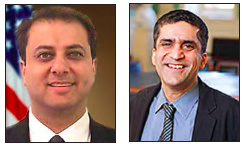
    NEW YORK (TIP): The Carnegie Corporation has announced the 2015 “Great Immigrant”: The Pride of America” awardees. These are the individuals who have helped advance and enlighten our society, culture, and economy. Preet Bharara, U.S. Attorney, Southern District of New York is among 38 eminent personalities selected as 2015 ‘Great Immigrant’ honorees, on the eve of the nation’s birthday on July 4th by Carnegie Corporation.

    The other Indian American awardee, Rakesh Khurana is the Marvin Bower Professor of Leadership Development at Harvard Business School (HBS), professor of sociology in the Faculty of Arts and Sciences (FAS), and co-master of Cabot House and dean of Harvard College.

    “Our founder, Andrew Carnegie, came to this country as the son of impoverished immigrants and grew up to become one of the greatest contributors to American industry and philanthropy,” said Vartan Gregorian, President of the Corporation. “His devotion to U.S. democracy stemmed from his conviction that the new infusion of talent that immigrants bring to our country keeps American society vibrant.”

    The 38 Great Immigrants honored this year come from more than 30 countries around the world and represent leadership in a wide range of professions.

    They include:

    • Preet Bharara S. Attorney, Southern District of New York (India)
    • Geraldine Brooks Pulitzer Prize-winning Author, Journalist (Australia)
    • Thomas Campbell Director and CEO, The Metropolitan Museum of Art (England)
    • Rabia Chaudry Attorney, Civil Rights Activist (Pakistan)
    • Mica Ertegun Interior Designer (Romania)
    • Stanley Fischer Economist; Vice Chair, Board of Governors, Federal Reserve System (Israel)
    • Jonathan Hunt Fox News, Chief Correspondent (Canada)
    • Malek Jandali Composer, Pianist (Syria)
    • Rakesh Khurana Professor, Dean, Harvard College (India)
    • Marie-Josée Kravis Economist, Philanthropist (Canada)
    • Nastia Liukin Olympic Medal-winning Gymnast (Russia)
    • Bette Bao Lord Author, Human Rights Advocate, Philanthropist (China)
    • Ali Malekzadeh President, Roosevelt University, Chicago (Iran)
    • Silvio Micali Turing Award-winning Professor of Computer Engineering (Italy)
    • Lorne Michaels Peabody Award-winning TV Producer (Canada)
    • Franziska Michor Vilcek Prize-winning Professor, Computational Biology (Austria)
    • Anchee Min Author (China)
    • Sharmin Mossavar-Rahmani Philanthropist; Chief Investment Officer, Private Wealth Management Group, Goldman Sachs (Iran)
    • Firouz Naderi Director, Solar System Exploration, NASA Jet Propulsion Laboratory (Iran)
    • Azar Nafisi Author, Scholar (Iran)
    • Craig Nevill-Manning Engineering Director, Google (New Zealand)
    • Maria Otero U.S. Under Secretary of State for Civilian Security, Democracy, and Human Rights (Bolivia)
    • Eddie Pérez Bullpen Coach, Atlanta Braves (Venezuela)
    • Ilana Rovner Judge, U.S. Court of Appeals, Seventh Circuit (Latvia)
    • Arturo Sandoval Grammy Award-winning Jazz Trumpeter (Cuba)
    • Madhulika Sikka Vice President, Executive Editor, .Mic (India)
    • Thomas C. Südhof Nobel Prize-winning Neuroscientist (Germany)
    • Antonio M. TagubaS. Army Major General, Retired (Philippines)
    • Ann Telnaes Pulitzer Prize-winning Political Cartoonist (Sweden)
    • Thalía Singer, Actress (Mexico)
    • Tuyen Tran Vilcek Prize-winning Fashion Designer (Vietnam)
    • Abraham Verghese Physician, Professor, Author (Ethiopia)
    • Eugene Volokh Professor, Legal Scholar, Blogger (Ukraine)
    • Arieh Warshel Nobel Prize-winning Biochemist (Israel)
    • Raffi Yessayan Judge, Massachusetts Superior Court (Lebanon)
  • Indian American Night 2015 Celebrated

    LONG ISLAND, NY (TIP): Eisenhower Park was gleaming with decorations and colors from India. Indian music was heard all over the park, commencing the Indian American Night presented by Indian American Forum on Tuesday June 30, 2015 , at Harry Chapin Lakeside Theatre, Eisenhower Park, East Meadow, Parking Field 6 & 6A.

    The program started with Yoga sessions conducted by Anita Sehgal (Neelu), certified and experienced Yoga instructor in Long Island.

    Health awareness services were organized by President Dr Madhu Korrapati, Dr Sunil Mehra, Dr Tarun Wasil, Dr Reena Loona, Dr Parul Bahl, Dr Vijay Shah, and Dr Shah of AAPIQLI.

    Asian Indians in Nutrition and Dietetics member interest group of The Academy of Nutrition and Dietetics presented Nutrition Booth organized by Rita Kashi Batheja RDN, Dr Pardanani, Susan Escobar and Nassau County Health department Dr Meena Jaiswal DDS for Dental Services

    This program is part of the 2015 summer concert series sponsored by Nassau County Department of Parks, Recreation and Museums.

    Indian American Night is a showcase of Classical Indian Music and folk dances from all regions of India.

    Nassau County Executive Edward P Mangano was represented by Deputy Commissioner of Employment Vocational at Nassau County Ms. Sunita Manjrekar who welcomed every one and presented the honorees with Medals and Citations from Nassau County. Each Year members from Indian America Community are recognized for their outstanding services and contributions.

    Also present were Rosemarie Walker, Nassau County Parks Commissioner Brian Nugent, and several other officials.

    Honorees for the evening included  Mr. Naveen C Shah, a prominent Certified Public Accountant (CPA) and an exuberant personality, president and chief Executive Officer of Navika Group of Companies, and President of Rajasthan Association of North America (RANA). Another honoree, Dr Vijay Shah, is well known for his volunteer services. He is the Vice Chairman of Friends for Good Health, helping and providing services all over the world.

    A well-known Oncologist in LI Ms. Trupti Shah was recognized for her services with Friends for Good Health

    Ms. Sangeeta Sethi, President of the Rotary Club of Jericho Sunrise , Dr Madhu Korrapati President of AAPI QLI and Chief of Nephrology at St Joseph Hospital, Mrs. Raji Kuncham President of TLCA, and  Kalpana Patel, well known business entrepreneur and President and CEO of Unique Comp were also honored.

    Indu Jaiswal Chairperson of Indian American Forum welcomed every one and thanked all the sponsors and supporters for their participation.

    Beautiful decorations were provided by Glamorous Event Planner Ms. Sunita Sadhnani.

    A Cultural program, organized by Jaya Bahadkar, was emceed by Arvin Batra. Several music and dance performances lent color and charm to the celebrations. Students from different schools took part.

  • Bobby Jindal’s popularity ratings still low: Poll

    Bobby Jindal’s popularity ratings still low: Poll

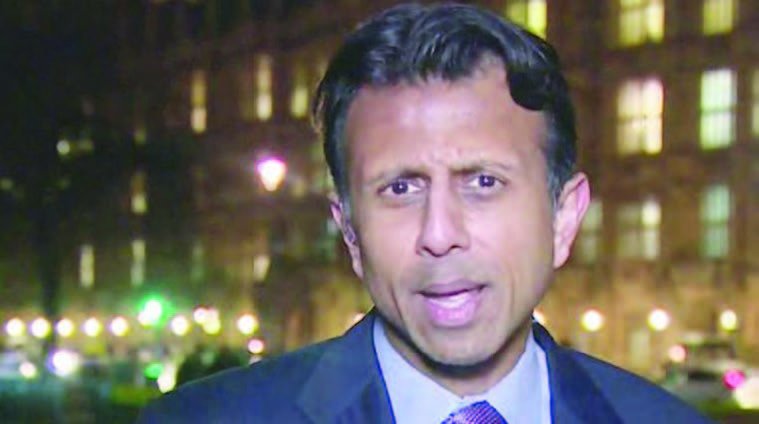
    WASHINGTON (TIP): A week after he announced his 2016 presidential bid, the popularity ratings of Indian-American Republican candidate Bobby Jindal remain abysmally low at two per cent, a latest poll said on Wednesday. 44-year-old Jindal, a two-term Governor of Louisiana, received just two per cent of the votes in the CNN poll as against 19 per cent for Jeb Bush who leads Republican presidential aspirants.

    The polls were conducted by CNN between June 26 and 28. Jindal announced his 2016 presidential bid on June 24.

    Donald Trump, who also announced his candidacy last month, is ranked second after Bush with 12 per cent of the votes, followed by Mike Huckabee (eight per cent), Ben Carson (seven per cent), Rand Paul (seven per cent) and Senator Marco Rubio (six per cent). But poll results did indicate that Jindal’s popularity slightly increased in the last one month. In a similar poll by CNN in May, he had just one per cent of the votes.

    With just two per cent of the votes in the current poll, Jindal is ranked 12th, which rules him out of any of the pre-primary Republican presidential debates. On the Democratic side, former Secretary of State Hillary Clinton maintains her formidable lead over her nearest potential rivals with 57 per cent of the votes. However, her popularity registered a slight drop of three per cent in the last one month.

  • KATZ ALLOCATES OVER $5 MILLION FOR TECH UPGRADES IN QUEENS PUBLIC SCHOOLS

    QUEENS, NY (TIP): Queens  Borough President Melinda Katz has announced an allocation of over $5 million of her Fiscal Year 2016 discretionary capital funds to provide SMART Boards, laptop computers and other tech devices to public elementary and middle schools in the borough.

    Nearly half of the public elementary and intermediate schools in Queens will receive some funding as part of a $5,145,000 allocation from Borough President Katz’s portion of the New York City Fiscal Year 2016 Capital Budget toward the purchase of SMART Boards and laptops. Next year, as part of the Fiscal Year 2017 Capital Budget, Borough President Katz plans to use additional capital funds to provide tech funding to all of the Queens public elementary and intermediate schools that were not included in this year’s round of funding.

    “Education is the #1 economic investment we can make for our families, thereby for the future of Queens,” said Borough President Katz. “By September 2016, it is my intent to equip all public elementary and middle schools in Queens with these up-to-date instructional tech tools in the classroom. These resources will help elevate our great Queens schools to even higher standards and ensure that our kids remain globally competitive in the 21st century.”

    The allocation for tech upgrades breaks down as follows:

    • at least $35,000 each to 95 elementary schools for the purchase of interactive SMART Boards
    • at least $35,000 each to 38 middle schools for the purchase of laptops for in-school student use
    • $35,000 for assistive learning devices at P.S. 009Q Walter Reed School
    • $35,000 for the purchase of iMac desktop computers at P.S. 255Q in Kew Gardens
    • $70,000 for a stationary
      classroom/library technology environment at P.S./M.S. 105Q in the Rockaways.
    • two $70,000 allotments for upgrades to computer labs at P.S. 082Q in Jamaica and P.S. 164Q in Kew Gardens.

    Follow Borough President Katz via @melindakatz
    www.facebook.com/queensbpkatz

  • Indian American motel owner Kanubhai Patel pleads guilty in Sex trafficking case

    NEW ORLEANS (TIP): A 74-year-old Indian-American motel owner, July 1, pleaded guilty to benefiting financially from sex traffickers who beat women for prostitution in the rooms he rented them at inflated rates.

    Kanubhai Patel, who could face a maximum of five years in prison, ignored women’s screams for help as pimps beat them, according to court evidence.

    Patel pleaded guilty to one count of benefiting financially from trafficking in persons.

    He also went by the names like ‘Kenny’ and ‘Pop’. Patel acknowledged that in his role as the former owner of the motel (in Louisiana’s New Orleans City), he regularly rented rooms to individuals, who are charged as sex trafficking co-conspirators in connection with this case, knowing they were pimps who forced and coerced women to engage in prostitution, according to evidence presented before court.

    Patel admitted that although he never personally recruited, groomed or coerced any of the victims, he benefited financially from the sex trafficking operation.

    Evidence established that Patel would charge the pimps and sex trafficking co-conspirators higher rates than other motel guests and would open the motel’s gate to allow the women to bring customers back to the hotel.

    Patel learned that members of the sex trafficking conspiracy physically assaulted women they prostituted, including one instance in which a co-conspirator brutally beat one woman with a large piece of wood while she screamed for help, leaving her with multiple lacerations and what appeared to be a broken arm.

    He did not report the activities of the people engaging in sex trafficking to the police as long as they paid their rent.

    “This defendant callously profited from a sex trafficking venture that used force, fraud and coercion to compel women to engage in commercial sex acts,” US Attorney Kenneth Allen Polite Jr of the Eastern District of Louisiana said.

    “These crimes often pass without detection because victims live in fear from physical abuse, threats and other forms of coercion. My office is committed to prosecuting individuals and organizations that profit from this illegal conduct,” he added.

    Patel faces a statutory maximum sentence of five years in prison for benefiting financially from participating in a trafficking scheme involving control of victims’ identification documents.

  • Saudi Arabia opens first privatized airport for pilgrims

    Saudi Arabia opens first privatized airport for pilgrims

    RIYADH (TIP): Saudi Arabia on July 2 officially opens a billion-dollar aviation gateway aimed at Muslim pilgrims, in the kingdom’s first airport privatization. Local media said King Salman would inaugurate the Prince Mohammad bin

    Abdul Aziz International Airport in the holy city of Medina. About two million pilgrims annually visit the western cities of Mecca and Medina for the hajj, which this year takes place in September.

    Medina’s domestic airport was upgraded to international status because of “the importance and the role of the air transport sector in the service of pilgrims and visitors to the Prophet’s mosque,” the website of the airport operator says.

    TIBAH Airports Development Co won the bid and in October 2011 signed a build, transfer and operate agreement with the kingdom’s aviation regulator, the General Authority of Civil Aviation (GACA). The consortium includes Turkey’s TAV Airports along with local firms Al-Rajhi and Saudi Oger.

    TIBAH said the project “represents the first partnership between the public and private sectors in airports” in Saudi Arabia. Medina airport’s annual passenger capacity will rise from last year’s 5.7 million to eight million, before doubling to 16 million by the end of the 25-year agreement for operating the facility, TAV said.

    The project “represents a new direction” because it was privately built and will be run by the joint venture, said GACA, which operates 27 airports in the kingdom.

    Some of those are also targeted for privatization. Aeroports de Paris is among seven candidates invited to bid for a concession at the country’s busiest airport in Jeddah, south of Medina, GACA president Suleiman al-Hamdan told AFP last month on the sidelines of the Paris Air Show. A new terminal under construction in Riyadh will also be operated by an international company, said GACA.

    Saudi Arabia is the Arab world’s largest economy and is spending billions of dollars on building and upgrading its air terminals.

    National carrier Saudi Arabian Airlines announced at the Paris Air Show an order for 50 Airbus passenger planes worth about $8 billion.

    Carriers based in neighbouring Gulf states —Emirates, Qatar Airways and Abu Dhabi’s Etihad— have won a large chunk of global air travel, turning their airports into major transcontinental hubs.

  • Hong Kong not to go US way on gay marriages

    BEIJING (TIP): Hong Kong is unlikely to follow the US example of allowing gay marriages, its Equal Opportunities Commission has said. The political system in the city, which is witness to pro~democracy agitation, is not yet ready for same sex marriage, the Commission’s head, York Chow Yat-ngok, said.

    “Just look at how legislators view equal rights for gays and lesbians, not to mention marriage. How much support would you say there is among the legislators? I am not too optimistic about this,” Chow said in a radio show.

    There may be differing opinions on same-sex marriage among the legislators, but the majority will not be in support of the idea of legalizing it, he said. In fact, he did not expect it to happen in his life time.

    “I don’t know how long I will live. I am quite old now,” he was quoted as saying by South China Morning Post.

    Hong Kong is regarded as an international city with a vast expatriate population, and a strong sense of democratic rights.

    The Commission had no power or mandate to push forward the same-sex marriage law in Hong Kong, he said, adding that it is only the legislative council which can deal with the subject of legalizing gay marriages.

    In fact, a recent proposal to outlaw sexual discrimination did not received enthusiastic public support while the local courts also took a “passive” approach towards it, he said.

  • Nitish Kumar sounds poll bugle with ‘Har Ghar Dastak’

    Nitish Kumar sounds poll bugle with ‘Har Ghar Dastak’

    PATNA (TIP): Bihar chief minister Nitish Kumar on July 2  began JD(U) campaign for upcoming assembly elections through a programme called “Har Ghar Dastak” to seek feedback about the work done by the state government in the past.

    As part of the programme, the chief minister knocked doors of 10 households in Pachim Darwaza, represented by BJP leader Nand Kishore Yadav, in Patna city area falling under Patna Sahib assembly seat.

    The interactive programme with people was formally launched by state JD(U) president Basistha Narayan Singh at party headquarter in the capital. JD(U) MPs Pavan Varma, RCP Singh and Harbansh were also present on the occasion.

    Starting the programme after offering prayer at Badi Patandevi temple, Kumar knocked the first door of one Krishna Sahu near Paschim Darwaza.

    The house members were excited to find him at their doorstep.

    Kumar talked to the family members if they were satisfied with the work done by his government in the past 10 years and also sought views about work the government should do in the future.

    After coming out of Krishna Sahu home, Kumar knocked doors of nine other homes in the vicinity and talked to the family members.

    Kumar told reporters that he as a disciplined soldier of JD(U) had started the “Har Ghar Dastak” programme after it was launched by state party chief.

    He said efforts would be made to reach out to one crore homes under the programme.

    State JD(U) spokesman and MLC Sanjay Singh said “Har Ghar Dastak” programme would run in two phases from July 2 to July 11 and from July 21 to July 31.

    He said 10,000 party workers would knock doors of one crore homes and have a “direct conversation” with people on the functioning of the state government.

    Minister for food Shyam Rajak said he had started the programme in his consituency Phulwarisharif and knocked doors of 10 homes each in Raniganj and Haroon colony.

    “The people appeared satisfied with the functioning of the government,” Rajak claimed.

  • PANEL PITCHES FOR 100%HIKE IN MPs’ SALARY

    NEW DELHI (TIP): A parliamentary panel has pitched for 100 per cent hike in salary and daily allowances of MPs and 75 per cent raise in the pension of ex-MPs apart from facilities for their “companions” in place of “spouses”.

    In far-reaching recommendations, the panel, headed BJP MP Yogi Adityanath, has sought doubling of the existing Rs 50,000 salary of MPs and favoured increasing the pension of former parliamentarians from Rs 20,000 to Rs 35,000.

    The panel has also recommended that the daily allowance of MPs of Rs 2,000 for attending the House during Parliament sessions should be doubled to Rs 4000.

    It is learnt that some ex-MPs, who appeared before the panel rued that while they are given a First Class Ticket to travel on train, their companions, even if it is the spouse, can travel only second class.

  • White House lifts 40-year-old camera ban on tourists

    WASHINGTON (TIP): The White House on Wednesday lifted a 40-year ban on visitors taking photos, and much-prized selfies, on tours of 1600 Pennsylvania Avenue.

    Tourists to “the People’s House” on Wednesday were greeted with a changed sign saying “Photography is Encouraged.”

    The First Lady Michelle Obama announced the decision to the broader public on her Instagram account, ceremoniously ripping up the previous “No Photos” sign.

    But there are a few catches: Flashes and video recording or streaming is still prohibited.

    In the State Dining Room, 47-year-old visitor Korey Richardson, was excited by the new rules.

    “This is my first time here,” he said. “I’m taking tons of pictures, at least 30 so far. I’ve already uploaded some to Facebook friends.”

  • Govt opens 90-day window to declare black money abroad

    NEW DELHI (TIP): Those with undisclosed overseas wealth have another 90 days to come clean with the government opening the compliance window on July 1.

    Under the one-time officer, the compliance scheme will be open till September 30, with time till December-end to pay the 30% tax, and another 30% penalty. The scheme was announced along with the stringent black money law – which provides for jail of up to 10 years and penalty of up to 90%, along with 30% tax — in the budget. In its March 1 budget edition.

    “It is meant to provide a last opportunity to persons with undisclosed income and assets abroad before the stringent provisions (of the new law) apply. It is not meant to be a revenue mobilizing measure,” revenue secretary Shaktikanta Das said.

    For the Narendra Modi administration, mopping up undisclosed funds, especially those kept abroad, is a key focus area as the prime minister had made it a major poll issue last year and promised to get funds back into the country. A day after it assumed office in May 2014, the government announced a Special Investigative team on black money and has since followed it up with the stringent black money law.

    While the details of the scheme will be made public on Thursday, sources said that those looking to tap the window will have to fill up the prescribed form and submit it to a principal commissioner of income tax in Delhi, who for the moment will remain the only designated authority for disclosures. “For the scheme to be monitored directly by the board we are designating only a limited number of officers to ensure its integrity,” Das said. An official added that if the volume increases, a principal commissioner in Mumbai will also be designated to deal with the disclosures.

    The rules will clearly stipulate that no action will be taken against those coming clean, unless the money is related to drugs, corruption or terrorism. The tax department will separately release FAQs over the next few days to address the queries that it has received over the past few months. This is for the first time since the Voluntary Disclosure of Income Scheme (VDIS) in 1998 that the revenue department has offered an opportunity to people to come clean, although the BJP government insists that the compliance scheme is not the same as the amnesty launched 17 years ago.

  • Over 5,000 evacuated after US train derails, catches fire

    WASHINGTON (TIP): More than 5,000 people were evacuated from their homes after a train carrying toxic chemicals derailed in Tennessee overnight and spectacularly caught fire, firefighters and officials said on July 2.

    The train derailed just before midnight Wednesday near Maryville, close to the city of Knoxville, carrying acrylonitrile, a highly flammable and toxic substance that poses respiratory risks, firefighter Kermit Easterling said.

    Local media said that 25 people had been admitted to Blount Memorial Hospital for exposure to the chemical but none were thought to be critically ill. Firefighters went door to door wearing breathing equipment to get people away from the fire, Easterling added, with residents living within a two-mile radius (three kilometers) ordered to evacuate. A Red Cross shelter was set up at a local school for evacuated residents, the firefighter said. Train operator CSX said it was aiding relief efforts and that a probe into the accident had been launched.

    “CSX continues to work with first responders, relief agencies including the Red Cross, and health and environmental officials in Maryville, Tenn., after a tank car derailed and caught fire,” it said in a statement. “Earlier today, residents on wells in the vicinity of the derailment were advised by local authorities not to drink the water pending further assessments.

  • FRIDAY, JULY 03, 2015 23 BBC to axe 1,000 jobs in cost-cutting drive

    LONDON (TIP): Grappling with a 150-million-pound budget deficit, the BBC on Thursday announced it is axing more than 1,000 jobs, as senior management services are sacrificed in a massive drive expected to save 50 million pounds annually for the corporation amid changing viewing habits.

    “A simpler, leaner, BBC is the right thing to do and it can also help us meet the financial challenges we face,” Tony Hall, director general of the BBC, told staff here.

    The current wave of cuts is expected to save around 50 million pounds a year, but the BBC has suggested there could be more job losses as it grapples with a 150-million-pound budget gap in its licence fee income largely due to the faster-than expected switch to online viewing.

    “We’ve already significantly cut the costs of running the BBC, but in times of very tough choices we need to focus on what really matters — delivering outstanding programmes and content for all our audiences,” he said.

    An unexpected increase in the number of households saying they do not watch live TV so do not pay for a licence has been blamed for the shortfall.

    The licence fee, or the charge each UK household pays for watching television, is the BBC’s main source of income.

    Three layers of management are expected to be cut, while some of BBC’s divisions will be reduced as part of the drive.

    Most of the jobs will go from BBC’s professional and support services, as part of efforts to cut back on duplication of roles.

    Lord Hall said he recognized “this is a tough message” but the BBC was facing “difficult choices” because of the tough financial climate.

    The announcement comes on the back of measures aimed at making 1.5 billion pounds of savings a year by 2017 by reducing the amount of money spent on administration, property costs and sports rights.

    Around 400 jobs had also already been targeted as part of the Delivering Quality First cost-cutting drive.

    The BBC licence fee of 145.50 pounds a year has been frozen for seven years, and the process of charter renewal is getting under way, which will decide how the BBC is run when its current royal charter runs out at the end of 2016.

    Broadcast union Bectu said while it supports the BBC’s ambitions of “simplification and standardisation”, it is opposed to any compulsory redundancies.

    General secretary Gerry Morrissey said: “We welcome the aims and the commitment to cutting the layers of management between the DG and programme makers, for example.

    “That said it is essential, as in any programme of cuts, that staff and unions are fully involved in the consultation and that where jobs are closed that redeployment opportunities are maximised.”

  • INDIA’S PUSH TO SAVE ITS COWS STARVES BANGLADESH OF BEEF

    DHAKA (TIP): Some 30,000 Indian soldiers guarding the border with Bangladesh have a new mandate under Prime Minister Narendra Modi’s government this year — stop cattle from crossing illegally into the Muslim-majority neighbour.

    Roughly every other night, troops armed with bamboo sticks and ropes wade through jute and paddy fields and swim across ponds to chase ageing bovines, and smugglers, headed for markets in Bangladesh.

    The crackdown is one of the clearest signs yet of how Indian policies are having an economic impact on neighbouring countries.

    About 2 million head of cattle are smuggled into Bangladesh annually from India. The $600 million-a-year trade has flourished over the past four decades and is considered legal by Dhaka.

    Modi’s government wants to put an end to it.

    Union home minister Rajnath Singh travelled this spring to the frontier with Bangladesh, calling on the Border Security Force (BSF) to halt cattle smuggling completely so that the “people of Bangladesh give up eating beef”, media reported at the time.

    “Killing or smuggling a cow is equivalent to raping a Hindu girl or destroying a Hindu temple,” said Jishnu Basu, an RSS spokesman in West Bengal, which shares a 2,216km (1,375 miles) border with Bangladesh.

    Beef prices up, exports down 

    So far this year, BSF soldiers have seized 90,000 cattle and caught 400 Indian and Bangladeshi smugglers.

    Bangladeshi traders who operate auctions to facilitate the sale of cattle to slaughter houses, beef processing units, tanneries and bone crushing factories estimate the industry contributed 3 percent to the country’s $190 billion economy.

    The hit to GDP from India’s policies is not yet known. But HT Imam, a political adviser to Bangladesh Prime Minister Sheikh Hasina, said there was “absolutely no doubt” that the beef trade and leather industry were suffering.

    Syed Hasan Habib of Bengal Meat, Bangladesh’s top beef exporter, said it had to cut international orders by 75 percent. The company exports 125 tonnes of beef a year to Gulf countries.

    He said the price of cows had gone up by 40 percent over the past six months because of India’s move, and they had been forced to close two processing units.

    Habib plans to import cows from Nepal, Bhutan and Myanmar to meet domestic demand, but he said Indian cows had better quality meat and raw hide.Bangladesh Tanners Association president Shaheen Ahmed said 30 of 190 tanneries had suspended work due to lack of hides, and about 4,000 workers were jobless.

    A senior official in India’s home ministry said Bangladesh should find new sources of beef because India would stick to its stance.

    Cow protection force 

    India is home to 300 million cattle and is the world’s largest beef exporter and fifth-biggest consumer.But since Modi’s Bharatiya Janata Party (BJP), which is closely linked to the RSS, came to power last year, the rhetoric on cow protection and the beef ban has increased.

    Critics say tougher anti-beef laws discriminate against Muslims, Christians and lower-caste Hindus who rely on the cheap meat for protein. Butchers and cattle traders, many of them Muslim, say the push threatens thousands of jobs.

    The rhetoric has also emboldened vigilante cow protectors.

    “I was chained to a tree and beaten by members of the cow protection force. They forced me to recite a Hindu prayer,” said Mohammed Tarafdar, who was caught smuggling two calves near the Bangladesh border in April.

    “My religion permits me to eat and sell beef, so why should Hindus have a problem?” said Tarafdar, sitting in a crammed prison cell in Basirhat district. Some BSF soldiers said they could not understand why they were chasing cows. Some animals are caught and auctioned by the BSF, only to be bought and smuggled again.

    Two soldiers were killed by a gang of Bangladeshi smugglers, while three dozen have been injured by the animals.

  • Gold scheme may cap deposit at 100gm

    NEW DELHI (TIP): The government is expected to limit deposits under the proposed gold deposit scheme at 100 grams to deal with concerns that the plan meant to put brakes on import of the precious metal may turn into a tool to convert undeclared assets into legitimate wealth.

    Sources said the proposal has been discussed but a decision is yet to be taken. “We are looking at various options,” said an official. Others, however, pointed out that the contrary to what many believe, the proposed scheme has safeguards built into it through deposits only via banks where an individual has an account. “It automatically ensures that KYC (know-your-customer) norms have been followed and there is a history available with the bank,” said a source, familiar with the plan.

    Finance minister Arun Jaitley had announced the gold deposit scheme in the budget with a view to mop up unused and idle assets, primarily from households, and offer 3-4% return to depositors. Under the Income Tax Act the returns are already tax-free, something that the consultation paper released recently reconfirmed.

    After garnering gold from households as well as temple trusts, the government is hoping to send it for recirculation into the system, which is expected to reduce imports and ease pressure on the overall economy.

    Sources, however, said RBI needs to settle a few issues before the government finalizes the scheme. The central bank, for instance, has not agreed to treat the gold mopped up by banks for meeting regulatory requirements such as maintenance of cash reserve ratio.

  • Indian American STEM Teacher Darshan Jain honored by Obama

    Indian American STEM Teacher Darshan Jain honored by Obama

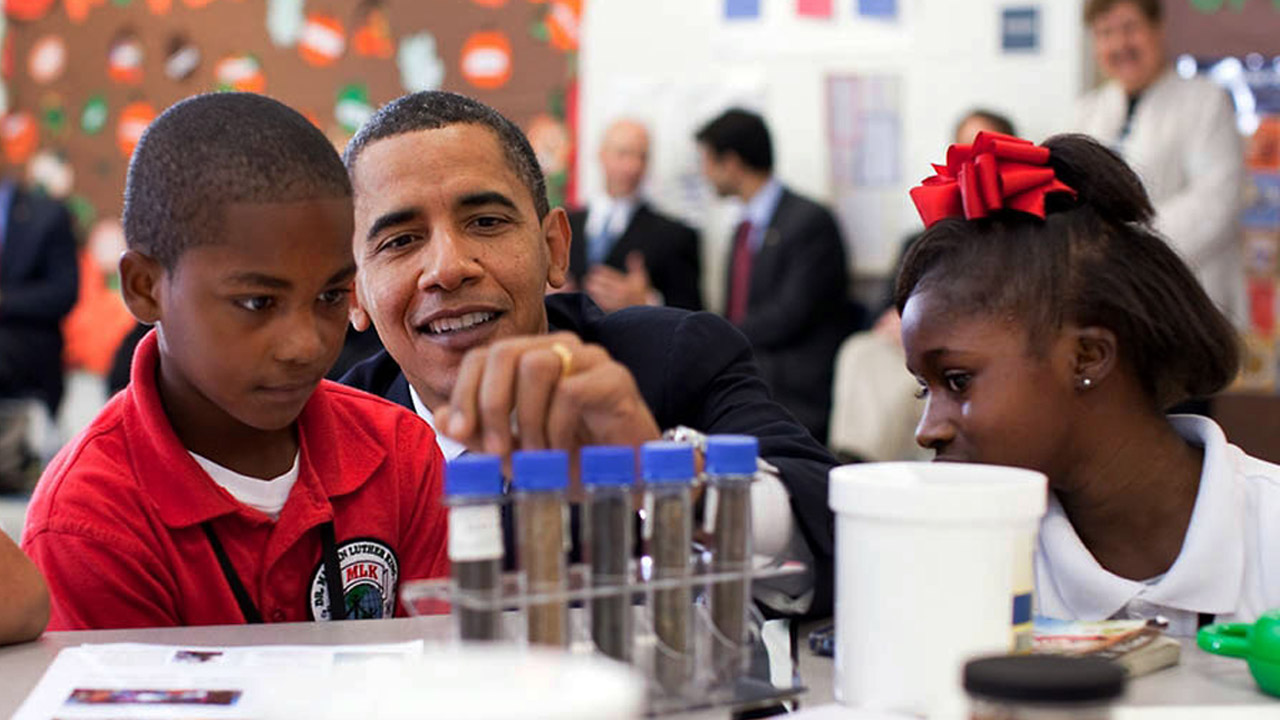
    Indian American Teacher Darshan Jain is one of the 108 teachers named by President Barack Obama as recipients of the prestigious Presidential Award for Excellence in Mathematics and Science Teaching.

    Mr. Jain currently serves as the director of mathematics and has taught mathematics at Adlai E. Stevenson High School in Lincolnshire, Illinois for eight years, will receive a $10,000 award from the National Science Foundation.

    “These teachers are shaping America`s success through their passion for math and science,” Obama said of the winners.

    “Their leadership and commitment empower our children to think critically and creatively about science, technology, engineering, and math.

    The Presidential Award for Excellence in Mathematics and Science Teaching is awarded annually to outstanding K-12 (kindergarten through 12th grades) science and mathematics teachers from across the country.

    “The Presidential Award validates my core belief that all students can learn mathematics in authentic, rigorous, and impactful ways,” Jain said.

    “It is grounded in my experience that collaborative teachers can help all students achieve excellence.”

    “This award provides opportunities to have discussions around improving math education at local and national levels,” he said.

    “Students` experiences in mathematics must fundamentally change in order to support our national vision for equity, access, and competitiveness.”

    Jain`s industry experience includes time spent as a project engineer and a machine designer.

    Jain`s love for teaching was inspired by his work at the Hispanic Math and Science Initiative and his students` success in learning.

    As adjunct professor for mathematics education, Jain supported novice teachers. He now leads exceptional colleagues as curriculum director for his district.

    Jain has also contributed to the education community by speaking on research-based pedagogy at local, state and national conferences.

    Jain has a BA in mechanical engineering and a MS in secondary mathematics education from the University of Illinois at Chicago. He is pursing further graduate work.

    America is focusing on STEM (science, technology, engineering and math) education in its schools and colleges to ensure American competitiveness in the technology, robotics and software fields. The growth in the number of STEM-related jobs is outpacing the rest of the U.S. economy by about 300 percent, according to the U.S. Department of Commerce.

    Most of the H1B cases are because of lack of experience and qualified STEM Graduates : Read our report : H1B Visa – The Conflicting Perceptions

  • Black Churches under attack in United States? The Eighth fire in 10 Days

    Black Churches under attack in United States? The Eighth fire in 10 Days

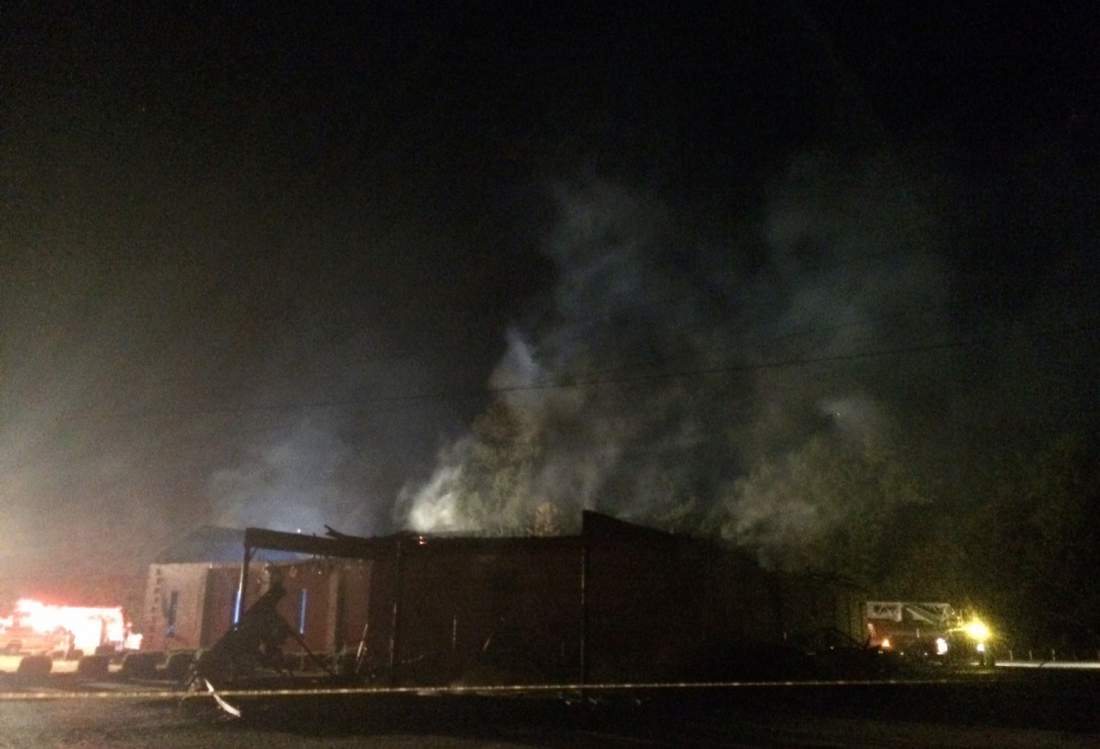
    South Carolina (TIP) Jul 1: Again a black church in the South went up in flames Tuesday, June 30, night, this time historic Mount Zion African Methodist Episcopal in Williamsburg County, South Carolina — 20 years after it was burned to the ground by Ku Klux Klan members.

    No injuries were immediately reported, but The Kingstree News of Williamsburg County reported that the church was “gutted.” It’s the latest in a string of fires at predominantly black Southern churches that began after a white gunman killed nine black worshipers at Emanuel AME Church in Charleston, South Carolina, about 50 miles south of Greeleyville, on June 17.

    The fires have fueled concerns about the potential for a new wave of racist violence since the Charleston shootings, and the FBI has launched an investigation.

    It is the eighth black church in the Southern U.S. to burn in 10 days

    Parishioners across the South are surveying the damage that a string of similar fires has caused this week, the Southern Poverty Law Center reports, starting in Knoxville, Tenn., on June 21 and moving to Macon, Ga., and Gibson County, in Tennessee, on June 23; Charlotte, N.C., on June 24; Elyria, Ohio, on June 25; and Tallahassee, Fla., and Warrenville, S.C., on June 26.

    Three of those fires have been ruled arson, one was determined to be caused by a falling branch and faulty wiring, and the others remain under investigation. Several have been blamed preliminarily on lightning; weather in the South this week has been turbulent.

    Mount Zion was burned to the ground by the KKK in 1995, part of a string of 30 fires in black churches that spanned two years.

    Mount Zion, founded more than 110 years ago, was burned to the ground June 20, 1995, by two members of the Ku Klux Klan, who pleaded guilty the next year. President Bill Clinton attended the rededication of the rebuilt church a year later, speaking words that have been echoed in the last two weeks:

    “It was the church that saved the people until the civil rights revolution came along. And it is, therefore, I think, doubly troubling to people … who spent their entire lives working for equal opportunity among our people, working for an end to the hatred that divided us for too long, to see our native South engulfed in a rash of church burnings.

    “We have to say to all of you who have been afflicted by this, we know that we’re not going back to those dark days, but we are now reminded that our job is not done. Dr. King once said, ‘What self-centered men have torn down, other-centered men can build up.’”