Month: July 2015

  • EVA LONGORIA TURNS TO POSH FOR STYLE ADVICE

    EVA LONGORIA TURNS TO POSH FOR STYLE ADVICE

    Actress Eva Longoria says she always asks singer fashion designer and BFF Victoria Beckham for style advice while choosing outfits for red carpet events.

    “I send her pictures and ask what I should wear I love how Victoria is a minimalist, she wears minimal jewellery, everything is clean lines. I really admire that, because if it were up to me, I’d be a Christmas tree. I’m like, diamonds, necklaces, bracelets, sparkly! And she’s like… ‘No!’” Longoria admitted.

  • Bihar polls: Modi’s Charisma on Test

    Bihar polls: Modi’s Charisma on Test

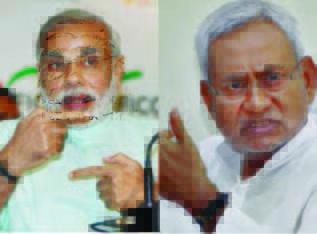
    PATNA (TIP): After declaring a war on his principal rival, Nitish Kumar, at his earlier rally held last week in Muzaffarpur, a northern town known as the ‘political capital’ of Bihar, Prime Minister Narendra Modi now seems to be Principal campaigners – Modi and Nitish pumping in all his energies to win the battle in this key eastern Indian state.

    A victory in Bihar will indeed come as a morale booster for the saffron camp ahead of the assembly polls in West Bengal and Uttar Pradesh. West Bengal goes to polls next year (2016) whereas the elections in politically more significant UP are scheduled to be held in 2017.

    The popular response it was able to get during one such rally held last week has only inspired the top BJP leadership to go for more action. Enthused by the impressive crowd which filled every inch of the sprawling Chakkar Maidan in Muzaffarpur and then climbed on trees and bamboo poles to hear Modi, the BJP has now planned three more rallies of him in Bihar in a bid to charge up the voters before the dates of assembly polls are announced by the Election Commission. The idea is to retain its old pockets of influence and then concentrate on weaker areas, especially the north-eastern region having significant presence of Muslims and Yadavs who are considered traditional voters of Lalu Prasad. It was with this mission that Modi rallies have been strategically planned for Bihar.

    The first town chosen for a Modi rally was Muzaffarpur whereas his subsequent rallies are scheduled to be held in Gaya on August 9, Saharsa on August 19 and Bhagalpur on August 30. The selection of the rally venues assumes much significance since all these venues are located in four different corners of the state having great political significance. While Muzaffarpur located in the northern region of the state is known for the kind of rare political consciousness among voters, southern town Gaya is a prominent Hindu pilgrimage city where millions of pilgrims descend every year during the fortnight-long “Pitripaksha Mela” to ensure salvation to the departed souls of their ancestors. The BJP thinks this could be the ideal place for the party rally.

    These are the two regions where the BJP-led NDA had made huge gains during the last LS polls-making a virtual clean sweep in reality. This can be underlined from the fact that of the total 31 seats won by the NDA, 28 came from these two regions alone. While the NDA bagged all the 18 seats in north Bihar, it emerged victorious on 10 seats falling under the south-central Bihar. It was only Nalanda which went to the JD-U kitty. During the last 2010 assembly elections as well, the NDA had given a terrific performance in the region. Especially in north Bihar, the NDA which then comprised JD-U and the BJP had clinched victory over 91 of the total 109 seats. While the JD-U had won 49 seats, BJP emerged victorious on 42 seats. It’s obvious now the pressures are on the BJP to retain its hold in the coming assembly elections as well. A repeat of the past performance will only give a walkover to the NDA in the polls.

  • Trump Trumpets on, Leads

    Trump Trumpets on, Leads

    NEW YORK (TIP): This man, according to a  new Quinnipiac University poll published Thursday, July 30, is found by 58%American voters as not honest and not trustworthy. Yet, the guy leads his rivals in the GOP. He has a similarity with Hillary Clinton here. She, too, is not considered honest and trustworthy by 57% of voters,

    “Republicans say Trump is honest and Democrats say Clinton is honest, but among all voters, both candidates come up short,” said Tim Malloy, the assistant director of the Quinnipiac poll. “How can you become a general election front-runner if most voters don’t trust you?”

    In reply to a question recently, Donald Trump said that he doubts Hillary Clinton’s trustworthiness “between the emails, and the foundations, and all of the money that comes in, and the speech money, and then all of a sudden, lots of good things happen to the people who give over the money” in an interview broadcast on Wednesday’s “Hannity” on the Fox News Channel.

    Trump was asked of Clinton, “Do you think she’s honest and trustworthy? In the past you’ve donated money to her.” He answered, “I doubt it. I mean, look, you look at what’s going on, and you see what’s she’s done between the emails, and the foundations, and all of the money that comes in, and the speech money, and then all of a sudden, lots of good things happen to the people who give over the money.”

  • Indian nationals receiving extortion calls in NZ

    Indian nationals receiving extortion calls in NZ

    MELBOURNE (TIP): Indian nationals living in New Zealand are being targeted by callers posing as immigration officials demanding money, prompting authorities to warn Indians not to fall into their trap.

    The scammers have been using numbers which show up as the Immigration Contact Centre, but with a slight variation in the digits.

    The callers claim to be calling from Immigration New Zealand (INZ) and tell the person there has been a problem with the processing of their visa or arrival card information and demand a sum of money.

    The scammers want the money transferred into a Western Union account or they will face serious consequences including deportation.

    “The phone calls are not from INZ, and people are being warned not to pay the money and instead report the call to police. We will never demand payment over the phone,” 3News channel quoted INZ as saying.

    The callers were aggressive and authoritative, said the ministry of business innovation and employment, and often had details about the person they were speaking to, which made the call seem genuine.

    Over a lakh Indian-origin people are residing in New Zealand.

  • The Indian Panorama’s Tribute to India’s Missile Man Bharat Ratna APJ Addul Kalam

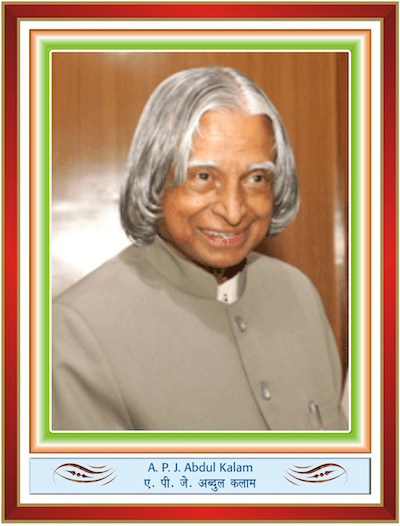
    The Indian Panorama’s Tribute to India’s Missile Man Bharat Ratna APJ Addul Kalam

    Shakespeare may as well had APJ Abdul Kalam, an outstanding human being, teacher, scientist, thinker and much more, in mind, when he penned these words in Julius Caesar in which Antony pays tribute to the slain Caesar.

    The spontaneous outpouring of public grief at the passing away of Bharat Ratna Abdul Kalam was unprecedented. Be it the long queues of people ranging from VIPs to slum dwellers wanting to pay personal homage to the great man, top trending of tributes to him on the social media, focus of all main stream media channels and newspapers, the sentiment was simply overwhelming. Rather than the usual and clichéd messages of condolences from nation’s leaders, there was a genuine feeling of a huge loss and several international leaders joined in to pay their respects.

    Prime Minister Narendra Modi, instead of issuing a formal note of condolence, wrote an entire column on the country’s Missile man saying that `Bharat has lost a Ratna, but the light from this jewel will guide us towards Kalam’s dream destination : India as a knowledge superpower, in the first rank of nations”.

    Abdul-KalamModi wrote that Abdul Kalam, who was genuinely loved and admired by the masses, “never measured success by material possessions. For him, the counterpoint to poverty was the wealth of knowledge, in both its scientific and spiritual manifestations”. He concluded by saying that he was father to every Indian child and “the good that he did, will not be interred with his bones, because his children will preserve his memory through their lives and work, and gift it to their children”.

    US President Barack Obama, in his condolence message spoke of Dr. Kalam’s great contribution in promotion of US – India space cooperation and forging stronger ties between the two countries. “A scientist and statesman, Dr. Kalam rose from humble beginnings to become one of India’s most accomplished leaders, earning esteem at home and abroad. An advocate for stronger US-India relations, Dr. Kalam worked to deepen our space cooperation, forging links with NASA during a 1962 visit to the United States. His tenure as India’s 11th President witnessed unprecedented growth in US-India ties. Suitably named “the People’s President”, Dr. Kalam’s humility and dedication to public service served as an inspiration to millions of Indians and admirers around the world.”

    APJ2 APJ1In his event-filled 83 year long life, Abdul Kalam had evidently touched millions of lives and his life was in itself a message and inspiration. All those who were fortunate to interact with him, and he never let go an opportunity, he left a lasting impression which remained with that person for an entire life time. Be it the scientific community, the educators, the students, world leaders and even the media, everyone who met him left mesmerized by the man’s simplicity and humility. At the same time, all that weighed on his mind, all the time, was the development and growth of India and the improvement in the quality of life of its citizens, particularly those belonging to the rural areas. His pet and passionate project remained PURA (Providing Urban Facilities in Rural Areas) and he looked for opportunities to spread his vision.

    Such was the respect he commanded among all sections of the society, including the political parties, that he emerged as one of the rare consensus candidate for the post of president in 2002 yet he kept himself aloof from politics and never got into any discussion on the subject. Even when the then Pakistan President Parvez Musharraf visited India in 2005, he gave him a complete lesson on his vision on improving the living standards of the poor and the downtrodden. He advised Musharraf to initiate a program in his country on the lines of PURA and assured him all help in the area.

    He was not just a role model for millions of Indians and even those in other countries, he led by personal example. He led a simple life and immersed himself into studying. He was childlike in his approach towards learning. An example of never-say-die attitude was his desire to ride in a Sukhoi-30 fighter jet cockpit at the age of 74. It is not easy to ride the small jet and most youngsters one-third that age would fall sick of the speed and maneuvers of the fighter plane. Yet Kalam insisted and flew the jet for about 40 minutes. His pilot, Air Commodore Ajay Rathore, who sat next to him later said he behaved as excited as an eight year old boy and was in great spirits throughout.

    Born in a boatman’s family at Rameshwaram on October 15, 1931, Avul Pakir Jainulabdeen Abdul Kalam faced a tough childhood. He graduated in Physics in 1954 from St Joseph’s College, Tiruchirapalli and studied Aeronautical Engineering at the Madras Institute of Technology. He later joined Indian Scientific Research Organisation (ISRO) and made significant contribution as project director to develop the country’s first indigenous Satellite Launch Vehicle (SLV-III) which injected the Rohini Satellite in the earth’s orbit in 1980 thus making India a member of the exclusive international space club. After working at ISRO for two decades he was given the responsibility of developing guided missiles as chief executive of the Integrated Guided Missile Development Programme at the Defence Reseach and Development Organisation (DRDO) in 1982.

    He was responsible later for the development and operationalization of AGNI and PRITHVI missiles. He played a vital role in building indigenous capability in critical technologies. He was subsequently made the Scientific Adviser to Defence Minister and Secretary, DRDO from July 1992 to December 1999.

    He was the main force behind the weaponization of the strategic missile systems and the Pokhran-II Nuclear blasts in collaboration with the department of Atomic Energy which made India a Nuclear power state.

    He was awarded the Padma Bhushan in 1981, Padma Vibhushan in 1990 and was conferred the highest civilian award, the Bharat Ratna, in 1997 and served as the country’s 11th president from 2002 to 2007.

    Even as the President, he redefined the Indian presidency. Till he was elected with an overwhelming 9,22,884 votes (the only invalid vote had a note saying he would look much better with a hair cut !), the office of the president of India was considered that of a titular head. In fact his advent to the post came shortly after the 2002 riots in Gujarat when communal situation in the country was on a boil. The then Prime Minister Atal Behari Vajpayee, in a political masterstroke, proposed Kalam’s name as the president and the opposition Congress readily agreed to support him. He made it a point to visit riot ravaged Gujarat despite objections from the government of the day. Throughout his tenure he remained active and earned the epithet of People’s President.

    APJ3A devout Muslim, a player of Veena and a profound lover of Carnatic classical music, as comfortable with Quran as the Bhagwat Geeta, first unmarried Indian President, spiritual thinker and much more, he was a multi-faceted personality.

    Abdul Kalam often spoke at length about his childhood in Rameswaram as a boatman’s son. However, it was never about tragic struggles or of events that should be remembered with either pity or outrage. There was no anger or bitterness; it was always about hard work and hope. He believed in dignity of labor and was as comfortable with primary students as with scientists and thinkers, and world leaders.

    However, he was most passionate as a teacher. He once said : “If the people remember me as a good teacher that will be the biggest honour for me” .

    That’s what he was doing when the end came. In fact his last day on Mother Earth itself is a reflection of what a great man he was. Even at his age, he preferred to travel by the circuitous road from Guwahati to Shillong – to deliver a lecture and interact with students. While on his way to Shillong, he noticed that a pilot vehicle ahead of his convoy had a man (a security personnel) standing in a vehicle even as the convoy meandered its way up the 100-kilometer route to Shillong. He asked those sitting next to him to ask the man to sit down but was told that he was merely doing his duty.

    Not convinced by the explanation but helpless in view of the security drill, Abdul Kalam reached Shillong and the very first demand he made was to call that man over. He profusely thanked him even as the bewildered security man didn’t expect such a gesture from a former president of the country. The man somehow gathered his wits and responded that he respected Kalam so much that he could have stood for even six hours or more. The gesture reflected the humbleness and kind hearted nature of Kalam.

    He then went to the stage to deliver the lecture which was to be followed by an interaction with the students. However, merely five minutes into the lecture he slumped down and was rushed to the hospital where he was declared dead. The man who had passion for teaching and spreading the light of knowledge all his life, died in consummation of exactly the same love. What a glorious end to an illustrious life!

    Indeed, “This was a Man”.

  • New York – JUL 31 Newspaper Edition

    New York – JUL 31 Newspaper Edition

    A New Way to Read This Week’s Print Edition

    The Latest from The Indian Panorama | New York Desk

    Reimagined for the Web
    Volume 9 Issue 30 | Desktop Edition | July 31


    VOL9ISSUE30NY
    Volume 9 Issue 30 | Desktop Edition | July 31

    The Indian Panorama is a South–Asian English newspaper with print editions in New York City, the Tristate area and now also as the first English Indian Newspaper from Dallas, printed weekly every Friday with in-depth coverage on Indian-Americans, Diaspora, India & The World.

    The newspaper is distributed free across the United States and is available at all Indian Temples, gurdwaras & Indian Stores.

  • Dallas JUL 31 Newspaper Edition

    Dallas JUL 31 Newspaper Edition

    A New Way to Read This Week’s Print Edition

    The Latest from The Indian Panorama | Dallas Desk

    Reimagined for the Web
    Volume 3 Issue 24 | Desktop Edition | July 31

    VOL3ISSUE24TX
    Volume 3 Issue 24 | Desktop Edition | July 31

    The Indian Panorama is a South–Asian English newspaper with print editions in New York City, the Tristate area and now also as the first English Indian Newspaper from Dallas, printed weekly every Friday with in-depth coverage on Indian-Americans, Diaspora, India & The World.

    The newspaper is distributed free across the United States and is available at all Indian Temples, gurdwaras & Indian Stores.

  • Yakub hanging timeline & The Midnight Drama

    Yakub hanging timeline & The Midnight Drama

    NEW DELHI (TIP)

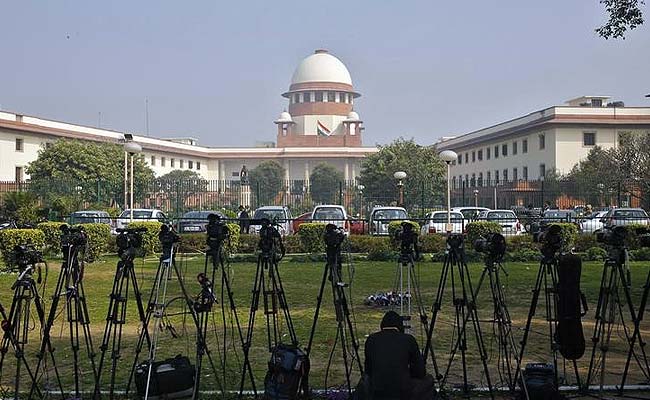
    In what was an unprecedented turn of events, the Supreme Court of India opened the doors of Court Room Number 4 at 3 am on Thursday to hear a fresh mercy plea by a battery of lawyers representing a convicted terrorist in the 1993 Mumbai serial blast case, Yakub Abdul Razak Memon. Two hours later his fate was sealed.
    The story goes back to Tuesday. In the light of a disagreement between a two judge bench hearing the case to stay Yakub Memon’s execution on July 30, Supreme Court Chief Justice HL Dattu constituted a larger bench of Justice Dipak Misra, Prafulla C Pant and Amitava Roy to discuss Memon’s plea again.

    The next day, one day before his slated hanging of Yakub Memon filed a fresh mercy plea with the President of India at 11 am. The same day at 4.30 pm, a three member bench of the Supreme Court dismissed his petition and at 5.30 pm, the mercy petition filed with the President is sent to the Union Home Ministry as per the usual procedure. Yet another mercy petition filed by him before the Maharashtra Governor is also rejected.

    At 9 pm, union Home Minister Rajnath Singh personally takes the file and goes to meet President Pranab Mukherjee to discuss the mercy plea. This meeting is also attended by Home Secretary L C Goyal and Solicitor General Ranjit Kumar.

    At 11 pm, President Pranab Mukherjee rejects the mercy plea. This paved the way for Yakub Memon to hang at 7 am at the Nagpur Jail.

    The Midnight Drama

    The drama, however, didn’t end there. In a dramatic turn of events, Yakub Memon moves the Supreme Court again, his lawyers urging the President to not take a decision overnight.

    Several lawyers including Prashant Bhushan, Anand Grover, Vrinda Grover, Nitya Ramakrishnan and Yug Choudhary representing Yakub Memon reached the  residence of CJI Dattu seeking a stay on the execution. Citing a Supreme Court judgement in the Shatrughan Chouhan VS Union of India case, a fresh petition was filed with the CJI seeking at least a 14 day clear gap between the rejection of mercy petition of the convict and the hanging. The registrar of the Supreme Court also reached the CJI’s residence and in an unprecedented and remarkable move, the CJI agreed to hear the plea that very night.

    He constituted a three member bench which had earlier in the day rejected the plea. Perhaps for the first time ever a court room in the Supreme Court was opened at 3 am to hear the plea.

    At 3 am, Attorney General Mukul Rohatgi entered court room no.4 and the hearing began. Yakub Memon’s lawyers argued that the earlier mercy plea was filed by his brother, today’s plea was his own. Since the plea has been rejected today, the mandated 14 day period before the hanging must begin today. The Attorney General stressed that multiple mercy petitions were an abuse of the system.

    The bench finally dismissed the petition around 5 am and Yakub Menon was hanged les than an hour and a half later at Nagpur this closing a sad chapter in the history of the country.

    While the eleventh hour opportunity given by the Supreme Court is seen as an example of the judiciary in the country opening its doors even for a last minute plea, the decisive stand taken by the Narendra Modi government on the rejection of Yakub Memon’s mercy petition has sent out a clear message that the government would come down with a heavy hand in dealing with terrorists.

    What may have pushed the government to act swiftly is the absolute lack of repentance expressed by Yakub and his family members for the Mumbai terror attacked which snuffed out so many innocent lives and maimed hundreds of others who continue to suffer since then.

    Although the date of hanging, which  coincided with Yakub’s birthday, may not be preplanned but the timing of the hanging just a couple of days after the terror attack near Gurdaspur and a couple of weeks before the Independence Day has sent out a strong message that the Modi government meant business.

    The hanging has, however, kicked up a controversy whether his hanging was justified particularly in view of reports that he had himself turned himself over to the authorities and that there was some kind of “deal” that was agreed upon before he came to India. His lawyers claimed there was an understanding while a former RAW officer too wrote that it was a surrender with conditions that he would not be awarded the capital punishment.

    The government and several other officers who had dealt with his case have denied there was a deal. They said he was detained when he was about to board a flight back to Dubai after consulting his lawyers. They say there can be no understanding with terrorists and their supporters. The fact that he was himself not directly involved with the bombings has also been rubbished by the government on the ground that he was aware of the conspiracy and had actively helped the perpetrators of the crime.

    Another debate that is raging in the light of Yakub’s hanging is whether the death penalty should be abolished as it leaves no remedy if any new evidence surfaces. Most commentators, however, say that this was not the right time to discuss the issue.

    Incidentally the courts in India have awarde death penalty in over 1000 cases since the independence but very few have  been sent to the gallows. Among the prominent who were hanged were the assassin of Mahatma Gandhi, the killers of Indira Gandhi and two rapists and killers Billa and Ranga.

    Those pleading for mercy for Yakub had also pointed out that though the incidents relating to the assassination of Rajiv Gandhi and the Sikh massacre had taken place much earlier, no accused has been hanged for the crimes. They also pointed out that all the three hanged in the last decade – Yakub, Afzal Guru and Afzal Kasab -belonged to a particular community.

    But there is a counter argument too – only five per cent of those awarded the death sentence since the Independence belonged to that community.

  • Placard war between Cong and BJP

    Placard war between Cong and BJP

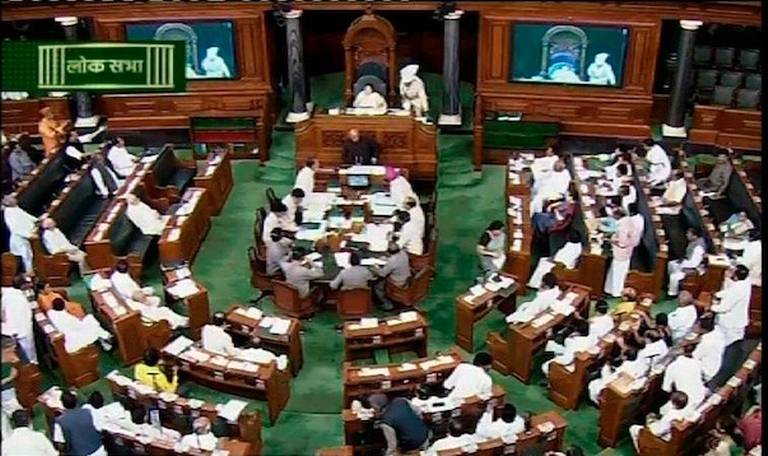
    NEW DELHI (TIP): In a clear disregard to parliamentary norms, Congress and BJP were engaged in a bitter placard war on July 23 to score political points over scams plagueing both the parties.

    The standoff between the two could wash out legislative business of the entire opening week of the Monsoon Session. Though opposition parties have been using placards besides slogan shouting inside both the Houses, ruling party lawmakers rarely use posters as means of protest. The BJP MPs, however, breached that parliamentary practice when some of them held placards in LS to highlight scams under the Congress regime in order to counter similar move by the opposition members.

    Hinting Congress president Sonia Gandhi’s son-in-law Robert Vadra’s alleged illegal land purchases, one the BJP posters scripted in Hindi stated: “Ulta chor kotwal ko daante, kisano ki zameen damaad ko baante (Like a thief rebuking cops, farmers’ land is given to the son-in-law).”

    “C for corruption, C for Congress” and “Congress ka raaj jahan, ghotalon ki baadh wahan (scams flood wherever Congress rules)” were other two placards waved by BJP members. Congress MPs who have been wearing black bands and displaying posters since Wednesday demanding resignation of External Affairs Minister Sushma Swaraj and two CMs — Shivraj Singh Chouhan and Vasundhara Raje — for their alleged involvement in Lalitgate and Vyapam scam, did again for the second day, adding some more catchy lines.

  • LAND BILL: CENTRE OPEN TO STATES FRAMING OWN LAWS

    LAND BILL: CENTRE OPEN TO STATES FRAMING OWN LAWS

    NEW DELHI (TIP): The government is open to the idea of states framing their own land acquisition laws, the joint parliamentary panel examining the related bill has been informed, a move which is seen as an effort to break the logjam on the contentious measure.

    Deposing before the Joint Panel of Parliament, Rural Development Secretary Vandana Kumari Jena yesterday said that the Union cabinet had discussed the issue threadbare on Tuesday night where a view emerged that states can be allowed to have their own laws, sources said.

    At the same time, she said she cannot share the verbatim details of the Cabinet proceedings and that only the Cabinet Secretary was authorised to do so.

    Meanwhile, sources in the government said the Centre may also include a fresh section in the law to allow state governments have the provision of a consent clause and social impact assessment while implementing the law.

    According to the proposal, if some states want to have social impact assessment and seek consent from farmers before acquiring their land, they will be free to do so.

    However, the parliamentary panel members were skeptical about the feasibility of this option. Congress’ Jairam Ramesh and Trinamool Congress’ Kalyan Banerjee are learnt to have questioned the Rural Development Secretary on the issue.

    The members sought clarification from Law Secretary P K Malhotra on what will happen if the central legislation and a legislation framed by a state government clash on certain issues. They also wondered whether the President will give his assent to laws by states when an identical central law is in place.

  • States’ power to remit prison term restored

    States’ power to remit prison term restored

    NEW DELHI (TIP): The Supreme Court on July 23 restored the discretionary powers of the state governments to grant remission to life convicts after freezing it for over a year.

    This power, however, cannot be exercised in cases investigated by Central agencies like the CBI or if convicts are tried under Central laws like Terrorist and Disruptive Activities (Prevention) Act.

    A five-judge Constitution bench presided over by Chief Justice H L Dattu lifted the stay imposed on July 9, 2014, but said that relaxation would also not apply where the convict has been sentenced to life term in cases of rape and murder.

    The court also clarified the interim order would not be applicable in the Rajiv Gandhi assassination case in which the Centre’s plea against the Tamil Nadu (TN) government’s decision to grant remission for release of the seven life convicts was under consideration.

    It also said that the restoration of the states’ power of remission under Sections 432 and  433 of the CrPC to release life convicts may be used for considering relief for those who have undergone prison term of 14 or more years. The court passed its order after several states, including Karnataka, contended that the previous direction came in the way of releasing convicts languishing in jails for several years.

  • SHIVRAJ SINGH CHOUHAN PLANS ORDINANCE TO RENAME, REVAMP VYAPAM

    SHIVRAJ SINGH CHOUHAN PLANS ORDINANCE TO RENAME, REVAMP VYAPAM

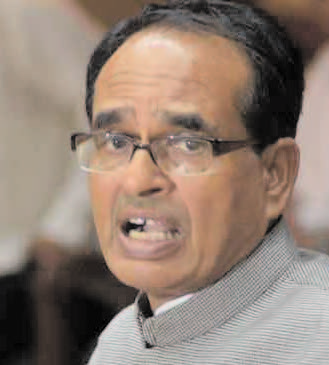
    BHOPAL (TIP): The Madhya Pradesh government will take the ordinance route to rechristen and overhaul the tainted examination and recruitment agency, Vyapam, after it failed to bring a bill in the monsoon session of the state assembly, which lasted all of three days. Ruckus over the Vyapam scam forced the Speaker to adjourn the assembly sine die on Wednesday.

    Chief minister Shivraj Singh Chouhan wants to change Madhya Pradesh Vyavsayik Pariksha Mandal, better known as Vyapam, to MP Pravesh Evam Bharti Pariksha Mandal as Vyapam has become a dirty word. However, Chouhan ran into trouble at a meeting of senior ministers that he had called on Monday to discuss the draft bill for rechristening Vyapam, sources said.

    At present, only an officer of the chief secretary rank is eligible for appointment as Vyapam chairman and Chouhan wants to change this provision to include retired chief secretaries. However, known Chouhan baiter and his cabinet colleague Babulal Gaur opposed this proposal despite chief secretary Anthony DeSa’s plea that at times it becomes difficult to get an officer of CS level for the post.

    “My only concern was that it would be difficult to fix accountability of a retired chief secretary,” Gaur said.

    Technical education minister Umashankar Gupta, who also attended the meeting, confirmed the move on the ordinance. “The government wants to further streamline Vyapam by bringing autonomy. There should be more monitoring and period of the officials on deputation should be fixed,” he said.

    However, he refused to reveal more, saying: “When would it (ordinance) be done can’t be said.”

    Ironically, the day the government was discussing how to cleanse the scam-ridden body, Vyapam received an ISO certification.

  • Pachauri sacked as TERI chief, Ajay Mathur appointed new head

    Pachauri sacked as TERI chief, Ajay Mathur appointed new head

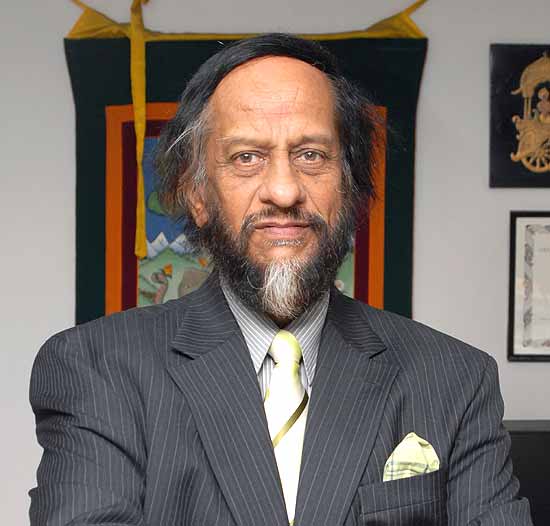
    NEW DELHI (TIP): After 33 years of service, environmentalist R K Pachauri, accused of sexual harassment, was removed as the chief of The Energy and Resources Institute (Teri) on July 23.

    Pachauri had recently succeeded in obtaining a court order that enabled him to resume work at the institute.

    The governing council of Teri, which met in Bengaluru, removed Pachauri and appointed Ajay Mathur— an old Teri hand, currently the director-general of Bureau of Energy Efficiency — to head the organisation.

    Pachauri’s removal comes six months after a young woman  colleague accused him of sexual harassment. The septuagenarian, who is fighting a court battle in this regard, attended office only two days ago armed with an order from a Delhi court that allowed his entry to all Teri offices, except its headquarters in Lodhi Road and Gurgaon office.

    This had upset the victim, who gave television interviews claiming that while Pachauri was welcomed back with garlands and flowers, she was shunted out of work. She also appealed to the governing council to take strong action against the tainted chief.

    Last Friday, after getting a favourable court order, he had issued a statement saying he  looked forward towards “ensuring a safe and secure workplace that is sensitive to human values and dignity, particularly in respect to gender and social class”.

    Following the allegation from the 29-year-old woman, TERI had also formed an internal committee to probe the charges. The three-member committee, headed by a senior TERI official, whose husband used to work in the prime minister’s office, also found Pachauri guilty, sources said. The panel noted that when the woman resisted his advances, Pachauri retaliated by taking away her work.

    The governing council had considered the possibility of taking action on the report by the internal complaints committee at TERI. “Action on this report has been stayed by the court. This judgment of May 29, 2015 also stated that the principles of natural justice have not been followed at all by the said committee, contrary to rules. The governing council of TERI respects all court proceedings and abides by its direction,” the institute said in a statement. In February, Pachauri resigned as the chairperson of the UN Inter-governmental Panel on Climate Change in the wake of the allegations and police complaints, after serving the UN body for 13 years. As the IPCC chair, he accepted the Nobel Prize, which was awarded to the world climate body in 2007.

  • By 2020, India will be Hindu nation: Singhal

    By 2020, India will be Hindu nation: Singhal

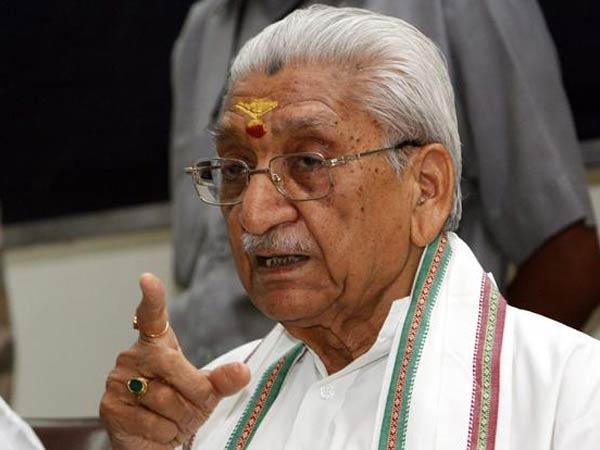
    NEW DELHI (TIP): The VHP has put the NDA government in a tight spot with its patron Ashok Singhal on Saturday declaring that India will be a Hindu nation by 2020, following the BJP’s victory in the 2014 polls.

    Singh described the 2014 general elections as a “revolution” in the country. “I was at the Sai Baba Ashram where Sai Baba told me by 2020 the entire country will be Hindu by 2030 the entire world will be Hindu. I feel that revolution has started,” he said at a function to mark the release of a book on the life and work of former RSS chief K S Sudarshan, who died in 2012.

    The VHP leader said the BJP’s electoral win ended 800 years of “slavery” and “this is not a modest revolution. It will not remain confined to India but present a new ideology before the world”. “Sudarshan ji was not only a saint but a visionary who had predicted that a revolutionary change in the country will begin in 2012 and ultimately that happened in 2014,” he said, alluding to the BJP-led alliance’s victory in the 2014 Lok Sabha polls. External Affairs Minister Sushma Swaraj, who took part in the function, spoke about the role of Sudarshan who, she said, had genuine concern for the development of the country and advocated the “swadeshi” model of development.

    Singhal’s remarks came after a break in controversial statements by the Sangh hotheads, who were asked by the RSS leadership to fall silent.

    Modi and the BJP chief had complained that rows created by them were aiding the opposition to divert attention from the work of the NDA government, which was keen to revive the economy and bring much needed investment in infrastructure and other sectors.

    Modi, who avoided the controversies initially, was later forced by the opposition to break his silence in February over religious freedom. Since then, he has spoken a number of times on protecting the rights of minority communities, with the latest one being in June, when he told Muslim leaders that he doesn’t believe in politics that divides people on communal lines.

  • RAHUL KICKS OFF PADYATRA IN AP TO RAISE FARMERS’ ISSUES

    RAHUL KICKS OFF PADYATRA IN AP TO RAISE FARMERS’ ISSUES

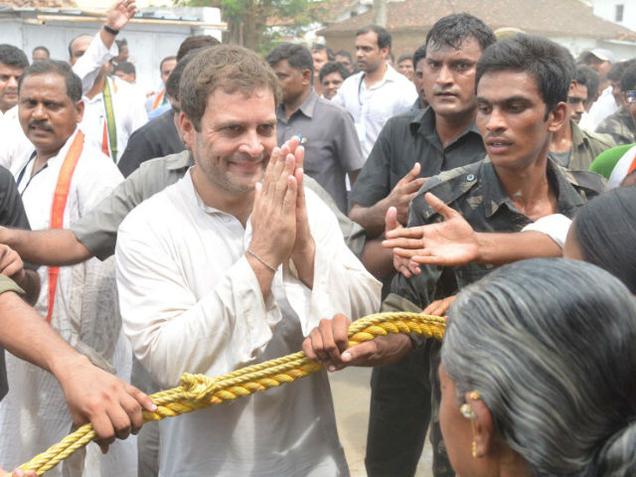
    ANANTAPUR (TIP): Congress Vice President Rahul Gandhi on July 24 began his 10 km-long ‘padyatra’ from a village in the district to highlight the issues faced by farmers and women Self-Help Groups.

    Rahul, who has reached out to farmers during similar visits and foot marches in states like Punjab, Maharashtra, Telangana and more recently Rajasthan, kicked off his padayatra from Obuladevara Cheruvu village to Mamilakuntapalli, a three-km stretch, where he is scheduled to have an interaction with farmers, weavers and students.

    He kicked off his yatra from the village where Indira Gandhi had addressed a meeting in 1979. During the course of his yatra, he would hold interactions in three villages of the district with farmers, MGNREGS workers and with women SHGs. The leader would also meet the family of farmer Harinath Reddy, who allegedly committed suicide.

    “He would walk for 10 kilometres. In fact, (Rahul’s grandmother) Indira Gandhi had addressed a meeting at the village in 1979. There would be three-four interactions with students, farmers and self-help group women,” APCC president N Raghuveera Reddy had said yesterday.

    Rahul will undertake his second stretch of padyatra from Mamilakuntapalli to Daburavaripalli (5 kms). Later, he will have an interaction with women SHGs and visit Deburavaripalli habitation.

    The third stretch of Rahul’s padyatra will be between Daburavaripalli to Kondakamarla (2 kms) where he will interact with MGNREGS workers and family members of migrant labourers.

    Later, the Congress vice president will go to Puttaparthy and receive representations from people, besides holding interaction with senior Congress leaders. He will also visit the ‘Maha Samadhi’ of Sri Satya Sai Baba. Gandhi’s visit, the first after bifurcation of Andhra Pradesh, is being seen as an effort to strengthen the party’s base in the state after it drew a blank in the Assembly and Lok Sabha elections held in 2014.

    The ruling TDP in the state and YSR Congress, had yesterday hit out at Rahul, blaming the Congress for bifurcation of Andhra Pradesh and the “gross injustice” to Semaandhra.

  • DRAFT IFC DILUTES RBI CHIEF’S POWER

    DRAFT IFC DILUTES RBI CHIEF’S POWER

    NEW DELHI (TIP): In a move that may dilute powers of RBI chief, the government today proposed taking away his authority to veto the interest rate decision of the central bank’s monetary policy committee.

    The revised draft of Indian Financial Code (IFC), released today by the Finance Ministry, has also proposed that the all-powerful committee would have four representatives of the government and only three from the central bank, including the ‘RBI Chairperson’.

    The draft talks of ‘RBI Chairperson’ and not ‘RBI Governor’. RBI is headed by a Governor, at present.

    The IFC, which is conceived as an overarching legislation for the financial sector, proposes a monetary policy committee which will be entrusted with the task of deciding the key policy rate and chasing the annual retail inflation target to be decided by the government in consultation with RBI. “Inflation target for each financial year will be determined in terms of the Consumer Price Index (CPI) by the Central Government in consultation with the Reserve Bank every three years,” said the draft on which the Finance Ministry has invited comments till August 8.

  • Sandra Bland’s death ruled suicide by hanging; family skeptical

    Sandra Bland’s death ruled suicide by hanging; family skeptical

    DALLAS (TIP): Sandra Bland, like many people her age, regularly voiced opinions about racism and other topics on social media.

    The 28-year-old posted about going natural with her hair, the “Black Lives Matter” movement, and even offered a “shout out” to a girl who handed her a bottle of water after a John Legend concert. On Facebook, using the #SandySpeaks hashtag, she would monologue about police brutality and the plight of African Americans.

    “Being a black person in America is very, very hard,” she said in a video posted in April. “At the moment black lives matter. They matter.”

    Her last tweet, dated June 18, offered prayers for the nine people gunned down by a young white man a day earlier during a Bible study meeting at the historically black Emanuel African Methodist Episcopal Church in Charleston, South Carolina.

    On July 13, Bland was found hanging from a noose made from plastic bag in her cell at the Waller County Jail in Texas, where she was incarcerated after allegedly assaulting an officer during a July 10 traffic stop.

    Her death is being investigated as a murder, though authorities have said Bland appeared to have hanged herself. The cause of her death has been determined to be hanging; the manner of death, suicide, according to early autopsy results that do not show obvious signs of a violent struggle.

    Her family has said the idea that she committed suicide is unthinkable.

  • Sharif to meet Obama in White House in October

    Sharif to meet Obama in White House in October

    WASHINGTON (TIP): Barack Obama is inviting Pakistan beleaguered Prime Minister Nawaz Sharif to the White House in October, raising the prospect of a second such visit in two years despite the US President reneging on his pledge to visit Pakistan during his second term.

    The invitation is evidently aimed at shoring up US support for Sharif at a time he has been promoting peace with India in the face of depredations of the Pakistan military intent on undermining his moves. The US is also seeking to prevent Pakistan from moving completely out of its sphere of influence, while seeking its continued cooperation in Afghanistan.

    ”It will be an important visit. It shows that the US supports policies of the

    (Sharif’s) government to create peace in the region by defeating militants and strengthening economy,” an unnamed Pakistani official was quoted as saying in Islamabad, where news of the invitation was first leaked. The White House has not confirmed the visit at the time of writing.

    Sharif last visited Washington in October 2013 in a effort to lift US-Pakistan ties out a rut after the Obama administration caught Osama bin Laden hiding in a military garrison town of Abbottabad, right under the nose of – and suspected to be protected by – the Pakistani military. Since then, the Pakistani military has continued to undermine sharif, virtually hijacking the country’s foreign policy in a continuation of its disastrous “strategic depth” outlook.

    The Sharif dispensation is trying to reclaim some foreign policy prerogatives in the fact of the country’s plunging economic woes. Sharif’s Special Assistant Tariq Fatemi is in Washington this week, meeting with National Security Advisor Susan Rice, Senate Foreign Relations veteran Dianne Feinstein and Bob Casey, among others, to emphasize that the country’s civilian establishment is still very relevant and needs to be supported.

    The invitation to Washington is a consequence of the Obama administration recognizing that, even though Washington continues to deal separately with the Pakistani military because of its compulsions in Afghanistan where the Pak military holds the key.

    Obama had pledged to visit Pakistan soon after his first visit to India in 2010, but that visit never materialized. In fact, chances of a visit evaporated after bin Laden was found in Pakistan. Obama visited India a second time in January this year as a guest of honor at the country’s Republic Day festivities signaling a dynamic shift in strategic priorities in the region.

    The invitation to Sharif to visit Washington is also ostensibly aimed at preventing Pakistan from completely falling over into the Chinese and Russian sphere of influence, a prospect some Pakistani strategists have raised in an effort to cadge US support. Another new card in Pakistan’s bag of tricks is to invoke the threat of the Islamic State (IS) spreading its influence in Pakistan in order to extract further US munificence.

    Some US lawmakers have already taken the bait to argue that Washington needs to remain engaged with Pakistan to prevent both these possibilities.

  • Pakistan to include ‘India’s role’ in school attack in dossier

    ISLAMABAD (TIP): Pakistan would include proof of alleged Indian involvement in the Taliban attack on a Peshawar army school last year, which killed 152 people mostly kids, in a dossier that it would handover to India.

    A top Pakistani government source told media this on Thursday and added Pakistan’s national security advisor (NSA), Sartaj Aziz, would hand over the dossier to his Indian counterpart, Ajit Doval.

    He said the dossier would include evidences of alleged Indian involvement “in sponsoring and promoting terrorism” in Karachi and Baluchistan as well.

    The source said the interior ministry was working on the dossier and gathering evidences from various departments and agencies.

    “The ministry after completion of its work will forward the document to foreign affairs ministry for its inputs,” the source said on the condition of anonymity.

    “The record to be shared with New Delhi will include proof of R&AW’s involvement in sowing seeds of separatism in Baluchistan. R&AW provides logistics, travel facilities and platforms to separatist Baluch elements.”

    Sources told media Pakistan has shared proof about India’s alleged involvement in Baluchistan earlier as well.

    “The evidences shared with India include a copy of Indian passport issued to exiled Baluch separatist leader Brahamdagh Bugti.”

    Brahamdagh, a grandson of slain Baluch nationalist Nawab Akbar Bugti, had earlier welcomed Indian support saying they consider any country that supports their cause as their friend.

    Pakistan’s foreign office spokesman, Qazi Khalilullah, told TOI the meeting of NSAs has not yet been finalized and it would be premature to talk about the issues Pakistan would raise.

    The two countries decided to hold NSA-level talks after Prime Minister Narendra Modi met his Pakistani counterpart, Nawaz Sharif, in Russia recently.

    Sharif was criticized for not raising Kashmir, Samjautha blast case, water dispute and India’s alleged role in sponsoring terrorism in Pakistan at the meeting.

  • Afghanistan’s Bamiyan on frontline of warzone tourism

    BAMIYAN, AFGHANISTAN (TIP): Trudging halfway up a jagged goat trail, guide Mohammad Ibrahim extolled the panoramic view — a vast, ancient landscape of russet-hued cliffs that is on the frontline of Afghan efforts to jumpstart warzone tourism. Bamiyan — famous for empty hillside niches that once sheltered giant Buddha statues that were blown up by the Taliban — is a rare oasis of tranquility that has largely been spared the wrenching conflict that afflicts the rest of Afghanistan.

    Once a caravan stop along the fabled Silk Road, the central Afghan city was recently named this year’s cultural capital of South Asia, igniting hopes of restoring its place on the global tourism map. One obstacle, however, remains: Bamiyan is hemmed in by war. Figuring out how to get to the ancient city –endowed with stunning landscapes but wedged between volatile provinces — itself is a challenge.

    But that doesn’t stop Ibrahim, head of the local tourism association with a penchant for Indiana Jones-style straw hats, from making his sales pitch. “Bamiyan has caves with the world’s oldest oil paintings, the country’s first national park and during winter it’s home to Afghanistan’s only ski slopes,” he said, sounding like a walking tourism brochure. Hiking up to the ruined ramparts of Shahr-e-Gholghola — the City of Screams, which was destroyed by Genghis Khan in the 13th century — Ibrahim stopped to catch his breath and picked up a spent bullet shell from the ground, one of many Soviet-era casings that litter the windswept trail overlooking the sandstone cliffs and snow-clad pyramids of the Hindu Kush range.

  • Talks resume on long-awaited Myanmar ceasefire deal

    YANGON (TIP): The Myanmar government and armed ethnic minority groups resumed critical talks on Wednesday to reach a nationwide ceasefire agreement that would end six decades of fighting before an upcoming general election that threatens to upend hard-won progress toward a deal.

    More than a dozen ethnic minority groups and government representatives have been in talks for more than 18 months and a key negotiator warned that failure to reach an accord could trigger a fresh round of fighting if the military takes action. The general election, which would usher in a new president, takes place in November.

    “If negotiations fail and the military believe that the nationwide ceasefire agreement cannot be signed under the present government, they will have no choice but to launch military operations,” said Hla Maung Shwe, of the Myanmar Peace Center.

    The center, funded by the European Union, was set up in 2012 to help with ceasefire negotiations and the ethnic peace process.

    The prospect of reaching a deal as soon as possible, however, was uncertain.

    Key details were still up in the air today, including which ethnic groups will participate.

    Negotiations hit a snag in June when minorities attending a summit asked the government to allow three other groups still at odds with the government to participate in the ceasefire signing.

  • Maldives sacks vice-president for ‘treason’

    COLOMBO (TIP): The Maldives parliament said on July 23 it has sacked the country’s vice-president and accused him of treason, as international concern mounts over the state of democracy on the honeymoon islands.

    Lawmakers voted overwhelmingly on Tuesday evening to oust Mohamed Jameel, who was the running mate of President Abdulla Yameen in a controversial 2013 election but has now fallen out with him. The 45-year-old, who was abroad at the time of the vote, was also accused of colluding with the opposition, although the precise nature of the charge remains unclear. Yameen, the half-brother of former Maldivian strongman Maumoon Abdul Gayoom who ruled for three decades until 2008, already faces international criticism for jailing opposition leader and former president Mohamed Nasheed for 13 years on charges of terrorism in March.

    In June Nasheed was moved to house arrest to undergo medical treatment. The United Nations said the trial of Nasheed, the country’s first democratically elected leader, was “vastly unfair”, while US secretary of state John Kerry warned that democracy was under threat.

    Yameen and Jameel have been at loggerheads in recent months although both had worked together to defeat Nasheed. Jameel accused the president of sidelining him about four months after his November 2013 election.

    The sacked vice-president, who was not allowed legal representation, said Yameen was undermining the rule of law.

  • Anjuman-e-Badri hosts the annual Public Relations Event with politicians, community leaders in attendance

    Anjuman-e-Badri hosts the annual Public Relations Event with politicians, community leaders in attendance

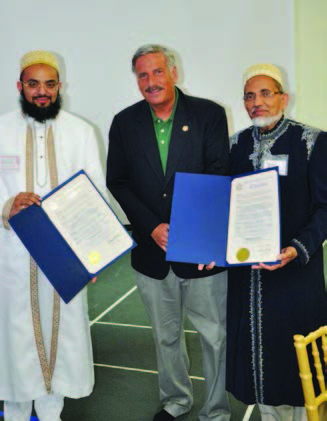
    NEW YORK (TIP): Anjuman-e-Badri hosted its annual public relations event at Jamali Markaz, Queens-New York. This event was attended by several local politicians which included councilmen, assemblymen, various supporters and Jamaat members. Also present was Congresswoman Grace Meng, who voiced her support for the Dawoodi Bohra community and wished everyone a Happy Eid.

    The Jamaat was presented with several citations applauding the Jamaat for its work in the community. Former Secretary of State Hillary Clinton sent a letter addressed to the Jamaat and extended her greetings to members.

    The distinguished gathering
    The distinguished gathering
    Yusuf Bhai Saheb, President , Anjuman-e-Badri addresses the gathering
    Yusuf Bhai Saheb, President , Anjuman-e-Badri addresses the gathering
  • Indian American Bhavuk Uppal arrested for killing 3 People in New Jersey Route 80 Crash

    Indian American Bhavuk Uppal arrested for killing 3 People in New Jersey Route 80 Crash

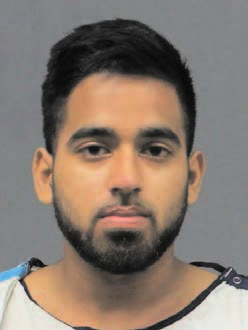
    MOUNTAIN LAKE, NJ (TIP): A Mountain Lakes man was arrested Saturday, July 11 morning by the New Jersey State Police for allegedly causing a chain reaction crash on Route 80 that killed a man, a woman and a baby.

    Bhavuk Uppal, 22, of Mountain Lakes, was charged with three counts of death by auto, two counts of assault by auto, causing death or injury while driving while suspended, possession of drug paraphernalia and DWI, State Police spokesperson Sgt. Jeff Flynn said.

    According to the preliminary investigation and the State Police report, Bhavuk Uppal, 22, of Mountain Lakes was driving a 2014 Cadillac Escalade in the left-center lane when he struck the Kia, which then impacted the Jeep, causing the Kia to become “fully engulfed” in flames. Uppal’s Cadillac then ran off of the right side of the roadway and overturned in a grass embankment.

    The Kia became fully engulfed in flames after the crash, Flynn said. The three occupants of the vehicle were pronounced dead at the scene at 4 a.m.

    According to Morris County prosecutors, Uppal has a long history of motor vehicle violations.

    “He has infractions for speeding, unsafe driving, driving without a license, fictitious plates, reckless driving, driving while suspended, and he’s been involved in multiple crashes,” says Prosecutor Matthew Brown) -Courtesy News 12

    Uppal is lodged in the Morris County Correctional Facility in lieu of $750,000 bail with no 10-percent option.

  • Nassau County and United Water Receive Award for Historic Public Private Partnership

    Nassau County and United Water Receive Award for Historic Public Private Partnership

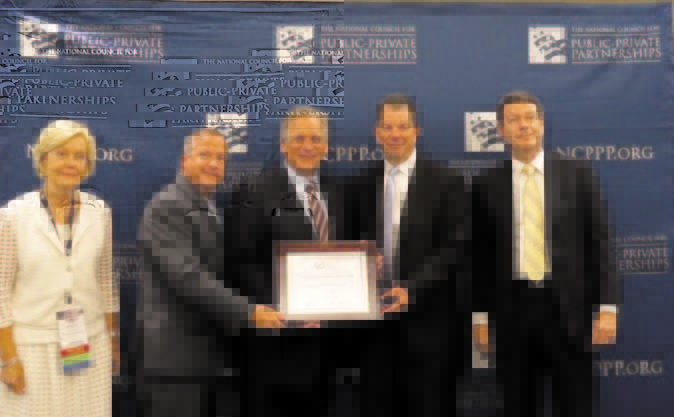
    MINEOLA, NY (TIP): Nassau County Executive Edward P. Mangano announced, July 21, that the historic public-private partnership between United Water and Nassau County received an award for innovation from the National Council for Public-Private Partnerships for its wastewater operation. The award ceremony took place at the P3 Connect 2015 National Conference for Public Private Partnerships in Boston.

    “My administration has continued to implement public-private partnerships that enhance County services while saving taxpayer dollars,” said County Executive Mangano. “This contract is a milestone for Nassau County and a commitment to improving the quality of life for every resident. Working in partnership with United Water, we will continue restoring health to our bays, marshlands and the surrounding environment.”

    United Water began its 20-year contract with Nassau County in January to operate and manage the County’s sewage treatment plants and collection system. The historic public-private partnership safeguards the environment, strengthens the quality of life in communities surrounding the treatment plants and saves the taxpayers a guaranteed minimum of $230 million during the term of the agreement.

    “The Nassau project proves our ability to deliver our professional resource management services on a project of this scale. It also demonstrates another dimension to our flexibility and ability to create a bridge that connects our expertise to meet municipal needs throughout North America,” said Bertrand Camus, Chief Executive Officer of United Water and Suez Environnement North America.

    “Through the National Public-Private Partnership Awards program, NCPPP recognizes those organizations and individuals going above and beyond to advance the concept and implementation of public-private partnerships across the country,” said NCPPP President Art Smith. “We are proud to recognize innovators and leaders whose work serves as exemplary partnership models.”