Month: July 2015

  • Transnationals | Tax Havens | Terrorism

    Transnationals | Tax Havens | Terrorism

    “Westphalian sovereignty is the principle of international law that each nation state has sovereignty over its territory and domestic affairs, to the exclusion of all external powers. The principle of non-interference in another country’s domestic affairs, and that each state (no matter how large or small) is equal in international law is recognized. This doctrine is named after the Peace of Westphalia, signed in 1648, which ended the Thirty Years’ War.” 

    “It is ironical that Terror organizations on one side and Tax havens on the other have completely undermined Westphalia consensus. In that context countries like India have every right to exercise its freedom to pursue terrorists who are undermining its existence whether sponsored by foreign countries or home grown. The concept of territorial jurisdictions and sovereignty are no more valid in the context of terror organizations since they damage both India and its own host countries over period of time. India must protect its national interests and institutions by challenging inimical forces wherever they are located without worrying about Westphalia consensus”.


    In the context of the strikes made against terror camps on the border of Manipur/Nagaland by the Indian Army; there has been number of discussions about national sovereignty and the role of individual States. Actually in the last few decades the activities of transnational corporations aided by tax havens on one side and terrorists on the other side have destroyed the concept of nation state and its sovereignty evolved after the 30 years’ war in 1648 in Westphalia. Westphalian sovereignty is the principle of international law that each nation state has sovereignty over its territory and domestic affairs, to the exclusion of all external powers. The principle of non-interference in another country’s domestic affairs, and that each state (no matter how large or small) is equal in international law is recognized. This doctrine is named after the Peace of Westphalia, signed in 1648, which ended the Thirty Years’ War .After that war major continental European states – the Holy Roman Empire, Spain, France, Sweden and the Dutch Republic – agreed to respect one another’s territorial integrity. As European influence spread across the globe, the Westphalian principles, especially the concept of sovereign states, became central to international law and to the prevailing world order.

    Scholars of international relations have identified the modern, Western-originated, international system of states, multinational corporations, and organizations, as having begun at the Peace of Westphalia. Henry Kissinger in his important book on “world Order” says:

    “No truly global “world order’ has ever existed. What passes for order in our time was devised in Western Europe nearly four centuries ago, at a peace conference in the German region of Westphalia, conducted without the involvement or even the awareness of most other continents or civilizations. A century of sectarian conflict and political upheaval across Central Europe had culminated in the Thirty Years’ war of 1618-48- a conflagration in which political and religious disputes commingled, combatants resorted to “total war” against population centers, and nearly a quarter of the population of Central Europe died from combat, disease, or starvation. The exhausted participants met to define a set of arrangements that world stanch the bloodletting. Religious unity had fractured with the survival and spread of Protestantism; Political diversity was inherent in the number of autonomous political units that had fought to a draw. So it was that in Europe the conditions of the contemporary world were approximated: a multiplicity of political units, none powerful enough to defeat all others, many adhering to contradictory philosophies and internal practices, in search of neutral rules to regulate their conduct and mitigate conflict.

    “The Westphalian peace reflected a practical accommodation to reality, not a unique moral insight. It relied on a system of independent states refraining from interference in each other’s domestic affairs and checking each other’s ambitions through a general equilibrium of power. No single claim to truth or universal rule had prevailed in Europe’s contests. Instead, each state was assigned the attribute of sovereign power over its territory. Each would acknowledge the domestic structures and religious vocations of its fellow states as realities and refrain from challenging their existence. With a balance of power now perceived as natural and desirable, the ambitions of rules would be set in counterpoise against each other, at least in theory curtailing the scope of conflicts. Division and multiplicity, an accident of Europe’s history, became the hallmarks of a new system of international order with its own distinct philosophical outlook. In this sense the European effort to end its conflagration shaped and prefigured the modern sensibility: it reserved judgment on the absolute in favor of the practical and ecumenical; it sought to distill order from multiplicity and restraint.

    “The seventeenth-century negotiators who crafted the peace of Westphalia did not think they were laying the foundation for a globally applicable system. They made no attempt to include neighboring Russia, which was then reconsolidating its own order after the nightmarish “Time of Troubles” by enshrining principles distinctly at odds with Westphalian balance; a single absolute ruler, a unified religious orthodoxy, and a program of territorial expansion in all directions. Nor did the other major power centers regard the Westphalian settlement (to the extent they learned of it at all) as relevant to their own regions.1

    The three core principles on which the consensus rested are:

    1. The principle of the sovereignty of states and the fundamental right of political self determination
    2. The principle of legal equality between states
    3. The principle of non-intervention of one state in the internal affairs of another state

    Interestingly, all three are questioned by contemporary leaders of West and radical Islam.

    Tony Blair the then Prime Minister of UK in his famous Chicago Address -1999-suggests

    “The most pressing foreign policy problem we face is to identify the circumstances in which we should get actively involved in other people’s conflicts. Non -interference has long been considered an important principle of international order….

    “But the principle of non-interference must be qualified in important respects. Acts of genocide can never be a purely internal matter. When oppression produces massive flows of refugees which unsettle neighboring countries then they can properly be described as “threats to international peace and security”.2

    The NATO intervention in Kosovo and Afghanistan as well as US intervention in Iraq provide recent examples of breakdown of idea of Westphalia. Similar is the humanitarian crisis faced by India regarding refugees from East Pakistan.

    Interestingly Radical Islam also considered that the world order based on Westphalian consensus will collapse. “In the aftermath of the 11 March 2004 Madrid attacks, Lewis ‘Atiyyatullah, who claims to represent the terrorist network al-Qaeda, declared that “the international system built up by the West since the Treaty of Westphalia will collapse; and a new international system will rise under the leadership of a mighty Islamic state.”3

    The spread of ISIS across countries and activities of Boko Haram based in Nigeria in Kenya and Chad re-emphasis this point. Radical Islam do not accept territorial boundaries since it works for a global regime for global Ummah.

    The recruitment by these terror organizations is also across continents and countries which does not respect territorial sovereignty. The talk about Caliphate indicates that they are trans-border organizations.

    On the other side we find global corporations transcending sovereignty in search of global profits. For this they use tax havens as a tool.

    Tax havens–numbering more than 70 jurisdictions–facilitate bank facilities with zero taxes and no-disclosure of the names and in many cases anonymous trusts holding accounts on behalf of beneficiary. Basically lawyers and Chartered accountants will deal with mattes. Sometimes a post box alone will be operative system. In the case of Bahamas one building seems to have had tens of thousands of companies registered there.

    Luxemburg (population half a million!) registered companies of various countries have evaded taxes significantly from their legal jurisdiction. The key findings of the activities of transnational companies cutting across territorial jurisdiction is given below.

    • Pepsi, IKEA, AIG, Coach, Deutsche Bank, Abbott Laboratories and nearly 340 other companies have secured secret deals from Luxembourg that allowed many of them to slash their global tax bills.
    • PricewaterhouseCoopers has helped multinational companies obtain at least 548 tax rulings in Luxembourg from 2002 to 2010. These legal secret deals feature complex financial structures designed to create drastic tax reductions. The rulings provide written assurance that companies’ tax-saving plans will be viewed favorably by Luxembourg authorities.
    • Companies have channeled hundreds of billions of dollars through Luxembourg and saved billions of dollars in taxes. Some firms have enjoyed effective tax rates of less than 1 percent on the profits they’ve shuffled into Luxembourg.
    • Many of the tax deals exploited international tax mismatches that allowed companies to avoid taxes both in Luxembourg and elsewhere through the use of so-called hybrid loans.
    • In many cases Luxembourg subsidiaries handling hundreds of millions of dollars in business maintain little presence and conduct little economic activity in Luxembourg. One popular address – 5, rue Guillaume Kroll – is home to more than 1,600 companies.
    • A separate set of documents reported on by ICIJ on Dec. 9 expanded the list of companies seeking tax rulings from Luxembourg to include American entertainment icon The Walt Disney Co., politically controversial Koch industries and 33 other firms. The new files revealed that alongside PwC tax rulings were also brokered by Ernst & Young, Deloitte and KPMG, among other accounting firms.4

    The big four accounting firms namely KPMG/E&Y/Deloitte and PwC have facilitated the movement of funds of clients across borders and territories to make tax “planning” easier for these companies. USA is literally waging war with major Giants like Amazon/Google/Microsoft etc. for not paying adequate taxes in USA in spite of being US based companies. Most of these companies have moved their profits to other Tax Havens.

    Global firms such as Starbucks, Google and Amazon have come under fire for avoiding paying tax on their British sales. There seems to be a growing culture of naming and shaming companies. But what impact does it have?5

    Royal Commission into tax loopholes a must—says a report in Australia.6

    There is an increasing clamor in USA about Congress Should Pass the Stop Tax Haven Abuse Act to Combat International Tax Avoidance. This has been highlighted by both TAX justice network as well as Global Financial Integrity.

    A simple method of trade mis-invoicing by global companies using tax-havens have impacted developing countries nearly 730Billion USD in 2012 says Global Financial integrity. Another interesting finding by GFI is about terror financing using Tax haven route.

    Because of the increasing wariness of MNCs using Tax havens for avoidance of taxes and the opaque ways of functioning of these off-shore structures, demands are growing about their activities and even closing down of these tax havens by European parliament etc.

    Due to relentless pressure from OECD as well as G20 many of these secretive jurisdictions are becoming more transparent.

    But the fact of the matter is these Trans National Companies and Tax Havens together have significantly undermined the concept of sovereignty and territorial jurisdictions.

    It is ironical that Terror organizations on one side and Tax havens on the other have completely undermined Westphalia consensus. In that context countries like India have every right to exercise its freedom to pursue terrorists who are undermining its existence whether sponsored by foreign countries or home grown. The concept of territorial jurisdictions and sovereignty are no more valid in the context of terror organizations since they damage both India and its own host countries over period of time. India must protect its national interests and institutions by challenging inimical forces wherever they are located without worrying about Westphalia consensus.

    (The author is Professor of Finance at IIM-Bangalore)

  • Lessons from Kargil war: Can another Kargil happen again?

    Lessons from Kargil war: Can another Kargil happen again?

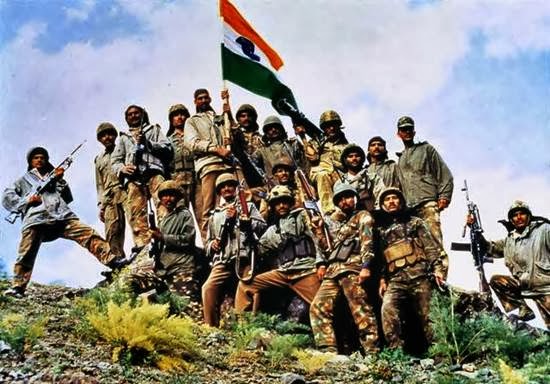
    It took over two months for the Indian forces to push back the intruders and reclaim the posts under an operation code named Op Vijay. India lost 527 officers and soldiers in the operation and hundreds of others were injured. Pakistan never officially admitted that its soldiers were involved, despite the fact that official documents recovered from bodies had confirmed that they were regular soldiers of Pakistan Army in civilian clothes.

    On the eve of the 16th anniversary of the battle, its chief strategist and former Pakistan President Parvez Musharraf, who was then his country’s army chief, has raked up a controversy and has openly admitted the role of Pakistan armed forces.

    Addressing a convention of the youth wing of his party, the All Pakistan Muslim League (APML) earlier this week, Musharraf said that the Pakistani armed forces had caught their Indian counterparts by surprise in Kargil. He claimed that the Pakistani armed forces had won the Kargil battle in 1999 but the then Nawaz Sharif-led government had converted the success into a political defeat.

    “I don’t think India would ever be able to forget the three-month-long battle (Kargil war) when our gallant armed forces caught them by the throat,” Musharraf said.

    Musharraf, 71, who is facing several court cases and is presently based in Karachi, said the Pakistan Army along with the second-line force had entered Kargil district of Kashmir Valley and seized strategic positions at five locations, four of which were not even known to the Indian forces.

    “I can say it was our greatest military victory over India as they couldn’t even claim back half of one strategic location in one area but regrettably our politicians wasted this opportunity,” he said according to agency reports.

    Musharraf, who later seized power in Pakistan after overthrowing Sharif government in a bloodless coup, had been working on the plan to infiltrate in to Kargil even as the then Indian Prime Minister Atal Behari Vajpayee had visited Pakistan on a bus through the Wagah border at the invitation of Sharif. As it turned out later, even Sharif had no inkling of the plan being hatched by his Army chief.

    Ironically, even as Vajpayee was visiting Pakistan on a goodwill tour in February 1999, the Operation Kargil had already been put in force by Musharraf. About 200 Pakistan soldiers disguised as mujahideen had moved in to hold some of the posts vacated by Indian soldiers before the onset of winters in late 1998. The vacation of such posts during winters was a yearly exercise which was also very well known to the Pakistan Army. This time, however, they occupied the posts and Indians got a whiff of it only after the winters somewhere in May 1999 when some cattle grazers informed the authorities about the occupation of the posts.

    The most important factor behind the daring act by Musharraf and his men was the fact that Pakistan had developed a nuclear deterrent and was confident that India would dare not attack it or wage a full fledged war fearing a nuclear attack from Pakistan. If ever such an eventuality was to take place, Pakistan could have inflicted huge losses on India, particularly at its strategic and vulnerable locations, though in the bargain, India had the reserves to wipe out Pakistan from the face of the earth.

    Musharraf was, however, confident that other world powers would intervene before India could flex its nuclear muscles. That actually happened and even as India made veiled references, besides mounting a major operation including strafing by the Air Force, backdoor diplomacy ensured that such an eventuality did not take place. India claimed a comprehensive victory while Pakistan claimed that the Mujahideen had themselves withdrawn from some of the posts.

    The question now if whether such a battle can take place again given the fact that nuclear deterrent is very much in place and so is the hostility off and on displayed by Pakistan armed forces and militants sponsored by it.

    Despite the meetings between Indian Prime Minister Narendera Modi and his Pakistan counterpart, the two sides have been blowing hot and cold over the past year. In fact merely a couple of days after their last meeting in Ufa in Russia, the two sides exchanged firing along the international border and skirmishes were reported from several points along the Line of Control. The situation cooled off so quickly after the Ufa meeting that Pakistan Rangers did not even accept the traditional mithai offered by the Border Security Force personnel on the occasion of Eid.

    Senior Army officers, and those who are in the know of things, do not rule out skirmishes along the border but tend to rule out any largescale battle between the two nations. Kargil has taught a major lesson to India and it no longer allows its posts to be vacated during the winters. There has been a significant upgrade in the vigilance and surveillance equipment and strength along the border, particularly at vulnerable posts. They also hold the opinion that India is better prepared to ward off any such attempt and Pakistan can no longer expect to spring a surprise. Besides the nuclear deterrence, the two countries can ill afford to go in for a prolonged war with other nations, particularly the US, keeping a close watch so that the situation does not get out of control in the sensitive region despite provocations such as the latest one by Musharraf’s statement.

  • Queens Borough President allocates $5 million to the Borough’s CUNY Institutions

    Queens Borough President allocates $5 million to the Borough’s CUNY Institutions

    QUEENS, NY (TIP): Queens Borough President Melinda Katz announced an allocation of $5 million of her Fiscal Year 2016 discretionary capital funds to support capital projects at all five City University of New York (CUNY) public institutions of higher learning in Queens. The $5 million in funding will enhance the educational experience for the CUNY students who attend Queens College in Flushing, York College in Jamaica, Queensborough Community College in Bayside, LaGuardia Community College in Long Island City and the CUNY School of Law in Long Island City.

    “CUNY has a long history of providing a high-quality, competitive and remarkably affordable higher education that produces job-ready graduates with respected academic credentials,” said Borough President KATZ.  “We are particularly proud of the five CUNY schools located in Queens. This $5 million allocation will help guarantee that the physical infrastructure of these five institutions remains top-of-the-line and fully able to support a first-class experience for CUNY’s hard-working students.”

  • Scorched earth: U.S. wildfires near record level

    Scorched earth: U.S. wildfires near record level

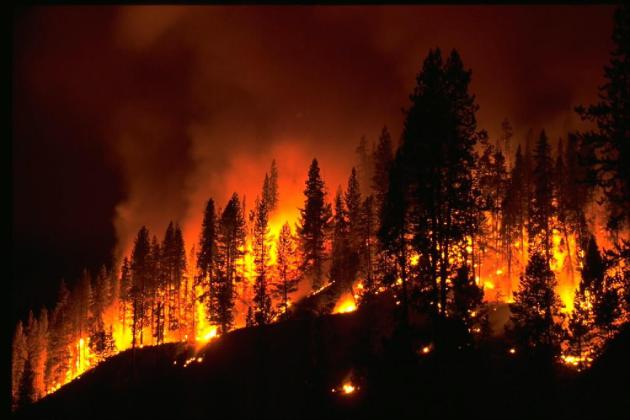
    WASHINGTON (TIP): Wildfires have burned a phenomenal 5.5 million acres across the U.S. so far this year, an area equal to the size of New Jersey.

    This is the second-highest total in at least the past 25 years, according to data from the National Interagency Fire Center in Boise. Only 2011, which saw 5.8 million acres charred as of July 23 of that year, had more. On average, at this point in the year, 3.5 million acres would have burned.

    As of Thursday afternoon, 18 wildfires were burning in seven states, mostly in the West. This includes one in California’s wine country that has forced numerous evacuations and is being fought by hundreds of firefighters, CALFIRE, the state’s firefighting agency, reported. Another one is charring Glacier National Park in Montana.

    Summertime heat and ongoing drought conditions have left vegetation starved of moisture throughout the West, making it more susceptible to catching fire and starting a massive blaze, AccuWeather reports.


  • NASA discovers ‘Earth’s bigger, older cousin’

    NASA discovers ‘Earth’s bigger, older cousin’

    HOUSTON (TIP): NASA said Thursday, July 23, that its Kepler spacecraft has spotted “Earth’s bigger, older cousin”: the first nearly Earth-size planet to be found in the habitable zone of a star similar to our own.

    Though NASA can’t say for sure whether the planet is rocky like ours or has water and air, it’s the closest match yet found.

    “Today, Earth is a little less lonely,” Kepler researcher Jon Jenkins said.

    The planet, Kepler-452b, is about 1,400 light-years from Earth in the constellation Cygnus. It’s about 60% bigger than Earth, NASA says, and is located in its star’s habitable zone — the region where life-sustaining liquid water is possible on the surface of a planet.

    A visitor there would experience gravity about twice that of Earth’s, and planetary scientists say the odds of it having a rocky surface are “better than even.”

    While it’s a bit farther from its star than Earth is from the sun, its star is brighter, so the planet gets about the same amount of energy from its star as Earth does from the sun. And that sunlight would be very similar to Earth’s, Jenkins said.

    The planet “almost certainly has an atmosphere,” Jenkins said, although scientists can’t say what it’s made of. But if the assumptions of planetary geologists are correct, he said, Kepler-452b’s atmosphere would probably be thicker than Earth’s, and it would have active volcanoes.

    It takes 385 days for the planet to orbit its star, very similar to Earth’s 365-day year, NASA said. And because it’s spent so long orbiting in this zone — 6 billion years — it’s had plenty of time to brew life, Jenkins said.

    “That’s substantial opportunity for life to arise, should all the necessary ingredients and conditions for life exist on this planet,” he said in a statement.

    Before the discovery of this planet, one called Kepler-186f was considered the most Earthlike, according to NASA. That planet, no more than a 10th bigger than Earth, is about 500 light-years away from us. But it gets only about a third of the energy from its star as Earth does from the sun, and noon there would look similar to the evening sky here, NASA says.


    The $600 million Kepler mission launched in 2009 with a goal to survey a portion of the Milky Way for habitable planets.

    From a vantage point 64 million miles from Earth, it scans the light from distant stars, looking for almost imperceptible drops in a star’s brightness, suggesting a planet has passed in front of it.

    It has discovered more than 1,000 planets. Twelve of those, including Kepler-425b, have been less than twice the size of Earth and in the habitable zones of the stars they orbit.

    Missions are being readied to move scientists closer to the goal of finding yet more planets and cataloging their atmospheres and other characteristics.

    In 2017, NASA plans to launch a planet-hunting satellite called TESS that will be able to provide scientists with more detail on the size, mass and atmospheres of planets circling distant stars.

    The next year, the James Webb Space Telescope will go up. That platform, NASA says, will provide astonishing insights into other worlds, including their color, seasonal differences, weather and even the potential presence of vegetation.


  • Modi to address NRIs in San Jose

    Modi to address NRIs in San Jose

    SAN JOSE (TIP): Indian Prime Minister Narendra Modi will address U.S-based NRIs in San Jose during his visit to the Silicon Valley on September 27-28.
    The event is likely to take place in an arena dubbed the “Shark Tank” at the SAP Center, home of San Jose Sharks in National (ice) Hockey League. The arena has a capacity of around 17,000, very similar to Madison Square Gardens in NYC where Modi wowed NRIs in September last year.

    It would be the first ever visit at the West Coast by any Indian prime minister after Jawaharlal Nehru.


  • Monsoon session set for a washout as NDA, Opposition take rigid stand

    Monsoon session set for a washout as NDA, Opposition take rigid stand

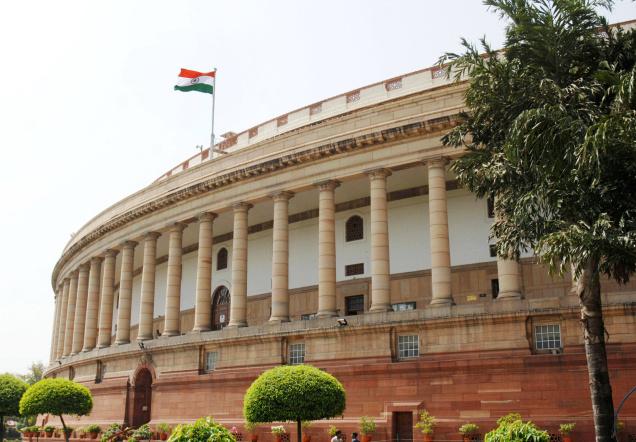
    NEW DELHI (TIP): “In one year, Parliament runs for eighty days during sessions. Each day, business in both Houses are transacted for around six hours. If we take into account the total annual expenditure on Parliament, then for each minute of running the House costs Rs. 2.5 lakh,” the author of this statement could be the Parliamentary Affairs Minister of the Modi Government after the continued logjam in Parliament.

    However, ironically, this statement was made by a former Parliamentary Affairs Minister Pawan Kumar Bansal to the Opposition as the monsoon session of Parliament was almost completely washed out in 2012 over the controversy on coal block allocations with BJP insistent on Prime Minister Manmohan Singh’s resignation.

    Pawan Kumar Bansal, who later had to resign as the union Railways minister, went on to say that Parliament will lose its relevance and significance if only disruptions take place in the House. He added that “77 % of the session’s business time in Lok Sabha and 72 % in Rajya Sabha was lost due to disruptions in this session and asked the Opposition to realize that “enough is enough”.

    According to official estimates, Parliament meets on an average 100 days in a year. The total budgeted cost of running Parliament is around Rs 600 crore per year which translates in to Rs six crore every day.

    The BJP had on several occasions in the past declined to let Parliament function and is now finding itself in a similar situation. The current Minister of State for Parliamentary Affairs Mukhtar Abbas Naqvi had this to say for the current impasse: We pray for wisdom to the protesting Congress and other opposition members to help allow smooth functioning of Parliament….. We hope better sense prevails upon Congress and other members.

    The conflict between the treasury benches and the opposition stems from the fact that while the opposition is demanding resignation of external Affairs minister Sushma Swaraj and Madhya Pradesh chief minister Shivraj Chauhan, the treasury benches assert they are willing to discuss and debate the issue but the ministers shall not resign. The government has also ruled out a statement by Prime Minister Modi, as demanded through a notice in Rajya Sabha, to speak on the issue.

    As the left leader Sitaram Yechuri put it, Parliament is not an investigative agency and , therefore, a debate on the issue would not serve the purpose. He said that as per tradition, and the law, the accused must be placed under suspension till the investigation in to the allegations are complete as there is a chance of the investigations getting hampered by the accused in office. He said discussion was no substitute for investigations.

    Given the adamant stand on both the sides, it is unlikely that the House would be allowed to function and important legislations awaiting Parliament’s nod – like the GST Bill and amendments to the land acquisition Bill, are not likely to be passed.

    Political experts point out that though brief disruptions had taken place in parliament over the years but there were leaders would fund a way through discussions or involve neutral senior parliamentarians to sort out the issues. However, with stakes high and with Rahul Gandhi trying to assert himself, there is little possibility of an early resolution of the situation. With the elections to the critical Bihar Assembly looming large, it has become a prestigious issue for the rival parties to hold on to their stand despite the high cost of the functioning of parliament and wastage of public resources in the process. Perhaps there would be lesson for them in the outcome of the Bihar elections.

  • 1993 Mumbai Serial Blasts Accused to Hang

    1993 Mumbai Serial Blasts Accused to Hang

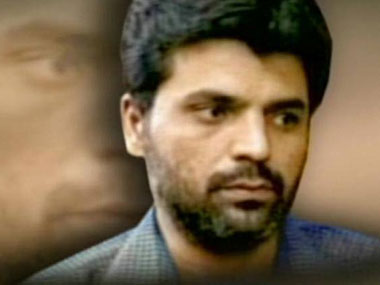
    NEW DELHI (TIP): Twenty two years after 13 explosions rocked Mumbai leaving 257 dead and over 700 injured, one of the main accused Yakub Abdul Razak Memon is likely to be hanged at the month-end.

    Stage was set for the hanging of the serial bombings accused after the Supreme Court dismissed a curative petition. While the two key accused in the bombings, Dawood Ibrahim and Tiger Memon remain absconding, Yakub has been convicted for arranging and distributing money for the terrorist operation, facilitating air tickets for the other conspirators to undergo weapons training in Pakistan, possessing hand grenades and detonators supplied by his brother Tiger Memon and for purchasing vehicles in which the bombs were planted.

    Rejecting the curative mercy petition, a Supreme Court three judge bench led by Chief Justice H L Dattu rejected the convicts’s contention that he was a victim of bias and that principles of natural justice were ignored in his case.

    Yakub was awarded the death sentence by TADA court and an anti terror court had already issued warrant for his execution in the premises of the Nagpur jail. The Supreme Court had earlier dismissed his review petition while a mercy plea has also been rejected by the President.

    However, the mercy petition was filed by his brother Suleman and Yakub has now filed another mercy petition in his own name in a last ditch attempt to escape the gallows. This may buy him a little time (incidently his birthday is also on July 30) but there is little likelihood of his mercy petition being accepted by the President. Also as per an earlier Supreme Court guidelines, there should be a gap of at least 14 days between the rejection of a mercy petition and execution.

    Yakub, who is a trained chartered accountant, had said in his appeal that he was suffering from schizophrenia since 1996. He also took the plea that while he could be accused of being a conspirator, he was not involved in executing the blasts.

    There are a total number of 193 accused in the case out of which 35 are absconding. In all 11 accused died during the trail and two had turned approver. No less than 100 of the accused have been convicted and 48 of them were found guilty of conspiracy. Earlier 26 accused were discharged by a special TADA court and two others were subsequently discharged by the Supreme Court.

    A study conducted by the National Law University, Delhi and the Law Commission, has come out with some revealing figures although there has always been a lurking suspicion of the trend.

    The findings of the study, which were released in the wake of Supreme Court rejecting Yakub’s mercy petition, pointed out that more than 75 per cent of death row convicts in the country belonged to the Backward Classes and Minorities, 75 per cent were economically vulnerable and over 93 per cent of those sentenced for terror crimes were either Dalits or belonged to minority communities. The study indicated that in most cases they were unable to afford proper legal assistance.

    It also found that 23 per cent of such convicts had no schooling and most others were undergraduates, They were not allowed to attend court proceedings and had inadequate interaction with their lawyers.

    They were also lodged in separate barracks and generally remained in solitary confinement for long periods.

    The study, first of is kind in India, analyzed data relating to 373 death row convicts over a period of 15 years.

    Though the Supreme Court has laid down in 1980 that the death penalty can be given only in “rarest of rare” cases, the Indian courts have awarded death sentence to over 5000 convicts during the period from 2004 to 2013. Of these 1303 death sentences were confirmed by higher courts and the rest commuted to life sentences. Also during the period only three death row convicts were executed. There is also a debate raging over whether the death penalty should be completely scrapped because of its irreversible and retributive nature.


  • Ten years of India-US Nuclear Deal-Transforming bilateral ties

    Ten years of India-US Nuclear Deal-Transforming bilateral ties

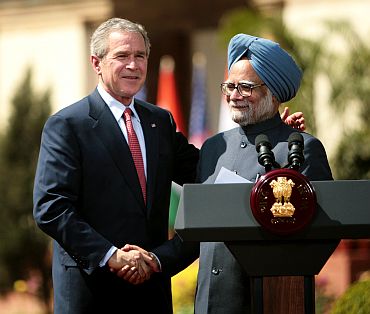
    Ten years ago a historic, though unexpected, announcement was made in Washington after a meeting between the then US President George Bush and the then Indian Prime Minister Dr Manmohan Singh. It said that the US would “work with friends and allies to adjust international regimes to enable full civil energy cooperation and trade with India”. The deal, which had significant international ramifications, lifted the 30 year American-led moratorium on nuclear trade with India and paved way for transforming relations between the two largest democracies of the world.

    While a conference was organized in Washington on the 10th anniversary of the deal, where some of the top leaders who were associated with the process participated in discussions, the anniversary went off largely unnoticed in India. The current dispensation in the Congress perhaps did not wish to credit Dr Singh with the achievement, perhaps his crowning glory as PM, the BJP too did not wish to credit the Congress for the deal in this season of acrimony between the two parties. However, both the BJP and the Congress governments in the past deserved to be patted for the deal. As Dr Sanjay Baru, former media advisor to Dr Singh noted in his book, The Accidental Prime Minister, Dr Singh met Vajpayee on his return from the US and told him that he had only culminated the process which Vajpayee had started as the PM.

    One reason for the rather lukewarm response to the 10th anniversary of the deal is the fact that there has not been any significant gain at the ground level as far as setting up of civil nuclear reactors are concerned. In fact the first civil nuclear plant after the deal slated to come up in Haryana is still not even on a take off stage. Land for the plant has been acquired after dealing with opposition from the residents of the area but even the civil engineering work has not started as yet. However, the availability of fuel for the existing nuclear plants has made a major difference. At the time of the deal, India’s nuclear reactors were running out of fuel due to international sanctions. As per official figures, 11 of the country’s 17 nuclear power reactors were operating below capacity and the overall capacity utilization for the country’s nuclear power plants was just about 50 per cent which has now shot up to over 80 per cent after receiving fuel supplies from abroad. The lifting of sanctions has rescued the country’s nuclear program from a serious crisis.

    Still, it is the other benefits of the deal that have opened up many vistas not only with the US but with other countries as well who had placed a moratorium on trade with India at the instance of the US after the 1998 tests.

    The deal had marked a recognition by the US of the growing role of India in the international stage and its ability to act as a responsible regional and emerging global power. For India it was an end to its mistrust that the US had been “biased” and for the recognition that it was being considered a responsible partner in the process of development across the world.

    Experts say that two developments came in the way of the full realization of the deal. One was the failure of the UPA 2 in getting Parliamentary approval for the original civil nuclear liability bill that was drafted in 2010. The opposition demanded redrafting the bill which was subsequently done but with several amendments. The other was the Fukushima disaster in Japan that increased the cost of building nuclear power plants and revived the global anti-nuclear campaign, including in India.

    Yet the deal had laid the foundation to build a substantially broader partnership. It is mainly as a fallout of the deal that the US is now India’s largest trade partner in goods and services. It has also emerged as one of the major supplier of defense equipment to India. The majority of US advanced technology exports to India now do not require a license. On the other hand the US imports of high technology from India has more than doubled and exports to India have almost tripled since the deal was signed.

    The Obama Administration in its first term, as well as Manmohan Singh government in his second term, did not make much progress and did not seize the opportunity to take it forward. However, there has been some course correction in the last one year and the fillip in the strategic partnership between the two governments led by Obama and Narendra Modi has moved towards a closure on the civil nuclear deal.

    #Indo-USnucleardeal

  • Senator Avella, advocacy groups, community leaders urge Governor Cuomo to sign Religious Corporation Bill

    Senator Avella, advocacy groups, community leaders urge Governor Cuomo to sign Religious Corporation Bill

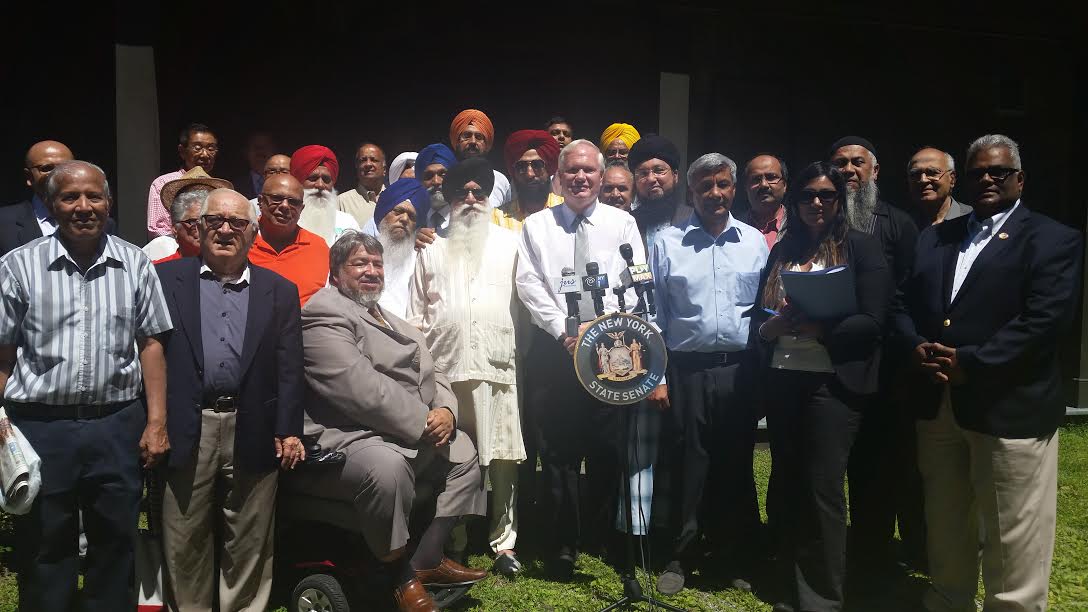
    FLUSHING, NY (TIP): State Senator Avella joined a number of advocacy groups and community leaders at a press conference, July 23, to urge Governor Cuomo to sign into law Senate Bill S.903/Assembly Bill A.8122, which would explicitly recognize Hindu, Sikh and Islamic faiths in New York State’s religious incorporation law.

    Introduced in 2012, the legislation would provide a means of incorporation for organized groups of Hindu, Sikh and Islamic faiths, as well as amend the definition of “clergyman” and “minister”, to include pandit, swami, guru, granthi, imam, moulvi, and maulana.

    The bill passed both legislative houses this year and will be delivered to the Governor’s desk. In honor of the Flushing Remonstrance, where the people of Queens stood up for religious freedom over 3-50 years ago, Senator Avella stood with these groups in Flushing to urge the Governor to sign the bill.

    “The signing of the Flushing Remonstrance was a significant victory for religious freedom in New York City history. It was then that the people of Queens stood up and said, ‘we stand for the religious freedom of all.’ It is therefore only appropriate that here, at the house that represents this historic moment, we gather today to urge Governor Cuomo to similarly stand for religious freedom. This legislation would explicitly recognize the Hindu, Sikh and Islamic faiths under New York State’s religious corporations law – a law that already recognizes over 20 other groups. I am proud to have worked with Assembly Member Brennan and my colleagues in the legislature to pass this bill in both houses. Now, I urge Governor Cuomo to sign this bill into law,” said Senator Tony Avella.

    “Under the current New York State Religious Corporations Law, more than 20 religiously affiliated groups enjoy certain rights to incorporation. With the New York State Senate and Assembly passing this bill, the right to incorporation can now be expanded to encompass groups affiliated with the Hindu, Sikh, and Islamic faiths. I urge Governor Cuomo to sign this bill into law and give these groups the right to incorporate.” Said Assemblymember Jim Brennan, Chair of the New York State Assembly Committee on Corporations, Authorities, and Commissions.

    “We welcome this bill, which brings about more inclusivity and is representative of the diversity of the various communities of New York. We commend Senator Avella and Assemblyman Brennan for their insight and initiatives,” said Ashook Ramsaran, President of the Global Organization of People of Indian Origin (GOPIO) International.

    “On behalf of the Hindu Temple Society of North America and on my own, I am very pleased to know of the passing, by both the Senate and Assembly of New York State, of the bill to incorporate various organized religious groups including Hinduism and amending the definitions of the terms ‘clergyman’ and ‘religious minister’. It is my fond hope that the Governor will be pleased to sign the bill and I take this opportunity to thank Senator Avella and Assembly Member Brennan for their joint effort in this matter,” said Dr. Uma Mysorekar, President of the Hindu Temple Society of North America.

    “Today the efforts of Senator Avella and Assembly Member Brennan has reintroduced the definition of the First Amendment to the U.S. Constitution to the South Asian Community, where it states Freedom of Religion. The South Asian Community is thankful to have this bill passed by the Senate and Assembly, as it will allow the Sikh, Hindu and Islamic faiths to have the same rights to incorporation that is already given to nearly two dozen other relgiously affliated groups under the current New York State Religious Corporations Law. The Sikh community of Gurudwara Sant Sagar, Bellerose, urge Governor Cuomo to sign this bill,” said Sajjan Singh, President, Sant Sagar Gurudwara, Bellerose.

    “I want to thank and congratulate Senator Avella and Assembly Member Brennan’s advocacy and hard work for passing the legislation of incorporation for organized groups and inclusion of all the religious faith leaders to include in the law. With this historic law our faith based leaders can call themselves proudly as Pandit, Swami, Guru, Granthi, Imam, Moulvi or Maulana which they are accustom to within their own culture. This is evidently a step forward in reassurance of religious freedom for all the people here in this great state of New York,” said Dilip Nath, President of the New American Voters Association.

    “We are very proud to be a part of Senator Avella’s district as a local organization. I cannot commend Senator Avella and Assemblyman Brennan enough on their efforts to introduce and get this bill passed by the Senate and Assembly. Their efforts to equalize every community whether its related to race/religion/culture truly shows us all an example of an ideal elected official. We wish to see more elected offices like Senator Avella and Assemblyman Brenna working hard for their communities. We are glad it is introduced, now we hope to have Governor Cuomo sign this and incorporate it in the New York State Religious Corporation law,” said Mandeep Singh, Member of the Kapurthala Sports & Cultural Club.

    “As a member of the South Asian Sikh community and a resident of the New York state for over 30 years, I feel after having this bill introduced and passed has made our community one step closer in pursuing the “American Dream. I am proud to say we have elected officials like Senator Tony Avella and Assemblyman Brennan that care about every community and its needs. We hope that Governor Cuomo signs this bill,” said Jaswant Singh, President of the Shaheed Udham Singh Society.

    “Senator Avella has reached out to serve the needs of growing minority communities in Queens more than any other politician I have known. This bill will certainly be a landmark achievement in the history of equal religious rights in New York. I sincerely pray and support all the efforts for completing the process of getting this bill signed by the governor. This bill will not only give recognition to the titles of the clergymen of different faiths, it will also bridge gaps between the communities. It will be a means of educating each other about the beauty of each religion. I sincerely pray that this bill and other efforts made to educate the community become fruitful and beneficial for all of us,” said Mufti Muneer Ahmed Akhoon, Chairman of Al-Muneer Foundation.

    The press conference was also attended by BAPS Shri Swaminarayan Mandir, South Asians for Empowerment (SAFE), the Richmond Hill Sikh Society Gurudwara, the Asian Advisory Council, the Good Neighbors Coalition, as well as community leaders Anwar Chaudhry, Pritpal Walia and Adam Kim.

    #ReligiousCorporationBill

  • Louisiana movie theater shooting leaves several wounded, shooter dead

    Louisiana movie theater shooting leaves several wounded, shooter dead

    LAFAYETTE, LOUISIANA (TIP): A shooting at a Lafayette, Louisiana, movie theater left at least two people dead and nine others injured, health officials said.

    The shooting inside the Grand Theatre 16 involved “multiple victims,” the police department tweeted. Police said they received the call about 7:30 p.m. CT.

    The scene immediately after the shooting was chaotic.

    “A whole bunch of girls started screaming and we heard that someone was shot,” Roxy Martinez told CNN affiliate KATC. “There were a lot of people running.”

    Clay Henry with Acadian Ambulance said the wounded were taken to three area hospitals. He described the injuries as “wide and varied.”

    The shooter died of a self-inflicted gunshot wound, Sgt. James Anderson of the Louisiana State Police said. It wasn’t clear if the shooter was included among the dead list

    Louisiana Gov. Bobby Jindal tweeted, “I’m on my way to Lafayette right now. Please say a prayer for the victims at Grand Theatre and their families.” — Gov. Bobby Jindal (@BobbyJindal) July 24, 2015

    Lafayette is a city of about 120,000 people 60 miles west of Baton Rouge.

    The shooting happened days after the conviction of James Holmes in the July 19, 2012, Aurora, Colorado, theater shooting that left 12 people dead and 70 people wounded.

    #Louisianamovieshootingattack

  • Jaipur Literature Festival’s 1st US event in Colorado

    Jaipur Literature Festival’s 1st US event in Colorado

    BOULDER, CO (TIP): Nearly a decade after its inception, The Jaipur Literature Festival, the world’s largest free literary festival is heading to Boulder, Colorado on Sept. 18-20 to host their first-ever U.S. event for three days of books, ideas, performance art, dialogue and debate on contemporary issues.

    JLF@Boulder will feature more than 100 notable writers, thinkers, poets and performers in a three-day edition of what has been declared “the greatest literary show on earth.” There will also be a number of events leading up to the three-day festival.

    “We at JLF are looking forward to a stimulating and inspirational edition in beautiful Boulder, Colorado,” said Namita Gokhale, author and co-director of the Jaipur Literature Festival.

    Boulder is known for its highly educated, professional population of more than 100,000; for its deep interest and leadership in social, technical and environmental innovation and for fitness and natural health and healing.

    Some of the speakers confirmed for the festival include international best-selling author Jung Chang, Pulitzer Prize winning poet Vijay Seshadri, Moroccan-American essayist and novelist Laila Lalami, Israeli journalist, political commentator and author Gideon Levy, Chinese-American best-selling author Anchee Min, and journalist, historian and award-winning author Simon Sebag-Montefiore.The updated list of speakers for JLF@Boulder can be viewed here.

    Scheduled to be held at the Boulder Public Library and Civic Lawns, the festival has lined up lead-up activities at the Boulder Public Library, the University of Colorado at Boulder, Naropa University, the Denver Public Library and the Denver Art Museum besides other venues.

    “The program for JLF@Boulder will consist of interviews and panel discussions, along with audience Q&A, addressing timely themes of local and international importance each led by two to four authors,” organisers said.

    Founded in 2008, the ZEE Jaipur Literature Festival is co-directed by authors Namita Gokhale and William Dalrymple, and is produced by Sanjoy Roy and Teamwork Arts, a pioneer in the performing arts Space.

    About the Jaipur Literature Festival
    The Jaipur Literature Festival is the world’s largest free literary festival, celebrating national and international writers, and encompassing a range of interests spanning film, music and theatre. The festival has hosted world renowned authors including Orhan Pamuk, J.M. Coetzee, John Berendt, KIran Desai, Christopher Hampton, Ian McEwan, Vikram Seth, Wole Soyinka, Salman Rushdie, Pico Iyer, Simon Schama, Thomas Keneally, Hanif Kureishi, Vikram Chandra, Michael Frayn, Stephen Frears, Alexander McCall Smith, Donna Tartt, Tina Brown, Shashi Tharoor, Mohammed Hanif, Paul Zacharia, among many others. The directors of the ZEE Jaipur Literature Festival are William Dalrymple and Namita Gokhale and it is produced by Sanjoy K. Roy and Sheuli Sethi of Teamwork Arts. The festival’s Title Sponsor is ZEE Entertainment.

    #JLF@Boulder

  • “Khushiyan” Maker Tirlok Malik’s “On Golden Years” Receives Viewers’ Acclaim

    “Khushiyan” Maker Tirlok Malik’s “On Golden Years” Receives Viewers’ Acclaim

    [vc_row][vc_column][vc_gallery type=”nivo” interval=”3″ images=”44533,44534,44535,44536,44537,44538,44540,44541,44542″ onclick=”link_image” custom_links_target=”_self” title=”On Golden Years” img_size=”full”][vc_column_text]

    FALLS CHURCH, VA (TIP): Human beings in all ages and climes grapple with situations and often face queer dilemmas. Aruba faced a dilemma whether or not he should fight against his kith and kin. Hamlet faced a dilemma: “To be or not to be’. And, in our own times, Indians living abroad also face a set of dilemmas. New York Emmy Award nominated filmmaker Tirlok Malik has focused on the set of dilemmas faced by Indian Americans in his film ‘On Golden Years’ which was premiered here at DC Cinemas, July 19.

    Malik, widely regarded as the pioneer of independent cinema and of movies which portray the Indian-American immigrant experience, was elated with the response for the event. Over 300 eminent members of the Indian and larger South Asian community flocked to the Loehmann’s Plaza on a sweltering Sunday, typical for July.

    Fortunately, the film was like a breath of fresh air focusing on an issue that one seldom, if at all, sees on celluloid: the lives of Indian-Americans post-retirement, their emotional highs and lows!

    Categorized as a romantic comedy, the 85-minute film, in English, was shot at the Shantiniketan Ashram, a sprawling and scenic retirement residence in Tavares, Florida, which currently houses 174 condominiums. The visuals of the complex are stunning and the camera masterfully dwells on the awe-inspiring landscape and the aesthetically pleasing architecture.

    ‘On Golden Years’ is written and directed by Malik and produced by Iggy Ignatius. The talented cast members, based primarily in New York, include Ranjit Chowdhry, Jyoti Singh, Noor Naghmi, Reeves Lehmann, Shetal Shah, Professor Indrajit Singh Saluja, Lovllien Kaurr, Indu Gajwani, Shruti Tewari, Farokh Daruwala, Kamlesh Gupta and Sandeep Suri. The film also stars Malik who dons many caps as an actor, writer, director, producer, speaker and entrepreneur – he is the CEO of Apple Productions, Inc., and has recently launched a web-sitewww.nritvfilmclub.com for streaming Indian-American movies and promoting new talent.

    Speaking to journalists, prior to the screening, about the purpose of the film, Malik explained, “When we come to America, we tend to think that when the time comes to retire, we will go back to India. But, the reality is we can’t and don’t go back. The film imparts the message: live your golden years without any regret”.

    He noted, “We have a lot of issues: India versus America, contentedness versus regrets. This film deals with those issues while encouraging everyone to live life to the fullest”.

    Malik told us, “All my films have revolved around NRI (Non-Resident Indian) conflicts. We all have conflicts when we migrate. My first film was ‘Lonely in America’ (1992) which spoke about how we can accept the American dream, but have a difficult time accepting the culture”. His second film, in the same trilogy, was Khushiyaan (2011) about “how we leave our aging parents behind in India and come to America, and one day learn of their death. ‘On Golden Years’ is about the retirement of the American dream”, he said. “So, all my films deal with that emotional conflict of being Indian-American”.

    He concurred when we pointed out that the wheel has come full circle from ‘Lonely in America’ to ‘On Golden Years’.

    To his immense credit, Malik has nurtured promising artistes. “I have always given a chance to new talent”, he told us. “My whole focus has been on creating the NRI world, basically”, he said.

    Noor Naghmi, who plays a prominent part in the film, has extensive experience in theater, radio, television, and on celluloid. “I have done anything which pays”, he quips.

    Onscreen, he played the role of Shyam who is very lonely after his beloved wife’s death. “He is a very romantic character and that’s the reason I loved the role”, Naghmi told us.

    Perhaps the most poignant scene in the film is between Shyam and his deceased wife, Anita (Shruti Tewari), in which she gently encourages him to move on with his life.

    We asked Naghmi, What was it like working with Tirlok Malik? He replied, “As a director, he is very stern which is good. At the same time, he does allow improvisation. That is good for me because I am a method actor. I like to create and improvise”.

    He gushed, “The whole experience I had working with him and the entire team was amazing! For 30 days, we were like family living together. We were working and having fun”, sans any stress or pressure.

    Actress Jyoti Singh was initially skeptical about playing a character considerably older than her, and concerned that she maybe typecast in such roles. Once she set her reservations aside and accepted the part, it was all about delivering her best and bonding with the team!

    “I am thankful to Mr. Malik for giving me the opportunity to act in the film which has drama, comedy, love, life”, she told us. “I especially like the way he directs and we all work in a professional environment”. About the cast and crew, she said, “We lived at Shantiniketan and shared some wonderful moments during the making of the film”.

    Jyoti admitted she was “extremely nervous” at first about being paired with the immensely talented actor Ranjit Chowdhry, who also played the lead in ‘Lonely in America’ and prominent parts in Indian comedy classics such as Basu Chatterjee’s ‘Baton Baton Mein’ (1979) and Hrishikesh Mukherjee’s ‘Khubsoorat’ (1980). Fortunately, he put her at ease with his great sense of humor.

    Professor Indrajit Singh Saluja plays the role of a jovial Sikh senior who loves his wife (Lovllien Kaurr). He “is fiercely proud of his Indian roots and takes pride in the country of his birth”, he told us.

    “The point that has been made through my character is: “You may take an Indian out of India, but you cannot take India out of an Indian”, he said.

    About Malik, Reeves Lehmann declared, “he is my favorite director”!

    Speaking to us at the film’s premiere, Lehmann said, “I am very excited about the event here. I had a fabulous time working with the rest of the cast. It was a wonderful experience”.

    In the film, he plays the role of Jacob, “a retired civil rights attorney married to this beautiful Indian woman (Shetal Shah) and we have the best relationship”, he said. “We just enjoy being with each other throughout the film”.

    Interestingly, Lehmann is Chairman of the Film Division at the renowned School of Visual Arts (SVA), in New York, and among his students was Indian actor Ranbir Kapoor.

    We discovered that Iggy Ignatius is one-of-a-kind: film producer; entrepreneur — he owns Shantiniketan; actor – he has a cameo in ‘On Golden Years’; discerning author – the film is inspired by his book, ‘Seeking Roots’, which he wrote in 2008 prior to the establishment of the retirement residence. “At that time, it was a total fiction about how life would be in Shantiniketan”, he says, about the book. It was a vision which bore fruition!

    We asked him what motivated him to get involved with the film. “Basically, this concept of togetherness after retirement” which the film conveys, he replied. “Based on current life expectancy rates, people live 20-30 years after retirement. They lead a good life, they have money. You have to discover each other, not brood over children all the time”, he reasoned.

    Ignatius appeared fascinated by an episode of Oprah Winfrey’s television show which featured Pastor Rob Bell and his wife Kristen who co-wrote a compelling book, ‘Zimzum of Love’, about the deeper mysteries of marriage. Zimzum is a Hebrew word that represents the space God created outside of Himself in order to make room for the Universe. The authors believe both partners should make a conscious decision to create space outside of themselves in order to make room for the other and to prioritize their life together. “In retrospect, ‘On Golden Years’ is about reliving the Zimzum”, Ignatius said.

    Noor Naghmi was the gracious host of the film’s premiere here. On hand, at the event were: Mr. Shiv Ratan, Counsul, Community Affairs at the Indian Embassy; Nadeem Hotiani, Press Attache at the Pakistan Embassy, renowned ghazal and Sufi singer Mrs. Vatsala Mehra; renowned Pakistan film star Reema Khan, famous Pakistan TV Star Bindiya, independent filmmaker Manan Singh Katohora; Pushpa Agnihotri, All India Radio, Delhi, Yasmin and Abul Hasan Naghmi, founders of Society of Urdu Literature, USA, Dr. Tariq Shahab, Manoj and Geeta Singh, organizers of the DC South Asian Film Festival coming up September 25-27. West Virginia based eminent eye Surgeon Dr. V. K. Raju hastened from India where he had gone to deliver Nani Palkhiwala Memorial lecture at Chennai, to be at the premier.

    Indian and Pakistani media were present in strength. Lalit Jha from Press Trust of India (PTI), Arun Kumar from Indo-Asian News Service (IANS) and Walker Syed from EYE 95 America were among those present.

    The sponsors who generously supported the event included EYE 95 Television Network (Grand sponsor), Dr. Farida Khattak, DDS Dynamic Family Dentistry Noor Naghmi New York Life, SAI Mortgage , KEY Title, Nirala Sweets, Jyoti Gujral, NRI TV Film Club, Society of Urdu Literature (SOUL) , Golden Key Realty, The Indian Panorama, and Shalimar House, a retirement community.

    Dr. Zulfiquar Kazmi did a wonderful job as the master of ceremonies.

    It is learnt that requests are pouring in from various parts of USA to screen the film and there are plans to screen the film in a couple of cities across U.S. in the next few months. So, watch out for the screening in your city.

    [/vc_column_text][/vc_column][/vc_row]

  • A Hindu Temple in NC attacked

    A Hindu Temple in NC attacked

    CLEMMONS, NC (TIP): A sign board for a planned temple in the US state of North Carolina has been fired at, leaving over 60 holes in the sign, prompting authorities to probe the incident that has shocked the Indian community, a belated report says.

    The incident happened sometime between noon, local time, July 4 and about 1 pm last Saturday, Forsyth County Sheriff’s Office said in a report.

    The Sheriff’s Office is investigating the incident in which someone fired a shotgun at a sign for a planned Hindu temple, leaving more than 60 holes in the sign, it said.

    A deputy found empty shell casings near the sign that were consistent with bird shot being fired two to three times from a shotgun, Winston-Salem Journal quoted Chief Deputy Brad Stanley of the Sheriff’s Office as saying.

    The sign suffered a damage of $200. Investigators have no leads or suspects, Mr. Stanley said.

    The Om Hindu Organization of North Carolina is planning to build a 3,600-square-foot temple in Clemmons and has bought 7.6 acres at the site.

    “We as American people are fighting hate, standing up to promote tolerance, respect and inclusion,” Om Hindu said in a statement on Friday.

    “We have no doubts that in long run we will be able to practice our religion and live peacefully in this region and work towards a pluralistic society.”

    The group also said it was moving forward with its plan for the temple.

    The sheriff’s office does not have any information that organization was targeted because of its faith, Mr. Stanley said.

    “It appears just to be vandalism,” he said, adding that police have increased its patrols in the area.

    Manujunath Shamanna, a member of the organization’s board of directors, said that his group first noticed the vandalized sign when its members visited the site last Saturday. The organization then reported it to the sheriff’s office.

    “It is very disappointing,” Mr. Shamanna said of the damaged sign. “It could be some kids playing.”

    About 500 Indian families live in Forsyth County.

    The vandalism will not affect the organization’s plan to build its temple, Mr. Shamanna said.

    Former Clemmons Mayor John Bost offered his apologies for the incident in a post on the Journal’s Facebook page.

    The Reverend Christopher Burcham, pastor at Union Hill Baptist Church, said he and his wife were disappointed when they noticed the vandalized sign on Thursday. His church is about 275 meters from the site of the planned Hindu temple.

    The incident comes at the heels of reports of vandalizing of North Texas Hindu Mandir in Dallas in April and vandalizing of two Hindu temples in Seattle metropolitan area of Washington State in February last.

    President of Universal Society of Hinduism, Rajan Zed has demanded swift action against the culprits and said the incident has shocked the Hindu community in the US.


  • New York – JUL 24 Newspaper Edition

    New York – JUL 24 Newspaper Edition

    A New Way to Read This Week’s Print Edition

    The Latest from The Indian Panorama | New York Desk

    Reimagined for the Web
    Volume 9 Issue 29 | Desktop Edition | July 24

    VOL9ISSUE29NY


    The Indian Panorama is a South–Asian English newspaper with print editions in New York City, the Tristate area and now also as the first English Indian Newspaper from Dallas, printed weekly every Friday with in-depth coverage on Indian-Americans, Diaspora, India & The World.

    The newspaper is distributed free across the United States and is available at all Indian Temples, gurdwaras & Indian Stores.

  • Dallas JUL 24 Newspaper Edition

    Dallas JUL 24 Newspaper Edition

    A New Way to Read This Week’s Print Edition

    The Latest from The Indian Panorama | Dallas Desk

    Reimagined for the Web
    Volume 3 Issue 23 | Desktop Edition | July 24

    VOL3ISSUE23TX

    The Indian Panorama is a South–Asian English newspaper with print editions in New York City, the Tristate area and now also as the first English Indian Newspaper from Dallas, printed weekly every Friday with in-depth coverage on Indian-Americans, Diaspora, India & The World.

    The newspaper is distributed free across the United States and is available at all Indian Temples, gurdwaras & Indian Stores.

  • Indian American Hotelier Bharat Patel Pays 180,000 US Dollars to Settle Lawsuit

    Indian American Hotelier Bharat Patel Pays 180,000 US Dollars to Settle Lawsuit

    WASHINGTON: An Indian-American hotelier has agreed to pay more than USD 180,000 to 200 current and former workers at his 15 hotels in North Dakota, Montana and Minnesota to settle a federal lawsuit against him.

    An investigation by the US Department of Labor found that Bharat I Patel failed to pay front-desk clerks, housekeeping staff and other hotel employees overtime and at least the minimum wage, in violation of the Fair Labor Standards Act.

    Following an investigation by the Labor Department, the US District Court of North Dakota entered a consent judgment ordering Patel to pay back wages and liquidated damages to resolve a lawsuit in this regard.

    “Restoring these earned wages will make a meaningful difference in the quality of life for these workers and their families. All employees deserve fair compensation for hard work,” he said.

    Mr Patel violated the law by paying hourly employees straight-time pay for hours worked over 40 in a workweek and failed to pay the legally required time and one-half.

    Additional overtime violations occurred when he failed to combine hours for employees who worked at two locations in the same workweek.

    Investigators also found that Patel incorrectly classified some workers as exempt salaried employees.

    This practice resulted in some employees not receiving minimum wage for all hours worked and not being paid overtime.

    Additionally, the company failed to maintain accurate records of all hours worked and pay rates.

  • Burglars Targeting Indian Americans – Texas Police

    Burglars Targeting Indian Americans – Texas Police

    After a burglary at the home of an Indian American in the US state of Texas, police fear that a notorious crime syndicate that primarily targeted people of Indian descent have resurfaced in the area.

    On July 17, two persons broke into the house in Plano, a city in Texas, through the back door – and in full view of a surveillance camera perched just above the back patio, the Dallas Morning News reported.

    Police fear that the home invasion past week could be the handiwork of a group of burglars notorious for targeting Indian-Americans last year.

    “These suspects might possibly be the Asian/Indian residential burglars that have hit in the past,” said David Tilley, spokesman for the Plano police.

    He, however, stresses that this is just a hunch, but one based on reliable intel.

    In December several people were arrested in connection with home invasions and a carjacking, where the victims were of Indian descent.

    The suspects in last year’s robberies were from Houston and Colombia.

    Mr Tilley said that “Houston has had repeated problems with this group” in the past.

    Mr Tilley said last week Irving Police reported “having a similar incident where the victim was [of] Asian/Indian decent (just as ours was).”

    “We have asked Irving police for further information and will update when they respond.”

    “We want to get the word out early even though this is our first suspected incident,” Mr Tilley said.

    “Again, this is just suspected at this time, and we have nothing to prove they are in fact this group, but we want to warn those who might be affected to stay alert.”

  • ZEEL is the only media company to feature in Forbes India’s maiden list of ‘India’s Super 50 Companies’

    ZEEL is the only media company to feature in Forbes India’s maiden list of ‘India’s Super 50 Companies’

    The latest issue of Forbes India (dated July 24, 2015) features Zee Entertainment Enterprises Limited (ZEEL) in its maiden list of ‘India’s Super 50 Companies’. ZEEL is the only media company to feature in this prestigious list.

    In this list (which is not a ranking), Forbes India has picked companies not just on the basis of size or profits, but also for robustness and consistency. These companies have had the gumption to think differently, disrupt the market and also get their act together even after suffering setbacks with the result that the stock markets have rewarded them handsomely.

    Forbes India, with knowledge support from PwC India, adopted a robust, multi-stage process to select India’s Super 50 Companies. At the first stage, a set of eliminators was employed to arrive at a critical mass of strong contenders. Out of all listed companies on the stock exchanges, Forbes India then selected those with a market capitalization of more than Rs. 10,000 crore (as on March 31, 2015). All PSUs were eliminated and only the top two companies from any business group were included. These remaining companies were further evaluated on another set of parameters which included shareholder returns exhibited on the stock exchange over a three-year period, sales growth and return on equity. As a final check, Forbes India considered those companies which were more consistent than others – in the context of the parameters – and used relevant eliminators to remove the outliers, thus arriving at a strong list of companies that comprise the first-ever Super 50 listing.

    Other notable companies on the list include Asian Paints, Axis Bank, Britannia Industries, Godrej Consumer Products, Hindustan Unilever, Pfizer, Tata Motors, TCS and Yes Bank, amongst others.

    Report By: Corporate Brand  

  • All-party meet ends in deadlock; Resignations out of Question says BJP

    All-party meet ends in deadlock; Resignations out of Question says BJP

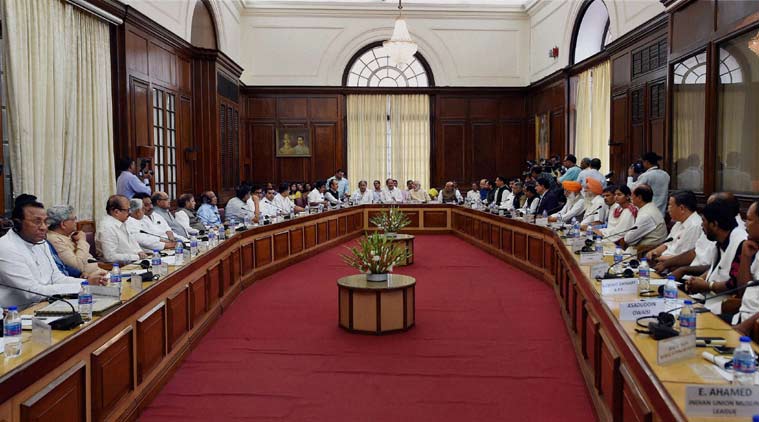
    An all-party meeting called in Delhi on the eve of the Monsoon Session on Monday, July 20,  ended in a deadlock over controversies related to Lalit Modi and Vyapam scam even as Prime Minister Narendra Modi offered to discuss all issues.

    This clearly has set the mood of confrontations in the upcoming monsoon session of the Parliament. While a number of parties felt a washout of the Parliament is not a solution but the history suggests a washout is inevitable.

    On the demand put forth by the Leader of Opposition Ghulam Nabi Azad that External Affairs Minister Sushma Swaraj, Rajasthan Chief Minister Vasundhara Raje and Madhya Pradesh Chief Minister Shivraj Singh Chouhan should resign. The government ruled out any resignations. “There is no question of accepting ultimatum by anybody. From where did the question of resignation arise? Nobody can dictate terms to the government. From Government side, no Union Minister has done anything illegal or immoral,” Parliamentary Affairs Minister M Venkaiah Naidu said.

    The Prime Minister chose the occasion to remind parties that smooth running of Parliament is a “shared responsibility” though the government has to take initiative for it. He appealed to them to utilise the Parliament time for discussing all issues.

    On the Land bill, the Prime Minister quoting Ramgopal Yadav, Modi said “it is time that we should move forward on the land bill issue, incorporating suggestions from all sides. We should move positively on this issue.”

    The Congress was, however, somewhat isolated at the meeting called by Naidu on its stand of not allowing Parliament to function if Rajasthan Chief Minister Vasundhara Raje did not resign in connection with Lalit Modi row and Madhya Pradesh Chief Minister Shivraj Singh Chouhan did not quit over Vyapam scam.

    “This is not correct. (The) Parliament will run but government must allow discussion,” JD(U) President Sharad Yadav said when asked about the Congress’ stand.

    Naidu said that 29 opposition parties did not back the Congress’ stand on not allowing the House to function.

    With important legislations like the land bill, the GST bill and the real estate bill pending before the Parliament, the government is seeking the support of all parties in their early passage.

    Modi said the Monsoon Session was short and hence its time needs to be utilised for debating important issues, for which the government was ready. “There are many outside forums where various issues are discussed extensively. The Monsoon Session is short, hence the time of the Parliament should be used for debating issues which are relevant and important,” the Prime Minister said.

  • India and Russia sign customs pact and aim to boost trade three times over the next decade

    Moscow: India and Russia seek to increase trade to US$ 30 billion by 2025 from US$ 9.5 billion last year, by overcoming challenges of inadequate connectivity, language barriers, visa barriers and regulations. Both countries recently reached an agreement on customs to provide rapid clearances of imported goods at ports, on both sea and land. Further, both India and Russia recently concluded an agreement to set up a Joint Study Group which will recommend the framework of a Free Trade Agreement (FTA) between India and the Eurasian Economic Union comprising Russia, Kazakhstan, Belarus and Armenia. To improve transportation of goods easily, both countries are working on a North South corridor that will facilitate trade between India and Russia. Similarly, an agreement on exports of dairy products from India to Russia is expected soon. Indian companies are interested to invest in fertiliser, coal and pharmaceutical sectors in Russia. On the other hand, Russian Railways and Russia’s Investment Fund are looking forward to work with Indian companies.

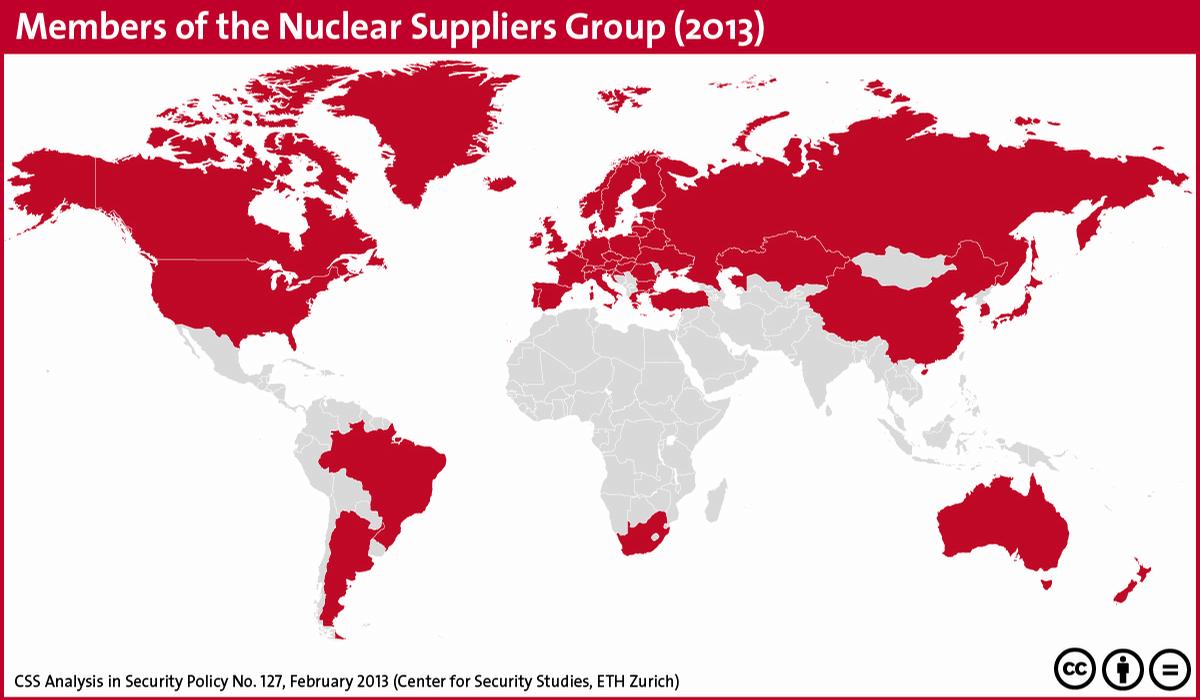
  • Why India should apply for NSG membership?

    Why India should apply for NSG membership?

    On November 10, 2010, President Obama announced US support for admitting India into the Nuclear Suppliers Group (NSG). And in May 2011, prior to the June 2011 NSG Consultative Group (CG) and Plenary meetings at Noordwijk, the US circulated a “Food for Thought” paper on the question of India’s NSG membership for consideration and feedback by the participating governments. Although five Plenaries have been held since then and the group’s Public Statements after these plenaries routinely state that the plenary “discussed the NSG relationship with India”, there does not seem to have been any substantive movement during these five years on the question of the NSG accommodating India as a Participating Government (PG).

    The 2001 Aspen Plenary formally adopted the Procedure for NSG membership after an Implementation Working Group (IMP) set up by the 2000 Paris Plenary presented a draft paper on how a restructured NSG might operate. One of the decisions adopted by the Aspen plenary was with respect to participation in the NSG. It defined a set of factors that should be considered by the current Participating Governments when dealing with the possible acceptance of a new Participating Government. It also decided that a new Government may either be invited to join the NSG as a PG through a consensus decision or approving its application for PG status again through a consensus decision.

    The factors to be considered by the current PGs when dealing with the possible acceptance of a government as a new Participating Government were, among other things, whether the applicant would be

    1.  be able to supply items 3 covered by the Annexes to Parts 1 and 2 of the NSG Guidelines;
    2. adhere to, and act in accordance with, the Guidelines;
    3. have in force a legally-based domestic export control system which gives effect to the commitment to act in accordance with the Guidelines;
    4. be a party to the NPT, the Treaties of Pelindaba, Rarotonga, Tlatelolco or Bangkok or an equivalent international nuclear non-proliferation agreement, and be in full compliance with the obligations of such agreement(s), and, as appropriate, have in force a full-scope safeguards agreement with the IAEA;
    5. be supportive of international efforts towards non-proliferation of weapons of mass destruction and of their delivery vehicles.

    The participation procedure adopted by the Aspen Plenary required that the government concerned

    1. should have adhered to the Guidelines,
    2. is interested in becoming a Participating Government of the NSG, and
    3. has indicated its desire to do so to the current NSG Chair directly or through the Point of Contact.

    The Aspen Plenary also defined what it meant by adherence thus:

    “To be eligible to become a new NSG Participating Government, a government must have adhered to the Guidelines for the Export of Nuclear Material, Equipment and Technology, and the Guidelines for Transfers of Nuclear Related Dual-Use Equipment, Materials, Software and Related Technology. Such adherence is accomplished by sending an official communication to the Director-General of the IAEA stating that the government will act in accordance with the Guidelines. This communication is to be intended for publication in the INFCIRC series.”

    India does not fulfil two of the factors “to be considered” by current participating governments. It is neither a NSG adherent nor a NPT signatory. It was for this reason that the US, in its “Food for Thought” note to the NSG PGs, interpreted the Procedural Arrangement as not requiring that “a candidate meet all of the stated criteria” and, for that reason, NSG PGs could simply take a decision by consensus to admit India based on India’s support for the nuclear non-proliferation regime and its non-proliferation behaviour.

    In the above context, this commentary examines (a) whether the US interpretation of the “Factors to be Considered” is valid, and (b) if yes, what other options are available to India to apply for membership.

    Factors to be considered

    Two factors support the US view about the nature of the factors to be considered:

    1. The IMP had considered whether a reference to ratification of an Additional Protocol with the IAEA should be added as a factor to be taken into account when considering future requests for participation in the NSG which had the support of a significant number of NSG PGs who saw no difficulty in it, given that it would be just one factor among many for consideration and that non-ratification would not necessarily preclude a government from achieving participation status.
    2. The second factor is even more compelling. After the Participation procedure and the “Factors to be considered” were endorsed, the NSG had not only considered an application from a Government that did not fulfil all the factors but approved its participation in NSG as a PG even though it was not a NSG Adherent. In 2004, NSG admitted China as a NSG PG. At the time of its application for membership, China was not only not a NSG adherent, it had made clear that its adherence to NSG Guidelines was conditional on its acceptance as a NSG by the NSG PGs. In its letter to the IAEA Director General (DG), China had stated

    “The Chinese Government has submitted its application for the membership of the Nuclear Suppliers Group (NSG). China will, once admitted into NSG, act in accordance with the NSG Guidelines (as contained in INFCIRC/254/Part I and Part 2, including Annexes, as amended) and duly exercise export control over nuclear and nuclear dual-use items.”

    India’s options

    It is clear that the IMP in their report to the Plenary had in mind only that the requirements enumerated were only to be taken into consideration for membership in NSG and were not mandatory requirements. This factor seemed to have been taken note of by the NSG PGs when they admitted China as a PG, even though not only had China not fulfilled the requirements but also affirmed that its NSG adherence will be conditional on NSG membership. Does this precedence offer a fresh avenue for India to approach the issue of its admission to NSG membership?

    India is, of course, not a NPT signatory. But it is also not a NSG recognized NSG adherent even though it had made a unilateral declaration to the IAEA DG that it follows NSG Guidelines, and the US Administration had certified to the US Congress in pursuance of its obligations under the Hyde Act that India does follow NSG Guidelines. The non-recognition by NSG of this adherence declaration arises from the fact that the Indian letter to the DG was not published as an IAEA INFCIRC. Why India chose not to have its adherence to NSG Guidelines published as an INFCIRC, even though it was meant to be circulated to all IAEA members, is not clear. The only upshot of this inexplicable action on the part of the Indian Government was that even though India adheres to NSG Guidelines, and has explicitly informed the NSG PGs and IAEA of this policy, it is yet not officially recognized as a NSG adherent by the NSG! Notwithstanding this, India can still retrieve its position by requesting the IAEA to publish its September 2008 letter to the IAEA DG containing its policy of adherence to NSG Guidelines. If it does so, then India will not be fulfilling only one of the factors to be considered, namely, non-membership of NPT. And the omission of NSG adherence in China’s application for NSG admission is a far more serious deficiency than non-membership of NPT in India’s case. The NSG guidelines in respect of transfer, and use of such transferred item, of nuclear and nuclear related dual use items and technology are a far more restrictive and supportive move in “international efforts towards non-proliferation of weapons of mass destruction” than NPT. Hence, the absence of one of the factors to be considered for membership was far more serious in the case of China than would be in the case of India.

    Hence, an Indian application for NSG membership should, objectively speaking, face much less resistance than what china had faced. Such an option is certainly worth an attempt instead of waiting indefinitely for the NSG PGs to arrive at a consensus on inviting India while attempting at the same time to find a via media by which India and Pakistan can both be accommodated in the NSG.

    Author : G. Balachandran | Dr. G. Balachandran is Consulting Fellow at the Institute for Defence Studies and Analyses, New Delhi.

    Views expressed are of the author and do not necessarily reflect the views of the IDSA or of the Government of India

    Published on IDSA Website : 20th July 2015

  • NARKANDA: THE GATEWAY TO APPLE COUNTRY

    NARKANDA: THE GATEWAY TO APPLE COUNTRY

    If you’ve flipped through English romantic poet Wordsworth’s The Mountain Echo, you will realise that the peaceful valley of Narkanda, a picturesque town in Himachal Pradesh, perfectly echoes his mesmerising poetry.

    I remembered Wordsworth the moment I witnessed the topaz blue sky, the misty morning and the winter chill – a perfect combination for a small vacation I was craving for. Not a hot spot among the tourists’ circle, the first glance made me fall in love with the place.

    Commonly known as “The Gateway to Apple Country”, Narkanda is located about 65 km from Shimla, towards Rampur on National Highway 22 – also called The Hindustan Tibet Road.

    Away from the maddening crowd, the valley welcomes you with the view of a snow-clad Himalayan mountain range on one side along with tall pines, spruce and scattered maple and aspen trees on the other side.

    The narrow curvy road has its own charm. The valley soothes with the silence of its surroundings. The whispering of cold breeze and the rattling sound of leaves are a constant companion and creating a sweet and rapturous mood.

    The Hatu peak is a major attraction in Narkanda. As I began my journey towards the peak, amid the pine and maple trees, the serenity of the valley drifted me into a different world.

    The road, scattered with red maple leaves, paved my path while heading towards the peak – with glimpses of the mighty Himalayan peaks blinking out of the pine trees.

    As I reached the top, the breathtaking view of the mountain range enchanted me with its beauty and it seemed as if Mother Nature had cast her magic spell over me.

    NARKANDA-1

    The place is also famous for its apple orchards. Thanedar, which is about 14 km from Narkanda, is known as the hub of apple cultivation. From Narkanda it’s a 20-minute drive to Thanedar.

    The Stokes Farm is one such popular apple orchard. Started in 1916 by Samuel
    ‘Satyanand’ Stokes – an American who came to India to work at a leprosy home – the farm provides livelihood for several locals, especially women.

    Apple wines and jams are also manufactured in Thanedar.

    And what better way to sip the wine with sun setting behind hills enveloping the sky in a reddish hue!

    Located 8,600 feet above the sea level, the valley is ideal for a short escape from the busy city life.

    After the Narkanda visit, the Wordsworth poem came alive for me. I am sure these beautiful lines will make your Narkanda experience an unforgettable, poetic experience.

    NARKANDA-2How to reach

    Narkanda is well connected from Shimla.

    Cabs would charge around Rs.2,500. If travelling by your own car, the route from New Delhi is via Chandigarh on National Highway 22.

    Estimated time taken to travel from Delhi to Narkanda is 10 hrs. From Shimla, it takes around two hours to reach the town.

    For local sightseeing, cabs would charge Rs.1,200.

    Where to stay

    Being less crowded and a not so popular tourist spot, there are limited choices for hotels in Narkanda. There are some resorts which charge between Rs 2,000 to Rs 4,000 per night. If your budget is limited, then settling between two hotels in the town area won’t cost more than Rs 1,000 for a double-bed room.

    There is also The Hatu being run by the Himachal Pradesh Tourism Development Corporation.

    Best time to visit

    March-June, September-November. Avoid the monsoon. The winters is harsh except if one is comfortable with the extreme temperature.

    Where to eat

    There are countable restaurants and road-side dhabas. However, all hotels have their own restaurants; so there’s plenty of choice.

    Average meal for two

    Rs 500 without alcohol.

  • US Team with two Indian Americans win International Mathematical Olympiad after 21 years

    US Team with two Indian Americans win International Mathematical Olympiad after 21 years

    The United States is number one in math after 21 years. A six-person team of young adult Americans Team USA led by Carnegie Mellon professor Po-Shen Loh bested teams from China, South Korea, and more to win the 2015 International Mathematical Olympiad (IMO) held in Thailand this month which was hailed as the “hardest ever” competition by The Guardian.

    The White House even tweeted, “Go Team USA! America took first place in the International Mathematical Olympiad for the first time since 1994,” with an attached photo of a letter of congratulations from President Barack Obama.

    Indian Americans Shyam Narayanan, 17, and Yang Liu, 18, were part of the six-member team that rose to the top at the IMO, a feat that hasn’t been accomplished by the U.S. team since 1994.

    Narayanan’s parents are of Indian origin while Liu’s father is Indian  and his mother is chin ease.

    Members of the U.S. team included Ryan Alweiss, Allen Liu, Yang Liu, Narayanan, and David Stoner, all of whom were awarded gold medals; and Michael Kural, who earned a silver medal, just one point away from the gold.

    According to the Mathematical Association of America (MAA), the competition involves six problems taken in sets of three during 4.5 hour sessions (held across two days)—no calculators. Each team member attempts the problems, and team totals are based on the number of points each individual scores. The US earned 185 to take the gold while China earned runner-up honors with 181. It’s the US’s fifth victory overall. China has the most competition wins with 19 all-time, including winning four of the last five competitions heading into the 2015 edition.

  • Indian Canadian 20 yrs old Shot Dead in Possible ‘Targeted Attack’: Report

    Indian Canadian 20 yrs old Shot Dead in Possible ‘Targeted Attack’: Report

    TORONTO:  In a possible “targeted attack”, a 20-year-old Indian-Canadian has been shot dead inside a car in Canada’s Calgary city, media reports said.

    Steven Sharda was discovered with fatal gunshots in a car on July 11 beside another man with critical injuries.

    Both were rushed to a nearby hospital where Mr Sharda was declared brought dead while another man remained critical.

    “We believe it was a targeted attack, the people responsible knew the victims,” staff sergeant Doug Andrus was quoted as saying by Calgary Sun.

    Mr Sharda is the city’s 13th homicide victim of the year, the report said.

    Though the incident came to light on July 11, Mr Sharda’s identification was established on July 14 by the police.

    Witnesses from the scene have been interviewed and police are also reviewing surveillance cameras footage in hopes of identifying suspects in an attack that was not random, Mr Andrus said, adding that the second victim is expected to live but has not been able to speak with investigators.

    “His medical condition precludes officers from conducting interviews at this time. He’s been stabilised,” he said.

    Police are also trying to determine if the shootings are linked to recent violent incidents in the city’s northeast, said Mr Andrus.

    The motive behind the incident was known so far. Meanwhile, Mr Sharda’s Facebook page was filled with friends leaving condolences, with one writing “(you’re) gone too soon bro, rest in peace, the good die young.”