Month: July 2015

  • LORD JAGANNATHA RATH YATRA

    LORD JAGANNATHA RATH YATRA

    Ratha Jatra (Yatra), the Festival of Chariots of Lord Jagannatha is celebrated every year at Puri, the temple town in Orissa, on the east coast of India. The presiding deities of the main temple, Sri Mandira, Lord Jagannatha, Lord Balabhadra and Goddess Subhadra, with the celestial wheel Sudarshana are taken out from the temple precincts in an elaborate ritual procession to their respective chariots. The huge, colourfully decorated chariots, are drawn by hundreds and thousands of devotees on the bada danda, the grand avenue to the Gundicha temple, some two miles away to the North. After a stay for seven days, the deities return to their abode in Srimandira.

    Ratha Jatra is perhaps the grandest festival on earth. Everything is on a scale befitting the great Lord. Full of spectacle, drama and colour, the festival is a typical Indian fair of huge proportions. It is also the living embodiment of the synthesis of the tribal, the folk, and the autochthonous with the classical, the elaborately formal and the sophisticated elements of the socio-cultural-religious ethos of the Indian civilization.

    Sanctity and Significance

    The festival is also known as Gundicha Jatra, Ghosa Jatra, Navadina Jatra, Dasavatara Jatra and by a variety of other names. For the devoted and believers, it is considered the most auspicious occasion. Rathe tu vamanam drishtwa punarjanmam na vidyate A glimpse of the Vamana, the dwarf form, an incarnation of Lord Jagannatha, is sure to ensure emancipation, release from the cycle of birth and death.

    Jatra is an essential part of the ritual of the Hindu system of worship. Jatra literally means travel or journey. Normally, it is the representative deities of temples more popularly known as Utsava Murti in south and Chalanti Pratima or Bije Pratima in Orissa, partake in these journeys. It is rarely that the presiding deities come out of the sanctum for such ritual journeys. The Jatra for the Ritual Journey take two forms – one involving the short circumbulation around the temple and other involving a longer journey from the temple to some other destination. The Jatra is considered as an important part of festivities and ceremonies of each temple and is considered as a special and sacred occasion.

    Rath Jatra being unique among all Jatras is the grandest festival of the supreme divinity who has manifested himself in the Kali Yuga to emancipate humanity and to relieve them from their sufferings. Lord Jagannatha is identified fully with Vishnu and Krishna. In his original manifestation as Nilamadhaba, he was worshipped in a sacred Nyagrodha Briksha or banyan tree. The branches of the tree had spread for several miles and any one entering this area was instantly emancipated and was relieved of the travails of the birth and re-birth. In fact, the influence of Yama, the God of Death, is supposed to have been curtailed in the sacred city of Puri –Srikshetra on account of the presence of Lord Jagannatha and therefore it is also called the Yamanika Tirtha.

    A glimpse of Lord Jagannatha on the chariot is considered to be very auspicious and saints, poets and scriptures have repeatedly glorified the sanctity of this special festival.

    The sanctity of the festival is such that even a touch of the chariot or even the ropes with which these are pulled is considered enough to confer the results of several pious deeds or penance for ages. In fact, there is a famous Oriya song which says that on this occasion, the chariot, the wheels, the grand avenue all become one with Lord Jagannatha himself.

    Those who are fortunate to see the deities of the Srimandira in the Gundicha Temple, the final destination of the procession of the chariots, derive the benefits of a thousand horse sacrifices, an immensely pious deed. Kabi Samrat Upendra Bhanja in his famous Vaidehisa Vilasa mentions that the Lord comes out from his sanctum for participating in the Gundicha Jatra, another name of the Festival of Chariots, only for redeeming the fallen, the patita jana who get the opportunity to behold their dearest god at close quarters on this occasion. Similarly, saint poet Salabega waxes eloquent in praise of his dearest dark darling and says that the Lord swaying and moving like a wild elephant arrives at the Grand Avenue and rides his chariot and destroys in a flash all the sins of his devotees, even if these may be grave or unpardonable.

  • THE FUTURE OF TRAVEL? A TUBE CALLED HYPERLOOP

    THE FUTURE OF TRAVEL? A TUBE CALLED HYPERLOOP

    When asked to imagine the future of transportation, most might draw a car of the future, perhaps solar powered and autonomously driven. For a select few the way we’ll move ourselves across the world tomorrow is in a steel tube at speeds of almost 1,287 kmph.

    This was originally the brainchild of billionaire US entrepreneur Elon Musk, who envisioned being able to whisk passengers between San Francisco and Los Angeles in under half an hour.

    Two years after unveiling plans for a futuristic, high-speed Hyperloop transportation system, Musk has now announced plans for building a test track in southern California and a competition for prototype pods.

    Several firms soon announced plans for pilot projects in California, Texas and other sites, but Musk and his companies, which include privately-owned Space Exploration Technologies, or SpaceX, and Tesla Motors Inc electric car company , were not involved.

    Hyperloop Transportation Technologies and Dirk Ahlborn are one of those in the driving seat. “Well, imagine a capsule fil led with people that’s hovering inside the tube. Inside the tube you create a low pressure environment very similar to an airplane that’s at high altitudes. So now the capsule travelling inside the tubes doesn’t encounter as much resistance, and so therefore can travel really fast with very little energy ,” Ahlborn said. “It’s 100% solar-powered, that’s basically the invention here,” he said. The capsules would ride a cushion of air blasted from underlying skis, propelled by a magnetic linear accelerator, according to Musk’s plans, running above or below ground and along low pressure steel tubes.

    When Musk announced this idea in 2013, many were quickly excited -with the Hyperloop described as combining Concorde, a rail gun and air-hockey table; a 57page design brief imagines it carrying automobiles and people at speeds almost impossible for land-based vehicles. On June 15, SpaceX said it would be building a mile-long test track in California.

    But presenting the Hyperloop project to a European audience for the first time in Vienna at the Pioneer’s Festival in May , Ahl born said HTT were also on the cusp of building their own, 8-km track in California’s Quay Valley .

    “Quay Valley’s going to be full scale, we’re going to move around 10 million people a year, it’s going to be opening up in 2018,” he said, adding that he expects Quay Valley to be full commercially viable.”So we assume right now that in 2017 we will be finished with the building process and basically starting to do the optimization and testing before we open. I assume we will close very , very fast the contract for the first full length track.”

    With a strong business model Ahlborn says makes the railway industry look like a dinosaur, the cost, safety and reliability of Hyperloop can be a model for future, lightning fast transport.

  • Indian scientists develop e-Nose to sniff out hazardous gases

    Indian scientists develop e-Nose to sniff out hazardous gases

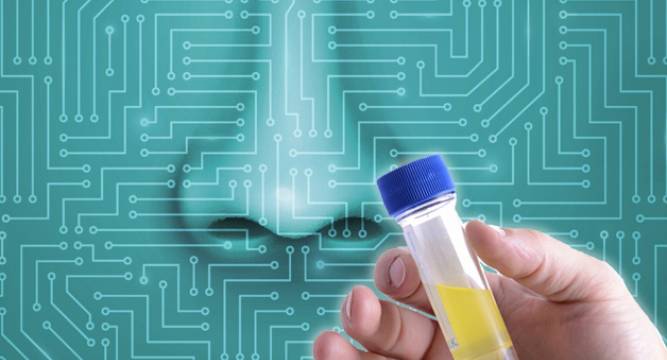
    NEW DELHI: Indian scientists have developed a sensor-based ‘Electronic Nose’ for sniffing out variety of gases at pulp and paper mill industries and environmental monitoring at other sensitive locations.

    The gases, emitted by these industries beyond certain concentration, may adversely affect human health and environment.

    This sophisticated portable device can measure odour concentration and odour intensity and thereby can immediately alert workers in such industrial units for remedial action.

    Though the ‘Electronic Nose’ is currently being successfully used in couple of paper mills in Karnataka and Tamil Nadu, the researchers are also working on its application to monitor gas emissions from any source, be it an industry or leakage of petroleum pipes going through fields or farms.

    The devices is developed by the Nagpur-based National Environmental Engineering Research Institute (NEERI) of the Council of Scientific and Industrial Research (CSIR) and the Centre for Development of Advanced Computing (C-DAC) of the Department of Electronics and Information Technology of the Government of India.

    “This has been the first attempt in India to develop such a product using odour sensors that make use of intelligent software to identify odorous molecules. It is also possible to train the software by feeding information based on observation of experts”, said a statement, issued by the ministry of science and technology on Wednesday night.

    The pulp and paper industry emits a variety of gases, namely, hydrogen sulphide, methyl mercaptan, dimethyl sulphide, and dimethyl disulphide. These gases beyond a certain concentration may adversely affect the environment and human health.

    “This newly developed ‘Electronic Nose’ helps in continuous monitoring of these gases, overcoming all limitations of the available analytical instruments that are not only expensive and time-consuming. The Electronic Nose can easily be operated at a pulp and paper mill industry”, said the ministry.

    The ‘Electronic Nose’ uses an array of sensors that function on the principle similar to that of human olfaction. The sensor array generates a pattern based on the type of aroma. The patterns obtained are trained to help interpret and distinguish amongst various odors and odorants as well as to recognize new patterns using advanced mathematical techniques, such as pattern recognition algorithms, principal component analysis, discriminant function analysis, cluster analysis, and artificial neural networks.

  • HEALTH BENEFITS OF SWIMMING

    HEALTH BENEFITS OF SWIMMING

    Swimming is a great form of workout. Besides losing a few pounds and helping us maintain our physique, swimming offers many other advantages.

    Swimming enhances cardiovascular health: Heart diseases are among the most common of lifestyle illnesses in India and it is most important to develop and better our cardio vascular endurance. Swimming engages nearly every muscle in the body and improves blood circulation. It also helps to scrape away the small layers of cholesterol or other toxins within the blood vessels. This is among the few aerobic exercises that can burn a lot of calories without putting too much pressure on the limbs. Swimming also helps in lowering elevated blood pressure.

    Swimming improves posture and flexibility

    As we age, our flexibility tends to decline. Swimming is a rare exercise since apart from working the muscles; it also stretches the muscle fibers and ligaments. It is the only low-impact exercise that requires the entire body to function coherently and thus helps us with better posture, balance and posture.

    Swimming is a great stress buster

    Swimming is a great way to burn-away the blues. The act of plunging into a pool and splashing through water induces the release of endorphins.These are the body’s feel-good hormones that help to neutralize that depressive feeling. Further, the buoyant action of the water has a massage-like effect on the body, helping us to relax.

  • IS YOUR WORKPLACE IMPACTING YOUR WAISTLINE?

    IS YOUR WORKPLACE IMPACTING YOUR WAISTLINE?

    A new survey shows that the workplace can wreak havoc on your waistline. According to a new survey from CareerBuilder India, more than half of Indian workers (52 percent) say they have gained weight at their current jobs, with 31 percent saying they have gained more than 2.5kg. Only 11 per cent of all workers say they’ve lost weight since working in their current position.

    The national survey was conducted online on behalf of CareerBuilder India of more than 1000 employees across the India.

    WHY THE WEIGHT GAIN?

    Sedentary roles, exhaustion and time constraints can present obstacles to staying fit.When asked what they felt contributed to their expanding waistlines, workers gave the following reasons:

    • Sitting at my desk most of the day -: 60 percent
    • Too tired from work to exercise: – 36 percent
    • No time to exercise before or after work – 37 per cent
    • Eating because of stress :- 24 percent
    • The temptation of the office biscuit tin -: 19 percent
    • Having to skip meals be cause of time constraints :- 28 percent
    • Workplace celebrations :- 26 percent
    • Pressure to eat food co workers bring in : -20 percent
    • Eating out regularly – 33 per cent; Happy hours : -24 percent.

    EATING AND EXERCISE HABITS

    Exercise is a key part of a healthy lifestyle, but it may not be enough to keep workers in their ideal shape.Though the majority of workers (80 percent) exercise on a regular basis, and nearly 6 in 10 (57 percent) claim to work out at least three days week, 41 per cent of workers feel they are overweight.

    Sometimes a little extra incentive can motivate individuals to work out, but the majority of workers (53 percent) say their employers do not provide gym passes, access to workout facilities or wellbeing benefits. Of these workers, 41 per cent say they would take advantage of such opportunities. Only forty per cent of workers say their company provides these types of incentives.

    When it comes to eating habits, it’s hard for workers to resist the allure of snack foods and restaurant meals. Three quarters of workers (77 percent) confess to snacking at work, and 81 per cent say they regularly eat out at work instead of packing a lunch.Thirty-seven percent eat out three times a week or more.

    MEN VS WOMEN

    More women (48 percent) than men (34%), say they feel overweight. However, men and women are equally as likely to exercise regularly, with 81 per cent of men and 79 per cent of women claiming to work out at least once per week.

    TIPS TO MAINTAIN HEALTH AND WELLNESS AT WORK : Put it on your calendar:

    • Planning ahead and scheduling time for exercise the way you would a business meeting or conference call will make you more likely to prioritize it
    • Get moving: Add as much movement to your daily activities as possible: for instance, park further away, or get off the bus or train a stop earlier and walk the remaining distance;
    • Stay away from fizzy drinks: Drink water flavored with cucumber, strawberries or lemon instead, or green tea for a caffeine boost.


  • NATURAL CHOICES TO COMBAT AGEING

    NATURAL CHOICES TO COMBAT AGEING

    Ageing begins from when a child is born. However, there are other factors that can lead to premature ageing, including the usage of incorrect skincare products and gorging on unhealthy foods. One can achieve a perfect skin by including turmeric, ginger and green leafy vegetables in the food intake, says an expert.

    Speaking at the Anti-Ageing Health and Beauty show, held at the London Olympia this past weekend, Geraldine McCulgan of the College of Naturopathic Medicine said:
    “What you eat today… you wear tomorrow.”

    The beauty therapist shared some helpful tips on natural choices for anti-ageing and the small changes that one can effect in one’s lifestyle to help slow down ageing.

    Accelerating ageing is affected by the following:

    • Glycation – the process of sugar and it affects joints
    • Inflammation
    • Lack of nutrients
    • Overload of toxins
    • Free radical damages
    • Stress
    • Loss of ATP (Adenosine triphosphate) which regulates cellular energy
    • Lack of oil and water
    • So if you want to slow down ageing, McCulgan recommends following a diet made up of whole grains, vegetables, legumes, mild-sweet and non-sweet fruits. Also try the following things
    • Avoid refined sugar
    • Eat protein with every mealSwap refined sugar products with wholegrain alternatives
    • Eat plenty of fibre rich vegetables
    • Include cinnamon – lowers blood sugar levels
    • Consult the ORAC (Oxygen Radical Absorbance Capacity) scale – which identifies the anti-oxidants in foods

    Inflammation is behind many degenerative diseases, so here we have some advice from Geraldine on how to reduce it:

    • Eat organic
    • Turmeric
    • Ginger
    • Green leafy vegetables
    • Fermented foods
    • Acid/Alkaline balancing
    • Omega 3 fatty acids
  • 5 schoolgirls from Bengaluru develop mobile App; win $10,000

    5 schoolgirls from Bengaluru develop mobile App; win $10,000

    Five teenage girl students from Bengaluru won the Technovation challenge at a global pitch event at San Francisco city in the US.

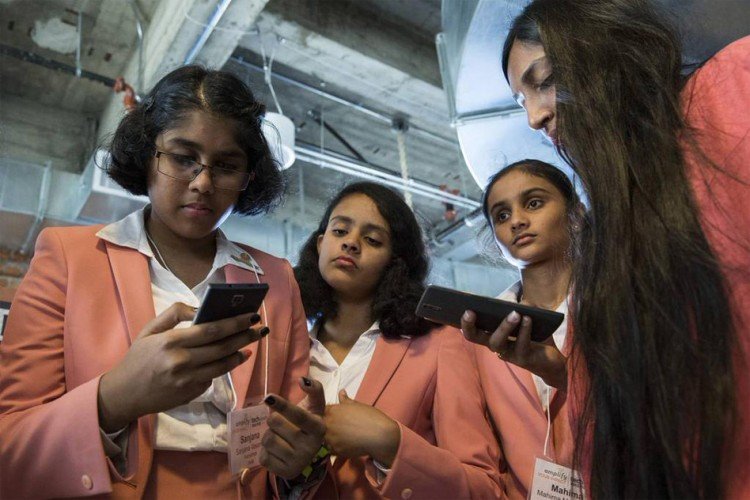
    Sanjana Vasanth, N. Anupama, Mahima Mehendale, Swasthi P. Rao and B. Navyashree, all aged 14, won the award for their app Sellixo which provides an online marketplace to buy and sell dry waste.

    Inspired by Prime Minister Narendra Modi’s Swachh Bharat Mission, the girls have have made an app where you can sell your garbage by just clicking on an ‘app, and a recycling unit comes to collect it!’

    The girls beat 400 other teams from 64 nations to bag $10,000 on June 25 with their app, which caters to dry waste producers like small shopkeepers, dry waste collectors (raddiwalas), recycling agencies and others. “In India, we have scrap dealers who go from house to house collecting waste. It is a tiring job, so we want to connect the buyers and sellers of dry waste,” said team member Swasthi P. Rao to media.

    “Once people know that they will get money for it, they will be motivated to actually collect it (dry waste), segregate it and dispose it properly,” added B. Navyashree to media.

    The girls competed under the team name Pentechan and pitched their idea to top female technology executives in the challenge organized by Adobe Foundation, CA Technologies, Google, Verizon, United Nations Women, UNESCO and MIT Media Lab.

    Pentechan started the app development process in January 2015 with the mentorship of Goldman Sachs company, and spent six months fine-tuning their business planning, marketing, communication, technology research and leadership.

    Technovation is a technology entrepreneurship programme for girls which aims to inspire the next generation of young women entrepreneurs.

    Sellixo is an android mobile application which provides an online marketplace for users to buy and sell dry waste. It targets the following customer segments: dry waste producers like small shopkeepers and apartment associations, dry waste collectors (raddiwaalas) and recycling agencies.

  • US judge detains children in Michigan for not seeing father

    US judge detains children in Michigan for not seeing father

    Judge Lisa Gorcycae held the children in contempt of court, saying they would be detained throughout the summer.

    She said the children, aged between nine and 14, had been “brainwashed” by their mother, according to NBC News.

    Their parents have been involved in a bitter divorce and custody battle since 2009.

    The Oakland County judge said the two boys and one girl can see their father, Omer Tsimhoni, while detained but not their mother, Maya Eibschitz-Tsimhoni.

    Mr Tsimhoni is a traffic expert who works for General Motors, while Ms Eibschitz-Tsimhoni is a pediatric doctor.

    Judge Gorcycae was reported to have told the family that it was one of the worst “parental alienation” cases that she has seen.

    It is unclear how long they will be detained for.

    The 24 June ruling, which only came to light this week when court documents were released, was made after the children refused the judge’s order to go for lunch with Mr Tsimhoni.

    Ms Gorcycae said the children had disobeyed her orders to “have a healthy relationship” with their father.

    One of the boys told the judge that his father had been violent towards his mother, but the judge told the children: “Your dad is a good man who loves you. You have been brainwashed.”

    Mr Tsimhoni’s lawyer also blamed the children’s mother for “alienating” the children from their father.

    The lawyer for Ms Eibschitz-Tsimhoni has not commented on the children’s detention.

    The children are being kept at a centre in Pontiac, northwest of Detroit, called Children’s Village, where as many as 200 juvenile offenders are held.

  • Hack by Chinese leads to resignation of OPM’s Director

    Hack by Chinese leads to resignation of OPM’s Director

    Katherine Archuleta said she would step down on Friday to help the department “move beyond the current challenges”.

    Authorities suspect that Chinese-based hackers targeted the computer systems of the OPM, which acts as the personnel office of the federal government.

    Initially the OPM said four million workers were affected by the breach.

    However, the department disclosed on Thursday that the data of more than 20 million people, including current and former employees, may have been compromised.

    Authorities in Beijing have publicly denied any involvement.

    Ms Archuleta resignation comes a day after Democrats and Republicans in Congress called for her to step aside as the scope of the data breach expanded significantly.

    Among the data targeted were forms used to vet potential employees of federal agencies including as the CIA and branches of the military.

    The stolen data includes health and financial information, criminal records, and the names and addresses of government employees and their relatives.

    Experts are concerned that the sensitive information could be used to blackmail US agents.

  • Sania Makes History | Mirza, Hingis win women’s doubles Wimbledon title

    Sania Makes History | Mirza, Hingis win women’s doubles Wimbledon title

    Sania Mirza and her partner Martina Hingis staged a scintillating fightback to claim the Wimbledon women’s doubles title under the Centre Court roof lights.

    The top-seeded Indo-Swiss pair claimed a 5-7, 7-6(4), 7-5 win over Russians Ekaterina Makarova and Elena Vesnina on Saturday.

    It was the top seeds’ first Grand Slam title as a team having only decided to play together in March this year.

    Hingis won the Wimbledon doubles with Helena Sukova in 1996 and Jana Novotna in 1998.

    Sania was playing her first doubles final at Wimbledon while former world singles number one Hingis lifted the trophy with Helena Sukova in 1996 and Jana Novotna in 1998.

    “For a match like this, the No.1 and No.2 seeds playing, it was the best match you could have asked for the tournament. It was unbelievably exciting. It was exciting to play. I really hope it was exciting to watch, too,” Sania was quoted as saying by Wimbledon.com

    “It’s been another lifetime. Seventeen years, usually you’re lucky to win it once or happy to be out here and play on the Wimbledon grounds. It’s above my expectations,” said Hingis who was also the singles champion at Wimbledon in 1997.

    Mirza praised the support she and Hingis received throughout the tournament and hoped her win will have a positive impact back home in cricket-mad India.

    “I hope it inspires a lot of girls and makes them believe they can be Grand Slam champions too,” she said.

    “I think for me as an Indian, I’m in Little India here. There are so many Indians in England. Thankfully there are a lot of us everywhere. In England especially I’ve always had amazing support.”

    Hingis can be back amongst the silverware on Sunday when she and Leander Paes face Alexander Peya and Timea Babos in the mixed doubles championship match.

  • Modi makes a mark at BRICS Summit

    Modi makes a mark at BRICS Summit

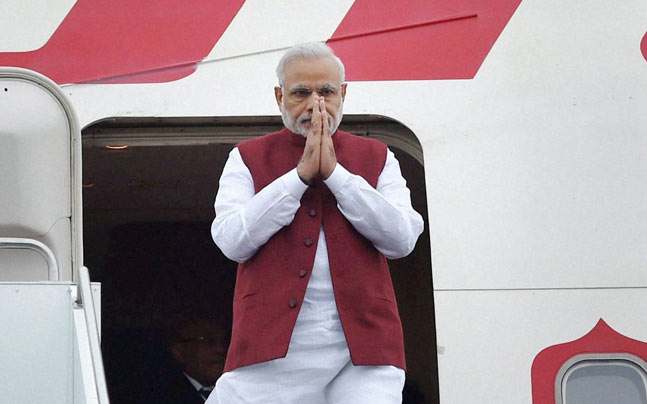
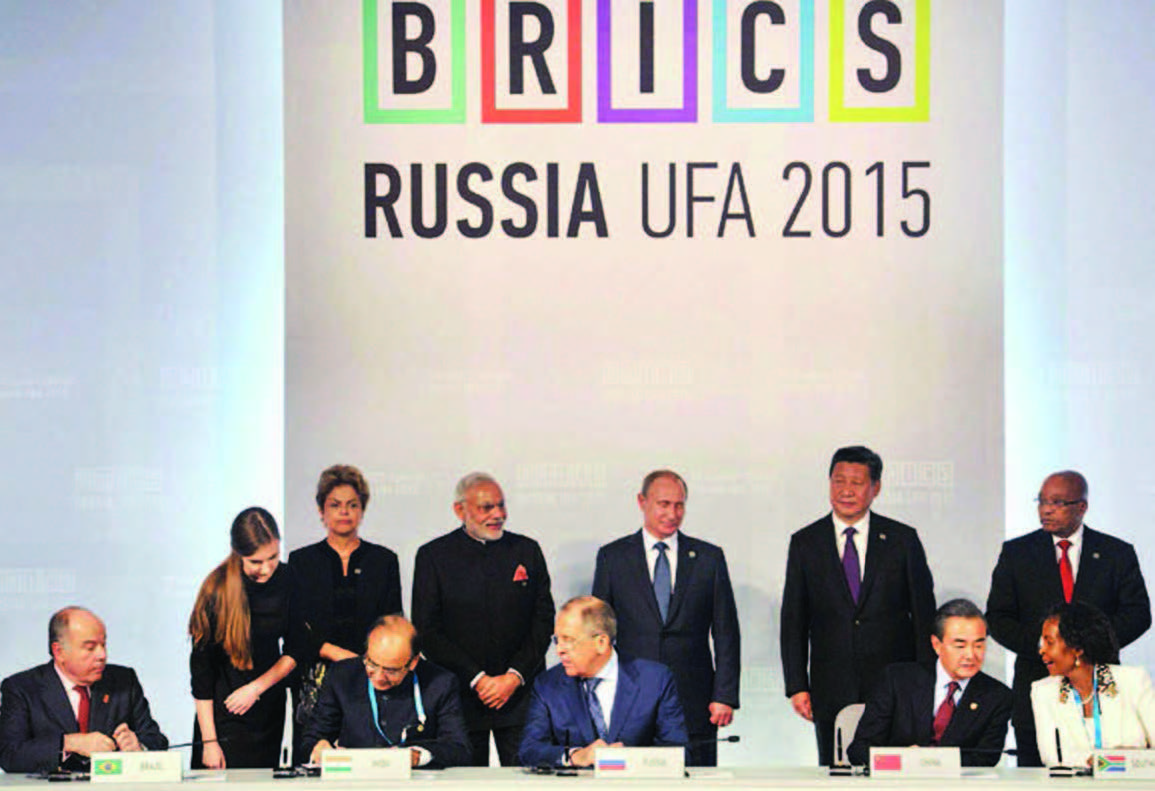
    Indian Prime Minister Narendra Modi made a mark at the summit by putting forth several important proposals which can greatly impact the member nations.

    Apart from the summit, the proposed one to one meeting with his Pakistan counterpart Nawaz Sharif early on Friday is seen as a significant way forward in the India Pakistan relations. He also met him over dinner the previous night but that was only to exchange pleasantries.

    Modi also utilized the opportunity to meet the top leaders from China and Russia and talk on bilateral issues during his first major summit since assuming office last year.

    He came out with half a dozen ‘big ideas’ which can benefit the residents of the member states.

    Among these ideas is a push for digit technology. While addressing the main session, Modi said that digital technology can play a crucial role I financial inclusion and delivery of services to everyone. He said sharing best practices in the files should be made a priority by the BRICS members.

    Pursuing his agenda for promoting clean energy, Modi said that he wanted the proposed new development Bank to fund the first major project in the field of clean energy.

    Another important proposal mooted by him was to start a sports tournament for BRICS nations.

    He stressed the need to set up a BRICS agricultural research centre which “would be a gift to the world “. He also mooted better access to clean potable water supply.

    The Indian Prime minister also pitched for stronger and deeper cooperation among BRICS members- Brazil, Russia, India, China and South Africa. In a veiled attack on the west, Modi said that unilateral sanctions were hurting the global economy. Observers point out that he was referring to the sanctions imposed by the west on Moscow after Crimea joined Russia in March 2014.

    Modi pointed out that BRICS countries together formed 44 percent of the world’s population, contributing 40 percent to the global GDP and 18 percent to the world trade.

    The combined economic output last year of the BRICS nations almost matched the gross domestic product of the US while in 2007 the U.S. Economy was double that of the BRICS members

  • LG’s new touchscreens to make laptop thinner, lighter

    LG’s new touchscreens to make laptop thinner, lighter

    WASHINGTON (TIP): LG’s display subsidiary has announced that it is bringing drastically thinner, lighter touchscreens for notebooks later this year.

    According to the engadget.com, with full HD (1080p) resolution, the Advanced In-Cell Touch (AIT) screens substitute a touch panel layer for a touch sensor built into the LCD itself, which will makes it thin. It’s the same tech found in smartphones like LG’s G4.

    The new tech will make it thin by 25% whereas weight reductions could be as much as 35% compared to typical laptop touchscreen. The reduction in layers also means less light reflection, which LG Display reckons will make the new displays brighter and clearer.

    The company also plans to roll out multiple screen sizes, with stylus-compatible models also on the way.

  • New sensor chip to detect prostate cancer early

    LONDON (TIP): Researchers have developed a smart sensor chip that can detect prostate cancer more accurately and efficiently than current tests which rely heavily on antibodies.

    The sensor chip, able to pick up on subtle differences in glycoprotein molecules, will help improve the process of early stage prostate cancer diagnosis, researchers said.

    Glycoprotein molecules play an essential role in our immune response, because of which they are useful clinical biomarkers for detecting prostate cancer and other diseases.

    The team of chemical engineers and chemists at the University of Birmingham, created a sensor chip with synthetic receptors along a 2D surface to identify specific, targeted glycoprotein molecules that are differentiated by their modified carbohydrate chains.

    “There are two key benefits here. Crucially for the patient, it gives a much more accurate reading and reduces the number of false positive results,” said Paula M Mendes, professor of Advanced Materials and Nanotechnology at the University of Birmingham.

    “Furthermore, our technology is simple to produce and store, so could feasibly be kept on the shelf of doctors’ surgery anywhere in the world. It can also be recycled for multiple uses without losing accuracy,” she said.

    The findings show how the rate of false readings that come with antibody based diagnosis can be reduced by the new technology that focuses on the carbohydrate part of the molecule.

    The complex sugar structure in glycoprotein can be subtly different between samples from healthy and diseased patients.

    In order to achieve more accurate readings, the team wanted to identify the presence of disease by detecting a particular glycoprotein which has specific sugars in a specific location in the molecule.

    “Biomarkers such as glycoproteins are essential in diagnostics as they do not rely on symptoms perceived by the patient, which can be ambiguous or may not appear immediately,” Mendes said.

    “However, the changes in the biomarkers can be incredibly small and specific and so we need technology that can discriminate between these subtle differences -where antibodies are not able to,” Mendes said.

  • IMF DOWNGRADES 2015 OUTLOOK FOR GLOBAL GROWTH TO 3.3%

    IMF DOWNGRADES 2015 OUTLOOK FOR GLOBAL GROWTH TO 3.3%

    WASHINGTON (TIP): The US economy’s stumble at the start of 2015 is dragging down the world’s growth prospects, the International Monetary Fund said on July 9.

    The IMF forecasts 3.3 per cent global growth this year, down from the 3.5 per cent it predicted in April. The main culprit: The American economy, world’s biggest, shrank at a 0.2 per cent annual rate from January to March, hurt by nasty weather. The IMF last month cut the outlook for US growth to 2.5 per cent in 2015, from April’s 3.1 per cent. The US economy grew 2.4 per cent in 2014.

    The fund expects the US economy to grow 3 per cent in 2016.

    IMF research chief Olivier Blanchard downplayed the wider economic impact of the Greek debt crisis and the possibility that Greece could be forced to abandon the euro currency. “The effects on the rest of the world economy are likely to be limited,” he said.

    The IMF expects global growth to improve to 3.8 per cent next year.

    Meantime, America’s first-quarter troubles are pinching its neighbors.

    The IMF trimmed Mexico’s 2015 growth forecast to 2.4 per cent from 3 per cent and Canada’s to 1.5 per cent from 2.2 per cent.

    The multinational lending agency kept its forecast for China’s economic growth unchanged at 6.8 per cent this year and 6.3 per cent in 2016.

    The Chinese stock market has plunged, with the Shanghai Composite index down 30 per cent from its peak less than a month ago. But Blanchard said: “We don’t see it as a major macroeconomic issue.” That is because ordinary Chinese mostly did not spend the paper gains in their stock portfolios as shares climbed to dangerous heights over the past year; so they are not likely to cut back now. Moreover, Blanchard said, the stock market is small compared with the size of China’s economy, the world’s second largest.

    The IMF predicts the eurozone will grow 1.5 per cent this year, unchanged from April’s forecast; Japan will grow 0.8 per cent, down from an April forecast of 1 per cent; and the Brazilian economy will shrink 1.5 per cent, a downgrade from April’s forecast for a 1 per cent
    drop.

  • Maruti Celerio crosses 1 lakh sales mark in domestic market

    Maruti Celerio crosses 1 lakh sales mark in domestic market

    NEW DELHI (TIP): Country’s largest car maker Maruti Suzuki India on Thrusday said its compact car Celerio has achieved one lakh sales mark in the domestic market in less than 1.5 years after its launch in the country.

    Launched in February last year at the Delhi Auto Expo, Celerio is credited with introducing auto gear shift technology in the Indian automobile industry.

    “Celerio is the first car in India to introduce the acclaimed auto gear shift technology and almost one-third of sales are of auto gear shift variants,” Maruti Suzuki India executive director, marketing and sales, R S Kalsi said.

    Customers appreciated the convenience of automatic gear shifting with no loss in fuel efficiency on Celerio and within a year of its launch the company’s share in the lower hatchback has shot up to 71 per cent from 61 per cent, he added.

    Celerio is available in petrol, CNG and diesel fuel options and offer two transmission options — manual as well as auto gear shift.

    Maruti had launched Celerio diesel last month. In May this year, the company crossed a major milestone of 1.5 crore units of cumulative production in over three decades since it started selling cars in the country.

  • US JOBLESS CLAIMS RISE TO HIGHEST LEVEL SINCE FEBRUARY

    WASHINGTON (TIP): New applications for US unemployment insurance benefits rose last week to their highest level since February, suggesting some slowdown in the labor market recovery.

    Initial claims for state unemployment benefits rose 15,000 to a seasonally adjusted 2,97,000 for the week that ended July 4, the US department of labor said on July 9.

    Even with the rise in claims, the latest report marks the 18th consecutive week of new filings below 3,00,000, which is considered consistent with a firming labor market.

    The previous week’s claims were revised to 2,82,000, showing that 1,000 more people filed than initially reported.

    Economists polled by Reuters had expected new applications to fall to 2,75,000 last week.

    The four-week moving average of claims, which smoothes out week-to-week fluctuations and is therefore considered a better gauge of the labor market, rose 4,500 to 2,79,500 last week.

    US Treasuries erased some losses after the data, while the dollar trimmed gains against the euro and the yen. Stock index futures were unchanged.

    The claims report covered the period which included the US Independence Day holiday, but a labor department analyst said there was nothing unusual in the state level data last week. He did note that claims data tends to be volatile in July because of retooling by auto plants during that period. Jesse Hurwitz, an economist at Barclays Capital, said that because of the holiday and auto plant shutdowns, he was inclined to look past the volatility in the report. “Trend readings of both initial and continuing claims remain low from a historical perspective, which we expect to continue,” he said.

    Continued claims – the number of people still claiming jobless benefits after an initial week of aid – rose 69,000 to 2.334 million in the week ended June 27, the labor department said. The labor market has been tightening, with the unemployment rate not too far from the 5.0 per cent to 5.2 per cent range that most Federal Reserve officials consider consistent with full employment.

    A government report last week showed employers adding 2,23,000 jobs in June, a slowdown from the prior month, and the US unemployment rate sliding to 5.3 per cent.

  • India and America join hands to close in on tax evaders

    NEW DELHI (TIP): India and the United States signed a tax information sharing agreement on Thursday, under a new US law meant to combat offshore tax dodging by Americans as well as by Indians stashing funds abroad.

    The agreement aims to close a window for US citizens to avoid tax through financial products like equities, bank accounts and insurance.

    In return, New Delhi expects to garner Washington’s support to bring back illicit funds stashed by Indians in foreign tax havens and boost revenues by getting information about Indians working in the United States.

    The agreement “would enhance tax transparency and eventually bring in higher equity into the direct tax regime which are necessary for a healthy economy,” India’s revenue secretary Shaktikanta Das said at the signing in New Delhi.

    Following his election promise, Prime Minister Narendra Modi has enacted a ‘black money’ law that foresees tough penalties and a jail term for tax evaders who fail to declare their overseas incomes.Washington has signed pacts covering more than 80 tax jurisdictions to implement the Foreign Account Tax Compliance Act, or FATCA, requiring financial institutions to share information about Americans’ accounts worth more than $50,000.

    Last year, Modi joined leaders from the Group of 20 countries in Australia in an agreement for countries to automatically exchange tax information on a reciprocal basis by the end of 2018.

  • Greece sends reform plan to EU promising new tax hikes

    Greece sends reform plan to EU promising new tax hikes

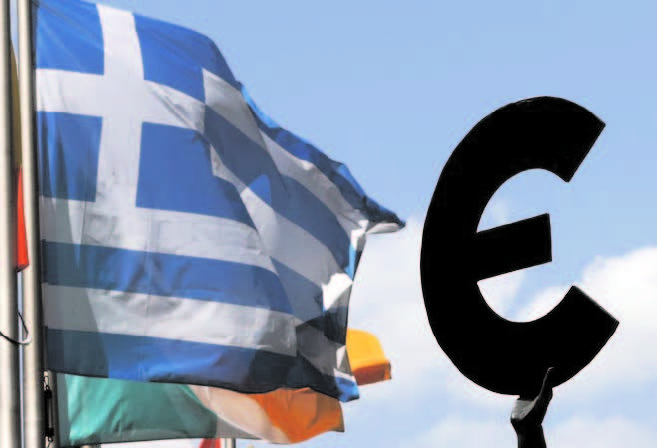
    ATHENS/FRANKFURT (TIP): The Greek government sent a package of reform proposals to its euro zone creditors on July 9 in a race to win new funds to avert bankruptcy and will seek a parliamentary vote on Friday to endorse immediate actions.

    In the latest proposals, Greece has asked for 53.5 billion euros ($59 billion) to help cover its debts until 2018, a review of primary surplus targets and “reprofiling” the country’s long-term debt.

    In turn, Athens bowed to demands to phase out tax breaks for its islands –cash cows for the tourism industry –and to hike taxes on shipping companies.

    The chairman of Eurogroup finance ministers confirmed receiving the documents but will not comment until they have been assessed by experts from the European Commission, European Central Bank and International Monetary Fund. US stock futures jumped 1 percent in early Asian trade on the announced measures.

    Greek lawmakers will be asked on Friday to authorise the leftist government to negotiate a list of “prior actions” it would take before any fresh aid funds are disbursed, a key step to convince sceptical lenders of its serious intent.

    Leftist Prime Minister Alexis Tsipras spent the day with his cabinet drafting a last-ditch package of measures on which Greece’s survival in the euro zone hinges.

    A further vote would be needed to turn them into law if euro zone leaders agree at a summit on Sunday that the proposals are a basis for starting negotiations on a three-year loan and releasing some bridging funds to keep Greece afloat.

    In a sign of possible trouble ahead, the head of Tsipras’s junior coalition ally — which has threatened to pull the plug on the government if the island tax breaks were scrapped — did not add his signature to the reform proposals. Neither did Energy Minister Panagiotis Lafazanis, who leads the far-left flank of the ruling Syriza party.

    The latest offer also included defence spending cuts, a firm timetable for privatising state assets such as Piraeus port and regional airports, hikes in VAT for hotels and restaurants and slashing a top-up payment for poorer pensioners.

    Greek banks have been closed since June 29, when capital controls were imposed and cash withdrawals rationed after the collapse of previous bailout talks. Greece defaulted on an IMF loan repayment the following day and now faces a critical July 20 bond redemption to the ECB of 3.49 billion euros, which it cannot make without aid.

    The country has had two bailouts worth 240 billion euros from the euro zone and the IMF since 2010, but its economy has shrunk by a quarter, unemployment is more than 25 percent and one in two young people is out of work.

    Germany, Athens biggest creditor, meanwhile made a small concession by acknowledging that Greece will need some debt restructuring as part of the new programme to make its public finances viable in the medium-term.

    The admission by hardline German Finance Minister Wolfgang Schaeuble came hours before the midnight deadline for Athens to submit its reform plan.

    Schaeuble, who makes no secret of his doubts about Greece’s fitness to remain in the currency area, told a conference in Frankfurt: “Debt sustainability is not feasible without a haircut and I think the IMF is correct in saying that.”

    But he added: “There cannot be a haircut because it would infringe the system of the European Union.”

    He offered no solution to the conundrum, which implied that Greece’s debt problem might not be soluble within the euro zone.

    But he did say there was limited scope for “reprofiling” Greek debt by extending loan maturities, shaving interest rates and lengthening a moratorium on debt service payments.

  • Ice breaker meeting between Modi, Sharif

    Ice breaker meeting between Modi, Sharif

    UFA, RUSSIA (TIP): Indian Prime Minister Narendra Modi and his Pakistani counterpart Nawaz Sharif met here on Friday, July 10, after a gap of more than seven months resolving to move the bilateral relationship on to a firmer plane.

    The meeting took place at the initiative of PM Modi and proved to be an ice breaker.

    Advisor Sartaz Aziz and Pakistan Foreign minister accompanied Sharif while Indian National Security Adviser Doval and Foreign Secretary Jaishanker attended the meeting with Modi which lasted about 50 minutes against the scheduled 30 minutes.

    While the Indian delegation took up the issue of release of Lakhwi allegedly involved in Mumbai attack, the Pakistan delegation alleged India’s alleged involvement in Baluchistan. They also discussed cross border terrorism.

    “The two leaders discussed all issues of importance to both sides” said a spokesman later.
    Asked if the meeting might see a reduction in the tension that has characterized India-Pakistan relations in the past few months, a Pakistani spokesperson described the meeting as a “positive development”.

    The foreign secretaries of the two countries jointly addressed the media and said it was a cordial meeting. It was agreed upon that a meeting of the National Security advisors of the two countries would be held shortly followed by those of DG BSF and DG Pakistan Rangers.

    It was decided to expedite trial in Mumbai attack case and to take steps to promote religious tourism. It was also decided to release fishermen in each other’s custody within 15 days along with their boats.

    Nawaz Sharif reiterated his invitation to Modi to visit Pakistan for the next Saarc summit to which Modi has agreed.

    Modi and Sharif will later attend the summit of the Shanghai Cooperation Organisation , where SCO leaders are expected to make a formal announcement of their decision to admit India and Pakistan as members.

    The only substantive meeting the two leaders have had so far was in Delhi soon after Modi took oath as Prime Minister. Sharif was one of several South Asian leaders who attended the ceremony in what was meant to be the Modi government’s signal that it was according top priority to the subcontinent in its foreign policy.

    It was announced in July 2014 that the foreign secretaries of India and Pakistan would meet in Islamabad in August to explore ways of taking the relationship forward. But a week before that meeting was to take place, India cancelled the talks citing the Pakistan high commissioner’s decision to invite Hurriyat leaders for consultations as the reason.

    Since then, despite a brief encounter between the two PMs in Kathmandu during the Saarc summit in November and the visit to Islamabad of Foreign Secretary S. Jaishankar earlier this year, relations between India and Pakistan have been in freefall.

    The situation along the Line of Control and even the International Boundary saw several weeks of intense firing with each side blaming the other for starting the provocation. A BSF jawan was killed in a firing incident on Thursday leading to escalation in tension.

    Leaders in both countries had also sharpened their rhetoric in the past, with the Pakistani defence minister and foreign policy advisor accusing India of fomenting acts of terror within Pakistan. In recent weeks, however, both India and Pakistan appear to have made some effort to soften the rhetoric. Modi telephoned Sharif at the onset of Ramzan, spoke about the need for peaceful relations and said India was going to release detained Pakistani fishermen, a gesture of goodwill for the holy Islamic month.

    Soon after, India released 88 Pakistani fishermen, while Pakistan reciprocated by freeing 111 Indian fishermen.

  • What is the Vyapam scam

    What is the Vyapam scam

    NEW DELHI (TIP): The Madhya Pradesh Professional Examination Board (MPPEB) scam also known commonly by its Hindi acronym as the “Vyapam scam” hits headlines on and off throughout the year. Last week a reporter with Aaj Tak news channel collapsed while interviewing kins of victims, reports say post-mortem does not indicate foul play, but viscera reports are awaited. ext day , the dean of a college from Jabalpur who was assisting the Special Task Force in the investigations was found dead at a hotel in New Delhi. Activists say that the English media has not reported the scam as extensively as they should have.

    But what is the Vyapam scam?

    One of the first complaints were registered way back in 2000, but it was only by 2007 that the scam came to fore as a full fledged professional racket. Investigations and arrests started in 2013 after new details emerged.

    The MPPEB has been responsible for conducting entry into professional courses like the Pre-Medical examinations for the state since 1982. Complaints of irregularities while conducting the examinations first surfaced in 2009, and the scam blew over in 2013. The Vyapam scam pertains to manipulation in the selection process for government jobs conducted by MPPEB which came to light after a report by the Madhya Pradesh Local Fund Audit office for 2007-08 found alleged financial and administrative irregularities, including unauthorized disposal of application forms, worth crores of rupees by the MPPEB. In July 2013, the crime branch at Indore arrested 20 people, 17 from Uttar Pradesh for impersonating MPPMT candidates. The lid blew over what was apparently an entirely rigged system.

    A list containing names of 317 candidates was confiscated from Dr Jagdish Sagar, considered to be the mastermind of the scam. He was arrested by the Indore police on July 12, nine days before the PMT counselling.

    Modus operandi

    Impersonation: In this, all the detail is in the admit card, including name, date of birth, and roll numbers, of the candidate who is applying for the seat. However, the photograph is of the impersonator. An impersonator is one who writes an exam on behalf of someone else. In such cases, they are brilliant students who can score very high marks. The concerned officers on the examination board change the photograph back to that of the original candidate after the exam.

    Engine and bogie system: A person is fixed by people on the board whose work is like that of an engine. He/She is seated strategically between two other candidates who want a seat. The engine helps them copy from his/her own paper. The examiners are usually bribed to fix the seating arrangements.

    OMR sheets: The select candidates are advised to leave their answer sheets blank. They are randomly given high percentages after the exam. They then fill in the answers in the OMR booklet according to the marks they have already been given.

    Arrests and accusations

    In December 2013, the Special Task Force investigating the scam under the supervision of SIT formed by the Madhya Pradesh High Court produced a supplementary charge-sheet against the 34 accused in the Indore district court. The charge-sheet ran into 23,000 pages and 30 out of the accused were the parents of children.

    In April next year, 27 students of MGM College were expelled for fraudulently clearing PMT-2012. These were only those who could be identified, the total number of fraudulent candidates was 286 that year. In June 2014, the STF said that the police had arrested close to 100 medical candidates in connection with the scam. On the 16th of the same month, the former technical education minister in the BJP govt in the state, Laxmikant Sharma was arrested for his involvement in the contractual teachers scam. Those arrested in connection with the impropriety also include MPPEB’s exam controller Pankaj Trivedi, MPPEB’s system analysts Nitin Mahendra and Ajay Sen and state PMT’s examination in-charge C. K. Mishra.

  • DISSIDENCE ROCKS AAM AADMI PARTY

    DISSIDENCE ROCKS AAM AADMI PARTY

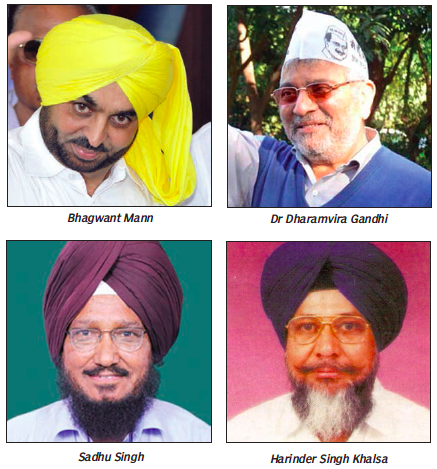
    NEW DELHI (TIP): The Aam Aadmi Party (AAP), which had received huge support from the NRI community, appears to be in the doldrums in Punjab which had elected all its four MPs in the Lok Sabha elections. The growing resentment among the party MPs against the party leadership has now plunged the party in a serious crisis.

    The latest in the series of differences in the party pertaining to its MPs was an outburst by two of them describing the party leadership as immature which was trying to arm twist them for questioning the reorganization of the state unit of the party. While two MPs, Dr Dharamvira Gandhi and Harinder Singh Khalsa, have come on record, they claim that they are in touch with another MP Sadhu Singh who endorses their stand. The fourth MP, Bhagwant Mann, is abroad and could not be contacted by them.

    Their angry outburst was caused by the decision of the party high command to restructure the state unit of the party without consulting the party MPs. The party’s political affairs in charge for Punjab Sanjay Singh had reorganized the party unit without consulting the MPs.

    What has further infuriated the MPs is the `armed twisting tactics’ of the party supreme Arvind Kejriwal. Shortly after two MPs voiced their protest against the restructuring of the state unit of the party, all the four MPs received a text message on their mobiles seeking a report card on their performance.

    The text message, sent by the Sanjay Singh late on Thursday, asked the MPs to list within five days their achievements as MPs. The message said that the party president had sought a report from each of the MPs on following three points : 1. How many questions of public interest have you raised in parliament. 2. How have you contributed to the party’s growth in your constituency and 3. What work have you done in your constituency.

    The text message led to an angry response by at two MPs, Dharamvira Gandhi and Harinder Singh Khalsa, who also claimed to have spoken and received endorsement from Sadhu Singh. Gandhi said that party’s central leaders were ‘dictatorial’. He said that the order given a day after their meeting resenting the restructure of the party was malafide. Khalsa said he can only “scoff and laugh” at the party’s decision to seek their report card. He said it was like “Gestapo act” to terrorize the MPs. He said the immature act of the party leadership was a childish reaction to their criticism of the reorganization of the party in the state.

    While Gandhi had been critical of Kejriwal when the two senior leaders Yogendra Yadav and Prashant Bhushan, were expelled from the party, the other three had preferred silence.

    The expelled leader Yogendra Yadav has reacted to the developments in Punjab as a natural outcome of the `durbar culture” being practiced by Kejriwal and his supporters.

    The rebellion in the party may lead to a serious crisis within the party which was wanting to make a strong bid for the February 2017 assembly elections. The four MPs together represent 36 assembly segments out of a total of 117 and its party candidates had finished second in 25 others assembly segments.

    The internal strife within the AAP would be welcomed by the Punjab Congress leaders as well as the SAD-BJP combine who had been expecting a serious contest from the AAP in the 2017 assembly elections. It is high time the AAP leaders pull their act together to present a viable alternative on Punjab. They still retain a lot of goodwill and people are fed up of the ruling coalition on Punjab as well as a divided Congress. AAP has the capability to fill the vacuum but only of stops blundering along.

  • Land bill may have provision to protect ‘irrigated land’

    Land bill may have provision to protect ‘irrigated land’

    NEW DELHI (TIP): In an attempt to placate the belligerent opposition over the contentious land bill, the government is weighing the option of incorporating new provisions to protect agricultural land.

    According to indications, the changes could include largely exempting acquisition of irrigated multi-cropped land for developing industrial corridors or industrial hubs, building dams etc.

    Sources said the government is in favour of acquisition of such land only in ‘extreme conditions’ and for building roads and railway projects.

    The government is not keen for many changes, which would send a signal that the Modi administration is on the back foot, but few amendments may be proposed for better protection of farmland and land owners.

    A big change could be about the industrial corridors, an issue that has generated much heat and opposition from Congress.

    The land bill provides for acquisition of one km of land on both sides of the designated railway lines or roads, with the taking over of land exempted from provisions of consent and social impact assessment.

  • GOOD NEWS ON ONE RANK, ONE PENSION SOON, SAYS PARRIKAR

    LUCKNOW (TIP): Defence minister Manohar Parrikar on Thursday said that Army can expect ‘good news soon’ on the issue of one rank, one pension (OROP). In the city for cantonment board meeting, the minister said: “Our commitment to implement the OROP remains intact. I cleared the file as soon as it came to my notice.”

    When asked whether the issue could be put before Parliament in the monsoon session starting July 21, the minister said that it was difficult to give a time frame, as many ministries and departments are involved in its implementation.

    “Since issues like OROP involve more than one ministry, there cannot be any time-frame for its implementation. I do not put myself in restrictive time-frame. It will be implemented soon, but how soon, I cannot tell. My department followed the time-frame despite difficulties,” he said.

    Ex-servicemen have been protesting since June 14 to press for the implementation of OROP. At present, pension of retired army personnel is based on the pay commission recommendations at the time of their retirement. This leads to difference in pension for officers of the same rank who retire on different dates.

    With OROP, those who retired earlier will draw the same pension as officers and jawans of the same rank who are retiring now. They would also be entitled to a year’s back pension at the new rate, which would be a windfall for pensioners.

    The system will benefit 25 lakh ex-servicemen, and is expected to cost the government around Rs 8,500 crore.

  • GANG BEHIND RS 10,000 CRORE HAWALA RING BUSTED

    NEW DELHI (TIP): The Enforcement Directorate has busted a hawala network in Ahmedabad which had allegedly laundered more than Rs 10,000 crore through a private bank in Surat to Dubai and Hong Kong.

    The ED has registered a case under Prevention of Money Laundering Act and arrested five accused. The agency is on the trail of the network’s kingpin who has been evading arrest for the past eight months.

    A Mumbai-based bullion trader has been identified as the kingpin of the hawala network that had deposited Rs 10,000 crore in cash in two Surat branches of a private bank in December 2013 and January 2014.

    This was immediately transferred to a public sector bank’s overseas branch in Dubai and in a Hong Kong branch of a foreign bank. The money was later transferred to several beneficiaries from those foreign accounts.

    The network was busted by the Ahmedabad unit of the ED which is investigating the case. A source said the case was also on the radar of India’s external intelligence agency RAW. The huge cash transfer to foreign accounts is believed to be illicit money of some politicians and bureaucrats.

    The agency has traced one transaction to a Chennai company which was also accused in the 2G spectrum scam and was linked to a former telecom minister.

    A senior officer associated with the probe said the agency discovered forged customs invoices from the accused. “This time, they had forged documents which revealed dates of 2011 and payments made two years later in 2013 and 2014 which alerted us,” he said.

    The probe revealed that two accused based in Gujarat had been running dummy companies and forging documents of customs department and routing cash through the banking channels to Dubai and Hong Kong.

    The trail further led to the kingpin based in Mumbai. The ED arrested two of his nephews — one based in Surat and the other operating dummy companies in Dubai.

    The agency is probing the Mumbai kingpin’s association with some big politicians from Maharashtra and is likely to make some more arrests in the coming weeks.

  • INDIA PUSHES FOR GREATER FACILITATION OF TRADE WITHIN BRICS

    INDIA PUSHES FOR GREATER FACILITATION OF TRADE WITHIN BRICS

    UFA (TIP): India Prime Minister Narendra Modi called on the country’s BRICS partners to facilitate trade and reduce customs barriers that are in place at the moment. Addressing the BRICS Business Council, at the 7th annual BRICS summit in Ufa, Modi said India expected to sign an intra-BRICS customs agreement to facilitate trade.

    Modi also suggested that the BRICS countries host an annual trade fair. “I will propose an annual BRICS trade fair,” Modi said. “India will be happy to host the first BRICS trade fair.”

    The BRICS Business Council, which is composed of 25 prominent entrepreneurs from Brazil, Russia, India, China and South Africa, represents various industries and sectors in the grouping. Its members spoke of difficulties in obtaining visas and said this was among the barriers to greater trade within the grouping.

    South African President Jacob Zuma told the council that the country supported measures to facilitate visas for businesspeople. He said South Africa unilaterally initiated such measures last year. South Africa suggested that a BRICS business pass be developed on the lines of the APEC Business Travel Card, where a holder does not need a visa to visit an APEC member country.

    Brazil is the only BRICS member that follows a strictly reciprocal visa policy. India’s new electronic visa system simplifies the entry procedure for casual business visitors and tourists. Citizens from all of India’s BRICS peers can use the facility to obtain a one-month visa twice in a calendar year.

    Bureaucracy pertaining to customs procedures, however, remains a common complaint among each BRICS member. Customs procedures should reduce on initiatives such as a free trade agreement between the Eurasian Economic Union and India, however they do not provide a common solution for the BRICS grouping as a whole.

    Russia proposed a roadmap for investment cooperation with the BRICS. “We have consulted with our businesses, and have included about 50 projects and initiatives, including the establishment of an energy association, the creation of an international energy research centre, as well as founding an industry union,” Vladimir Putin said at the plenary session.

    Expanding cooperation in technology, sports and film

    Thanking Putin for hosting the summit in Ufa this year, Modi came up with a series of ideas to improve cooperation within the BRICS.

    At the plenary session, Modi called for cooperation in renewable energy and the development of digital technologies. He also said there should be greater interaction between states and provinces in BRICS member countries and a common approach towards meeting food and water shortages.

    He also said the members should organize sporting events, adding that India could host a BRICS football tournament.

    “We should also cooperate in film production,” Modi said, emphasizing the fact that films are an important part of the culture of each of the BRICS countries.

    Terrorism and the SCO

    The Indian Prime Minister also raised the issue of international terrorism. “We should speak in one voice, without distinction and discrimination between groups and countries, sponsors and targets,” Modi said. These comments should be looked upon within the context of the Shanghai Cooperation Organization (SCO) summit that will be held on July 10.

    The SCO will initiate the measures to make India and Pakistan permanent members of the security grouping. Modi’s remarks may have also been targeted at his Pakistani counterpart Nawaz Sharif. The two are scheduled to hold a meeting in Ufa.

    BRICS Bank not a rival of Bretton Woods institutions

    Senior bankers from Russia and India said the New Development Bank, which held its inaugural meeting before the BRICS summit, would continue to expand, but would not position itself as a rival to existing multilateral lending institutions.

    “The decision was made to create a financial institution which is to support economic development in BRICS countries,” Vladimir Dmitriev, Chief Executive of Vnesheconombank told RT. “I would rather say that it’s a complimentary vehicle to be focused specifically on the development of BRICS countries.”Dmitriev said one of the goals of creating the New Development Bank (NDB) was to create a mechanism that would allow Russia to finance joint projects in local currencies. NDB President K.V. Kamath said the bank would have a different approach towards lending, where it places a priority on the borrowers’ interest instead of the lender’s interests. “So far loans were made from the mindset of the lender but we are now going to look at it from the mindset of the borrower,” Kamat said.. Kamath echoed Dmitriev’s sentiments by saying that the NDB was not a competitor to the World Bank or IMF. “There are no fears, NDB represents the expectations and aspirations of developing nations.”

    Potential new members

    The BRICS countries have a combined population of almost 3 billion people. Their total GDP is around $16 trillion.

    While the international media carried several reports over the last few years about BRICS expansion with countries as diverse as Indonesia, Argentina and Egypt being mentioned as potential candidates, the grouping has decided not to expand at the moment.

    Russian Deputy Foreign Minister Sergei Ryabkov told reporters that the BRICS grouping was in no hurry to expand, but new members may be welcomed in the future.

    “BRICS is not an organization, it is a collection of countries that are united by national interests,” Rybakov said, according to Sputnik News.

    “We think that the current format is an optimal one… After South Africa became a participating state, the leaders decided to declare a moratorium for accepting new members. We do not exclude anything. What will happen, should be driven by national interest.”

    Unilateral sanctions hurting global economy

    Prime Minister Narendra Modi said that “unilateral sanctions” are hurting the global economy, a statement that comes a day after he held deliberations with Russian President Vladimir Putin and just hours after he met Iranian President Hassan Rouhani.

    He made a strong pitch for deeper cooperation among the member countries of the five-member BRICS grouping — Brazil, Russia, India, China and South Africa.
    “Unilateral sanctions are hurting the global economy. So it is very essential that BRICS economies deepen their cooperation. BRICS should also work with other developed regions,” he said while addressing the BRICS Business Council meeting here, soon after the start of the BRICS Summit.