Month: October 2015

  • BAD GUYS ARE GREAT TO HAVE AFFAIR WITH, SAYS RICHA CHADDA

    BAD GUYS ARE GREAT TO HAVE AFFAIR WITH, SAYS RICHA CHADDA

    Bollywood versatile actress Richa Chadda, who will be seen as a flirtatious law student in Main Aur Charles opposite lead actor Randeep Hooda discussed about bad guys vs. good guys.

    When asked does she find bad guys more attractive and good guys boring, the Fukrey actress exclusively told ANI, “Bad guys are great to have affair with but it’s the good guy you want to marry.” The talented Bollywood actress then added that it would be wrong to say that good guys finish last.

    Main Aur Charles is based on the infamous ‘bikini killer’ Charles Shobhraj, who is currently serving his life imprisonment in Kathmandu Jail, Nepal.

    The movie is directed by Prawaal Raman and is all set to enthrall audience on October 30.

  • DEEPIKA, RANVEER WRAP UP BAJIRAO MASTANI

    DEEPIKA, RANVEER WRAP UP BAJIRAO MASTANI

    The upcoming epic flick Bajirao Mastani is all set to hit the theaters as the real-life couple Deepika Padukone and Ranveer Singh is done with the shooting.

    The Piku actress took to Twitter, sharing “And it’s a wrap on my most incredible film experience…!#MASTANI #BajiraoMastani
    #18thDecember”, along with her still shots from the movie.

    Interestingly, there were news surfacing over the internet that Ranveer continued shooting for the film despite falling extremely sick in Wai, Maharashtra. Bajirao Mastani is set to be released on 18 December.
    BAJIRAO MASTANI : The tale of romance between an Indian General, Peshwa Baji Rao I & his second wife, Mastani.

    Director: Sanjay Leela Bhansali
    Writers: Sanjay Leela Bhansali (story), Prakash Kapadia (screenplay)
    Stars: Priyanka Chopra, Deepika Padukone, Ranveer Singh

  • GWYNETH PALTROW GETS STYLE ICON AWARD

    GWYNETH PALTROW GETS STYLE ICON AWARD

    Actress Gwyneth Paltrow was honoured with the Style Icon award at this year’s InStyle Awards by her friend and actress Kate Hudson.

    Welcoming Paltrow on stage, Hudson said: “From the first moment I laid eyes on this woman it was love at first sight.”

    Paltrow replied: “I don’t have a little sister by birth, but if I had one, she’s the incarnation of my beautiful, carefree, spirited little sister who brings music and spontaneity, and an incredible unselfconsciousness and all of this fire into my life.”

    The Mortdecai actress was seen in a floor-length low cut black dress, which was embellisehed with jewels, at the event which was held on Monday, reports femalefirst.co.uk.

    At the party, Kim Kardashian flaunted her blooming baby bump in a flowing white caped dress whilst singer Selena Gomez wowed in a short monochrome party dress.

    Other winners included Zoe Kravitz, who was named Breakthrough Style Star of the Year, and Ansel Elgort, who received the award for Man of Style of the Year.

  • SHAANDAAR – Movie Review & Story (or the lack of it)

    SHAANDAAR – Movie Review & Story (or the lack of it)

    STORY: A Punjabi girl and a Sindhi groom are to have a destination wedding in Britain. Simultaneously, the bride’s sister also gets romantically entangled with the wedding planner.

    REVIEW: Shaandaar has a fun plot. However in his attempt to spoof destination weddings of the bankrupt and the famous, Vikas Bahl, (who also directed that gem, Queen) forgot to take a script along.

    You can defend the director’s indulgence or even forgive him for borrowing Tarantino’s Kill-Bill, part-animation, part-live narrative style to tell you the tale of an orphan girl who is given shelter by an affluent businessman, Bipin (Pankaj Kapur). The tycoon’s harridan mum (Sushma Seth) and ambitious wife (Nikki Aneja) do not take a shine to the child. Even worse, the bechari anath is an insomniac. The story-telling attempt is wearisome. Years later, Bipin’s belligerent mother decides to get his daughter, Isha (Sanah Kapur) married into a rich Sindhi family called Fundwanis (howlarious!). This ‘deal’ has to go through or they will remain cash-strapped for life. Everyone is scared shit of ‘mummyji” so they abide by what she says.

    The ridiculous plot, allows one real romance to also blossom. This one is between Alia (Alia), who we later discover is Bipin’s illegitimate daughter (damn, one should have known) and the wedding planner, Jagjinder Joginder, JJ (Shahid).

    A happy coincidence—like Alia, JJ also suffers from a sleep disorder. So the two of them take midnight swims, befriend a frog, go horse-riding, and befriend bugs or even better, they dance to an array of songs— like the catchy ‘Gulabo’ or the all-time favourite 50s ditty, ‘Eena meena deeka.’

    If you think this review is incoherent, feel free to blame it on the film. Apart from some LOL jokes when the characters resort to abbreviations like PP (pairi pauna) or FTB (father-of-the-bride), this film serves up trite. Shahid, Pankaj and Sanah (the Kapur khandaan) went along for an all-expenses-paid vacation. And Alia, who saw Queen before she boarded the flight, was none the wiser.

    Seriously, how was anyone to guess that this is a cruel joke played by Bahl on his investors and perhaps on an unsuspecting audience.

  • GOPIO’s New York Meeting Seeks Protection of NRIs’ Properties in India

    GOPIO’s New York Meeting Seeks Protection of NRIs’ Properties in India

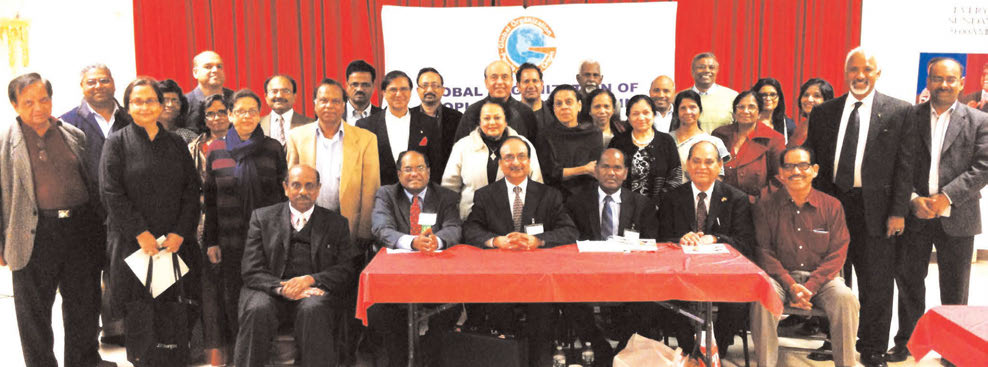
    NEW YORK (TIP): The Global organization of People of Indian Origin – New York chapter organized a community meeting where many issues of NRIs buying, selling and owning properties in India were discussed. It was jointly organized by the Indian American Kerala Center at its auditorium in Elmont, New York.

    The speakers included  New York Attorney Anand Ahuja who is also the President of GOPIO-New York and Mr. Pambayan Meyyan, Senior Vice President of Forest Hills Financial Group. The meeting was chaired by GOPIO Founder President Dr. Thomas Abraham.

    Several issues were brought out at this meeting especially buying, selling and owning real estate properties by NRIs/PIOs in India. It was pointed out that there have been growing number of scams against NRIs/PIOs hereditary, residential and commercial properties and due to these reasons, NRIs/PIOs are being greatly discouraged to invest in India

    “NRIs/PIOs are at a great disadvantage to contest property issues in courts in India due to the length of the time (10-20 years) it takes, and/or due to the fact that in both civil and criminal cases NRIs/PIOs need to be present on many occasions before the court,” said Dr. Abraham. The meeting requested GOPIO to take up this issue with Govt. of India to have Fast Tack Courts.

    The meeting also called upon the Government of India to enact another legislation to provide Title Insurance to ensure that their ownership in real estate is protected against forged signatures on the deed and for any such fraudulent transfer of their properties.

    It was also pointed out that NRIs and PIOs are subjected to higher TDS (tax deducted at source) than resident Indians for capital gains and while selling properties. GOPIIO meeting passed a resolution covering all these issues and plans to present it at the Regional Pravasi Bharatiya Divas to be held in Los Angeles on November 15th.

    GOPIO-NEW YORK – KERALA CENTER SEMINAR RESOLUTION

    Investments in Properties & Disputes 

    • WHEREAS many NRIs/PIOs are keeping their emotional ties alive to their motherland by maintaining their hereditary property; and
    • WHEREAS NRIs/PIOs are committed to contribute financially and otherwise to the growth and progress of India; and,
    • WHEREAS many NRIs/PIOs have substantially invested and/ or are in the process of investing in residential and commercial real estates; and,
    • WHEREAS there has been a growing number of scams against NRIs/PIOs hereditary, Residential and Commercial properties; and,
    • WHEREAS due to growing property scam NRIs/PIOs are being greatly discouraged to invest in India; and,
    • WHEREAS one of the main reasons for these growing scams against NRIs/PIOs is that the NRIs/PIOs are at a great disadvantage to contest property issues in courts in India -due to the length of the time (15-20 years) it takes, and/or due to the fact that in both civil and criminal cases NRIs/PIOs need to be present on many occasions before the court, and
    • WHEREAS despite several attempts to bring this problem to the attention of the Central Government Agencies and Ministers no corrective measures have been taken so far.
    • THEREFORE BE IT RESOLVED that GOPIO urges the Government of India to enact legislation to designate Fast Track Courts for NRIs/PIOs for the speedy settlement of their property issues in India, and enact another legislation to provide Title Insurance to ensure that their ownership in real estate is protected against forged signatures on the deed and for any such fraudulent transfer of their properties.
  • Senator Chuck Schumer Endorses Rita Kestenbaum for Town of Hempstead Supervisor

    Senator Chuck Schumer Endorses Rita Kestenbaum for Town of Hempstead Supervisor

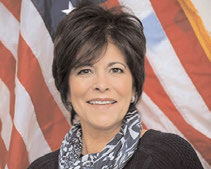
    NEW YORK (TIP): “I am proud to endorse former Councilwoman Rita Kestenbaum for Town of Hempstead Supervisor,” said Senator Schumer. “Rita has been a community activist and civic leader for many years and will be an independent voice who will fight to deliver a more affordable and transparent government.”

    “Rita and I have been friends for many years, but came together in most recent years to fight for common-sense gun reform after the tragic death of her own daughter to a senseless act of gun violence. Rita Kestenbaum doesn’t just have the experience and know how to lead the Town of Hempstead, she has the heart to lead it, too,” Senator Schumer said.

    “I am humbled by Senator Schumer’s confidence in me to serve the great people of Hempstead as their Supervisor. The Town of Hempstead has been fortunate to have such a great friend in Senator Charles Schumer,” said Rita Kestenbaum.

    “Because of his great advocacy, so many of the Town’s residents were able to get what they needed to rebuild after superstorm Sandy. There is no greater advocate for Hempstead residents than Senator Schumer and I can’t wait to work together with him as Supervisor to ensure that we are making our Town safer and more affordable for all.”

    Rita Kestenbaum is a mom and grandmother and has been married for thirty five years, living in Bellmore for the past thirty years. She is a community volunteer and has been president of the Bellmore PTA and her temple, vice president of the Long Island Crisis Center and was a member of the Hempstead Town Board.

  • ROCK THE KASBAH

    ROCK THE KASBAH

    STORY: Richie Lanz (Murray) is a down-on-his-luck manager of musicians. While claiming to have once had a glowing roster of stars, the best he can now do is to book his sole act, Ronnie (Deschanel) to sing in dive bars. His life changes one day, when he ends up in Afghanistan, discovers a talented Pashtun singer named Salima (Lubany), and has her participate in reality show Afghan Star.

    REVIEW: Richie runs his artiste management business from a makeshift office in a Van Nuys motel. A hustler at heart and in desperate need of cash, he’ll manage even the worst possible singers who are tone deaf, in a desperate bid to cover his costs. Ronnie helps him out as his secretary in the hope that he’ll steer her in the right direction, career-wise. So when a promoter asks him to get Ronnie to tour Afghanistan, Lanz’s sold on the idea.

    Cut to Afghanistan and a disastrous turn of events leaves him lost, in every sense. But deliverance arrives in the form of Salima, and Lanz gets a shot at reviving his self-esteem by managing her in the face of all odds, like for example, her father’s bitter opposition to her being a singer.

    The issue with this movie is that it tries to be too many things. Murray has his comedic turns. He works best in concise, well-paced doses but an entire film’s worth of Bill Murray gets a bit too much.

    A commentary on female emancipation is also attempted, but looks insincere. Then there’s a side-story about Afghan tribal politics that only distracts from the main story. Except for Lanz’s driver friend Riza (Moayed), the other Afghans come across as perpetually-angry, fanatical caricatures. Hudson’s campy prostitute character seems completely unnecessary; it adds nothing to the film.

    Furthermore, the idea that a reality TV show can unite a war-torn country and make the Afghans forget their concerns, comes across as farcical. While the film’s basic premise is unusual and in parts interesting, it loses steam in the second half, with a fairly bland conclusion.

  • SOFIA VERGARA DENIES BEING BILL COSBY’S SEXUAL ASSAULT VICTIM

    SOFIA VERGARA DENIES BEING BILL COSBY’S SEXUAL ASSAULT VICTIM

    Actress Sofia Vergara has denied the claims made by a Spanish-language radio show of her being one of the victims of sexual assault by comedian Bill Cosby.

    The 43-year-old Modern Family took to Twitter to ask the show to respect her privacy, reported Aceshowbiz.

    The radio show made the claim after a video of Cosby interviewing Vergara on The Late Show back in 2013 was circulated online.

    “A video of an interview of Bill Cosby and a young Sofia Vergara came out. It’s rumoured if she could be one of his victims,” the radio show tweeted in Spanish.

    In reply to the tweet, Vergara wrote, “Respect people. Stop inventing nonsense.”

    Till now there have been more than 50 women, who have accused 78-year-old Cosby of sexual assault.

  • China ends one-child policy, allows couples 2 kids

    China ends one-child policy, allows couples 2 kids

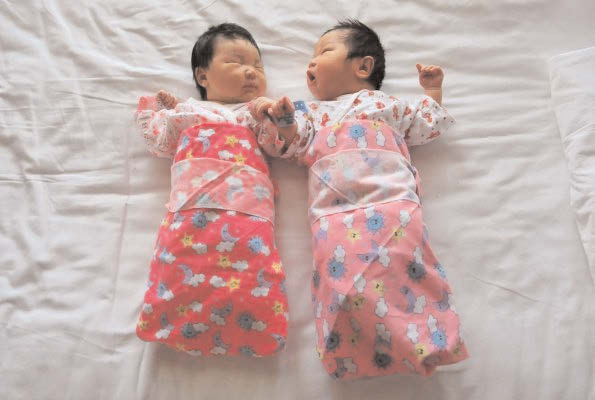
    BEIJING (TIP): China announced the end of its hugely controversial one-child policy on Oct 29, with the official Xinhua news agency saying that all couples would be allowed two children.

    It cited a communique issued by the ruling Communist Party after a four-day meeting in Beijing to chart the course of the world’s second-largest economy over the next five years.

    China is “abandoning its decades-long one-child policy”, Xinhua reported.

    The policy restricted most couples to only a single offspring, and for years authorities argued that it was a key contributor to China’s economic boom.

    But after years of strict, sometimes brutal enforcement by a dedicated government commission, China’s population – the world’s largest – is now ageing rapidly, gender imbalances are severe, and its workforce is shrinking.

    The concerns led to limited reforms in 2013, including allowing a second child for some couples in urban areas, but relatively few have taken up the opportunity.

    The Communist leadership met in Beijing to discuss ways to put the country’s stuttering economy back on a smooth growth path as it struggles with structural inefficiencies and social policies left over from an era before it embraced market reforms.

    Known as the fifth plenum, the conclave discussed the next Five-Year Plan for China – the 13th since the People’s Republic was founded in 1949.

    Over four days of meetings the 205 members of the Central Committee, plus around 170 alternates, examined the specifics of the plan, which was largely worked out through a process of national consultations before the leaders even set foot in the capital.

    The country’s rubber-stamp legislature will officially approve the resulting document next year.

    The world’s most populous country has enjoyed a decades-long boom since the ruling party embraced market economics and opened up to the rest of the world from the late 1970s.

    The process has transformed the livelihoods of hundreds of millions of people and propelled the country to global prominence.

    But growth has been slowing for several years, and analysts say the party needs to embrace further liberalisation to avoid falling into the stagnation of the “middle income trap”, when developing countries fail to fulfil their full potential.

    The meeting reiterated the Communist Party’s goal to double 2010 GDP by 2020, as part of its aim to achieve a “moderately prosperous society” by the 100th anniversary of the Communist Party’s founding.

  • UK may deport Indians languishing in British jails

    UK may deport Indians languishing in British jails

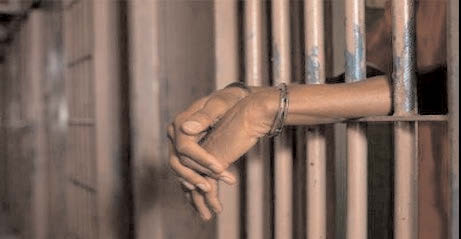
    LONDON (TIP): With Indian PM Narendra Modi’s maiden visit to UK slated this November, Britain has said it will negotiate with New Delhi “on every opportunity” to pack off Indian prisoners serving time in their jails.

    PM David Cameron’s Indian diaspora champion Priti Patel told TOI that UK and India share a voluntary prisoner transfer agreement. “We have foreign criminals housed in jails for breaking our laws. They however should not be housed in our prisons at the expense of the British taxpayer.” This should worry New Delhi as prisons in India are already packed to the seam. Almost one in every five Asian prisoners held in jails across England and Wales are Indians.

    Latest data shows Indians (407) make up the second highest number of prisoners among Asians, after those of Pakistani (509) origin.

    British jails at present harbour 11,127 prisoners of foreign nationality of which 2233 are Asians. UK recently has decided to pack off 300 Jamaican prisoners serving time in its jails back to Jamaica to serve their sentences. Britain says deporting them would also mean unclogging British prisons which the government says is “quite full”.

    Cameron recently said, “It is right that foreign criminals who break our laws are properly punished but this shouldn’t be at the expense of the taxpayer. That’s why this agreement is so important. The agreement provides for the transfer of prisoners who have received sentences of 4 years or more and who have 18 months or more left to serve in custody.”

    The average annual cost of a prison place in the UK is £25,900. Britain’s ministry of justice says in the last 10 years, the number of foreign nationals in prison has doubled and represents over 14% of the total prison population in England and Wales. (Source: TNN)

  • UK rejects new ‘mega mosque’ plans in London

    UK rejects new ‘mega mosque’ plans in London

    LONDON (TIP): The UK government has rejected plans by an Islamic group to build a new 290,000-square-foot “mega mosque” in east London, citing a
    “conflict” with authorities’ local plans for the borough.

    Tablighi Jamaat’s mosque with 190-foot minarets near the Olympic Park would have accommodated up to 9,300 worshippers in two main gender-segregated prayer halls and a further 2,000 in a separate hall.

    The Department for Communities and Local Government (DCLG) has dismissed appeals against the refusal of planning permission for the mosque in Newham area of the city.

    A DCLG spokesperson said: “The decision was based on concerns that include local housing provision and conflict with the council’s local plan for the borough.

    “It also took account of the evidence from all parties and is in line with the council’s original determination and advice from the independent planning inspector on the main appeal.”

    The project proposed by Tablighi Jamaat – referred to by a number of names such as Abbey Mills Markaz, London Markaz, Masjid-e-Ilyas or the Riverine Centre – was rejected by the local Newham Council back in December, 2012, with councillors saying the building was too large and would harm their plans for a mixed-use neighbourhood.

    Tablighi Jamaat had appealed, taking the application to a three-week public inquiry last year.

    The inquiry inspector’s report was submitted to the DCLG in January this year and the decision this week concludes a long-drawn battle over the project.

    The group had bought the site in 1996, which was a chemical works until it was decommissioned in the late 1980s.

    A temporary mosque known as the Riverine Centre, with a capacity of 2,500 people, was built on the site soon after.

    The new mosque was to have been its new headquarters with residential facilities, a library, visitor centre and sports centre, besides the mosque.

    The conservative Tablighi Jamaat has been accused of links with Islamic radicalism, which is hotly disputed, with many experts saying it is peaceful and non-political.

  • UK’s population to grow by 10m in 25 years: Study

    UK’s population to grow by 10m in 25 years: Study

    LONDON (TIP): UK is all set to overtake France by 2030 and Germany by 2047 to become Europe’s most populous country if current population trends continue.

    Britain’s Office of National Statistics (ONS) revealed on Thursday that UK’s population will increase by almost 10 million over the next 25 years. The ONS has also predicted that more than one in 12 people will be aged 80 or over by 2039 in UK.

    The number of people living in UK will increase from 64.6 million in mid-2014 to 74.3 million in 2039.

    Estimates say almost 51% of this increase will be caused by foreigners settling in UK. Over the next 10 years till 2024, the UK population is projected to increase by 4.4 million to 69 million. ONS said, “The population is projected to continue ageing with the average (median) age rising from 40 years in 2014 to 40.9 years in mid-2024 and 42.9 by mid-2039.”

    The latest figures come after ONS recently revealed that 1 in every 3 children in UK was born to foreign mothers in 2014. A decade earlier, only one in six new mothers were born abroad. Birth data showed that India is the third commonest country of birth for non-UK born mothers between 2010 and 2014, after Poland and Pakistan.

    Pakistan interestingly became the most common country of birth for non-UK born fathers between 2008 and 2014, followed by Poland and India.

  • Australia to try out cloud passports

    Australia to try out cloud passports

    CANBERRA (TIP): Australia is looking at a trial of an innovation that would allow its citizens to travel overseas without a physical passport, foreign minister Julie Bishop said on Oct 29.

    Revealing the idea of a “cloud passport”, the foreign minister said it came about after lengthy discussion with some Australia’s best innovators.

    Earlier this year, the department of foreign affair and trade (DFAT) urged its staff in capital Canberra and around the world to put out ideas about how to modernise the portfolio in a best possible way.

    Staff submitted and voted on up to 392 pitches, in what was called the “DFAT ideas challenge” with the top 10 being presented to a panel of judges which included the foreign minister.

    Bishop said the cloud passport was the winning idea, with the panel of judges thinking that “it will go global”.

    Last year, 38,718 Australian passports were reported to have been stolen or be missing, up from 38,689 the previous year. Under a cloud-based system, a traveller’s biometrics data and identity would be stored digitally, allowing people to freely travel without the risk of a passport getting lost or being stolen while abroad.

    Bishop said a number of security requirements would have to be adhered to in order to safely store citizens’ personal data in a cloud, but a team – also involving representatives from New Zealand – was currently discussing a multinational trial of the cloud passports.

  • Seven children die after migrant boats sink off Greece

    Seven children die after migrant boats sink off Greece

    ATHENS (TIP): At least seven children died when boats carrying migrants sank off Greece on Wednesday, as rescue workers battled to save more youngsters on the seashore in the latest desperate scenes in Europe’s refugee crisis.

    Three adults also died as four vessels went down on the dangerous sea crossing from Turkey and more than 200 people, many suffering hypothermia, were rescued from one sinking off the north coast of the Greek island of Lesbos.

    Images from Lesbos, a major entry point for the huge flow of migrants trying to get to Europe, showed doctors attempting to revive unconscious children on the island’s shoreline.

    Later in the evening, a drowned woman and the bodies of two children were found floating off the Greek island of Agathonisi, just a few kilometres from the Turkish coast.

    A one-year-old baby remained in a critical condition Wednesday night, according to port police.

    Patrol vessels, fishing boats and even locals on jet skis joined in efforts to search into the night for more survivors in the water, struggling with strong winds.

    Port police said it was not clear how many people might be in the water, with survivors giving a confusing picture of the number of people who were on the boat that capsized off Lesbos.

    The new accidents brought to 39 the number of migrants found dead in Greek waters this month, according to an AFP tally based on data from Greek port police.

    “The priority for Europe must remain the secure resettlement of refugees arriving from their countries of origin,” said Greek shipping minister Thodoris Dritsas in a statement.

    “As long as European nations feed their national egos, smugglers will make enormous sums to the detriment of the lives of refugees,” he added.

    Amnesty International’s Deputy Europe Director Gauri van Gulik said it was “obscene that European leaders allowed such a chain of tragedies on its shores”.

    Since the start of the year, 560,000 migrants and refugees have arrived in Greece by sea, out of over 700,000 who have reached Europe via the Mediterranean, according to the International Organization for Migration (IOM).

    More than 3,200 people have died during these crossings, the IOM says, many of them children.

    Also Wednesday, Europe’s maritime anti-people-smuggling mission, Operation Sophia, rescued about 1,000 migrants from six dinghies and a fishing boat off the Libyan coast, the Italian coastguard said.

    The rescues were carried out by Italian, British, Slovenian and German vessels, it said.

    Operation Sophia, coordinated by Italy, was set up to arrest smugglers and seize their vessels in the Mediterranean as Europe tries to stem the flow of migrants making the perilous sea crossing.

    All the rescued migrants are now headed to Italy, the Italian coastguard said.

    (Source: AFP)

  • Meeting on Syria should help national unity: Iran

    Meeting on Syria should help national unity: Iran

    TEHRAN (TIP): The upcoming international conference on Syria should facilitate national unity and open the ways for collective cooperation against terrorism in the country, Iran’s Foreign Minister Mohammad-Javad Zarif said on Oct 29, according to state IRIB TV.

    Upon his arrival in Vienna, Zarif said “without Iran’s participation (in the talks), there would be no reasonable and logical solution to the Syrian issue”.

    Any solution to the conflicts in Syria should also take into consideration the “basic principles of fighting terrorism, respecting sovereignty of the country and the rights of the Syrians to decide on their future,” he said.

    Zarif is heading Iran’s delegation in Friday’s meeting in Vienna. Iran has been invited to the talks on Syria for the first time over the past years.

    Russia, the US, Saudi Arabia, Turkey and the European Union will attend the meeting. The United Arab Emirates, Qatar, Egypt and Jordan will also be present.


  • INCLUDE PREBIOTICS IN YOUR DIET FOR HEALTHY DIGESTIVE SYSTEM

    INCLUDE PREBIOTICS IN YOUR DIET FOR HEALTHY DIGESTIVE SYSTEM

    Most of us are aware of what probiotics are; they are good bacteria which are required by our body to keep our digestive system healthy. Probiotics control the growth of harmful, infection causing bacteria in our gut. They also help the food move smoothly in the gut. Probiotics can be found in fermented foods such as yoghurt and soft cheese like Gouda. However, probiotics are not to be confused with prebiotics. Prebiotics serve as food for probiotics and reduce the amount of damaging bacteria in our colon which improves the ph level in gut. They also boost the immune system. So, include these food items in your daily diet to everyday food choices.

    Bananas

    Everybody loves bananas, even your gut. Bananas are one of the best sources of prebiotics, they make sure that your gut membrane functions smoothly. Bananas are high in fibre and potassium. Go for riper bananas instead of yellowish green bananas, as they may have higher starch levels and could be hard to digest.

    Onions

    Your cheapest and easiest way to get your daily dose of prebiotics is to consume onions. They contain inulin, a type of a dietary fibre, which is essential for cleansing the gut and to
    promote the growth of good bacteria. Onions are essential for boosting the immunity of gut.

    Cabbage

    One of the best natural sources of prebiotics is cabbage. And this is precisely the reason why it is used in dishes such as sauerkraut and kimchi salad. Sauerkraut is a German word for fermented cabbage. Fermented cabbage is an excellent choice for prebiotics as it fuels the growth of healthy gut bacteria and is also required for proper functioning of the bowel movement.

    Legumes

    Easy to digest, and just as nutritious, legumes such as lentils, chick peas and green peas are the ideal choice for your natural source of prebiotics. They have the right amount of fibre and natural sugar to boost gut bacteria and keep your gut safe from infections. For
    optimum digestion, soak your lentils a night before consumption. Opt for red lentils as they are thin and easier to digest as compared to other varieties. They are sweeter in taste.

    Whole grains

    Whole grains such as oatmeal, barley and wheat are rich in prebiotics. They are light on the stomach, easily available and help you satiate much faster. Prebiotics in whole grains also improve your ability to absorb calcium and prevent bloating.

    Beans

    Beans are strong digestive boosters. However, for easy digestion, make sure they are properly soaked and well cooked. Incorporate them in your diet to get your daily dose of prebiotics. They contain oligosaccharides, which are a form of carbohydrates required for feeding the good gut bacteria.

    Apples

    An apple a day is the key to a healthy stomach. Rich in prebiotics, it contains pectin, which prevents the growth of bad bacteria in the stomach and control the pH level. It also prevents acidity and aids in healthy bowel movements.:

  • BEWARE, PERSONAL CARE PRODUCTS COULD CAUSE BREAST CANCER

    BEWARE, PERSONAL CARE PRODUCTS COULD CAUSE BREAST CANCER

    Parabens used in cosmetics and personal care products may stimulate the growth of breast cancer cells, according to a new study.

    Parabens are a class of preservatives widely used in consumer products. They are considered estrogenic because they activate the same estrogen receptor as the natural hormone estradiol.

    Studies have linked exposure to estradiol and related estrogens with an increased risk of breast cancer, as well as reproductive problems. “Although parabens are known to mimic the growth effects of estrogens on breast cancer cells, some consider their effect too weak to cause harm,” said lead investigator Dale Leitman, from University California, Berkeley in US.

    “But this might not be true when parabens are combined with other agents that regulate cell growth,” said Leitman.

    Existing chemical safety tests, which measure the effects of chemicals on human cells, look only at parabens in isolation and fail to take into account that parabens could interact with other types of signalling molecules in the cells to increase breast cancer risk.

    In the study, researchers looked at breast cancer cells expressing two types of receptors – estrogen receptors and human epidermal growth factor receptor 2 (HER2).

    Approximately 25 per cent of breast cancers produce an abundance of HER2. HER2-positive tumours tend to grow and spread more aggressively than other types of breast cancer.

    The researchers activated the HER2 receptors in breast cancer cells with a growth factor called heregulin that is naturally made in breast cells, while exposing the cells to parabens.

    Not only did the parabens trigger the estrogen receptors by turning on genes that caused the cells to proliferate, then effect was significant.

    The parabens in the HER2-activated cells were able to stimulate breast cancer cell growth at concentrations 100 times lower than in cells that were deprived of heregulin.

    The study demonstrates that parabens may be more potent at lower doses than previously thought, which may spur scientists and regulators to rethink the potential impacts of parabens on the development of breast cancer, particularly on HER2 and estrogen receptor positive breast cells.

  • Fill your plate with fruits and vegetables for a healthy heart

    Fill your plate with fruits and vegetables for a healthy heart

    A new research has found that if one eats plenty of fruits and veggies when young, he will have a healthier heart in his later years.

    The research conducted by American Heart Association explained that eating more fruits and vegetables as a young adult, was associated with less calcified coronary artery plaque 20 years later.

    The researchers examined 2,506 participants based on their daily consumption of fruits and vegetables and observed that women consumed an average of nearly nine servings of daily fruits and vegetables, whereas men averaged more than seven daily servings.

    The study noted that people who ate the most fruits and vegetables at the start of their examination had 26% lower odds of developing calcified plaque, a disease that hardens arteries and underlies many types of heart disease, 20 years later, compared to those who ate the least amount of fruits and vegetables.

    Michael D Miedema, lead author of the study, said that people shouldn’t assume that they can wait until they’re older to eat healthy as what one eats as a young adult may be as important as what he/she eats as an older adult.

  • SOON, CONTROL COMPUTERS WITH A SMILE, BLINK OR FROWN

    SOON, CONTROL COMPUTERS WITH A SMILE, BLINK OR FROWN

    WASHINGTON (TIP): Scientists are developing new technologies that will allow computers to recognise non-verbal commands like gestures, body language and facial expressions.

    For most people, using a computer is limited to clicking, typing, searching, and, thanks to Siri and similar software, verbal commands.”Compare that with how humans interact with each other, face to face -smiling, frowning, pointing, tone of voice, all lend richness to communication,” the researchers said. The new project titled Communication through gestures, expression and hared perception’ aims to evolutionise everyday interactions between humans and computers. “Current humancomputer interfaces are still everely limited,” said Pro essor Bruce Draper, from Colorado State University, who is leading the project. “First, they provide essentially one-way communication: users tell the computer what to do. This was fine when computers were crude tools, ut more and more computers re becoming our partners and ssistants in complex tasks. Communication with computers needs to become a two-way dialogue,” said Draper.

    The team has proposed cre ating a library of what are called Elementary Composable Ideas (ECIs). Like little packets of information recognizable to computers, each ECI contains information about a gesture or facial expression, derived from human users as well as a syntactical element that constrains how the information can be read.

    To achieve this, the researchers have set up a Microsoft Kinect interface. A human subject sits down at a table with blocks, pictures and other stimuli. The researchers try to communicate with and record the person’s natural gestures for concepts like `stop’ or,
    `huh?’.

    “We don’t want to say what gestures you should use,” Draper said. “We want people to come in and tell us what gestures are natural. Then, we take those gestures and say, OK, if that’s a natural gesture, how do we recognise it in real time, and what are its semantics? What roles does it play in the conversation? When do you use it?When do you not use it?” he said.

    According to the project proposal, the work could someday allow people to communicate more easily with computers in noisy settings, or when a person is deaf or hard of hearing, or speaks another language.

  • New Milky Way component discovered

    New Milky Way component discovered

    NEW YORK (TIP): A team of astronomers has discovered a previously unknown component of our home galaxy, the Milky Way — a thin disc of young stars in the central region of the galaxy buried behind thick clouds of dust.

    The centre of the Milky Way galaxy, a region previously thought to consist of vast numbers of old stars, actually has young stars, the study showed.

    To make the discovery, the researchers used data from VISTA telescope at European Southern Observatory’s Paranal Observatory in Chile, taken between 2010 and 2014.

    “The central bulge of the Milky Way is thought to consist of vast numbers of old stars. But the VISTA data has revealed something new –and very young by astronomical standards,” said lead author of the new study Istvan Dekany from Pontifical Catholic University of Chile.

    The astronomers found 655 candidate variable stars of a type called Cepheids. These stars expand and contract periodically, taking anything from a few days to months to complete a cycle and changing significantly in brightness as they do so.

    The researchers found that Cepheids are not all the same — they come in two main classes, one much younger than the other.

    Out of their sample of 655, the team identified 35 stars as belonging to a sub-group called classical Cepheids –young bright stars, very different from the usual, much more elderly, residents of the central bulge of the Milky Way.

    “All of the 35 classical Cepheids discovered are less than 100 million years old. The youngest Cepheid may even be only around 25 million years old, although we cannot exclude the possible presence of even younger and brighter Cepheids,” second author of the study Dante Minniti from Universidad Andres Bello, Santiago, Chile, noted.

    The ages of these classical Cepheids provide solid evidence that there has been a previously unconfirmed, continuous supply of newly formed stars into the central region of the Milky Way over the last 100 million years.

    Mapping the Cepheids, the team also traced an entirely new feature in the Milky Way — a thin disc of young stars across the galactic bulge.

    This new component to our home galaxy had remained unknown and invisible to previous surveys as it was buried behind thick clouds of dust, the researchers said.

  • 6,000-YR-OLD ECO-HOME DISCOVERED

    6,000-YR-OLD ECO-HOME DISCOVERED

    LONDON (TIP): British archaeologists have discovered a 6,000year-old `eco-home’ close to the iconic prehistoric Stonehenge monument. The shelter -in a hollow left behind by a fallen tree -at Blick Mead was used over a 90-year period from 4336 BC, archaeologists believed. They said the minimalist property close to Stonehenge dates from between 4336BC to 4246BC, making it about 6,000 years old.

    Archaeologist David Jac ques, said: “They … used the stump of the tree, about three metres high, as a wall.”

    The finds are being shown to UN heritage experts, who are currently visiting Stonehenge, the ancient stone circle that has puzzled scholars for centuries. Archaeologists are concerned a planned 2.9 km tunnel being considered for the nearby A303 main road will damage the site.

    Discoveries have also shown stones were warmed up by the Mesolithic Period inhabitants and used in a hearth to emit heat in the earthy snug. Jacques, a senior research fellow at the University of Buckingham, has worked at Blick Mead for over a decade, making a number of discoveries about the inhabitants. The tree stump created a wall height similar to a “modern bungalow”.

    “They’ve draped probably animal skins or thatch around the basin and connect ed it to a post so it’s a very com fortable snug little place,” Jac ques was quoted as saying by the BBC. The wooden wall o the hollow was lined with flints and the large earthy pi created by the tree root lined with cobbles and decorated with “exotic” stones from out side the area. “There are some clever and sophisticated thi ngs going on, the hot stones that they put into this little type of alcove wouldn’t have been on fire,” said Jacques.

  • Scientists create the blackest material ever

    Scientists create the blackest material ever

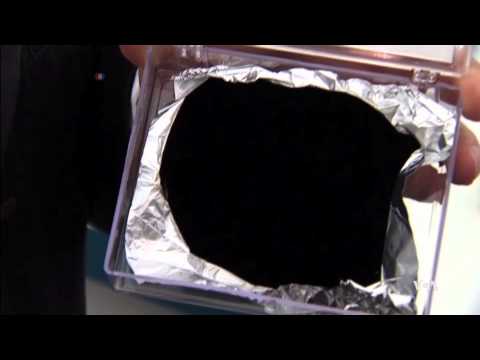
    Scientists have created the blackest material ever made, so dark that it can absorb almost all light that hits it. The researchers, who were inspired by a completely white beetle, hope that the superblack material could help develop better and more efficient solar panels or completely change the way that they are made.

    The material absorbs 99% of light, at all angles, making it 26% darker than carbon nanotubes, which are the darkest material before known. The ideal thing to absorb energy would be a dark material that “absorbs radiation and at all angles and polarisations”, the researchers write. That aim is probably impossible, but scientists still aspire to create ever darker materials. The study was published in Nature Nanotechnology.

    People who have seen record-breaking dark materials say doing so is “strange” and “alien” as it is so dark that the eye can’t comprehend it, and instead just sees an unending abyss.

  • Earthquakes can alter Earth’s crust, says study

    Earthquakes can alter Earth’s crust, says study

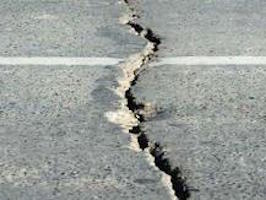
    WASHINGTON (TIP): Earthquakes can change elastic properties of the Earth’s crust up to 6,000 kilometres away, altering its ability to withstand stresses for up to a few weeks, a new study has found.

    The research demonstrates that the Earth is a dynamic and interconnected system, where one large earthquake can create a cascading sequence of events thousands of kilometres away, researchers said.

    “Earthquakes can fundamentally change the elastic properties of the Earth’s crust in regions up to 6,000 kilometres away, altering its ability to withstand stresses for a period of up to a few weeks,” said Kevin Chao, a postdoc in Massachusetts Institute of Technology’s Department of Earth, Atmospheric and Planetary Sciences and a member of a research team led by Andrew Delorey at Los Alamos National Laboratory.

    When a surface wave from an earthquake some way off passes through another fault region, it changes the balance between the frictional properties that keep the surfaces locked together, the elasticity that allows the crust to withstand strain, and the stress state that can cause it to fail, Chao said.

    “When surface waves pass through, all of these properties rearrange and change. If a fault with high stress is ready to fail, it will accumulate more stresses in the fault, meaning an earthquake could occur at any time,” Chao said.

  • Pocket-sized device to warn of asthma attacks

    Pocket-sized device to warn of asthma attacks

    WASHINGTON (TIP): Researchers have developed a pocket-sized device that plugs into a smartphone and can detect early warning signs of asthma attacks.

    The device, Wing, is a sensor that works with a companion app to accurately measure two important lung functions: FEV1 (how much air you can exhale in one second) and Peak Flow (how fast you can exhale).

    Using Wing consistently over time can help users visualise lung function, detect environmental and medication triggers that can cause symptoms, and know when to take action before asthma or related attacks occur, according to scientists at US-based Sparo Labs.

    Wing plugs in via the headphone jack and draws its power from the smartphone, so there is no charging or batteries necessary, ‘Gizmag’ reported. The accompanying app allows users to both monitor and collect readings, while also being able to share them securely with a physician through its cloud-based, HIPAA (Health Insurance Portability and Accountability Act) compliant system. Sparo Labs said Wing can help monitor and manage a variety of lung conditions other than asthma, including COPD (chronic obstructive pulmonary disease), CF (cyctic fibrosis) chronic bronchitis, emphysema, and pulmonary fibrosis.

  • WORLD BANK SEES INDIA GROWING AT 7.5% IN FY16

    WORLD BANK SEES INDIA GROWING AT 7.5% IN FY16

    NEW DELHI (TIP): The World Bank has maintained its growth forecast for the Indian economy for the current fiscal year and expects it to expand by 7.5% in 2015-16. It has backed implementation of three key reforms, including the Goods & Services Tax (GST), to sustain the momentum.

    In its development update, a twice a year report on the Indian economy and its prospects, the bank expects growth to accelerate to 7.8% in 2016-2017 and 7.9%in 2017-2018. But it said acceleration in growth is conditional on the growth rate of investment picking up to 8.8% during 2016-2018. The Reserve Bank of India expects the economy to grow by 7.4% in the current fiscal year, while the government pegs it at over 7.5%. The International Monetary Fund expects growth to be 7.5%.

    The update noted that while public investments have helped kick-start the investment cycle, increased participation of the private sector will be required going forward. In the near term, India is relatively well positioned to weather the global volatility. Its low trade exposure to China and considerable foreign exchange reserves provide ample buffer. In the medium term, however, the Indian economy is not immune to a slowdown in global demand and heightened volatility.

    “There are good reasons for confidence in India’s near-term prospects. To lay the foundation for sustainable growth and accelerate job creation, implementing the government’s reform programme is key,” said Onno Ruhl, World Bank country director in India. “…While progress is visible in several areas, including improvements in the ease of doing business, some key reforms, most notably the implementation of the Goods and Services Tax (GST ) can be a potential game changer for India,” he said. For the economy to achieve its potential, the update calls for three key domestic reforms. These include boosting the balance sheets of the banking sector by addressing the underlying challenges in the infrastructure sector, especially power and roads, improving the ease of doing business and enacting the GST, and enhancing the capacity of states and local governments to deliver public service as more resources are devolved from the centre. It suggests eventually bringing in alcohol, electricity, and real estate under the purview of the proposed GST, which are currently excluded from it.

    According to the update, even though alcohol and petroleum account for over 40 to 45% of VAT/sales tax revenues for the states, there are few technical reasons for excluding them from the GST. “Exclusion of electricity would mean that manufacturing firms are unable to claim credits for the duty they pay and are, therefore, taxed twice. In the case of alcohol, including it in GST would help address concerns about state excise rate arbitrage. Bringing real estate under the GST umbrella may complement the government’s efforts to curb undeclared ‘black money’ in the sector,” according to the report. SOURCE: TOI