Month: October 2015

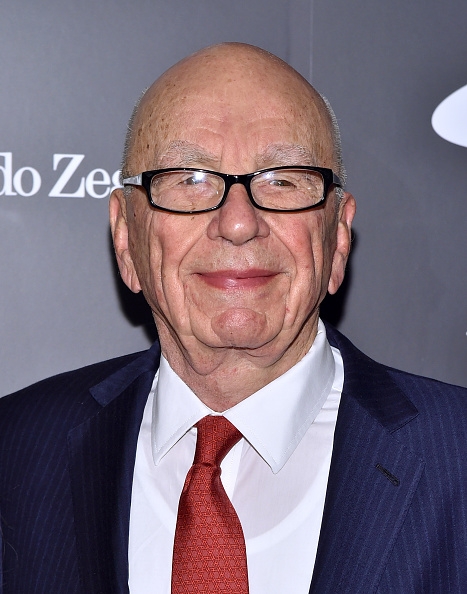
  • Rupert Murdoch apologizes for ‘real black President’ tweet

    Rupert Murdoch apologizes for ‘real black President’ tweet

    NEW YORK (TIP): The founder of the global News Corp media empire, Rupert Murdoch, issued an apology on Thursday after he faced social media backlash following his suggestion that President Barack Obama isn’t a “real black President.”

    Apologies! No offence meant. Personally find both men charming. – Rupert Murdoch (@rupertmurdoch) October 8, 2015

    Murdoch was praising Republican presidential candidate Ben Carson and his wife on Twitter on Wednesday when he wrote: “Ben and Candy Carson terrific. What about a real black President who can properly address the racial divide?”

    Ben and Candy Carson terrific. What about a real black President who can properly address the racial divide? And much else. – Rupert Murdoch (@rupertmurdoch)

  • Bangladeshi farmer named national rat-killing champion

    Bangladeshi farmer named national rat-killing champion

    DHAKA (TIP): Bangladesh has crowned a new national champion rat killer after his team eradicated more than 160,000 rodents in the past 12 months, officials said Oon Thursday.

    Farmer Abdul Khaleq Mirbohor won 20,000 Bangladeshi taka (USD 250) at a ceremony in Dhaka on Wednesday for eliminating 161,220 rats in a year as part of a nationwide campaign to stop grain being devoured by rodents.

    “Mr Mirbohor is a passionate rat killer. During the ceremony, he told the dignitaries that nothing gives him pleasure (more) than killing grain-eating rodents,” Abul Kalam Azad, head of the government’s plant protection unit, told AFP.

    Mirbohor hired mostly women volunteers to kill the rats in paddy and wheat fields, then submitted the tails of the deceased animals to the regional agriculture office to count them.

    “I’ve been killing rats since 1996. I love killing them. They are the enemy of the country and people. They devour grains, ground nuts and spread diseases,” the 55-year-old farmer told AFP.

    Government official Borhan Uddin said the farmer was “obsessed” with killing rats. “Fellow villagers called him mad. He is like a Pied Piper of Hamelin,” he said.

    Rodents destroy 1.5 million to two million tonnes of food in Bangladesh annually, the Ministry of Agriculture estimates.

    Farmers in the predominantly agricultural nation have killed nearly 13 million rodents in the last 12 months, saving$25 million of food, officials said.

  • Jackson Heights Merchants’ Association Diwali Mela on October 11th

    Jackson Heights Merchants’ Association Diwali Mela on October 11th

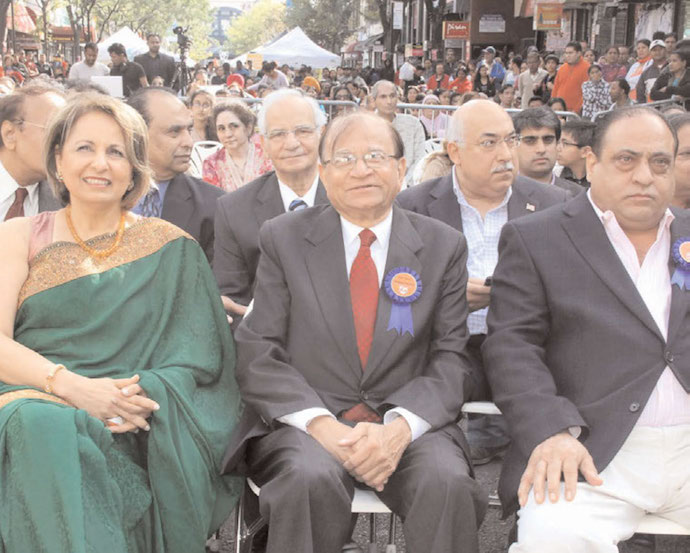
    NEW YORK (TIP): It is come one, come all at the 27th Diwali Mela of Jackson Heights Merchants’ Association on Sunday, October 11th.

    In a talk I had , October 8th evening, JHMA President Shiv Dass and his Secretary Chander Shekhar claimed that the Mela being organized is full of life, with 50 booths selling their products and services, and a wide range of entertainment items to be presented by Indian, Pakistani  and Bangladeshi artists. Mr. Dass  mentioned, in particular, the presence of legendary Noora sisters. Besides, there will be presentations of dances, including Bhangra. And then there are a number of local artists who will be performing. DJ Sohna will be overseeing the musical presentations and the audio system. The organizers expect over 10,000 visitors.

    Mr. Dass said about the Secretary of JHMA, Chander Shekhar  that he was working hard to ensure all arrangements are in place to make the Mela a memorable experience for visitors and the organizers. Chander Shekhar said that preparing the Souvenir for the occasion was a challenging task but he has received a lot of cooperation from Jackson Heights merchants fraternity and others and he would be able to come up with an impressive souvenir. Chander Shekhar is also in charge for booths. In case, anyone needs a booth, he/ she can contact Chander Shekhar at 646-239-8803.

    JHMA was formed in 1989 to promote business interests of traders in the  Jackson Heights market, then a thriving business center. Diwali Mela is the signature event of the JHMA since 1990 when it was first organized. The Mela affords an opportunity to bring together officials, local politicians, businessmen and community leaders.

    Over the years, many well known officials and politicians have participated in the Mela. Among them, former Mayor Bloomberg who is a personal friend of Mr. Shiv Dass participated three times. Mayor Bill de Blassio participated in 2012.

    The organizers also utilize the Mela to honor their sponsors, well wishers, politicians, officials and community leaders.

    Mahendra Patel of Patel Brothers who is also one of the Sponsors, is the Chief Guest at 2015 Mela. New York City Comptroller Scott Stringer is the Guest of Honor.

    The organizers invite all to visit the Mela on Sunday, October 11th from 12 noon to 6 P.M.

  • Indian American Dilip Chauhan appointed Director of South East/Asian Affairs in Nassau County Comptroller’s Office

    Indian American Dilip Chauhan appointed Director of South East/Asian Affairs in Nassau County Comptroller’s Office

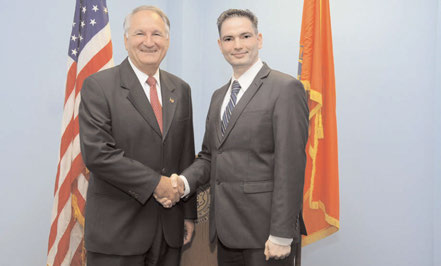
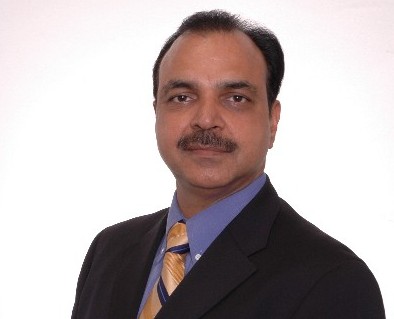
    MINEOLA, NY (TIP): Nassau County Comptroller George Maragos announced, October 5, the appointment of Mr. Dilip Chauhan as Director of South East/Asian Community Affairs.

    Mr. Chauhan will be responsible for monitoring and enhancing minority and women owned business participation in County contracts and purchases.

    “Dilip is a diligent professional and a respected leader in the South East/Asian community,” Comptroller Maragos said. “In this new capacity, he will continue his outstanding community efforts, while assisting the Comptroller’s office to ensure that Nassau County is adequately addressing the challenges of our minority business owners and residents.”

    “I look forward to advancing the mission and goals of the Comptroller’s Office while helping members of the community to better navigate local government, and gain full access to business opportunities,” Mr. Chauhan said. “I am honored to serve in this capacity, and I look forward to working tirelessly on Comptroller Maragos’ and the community’s behalf.”

    In addition to serving as the South Asian Community Coordinator for several municipalities, Mr. Chauhan served as a past advisor to the Association of Indian American Physicians. He was a volunteer for the United Nations Millennium World Peace Summit and received numerous awards for his service and contributions to the South Asian community. Dilip Chauhan holds a Bachelor of Science Degree in Electrical Engineering.

  • Bharara says it’s his ‘obligation’ to discuss public corruption

    Bharara says it’s his ‘obligation’ to discuss public corruption

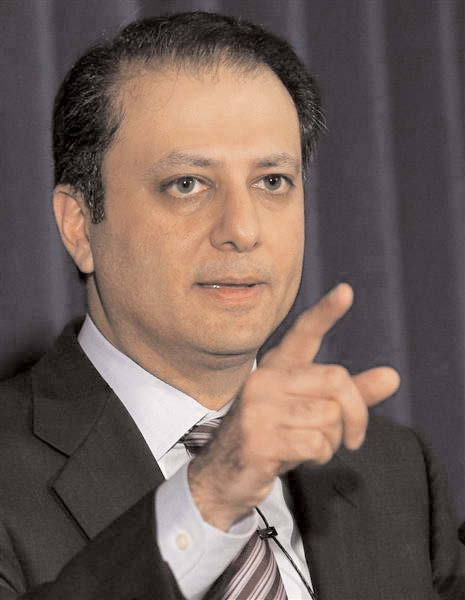
    NEW YORK (TIP): U.S. Attorney Preet Bharara on Wednesday, October 7 defended his efforts to publicize his office’s public-corruption cases, saying it is his “obligation” to discourage public officials from committing similar crimes.

    Bharara, the top federal prosecutor for New York’s Southern District, spoke Wednesday, October 7 at the New York University School of Law, taking questions from a moderator and law students who made up the audience.

    When asked about the high-profile corruption cases he’s brought against officials like now-former Senate Majority Leader Dean Skelos and Assembly Speaker Sheldon Silver, the talk quickly shifted to criticism of Bharara’s office’s public handling of the cases, which had led the judge in Silver’s case to chide the prosecutor.

    Bharara said the criticism often arises out of cases involving “very, very, very sophisticated and high-priced lawyers” who can “afford to make accusations like that.” He said it would be “ludicrous” to criticize a prosecutor for talking too much about the need for after-school programs and a strong education system to combat street crime, and the same standard should apply for public corruption.

    “So to answer questions about why it’s happening – why is there corruption in Albany or the city council or anywhere else, and what ordinary people can do to make it better and to raise public awareness of this problem – I think is completely appropriate,” Bharara said. “And I would be in some ways remiss if I didn’t talk about these things.”

    Public-corruption cases brought by Bharara’s offices have regularly captured headlines across the state, leading Silver’s attorneys to complain that the publicity efforts were hampering the lawmakers’ chances at a fair trial. A judge ultimately dismissed Silver’s arguments, but warned Bharara against going too far.

    The hour-long talk at NYU touched on a variety of issues, including Bharara’s thoughts on mass incarceration and issues in the state’s prison system.

    When it came to Bharara’s jurisdiction and its broad reach, the prosecutor said his office has long thought globally.

    “Somebody once made the mistake of asking me, ‘What again is your jurisdiction exactly?’” Bharara said. “And I said, ‘Are you familiar with Earth?’”

    He continued: “Long before I got there, we have a long tradition in the Southern District of thinking of the global reach that we have, because we do have a good amount of resources -not unlimited resources, but a good amount.”

  • Immigration Seminar Calls for Community Campaign

    Immigration Seminar Calls for Community Campaign

    NEW YORK (TIP): Global Organization of People of Indian Origin (GOPIO-New York), South Asian Council for Social Services (SACSS) and the Kerala Center organized an immigration seminar looking at the changing rules and updates for 2015 on Sunday, September 27th at the Kerala Center, Elmont, New York. The panelists were attorneys Michael Phulwani and David Nachman of NPZ Law Group, P.C. (Ridgewood, NJ) and Anand Ahuja (Law Offices of Anand Ahuja, Hicksville, NY). The seminar was moderated by GOPIO International Founder President Dr. Thomas Abraham.

    Kerala Center President Thambi Thalappillil and GOPIO-New York Vice President Inderjit Singh extended a word of welcome. SACSS Executive Director Sudha Acharya was also present.

    Initiating, Attorney Michael Phulwani spoke on how to read the visa bulletin which is available to everyone, H-1B alternatives, present status of DACA and DAPA.

    Attorney Anand Ahuja, who also serves as GOPIO-New York president, spoke on business and investment visas and special juvenile status.

    Attorney David Nachman spoke on AC-21, STEM OPT issues/changes, provisional wavers, President Obama’s immigration reform initiatives and consular processing issues.

    Some of the community issues which emerged out of this seminar included:

    • it’s time that US includes India into Treaty Investment and Treaty Trader category for the immigration visa purpose. This is been the source of a great deal of frustration between the United States and India for many years. It is not clear why Bangladesh and Pakistan and Sri Lanka all have E visas but India does not.
    • Need grass-root actions to support President Obama’s executive actions that were announced in November 2014. While immigration reform holistically seems to be stalled, President Obama’s executive actions are designed in a piecemeal manner aimed at improving the overall immigration law system.
    • The present Visa bulletin reflects extreme backlogs for Indian nationals in many visa classifications. These backlogs have resulted in families being separated for long periods of time. One of the major tenets underlying US immigration law is family unity. It continues to be our hope that these backlogs can be reduced in some fair manner.
    • H-1B nonimmigrant professional and specialty occupation work visas continue to be scrutinized heavily by such agencies as the US Department of Homeland Security, the US Department of State, and the US Department of Labor. Additionally, many of the largest users of the H-1B visa are very significant technology companies from India. Grassroots efforts should be made to help the government understand that India is not the only user of these technology visas. Attempts to avert a form of reverse discrimination should be undertaken soonest.

    It was resolved that GOPIO and other community groups must campaign with Obama administration and elected officials on these issues.

    GOPIO-New York Treasurer Rekha Sahgal concluded the seminar with a vote of thanks.

  • Indian television journalist shot dead in Uttar Pradesh: CPJ Demands Punishment to Culprits

    Indian television journalist shot dead in Uttar Pradesh: CPJ Demands Punishment to Culprits

    NEW YORK (TIP): The Committee to Protect Journalists, October 8, called on authorities in the Indian state of Uttar Pradesh to thoroughly investigate the shooting death of journalist Hemant Yadav, determine a motive, and bring the perpetrators to justice. The attack follows the killing of another journalist in the state in June. Yadav, 45, was a reporter for the Hindi-language news channel TV 24. He was shot near his home on Saturday, October 3 night, in Chandauli district in Uttar Pradesh. His attackers fired at him from a motorcycle and then fled the scene, according to Agence France-Presse. No arrests have been made, AFP reported, citing police.

    It is unclear if Yadav was killed in relation to his work as a journalist. CPJ was unable to determine what Yadav covered at the TV channel. TV 24 did not immediately reply to CPJ’s message requesting comment.

    Police have not identified suspects or offered a clear explanation of a motive behind the attack, news reports said. He was shot while returning home from a local market, media reports said.

    “We call on authorities to step up their investigation into the killing of Hemant Yadav. Police must act quickly and decisively to investigate this case and bring his killers to justice,” said Bob Dietz, CPJ’s Asia program coordinator. “Far too often, journalists’ murders go unpunished in India, no matter the motive. It is time for India to address this tradition of impunity.”

    In June, freelance journalist Jagendra Singh, who reported critically on politics and current affairs in Hindi-language newspapers and on Facebook, died from burn injuries he sustained after a police raid at his home in Uttar Pradesh on June 1.

    Of the 11 journalist murders CPJ has confirmed as work-related in the last 10 years in India, all have been carried out with complete impunity. India ranks 14th on CPJ’s 2015 Impunity Index, which spotlights countries where journalists are slain and the killers go free.

    CPJ is an independent, nonprofit organization that works to safeguard press freedom worldwide.

  • Department of Education to present High School Admission Process Tips on October 21

    Department of Education to present High School Admission Process Tips on October 21

    QUEENS, NY – Borough President Melinda Katz will hold a regular meeting of the Queens Parent Advisory Board on Wednesday, October 21 at 6:00 PM at Queens Borough Hall (Borough President’s 2nd Floor Conference Room), 120-55 Queens Boulevard in Kew Gardens.

    The meeting will feature a presentation by New York City Department of Education (DOE) officials for parents about how to navigate the high schools admissions process, as well an overview of recent changes to the DOE’s structure of superintendents of high schools. Those attending the meeting include MELINDA KATZ, Queens Borough President JUAN MENDEZ, Superintendent of High Schools for Queens, DOE MARGARET ROGERS, Queens Borough Director of Enrollment, DOE SCHOOL PRINCIPALS from the nine Reward Schools in Queens
    (Academy of American Studies; Aviation Career and Technical High School; Baccalaureate School for Global Education; East-West School of International Studies; Queens High School of Science at York College; Robert F Wagner Jr. Secondary Schools; Scholars Academy; Townsend Harris High School; York Early College Academy.

    In addition, Borough President Katz will recognize the nine Queens high schools that were recently designated as “Reward Schools” by the New York State Commissioner of Education for having made the most significant progress or have the highest achievement in the state with no significant gaps in student achievement.

    The Parent Advisory Board gives Queens public school parents an opportunity to be heard on education issues and concerns and provides a forum to meet with senior city and state education officials. The meetings are open to the public, especially to any and all parents with children in the public school system. The Board is chaired by BP Katz, BP Katz’s Panel for Education Policy (PEP) appointee Deborah Dillingham and BP Katz’s Education Director, Monica Gutierrez. The Board is comprised of Parent Teacher Association (PTA) members, Parent Coordinators, the Community Education Councils (CECs) in school Districts 24-30 and the Education Committee Chairs of each Queens Community Board. The Board regularly meets at Borough Hall. (Based on a press release)

  • Nepal govt mulls airlifting fuel to ease crisis

    Nepal govt mulls airlifting fuel to ease crisis

    KATHMANDU (TIP): Nepal is mulling airlifting fuel either from Bangladesh or Malaysia and may build a petroleum storage plant near its border with China as the fuel crisis deepened due to continued blockade of land trade points with India amid protests over the new constitution.

    Nepal Oil Corporation (NOC) has been tasked to prepare alternative plans for fuel import by the commerce ministry following the blockade, The Kathmandu Post reported.

    In its proposal, the state-owned enterprise has drawn short- and long-term plans for fuel import. The NOC has planned to import fuel either from Bangladesh or Malaysia as short term solution. “The NOC meeting on Wednesday has considered air-lifting fuel as an option for now. However, we are yet to reach to any conclusion,” said an NOC source told the paper. In the long term plan, the NOC has recommended for importing fuel from China and sending a technical team there for a feasibility study.

  • US in talks with Pakistan over capping its nuke range

    US in talks with Pakistan over capping its nuke range

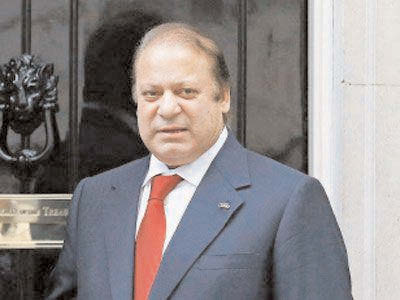
    WASHINGTON (TIP): The Obama administration is exploring a possible civilian nuclear deal with Pakistan ahead of Prime Minister Nawaz Sharif’s visit to Washington later this month, a Washington Post columnist has reported, citing a sole source “familiar with the talks” who said Islamabad has been asked to consider “brackets” relating to the deal.

    Brackets, in diplomatic parlance, are numerous alternative formulations that are negotiated towards an eventual agreement. According to the report, the deal centers around a civilian nuclear agreement similar to the one the United States arrived at with India, in exchange for a Pakistani commitment that would “restrict its nuclear program to weapons and delivery systems that are appropriate to its actual defense needs against India’s nuclear threat.”

    Pakistan might, for example, agree not to deploy missiles capable of reaching beyond a certain range, the report said, citing the source, who indicated that the US might support an eventual waiver for Pakistan by the 48-nation Nuclear Suppliers Group (NSG), the same way it has done for India.

    The Obama administration said it was in “regular contact” with the Government of Pakistan on “a range of issues” as it prepared for the visit on October 22 of Prime Minister Sharif, but declined comment on the specifics of the discussions.

    “The United States urges all nuclear-capable states, including Pakistan, to exercise restraint regarding nuclear weapons and missile capabilities. We encourage efforts to strengthen safety and security measures and continue to hold regular discussions with Pakistan on a range of global issues, including nuclear security, counterterrorism, and international norms,” an administration spokesperson said in a tacit acknowledgement that some sort of dialogue is taking place on the nuclear issue.

    Successive US administrations both under Presidents Bush and President Obama, have knocked down the idea of a deal for Pakistan like the one Washington arrived at with India, saying the background and circumstances surrounding the US-India civilian nuclear agreement was entirely different, and pointing to Pakistan’s record of nuclear proliferation.

    However, President Obama’s recent track record vis-a-vis Iran and Cuba, both regarded for a long time as outlaw nations, suggests there may be some substance to a nuclear outreach towards Pakistan. There is also less pathology about Pakistan in Washington’s official circles, where many veterans have a romanticized recall of Islamabad’s role in the Cold War when it offered its services to Washington, for a price. The strategy helped Pakistan circumvent nuclear non-proliferation roadblocks that the US all too readily winked at.

    In recent months, Pakistan has tried to project itself as a responsible nuclear power, although some of its politicians and generals reflexively brandish the country’s nuclear weapons to assure themselves and their constituents about security against India. “We are a nuclear-armed country and we know how to defend ourselves,” Pakistan’s National Security Advisor Sartaj Aziz boasted recently in a suo motu assertion although no one had talked of a nuclear war.

    While a few regional experts have floated the idea of a nuclear deal for Pakistan in the past, most analysts are aghast at the prospect. It will be “sheer madness wrapped in folly,” said Sumit Ganguly, a South Asia scholar at Indiana University, among several experts who have critiqued Washington frequent free passes to a country that has a reckless history of nuclear proliferation and home-grown terrorism.

    The WaPo report however conceded that inasmuch as Pakistan prizes its nuclear program, “negotiations would be slow and difficult, and it’s not clear that Islamabad would be willing to accept the limitations that would be required.” But, it said, the issue is being discussed quietly in the run-up to Prime Minister Nawaz Sharif’s visit to Washington on October 22.

  • Pakistan rejects accusations of involvement in Kunduz attack

    Pakistan rejects accusations of involvement in Kunduz attack

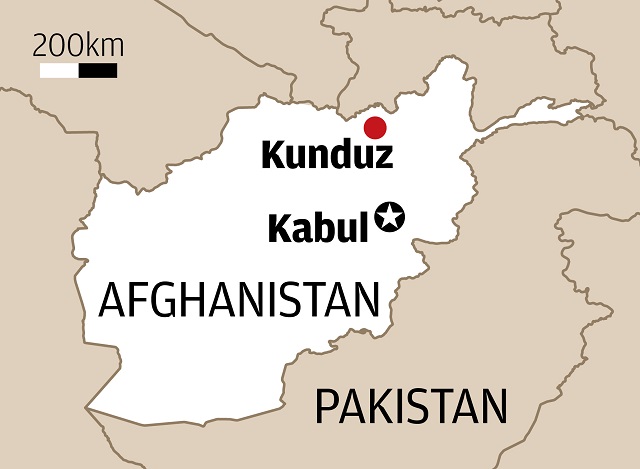
    ISLAMABAD (TIP): Pakistan’s military has rejected allegations by Afghanistan’s deputy army chief that Pakistani generals were involved in the Taliban’s brief capture of Kunduz and had escaped the city wearing burqas.

    Taliban fighters seized control of the northern Afghan provincial capital for three days last week, their most spectacular victory since being toppled from power by a US-led coalition in 2001.

    General Murad Ali Murad, Afghanistan’s deputy army chief, told Afghan media Monday that Pakistan’s military had helped lead the attack.

    “We will identify and detain these Pakistani generals who are hiding now and escaped wearing women’s burqas,” he said, according to Tolo News.

    Pakistan was the Taliban’s main ally during their 1996 – 2001 rule and is frequently accused by Afghanistan of supporting the present insurgency.

    A Pakistani military spokesman said in a statement late Tuesday the allegations of Pakistani involvement in the Kunduz attack were “mischievous”.

    “The allegations levelled by an Afghan official are totally unfounded, baseless, uncalled for and mischievous,” he said.

    “Such allegations are not even comprehensible.”

    Pakistan for its part has been demanding Afghanistan hand over hardline cleric Maulana Fazlullah, head of the Pakistani Taliban, who is believed to be hiding in eastern Afghanistan.

    Islamabad organised the first set of direct peace talks between the Taliban and the Afghan government in July. But another round scheduled for later that month was cancelled following the announcement of the death of Taliban founder Mullah Omar.

    Hopes for better ties between the neighbours were high following the election of Afghan President Ashraf Ghani last year, who said he wanted a rapprochement similar to France and Germany after World War II.

    But they have plummeted since then, with Kabul blaming Islamabad for a surge in Taliban violence this year, as Ghani accused Pakistan of sending “messages of war”.

  • THE POLITICS OF BEEF

    THE POLITICS OF BEEF

    On Sept. 28, in a village less than 60 miles from New Delhi, a Hindu priest announced in a local temple (under threat by some hot heads, he claims) that a Muslim family was consuming beef.

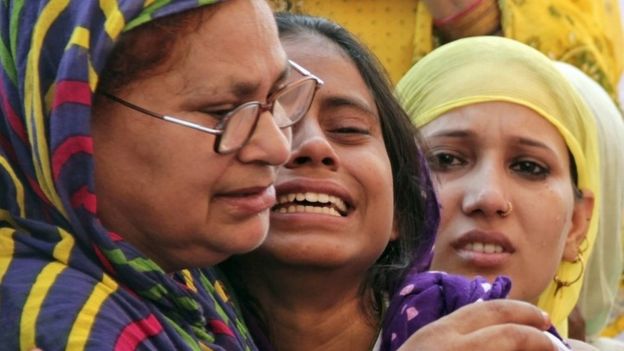
    Shortly afterward, a frenzied (Hindu) mob, wielding sticks, swords and cheap pistols barged into the family’s house and pulled out Akhlaq & his 22-year-old son, Danish, accusing the family of having slaughtered a cow and consuming it. They beat the men with such rapturous fury that within minutes the father was dead and his son in a coma.

    Times cannot be treated as normal if the President of India feels the need to issue a public advisory. What can explain the inexplicable silence of the otherwise hyper-expressive Narendra Modi.

    While, leaders of the political parties have left no stone unturned in trivializing the issue. PM Modi did not issue a single tweet, nor posted a Facebook statement expressing regret or offering condolence for this dead citizen.

    The Prime Minister finds himself unable to condemn utterances of his own party leaders & ministers. Isn’t this what happened in Godhra, when Modi was the Chief Minister.

    PM Speaks – Only too little too late 

    Less than 24 hours after the President’s subtle reprimand, India’s Prime Minister did speak – Not against the murderers of Akhlaq. Not even on the provocative comments by his party men/women in Dadri. No, not even on the urgent need to put an end to beef politics. All this can wait. After all, elections in Bihar happen just once in five years.

    Its all Politics for Narendra Modi – Why else would he choose an election rally to indirectly mention the incident. What are the compulsions of Narendra Modi who has brought to his party 284 seats in the Lok Sabha?

    Why Laloo alone comes to his mind; and people like Mahesh Sharma, Sanjeev Balyan, Sakshi Maharaj, Yogi Adityanath, Sangeet Som, Azam Khan and AIMIM leader Assaduddin Owaisi are allowed to get away with their shameless statements?

    Akhlaq’s family members can wait. And the President of India should learn to wait. Prime Minister of India is busy consolidating his position. And for this he must win Bihar. India’s core civilizational values can wait too

    While only hinting on the raging row over the Dadri lynching incident, Prime Minister Narendra Modi said Hindus and Muslims should decide whether to fight each other or together overcome poverty while asking the people to ignore “irresponsible” statements of politicians.

    Its to be noted that the above statement comes at his 4th Bihar election rally this week and that too after blowing all the jibes on the beef row towards BJP opponents like Laloo.

    “The country has to stay united,” Modi asserted. “I have said it earlier also. We have to decide whether Hindus should fight Muslims or poverty. Muslims should decide whether to fight Hindus or poverty,” he added.

    The silence does not douse flames, it fans conspiracy theories

    Adding Fuel to the Fire – Our Politicians whom ‘WE’ elected

    Why are these shallow leaders not expelled? Every time a party has been questioned, their answer has been simple -point fingers at the other parties.

    Outrageous Things Leaders Have Said – For the record, BJP leads here. 

    Mahesh Sharma 

    Modi’s Culture Minister & BJP Leader Mahesh Sharma, a moral idiot recently opined that India’s late President Abdul Kalam was patriotic “despite being a Muslim,” and dubbed the vicious beating an “accident.” He consoled the family by noting that at least the 17-year-old daughter of the slain man was untouched!

    Azam Khan
    Uttar Pradesh minister Azam Khan took one step further and wrote to United Nations on the condition of Muslims in India.

    He goes on further to hint on a new partition of India, “There should be a round table conference on what will be the new map of India and how people will live in the country” and “Aaj poori duniya dekh rahi hai ki Babri se le ke Dadri tak ka mansooba kya tha”.

    He clubs the incident with the demolition of Babri Masjid to harness the power of hatred.

    Sangeet Som 

    BJP MLA Sangeet Som, infamous for making controversial speeches during the 2013 Muzaffarnagar riots & one of the accused, declared, “Agar nirdoshon ke khilaf karyawahi ki gayi, to munh-tod jawab hamne pehle bhi diya hai aur abh bhi dena jante hain (If action is taken against innocent, we have given a befitting reply earlier and can do so again). We can give a reply whenever we want.” He made this statement at a temple on the outskirts of Bisara, near where the incident occurred.

    Asaduddin Owaisi

    “This murder was premeditated. He has been killed in the name of religion. It is an attack on our community. It cannot be an accident. All of this is being propagated by the state and central governments,” Owaisi says. The Hyderabad MP also questioned Prime Minister Narendra Modi’s silence on the killing. “This mother has seen her son getting beaten to death in front of her. Where are his condolences?”

    Owaisi also slammed Union Minister Mahesh Sharma for describing the killing in the Dadri village as “an accident”. “He is the country’s Culture Minister. It is unfortunate that a minister who has taken an oath on the Constitution does not have the courage and intellectual honesty to condemn the incident unconditionally.”

    Tarun Vijay 

    BJP MP Tarun Vijay said, it wasn’t the Hindu community’s responsibility to maintain peace and the Muslim community should remain mute.

    “Why responsibility to keep peace and maintain calm is always put on the Hindus alone? Be a victim and maintain silence in face of assaults!!” tweeted the former editor the Rashtriya Swayamsevak Sangh (RSS) weekly in Hindi, Panchajanya.

    Muslims & Minorities in India – whatever the politicians may think – have a right to live with their heads held high as anyone else. They cannot & must not be ‘dumped’ or ‘subdued’.

    As Indians we need to fix our dysfunctional democracy. The idea of democracy cannot begin and end with elections alone. Until then we will continue to lose lives like Mohammad Akhlaq’s because of let’s call it “the politics of food “.

    Is anyone there listening???

  • India Considered Air Strikes in Pak Post 26/11

    India Considered Air Strikes in Pak Post 26/11

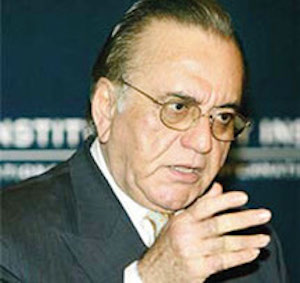
    NEW DELHI (TIP): Former Pakistan Foreign Minister Khurshid Mahmood Kasuri has claimed that after the 26/11 Mumbai attack in 2008, an American delegation led by Senator John McCain had shared the possibility of India carrying out “limited air strikes” at the headquarters of Lashkar e Taiba near Lahore. Mr Kasuri, 74, who is in Delhi for the launch of his book “Neither a Hawk, Nor a Dove” on Wednesday, October7, told the NDTV’s Buck Stops Here that the Americans told him they wanted his advice on whether such a strike could “avert a full blown war” as someone “who knows the military, is close to Pervez Musharraf and has been a minister.”

    The former minister said the bipartisan delegation “must have been talking to important people in India” and implied that a limited air operation could prevent a full blown war

    “I said what are you contemplating?,” Mr Kasuri said, sharing his conversation with the US delegation; McCain was accompanied by Richard Holbrooke, special representative of the Obama administration. McCain said, “I am coming from India and they are very angry after Mumbai and we feel a war can be averted (in this way).”

    “They said to me this is our feeling. There’s a chance of a war, a war can be averted, there is outrage in India,” Mr Kasuri said, adding that when he pressed them on what action India may have been contemplating, the Americans replied – “Limited air strike on Muridke.”

    Muridke is the base of the terror group Lashkar e Taiba around an hour’s drive from Lahore.

    Mr Kasuri, who was foreign minister in 2002-7 under Pervez Musharraf, said he had been asked how he thought Pakistan would respond to a limited air raid by India.

    “I said are you trying to prevent a war?He said we think that this may well prevent a war. I said the Pakistan army will give a measured response. It will be a measured response commensurate with the severity of the attack on Muridke,” he said.

    “They said we are asking you because you will know the public response. I said public response will be so grave that Pakistan army will be delegitimized in the eyes of the people if it does not respond,” he added.

    India has dismissed the claims made in Kasuri’s book and denied that there were ever any such plans of military action post 26/11.

  • Why  is the Cow a Political Animal?

    Why is the Cow a Political Animal?

    Vinoba  Bhave said, ” We stand on the shoulders of our ancestors so we can see much further than they saw, not be limited by their limitations.”

    Chaturvedi said the most appealing explanation he found for this transition was in the thoughts of Vinoba Bhave, MK Gandhi’s spiritual successor. A Sanskrit scholar who trusted his own reading over any rhetoric, Bhave was a complex figure, an ascetic with a fine aesthetic sense; one of modern India’s least understood leaders.

    “Several scholars have shown how the existing Hindu identity – or at least a significant part of it -draws from the colonial encounter. So, while some groups in India have eaten meat and beef since forever, the values of vegetarianism, non-violence and cow veneration have also been common”, says the author.

    In 1979, Bhave sat on a fast, demanding a ban on cow slaughter in Kerala and West Bengal, perpetrating a political crisis for the Morarji Desai government. (In fact, the satyagraha Bhave began became India’s longest-running fast, ending only recently after the Maharashtra government banned cow slaughter in the state.) Yet, in his speeches, he made it clear that if tractors kept rolling in, people should prepare to slaughter bullocks and eat them.

    Bhave’s most striking observation, Chaturvedi stressed, was his frank acknowledgement that ancient Sanskrit texts mention the eating of beef. So I pulled out my copy of Bhave’s Gita-Pravachan and found the section where he says we should not be surprised when we find out that some ancient rishis ate beef and meat was commonly eaten in India. He maintained it is a sign of evolution that such a large population accepted non-violence and turned vegetarian. Bhave said, “we stand on the shoulders of our ancestors so we can see much further than they saw, not be limited by their limitations.”

    I have looked for years, and not met any cow protection activists with the courage to accept the uncomfortable truth with such courage. They tend to emphasize only their reading of the Vedas, determined to bring back the Golden Vedic Age through cow protection. Which alienates me.

    My upbringing in a Hindu family has exposed me to the Gita and the Ramcharitmanas and the Bhagwat Puran, but never to the Vedas. When they need recourse to faith, most Hindus draw upon the devotional poetry of Tulsidas, Gyaneshwar, Meerabai, Raheem and scores of others; they do not chant verses from the Rigveda. In fact, ‘Vediya Dhor’ is an old term in folk culture to mock the carrier of Vedic knowledge as a beast of burden. The Vedic figure of Indra attracts little devotion, even as his nemesis Krishna is perhaps the most popular Hindu god.

    A summary for those not familiar with the story from the Bhagwat Puran: the boy Krishna stops his father from making sacrificial offerings to Indra. The god of rain gets angry and sends down a seven-day-seven-night deluge, causing a flood. Krishna lifts the Govardhan hill as refuge from the flood. Indra is humiliated. The story is as much about appreciating nature and ecology over and above a tyrannical god, as it is a lesson in karma-yog, which is explained in greater detail in the Gita.

    “Laws against cow slaughter will only criminalize the livestock trade, not protect the animals, said Ghotge. Only the smugglers and the law enforcement officials will benefit from the ban on cow slaughter, not the poor farmers or the livestock. Like the agriculture scientist Ramanjaneyulu, Ghotge holds that the cow protection laws are unjust; it is about powerful urban people outsourcing the burden of cow protection on the rural poor.”

    I noticed even at a young age that the term ‘Hindu’ doesn’t occur in any religious text. Several scholars have shown how the existing Hindu identity – or at least a significant part of it – draws from the colonial encounter. So, while some groups in India have eaten meat and beef since forever, the values of vegetarianism, non-violence and cow veneration have also been common – and not just in one or two caste groups, either. Despite the practice of sacrificing animals coming down sharply in the past century or so, several Hindus in India and Nepal still practice the rites of Bali, most prominently during the festival of Gadhimai and at the Kamakhya temple in Assam.

    This co-existence of meat-eating and vegetarianism is unique to India. How did this happen? In his Indian Food: A Historical Companion, after several pages describing meats eaten in India, Achaya explored the roots of vegetarianism and the beef taboo. He referred to the “sheer abundance and wide range of foodstuffs available even from Harappan times that could fashion vegetarian meals of high nutritional quality, and gustatory and aesthetic appeal. It is perhaps no exaggeration to say that nowhere else in the world except in India would it have even been possible to be a vegetarian in 1000 BC.”

    Then I stumbled into a remarkable book: The History of Vegetarianism and Cow-Veneration in India. First published in German in 1962, its English translation appeared in 2010. The author, German Indologist Ludwig Alsdorf, had spent several years studying Jainism, and is regarded the first man to apply the historical method to the vegetarianism question. While it extensively deals with material that Jha also uses, Alsdorf’s writing is free of polemics.

    Vegetarianism and cow-veneration are not directly related in history, neither was vegetarianism the basis of ahimsa (non-violence) to begin with, Alsdorf wrote. The idea of non-violence predates Jainism and Buddhism, even if it was the two movements that really made it popular in the face of Vedic sacrificial rituals. For example, it is believed that the ritual offering of coconut smeared with vermilion is a substitute for the severed head of an animal or even a human sacrificed at the altar; even Achaya refers to it. Which points to what Vinoba Bhave said about accepting our gory past.

    The Buddha was against ritual sacrifice of animals, but not against consumption of meat. His instruction to his monks was that no animal should be killed to feed them; but they were allowed to eat any food they received in alms, including meat. It is widely understood that the Buddha had consumed pork before he died. Yet the origin of vegetarianism and cow-veneration may never get elucidated by available sources, Alsdorf concluded: “For the Indologist, it is indeed not a new experience that the pursuit of pressing problems in the present leads him back to the dim and distant past.”

    The father of the ideology of Hindutva, Vinayak Damodar ‘Veer’ Savarkar, had a complex position on cow protection and cow worship. He saw cow protection as a symbol of compassion and humanism, but no holiness was above logic and nationalism for him. “When humanitarian interests are not served and in fact harmed by the cow and when humanism is shamed, self-defeating extreme cow protection should be rejected,” he wrote. “A substance is edible to the extent that it is beneficial to man. Attributing religious qualities to it gives it a godly status. Such a superstitious mindset destroys the nation’s intellect.”

    Every now and then, an admirer of Savarkar raises the topic. “Can anyone imagine that the ‘Father of Hindutva’ advocated beef-eating (in special circumstances), rejected the divinity of the Vedas, denounced the sanctity of the caste system and launched a virulent attack on the hypocrisy of the priests?” wrote Ved Pratap Vaidik, a journalist close to several Hindutva figures. “Incidentally, Savarkar was a beef-eater,” wrote Varsha Bhonsle on Savarkar’s birth anniversary, February 26, in 1998. “For he was, above all else, a rationalist – a true Hindu – and eons ahead of contemporary Hindutvawadis.”

    The cow’s holiness has long been a source of hurt and humiliation for Dalit communities.
    “There is no untouchable community which has not something to do with the dead cow. Some eat her flesh, some remove the skin, some manufacture articles out of her skin and bones,” wrote BR Ambedkar, the architect of India’s Constitution, in his 1948 book The Untouchables: Who Were They And Why They Became Untouchables.

    Dalit activists and scholars find the ban on cattle meat unethical and another example of caste hypocrisy. “Such laws are immoral,” said ‘Kuffir’ Naren Bedide, a thinker and social activist in Hyderabad, one of the editors behind Round Table India. He said this is about powerful castes imposing their sensibility on people who have consistently consumed beef, a source of cheap nutrition for poor people.

    “Caste-Hindus say this is a matter of their religious sensitivity. What about Dalit traditions and sensitivities? Are they worth nothing?” he asked.

    Why is an animal so sacred when human beings are considered so impure?

    Who needs cow protection laws?

    Not the farmers who are getting rid of cows and bullocks in favor of buffaloes and tractors. So will livestock breeders benefit from it? “Such laws will harm the poorest,” said Nitya Sambamurti Ghotge, a veterinary surgeon who heads Anthra, a group in Pune that has worked with rural livestock rearers since 1992.

    Giving the example of the Rajasthan government amending its cow protection laws to register cattle breeders, and track their animals through microchips, Ghotge called cow protection laws “environmentally daft”, because this will put a great burden on shrinking pastures and fodder resources. “The rich will anyway get what they want, but how will the poor farmers and animal rearers get so much fodder?” she asked. Historically, farmers and animal rearers have been able to get rid of animals in difficult times for their survival, she said; now, that will become difficult.

    Laws against cow slaughter will only criminalize the livestock trade, not protect the animals, said Ghotge. Only the smugglers and the law enforcement officials will benefit from the ban on cow slaughter, not the poor farmers or the livestock. Like the agriculture scientist

    Ramanjaneyulu, Ghotge holds that the cow protection laws are unjust; it is about powerful urban people outsourcing the burden of cow protection on the rural poor, she said.

    (Excerpted from the article “Why is the Cow a Political Animal?” by  Sopan Joshi. Read Full article: https://in.news.yahoo.com/why-is-the-cow-a-political-animal-110119929.html)

  • RETURN OF AWARDS – Writers stand up for right to dissent

    RETURN OF AWARDS – Writers stand up for right to dissent

    Writer Nayantara Sahgal has returned the Sahitya Akademi Award she won in 1986 for her novel “Rich Like Us” to protest against the increasing attacks on the right to dissent, which she says are “unmaking India.” Hindi poet Ashok Vajpeyi has followed suit, returning a similar honor on similar grounds. Earlier, Hindi writer Uday Prakash and six Kannada writers had returned their literary awards. Writers have voiced their protest in the past too. After Operation Bluestar, Khushwant Singh surrendered his Padma Shri award. Nayantara Sahgal had protested against the Emergency too. While returning the award on Tuesday, she said this was “in support of all Indians who uphold the right to dissent, and of all dissenters who now live in fear and uncertainty”.

    Even though most artists and writers would claim to be apolitical, art does not take place in a vacuum. All good art is political, and the return of an award makes a strong political statement. As Toni Morrison puts it, “The ones who try hard not to be political are political by saying, ‘we love the status quo.’”  The present practice of returning awards has been triggered by the killings of writers and rationalists in Maharashtra and Karnataka, including those of MM Kalburgi, Narendra Dabholkar and Govind Pansare. The latest victim of a growing culture of intolerance is Mohammad Akhlaq, who was lynched recently by an organized mob on the suspicion of eating beef. Amidst all this the studied silence of Prime Minister Modi has only added to the prevailing mood of disenchantment.

    The inaction or tacit support of the political leadership has emboldened fundamentalists and parties like the Shiv Sena, which has now created another controversy by demanding the cancellation of a proposed concert by Ghulam Ali. Every such demand diminishes the plurality of India. The courageous gesture of returning awards sends a strong message to the government. Critics have panned Nayantara Sahgal, Jawaharlal Nehru’s niece, for what they have called “selective outrage”, but what she, Ashok Vajpeyi and others have done is an act of bravery -that too at a time when it is convenient to remain silent.

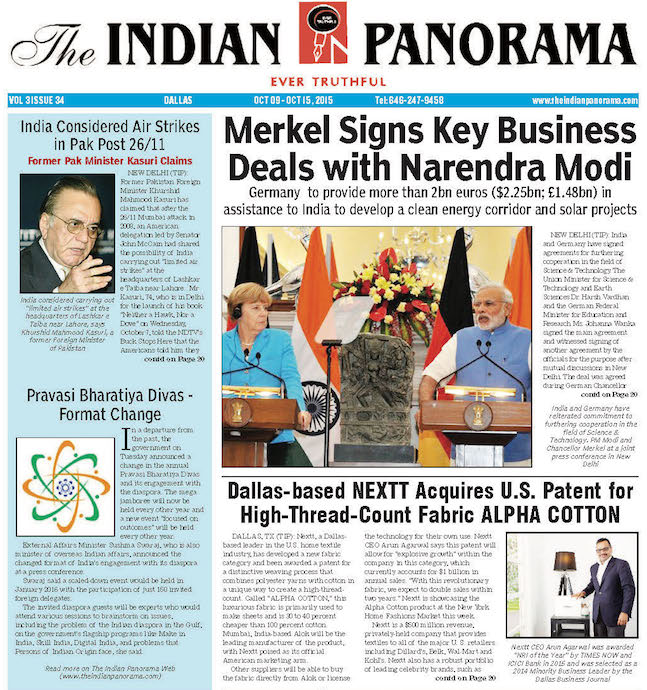
  • Angela Merkel signs key business deals with India’s Narendra Modi

    Angela Merkel signs key business deals with India’s Narendra Modi

    India and Germany have signed agreements for furthering cooperation in the field of Science & Technology. The Union Minister for Science & Technology and Earth Sciences Dr. Harsh Vardhan and the German Federal Minister for Education and Research Ms. Johanna Wanka signed the main agreement and witnessed signing of another agreement by the officials for the purpose after mutual discussions in New Delhi today.

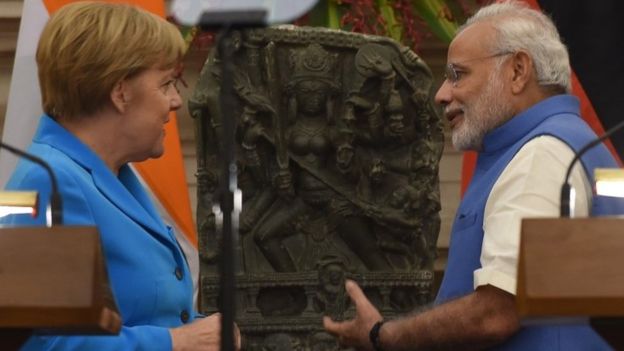
    The deal was agreed during German Chancellor Angela Merkel’s talks with Indian Prime Minister Narendra Modi on the opening day of her visit to India.

    Mr Modi visited Germany in April where he sought to convince more industries to begin manufacturing in India.

    Last year, he launched the “Make in India” campaign to boost manufacturing at home and create millions of jobs.

    Chancellor Merkel, accompanied by a large delegation of ministers and senior officials, arrived in the Indian capital on Sunday night and was accorded a ceremonial welcome at the Presidential Palace on Monday morning, Sep 05.

    At the meeting held before the 3rd Indo-German Consultative meeting, both the Ministers expressed their satisfaction on the level of Indo-German Science & Technology cooperation which is now recognised as one of the strategic pillars in the overall bilateral relationship.

    It was reiterated by both sides that they would continue to support and strengthen the basic research component of collaboration which will underpin future technology developments.

    India is investing approximately 14 million euro for the construction of an additional beam line and access to the synchrotron facility at PETRA-III in DESY at Hamburg. Similarly, India is equity share holder with investment of 36 million euro in the construction of the international “Facility for Antiproton-Ion Research” (FAIR) at Darmstadt. Both these state of art facilities will further enable our scientists to conduct high impact and frontier research in material science, nuclear and high energy physics. On the same model, Dr. Harsh Vardhan offered Germany to participate in some of the future mega science projects, which India will be embarking upon.

    A major highlight of the meeting was the agreement on both sides to extend the bi-national Indo-German Science & Technology Center (IGSTC) beyond 2017 with increase in funding from 2 million euro to 4 million euro every year. This was a reflection of the common endeavour on both sides to support industrially relevant R&D projects that have potential to generate novel technologies and new intellectual property in sectors such as advance manufacturing, embedded systems & ICT for automobiles, renewable energy, food security, clean water and health care technologies- all of which are in tune with present national missions of the government of India. India is the only country with whom Germany has such a bilateral R&D Centre dedicated to promote applied and industrial R&D. The Centre is already supporting 15 joint projects and pro-types of some new technologies have been co-developed in solar-thermal energy, stress tolerant chic-pea variety, and high altitude cold resistance plants etc.

    Dr. Harsh Vardhan expressed confidence that the extended tenure of Indo-German Science & Technology Centre (IGSTC) until 2022 along with doubling its financial resources will enable us to co-develop affordable technologies that can contribute to the knowledge economy of both our countries.

    Both the Ministers reiterated the need for concerted effort to promote exchanges of young scientists and student researchers. To this end DST through a Letter of Intent agreed to continue the support for participation of 25 Indian science and medical students to the annual Nobel Laureate meet in Lindau.

    Both the Ministers echoed that the future cooperation should focus on programs to promote innovation and techno-entrepreneurship by linking the SME and Start-up enterprises of both the countries in order to make meaningful contribution to the knowledge economy and use the tools of science and technology to address socially relevant challenges. New areas such as anti-microbial resistance and regenerative medicine, earth science system including monsoon studies and marine sciences required to understand the climate change process was emphasised by the Indian side that needs to be addressed together.

  • Small plane with 2 foreigners on board goes missing in Nepal

    Small plane with 2 foreigners on board goes missing in Nepal

    KATHMANDU (TIP): An ultra-light aircraft with two foreigners on board that took off from Pokhara went missing today during a sightseeing flight of the country’s snow-capped peaks.

    The aircraft, owned by Pokhara ultralight company, had taken off at 10:35am for the purpose of sight seeing and was out of contact after about an hour while flying near the Machhapuchhre mountain, the police officer said.

    The pilot was identified as 50-year-old Russian national Valerie Putin while the passenger is Elizabeth Well, 40, from South Africa, said Pokhara airport chief Dipak Baral.

    The aircraft is missing since 11:30am, according to a police officer. A helicopter has been dispatched for the search and rescue operation works, the police officer added.

    Pokhara, a famous tourist hub of western Nepal, about 150 kilometres west of Kathmandu and flanked by the majestic Annapurna range, attracts thousands of visitors annually.

  • US announces additional funding for demining in Sri Lanka

    US announces additional funding for demining in Sri Lanka

    COLOMBO (TIP): The US on Thursday announced an additional USD 1.745 million for demining activities in Sri Lanka’s Tamil-dominated former war zone.

    The additional fund was announced after a meeting between the US Ambassador in Sri Lanka, Atul Keshap, and minister of rehabilitation, resettlement and Hindu religious affairs D M Swaminathan.

    In total, the United States has dedicated over USD 43 million for demining assistance in Sri Lanka since 1993.

    “I support Minister Swaminathan’s vision of making Sri Lanka mine-impact free by 2020,” Keshap said.

    “As the world’s largest donor of global demining efforts, the United States is committed to addressing the land mine problem in Sri Lanka,” he said in a statement.

    The two also discussed ongoing demining work in northern and eastern Sri Lanka.

    “The United States will continue to work with President Sirisena, Prime Minister Wickremesinghe, minister Swaminathan, and the people of Sri Lanka to help clear the remaining areas,” Keshap said.

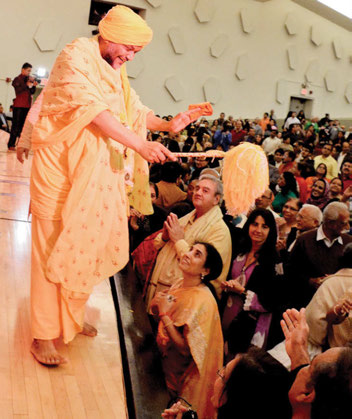
  • Sri Guruvanand Swami blesses 2,000 at NY event

    Sri Guruvanand Swami blesses 2,000 at NY event

    NEW YORK (TIP): “In a sign of growing number of devotees of Brahmrishi Sri Guruvanand Swami, an estimated 2,000 people packed the Colden Auditorium in Queens College, Flushing on Oct 4 for the Divya Darshan and Blessings event with the charismatic guru from India” says a press release sent by Beena Kothari to The Indian Panorama, October 8, 2015.

    “They sat spellbound throughout the two-hour long discourse and interaction with Gurudev, as he is known by millions of his followers the world over. As his discourse was preceded by a scintillating dance performance (including enactment of Hanuman Chalisa in Kathak style) by students of Guru Rachna Sarang, the gracious guru started by emphasizing the need for NRI parents to inculcate good values in their children.

    “Easily India’s best spiritual-religious ambassador to the West since Swami Vivekananda (whose turban style he has adopted), Sri Guruvanand drove home the point of the greatness of India, the only land where God has incarnated time and again. Still better, this land has given a body of wisdom “how we can be like God ourselves”, he elaborated.

    “Not confining himself to enunciating India’s spiritual riches, Gurudev made it a point during his discourse to give tips for making our  everyday lives happier and peaceful. For example, “The best way to feel good about yourself is to appreciate others. If you celebrate success of others, success will come to you too.” He also, of course, teaches various mantras and techniques as aids to achieve health, wealth and harmony. During the program rudraksha beads blessed specially by him, were passed on to all attendees.

    “Gurudev is considered one of the most revered saints living today whose blessings have uplifted the lives of numerous people. A disciple of the legendary Yogiraj Devraha Baba, he is a perfected master (Satguru) who is also a renowned scholar of Hinduism and Jainism with a deep understanding of other religions. His core teaching is that we should lead morally uplifting and spiritually fulfilling life, leading to overcoming karmic debts while fulfilling worldly duties.

    “The program last Sunday was emceed by Rakesh Bhargava and began with a brief meditation session conducted by Prabha Bhandari, leaders of the World Spiritual Awareness Forum – NY-NJ, which organized and supported the event. The entire program was live webcast by DesiFuzion.com, which reported that over a million people watched it online the world over.

    Last July, the World Spiritual Awareness Forum had organized a bigger event, Guru Poornima, with Gurudev at the New Jersey Performing Arts Center (NJPAC).”

    Students of Guru Rachna Sarang presenting a scintillating dance performance
    Students of Guru Rachna Sarang presenting a scintillating dance performance
  • Kindergarten Applications Open Between December 7 and January 15

    Kindergarten Applications Open Between December 7 and January 15

    NEW YORK (TIP): Chancellor Carmen Fariña announced, October 8 that the kindergarten application process will begin earlier in order to make the application process easier for families. Families will be able to apply to kindergarten starting December 7 and will receive an offer letter in mid-March – one month earlier than last year. The earlier application process will give families and students more time to learn about their new school, offer greater transparency around zoned waitlists, and help ensure a smoother transition from pre-K to kindergarten for our youngest learners.

    “With a historic number of students enrolled in free, full-day, high-quality pre-K, it’s critical that we build on this strong foundation to make sure students are entering kindergarten prepared. By making kindergarten offers earlier, we will make the process easier for families and strengthen the transition between pre-K and kindergarten. This is a common-sense approach to helping our families and students,” said Schools Chancellor Carmen Fariña.

    The application process and priority structure will remain the same. Starting on December 7, families will be able to apply online, over the phone, or in person at a Family Welcome Center through a single application. The application allows parents to apply to up to 12 options, ranking them in order of preference. Online applications are translated into all nine of the DOE’s languages and families can receive assistance in over 200 languages by calling 718-935-2009.

    To inform families of this exciting change, and to guide them through the application process, the DOE will be holding information sessions for families in every borough in December. Additionally, we are providing copies of the kindergarten directory at schools, pre-K sites and Family Welcome Centers around the City, including translated copies where they are needed. The DOE will also reach out directly to families, ensure that all pre-K sites provide information to families on the application process, and inform families of the change at an upcoming pre-K forum.

    Families can learn more about the kindergarten application process by visiting our
    websitewww.nyc.gov/ schools/kindergarten, calling 718-935-2009, or visiting a Family Welcome Center. Families interested in a specific school can reach out to the school about tours and to learn more.

  • US-Pakistan Nuclear Deal | India is the check to Pakistan, Donald Trump declares

    US-Pakistan Nuclear Deal | India is the check to Pakistan, Donald Trump declares

    WASHINGTON: The Obama administration is exploring a possible civilian nuclear deal with Pakistan ahead of Prime Minister Nawaz Sharif’s visit to Washington later this month, if media reports are to be believed.

    One of Washington’s well-briefed columnists, David Ignatius, has revealed this week the outlines of a nuclear agreement that the US is said to be negotiating with Pakistan. These talks could be at the top of US President Barack Obama’s agenda with Pakistan.

    In a Washington Post column on Wednesday, Ignatius says the US is ready to lift international restrictions against civilian nuclear commerce with Pakistan in return for significant voluntary restraints on its nuclear weapons programme.

    According to the report, the deal centers around a civilian nuclear agreement similar to the one the United States arrived at with India, in exchange for a Pakistani commitment that would “restrict its nuclear program to weapons and delivery systems that are appropriate to its actual defense needs against India’s nuclear threat.”

    Pakistan might, for example, agree not to deploy missiles capable of reaching beyond a certain range, the report said, citing the source, who indicated that the US might support an eventual waiver for Pakistan by the 48-nation Nuclear Suppliers Group (NSG), the same way it has done for India.

    The Obama administration said it was in “regular contact” with the Government of Pakistan on “a range of issues” as it prepared for the visit on October 22 of Prime Minister Sharif, but declined comment on the specifics of the discussions.

    “The United States urges all nuclear-capable states, including Pakistan, to exercise restraint regarding nuclear weapons and missile capabilities. We encourage efforts to strengthen safety and security measures and continue to hold regular discussions with Pakistan on a range of global issues, including nuclear security, counterterrorism, and international norms,” an administration spokesperson said in a tacit acknowledgement that some sort of dialogue is taking place on the nuclear issue.

    Successive US administrations both under Presidents Bush and President Obama, have knocked down the idea of a deal for Pakistan like the one Washington arrived at with India, saying the background and circumstances surrounding the US-India civilian nuclear agreement was entirely different, and pointing to Pakistan’s record of nuclear proliferation.

    In 10 years, Pakistan will have largest N-stockpile after US and Russia, report suggests

    However, President Obama’s recent track record vis-a-vis Iran and Cuba, both regarded for a long time as outlaw nations, suggests there may be some substance to a nuclear outreach towards Pakistan. There is also less pathology about Pakistan in Washington’s official circles, where many veterans have a romanticized recall of Islamabad’s role in the Cold War when it offered its services to Washington, for a price. The strategy helped Pakistan circumvent nuclear non-proliferation roadblocks that the US all too readily winked at.

    In recent months, Pakistan has tried to project itself as a responsible nuclear power, although some of its politicians and generals reflexively brandish the country’s nuclear weapons to assure themselves and their constituents about security against India. “We are a nuclear-armed country and we know how to defend ourselves,” Pakistan’s National Security Advisor Sartaj Aziz boasted recently in a suo motu assertion although no one had talked of a nuclear war.

    While a few regional experts have floated the idea of a nuclear deal for Pakistan in the past, most analysts are aghast at the prospect. It will be “sheer madness wrapped in folly,” said Sumit Ganguly, a South Asia scholar at Indiana University, among several experts who have critiqued Washington frequent free passes to a country that has a reckless history of nuclear proliferation and home-grown terrorism.

    The WaPo report however conceded that inasmuch as Pakistan prizes its nuclear program, “negotiations would be slow and difficult, and it’s not clear that Islamabad would be willing to accept the limitations that would be required.” But, it said, the issue is being discussed quietly in the run-up to Prime Minister Nawaz Sharif’s visit to Washington on October 22.


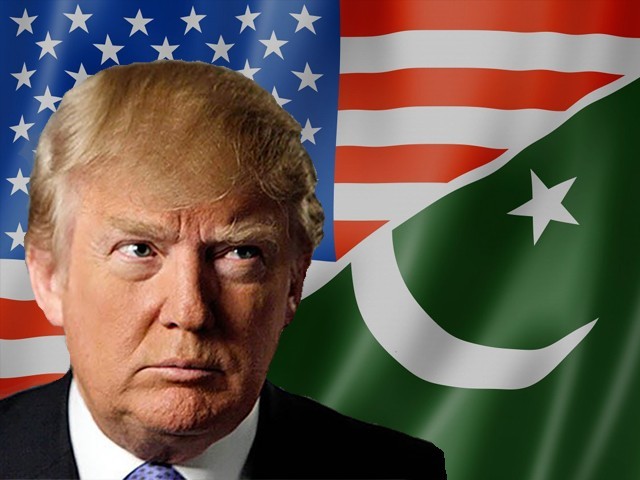
    On an American radio show, Republican presidential hopeful Donald Trump called Pakistan “probably the most dangerous” country in the world today, adding that the only country that can “check” Pakistan is India.

    Pakistan is “a serious problem” because they have nuclear weapons that work and “a lot of them”, just like North Korea and its “mad man”, Trump explained.

    It wasn’t enough that he clubbed Pakistan with North Korea. “India is the check to Pakistan,” continued Trump, adding insult to Pakistan’s injury. “You have to get India involved … They have their own nukes and have a very powerful army. They seem to be the real check … I think we have to deal very closely with India to deal with it (Pakistan),” said Trump, about his foreign policy goals.

  • Mayor’s Office of Immigrant Affairs Celebrates the Graduation of its First-Ever – Immigrant Women Leaders Fellowship

    Mayor’s Office of Immigrant Affairs Celebrates the Graduation of its First-Ever – Immigrant Women Leaders Fellowship

    NEW YORK (TIP): The Mayor’s Office of Immigrant Affairs (MOIA), de Blasio Administration officials, community leaders, and invited guests celebrated the accomplishments of the first cohort of MOIA’s Fellowship for Immigrant Women Leaders in a ceremony at the New York City Surrogate’s Court. The Fellowship was established by MOIA as part of the Administration’s “One New York Rising Together” platform to build closer relationships between immigrant women and the City and enhance the capacity of emerging and established leaders to promote positive social change in their communities.

    At the conclusion of the Fellowship, Commissioner Nisha Agarwal of the Mayor’s Office of Immigrant Affairs invited the 13 participants from this year’s inaugural Fellowship to serve on MOIA’s Women’s Advisory Cabinet starting in November. The program was supported by Unbound Philanthropy, a private foundation focused on supporting immigrant communities, and the Mayor’s Fund to Advance New York City.

    “Mayor de Blasio’s commitment to progressive leadership is nowhere more evident than in his record of diversifying the senior ranks of the City Administration, as he has done to an extent far beyond any of his predecessors,” said Commissioner Agarwal. “And our vision extends beyond City Government to supporting leaders from underrepresented communities across the City through efforts like MOIA’s Fellowship for Immigrant Women Leaders. This first class is made up of dedicated social change agents from non-profit, grassroots, academic, and faith-based organizations representing the best of New York. I look forward to hearing their perspective and guidance on a range of policy issues in the year to come.”

    “Ensuring that our City’s immigrant communities have access to opportunities to succeed is one of our priorities at the Mayor’s Fund,” said Darren Bloch, Executive Director of the Mayor’s Fund to Advance New York City. “?We’re proud to partner with the Mayor’s Office of Immigrant Affairs and Unbound Philanthropy to support the Immigrant Women Leaders Fellowship. We will continue to advocate for similar programs that not only empower individual immigrant New Yorkers, but also allow them to strengthen their respective communities.”

    “It was inspiring to speak with this dynamic, diverse group of Immigrant Women Leaders Fellows, each of whom is working to eliminate the effects of systemic oppressions,” said Commissioner Penny Abeywardena of the Mayor’s Office for International Affairs. “It is vital that, 20 years after the Beijing Declaration, these community leaders are implementing the objectives of the Platform throughout all five boroughs. I look forward to the myriad ways these leaders will improve our international city and our world.”

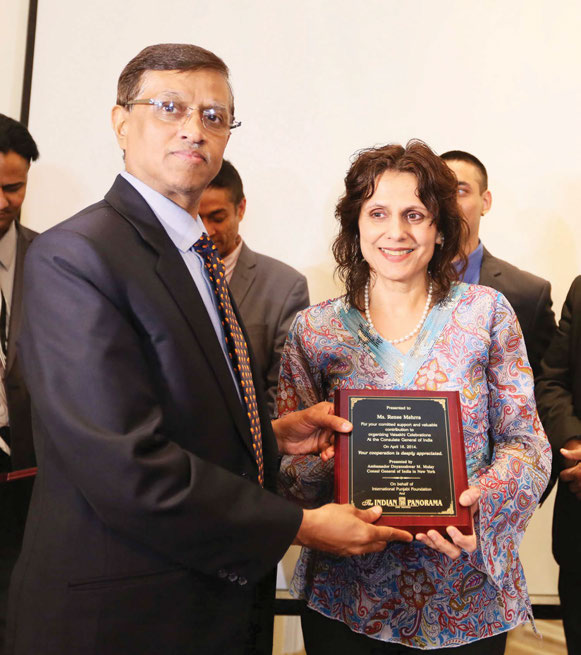
    “It has been an uplifting and insightful journey with kindred spirits that deepened my emotional intelligence and leadership skills,” commented MOIA Fellow Renee Mehrra, a broadcast journalist and community activist. “The fellowship gave me rare insights and strategic tools to overcome barriers to progress and advancement, including internalized oppression, discrimination and racism, so we can become catalysts for change and heal, transform and empower ourselves and our communities.”

    “For the past few months, we have had the pleasure of…collaborating with each other…a dynamic group of women leaders, representing various immigrant communities in New York City,” added MOIA Fellow Ninaj Raoul, co-founder and community organizer at Haitian Women for Haitian Refugees (HWHR). “Together we explored real-time leadership challenges that we all experience.”

    “I graduate today a more informed and more empowered leader,” shared MOIA Fellow Naheed Samadi Bahram, New York Program Director for Women for Afghan Women. “Through this program, I am now a better listener and I am taking back a wealth of knowledge and experience to share with my community and colleagues. I am grateful to everyone I was able to meet and learn from, from my fellow graduates to the city’s top female leaders.”

    “This fellowship has had a great impact personally and professionally,” said MOIA Fellow Karina Aybar-Jacobs. “I’ve learned that an effective leader is one that listens more than she speaks, and takes the time to emotionally connect & validate the feedback of others, one that isn’t afraid to admit her mistakes, while remaining authentic, true to her passion and identity.”

    MOIA’s Fellowship for Immigrant Women Leaders is a thirteen-week leadership development program that was established in June 2015.  The purpose of the Fellowship is to:

    1. Form a network of immigrant women leaders who, through engagement together, are better networked with one another and with city leadership;
    2. Identify the barriers or challenges to women’s leadership within the immigrant community and solutions available to remove these barriers; and
    3. Develop an agenda for advancing women’s leadership within New York City immigrant communities.

    A Nominating Committee of non-profit and government leaders identified a pool of 45 promising women leaders serving immigrant populations, from which 13 were selected to participate in the Fellowship. The inaugural Fellows cohort features:

    Rita Abadi, Clinician and Operation Manager, Mt. Sinai Sexual Assault and Violence

    Hajia Ramatu Ahmed, Executive Director/Founder, African Life Center

    Afreen Alam, Executive Director, Chhaya CDC

    Naheed Samadi Bahram, Program Director, Women for Afghan Women

    Kajori Chaudhuri, Director of Programs and Operations, Sapna NYC

    Dayanne Danier, Founder, Fleur de Vie

    Karina Aybar-Jacobs, Program Director, Dominican Women’s Development Center

    Renee Mehrra, TV Personality, Providing Our Women Equal Rights

    Kali Ndoye, President, Concerned Cultural Women’s Collective

    Aliza Nisenbaum, Artist, Immigrant Women and the Arts

    Ninaj Raoul, Co-Founder and Executive Director, Haitian Women for Haitian Refugees

    Susan Shah, Chief of Staff, Vera Institute of Justice

    Haydee Zambrana, Executive Director, Latin Women in Action, Inc.

    More information on the Fellowship and biographies of this year’s cohort can be found at: http://www.nyc.gov/html/imm/ht ml/initiatives/immigrant_womens _fellowship.shtml.

  • Pravasi Bharatiya Divas – Format Change

    Pravasi Bharatiya Divas – Format Change

    In a departure from the past, the government on Tuesday announced a change in the annual Pravasi Bharatiya Divas and its engagement with the diaspora. The mega jamboree will now be held every other year and a new event “focused on outcomes” will be held every other year.

    External Affairs Minister Sushma Swaraj, who is also minister of overseas Indian affairs, announced the changed format of India’s engagement with its diaspora at a press conference here.


    Swaraj said a scaled-down event would be held in January 2016 with the participation of just 150 invited foreign delegates.

    The invited diaspora guests will be experts who would attend various sessions to brainstorm on issues, including the problem of the Indian diaspora in the Gulf; on the government’s flagship programs like Make in India, Skill India, Digital India, and problems that Persons of Indian Origin face, she said.

    Sushma Swaraj announced that the “smaller events” of the PBD would be held in the Delhi office every alternate year, while the major “mela” would be held every two years in a different state in partnership with that state government.

    Besides, she announced that the Regional PBD, which is held abroad, will be held this year in Los Angeles, U.S., on November 14-15. She said U.S. Secretary of State John Kerry has said he would attend.

    She also announced a quiz competition “Bharat ko Janiye” in order to involve the diaspora youth in learning about India.

    The 20 winners — 10 from PIO countries and 10 from countries with NRIs — would be awarded at the PBD.

    Announcing the competition, Swaraj said diaspora Indians between the ages 18-35 could apply to join the quiz, in which there would be two rounds.

    After the second round, 10 successful candidates each from the PIO nations and with NRI population would be selected.

    They would be invited to the summit where they would have to participate in the third round.

    The first three winners would be awarded at the plenary of the PBD. The 20 youth would be taken on a “Bharat Darshan”, she announced, with the aim to acquaint them about Indian art, culture, heritage and also modern India.