Month: October 2015

  • Indian Consulate in New York announces Outreach program at Philadelphia on October 25-26, 2015

    NEW YORK CITY (TIP): With an aim to strengthen ties with the local Indian community in Philadelphia, Consul General of India, New York, Ambassador Dnyaneshwar M. Mulay, would be leading a delegation of high-ranking diplomats, and officials from banking, tourism, and aviation sectors, to Philadelphia, Pennsylvania, on October 25-26, for an Outreach Program at Crowne Plaza Bucks County, 4700 Street Road, Feasterville-Trevose, PA 19053.

    The two-part event on October 25, 2015 will begin with a Camp for Consular Services from 9:00 am to 2pm; followed by the main Outreach Program and Networking event from 5:00 pm to 8:00 pm. The delegation is expected to meet various American dignitaries from Pennsylvania on October 26, 2015.

    Details for both events on October 25, 2015, are listed below:

    Part I: Camp for Consular Services

    Cox and Kings Global Services will organize a Camp for Consular Services, which includes collection of application forms for Visa, OCIs, Renunciation Certificates and other Consular Services. Applicants are requested to make online appointments here, and complete their online application forms. Please bring all necessary documents, including passport size photographs for each service. Information about required documents for each service can be found online on our website http://www.in.ckgs.us

    Venue: The Newton Ballroom, Crowne Plaza Bucks County, 4700 Street Road, Feasterville-Trevose, PA 19053.

    Time: 9:00 am to 2:00 pm.

    Part II: Outreach Program and Networking

    The second half of the day will begin with an interactive networking session, followed by presentations by the Consulate, Indian Banks, Air India, PSUs, and the Tourist Board. There will also be a Q&A session with the audience, followed by a cultural program, and dinner.

    Venue: The Yardley Ballroom, Crowne Plaza Bucks County, 4700 Street Road, Feasterville-Trevose, PA 19053.

    Time: 5:00 pm to 8:00 pm.
    For further information, please visit www.indiacgny.org

  • Jindal’s popularity dips below one percent – refuses to bow out

    Jindal’s popularity dips below one percent – refuses to bow out

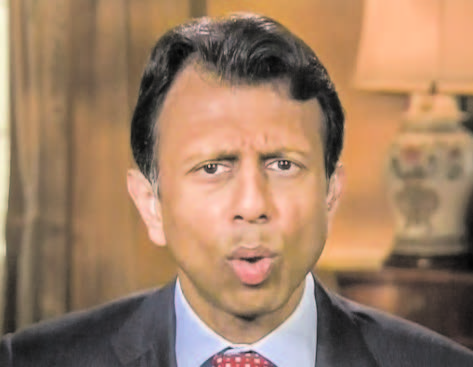
    WASHINGTON (TIP): The popularity of first Indian-american US Presidential hopeful Bobby Jindal has dipped below one per cent, according to latest opinion polls, indicating that all is not well with his campaign.

    In two leading national opinion polls – CNN/ORC and NBC/Wall Street Journal – Jindal’s popularity rating slipped to less than one per cent, following which many political pundits were quick to pronounce a dead end to his presidential ambition at least in the 2016 elections. Bobby Jindal is the first Indian American to be elected a state governor.

    However, the 44-year-old two time Louisiana governor said he is not giving up so early. In fact he threated to skip the next round of Republican debate as based on national poll results he has been pushed to the second tier debate. The Republican race is now led by Donald Trump and Ben Carson, according to the CNN/ORC poll. Trump leads the field with 27 per cent, followed by Carson at 22 per cent. But Jindal argued Trump is going to fade. “His numbers are already starting to fall in Iowa…,” Jindal argued.

    Louisiana Gov. Bobby Jindal lost ground in the latest Fox News poll of candidates seeking the 2016 Republican presidential nomination, slipping below 1 percent and into 15th place in the large field.

    Now, Gov. Bobby Jindal has not made the cut for yet another main Republican presidential debate, and has been invited the “undercard” debate held earlier in the evening instead.

    CNBC has invited 10 GOP candidates to the primetime debate held at 8 p.m on Oct. 28 in Boulder, Colo. The “undercard” debate would take place at 6 p.m. in the same place. Jindal could face former U.S. Sen. Rick Santorum, former Gov. George Pataki, and U.S. Sen. Lindsey Graham if he participates in the earlier event.

    Jindal and three other men were invited to the early slot because their average national poll numbers in the last five weeks aren’t high enough to qualify for the main event. The New York Times reports the “undercard” candidates polling numbers are all below 2.5 percent.

    During a meeting with The Des Moines Register editorial board this week, Jindal declined to say whether he will participate in the undercard event.


  • Suspension of ‘Panj Pyaras’: SGPC indecisive, leaves decision to Makkar

    AMRITSAR (TIP): The emergency meeting of the Shiromani Gurdwara Parbandhak Committee (SGPC) executive convened after October 21 suspension of the ‘Panj Pyaras’ for their unprecedented summoning the Akal Takht jathedar and four other Sikh head priests turned out to be a stormy affair and ended on an indecisive note here on October 22.

    In Mukstar, deputy chief minister Sukhbir Singh met SGPC members from five districts at Badal village to discuss the prevailing scenario in the state.

    At SGPC’s Chandigarh meeting, 14 of the 15 members of the executive authorised SGPC chief Avtar Singh Makkar to take a decision on the ‘Panj Pyaras’.

    It is learnt that a majority of the SGPC executive members were opposed to the suspension of the ‘Panj Pyaras’.

    When contacted after the meeting, Makkar was non-committal and said: “There is no immediate decision.”

    Earlier, Makkar arrived in a car driven by Dyal Singh Kolianwali, who is close to chief minister Parkash Singh Badal, at Kalgidhar Niwas, the meeting venue.

    SAD (Amritsar) activists staged a black flag protest outside the venue, demanding Makkar’s resignation.

    Nominated SGPC executive member from Amritsar Mangal Singh Sandhu did not attend the meeting. SGPC general secretary Sukhdev Singh Bhaur said, “The situation for Sikhs is a concern. They are being arrested, beaten and injured. This is bad.”

  • New accounting norms may add to banks’ bad loans

    MUMBAI (TIP): There is a new twist to the issue of rising bad loans in the banking sector. Under the new global accounting norms that banks have to adopt from April 1, 2018, the gross level of non-performing assets (NPAs) for banks and non-banking finance companies
    (NBFCs) could rise significantly. Companies have to migrate to the new norms from April 1,2016.

    The quantum of these bad loans would not only affect banks’ profits, but also eat into their capital, raising concerns among RBI and finance ministry officials, who are already grappling with the issue of injecting fresh capital into banks.

    According to people familiar with the matter, the RBI is trying to address the issue by asking banks and NBFCs to internally adopt the new system — Ind AS— early on so that everybody gets a head-start on the extent of the problem and tries to resolve it.

    “Evaluation and recording of credit losses under Ind AS is significantly different from that used under current accounting norms,” said Jamil Khatri, partner, KPMG. “This could likely lead to a rise in gross NPAs and an increase in the level of provisioning. Ind AS follows an expected loss model which is based on judgment and is significantly different from the norm-based provisioning model under the current system.”

    The RBI recently formed a panel to suggest measures to address challenges arising out of implementation of Ind AS by banks. The report, which was submitted to the RBI on Wednesday, suggests change in loan loss provisioning but is silent on the impact on capital adequacy. The central bank has sought comments on the report by November end.

    Prime Minister Narendra Modi recently said that the government plans to infuse Rs 70,000 crore into public sector banks to address the issue of bad loans.

  • RSS Chief plays down communal attacks

    RSS Chief plays down communal attacks

    Since Prime Minister Modi and his ministerial colleagues have chosen to report to the RSS and invite its inputs on policy issues, it is important to take note of RSS chief Mohan Bhagwat’s annual Vijayadashmi address, delivered at Nagpur on Thursday and telecast live by Doordarshan despite Opposition protests last year. While his emphasis on “unity in diversity” is welcome, Mohan Bhagwat has, without naming any of the recent incidents – killings of writers and rationalists, beef and ink attacks and the Dadri lynching – said that “small incidents” were being “blown up”.

    He chose to give an indirect message to hardliners in the Sangh Parivar and other outfits by saying that his organization believed in “cooperation and coordination” and “such small incidents do not affect Indian and Hindu culture.” While Mohan Bhagwat talks of inclusivity being “the core of our culture”, the Union Culture Minister is known to violate the basic values of Indian culture very time he opens his mouth. Prime Minister Modi, BJP chief Amit Shah and Finance Minister Jaitley too have reacted to these incidents but none has given the recalcitrant ministers, MPs and MLAs a message strong enough to silence them and others. The latest to display characteristic insensitivity is Union minister VK Singh, who, reacting to the burning to death of two Dalit children in Haryana, said: “If someone throws stones at a dog, the government is not responsible”. For the benefit of the BJP in Bihar, Bhagwat did not say anything damaging. He did not touch on the reservation issue. But there seems no one to control the likes of Gen VK Singh and Kiren Rijiju, who too has been encouraged to make irresponsible comments about north Indians.

    If so many loose cannons have sprung up creating social tension, it is because there is no fear of the law or disciplinary action. If Bhagwat considers the recent incidents, which have forced writers to return their awards, as “small”, then he is not expected to contain the elements threatening India’s culture of tolerance and liberalism. His silence on the Shiv Sena, which has launched a hate campaign against anything and anyone Pakistani, is understandable, but not desirable.

  • Virender Sehwag retires from all forms of international cricket & IPL

    Virender Sehwag retires from all forms of international cricket & IPL

    Virender Sehwag has retired from international cricket, officially. On his 37th birthday, Sehwag, who hinted at retirement during the Masters Champions League opening in Dubai on Monday, announced on Tuesday his retirement from all forms of international cricket & IPL. Sehwag won’t be playing in the upcoming edition of the IPL.


    sehwagSehwag’s decision comes barely a few days after Zaheer Khan decided to call time on his career.

    In a glorious international career from 1999, Sehwag played 104 Tests scoring 8586 runs at an impressive average of 49.34, hitting 23 centuries and 32 half-centuries. He is the only triple centurion in Tests for India having scored a career-best knock of 319 against Pakistan at Multan, which also is an Indian record. He is also one of those rare batsmen to have scored two triple tons with his next one (309) coming against South Africa.

    In 251 ODIs, he accumulated 8273 runs at an average of 35.05 and scored 15 hundreds apart from hitting 38 fifties.

    In 19 Twenty20 Internationals, he managed 394 runs with two half-centuries.

    He has been a part of two World Cup winning teams under Mahendra Singh Dhoni’s leadership — 2007 World T20 in South Africa and the ICC ODI World Cup in India.

    Sehwag, famous for his hand-eye co-ordination and giving the ball a solid whack, did not lose his sense of humour while announcing his retirement. He quoted Mark Twain and joked about the advance news of his retirement.

    Virender Sehwag’s full retirement statement

    To paraphrase Mark Twain, the report of my retirement yesterday was exaggerated! However, I have always done what I felt was right and not what conformists thought to be right. God has been kind and I have done what I wanted to do – on the field and in my life. And I had decided some time back that I will retire on my 37th birthday. So today, while I spend my day with my family, I hereby announce my retirement from all forms of International Cricket and from the Indian Premier League.


    Cricket has been my life and continues to be so. Playing for India was a memorable journey and I tried to make it more memorable for my team mates and the Indian cricket fans. I believe that I was reasonably successful in doing so. For that, I wish to thank all my team mates over the years – some of the greatest players of the game. I would like to thank all my captains who believed in me and backed me to the hilt. I also thank our greatest partner, the Indian cricket fan, for all the love, support and memories.
    I have also played against a lot of great players and it was an absolute pleasure and honour to do so. It was possibly the greatest motivation there was to play to the best of my ability. I have lived my dream and played at the finest of cricket grounds across the globe and I want to thank the groundsmen, clubs, associations and everyone who painstakingly prepare the arena for our performances.

    I miss my father today, he was there when the journey started and I wish he could have been there today as well but I know I made him proud and wherever he is today, he is watching me with pride. I want to thank my coach, Mr. A.N. Sharma sir, who was possibly the only coach who could have groomed me into the player that I became. I would probably have struggled to play for my school under any other coach. My mother, my wife Aarti and my children Aaryavir and Vedant are my biggest strength and their presence in my life keeps my mind without fear and head held high.

    I would like to thank the BCCI for all its support over the years. The work that the BCCI does at such a scale is phenomenal and it has had some fine administrators over the years who have led the Board in developing the game, appreciating the contribution of players and have brought a lot of benefit to the players.

    I would also like to thank the Delhi and District Cricket Association and particularly Mr. Arun Jaitley who always supported me and sought our feedback and implemented what the players wanted and his presence ensured that I always had someone to rely upon personally and for the furtherance of the game’s best interest in Delhi.

    I would like to thank everyone at the Haryana Cricket Association who have welcomed me with so much love and affection and it is really exciting to work with some really talented youngsters. I would especially like to thank Anirudh Chaudhary and Ranbir Singh Mahendra, who has always had words of motivation for me during the toughest of times and I have felt safe in the knowledge that I can always turn to him for well considered advice which I value immensely.

    I would also like to thank the Delhi Daredevils and the Kings XI Punjab, the franchisees that I represented, for believing in me and letting me be a part of them. I always gave my best for my team and consider myself fortunate to play with some brilliant players in the IPL.

    I would also like to thank the Oil and Natural Gas Commission (ONGC). Very little is known about the effort they put in to promote sportsmen and sportswomen across various disciplines. ONGC gave me the security to pursue my game and the organization will always have a special place in my heart.

    I must also add that I have enjoyed every Press conference and every interaction with the members of the media through out my international career and the presence of Indian media on foreign tours has left some very pleasant memories that I shall always cherish.

    I want to thank all my sponsors for believing in me and all the bat manufacturers that have been associated with me over the years for providing me the willow that I love.

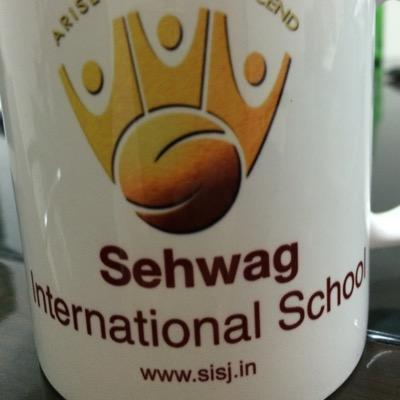
    I want to tell everyone at the Sehwag International School, Jhajjar that I now hope to have a higher frequency of visits to the campus to be with you all.

    I also want to thank everyone for all the cricketing advice given to me over the years and I apologise for not accepting most of it! I had a reason for not following it; I did it my way!

  • China now has more billionaires than US

    China now has more billionaires than US

    BEIJING (TIP): Communist China has overtaken capitalist United States in the richie rich list with 596 billionaires to America’s 537. The stunning jump has taken place in the last one year — spurred by the rise of China’s riches in technology and manufacturing — despite a slowing economy, according to a survey released on Oct 18.

    If Hong Kong and Macau’s 119 billionaires were to be included, the number would swell to 717, according to wealth research firm Hurun Report. Though the World Bank recently reduced the forecast for China’s growth from 7.1% to 6.9% this year, its billionaires have risen by 32% or 242 in 2014-15.

    “Despite the slowdown in the economy, China’s richest have defied gravity, recording their best year ever, and creating more wealth than any coun try has ever done before in a year,” Hurun Report chairman Rupert Hoogewerf said.

    The firm’s research has found total wealth of 1,877 super rich individuals hit $2.1 trillion, which is more than the GDP of several countries. It shows Jack Ma of e-commerce giant Alibaba has lost his position as the richest Chinese to real estate magnet, Wang Jianglin, who had held the position earlier. Wang’s fortune rose 52% to $34.4 billion after the value of his newly-listed cinema chain rose 10-fold in the stock market.

    The report reflected the success of online retailing, entertainment and other service businesses, while traditional industries such as steel and natural resources have declined.

    Following Wang and jack are Zeng Qinghou of the Wahaha soft drinks and mineral water empire with $21.2 billion. Ma Huateng of Tencent Ltd, operator of the popular WeChat social media service, is fourth; and, Jun Lei of smartphone maker Xiaomi is No 5.

    New entrants to the rich list include Frank Wang, founder of DJI, the world’s biggest maker of civilian drones, with a net worth of $3.7 billion, and Cheng Wei of taxi-hailing app Didi-Kuaidi, with $1 billion.

    Agencies said communist leaders are trying to steer the world’s second-largest economy to more self-sustaining growth driven by domestic consumption and service businesses to reduce reliance on trade, investment and heavy industry.

  • RBI chief Rajan wants IMF to check monetary easing policies

    RBI chief Rajan wants IMF to check monetary easing policies

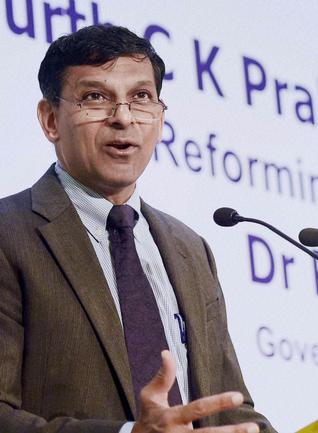
    Mumbai – The International Monetary Fund (IMF) should play an active role in questioning the easy monetary policies, or so called quantitative easing measures, adopted by the developed economies rather than sitting on the sidelines, Reserve Bank of India governor Raghuram Rajan said in a speech.


    TH19_BU_RAGHURAM_R_2590974e“The IMF has been sitting on the sidelines and applauding these kinds of policies right from when they have been initiated, and hasn’t really questioned the value of these kinds of policies,” he told a G20 consultation meeting in Mumbai.

    Dr. Rajan said developed countries were adopting monetary policies without consideration for the negative impact they have on the global economy, while emerging markets were engaging in currency intervention that sparked competitive devaluations. He did not single out any one country.

    Dr. Rajan, a former chief economist at the IMF, said that it was time for policymakers, led by the IMF, to address the “extreme” policies, otherwise “we have to worry where this ends”.

    A number of developed economies, most notably the United States, have engaged in significant monetary easing to boost their economies as global growth slows.

    But Rajan said some of the policies had been “extreme” and ultimately detrimental to emerging markets, which struggled to cope with large inflows of capital which then disappeared when the easing stopped.

    Rajan, the former IMF chief economist, said in his address that the policies initially encourage growth but the effect quickly wears off, leading to a “musical (chair-like) crisis”.

    “We are in dangerous territory,” he said in the speech, which comes ahead of the G20 summit in Turkey next month.

    India, whose economy is expanding at around seven percent, is presently the best performer of the group of emerging markets known as the BRICS, which is also composed of Brazil, Russia, China and South Africa.

    Last month, Rajan said Brazil’s current economic malaise stemmed from trying to grow too quickly by “overemphasising old and ineffective methods of stimulus”.

    India should address supply side constraints

    Dr. Rajan also said India needs to address supply side constraints in order to achieve the potential growth rate of 9 per cent.

    To a question on whether India can attain higher growth without inflation, he added: “The answer is no. We have to create underlying supply conditions that would allow us to sort of have much higher demand. In some sense, I see 9 per cent growth as a situation where we are investing tremendous amount and thus creating the supply which will then help the demand.”

    “It is a steady process rather than an overnight process. It will take some time.

  • In Sweden, doctors caught performing virginity tests on girls

    SWEDEN (TIP): An undercover investigation has revealed doctors in Sweden are performing virginity tests on teenage girls against their will. Footage shot by reporters for the Swedish current affairs program ‘Kalla Fakta’ (Cold Fact) showed doctors across the country agreeing to perform illegal tests for religious families to determine if their daughters had had sex.

    Reporters approached doctors in cities across Sweden and asked them whether they would be willing to carry out the examinations. Two undercover journalists posed as an aunt and her 17-year-old niece. The footage shows the aunt asking one doctor to perform the test and write out a “virginity certificate” despite the niece protesting she does not want one. Under Swedish law, doctors are to report a child to either social services or the police if they believe he or she is “in need of protection” by social welfare authorities. One of the doctors insists on the footage that she has done “hundreds” of virginity tests -including on children.

    Human rights groups have condemned the practice. Liesl Gerntholtz, of the Human Rights Watch told a British daily: “In a country that internationally has played a leading role in protecting women’s rights, it was almost unthinkable to me that this would be happening in a country like Sweden.” One of the victims, who was too scared to reveal her identity, spoke to the programme using an actress’ voice. “Sara” said she was forced to get engaged to her cousin when she was just 13 by her deeply Christian family and her parents made her undergo a virginity test at 15.

  • Naveeda Ikram: UK’s first female Muslim Lord Mayor suspended by Labour as police probe ‘financial irregularities’

    Naveeda Ikram: UK’s first female Muslim Lord Mayor suspended by Labour as police probe ‘financial irregularities’

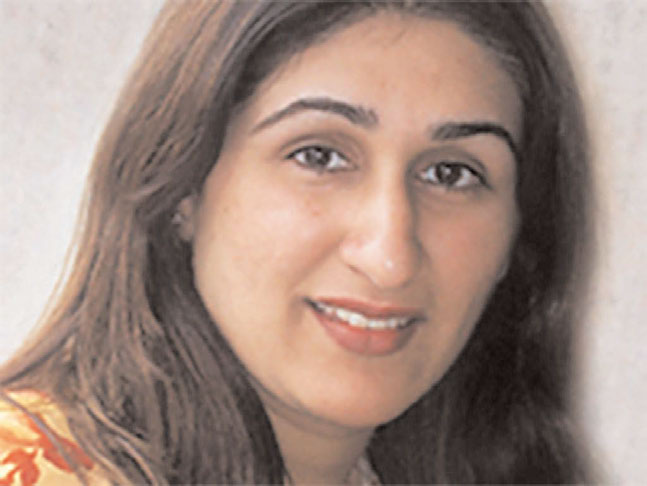
    BRADFORD  (TIP): Naveeda Ikram, a councillor in Bradford, was suspended by the party after an allegation was made about her to West Yorkshire Police. Ikram served as Lord Mayor of Bradford in 2011-12. She missed out on becoming Labour’s candidate to stand against George Galloway in the Bradford West consituency in the general election.

    Labour is understood to be investigating a number of allegations. West Yorkshire Police said its enquiries were in their early stages.

    Naveeda Ikram1Ikram told The Independent: “I have no idea what the police investigation is about. My suspension by the party is an administrative procedure at this stage. My background is squeaky clean and I am confident that I will be cleared.”

    Ikram was the first woman of Pakistani origin to become a councillor in Bradford after her election in 2004. She was involved in a row within the Labour Party earlier this year after going to police over claims that she was “smeared” on social media by a troll who suggested that she had racist and sectarian views.

    That argument came after she lost out in the selection process for the Bradford West parliamentary seat to Amina Ali, a Londoner who stepped down 72 hours later for family reasons.

    Ikram said at the time that comments on social media, where she appeared to insult Ali’s Somali background, were made on a fake profile and circulated “to bring me down”. Naz Shah, the chairwoman of a local mental health charity, was eventually selected as Labour’s candidate for the seat and went on to defeat Galloway, the Respect MP, in May’s election. Rumours emerged that Ikram was planning to defect to Galloway’s party, a claim which she denied.

    Ikram said: “It’s awful that this investigation has been made public -just crazy. I have not been provided with any information about the allegation. The police haven’t even spoken to me. I have no idea what their investigation is about. I have no financial dealings or business interests.

    “I’m not the first person to be suspended from the Labour Party and I will not be the last. I have never had any concerns or anything to do with another political party and I wouldn’t leave Labour for anything. “This is nothing to do with me having been the Lord Mayor. It isn’t right for anyone to bring that into it because it brings disrepute to the office. What I can say is that I am very confident that I will be exonerated from this.” A spokesman for West Yorkshire Police said yesterday: “We can confirm that we have received a report of alleged financial irregularities. Enquiries are at a very early stage and are ongoing.”

    Bradford Council said it was a matter for the Labour Party and Ms Ikram had not been suspended by the council. She will continue to carry out her council duties.

    A spokesman for Yorkshire and Humber Labour Party said: “Naveeda Ikram has been suspended by the Labour Party pending an investigation.”

  • UK schoolgirl guilty of terror offences spared jail

    UK schoolgirl guilty of terror offences spared jail

    LONDON (TIP): A British schoolgirl who admitted two terror offences of possessing “recipes for explosives” and a bomb-making guide was on Thursday spared a custodial sentence after she pleaded to a youth court to let her “prove that I am not a terrorist.”

    The 16-year-old, who cannot be named for legal reasons, was arrested by anti-terrorism police in April and Manchester Youth Court gave her a 12-month referral order with youth offending teams to address her radicalisation.

    The court heard she had intended to hack into the White House and became obsessed with suicide bombings after becoming radicalised online.

    Sitting in court, flanked by her mother and an aunt, she told the judge: “I deeply regret what I have done. I wish to make changes if I get the chance to prove I am not a terrorist.”

    Passing sentence, District Judge Khalid Qureshi said: “It must be every parent’s worst nightmare to discover their child has been accessing material they should not, of whatever type.”

    The girl had used her school’s IT system to search for information on the Islamic State terror group, its militant known as “Jihadi John”, and images of Michael Adebolajo, who killed British soldier Lee Rigby on a London street in 2013.

    Analysis of her mobile phone found instructions for producing a timed circuit, a document about DIY bomb-making and the Anarchist Cookbook 2000.

    The inquiry also led to the arrest of a boy, 14, who admitted involvement in a plot to attack police in Australia on Anzac Day, held on 25 April each year to commemorate the Australian and New Zealand Army Corps’ in the World War One battle of Gallipoli.

    The boy, now 15, was jailed for life earlier this month at London’s Old Bailey court after pleading guilty to inciting terrorism abroad.

    The girl had pleaded guilty at an earlier hearing to two offences under Section 58 of the Terrorism Act 2000, of possessing documents likely to be of use to anyone preparing or committing an act of terrorism.

    No evidence was found that she was aware of or played any part in the Anzac Day plot or any plan to harm others or incite terrorism in the UK or elsewhere, the court was told.

  • Backed by Russian jets, Syrian troops attack rebel-held towns in Homs

    Backed by Russian jets, Syrian troops attack rebel-held towns in Homs

    BEIRUT/AMMAN (TIP): Syrian troops and their allies, backed by Russian jets, attacked rebel-held towns north of the city of Homs on Thursday, targeting a long-held and strategic enclave of opposition to President Bashar al-Assad.

    The offensive that began before dawn builds on over a week of ground attacks launched with Russian air support in areas of western Syria that are crucial to Assad’s survival and held by rebel groups other than Islamic State.

    Syrian state television, quoting a military source, said the army had begun a military operation in the area after heavy air strikes and artillery barrages early on Thursday.

    The Syrian Observatory for Human Rights, a UK-based group which monitors Syria’s four-year-old civil war, said at least five civilians and six insurgents had been killed in Teir Malla, about 3 miles (5km) north of Homs city. A resident said at least 25 people were killed including, Rawad al Aksah, a commander of insurgent group Liwaa al-Tawhid.

    A few miles further north, there were heavy air strikes around the town of Talbiseh and other villages in the area, the Observatory said, as well as fierce clashes on the southern edges of the town and nearby villages.

    Recapturing the area north of Homs would help reassert Assad’s control over the main population centres of western Syria and secure territory linking Damascus to the coastal heartland of his minority Alawite sect.

    “The regime is actually getting its forces ready in all Homs’s northern countryside … What we fear is that they will follow the same strategy they had in Hama countryside. They actually attacked the fighters in all fronts at once,” said local media activist Hassan Abou Nouh.

    The Syrian army, supported by foreign allies including Iran, has launched several ground offensives to retake insurgent-held territory since Russian jets started air strikes against rebel targets — mainly in western Syria— two weeks ago.

    The army operations include a campaign to recapture rebel-held land in Hama, Idlib and Latakia provinces in the northwest. Regional officials have also said the army, backed by Iranian reinforcements, is preparing for a ground operation around the city of Aleppo, close to the Turkish border.

    The Syrian military source quoted by state television said the army and its allies had taken control of the villages of Khalidiya and Dar Kabira, between Homs and Teir Malla.

    The observatory said the army had advanced in Khalidiya, but there was still heavy fighting there.

    “There are very heavy air strikes in Homs on the frontlines. There are civilian casualties. The aim is to apply military pressure, and the regime’s intention is to storm the area,” said the leader of one rebel group operating in the area.

    He said the number killed was not confirmed but gave the names of five documented dead including a girl and two women.

    A resident of Talbiseh said four civilians had been killed there and that a school was hit at around 6am, before classes started. He said jets were still flying in the area.

    “There’s no end to the aerial observation and the bombardment,” said Abdul Rahim Duhaik, a teacher in Talbiseh.

    “People are busy digging shelters. No one has any intention of leaving. We will die in our land rather than be evicted.”

    Responding to the reports of civilian deaths, the Syrian military source said Syrian forces and Russian jets do not target areas where civilians are present. He accused al-Qaida’s wing in Syria, the Nusra Front, of carrying out a massacre on Thursday so it could blame the deaths on the bombardment.

    The source, quoted by state television, said the army had begun a military operation in the north Homs countryside after “concentrated air strikes and heavy preparatory artillery shelling on the terrorist groupings and their bases”.

  • Myanmar signs ceasefire with eight armed groups

    Myanmar signs ceasefire with eight armed groups

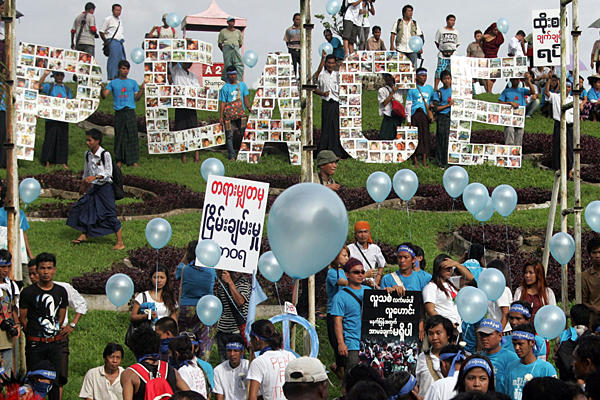
    NAYPYITAW (TIP): Myanmar’s government and eight armed ethnic groups signed a ceasefire agreement on Oct 15, the culmination of more than two years of negotiations aimed at bringing an end to the majority of the country’s long-running conflicts.

    The deal fell short of its nationwide billing, with seven of the 15 armed groups invited declining to sign due to disagreements over who the process should include and ongoing distrust of Myanmar’s semi-civilian government and its still-powerful military.

    President Thein Sein, a former general, made the nationwide ceasefire a key platform for his reformist agenda after taking power in 2011 and ending nearly 50 years of military rule.

    While the absentees were a blow to the president, who pushed for the deal to be signed ahead of a Nov. 8 general election, he described the deal on Thursday as historic.

    “The nationwide ceasefire agreement (NCA) is a historic gift from us to our generations of the future,” Thein Sein said at a signing ceremony attended by hundreds of diplomats, officials and rebel group representatives in the country’s capital.

    “This is our heritage. The road to future peace in Myanmar is now open.”

    Thein Sein said he would continue with efforts to convince other groups to join the ceasefire later.

    Among those that signed was the Karen National Union (KNU), Myanmar’s oldest armed group. The KNU has fought one of the world’s longest running conflicts with the Myanmar military spanning nearly 70 years.

    “The NCA is a new page in history and a product of brave and energetic negotiations,” Saw Mutu Say Poe, the chairman of the KNU, said at the ceremony.

    US pressure

    US President Barack Obama, who has portrayed his country’s backing of Myanmar’s reforms as a foreign policy success, has pushed Thein Sein to conclude the ceasefire as part of wider changes to protect minorities.

    “The United States commends all sides for their ongoing efforts to bring an end to the longest-running civil conflict in the world,” the US State Department spokesman John Kirby said in a statement on Thursday.

    The US remained concerned about reports of continued military offensives in the Kachin and Shan states and lack of humanitarian access to 100,000 displaced people in those areas, he said.

    Opposition leader Aung San Suu Kyi did not attend the ceremony. The United Wa State Army, believed to be the largest and best equipped of the country’s armed ethnic groups, has remained largely on the sidelines of the peace process since its beginning and did not sign.

    Also missing is the Kachin Independence Organization, which controls vast areas of Kachin State, in Myanmar’s northeast. The group’s armed wing, the Kachin Independence Army, has clashed regularly with the Myanmar military since 2011, when a 17-year ceasefire between the two broke down.

  • Nations say Philippine peace effort shouldn’t break down

    Nations say Philippine peace effort shouldn’t break down

    MANILA (PHILIPPINES) (TIP): A group of Western and Asian countries said Thursday that recent setbacks should not derail efforts that have brought a Muslim rebellion in the southern Philippines to the brink of a settlement, adding that safeguards should remain in place to prevent a return to fighting.

    Diplomats representing the countries, including the United States and European Union, expressed support in a joint statement for continuing peace efforts, saying “it is vital that there is no return to violence.”

    Yearslong peace negotiations between the Philippine government and the Moro Islamic Liberation Front, the largest Muslim rebel group in the south, led to the signing of a new Muslim autonomy deal last year.

    A police anti-terror assault in January, however, spun out of control and led to the killings of 44 police commandos in clashes that entangled some of the Moro rebels. That sparked public outrage and prompted lawmakers to scrutinize and water down the autonomy bill, delaying its passage and sparking fears of renewed hostilities.

    The insurrection in the south, homeland of minority Muslims in the largely Roman Catholic country, has left more than 120,000 combatants and civilians dead and held back progress in the resource-rich but poverty-stricken area.

    “The long and difficult history of this troubled region can and should move to a more positive future agenda,” said the statement, which was signed by at least 21 ambassadors and senior diplomats in Manila.

    “For the country as a whole, it is essential that setbacks are overcome and people of vision and faith come together to ensure that the momentum for peace continues,” the diplomats said. “We call on all concerned to remain engaged in the peace process.”

    The rebels have said that changes that dilute the proposed autonomy law are unacceptable. They appealed to lawmakers to pass legislation that would help end the decades-old rebellion.

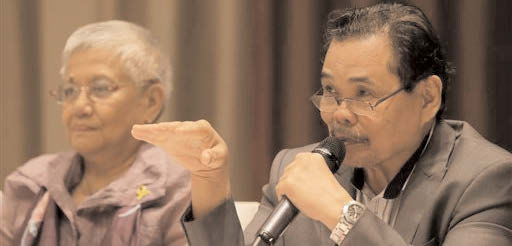
    Rebel chief negotiator Mohagher Iqbal Front has said delays in the passage of the autonomy bill have made the insurgents anxious, but he played down fears that new violence would erupt.

    Under the Malaysian-brokered peace agreement, the rebels dropped their separatist bid in exchange for a more powerful and better-funded Muslim autonomous region to be called Bangsamoro. It is to be created with a bill drafted by a rebel-government commission and submitted to Congress.

  • ‘Pak under Zia-ul-Haq broke promise on uranium enrichment’

    ‘Pak under Zia-ul-Haq broke promise on uranium enrichment’

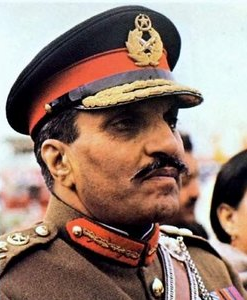
    WASHINGTON (TIP): Pakistan under dictator general Zia-ul-Haq’s administration broke its promise on uranium enrichment in the 1980s, a series of newly declassified documents have shown amid reports that the US is considering a civil nuclear deal with the country.

    According to the latest declassified documents released by National Security Archive, the then military dictator General Haq assured that Pakistan would not enrich uranium above five per cent and in lieu of it extracted huge amount of financial aid and modern military assistance from the US.

    “I appreciate the assurances you gave ambassador Hinton that Pakistan would not enrich uranium above the five per cent level,” the then US President Ronald Reagan wrote in a letter to Zia on September 12, 1984.

    In the letter, Reagan expressed concern over Pakistan’s nuclear weapons programme.

    “I must candidly state that enrichment of uranium above five per cent would be of the same significance as those nuclear activities, such as unsafeguarded reprocessing, which I personally discussed with you in December 1982 and would have the same implications for our security programme and relationship,” Reagan said.

    In fact, Reagan in his letter warned that if Pakistan goes ahead with his nuclear weapons programme, it might attract untoward action from other countries in the region.

    “I have personally discussed with you my concerns about stemming nuclear proliferation, and my Administration remains fully committed on this issue,” he wrote.

    “Concern is also growing in Congress and among the public about Pakistan’s nuclear weapons programme. I am mindful that other countries in the region might use this issue as a pretext for untoward action towards Pakistan,” Reagan said.

    By saying so, Reagan was referring to the CIA assessment that India was planning to carry out strikes against Pakistani nuclear facilities.

    A talking point memo ahead of the letter refers to this.

    The talking points, which has now been declassified and made public by NSA, refer to Washington’s “judgement” that it is “likely that at some point India will take military action to pre-empt your military programme.”

    Such a possibility had been discussed in previous national intelligence estimates.

    Consistent with the allusion to an Indian threat, the talking points included an inducement for Pakistan to adopt safeguards on its nuclear facilities, in light of the threats that Pakistan faced, “we would be prepared to act promptly to discourage or help deter such action as you move toward safeguards.”

    Whether this offer, close to a security guarantee, was actually made to General Zia remains to be learned, the NSA said.

    The declassification of documents comes amid a Washington Post report which said the US is negotiating a pact on new limits on Pakistan’s nuclear weapons and delivery systems, a deal that might lead to an agreement similar to the Indo-US civil nuclear deal.

  • Rajapaksa cries foul of Lanka probe panel

    Rajapaksa cries foul of Lanka probe panel

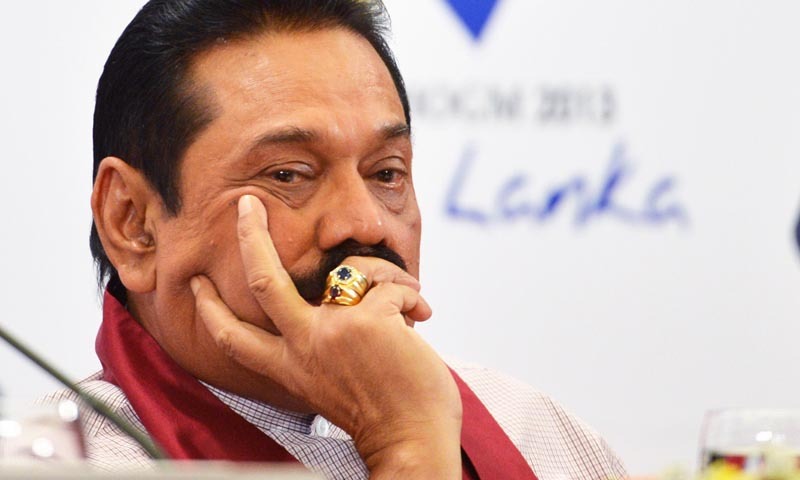
    COLOMBO (TIP): Former Sri Lankan president Mahinda Rajapaksa on Thursday slammed as an act of political revenge his summoning by a graft probe panel over not settling monies he owed to state-owned ITN television station.

    Rajapaksa appeared before the Presidential Commission to Probe Serious Acts of Corruption on Thursday for the first time.

    Commission officials had previously visited him to record his statement.

    Rajapaksa was accused of not paying monies due to ITN for carrying out his propaganda work during the presidential election held on January 8 which he lost.

    In a statement after his appearance, Rajapaksa said that he was only a candidate of his party and was not personally aware of transactions between his party’s campaign office and media institutions.

    Since his defeat to current president Maithripala Sirisena, Rajapaksa and his family have faced corruption allegations.

    Most of his family members have been quizzed by authorities over alleged irregularities during his nine-year rule.

  • President Mukherjee questions rising intolerance in India

    President Mukherjee questions rising intolerance in India

    Hours after another black ink incidence, President Pranab Mukherjee issued another statement on rising intolerance by fringe elements in the country.

    Backdrop: The President’s strong words on the need to maintain pluralism and dissent in the society come against the backdrop of series of hate incidents including in Mumbai where BJP ally Shiv Sena forced cancellation of a music concert by Pakistani legend Ghulam Ali and talks between Indian and Pakistani cricket board Chiefs and blackened the face of Sudheendra Kulkarni. Earlier in the day, a handful of activists allegedly belonging to a right-wing organisation blackened the face of independent MLA of J-K Assembly Sheikh Abdul Rashid using paint, ink and mobil oil protesting against his hosting a beef party in Srinagar earlier this month.

    Addressing a gathering organised by Nayaprajanma, a local weekly newspaper in West Bengal, he expressed apprehension about “whether tolerance and acceptance of dissent are on the wane?”

    He said: “Our collective strength must to be harnessed to resist evil powers in society.  Indian civilization has survived for 5000 years because of its tolerance. We have a Constitution that accommodates all these differences. Hope Mahamaya – the combination of all positive forces would eliminate the Asuras or divisive forces.”

    The official handle of President of India tweeted: “Remember teachings of Shri Ramakrishna Paramhansa ‘Jato Mat Tato Path’  As there are a number of beliefs, there are a number of ways. Humanism and pluralism should not be abandoned under any circumstance.  Assimilation through receiving is a characteristic of Indian society.”

    Earlier this month, President Pranab Mukherjee said the core values of diversity, tolerance and plurality of Indian civilisation must be kept in mind and cannot be allowed to be wasted, in remarks that come against the backdrop of the Dadri lynching over rumours of beef eating.

    “I firmly believe that we cannot allow the core values of our civilization to be wasted and the core values is what over the years the civilization celebrated diversity, promoted and advocated tolerance, endurance and plurality. These core civilization values keep us together over the centuries. Many ancient civilizations have fallen. But that is right that aggression after aggression, long foreign rule, the Indian civilization has survived because of its core civilizational values and we must keep that in mind. And if we keep those core values in mind, nothing can prevent our democracy to move,” he said.

  • Indian American Doctors subpoenaed over Performing Needless Procedures

    Indian American Doctors subpoenaed over Performing Needless Procedures

    As many as 293 patients of an Indian-American cardiologist around a small town in Indiana have filed lawsuits against him and two other doctors in his practice claiming that they performed needless procedures.

    The Indiana state Medicaid programme has started an investigation against Munster, Indiana based Dr Arvind Gandhi and his partners, Dr Wail Asfour and Dr Satyaprakash Makam, according to the New York Times.

    The three doctors received nearly $5 million in combined Medicare payments in 2012, making them the three most reimbursed cardiologists in Indiana, it said.

    The Times quoted one doctor not named in the litigation as saying he had received a subpoena from the US attorney’s office and provided the medical charts of several former patients of Dr Gandhi and his colleagues that he has since treated.

    Lawyers for Dr Gandhi and his practice, Cardiology Associates of Northwest Indiana, said they had not received any subpoenas, and the doctors denied any wrongdoing.

    The partners invested in real estate, including luxury apartments in Chicago, and a local restaurant, the Times said.

    Besides the doctors, the malpractice lawsuits also name Community Hospital, where “Dr Gandhi was a star”, through the foundation that oversees its operations, as a defendant, the daily said.

    Dr Gandhi was a high-ranking member of the medical staff at the hospital, and the lawsuits charge that the superfluous procedures were done “with the authority and consent” of Community Hospital, it said. Lawyers for the hospital deny any wrongdoing.

    Lawyers for Dr Gandhi, his practice and the hospital, say the lawsuits are without merit. The legal actions, they say, are being driven by envious physicians eager to take patients from Dr. Gandhi and by greedy lawyers seeking a big settlement.

    A whistle-blower lawsuit brought by a physician and a hospital employee against the hospital, Dr Gandhi and his practice in 2008 raised similar accusations that the hospital had billed for unnecessary defibrillator and pacemaker implantations that were performed by doctors without the proper credentials to implant the devices.

    But the suit, eventually joined by the US attorney’s office in Hammond, Indiana, just north of Munster, was settled without anyone admitting wrongdoing. The hospital paid a $48,942 settlement.

    The hospital and the doctors say that the settlement shows that the issues have been investigated and that they have been absolved of many of the same allegations contained in the current malpractice suits, the Times said.

  • Anti-Bullying Campaign Launched in Hindi, Punjabi and Urdu

    Anti-Bullying Campaign Launched in Hindi, Punjabi and Urdu

    Reflecting the increasing diversity in the US, the White House has launched its annual anti-bullying campaign in three South Asian languages – Hindu, Urdu and Punjabi.

    Bullying is considered as a major problem in US schools. Latest figures show that one in five students report being bullied during the school year and bullying occurs once every seven minutes.

    According to White House, half of Asian-American students in New York City public schools reported biased-based harassment.

    The White House announced to launch its anti-bullying campaign in Hindi, Punjabi and Urdu along with Korean, Vietnamese and Chinese on during National Bullying Prevention Month.

    The White House Initiative on Asian Americans and Pacific Islanders, in partnership with the Sikh Coalition and the Coalition of Asian Pacifics in Entertainment (CAPE), yesterday launched the “Act To Change” public awareness campaign to address bullying, including in the Asian American and Pacific Islander (AAPI) community.

    Backed by a diverse coalition of supporters, including media platforms and national nonprofit organisations, the “Act To Change” campaign aims to empower AAPI youth, educators, and communities with information and tools to address and prevent bullying.

    In addition to promoting “Act To Change” through its various platforms, the Hindu American Foundation (HAF) will publish survey data on anti-Hindu bullying and bias in schools.

    “The bullying of Sikh children is an epidemic,” said Arjun Singh, the Sikh Coalition’s Law and Policy director. “Misinformation and misunderstanding regarding the Sikh faith, coupled with a dramatic increase in bigoted dialogue towards religious minorities, has resulted in intolerance and bullying in our schools,” he said.

    The Sikh Coalition worked with the Department of Justice to settle a landmark bullying case in Georgia against a Sikh child at the end of 2014.

    The settlement now better protects over 100,000 students across the school district from bullying and represents a first of its kind policy change in the US.

    “Students understand bullying better than anyone because they see it and experience it every single day,” said Harjot Kaur, Sikh Coalition’s New York City Community Development Manager.

    “The launch of this new initiative gives them a single, reliable platform of resources to combat bullying. A few years ago, this crisis was something nobody was talking about.This campaign adds significant momentum to the national movement to stop this problem,” she said.

    Bullying Prevention Awareness month was initiated by PACER’s National Bullying Prevention Center Since it began in 2006, the event has grown to an entire month of education and awareness activities, and is being recognized by schools and communities throughout the world. PACER recognized that students, parents, and people around the world need to become more aware of the serious consequences of bullying.

    “National Bullying Prevention Month has grown more than we could have ever expected,” said Paula Goldberg, PACER’s executive director. “In less than 10 years, PACER has helped to create a bullying prevention movement with millions of individuals across the globe.”

  • Kamlesh Mehta, Nassau County’s director of business and economic development resigns

    Kamlesh Mehta, Nassau County’s director of business and economic development resigns

    October 18, 2015 NEW YORK (TIP): The Indian Panorama was the first newspaper to publish in its October 16 edition  the news of the resignation of  Kamlesh Mehta, Nassau County’s director of business and economic development. theindianpanorama.news/united-states-america/new-york/nassau-county-director-of-economic-affairs-kamlesh-mehta-resigns-article-48097.html
     
    2  days later, on October 18, Newsday published a report  on Mehta’s resignation saying Mehta resigned  amid a Newsday  examination of his role in the county administration.
    Our understanding is that there is more than what has been given out in Newsday report and we will get to know it in days to come. We will share with our readers the information as and when we are ready with it.
    Meanwhile, we are reproducing here the  October 18 Newsday report on Mehta.

    Kamlesh Mehta, associate of indicted restaurateur, quits Nassau job; sued over thousands in unpaid bills

    Kamlesh Mehta, a close associate of indicted Bethpage restaurateur Harendra Singh, has resigned as Nassau County’s director of business and economic development, amid a Newsday examination of his role in the county administration.

    Mehta secured his $79,000-a-year county position despite a checkered financial past that includes a home foreclosure, two bankruptcy filings and lawsuits against…

    http://www.newsday.com/long-island/nassau/kamlesh-mehta-associate-of-indicted-restaurateur-quits-nassau-job-sued-over-thousands-in-unpaid-bills-1.10977191


  • 72 year old Indian American Man Killed in US Accident

    72 year old Indian American Man Killed in US Accident

    A 72-year-old Indian-origin San Jose resident was killed in a hit-and-run accident and was later identified by the Santa Clara County Medical Examiner-Coroner’s Office in California.

    Inderjeet Sharma was walking near a road in San Jose on Tuesday morning when he was hit by a pickup truck. The driver fled the spot.

    Mr Sharma was pronounced dead at the scene and his identity was revealed on Friday, San Jose Mercury News reported.

    With the help of eyewitnesses and footage from a surveillance camera, the police identified and located the vehicle on Wednesday.

    On the same day, the driver of the vehicle Pedro Cortez Bernal, 29, surrendered to the police.

    Mr Bernal was arrested on suspicion of felony hit-and-run.

  • New 24 Month STEM OPT Extension Proposed – DHS | F1 Visa

    New 24 Month STEM OPT Extension Proposed – DHS | F1 Visa

    The New OPT Extension rule for STEM graduates has been approved by OMB on October 14th, 2015.

    The Proposed New STEM OPT Extension rule by DHS 2015 – Key Highlights

    • 24 Month STEM OPT Extension :  In the original proposed rule, STEM OPT Extension period was given for 17  months, now the proposed rule increased that 17 month OPT Extension period for STEM graduates to 24 months .
    • E-Verify Requirement :  Similar to the original past rule, the 24 month STEM OPT extension is only eligible for students who are employed by an E-Verified employer.
    • Addresses Court Ruling that Vacated the 2008 rule : The new proposed rule also mentions that it addresses the court decision that vacated the original 2008 rule on procedural grounds.
    • Cap – Gap Relief :  The previous cap-gap relief continues to be available in the new rule, similar to previous rule enabling students to automatically extend their F1 status and the employment authorization until October 1st, if they file H1B visa in a timely manner.
    • Accredited Schools :  The STEM OPT Extension will be available only to students with STEM degrees from accredited schools
    • 30 Day Comment Period :  All the speculations of 90 days, 60 days are gone. It clearly tells that the comment period would be 30 days.

    DHS HAS PROPOSED AN EXTENSION OF 24 MONTHS FROM THE EARLIER 17-MONTHS EXTENSION

    This 24-month extension would effectively replace the 17-month STEM OPT extension currently available to certain STEM students.

    As with the current 17-month STEM OPT extension, the proposed rule would authorize STEM OPT extensions only for students employed by employers enrolled in U.S. Citizenship and Immigration Services’ (USCIS’) E-Verify employment eligibility verification program.

    The proposal also includes the “Cap-Gap” relief first introduced in 2008 for any F-1 student with a timely filed H-1B petition and request for change of status.

    This Cap-Gap relief allows such students to automatically extend the duration of F-1 status and any current employment authorization until October 1 of the fiscal year for which such H-1B visa is being requested.

    Neither H-1B nor OPT is an immigrant visa—these programs are designed for people who want to return home eventually. But they’ve still been controversial, and some see H-1B especially as helping foreigners take American jobs.

    The number of international students in the U.S. hit a record high in 2014, with more than 880,000 students. As college students worry about choosing their majors and finding jobs for after graduation this fall, the stakes are especially high for international students.

    OPT lets international students with a U.S. student visa work for 12 months at jobs or paid internships that relate to what they studied without needing to apply for a work visa. What is OPT  – OPT stands for Optional Practical Training and it lets F1 students to work in US after their graduation ( or before) for 12 months. OPT is given to anyone who completes a degree like Bachelors, MS, MBA, or PhD from US Universities.  Also, if the degree you get falls under STEM ( Science, Technology, Engineering or Mathematics ) category, the F1 student can apply for an extension of the OPT.

    The new regulation is expected to re-authorize the STEM OPT program.  In addition, it is believed the new regulation could increase the STEM OPT extension period, expand the list of degree programs eligible for the benefit, and expand and clarify cap-gap protection for F-1 visa holders awaiting a change of status to H-1B.  The rule is also expected to require degree-granting schools to ensure that there is a direct relationship between an F-1 student’s degree and his or her proposed STEM OPT employment.

    Recent Changes to STEM OPT Program

    U.S. District Judge Ellen Segal Huvelleon (D.C.) on Wednesday, August 12, said the 2008 Department of Homeland Security rule that allows certain F-1 visa students with math and science-related degrees to have an additional 17 months of training in the U.S. is deficient because it wasn’t subjected to public notice and comment, but she allowed it to stay in place temporarily till Feb 2016..

    The lawsuit sought to prevent foreign students from having an opportunity to gain practical experience in the U.S. following their full-time course of study.

    The Court invalidated a 2008 U.S. Department of Homeland Security (DHS) rule which permits an F-1 student to receive up to a seventeen (17) month extension of their Optional Practical Training (OPT) on top of the twelve (12) months previously authorized (for a maximum of twenty-nine months), if their field of study is in a designated as a Science, Technology, Engineering or Math (STEM) field and the employer is registered in the E-Verify Program.

    The Court’s decision is based on the allegation that DHS did not lawfully issue the 2008 rule because DHS failed to provide the public with notice and an opportunity to comment in advance of issuing it – what is often commonly referred to as the normal “rule-making procedure”. DHS explained, at the time, that the STEM OPT extension was necessary because it would benefit the economy by reducing the disruption to U.S. high-tech employers that occurred when these F-1 STEM-degree graduates reached the end of their twelve-month OPT and their employers could not receive an H-1B classification for them to remain in the U.S. as highly-skilled workers because of the numerical limitations placed on H-1B visa numbers.

    Interestingly, the Court found that the substance of the rule itself was not unreasonable. The Court spoke specifically to the procedure DHS followed to issue the 2008 rule. In addition, the Court invalidated DHS’ later modifications of the rule that expanded the list of designated fields of study. The Court stayed its order until early-2016 to allow DHS to correct its procedural mistake. As many are aware, in November 2014, President Obama announced new policies and regulations to support U.S. high-skilled businesses and workers. Part of that initiative is directed at the development of regulations for notice and comment to expand the degree programs eligible for OPT and to extend the length and use of OPT while “ensuring that OPT employment is consistent with U.S. labor market protections to safeguard the interests of U.S. workers in related fields.”

    The “ripple effect” of the Court’s Order in Washtech is likely to be the impetus of the Administration to issue proposed regulations for notice and comment. The “soon to be issued” proposed regulations will likely be more expansive and will benefit foreign students as well as U.S. employers and all workers.

    STEM extension was created in 2008 to help F-1 students who were not selected in the H-1B lottery by allowing them to continue on OPT until they could try for the H-1B again the following year. The DHS estimated in 2008 that there were about 70,000 F-1 visa students on optional practical training, or OPT, and that one-third had earned degrees in a science, technology, engineering and math, or STEM, field, according to Judge Huvelle. And while the agency had not disclosed the current number of immigrants taking advantage of the extension, she had no doubt that vacating the rule would force “thousands of foreign students with work authorizations to scramble” to leave the country, she added, citing DHS’ opposition brief.“The court sees no way of immediately restoring the pre-2008 status quo without causing substantial hardship for foreign students and a major labor disruption for the technology sector,” the judge said. “As such, the court will order that the 2008 Rule — and its subsequent amendments — be vacated, but it will order that the vacatur be stayed.”Judge Huvelle did, however, disagree with the union’s argument there was not enough evidence to show that Congress was aware of DHS’ interpretation of F-1, saying in light of Congress’ broad delegation of authority to the agency to regulate the duration of a nonimmigrant’s stay and Congress’ acquiescence in DHS’ long-standing reading of F-1, the DHS’ interpretation was not unreasonable.

  • MERCEDES LAUNCHES SUV GLE IN INDIA

    MERCEDES LAUNCHES SUV GLE IN INDIA

    NEW DELHI (TIP): German Luxury car maker Mercedes-Benz launched in India SUV GLE that will be produced locally with starting price of Rs 58.90 lakh (ex showroom Delhi) to enhance its position in the market here.

    The GLE will be available in two variants — 250d with a 2,143 cc diesel engine priced at Rs 58.90 lakh, and 350d which is powered by 2,987cc diesel engine priced at Rs 69.90 lakh (all prices ex-showroom Delhi).

    “Our SUV portfolio has grown by 70 per cent year-on-year in the January-September period this year. GLE will be locally produced in India at our Pune plant,” Mercedes-Benz India MD & CEO Roland Folger told reporters.

    The company has an SUV portfolio ranging from the GLA to the AMG G63 in India. “The addition of the versatile GLE comes at the right time and will add to our brand’s winning SUV portfolio. The start of local production of both the variants of the GLE simultaneously, is a key decision that will enable us address the demand of the SUV in foreseeable future,” he added.

    The company has launched 13 products, including the GLE, Mercedes-Maybach, the CLA, the new C 220 CDI and the new B-Class, among others, this year. In the beginning of the year, the company said it will introduce 15 products in 2015. The company reported 34 per cent increase in sales in the country during the January-September period at 10,079 units which is almost equal to the entire volume it sold in 2014.

  • Vodafone CEO sees new India, IPO on anvil

    Vodafone CEO sees new India, IPO on anvil

    NEW DELHI (TIP): Vodafone Group CEO Vittorio Colao on Wednesday said he is seeing the emergence of a “new India”, with several changes at the macro level.

    He also announced that the Indian arm of the world’s second largest mobile operator —which has been involved in a series of tax disputes in the country — has begun preparatory work for an initial public offer that has been in the pipeline for several years. Colao said the timing of IPO would depend on several factors, including the market conditions.

    “Do you see a new India? Yes, we see a new India. I also hear people say it’s not fast enough. I say fine but it’s also a big country. I face same problem in other countries. I have site problem in the UK… we are seeing a new India. Is it visible in every aspect of our business? No, it’s not but it’s starting to be visible in enough places. If the pace continues, digitization of the country will happen,” Colao told reporters.

    He cited several steps, including the decision to allow spectrum trading and sharing and a “different posture on what was aggressive tax environment” in the past, to argue that “things are changing”. Vodafone India MD & CEO Sunil Sood also pointed out that the government has been trying to reduce call drops by allaying radiation fears from telecom towers and facilitating the installation of new ones. “We never had that kind of cooperation ever before.

    That’s a big change in attitude.” Going forward, he said, Vodafone and other operators would also rely on spectrum sharing and trading to offer efficient services. Asked about Vodafone’s stand on net neutrality, Colao said there should be no discrimination in rules among same kind of services but telecom operators should be allowed to segment internet services.

    “Net neutrality should be about non-discrimination. I should not discriminate among same type of services… but segmentation should be allowed.”