Month: December 2015

  • Finding a Niche in the Emerging World Order

    Finding a Niche in the Emerging World Order

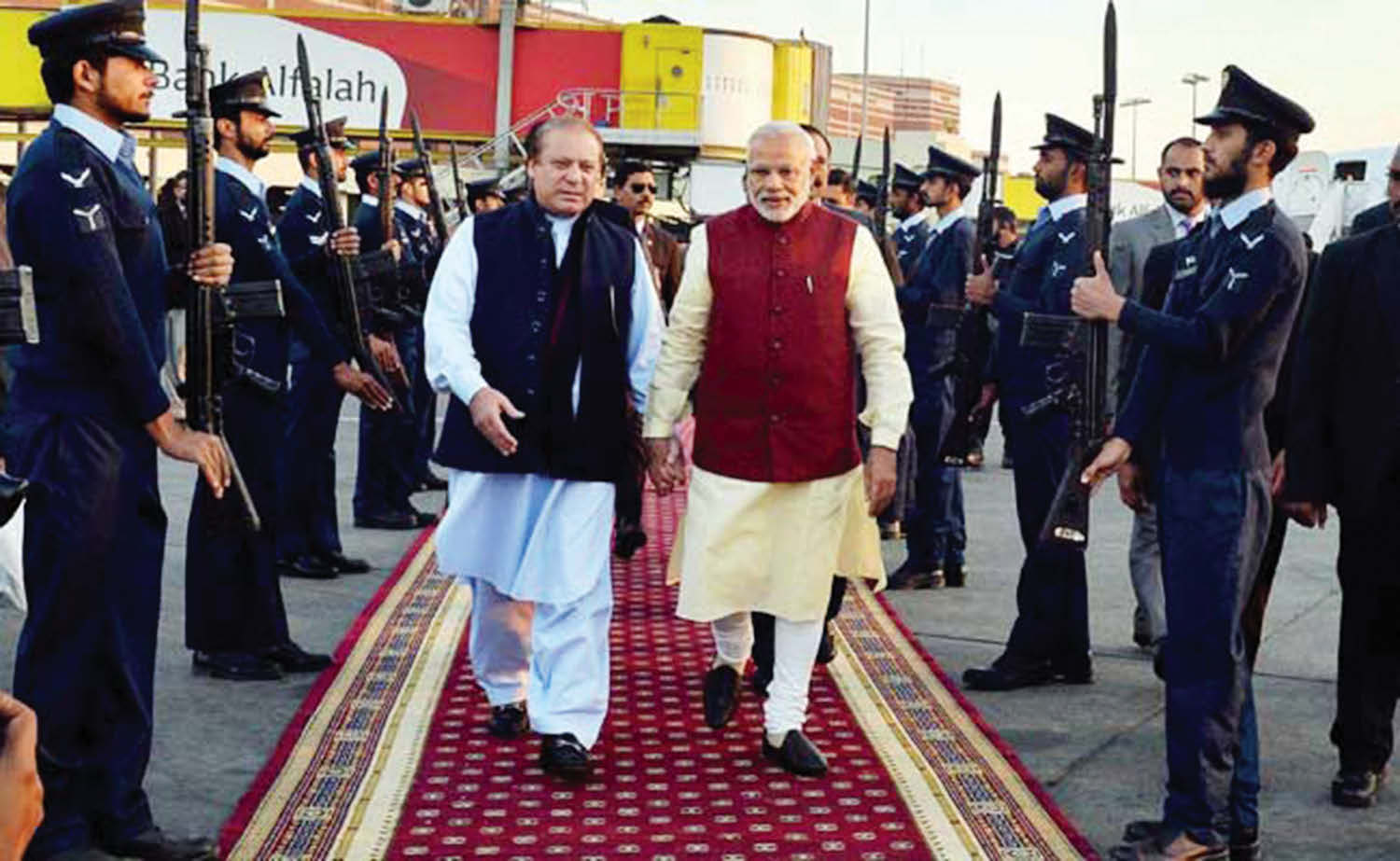
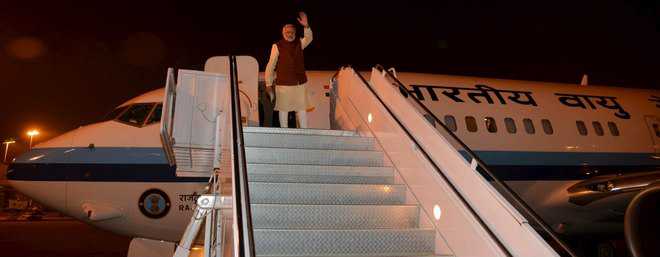
    Prime Minister Narendra Modi’s apparently impromptu visit to Lahore on Christmas day is readily explained by the need to contain the Taliban and ensure regional stability and connectivity in the ‘Heart of Asia’ after the US-led International Security Assistance Force withdraws next year. The visit follows growing realization in capitals across the region that mutual security interests must supersede Cold War alliances or ideological mindsets to avoid the fate of nations like Iraq and Syria. The Taliban and/or its mutants cannot be permitted to spread in the Afghan neighborhood, which includes Central Asia, Iran, Pakistan and India, an effort that calls for convergence between Kabul, Islamabad and New Delhi. One can discern the benign presence of Moscow and Beijing as both have huge stakes in a revitalized Asian economic boom independent of Western hegemony.

    Besides China’s Silk Road project, several multi-nation projects centre on Afghanistan, viz, the Turkmen railways, transmission lines, highways, oil pipelines and gas pipelines including the Turkmenistan-Afghanistan-Pakistan-India pipeline. India wants to join the Afghanistan-Pakistan trade and transit agreement so that Afghan products can directly enter India and its products reach Afghan and Central Asian markets.

    These mega-development prospects doubtless prompted Mr. Modi to engage with Pakistani Prime Minister Nawaz Sharif on the sidelines of the Paris climate conference in late November. Thereafter the National Security Advisors met in Bangkok and smoothened the way for External Affairs Minister Sushma Swaraj’s visit to Islamabad for the Heart of Asia-Istanbul Process conference on Afghanistan. India has huge stakes in the integration of Central Asia, East Asia and West Asia.Though not opposed, India does not expect a lasting peace to emerge from talks between the Afghan Government and Afghan Taliban groups. A better option is state-level engagement which Kabul too prefers. Hence, it is inconceivable that as he went through his Kabul engagements – inaugurating the India-built $90 million Parliament House, gifting three Mi-25 attack helicopters and 500 new scholarships for children of martyrs of Afghan security forces -Mr. Modi would not have discussed the Lahore stopover with President Ashraf Ghani and CEO Abdullah Abdullah. It seems equally likely he mentioned it to Russian President Vladimir Putin before departing from Moscow. It may be relevant to note that since Russia began bombing IS positions in Syria, Pakistan does not favor regime change in Damascus.

    Pakistan Tehreek-e-Insaaf party leader Imran Khan’s presence in India (possibly to deliver the Sharif family wedding invitation) and the mature welcome to Mr. Modi’s stopover by Pakistan political parties (as opposed to the Congress’s petty squabbling) suggests that the Pakistani polity may have achieved some degree of cohesion in tackling terrorism. The Peshawar school attack last year is a grim warning of the danger from non-state actors.

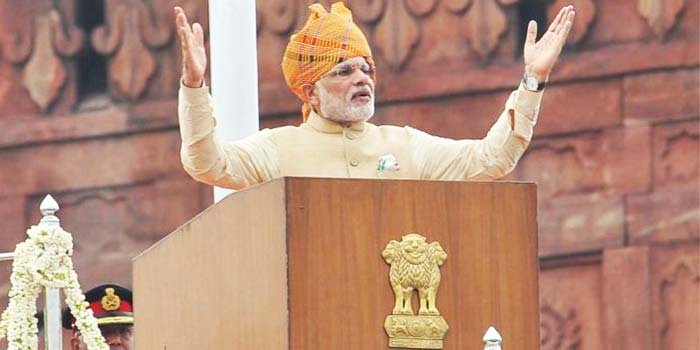
    Mr. Modi’s first state visit to Russia, as part of the 16th Annual Bilateral Summit, has revitalized India’s most tried and trusted friendship and sent a signal to the international community that President Putin cannot be downsized by Western machinations. Mr. Modi secured Mr. Putin’s backing for India’s permanent membership of the UN Security Council and reiterated the commitment of both nations to a multipolar world order. Both nations already cooperate in forums like Brics and the Shanghai Cooperation Organisation (where Russia helped in India’s full membership), the G20 and the East Asia Summit.

    Syria, Afghanistan and the common threat posed by terrorism figured in the talks, but the summit’s main takeaway was Russia’s big bang return to India’s defense and nuclear energy sectors. Mr. Modi’s Make in India project in the defense sector got a major boost with the deal to jointly manufacture 200 Kamov-226T light military helicopters.

    The real triumph is the acquisition of five S- 400 Triumf surface-to-air missile systems (and 6,000 missiles). Literally the ‘crown jewels’ of Russia’s defense capability, the S-400 can destroy aircraft that use stealth technology, other fighter aircraft, cruise missiles and tactical missiles from up to 400 kilometers away, as effectively demonstrated earlier this month when Russia deployed the system to protect its Hmeimim airbase in Syria after Turkey downed a Russian jet.

    This will give India the ability to engage multiple targets at long range and restore the strategic balance with China and Pakistan. With Prime Minister Modi reportedly budgeting $150 billion to upgrade India’s military, with the Navy planning to order three Russian frigate warships and a possible joint development of a fifth generation fighter aircraft, New Delhi could be Moscow’s salvation as the latter faces a second year of recession amid Western sanctions.

    With the Paris climate conference failing to yield a comprehensive deal, the burden of combating global warming with clean energy expectedly fell upon individual nations. Mr. Modi having previously identified nuclear energy as pollution-free, the two nations are moving ahead with plans to build at least 12 nuclear power plants in India with the highest safety standards in the world, over the next 20 years. Two plants are slated to come up in Andhra Pradesh under the Make in India program. A vibrant partnership, however, calls for deeper economic integration. The Indian Prime Minister hopes to take advantage of the US-led Western sanctions against Russia to meet the latter’s demand for dairy products, seafood, and other goods and to attract Russian cash-rich billionaires to invest in India’s infrastructure fund, since they are no longer welcome in the old European financial havens due to Mr. Putin’s resistance to Western geo-political agendas to dismember West Asian and African countries on the lines of the old Yugoslavia.

    Access to Russian capital for his Make in India campaign would empower Mr. Modi’s drive to build a strong indigenous manufacturing base to generate employment and export revenues. Given the sharp downturn in Russo-Turkey relations, Mr. Modi hopes that Russian tourists will flock to India (not just in Goa) and tasked the tiny Indian community in Russia to motivate Russian families to discover India.

    Another gain is Russia’s commitment to ship 10 million ton of oil annually to energy-starved India in the next 10 years. Both countries plan to intensity collaboration in developing space exploration, rocket manufacture and engine manufacture, nano-technology, metallurgy, optics and software sectors. In substance, the visit announced that the Asian quest to forge a rational world order has moved to a new level. Mr. Modi’s short and informal visits to Afghanistan and Pakistan may be read as an invitation to take a seat of honor at the evolving new world concert.

    (The author is a social development consultant and a columnist with The Pioneer, a leading newspaper of Delhi).

  • What does it mean to be young in today’s India?

    What does it mean to be young in today’s India?

    The debate on youth power seemed to veer around the familiar terrains of older conservatism versus newer irresponsibilities, the idealism then, waywardness now, a laidback world then, a rapidly aspirational generation fuelled by ever-changing technology now. There was this person born in 1945, educated in the elite Doon School and St Stephen’s College and represented India in three successive World Squash Championship tournaments. Right then a chance exposure trip to rural Bihar made him give up his promising career at the expense of being not spoken to by the near and dear ones. Instead, he chose to settle in back of beyond rural belt in Rajasthan to use his favorite term, “unlearn and then re-learn”. A journey where, for three years he learnt to go down inside deep mines to blast rocks in search of water. At the age of 27, he had established a centre to explore meaningful ways in which, the rural poor could find their feet to lead their own lives. The centre, today, is known as Barefoot College. It has trained over 3 million people in diverse set of skills (according to Wikipedia) and the person is Bunker Roy, once described by Time in 2010, to be among the 100 most-influential people in the world.

    And then there was another person, born in 1959 in rather humble circumstances near Meerut, brought up on muffasil education, albeit exposed to a bit of Gandhian practices early in life, trained as a traditional ayurvedic vaidya, to be settled for life on a government job in small places. He too decided to give it all up at the age of 26, took a bus to Rajasthan (a mere coincidence!) till where the bus went and began his life afresh. In search of meaning, he met a local villager, who initiated this ayurvedic vaidya’s process of “unlearning and re-learning”, by orienting him towards traditional water-conservation techniques in the parched lands of Rajasthan. The person today is known as Rajendra Singh, The Water Man of India, having brought water to over 1,000 villages and reviving five rivers, for which he was recently awarded Stockholm Prize, also called the Nobel Prize for Water, in 2015.

    Two entirely different personalities, born and brought up in very different circumstances and yet displaying uncanny similarities in their career trajectories! We were listening to these inspiring people last week during a team workshop and wondering what it means to be young today, as 2015 draws to a close. The debate seemed to veer around the familiar terrains of older conservatism versus newer irresponsibilities. India is poised to become the World’s Youngest Nation by 2020, having more than 50 per cent of its population under the age of 35. There has been an occasional outburst in mainstream media about how to harness this so-called demographic dividend for the country’s economic growth. There has been a lament about the continuing “brain-drain” with an occasional voice to the contrary. There have been statistics bandied about new

    universities being opened up to cater to the new aspirations; public conversations on the role of the new angry youth behind the recent Arab Spring and Occupy Wall Street and the Support Nirbhaya or anti-corruption marches nearer home. In the meanwhile, the larger not-so-hidden narrative about the youth being the new consumer base of India’s growth story continues. In short, youth is the producer of growth and also its consumer; the radical of the present and also its rightwing troll; the liberator of India’s shackled aspirations but also the flagbearer of the wayward unsustainable consumption.

    But taking a cue from the above-mentioned two stalwarts, nobody seems to enquire further as to what actually drove these people to take risks, to be humble enough to start afresh amidst all the cacophony of established career paths. And there aren’t just these two; there are hundreds and thousands of such examples amidst us. Interestingly, the debate was further accentuated by representatives of Pravah, a Delhi- based organization working with youth. They passionately argued for a space where youth shouldn’t be treated with the usual lenses of cynicism or utilitarianism, use-and-throw mindset. Instead, they should be allowed to explore their own options, in which they find meanings to their own lives, just the way Bunker Roy or Rajendra Singh did.

    The need therefore, is not to cajole them or to guide them. The need, simply is, to create such safe spaces where they could experiment, unlearn, re-learn in order to find themselves. If, in the process, they become Bunkers and Rajendras of this age, well and good; if not, they will at least have the satisfaction of making their own life choices.

    (The author works for Delhi-based WaterAid India, a not-for-profit organization)
  • The on-off ties with the US

    The on-off ties with the US

    Travelling from east to west in the US, from the Atlantic to the Pacific, gave one an occasion to see the world’s sole superpower totally preoccupied in dealing with the aftermath of a terrorist strike. This terrorist attack, in which 14 innocent people were gunned down in the small town of San Bernardino in southern California, was executed by an immigrant couple of Pakistani origin. The uproar and outrage that followed, led to strident calls for ending immigration of Muslims, who are facing personal attacks, insults and desecration of their places of worship across the country. It is ironic that in the recent past, the US has been pontificating on the need for “tolerance” in India.

    modi obamaOne consequence of these developments has been the admiration in important sections of the American Establishment at how India, with an estimated Muslim population of 180 million, has maintained communal peace and harmony. It has been noted, that unlike in the US and Europe, few, if any, Indian Muslims have shown interest in joining the ranks of global terrorist organisations like the Al-Qaeda earlier, or the IS now. While visiting the US recently, Defence Minister Manohar Parrikar asserted that India is confident that its Muslim citizens will not be radicalised. Meetings with well-connected US friends in Washington and New York revealed a marked improvement in the climate of relations and widespread bipartisan support for India in the US Congress. The India-US relationship is, however, viewed by the Obama Administration in predominantly transactional terms. There is little empathy, or understanding, for India’s policies and concerns in its western neighbourhood, ranging from Pakistan and Afghanistan, across the Mediterranean, to Turkey. There are also questions about the reliability of the US to abide by commitments made on India’s “Act East” policies.

    Whether in New York, Washington or California, one could not help noting the widespread feeling that Prime Minister Narendra Modi has introduced qualitatively new dimensions in reinvigorating the US-India relationship. This was especially evident in the growing confidence about India in large sections of the business, industrial and high-tech establishments. The target of expanding the levels of bilateral trade in goods and services from $100 billion annually to $500 billion is no longer regarded as a pipe dream. There is confidence that India will continue on the path of perhaps being the fastest growing economy in the world in the years ahead. American business is, for the first time, seriously taking note of Indian determination to emerge as a strong industrial power by enhancing its manufacturing capabilities. American industries, in areas ranging from aerospace to motorcars, are now showing increasing confidence in India’s emergence as a significant industrial partner.

    It is fortuitous that after an era when the Pentagon showed little interest in understanding India’s defence needs and strategic compulsions, the present Defence Secretary, Ashton Carter, recognises that India cannot be treated like Pakistan or Turkey. New Delhi has well-established defence partnerships with major arms suppliers like Russia, Israel, France, Germany and the UK. Japan has now joined this list of strategic partners. It is in this background, that readiness is now being shown by the US arms industry and the Pentagon to expand areas of cooperation into fields like aero-engines for multi-role combat aircraft, aircraft carriers, artillery and attack helicopters. This development has to be assiduously utilised to leverage our relations with other partners like Russia, where we have been experiencing problems of escalating prices and poor serviceability of critical weapons systems.

    These developments do not mean that relations with the US are free of problems. In our immediate western neighbourhood, we are seeing the emergence of a tripartite US-China-Pakistan partnership to promote reconciliation with the Taliban, in a process from which India has been deliberately excluded. A return of the Taliban to the corridors of power in Afghanistan will have serious consequences for India’s security, given the Taliban’s past record and close ties with anti-Indian groups like the Jaish-e-Mohammed and the Lashkar-e-Taiba. In deference to Pakistani exhortations, the US has left the Afghan armed forces ill-equipped to face the Taliban-ISI challenge to the country’s sovereignty. While India is providing three attack helicopters, it needs to do far more to strengthen Afghan capabilities in areas like artillery, armoured vehicles and aircraft. Proactive diplomacy with Russia, its Central Asian partners neighbouring Afghanistan and Iran is required to achieve this.

    The US shows little interest in a meaningful dialogue with India on developments in West Asia, evidently because of its traditional policy of looking at this region through a Pakistani prism. Washington needs to be reminded that India has crucial interests in this region, where six million Indians live, remitting back around $50 billion annually. India, which is a major importer of oil and gas, is one of the few countries which enjoys cordial relations with all three major regional powers – Saudi Arabia, Iran and Israel. India can play a useful role in encouraging de-escalation of regional tensions. Moreover, unlike its western neighbours, India is not afflicted by Shia-Sunni tensions.

    There are indications that even in India’s eastern neighbourhood, President Obama is backtracking on promises he made on India’s quest for greater integration with institutions across the Indo-Pacific Region. This includes Mr Obama’s written commitment to back India’s membership of APEC. Trade lobbies in the US are now linking APEC membership for India to New Delhi diluting its stand on a host of issues, ranging from Intellectual Property Rights to trade liberalisation. It is being pointed out that Indian policies do not permit it to get membership of the American-led Trans-Pacific Partnership – a free trade area in which all major trading partners across India’s eastern shores, except perhaps for the present China, are set to join. This could lead to a loss of about $50 billion in India’s exports, including crucial areas like textiles. While President Obama is determined to push through legislation approving the setting up of the Trans-Pacific Partnership, he has just over a year left in office. This is a period India should utilise to determine how it would deal with the incoming Administration. India is now well positioned to have a business-like relationship with anyone who comes to power, be it Hillary Clinton, or even the mercurial Donald Trump!

    (A former diplomat the author is Visiting Professor at the Centre for Policy Research, New Delhi, and a Senior Fellow at the Centre for Strategic and International Studies in New Delhi)

  • Cost of Piracy

    Cost of Piracy

    An Indian firm will pay a fairly hefty restitution to the state of California for using pirated software. This unauthorized use, according to the state’s Attorney General, Kamala Harris, gave the company unfair advantage and also constituted theft of intellectual property. Pratibha Syntex Ltd, an apparel manufacturer, will pay $1 lakh in restitution, clean up its act, put into place proper policies to stop such practice in the future, and conduct regular audits to ensure that this is done.

    The US has again demonstrated the long reach of its law, and the figure of $22 billion is being cited as estimated loss in revenue to California manufacturers due to global companies using pirated American software. The use of pirated software is practically ubiquitous and different studies come up with varying figures, but it is generally agreed that the US is the largest paying consumer of software with a low piracy rate of 17 per cent. Emerging economies like Venezuela, Indonesia, China and India indulge in the rampant use of pirated software.

    While propriety software will always be necessary, and should always be paid for, there are now many options that allow open-source software or ‘shareware’ to be used. Some such software is of very high quality and is given free, Google’s Android systems being one example. Individuals and companies can thus, with some effort, find free or reasonable substitutes for almost all kinds of software in common use, and thereby benefit from it without infringing the law. There is also evidence of a change in attitude.

    The emerging idea of software as a service available on shared ‘cloud’ servers, rather than as a product, makes it available at a less daunting price. But that requires robust Internet services, which may not be readily accessible in many parts of the world. It is in the interest of software vendors to price their products fairly and to make them approachable in emerging markets, just as it is in the interest of users to eschew pirated software, as the latest case has demonstrated.

  • PM Narendra Modi Surprises All: Makes Pit Stop at Lahore

    PM Narendra Modi Surprises All: Makes Pit Stop at Lahore

    NEW DELHI (TIP): The news of Indian Prime Minister Narendra Modi’s surprise stopover in Pakistan on Friday, December 25, took everyone by surprise. A move that is seen to have reset the relationship between the two nuclear-armed neighbors, paving the way for official dialogue to resume next month.

    In a tweet that instantly sparked frenzy, Modi announced he will “drop by” in Lahore on his way back to New Delhi from Afghanistan making him the first Indian Prime Minister to set foot in Pakistan in 11 years. The last time an Indian prime minister had visited Pakistan was in 2004. Sharif, however, came to India last year to attend Modi’s swearing-in ceremony.)

    “Looking forward to meeting PM Nawaz Sharif in Lahore today afternoon, where I will drop by on my way back to Delhi,” the Indian premier said on Twitter.

    Following this announcement, Indian Minister for External Affairs Sushma Swaraj appreciated the Indian premier’s decision to stop by in Pakistan on his way to India, saying
    “That’s like a statesman. These are the kind of relations we should have with our neighbors,” she tweeted.

    Narendra Modi chose  the birthday of Pakistan’s founder Mohammad Ali Jinnah to make his maiden visit to Pakistan -speaks of symbolism.

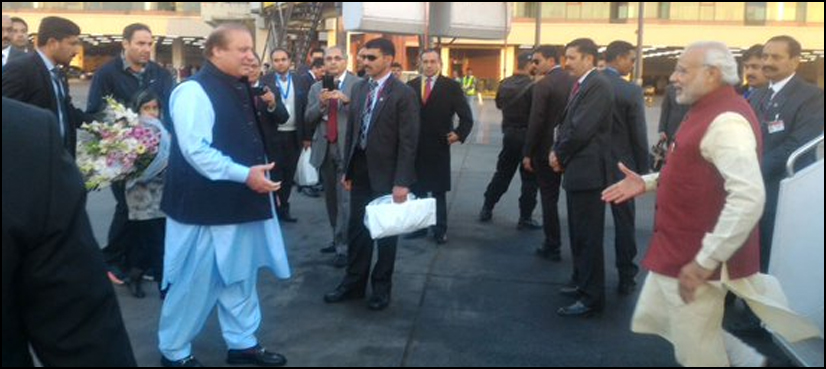
    He hugged PM Sharif as soon as he landed in Lahore.

    The two leaders met for a little less than two hours at Sharif’s festively lit ancestral home in Lahore, where they talked about improving ties.

    “Beyond the noise, a personal connect. The Prime Ministers discuss India Pakistan relations,” tweeted Vikas Swarup, a spokesman for India’s Ministry of External Affairs. He added that Modi met Sharif at his home as “a special gesture” and blessed the latter’s granddaughter ahead of her wedding.

    NDTV 24×7 news TV channel called it “Modi’s masterstroke.” In Pakistan, the phrase “birthday diplomacy” trended.

    A statement from Pakistan’s Ministry of Foreign Affairs said the leaders “expressed their desire to carry forward the dialogue process for the larger good of the people of the two countries.”

    Pakistani security analyst Rifaat Hussain said the symbolism of the visit is “huge.” He added that the meeting is likely to have been preceded by some “behind the door” preparation.

    Bharatiya Janata Party’s Nalin Kohli told media “It was a spontaneous but bold and innovative decision to visit Pakistan.”  “The India-Pakistan story has many difficult issues lingering for decades. It is not an easy path ahead. But the two leaders are trying to establish a personal equation that can add momentum to the structured process of official talks in the future,” he added.

    The two leaders last met during the climate change conference in Paris in November, chatting briefly.

    Analysts said the prospect of the December 25 meeting was probably kept hidden until the last minute to prevent the irrational expectations and acrimony that often accompany any such diplomatic move.

    (Also read Finding a Niche in the Emerging World Order by Sandhya Jain in Opinion)

  • Apple ‘to pay $348m’ to settle Italy tax fraud case

    Apple ‘to pay $348m’ to settle Italy tax fraud case

    NEWYORK (TIP): Apple’s Italian subsidiary has agreed to pay $348m after the US tech giant was investigated for suspected fraud, the country’s tax agency said Tuesday, December 29.

    The settlement follows an investigation by prosecutors in Milan.

    The company’s Italian subsidiary and several of its senior executives had been under investigation for fraud over its alleged failure to comply with obligations to declare its earnings in Italy between 2008 and 2013, according to La Repubblica.

    The US tech giant has not commented on the deal. It has previously denied attempting to escape paying tax owed on profits made around the world.

    Apple Italia is part of the company’s European operation which is headquartered in Ireland, a country with one of the lowest levels of corporation tax in the EU.

    A spokesman for the tax agency confirmed the newspaper’s report was accurate but would not divulge further details.

    Ireland taxes corporate earnings from normal business activities at a rate of 12.5% compared with 27.5% in Italy.

    Investigators in Italy say they found a huge gap between the company’s revenues in Italy of over 1bn between 2008 and 2013 and the 30m that was paid in tax in the country.

    The settlement comes amid a European Commission investigation into the tax arrangements of numerous multinational companies accused of using cross-border structures to reduce their tax bills, sometimes with the help of secret and potentially illegal “sweetheart” deals.

    Earlier this month, Apple chief Tim Cook described accusations that the world’s richest company was sidestepping US taxes by stashing cash overseas as “political crap” and insisted: “We pay every tax dollar we owe.”

    The settlement of the tax dispute will not halt the criminal investigation into the conduct of three Apple Italia executives but will likely reduce the severity of any sanctions they may face, La Repubblica said.

    Apple’s activities in Ireland are currently under investigation by the European Commission, which is due to announce soon whether tax breaks designed to secure the company’s extensive investment in Ireland amounted to illegal state aid.

    In the United States, Apple has come under fire in Congress for not declaring overseas earnings to the US tax authorities.

    Cook has defended this as perfectly legal and sensible given that the company would be liable for 40% taxation if it repatriated all its earnings to the United States.

    “We have a tax code made for the Industrial Age, not the Digital Age,” he complained in November.

  • Police investigate Sikh Attacked In California as a Hate Crime

    Police investigate Sikh Attacked In California as a Hate Crime

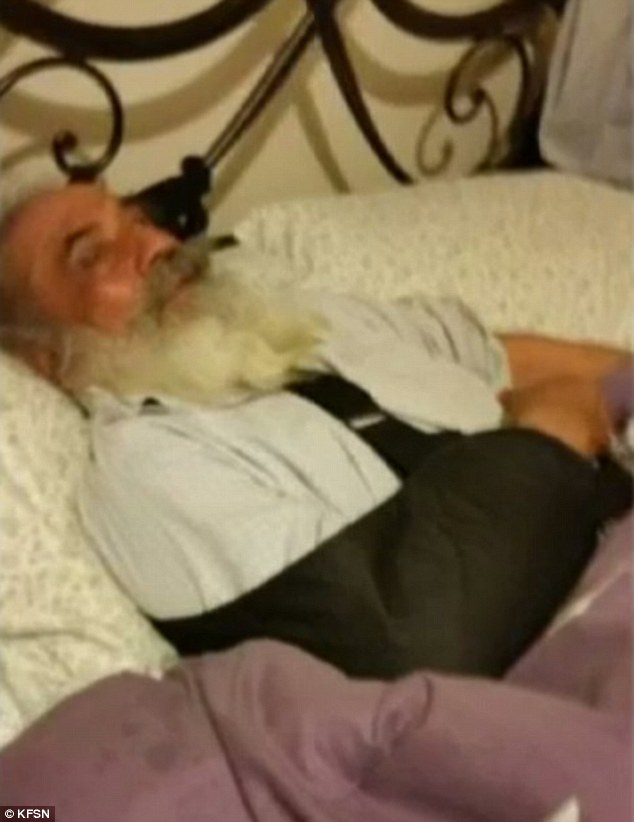
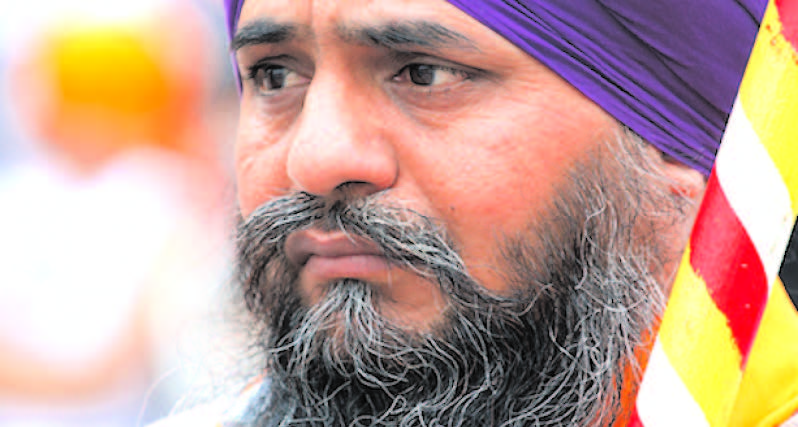
    NEW YORK:  A 68-year-old Sikh man was attacked Saturday, December 26,  morning west of Highway 99 in what Fresno police are investigating as a hate crime – the latest such attack on a Sikh resident in the Fresno area.

    Around 6:30 a.m., Amrik Singh Bal, 68, was waiting alone for a ride to work in the cold, 30-degree fog on Shields Avenue between Brawley and Blythe avenues when he was assaulted by two persons in California.

    Two white males stopped their car in front of Bal and started yelling obscenities at him, said Fresno police Sgt. Greg Noll. Fearing for his safety, Bal attempted to cross the street. It was then that the suspects backed up their car, hitting Bal with their back bumper, Noll said.

    The two men then got out of the car and attacked Mr Bal, hitting him in the face and upper body. Mr Bal fell to the ground and hit his head.

    During the assault, one of the suspects yelled “Why are you here?”

    The suspects fled only after they heard another vehicle approaching.

    Mr Bal, who was taken to a local hospital, suffered abrasions to his nose and right hand and a broken collar bone.

    Noll said police have started a hate-related criminal investigation into the attack on Mr Bal adding that the Fresno police would coordinate with the Department of Homeland Security and FBI to solve this case.

    “Sikhs have been mistaken for terrorists and radicals and continue to suffer after 9/11,” member of the Sikh Council of Central California Ike Iqbal Grewal said.

    Rights group The Sikh Coalition said its thoughts and prayers go out to Mr Bal and his family.

    “We are quickly investigating and will share updates when we have them,” it said.

    Racism & Hate Crimes on a rise 

    The attack is the latest in a line of hate crimes against Sikhs in America.

    Earlier this month, a Gurudwara in California was vandalised with hateful graffiti, including the word ‘ISIS’, in the aftermath of the mass shootings in San Bernardino.

    In September, a Sikh American father was viciously assaulted in a suburb outside of Chicago after being called ‘Bin Laden’.

    In May 2013, 82-year-old Piara Singh was attacked outside the Nanaksar Sikh Temple in south Fresno by a man who later allegedly made inflammatory comments about Muslims.

    The alleged assailant, Gilbert Garcia Jr., later pleaded no contest to a hate crime and was sentenced to 13 years in state prison.


  • UK Government ‘recognizes’ anger at Donald Trump comments

    UK Government ‘recognizes’ anger at Donald Trump comments

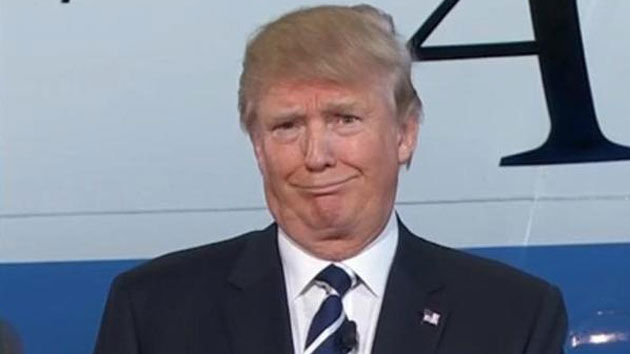
    The government has responded to a petition calling for presidential hopeful Donald Trump to be banned from the UK after he proposed a temporary halt on Muslims entering the US.

    More than 500,000 people have signed the parliamentary e-petition.

    In response, the government said it recognized the strength of feeling against Mr Trump’s comments, the cross-party Commons petitions committee is due to meet next week to decide whether to hold a parliamentary debate on the petition to ban Mr Trump.

    Given the number of signatures, there is a presumption it will be debated.

    Ministers previously criticized his remarks but disagreed with banning him.

    Any petition with more than 10,000 signatures on the parliament website gets a government response, and if one gets more than 100,000 signatures it is automatically considered for debate in Parliament.

    In its response, the government said it did not comment on individual immigration and exclusion decisions.

    “The home secretary may exclude a non-European Economic Area national from the UK if she considers their presence in the UK to be non-conducive to the public good,” it said, adding that Theresa May had said coming to the UK was “a privilege and not a right”.

    “Exclusion powers are very serious and are not used lightly” and would only be used “based on all available evidence”, it said, adding: “The government recognizes the strength of feeling against the remarks and will continue to speak out against comments which have the potential to divide our communities, regardless of who makes them.

    “We reject any attempts to create division and marginalization amongst those we endeavor to protect.”

    Prime Minister David Cameron has labelled Mr Trump’s comments “stupid” but said he did not support a ban, telling MPs the tycoon would “unite us all against him” if he visited the UK.

  • Saudi Arabia in Recession | Cuts Spending to Shrink Deficit

    Saudi Arabia in Recession | Cuts Spending to Shrink Deficit

    A glut of oil, the demise of OPEC and weakening global demand combined to make 2015 the year of crashing oil prices. The cost of crude fell to levels not seen for 11 years – and the decline may have further to go with Iran’s supplies joining the global supply pool in 2016.

    Pressured by low oil prices and costly wars in the Middle East, Saudi Arabia announced a sharp reduction in its 2016 budget to control a worsening deficit, which is steadily draining the kingdom’s financial reserves.

    The official Saudi news media reported that the Finance Ministry would cut spending, adopt new taxes and reduce price subsidies for fuel, water and power.

    The cost of some grades of domestic gasoline, among the first to be affected, could rise as much as 50 percent, a potentially unsettling spike in a country where mass transit does not exist and cars are a basic necessity.

    The IMF has raised the prospect that Saudi Arabia could go bankrupt in five years without changes to its economic policy, cuts in support to foreign allies seem inevitable.

    In our next issue – How the Oil powers have been affected

    The price of oil, Saudi Arabia’s most important export, has tumbled this year because of reduced global demand and fierce competition by producers — including the Saudis — to keep their share of the market. The market is expected to be increasingly competitive because Iran could soon be free to sell its oil under relaxed international sanctions after Tehran’s nuclear agreement with world powers. In the summer of 2014, oil exceeded $100 a barrel, but it is now trading well below $40.

    The falling price has benefited oil-consuming nations while putting severe financial pressure on exporters like Saudi Arabia, Russia and Venezuela.

    At the same time its revenue has slowed, Saudi Arabia has increased military spending, financing rebels in Syria and intervening in Yemen, where Saudi warplanes have been bombing the insurgent Houthi movement since March.

    The Saudi kingdom has been spending more than it takes in, and by some estimates it could exhaust its foreign exchange reserves, now roughly $640 billion, by 2020 without deep cuts in spending, a big rise in the price of oil, or a combination of both.

    The government ran a record deficit of about 367 billion riyals, or roughly $98 billion, in 2015, according to the Saudi-owned Al Arabiya news channel. Under the 2016 budget, the goal is to reduce the deficit to 326 billion riyals, or about $87 billion.

    The Finance Ministry projected the 2016 budget to be about 840 billion riyals, down from 975 billion riyals this year, Al Arabiya reported.

    Analysts examining the budget said the Saudis were assuming that a barrel of oil would average about $45 in 2016. But some said even that projection was overly optimistic.

  • Sikh Americans are not Muslims, but they still suffer from Islamophobia

    Sikh Americans are not Muslims, but they still suffer from Islamophobia

    Shah Noor, a recent transplant to California from Maryland, was driving through a nearby community one evening with his wife and stopped at a 7-Eleven to get some milk.

    A police car pulled up with lights flashing. Officers walked to their car and grilled them for 45 minutes. They were aggressive, he said, and asked what they were doing there, where they work. At one point, he saw the officer put his hand on his gun.

    “It was scary,” Noor said. “Pure harassment.”

    Police — Noor declined to identify the agency because of an ongoing investigation —cited him for talking on his cell phone while driving. He said the charge is bogus.

    “My phone had been dead for over three hours,” said Noor, 32, a lawyer who now runs JS Noor, a jewelry business. And the log on his wife’s cell phone shows no activity during that time.

    He’s convinced that racial profiling was in play. He wears a turban and has a beard. His wife, Stephanie, is African-American. And all of this happened within days of a mass shooting in San Bernardino carried out by a Muslim couple.

    After every attack on U.S. soil committed by Muslims, the backlash seems to increase. But hate crimes don’t target only Muslims.

    Noor is originally from India and a Sikh, not an Arab or Muslim.

    ‘[Sikhism] preaches a message of devotion, remembrance of God at all times, truthful living, equality between all human beings, social justice, while emphatically denouncing superstitions and blind rituals.’ – Sikh Coalition

    Since 9/11, Islamophobia has spread and has targeted groups indiscriminately. Sikhs, who wear a turban as an article of faith, have often been mistaken for Muslims in the U.S. They pray at a gurdwara, not a mosque, but a gurdwara in Buena Park, Caifornia, was vandalized days after the San Bernardino shooting. Graffiti sprayed on the façade included the misspelled “Islahm” and an expletive directed at the Islamic State of Iraq and the Levant.

    The San Bernardino shooters had apparently been inspired by the group that has been behind horrific violence worldwide, including the Nov. 13 attacks in Paris.

    The 20-year-old man arrested for the vandalism issued a public apology to the congregation of Buena Park Gurdwara Singh Sabha, a Sikh house of worship in Orange County.

    But other assaults have been more violent. On Sept. 15, 2001, four days after the attacks on the World Trade Center towers, Balbir Singh Sodhi was shot and killed outside of his Mesa, Arizona, gas station by Frank Roque. Roque wanted to “kill a Muslim” in retaliation for the attacks on Sept. 11. Sodhi is considered the first murder victim of post-9/11 backlash. Roque was convicted of first-degree murder and sentenced to life in prison for the hate crime.

    The Sikh Coalition was founded by volunteers in 2001 in response to a spate of attacks against Sikh Americans.

    “Sikh adults were assaulted, Sikh children were bullied, places of worship were vandalized,” said Arjun Singh, the coalition’s law and policy director. “Terrorist attacks lead to xenophobia and anyone who looks different is targeted, including Sikhs.”

    The Sikh Coalition reports a spate of attacks and harassment this month alone.

    A Sikh woman traveling to California shortly after the San Bernardino attacks said she had to show her breast pump to airline employees to prove she wasn’t a “terrorist”.

    In Grand Rapids, Michigan, a store clerk originally from the state of Punjab in India was shot during an armed robbery. The assailants called the clerk a terrorist.

    Five days after the San Bernardino attack, Gian Singh, a 78-year-old grandfather, was walking to pick up his grandson from school in Bakersfield, when a man in a pick-up truck threw an apple at him with such force that the apple split when it hit his head, according to the Sikh Coalition, which is representing him.

    ‘Sikh adults were assaulted, Sikh children were bullied, places of worship were vandalized. Terrorist attacks lead to xenophobia and anyone who looks different is targeted, including Sikhs.’ – Arjun Singh, law and policy director, Sikh Coalition

    There have been Sikhs in the U.S. for more than a century. Many came to build the railroads in the West. There is no accurate data on the number of Sikhs here, and estimates vary widely between 750,000 and 1.6 million, according to the coalition. Almost half of them live in California, the state with the largest Sikh population, but the densest concentration of Sikhs is in the tri-state area of New York, Connecticut and New Jersey.

    The Sikh religion is a monotheistic religion that originates in the Punjab region of India. According to the coalition, it “preaches a message of devotion, remembrance of God at all times, truthful living, equality between all human beings, social justice, while emphatically denouncing superstitions and blind rituals.”

    “We were shocked after finding out about the graffiti,” said Jaspreet Singh, 40, on the board of the Buena Park gurdwara that was vandalized. “Especially the hate words being used.”

    For Sikhs who grew up in the U.S., harassment has been a way of life. For Noor, schoolyard teasing was common but never did he feel so much hatred as after 9/11.

    “You feel people don’t like you, like an outsider,” he said. People would call him “Osama” in reference to Osama bin Laden, the founder of Al-Qaeda, the group that claimed responsibility for the 9/11 attacks. They also called him “Taliban,” the armed fundamentalist movement in Afghanistan.

    “Sometimes, I would walk up to [the hecklers] and yell back, ‘I’m not a terrorist,’” Noor said.

    One time, someone pulled a knife on him in Wheaton, Maryland, a suburb of Washington. Another time, in Amsterdam, people in a car yelled out “bin Laden” at him, he said. When he yelled back, they followed him up an alley. He escaped.

    And there was another encounter with police in a Detroit suburb. He had a bracelet in his hand that he was playing with. Police mistook it for a masbaha, Muslim prayer beads. He showed them that it had a cross on it.

    “I wear religious symbols of all kinds,” Noor said. “I go to church, to gurdwara, to mosque.”

    He has attended service at a Baptist congregation, his wife’s religion.

    His cousin, Jaisal Noor, 30, a reporter for The Real News Network, a nonprofit news and documentary service based in Baltimore, wrote about assaults on Sikhs for the 10th anniversary of 9/11.

    “The day of 9/11, I was confronted with the reality that things changed,” he said in an interview.

    He was in high school when the World Trade Center towers collapsed.

    “I remember that day feeling worried for my family, my parents,” he said. His father was a frequent business traveler who encountered a lot of discrimination at airports.

    His classmates would rant, “We’re gonna get these A-rabs” but then would turn to him and tell him they had no problem with him because he was Indian.

    “But it’s never gone away,” said Jaisal Noor. “Whenever we’re at war, the attacks increase … They see images of turban-wearing men as the enemies.”

    Sikhs say their first reaction may be to distance themselves from Muslims and explain to people that they are not Arabs or Muslim. But they stress that no one, Sikh or Muslim or any other religious or ethnic minority, should be targeted.

    “Many Sikhs are worried, and rightly so,” said Arjun Singh. “If the bigoted rhetoric continues, hate violence will continue too … Today’s toxic political climate has led to bias, discrimination and hate violence.”

  • Do Muslims and Christians worship the same god? College suspends professor who said yes.

    Do Muslims and Christians worship the same god? College suspends professor who said yes.

    Wheaton College, a prominent evangelical school in Illinois, has placed a professor on administrative leave after she posted on Facebook that Muslims and Christians “worship the same God.”

    The official school statement about associate professor of political science Larycia Hawkins’s suspension said Wheaton professors should “engage in and speak about public issues in ways that faithfully represent the College’s evangelical Statement of Faith.”

    Following a protest and sit-in of about 100 people on campus, President Philip Ryken and later Provost Stanton Jones said they would not be lifting the suspension. It wasn’t clear how long Hawkins was suspended for, but some of the student leaders who had been involved in talks with administrators said it was through the spring semester.

    The school’s communications office on Dec 16 declined to comment to The Washington Post.

    Protesters chanted “Reinstate Doc Hawk,” “We love Wheaton!” and some evangelical women wore hijabs in solidarity.

    In her Dec. 10 Facebook post, Hawkins was also wearing a hijab, explaining she planned to do so through the entire Christian season of Advent to show “human solidarity” with Muslims. She didn’t state why in her piece and did not return requests for comment to The Post, but this fall has seen anti-Islam rhetoric rise sharply in the public square, including by GOP presidential candidates. Hundreds of people liked her post and more praised her intensely in comments.

    “I stand in human solidarity with my Muslim neighbor because we are formed of the same primordial clay, descendants of the same cradle of humankind,” she wrote. “I stand in religious solidarity with Muslims because they, like me, a Christian, are people of the book … But as I tell my students, theoretical solidarity is not solidarity at all. Thus, beginning tonight, my solidarity has become embodied solidarity.”

    She linked to a Christianity Today interview with Yale theologian Miroslav Volf on the topic. In the piece, Volf said that “all Christians don’t worship the same God, and all Muslims don’t worship the same God. But I think that Muslims and Christians who embrace the normative traditions of their faith refer to the same object, to the same Being, when they pray, when they worship, when they talk about God. The reference is the same. The description of God is partly different.”

    About 40 students had drafted a letter asking Ryken to reconsider the suspension.

    The letter quotes a coalition of concerned students and alumni. “We believe that there is nothing in Larycia Hawkins’ public statements that goes against the belief in the power of God, Christ, or the Holy Spirit that the Statement of Faith deems as a necessary component to Wheaton’s affiliation,” it reads. It had asked that she be reinstated.

    Hawkins, according to students at the meeting, is the only tenured black female professor at Wheaton.

    A Wheaton staff member who spoke on the condition of anonymity said the suspension “sets a precedent for what professors can post on their Facebook page. If Dr. Hawkins is being used as a scapegoat, that will send a message to those of us who are employed full time.”

    The suspension took place less than a week after Wheaton College student leaders published an open letter in their student newspaper denouncing recent controversial comments by Liberty University President Jerry Falwell. Speaking to thousands of students about terrorism, Falwell urged them to arm themselves, saying it would “end … those Muslims.” He later said he meant only violent radicals.

    The Wheaton administration later issued a statement praising that open letter, saying school leaders agree with students’ effort to “address our nation’s challenges through respecting the dignity of all people, rejecting religious discrimination, and pursuing the peace that triumphs over hostility.”

    Screen Shot 2015-12-30 at 4.12.01 PM


  • ISIL members linked to Paris attacks killed in US raids, says Pentagon

    ISIL members linked to Paris attacks killed in US raids, says Pentagon

    U.S. led airstrikes in Syria and Iraq have killed 10 high-ranking ISIL members over the last month, including a fighter with “direct” links to the alleged mastermind of the Paris attacks, the Pentagon said Tuesday, Dec. 29.

    Army Col. Steve Warren, a spokesman for the U.S.-led coalition’s military operation against the Islamic State in Iraq and the Levant, said those killed in the raids included “several external attack planners.” Some were linked to the assaults in Paris that killed 130 people in November, and others “had designs on further attacking the West,” he said.

    He said one of those killed was Abdul Qader Hakim, who facilitated ISIL’s external operations and had links to the Paris attack network. He was killed in the northern Iraqi city of Mosul on Dec. 26.

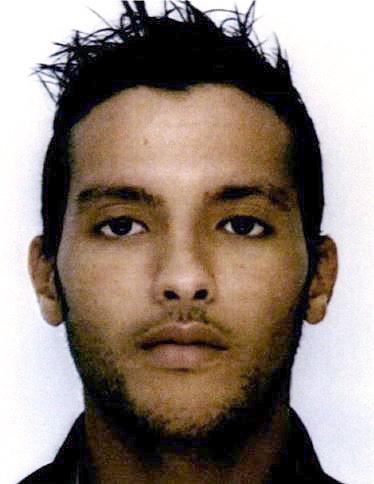
    A coalition airstrike on Dec. 24 in Syria killed Charaffe al-Mouadan, a Syrian-based ISIL member with a direct link to Abdelhamid Abaaoud, the suspected ringleader of the coordinated bombings and shootings in Paris. Mouadan was planning further attacks against the West, Warren said.

    The US military says such strikes are helping to weaken the jihadist group, which captured large parts of Iraq and Syria last year but has recently seen significant setbacks including this week’s loss of Ramadi in Iraq.

    “Part of those successes is attributable to the fact that the organization is losing its leadership,” Warren said.

    He warned, however, “It’s still got fangs.”

    A French source, speaking on condition of anonymity, told AFP there was no immediate evidence showing Mouadan was involved in the Paris attacks.

    But the official said Mouadan had been close to Samy Amimour, one of the suicide bombers who attacked the Bataclan music venue.


  • In Conversation with Ambassador Asoke K Mukerji

    In Conversation with Ambassador Asoke K Mukerji

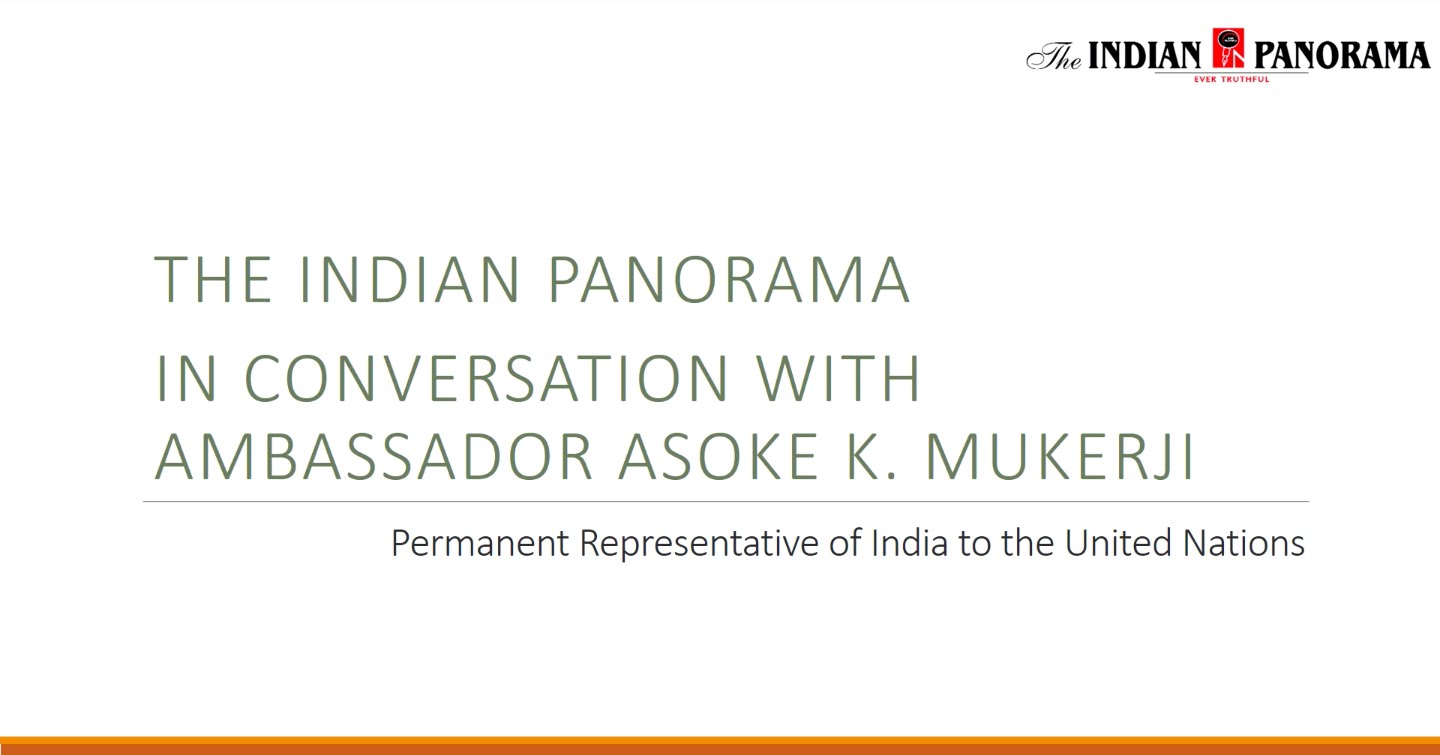
    New York: The Indian Panorama’s Publisher & Editor Prof. Indrajit S Saluja in conversation with Ambassador Asoke K. Mukerji – Permanent Representative of India to the United Nations – December 2015


  • ‘Start up India, stand up India’ mission launching in Jan 2015, PM Modi

    ‘Start up India, stand up India’ mission launching in Jan 2015, PM Modi

    New Delhi: Seeking to boost entrepreneurship at the grassroots level, the Action Plan of the ‘Start-up India, Stand-up India’ will be unveiled on January 16 said Prime Minister Narendra Modi through his last radio address for 2015. He urged the states to help spread this campaign across the country’s nook and corner.

    He also spoke about how the direct benefit transfer scheme is helping people.

    “On 15 August, in my speech I had announced the scheme of ‘start up India, stand up India’. The world doesn’t grow without innovation and opportunity for the youth. The government is going to launch the complete action plan and details on 16 January for the mission,” Modi said. As in all other editions of his Mann ki Baat programme, he spoke in Hindi. (Modi had made the announcement about the campaign in his last Independence Day address)

    “We have to make changes according to the need of the country. There is talent across the country but they need the opportunity. ‘Start up India stand up India’ should be spread across the country and I need the help of states for this,” he added.

    Institutions including the Indian Institutes for Technology, Indian Institutes of Management and central universities will be connected live through this scheme.

    Talking of the advantages of direct benefit transfer, Modi said, “Subsidy is reaching people directly under the world’s largest direct benefit transfer scheme. I feel proud to inform you that this scheme has been given a place in the Guinness book of records.”

    He added, “under different schemes around Rs.40,000 crore has been transferred directly to beneficiary bank accounts. This will be extended.”

    The Prime Minister also invited suggestions for how the message of the Constitution can be spread. On the 125th birth anniversary of B R Ambedkar, the father of the Indian Constitution, the parliament held a-two day discussion on the Constitution.


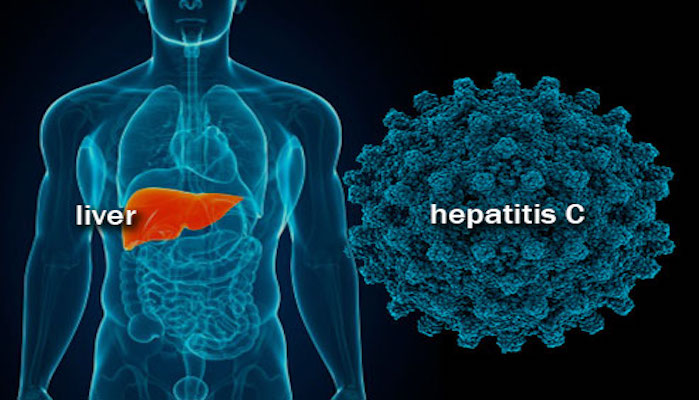
  • Hepatitis-C drug Launched in India by Biocon

    Hepatitis-C drug Launched in India by Biocon

    Hyderabad: Biocon Ltd, India’s largest biotechnology company, on Thursday, December 24, said it has launched the generic version of US-based Gilead Sciences Inc.’s hepatitis-C drug Harvoni in the Indian market.

    Harvoni, the fixed-dose combination of ledipasvir-sofosbuvir of 90mg and 400mg, respectively, is an improved version of Gilead’s hepatitis-C drug Sovaldi or sofosbuvir.

    Biocon will sell generic Harvoni under brand name CIMIVIR-L.

    The Drugs Controller General of India (DCGI) recently approved the sale of the sofosbuvir-ledipasvir combination, which is being manufactured in India under a license from Gilead.

    Harvoni, approved by the US Food and Drug Administration (USFDA) for the treatment of chronic hepatitis-C genotype-1 infection, was shown to have high cure rates of around 90%.

    The cost of a 12-week course of this Harvoni therapy in the US is $94,500 or Rs.63 lakh.

    Biocon didn’t disclose the price, but said it will make CIMIVIR-L at the fraction of Harvoni’s cost in the US.

    Biocon entered into a non-exclusive licensing agreement with Gilead Sciences early this year to manufacture and market chronic hepatitis-C medicines, including Sovaldi and Harvoni, for India and 91 other developing countries by paying 7% royalty on sales.

    Gilead also signed similar non-licensing agreements with 10 other large generic drug makers—including Natco Pharma Ltd, Hetero Drugs Ltd, Cadila Healthcare Ltd, Cipla Ltd, Mylan Laboratories Ltd, Ranbaxy Laboratories Ltd (now owned by Sun Pharmaceutical Industries Ltd), Sequent Scientific Ltd and Strides Arcolab Ltd––to sell cheaper versions of Solvadi and Harvoni in 91 developing countries having an average per capita income of less than $1,900 that account for about 54% of those with hepatitis-C.

    CIMIVIR-L, a once-a-day oral therapy, will offer a convenient, effective and safe alternative to people infected with the Hepatitis-C virus (HCV), the company said.

    It is estimated that nearly 100,000 people die annually in India from HCV infection and co-morbidities. Around 25% of 18 million HCV patients in India are indicated for hepatitis-C genotype 1.

    “The introduction of CIMIVIR-L will strengthen Biocon’s current portfolio of virology products. It furthers our commitment to offer affordable therapy for unmet patient needs in debilitating and life-threatening conditions,” said Ravi Limaye, president, marketing, Biocon.

    Hepatitis-C is a viral disease that causes liver inflammation leading to diminished liver function or liver failure. It is referred to as a “silent epidemic” as most people infected with HCV have no symptoms of the disease until liver damage becomes apparent, which may take decades.

    Chronic HCV infection could lead to scarring and poor liver function (cirrhosis) over many years, resulting in complications such as bleeding, jaundice, fluid accumulation in the abdomen, infections and liver cancer.

    Shares of Biocon rose 5.04% and were trading at Rs.506.05 at 10.30am on BSE, while the benchmark Sensex advanced 0.07% at 25,868.02 points.


  • India paid ₹400 crore for Unutilized External Loans

    India paid ₹400 crore for Unutilized External Loans

    India has paid over ₹400 crore in the last four years as commitment charges to the Asian Development Bank, Japan, Germany and the International Bank for Reconstruction and Development (IBRD) for unutilised external loans taken to fund development projects.

    Japan and ADB are the two biggest beneficiaries of these slippages, according to a study compiled by the Comptroller and Auditor General in its latest report on the Union government accounts for 2014-15. “This points towards continued inadequate planning,” the official auditor has observed. During the first year of the NDA government, the commitment charges paid exceeded ₹110 crore, CAG has noted.

    Commitment charges are a fee charged by a lender to a borrower for an unused credit line or undisbursed loan. They are incorporated in external financial assistance negotiated by the central government. Though pushed as soft loans, much below market lending rates, once these commitment charges are added, the interest components sometimes become costlier than external commercial borrowings.

    India currently has an external debt of ₹3.66 lakh crore till 31st March 2015, of which ₹2.37 lakh crore (or 65%) is unutilised committed loans. An earlier study by finance ministry had found that between 1991 and 2009, the government had paid close to ₹1,400 crore as commitment charges for loans not utilised.

    The official auditor has pointed out the sectors that lag behind in matching the pace of the expenditure committed by the government while negotiating the loans. The large undrawn external assistance are in the sectors of urban development (₹33,700 crore); atomic energy (₹31,300 crore); roads (₹29,500 crore); power (28,500 crore), railways (25,100 crore), water supply & sanitation (₹14,900 crore) among others.

    The auditor has mapped the inefficiency of the governments in utilising funds. In 2011-12, the unutilized committed external assistance was ₹1,76,090 crore which went up to ₹2,36,882 crore in 2013-14 and ₹2,37,012 crore the next year. The statistics show the performance of the Narendra Modi government in utilising external assistance has not improved much compared to the UPA regime.

    The federal auditor questioned the government’s decision to put such commitment charges under the head “interest obligation” as they don’t truly reflect the nature of expenses and as such are misleading.

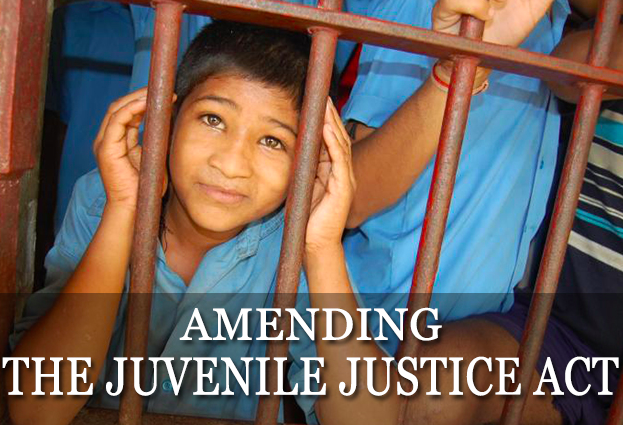
  • India Toughens Law for Serious Juvenile Crimes including rape

    India Toughens Law for Serious Juvenile Crimes including rape

    Indian parliament, last week on Tuesday December 22, passed the long awaited “Juvenile Justice Amendment bill” which allows juveniles between 16 and 18 years of age to be tried as adults for serious crimes like rape or murder.

    “The new law will decide whether a child committed the crime in a childish or adult frame of mind”. Importantly, the new Bill requires the creation of JJBs and child welfare committees in every district.

    At present, those under 18 can be sentenced to a maximum of three years in a reform facility.

    The move to change the law gathered momentum after Jyoti Singh’s (Nirbhaya) rape in 2012. The parents of the victim were among those campaigning to change the law.

    The bill was approved by the Lok Sabha – the lower house – in May, 2015. It will now be signed by the president to become law.

    Authorities say the number of juvenile crimes have been increasing – last year, 38,565 cases were registered, including many cases of rapes, murders and acid attacks.

    The supporters of the new law say tougher punishment will act as a deterrent.

    However, critics say that India is a signatory to the UN Convention on the Rights of the Child which mandates that all children under the age of 18 be treated equally, and say the new law will violate the convention.

    Welcoming the Juvenile Justice Amendment Bill being finally passed by the Rajya Sabha, Nobel Peace Laureate and child rights’ champion Kailash Satyarthi hailed it as “a major legislative reform measure towards holistic child protection and development”.

  • Indian-Origin Central Bank Governor Fired For Being ‘Discourteous’

    Indian-Origin Central Bank Governor Fired For Being ‘Discourteous’

    Jwala Rambarran, Indian-origin Central Bank Governor of Trinidad and Tobago, has been removed for being “discourteous” to the government by making public details about foreign exchange and recession.

    The 47-year-old embattled governor, the second person of Indian-origin to get the nod for this position, was in controversy after he announced on December 4 that the twin-island republic is officially in a recession and disclosed the names of companies that are the biggest foreign exchange buyers.

    Acting president Christine Kangaloo signed off on the dismissal in the absence of President Anthony Carmona who is overseas.

    “Cabinet took the decision after very careful deliberations,” Minister of Finance Colm Imbert was quoted as saying by caribbean360 as saying.

    Mr Rambarran was expelled on a recommendation from Cabinet, the minister said. Former bank deputy governor Alvin Hilaire has been named as his replacement.

    The minister was among those who harshly criticised Mr Rambarran for the statements he made as he addressed the Fifth Monetary Policy Forum.

    Imbert said the Governor was “discourteous” for making the announcement before communicating the situation to government first, in keeping with the Central Bank Act.

    The Trinidad and Tobago Chamber of Industry and Commerce had accused Mr Rambarran of betraying business’ confidence by giving the details of foreign exchange purchasers.

    Former prime minister Kamla Persad-Bissessar, who appointed Mr Rambarran three years ago amid criticism that he was chosen over officials with better qualifications, accused the People’s National Movement (PNM) administration of victimisation.

    “I am shocked, but not surprised at the decision of the Government of Trinidad and Tobago to instruct the acting president to fire Central Bank Governor Jwala Rambaran,” she said in a statement.

    She accused the government of entrapment, contending that Mr Rambarran made the disclosures which have now cost him his job only after Ms Imbert asked the Central Bank to provide information on how the recent release of foreign exchange was distributed and indicated that such information would be made public.

    Updated : NEW YORK Updated 12/28/2015 14:50:47 EST

  • Indian American Physical Therapist Gets Into OneStar National Service Commission

    Indian American Physical Therapist Gets Into OneStar National Service Commission

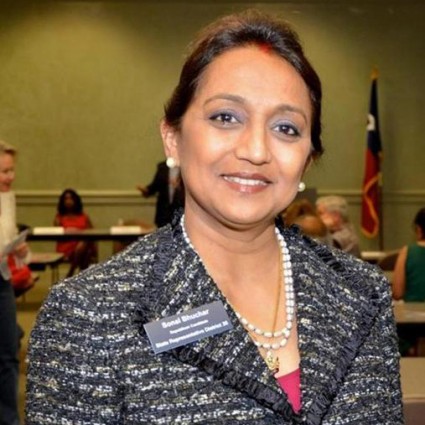
    Indian American Physical Therapist Sonal Bhuchar has been appointed to OneStar National Service Commission in Texas that promotes volunteerism and oversees administration of the AmeriCorps programmes in the US state.

    Ms Bhuchar, a professional physiotherapist at Therapeutic Concepts and office manager at Sugar Land Med-Ped was appointed to the OneStar National Services Commission by the Texas Governor, Greg Abbott, with her term lasting up to March 15, 2018.

    Originally from Mumbai in India, Ms Bhuchar got her bachelor’s degree in physical therapy from Bombay University.

    She currently serves as a board of member in leadership positions for Child Advocates of Fort Bend, chairman for the Literacy Council of Fort Bend, board member for Fort Bend Cares and board member for the City of Sugar Land PARCS.

    She has formerly served as a board of trustee and board president for the Fort Bend Independent School District.

    Along with Ms Bhuchar, Mr Abbott appointed Ronnie Hagerty as the chairman, Lisa Lucero as vice chairman along with Laura Dixon, Roger O’Dell, Annette Juba, Kate Williamson, James Senegal and Kirk Beckert as members of the Commission.

    Sonal Bhuchar is married to Dr. Subodh Bhuchar and has three children. They have lived and worked in Sugar Land for the last two decades.

  • Police investigate Sikh Attacked In California as a Hate Crime

    Police investigate Sikh Attacked In California as a Hate Crime

    NEW YORK:  A 68-year-old Sikh man was attacked Saturday, December 26,  morning west of Highway 99 in what Fresno police are investigating as a hate crime – the latest such attack on a Sikh resident in the Fresno area.

    Around 6:30 a.m., Amrik Singh Bal, 68, was waiting alone for a ride to work in the cold, 30-degree fog on Shields Avenue between Brawley and Blythe avenues when he was assaulted by two persons in California.

    Two white males stopped their car in front of Bal and started yelling obscenities at him, said Fresno police Sgt. Greg Noll. Fearing for his safety, Bal attempted to cross the street. It was then that the suspects backed up their car, hitting Bal with their back bumper, Noll said.

    The two men then got out of the car and attacked Mr Bal, hitting him in the face and upper body. Mr Bal fell to the ground and hit his head.

    During the assault, one of the suspects yelled “Why are you here?”

    The suspects fled only after they heard another vehicle approaching.

    Mr Bal, who was taken to a local hospital, suffered abrasions to his nose and right hand and a broken collar bone.

    Noll said police have started a hate-related criminal investigation into the attack on Mr Bal adding that the Fresno police would coordinate with the Department of Homeland Security and FBI to solve this case.

    “Sikhs have been mistaken for terrorists and radicals and continue to suffer after 9/11,” member of the Sikh Council of Central California Ike Iqbal Grewal said.

    Rights group The Sikh Coalition said its thoughts and prayers go out to Mr Bal and his family.

    “We are quickly investigating and will share updates when we have them,” it said.

    Racism & Hate Crimes on a rise 

    The attack is the latest in a line of hate crimes against Sikhs in America.

    Earlier this month, a Gurudwara in California was vandalised with hateful graffiti, including the word ‘ISIS’, in the aftermath of the mass shootings in San Bernardino.

    In September, a Sikh American father was viciously assaulted in a suburb outside of Chicago after being called ‘Bin Laden’.

    In May 2013, 82-year-old Piara Singh was attacked outside the Nanaksar Sikh Temple in south Fresno by a man who later allegedly made inflammatory comments about Muslims.

    The alleged assailant, Gilbert Garcia Jr., later pleaded no contest to a hate crime and was sentenced to 13 years in state prison.


  • US gives thumbs-up to Lahore stopover – Modi’s Masterstroke

    US gives thumbs-up to Lahore stopover – Modi’s Masterstroke

    December 26: Describing Prime Minister Narendra Modi’s surprise visit to Lahore as a significant development in the ties between India and Pakistan, mainstream American media today said it was likely to add momentum to a tentative reconciliation process between them.

    “Indian Prime Minister Narendra Modi made a surprise visit to Pakistan on Friday — a significant sign the icy relationship between the two neighbours is thawing,” CNN said.

    The Washington Post said Modi had “pressed the reset button on the blow-hot-blow-cold relationship” between the two nuclear-armed neighbours, paving the way for official dialogue to resume next month.

    The Wall Street Journal said Modi’s surprise move was “likely to add momentum to a tentative reconciliation process” between the nuclear-armed neighbours, while The Chicago Tribune noted it as “potential sign of thawing” relations.

    It is “the biggest surprise of all” of Modi’s diplomatic moves since he came to power on May 26, 2014, for which he had invited leaders of the South Asian countries, the Time magazine wrote.

    “It’s the first trip to the country by an Indian head of state in a decade — and could be a sign of improving relations between the two neighbours,” the popular National Public Radio said.

    According to The Los Angeles Times, with his Lahore visit Modi “breathed new life into a long troubled” relationship.

    The New York Times, which quite often has been critical of the Prime Minister, while underscoring the significance of Modi’s impromptu trip to Lahore said the Indian leader in the past had moved from one policy to the other and described it as “a diplomatic dance”.

    Twitter – where the Prime Minister first informed the world about his visit to Lahore – was abuzz with his decision to meet Sharif.

    All major American news outlets took to Twitter and other modes including SMS and emails to inform their readers about the breaking news from South Asia. Even on a Christmas Day, a number of think-tank experts and academicians expressed their views about Modi’s Lahore visit on the social media.

    “Unexpected but welcome visit” by Modi to Lahore, said Richard N Hass, president, Council on Foreign Relations, a top US think-tank. There is “need to make high-level” India-Pak “diplomacy routine”, he wrote on Twitter.

    Injecting an element of drama into the see-saw Indo-Pak ties, Modi took the world by surprise with a stopover in Lahore on his way back home from Kabul to meet Sharif and attend a family weeding.

    — PTI

  • PM Narendra Modi Surprises All | Makes pit stop at Lahore

    PM Narendra Modi Surprises All | Makes pit stop at Lahore

    NEW DELHI: The news of Indian Prime Minister Narendra Modi’s surprise stopover in Pakistan on Friday took everyone by surprise. A move that is seen to have reset the relationship between the two nuclear-armed neighbors, paving the way for official dialogue to resume next month.

    In a tweet that instantly sparked frenzy, Modi announced he will “drop by” in Lahore on his way back to New Delhi from Afghanistan making him the first Indian Prime Minister to set foot in Pakistan in 11 years. The last time an Indian prime minister had visited Pakistan was in 2004. Sharif, however, came to India last year to attend Modi’s swearing-in ceremony.)

    “Looking forward to meeting PM Nawaz Sharif in Lahore today afternoon, where I will drop by on my way back to Delhi,” the Indian premier said on Twitter.

    Following this announcement, Indian Minister for External Affairs Sushma Swaraj appreciated the Indian premier’s decision to stop by in Pakistan on his way to India, saying “That’s like a statesman. These are the kind of relations we should have with our neighbours,” she tweeted.

    Narendra Modi has chosen the birthday of Pakistan’s founder Mohammad Ali Jinnah to make his maiden visit to Pakistan — speaks of symbolism.

    He hugged PM Sharif as soon as he landed in Lahore.

    The two leaders met for a little less than two hours at Sharif’s festively lit ancestral home in Lahore, where they talked about improving ties.

    “Beyond the noise, a personal connect. The Prime Ministers discuss India Pakistan relations,” tweeted Vikas Swarup, a spokesman for India’s Ministry of External Affairs. He added that Modi met Sharif at his home as “a special gesture” and blessed the latter’s granddaughter ahead of her wedding.

    NDTV 24×7 news TV channel called it “Modi’s masterstroke.” In Pakistan, the phrase “birthday diplomacy” trended.

    A statement from Pakistan’s Ministry of Foreign Affairs said the leaders “expressed their desire to carry forward the dialogue process for the larger good of the people of the two countries.”

    Pakistani security analyst Rifaat Hussain said the symbolism of the visit is “huge.”He added that the meeting is likely to have been preceded by some “behind the door” preparation.

    Bharatiya Janata Party’s Nalin Kohli told media “It was a spontaneous but bold and innovative decision to visit Pakistan.”  “The India-Pakistan story has many difficult issues lingering for decades. It is not an easy path ahead. But the two leaders are trying to establish a personal equation that can add momentum to the structured process of official talks in the future,” he added.

    The two leaders last met during the climate change conference in Paris in November, chatting briefly.

    Analysts said the prospect of the Friday meeting was probably kept hidden until the last minute to prevent the irrational expectations and acrimony that often accompany any such diplomatic move.

  • Pramukh Swami Maharaj: Celebrating 95 years of Spiritual Service – #BAPS

    Pramukh Swami Maharaj: Celebrating 95 years of Spiritual Service – #BAPS

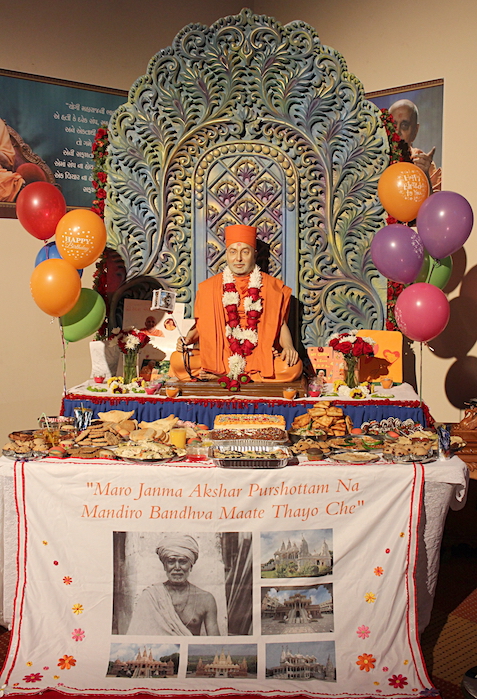
    The BAPS Shri Swaminarayan Mandir in Parsippany,NJ celebrated the 95th birthday of their guru, His Holiness Pramukh Swami Maharaj on December 19, 2015. Devotees came together to commemorate the many years Pramukh Swami Maharaj has dedicated to guiding the lives of individuals all over the world. Their heartfelt prayers were exemplified through the theme of this year’s program, “Shatam Jiva Sharadaha (May you live long)”.

    Devotees of all ages came together to prepare this program. Youths rehearsed for weeks before the festival, practicing devotional songs and traditional dances to share their enthusiasm and love for their guru with the program attendees. They also prepared skits and speeches reminiscing on the influence that Pramukh Swami Maharaj has had on individuals.

    “Swamishri’s life is filled with countless incidents of selfless love for individuals and dedication to cultivating spirituality in communities around the world”, said Shyam Bhorania, a participant in the program.  “Today, through this celebration, we tried to relive some of those moments to provide a better appreciation of his continuous spiritual service.”

    The celebration united the participants of the program with the audience through celebrating and learning from the exemplary life of Pramukh Swami Maharaj. Throughout his life, he has traveled to all corners of the world and positively impacted the lives of countless individuals.  Even to this day, at the age of 95 and leader of BAPS Swaminarayan Sanstha, he continues to inspire and advocate for the betterment of individuals, families, and communities.