Month: December 2015

  • Gunman killed at Walmart in Pennsylvania

    Gunman killed at Walmart in Pennsylvania

    A man wielding two handguns was shot and killed at a Walmart in Pennsylvania, authorities said as per media reports.

    The man walked into the store in Stroudsburg late Saturday night and started pointing a gun at people, Pennsylvania State Police said.

    Stroud Area Regional Police were called to the scene. Officers arrived and told the man to drop his gun, but he refused and pointed his weapon at police, authorities said.

    Officers shot the man in the upper chest area. He was pronounced dead at a local hospital.

    No officers or anyone else at the Walmart was injured, state police said.

    Police have not identified the gunman, pending notification of his relatives.

    The Monroe County District Attorney’s Office and Pennsylvania State Police are investigating the officer-involved shooting, state police said.

  • 2 More California mosques vandalized | F.B.I. Open Hate Crimes Inquiry

    2 More California mosques vandalized | F.B.I. Open Hate Crimes Inquiry

    The police in California and the Federal Bureau of Investigation on Sunday, December 13, opened a hate crimes investigation after two mosques were vandalized overnight.

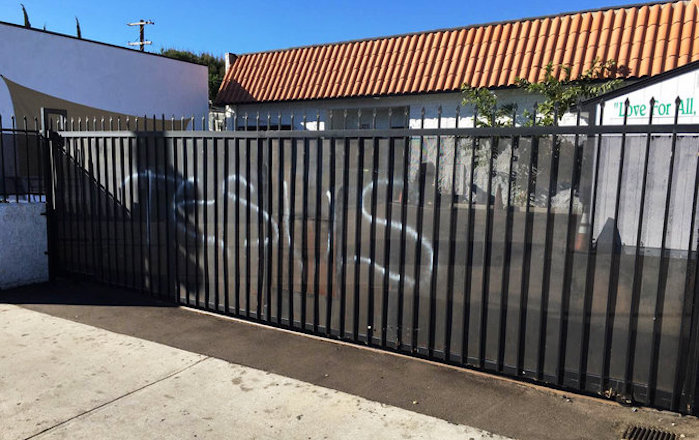
    One mosque had “Jesus is the Way” spray-painted across the front. Another mosque was defaced and left with a fake grenade in the driveway.

    Both acts of vandalism took place in the same California city, about an hour west of where the San Bernardino terror attack took place this month.

    And Hawthorne police said both incidents are now classified as hate crimes.

    Early Sunday morning, Hawthorne police received a call about vandalism and a possible explosive device in front of the Ahmadiyya Muslim Community Baitus-Salaam Mosque, the Police Department said.

    When officers arrived, they found what looked like a grenade and evacuated the area. But the object turned out to be a fake plastic grenade.

    Someone had also spray-painted “Jesus” across the mosque’s fence.

    The same day, another mosque — the Islamic Center of Hawthorne — was found vandalized, with “Jesus is the Way” spray-painted on the front of the building.

    Hawthorne police believe both crimes took place overnight.

    The FBI and the Los Angeles County Sheriff’s Department are working with Hawthorne police in the investigation.

    “Investigators will work to identify the person or group responsible, the motivation and whether religious bias was a factor,” the FBI said.

    “All evidence will be reviewed by state and federal prosecutors to determine whether a violation under federal civil rights statutes occurred. The FBI is committed to ensure law-abiding citizens are protected and to deter those who would threaten them.”

    Hawthorne police said that after the San Bernardino attack, the department has communicating more closely with local Islamic centers.

    “The Department will continue to closely support our faith-based partners and work to assure the safety of its members,” Hawthorne police said.

  • Nirbhaya Case – Should the Juvenile Convict be freed?

    Nirbhaya Case – Should the Juvenile Convict be freed?

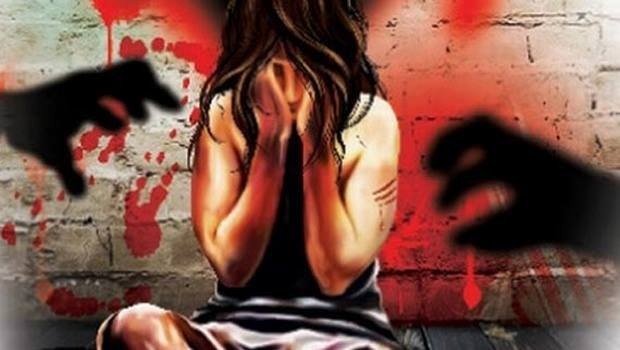
    An incident that shook the conscience of India. It was a blot on humanity, it was a test of the Justice system & our morality. It was reflective of the barbarity that ‘humans turned animals’ are capable of.

    And now three years later, we are again at crossroads, the courts have to decide whether Nirbhaya’s most brutal rapist stays behind bar or walks away with no remorse. The government wants to keep him in jail. Nirbhaya’s parents along with all Indians are appalled and horrified as this man is set for release.

    Despite the Juvenile Justice (Care and Protection of Children) Bill – 2015, a proposed Act of the Parliament of India, being passed on 7 May 2015 by the Lok Sabha amid intense protest by several Members of Parliament. It is still pending consideration in the Rajya Sabha which has not been able to function due to the ongoing politics & stage show put on by Congress & its allies.

    Only time will show if our politicians can rise above their nepotism and work for India.

    The proposed act would have been helpful in addressing the Nirbhaya case by trying the juveniles between in the age group of 16–18, involved in heinous offences, be tried as adults. (If the Government can pass a retrospective tax act while dealing with Vodafone, I am sure they could have managed this too.)

    Union minister Maneka Gandhi has called for passing the Juvenile Justice Bill pending in Rajya Sabha. The clock is fast ticking and India is watching with bated breath.

    The juvenile convict in the Nirbhaya rape and murder case may walk free on December 20, despite the Centre having moved the Delhi HC against his release, due to delay by Rajya Sabha in approving the Juvenile Justice (Care and Protection of Children) Bill.

  • X-Men Apocalypse trailer – Villain compared with Lord Krishna

    X-Men Apocalypse trailer – Villain compared with Lord Krishna

    Hindus are upset over comparison of blue-colored villain “Apocalypse” with their deity Lord Krishna in the recently released official trailer of “X-Men: Apocalypse” action-adventure Hollywood mutant movie releasing in May 2016.

    Rajan Zed, in a statement in Nevada today, said that such trivialization of Lord Krishna, who was highly revered in Hinduism, was quite inappropriate and disturbing to the devotees.

    Lord Krishna was meant to be worshipped in temples or home shrines and not for pushing movies for mercantile greed of filmmakers, Zed, who is President of Universal Society of Hinduism, pointed out.

    This trailer shows the villain Apocalypse as saying: “I have been called many things over many lifetimes—Ra, Krishna, Yahweh”.

    Zed urged director Bryan Singer to delete all the references to Lord Krishna from the trailer and the final movie, unless those were true to the scriptures. Inappropriate usage of Hindu deities or concepts for commercial or other agenda was not okay, it hurts the devotees and confuses non-Hindus about Hinduism.

    Hinduism is one of the oldest and third largest religion of the world with about one billion adherents and a rich philosophical thought and it should not be taken frivolously. Symbols of any faith, larger or smaller, should not be mishandled, Zed noted.

    Lord Krishna, usually depicted as blue-skinned, is the eighth avatar (incarnation) of Lord Vishnu and subject of major Hindu scriptures such as the Bhagavad-Gita (Song of the Lord) and Bhagavad-Purana. There are about three million Hindus in USA and moksh (liberation) is the ultimate goal of Hinduism.

    “X-Men: Apocalypse” of 20th Century Fox stars Golden Globes nominated James McAvoy, Oscar nominated Michael Fassbender and Oscar winner Jennifer Lawrence. Its official website talks about Apocalypse as: Since the dawn of civilization, he was worshipped as a god.


  • Now an app from ISIS to promote terror

    Now an app from ISIS to promote terror

    In the past, extremist groups have used tools and forums which were available: Rallies, pamphleteering, and marching in parades were the primary means used for recruitment and spreading their message.

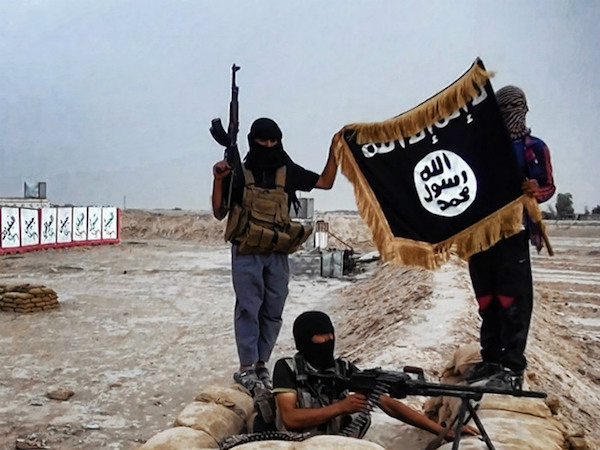
    Now, the Islamic State (IS a.k.a ISIS or ISIL) terrorist group has reportedly launched an android app that features news and videos showing executions and battlefield victories and propagates its agenda, the media reported.

    Discovered by the hacking collective Ghost security group, the app called “Amaq News” is designed to “streamline access” to the terrorist group’s “propaganda”.

    According to a Fortune report, the Android-based app is essentially a news portal run by the Amaq News Agency — a group believed to be tied to IS.

    When users start the app, it displays a scrolling news feed and icons to play videos. It also has options for users to have the feed automatically check for new posts.

    “It can even be automatically updated whenever the app’s developers send out new versions of the programme,” the report added.

    The app, however, may not work in regions outside the IS control.

    According to Ghost security group, the app is not available as a download in a marketplace like Google Play store.

    Instead, a link to the download is shared between IS members through Telegram app and other encrypted communication methods.

    Telegram is an app that can be set up on almost any device and allows messages to be sent to users with utmost privacy.

    Users can then download “Amaq News” in an Android device, the report said.

    IS has also created its own social network for jihadists called “Kilafahbook” to get around social media bans by Twitter, Facebook and YouTube.

    For IS, social media is prominent in formulating recruitment strategies.

    According to theconversation.com, Facebook is a key platform to gather young fans, supporters and recruits to incite them to acts of violence by the means of propaganda and the use of Islamic grievance.

    When it comes to real-time orchestrating of terror strikes, IS network works with encrypted messaging applications — including Kik, Surespot, Wickr and Telegram — that are very difficult to hack.

    Ghost security group is a hacking collective similar to Anonymous that focuses solely upon counter-terrorism.
    It claims to have “terminated over 100,000 extremist social media accounts” used by militant groups to recruit members.
    Earlier, Hacker group Anonymous declared December 11 as “International IS Trolling Day” to poke fun at IS militants, using memes and cartoons.

    Members of the hacking group also posted images on social media mocking the IS.

  • Pakistan cracks down on terror

    Pakistan cracks down on terror

    LAHORE:With ties between extremists and Islamabad on the decline, militants are now faced with a more resolved and committed effort to eliminate them.

    The recent revelations that the San Bernardino shooters had extremist ties to Pakistan might appear to confirm the narrative that Pakistan is consumed by a downward spiral of extremist violence.

    But over the past year, it has quietly made some important, costly, and under-appreciated strides in its counter-militancy efforts.

    Individually, none are groundbreaking, but together they point in a more promising direction for Pakistani society, regional stability, and the U.S.-Pakistan relationship.

    First, the Pakistani army has pursued more comprehensive military operations in tribal areas than initially expected. Although it has not directly targeted the Haqqani Network as the United States hoped, Pakistan has actively targeted a wide array of militant groups, not just the Pakistani Taliban (TTP).

    Also Read: Two professors arrested at Punjab University for ‘terrorist links’

    Second, Pakistani security forces have expanded their counter-militancy operations, not only against assets once under state purview that have now turned rogue, but also against a wider range of sectarian militant groups. Pakistan adopted a strategy of leadership targeting, or “decapitation,” against the once formidable Lashkar-e-Jhangvi (LeJ), a sectarian militant group with strong links to the Sunni extremist political group, Ahle Sunnat Wal Jamaat. Over the past year, LeJ leadership — once described as “untouchable” and “invincible” — has been systematically wiped out in a series of extrajudicial killings, possibly because it was drifting toward the Islamic State.

    The counter-sectarian campaign could expand beyond LeJ. The Pak Institute for Peace Studies (PIPS) estimates that the state has conducted 20 major search operations that have netted nearly 100 key leaders from the militant-linked Ahle Sunnat Wal Jamaat. Chipping away at sectarian groups is important, because they feed other militant organizations like al Qaeda, TTP, Jaish-e-Mohammed, and Lashkar-e-Taiba (LeT).

    Third, Islamabad has augmented the military’s kinetic actions by denying extremist and militant groups the social space they have utilized and operated in for decades. It has begun to seriously enforce regulations on hate speech, on the misuse of mosque loudspeakers or amplifiers to prevent public incitement, and on weapons sales. Tempering sectarian mobilization with these tools was not new, but its enforcement is.

    Finally, the Pakistan Electronic Media Regulatory Authority prohibited media coverage of banned organizations, specifically LeT and Jamaat-ud-Dawa, though there appears to be confusion and bureaucratic infighting over this judgment. Even critics of government shortcomings acknowledge “the space for pro-extremist mindset has gradually shrunk.”

    Also Read: Two professors arrested at Punjab University for ‘terrorist links’

  • Sheena Bora Murder Case | Peter Mukerjea to spend Christmas Locked up

    Sheena Bora Murder Case | Peter Mukerjea to spend Christmas Locked up

    A Mumbai Magistrate court on Monday extended the judicial custody of former media baron Peter Mukerjea till December 28. (Peter Mukerjea, husband of prime accused Indrani Mukerjea, was arrested on November 19 for his alleged role in the Sheena Bora murder case and was in CBI custody)

    Mukerjea’s lawyer Kushal Mor then moved an application before Magistrate R.V. Adone seeking permission for home cooked food in jail for Mukerjea on account of his ailments.

    “While in CBI custody, it was ensured that he (Mukerjea) got proper healthy food… now that he is jail we need to ensure the same as per his medical needs,” Mor informed the court, seeking home cooked food for Mukerjea who is a heart patient and on medication for cholesterol issues.

    Opposing the application, CBI special prosecutor Kavita Patil said that jail authorities always take care of their inmates.

    On Tuesday, December 15, Magistrate Adone is expected to pass his order on the issue.

    Mukerjea is the husband of Indrani Mukerjea, who is a co-accused along with her ex-husband Sanjeev Khanna and former driver Shyamwar Rai in the murder of her daughter Sheena Bora.

    He was later taken to Delhi by CBI for conducting a polygraph test on him and brought back to Mumbai by month-end.

    CBI, while maintaining that financial transaction was the motive behind the murder of Sheena, had earlier said that Peter, during his interrogation, disclosed investments of crores of rupees made by him and Indrani and is expecting information from Interpol on the details of an account opened by Indrani in a bank in Hong Kong.

  • Are Attempts being made to derail the talks between India & Pakistan?

    Are Attempts being made to derail the talks between India & Pakistan?

    As the governments of India and Pakistan work towards normalizing ties between the two countries, anti-humanity groups (JuD) start with their rants in hopes of destabilizing future talks.

    Hafiz Saeed questions India on 26/11, says no concrete proof in 26/11 attacks even after 7 years

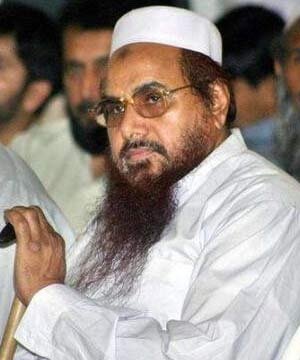
    Jamaat-ud-Dawah (JuD) chief and 26/11 plotter Hafiz Saeed has dared India over the Mumbai attacks probe days after Sushma Swaraj’s visit to Islamabad.

    This rant comes after a joint declaration where India and Pakistan agreed to a composite dialogue as well as to expedite the trial of 26/11; In a speech, the JuD chief Saeed says, “Our government remained silent, but let me respond to Sushma. It’s been seven years but they could not prove who was behind the Mumbai attacks and Insha Allah (if Allah wills it) they will never be able to prove it until eternity.”

    He also mocked New Delhi for failing to establish any concrete proof in the seven years after 26/11 and claiming that India would never be able to establish his complicity in the attack.

    Earlier JuD chief had slammed Pakistan Prime Minister Nawaz Sharif for holding a meeting with Narendra Modi during the Paris climate change conference.

    “Nawaz Sharif should not have met with Narendra Modi and exchanged smiles with him in Paris. It has hurt the sentiments of the Kashmiri Muslims,” Saeed said at a seminar titled ‘Kashmir Issue and Rise of Hindu Extremism in India’ at the Lahore High Court on December 2 organised by the Pakistan Justice Party.

    He said Sharif should sever relations with India till resolution of the Kashmir issue.

    “Nawaz Sharif should announce that there will be no talks with India till it ends atrocities against Kashmiri and Indian Muslims,” he said adding that till the resolution of the Kashmir dispute there should be no trade, no cricket and no talks with India.

    Saeed said “When they are not in power they talk about the oppressed Kashmiri people as if they are the champion of the Kashmir cause. But when they are in power they forget them”.

    Saeed founded the LeT whose operatives carried out the 2008 Mumbai attack that killed 166 people.

    Also read: Congress Questions Centre Over Hafiz Saeed's Rant
  • Masjid Fire-Bombed in Palm Springs, CA While People Were Inside

    Masjid Fire-Bombed in Palm Springs, CA While People Were Inside

    The Palm Springs Masjid, a mosque located in the town of Coachella in Southern California, was fire-bombed Dec. 11 just before Jummah, Friday afternoon prayers, while some people were still praying inside.

    No immediate injuries were reported, but there has been significant damage done to the mosque itself.

    According to reports from the Riverside, Calif., Sheriff’s Department, the Coachella Fire Department received a call at 12:11 p.m. regarding a possible arson at the mosque, also known as the Islamic Society of Coachella Valley. The Coachella Fire Department quickly contained the fire.

    KMIR, a local news station, reported the fire was started with a molotov cocktail to the front lobby of the Islamic Society of Coachella Valley. At least two other local news outlets confirmed from officials that the mosque was “fire-bombed.”

    Ray Brewster, a security employee with the Islamic Society of the Coachella Valley, was on the scene and described a “mushroom cloud” of smoke at the scene.

    The Coachella mosque attacked today was shot at last year, with 6 bullets hitting the building and a parked car. Authorities treated that incident as a hate crime, but the suspect was never found.

    As CNN reported, this mosque is just one of many Muslim worship centers attacked this past year, with attacks on Muslims at a record-high in 2015. Earlier this year, a mosque in Connecticut was shot at, and death threats threats were called into mosques in Florida, Virginia and Maryland.

    So far, 2015 has been the most dangerous year for American Muslims, with 63 recorded attacks against mosques since January. The previous record was 53 attacks, in 2010. There have been three times as many attacks against Muslim worship centers this year than in 2014.

    There have been multiple attacks against Muslims in this week alone, just days after Republican presidential front-runner Donald Trump called for all Muslims to be banned from the US and for Muslim Americans to be denied re-entry to the US should they leave the country. Also this week, a red pickup truck threw a pig’s head at the front door of a mosque in Philadelphia, a young girl in New York City wearing a hijab was assaulted by classmates who called her ISIS, and a Muslim store owner in Queens, New York was viciously assaulted by a random customer.

  • Uber plans to tap into private car pool

    Uber plans to tap into private car pool

    NEW DELHI (TIP): A day after chief minister Arvind Kejriwal batted for carpooling as a solution to deal with the odd-even car number scheme, sources close to Uber said the cab aggregator is testing a new ride-sharing service in Delhi, where private car owners can pick up other commuters on the way and split the cost of the trip.

    Till now, Uber has been allowing only commercially licensed cab operators to join its platform. In October, it signed an MoU with the Punjab government to allow any private car owner to offer Uber services.

    It’s not clear if Delhi’s Motor Vehicles Act will allow such a step. But given the pressure, the Kejriwal government is in to handle the situation arising out of restricting the number of private vehicles on roads on the basis of odd-even number of their licence plates from

    January 1, the Uber solution may look attractive.

  • Apple features doctor consultation app Lybrate in ‘The App Store Best of 2015’

    Apple features doctor consultation app Lybrate in ‘The App Store Best of 2015’

    New Delhi, Dec 10, 2015: Apple has featured Lybrate, India’s largest online doctor consultation platform, in its coveted list of ‘The App Store Best of 2015’ that covers most innovative apps and games.

    LybrateLybrate’s doctor consultation app is the only platform from the healthcare technology sphere to have got an entry into the prestigious list.

    “The App Store Best of 2015 showcases this year’s most innovative apps and games, and celebrates the amazing app experiences that developers like you have created for the App Store,” Apple said in an e-mailed statement to Lybrate, informing about its inclusion in the list.

    Since its launch in January this year, the app has been downloaded close to 2 million times on both Android and iOS platforms.

    Mr. Saurabh Arora, CEO, Lybrate
    Mr. Saurabh Arora, CEO, Lybrate

    “It is a great news for us that Apple has rated our app as one of the best in the category. It reaffirms our belief that we are going in the right direction and doing something meaningful. Our aim is to make healthcare accessible to the 1.2 billion people of India and this recognition will boost our efforts. Our 90-people workforce is extremely excited about it as all their efforts are not just bearing fruits but it also getting recognition from industry players,” said Saurabh Arora, CEO, Lybrate.

    The app currently has around 2 lakh daily users. The platform has more than 90,000 doctors on its platform from multiple specialties.

    About Lybrate

    Lybrate is India’s first and largest mobile healthcare communication and delivery platform. By connecting doctors and patients through its first-of-its-kind health app and letting them communicate, Lybrate makes healthcare more accessible. It empowers patients to get the right advice at the right time and allows doctors to touch more lives.

    Saurabh Arora, is the Chief Executive Officer and co-founder of Lybrate, is striving to make healthcare more accessible in India and bridge the demand-supply gap of healthcare experts by seamlessly connecting doctors and patients with the help of technology and letting them communicate using mobile phones.

    More than 90,000 doctors and health experts from varied branches of medicine from across India are connected to millions of patients through Lybrate. With such strong network, Lybrate acts as the world’s largest online Out Patient Department (OPD).

    The company raised $10.2 million from Tiger Global, Nexus Venture Partners and Chairman Emeritus of Tata Sons Ratan Tata in Series A funding in July 2015. It had received $1.23 million in seed funding in August 2014.

    Saurabh brings huge entrepreneurial product experience to the venture. Prior to founding Lybrate, Saurabh worked with Facebook Inc in the United States where he connected SMEs and large advertisers to their customers using Facebook Ads.

    Saurabh is an MBA from Columbia Business School. He pursued his Bachelor’s in Mechanical Engineering from the country’s premier Indian Institute of Technology (IIT), Delhi.

  • Historic COP21 climate change summit reaches deal in Paris

    Historic COP21 climate change summit reaches deal in Paris

    Dec 12 (TIP NEWSWIRE) : A landmark climate change deal was clinched with the approval of India, China and the US, after two weeks of intense discussions and negotiations, with the legally-binding pact seeking to limit global warming to “well below” 2 degrees Celsius and committing $100 billion a year from 2020 to help developing nations on Saturday, December 12.

    The pact is the first to commit all countries to cut carbon emissions.

    The agreement is partly legally binding and partly voluntary.

    Earlier, key blocs, including the G77 group of developing countries, and nations such as China and India said they supported the proposals.

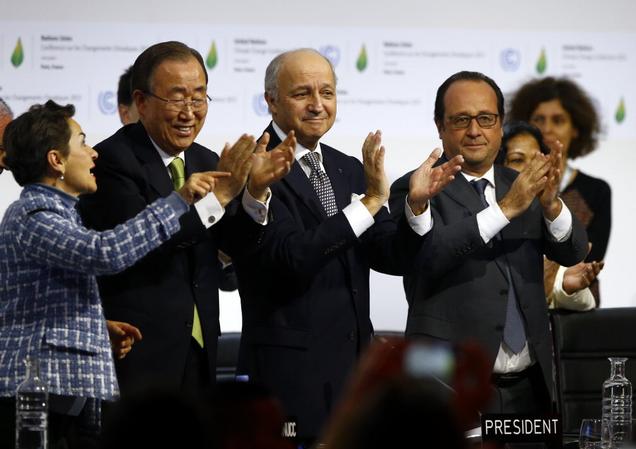
    Amidst cheers and applause from delegates from 195 countries, the draft of the “historic” deal was presented by President of the UN climate conference of parties (COP) and French Foreign Minister Laurent Fabius.

    “I now invite the COP to adopt the decision entitled Paris Agreement outlined in the document,” said Fabius.

    French President Francois Hollande appealed to the gathering to approve the accord.

    “Looking out to the room I see that the reaction is positive, I see no objections. The Paris agreement is adopted.”

    Fabius has claimed that the agreement which is 31 pages long acknowledges the notion of “climate justice” and takes into account the countries’ differentiated responsibilities and their respective capabilities in the light of different national circumstances.

    Key points of Deal, to take effect from 2020

    The measures in the agreement included:

    • To peak greenhouse gas emissions as soon as possible and achieve a balance between sources and sinks of greenhouse gases in the second half of this century

    • To keep global temperature increase “well below” 2C (3.6F) and to pursue efforts to limit it to 1.5C

    • To review progress every five years

    • $100 billion a year in climate finance for developing countries by 2020, with a commitment to further finance in the future.

    average

    US President Barack Obama has hailed the agreement as “ambitious” and “historic”, but also warned against complacency. “Together, we’ve shown what’s possible when the world stands as one.” And although admitting that the deal was not “perfect”, he said it was “the best chance to save the one planet we have”.

    Prime Minister Narendra Modi has hailed the landmark climate accord in Paris, saying it pointed the world towards a greener future.”Outcome of Paris agreement has no winners or losers. Climate justice has won & we are all working towards a greener future,” PM Modi posted on Twitter. The deliberations at the climate summit and the agreement reached “demonstrates the collective wisdom” of world leaders to mitigate climate change, he added.

    China’s chief negotiator Xie Zhenhua said the deal was not perfect. But he added that “this does not prevent us from marching historical steps forward”.

    Nearly 200 countries took part in the negotiations to strike the first climate deal to commit all countries to cut emissions, which would come into being in 2020.

    The chairman of the group representing some of the world’s poorest countries called the deal historic, adding: “We are living in unprecedented times, which call for unprecedented measures.

    “It is the best outcome we could have hoped for, not just for the Least Developed Countries, but for all citizens of the world.”


  • Legendary Dilip Kumar honoured with Padma Vibhushan

    Legendary Dilip Kumar honoured with Padma Vibhushan

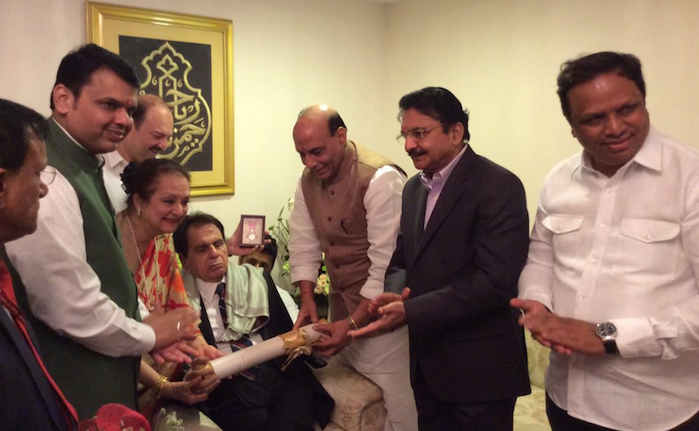
    Mumbai: Ailing legendary actor Dilip Kumar, 93, was on Sunday, December 13, presented the Padma Vibhushan — India’s second highest civilian award — by Union Home Minister Rajnath Singh at the thespian’s residence in suburban Bandra for his contribution to the Hindi cinema spanning over six decades.

    Famously known as the tragedy king, the veteran actor has immortalised films like Devdas, Mughal-e-Azam, Naya Daur, Madhumati, Ram Aur Shyam and Saudagar with his brilliant performance.

    The 93-year-old legend was presented a medal, a certificate and a shawl by Singh, in the presence of the actor’s wife Saira Bano.

    Kumar, in a black suit, could barely open his eyes and was helped by Saira when the national honour was conferred on him. He has given sterling performances in over 60 Hindi films.

    Maharashtra Governor C Vidyasagar Rao, Chief Minister Devendra Fadnavis, were among other dignitaries present at the actor’s home when he received the award.


    The announcement to honour Bollywood veterans Kumar, Amitabh Bachchan and a few others with the prestigious Padma Vibhushan award was made by the government on the eve of Republic Day on January 25, 2015.

    However, Kumar, due to ill-health, could not attend the special function held at the Rashtrapati Bhavan in April when other Padma awardees were honoured by President Pranab Mukherjee.

    Born as Muhammad Yousuf Khan in Peshawar(Pakistan), Kumar made his debut as an actor in the film “Jwar Bhata” produced by Bombay Talkies in 1944.

    He starred in films of a variety of genres such as the swashbuckling Aan (1952), the comical Azaad (1955), the historical Mughal-e-Azam (1960) and the social Ganga Jamuna (1961).

    He also did films like Ram Aur Shyam (1967), Kranti (1981), Shakti (1982), Karma (1986) and Saudagar (1991) and others. His last film was Qila (1998).

    The Government of India honoured him with the Padma Bhushan award in 1991, the Dadasaheb Phalke Award in 1994 and the Padma Vibhushan earlier this year, for his exceptional and distinguished contribution to the Indian cinema.


  • Dev Patel of ‘Slumdog’ to play math genius Ramanujan

    Dev Patel of ‘Slumdog’ to play math genius Ramanujan

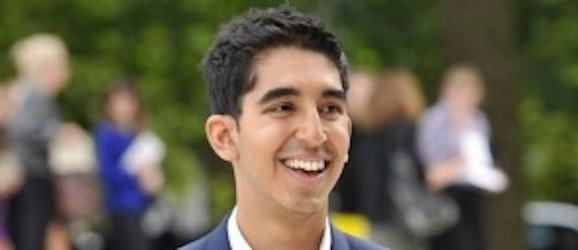
    Since his movie debut in 2008 in “Slumdog Millionaire” the 25-year-old Dev Patel has been picked to play the role of the math genius Ramanujam in a new film on the life of the Indian legendary.

    math genius RamanujamPatel’s latest film “The Man Who Knew Infinity“, based on the life of Indian mathematician Srinivasa Ramanujan, was screened at the International Film Festival of India in Goa last month.

    In a phone interview with Reuters, Patel spoke about his role in the film, how “Slumdog Millionaire” changed his life and why he wishes people were color blind. He said, “It’s interesting because there is no real footage or sound clippings of him. So, the element of mimicry is not there. In a way, that’s quite freeing for a performer. We did do research though, and I read the book that the film is based on. I worked on my accent a lot and the main thing was to get the restraint and resilience that he had about him. He probably experienced a great deal of prejudice, especially in Cambridge. I wanted to capture that.”

    As per Patel, the director had the script with him for nine years. I worked on it as well with him. We worked on trying to flesh out the two characters. The masses wouldn’t really connect with the complex mathematics of it all, so the idea was to bring the humans behind the maths forward. And two very different human beings: man from middle-class India – a poor clerk, and one of the greatest mathematicians in Britain who was an emotionally stunted human being and had to care for this young man. It was two worlds colliding together. Jeremy (Irons) attached himself to the film after I did, and the rest of the cast just fell in place.

    The Young Patel, who had shot to fame, with his role in Slum Dog Millionaire, says, “It did make my career, there’s no two ways about it. It put me on the map and opened the doors to India for the West. Now there is a renewed interest in India and storytelling from here in the West. I am one of the actors who have been able to enjoy the benefits of that.”

    The 25 year-old says, “I have come to embrace my heritage and I feel lucky that it has given me such a uniqueness in the industry. I feel lucky that I can bring stories from culture to the world. On the other hand, sometimes you wish people could be colour blind and you could be play an average Joe, no matter what his name is. That is changing though, slowly.

    “Hollywood is becoming very diverse. At the end of the day, most of the time, the best actor will get the job. My focus is on not forcing people to cast me because I am brown… but because I am talented.” According to Dev, “There are already so many amazing actors in Bollywood, and I don’t think they are starving for talent there. I don’t know if I quite pass the muster there or not.”

  • RBI gets tough on debt issue

    RBI gets tough on debt issue

    Two months after putting together a draft framework for rules on external commercial borrowings (ECBs), the Reserve Bank of India has issued a document overhauling the existing regulations. The ramifications of the changes are slowly starting to sink in, with the impact expected to be especially hard for Indian stateowned banks. This is because NBFCs are now only eligible to raise rupeedenominated debt offshore but Indian lenders and their overseas subsidiaries have been barred from participating in offshore loans that fall under the rupee denominated debt category.

    A tool provided by the RBI to help lenders tackle bad debts is instead helping to camouflage the scale of the problem, evidence of how the country’s banks will struggle to meet an ambitious cleanup target in 16 months’ time. India’s banks are grappling with more than $110 billion of corporate stressed debt, a burden that is holding back fresh loans and hampering a speedier economic recovery.

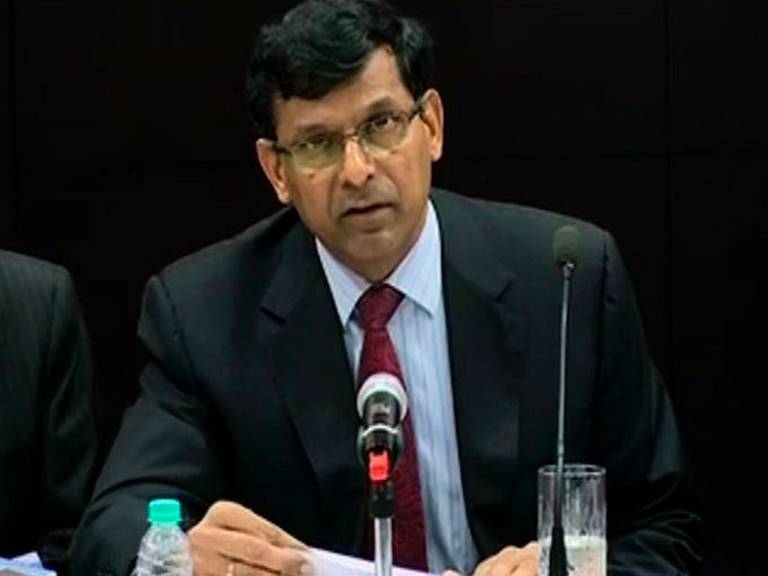
    Hoping to press banks to acknowledge the size of bad debts and tackle them, the RBI last week set a March 2017 goal, although it did not specify exactly what would have to be achieved by that date. Emphasising the challenge ahead for governor Raghuram Rajan is the growing debate around the most high profile tool the RBI has offered lenders to date strategic debt restructuring (SDR), a provision aimed at helping banks swap unpaid debt for majority control.

    Rajan has campaigned to get banks to classify debt correctly, and to oust errant company owners. Commercial banks say his team has been active, checking provisions and exactly how loans are recorded and reported. Yet while banks, including India’s largest, have taken advantage of the benefits of SDR, none have yet used it to effectively tackle the underlying problems.

    Crucially, SDR allows debt in the process to be classed as “standard”, without extra provisions or writedowns, for 18 months. But without other changes, that may create trouble down the line, analysts warn.

    “As banks through SDR are able to delay provisions on the stressed SDR accounts by 18 months, it would result in bunched up provisioning,” Credit Suisse analysts said in a note, adding this could add to banks’ already elevated credit costs.

    So far, since SDR was introduced in June, it has been invoked by banks in nine cases, with at least one other due. Most are steel, resources and infrastructure firms.

    In total, according to brokerage Religare, known SDR debts amount to some Rs 641 billion ($9.6 billion), or about 1 percent of all loans. But none of these cases have seen banks swap debt for equity, take control or significantly cut debt.

    The first SDR was invoked in July for Electrosteel Steels, to tackle 106 billion rupees ($1.6 billion) of debt, more than 11 times its market capitalisation. But its lenders, including State Bank of India and ICICI Bank, have yet to complete the swap or decide on a new investors, although bankers say there are suitors.

    According to Credit Suisse, private sector bank ICICI has the largest proportion of SDR loans as a percentage of its total, followed by staterun United Bank of India and Canara Bank. “We are unsure whether banks will benefit. This is just to delay the recording in the NPAs (nonperforming assets) at present,” said Priyanka Poddar, an analyst at Fitch Ratings’ Indian affiliate, India Ratings and Research.

    A sharp drop in the share prices of the troubled firms at the heart of the SDR provision also spells trouble for the plan to use a swap to turn all debt into equity in one fell swoop. For these firms, even swapping debt for a majority stake will barely dent the arrears, as most have debts between 15 and 20 times the size of their market capitalisation.

    For example, Monnet Ispat, a manufacturer of sponge iron, steel and ferroalloys, should see banks take control by swapping just 3% of its more than 118 billion rupees of debt for equity. But bankers say the efforts may not be in vain and the process has a timeframe, making any bid to hide bad debts with SDR a shortlived one.

    “We may fail, though I’m not saying that we will. But it is not that we are trying to avoid NPA,” said one senior banker at a staterun bank involved in SDR.

    He said banks were facing hitches including resistance from shareholders and difficulty agreeing on a debt haircut. RBI deputy governor SS Mundra said on Tuesday the central bank would look into the use of the tool, but cautioned the market against writing it off too soon. “It is work in progress,” he told reporters.

  • Maine College institute’s Hindu shrine

    Maine College institute’s Hindu shrine

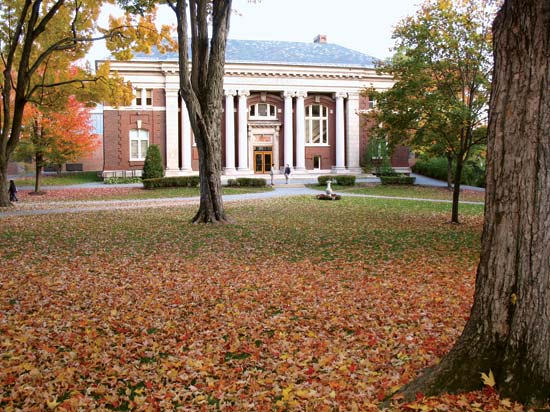
    Bates College in Lewiston (Maine, USA), a highly selective residential college, founded by Freewill Baptists in 1855, has instituted a Hindu shrine.

    Applauding Bates for provision of the shrine located in its Chase Hall, Rajan Zed, described it as a step in the positive direction.

    Zed, is president of Universal Society of Hinduism, urged all USA universities, colleges and residential schools; both public and private; to respond to the spiritual needs of diverse student body and provide permanent and dedicated Hindu prayer/meditation room for rituals, quiet reflection, festivals and spiritual exercise.

    It would help in the personal growth of Hindu students who were present in substantial numbers on various campuses. It was important to meet the spiritual needs of these students, Zed added.

    Rajan Zed suggested that these Hindu prayer rooms should have an altar containing murtis (statues) of popular Hindu deities and other temple objects such as metallic bells and dholak (hand drum. He or other Hindu scholars would be glad to help, if asked, regarding the structure of Hindu prayer room, Zed said.

    “One of the first US institutions of higher learning to admit women and people of color“, Bates claims to be “a college for coming times“. It has about 2,000 students and offers 33 majors and 20 minors. Ava Clayton Spencer is the President, while Michael W. Bonney is Trustees Chair.

  • Maragos: Preschool education plan needs improvement

    Maragos: Preschool education plan needs improvement

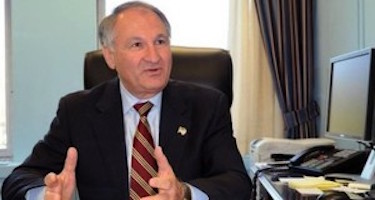
    Nassau County Comptroller George Maragos has released a report titled “Opportunities for Improving Preschool Special Education Outcomes for Nassau County Children.”

    A press release said the report finds that Nassau school districts lag New York State (NYS) in placing three and four-year-old special needs children in optimal learning settings. Federal guidelines indicate that preschool students with special needs can benefit most when taught in integrated early childhood settings alongside typically developing, age-appropriate peers. Only one Nassau school district exceeded the NYS average for placing children in integrated settings. Nevertheless, our special needs children still achieve average developmental benefits

    In 2014, Nassau County served 5,249 three and four-year-old special needs children at a total cost of $100.7 million.  The average cost per student was $19,186, but private center-based programs charge as much as $52,000 per child.

    “Nassau school districts pride themselves on being some of the best in the country for K-12 learning,” Comptroller Maragos said. “The same, however, cannot be said for our special needs children. We should aim for better than average results for all of our children.”

    The data available indicates that Nassau County school districts underperform the NYS average with respect to placing students in integrated settings.  Less than one in four Nassau preschool special education stu-dents (22%) attended a regular or integrated preschool class from 2011-2012 through  2013-2014, compared to 43% of students across New York State and 42% of students nationwide.

    Within the County, placement results vary dramatically from district to district.  At the low and high extremes, East Meadow school district placed 3% of special needs students and Island Park placed 49% of special needs students in regular or integrated preschool classes.

    Despite Nassau’s below-average integration rates, special needs students reach the NYS average for skill development. Countywide, more than 50% of Nassau County’s students reached age-appropriate development in any of the three main skill categories by the time they finished pre-school.

    State and local school administrators surmise that low integration rates may be due to the lack of availability of classes where children with special needs can learn alongside typically developing peers, and to parents’ and administrators’ belief that the more intensive instruction provided in separate classes is more beneficial for many children. Integration also appears to be impeded by the NYS Education Department’s lack of regular feedback to districts on the merits of integration and to lagging districts on their performance compared to their peers.

  • Punjabi is Canada third official language

    Punjabi is Canada third official language

    Punjabi is officially the third language of the Canadian Parliament. The first and second official languages of the country and its parliament are English and French.

    Four years back Punjabi was recognised as Canada’s third most common language. Now it has officially taken over the mantle in the Commonwealth‘s top legislature after the election of 20 Punjabi-speaking candidates to the House of Commons.

    Twenty-three Members of Parliament of South Asian-origin were elected to the House of Commons, Parliament of Canada in the 19 October Parliamentary elections. Three of them, Chandra Arya – born and raised in India, Gary Anandasangaree – a Tamil and Maryam Monsef – of Afghan origin, do not speak Punjabi, The Hill Times Online reported.

    Of the 20 who speak Punjabi, 18 are Lib-erals and two are Conservatives. Among the newly-elected Punjabi-speaking MPs, 14 are males and six are females. Ontario elected 12, British Columbia four, Alberta three and one is from Quebec.

    “The voice of the Indo-Canadian community will now be very well represented in the Parliament. In the overall aspect of it, the South Asian community won,” MP Deepak Obhrai of Conservative Party said.

    In an interview with the paper, Navdeep Bains, a Liberal MP, said although 20 Punjabi-speaking MPs have been elected, these MPs represent all constituents regardless of their party affiliation or ethnic origin.

    Iqra Khalid, the Liberal MP who was born in Pakistan, said the diversity of the newly-elected House reflects the true make-up of Canada. According to Statistics Canada’s 2011 National Household Survey, 430,705 Canadians identified Punjabi as their mother tongue, making it the third most com-mon language after English and French. The 430,705 native Punjabi speakers make up about 1.3 per cent of Canada’s population. The 20 Punjabi-speaking MPs represent almost six per cent of the House of Commons.


  • Identity Crisis Hits US Universities

    Identity Crisis Hits US Universities

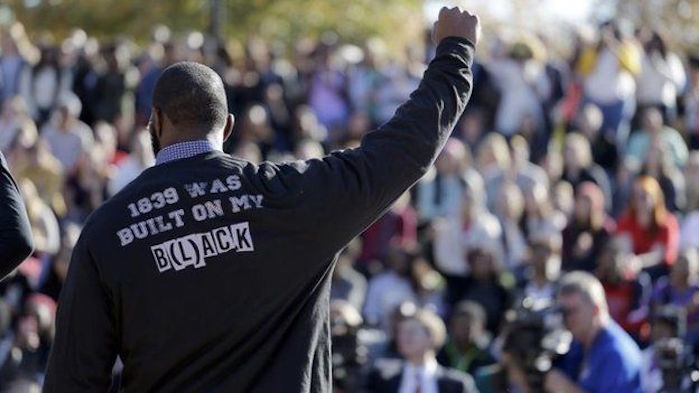
    Universities across the United States are caught up in a wave of protests swirling around issues of race, identity and how institutions should respond to their history.

    It’s raised far-reaching questions about campus culture and the boundaries of free speech.

    Much of this battle has been fought out in symbols and arguments over language.

    Slavery links | ‘Tribal identity’ | Economic significance | ‘Narcissistic’

    issues of race, identity

    Slavery links

    In Harvard, there are calls to ditch “master” from the academic title of “house masters”, the heads of residential houses, because of the word’s associations with slavery.

    The title has more to do with the British education system, with its “school masters” and “house masters”. But in the US context, where “master” has different historical echoes, the word itself has become toxic.

    And reflecting the mood on campus, this argument has been accepted by the Harvard house masters themselves, who say they are now looking for a different title.

    They say the use of the word “master” causes discomfort and creates images of “human subjugation”.

    Harvard’s Law School has been embroiled in a row over its crest, which displays the coat of arms of the Royall family. This is a link to an 18th Century college donor, Isaac Royall, who as well as establishing the college’s first professorship in law, was a particularly brutal slaveholder.

    This has been the law school’s official seal since the 1930s, but now this winter, following accusations that this was a racist emblem, a committee has been set up to reconsider its use.

    In Princeton, the dispute has focused on a school named after Woodrow Wilson. The former US president stands accused of holding deeply entrenched racist views, and protesters from the Black Justice League want the building renamed.

    In Yale, there has been a campaign to rename Calhoun College, to remove links with John Calhoun, a 19th Century advocate of slavery.

    The thread linking the protests is the suggestion that racism is not a thing of the past but remains as an unresolved question on campus.

    There is a website, the Demands, listing the grievances in more than 70 universities where students have “risen up” against such prejudice.

    ‘Tribal identity’

    But why are so many protests hitting universities now?

    Carol Christ, director of the Center for Studies in Higher Education, University of California, Berkeley, says that “symbolic fights are always about real and current political issues” and in the US, the issue of race is never far from the surface.

    “Race is so traumatic and central an issue in American culture – with both the history of slavery and the genocide of Native Americans always present,” says Dr Christ.

    The sensitivity over race and discrimination was heightened by events such as the shooting of a young black man by a police officer in Ferguson, Missouri.

    “That created a lot of activism on college campuses,” Dr Christ says.

    And the arguments over emblems and traditions are part of a wider battle over identity and whose culture should be commemorated on campus.

    “Colleges and universities in the United States make a huge amount of their history, they’re always telling their story, it’s the way in which they try and make almost a tribal identity,” Dr Christ says.

    But these stories might make difficult listening for minority groups, with the college names and emblems having echoes of slavery and segregation.

    “They will feel an alienation from the stories that they’re told to accept as part of their college identity,” says Dr Christ.

    Economic significance

    What makes this an even more significant struggle is that university is now seen as the gateway to a better job.

    Even though universities might have a public commitment to inclusion and diversity, protesters have accused them of remaining the domain of a white middle and upper class.

    Only about 5% of lecturers in US universities are black, according to official figures. Protesters have argued that universities have turned a blind eye to a long legacy of discrimination.

    “It’s about the increasing sense that college is the way to economic security and power in modern society,” Dr Christ says, adding this is combined with fears prestigious colleges are increasingly being dominated by the wealthy.

    Another provocative thread in the campus disputes has been about free speech and whether activities or language or opinions should be blocked if they upset some students.

    This has included the concept of “safe space” where students can be protected from language or arguments that might offend them.

    But this has been criticised by opponents as contradicting the intellectual purpose of a university, which should be about challenging ideas and contesting beliefs.

    ‘Narcissistic’

    Among the most forthright attacks came from Everett Piper, president of Oklahoma Wesleyan University.

    Dr Piper told his students: “This is not a day care. This is a university.”

    And he warned: “Our culture has actually taught our kids to be this self-absorbed and narcissistic. Any time their feelings are hurt, they are the victims.

    “Anyone who dares challenge them and thus makes them feel bad about themselves, is a ‘hater’, a ‘bigot’, an ‘oppressor’ and a ‘victimiser’.”

    There have also been arguments that changing the names of buildings is a way of avoiding uncomfortable questions about past attitudes, rather than addressing the historic legacy of universities.

    But this simmering winter protest shows no sign of subsiding.

    The president of the University of Missouri resigned last month, amid claims he had failed to respond adequately to allegations of racism.

    And this week, a Yale lecturer, caught up in a row over the right to wear Halloween costumes, even if they caused offence, decided to step down from teaching.

    Dr Christ says that “because race is so vexed and turbulent a subject” in the United States, the “controversies will continue”.

  • FOODS YOU SHOULD NOT EAT DAILY

    FOODS YOU SHOULD NOT EAT DAILY

    While you may be making the utmost effort to eat healthy for the majority of your day, it is possible that there are the small daily mistakes you maybe making in your diet, which make weight loss, or weight management more difficult and a slower process than it should be.

    Sometimes it is these innocuous morsels of food that make a big difference when it comes to proper weight management. So what are these foods in your daily diet that you should avoid?

    Glass of milk 

    While milk is a healthy addition to your meals, it could possibly be the one food that is hindering your progress. If you are used to having a glass of milk before you sleep, at breakfast, or even for a snack in the evening, take a break from drinking milk for a month. If you feel that its making a difference – making you less sluggish, helping you lose weight, clearing up your skin etc – this maybe the solution to your problems. Give it a go.

    Something sweet after meals

    Many people have this habit of wanting just a little something sweet after every meal. This is absolutely unnecessary and you probably know it. Just that addition of sugar after your meals is worth cutting down on if you have it on a daily basis. Let dessert be a treat you save for the weekends and you will probably savour it more.

    Heavy carbs for evening snack

    How often have you felt so hungry in the time between your lunch and dinner, that you can eat anything without giving a thought as to whether it is right for you or not?You may land up knocking off a sandwich or a samosa. This may be the only unhealthy addition to your diet in the entire day, but consumed daily, this evening snack could be hindering your efforts. Therefore, carry something that has healthy proteins and fats like nuts, with you so that you don’t succumb to hunger.

    Potatoes

    Recently dubbed by a study conducted by Harvard, as one of the foods that definitely makes you gain weight over time, potatoes have a way of turning up in our daily food unannounced. You maybe eating a healthy sabzi but a whole potato may have been added in there to improve the flavour. Fresh veggies taste good on their own if you try, so give it a shot.

    So called ‘healthy snacks’

    Baked chakris and chips, all of these so called healthy snacks, should be substituted with real nutritious food. Many people eat these unaccounted, thinking they are healthy and will not make a big difference to their health and weight. This is a misconception and you are better off without these highly processed snacks.

  • BIOLOGICAL MARKERS FOR PSYCHOTIC DISORDERS IDENTIFIED

    BIOLOGICAL MARKERS FOR PSYCHOTIC DISORDERS IDENTIFIED

    A team of researchers led by the University of Georgia has identified several biological markers that make it possible to classify mental disorders with greater precision.

    The findings may lead to improved diagnostics and treatments for those suffering from mental illness.

    “Psychiatry still relies on symptoms as the basis of a diagnosis. It would be like using the presence of fever to diagnose a specific infection. We need some means to help us more accurately differentiate mental disorders,” explained study’s lead author Brett Clementz, professor of psychology.

    Clementz and his colleagues created an experimental programme that uses neurobiological measures rather than symptoms to identify disease types.

    They focused exclusively on patients suffering from psychosis – a broad category of mental disorder that includes schizophrenia, schizoaffective disorder and bipolar disorder with psychosis – to see if they could improve upon existing methods.

    The research team recruited more than 700 patients with psychosis and some of their first-degree relatives –a parent, sibling or child – as well as a control group of healthy individuals.

    Each participant went through a battery of tests designed to assess their cognitive abilities.

    “We were better able to predict who had family histories of psychoses, structural brain abnormalities and measures of social functioning,” Clementz noted.

    This project may inspire a renewed interest in psychiatric drug development, which has been stymied recently by a lack of clear biological targets.

    “We are a long way from identifying specific disease mechanisms but we are a step closer than we were when we focused on clinical symptoms alone,” the authors noted in the American Journal of Psychiatry.

  • WAYS TO UP YOUR SEX DRIVE

    WAYS TO UP YOUR SEX DRIVE

    A diminished libido can have several ramifications for your relationship. Here are ten easy and effective tips that will help improve your sex drive: Sex is great for countless reasons, but sometimes we’re just not feeling it. And it’s OK to not be in the mood sometimes; we all have lives that can get in the way. But if you really want to kick start getting your groove on, there are lots of things you can do to boost your sex drive -and have things burn hotter once you are going at it!

    Sleep 

    “We all know that to do the horizontal mambo you need to be full of energy. What many people don’t realise is they are not eating the right foods or getting enough sleep so their bodies lack energy,” says Brad Davidson, fitness expert, nutritionist and author of The Stark Naked 21-Day Metabolic Reset. “I recommend sleeping between seven to nine hours a night without any electronics around, as they emit blue light which suppresses melatonin. In addition, when you cheat sleep, it demolishes your hormones, especially your testosterone levels,” says Davidson. “There are many studies that show only sleeping six hours versus eight hours for one night can reduce your total testosterone levels as much as 60 per cent the next morning.”

    Eat 

    It is important to have your proteins and healthy fats early in the day to keep your energy up. “I recommend having proteins like eggs, fish, or poultry along with fats like coconut oil, olive oil and avocado, to name a few. These approved foods will help keep you energised throughout the day and ready for sex,” says Davidson.

    And for dessert, reach for the dark chocolate. Chocolate has long been joked to be as good as sex, but it can also make sex better.Even better, go for chocolate-covered strawberries. “The dark chocolate is loaded with compounds to boost your sex drive, including `love chemical’ phenylethylamine, which triggers the release of dopamine in the brain and anandamide, the `pleasure chemical.’ The bioflavonoids in the chocolate also open up your blood vessels to improve blood flow while the natural sugar in the strawberries hits you with a burst of energy,” says Chris Wilson, a head strength coach and author.

    Relax 

    Stress can destroy a man’s libido.”When we feel stressed, our sex hormones are affected and produce a dip in testosterone. When testosterone dips, it not only decreases our sexual desire, but also the ability to get it up. In order to obtain and sustain an erection you need to be calm,” says Davidson.

    Turn on sports channel  

    “Watching your team sweat it out spikes testosterone in men and women (researchers figured this one out after studying Spanish fans -err -`watching’ the 2010 World Cup Soccer),” says Lisa Sweet, author of Orgasms That Will Make Her Toes Curl.

    Exercise 

    Get yourselves worked up. “Working out is a great way to boost your sex drive because physical activity increases blood flow, which makes sex more pleasurable. Exercise also boosts endorphins, which gives you more energy and makes you feel good,” says Andrea Syrtash, relationship expert and author of the new audible book, He’s Just Not Your Type (And That’s a Good Thing).

    Try mental stimulation 

    Fifty Shades of Grey is called mommy porn for a reason. Erotica is a great way to get in the mood. Sexting works, too, for the same reasons. “Yes, reading erotica like Fifty Shades of Grey or something better can definitely bring you into the mood, especially if you have a great lover who knows how to talk dirty. The brain is the biggest sexual organ,” says Tatiana Dellepiane, a sex and relationship coach.

    But when it comes to pornography, you need to practise moderation. “I advise my patients to avoid watching porn if they have low libido or conditions like erectile dysfunction. It can really raise the threshold at which you get turned on, which can desensitise you to sex with a partner. There’s nothing wrong with porn in moderation, but for people who already have low sex drives, it doesn’t do any favours,” says Dr Christopher Asandra, chief medical officer of NuMale Medical Center.

    Set the mood 

    You may have been all about mess ing around in a sea of clutter back in your college dorm days, but now you are an adult and there’s nothing stimulating about having sex in a mess. “Make sure your bedroom is not too cluttered or messy. Remove anything that feels out of place if it doesn’t go with the mood you are setting,” says Dellepiane.

    Choose the right music 

    Music is the best thing to get yourself in the mood for sex. “Do you want more tantric lovemaking or a little bump `n grind? You both choose what you’re in the mood for,” says Dellepiane.

    Energise 

    “The liver is a major player in metabolism and, when not working optimally, affects your hormones, so your energy will be horrible,” says Davidson. To help normalise your liver enzymes, says Davidson, try simple strategies like drinking warm lemon water with half a lemon squeezed into it first thing in the morning, drinking half your body weight in ounces of water, and consuming more cruciferous vegetables, such as brussel sprouts, watercress, cauliflower, broccoli, and bok choy, as they contain specific amino acids that aid the liver in detoxification. “As an added benefit they help regulate estrogen allowing for more optimal levels of testosterone,” says Davidson.

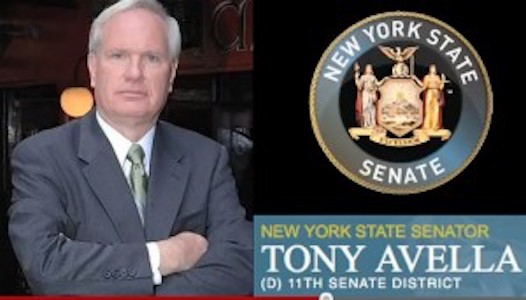
  • SENATOR AVELLA BREAKS SILENCE ON SKELOS AND SILVER TRIALS AND SIGNALS ETHICS REFORM AS PRIORITY ISSUE IN UPCOMING SESSION

    SENATOR AVELLA BREAKS SILENCE ON SKELOS AND SILVER TRIALS AND SIGNALS ETHICS REFORM AS PRIORITY ISSUE IN UPCOMING SESSION

    (New York, NY) Today, State Senator Tony Avella broke his silence on the trials involving Dean Skelos and Sheldon Silver and remarked on the challenges facing Albany’s ethics issues. Avella had refrained from comment while the Skelos trial was ongoing due to his involvement in the case as a witness. Now that the cases have concluded with the convictions of Sheldon Silver, Dean Skelos and his son Adam, Senator Avella feels at liberty to discuss the implications of the trials.

    Senator Avella was approached by the U.S. Attorney’s office and asked to testify in the Skelos trial. As former chair of the Senate Ethics Committee and a longtime champion of ethics reform, Senator Avella agreed to testify and took the stand on Wednesday, November 18th.

    “The tape recordings of Dean Skelos and his son were both shocking and extremely disappointing,”commented Senator Avella. “Although that isn’t to say that corruption in Albany is particularly new. For example, I was the first one to call for Sheldon Silvers resignation following the controversy surrounding convicted former Senator Vito Lopez. Still, the tapes played by the prosecution revealed a very calculated misuse of Senator Skelos’ position as leader of the Senate, and it was difficult to not be taken aback by their tone. Despite the defense’s attempts to portray this as a family matter, it clearly was much more; It was unethical and, according to the jury’s decision today, illegal.”

    During his testimony, Senator Avella said that, although he was not aware of Skelos bartering political favors for pay-outs to his son, he would have called for an investigation had he known, calling the behavior disrespectful.

    “Albany will have a defining legislative session ahead of itself. Both the Skelos and Silver trials shed light on exactly the kind of quid-pro-quo environment that is endemic in Albany. It will be up to the legislature to denounce the status quo and offer real solutions. New York politics has a reputation it desperately needs to overturn, but it can only do that with substantive policy that pushes elected officials towards working for their constituents and not themselves,” Avella continued.

    “The IDC recently released a set of ethics reform measure that it will be prioritizing in the upcoming session. Feeling that it would have been inappropriate to comment while the Skelos case was ongoing, I chose not to publicly comment. With the case’s conclusion, however, I can now say that I will not only be supporting the IDC’s plan, but also issuing my own priority agenda. It will compile ethics reform bills I have already introduced and new policy proposals I will be looking to introduce. With the momentum in favor of significant reform, we can start making the Silvers and the Skelos’ of the State the exception instead of the rule.”

  • Guru Nanak Prize Awarded to The Pluralism Project at Harvard University and Serve2Unite

    Guru Nanak Prize Awarded to The Pluralism Project at Harvard University and Serve2Unite

    Two organizations dedicated to promoting tolerance and religious understanding through education, research and leadership training will share Hofstra University’s 2016 Guru Nanak Interfaith Prize,said President Stuart Rabinowitz in a press release dated December 11.

    The Pluralism Project at Harvard University, created in 1991, was inspired by the increasing religious diversity of the United States, diversity that its founder and director, Dr. Diana Eck, PhD, a professor of religious studies at Harvard, saw in her classes.

    Serve2Unite, a Milwaukee-based organization that focuses on youth and community outreach, was forged from tragedy, created by Pardeep Kaleka and the Sikh community after his father and five others were killed in a shooting at a Sikh temple in Oak Creek, Wisconsin in 2012.

    “These two organizations use education and dialogue to promote tolerance, compassion and religious understanding. Now more than ever, I can think of no work that is more important,” said President Stuart Rabinowitz. “Their unwavering commitment is a testament to the principles Guru Nanak represents.”

    Dean Bernard Firestone of Hofstra College of Liberal Arts & Sciences, said this year’s recipients were chosen to reflect that there is no single approach to promoting interfaith understanding.

    “The Pluralism Project and Serve2Unite show that there are many ways to meet the challenge and embrace the opportunity presented by religious diversity,” Firestone said. “The most important thing is that people of different backgrounds communicate – whether it is through scholarly research, grassroots community outreach, leadership training or creative expression.”

    The $50,000 Guru Nanak Interfaith Prize is bestowed every two years to recognize significant work to increase interfaith understanding. A formal award presentation is planned for spring 2016. The first Guru Nanak Interfaith Prize was awarded in 2008 to His Holiness the 14th Dalai Lama, Tenzin Gyatso.

    “I am humbled and honored to be able to accept this on behalf of The Pluralism Project,” Dr. Eck said. “A prize offered in the name of Guru Nanak is a very special honor indeed. I am also very pleased that we will be sharing the prize with Serve2Unite.”

    The Pluralism Project has engaged religious practitioners, students, scholars, interfaith and civic leaders for nearly 25 years around national and international research and education about religious diversity. Its projects include online resources, symposia and trainings, seminars and consultations, producing documentary films, case studies and profiles of interfaith organizations nationwide. Among the groups it has profiled, is co-recipient, Serve2Unite.

    Pardeep Kaleka, is an inner-city school teacher and former police officer who launched Serve2Unite after his father, Satwant Singh Kaleka – the president of the Sikh Temple of Wisconsin, was killed in 2012.

    In just three years, Serve2Unite has expanded its programming from two Milwaukee schools to 20, with more than 600 active participants in its student leadership chapters. Under the direction of Arts @ Large, an umbrella arts-education organization that annually engages more than 7,000 students, teachers, and their families in the Milwaukee area, Serve2Unite helps young people create communities built on interfaith and intercultural understanding through community service, artistic projects, and guided dialogue, both in person and online.

    “We at Serve2Unite are extremely honored and humbled by the award,” Kaleka said. “Serve2Unite was founded upon the same ideology that Guru Nanak established the Sikh Religion upon; equality for all, regardless of caste, class, color, creed, or culture. Our mission is to carry this torch of justice forward in utter defiance of fear, ignorance, and hatred; to cultivate courage, wisdom, love, and human kinship on our earth.”

    The Guru Nanak Interfaith Prize was established in 2006 by Ishar Bindra and family and named for the founder of the Sikh religion. It is meant to encourage understanding of various religions and encourage cooperation between faith communities. Guru Nanak believed that all humans are equal, regardless of color, ethnicity, nationality or gender.

    In September 2000, the Bindra family endowed the Sardarni Kuljit Kaur Bindra Chair in Sikh Studies at Hofstra University in honor of the family’s matriarch.

    Tejinder Bindra, who is also a member of the University’s Board of Trustees, noted when the award was inaugurated that Guru Nanak espoused a message of universal brotherhood at a time of increasing religious intolerance during 15th and 16th century India. “It is in this spirit that the Guru Nanak Prize was initiated,” Bindra said. “If one can experience that universality then there is absolutely no room left for differences in race, color, caste, creed, religion or gender, and then as the Sikh scripture tells us ‘I see no stranger’.”

    “The awardees may or may not be Sikh and may represent any of the multitudes of faiths or, for that matter, even no particular faith at all,” he said. It is their dedication that brings humankind to their shared destiny, common purpose and roots that they honor.”


  • THREE CENTERS CONTINUE #FREEDOMGIVING HUNGER STRIKE

    THREE CENTERS CONTINUE #FREEDOMGIVING HUNGER STRIKE

    DALLAS , TX (TIP): For the past two weeks, people seeking safety in the US who ICE has kept detained for up to two years have refused meals as part of the #freedomgiving hunger strike in seven different detention centers.

    Started by 110 detainees and expanded to 150, 39 are continuing the strike at Krome, South Texas, and Aurora facilities at last count.

    In multiple facilities, detainees report ICE resorting to torture tactics including sleep deprivation, solitary confinement, and forced catheterization in response to their refusal to eat. Earlier this week, supporters obtained court documents where an Alabama judge authorized force feeding of detaineeswhose health was deteriorating at the Etowah center prompting them, seven of whom who had already been transferred to the medical unit, to end their strike.

    One striker who refused meals for 14 days, Mahbubur Rahman, sent out the message:

    “When we started this hunger strike, we thought this was only our problem.

    But when we heard so many other centers also joined hunger strike, we realized that detention is a national problem. We started to shake the walls of these prisons and even gotten presidential candidates to respond to us. We thank all of the people who support us on the outside. While our hunger strike is ending, we know we have to continue to fight”

    Another detainee, Mohammed Zakir Hosain, who led the hunger strike at Adelanto for 11 days said “We requested for ICE officials to come and meet with us to hear our demands, but got no response. If immigration authorities won’t follow their own policies, who will take responsibility to listen and do something?”

    Started on Thanksgiving Day, the hunger strike has quickly become an issue for the Democratic candidates after supporters rallied at the Clinton Campaign Headquarters in New York City. Both Sen. Sanders and Gov. O’Malley issued statements of support for the strikers while a Clinton campaign representative listened to their concerns but has yet to support the detainees.

    In a later event, Sen. Sanders met with a former hunger strike pledging to call ICE to demand their release and to schedule a visit to detainees in ICE custody.

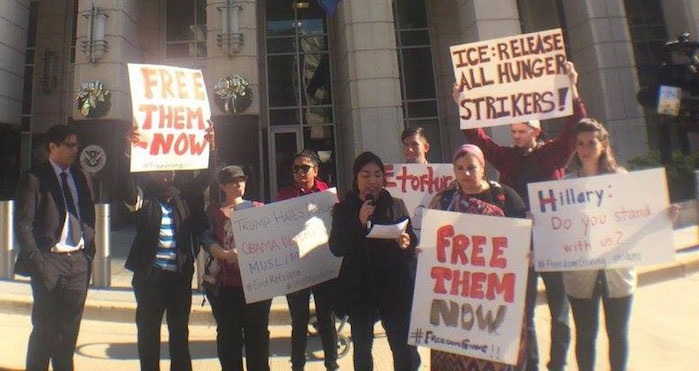
    Meanwhile, supporters in DC rallied at ICE headquarters with signs saying “Free them Now” and “Clinton: Do You Stand With Us?”

    Supporters are raising concerns for the safety of those ending their strike and the detainees continuing to refuse meals at three facilities as ICE is now denying the agreement it made with Theo Lacy detainees and its guards continue intimidation and torture tactics.

    “The United States is violating the human rights of people who came to this country seeking safety,” explains Fahd Ahmed. “People are literally starving for freedom in this country’s detention centers and authorities are responding with further abuse instead of due process, let alone compassion.”