Month: December 2015

  • Federal haze rules target seven Texas coal facilities

    Federal haze rules target seven Texas coal facilities

    DALLAS, TX (TIP): New federal rules designed to reduce smog in the country’s national parks will force seven of Texas’ oldest coal plants to make costly upgrades to their smokestacks.

    With an eye to lifting the haze that hangs over Big Bend National Park and other federal parks and wilderness areas, the U.S. Environmental Protection Agency released new air pollution standards Wednesday for Texas – one of a handful of states that had continued to resist government efforts to cut down on the release of visibility-impairing sulfur dioxide.

    Experts were wary Wednesday of predicting what exact impact the rules would have on the state’s coal power industry, which is already struggling under a natural gas boom that has forced power prices down. But last week the state’s grid operator, the Electric Reliability Council of Texas released analysis of a draft of the haze rule published by the EPA last year.

    In that report, ERCOT predicted when combined with President Obama’s order to reduce carbon emissions from the power sector as much as 4,700 megawatts of coal capacity could be shut down – roughly a quarter of the current fleet.

    “We’re still in the process of reviewing, but it looks like it’s aligned almost identically with what the EPA put out in December last year,” said Joshua Smith, an attorney with the Sierra Club. The biggest loser under the new rules is the Dallas power generator Luminant – a subsidiary of bankrupt Energy Future Holdings. Its Big Brown, Monticello, Martin Lake and Sandow facilities will now all be required to either install scrubbers or upgrade their existing equipment.

    Also named were NRG Energy’s Limestone plant, Xcel Energy’s Tolk facility and the Coleto Creek power plant southeast of San Antonio. All together the facilities comprise 14 separate coal-fired generation units – nine of which are owned by Luminant. Each has between three and five years to comply, depending whether they were installing all new scrubbers or simply retrofitting. Luminant said it was still reviewing the rules Wednesday but attacked the EPA as overstepping its authority.

    The haze rules “would require Texas to spend $2 billion for what EPA itself projects would be no perceptible improvement in visibility,” said spokesman Brad Watson.

    The tighter standards come as conditions in many national parks continue to worsen.The National Park Service maintains a running camera in Big Bend, allowing visitors to its website to see the often hazy view across the desert there.

    “Unfortunately, pollution is destroying the very scenic resources many people seek. Generally, park visitors find moderately hazy views on most days, with poor conditions of less than 30 miles visibility 6% of the time,” the website says.

    Efforts to tighten visibility standards in U.S. wilderness began with a 1990 amendment to the Clean Air Act. But bureaucracy and state opposition dragged the process out for decades. Texas finally submitted a plan to comply six years ago, but it was rejected by the EPA as effectively toothless.

    Ever since, the EPA has been working on its own plan for the Lone Star state – along with plans for Arkansas and Louisiana, which have also resisted, Smith said.

    “Many states have already started implementing plans that involve [pollution] controls identical to this. These are common across the industry,” he said.

    Texas Attorney General Ken Paxton, like his predecessor, has made a point of resisting federal attempts to impose environmental safeguards. In October, he sued the EPAover Obama’s plan to cut carbon emissions from the power industry, part of a 24-state coalition. A spokesperson for Paxton said his office was still reviewing the new rules.

  • East Texas town’s police chief, others urge citizens to arm themselves

    East Texas town’s police chief, others urge citizens to arm themselves

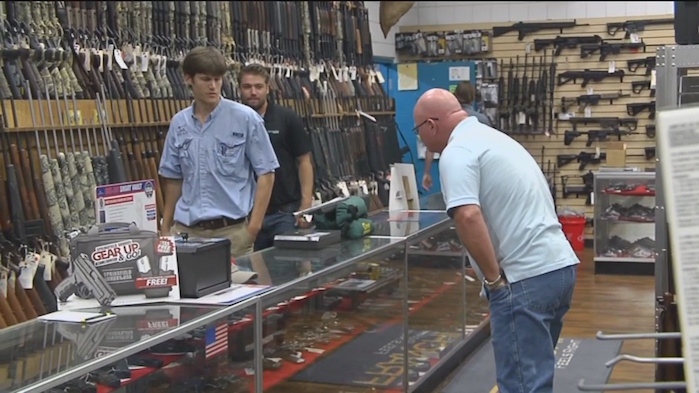
    HUGHES SPRINGS, TX (TIP): A Texas police chief who warns President Barack Obama in a social media video that trying to disarm Americans would “cause a revolution in this country” is the latest law enforcement official to urge citizens to arm themselves in the wake of mass shootings.

    Randy Kennedy, longtime chief in the small East Texas town of Hughes Springs, about 120 miles east of Dallas, says in the video posted this week on his personal Facebook page that the Second Amendment was established to protect people from criminals and “terrorists and radical ideology.”

    “It’s also there to protect us against a government that has overreached its power,” Kennedy says in the video. “You are not our potentate, sir. You are our servant.”

    He warned people in his town to prepare themselves: “Be ready when the wolf comes to the door, because it’s on its way.” Law enforcement officials in Arizona, Florida and New York also have recently prompted citizens to arm themselves – some using similar comments aimed at terrorism. Kennedy said his call to arms was the result of his disappointment with Obama’s Oval Office speech Sunday in which the president vowed the U.S. will overcome a new phase of the terror threat that seeks to “poison the minds” of people here and around the world. The police chief told The Associated Press on Wednesday that he’s not asking residents to turn into vigilantes or “become super action heroes.”

    He said feedback on his video has been supportive for the most part. “There have been a few extremely nasty comments, calling me basically a backwoods redneck hick creating monsters that don’t exist,” he said.

    Wayne Ivey, the sheriff in Brevard County, Florida, said in a video post on the department’s Facebook page over the weekend that political leaders appear more interested in being politically correct than protecting people. He urged residents to arm themselves as a first line of defense against an active shooter.

    “The only thing that stops a bad guy with a gun is a good guy with a gun,” Ivey said.

    Another Florida sheriff, Steve Whidden in Hendry County, this week encouraged more people to carry weapons because “we as a nation are under attack by radical Islamic terrorists.”

    Maricopa County Sheriff Joe Arpaio in Arizona issued a statement Tuesday asking “legally armed citizens to take a stand, and take action during a mass shooting/terrorist event until law enforcement arrives.”

    And last week, Ulster County Sheriff Paul Van Blarcum in upstate New York called for licensed gun owners in his county to arm themselves when leaving home, citing mass shootings in Paris and San Bernardino, Calif.

    John Moritz, spokesman for the Combined Law Enforcement Associations of Texas, said he assumes the comments from Kennedy, the Texas chief, reflect the views held in his community. But Moritz said caution should be used when giving such instructions to people who have no law enforcement training.

    “Most times citizens are going to be best served and best protected by calling trained law enforcement officers whenever they feel their lives or property are in danger,” Moritz said.

    The FBI said last week that it processed a record number of firearms background checks on Black Friday, the busy shopping time the day after Thanksgiving. The agency processed 185,345 background checks – roughly two per second – the same day that three people were killed and nine others wounded in an attack at a Planned Parenthood office in Colorado.

    The previous record for the most background checks in a single day was Dec. 21, 2012, about a week after 20 children and six adults were shot to death in a Connecticut elementary school. The week following the massacre at Sandy Hook Elementary saw the processing of 953,613 gun background checks.

  • 2nd South Asian film fest kicks off in Dallas (DFW)

    2nd South Asian film fest kicks off in Dallas (DFW)

    DALLAS, TX (TIP): The 2nd annual DFW South Asian Film Festival kicks off its programming
    from February 19th to 21st, 2016, at locations in downtown Dallas and Plano. The opening night film, Miss India America, will screen on Friday, Feb. 19th at the Hoglund Foundation Theater of the Perot Museum of Nature and Science, followed by a red carpet and cocktail reception at the T. Boone Pickens Life Then and Now Hall (4th floor of the Perot Museum). The rest of the specially-curated line-up will be showcased at the Angelika Film Center in Plano (Shops at Legacy) on Feb. 20th and 21st, followed by panel discussions with attending filmmakers, after-parties and networking events, all taking place in Plano.

    JINGO Media, a Dallas and NYC-based, public relations and events management boutique firm, produces the annual festival of South Asian independent cinema in North Texas. The second iteration of the festival boasts more than a dozen curated shorts, documentaries and feature films that focus on issues affecting the South Asian (India, Pakistan, Nepal, Bangladesh and Sri Lanka) sub-continent, as well as explore the lives and stories of the South Asian Diaspora in the United States.

    “In our second year, we are stepping up our game,” said JINGO Media Principal/CEO Jitin Hingorani. “Our team of curators has spent the year traveling to other South Asian film festivals around the world, including Toronto, New York, Chicago, Los Angeles and Goa, India, to secure the most meaningful and relevant programming for North Texas audiences. We are certain that our community will leave these films entertained, elated and educated.”

    The festival’s opening night film is the Texas premiere of wife/husband creative team Meera Simhan (actor/co-writer) and Ravi Kapoor’s (director/co-writer) award-winning, cross-cultural comedy Miss India America. Set against the backdrop of the Indian beauty pageant world in Los Angeles, the film stars Texas native Tiya Sircar and Hannah Simone (of television series New Girl fame), along with a supporting cast of talented South Asian actors. Produced by Megha Kadakia and Saurabh Kikani, the film “establishes an authentic tone that pays respect to Indian cultural norms, while poking gentle fun at these traditions,” raves The Hollywood Reporter.

    In addition to the opening night, centerpiece and closing night films, the festival will also showcase thought-provoking, edgy shorts and docs, along with women’s programming, men’s programming, LGBT programming and family programming. “All-access” festival passes, which provide admission to all of the films, networking events and after parties, are currently available on www.dfwsaff.com for the early-bird price of $125 before January 15th, after which the price increases to $150. Individual screenings are $15 per person, but limited tickets will be available at the theater. Every week starting in December, ONE film from the line-up will be revealed on the festival’s Facebook page and the entire festival lineup will be available by mid-January on the festival’s web site.

  • Dhanraj feels India are on the right track

    Dhanraj feels India are on the right track

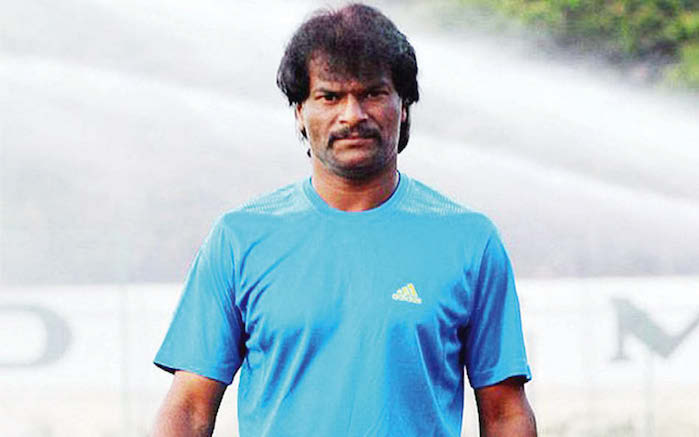
    MUMBAI: Former India captain Dhanraj Pillay responded to critical views that have popped up in the aftermath of India’s bronze medal success at the Hockey World League Final saying credit needs to be given where it is due.

    With the eight competing nations aware they were through to the quarterfinals even before the tournament began, some, like former World Cup winning captain Ajit Pal Singh, felt India did well to capitalise on the unusual format. Pillay, however, had a different take. “Overall, if you see, it was a good performance in the Hockey World League,” Pillay, said on Wednesday shortly after his Air India side had thumped CAG 5-1 in their opening match of the Dabang Mumbai – 50th All India Bombay Gold Cup, at the MHAL-Mahindra Stadium. “We are preparing for the 2016 Olympics. The coach too said we would realize where we stand for Rio. And bronze is not bad at all. After a long time, we’ve won against Holland. Even when I was playing, we drew or we lost. In 10 years, I can’t remember the last time we won. We were winning at 5-3, but unfortunately we couldn’t hold on in the last four minutes. But a win in a penalty shootout as such is as good as winning the match,” Pillay added.

    Asked about India’s notoriety for conceding goals at the death, a reputation they didn’t exactly distance themselves from against the Dutch, Pillay again rose to the defence of Roelant Oltmans’ side. “Everyone talks of the same old habits, but anyone in a desperate situation would stop at nothing. In the final minutes, they knew they were losing by two goals, so they all went up.

  • I think I’ll be there in IPTL next year too: Rafael Nadal

    I think I’ll be there in IPTL next year too: Rafael Nadal

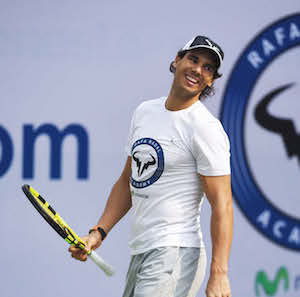
    NEW DELHI (TIP): Refusing to call the International Premier Tennis League (IPTL) an exhibition event, Spanish superstar Rafael Nadal says he would be back to compete in it next year too but conceded that tournaments like these don’t have a place in the ATP World Tour calendar.

    Making his first appearance in the IPTL, which is in its second season, Nadal is turning up for the Micromax Indian Aces, which also has on its roster Indian tennis aces Sania Mirza and Rohan Bopanna among others.

    “IPTL has been great so far and hopefully I will be back. I have liked the format, the team spirit is good, I think I am going to be back,” Nadal told reporters in a press conference after his team’s dominating win over Philippines Mavericks.

    “I don’t think these are exhibition matches, these games are very competitive. The intensity of competition is good. I feel the rules are perfect in the IPTL and it’s a great idea. But obviously, in the (ATP) World Tour, it doesn’t have a place,” asserted the 29-year-old.

    In fact, Nadal went on to say that the IPTL is turning out to be perfect preparation for him ahead of the next season. The ‘King of Clay’ has struggled with his form this season, failing to win a single Major for the first time in 10 years. “It is an unbelievable event. I have had a very good time so far and it’s a preparation for the next season. The format is quick and anything can happen. The matches can also become very close quickly,” he said.

    The affable Spaniard said he is glad to be back in India after a gap of two years and is looking forward to the much-awaited showdown with his Swiss rival Roger Federer, who would be turning up for the UAE Royals tomorrow.

    “He likes to play quick and this format suits him. Anything can happen but I am very excited to play that match tomorrow. I am looking forward to it,” he said.

    “I am very glad to be back in India after a gap of two years, fans here have always been great and I enjoy being in a place where my foundation is also there,” he said. (PTI)

  • Vijender to face experienced Bulgarian Samet Hyuseinov next

    Vijender to face experienced Bulgarian Samet Hyuseinov next

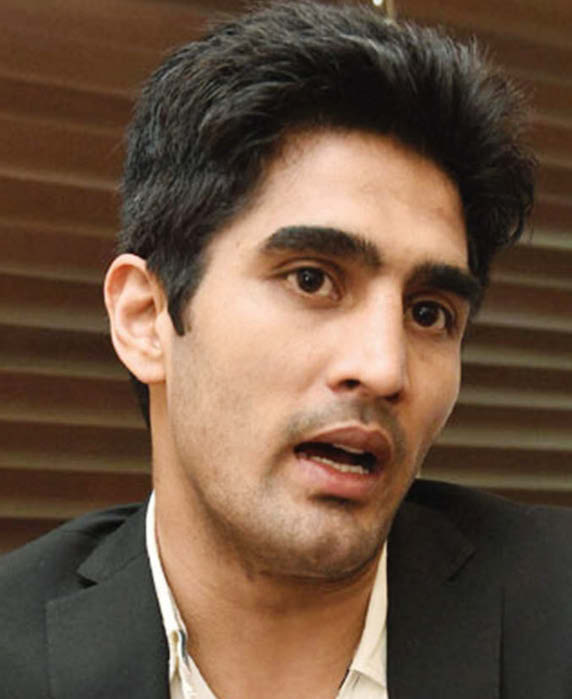
    MANCHESTER (TIP): High on confidence after two knockout wins, star Indian boxer Vijender Singh will face his most experienced opponent so far when he squares off against Bulgarian Samet Hyuseinov in his third professional bout at the Manchester Arena on December 19.

    Vijender has sailed through his first two professional opponents, beating Sonny Whiting in his debut in October and followed that up with a one-round demolition of Dean Gillen in Dublin last month.

    The 30-year-old middleweight boxer now takes on Hyuseinov in his quest to become India’s first ever professional world champion and end the year undefeated.

    Whereas Whiting and Gillen had a combined record of five fights, Hyuseinov has 14 fights under his belt, winning seven and losing the rest.

    “This is another important fight for me that I must win so the pressure is on,” said Vijender.

    “I’m unbeaten and intend to stay that way going into next year where I am looking at my first title fight so I’m not letting Hyuseinov mess up my plans to get my first championship belt,” he added.

    Vijender said his approach will continue to be aggressive even though he would be up against an experienced fighter this time.

    “While I got rid of Whiting and Gillen early, I’ll have to see what Hyuseinov brings to the ring on the night. If I feel that I can take him out early I will go in for the early knockout and get the job done nice and quick,” he said.

    “He’s very experienced though and with 14 fights and 68 rounds he’s got the advantage over me in that department. It’s a step up for me though and if I can deal with him before the end of the four rounds then I know that I’m improving. (PTI)

  • Anand back in business after crushing Topalov in London

    Anand back in business after crushing Topalov in London

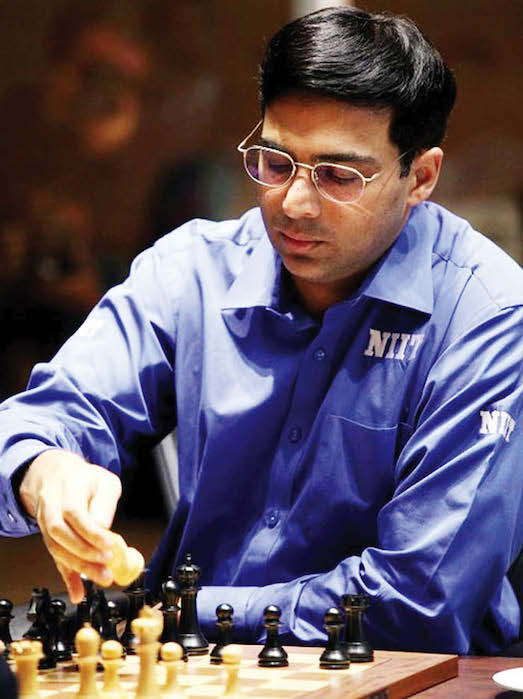
    LONDON (TIP): Five-time World Champion Viswanathan Anand bounced back from his fourth round loss and beat his former world championship challenger Veselin Topalov of Bulgaria in the fifth round of London Chess Classic, the concluding edition of the Grand Chess Tour.

    After suffering a defeat at the hands of Hikaru Nakamura of United States, Anand staged his customary comeback in style, giving an endgame lesson to Topalov who remains on the bottom of the tables.

    Yet again, there was just one decisive game and the remaining four ended in draws. Armenian Levon Aronian started out what Nigel Short termed as a ‘coffee-house’ attack against World champion Magnus Carlsen and the game ended in a draw.

    Nakamura pressed for an advantage but English Michael Adams remained solid as ever while Maxime Vachier-Lagrave of France signed peace with Anish Giri of Holland after an interesting battle.

    In the other game of the day, Fabiano Caruana of United States was on the verge of winning against Russian Alexander Grischuk but the latter survived when the former could not spot a winning continuation in the queen and minor pieces endgame.

    Past the half way stage and with just four rounds to go, Giri, Vachier-Lagrave and Nakamura continued to lead the tables with three points apiece while Anand, Carlsen, Caruana, Grischuk, Adams and Aronian have all got 2.5 points apiece. Topalov is on just one point and his chances of lifting the Grand Chess Tour trophy have almost ended.

  • In taking economic war to Islamic State, US developing new tools

    In taking economic war to Islamic State, US developing new tools

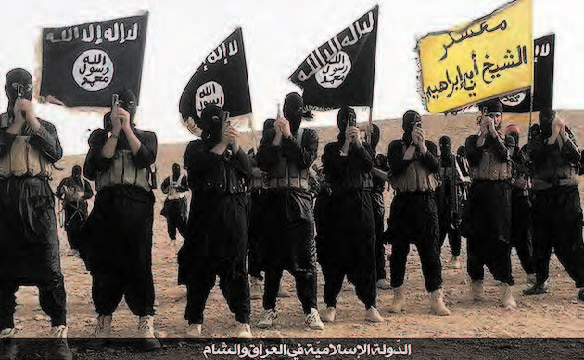
    WASHINGTON (TIP): Since last month, US warplanes have struck Islamic State’s oil infrastructure in Syria in a stepped-up campaign of economic warfare that the United States estimates has cut the group’s black-market earnings from oil by about a third.

    In finding their targets, US military planners have relied in part on an unconventional source of intelligence: access to banking records that provide insight into which refineries and oil pumps are generating cash for the extremist group, current and former officials say.

    The intent is to choke off the Islamic State’s funding by tracking its remaining ties to the global financial system. By identifying money flowing to and from the group, US officials have been able to get a glimpse into how its black-market economy operates, people with knowledge of the effort have said.

    That in turn has influenced decisions about targeting for air strikes in an effort that began before Islamic State’s Nov. 13 attacks on Paris and has intensified since, they said. While Islamic State’s access to formal banking has been restricted, it retains some ties that US military and financial officials can use against it, the current and former officials said.

    “We have done a really good job of largely keeping the Islamic State out of the formal financial system,” said Matthew Levitt, who served as deputy assistant secretary for intelligence at the US Treasury in the George W. Bush administration. “But we haven’t been entirely successful, and that may not be a bad thing.”

    Reuters was unable to verify key aspects of the campaign, including when it started or exactly which facilities have been destroyed as a result. Two current officials who confirmed the operations in outline declined to comment on their details.

    It was unclear how US intelligence, Treasury, and military officials working on what the government calls “counter threat finance” operations have used banking records to identify lucrative Islamic State oil-related targets in Syria and whether that involved local banks.

    A report this year by the intergovernmental Financial Action Task Force found there were more than 20 Syrian financial institutions with operations in Islamic State territory. In Iraq, Treasury has worked with government officials to cut off bank branches in the group’s territory from the Iraqi and international financial systems.

    Gerald Roberts, section chief of the FBI’s terrorist financing operations section, said that Islamic State’s recruits from outside Syria often come with financial trails that officials tracking them can “exploit.”

    “We are seeing them using traditional banking systems,” he said at a banking conference last week in Washington, adding that young, tech-savvy Islamic State members are also familiar with virtual currencies such as Bitcoin.

    Islamic State, also known as IS, ISIS or ISIL, is sometimes forced to use commercial banks because the amounts involved are too large to move using other means, said Levitt.

    The US Treasury’s Financial Crimes Enforcement Network (FinCEN) uses a set of “business rules” to screen the roughly 55,000 reports it receives daily from financial institutions for signs of activity involving Islamic State, a spokesman said. He declined to describe the rules, but law enforcement sources say names, IP addresses, email addresses, and phone numbers are among the data that intelligence authorities try to match.

    The matches allow FinCEN “to connect the dots between seemingly unrelated individuals and entities,” the FinCEN spokesman said. At present, FinCEN finds about 1,200 matches suggesting possible Islamic State-linked financial activity each month, up from 800 in April, the spokesman said.

    Bank of America, JP Morgan and Wells Fargo declined to comment on whether they provided financial reports to the US government. Such reports are supplied confidentially.

    Citigroup, HSBC, and Standard Chartered did not immediately respond to requests for comment.

    “Tidal Wave II” The use of financial records linked to Islamic State is only one part of the intelligence-gathering exercise for air strikes in Syria that also includes methods such as aerial surveillance by drones, officials said.

    One former military official familiar with the process said that any financial intelligence collected by FinCEN would require “significant vetting” before the military acted on it.

    Earlier this month, US-led coalition planes struck 116 fuel trucks used to smuggle Islamic State oil 45 minutes after dropping leaflets warning drivers to flee, a Pentagon spokesman said. Coalition strikes destroyed another 283 Islamic State fuel trucks on Saturday, the Pentagon said.

    On November 8, a coalition air strike destroyed three oil refineries in Syria near the border with Turkey.

    US defense officials estimate that Islamic State, an adversary the United States calls the wealthiest terrorist group of its kind in history, was earning about $47 million per month from oil sales prior to October.

    That month, the US military launched an intensified effort to go after oil infrastructure, dubbed “Tidal Wave II,” named after the bombing campaign targeting Romanian oil fields in World War Two.

    The Pentagon estimates the strikes have reduced the Islamic State’s income from oil sales by about 30 percent, one US defense official with knowledge of the previously unreported estimate said. Reuters was unable to confirm this.

    The use of financial records in helping to pick US targets was first disclosed last week at the banking conference in Washington. At the conference, Kurt Gredzinski, the Counter Threat Finance Team Chief at US Special Operations Command, cited the importance of information provided by banks in the war against Islamic State.

  • President Obama’s address on the San Bernardino terror attack and the war on ISIS | Transcript

    President Obama’s address on the San Bernardino terror attack and the war on ISIS | Transcript

    President Barack Obama on Sunday, December 6 issued his most passionate denunciation yet of ISIS, vowing to “destroy” the group in a relentless, strong and smart campaign that is consistent with the nation’s values.

    Obama, speaking in the symbolic surroundings of the Oval Office, unequivocally told millions of television viewers in prime-time that last week’s mass shooting in San Bernardino, California, was a terrorist attack by a couple who had gone down the “dark path of radicalization” and embraced a “perverted” form of Islam.

    For our readers who missed the speech, transcript of the speech is below:

    THE PRESIDENT: Good evening. On Wednesday, 14 Americans were killed as they came together to celebrate the holidays. They were taken from family and friends who loved them deeply. They were white and black; Latino and Asian; immigrants and American-born; moms and dads; daughters and sons. Each of them served their fellow citizens and all of them were part of our American family.

    Tonight, I want to talk with you about this tragedy, the broader threat of terrorism, and how we can keep our country safe.

    The FBI is still gathering the facts about what happened in San Bernardino, but here is what we know. The victims were brutally murdered and injured by one of their coworkers and his wife. So far, we have no evidence that the killers were directed by a terrorist organization overseas, or that they were part of a broader conspiracy here at home. But it is clear that the two of them had gone down the dark path of radicalization, embracing a perverted interpretation of Islam that calls for war against America and the West. They had stockpiled assault weapons, ammunition, and pipe bombs. So this was an act of terrorism, designed to kill innocent people.

    President Obama: 'This was an act of terrorism'

    Our nation has been at war with terrorists since al Qaeda killed nearly 3,000 Americans on 9/11. In the process, we’ve hardened our defenses — from airports to financial centers, to other critical infrastructure. Intelligence and law enforcement agencies have disrupted countless plots here and overseas, and worked around the clock to keep us safe. Our military and counterterrorism professionals have relentlessly pursued terrorist networks overseas — disrupting safe havens in several different countries, killing Osama bin Laden, and decimating al Qaeda’s leadership.

    Over the last few years, however, the terrorist threat has evolved into a new phase. As we’ve become better at preventing complex, multifaceted attacks like 9/11, terrorists turned to less complicated acts of violence like the mass shootings that are all too common in our society. It is this type of attack that we saw at Fort Hood in 2009; in Chattanooga earlier this year; and now in San Bernardino. And as groups like ISIL grew stronger amidst the chaos of war in Iraq and then Syria, and as the Internet erases the distance between countries, we see growing efforts by terrorists to poison the minds of people like the Boston Marathon bombers and the San Bernardino killers.

    For seven years, I’ve confronted this evolving threat each morning in my intelligence briefing. And since the day I took this office, I’ve authorized U.S. forces to take out terrorists abroad precisely because I know how real the danger is. As Commander-in-Chief, I have no greater responsibility than the security of the American people. As a father to two young daughters who are the most precious part of my life, I know that we see ourselves with friends and coworkers at a holiday party like the one in San Bernardino. I know we see our kids in the faces of the young people killed in Paris. And I know that after so much war, many Americans are asking whether we are confronted by a cancer that has no immediate cure.

    Well, here’s what I want you to know: The threat from terrorism is real, but we will overcome it. We will destroy ISIL and any other organization that tries to harm us. Our success won’t depend on tough talk, or abandoning our values, or giving into fear. That’s what groups like ISIL are hoping for. Instead, we will prevail by being strong and smart, resilient and relentless, and by drawing upon every aspect of American power.

    Here’s how. First, our military will continue to hunt down terrorist plotters in any country where it is necessary. In Iraq and Syria, airstrikes are taking out ISIL leaders, heavy weapons, oil tankers, infrastructure. And since the attacks in Paris, our closest allies — including France, Germany, and the United Kingdom — have ramped up their contributions to our military campaign, which will help us accelerate our effort to destroy ISIL.

    Second, we will continue to provide training and equipment to tens of thousands of Iraqi and Syrian forces fighting ISIL on the ground so that we take away their safe havens. In both countries, we’re deploying Special Operations Forces who can accelerate that offensive. We’ve stepped up this effort since the attacks in Paris, and we’ll continue to invest more in approaches that are working on the ground.

    Third, we’re working with friends and allies to stop ISIL’s operations — to disrupt plots, cut off their financing, and prevent them from recruiting more fighters. Since the attacks in Paris, we’ve surged intelligence-sharing with our European allies. We’re working with Turkey to seal its border with Syria. And we are cooperating with Muslim-majority countries — and with our Muslim communities here at home — to counter the vicious ideology that ISIL promotes online.

    Fourth, with American leadership, the international community has begun to establish a process — and timeline — to pursue ceasefires and a political resolution to the Syrian war. Doing so will allow the Syrian people and every country, including our allies, but also countries like Russia, to focus on the common goal of destroying ISIL — a group that threatens us all.

    This is our strategy to destroy ISIL. It is designed and supported by our military commanders and counterterrorism experts, together with 65 countries that have joined an American-led coalition. And we constantly examine our strategy to determine when additional steps are needed to get the job done. That’s why I’ve ordered the Departments of State and Homeland Security to review the visa (waiver) program under which the female terrorist in San Bernardino originally came to this country. And that’s why I will urge high-tech and law enforcement leaders to make it harder for terrorists to use technology to escape from justice.

    Now, here at home, we have to work together to address the challenge. There are several steps that Congress should take right away.

    To begin with, Congress should act to make sure no one on a no-fly list is able to buy a gun. What could possibly be the argument for allowing a terrorist suspect to buy a semi-automatic weapon? This is a matter of national security.

    We also need to make it harder for people to buy powerful assault weapons like the ones that were used in San Bernardino. I know there are some who reject any gun safety measures. But the fact is that our intelligence and law enforcement agencies — no matter how effective they are — cannot identify every would-be mass shooter, whether that individual is motivated by ISIL or some other hateful ideology. What we can do — and must do — is make it harder for them to kill.

    Next, we should put in place stronger screening for those who come to America without a visa so that we can take a hard look at whether they’ve traveled to warzones. And we’re working with members of both parties in Congress to do exactly that.

    Finally, if Congress believes, as I do, that we are at war with ISIL, it should go ahead and vote to authorize the continued use of military force against these terrorists. For over a year, I have ordered our military to take thousands of airstrikes against ISIL targets. I think it’s time for Congress to vote to demonstrate that the American people are united, and committed, to this fight.

    My fellow Americans, these are the steps that we can take together to defeat the terrorist threat. Let me now say a word about what we should not do.

    We should not be drawn once more into a long and costly ground war in Iraq or Syria. That’s what groups like ISIL want. They know they can’t defeat us on the battlefield. ISIL fighters were part of the insurgency that we faced in Iraq. But they also know that if we occupy foreign lands, they can maintain insurgencies for years, killing thousands of our troops, draining our resources, and using our presence to draw new recruits.

    The strategy that we are using now — airstrikes, Special Forces, and working with local forces who are fighting to regain control of their own country — that is how we’ll achieve a more sustainable victory. And it won’t require us sending a new generation of Americans overseas to fight and die for another decade on foreign soil.

    Here’s what else we cannot do. We cannot turn against one another by letting this fight be defined as a war between America and Islam. That, too, is what groups like ISIL want. ISIL does not speak for Islam. They are thugs and killers, part of a cult of death, and they account for a tiny fraction of more than a billion Muslims around the world — including millions of patriotic Muslim Americans who reject their hateful ideology. Moreover, the vast majority of terrorist victims around the world are Muslim. If we’re to succeed in defeating terrorism we must enlist Muslim communities as some of our strongest allies, rather than push them away through suspicion and hate.

    That does not mean denying the fact that an extremist ideology has spread within some Muslim communities. This is a real problem that Muslims must confront, without excuse. Muslim leaders here and around the globe have to continue working with us to decisively and unequivocally reject the hateful ideology that groups like ISIL and al Qaeda promote; to speak out against not just acts of violence, but also those interpretations of Islam that are incompatible with the values of religious tolerance, mutual respect, and human dignity.

    But just as it is the responsibility of Muslims around the world to root out misguided ideas that lead to radicalization, it is the responsibility of all Americans — of every faith — to reject discrimination. It is our responsibility to reject religious tests on who we admit into this country. It’s our responsibility to reject proposals that Muslim Americans should somehow be treated differently. Because when we travel down that road, we lose. That kind of divisiveness, that betrayal of our values plays into the hands of groups like ISIL. Muslim Americans are our friends and our neighbors, our co-workers, our sports heroes — and, yes, they are our men and women in uniform who are willing to die in defense of our country. We have to remember that.

    President Obama: ‘Freedom is more powerful than fear’ 

    My fellow Americans, I am confident we will succeed in this mission because we are on the right side of history. We were founded upon a belief in human dignity — that no matter who you are, or where you come from, or what you look like, or what religion you practice, you are equal in the eyes of God and equal in the eyes of the law.

    Even in this political season, even as we properly debate what steps I and future Presidents must take to keep our country safe, let’s make sure we never forget what makes us exceptional. Let’s not forget that freedom is more powerful than fear; that we have always met challenges — whether war or depression, natural disasters or terrorist attacks — by coming together around our common ideals as one nation, as one people. So long as we stay true to that tradition, I have no doubt America will prevail.

    Thank you. God bless you, and may God bless the United States of America.

  • VIVAH PANCHAMI

    VIVAH PANCHAMI

    Vivah Panchami is a sacred Hindu festival that celebrates the divine marriage between Lord Sri Ram and Goddess Sita. It is observed on the fifth day of the Shukla paksha or waxing phase of moon in the Margashirsha month according to the Hindu calendar.

    VIVAH PANCHAMIAs per the Gregorian calendar the festival falls on late November or early December. Upcoming Vivah Panchami is on 16 December 2015 (Wednesday).

    The festival is mainly observed in the Northern parts of India, Mithilanchal region and Nepal.

    According to the epic Ramayana it was on this day that the prince of Ayodhya, Lord Sri Ram who is the incarnation of God Vishnu visited the kingdom of Janaka (presently situated on the border of Nepal) and won the hand of goddess Sita in marriage by breaking the bow. Janakpur is regarded as the birth place of Sita Devi. Since then, people have been celebrating the day with great religious fervour to immortalize the marriage ceremony of the eldest son of King of Ayodhya Dasharath, Lord Ram, and King Janak’s daughter Sita that took place in the Treta Yug.

    How is Vivah Panchami Celebrated?

    This day is celebrated with great grandeur in Sri Ram’s birth place, Ayodhya. The many centuries-old temples light up on Sri Ram Vivah Panchmi. The celebrations usually involve enactment of the wedding ceremony. A grand wedding procession is held that passes from one temple to another during the day and culminates with the wedding ceremony in the evening. The event is also referred as Ram Vivah Utsav. On this day devotional songs from Ramayana are sung by the devotees.

    The festival is also celebrated with great fanfare in Janakpur which is regarded as the birth place of Goddess Sita. Special poojas and rituals are held at temples across Janakpur including renowned Janaki, Ram and Dashrath temples. Devotees also throng the famous lakes of Mithilanchal like Gangasagar, Dhanushsagar and Argaza pond to perform the Vivaha Panchami rituals.

    On this day in Janakpur idols of idols of Ram and Sita dressed as the bridegroom and bride are brought out in bright processions and their wedding ceremony is enacted at Janaki temple in the evening as per the Hindu customs. A week long religious fair is also held at Janakpur to celebrate the wedding ceremony.

    Thousands and thousands of pilgrimage visit Janakpur during Vivah Panchami festival. Not only the Nepalese but also pilgrims from India take part in the festival in large number.

  • PRIYANKA IS SEXIEST ASIAN WOMAN, ONCE AGAIN

    PRIYANKA IS SEXIEST ASIAN WOMAN, ONCE AGAIN

    Priyanka Chopra has been making India proud with her act in the international TV series, Quantico. Even while the show is on, she has once again brought India into limelight by winning the Sexiest Asian Woman poll conducted by a UK-based newspaper. The thing to note is that Priyanka had also won the same title last year. So, the actress is now on a hat-trick. She has expressed happiness at the result. But she has also given a piece of advice to females stating that sexiness is all in the mind. Priyanka is readying herself for the release of her flick, Bajirao Mastani on December 18.

    PRIYANKA IS SEXIEST ASIAN WOMAN

  • DHANU SANKRANTI

    DHANU SANKRANTI

    Dhanu Sankranti also known as Dhanur Sankraman is the day when Sun enters into Dhanu Rashi or the sign of Sagittarius. Dhanu Sankranti marks the beginning of the ninth month in Hindu Solar Calendar. It marks the arrival of Dhanu month in Malayalam calendar and Margashirsha and Paush month as per the calendars followed in north and western parts of India. Dhanur mas end on the Makar Sankranti day.

    On Dhanu Sankranti day Surya or the Sun God is worshiped Special prayers are offered to Surya and people also take a dip in holy rivers. It is considered very auspicious to take a Sankraman Snan or the ritual bath in holy rivers like Ganga, Yamuna, Mahanadi, Godavari, Krishna, Tungabhadra, and Cauvery.

    Dhanu Sankranti is of great significance in Orissa. This festival is one of the important festivals of Orissa. Special prayers and pujas are offered to Lord Jagannath on this day. In Orissa Dhanu Sankranti is celebrated on the first day of lunar Pousha month. Special delicacy made of sweetened rice flakes called Dhanu Maun is offered to Lord Jagannath in puja.

    The famous Dhanu Yatra is held during this period at Baragarh town of Koshal region or Western Orissa. Though Dhanu Yatra is performed at various places in the state the one at Bargarh is the most popular Dhanu Yatra.

    It is a street play based on Krishna’s visit to Mathura to witness the ceremony of ‘Bow’ organised by Kansa as described in the ‘Bhagawat Purana’. It is celebrated from Pousa Sukla SasthTithi i.e. sixth day of bright fortnight of Pousa to Pousa Purnima i.e. the full moon day of Pousa and is carried out for ten to eleven days continuously. Dhanu Yatra is the biggest open-air theatre in the known history of the world. The whole topography of Bargarh within a radius of about five to six kilometres turns into one big theatre during these eleven days.

    Kansa had invited Krishna and Balaram on the occasion of Dhanu Yatra with an intention of killing them during the Yatra. Hence it is known as Dhanu Yatra. This annual mass festival enacts episodes of the epic Mahabharata from Lord Krishna’s birth to the killing of the cruel demon king Kansa by Krishna. During this occasion Bargarh town turns into Mathura. Jira River is on the border of Bargarh town becomes Jamuna. On the other side of the river Jira a small village called Ambapali becomes Gopapura.

    There is a mango orchard, which serves as Brundavan and a pond is used as Kalindi Sarovar. Various scenes mentioned the Bhagavata Purana is enacted in different places of Bargarh town and Ambapali village. Almost all the people in the town are part of the play.

    Rituals of the Day

    • On this day, Lord Jagannath is worshipped in many parts of India, especially in Orissa. Devotees start the festival of Dhanu Yatra from sixth day of Pousha month in Shukla Paksha and continue it until Purnima of the Pousha month.
    • Special prasad is prepared on this day, which includes sweetened rice flakes in conical shape to offer the God during the puja ceremony.
    • The “Bow Ceremony” is depicted in a street play and held as mentioned in the Bhagwad Purana. Devotees from near and far come to watch this and pray to God.
    • This day is considered auspicious to offer donation (daanya punnya) and perform ancestral pujas.
    • Apart from daan activities one should involve himself in sankraman japa, holy water bath and pitru tarpan.
    • The Sun God is offered water and flowers early in the morning just after the sunrise to receive blessings. Devotees especially, women, fast on this day for happiness and fortune in their life.
  • KALPA: UNTOUCHED BEAUTY IN THE LAP OF HILLS

    KALPA: UNTOUCHED BEAUTY IN THE LAP OF HILLS

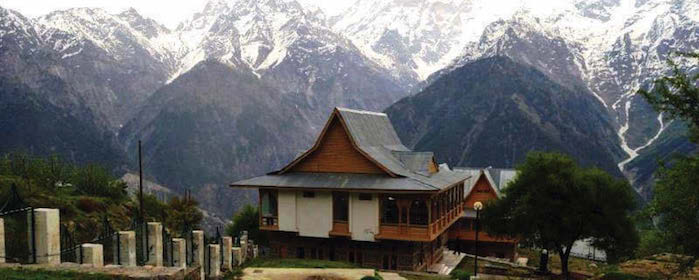
    Huddled under a blanket, a drowsy opening of the eyes as the curtain is pulled back: and there stands the mighty Kinnaur Kailash mountain range in Himachal Pradesh – in one word, breathtaking!

    The mountain range, wrapped in a white sheet of snow, appeared no less than a fairy tale land. As the sun rose from behind the range, kissing its peaks, its rays cast a magical spell on the small village of Kalpa, located in the lap of nature, surrounded by hills.

    KALPA- UNTOUCHED BEAUTY 1One would not be mistaken in believing mother nature had adopted the tiny village and nurtured its natural beauty.

    This enchanted village of Kalpa is located at 9,711 feet above sea level in Kinnaur district of Himachal Pradesh on NH-22, also known as the Hindustan-Tibet Road.

    Known for its apple orchards, it’s an abode of nature’s beauty. Since it is not a popular tourist destination, the village has maintained its natural untouched beauty.

    But the journey to Kalpa is not for comfort-seeking travellers, no less than a roller coaster ride from Himachal capital Shimla. It’s probably one of the most dangerous roads in the state. If you ignore the rough and rugged landslide-prone terrain and soak in the pine and spruce trees, the tranquil Baspa river and the mighty Himalayan snow-covered range, nature will amaze you with its awesome beauty.

    KALPA- UNTOUCHED BEAUTY 2The journey is hectic and physically tiring. But it is the beauty of nature that keeps the eye glued to the window of the bus.

    The moment one reaches Kalpa, the soothing silence of the valley and its virgin charm energise, taking you to an imaginative world far away from your chaotic city schedule.

    The chants from a Buddhist monastery, the Buddhist flags waving as the cold breeze whistles across the pine and spruce woods creating a wind symphony: that’s how the morning greets you at Kalpa.

    Though there are no tourist spots to visit, the ecstatic charm and uninhibited feel of the village will mesmerize you. A small walk across the village covers it all within a day.

    While talking a walk along the narrow hilly lanes in the area, the dead maple leaves crunching below my feet, the lines of Robert Frost from his poem “The Mountain” came to mind: The mountain stood there to be pointed at/Pasture ran up the side a little way/And then there was a wall of trees with trunks/ After that, only tops of trees and cliffs.

    KALPA- UNTOUCHED BEAUTY#The village is an amalgamation of Hindus and Buddhist residents. Take out time to seek solace at the Buddhist Hu-Bu-Lan-Khar monastery or blessing at the Hindu Durga temple.

    Kalpa also provides a treat for your taste buds if you are looking for Tibetan food. Taste some authentic Tibetan food at restaurants run by locals; slurp on thukpas, chomp on mutton momos and noodles and sip some hot tea on a cold wintry evening; pluck apples from the orchards; visit the Roghi village – and the day is gone!

    As the sun sets behind one of the hills, it leaves behind a majestic view of the Kinnaur Kailash range – probably one of the the best scenic appearances. The sky gets enveloped in a reddish hue and the snow-capped peaks get ornamented in red, making the way for moon-kissed night.

    Away from the cacophony of bustling city life, Kalpa is a pure scenic bliss that one can never get enough of.

    FAQs:

    • Getting there: Buses are available from Shimla to Reckong Peo. Cabs and buses are available from Reckong Peo to Kalpa. Cabs usually charge Rs.400 from Reckong Peo and around Rs.5,000 from Shimla (one-way).
    • Time taken: It takes around 9-10 hours to reach Kalpa from Shimla depending upon road conditions.
    • Where to stay : There is a Himachal Pradesh Tourism Development Corporation hotel at Kalpa. There are also many hotels at Kalpa that provide a picture-perfect view of the mountain ranges.
    • Where to eat: Most hotels have restaurants. Also there are innumerable local restaurants.
  • World’s first biologically powered chip created

    World’s first biologically powered chip created

    NEW YORK (TIP): In a major breakthrough, researchers at Columbia Engineering have harnessed the molecular machinery of living systems to power an integrated circuit.

    They achieved this by integrating a conventional solid-state complementary metal-oxide-semiconductor (CMOS) integrated circuit with an artificial lipid bilayer membrane containing adenosine triphosphate (ATP)-powered ion pumps.

    In living systems, ATP is used to transport energy from where it is generated to where it is consumed in the cell.

    The advance has opened the door to creating new artificial systems that contain both biological and solid-state components.

    “In combining a biological electronic device with CMOS, we will be able to create new systems not possible with either technology alone,” said study leader professor Ken Shepard.

    While other groups have harvested energy from living systems, Shepard and his team are exploring how to do this at the molecular level, isolating just the desired function and interfacing this with electronics.

    “We don’t need the whole cell. We just grab the component of the cell that’s doing what we want. For this project, we isolated the ATPases because they were the proteins that allowed us to extract energy from ATP,” Shepard said.

  • HOW WATER ESCAPES FROM SATURN EXPLAINED

    HOW WATER ESCAPES FROM SATURN EXPLAINED

    WASHINGTON (TIP): Researchers have found how water ions escape from the Saturn’s environment after locating a point from where the ions exhaust out of the planet’s atmosphere.

    Daniel Reisenfeld, a professor at the University of Montana in US, is a member of the Cassini research team, a NASA-managed probe that studies Saturn. Cassini has been in orbit continuously collecting data since 2004.

    One of the instruments on Cassini measures the planet’s magnetosphere – the charged particles, known as plasma, that are trapped in the space surrounding Saturn by its magnetic field.

    One of Cassini’s past discoveries is that Saturn’s plasma comprises water ions, which are derived from Saturn’s moon Enceladus, which spews water vapours from its Yellowstone-like geysers.

    Knowing that the water ions would not be able to accumulate indefinitely, researchers set out to explain how the water ions escape from Saturn’s magnetosphere.

    The researchers said that the plasma found a place to exhaust out of the magnetosphere at a reconnection point – where magnetic fields from one environment disconnect and reconnect with magnetic fields from another environment.

    In the case of Saturn, researchers discovered the reconnection point was located at the back of the planet, where the magnetotail was connecting with the solar winds’ magnetic field.

    Reisenfeld likens the situation to a rotary or a traffic circle. Once you get into the rotary you have limited exit points.

    “If you can’t find the exit, you keep going around in circles,” he said.

    “So, the plasma around Saturn is basically trapped to go around the rotary. We assumed it had to escape somehow and somewhere, but actually finding the jettison point is pretty cool,” he said.

    The discovery will help scientists understand the physics of how other rapid rotators such as Jupiter, stars and pulsars expel their materials and the details of how it works.

    “It’s very exciting to have discovered this reconnection location because reconnection is one of the holy grails of plasma physics,” Reisenfeld said.

  • Glaciers in Everest have shrunk by 28% in 40 years

    Glaciers in Everest have shrunk by 28% in 40 years

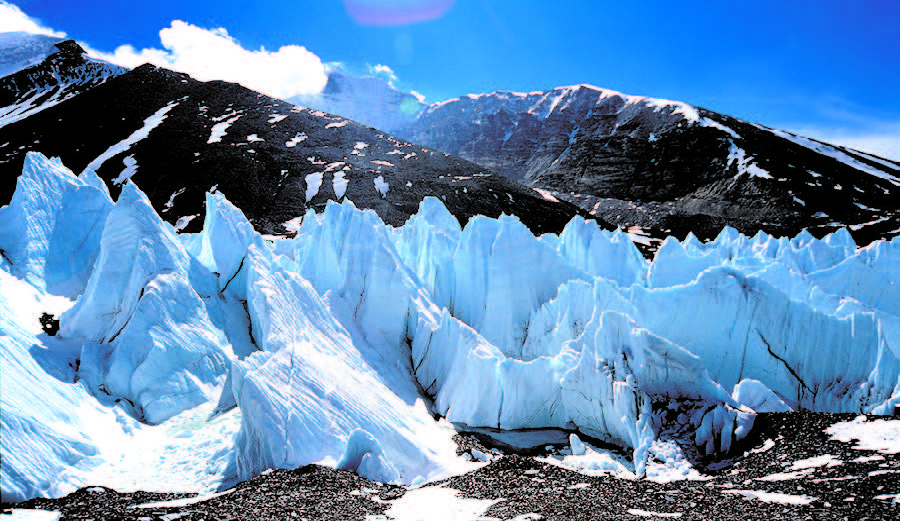
    BEIJING (TIP): Glaciers on Mount Everest, source of major Asian rivers like Brahmaputra, have shrunk by 28%over the past 40 years due to climate change, according to a report.

    The glacial shrinkage area is compared to the measurements taken in the 1970s in the report released by the Chinese Academy of Sciences (CAS), Hunan University of Science and Technology , and Mount Qomolangma Snow Leopard Conservation Centre.

    The glacial area on the south slope of the world’s highest mountain, in Nepal, has decreased by 26% since the 1980s, the report said.

    Part of the report also said Everest, known as Mount Qomolangma in Tibet, has been getting warmer for the past 50 years.

    Kang Shichang, a researcher with the State Key Labo ratory of Cryospheric Sciences under the CAS, said the data was based on long-term remote sensing and on-site monitoring.

    At present, there are 1,476 glaciers in China’s Mt Qomolangma national nature reserve, covering 2,030 square kilometres, state-run Xinhua news agency reported. The shrinking glaciers have resulted in swelling of glacial lakes and higher river levels downstream, Kang, who has led several glacier inspection teams, said.

    Remote sensing data showed that the area of a glacial lake in Mount Everest nature reserve increased from about 100 square kilometres in 1990 to 114 square kilometres in 2013, Kang said.

    Mount Everest is the source of a number of major Asian rivers, including Brahmaputra and Ganges.

  • JAPAN PROBE ENTERS VENUS ORBIT

    JAPAN PROBE ENTERS VENUS ORBIT

    TOKYO (TIP): Japan’s space agency said on Wednesday its “Akatsuki” probe had successfully entered into orbit around Venus after an initial attempt at reaching the second planet from the sun failed five years ago.

    The success marks the first time a Japanese space probe has entered into the orbit of another planet, according to Japan Aerospace Exploration Agency (JAXA).

    “The probe is functioning properly,” Japan Aerospace Exploration Agency (JAXA) project manager Masato Nakamura said during a press conference.

    “We’ll conduct an inital observation for three months… We’ll then shift to full observation in April,” he said.

    Akatsuki, meaning dawn, blasted off in 2010 on a 25.2 billion yen ($205 million at current exchange rates) mission to observe the toxic atmosphere and super-hot volcanic surface of Venus.

    But the box-shaped probe failed to enter the planet’s gravitational pull and shot past it, forcing JAXA technicians to make the second attempt.

    The successful Venus orbit came a week after another Japanese space probe, “Hayabusa 2”, passed by Earth to harness the planet’s gravitational pull to propel it toward a far away asteroid in its quest to study the origin of the solar system.

    The explorer conducted an “Earth swing-by” and came as close as 3,090 kilometres above the planet’s surface, before switching its orbit to continue towards the tiny Ryugu asteroid.

    Hayabusa 2 was launched a year ago on a six-year mission to bring back mineral samples from the asteroid.

    It is expected to reach Ryugu, named after a mythical castle in a Japanese folk tale, in mid-2018.

    If all goes well, soil samples will be returned to Earth in late 2020.

    Analysing the extra-terrestrial materials could help shed light on the birth of the solar system 4.6 billion years ago and offer clues about what gave rise to life on Earth, scientists have said.

  • THIN POWER PAPER THAT CAN STORE ENERGY DEVELOPED

    THIN POWER PAPER THAT CAN STORE ENERGY DEVELOPED

    LONDON (TIP): Scientists have developed power paper -a new material consisting of nanocellulose and a conductive polymer -that has an outstanding ability to store energy . One sheet, 15 centimetres in diameter and a few tenths of a millimetre thick, can store energy similar to the supercapacitors currently on the market, researchers said.

    The material can be recharged hundreds of times and each charge only takes a few seconds. “Thin films that function as capacitors have existed for some time.What we have done is to produce the material in three dimensions. We can produce thick sheets,” said Xavier Crispin, professor of organic electronics at Linkoping University in Sweden.

    The new cellulose-polymer material has set a new world record in simultane ous conductivity for ions and electrons, which explains its exceptional capacity for energy storage, researchers said.

    Unlike the batteries and capacitors currently on the market, power paper is produced from simple materials -renewable cellulose and an easily available polymer.

    It is light in weight, requires no dangerous chemicals or heavy metals and is waterproof, he said.

  • Maruti Suzuki to raise car prices from January 1

    Maruti Suzuki to raise car prices from January 1

    NEW DELHI (TIP): Maruti Suzuki India Ltd, the nation’s biggest carmaker by sales, plans to
    raise prices of its cars by up to 20,000 rupees ($300), starting January 1, to offset cost increases and unfavourable foreign exchange rates, a company spokesman said on December 10. Maruti’s move comes after its closest rival, Hyundai Motor Co’s Indian unit, said it would raise the price of its cars by up to 30,000 rupees in January.

  • US SEEKS NEW GROUP FOR CHINDIA AT WTO

    US SEEKS NEW GROUP FOR CHINDIA AT WTO

    NEW DELHI (TIP): At the World Trade Organisation (WTO) headquarters in Geneva, there have been voices— largely from the US — suggesting that a new category of countries be created apart from the three main groups — developed, developing and least developed countries.

    It has been suggested that the new group should comprise the rapidly growing economies, such as China and India, which have gained considerable mass in recent years. Although there has not been an explicit demand to create a new group of emerging countries, there have been discussions behind closed doors that have raised eyebrows in the Capital.

    After all, this move has the potential to change the way global talks have taken place in the past and the impact may be felt beyond trade. “It has strategic implications that go beyond just WTO. If the demand finds merit then other negotiations, including the climate talks, may be impacted,” said a source based in Geneva.

    At the WTO, it would push China, India and others, which fall into the same category of advanced developing countries, to go for sharper duty cuts and adjust their rules related to, say, trade facilitation, more quickly than developing countries.

    While there has been chatter for several years, there is more discussion today. “The US is more bothered about China and its impact on the global economy but India is also getting clubbed into the same group, given that it is growing fast,” the source said.

    Economists, however, believe that the demand may be a little premature given that there is huge disparity between the developed countries and those in the second group, such as China and India. “Size of China’s economy is same as US, but China’s per capita income is 22% of the US per capita income because China has four-and-half times more people. It makes Chinese per capita income like where US income was in late 1920s or mid-1930s,” former US treasury secretary Larry Summers had pointed out in a recent interview. Currently, Chinese per cacapita income is around 14%of the US level. Source: TOI

  • FIAT CHRYSLER TO PAY $70 MILLION AUTO SAFETY FINE

    FIAT CHRYSLER TO PAY $70 MILLION AUTO SAFETY FINE

    WASHINGTON (TIP): Fiat Chrysler to pay $70 million auto safety fineINGTON: Fiat Chrysler Automobiles NV has agreed to pay $70 million in fines to resolve a US investigation that it failed to disclose vehicle crash death and injury reports, people familiar with the matter told Reuters on Wednesday.

    The settlement is expected to be announced by the National Highway Traffic Safety Administration as early as Thursday. Fiat Chrysler in September acknowledged it had failed to disclose an unspecified number of reports that are required to be submitted to regulators under a 2000 law. NHTSA in September called Fiat Chrysler’s reporting omissions a “significant failure.”

    In July, the automaker reached a separate $105 million settlement with NHTSA over its handling of nearly two dozen recalls covering 11 million vehicles.

    Major auto companies are required to electronically submit massive amounts of data involving vehicle crashes, deaths, lawsuits, warranty claims and other information.

    This is the latest fine imposed by the US auto safety agency after it came under harsh criticism from Congress and in a government audit for not being more aggressive in enforcing safety laws.

    In a new highway funding law, Congress agreed to give NHTSA more funding if it implements more reforms outlined by the Transportation Department inspector general.

    NHTSA fined Japanese manufacturer Takata Corp. $70 million last month for failing to promptly disclose defects in millions of airbags.

    Fiat Chrysler told NHTSA earlier this year it had problems with its software for extracting information from a company database to submit to NHTSA, and as a result significantly under-reported death and injury claims. There is no indication that Fiat Chrysler intentionally hid the reports and no suggestion that NHTSA failed to discover safety defects because of the missing reports.

    Fiat Chrysler said in September “it takes this issue extremely seriously, and will continue to cooperate with NHTSA to resolve this matter and ensure these issues do not re-occur.”

    NHTSA and Fiat Chrysler declined to comment on Wednesday. The sources asked not to be identified because the settlement had yet to be made public.

    The early warning reports are required under the 2000 law passed by Congress after more than 270 people were killed in rollover crashes in Ford Explorers with faulty tires. The law is aimed at helping regulators spot safety defect trends earlier.

  • JAPAN TO BUILD INDIA’S FIRST BULLET TRAIN

    JAPAN TO BUILD INDIA’S FIRST BULLET TRAIN

    NEW DELHI (TIP): The bullet train accident in China four years ago along with low-cost finance and a promise to have a substantial ‘Make in India’ component and transfer of technology clinched the deal for Japan to build the first high-speed train that will run between Mumbai and Ahmedabad —with the possibility of extending it to Delhi in future.

    The Rs 98,000 crore project was cleared by the cabinet on Wednesday evening and is set to be announced during Japanese premier Shinzo Abe’s visit later this week.

    Sources said that a committee headed by NITI Aayog vice-chairman Arvind Panagariya has said that the Shinkansen System had the best safety record with no fatalities in addition to the fact that delays on a trip did not exceed a minute.

    Design flaws and weak management are said to have caused a crash in the south-eastern city of Wenzhou in which 40 died and close to 200 were injured. China was keen on funding and building the country’s first bullet train as it sought to enhance its railway footprint across the globe.

    But there is still chance for others. Although Japan is keen to fund other similar projects, the government has kept the window open to partner with other countries, sources said.

    In the coming years, up to 70-80% of the components could be manufactured in India. The Japanese government has offered technical support and was willing to drive the local manufacturing and technology transfer initiative within a specified period, said sources. In addition, it has offered funding at 0.1%, compared to the 0.3% cap decided by India recently, with the tenure of the loan at 50 years, along with a 10-15 year moratorium. Of the total project cost, around Rs 17,000-18,000 crore would be the cost of land.

  • Saudi women set to make election history tomorrow

    Saudi women set to make election history tomorrow

    RIYADH (TIP): Outside of the Saudi capital, in one of the country’s most conservative provinces, Jowhara al-Wably is making history. She’s running in this weekend’s elections.

    Dec 12 vote for local council seats marks two milestones for Saudi women: Not only can they run in a government election for the first time, it is the first time they are permitted to vote at all. The municipal councils are the only government body in which Saudi citizens can elect representatives, so the vote is widely seen as a small but significant opening for women to play a more equal role in Saudi society.

    Still, women face challenges on the campaign trail: Because of Saudi Arabia’s strict policy of segregation of the sexes, they cannot address male voters directly and have to speak from behind a partition — or have male relatives speak for them.

    In an effort to create a more level playing field, the General Election Committee banned both male and female candidates from showing their faces in promotional flyers, billboards or in social media. They’re also not allowed to appear on television.

    While the councils do not have legislative powers, they do oversee a range of community issues, such as budgets for maintaining and improving public facilities like parks, roads and utilities.

    While calling the vote a “step forward for women,” Rothna Begum of Human Rights Watch noted that because male candidates cannot directly address women, they could easily disregard the female vote because it is proportionally so much smaller.

    And the high cost of running a visible campaign has proven prohibitive for some female candidates, she said; at least 31 dropped out because it was too expensive.

  • Former Australia PM Tony Abbott says Islam must reform

    Former Australia PM Tony Abbott says Islam must reform

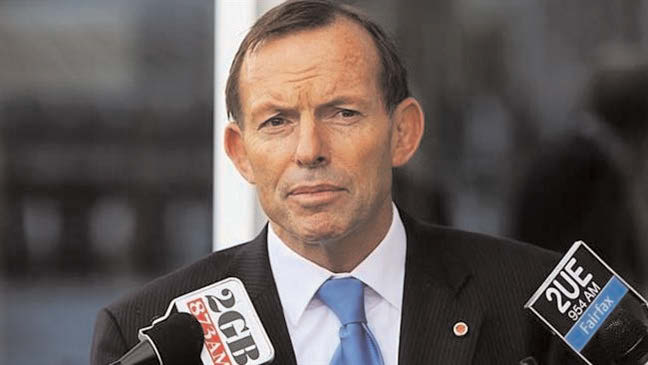
    SYDNEY (TIP): Former Australian Prime Minister Tony Abbott has sparked criticism by saying Islam has a “massive problem” and needs to reform.

    Writing in Australian media, Mr. Abbott said “not all cultures are equal” and the West should stop apologizing for defending its values.

    His letter, published in News Corps tabloids, cautioned against “demonizing” Muslims, but said the West “can’t remain in denial about the massive problem within Islam”.

    “Although most Muslims utterly reject terrorism, some are all too ready to justify ‘death to the infidel’,” he said.

    “Islam never had its own version of the Reformation and the Enlightenment or a consequent acceptance of pluralism and the separation of church and state.”

    Australia is involved in the US-led international military operation against Islamic State militants in Iraq and Syria, and is increasingly concerned about Australians fighting with or supporting the militants.Several raids have been carried out and officials say a number of plots have been disrupted. Last month, a teenage boy who police say had been radicalized shot dead a police worker in Sydney.

  • Teenager on Australia terror plot charge denied bail

    Teenager on Australia terror plot charge denied bail

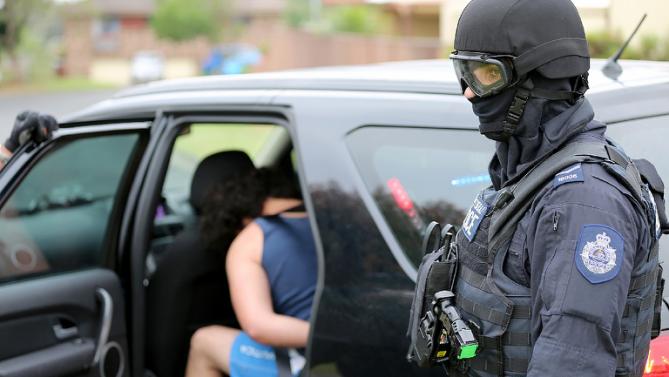
    SYDNEY (TIP): A 15-year-old charged over a terror plot used coded text messages to try and avoid detection, an Australian court heard as he was denied bail Dec 10 over fears he could commit serious crimes.

    The teenager, who under Australian law cannot be named, was remanded in custody at Parramatta Children’s Court in Sydney after he was arrested in police raids yesterday and charged with conspiracy to conduct an act in preparation for a terrorist act.

    The court was told the suspect had been under surveillance for more than a year and had previously been convicted on firearm charges.

    “There’s no doubt that if the risk were to materialise, the consequences for public safety would be extremely serious,” magistrate Elizabeth Ryan told the court in denying bail.

    The police prosecutor had alleged the boy used “banana” as a code word in text messages to describe a gun.

    The court was also shown photographs allegedly seized from the boy of an Islamic State (IS) fighter and of a beheading by the jihadist group.

    The teenager was also the subject of raids in 2013 and 2014, and his psychologist told the court he was suffering from anxiety and depression as a result of the police visits.

    “He sleeps in his parents’ bedroom because he’s afraid of being raided all the time,” the Sydney Morning Herald reported the psychologist as saying.

    “He can’t sleep and he has frequent nightmares. I have high concerns for his mental health.”

    Four other people were also charged yesterday stemming from evidence gathered during pre-dawn raids in Australia late last year in which 15 people were taken into custody and an alleged plan to kidnap and behead a member of the public was uncovered.

    Canberra has shown increasing concern over home-grown extremism as well as the flow of its citizens to conflict zones in the Middle East to join extremist groups such as IS.

    Some 120 Australians are estimated by the government to be in Iraq and Syria with another 160 actively backing extremist organisations at home through financing and recruitment.

    The government raised the terror alert level to high last year, introduced new national security laws and conducted several counter-terrorism raids.

    The latest raids came just days before the country marks the one-year anniversary of the 17-hour Sydney cafe siege where a gunman and two hostages were killed.

    They also came two months after a civilian police employee was shot in the head by another 15-year-old boy outside law enforcement headquarters in Sydney. The boy was killed in an exchange of gunfire with officers.