ISLAMABAD (TIP): A human shield was formed at the Holi celebrations at Swami Narayan Temple in Karachi to show solidarity with and protect Hindus in attendance.
The National Students Federation (NSF) organized the formation of a human shield on Friday. The demonstration is an attempt to promote interfaith coexistence and cooperation among different religious and ethnic groups in Pakistan, Dawn reported.
The NSF leveraged social media to spread information about the event, extending e-vitiations to others who share their outlook on religious tolerance and wish to participate in the demonstration.
A member of the NSF describes it as a “progressive leftist organization” dating back to the NSF of the Ayub Khan era -former president of Pakistan .
A member of the NSF, Fawwad Hasan, said, “When we showed solidarity with Shias at the Imambargah, Jaipaal Chhabria a doctor by profession joined us and stood alongside us so it’s only fair that as a group, we extend the same courtesy to all Hindus in Pakistan who face a lot of prosecution of different kinds.”
He cited the desecration of Hindu temples, forcible religious conversion of girls against their will, and suppression of culture and religious practices as reasons for showing solidarity with and protecting Hindus.
“We are not religious fundamentalists who take religion into our own hands, that is not what we do,” he explained.
“Society as a whole has to show change and be a part of that change. If you don’t stand up for someone else’s rights today, tomorrow you will also be targeted and there will be no one to stand up for your rights.”
These sentiments are echoed by the NSF which seeks to disrupt a narrative of government apathy concerning religious minorities.
NEW DELHI (TIP): FBI has agreed to help in the invetigation of the murder of American blogger Avijit Roy who was assassinated in Dhaka.
Avijit Roy, who critisized religious extremism in his writings, was killed on February 26 when he was returning from a book fair with his wife.
The decision to send FBI team came after the Bangladesh government accepted America’s offer to engage them in the investigation process, bdnews reported.
“The FBI will deploy a small team to Bangladesh shortly to assist and collaborate with Bangladeshi law enforcement agencies to investigate the homicide,” said Monica Shie, US embassy spokesperson in Dhaka.
The FBI would be able “to provide technical assistance with regard to transnational aspects of the investigation.”
The elite Rapid Action Battalion (RAB) on Monday arrested Farabi Shafiur Rahman, a self-proclaimed Islamist blogger who had previously threatened Roy multiple times.
“Avijit’s father mentioned Rahman’s name as he had threatened to kill his son several times,” Commander Mufti Mahmud Khan, director at Legal and Media Wing of RAB said.
“A year ago Rahman threatened to kill Avijit Roy, one of the founder moderators of a popular blog Mukto-Mona,” he said.
January 25 last year, Rahman’s Facebook status read, “It’s a holy duty of Bangalee Muslims to kill Avijit.”
Then on February 9, last year, he commented on a Facebook post: “Avijit Roy cannot be killed now. He lives in America.”
A court on Tuesday remanded Rahman in custody for 10 days for questioning.
“He has confessed that he threatened Avijit Roy. Intense interrogation of Farabi could lead to important clues,” Dhaka Metropolitan Police spokesman Monirul Islam said.
KARACHI (TIP): A lawyer from Pakistan’s minority Shia sect, who was a counsel for several activists of the Muttahida Qaumi Movement, was shot on March 6 dead by unidentified gunmen here with police suspecting it to be a case of sectarian violence.
Advocate Ali Hasnain Bukhari was on way to his office this morning when two motorcycle-riding gunmen shot him dead in Korangi area.
The gunmen shot the lawyer three times and escaped from the site after the attack.
The victim was a member of the MQM’s legal aid committee and was representing several party workers in cases related to enforced disappearances and arrests.
MQM condemned the murder and demanded immediate arrest of those responsible for the attack.
Police said the killing could be linked to the sectarian violence which has rocked the city of over 18 million people.
KATHMANDU )TIP): Nearly 240 people on board a Turkish Airlines jet had a lucky escape when the plane missed the runway on landing in dense fog at the Kathmandu airport on March 04 and skidded onto nearby grassland.
The Airbus A330 from Istanbul skidded off after over-shooting it at the Tribhuvan International Airport as it missed the central line of the runway while landing.
There were 227 passengers and 11 crew members in the aircraft and all were safely evacuated from the emergency door without any injuries, airport authorities said.
The flight from Istanbul had both Nepalese and foreigners on board.
The Turkish Flight 726 missed the runway central alignment and landed in between the runway and taxiway that forced the aircraft to skid onto the grassy patch.
The incident happened at around 7:40 am (local time) after the aircraft took a circle in the sky before landing due to poor visibility.
Bad weather conditions and poor visibility were said to be the main reasons responsible for the incident. However, the exact cause was being investigated, spokesperson of the airport Purna Chudal said.
The front wheel and the nose of the aircraft was slightly damaged after landing.
ZURICH (TIP): Sri Lankan President Sri Lanka Maithripala Sirisawa got the good news that his country has been given a six-month reprieve by the UN Human Rights Council during his visit to India this month. The UN Human Rights long-awaited report on alleged human rights violations in Sri Lanka during the LTTE conflict during the former Rajapaksa government would be published in September instead of March 2015 to give the new government time.
This will be relief also for India, which had been voting against the previous Sri Lanka government, and supporting the US in its resolutions in the Human Rights Council, but now wants better relations with Sri Lanka under a new regime.
The reprieve followed request by the Maithripala government to the US to repair relations after his victory in January elections. Sri Lanka’s other allies, China and Pakistan, are also members of the rights council.
The US had sponsored resolutions against Sri Lanka in the Human Rights Council in 2012, 2013, 2014, during the Sri Lanka war under the Rajapaksa government. India had then worked hard behind scenes to temper these. Under pressure from the DMK, the UPA government voted against Sri Lanka and for the US resolution in 2012 and 2013, even though the DMK had just withdrawn support.
BJP, the Party that promised to bring Ramrajya under the leadership of modern Ram PM Narendra Damodardas Modi has defaulted on its promise. It looks like it was election rhetoric (Chunavi Jumla in the language of BJP President Shah).
The truth is the very first full Budget presented by BJP is an insult to the philosophy of Ramrajya and Hinduism. The non-plan expenditure i.e. just to run the “System” or the government that includes Police, Military, Judiciary, Postal Services, President, Vice President, Prime Minister, Governors, 53 Ministries with numerous departments, 1 Department of Atomic Energy, Commissions, Committees, 543 MP’s, various government employees etc. is Rs 13, 12,200 crore out of the total budget of Rs 17, 77, 477 crore against the net revenue Rs 11, 41,575 crore. On top of that total debt servicing accounts for Rs 6, 81,719 crore (debt payment Rs 2, 25,574 crore plus interest Rs 4, 56,145). The non-plan expenditure is 74% and debt servicing is 40% of the total budget that leaves Rs 4,65,277 crore that too after taking a new loan of Rs 5,55,649 under the plan expenditure for 1200 crore population out of which 88 crore are living in acute poverty.
FM Jaitley has not shown or has even pretended that he is serious to do some thing about the problem or suggested public or political dialogue on the issue of massive spending on government and high debt servicing. PM Modi aka Modern Ram the Supreme Leader of BJP must understand 74% to run the system and to pay 40% in debt out of the total revenue that too by borrowing Rs 5,55,649 crores is not permissible under Ramrajya. Nor does it qualify under good governance i.e. small government and more governance: his own slogan that brought him and his party BJP to power in Delhi in 2014.
Jaitley could have announced some measures to at least re-structure the 53 Ministries to cut down their massive size, Complete ban on Official Functions in 5 Star Hotels & Resorts, Abolish Pension for MP’s, Ban on allocation of properties for Political Party Offices, end to VVIP & VIP culture of providing security & subsidized housing, pension to MP’s, cap on telephone bills, air travel, foreign trips, rail travel of elected & appointed officials and un-necessary appointment of officials under Ministers and various departments, commissions and committees. Can Jaitley explain how come a law maker is entitled to Pension and princely perks after winning one election only even if he never gets elected again; whereas a government servant is entitled to a pension only after 20-25 years of service? Jaitley could have proposed a road map to cut down the non-plan expenditure from present 74% to at least 60% in the next 4 years.
Some of the budget announcements without any significant Expenditure plans for social schemes like Toilets, Nirbhaya Fund, old age pension, Accidental Life Insurance, education loans, Mudra Bank for small business loans, National skill development, Gramin Kaushal yojna (rural skill development) etc are a step in the right direction. On education loan one has to pay 12.5% interest they do not have the luxury of paying 0.1% interest reserved for poor corporations like TATA or Ambani’s. National skill and Rural skill development for what?When village after villages are taken up by industrialists, builders and government and practically every thing of daily use in India is made in China that could have used rural or city youth if made in India. MNREGA with Rs 34,699 crore allocation has been retained after PM Modi made fun of it under arrogance and snobbery in Parliament with no significant increase in its funding even to account for inflation. PM Modi also forgot his own party under PM Bajpai never did any thing to re-structure MNREGA. Then on the other hand expenditure on Sarva Shiksha Abhiyaan has been cut from Rs 28,000 crores to Rs 22,000 crores, the Integrated Child Development Scheme from Rs 16,000 crores to Rs 8,000 crores and the Mid-Day Meal Scheme Rs 13,000 crores to Rs 9,000 crores. On top of that Scheduled Caste Sub Plan allocation has been cut from Rs 43,208 crore to Rs 30,000 crore and Tribal Sub Plan from Rs 26,714 crore to Rs19,000 crore.
More significantly, the money needed to implement MNREGA, Pradhan Mantri Gram Sadak Yojana, National Rural Livelihood Mission, Sarva Shiksha Abhiyan, Midday Meal Program and many others have been shifted to State plans. Previously, Centre was giving money directly to the implementing agencies such as Panchayats and Gram sabhas. Now it will be routed through the State governments. This is the reason for the decrease in the Center’s spending on social sector and rural development and increase in the Center’s contribution to State plans.
Jaitley has Rs 4,65,277 crore only even after taking Rs 5,55,649 crores in new loans to service his so called growth plans for a population of 120 crore out of that 52% are farmers. He has allocated a princely sum of Rs 25,000 crore in Rural Development Fund for 62 crore farmers. That works out to be Rs 403 per farmer in one year provided there is no corruption. On irrigation and flood control Rs 5,300 crore that works out to be Rs 85 per farmer per year. Out of the 12 crore hectare farming land only 5 crore hectare has irrigation facility rest 7 crore hectare depends on Mother Nature God; if there is timely rain the farmer will have a crop, if the rain is delayed by a month or no rain whatever input including his labor the farmer has put in will go waste. It is a shame even after 67 years after independence there is no irrigation facility for the farmer.
The government brags about Rs 70,000 crore subsidy to the farmers where as the fact is it is given to big corporations for the sale of poisonous fertilizer and pesticides to ruin the health of the farmers and consumers as well as to ruin the soil. In 2007 there was 17 crore hectare of farming land vs. 12 crore hectare now. The 5 crore hectare land was given to big corporations under Special Economic Zones and other projects. Jaitley has made it very clear that this process will continue and now we have Japanese bullet train project also. It cannot be disputed that infrastructure improvements are vital if growth is to be inclusive. The question is, what types of infrastructure will be developed or investment undertaken, and who will benefit as a result. All indications are Rs 20,000 crore spending on infrastructure will not improve things for ordinary people, but instead may intensify dispossession and displacement as well as theft of resources that has already been occurring in the country under the guise of industrial corridors, Tech Cities, Luxury housing, Office Complex, Malls and SEZs, etc.
To the middle class Jaitley has told them that they are on their own by raising indirect taxes on them while not raising the exemption limit of Rs 2,50,000. This is the same Jaitley as Lok Sabha candidate from Amritsar on April 20, 2014 demanded a raise in the Income Tax ceiling from Rs 2, 00,000 to Rs 5, 00,000. Advocating low tax structure, he said, “Direct Tax should be reduced. If the Income Tax limit is raised from Rs 2 lakhs to Rs 5 lakhs, 3 crore people will save Rs 24 crore which will lead to a small impact of 1 to 1.5 per cent of National Tax Fund.” Now he has raised service tax from 12.36% to 14%. On top of that Increase in basic custom duty on Metallurgical coke from 2.5 % to 5%, on iron and steel and articles of iron and steel increased from 10% to 15% and on commercial vehicle increased from 10 % to 40%. A few days before the budget his counterpart Railway Minister Prabhu raised the passenger and freight rates by 14%. Even a high school economics student will tell them that it will bring cost push inflation and affect the very basic commodities and services needed to live by poor as well as middle class.
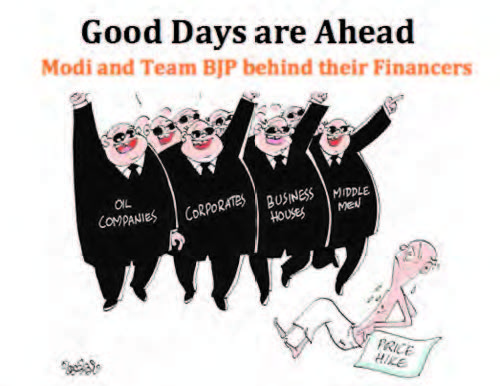
Now the Corporate sector, the darling and massive financial donors of BJP. Jaitley in an interview to Headlines Today said he has given Rs 2, 00,000 crore to this sector. They will get Rs 20,000 crore in the first year, Rs 40,000 crore in the second year, Rs 60,000 crore in the third year and Rs 80,000 crore in the fourth year. Estimated revenue forgone due to corporate concessions for 2013-2014 is Rs. 76,116 crore or 19% of collected corporate tax revenue. By way of comparison this corporate subsidy is 82% of the food subsidy of Rs 92,318 crore for the same year. Corporations are celebrating Jailey’s intent to bring down the Corporate Tax from 30 per cent to 25 per cent in the next four years. In USA where the corporate Tax is 35% according to CAG, US Corporation’s effective rate of tax was 12.1% in 2011 that is 40 years low. On top of that the bigger the US Corporation the less or no tax they pay. U.S. corporations actually pay incredibly low taxes due to the ever-proliferating loopholes, credits, and deductions in the tax code and the use of overseas tax havens. If the effective rate in USA is 12.1% in India it has to be under 10% or in some cases 0 because Indian Corporations are more innovative: they get subsidized loans, land, electricity, break on all kinds of taxes and can book their profits in foreign countries by over invoicing or under invoicing and route it back through Mauritius. Besides plethora of credits and deductions in tax code they buy super luxury cars, luxury homes & farm houses, air planes and yachts in their corporation’s name for their personal, family, executive and for the use of politicians and top bureaucrats.
Laws to curb Black Money is nothing but another rhetoric similar to the one made by Modi during campaigning of bringing back Black Money and after election labeled by BJP Party President as Chunavi Jumla (Election Rhetoric). Unless the route of Mauritius that accounts for 40% FDI to India is closed how can one stop the generation of black money? Arun Jaitley as Union Cabinet Minister of Law, Justice and Company Affairs opened the Mauritius route in 2001 for official money laundering by big corporations. There are unconfirmed reports now as Finance Minister he wants to give same status to Singapore since Ambanis are involved in a scandal for routing their black money via Singapore. People are living in fool’s paradise if they think Jaitley or Modi are serious about curbing black money generation or bringing back black money stashed abroad. All the laws to curb black money are for those who do not know or do not have the means to use Mauritius route.
Nowhere in his budget Jaitley has acknowledged rising economic inequality and shown any intentions to come up with a plan to stop it. It looks like for FM Jaitley whose net worth is more than Rs 1000 crore, 88 crore poor, especially agricultural labor, casual labor, self employed, the name sake business owners, unemployed youth, schedule castes, schedule tribes and minorities are invisible. Because they are not organized like big corporations with lobbyists that can plead their case to the law makers. They do not have means to have a voice to make complaints or demand social justice because the Fourth Pillar of Democracy “The Media” is also owned by industrial houses and in some cases the law makers themselves through their spouses or relatives. Above all they are the slaves of an elite class behaving like British rulers of the past.
Even after Congress party’s catastrophic defeat in 2014 due to rampant corruption and massive scams the country’s crony capitalists are unlikely to suffer as a result. The nexus between business and politics is as tight as it has ever been. BJP spent Rs 32,000 crore to bring Narendra Modi to power with massive corporate donations. BJP is estimated to have spent at least Rs 6,200 crore on print and broadcast advertising alone. Of these donations, around 90% comes from unlisted corporate sources who will be rewarded when the time comes. Reliance is now India’s biggest media company, as well as its biggest conglomerate. Reliance, Adani, Tata, Jindal, Ruias etc have unprecedented political access and power. All these corporations unlike East India Company do not have their private army but soon will be making all kinds of warheads, missiles, helicopters, air planes, ammunition and other sophisticated military gadgets because Jaitley has increased the FDI limit to 49% from 26% for this Industry. Just a few days before the budget Middleman/Lobbyist has been legalized in India for deals with the government including defense deals.
Now there won’t be any shortage of Radias openly operating in the corridors of power to influence law makers for favors for corporate clients.
PM Modi aka modern Ram of BJP has said that this budget is Progressive, Positive, Practical, Pragmatic, Prudent, Pro Poor and Pro Growth. Can PM Modi explain on what page or paragraph the rising economic inequalities have been addressed by this budget? On what page or paragraph high cost of governance, British style perks for politicians, nexus between politicians and corporations, undue economic favors to corporations etc has been addressed? It looks like Modi and BJP who worship Shahid Bhagat Singh has no respect for his ideals. Bhagat Singh said, “There can be no equality, not even in politics and before the law, so long as there is glaring inequality in economic power.”
In the Aam Aadmi Party, morality collided with realpolitik. Unsurprisingly, the latter won. Many supporters of the party, who gave it such a stunning victory in the Delhi assembly elections, are nursing their hurt and are reconciling themselves to the end of another illusion.
The AAP leader and now Delhi’s Chief Minister, Mr. Arvind Kejriwal, was never in doubt on two points. One, he had to stamp his authority on the baby party. Second, while the morality stick was good to wave, the hard reality of playing politics had to take the first place.
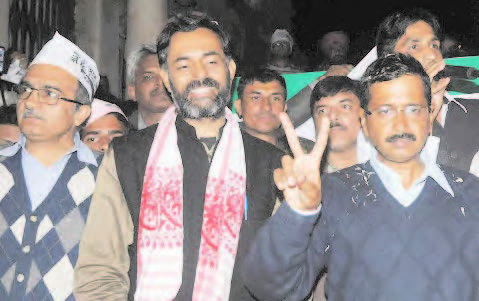
Mr. Yogendra Yadav and Mr. Prashant Bhushan, with their persistent admonitions and waving the flag of morality, had simply become too distracting and inconvenient for Mr. Kejriwal’s plan to rule his fledgling party with an iron hand. He had had a taste of their mettle by their objecting to some of the tainted candidates fielded by the party and they had raised questions about large dubious donations.
Mr. Kejriwal thus came to the conclusion that nothing short of a purge of the two from the Political Affairs Committee will do. And he set about it in the hoary tradition of Indian political culture pioneered by the Congress party and followed by all others. First, seek their resignation while airing Mr. Yadav’s clandestinely taped conversation with a journalist to embarrass him. Then offer inconsequential posts to sideline them.
When every trick failed, they were voted out in the executive by a surprisingly narrow 11 to 8 margin. True to the accepted political tradition, Mr. Kejriwal absented himself with the plausible excuse of undergoing treatment while sending in his own resignation as party convener, predictably rejected.
Mr. Kejriwal has won a victory at great cost. Its quantum remains to be determined. The plan did not run to script because neither of the gadflies had an ulterior motive in raising the questions they did. They sought to keep AAP on the straight and narrow: moral imperatives that had persuaded them and so many others to support a party seeking a higher moral ground. The immense response it got in Delhi was due to the electors’ conviction that here was a new party of leaders with conviction who wanted to change the way politics functioned.
As far as the bulk of supporters are concerned, the let-down has been tremendous. While some compromises are necessary in politics as in life, the duplication of the traditional deviousness practiced by Mr. Kejriwal’s henchmen was breathtaking. One can expect the Delhi Chief Minister to undertake an act of showmanship to try to surmount his huge embarrassment, but he will find it difficult to regain trust.
Perhaps the questioning duo was being unrealistic in trying to keep AAP to a high moral benchmark. Perhaps it also became a question of Mr. Kejriwal’s “amour proper”, of men of an intellectual standing challenging his actions in the party. Perhaps the leader who abandoned Anna Hazare’s movement to start a political party felt that only as an unchallenged leader could he deliver on his promises.
By their very nature, these are assumptions, but the crisis in AAP poses larger questions. Can a party that sought to give a new direction to Indian political culture survive the body blow that has been dealt it? How will Mr. Kejriwal convince his bewildered supporters that he is sincere in fulfilling his promises?Has he indeed misjudged his two critics in believing that they can be tackled through traditional methods of placating or expelling them?
These are portentous questions that go to the heart of the rationale for a new party. Judging by the number of defections to the Bharatiya Janata Party after its impressive victory in the Lok Sabha elections last year, politicians gravitate towards power, especially when the future of the losing party seems bleak. To give one example of horse-trading, we all know how Mr. P.V. Narasimha Rao converted his minority government at the Centre into a majority dispensation.
The shock over how the AAP crisis was managed was in the tawdry nature of the tricks that were played upon the dissenting duo by Kejriwal loyalists. They hopelessly misread the dissenters who were not raising objections for their own aggrandizement, but were highlighting the nature of the compromises made in winning the Delhi elections.
Mr. Kejriwal’s stance of being above the conflict by absenting himself from the executive meeting and sending in his own resignation are old tricks in the political game. It is worth noting, however, that in a vainglorious move, he has divested himself of all portfolios in the newly-formed Delhi ministry so that he remains the monarch of all he surveys.
The tragedy for those who voted for AAP in Delhi – and millions more across the country cheering the new kid on the block — is that the melodrama played out in the executive committee came so soon after its unprecedented triumph. It represents a let-down of immense proportions.
Mr. Yadav and Mr. Bhushan, who were sought to be banished from AAP, have not taken the bait. Mr. Yadav has said he would abide by the party’s decisions and help the party go forward because it had been founded on so many hopes and aspirations. Obviously, he will raise questions troubling him at the party’s larger forums.
Whatever the future holds for AAP, the party has witnessed its watershed moment. The party on the hill has tottered and Mr. Kejriwal’s task now is how to rescue it from the dirty politics played in his name and presumably under his direction. He has time to think through his tactics while undergoing treatment. There would be little profit in dissembling to suggest that he was unaware of what was being enacted.
Many AAP supporters and the wider public will wonder whether they had again backed the wrong horse. By turning the party’s back on two of its most illustrious founder members, it has betrayed the trust of many. It remains to be seen whether the duo will be allowed to play any role in the party’s larger forums, given the level of animosity Kejriwal loyalists have displayed.
Sex crimes have become a norm in India. Committed with impunity, even the most heinous crimes have ceased to shock due to their recurrence. Therefore, it’s strange that a documentary that exposes the mindset of remorseless rape convicts has found all the stakeholders of law and justice up in arms against the film.
Leslee Udwin interviewed Mukesh Singh, the convict on death row for the Nirbhaya rape case, and other rape convicts lodged in Tihar jail for her documentary “India’s Daughters.” The convicts and the defense lawyers have blamed the victim for inciting the crime in the film.
Their statements have shocked the sensibility of a ‘woman-worshipping’ nation. To sidetrack the issue of laxity and delay in our law and justice delivery system, which is the real culprit behind rising crimes against women, ethical issues are being raised about interviewing a criminal on death row!
The shocking mindset of rapists has been endorsed several times in public by our respected politicians, khap leaders and even judges, repeatedly in the past. If punishing a criminal is essential, is it not equally important to understand the mind of a criminal to scrutinize the sociological aspects of the crime?
In the high-profile Nirbhaya case, that had triggered changes in the law and was put on a fast track, the parents of the victim are still waiting for justice. Such delays embolden criminals. While the judicial system comes into force only after the crime has been committed, it is important to probe the society that produces not only rapists but also such protectors of the law as the defense lawyer who claimed in the film, without a trace of qualm, that he would burn his daughter alive if found crossing the line. Should we treat sex crimes in a crime-and-punishment manner, or is it time we probed society for breeding gender inequality which allows such unbridled power play by the males that turns fatal victims of rape out of its women.
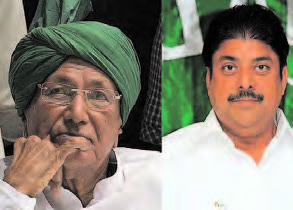
NEW DELHI (TIP): The Delhi high court on Feb 5 upheld the conviction and 10-year jail term of former Haryana chief minister O P Chautala, 80, observing that he cheated the youth of his state in the JBT teachers’ recruitment scam.
Justice Siddharth Mridul also upheld the prison terms of Chautala’s son Ajay, two IAS officers Sanjiv Kumar and Vidya Dhar along with the former CM’s political adviser Sher Singh Baddhami — all of whom had got 10 years —pointing out that a teaching cadre “inducted through patronage, nepotism and corruption cannot, morally, be higher than the methods that produced it and be free from the sins of its own origin”.
“So this is the end of the road, appeals have been dismissed,” the judge remarked before pronouncing the verdict. He, however, took a lenient view of the remaining 50 convicts, recognizing that they were pressured to be part of the scam and reduced their jail term to two years. They had been awarded 4-10-year terms.
A CBI court had on January 22, 2013, found the Chautalas and others guilty of illegally recruiting 3,206 junior basic trained teachers in 2000.
The court observed that Chautala, as the then chief minister of Haryana, could have been a figure of hope and inspiration to the youth of the state. “Cheating them of their future deserves punishment of the highest kind,” it said, refusing to show any leniency to the politician on grounds of his advanced age and the fact that he is “towards the tail end of his political career”.
While IAS officer Sanjiv Kumar, the then director of primary education, had claimed to be a whistleblower on the scam, the court found evidence establishing his complicity. The other officer, Vidya Dhar, was the then officer on special duty (OSD) to the chief minister.
Justice Mridul, in his 400-page verdict found “overwhelming evidence” of the manner in which the scam was given effect to, adding it showed the “shocking and spine-chilling state of affairs in the country”. It directed Ajay Chautala, out on medical bail, to surrender immediately to serve the remaining sentence.
Referring to the role played by the politicians and the senior bureaucrats in the scam, HC noted that “an ingenious employment scam spanning across 18 districts of state of Haryana was given effect to by persons at the helm of power and the entire bureaucratic machinery fell prey to its satanic influence”. It said the common thread between Chautalas, the two IAS officers and Sher Singh Badshami was the “flagrant disregard towards the system” that led to shaking of public confidence.
“Each one of them played a role in disrupting the established process to achieve their object. Not only did they offend every duty they had to the office they were holding, but in the process, also challenged the ethical standard of every other public servant and compelled them to abandon their otherwise perfect career records,” HC observed.
It added that “such scams not only result in dissemination of poor quality education to millions of children who are bound to suffer, but also unfairly deprive the competent participants in such selection processes an opportunity to gain public employment and meaningfully serve the country.”
WASHINGTON (TIP): A March 5 CNN report says Hillary Clinton broke her 48-hour silence over the use of her personal email account while she served as secretary of state with a late-night tweet Wednesday, March 4, saying she wants “the public to see my email.” But her response is unlikely to tamp down the pressure for answers as she faces the deepest scrutiny she’s been under since leaving the government. “I asked State to release them,” Clinton tweeted at 11:35 p.m. ET “They said they will review them for release as soon as possible.” The developments have escalated since the personal email account was first revealed Monday night, turning into both a political tug-of-war between Republicans and Democrats. The account raises questions — even from within her party — about transparency, security in the government and her future.
While the Clintons have plenty of allies, some on the left are using this opportunity as a sign to flag that the Democrats’ front-runner in the 2016 campaign might still face some of the same organizational challenges and public relations gaffes her campaign had eight years ago.
New York Times says Mrs. Clinton’s aides on Tuesday sought to play down the significance of her exclusive use of a personal email account for State Department business. But an examination of records requests sent to the department reveals how the practice protected a significant amount of her correspondence from the eyes of investigators and the public.
Mrs. Clinton’s exclusive use of personal email for her government business is unusual for a high-level official, archive experts have said. Federal regulations, since 2009, have required that all emails be preserved as part of an agency’s record-keeping system. In Mrs. Clinton’s case, her emails were kept on her personal account and her staff took no steps to have them preserved as part of State Department record.
In response to a State Department request, Mrs. Clinton’s advisers, late last year, reviewed her account and decided which emails to turn over to the State Department.
The State Department says it will now search the 50,000 emails Mrs. Clinton provided in response to Freedom of Information and congressional requests.
DIMAPUR (TIP): An alleged rapist, suspected to be an illegal Bangladeshi migrant, was beaten to death on March 5 by a mob which stormed the high-security central jail in Nagaland’s commercial town of Dimapur, officials said.
At least 10 vehicles were also set ablaze by the unruly mob forcing the authorities to clamp curfew in Dimapur district.
Syed Farid Khan, a 35-year-old second hand car dealer, had allegedly raped a 20-year-old Naga woman on February 23 and 24 at different locations. Police arrested Khan on February 25 and later a lower court sent him to judicial custody.
“A mob of around 4,000 people stormed the central jail after breaking the two gates and took the accused out of jail and paraded him naked to the city tower in the heart of Dimapur town, before we could rescue him from the mob,” district police chief Meren Jamir told IANS.
He said Khan died after he was badly thrashed by the mob.
“The body was retrieved from the mob after police fired in the air to disperse them,” Jamir said.
“We have clamped curfew in Dimapur district to contain the law and order situation following the unfortunate incident,” district magistrate Wezope Kenye told IANS.
He said the district authorities had made all efforts to prevent the mob from storming the central jail.
“We resorted to firing blanks and tear gas shells to disperse the mob but they managed to pull out Khan from the jail,” Kenye said.
“The situation is tense and we are making all efforts to restore normalcy in the district,” he added.
ANANDPUR SAHIB (TIP): Tens of thousands of devotees converged in this Sikh holy town on March 6 to offer prayers at Gurdwara Keshgarh Sahib during “Hola Mohalla” celebrations which coincides with the Holi festival.
All roads towards this holy town, which is home to the second most important Sikh shrine after “Harmandar Sahib” (popularly known as Golden Temple) in Amritsar, experienced heavy vehicular movement with people coming in hordes on buses, trucks, tractor-trolleys and other vehicles.
“Thousands of people have arrived here for ‘Hola Mohalla’. It is a great atmosphere. Our family has also come to offer prayers,” Balbir Singh, a resident of Kharar town, 20 km from Chandigarh.
Anandpur Sahib is located about 85 km from Chandigarh.The shrine and the town are famous as it was here in 1699 that the Tenth Master, Guru Gobind Singh, baptised five men and founded the Khalsa Panth, which is the modern day Sikh religion.
Elsewhere in Punjab, Haryana and Chandigarh, the festival of Holi was being celebrated with a lot of enthusiasm.
Despite rainfall in and around Chandigarh, and some parts of Punjab and Haryana on Thursday night, children and youth could be seen playing Holi on early Friday.
The skies cleared up on Feb 6 morning over Chandigarh, allowing people to celebrate the festival.
“The rain and clouds went away in the morning. Otherwise, everyone was worried that the Holi spirit will be spoilt by the weather. This time, though, the weather is much colder than in previous years and people may not be playing as freely with water colors as in the past,” Ritu Goyal, a housewife in Chandigarh, said.
Nearly 1,000 police personnel and officials were deployed at various places in Chandigarh to control any rowdy behaviour.
NEW YORK (TIP): An airliner skidded off a runway at New York’s La Guardia airport Thursday as a major winter storm battered the United States from Texas to the US east coast. Heavy snow was falling as Delta flight 1086 from Atlanta slid off the runway, up an embankment and into a fence after landing at around 11:00 am (1600 GMT).
A spokesman for New York Fire Department reported some minor injuries. Video of the scene showed passengers climbing out of the plane through an exit over a wing and trudging through thick snow.
It was the most dramatic incident on a day in which a huge winter storm forced thousands of flight cancellations, and disrupted life across a broad swath of the United States. In Washington DC, government workers were ordered to stay home, schools were closed, and museums shuttered for the day as icy rain turned to heavy snow. Baltimore, Philadelphia and New York were expected to get as much as eight inches of snow, with wind chill temperatures dipping well below average in much of the region.
Poor visibility
Forecasters had warned of low visibility in New York, and some 40 percent of flights had been canceled at La Guardia before the accident there, according to flightaware.com. “We just crash landed at LGA. I’m terrified. Please,” passenger Jaime Primak tweeted from @jaimeprimak. “We have all been evacuated. Everyone is safe. Thank you for your prayers. God is good.”
Delta said the 125 passengers and six crew members aboard the plane had disembarked via aircraft slides and were moved to the terminal on buses.
“Our priority is ensuring our customers and crew members are safe,” Delta said in a statement.
The airline vowed to “work with all authorities and stakeholders to look into what happened in this incident.”
The FDNY said on Twitter there was a fuel leak after the McDonnell Douglas MD88 aircraft skidded off the runway.
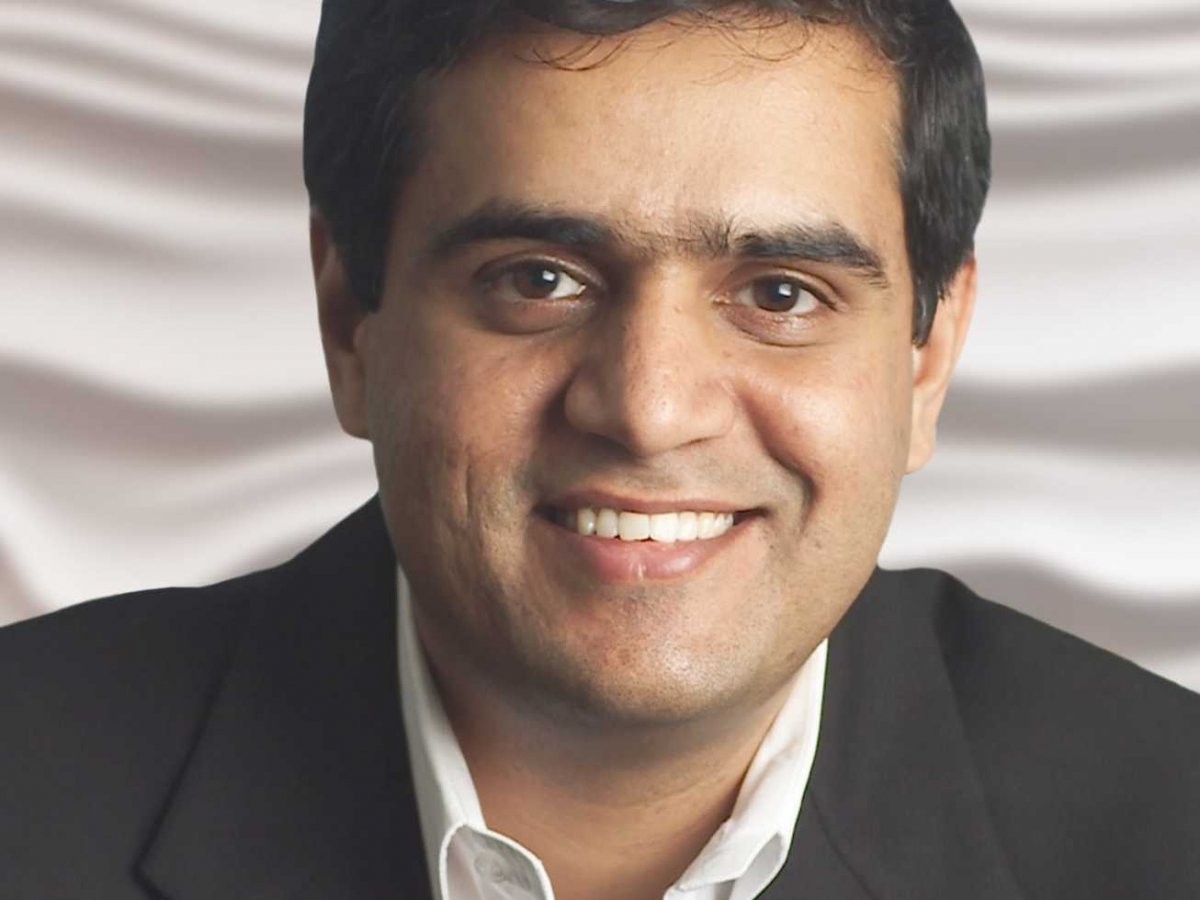
SAN FRANCISCO: Hewlett-Packard is buying wireless networking company Aruba Networks for about $2.7 billion, the 1,800-employee company was co-founded by Indian American Keerti Malkote, the company’s chief technology officer.
Aruba, based in Sunnyvale, California, makes Wi-Fi networking systems for shopping malls, corporate campuses, hotels and universities. Its business has grown as more people are using mobile devices at work, school and elsewhere. Aruba may help HP capitalize on that trend, which has cut into sales of traditional HP products such as desktop computers.
The deal also could help HP compete with tech rivals such as Cisco Systems and gain new access to Asian markets, particularly in China. Cisco currently sells about half of all commercial wireless networking gear worldwide, according to UBS analyst Amitabh Passi. He estimates HP and Aruba combined will account for 20 percent of global sales for such systems.
HP is seeking to expand its tech portfolio for business customers at a time when it is preparing to split into two companies – one focused on selling computer systems and software to businesses, and the other selling personal computers and printers. That’s part of HP CEO Meg Whitman’s plan for confronting a recent decline in sales.
Buying Aruba gives HP “a faster growing, higher margin business that fills a portfolio need without `betting the ranch’,” Bernstein analyst Toni Sacconaghi wrote in a note Monday.
Palo Alto, California-based HP is one of the industry’s giants, with $111 billion in sales last year, but it has struggled to adapt to recent tech trends and shifting customer preferences. Whitman has focused on cutting costs and reorganizing since she took the CEO job in 2011. She recently signaled she was ready to resume making strategic acquisitions, after buying a pair of small software companies last year.
HP made a number of multi-billion-dollar acquisitions under two CEOs who preceded Whitman, and some of those deals proved costly. HP paid about $11 billion for British software maker Autonomy in 2011. A year later, it was forced to write off $8.8 billion of that purchase as a loss, while blaming accounting irregularities that it said had inflated the value of Autonomy’s business.
With the Aruba deal, HP is paying $24.67 in cash for each Aruba share. That is slightly below Aruba’s closing price of $24.81 on Friday, but marks a 37 percent premium to the roughly $18 that Aruba shares were trading for before talks with HP were reported last week.
Boards of both companies have approved the deal, which they said would be worth about $3 billion after factoring in cash and debt on Aruba’s balance sheet. Aruba had $729 million in sales last year.
In a dramatic vote within the Aam Aadmi Party’s political affairs committee Senior AAP leaders Yogendra Yadav (party’s official spokesperson) and Prashant Bhushan have been voted out of the party’s political affairs committee and Yadav has also been asked to step down as the party’s official spokesperson, news channels reported late this evening.
Considered to be the pillars of the party’s organisation structure, Bhushan and Yadav refused to comment on the developments that took place during the meeting and said they were volunteers of the party and would take up whatever role the party offered.
Eleven members voted against Prashant and Yogendra being a part of the PAC, while eight voted in favour of them, CNN-IBN reported.
Speaking to reporters post the meeting, party spokesperson Kumar Vishwas said, “the national executive has decided to relieve Yogendra Yadav and Prashant Bhushan from the PAC… they will be given new responsibilities. The party has reiterated that everyone stands united.”
On Kejriwal’s resignation as national convener, Vishwas said: “the party has rejected Kejriwal’s resignation.”
Speaking with AAP supporter Jas told The Indian Panorama that Kejriwal should not have offered to resign and should have taken the internal rift lightly and handled it in an open debate.
After the Delhi polls it is very likely that if Kejriwal’s resignation was accepted; he would have apologized for the step taken and would again contested the internal elections (if any) for the Aam Aadmi Party’s national convenor post.
“We wish the AAP does not make the same mistakes again that they made last year; To be honest within 30 days the rift being sparked does point out the anarchist nature of Arvind Kejriwal” said Umapathi (one of the loyalist of the AAP) from Bengaluru.
A homeless man has been shot dead in the street by Los Angeles Police Department (LAPD) officers, sparking protests.
Video footage of Sunday’s shooting, which was posted on Facebook by a witness, showed a man swinging his arms violently at police before being wrestled to the ground.
As at least three officers attempted to restrain the man, they can be heard yelling, “Drop the gun!, Drop the gun!”
At least five gunshots can then be heard as officers appear to shoot the man.
Video of the incident spread quickly as it was shared on social media across the world.
LAPD Commander Andrew Smith told the Los Angeles Times that officers had attended the scene, in Los Angeles’ downtown Skid Row area, in reponse to a possible robbery and had encountered the man who began fighting with officers.
The LAPD later posted several tweets describing their version of the event.
Smith said that officers used a Taser, but it was “ineffective”.
“At some point in there, a struggle over one of the officer’s weapons occurred,” Smith said.”At that point an officer-involved shooting happened.”
As police continued to investigate the shooting, the Times reported that dozens of homeless activists gathered at nearby Pershing Square late on Sunday night to protest the shooting.
In 2011, two California police officers were captured on video beating mentally disabled homeless man Kelly Thomas to death – sparking protests and a nationwide outcry. The two officers were later acquitted after being charged over the incident.
Last year, massive protests spread from the St. Louis area across the US after a white police officer shot and killed unarmed African-American teenager Michael Brown.
Raj Shah, who most recently served as co-founding partner and Managing Director of America Rising LLC, where he developed the organization’s Hillary Clinton opposition research book, has been appointed as new Research Director and Deputy Communications Director of the Republican National Committee (RNC).
A graduate of Cornell, Raj worked on Senate and presidential campaigns and served in the Office of residential Personnel during the administration of former President George W Bush.
“Raj will take the helm of a top-notch Research Department as we prepare to defeat Hillary Clinton and the Democrats in 2016 and to hold them accountable for their records. Raj is the expert on the subject of all things Clinton, and his expertise will be an asset to our party,” RNC chairman Reince Priebus said.
“Americans cannot afford a third term of the Obama administration, but that’s exactly what we’ll get if another Democrat wins the White House in 2016,” said Shah.
“RNC Research will ensure that the American people will be informed of the facts, the failures of Democrat leadership, and the Clintons’ long history of lies, shady dealings and distortions,” Shah said.
Appointment of Shah to a key RNC position is seen as an effort by the Republicans to rope in Indian-Americans, who of late have emerged as a major political donor and highly influential ethnic community in the US.
Air in Delhi is world’s worst, 13 other Indian cities aren’t far behind
India is ending years of denial about its air quality, while the US Embassy in New Delhi plans to give daily accurate measures of air quality for tourists and expatriates.
China’s dirty air often grabs global headlines with photos of its cities swathed in smog.
But it is India where air quality has been plummeting for years and is now the worst in the world. The cost of India’s economic growth is partly recorded in the fact that 13 of the 20 most polluted cities in the world are in India, according to the World Health Organization. New Dehli, India’s capital, is now number one on the list of the most polluted.
For many Indians, that news comes as a surprise. For years the Indian government has not shared data on air quality and has not initiated any serious public awareness about the rising problem. Debates on air pollution were largely dismissed as Western propaganda aimed at curtailing India’s growth.
Few Indian cities have purchased or deployed the kind of monitoring equipment necessary to measure the levels of air quality, says Delhi-based environmentalist Sunita Narain. “We just don’t know how bad is the air we breathe,” he says.
Nor is the news getting better. A recently released joint study from the University of Chicago, Harvard, and Yale found that air pollution and attendant nasty chemical particulate matter, especially one called PM2.5, are significantly reducing life expectancies.
India recently crept into third place in the world for greenhouse gas emissions, as well. Yet unlike the deal forged this fall between President Obama and Chinese leader Xi Jinping on greenhouse gas reduction, Mr. Obama was unable to find the same kind of common ground with Indian Prime Minister Narendra Modi during his January visit to Delhi.
A nationwide problem
So grim is the current situation that Delhi has six times the level of airborne particulate matter identified by the US study as most likely to harm humans.
While Delhi may be newly awakening to its problems, the issue is a national one. Indian cities like Gwalior, Raipur, Lucknow, Firozabad, Kanpur, Amritsar, and Ludhiana are also being described as needing to more fully recognize the man-made conditions of bad air.
Delhi now records some 153 micrograms of PM2.5 per cubic meter. (The WHO’s safe standard for PM2.5 is below 10 micrograms.)
But other Indian cities also record woeful figures. Patna has 149 micrograms. Gwalior has 144 and Raipur 134 micrograms. The other cities where the PM2.5 level is 10 times higher than WHO standard are Ahmedabad, Lucknow, Kanpur, Firozabad, Amritsar and Ludhiana. These figures are based on a spring 2014 WHO study and may not be the same today.
India hasn’t made it simple to find out such information. Some 22 monitoring stations across the country check pollution in real time. But of these, only 12 are functional, and none check for PM2.5.
Factories and other industrial units in India are required to send air pollution data to state government agencies. But it is an open secret that the figures are fudged or hidden. Most states simply report data in terms of “average figures” rather than giving real-time data about air quality.
What’s more is that state governments don’t always update the figures. One official at the federal environment ministry points out that most data is more than two years old. The latest pollution data on the website of the state of Odisha is from 2006.
Clearing the air
Perhaps partly because of Mr. Obama’s evident displeasure at not getting a deal, and the witness of his delegation at the poor air, India’s air quality has received wider attention in the past month. The country’s regulators appear emboldened after years of official denial.
Prakash Javedekar, India’s environment minister, says that air monitors have been installed on thousands of industrial units and in theory will send in accurate figures.
“We are facing a real crisis in as many cities and the world is seeing. I am not bothered about who describes me the baldest or worst,” Mr Javedekar said in an interview on Headline Today, an Indian news broadcast. “We are the worst.”
To improve air quality, India plans to initially track eight pollutants in 46 cities with populations exceeding a million people. After five years, the rest of the country will slowly be brought into the system.
But US Secretary of State John Kerry recently announced what some analysts took as a spur to the monitoring project. He said the US Embassy in Delhi would employ its own monitoring device and release daily data on a website, including figures on PM2.5.
The US launched a similar program in Beijing, following complaints from American tourists and expatriates.
A backache can make you miserable, rendering daily routines difficult to achieve and a constant reminder that something’s not right. Even though back pain may slow you down, you can now get rid of back pain, if you follow these guidelines.
Set it right
Backaches are rarely very serious, unless a slipped disc or strained spinal column is rendering you immobile. Very often, small corrections in postures and habits go a long way in alleviating back pain.
Sleep well
Most people with backache complain of stiffness when they wake up in the morning. While a small amount of stiffness if expected after hours of rest, a pain in the back is unacceptable. Your mattress could be the culprit – either too soft to support your spine as you sleep, or too firm to let your muscles rest. If not your mattress, it could be a lingering problem that you may have ignored.
Get help
Flip your mattress to distribute your weight evenly over it. Also, do a simple stretching exercise when you wake up every morning. Some people experience back pain if they don’t sleep enough. If you can, take a couple of days off from work simply to rest your back. If the pain is acute, you will need medical help.
Don’t sleep too much
However, those with back pain would do well to not rest too much in bed. Says Dr Rahul Shringare, orthopaedic surgeon, “Too much bed rest weakens the back further. You should engage yourself in moderate activity like walking, but not running or gardening.”
Get help
Alternate your periods of rest with periods of activity. Avoid gymming or running that will strain your back. However, do light stretching so that your back gets exercise and does not ‘freeze’.
Exercise
Though some people give themselves a backache by overdoing their exercise routines, it is exercise that can rescue them. However, the workout you do must be approved by a certified trainer and your doctor, if you’ve consulted one.
Get help
Walking keeps the spine and back in a neutral position, so it’s a good exercise. Yoga also helps alleviate backache. Try ‘sarpasan’ for a strong back – lie down on the floor with your palms placed under your shoulders. Slowly lift your back (without lifting your feet off the ground) keeping your elbows at not more than 60 degrees angle. Hold for three seconds, then release. Repeat laps of 10 and do two sets.
Better posture
Slouching at the computer, suddenly bending to pick up an object off the floor, even coughing while bending over, can give you painful back spasms that take days to heal. Though you will do damage even with a rigid back at all times, you must remember to sit up straight at work or at home, and to avoid putting pressure on the lower back, support your lumbar with a firm pillow when you sit.
Get help
Always bend your knees when you bend over. Keeping the knees locked and your legs straight when bending puts tremendous pressure on your spine. Every once in a while, get up from your seat and stretch, take a short walk around the office. Keep your back as straight as you can without feeling pressure in the lumbar. Your shoulders must be aligned in a straight plane, instead of rounded inwards.
Avoid massaging a sore back
Wrong exercise or a blunt trauma can bruise and inflame your back muscles, causing swelling. Most people wrongly assume that massage creams and oils are to be applied on swollen, painful areas of the body -these are only to be used on aching parts that are not inflamed or swollen.
Get help
If your back is swollen, apply an ice pack till the swelling goes down. After this, apply heat pads to repair the tender muscles in the painful area. Do not rub with a massage cream, it will only tear the tender muscles and tissue.
Strengthen your abs
It seems strange, but it is true that if your ab core is weak, it will strain your back further. People with strong abs are found to experience less back pain than others.
Get help
Strong abs does not mean a six-pack, but a core that can easily do crunches or flips without spasms. Get a fitness trainer to prescribe exercises for stronger abdominal muscles. Also consider exercises for hamstrings, chest and calves.
A short, thin middle aged man- you may probably take him for just another man in the street. But no. He is not an ordinary man. He is not a man to be ignored. He is a man to be noticed. Inside the seemingly frail frame of the man is a powerhouse of energy. Besides his morning until late afternoon work, he is to be found at most social events. And then his job requires a lot of traveling. This is Ahmed Shakir, P.E.
Shakir told me he has always been a hard working person. It was his love of work that brought him from India to the USA in 1969. While many come to this country to make money and to enjoy life, Shakir chose to get education. He received his B.S. and M.S. in structural engineering from the University of Texas.
As a student he was active in international, Indian, and Muslim student associations because of his deep interest in social, community, and political activities. This initial commitment stemmed from his belief that everyone should dedicate some of their time to improving and serving their community.
Over the past thirty years, Ahmed has been extensively involved in the union and labor activities. Consider his accomplishments.
Yet another recognition.
He is the first South Asian elected as Secretary of Civil Service Technical Guild which represents 7000 Engineers, Architects, Scientists, Etc. for five consecutive terms, since 1998.
He is the first South Asian to serve as Vice President on the Board of Directors of the Asian Pacific American Labor Alliance of U.S.A.
He was on the Board of Directors of the Eastern Queens Democratic Party and a chair for the union and their political office.
He is a founding Vice President of the American Engineering Alliance which was established in 1996.
He is elected six consecutive terms as DC 37 Delegate.
Society of Indo American Engineers and Architects honored Shakir at the annual gala in November 2014. He is seen here with Lok Sabha speaker Sumitra Mahajan who had given away the award. Also seen (second from left) is the Consul General of India in New York, Ambassador Dnyaneshwar Mulay.
As Treasurer of FIA since 2009, Ahmed has been bringing new sponsors for FIA and helps FIA to connect with Senators, Congressmen and Political leaders at City and at the State level.
Ahmed Shakir with New York City Comptroller Yet another recognition. Scott Stringer
Among his peers and colleagues, Ahmed has come to be seen as a man who promotes the idea and practice of tolerance in every facet of life. He believes that people should work together regardless of nationality, religion, or race, because peace and prosperity can only be achieved through non-violence, patience and service to the needy. Ahmed’s message to our community in USA is: come together and let us take a leadership role in our adopted country. This country gave us all the opportunity to make our dream come true. We should make every effort to support the various south Asian and Asian organizations to be successful and serve our community here and in India.
Shakir with Congressman Joseph Crowley
Ahmed Shakir has been at pains to strike a balance between the various calls- family, work, community. He belongs to Bohra community, which has a small presence in the USA. Now Bohras in India are a prosperous trading community. They are known to be charitable and helping not only their own community but contributing to any humanitarian cause. Shakir who has been involved in the affairs of Bohra community in New York is also very close to the Bohra spiritual leaders. He has not only been a confidant of his spiritual masters but has also been honored for his valuable contribution to community. He is currently Hon. Secretary, Public Relations of the Dawoodi Bohra community in New York.
Shakir with New York City Mayor Bill de Blasio
For his work and services, Shakir has been recognized and honored at various levels. Some of the awards he won are Hero of Labor Award, Congressional Achievement Award, World Business Forum Lifetime Achievement Award, Excellence in Services Award from the Islamic Community, Friends of Labor award conferred on him by the Civil Services Technical Guild. He has been honored by a number of Organizations and associations. The Indo American Society of Engineers and Architects (SIAEA) honored him for his services to the profession in November 2014. Recipient of many commendations, Shakir has received a number of proclamations and citations from the City to the Congress.
A jewel of the Indian American community, Shakir is a simple person imbued with a spirit to serve.
Ahmed Shakir is married to Dr. Khadija and they live in Manhasset Hills, New York.
Congress narrowly averted a partial shutdown of the Department of Homeland Security (which is responsible for securing the country against terror threats and for border control – The department includes Customs and Border Protection, the Secret Service, the Coast Guard, the Transportation Security Administration and the Federal Emergency Management Agency) late Friday amid a proxy battle over President Barack Obama’s immigration reforms.
The vote came just hours before the department faced a partial shutdown. Both the House and Senate passed a seven-day extension of funding for the agency, with the House acting just two hours before funding was set to expire at midnight. The House vote was 357-60. The Senate passed the measure by voice vote.
House Minority Leader Nancy Pelosi, D-Calif., rallied Democrats to support the one-week extension before funding expired. She said that voting for the seven-day measure would put Democrats on a path toward possible passage next week of a $40 billion spending bill that would fund the agency through the end of September.
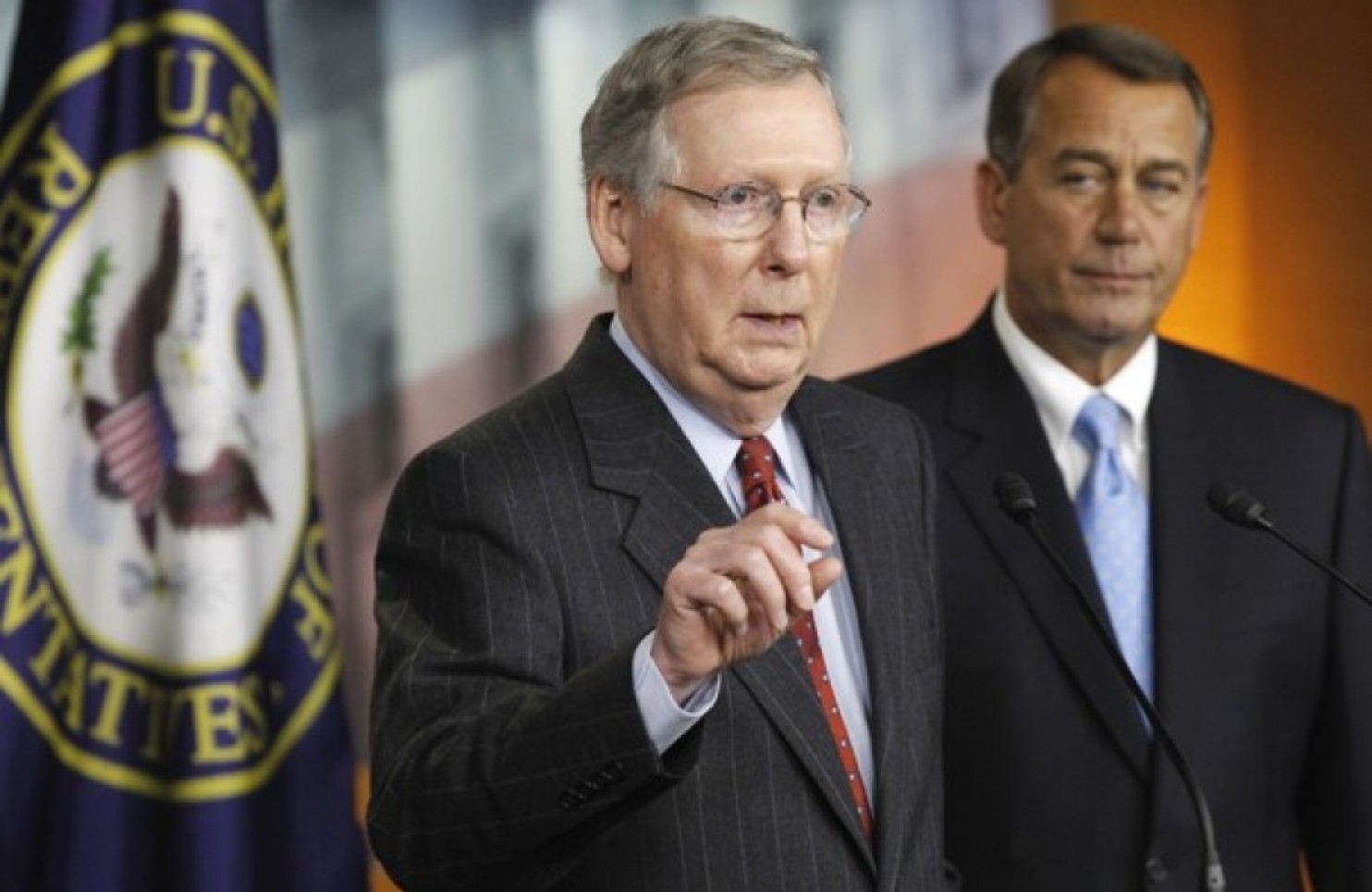
The extension was put forward by the Senate as an emergency measure after Republican House Speaker John Boehner, under pressure from his party’s right wing, refused to allow a vote on a comprehensive funding bill cleared by the Senate earlier on Friday.
“This has been a day of confusion both here in the House and for the men and women of the Department of Homeland Security,” said Rep. Lucille Roybal-Allard, D-Calif., as she urged lawmakers to pass the one-week funding bill.
House Appropriations Chairman Hal Rogers, R-Ky., also called for passage of the bill, saying that lawmakers would be abdicating their responsibility to the American people if they let DHS shut down.
President Obama called Pelosi and Senate Minority Leader Harry Reid, D-Nev., on Friday night to “ensure that the Department of Homeland Security does not shut down,” said White House Press Secretary Josh Earnest.
Conservative Republicans in the House of Representatives were angry that the measure did not include amendments sought by fellow House Republicans to block President Barack Obama’s immigration executive orders protecting millions of illegal immigrants from deportation.
Boehner instead proposed a three-week DHS spending bill that would have allowed the DHS to function normally and bought time for Republicans to press against Obama’s immigration reforms.
However, Republicans, who have a large majority in both houses after midterm elections in November, joined with Democrats in voting down that bill 224-203 in the House of Representatives, with conservatives wanting Boehner and others to stick by the amendments to the immigration plan.
House Democrats said the chamber should instead support the Senate-passed bill to fund DHS through the end of the fiscal year. But a block of conservative Republicans wanted the House to hold firm and continue to demand that the Senate pass legislation the House had already passed that would derail Obama’s immigration programs.
Earnest said Congress’ struggle to find a final resolution to the funding fight “exposes the danger of playing politics with our homeland security.”
At the heart of the funding fight was a battle over immigration.
House Republicans wanted to use the DHS funding bill as leverage to stop Obama’s executive orders on immigration. Obama issued those orders in November to protect about 4 million undocumented immigrants from deportation and allow them to work legally in the USA.
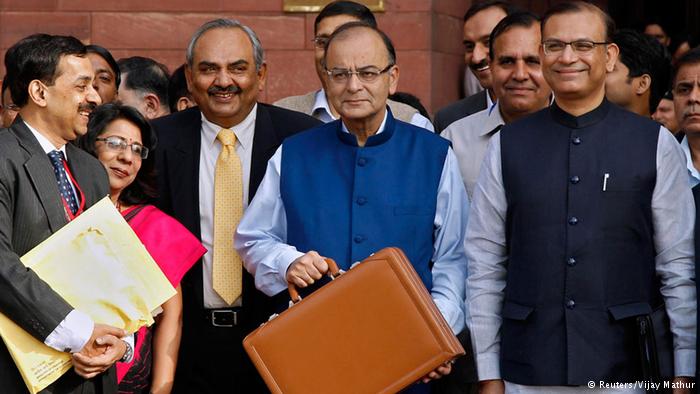
The 2015 budget “will further reignite our growth engine, signaling the dawn of a prosperous future,” wrote PM Modi on Twitter, referring to his government’s recently unveiled budget, widely viewed as business-friendly.
On February 28, Finance Minister Arun Jaitley announced a host of new measures in the government’s first full budget, including increased spending in infrastructure, a universal social security scheme and an unprecedented corporate tax cut to 25 percent over the next four years. Jaitley said India was “about to take off” and it was time for a “quantum leap” on reforms.
The finance minister also said he expects the country’s GDP to grow between 8 and 8.5 percent year-on-year, adding that a double digit growth rate may be achievable soon. The announcement comes a month after India’s Statistics Office unveiled changes in the way it calculates the country’s GDP.
There were high expectations on the newly released budget as Modi’s ruling BJP party swept to power nine months ago on promises of reviving the country’s sluggish economy. Last year’s “mini budget” – unveiled by the ruling BJP in July – had been viewed by analysts as lacking on key issues.
A Sanatan Dharam temple was vandalised in Washington state with windows broken and the word “Fear” painted on it, less than a fortnight after another temple was attacked.
Members of the the Sanatan Dharma Temple in Kent, about 30 km from Seattle, who came for worship Friday “were greeted by shards of broken glass after vandals targeted the building,” KING5-TV, a Seattle NBC affiliate, reported. According to the temple web site, “Amalaki Ekadashi” was to be observed Saturday.
Bricks were used to smash every window of the building and parts of the structure were ripped apart, said KOMO-TV, an ABC affiliate in Seattle. “The crime is small-minded with big intentions, shattering calm with hate,” the station’s reporter, John Humbert, said. “Silence isn’t the answer.”
Universal Society of Hinduism President Rajan Zed, said: “Hindus nationwide are highly concerned” by the second attack on a temple in recent days.
“It was shocking for the hard-working, harmonious and peaceful US Hindu community numbering about three million, who had made (a) lot of contribution to the nation and society, to receive such signals of hatred and anger.”
On February 15, the Hindu Temple Cultural Centre in Bothell city, about 35 km from Seattle, found a swastika painted on it and “Get Out” scrawled in large letters with spray paint. In the US, white supremacists have adopted the Nazi swastika as an ideological symbol.
The two temple attacks came after President Barack Obama’s criticism of India at an inter-religious prayer meeting earlier in February where he said intolerance there “would have shocked Gandhiji”.
Both temples do not have security cameras “and info on the vandals remains elusive,” KOMO-TV said. The incidents are under police investigation.
Several attacks on Hindu temples have taken place across the US in the last few months. In August a murti (idol) of Shiva at the Vishwa Bhavan Hindu Mandir in Monroe in the state of Georgia was desecrated with black paint. The local sheriff’s office arrested two people in connection with the attack.
Between July and October in Loudon county in Virginia, police have documented 17 separate incidents of anti-Hindu vandalism, the Hindu American Foundation said.
In a twist to the Kent incident, an Islamic organisation tried to deflect attention away from Hinduism, claiming that the attack was directed against Muslims, even though the building had a large sign, “Kent Hindu Temple.”
According to KOMO-TV, Arsalan Bukahari of the Washington Council on American-Islamic Relations said many of these acts of aggression target smaller religious groups that some bigots think are Muslim.
Leading US Christian fundamentalists have attacked Hinduism. Pat Robertson, who has called Hinduism “demonic,” criticised the practice of yoga this week.
While doing yoga, he said on the 700 Club TV programme, “you don’t know what the Hindu says, but actually it’s a prayer to a Hindu deity and so it sounds like gibberish.” Robertson is a pastor who was once a candidate for the Republican Party’s presidential nomination and has a following of millions.
Another Christian pastor, Franklin Graham, has denounced Hinduism as a “false religion” and said that “none of their 9,000 gods is going to lead me to salvation. We are fooling ourselves”.
Bollywood actress Sonam Kapoor, 28, who was shooting for ‘Prem Ratan Dhan Payo’ in Gondal, Rajkot district, was admitted in an ICU after she tested positive for swine flu. She complained of viral fever and was taken to a local hospital before being confirmed for Swine Flu.
She was taken to Sterling Hospital in Rajkot on Saturday (February 28) and was tested positive for swine flu. Spokesperson for Sterling Hospital confirmed the actress had tested positive for H1N1 virus. “She had been admitted to the hospital at around 10 am on Saturday. Dr Chirag Matravadiya, examined her. As the patient had symptoms of cold, fever etc, the doctor recommended her swine flu test. The lab tests came positive for H1N1virus in the evening,” said the spokesperson.
“Right now, she is being treated in an intensive care unit in isolation ward of our hospital. Doctors treating her are saying that her condition is stable,” added the spokesperson.
Sources at the hospital also said that her physical trainer had also reportedly tested positive.
Sujoy Ghosh is directing the Hindi adaptation of the best-selling Japanese romantic thriller “The Devotion Of Suspect X” written by best-selling author Keigo Higashino.
While the film has already been made in Japanese and Korean languages, the same is currently being made in Hollywood too. The book is an atmospheric thriller about a desperate woman craving a peaceful life, but who ends up killing her abusive ex-husband. The next-door neighbour helps hide the body and improvises a cover-up. When the body is eventually found, a determined investigator senses that something is amiss, thereby giving rise to a thrilling cat-and-mouse game.
Saif Ali Khan has been finalised for playing the investigator in the film. It is now confirmed that Kangana Ranaut will be playing the role of the woman. You would recall that Saif and Kangana had coincidentally been paired opposite each other in Reema Kagti’s love story. But due to financial differences between the producers and Saif, he opted out of the film.
Since Reema’s film was taking a little time to start, we have now learnt that due to date issues, Kangana has also decided to opt out of her film as she has now given her dates to Sujoy for his film. While Reema is sure to find her lead cast again, Sujoy is all set to start shooting his film from April this year with both Saif and Kangana, who it seems must have been truly destined to work together in a film.
Signup to our Newsletter!
Don’t miss out on all the happenings around the world