Year: 2015

  • GLOBAL GOLD DEMAND HITS MORE THAN  TWO-YEAR HIGH IN Q3: WGC

    GLOBAL GOLD DEMAND HITS MORE THAN TWO-YEAR HIGH IN Q3: WGC

    LONDON (TIP): Global gold demand hit its highest in more than two years in the third quarter as July’s price drop boosted buying of jewellery, coins and bars, the World Gold Council said.

    Overall demand reached 1,121 tonnes in the last quarter, up 8 percent year on year to its highest since the second quarter of 2013. The rise was tempered by increased outflows from bullion-backed exchange-traded funds, however.

    Bar and coin buying more than tripled in the United States to a five-year high of 32.7 tonnes, and also rose 70 percent in China and 35 percent in Europe. That followed a more than 6 percent slide in spot gold prices in July, their biggest monthly drop in two years.

    “The price dip represented a buying opportunity for people to dive into the market and increase their gold exposure,” Alistair Hewitt, the World Gold Council’s (WGC) market intelligence manager, said.

    “The additional degree of uncertainty that has been imbued within people as a result of the financial crisis underpins people’s desire for gold bars and coins. When you have that as an underlying factor, and you see a price dip, that represents an opportunity for you to increase your gold holdings.”

    European demand was also lifted by concerns over Greece’s financial position and geopolitical tensions in eastern Europe, the WGC said. Chinese demand, meanwhile, was boosted by the devaluation of the yuan.

    Jewellery buying, the largest segment of demand, was buoyant in number one consumer India, which vies for that position with China. Consumption rose 15 percent in the last quarter to 211 tonnes, while Chinese jewellery demand climbed 4 percent to 203 tonnes.

    Buying fell in some smaller key markets such as Russia and Turkey, however. Turkish jewellery demand fell 29 percent to 12.1 tonnes, while Russian buying dropped 19 percent to 13.5 tonnes.

    However, outflows from gold ETFs –popular investment vehicles which issue securities backed by physical metal –increased by 24 tonnes year on year to 65.9 tonnes, helping to offset the rise in demand elsewhere.

    Central bank buying, while remaining firm, also retreated 4.5 tonnes to 175 tonnes in the third quarter.

    Supply edged up 1 percent, driven by fresh producer hedging, though both mine and recycling supply retreated.

    For the full year, the WGC is maintaining its forecast for global gold demand of 4,200-4,300 tonnes, close to last year’s four-year low of 4,217 tonnes, Hewitt said.

    Chinese demand is still expected to total 900-1,000 tonnes, though the WGC has downgraded its expectations for Indian demand from that level to 850-950 tonnes.

    “We have ongoing issues within the rural community with the monsoon. In the first half of the year it was quite clear that unseasonal rains had affected agricultural incomes, and (rural) demand was softer than expected,” Hewitt said. “We also have the factor of prices … increasing later on in the quarter.”

  • SUBIR GOKARN IS EXECUTIVE DIRECTOR AT IMF

    SUBIR GOKARN IS EXECUTIVE DIRECTOR AT IMF

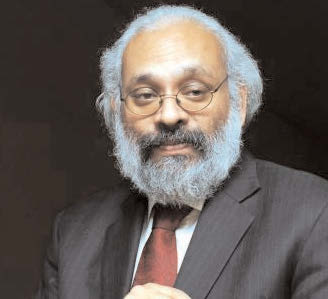
    NEW DELHI: Former RBI Deputy Governor Subir Gokarn was on November 12 appointed as an Executive Director on the board of the International Monetary Fund (IMF).

    Gokarn will represent India, Bangladesh, Sri Lanka and Bhutan on the Washington-based IMF’s Executive Board, which is responsible for conducting the day-to-day business of the multilateral institution.

    The name of 56-year-old economist was cleared by Appointments Committee of Cabinet headed by Prime Minister Narendra Modi, as per an order issued by the Department of Personnel and Training.

    On the IMF Executive Board, Gokarn will replace Rakesh Mohan, whose three year tenure ends this month. The order did not mention the tenure for Gokarn.

    Mohan has also been a Deputy Governor at RBI. The current RBI Governor Raghuram Rajan has incidentally been Chief Economist at IMF.

    The Board is composed of 24 Directors, who are appointed or elected by member countries or by groups of countries, and the Managing Director, who serves as its Chairman. The Board meets several times each week and carries out its work largely on the basis of papers prepared by IMF management and staff.

    The grouping of India, Bangladesh, Sri Lanka and Bhutan would be represented by Gokarn with a total casting vote of 2.8 per cent. This includes more than 2.3 per cent for India.

    The US, Japan, Germany, France and UK are among the major countries with individual representatives, while the highest vote is for the US at 16.74 per cent. Other countries with individual representatives on the Board include China, Russia and Saudi Arabia.

    Rated as one of the finest economists, Gokarn has in past served as Deputy Governor of the Reserve Bank of India, Chief Economist of global rating agency Standard and Poor’s (S&P) and head of CRISIL’s Research and Information business and also a nominee Board Member of the State Bank Of India.

    He was appointed Deputy Governor of RBI in 2009 for a term of three years and had a distinction of being the youngest Deputy Governors of the central bank at that time.

  • World’s biggest online shopping day nets over $14 billion

    World’s biggest online shopping day nets over $14 billion

    SHANGHAI (TIP): E-commerce giant Alibaba said that Chinese and international consumers spent more than $14 billion in the world’s biggest online shopping day, as it sought to soothe worries over China’s slowing economy.

    The November 11 “Singles Day”, which fell on Wednesday, has evolved into the globe’s biggest online shopping festival since Alibaba began using the date in 2009 to promote sales through its platforms.

    The $14.3 billion worth of merchandise volume this year smashed through last year’s tally of $9.3 billion, according to figures from Alibaba.

    “This day demonstrates the power of domestic China consumption and the Chinese consumer’s strong demand for international products,” Alibaba chief executive officer Daniel Zhang said in a statement.

    The total was more than double the$6.6 billion recorded last year in online buying during the peak US retail period, the five days from the Thanksgiving holiday to the following Monday, according to Internet analytics firm comScore.

    Alibaba’s New York-listed stock has been hammered by worries over the Chinese economy, serving as a proxy for slowing growth. It closed down 1.94 % at$79.85 on Wednesday despite the shopping festival.

    Chinese growth hit a 24-year low in 2014 and has slowed further this year, as it tries to shift from investment and exports to domestic consumption.

    Under what leaders call the “new normal”, the country logged its worst economic performance since the global financial crisis in the third quarter, with the economy growing just 6.9 %.

  • Vodafone to invest  Rs 13,000 crore in India

    Vodafone to invest Rs 13,000 crore in India

    NEW DELHI (TIP): Vodafone on Thursday committed investments of Rs 13,000 crore (£1.3 billion) in India for capacity augmentation and new business initiatives.

    The information was communicated to by Vodafone Group CEO Vittorio Colao during in his meeting with Prime Minister Narendra Modi in London.

    In a statement, the company said that it plans to spend Rs 8,000 crore in capacity addition and expansion, while Rs 4,000 crore would be spent on the ‘Make in India’ initiative and Rs 1,000 crore towards financial inclusion since Vodafone is one of the cpmpanies receiving in-principle approval for setting up a payments bank.

    Of the ‘Make in India’ initiative, Vodafone said, Rs 3,000 crores go to further increase capacity and upgrade its high-end technology centre and IT and customer experience centres in Pune and Ahmedabad. Another Rs 1,000 crore is to be used for setting up a Tier-4 data centre.

  • Air India eyes Rs 17,000 crore revenue

    Air India eyes Rs 17,000 crore revenue

    NEW DELHI (TIP): Air India is all set to earn its highest-ever passenger revenue — Rs 17,000 crore — this fiscal, bettering the previous high of Rs 15,500 crore registered in FY 14-15. The airline’s total revenue is expected to be Rs 21,500 crore this fiscal.

    “While the revenues are up due to higher passenger loads, costs are down because of oil prices and softening of interest rates on working capital loans of Rs 22,000 crore by almost 1 percentage point. As a result, we are looking at halving our net loss to Rs 2,500 crore this fiscal from Rs 5,500 crore last fiscal,” said a senior AI official.

    AI is now looking at new revenue streams to shore up its finances. It is now going to train Airbus A-320 pilots for other Indian carriers in India. At present, other airlines using the A-320 send their pilots abroad for type-rating (certificate that a pilot is trained on a particular type of aircraft). IndiGo — the biggest user of A-320 in India — sends its pilots to Kuala Lumpur for type-rating.

  • RETAIL INFLATION UP FOR 3RD MONTH IN ROW

    RETAIL INFLATION UP FOR 3RD MONTH IN ROW

    NEW DELHI (TIP): Retail inflation inched up for the third successive month in October on the back of creeping prices of some food items, while industrial output growth slowed in September posing fresh challenges for policy makers trying to revive growth.

    Data released by the Central Statistics Office (CSO) on Thursday showed the consumer price index rose an annual 5% in October compared to 4.41% in September. In rural areas retail inflation was 5.54% in October, while in urban segments it was 4.28%.

    Prices of some food items such as pulses soared. The overall consumer food price index rose 5.25% in October compared with 3.88% in September. Price of pulses rose 42.2% in October, underscoring the need to tackle the problem through a medium-term strategy. The government has taken several steps, including a crackdown on hoarders, to ensure that the popular protein is available for the masses at affordable rates.

    Economists said RBI is expected to keep a close watch on the inflation trajectory and may prefer to wait and watch for its next move on easing interest rates.

    Separate data released by the CSO showed the index of industrial production rose an annual 3.6% in September, slobust expansion of 8.4% in September compared to a contraction of 11.1% in September 2014. Consumer non-durables fell 4.9% in September compared to 1.3% growth in the year earlier month, while consumer goods remained sluggish, rising 0.6% year-on-year in September compared to a contraction of 4% in September 2014. The faster-than-expected growth in August had triggered hopes a sharp rebound in the industrial sector. India Inc said it expects growth to gather momentum in the third quarter.

    “Despite moderation in September industrial growth compared to the previous month, we expect a pick-up in the third quarter. Data indicates that demand for products such as passenger cars and two-wheelers has been strong in the run-up to the festive season,” said Chandrajit Banerjee, director-general at CII. Source TOI

  • INDIAN ASTRONOMERS FIND DYING GIANT RADIO GALAXY

    INDIAN ASTRONOMERS FIND DYING GIANT RADIO GALAXY

    Astronomers working at the National Center for Radio Astrophysics (NCRA) have discovered a giant radio galaxy that is dying. The galaxy was discovered using the Giant Meterwave Radio Telescope (GMRT) located in Kohad,located in the Pune district. It is located in the constellation Cetus and is about nine billion light-years away. The newly discovered galaxy has been given the scientific name ‘J021659-044920’ and emits powerful radio waves. The galaxy has an end-to-end extent of 4 million light-years. Radio galaxies measuring less than a million light years are common, but those of this size are extremely rare. The fact that the galaxy is in the process of dying has made this an extremely rare find.

    A radio galaxy is a galaxy that produces radiation that falls in the radio-frequency range of the electromagnetic spectrum. It is argued that the reason for such radiation is the presence of a supermassive black hole at the center of the galaxy. This black hole drives massive jets of hot plasma in diametrically opposite directions which eventually give rise to radio lobes. Under some rare circumstances, the black hole at the center may stop producing the jet. When this happens, the radio lobes fade away due to lack of replenishment, followed by the loss of energy. This loss is caused by the emission of radio waves and the transfer of energy to photons from the cosmic microwave background. The image of J021659-044920 shows that the jet has stopped and the radio lobes are starting to fade away.

    Low frequency radio telescopes like the GMRT are used to study dying radio objects. The GMRT is the world’s largest radio telescope operating at low frequencies. it is an array of 30 fully steerable, 45-meter diameter antennae that are spread over a 30 kilometer region around Khodad. It is built and operated by the NCRA of the Tata Institute of Fundamental Research since 2002. For their analysis, the team combined the observations of the GMRT with previous observations made using international ground and space based telescope facilities. Using data from multiple telescopes that span the electromagnetic spectrum, researchers were able to carry out a comprehensive analysis of the physical conditions around the galaxy.

  • Now, 3D print your own walking robot

    WASHINGTON (TIP): Researchers have developed a tool that can let even a novice build a customised 3D-printed walking robot. The user can specify the shape, size and number of legs for the robotic creature, using intuitive editing tools to interactively explore design alternatives. The system developed by Disney Research and Carnegie Mellon University also ensures that the resulting design is capable of moving as desired and not falling down; it even enables the user to alter the creature’s gait as desired.

    “Designing a functioning robot remains a difficult challenge that requires an experienced engineer,” said Markus Gross, vice president at Disney Research. “Our new design system can bridge this gap,” said Gross. The design interface features two viewports—one that enables editing of the robot’s structure and motion and a second that displays how those changes would likely alter its behaviour.

  • Disney adds digital features to traditional games, crafts

    WASHINGTON (TIP): Disney researchers have developed several prototype apps that add computer-generated animation, sound and visuals to activities such as colouring books and games like scavenger hunts that require physical interaction.

    Scientists at Disney Research say augmented reality with mobile devices serves as the perfect bridge between the two and can enhance creativity in the process.

    To demonstrate their concept, called Augmented Creativity, researchers have developed several prototype mobile apps for such activities as colouring books, scavenger hunts and team games.

    “Our research brings the seamless fusion of the real and virtual world together with an intelligent and creative gameplay,” said Markus Gross, vice president at Disney Research.

    “We believe that these concepts offer exciting virtual enhancements over real-world interactions,” said Gross.

    “We have been able to use the power and popularity of mobile devices to direct renewed emphasis on traditional activities of creative play,” said Robert W Sumner, principal research scientist.

    “One of our most compelling prototypes is an augmented-reality musical arrangement app that provides a tangible way for children to explore different music styles and arrangements by adding, removing, and re-arranging physical cards that represent different instruments and styles,” Sumner said.

    “Another app, based on colouring, allows children to customise 3D animated characters simply by colouring them as they normally would in a colouring book,” Sumner said. In a prototype for a multi-player game, players each use a mobile tablet to track a virtual object as they move around and talk with each other to cooperatively frustrate an invading alien force.

    They also developed a city-wide gaming framework, enabling the development of games such as scavenger hunts that get players outdoors, searching for interactive elements superimposed on buildings, parks and roads.

  • Acid fog dissolved rocks on Mars: Study

    NEW YORK (TIP): Mars has acid fog which eats away rocks and is caused by volcanic eruptions on the red planet, a new study suggests.

    A planetary scientist has found how acidic vapours may have eaten at the rocks in a 100-acre area on Husband Hill in the Columbia Hills of Gusev Crater on Mars. Shoshanna Cole’s research focused on the `Watchtower Class’ outcrops on Cumberland Ridge and the Husband Hill summit. “The special thing about Watchtower Class is that it’s very widespread which means that the rocks record environments that existed on Mars billions of years ago,” she said.

    By combining data from previous studies of the area on Mars, Cole saw some intriguing patterns emerge. Spirit examined Watchtower Class rocks and the chemical composition of these rocks, as determined by Spirit’s Alpha Proton X-ray Spectrometer, is the same, but the rocks looked different to all of the other instruments.

  • NZ TO TEST FIRST PVT ROCKET LAUNCH PAD

    AUCKLAND (TIP): The next revolution in space, what was long the special preserve of tax-funded giants like Nasa, will be launching next year from a paddock in New Zealand’s remote South Island.

    The rocket launch range is not just New Zealand’s first of any kind, but also the world’s first private launch range, and the rocket, designed by Rocket Lab, one of a growing number of businesses aiming to slash the cost of getting into space, will be powered by a 3D-printed rocket engine–another first.

    The 16-metre carbon-cased rocket will weigh just 1,190 kilogrammes, and with fuel and payload will be only about a third the weight of SpaceX’s Falcon 1, the first privately developed launch vehicle to go into orbit back in 2008.

    The remote launch site is no accident. “One advantage of New Zealand being small is that’s the perfect place to launch a rocket,” said Rocket Lab’s CEO Peter Beck.

    Ships and planes need re-routing every time a rocket is launched, which limits opportunities in crowded US skies, but New Zealand, a country of 4 million people in the South Pacific, has only Antarctica to its south.

    Rocket Lab is aiming for up to one launch a week from around 2018, costing just under $5 million each, a tenth of launch prices now, and vastly increasing business access to space.

    Even Nasa, struggling to shift its launch backlog, this month awarded Rocket Lab and rivals Firefly Space Systems and Virgin Galactic contracts totalling $17.1 million to launch tiny satellites into orbit from 2017. Rocket Lab recently signed a deal with Moon Express to send a rocket to the moon in 2017 in a bid to win Google’s $20 million Lunar X prize for the first company to send a probe that broadcasts images from the moon. Moon Express has already contracted for five launches with Rocket Lab and plans to send robotic spacecraft to the moon for exploration and commercial development of natural resources such as platinum.

  • GOOGLE MAPS ADDS OFFLINE NAVIGATION, SEARCH

    GOOGLE MAPS ADDS OFFLINE NAVIGATION, SEARCH

    NEW YORK (TIP): Google Maps is getting disconnected. With an update for Android phones, you’ll be able to search nearby businesses and get driving directions, including turn-by-turn voice prompts, even if your internet connection is spotty or non-existent.

    Google says a version for iPhones will come soon. The feature is ideal if you’re trying to leave an underground parking garage or a remote national park. It’s also great if you’re travelling abroad and want to conserve on expensive data plans. Google is also targeting users in emerging markets, where cellular speeds are slower and prices are higher relative to typical incomes.

    Mapping apps included with Windows Phone have long had this feature, but Windows has a tiny market share compared with iPhones and Android. Offline mapping is also available with some third-party apps, including Nokia’s Here.

    Google Maps has had a limited offline feature. It lets you save a small region ahead of time, but it’s the equivalent of displaying a paper map in a phone app. You can’t use it for navigation and other tasks we’ve come to expect in digital maps.

    With the new version, you’ll be able to do most of what you can do now.

    You’ll need to download databases ahead of time, preferably when you have a Wi-Fi connection. To do so, start by searching for a location, such as a city. Then pinch in or out to select what area you want to download. Larger areas will give you more flexibility for navigation, but they also take up more storage. As you change your selection, you’re told how large the file is and how much storage on the phone you have left.

    Once you download an area, Google will periodically refresh the data with new businesses and road changes. By default, that’s done only when you’re on Wi-Fi.

    What you won’t get with offline mapping is traffic information. Once you’re back online, Google Maps might suggest a detour if there’s unusual backup ahead. You also won’t get photos and user reviews for businesses. But you do get contact information, hours and an overall user rating.

    For directions, the feature initially works only with driving. It’s not yet available for walking, biking or public transit — so you might still be stuck in subway stations.

  • YOUR PHONE CAN HELP CURE CANCER WHILE YOU SLEEP

    YOUR PHONE CAN HELP CURE CANCER WHILE YOU SLEEP

    A new smartphone app that allows users to help find a cure for cancer while they are asleep, by pooling their device’s computing power, has been launched in Australia.

    Taking the fight against cancer from the laboratory to the humble smartphone, DreamLab, an Android smartphone app, gives people the power to help fast track a cure for cancer while they sleep at night, researchers said.

    DreamLab works by pooling the processing power of mobile devices to create a smartphone supercomputer for cancer research.

    This in turn will help speed up research into breast, ovarian, prostate and pancreatic cancer, researchers said.

    While a smartphone is plugged in and fully charged, the DreamLab app automatically downloads and solves a small cancer research problem, and then sends the result back to researchers via the Amazon cloud -like a giant crossword puzzle, with each user solving a different clue. DreamLab, developed by Vodafone Foundation and the Garvan Institute of Medical Research, not only provides free access to a crucial computing resource, it also has the potential to greatly speed up cancer research, the institute said.

    With 100,000 users, researchers will be able to crunch data approximately 3,000 times faster than the current rate. With five million users, that increases to 150 thousand times faster than the current rate, researchers said.

  • NOW A SIMPLE EYE DROP TO CLEAR CATARACTS

    NOW A SIMPLE EYE DROP TO CLEAR CATARACTS

    Here’s good news for all those who’ve postponed their cataract operations because of fear. Scientists, including one of Indian-origin, have discovered a new chemical that could be added to eye drops to help clear up cataracts, the leading cause of blindness. Although cataracts can be successfully removed with surgery, this approach is expensive, and most individuals blinded by severe cataracts in developing countries go untreated, researchers said.

    Cataracts are primarily a disease of ageing. As is seen in neurodegenerative conditions such as Alzheimer’s disease and Parkinson’s disease, a hallmark of the condition is the misfolding and clumping together of crucial proteins. In the case of cataracts, the affected proteins are known as crystallins. They are the major component of fibre cells, which form the eyes’ lenses, and the unique properties of these cells make them particularly susceptible to damage, said Jason Gestwicki, from University of California, San Francisco (UCSF), co-senior author of the research paper.

    In the new study, led by Leah N Makley and Kathryn McMenimen, the team exploited a crucial difference between properly folded crystallins and their amyloid forms: amyloids are harder to melt. At the University of Michigan (U-M)’s Centre for Chemical Genomics, the team used a method known as high-throughput differential scanning fluorimetry, or HT-DSF, to apply heat to amyloids while applying thousands of chemical compounds.

    The group began with 2,450 compounds, then zeroing in on 12 that are members of a chemical class known as sterols. One of these, known as lanosterol, was shown to reverse cataracts in a June, 2015 paper in the journal Nature, but because lanosterol has limited solubility the group had to inject the compound into the eye for it to exert its effects.

    Gestwicki and his group assembled and tested 32 additional sterols, and eventually settled on “compound 29,” as the most likely candidate that would be sufficiently soluble to be used in cataract-dissolving eye drops. In laboratory dish tests, the team confirmed that compound 29 significantly stabilised crystallins and prevented them from forming amyloids. They also found that compound 29 dissolved amyloids that had already formed.

    The team next tested compound 29 in an eye-drop formulation in mice carrying mutations that make them predisposed to cataracts. In experiments conducted with Usha P Andley, professor at Washington University in St Louis (WUSTL), they found that the drops partially restored transparency to mouse lenses affected by cataracts.

    Similar results were seen when compound 29 eye drops were applied in mice that naturally developed age-related cataracts, and also when the compound was applied to human lens tissue affected by cataracts that had been removed during surgery.

  • LACK OF SLEEP IS BAD FOR YOUR KIDNEYS: STUDY

    LACK OF SLEEP IS BAD FOR YOUR KIDNEYS: STUDY

    Do you know how vital it is for us to sleep better every night? People are more likely to experience a rapid decline in kidney function if they don’t get enough sleep, says a new study.

    Shorter sleep duration can lead to a more rapid decline in kidney function, says a new study.

    Many of the body’s processes follow a natural daily rhythm or so-called circadian clock that is based on regular sleep-wake cycles. The study found that kidney function may be compromised when this natural cycle is disrupted.

    Researchers led by Ciaran Joseph McMullan from Brigham and Women’s Hospital analysed information on 4,238 participants from the Nurses’ Health Study with kidney function measurements on at least two occasions over an 11-year period.

    The researchers found that shorter sleep duration was significantly linked with a more rapid decline in kidney function.

    As an example, women sleeping for five hours per night had a 65 percent increased likelihood of experiencing a rapid decline in kidney function compared with women sleeping seven to eight hours per night.

    “This is the first prospective study to find that shorter sleep duration is associated with a more rapid decline in renal function,” said McMullan.

    “The findings of this paper coupled with research from others suggest that renal physiology may be adversely effected by disruption in sleep, including sleep restriction,” McMullan added.

    The findings are scheduled to be presented at the ongoing ASN Kidney Week 2015 during November 3-8 in San Diego.

  • Drug addiction begins with painkiller for women

    Drug addiction begins with painkiller for women

    The route to drug addiction for most women could begin with doctor-prescribed painkillers, a new study warns. In the study involving over 500 patients in Canada, the researchers found that more than half (52 percent) of women and a third (38 percent) of men reported doctor-prescribed painkillers as their first contact with opioid drugs, a family of drugs which include prescription medicines such OxyContin and codeine, as well as illicit drugs such as heroin.

    According to the researchers, a number of factors could influence why women are disproportionately affected by opioid dependence originating from prescription painkillers.

    “It may be that they are prescribed painkillers more often because of a lower pain threshold or because they are more likely to seek medical care than men,” said study senior author Zena Samaan, associate professor at McMaster University in Hamilton, Ontario, Canada.

    “For whatever reason, this is a growing problem in Canada and in other countries, such as the US, and addiction treatment programmes need to adapt to the changing profile of opioid addiction,” Samaan noted.

    The study also pointed out that as compared to results from studies in the 1990s, there has been a 30 percent increase in the number of patients becoming addicted to opioids through doctor-prescribed painkillers, usually for chronic pain management.

  • Hindus concerned at Hindu temple vandalism in Ontario

    Hindus concerned at Hindu temple vandalism in Ontario

    TORONTO (TIP): Hindus are highly concerned after reports of vandalism of Shri Ram Dham Hindu Temple in Kitchener in Ontario (Canada).

    There were reports of smashing of windows of Shri Ram Dham Hindu Temple on November 15 night by vandals with large rocks.

    Rajan Zed,  President of Universal Society of Hinduism, in a statement in Nevada, November 17, said that it was shocking for the hard-working, harmonious and peaceful Hindu community of Canada and worldwide; who had made lot of contributions to Canada and the world; to receive such signals of hatred and anger.

    Rajan has urged administration for swift action; and Ontario Lieutenant Governor Elizabeth Dowdeswell and Ontario Premier Kathleen Wynne to contact the Kitchener area Hindu community to reassure them.

    Shri Ram Dham Hindu Temple, whose tagline is “Wisdom Love Service”, opens and conducts two aartis daily, has services on Sundays-Tuesdays-Thursdays and organizes festivals-kirtan-discourses-special services year round. It contains the murtis of Hindu deities of Sita Ram, Radha Krishna, Shiv Parvati, Durgaa Maa, Ganesh and Hanuman. It offers classes in yoga, Sanskrit, Bharatnatyam and vegetarian cooking; Hindu culture course and yoga camp for kids; and consultation on spiritual-religious issues and rituals


  • International students struggle to find employment | F-1 Visa

    International students struggle to find employment | F-1 Visa

    International students have F1 visas, which allow them to study, but not work in America. International students are limited to on-campus graduate student assistant jobs for a maximum of 20 hours per week.

    American Bazaar, an online news portal reported that Indian students studying in the US contribute $3.6 billion to the American economy, according to Open Doors Report on International Education Exchange released on Monday.

    The report also reveals that the number of Indians studying in the US rose by 29.4% this year, which is the highest rate of growth in the history.

    From 102,673 students enrolled in US institutions in 2013-14, the number rose to 132,888 in 2014-15, the data showed.

    “Last year, Indian students in US colleges and universities contributed USD 3.6 billion to the US economy,” the report said, citing figures from the US Department of Commerce. International students’ spending in all 50 states contributed more than $30 billion to the US.

    After graduation, most students are eligible for optional practical training, which enables them to work in the United States for 12 months in their field of study. There’s also the curricular practical training option, which allows international students to have an internship or similar experience for up to three months in their field of study. Other than that, international students cannot work off campus.

    One difficulty international students run into is employers that think they don’t want to go through the process of sponsoring an international student.

    International students in STEM fields may qualify for an additional 17 months in the U.S., she said.

    At the end of their practical training, the student can try to apply for an H1B visa and be directly hired by the company, though a limited amount of those visas are issued each year.


  • How outsourcing companies are exploiting US H-1B visa program

    How outsourcing companies are exploiting US H-1B visa program

    Many of the visas are given out through a lottery, and a small number of giant global outsourcing companies had flooded the system with applications, significantly increasing their chances of success.

    Congress set up the H-1B program to help US companies hire foreigners with exceptional skills, to fill open jobs and to help their businesses grow. But the program has been failing many US employers who cannot get visas for foreigners with the special skills they need.

    Instead, the outsourcing firms are increasingly dominating the program, federal records show. In recent years, they have obtained many thousands of the visas – which are limited to 85,000 a year – by learning to game the H-1B system without breaking the rules, researchers and lawyers said.

    OUT OF LUCK

    In some years, a US employer could snag one of these coveted visas at almost any time of the year. But recently, with the economy picking up, the outsourcing companies have sent in tens of thousands of visa requests right after the application window opens on April 1. Employers who apply after a week are out of luck.

    “The H-1B program is critical as a way for employers to fill skill gaps and for really talented people to come to the United States,” said Ronil Hira, a professor at Howard University who studies visa programs. “But the outsourcing companies are squeezing out legitimate users of the program,” he said. “The H-1Bs are actually pushing jobs offshore.”

    Those firms have used the visas to bring their employees, mostly from India, for large contracts to take over work at US businesses. And as the share of H-1B visas obtained by outsourcing firms has grown, more Americans say they are being put out of work, or are seeing their jobs moved overseas.

    Of the 20 companies that received the most H-1B visas in 2014, 13 were global outsourcing operators, according to an analysis of federal records by Hira. The top 20 companies took nearly 40 per cent of the visas available – about 32,000 – while more than 10,000 other employers received far fewer visas each. And about half of the applications in 2014 were rejected entirely because the quota had been met.

    The top companies receiving H-1B visas in recent years, Hira found, include Tata Consultancy Services, known as TCS, Infosys and Wipro, all outsourcing giants based in India; Cognizant, with headquarters in New Jersey; and Accenture, a global operation incorporated in Ireland.

    Among the immigration visas offered by the United States, the H-1B program stands out for its peculiar rules. The annual quota includes 65,000 visas for foreign workers applying for the first time, while the remaining 20,000 are for foreign students graduating with advanced degrees from US universities. Each year the period for applications opens on April 1, and they are accepted on a first-come, first-served basis.

    COMPUTER-RUN LOTTERY

    Federal officials allow only one application for each foreign worker. But there is no limit on the number of visas a single company can seek. A company with thousands of employees can submit many applications. By law, if applications quickly exceed the quota, officials turn to a computer-run lottery to select the visa recipients.

    Immigration officials do not acknowledge the outsourcing companies’ advantage and how they have understand the lottery game. Because of the lottery scheme post 2013; they have started putting so many more applications than they need just to improve their winning chances.


  • New bill proposes H1B & L1 visa reforms

    New bill proposes H1B & L1 visa reforms

    BENGALURU: The US is set to pass a bill on immigration with major implications for the Indian IT sector and its employees. The bill seeks to prohibit companies from hiring H-1B employees if they employ more than 50 people in the US and more than 50% of those employees are H-1B and L-1 visa holders.

    49799498.cmsThe Bipartisan legislation, if passed, all U.S. companies looking to hire workers with H-1Bs would be required to first search for a U.S. citizen to fill the position. Companies of more than 50 people in which over half of the workforce in made up of H-1B and L-1 visa holders would be banned from hiring any new workers with H-1Bs. (L-1 visas allow for the relocation of specialized workers to U.S.-based departments of international companies). This move will place severe restrictions on larger Indian IT companies that are the largest users of H-1B visas. Though companies do not disclose the data, it is believed that the large Indian IT companies have more than 50% of their employees on H-1Bs and L-1s.

    The bill was introduced by Republican Iowa senator Chuck Grassley, who is also chairman of the Senate Judiciary Committee, and Democratic Illinois senator Dick Durbin.

    The Wall Street Journal reports that India’s outsourcing firms, and subsequently the country’s economy, have already been facing challenges because of cloud computing. This bill would add to their troubles.

    The Bill also gives the labour department enhanced authority to review, investigate, and audit employer compliance with programme requirements, as well as to penalize fraudulent or abusive conduct. It requires the production of extensive statistical data about the H-1B and L-1 programmes, including wage data, worker education levels, place of employment and gender. “If this Bill is enacted, US companies would be prohibited from hiring foreign workers under the H-1B and L-1 visa categories if at least 50% of their employees have already been employed on such visas. The Bill also gives wide powers to the law enforcement authorities to investigate and penalize for non-compliances,” Shroff said.

  • Latest: Islamic State releases video threatening United States

    Latest: Islamic State releases video threatening United States

    The Islamic State group issued a new 12-minute video Monday, November 16, threatening to attack all nations involved in bombing IS positions in Syria and Iraq.

    One man in the video threatened to target the United States in the same style as Paris, saying that as “we struck France on its ground in Paris, we will strike America on its ground in Washington.”

    This comes even as France identified a 27-year-old Belgian who once boasted about killing “infidels” and fought for the Islamic State group in Syria as the mastermind of the Paris attacks, and President Francois Hollande vowed Monday to forge a united coalition capable of defeating the jihadists at home and abroad.

    The video, linked here from the Reuters site, appeared on a website used by Islamic State to post its messages, begins with news footage of the aftermath of Friday’s Paris shootings in which at least 129 people were killed.

    The message to countries involved in what it called the “crusader campaign” was delivered by a man dressed in fatigues and a turban, and identified in subtitles as Al Ghareeb the Algerian.

    “We say to the states that take part in the crusader campaign that, by God, you will have a day, God willing, like France’s and by God, as we struck France in the center of its abode in Paris, then we swear that we will strike America at its center in Washington,” the man said.

    It was not immediately possible to verify the authenticity of the video, which purports to be the work of Islamic State fighters in the Iraqi province of Salahuddine, north of Baghdad.

    The U.S. Department of Homeland Security would not comment on the video but said it has not received information indicating a potential attack.

    “While we take all threats seriously, we do not have specific credible information of an attack on the U.S. homeland,” a DHS official said on condition of anonymity to First Post.

  • Gaiety marks BAPS Shri Swaminarayan Mandir, Flushing Diwali

    Gaiety marks BAPS Shri Swaminarayan Mandir, Flushing Diwali

    NEW YORK (TIP): Diwali serves as a time to gather with friends and family to welcome the New Year and celebrate the year past. During this time of togetherness, reflection, and introspection, devotees at the BAPS Shri Swaminarayan Mandir in Flushing, NY, organized, November 12, 2015, various events to share ancient traditions with the local community. Across North America, thousands of volunteers had begun preparations months in advance of the festivities – from design, creation and decoration to food preparation for the Annakut (offering of vegetarian dishes to Bhagwan). Celebrating Diwali with great enthusiasm and excitement inspires every generation of Indians to honor their deep rooted Hindu heritage.

    The five days of Diwali are filled with optimism and enthusiasm as volunteers and devotees work side by side, looking past their differences, to build the Annakut and prepare for Diwali events at each mandir.

    Inspired by His Holiness Pramukh Swami Maharaj, the spiritual leader of BAPS, devotees welcome guests to the mandir and offer well wishes for the New Year. Swamis visit with community members to offer their prayers for peace and prosperity among families. This year, BAPS Mandirs across North America marked the auspicious festival of Diwali with fireworks and cultural exhibitions so visitors would find their experiences both entertaining and educational.

    “Diwali is my favorite festival because of the excitement that fills the air when the festival nears. But having recently migrated to US, I did not know what to expect.” said Manish Ahluwalia, “But after coming to the BAPS Shri Swaminarayan Mandir, Flushing, NY, I felt like I was in India. I experienced Indian culture while getting a taste of fine Indian cuisine. Every person I met had an expression of warmth and happiness on their face. I truly felt at home.”

    “Diwali is that time of the year when family, friends and relatives get together and strengthen their bonds through various festivities. Being away from India should not cause a lapse in our traditions”, said Sanjaybhai Barot, Mandir coordinator. “Preparations for the festivities begin months in advance. Devotees, young and old, sacrifice their time to help in creating decorations, food preparation, children’s Diwali celebration arrangements, as well as decorating the stage for the most significant ritual of Diwali, the Annakut,”said Arjunbhai Patel,  Kitchen Coordinator.  More than 1000 food items were displayed in front of  Bhagwan for the Annakut.

    Children’s Diwali Celebrations

    Diwali is also a time when children look forward to the joy it brings. On November 14th, 2015 from 10 AM to 6PM, the Children’s Diwali Celebration took place. The celebration was as much fun as it was educational. The children learned the history and origin of this festival, played a variety of exciting games, and were given an assortment of gifts and goodies. More then 400 kids participated in the event.

    This year His Holiness Pramukh Swami Maharaj celebrated Diwali and Annakut in Sarangpur, Gujarat, India. He blessed the devotees on the New Year day.

    About BAPS

    The BAPS Swaminarayan Sanstha (BAPS), a worldwide socio-spiritual organization is dedicated to community service, peace and harmony. Motivated by Hindu principles, BAPS strives to care for the world by caring for societies, families and individuals. Through social and spiritual activities, BAPS endeavors to produce better citizens of tomorrow who have a high esteem for their roots. Its 3,300 international centers support these character-building activities. Under the guidance and leadership of His Holiness Pramukh Swami Maharaj, BAPS aspires to build a community that is morally, ethically and spiritually pure, and free of addictions.


    About Pramukh Swami Maharaj

    His Holiness Pramukh Swami Maharaj, the fifth spiritual successor of Bhagwan Swaminarayan, has inspired millions of people across the world to lead a God-centered, morally pure life. The present leader of BAPS, Pramukh Swami Maharaj has traveled extensively, emphasizing the importance of family harmony, community service and spiritual progress. He embodies the essence of Hindu life. His compassion for humanity, universal wisdom and striking simplicity has touched many world religious and national leaders.

    For more details, please visit www.baps.org


  • Islamic Way of Dealing with Terrorism

    Islamic Way of Dealing with Terrorism

    We have tried the Bush way and Obama way of handling terrorism, neither has worked, the first one created more of it, and second one has not mitigated it either.   Mike Ghouse, a moderate Muslim offers the Islamic way of handling terrorism.

    Here is the plan

    After due preparations and consultations, President Obama is requested to deliver a three days notice in behalf of the United Nations to Mr. Baghdadi and his deputies.

    “Mr. Baghdadi, you have three days to stop killing innocent people and destroying Allah’s creation; life and environment.  If you do not heed the warning, we will hunt down and ambush you wherever you hide.  If not,  we will gas you guys, few square miles at a time,  not to hurt you, but to capture and put you on trial and ask you to give up the false claims you are making about your religion.  Mind you, the Muslims soldiers from around the world will be in the front line.

    We will give you copies of the Quran and make you read and understand until you get that right – not what is dished out to you by the Ulema (Scholars) of the past, but what God tells you in the Quran.

    Quran tells you in 5:32, “If anyone slays a person, it would be as if he slew the whole people: and if any one saved a life, it would be as if he saved the life of the whole people.” And “Enjoin doing what is right and forbid what is wrong,” Quran 9:71. The wisdom is simple – God created everything in harmony (55:06-55:10) and you have messed it up big time. And it is our responsibility to forbid you from doing that, and restore harmony and cohesiveness of Allah’s creation.

    Allah advises us to be kinder and gentler towards you if you reconsider and surrender. If you repent and bow down toward Allah’s guidance to preserve the balance and harmony of the world around you, we will be lenient. He promises glad tidings to “all” believers (9:112), and we hope you would become a believer in the Quran that you claim to be.

    By the way, you don’t own Allah, the Prophet, Islam or the Quran.  It is the book of wisdom for the whole humanity and you cannot claim exclusive ownership of it.

    Insha Allah, we will be restoring peace and sanity to the planet.

    Blaming the religion is the dumbest thing to do, because you cannot beat, kick, hack, shoot, hang, kill or bury a religion, it’s an intangible thing my friend! You can blame the individuals and restore trust and harmony back in the society.

  • Paris Terror Attacks: Multi-Nation Investigations Launched

    Paris Terror Attacks: Multi-Nation Investigations Launched

    After militants with AK-47 rifles and suicide explosives vests shattered the peaceful revelry of Paris on Friday night, November 13, killing dozens of civilians in restaurants and at a concert hall, France seemed intent on sending a clear message of its determination to curb the Islamic State and its ability to carry out attacks outside the territory it controls.

    Islamic State has claimed responsibility for Friday’s suicide bombings and shootings.

    The revelations that at least four French citizens were involved in the attacks — three brothers and a man who lived around Chartres, about 60 miles southwest of Paris — seemed certain to exacerbate longstanding fears in France about the place of Muslim immigrants and converts in French society.

    Even before the latest violence, the nation was still reeling from a smaller set of deadly attacks on the satirical newspaper Charlie Hebdo, at a kosher grocery and against a police officer only 10 months earlier.

    HOLLANDE ADDRESSES PARLIAMENT

    “Friday’s acts of war were decided and planned in Syria. They were organized in Belgium and perpetrated on our soil with French complicity with one specific goal: to sow fear and to divide us,” Hollande told Parliament in a rare joint session convened at the Palace of Versailles.

    “Syria has become the biggest factory of terrorism the world has ever known and the international community is still too divided and too incoherent.”

    As he spoke, thousands gathered around candlelit memorials at the Place de la Republique square and beneath the Eiffel Tower, which like many top attractions in one of the world’s most-visited cities reopened for business Monday in a defiant spirit. The tower was bathed in red, white and blue floodlights of the French tricolor, with the city’s centuries-old slogan — “Tossed but not sunk,” suggesting an unsinkable city braving stormy seas — projected in white lights near its base.


    ATTACKERS NAMED

    France identified a 27-year-old Belgian who once boasted about killing “infidels” and fought for the Islamic State group in Syria as the mastermind of the Paris attacks, and President Francois Hollande vowed Monday to forge a united coalition capable of defeating the jihadists at home and abroad.

    Addressing lawmakers after France observed a minute of silence honoring the 129 people killed and 350 wounded, Hollande said the victims came from at least 19 nations, and the international community, led by the United States and Russia, must overcome their deep-seated divisions over Syria to destroy Islamic State on its home turf.

    French and other Western intelligence agencies face an urgent challenge to track down the surviving members of the three Islamic State units who inflicted the unprecedented bloodshed in France and, perhaps more importantly, to target their distant commanders in IS-controlled parts of Syria.

    Police have also named other attackers: Ismael Omar Mostefai, 29, from Chartres, southwest of Paris. He was identified by the print from one of his fingers that was severed when his suicide vest exploded.

    French media named the two other French assailants as Bilal Hadfi and Ibrahim Abdeslam.

    Police said they had found a Syrian passport near one of the other dead gunmen. Greece said the passport holder had crossed from Turkey to the Greek islands last month and then registered for asylum in Serbia before heading north, following a route taken by hundreds of thousands of asylum seekers this year.

    French police have used emergency powers to conduct 168 searches since Sunday night that netted 127 arrests and 31 weapons.


    World Response

    President Obama and other world leaders, including President Vladimir V. Putin of Russia, gathered at a summit meeting in Turkey, grappling with how to respond to the Islamic State, the civil war in Syria and the mass emigration from the region toward Europe.

    The Islamic State has also claimed responsibility for the downing of a Russian passenger jetliner over Egypt, killing all 224 people aboard, intensifying concerns that the group’s reach and ambitions for sowing terror are expanding.

    France was the first European state to join US air strikes against Islamic State targets in Iraq, in September 2014, while a year later it extended its air strikes to Syria. Russia began its own air campaign in Syria in October, but has been targeting mainly areas controlled by other groups opposed to its ally, President Bashar al-Assad, Moscow’s critics say.

  • India, APEC and the US

    India, APEC and the US

    The major focus during the Asia Pacific Economic Cooperation (APEC) meeting in Manila, Philippines on November 18th and 19th would be on the Paris terror attacks though it is a trade promotion group that does not delve into security issues. The regional tensions in the South China Sea would be coming to some sort of attention indirectly despite Chinese efforts to block any discussion.  The issue of enlarging the membership and India’s pending membership application will most probably again be relegated to the background. Both China and the US will raise their pitch to sell their version of free trade blocks. China will try to sell its proposal for the Free Trade Area for Asia-Pacific (FTAAP) which excludes India and the US will do the same for the Trans-Pacific Partnership (TPP) which currently excludes China. Prime Minister Narendra Modi had raised the issue of Indian membership in the APEC with President Barack Obama in January 2015, when Obama visited India as the guest of honor for India’s Republic Day parade. President Obama expressed verbal support for India’s membership in the APEC at that time.


    The APEC was initially floated in 1989 by an Australian initiative and had 12 founding member economies: Australia, Brunei Darussalam, Canada, Indonesia, Japan, Korea, Malaysia, New Zealand, the Philippines, Singapore, Thailand and the United States. In 1991, China, Hong Kong, China and the Chinese Taipei (Taiwan) joined the APEC as a regional package. Mexico and Papua New Guinea followed in 1993. Chile was allowed to join the APEC in 1994.  Peru, Russia and Viet Nam joined the APEC in 1998, taking its full membership to 21 economies. The group acts with consensus in making decisions. APEC is more a trade promotion group and its recommendations are not binding on the member economies.


    The APEC’s mission statement reads: “Our primary goal is to support sustainable economic growth and prosperity in the Asia-Pacific region. We are united in our drive to build a dynamic and harmonious Asia-Pacific community by championing free and open trade and investment, promoting and accelerating regional economic integration, encouraging economic and technical cooperation, enhancing human security, and facilitating a favorable and sustainable business environment. Our initiatives turn policy goals into concrete results and agreements into tangible benefits.”


    The APEC put a moratorium on new memberships in 1997 for a period of 10 years though India’s membership application was pending. The moratorium was extended for another three years in 2007. However, for inexplicable reasons the APEC economies have not bothered to deal with the issue of further enlargement.  Especially India’s application for the membership has been pending with the APEC for last 20 years without approval. Every year since 2010, India has been looking expectantly for the APEC to consider India’s application for membership but nothing concrete has materialized owing to passive obstruction and stonewalling.


    Mainly, two arguments are used against India’s membership that India is not part of Asia-Pacific region and that India has proved to be an obstacle during negotiations in various international trade reforms/regimes. India had bargained tough during the Doha round and the Bali round of the WTO negotiations. Both these arguments are fallacious and self-serving. One fails to understand where countries like Thailand and Brunei have either land or sea borders with the Pacific Ocean? Or being a member of the ASEAN qualifies these two countries for the APEC membership! One also needs to ask a rhetoric question if India is an Asian country or not?  India is not located on the moon! Since the concept of Asia-Pacific has already been substituted by a larger strategic concept of the Indo-Pacific, there is no reason to continue to withhold India’s membership of the APEC on geographical grounds alone. Without India’s participation, there is no Indo-Pacific economy and hence no Asia-Pacific economy!


    India introduced market reforms initially in 1991 when China was allowed to join as a member. India has gradually introduced more market reforms & liberalization and that is the reason India applied for the membership of the APEC. It is true that Indian economy was largely socialistic prior to 1991 but so were China’s, Russia’s and Vietnam’s. Indian membership of the APEC would provide an incentive to continue further deeper economic liberalization. India has been a founding member of the WTO as well as of its previous incarnation of the GATT (General Agreement on Trade and Tariffs) since its inception. Interestingly, Russia is a part of the APEC since 1998 though it still does not qualify for the WTO membership as a market economy. China was allowed to join the WTO only in year 2000 despite being a member of the APEC since 1991. There seems to be some sort of unstated cooperation between both the US and China to continue to go slow on India’s membership of the APEC.

    A number of US based analysts have exhorted the US to champion India’s cause in the APEC for membership as a step toward eventual inclusion in the TPP.  Kevin Rudd, the former Australian PM and head of the CII-Asia Society Task Force  opined that the APEC misses much by not having India on board. Clarifying that APEC is not a free-trade body, Rudd said, “APEC is not a platform for market access negotiations, or a trade negotiating forum, but voluntary association of economies”. We, in India, can understand China’s reflexive and habitual pattern of opposition to India’s membership for any international arrangement with strategic implications because China is an adversary and a strategic threat. India does not perceive the US as an adversary in the post-cold war scenario. In fact, Pew Research on public opinion has consistently shown Indian public considering the US as one of the most  friendly nations.


    The US Deputy Assistant Secretary of State and Senior Official for the APEC Matt Matthews on November 2nd 2015 dampened cold water on India’s membership by categorically stating that it is not on the agenda of the APEC meeting in Manila in Philippines, on November 18 and 19. He further stated: “I do not believe there is any active consideration within APEC for expanded membership in the current time”. When reminded that President Obama had “supported” India’s desire for membership of the APEC during his 2015 visit to India on Republic Day, Matthews said the US had so far only welcomed “India’s interest” in joining the APEC. “It is important to be careful and accurate about describing President’s comment. President welcomed India’s interest in the APEC. That speaks for itself. We welcome India’s examination of APEC. We have not entered [into any] discussion about it. I do not believe India is formally pressing for actual membership now in APEC,” he said.


    India needs to hold the US to its words. The US must stop playing word games like China. The US expects too many unilateral concessions from India without delivering anything in return. The US, after signing the civil nuclear deal in 2005 and after ratifying the same in 2008, has not been able to shepherd India’s membership of the NSG, the MTCR, The Australia Group and the Wassenaar arrangement. The US has also made verbal promises to support India’s permanent membership of the UNSC. However, there is no concrete effort or will to make it implemented into reality despite a lot of rhetoric from the US. The proof of the US goodwill should reflect in active and actual support for India’s membership for the most benign of these international arrangements. Being an active member of the APEC will help India transform its domestic economy into full-fledged market economy. It will also prepare India for additional economic reforms so to obtain eventual membership of the RCEP or the TPP or the FTAAP.


    India and the US have had a legacy of trade disputes within the WTO. US trade representatives have invoked the Special 301 Priority Foreign Country designation for India. If the US continues to show a pattern of passive indifference and obstruction to India’s membership of the APEC while using the flowery rhetoric akin to China, India may have to utilize more aggressive marketing and trading strategies. Let it be known to everyone including the US that trade wars and denial of market access is as a detrimental as a hot war in the modern context. If you don’t support us, you are against us in our pursuit of market access. Since India and the US have now formalized an annual Strategic and Commercial dialogue, perhaps, the US performance in its active support to India’s membership of the APEC needs to be carefully monitored annually. Preferential trade access to Indian market for the US must be made contingent upon US behaviors towards India’s membership in the APEC and other free trade groups.

    To paraphrase and plagiarize Carla Anderson Hills, the former US trade representative: We (India) will be ready to open the APEC and other trade-blocks with a crowbar if necessary, but with a Namaste if possible!


    (The author is President, The Council for Strategic Affairs, New Delhi, India, an independent and privately funded Indian think-tank. He can be contacted at adityancsa@gmail.com)