Year: 2015

  • KAREENA KHAN IN A PAKISTANI FILM?

    KAREENA KHAN IN A PAKISTANI FILM?

    While Pakistani actors Mahira Khan and Fawad Khan have been banned in Maharashtra by Shiv Sena, Begum Kareena Kapoor Khan is considering to work in a Pakistani film.

    KAREENA KHANThe Tashan actress has been in talks with Pakistani filmmaker, Shoaib Mansoor, for quite some time now and while the lady is in Dubai for a Ki And Ka event, it is rumoured that she might also sign on the dotted line for the Pakistani film, as reported by Bollywoodlife.com. It is believed that Kareena has a very strong role in the film which will be her next release after her Arjun Kapoor-starrer Ki And Ka.

    Confirming the presence of the 35-year-old actress in Dubai, her friend Faraz Manan revealed that she is still reading the script, so her acceptance is not yet confirmed, reports the Dawn.

    However, Mansoor has denied any plans of working with Kareena. He says, “She (Kareena) had written to me praising my films and expressed her wish to work with me, and that’s it. There is nothing concrete as yet.”

    On the possibility of collaboration with India, Mansoor had said, “I’d like that. I feel the predicament regarding religious bigotry is the same in both the countries. I feel Pakistan and India are casualties of wrong policies. I wish to address these issues through my films. It’s important to bring about an awakening in people…. Not that I feel cinema can change mindsets.”

    Mansoor admits he has encountered cultural and religious discrimination all across the world. “If you and I travel together, you can sail through customs. But I’ll be grilled although I dress conventionally. Intolerance is a way of life in every culture,” he adds.

  • App that hurts Android phones’ performance the most

    App that hurts Android phones’ performance the most

    There’s a new king of the apps that utterly destroy the performance on your phone: Snapchat.

    Online security company AVG Technologies analyzed data from over a million Android users, and found that Snapchat’s use of your camera, data, GPS, and more combined to make it the number one overall performance drain.

    The app dethroned previous performance drain heavyweights like Facebook and Spotify. And it definitely explains why Snapchat sucks your battery life down so fast.

    Though this analysis didn’t take iOS users into account, it’s probably not a rosy picture on that front either.

    avg-android-app-performance-report-q1-2015-19-638

  • OILS THAT PREVENT HEART ATTACK

    OILS THAT PREVENT HEART ATTACK

    Cardiovascular diseases, including heart disease and stroke, are the world’s number one killers, claiming 17.5 million lives a year globally.

    According to the National Institute of Nutrition India, our diet should consist of 15-30 percent fats.

    One must remember that not all oils are suitable for high-temperature Indian cooking. Using oils such as olive oil (especially extra-virgin) are not recommended for deep frying food items such as samosas and pakodas. The reason for this is that on over-heating these oils lose their nutritional qualities and produce harmful by-products. Alternatively when used in salads as a dressing, the oil does wonders in helping protect the heart. Similarly, sunflower, coconut, mustard oil all have a good heat endurance and can be used for deep-frying. So the choice of oil must be customized for the food you are looking at cooking.

    Different oils are suitable for different cooking conditions and people for instance: Sunflower oil though a good source of monounsaturated (MUFA) and polyunsaturated (PUFA) fatty acids is not recommended for diabetic patients since it may increase sugar levels. Canola, avocado, and almond oil are considered good for the heart because they contain healthy fats. However, combining different oils in one’s diet is ideal

    A large section of people are unaware of is that most oils are not meant to be used for cooking at high temperatures. Over-heating oil causes oxidation that leads to the formation of carcinogens, an unhealthy compound. It also demolishes the good nutritional qualities of the oil. The best way to avoid this is to watch the color of the oil. The change in the color of the oil is a crucial sign that indicates that it has started to degrade due to the heat.

    For instance, extra virgin olive oil is not suitable for deep frying or cooking any food product. It should solely be used for dressing or making dips. Most are unaware about this fact and continue to use oils that seem healthier for normal high heat Indian cooking thereby causing more harm than good.

    Another mistake that people often make is that they try and eliminate fats completely from their diet. An ideal diet should consist of 15-30 percent fats, and edible oils are one of the major contributors of dietary fats. Instead of eliminating oil completely from one’s diet, smart oil choices must be made.

    In addition to this, people must get out of the habit of reusing cooking oil. Reusing oil can create free radicals, which cause ailments in the long run. These free radicals can be carcinogenic i.e. can cause cancer and also atherosclerosis that can lead to an increase in bad cholesterol levels, blocking the arteries. If one must re-use oil, then they must make sure the leftover oil from cooking or frying is cooled down and then transferred into an airtight container through a strainer/cheesecloth. This will remove any food particles in the oil as they spoil the oil much sooner than expected. In addition to this, the color and thickness of the oil must be checked. If the oil is dark in color and is greasy/sticky than it must not be re-used.

    People must also be aware that oil can get spoilt. If upon heating the oil is smokey much before than expected, the time has come to discard it it may have accumulated HNE which is a toxic substance that has been associated with a number of diseases including Parkinson’s, Alzheimer’s, stroke, liver disease, etc.

    A sample of a healthy diet to protect the heart?

    Consuming certain foods can double your heart disease risks, and it is often tough to change one’s eating habits. It is important to control your portion size, a small plate or bowl can help control the portions one consumes. Consuming larger portions of low-calorie and nutrient-rich foods like, fruits and vegetables and reducing the quantity of food items which are high in trans fat, sodium and sugar content can go a long way in protecting the heart.

    One must understand the difference between good fat and bad fat to minimize the risks of heart disease. A few heart friendly diet practices include:

    • Eating more fruits and vegetables as they are low in calories and rich in dietary fibers
    • Reducing the consumption of red meat is important for heart patients
    • Opting for a sodium and sweet controlled diet since diabetes and hypertension both lead to coronary heart disease
    • Low calorie and high nutrient food must be consumed to keep obesity under check. Obesity is again a major influencer in early incidence of heart disease
    • People must limit the consumption of pre-packaged and canned food as they contain high levels of trans fats and salt content
    • Whole grain products are regarded as a great source of fiber that plays a major role in regulating blood pressure and heart health. One can easily increase the amount of whole grains in their diet by making simple substitutions for refined grain products.
  • WAYS TO GET RID OF TERRIBLE SORE THROAT

    WAYS TO GET RID OF TERRIBLE SORE THROAT

    A sore throat or Pharyngitis is often a forerunner of an impending upper respiratory tract infection.

    It may follow a cold or can be followed by a cold, cough and chest infection. It is contagious and spreads by droplet infection through sneezing and coughing. More often than not, it is due to viral infection but can be caused by bacteria. Microscopic examination of the throat swab confirms the causative organism. Like any infection in the body, Pharyngitis can have local and systemic symptoms. As this condition is so common, there have been easy to follow home remedies that can be used to cure this ailment.

    Common remedies that can be practiced at home:

    Warm saline gargle- Gargling with a pinch of salt in a glass of luke warm water 3-4 times daily helps increase the blood flow to the pharyngeal region, thereby washing away the infection and also reducing the edema associated with the infection. It also loosens the mucus, which can be expelled easily.

    Drink plenty of warm liquids – Tea, lemon tea, ginger-lemon tea, soups, cinnamon tea, warm orange juice with lemon drops, honey + lemon juice + crushed ginger in warm water etc. These are common home remedies that are very helpful in relieving a sore throat.

    Soft diet – Steamed /microwaved apple, mashed with honey acts as a throat soothener and it is easy to swallow without hurting the throat.

    Steam inhalation – With a steamer / hot shower.

    Throat sootheners – Cough lozenges, menthol / eucalyptus oil lozenges, honey + lemon. These help by soothing the throat and menthol also causes temporary numbness to the ailing throat. They also increase saliva secretion, thereby preventing dryness of the throat.

    Local heat – Apply a heating pad to the throat region or wrap your neck with hot air dried warm cloth / towel. This will provide relief to the ailing throat.

    Analgesics Antipyretics – Over the counter analgesics (NSAIDS) can be taken safely if the sufferer does not have any allergy to these medications. These medications give immediate pain relief and also bring down the malaise and fever.

    Avoid:

    Smoking, Cold drinks, Oily and fried food items, Spicy food Exercising.
    They cause harm to the infected throat by drying, irritating, dehydrating the already inflamed mucosa and should be avoided.

    Avoid going to public places lest you become the source of infection to other people. Also, avoid flying as the infection can spread to the ears and cause a middle ear infection.

    Take adequate rest for the body to heal better.

    Rest your voice to prevent exerting the larynx and worsening hoarseness of the voice.

    Seek medical attention if there is:

    • ??Throat pain lasting more than a couple of days
    • ??Very severe pain with chills, fever and body ache
    • ??Pain in the laryngeal region and voice change
    • ??Pain in the ears and blocking sensation in the ears ?
    • ?Neck swelling
    • ??Purulent cough
    • ??Swollen tonsils
    • ??Breathlessness with chest congestion and pain
  • FIND THE PLEASURE SPOTS IN YOUR MAN

    FIND THE PLEASURE SPOTS IN YOUR MAN

    Not the obvious hotspots, but there are some spots which if you identify can make your not the obvious hotspots, but there are some spots which if you identify can make your man go bonkers with experiencing maximum erotic pleasure.

    The body gets its maximum pleasure from the senses and touch makes all the difference when it comes to experiencing erotica. While a lot is said about the male G spot, it varies from man to man on which part of the male body gets titillated the maximum.

    If fathoming the man’s contentment is through his stomach -by good and tasty food, one’s way of excellent foreplay depends a lot on identifying his erotic hotspots that will make him experience the pinnacle of pleasure during your course of intimacy. Here are some places where you can make your man feel absolutely titillated and sexually moved.

    Back

    The G spot need not be centrally located. There are various pleasure hotspots which one can find out. Caress the back gently with your lips, better still with your tongue. Moist tongue or lips will move your partner and the gestures and emotional currents themselves will tell you whether that touch was a major turn on or not.

    Mouth

    A kiss indeed sums it up beautifully. And it is this kiss – the lips, the tongue and the pleasure while the lips gently give each a peck that one can know how the touch of the lips turns your man on. Make it a gentle affair with your lips first and then let your tongue explore those lips and the mouth to make him feel the hotspot.

    Ears

    Not an obvious hotspot, but ears are where lie the points which if titillated can work wonders in your foreplay. Move your tongue close to your ears and explore the outer parts of his ears first gently and do it vigorously if you see him getting turned on.

  • Pakistan PM fails to win US support against India

    Pakistan PM fails to win US support against India

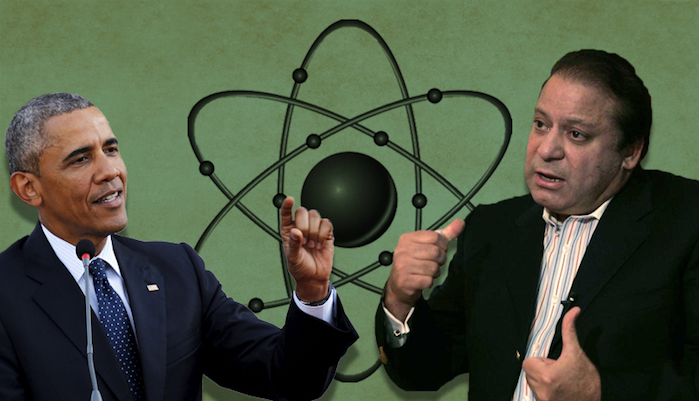
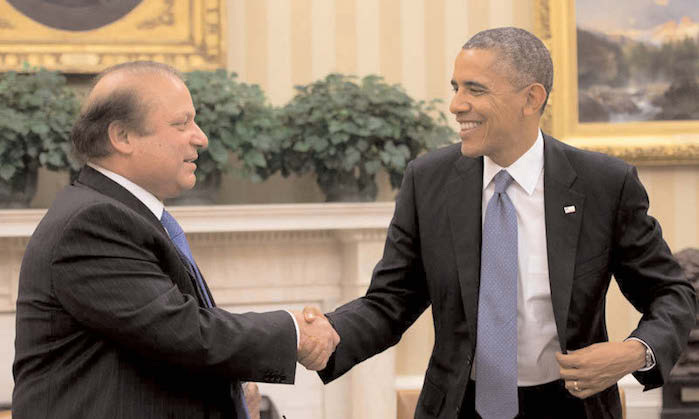
    WASHINGTON (TIP): Pakistan Prime Minister must be a disappointed man. His bilateral with US President Barack Obama is being viewed as a diplomatic failure. India has watched the Sharif-Obama summit in Washington keenly, and while it is clear that Prime Minister Nawaz Sharif returns to Islamabad without any big announcement to show for the bilateral, and no progress on US-Pakistan civil nuclear negotiations, there are many parts to the 2015 joint statement issued by the two that could  be worrisome for India.

    Here are the key statements in the US-Pakistan joint statement which may cause concern to India.

    1.  Hydroelectric projects in PoK/Gilgit-Baltistan 

    President Obama expressed support for Pakistan’s efforts to secure funding for the Diamer Bhasha and Dasu dams to help meet Pakistan’s energy and water needs.

    India has opposed the construction of hydro-electric projects in the disputed region of Kashmir that includes PoK and Gilgit-Baltistan. Most recently, External Affairs Minister Sushma Swaraj had called the China-Pakistan Economic Corridor (CPEC) unacceptable because it includes these projects, while India had told the UNGA that “India’s reservations about the proposed China-Pakistan Economic Corridor stem from the fact that it passes through Indian territory illegally occupied by Pakistan for many years.”

    In recent years, the 4,500 m W Diamer Bhasha dam (DBD) project, that the Pakistan government says will halve its electricity shortfall when constructed, had come to a standstill over funding. In 2013, prospective investors – the ADB, China and Russia – had asked Pakistan to obtain an NOC (No objection certificate) from India before they could proceed on loans. Even after the announcement of the China-Pakistan Economic Corridor by President Xi Jinping for projects including dams in PoK in April 2015, China has shown a preference for the $1.6 billion Karot project, rather than DBD, which would now cost an estimated $14 billion. It is significant that the US wants to play ‘White Knight’ on these two dams, and for India, the construction of major projects like these endorsed by the US would be a blow to its claim on PoK. Earlier this month, reports suggested India had protested over a USAID event aimed raising funding for DBD, where US firm Mott McDonald has been contracted to perform a technical engineering review.

    2.  Talks with the Taliban
    President Obama commended Pakistan for hosting and facilitating the first public talks between the Afghan government and the Taliban in July 2015 and highlighted the opportunity presented by Pakistan’s willingness to facilitate a reconciliation process that would help end insurgent violence in Afghanistan.

    India has felt cut out of the Taliban peace process, and relations with President Ghani’s government underwent a strain when New Delhi learned that Pakistan would be allowed to host the talks in Murree. “This is an open acknowledgement that Pakistan controls the Taliban,” a senior official had told The Hindu at the time, “And rather than castigate Pakistan for not curbing the Taliban’s violence, these talks will legitimize its actions.”

    When the talks collapsed over the announcement of Mullah Omar’s death, it was felt Pakistan’s claim of being a ‘peacemaker’ rather than a sponsor of Taliban-terror would end. However, despite a surge in violence by the Taliban, including the brutal siege of Kunduz that was overthrown by Afghan and US special forces last month, the Joint statement seems to indicate the US is prepared to let Pakistan host the talks again.

    3.  Resume India-Pakistan talks
    President Obama and Prime Minister Sharif stressed that improvement in Pakistan-India bilateral relations would greatly enhance prospects for lasting peace, stability, and prosperity in the region. The two leaders expressed concern over violence along the Line of Control, and noted their support for confidence-building measures and effective mechanisms that are acceptable to both parties. The leaders emphasized the importance of a sustained and resilient dialogue process between the two neighbors aimed at resolving all outstanding territorial and other disputes, including Kashmir, through peaceful means and working together to address mutual concerns of India and Pakistan regarding terrorism.

    For over a decade, the US has stayed away from openly pushing India towards talks with Pakistan. In the period between 2003-2008, this was because India and Pakistan were engaging each other, and both the composite dialogue and back-channel diplomacy yielded many important confidence building measures between them. After the Mumbai 26/11 attacks, the US recognized India’s legitimate anger over the attacks being planned and funded in Pakistan, and abstained from making any comments on the resumption of India-Pakistan dialogue, restricting itself only to “welcoming” talks between their leaders in Thimphu, Delhi, New York and Ufa. The US-Pakistan joint statement doesn’t just put the importance of “sustained and resilient dialogue process” (codeword for comprehensive dialogue) back in focus, it makes a new mention of “violence along the LoC” which India squarely blames Pakistan for initiating. India believes ceasefire violations are aimed at “infiltrating terrorists”, a charge the government repeated when the NSA talks were cancelled. Of particular worry for India will be the US-Pakistan joint statement’s reference to “mutual concerns of terrorism”, as it comes in the wake of Pakistan’s latest claims of Indian support to terrorism inside Pakistan. Pakistan NSA Sartaj Aziz had told the press that Indian agency “involvement” in Balochistan and FATA would be taken up during the summit.

    4.  Action on LeT?
    In this context, the Prime Minister apprised the President about Pakistan’s resolve to take effective action against United Nations-designated terrorist individuals and entities, including Lashkar-e-Tayyiba and its affiliates, as per its international commitments and obligations under UN Security Council resolutions and the Financial Action Task Force.

    Action against the LeT has been India’s most sustained demand from Pakistan, especially after the 26/11 attacks, when the LeT’s top leadership was charged with planning and executing the carnage in Mumbai. Yet years later, chief Hafiz Saeed is free, LeT operations chief Zaki Ur Rahman Lakhvi is out on bail, and there seems little evidence that Pakistani forces have conducted any sort of crackdown on the Lashkar e Toiba, especially when compared to action against other groups after the Peshawar school attack of December 2014. While the US-Pakistan joint statement doesn’t note President Obama’s acceptance of Pakistan’s claims of keeping its “international commitments and obligations”, it is significant that the US has not raised the obvious violation of the UNSC and FATF requirements earlier this year during the bail process of Lakhvi. Despite Indian representations to the US and UN, there has been little pressure on Pakistan how Lakhvi raised the funds when according to the UNSC 1267 Committee rules, a designated terrorist cannot be allowed recourse to finances.

    5.  Nuclear talks
    The leaders noted Pakistan’s efforts to improve its strategic trade controls and enhance its engagement with multilateral export control regimes. Recognizing the importance of bilateral engagement in the Security, Strategic Stability and Non-Proliferation Working Group, the two leaders noted that both sides will continue to stay engaged to further build on the ongoing discussions in the working group.

    Both, the US and Pakistan, have denied a report in the Washington Post that they had planned what it called a “diplomatic blockbuster”: negotiations over a civil nuclear deal on the lines the US and India signed in 2005. Pakistan’s foreign secretary reacted to the report with a detailed account of Pakistan’s “low-yield tactical nuclear weapons” aimed at India, to calm fears in Pakistan that the government was giving up its weapons program. Even so the details in the Post have left lingering doubts over what the US intends, including pushing for a possible NSG waiver for Pakistan in exchange for limiting Pakistan’s missile capability. The report goaded the MEA into counseling the US on taking a closer look at Pakistan’s past on supplying nuclear weapons to North Korea and Iran, “Whosoever is examining that particular dossier should be well aware of Pakistan’s track record in proliferation. And when India got this particular deal, it was on the basis of our own impeccable non-proliferation track record,” the MEA spokesperson said on October 9, given that India will watch this space closely, particularly the phrase on “engagement with multilateral export regimes” mentioned in the US-Pakistan joint statement.

  • Texas storms snarl flights at Dallas airports

    Texas storms snarl flights at Dallas airports

    DALLAS (TIP): Stormy weather in Texas has snarled flights at Dallas/Fort Worth, creating headaches for travelers flying to, from or through that busy U.S. airport on Friday.

    More than 420 flights – about 180 departures and 240 arrivals – had been canceled there as of 3:50 p.m. ET, according to flight-tracking service FlightAware. That represented about 20% of the airport’s entire daily schedule. And another 600 of Friday’s flights had been delayed. Together that represents about half of the day’s flights at DFW, according to the FlightAware data.

    DFW, of course, is the biggest hub for American Airlines, now the world’s biggest airline following its merger with US Airways.

    Flight delays also were being reported at Dallas Love Field, the smaller of the two Dallas-area airports. Southwest operates a major base from Love Field.

  • RICHA CHADHA TAKES UP SONAM KAPOOR’S CHALLENGE

    RICHA CHADHA TAKES UP SONAM KAPOOR’S CHALLENGE

    Sonam Kapoor is the darli’ng of social media. From shutting off trolls to indulging in self-deprecating humour, sharing fashion tips and funny videos to turning common people into celebrities — the Kapoor girl knows how it’s done.

    The vivacious actress is currently high on the title track of her forthcoming film Prem Ratan Dhan Payo, which has taken the internet by storm. Fans have been posting adorable videos of them imitating Sonam’s traditional dance moves and one of them happens to be actress Richa Chadha, who totally nailed it. We are in love with this ‘Prem-bhara’ initiative, Sonam.

  • KATE WINSLET SAYS NO TO RETOUCHING ADS

    KATE WINSLET SAYS NO TO RETOUCHING ADS

    Kate Winslet, who has always taken a stance against retouching her photographs for magazine spreads and ads, has made a point in her L’Oreal contract that her Lancome ads should be free of any additional edits.

    Explaining why she is adamant on not getting retouched, the 40-year-old actress said that she did this because she thinks that she has a responsibility towards the younger generation of women, reports E!Online.Winslet added that she thinks they do look up to the magazines and to the women, who have been successful in their chosen careers.

    NO SOCIAL MEDIA FOR KATE WINSLET, HER CHILDREN

    She is starring in the upcoming film about Apple co-founder Steve Jobs, but Oscar-winning actress Kate Winslet says she is not good with technology. The 40-year-old actress is mother to a 15-year-old daughter, an 11-year-old son and her youngest son will turn two in December, reported BBC online. Asked if she is strict with her children about how much they can use technology, Winslet said, “Not strict. But you have to have rules I think and we certainly have those, yes.”

  • KATE HUDSON IS WRITING A SELF-HELP BOOK

    KATE HUDSON IS WRITING A SELF-HELP BOOK

    Kate Hudson wants to share her life experiences with her fans but insists that it is not an advice tome but instead, she said it will be about “throwing perfection out the window. It’s about finding what works for you. And I share the things that have worked for me.”

    Kate — who has two sons, Ryder, 11, with former husband Chris Robinson and four-year-old Bingham with ex fiance Matt Bellamy — revealed she and her friends motivate each other and try not to focus on life’s negatives. She told a magazine, “I have friends who I’ve told the same story to 500 times. And you’re like, ‘But I need to talk about it, again and again and again.’ One of my girlfriends and I made this decision: We’re going to give ourselves three days. We’re going to talk about a particular subject, ad nauseam. Then we’re done. It was like breaking a bad habit.”

    Kate also revealed that she and her exes have remained friendly just for the sake of their children. She said, “Relationships ending are painful, and you can choose to carry that or you can choose to reframe it. If Matt and I had a great relationship, we would still be together, but we chose to move on because we had different visions of how we wanted to live our lives. That doesn’t mean, though, that we can’t rebuild something that would be the best thing for the kids.”

  • PAK-US NUCLEAR DEAL INDIA THREATENED

    PAK-US NUCLEAR DEAL INDIA THREATENED

    NEW DELHI / KARACHI(TIP): Pakistan’s refusal to rule out use of nuclear weapons in a conventional conflict with India and the military’s belief that a nuclear deterrent allows it to pursue terrorism against India sharply reduces the possibility of a civil nuclear deal with the US that imposes constraints on Islamabad’s atomic arsenal.

    Pakistan’s ambiguous nuclear doctrine that does not make it clear just when the nuclear option could come into operation is rooted in a belief system that the weapons are the only means of countering India’s larger armed forces.

    The threat to use “tactical” or battlefield nukes is supported by elaborate arguments based on conveniently edited history, a dire interpretation of Indian intent and far fetched comparisons with Nato strategies during the cold war.

    Given the military’s belief, shared by elite opinion including strategic affairs experts, that nuclear weapons are part of a triad comprising regular military and anti-India jihadi groups, there is hardly any likelihood of Pakistan agreeing to reduce or contain its armoury to a size that answers to a strategic deterrent.

    Pakistan’s reference to jargon like “full spectrum” deterrence amounts to a determination to use its nuclear weapons as a means to prevent India from using military options in response to terrorist attacks.

    This interpretation of deterrence – of using nuclear weapons to prevent retaliation for terrorist attacks – is uniquely Pakistan’s and has nothing in common with cold war doctrines that the military frequently quotes.

    India’s argument that any attempt to buy off Pakistan’s nuclear weapons is not only not likely to work but may be counter-productive is bolstered by the Nawaz Sharif government’s inability to chart a policy on its own.

    Having buckled to the military’s insistence that Pakistan pitch Kashmir to the top of its engagement with India in order to take the focus away from terrorism, the Sharif regime has even less elbow room on any nuclear deal.

    Though the Pakistan army has been, on the whole, spectacularly unsuccessful in achieving any of its objectives with regard to Jammu and Kashmir, the dispute remains a key rational for maintaining nuclear arms.

    The Kashmir dispute serves to block any real progress with India even if it is quite evident that the most intractable aspect of bilateral ties isn’t the best starting point and that cooperation on terrorism might actually make the region safer.

  • SRI LANKA PRESIDENT CALLS ALL-PARTY MEET ON UN RESOLUTION

    SRI LANKA PRESIDENT CALLS ALL-PARTY MEET ON UN RESOLUTION

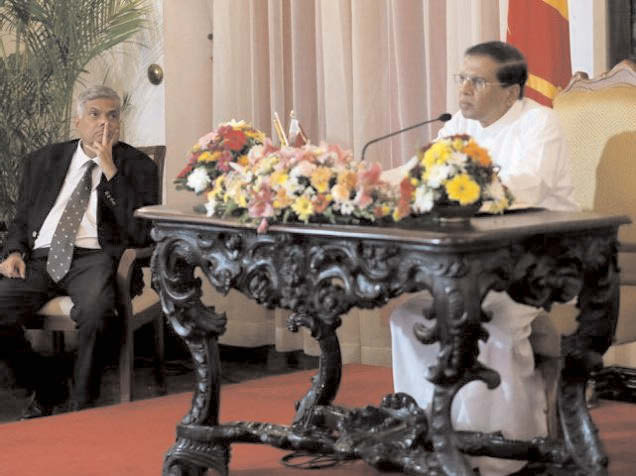
    COLOMBO (TIP): Sri Lankan President Maithripala Sirisena has called an all-party meeting to discuss the latest UNHRC resolution over the alleged rights abuses committed during the 26-year-old civil war with the Tamil Tigers.

    Some 21 political parties are expected to take part in this evening’s meeting, also to be attended by the Prime Minister Ranil Wickremesinghe, presidential sources said.

    The UNHRC resolution co-sponsored by Sri Lanka and drafted by the US has called for a domestic internal inquiry involving foreign expertise over the alleged human rights violations during the war that ended in 2009.

    Nationalist groups have called the resolution a betrayal.

    The Sirisena government sees the resolution as its triumph as having been able to prevent an international warcrimes investigation, which might have led to a trial of prominent figures including former president Mahinda Rajapaksa.

    It was under Rajapaksa’s tenure that the Sri Lankan forces defeated the Liberation Tigers of Tamil Eelam, the separatist group that waged armed insurgency against the government.

    The UN has estimated that 40,000 people died, many of them civilians, during the civil war.

    The objective of the all-party-meet could be to seek the view of the parties on the resolution.

    “If the President’s idea is to tell us that the resolution poses no threat to our sovereignty we will use this chance to bring to his attention the peril faced by the nation,” said Udaya Gammanpila, an opposition member of parliament from the ultra nationalist Pivithuru Hela Urumaya (PHU).

    The Opposition held a public rally earlier this week, faulting the government for “succumbing to dictates of the US” on the resolution.

    Sri Lanka has opted for a local mechanism even after the UN rights chief prescribed a hybrid court to carry out prosecutions.

  • Top Bangladesh opposition politician jailed for 13 years

    Top Bangladesh opposition politician jailed for 13 years

    DHAKA (TIP): A Bangladesh court today jailed a former mayor of Dhaka for 13 years for corruption in absentia, a prosecutor said, a fresh blow to the beleaguered opposition which called the charges politically motivated.

    An anti-graft court found Sadeque Hossain Khoka, now living in the United States, guilty of amassing wealth illegally and of concealing information about his income.

    “He was sentenced to 13 years in jail in total for the two charges,” Mosharraf Hossain, prosecutor for the country’s Anti Corruption Commission, told AFP.

    “The judge also ordered confiscation of 100.5 million taka ($1.3 million) in illegally acquired property,” he said.

    Khoka, 63, is a vice-chairman of the main opposition Bangladesh Nationalist Party (BNP) and was mayor of the capital Dhaka for nearly ten years until 2011.

    He now lives in New York where he is being treated for cancer, his lawyer Sanaullah Mian told AFP, adding that they planned to appeal against the verdict.

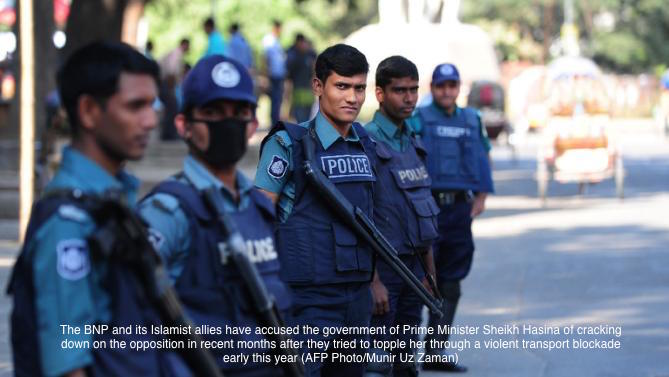
    Mian, who is also a BNP official, called the case “one hundred percent politically motivated”. “It is part of the government’s repression of the opposition,” he said. The BNP and its Islamist allies have accused the government of Prime Minister Sheikh Hasina of cracking down on the opposition in recent months after they tried to topple her through a violent transport blockade early this year.

  • New govt in Nepal facing hard times in festive season

    New govt in Nepal facing hard times in festive season

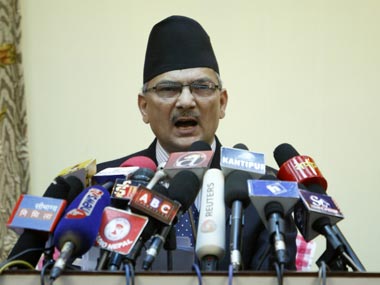
    KATHMANDU (TIP): The Indian government may have agreed to ease the transit of some trucks into Nepal but the annual Dasain (Dussehra) festival this year will be a subdued affair in the Himalayan country. Food and fuel are still premium items, while the K P Oli government is being asked to push through amendments to a constitution that would accommodate the aspirations of the Madhesis.

    Nepal, which attracted praise from global activists for being sensitive to LGBT persons in the constitution, is now getting flak from human rights organizations for the indiscriminate killings in the Terai throughout August and September.In a new report, Human Rights Watch has said Nepali authorities “should immediately investigate and bring to justice those responsible for killings and other violations during ongoing protests over the constitutional debate”.

    “While the drafting of a rights-respecting constitution is an emotional issue in Nepal, disagreements cannot be resolved by committing serious human rights abuses,” said Brad Adams, Asia director at Human Rights Watch. The government sees some ray of hope after talks between the Indian leadership and foreign minister Kamal Thapa, who said, “Indian leaders have assured me that there will be no obstructions in the flow of trucks to Nepal from the points that are not blocked.” (Source TNN)

  • 15 militants, six security personnel killed in Afghanistan

    15 militants, six security personnel killed in Afghanistan

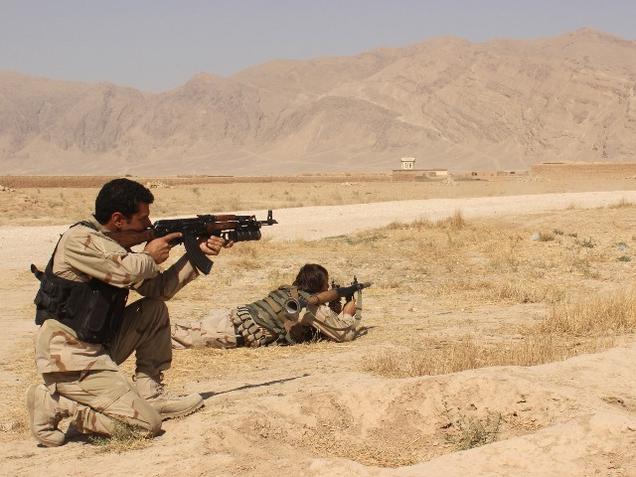
    KABUL: At least 15 Taliban militants and six security force members were killed in clashes as the Taliban seized a district in Afghanistan’s province of Herat, the authorities said on October 22.

    Afghan troops were meanwhile battling the Taliban in three districts in the southern Helmand province, on the other side of the country. A total of six army personnel were also killed in the 24-hour period, the statement said.

    The Taliban militant group has yet to make comments. Hundreds of Taliban fighters attacked Ghoryan district and took control of the bazaar and government offices following heavy clashes in the province which has Herat city as its capital, 640 kms west of Kabul, Xinhua news agency reported. “A total of 15 Taliban terrorists were killed during the police operations,” Sediq Sediqqi, Afghan interior ministry spokesman, said in a tweet.

    Six security personnel were also killed in the fighting, according to district officials. The Taliban has intensified attacks in Afghanistan over the past couple of months as the security forces assumed full responsibility from NATO-led troops since January 1.

  • 5.3-magnitude quake jolts Pakistan

    ISLAMABAD (TIP): An earthquake of 5.3 magnitude was felt across Pakistan’s Punjab province on October 23, authorities said. The epicentre was 11 km north of Dajal town, Xinhua quoted the US Geological Survey as saying.

    The tremors were felt in Multan, Lodhran, Dera Ghazi Khan, Jampur, Khairpur Tamiwali Tehsil, Ahmadpur whereas Rajanpur, Mailsi, Burewala, Rangpur and Jehanian were also shook by the quake, according to reports received from these areas.

    Frightened people ran outside their houses and started reciting the Kalima. The epicenter of the earthquake was located at Monroe in D.G.Khan whereas its depth was recorded at 10 feet. According to rescue sources, no loss of life was recorded.

    After the earthquake was over, people took to Twitter and started narrating their experiences. With #Earthquake trending at the top in Pakistan, here are some of the tweets:-

  • Pope continues reform of Vatican bureaucracy

    Pope continues reform of Vatican bureaucracy

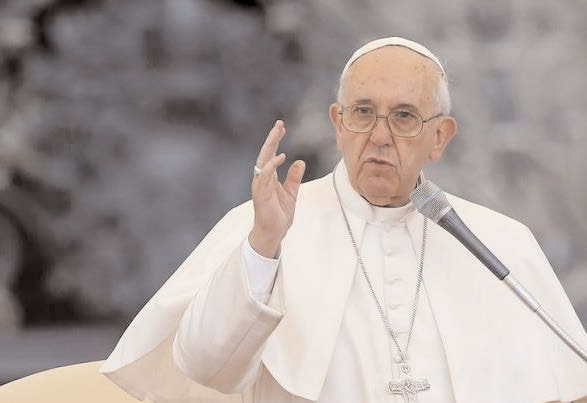
    VATICAN CITY (TIP): Pope Francis on Thursday announced a new Vatican department on life and family issues, in his latest effort to streamline the central administration of the 1.2 billion-member Roman Catholic Church.

    It will incorporate three existing departments into one -the Pontifical Council for the Laity, the Pontifical Council for the Family and the Pontifical Academy for Life.

    Top Comment

    Pope Francis is rational understands human behavior finds ways to improve the beaurcracy. A systems man with an analytic… Read Mores.v.l.narasimham

    The pope announced his decision to participants at a meeting of bishops from around the world who are discussing family issues. The gathering, known a synod, ends on October 25.

    Since his election in 2013, Francis has established an new office to oversee all economic affairs and set up a commission to study the streamlining of all of the Vatican communications departments.

    Reform of the Vatican bureaucracy, known as the curia, and which many see as bloated and outdated, was one of the mandates given to the pope by the cardinals who elected him. (Source :AFP)

  • Canada’s new PM urged to fast track free trade agreement with India

    Canada’s new PM urged to fast track free trade agreement with India

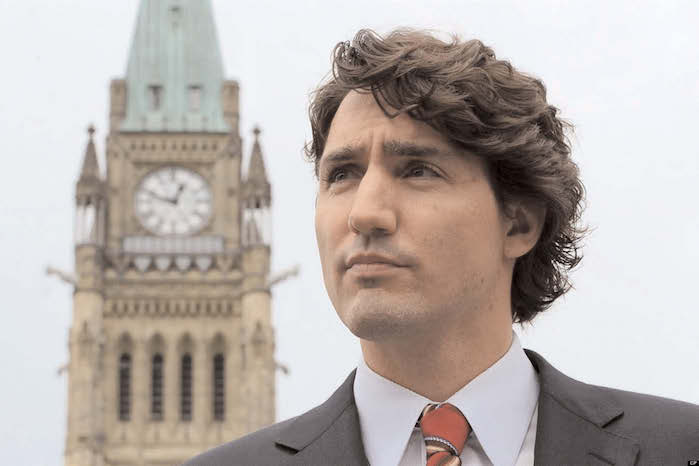
    TORONTO (TIP): Welcoming the incoming Canadian Prime Minister Justin Trudeau whose Liberal Party was swept to power October 19 major Indo-Canadian organizations have urged him to fast-track the long-pending free trade agreement with India.

    Ajit Someshawar, chairman of the Canada-India Foundation (CIF), urged Trudeau to make a state visit to India as one of his foreign policy priorities and conclude the long-pending Comprehensive Economic Partnership Agreement(CEPA) and the Foreign Investment Protection Agreement (FIPA) between the Canada and India.

    Canada and India have agreed to triple their trade to $15 billion, but the progress has been tardy even as the visit by Modi – the first by any Indian PM in 42 years – here in April and two trips to India by his Canadian counterpart have reinforced this pledge.

    “The growth in bilateral trade between the two countries has still not reached its full potential and even the modest goal of $15 billion annually is still far away,” said the chairman of the Canada-India Foundation which has honored many great Indians such as former President APJ Abdul Kalam, Ratan Tata, Narayana Murthy and Deepak Chopra with its annual CIF Chanchlani Global Indian Award of $50,000 since its inception in 2008.

    Someshawar also urged the new Canadian prime minister to reinforce the Canada-India Inter-parliamentary Friendship Group to bring parliamentarians of the two countries together. He also welcomed the new Family Class Reunification plan announced by the incoming government as it will help the 1.2-million-strong Indo-Canadian community to bring their dependents into Canada quickly.

    Canada-India Business Council (C-IBC) vice-chairman Kam Rathee also urged the new Canadian prime minister to conclude the long-pending free trade agreement with India on a priority basis.

    “The new prime minister should also set in motion a process to develop trade investment and services so that non-profit associations and organizations that promote Canada-India business get financial support,” added Rathee.

  • Iran to begin full implementation of nuclear deal

    TEHRAN, IRAN (TIP): The Iranian government will begin fully implementing the landmark nuclear deal reached with world powers “with good will,” and the work will be done while keeping in mind concerns voiced by Iran’s supreme leader, President Hassan Rouhani said on Oct 22. A letter posted on Rouhani’s website, president.ir, addressed to supreme leader Ayatollah Ali Khamenei said Iran will be keeping close watch to make sure other parties to the deal fulfill their obligations.

    “The government of the Islamic Republic of Iran will start `full implementation’ of the Joint Comprehensive Plan of Action with good will and based on Your Excellency’s considerations and requirements and the decisions of the Supreme National Security Council and the Parliament,” Rouhani said in the letter.

    “The other side’s fulfillment of its obligations will be vigilantly monitored and the Supreme National Security Council will adopt the needed decision to take the proper course of action,” he said.

    Khamenei on Wednesday endorsed the deal but warned the government to be vigilant, saying the United States cannot be trusted. He also said the agreement “suffers from multiple structural weaknesses and ambiguous points that can lead to present and future great harms to the country in the absence of precise and constant vigilance.” He added that “any remarks saying the structure of sanctions will remain in place are considered a breach” of the agreement.

    The agreement reached in July with the U.S., Britain, France, China, Russia and Germany curbs Iran’s nuclear activities in exchange for lifting crippling international sanctions. Western nations have long suspected Iran of pursuing nuclear weapons alongside its civilian program, charges rejected by Tehran, which insists its program is entirely peaceful. The agreement has been the subject of fierce debate within Iran, with hard-liners arguing that the negotiators gave up too much ground. They also fear the agreement could lead to a broader rapprochement with the United States, which they deride as the “Great Satan.”

  • Obama vetoes $612 bn defense bill citing Gitmo, ‘gimmicks’

    Obama vetoes $612 bn defense bill citing Gitmo, ‘gimmicks’

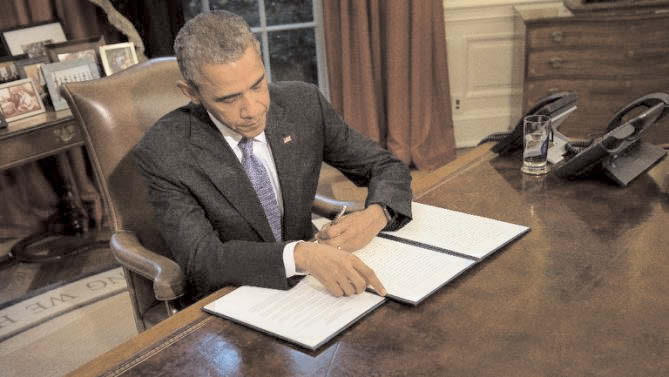
    WASHINGTON (TIP): US President Barack Obama vetoed a $612 billion defense spending bill Oct 22, saying it prevented the closure of Guantanamo Bay prison and wasted money on unwanted programs.

    Making a rare public show of rejecting a law, Obama said the text agreed by the Republican-controlled Congress “falls woefully short” in key areas.

    Obama said the bill did “a number of good things,” including reforming military retirement and funding cyber security, but “resorts to gimmicks” and funded unwanted programs.

    He zeroed in on provisions that would restrict the transfer of prisoners from Guantanamo Bay on the tip of Cuba, to the United States.

    “This legislation specifically impedes our ability to close Guantanamo,” he said.

    “Guantanamo is one of the premier mechanisms for jihadists to recruit, it is time for us to close it. It’s outdated, it’s expensive.”

    After embarrassing false starts, Obama is making a final push to close Guantanamo prison.

    But to fulfill that glaringly incomplete campaign promise he faces unpalatable compromises and internal resistance.

    But the fate of those deemed too dangerous to release — but too difficult to prosecute — has stymied his efforts.

    The administration is looking at military facilities like Fort Leavenworth, Kansas or the Navy Brig in Charleston, South Carolina as possible destinations for inmates.

    But Congress wants to have control of any transfer and to ensure that prisoners do not have full rights afforded to American civilians.

    The American Civil Liberties Union, which has campaigned for the prison’s closure, welcomed the move.

    “The president clearly did the right thing by rejecting the bill’s restrictions on transferring Guantanamo prisoners who have been locked up without charge or trial for years on end,” said executive director Anthony Romero.

    “Now Congress needs to send back the president a bill that will let him close Guantanamo and end indefinite detention, and he needs to take decisive action to make his promise to close the prison a reality.”He needs to do this soon, before his legacy is irreparably tarnished by the stain of Guantanamo.”

    Obama also said the budget “prevents a wide range of reforms that are necessary for us to get our military modernized.”

    “We have repeatedly put forward a series of reforms eliminating reforms that the Pentagon does not want, Congress keeps stuffing ’em back in,” he said. (Source: AFP )

  • At Benghazi hearing, shouting match over Hillary Clinton’s emails

    At Benghazi hearing, shouting match over Hillary Clinton’s emails

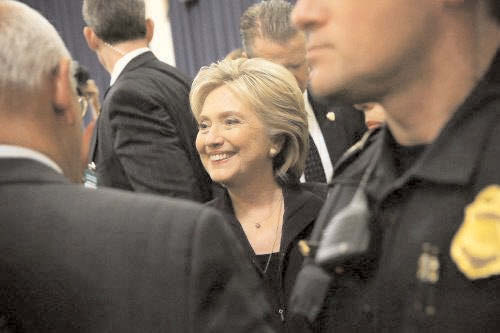
    WASHINGTON (TIP): Republican lawmakers spent more than eight hours aggressively questioning Hillary Rodham Clinton on Thursday, seeking to build a case that the former secretary of state had been derelict in her duty to secure the American diplomatic mission in Benghazi, Libya, in the months before the 2012 terrorist attacks that killed four Americans.

    •  Clinton was questioned about about the American diplomatic mission in Benghazi, Libya, in the months before the 2012 terrorist attacks that killed four Americans.
    •  The marathon hearing began at 10am and, with breaks, lasted until 9pm.
    •  The questioning gave Mrs Clinton her first opportunity since early 2013 to respond directly to her fiercest critics.

    Billed by Republican leaders of the select House committee investigating the Benghazi attacks as a critical moment in its inquiry, the long-awaited appearance by Mrs Clinton, the leading Democratic presidential candidate, served largely as a replay of highly contested arguments from previous congressional hearings, press examinations and Sunday-morning talk shows.

    “Why were there so many requests for security equipment and personnel, and why were those requests denied in Washington?” Representative Trey Gowdy of South Carolina, the committee chairman, demanded to know as he opened the hearing on Thursday morning. “What did our leaders in Washington do or not do, and when?”

    But the long day of often-testy exchanges between committee members and their prominent witness revealed little new information about an episode that has been the subject of seven previous investigations, and that Republicans have long seen as a blemish on Mrs Clinton’s record that could be exploited as she sought the presidency.

    Held in the ornate room that is home to the House Ways and Means Committee, the marathon hearing began at 10am and, with breaks, lasted until 9pm. It provided Republicans with a national audience as they questioned Mrs Clinton, often using her own words from thousands of pages of emails obtained by the committee. But it also gave Mrs Clinton her first opportunity since early 2013 to respond directly to her fiercest critics, and she used the platform to offer lengthy explanations of her diplomatic efforts around the world and her actions before and after the Benghazi attacks.

    Perhaps stung by recent admissions that the pursuit of Mrs Clinton’s emails was politically motivated, Republican lawmakers on the panel for the most part avoided any mention of her use of a private email server. Still, Representative Jim Jordan of Ohio did raise the issue late in the hearing, accusing her of repeatedly changing her account of the server and why she had used it. In a heated exchange, Mrs Clinton repeated that she had made a mistake in using a private email account, but maintained that she had never sent or received anything marked classified and had sought to be transparent by publicly releasing her emails.

    But committee Republicans focused mostly on accusations that Mrs Clinton had ignored security needs in Benghazi in the months before the attacks, a charge she repeatedly rejected.

    Throughout the day, Democrats on the committee portrayed Republicans as the leaders of a partisan crusade against Mrs Clinton, while Republicans responded angrily that Democrats were seeking to block a legitimate inquiry into fatal security lapses at an American diplomatic outpost. Shortly before the committee broke for lunch, a shouting match erupted between Mr. Gowdy and two Democrats, Adam B. Schiff and Elijah E. Cummings, over the focus on Mrs Clinton’s email exchanges with Sidney Blumenthal, a former aide to her husband and a friend.

    Late in the evening, Mrs Clinton had a coughing fit that stopped testimony for two minutes. Hoarse and visibly tired, she responded testily to comments by Mr. Gowdy questioning the independence of a Benghazi review led by Thomas R Pickering, a retired diplomat, and Mike Mullen, a former chairman of the Joint Chiefs of Staff.

  • Ex-UN assembly chief John Ashe indicted in US for corruption

    Ex-UN assembly chief John Ashe indicted in US for corruption

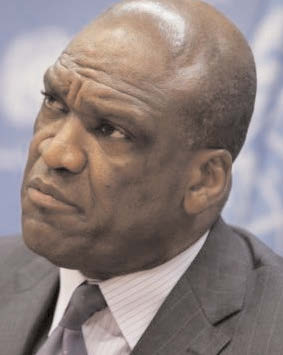
    WASHINGTON (TIP): Former UN general assembly president John Ashe was indicted on Tuesday by US authorities on charges of accepting more than a million dollars in bribes from Chinese real estate developers.

    Ashe, from Antigua and Barbuda, president of the assembly from September 2013 to September 2014, is accused of accepting money to promote the construction of a UN conference center in Macau.

    The 61-year-old is charged with accepting more than $1.3 million from 2011 to 2014 from a group of five people, according to the indictment filed by Preet Bharara, the US attorney for the southern district of New York.

    Ashe is accused of hiding more than$1.2 million in his income tax return.

    Four other people were also charged on Tuesday, including the main suspect in the corruption ring, Ng Lap Seng, a wealthy Chinese real estate developer.

    Another is Francis Lorenzo, a UN deputy ambassador from the Dominican Republic, who heads South-South News, a UN-accredited media outfit that reports on development issues.

    The indictment alleges that the corruption ring relied on Ashe and others to nail down the construction of a UN-sponsored conference center in Macau at the cost of billions of dollars, as well as real estate projects in Antigua and Barbuda.

    Ashe presented the UN secretary general with a report stating that a conference center in Macao was needed. It was never built. (Source: AFP )

  • US police chiefs call for reducing prison population

    US police chiefs call for reducing prison population

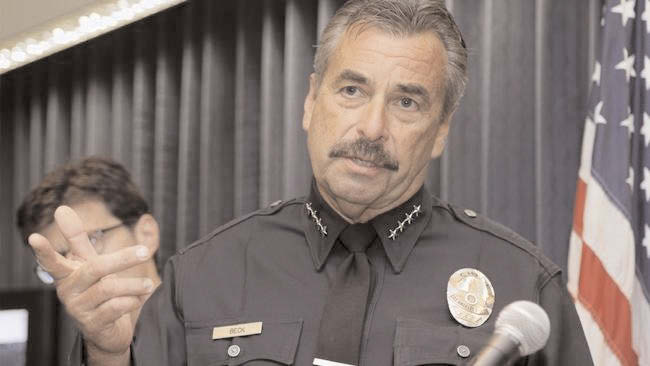
    WASHINGTON (TIP): A group of 130 police chiefs, prosecutors and sheriffs from around the United States called for reforms that would to reduce the US prison population.

    The top cops are adding their voice as a group to others – including President Barack Obama – who want to lower the incarceration rate, which is the highest among developed countries.

    “We can say from experience that we can bring down both incarceration and crime together,” said Chicago police department superintendent Garry McCarthy, speaking at the group’s first meeting in Washington.

    While the US population has increased by 30 per cent since 1980, the country’s prison population jumped 800 per cent during the same period, largely due to sentences that are disproportionately harsh compared to other countries.

    US prison cells are often packed with drug addicts, non-violent petty criminals, or prisoners with psychiatric problems, and are serving sentences that are so long that they often lose any chance for rehabilitation.

    “Those individuals that can be saved, that want to do something positive to not recidivate and keep going to jail or prison – we’ve got to have an avenue to allow them to do that and for them to become productive members in our society,” said Houston, Texas police chief Charles McClelland.

    “It is cheaper to keep someone out of jail and prevent a crime. In the state of Texas, it costs almost USD 60,000 a year to keep one inmate locked up,” he said.

    Several members of the group, which includes the police chiefs of Washington DC, New York and Los Angeles, will meet with the president today.

    The United States is preparing to release in November thousands of prisoners considered at low risk of returning to crime, as part of an effort to ease prison overcrowding and redress overly harsh sentences.

    The release comes after the US Sentencing Commission, which sets policy for federal crimes, reduced its sentencing guidelines for drug possession.

    In his weekly radio address on Saturday, Obama urged reforming the US criminal justice system, saying much of it “remains unfair” and that punishments should correspond to the severity of crimes. (Source: AFP )

  • Marijuana use in US has doubled in 12 years: Study

    WASHINGTON (TIP): Marijuana use in the US more than doubled between 2001 and 2013 – from 4.5 to nearly 10%, according to new research. Laws and attitudes about marijuana are changing, with 23 states having medical marijuana laws and four of these states having also legalised marijuana for recreational use, researchers said.

    Bridget F Grant of the National Institute on Alcohol Abuse and Alcoholism, and coauthors used nationally representative data on past-year prevalence rates of marijuana use, marijuana use disorder and marijuana use disorder among marijuana users in the US.

    The prevalence of past year marijuana use climbed to 9.5% of adults in 2012-2013 from 4.1% in 2001-2002, with increases particularly notable among women and individuals who were black, Hispanic, middle-aged or older, the authors said.

    The prevalence of a diagnosis of a past-year marijuana use disorder (abuse or dependence) also increased to 2.9%in 2012-2013 from 1.5% in 2001-2002, implying nearly 3 of every 10 Americans using marijuana in the past year had a diagnosis of a marijuana use disorder (approximately 6.8 million Americans).

    Among marijuana users, the prevalence of marijuana use disorder decreased to 30.6% in 2012-2013 from 35.6% in 2001-2002.

    Because there was no increase in the risk for marijuana use disorder found among users, in fact there was a decrease, the increase in prevalence of disorders can be attributed to the increase in marijuana users between the two surveys, the authors said. (Source : PTI)

  • Man who killed 5 relatives with meat cleaver gets 125 years in jail

    WASHINGTON (TIP): : A Chinese immigrant who pleaded guilty earlier this month to the meat-cleaver killings of five relatives, including four children under 9 years old, was sentenced on Tuesday to 125 years to life in prison. State Supreme Court justice Vincent Del Giudice accepted a plea deal on Oct 7 under the condition that Mingdong Chen “be incarcerated until the day he dies.” Chen was sentenced to three terms of 25 years to life for murder and two terms of 25 years to life for manslaughter.

    “This defendant’s vicious and sadistic attack makes him completely unfit to remain in society, and he will now spend the rest of his life behind bars,” said Brooklyn District Attorney Ken Thompson.

    A lawyer for Chen, 27, declined comment. Authorities say the man confessed in Mandarin to killing his cousin’s wife, 37-year-old Qiao Zhen Li, and her children, 9-year-old Linda, 7-year-old Amy, 5-year-old Kevin and 1-year-old William Zhou in October 2013.

    He was envious of his relatives’ success and had been fired from restaurant jobs, according to authorities and his relatives. Li called her mother-in-law in China on the night of Oct. 27, 2013, to say Chen was threatening her family with a knife, prosecutors have said. The mother-in-law then called other relatives in New York after hearing children crying in the background, they said.

    AP