Year: 2015

  • Backed by Russian jets, Syrian troops attack rebel-held towns in Homs

    Backed by Russian jets, Syrian troops attack rebel-held towns in Homs

    BEIRUT/AMMAN (TIP): Syrian troops and their allies, backed by Russian jets, attacked rebel-held towns north of the city of Homs on Thursday, targeting a long-held and strategic enclave of opposition to President Bashar al-Assad.

    The offensive that began before dawn builds on over a week of ground attacks launched with Russian air support in areas of western Syria that are crucial to Assad’s survival and held by rebel groups other than Islamic State.

    Syrian state television, quoting a military source, said the army had begun a military operation in the area after heavy air strikes and artillery barrages early on Thursday.

    The Syrian Observatory for Human Rights, a UK-based group which monitors Syria’s four-year-old civil war, said at least five civilians and six insurgents had been killed in Teir Malla, about 3 miles (5km) north of Homs city. A resident said at least 25 people were killed including, Rawad al Aksah, a commander of insurgent group Liwaa al-Tawhid.

    A few miles further north, there were heavy air strikes around the town of Talbiseh and other villages in the area, the Observatory said, as well as fierce clashes on the southern edges of the town and nearby villages.

    Recapturing the area north of Homs would help reassert Assad’s control over the main population centres of western Syria and secure territory linking Damascus to the coastal heartland of his minority Alawite sect.

    “The regime is actually getting its forces ready in all Homs’s northern countryside … What we fear is that they will follow the same strategy they had in Hama countryside. They actually attacked the fighters in all fronts at once,” said local media activist Hassan Abou Nouh.

    The Syrian army, supported by foreign allies including Iran, has launched several ground offensives to retake insurgent-held territory since Russian jets started air strikes against rebel targets — mainly in western Syria— two weeks ago.

    The army operations include a campaign to recapture rebel-held land in Hama, Idlib and Latakia provinces in the northwest. Regional officials have also said the army, backed by Iranian reinforcements, is preparing for a ground operation around the city of Aleppo, close to the Turkish border.

    The Syrian military source quoted by state television said the army and its allies had taken control of the villages of Khalidiya and Dar Kabira, between Homs and Teir Malla.

    The observatory said the army had advanced in Khalidiya, but there was still heavy fighting there.

    “There are very heavy air strikes in Homs on the frontlines. There are civilian casualties. The aim is to apply military pressure, and the regime’s intention is to storm the area,” said the leader of one rebel group operating in the area.

    He said the number killed was not confirmed but gave the names of five documented dead including a girl and two women.

    A resident of Talbiseh said four civilians had been killed there and that a school was hit at around 6am, before classes started. He said jets were still flying in the area.

    “There’s no end to the aerial observation and the bombardment,” said Abdul Rahim Duhaik, a teacher in Talbiseh.

    “People are busy digging shelters. No one has any intention of leaving. We will die in our land rather than be evicted.”

    Responding to the reports of civilian deaths, the Syrian military source said Syrian forces and Russian jets do not target areas where civilians are present. He accused al-Qaida’s wing in Syria, the Nusra Front, of carrying out a massacre on Thursday so it could blame the deaths on the bombardment.

    The source, quoted by state television, said the army had begun a military operation in the north Homs countryside after “concentrated air strikes and heavy preparatory artillery shelling on the terrorist groupings and their bases”.

  • Myanmar signs ceasefire with eight armed groups

    Myanmar signs ceasefire with eight armed groups

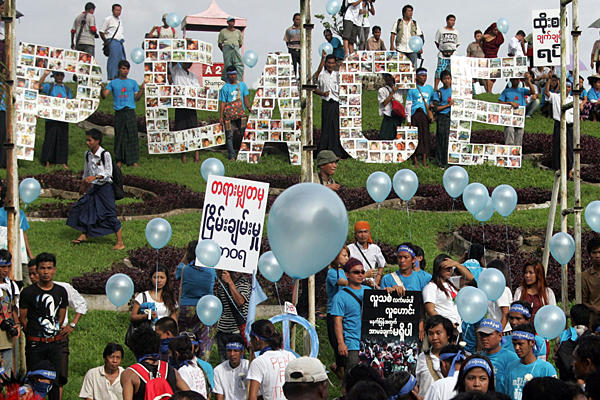
    NAYPYITAW (TIP): Myanmar’s government and eight armed ethnic groups signed a ceasefire agreement on Oct 15, the culmination of more than two years of negotiations aimed at bringing an end to the majority of the country’s long-running conflicts.

    The deal fell short of its nationwide billing, with seven of the 15 armed groups invited declining to sign due to disagreements over who the process should include and ongoing distrust of Myanmar’s semi-civilian government and its still-powerful military.

    President Thein Sein, a former general, made the nationwide ceasefire a key platform for his reformist agenda after taking power in 2011 and ending nearly 50 years of military rule.

    While the absentees were a blow to the president, who pushed for the deal to be signed ahead of a Nov. 8 general election, he described the deal on Thursday as historic.

    “The nationwide ceasefire agreement (NCA) is a historic gift from us to our generations of the future,” Thein Sein said at a signing ceremony attended by hundreds of diplomats, officials and rebel group representatives in the country’s capital.

    “This is our heritage. The road to future peace in Myanmar is now open.”

    Thein Sein said he would continue with efforts to convince other groups to join the ceasefire later.

    Among those that signed was the Karen National Union (KNU), Myanmar’s oldest armed group. The KNU has fought one of the world’s longest running conflicts with the Myanmar military spanning nearly 70 years.

    “The NCA is a new page in history and a product of brave and energetic negotiations,” Saw Mutu Say Poe, the chairman of the KNU, said at the ceremony.

    US pressure

    US President Barack Obama, who has portrayed his country’s backing of Myanmar’s reforms as a foreign policy success, has pushed Thein Sein to conclude the ceasefire as part of wider changes to protect minorities.

    “The United States commends all sides for their ongoing efforts to bring an end to the longest-running civil conflict in the world,” the US State Department spokesman John Kirby said in a statement on Thursday.

    The US remained concerned about reports of continued military offensives in the Kachin and Shan states and lack of humanitarian access to 100,000 displaced people in those areas, he said.

    Opposition leader Aung San Suu Kyi did not attend the ceremony. The United Wa State Army, believed to be the largest and best equipped of the country’s armed ethnic groups, has remained largely on the sidelines of the peace process since its beginning and did not sign.

    Also missing is the Kachin Independence Organization, which controls vast areas of Kachin State, in Myanmar’s northeast. The group’s armed wing, the Kachin Independence Army, has clashed regularly with the Myanmar military since 2011, when a 17-year ceasefire between the two broke down.

  • Nations say Philippine peace effort shouldn’t break down

    Nations say Philippine peace effort shouldn’t break down

    MANILA (PHILIPPINES) (TIP): A group of Western and Asian countries said Thursday that recent setbacks should not derail efforts that have brought a Muslim rebellion in the southern Philippines to the brink of a settlement, adding that safeguards should remain in place to prevent a return to fighting.

    Diplomats representing the countries, including the United States and European Union, expressed support in a joint statement for continuing peace efforts, saying “it is vital that there is no return to violence.”

    Yearslong peace negotiations between the Philippine government and the Moro Islamic Liberation Front, the largest Muslim rebel group in the south, led to the signing of a new Muslim autonomy deal last year.

    A police anti-terror assault in January, however, spun out of control and led to the killings of 44 police commandos in clashes that entangled some of the Moro rebels. That sparked public outrage and prompted lawmakers to scrutinize and water down the autonomy bill, delaying its passage and sparking fears of renewed hostilities.

    The insurrection in the south, homeland of minority Muslims in the largely Roman Catholic country, has left more than 120,000 combatants and civilians dead and held back progress in the resource-rich but poverty-stricken area.

    “The long and difficult history of this troubled region can and should move to a more positive future agenda,” said the statement, which was signed by at least 21 ambassadors and senior diplomats in Manila.

    “For the country as a whole, it is essential that setbacks are overcome and people of vision and faith come together to ensure that the momentum for peace continues,” the diplomats said. “We call on all concerned to remain engaged in the peace process.”

    The rebels have said that changes that dilute the proposed autonomy law are unacceptable. They appealed to lawmakers to pass legislation that would help end the decades-old rebellion.

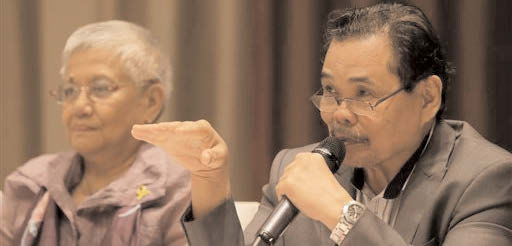
    Rebel chief negotiator Mohagher Iqbal Front has said delays in the passage of the autonomy bill have made the insurgents anxious, but he played down fears that new violence would erupt.

    Under the Malaysian-brokered peace agreement, the rebels dropped their separatist bid in exchange for a more powerful and better-funded Muslim autonomous region to be called Bangsamoro. It is to be created with a bill drafted by a rebel-government commission and submitted to Congress.

  • ‘Pak under Zia-ul-Haq broke promise on uranium enrichment’

    ‘Pak under Zia-ul-Haq broke promise on uranium enrichment’

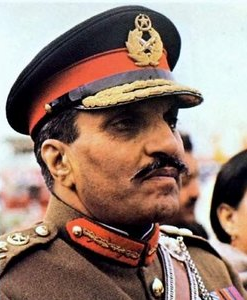
    WASHINGTON (TIP): Pakistan under dictator general Zia-ul-Haq’s administration broke its promise on uranium enrichment in the 1980s, a series of newly declassified documents have shown amid reports that the US is considering a civil nuclear deal with the country.

    According to the latest declassified documents released by National Security Archive, the then military dictator General Haq assured that Pakistan would not enrich uranium above five per cent and in lieu of it extracted huge amount of financial aid and modern military assistance from the US.

    “I appreciate the assurances you gave ambassador Hinton that Pakistan would not enrich uranium above the five per cent level,” the then US President Ronald Reagan wrote in a letter to Zia on September 12, 1984.

    In the letter, Reagan expressed concern over Pakistan’s nuclear weapons programme.

    “I must candidly state that enrichment of uranium above five per cent would be of the same significance as those nuclear activities, such as unsafeguarded reprocessing, which I personally discussed with you in December 1982 and would have the same implications for our security programme and relationship,” Reagan said.

    In fact, Reagan in his letter warned that if Pakistan goes ahead with his nuclear weapons programme, it might attract untoward action from other countries in the region.

    “I have personally discussed with you my concerns about stemming nuclear proliferation, and my Administration remains fully committed on this issue,” he wrote.

    “Concern is also growing in Congress and among the public about Pakistan’s nuclear weapons programme. I am mindful that other countries in the region might use this issue as a pretext for untoward action towards Pakistan,” Reagan said.

    By saying so, Reagan was referring to the CIA assessment that India was planning to carry out strikes against Pakistani nuclear facilities.

    A talking point memo ahead of the letter refers to this.

    The talking points, which has now been declassified and made public by NSA, refer to Washington’s “judgement” that it is “likely that at some point India will take military action to pre-empt your military programme.”

    Such a possibility had been discussed in previous national intelligence estimates.

    Consistent with the allusion to an Indian threat, the talking points included an inducement for Pakistan to adopt safeguards on its nuclear facilities, in light of the threats that Pakistan faced, “we would be prepared to act promptly to discourage or help deter such action as you move toward safeguards.”

    Whether this offer, close to a security guarantee, was actually made to General Zia remains to be learned, the NSA said.

    The declassification of documents comes amid a Washington Post report which said the US is negotiating a pact on new limits on Pakistan’s nuclear weapons and delivery systems, a deal that might lead to an agreement similar to the Indo-US civil nuclear deal.

  • Rajapaksa cries foul of Lanka probe panel

    Rajapaksa cries foul of Lanka probe panel

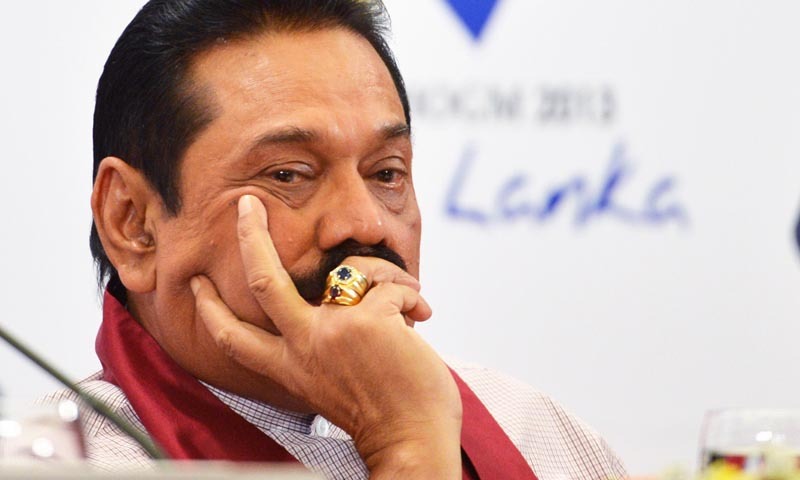
    COLOMBO (TIP): Former Sri Lankan president Mahinda Rajapaksa on Thursday slammed as an act of political revenge his summoning by a graft probe panel over not settling monies he owed to state-owned ITN television station.

    Rajapaksa appeared before the Presidential Commission to Probe Serious Acts of Corruption on Thursday for the first time.

    Commission officials had previously visited him to record his statement.

    Rajapaksa was accused of not paying monies due to ITN for carrying out his propaganda work during the presidential election held on January 8 which he lost.

    In a statement after his appearance, Rajapaksa said that he was only a candidate of his party and was not personally aware of transactions between his party’s campaign office and media institutions.

    Since his defeat to current president Maithripala Sirisena, Rajapaksa and his family have faced corruption allegations.

    Most of his family members have been quizzed by authorities over alleged irregularities during his nine-year rule.

  • President Mukherjee questions rising intolerance in India

    President Mukherjee questions rising intolerance in India

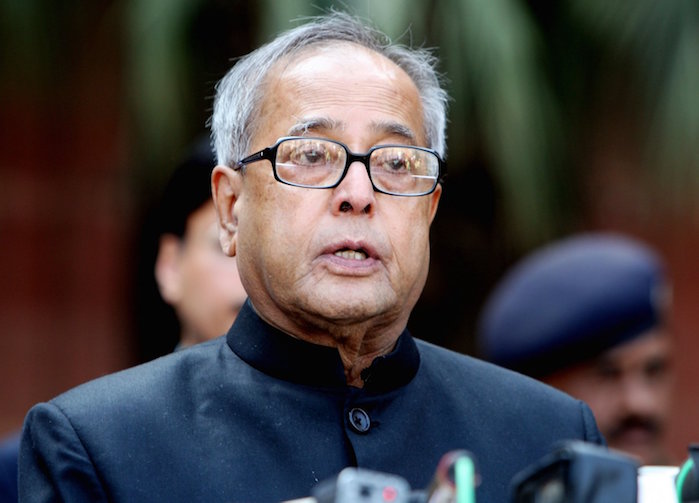
    Hours after another black ink incidence, President Pranab Mukherjee issued another statement on rising intolerance by fringe elements in the country.

    Backdrop: The President’s strong words on the need to maintain pluralism and dissent in the society come against the backdrop of series of hate incidents including in Mumbai where BJP ally Shiv Sena forced cancellation of a music concert by Pakistani legend Ghulam Ali and talks between Indian and Pakistani cricket board Chiefs and blackened the face of Sudheendra Kulkarni. Earlier in the day, a handful of activists allegedly belonging to a right-wing organisation blackened the face of independent MLA of J-K Assembly Sheikh Abdul Rashid using paint, ink and mobil oil protesting against his hosting a beef party in Srinagar earlier this month.

    Addressing a gathering organised by Nayaprajanma, a local weekly newspaper in West Bengal, he expressed apprehension about “whether tolerance and acceptance of dissent are on the wane?”

    He said: “Our collective strength must to be harnessed to resist evil powers in society.  Indian civilization has survived for 5000 years because of its tolerance. We have a Constitution that accommodates all these differences. Hope Mahamaya – the combination of all positive forces would eliminate the Asuras or divisive forces.”

    The official handle of President of India tweeted: “Remember teachings of Shri Ramakrishna Paramhansa ‘Jato Mat Tato Path’  As there are a number of beliefs, there are a number of ways. Humanism and pluralism should not be abandoned under any circumstance.  Assimilation through receiving is a characteristic of Indian society.”

    Earlier this month, President Pranab Mukherjee said the core values of diversity, tolerance and plurality of Indian civilisation must be kept in mind and cannot be allowed to be wasted, in remarks that come against the backdrop of the Dadri lynching over rumours of beef eating.

    “I firmly believe that we cannot allow the core values of our civilization to be wasted and the core values is what over the years the civilization celebrated diversity, promoted and advocated tolerance, endurance and plurality. These core civilization values keep us together over the centuries. Many ancient civilizations have fallen. But that is right that aggression after aggression, long foreign rule, the Indian civilization has survived because of its core civilizational values and we must keep that in mind. And if we keep those core values in mind, nothing can prevent our democracy to move,” he said.

  • Indian American Doctors subpoenaed over Performing Needless Procedures

    Indian American Doctors subpoenaed over Performing Needless Procedures

    As many as 293 patients of an Indian-American cardiologist around a small town in Indiana have filed lawsuits against him and two other doctors in his practice claiming that they performed needless procedures.

    The Indiana state Medicaid programme has started an investigation against Munster, Indiana based Dr Arvind Gandhi and his partners, Dr Wail Asfour and Dr Satyaprakash Makam, according to the New York Times.

    The three doctors received nearly $5 million in combined Medicare payments in 2012, making them the three most reimbursed cardiologists in Indiana, it said.

    The Times quoted one doctor not named in the litigation as saying he had received a subpoena from the US attorney’s office and provided the medical charts of several former patients of Dr Gandhi and his colleagues that he has since treated.

    Lawyers for Dr Gandhi and his practice, Cardiology Associates of Northwest Indiana, said they had not received any subpoenas, and the doctors denied any wrongdoing.

    The partners invested in real estate, including luxury apartments in Chicago, and a local restaurant, the Times said.

    Besides the doctors, the malpractice lawsuits also name Community Hospital, where “Dr Gandhi was a star”, through the foundation that oversees its operations, as a defendant, the daily said.

    Dr Gandhi was a high-ranking member of the medical staff at the hospital, and the lawsuits charge that the superfluous procedures were done “with the authority and consent” of Community Hospital, it said. Lawyers for the hospital deny any wrongdoing.

    Lawyers for Dr Gandhi, his practice and the hospital, say the lawsuits are without merit. The legal actions, they say, are being driven by envious physicians eager to take patients from Dr. Gandhi and by greedy lawyers seeking a big settlement.

    A whistle-blower lawsuit brought by a physician and a hospital employee against the hospital, Dr Gandhi and his practice in 2008 raised similar accusations that the hospital had billed for unnecessary defibrillator and pacemaker implantations that were performed by doctors without the proper credentials to implant the devices.

    But the suit, eventually joined by the US attorney’s office in Hammond, Indiana, just north of Munster, was settled without anyone admitting wrongdoing. The hospital paid a $48,942 settlement.

    The hospital and the doctors say that the settlement shows that the issues have been investigated and that they have been absolved of many of the same allegations contained in the current malpractice suits, the Times said.

  • Anti-Bullying Campaign Launched in Hindi, Punjabi and Urdu

    Anti-Bullying Campaign Launched in Hindi, Punjabi and Urdu

    Reflecting the increasing diversity in the US, the White House has launched its annual anti-bullying campaign in three South Asian languages – Hindu, Urdu and Punjabi.

    Bullying is considered as a major problem in US schools. Latest figures show that one in five students report being bullied during the school year and bullying occurs once every seven minutes.

    According to White House, half of Asian-American students in New York City public schools reported biased-based harassment.

    The White House announced to launch its anti-bullying campaign in Hindi, Punjabi and Urdu along with Korean, Vietnamese and Chinese on during National Bullying Prevention Month.

    The White House Initiative on Asian Americans and Pacific Islanders, in partnership with the Sikh Coalition and the Coalition of Asian Pacifics in Entertainment (CAPE), yesterday launched the “Act To Change” public awareness campaign to address bullying, including in the Asian American and Pacific Islander (AAPI) community.

    Backed by a diverse coalition of supporters, including media platforms and national nonprofit organisations, the “Act To Change” campaign aims to empower AAPI youth, educators, and communities with information and tools to address and prevent bullying.

    In addition to promoting “Act To Change” through its various platforms, the Hindu American Foundation (HAF) will publish survey data on anti-Hindu bullying and bias in schools.

    “The bullying of Sikh children is an epidemic,” said Arjun Singh, the Sikh Coalition’s Law and Policy director. “Misinformation and misunderstanding regarding the Sikh faith, coupled with a dramatic increase in bigoted dialogue towards religious minorities, has resulted in intolerance and bullying in our schools,” he said.

    The Sikh Coalition worked with the Department of Justice to settle a landmark bullying case in Georgia against a Sikh child at the end of 2014.

    The settlement now better protects over 100,000 students across the school district from bullying and represents a first of its kind policy change in the US.

    “Students understand bullying better than anyone because they see it and experience it every single day,” said Harjot Kaur, Sikh Coalition’s New York City Community Development Manager.

    “The launch of this new initiative gives them a single, reliable platform of resources to combat bullying. A few years ago, this crisis was something nobody was talking about.This campaign adds significant momentum to the national movement to stop this problem,” she said.

    Bullying Prevention Awareness month was initiated by PACER’s National Bullying Prevention Center Since it began in 2006, the event has grown to an entire month of education and awareness activities, and is being recognized by schools and communities throughout the world. PACER recognized that students, parents, and people around the world need to become more aware of the serious consequences of bullying.

    “National Bullying Prevention Month has grown more than we could have ever expected,” said Paula Goldberg, PACER’s executive director. “In less than 10 years, PACER has helped to create a bullying prevention movement with millions of individuals across the globe.”

  • Kamlesh Mehta, Nassau County’s director of business and economic development resigns

    Kamlesh Mehta, Nassau County’s director of business and economic development resigns

    October 18, 2015 NEW YORK (TIP): The Indian Panorama was the first newspaper to publish in its October 16 edition  the news of the resignation of  Kamlesh Mehta, Nassau County’s director of business and economic development. theindianpanorama.news/united-states-america/new-york/nassau-county-director-of-economic-affairs-kamlesh-mehta-resigns-article-48097.html
     
    2  days later, on October 18, Newsday published a report  on Mehta’s resignation saying Mehta resigned  amid a Newsday  examination of his role in the county administration.
    Our understanding is that there is more than what has been given out in Newsday report and we will get to know it in days to come. We will share with our readers the information as and when we are ready with it.
    Meanwhile, we are reproducing here the  October 18 Newsday report on Mehta.

    Kamlesh Mehta, associate of indicted restaurateur, quits Nassau job; sued over thousands in unpaid bills

    Kamlesh Mehta, a close associate of indicted Bethpage restaurateur Harendra Singh, has resigned as Nassau County’s director of business and economic development, amid a Newsday examination of his role in the county administration.

    Mehta secured his $79,000-a-year county position despite a checkered financial past that includes a home foreclosure, two bankruptcy filings and lawsuits against…

    http://www.newsday.com/long-island/nassau/kamlesh-mehta-associate-of-indicted-restaurateur-quits-nassau-job-sued-over-thousands-in-unpaid-bills-1.10977191


  • 72 year old Indian American Man Killed in US Accident

    72 year old Indian American Man Killed in US Accident

    A 72-year-old Indian-origin San Jose resident was killed in a hit-and-run accident and was later identified by the Santa Clara County Medical Examiner-Coroner’s Office in California.

    Inderjeet Sharma was walking near a road in San Jose on Tuesday morning when he was hit by a pickup truck. The driver fled the spot.

    Mr Sharma was pronounced dead at the scene and his identity was revealed on Friday, San Jose Mercury News reported.

    With the help of eyewitnesses and footage from a surveillance camera, the police identified and located the vehicle on Wednesday.

    On the same day, the driver of the vehicle Pedro Cortez Bernal, 29, surrendered to the police.

    Mr Bernal was arrested on suspicion of felony hit-and-run.

  • New 24 Month STEM OPT Extension Proposed – DHS | F1 Visa

    New 24 Month STEM OPT Extension Proposed – DHS | F1 Visa

    The New OPT Extension rule for STEM graduates has been approved by OMB on October 14th, 2015.

    The Proposed New STEM OPT Extension rule by DHS 2015 – Key Highlights

    • 24 Month STEM OPT Extension :  In the original proposed rule, STEM OPT Extension period was given for 17  months, now the proposed rule increased that 17 month OPT Extension period for STEM graduates to 24 months .
    • E-Verify Requirement :  Similar to the original past rule, the 24 month STEM OPT extension is only eligible for students who are employed by an E-Verified employer.
    • Addresses Court Ruling that Vacated the 2008 rule : The new proposed rule also mentions that it addresses the court decision that vacated the original 2008 rule on procedural grounds.
    • Cap – Gap Relief :  The previous cap-gap relief continues to be available in the new rule, similar to previous rule enabling students to automatically extend their F1 status and the employment authorization until October 1st, if they file H1B visa in a timely manner.
    • Accredited Schools :  The STEM OPT Extension will be available only to students with STEM degrees from accredited schools
    • 30 Day Comment Period :  All the speculations of 90 days, 60 days are gone. It clearly tells that the comment period would be 30 days.

    DHS HAS PROPOSED AN EXTENSION OF 24 MONTHS FROM THE EARLIER 17-MONTHS EXTENSION

    This 24-month extension would effectively replace the 17-month STEM OPT extension currently available to certain STEM students.

    As with the current 17-month STEM OPT extension, the proposed rule would authorize STEM OPT extensions only for students employed by employers enrolled in U.S. Citizenship and Immigration Services’ (USCIS’) E-Verify employment eligibility verification program.

    The proposal also includes the “Cap-Gap” relief first introduced in 2008 for any F-1 student with a timely filed H-1B petition and request for change of status.

    This Cap-Gap relief allows such students to automatically extend the duration of F-1 status and any current employment authorization until October 1 of the fiscal year for which such H-1B visa is being requested.

    Neither H-1B nor OPT is an immigrant visa—these programs are designed for people who want to return home eventually. But they’ve still been controversial, and some see H-1B especially as helping foreigners take American jobs.

    The number of international students in the U.S. hit a record high in 2014, with more than 880,000 students. As college students worry about choosing their majors and finding jobs for after graduation this fall, the stakes are especially high for international students.

    OPT lets international students with a U.S. student visa work for 12 months at jobs or paid internships that relate to what they studied without needing to apply for a work visa. What is OPT  – OPT stands for Optional Practical Training and it lets F1 students to work in US after their graduation ( or before) for 12 months. OPT is given to anyone who completes a degree like Bachelors, MS, MBA, or PhD from US Universities.  Also, if the degree you get falls under STEM ( Science, Technology, Engineering or Mathematics ) category, the F1 student can apply for an extension of the OPT.

    The new regulation is expected to re-authorize the STEM OPT program.  In addition, it is believed the new regulation could increase the STEM OPT extension period, expand the list of degree programs eligible for the benefit, and expand and clarify cap-gap protection for F-1 visa holders awaiting a change of status to H-1B.  The rule is also expected to require degree-granting schools to ensure that there is a direct relationship between an F-1 student’s degree and his or her proposed STEM OPT employment.

    Recent Changes to STEM OPT Program

    U.S. District Judge Ellen Segal Huvelleon (D.C.) on Wednesday, August 12, said the 2008 Department of Homeland Security rule that allows certain F-1 visa students with math and science-related degrees to have an additional 17 months of training in the U.S. is deficient because it wasn’t subjected to public notice and comment, but she allowed it to stay in place temporarily till Feb 2016..

    The lawsuit sought to prevent foreign students from having an opportunity to gain practical experience in the U.S. following their full-time course of study.

    The Court invalidated a 2008 U.S. Department of Homeland Security (DHS) rule which permits an F-1 student to receive up to a seventeen (17) month extension of their Optional Practical Training (OPT) on top of the twelve (12) months previously authorized (for a maximum of twenty-nine months), if their field of study is in a designated as a Science, Technology, Engineering or Math (STEM) field and the employer is registered in the E-Verify Program.

    The Court’s decision is based on the allegation that DHS did not lawfully issue the 2008 rule because DHS failed to provide the public with notice and an opportunity to comment in advance of issuing it – what is often commonly referred to as the normal “rule-making procedure”. DHS explained, at the time, that the STEM OPT extension was necessary because it would benefit the economy by reducing the disruption to U.S. high-tech employers that occurred when these F-1 STEM-degree graduates reached the end of their twelve-month OPT and their employers could not receive an H-1B classification for them to remain in the U.S. as highly-skilled workers because of the numerical limitations placed on H-1B visa numbers.

    Interestingly, the Court found that the substance of the rule itself was not unreasonable. The Court spoke specifically to the procedure DHS followed to issue the 2008 rule. In addition, the Court invalidated DHS’ later modifications of the rule that expanded the list of designated fields of study. The Court stayed its order until early-2016 to allow DHS to correct its procedural mistake. As many are aware, in November 2014, President Obama announced new policies and regulations to support U.S. high-skilled businesses and workers. Part of that initiative is directed at the development of regulations for notice and comment to expand the degree programs eligible for OPT and to extend the length and use of OPT while “ensuring that OPT employment is consistent with U.S. labor market protections to safeguard the interests of U.S. workers in related fields.”

    The “ripple effect” of the Court’s Order in Washtech is likely to be the impetus of the Administration to issue proposed regulations for notice and comment. The “soon to be issued” proposed regulations will likely be more expansive and will benefit foreign students as well as U.S. employers and all workers.

    STEM extension was created in 2008 to help F-1 students who were not selected in the H-1B lottery by allowing them to continue on OPT until they could try for the H-1B again the following year. The DHS estimated in 2008 that there were about 70,000 F-1 visa students on optional practical training, or OPT, and that one-third had earned degrees in a science, technology, engineering and math, or STEM, field, according to Judge Huvelle. And while the agency had not disclosed the current number of immigrants taking advantage of the extension, she had no doubt that vacating the rule would force “thousands of foreign students with work authorizations to scramble” to leave the country, she added, citing DHS’ opposition brief.“The court sees no way of immediately restoring the pre-2008 status quo without causing substantial hardship for foreign students and a major labor disruption for the technology sector,” the judge said. “As such, the court will order that the 2008 Rule — and its subsequent amendments — be vacated, but it will order that the vacatur be stayed.”Judge Huvelle did, however, disagree with the union’s argument there was not enough evidence to show that Congress was aware of DHS’ interpretation of F-1, saying in light of Congress’ broad delegation of authority to the agency to regulate the duration of a nonimmigrant’s stay and Congress’ acquiescence in DHS’ long-standing reading of F-1, the DHS’ interpretation was not unreasonable.

  • MERCEDES LAUNCHES SUV GLE IN INDIA

    MERCEDES LAUNCHES SUV GLE IN INDIA

    NEW DELHI (TIP): German Luxury car maker Mercedes-Benz launched in India SUV GLE that will be produced locally with starting price of Rs 58.90 lakh (ex showroom Delhi) to enhance its position in the market here.

    The GLE will be available in two variants — 250d with a 2,143 cc diesel engine priced at Rs 58.90 lakh, and 350d which is powered by 2,987cc diesel engine priced at Rs 69.90 lakh (all prices ex-showroom Delhi).

    “Our SUV portfolio has grown by 70 per cent year-on-year in the January-September period this year. GLE will be locally produced in India at our Pune plant,” Mercedes-Benz India MD & CEO Roland Folger told reporters.

    The company has an SUV portfolio ranging from the GLA to the AMG G63 in India. “The addition of the versatile GLE comes at the right time and will add to our brand’s winning SUV portfolio. The start of local production of both the variants of the GLE simultaneously, is a key decision that will enable us address the demand of the SUV in foreseeable future,” he added.

    The company has launched 13 products, including the GLE, Mercedes-Maybach, the CLA, the new C 220 CDI and the new B-Class, among others, this year. In the beginning of the year, the company said it will introduce 15 products in 2015. The company reported 34 per cent increase in sales in the country during the January-September period at 10,079 units which is almost equal to the entire volume it sold in 2014.

  • Vodafone CEO sees new India, IPO on anvil

    Vodafone CEO sees new India, IPO on anvil

    NEW DELHI (TIP): Vodafone Group CEO Vittorio Colao on Wednesday said he is seeing the emergence of a “new India”, with several changes at the macro level.

    He also announced that the Indian arm of the world’s second largest mobile operator —which has been involved in a series of tax disputes in the country — has begun preparatory work for an initial public offer that has been in the pipeline for several years. Colao said the timing of IPO would depend on several factors, including the market conditions.

    “Do you see a new India? Yes, we see a new India. I also hear people say it’s not fast enough. I say fine but it’s also a big country. I face same problem in other countries. I have site problem in the UK… we are seeing a new India. Is it visible in every aspect of our business? No, it’s not but it’s starting to be visible in enough places. If the pace continues, digitization of the country will happen,” Colao told reporters.

    He cited several steps, including the decision to allow spectrum trading and sharing and a “different posture on what was aggressive tax environment” in the past, to argue that “things are changing”. Vodafone India MD & CEO Sunil Sood also pointed out that the government has been trying to reduce call drops by allaying radiation fears from telecom towers and facilitating the installation of new ones. “We never had that kind of cooperation ever before.

    That’s a big change in attitude.” Going forward, he said, Vodafone and other operators would also rely on spectrum sharing and trading to offer efficient services. Asked about Vodafone’s stand on net neutrality, Colao said there should be no discrimination in rules among same kind of services but telecom operators should be allowed to segment internet services.

    “Net neutrality should be about non-discrimination. I should not discriminate among same type of services… but segmentation should be allowed.”

  • German authority orders recall of 2.4 mln Volkswagen cars

    German authority orders recall of 2.4 mln Volkswagen cars

    HAMBURG (TIP): German automotive watchdog KBA will force Volkswagen to recall 2.4 million vehicles in the country after Europe’s biggest carmaker admitted to cheating on emissions tests for diesel vehicles.

    “We are ordering the recall,” a spokesman for the motor transport authority said on Thursday, confirming a newspaper report.

    German daily Bild reported earlier that the KBA had rejected a proposal by VW under which owners of the affected diesel cars could voluntarily bring in their cars for fixes.

    Volkswagen admitted last month that it had installed software in diesel vehicles to deceive U.S. regulators about the true level of their toxic emissions. It has said up to 11 million vehicles were affected worldwide.

  • Adani’s coal mine project gets re-approval in Australia

    MELBOURNE (TIP): Indian mining giant Adani’s plan to build one of the world’s largest coal mines got a new lease of life on Thursday after the Australian government gave its re-approval to the 16.5 billion controversy-hit project but with “strictest conditions” amid environmental concerns.

    Over two months after an Australian court revoked the environmental approval for the project, environment minister Greg Hunt signed the papers, giving Adani the re-approval with conditions imposed that take into account community issues and would ensure that the company meets the highest environmental standards.

    he federal court in August had revoked the original approval due to a bureaucratic bungle over two vulnerable species — the yakka skink and the ornamental snake.

    Stating that Adani’s project was given re-approval “in accordance with national environment law”, Hunt said his nod for the project considered additional information provided by Adani and environmental groups.

    The approval would be “subject to 36 of the strictest conditions in Australian history,” he said.

    “The conditions I have imposed take into account issues raised by the community and ensure that the proponent must meet the highest environmental standards,” Hunt was quoted as saying by ABC News.

    “The rigorous conditions will protect threatened species and provide long-term benefits for the environment through the development of an offset package,” he said.

  • RELIANCE CAPITAL ANNOUNCES RS 150-CR ESOP SCHEME

    MUMBAI (TIP): Financial services major Reliance Capital on October 15 announced a major ESOP scheme under which select employees across all major operating businesses would be granted stock options with a notional value of Rs 150 crore.

    Reliance Capital is part of Anil Ambani-led business conglomerate Reliance Group and is present in insurance, mutual fund, broking and non-banking finance businesses among others.

    The ESOPs would be given to a total of 250 employees of Reliance Capital and its major business units –including Reliance Capital Asset Management, Reliance Commercial Finance, Reliance Life Insurance, Reliance Securities and Reliance General Insurance.

    All top management, including Sam Ghosh, Madhusudan Kela and business CEOs are also covered under this grant of ESOP.

    Reliance Capital’s Vice Chairman Amitabh Jhunjhunwala said the ESOPs, linked to the growth of the company, will provide long-term wealth creation opportunities to key talent.

    “This will not only help us reward and retain talent, but also align the employees’ sense of ownership with the business,” he added.

    The company said the eligible employees will get options on Reliance Capital’s listed stock and/or phantom shares of its businesses.

    The ESOPs comprise of 6,46,080 shares of Reliance Capital and the balance as Phantom Shares of operating subsidiaries.

    The notional value of the proposed stock options, at Rs 150 crore, represents 1.6 per cent of Reliance Capital’s market capitalisation.

    The Employee Stock Option (ESOP) Scheme 2015, which is subject to requisite approvals, has been approved by the boards of Reliance Capital’ and respective group companies.

    The company said the scheme is part of Reliance Capital’s Rewards Programme aimed at retaining and incentivizing key employees for their contribution to the growth and profitability of the company.

    “The ESOP scheme is an integral part of our Employee Rewards program, aimed towards driving and recognising superior performance. It will be our endeavour to consistently expand the scale and reach of our Rewards program through various such initiatives,” Reliance Capital’s chief people officer Pushkar Singh Kataria said.

    The options vest over a period of five years, with customary lock-in period.

  • China female cabin crew ‘ritual’ sparks online outrage

    China female cabin crew ‘ritual’ sparks online outrage

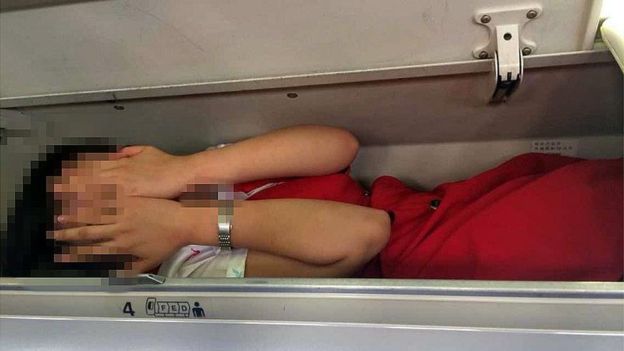
    BEIJING )TIP): Photos showing Chinese female flight attendants stuffed into an airplane’s luggage compartment by security officers has sparked widespread condemnation, the media reported on Oct 8.

    The photos were posted online from a personal Weibo account, China’s Twitter-like social networking platform, People’s Daily reported.

    The flight attendants were from Yunnan province-based domestic carrier, Kunming Airlines.

    The post said the airline attendants were forced to be carried into the luggage rack by the security officer of the airplane. The practice, which was called a tradition by the officers, has been repeatedly conducted for four or five years.

    These stewardesses were reluctant to do it but still lifted to the rack due to the concerns of being not cooperative with their colleagues.

    Some photos were also posted showing the stewardesses curling up in the luggage rack with hands covering their faces. A male staff member, who was believed as one of the security officers, was also seen in a photo and even posed with a huddled stewardess.

    Kunming Airline has investigated the incident and said that these inappropriate traditions happened after the crew members finished their flight missions.

    “this was like a ceremony for the new attendants to join the crew team. It is prevalent among other foreign airline companies. But the company paid high attention to the incident and pledged to prevent this from happening again due to its negative effect to the image of the company,” airline sources said.

  • DUSSEHRA

    DUSSEHRA

    Dussehra (Vijaya Dashami, Dasara, or Dashain) is a Hindu festival that celebrates the victory of good over evil. It is a gazetted holiday in India, which is marked on the 10th day of the bright half (Shukla Paksha) of the month of Ashvin (Ashwayuja), according to the Hindu calendar.

    Background

    Dussehra celebrates the Hindu god Rama’s victory over the demon king Ravana and the triumph of good over evil. The epic Ramayana tells the story of the Lord Rama who wins the lovely Sita for his wife, only to have her carried off by Ravana, the demon king of Lanka.

    Ravana plays an important role in the Ramayana. Ravana had a sister known as Shoorpanakha. She fell in love with the brothers Rama and Lakshamana and wanted to marry one of them. Lakshamana refused to marry her and Rama could not as he was already married to Sita.

    Shoorpanakha threatened to kill Sita, so that she could marry Rama. This angered Lakshamana who cut off Shoorpanakha’s nose and ears. Ravana then kidnapped Sita to avenge his sister’s injuries. Rama and Lakshamana later fought a battle to rescue Sita. The monkey god Hanuman and a huge army of monkeys helped them.

    The Mahabharata is another series of Hindu stories that play a role in the Dussehra festival. The Pandavas were five brothers who fought evil forces with a set of distinctive weapons. They abandoned their weapons and went into exile for one year. They hid their weapons in a Shami tree and found them at the same place when they returned from exile. They then worshipped the tree before going to a battle, which they won. This epic is also commemorated during Dussehra.

    What do people do?

    Many people of the Hindu faith observe Dussehra through special prayer meetings and food offerings to the gods at home or in temples throughout India. They also hold outdoor fairs (melas) and large parades with effigies of Ravana (a mythical king of ancient Sri Lanka). The effigies are burnt on bonfires in the evening. Dussehra is the culmination of the Navaratri festival.

    There are many local celebrations in some areas in India that can last for up to 10 days. Local events include:

    Performances of the Ramlila (a short version of the epic Ramayana) in Northern India.

    A large festival and procession including the goddess Chamundeshwari on a throne mounted on elephants in the town of Mysore in the state of Karnataka.

    The blessing of household and work-related tools, such as books, computers, cooking pans and vehicles in the state of Karnataka.

    The preparation of special foods, including luchi (deep fried flat bread) and alur dom (deep fried spiced potato snacks), in Bengal.

    Many Hindus also believe that it is lucky to start a new venture, project or journey on Dussehra. They may also exchange gifts of leaves from the Shami tree (Prosopis spicigera) as a symbol of the story of the Pandavas brothers’ exile in the Mahabharata stories.

  • RAM NAVAMI: BIRTH OF LORD RAMA

    RAM NAVAMI: BIRTH OF LORD RAMA

    Ram Navami is a famous Hindu festival that celebrates the birth of Lord Rama.

    At that time Ravan, king of Lanka, was terrorizing the people, and all were longing for liberation from his menace. Ravan had acquired great power because he had obtained from god Brahma the boon that he would never die at the hands of gods, or gandharvas, or yakshas (demigods) or demons. As he was not afraid of men he did not care to include men in the list of his potential slayers. So Brahmadev declared that Ravan would die at the hands of a man. Then the gods went to Vishnu with the request, “Dasarath is a glorious king. Please, take birth in the wombs of his three queens in four different degrees of your divinity.”

    When Dasarath’s sacrifice came to an end a shining figure appeared over the sacrificial kund, and offered the king a divine beverage called “payasam” to be given to his queens Kausalya, Kaikayi, and Sumitra. In due time Kausalya gave birth to Rama, Kaikayi to Bharat and Sumitra to Laxman and Shatrugna. Rama was born at noon of the bright ninth day of Chaitra. He was believed to be the embodiment of half degree of Vishnu’s divinity, (ardha ounsh).

    Legend

    Four storeys – even the original Ravana may not have been so tall. But this is the Kali Yuga, when evil is supposed to assume an even more terrifying form. Ravana has his moments of glory, and that too, on Rama Navami, the birthday of Rama.

    The effigy of the ten-headed Ravana swaggers through the town, wearing a gaudy crown and exaggerated moustache, with shouting hordes following. But once Ravana reaches the open ground that is his final destination, he is suddenly deserted by most of his “followers” – because the noble Rama has made his appearance.

    In the end, righteousness does triumph, even in Kali Yuga. Rama engages him in battle, and finally pierces him with a potent arrow. And the huge effigy of Ravana, filled to bursting with firecrackers, is set alight, and explodes into a thousand bits amid loud cheers from the crowd and shouts of Jai Shri Ram. This ritual is an important part of the Rama Navami celebrations in most parts of North India.

    Rama Navami falls on the ninth day of the shukla paksha, or bright phase of the moon, in the lunar month of Chaitra (April-May). The first day of Chaitra , or Ugadi, also marks the beginning of the Indian year.

    Rama is one of the ten avatars of Lord Vishnu, and one of the two most popular, along with Krishna. Consequently, Rama Navami is widely celebrated, though not on the scale of festivals like Diwali or Dussehra.

    According to legend, Rama was born at noon. Rama is the epitome of perfection, the uttama purusha, fulfilling all his duties towards both family and subjects.

    Rama was the first of the four sons of King Dasharatha of Ayodhya. When it was time for Rama to be made crown-prince, his stepmother, Kaikeyi, got Dasharatha to send him to the forest for 14 years. His wife Sita and his brother Lakshmana also accompanied him. In the forest, Sita was kidnapped by Ravana, the demon king of Lanka. Rama, together with Hanuman and the monkey army, built a bridge to Lanka, killed Ravana, and brought Sita back.

    It is believed that listening to the story of Rama cleanses the soul. Meditating on the noble Rama and chanting his name is believed to ease the pains of life and lead one to moksha, or liberation. It is also common practice to chant the name of Rama while rocking babies to sleep.

    Significance

    Though Rama Navami is a major festival for Vaishnavites, it is widely celebrated by worshippers of Shiva, too. It is considered auspicious to undertake a fast on the day in the name of Rama. The more devout fast for nine days, from Ugadi to Rama Navami. The objective of the fast is not to ask for special favours of the deity but to seek perfection as a human being. Devotees perform elaborate pujas and chant the name of Rama. Temples of Rama have special services and bhajan sessions through the day.

    One significant and popular element of the celebration is the Ramayana parayana, a discourse on the Ramayana, by a pundit or a professional story-teller. It usually lasts nine days, beginning on Ugadi and ending on Rama Navami. A skilled story-teller who can liven up the event by weaving in contemporary events attracts massive crowds.

    Since Rama is also one of the most sung-about deities in Indian classical music and literature, week-long (and sometimes, month-long) musical programmes are organised.

    Sacred places associated with Rama, like Ayodhya, Ujjain and Rameshwaram, draw tens of thousands of devotees. In Rameshwaram, thousands take a ritual bath in the sea before worshipping at the Ramanathaswamy temple.

  • I AM NOT A FEMINIST, SAYS PARINEETI CHOPRA

    I AM NOT A FEMINIST, SAYS PARINEETI CHOPRA

    Actress Parineeti Chopra, the brand ambassador for Haryana’s ‘Beti Bachan Beti Padao’ campaign, says she is not a “feminist” but strongly voices for gender equality.

    The 26-year-old actress said she would like to be seen as a role model rather than a “feminist”. When asked if her understanding on women issues developed more after joining films, she said, “I am very often confused to be a feminist but I am not. I am really not. Coming into Bollywood, I think definitely it has made me stronger and more responsible.

    “I do feel proud of my gender, of being a woman. I do speak against gender inequality. I am the brand ambassador for Haryana’s ‘Beti Bachao Beti Padao’ campaign. And I think it is very important for me personally to strive for equality, especially the industry that I come from,” said the actress, who was in the city today.

    The Ishaqzaade star feels her entry in Bollywood has reaffirmed her belief in gender equality and that there is a need in the society to fill gaps of inequality among men and women.

    “Now, I understand and accept that anything that I do, could and I hope should inspire young girls. Now, I am very particular about what I say or do. If that makes me half a feminist, then that’s okay. I want girls to be treated the way

    #PARINEETICHOPRA

  • BAJIRAO MASTANI MILESTONE IN MY LIFE: PRIYANKA CHOPRA

    BAJIRAO MASTANI MILESTONE IN MY LIFE: PRIYANKA CHOPRA

    Actress Priyanka Chopra, who is starring in Sanjay Leela Bhansali’s magnum opus Bajiao Mastani, says the film is a “milestone” in her life.

    “And it’s a film wrap! Being a part of #BajiraoMastani is a milestone in my life! Thank you Sanjay Sir for being a dream. Thank you team. Left a part of me behind,” Priyanka wrote on her Instagram page along with an image of the film’s set. The 33-year-old, who is receiving rave reviews for essaying the role of an FBI recruit in the international TV show ‘Quantico’, will portray the role of Kashibai, the first wife of Peshwa Bajirao, in Bajirao Mastani.

    The movie features Ranveer Singh as Maratha warrior Peshwa Bajirao I, while his love interest Mastani’s role is played by Deepika Padukone. Bajirao Mastani is slated to hit the theatres on December 18, 2015.

  • JENNIFER LAWRENCE LAMBASTS GENDER PAY DISPARITY IN HOLLYWOOD

    JENNIFER LAWRENCE LAMBASTS GENDER PAY DISPARITY IN HOLLYWOOD

    Jennifer Lawrence has lambasted Hollywood’s gender pay disparity in a powerful essay where she has finally opened up about the hacked Sony emails that revealed she was paid less than her male co-stars.

    Lawrence’s tone is angry and contemplative as she reflects upon the way women are perceived in Hollywood power circles in the piece that she wrote for friend Lena Dunham’s ‘Lenny Letter’ newsletter.

    The 25-year-old Hunger Games star said she had kept quiet because she avoids topics that are “trending”.

    “When the Sony hack happened and I found out how much less I was being paid than the lucky people with d***s, I didn’t get mad at Sony. I got mad at myself. I failed as a negotiator because I gave up early. I didn’t want to keep fighting over millions of dollars that, frankly, due to two franchises, I don’t need,” Lawrence wrote in the essay.

    Questioning what could have led to her poor negotiating skills, Lawrence said perhaps she did not want to come across as someone who is
    “difficult” or “spoiled.”

  • GIANT ALIEN ORBITING STAR FOUND NEAR MILKY WAY

    GIANT ALIEN ORBITING STAR FOUND NEAR MILKY WAY

    A large cluster of objects in space look like something you would “expect an alien civilization to build”, astronomers have said.

    Jason Wright, an astronomer from Penn State University, is set to publish a report on the “bizarre” star system suggesting the objects could be a “swarm of megastructures”, according to a new report.

    “I was fascinated by how crazy it looked,” Wright told The Atlantic. “Aliens should always be the very last hypothesis you consider, but this looked like something you would expect an alien civilization to build.”

    The snappily named KIC 8462852 star lies just above the Milky Way between the constellations Cygnus and Lyra. It first attracted the attention of astronomers in 2009 when the Kepler Space Telescope identified it as a candidate for having orbiting Earth-like planets.

    But KIC 8462852 was emitting a stranger light pattern than any of the other stars in Kepler’s search for habitable planets.

    Kepler works by analysing light from distant places in the universe —looking for changes that take place when planets move in front of their stars. But the dip in starlight from KIC 8462852 doesn’t seem to be the normal pattern for a planet.

    Tabetha Boyajian, a postdoc at Yale told The Atlantic: “We’d never seen anything like this star. It was really weird. We thought it might be bad data or movement on the spacecraft, but everything checked out.”

    In 2011 the star was flagged up again by several members of Kepler’s “Planet Hunters” team – a group of ‘citizen scientists’ tasked with analysing the data from the 150,000 stars Kepler was watching.

    The analysts tagged the star as “interesting ” and “bizarre” because it was surrounded by a mass of matter in tight formation.

    This was consistent with the mass of debris that surrounds a young star just as it did with our sun before the planets formed. However this star wasn’t young and the debris must have been deposited around it fairly recently or it would have been clumped together by gravity – or swallowed by the star itself.

    Boyajian, who oversees the Planet Hunters project, recently published a paper looking at all the possible natural explanations for the objects and found all of them wanting except one – that another star had pulled a string of comets close to KIC 8462852. But even this would involve an incredibly improbable coincidence.

    That’s when Wright, the astronomer from Penn State University and his colleague Andrew Siemion, the Director of SETI (Search for Extra-Terrestrial Intelligence) got involved. Now the possibility that the objects were created by intelligent creatures is being taken very seriously by the team.

    As civilizations become more technologically advanced, they create new and better ways of collecting energy — with the end result being the harnessing of energy directly from their star. If the speculation about a megastructure being placed around the star system is correct, it could for instance be a huge set of solar panels placed around the star, scientists say.

    The three astronomers want to point a radio dish at the star to look for wavelengths associated with technological civilizations. And the first observations could be ready to take place as early as January, with follow-up observations potentially coming even quicker.

    “If things go really well, the follow-up could happen sooner,” Wright told The Atlantic. “If we saw something exciting… we’d be asking to go on right away.”

  • AMANDA BYNES HEADS BACK TO FASHION INSTITUTE

    AMANDA BYNES HEADS BACK TO FASHION INSTITUTE

    Former child star Amanda Bynes has decided to fulfill her dream of studying fashion designing by joining the Fashion Institute of Design & Merchandising (FIDM).

    The 29-year-old She’s the Man actress first enrolled at the school in early 2014 but took a break before she was went under a psychiatric hold, reported Us magazine.

    “We are all so proud of her, and can’t wait to see her amazing designs on the runway someday,” her parents’ lawyer Tamar Arminak said.

    Bynes has been keeping a low profile since she went through a treatment for her erratic behaviour last year.

  • Facebook launches ‘3D Touch’ for faster postings

    Facebook launches ‘3D Touch’ for faster postings

    The Facebook social networking site has launched a new app that will help you take or upload photos and videos or update your status in a jiffy.

    Called “3D Touch”, the new application allows iPhone 6s and 6s Plus users to hard press the app icon that will offer a handful of shortcuts, technology website TechCrunch reported.

    “The addition is one of the more highly anticipated rollouts of third-party support for ‘3D Touch’, a new user interaction that’s something of a spinoff of the similar ‘Force Touch’ option on Apple Watch,” the report added.

    “3D Touch” is another gesture you can use with your device for faster access to apps.

    Facebook-owned Instagram was among the first to offer “3D Touch” support.

    WhatsApp, Messenger, Moments, Groups and other popular Facebook applications are yet to support the new interaction.